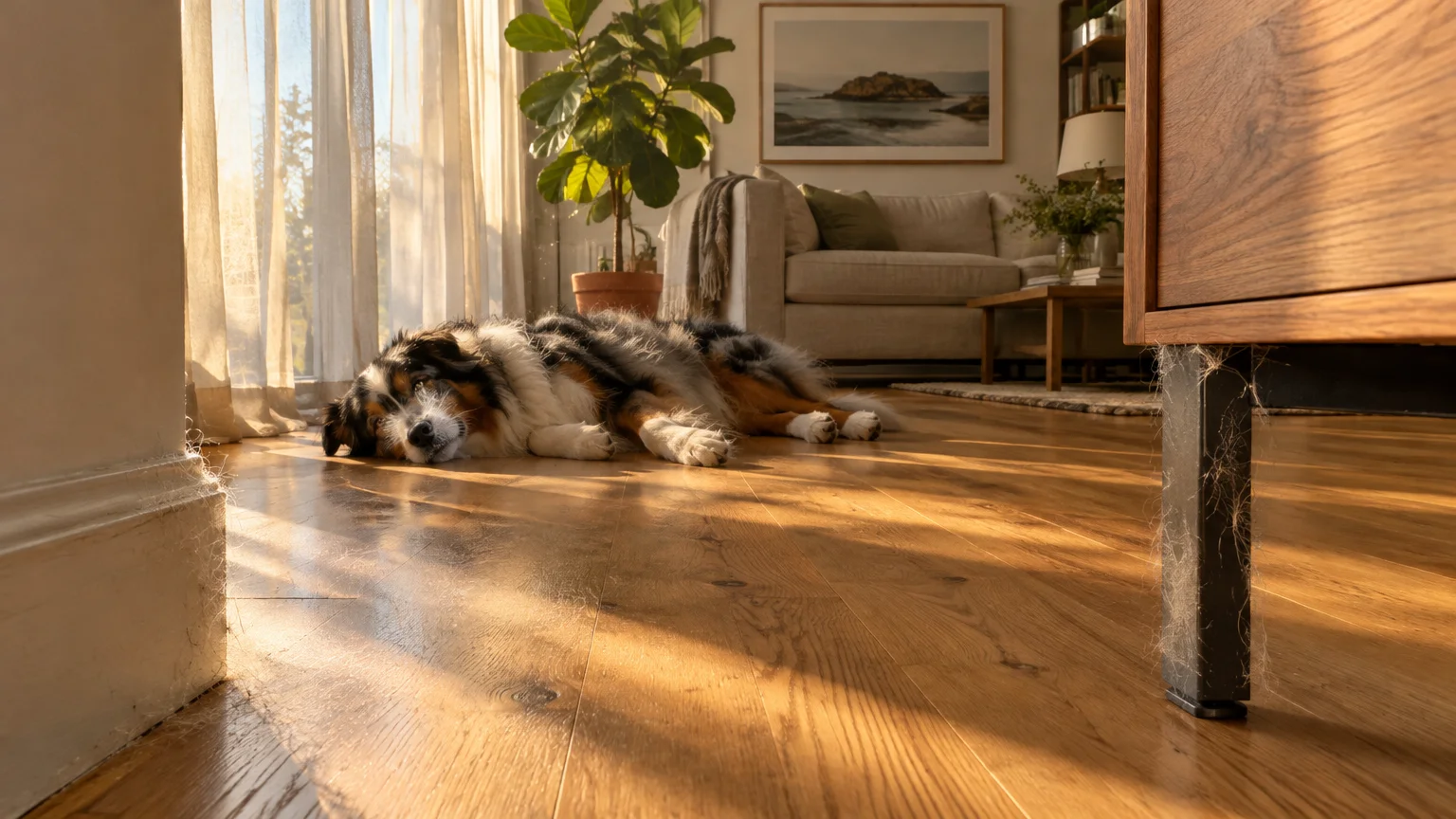
You can vacuum your living room carpet every day and still find clumps of fur drifting across your floorboards. Hidden drafts and everyday static pull pet hair into narrow crevices where typical sweepers cannot reach.
Targeting these quiet collection zones cuts down on lingering pet odors and airborne dander significantly. You will spend less time cleaning when you know exactly where shedding hides.
Focusing on seven neglected surfaces helps you restore a fresh living room with minimal daily scrubbing.
Why Pet Hair Clings to Overlooked Living Room Surfaces
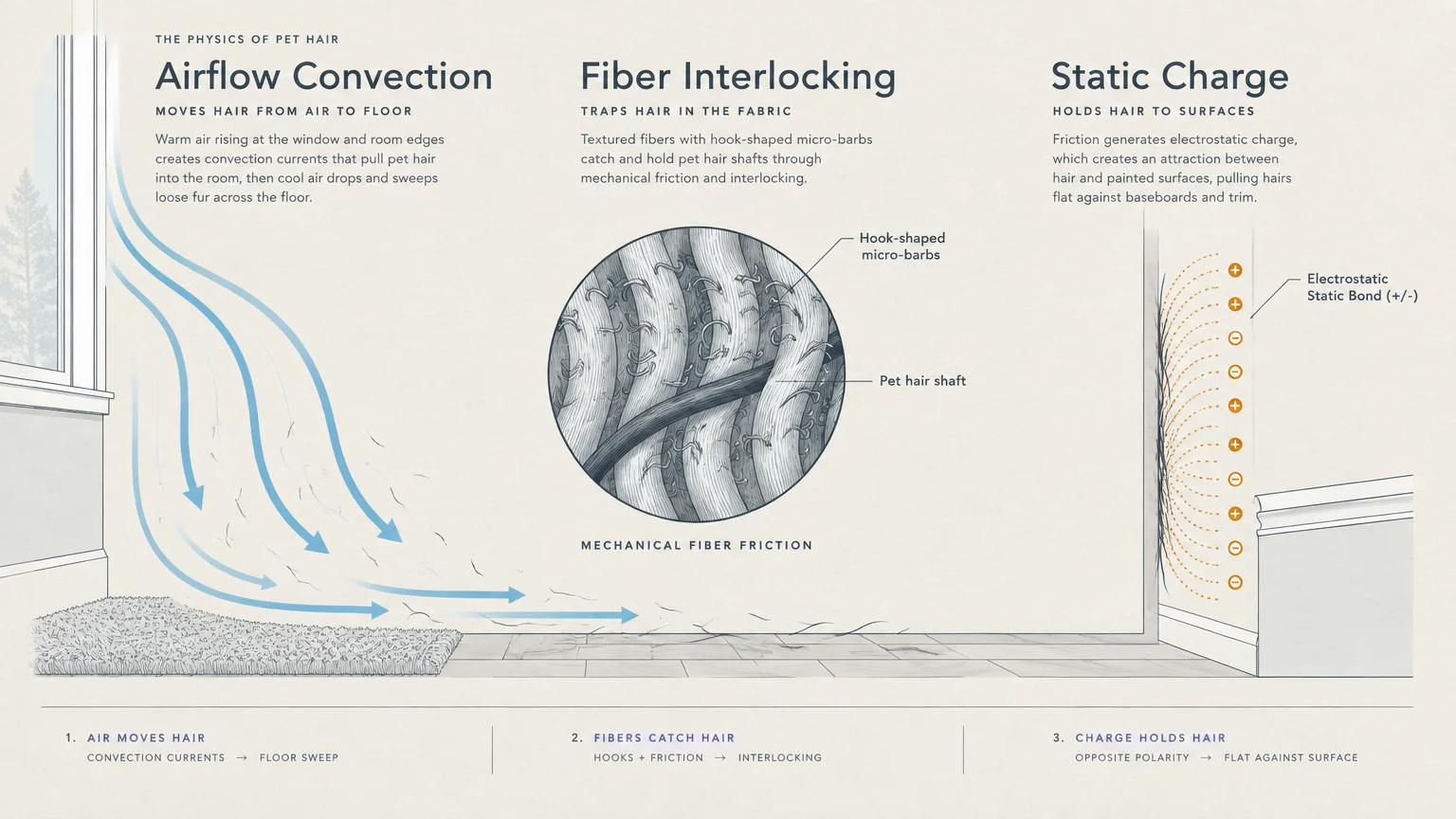
Air currents in your home constantly move across open pathways and drop dust along the edges of furniture. As warm air rises and cool air drops, pet fur drifts toward quiet corners.
Static electricity anchors loose guard hairs to synthetic fibers and painted woodwork. Walking across your carpet generates an electrical charge that transfers directly to baseboards and soft furnishings.
Fabrics with loose weaves or textured loops act like tiny hooks that trap barbed pet hair shafts. Standard vacuum suction glides right over these hooked fibers without dislodging the hair.
Effective pet hair cleaning requires mechanical friction rather than pure vacuum suction. Once you break the static bond, lifting stubborn fur requires very little physical effort.
01 Baseboards and Quarter-Round Molding
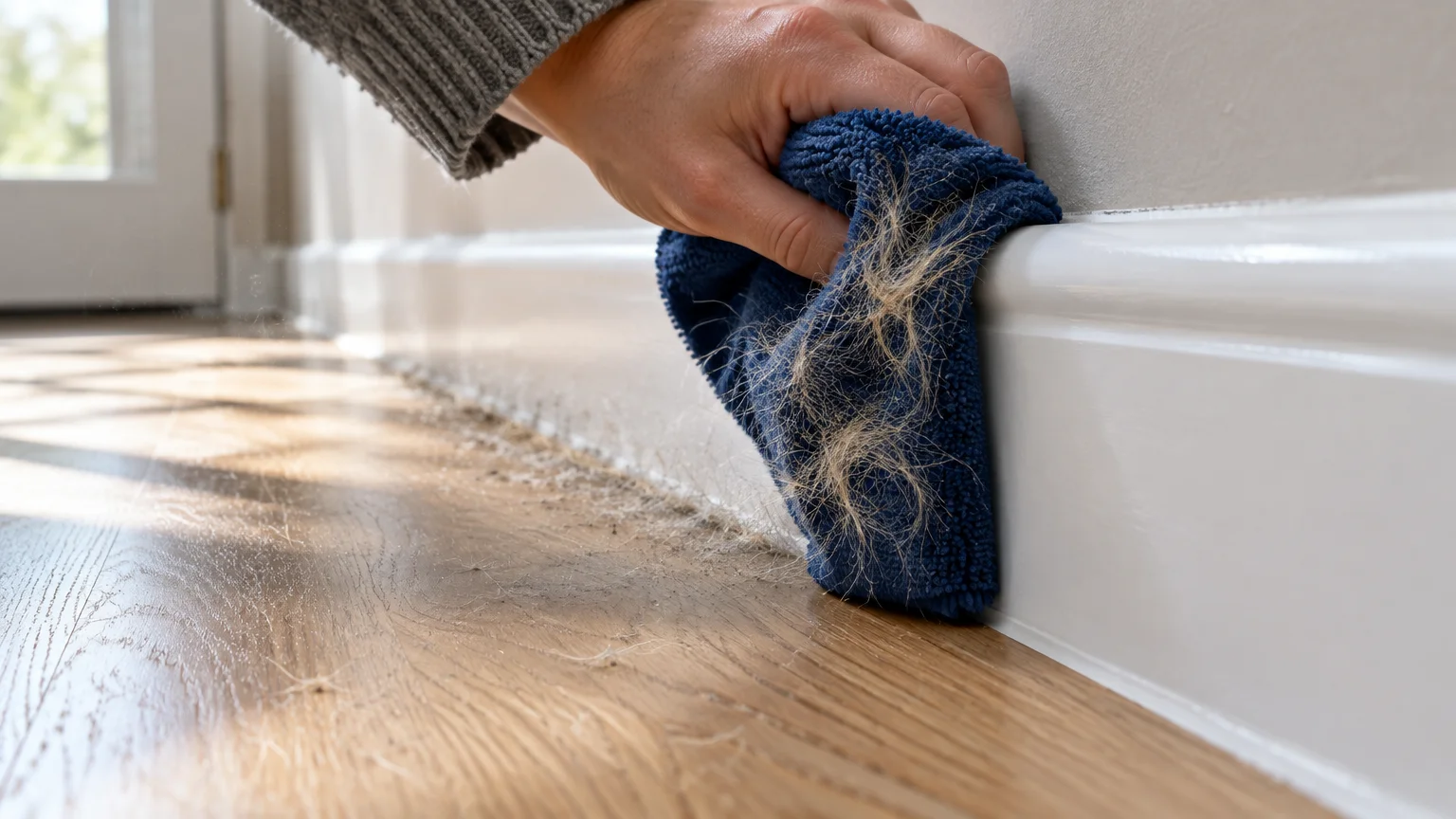
Baseboards run along the floor perimeter where horizontal airflow suddenly hits a vertical barrier. This abrupt stop causes circulating pet hair living room drafts carry to settle against the wood.
Semi-gloss paint on trim builds up a slight electrostatic charge from passing foot traffic. That static charge holds fine undercoat fur flat against the trim edge.
Standard broom bristles merely toss this collected fur back into the air. Minutes later, the fur settles right back onto the trim.
How to Clean Baseboards Thoroughly
Wipe the top edge of your baseboards using a slightly damp microfiber cloth. The damp split fibers grab loose fur and trap dander without scattering particles.
Rub a fresh or used dryer sheet across the wood surface after dusting. The coating leaves an anti-static barrier that discourages new hair from settling on the molding.
Attach a soft dusting brush to your vacuum wand for a fast, no-bend option. Run the brush along the baseboard seam to dislodge fur caught in the quarter-round joint.
02 Underneath Upholstered Sofas and Dust Covers
The dark void beneath your couch acts like an air filter for your entire living room. Every time someone sits down, the cushion compression pushes air and fur downward.
Most sofas feature a thin, non-woven cambric fabric lining the bottom frame. This textured material creates high surface friction that pulls fur out of the air.
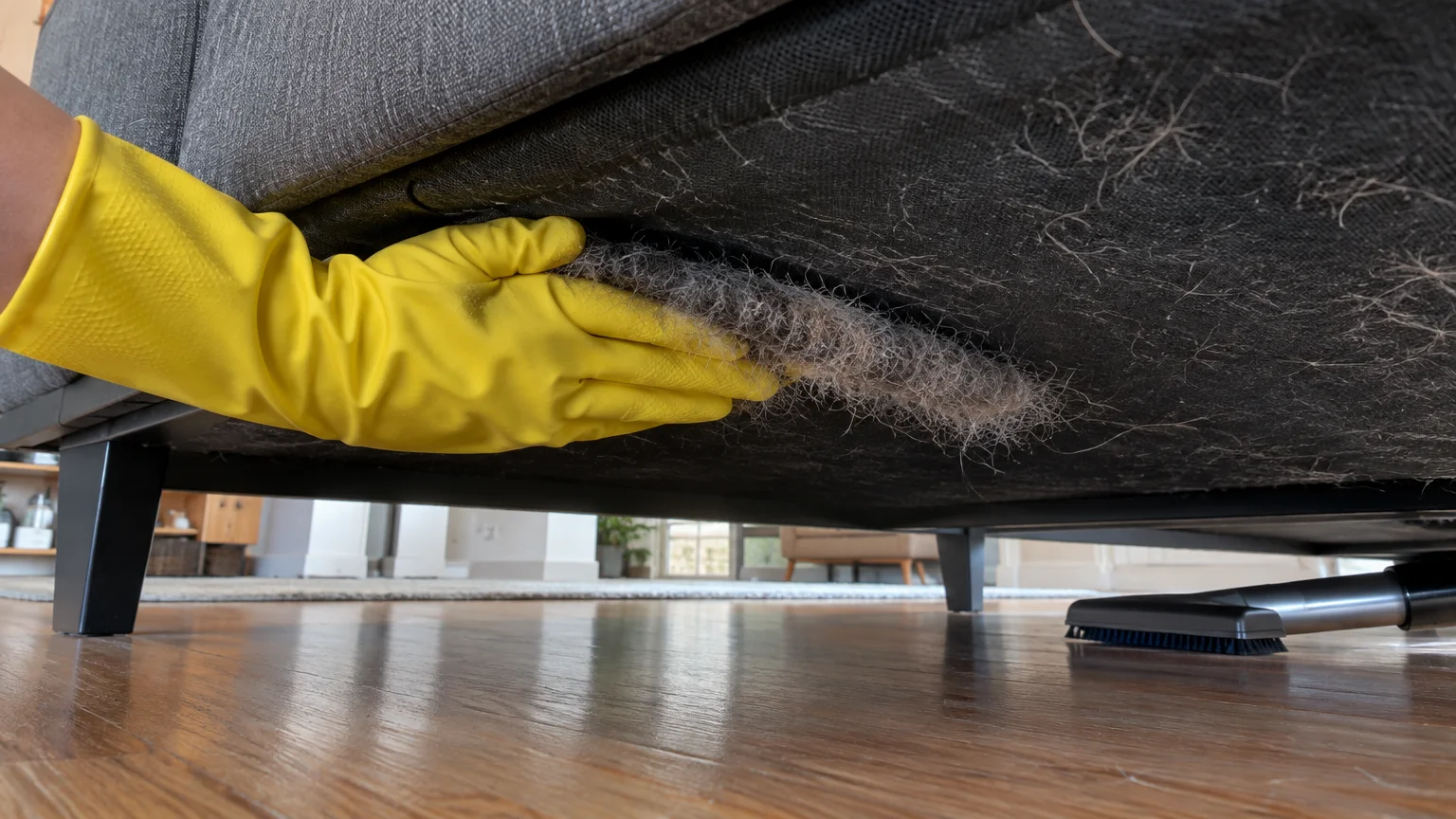
Hair clings directly to this bottom fabric, creating a dense layer of trapped fur and allergens. This makes sofa undercarriages major pet hair hotspots in busy living rooms.
Step-by-Step Under-Sofa Cleaning
- Slide your couch away from the wall to access the rear and underside freely.
- Tilt the sofa back safely onto sturdy supports or ask a helper to steady the frame.
- Put on a damp rubber dishwashing glove and swipe your hand across the black dust cover.
- Gather the gathered fur into tight rolls and discard them directly into the trash.
- Vacuum the exposed floor with a bare-floor tool before setting the sofa down.
Consider replacing torn bottom cambric cloth with smooth, rip-stop nylon. Hair cannot cling to slippery nylon weaves, which makes future cleanups much faster.
03 Window Drapes, Curtains, and Blinds
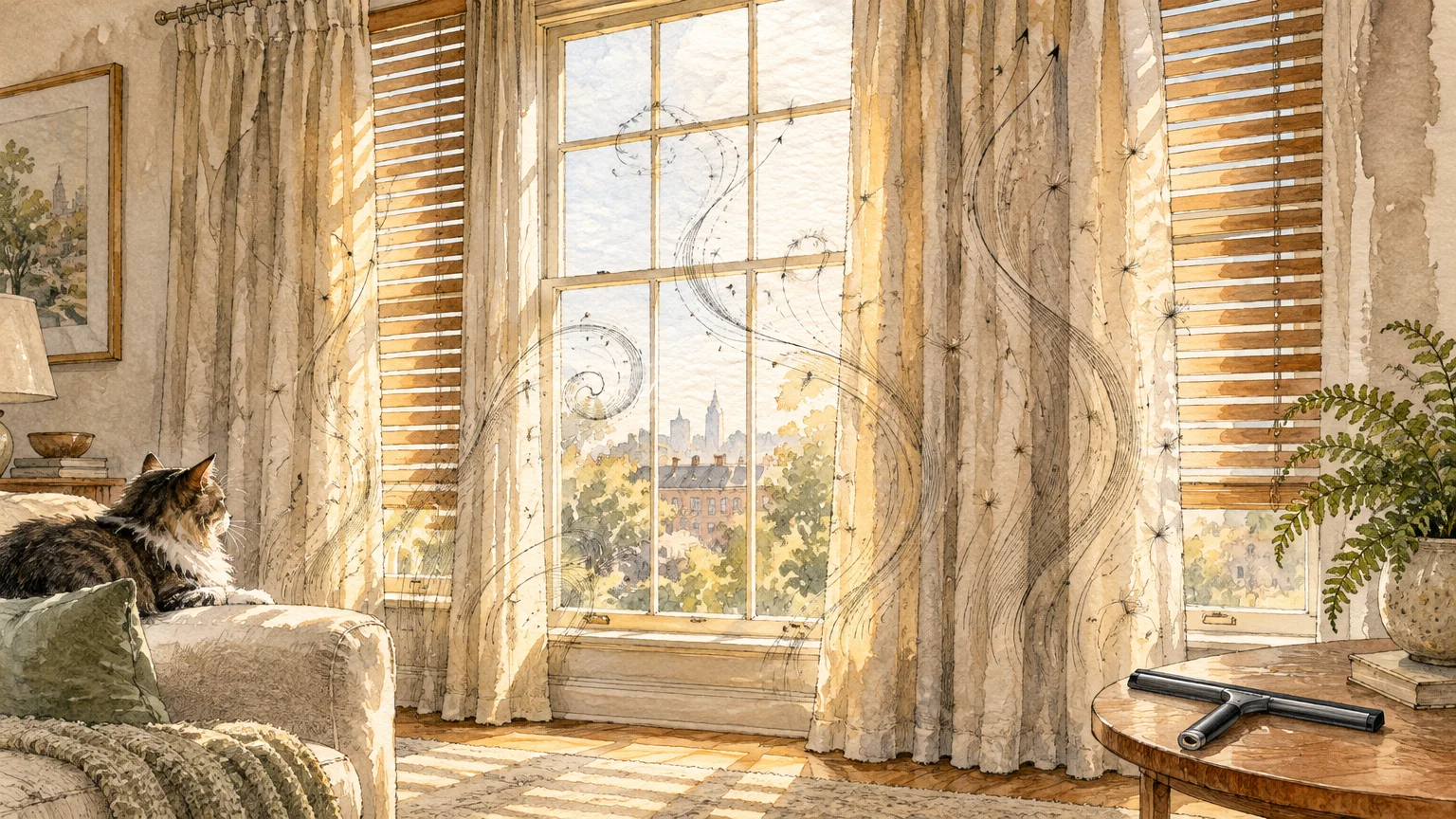
Window treatments trap airborne fur circulating through natural convection currents near glass panes. Sunlight warms the fabric, accelerating air movement that carries floating hair upward.
Drapes that puddle onto the floor function like brooms, sweeping up passing fur continuously. Synthetic curtain panels also generate strong static fields whenever drafts rustle the fabric.
Horizontal blind slats collect descending hair along their back edges near the window glass. When you adjust the blinds, you grind that fur into greasy window grime.
Quick Curtain and Blind Refresh Method
Run a sticky lint roller down the bottom twelve inches of your fabric curtains. This lower zone holds the highest concentration of trapped fur.
Mist curtains lightly with a mixture of water and fabric softener to neutralize static cling. Allow the mist to air dry completely before letting pets back near the window.
Clamp a microfiber cloth around individual blind slats using kitchen tongs. Slide the tongs horizontally across each slat to strip off fur in a single pass.
04 Area Rug Fringe, Edges, and Underlayment Pads
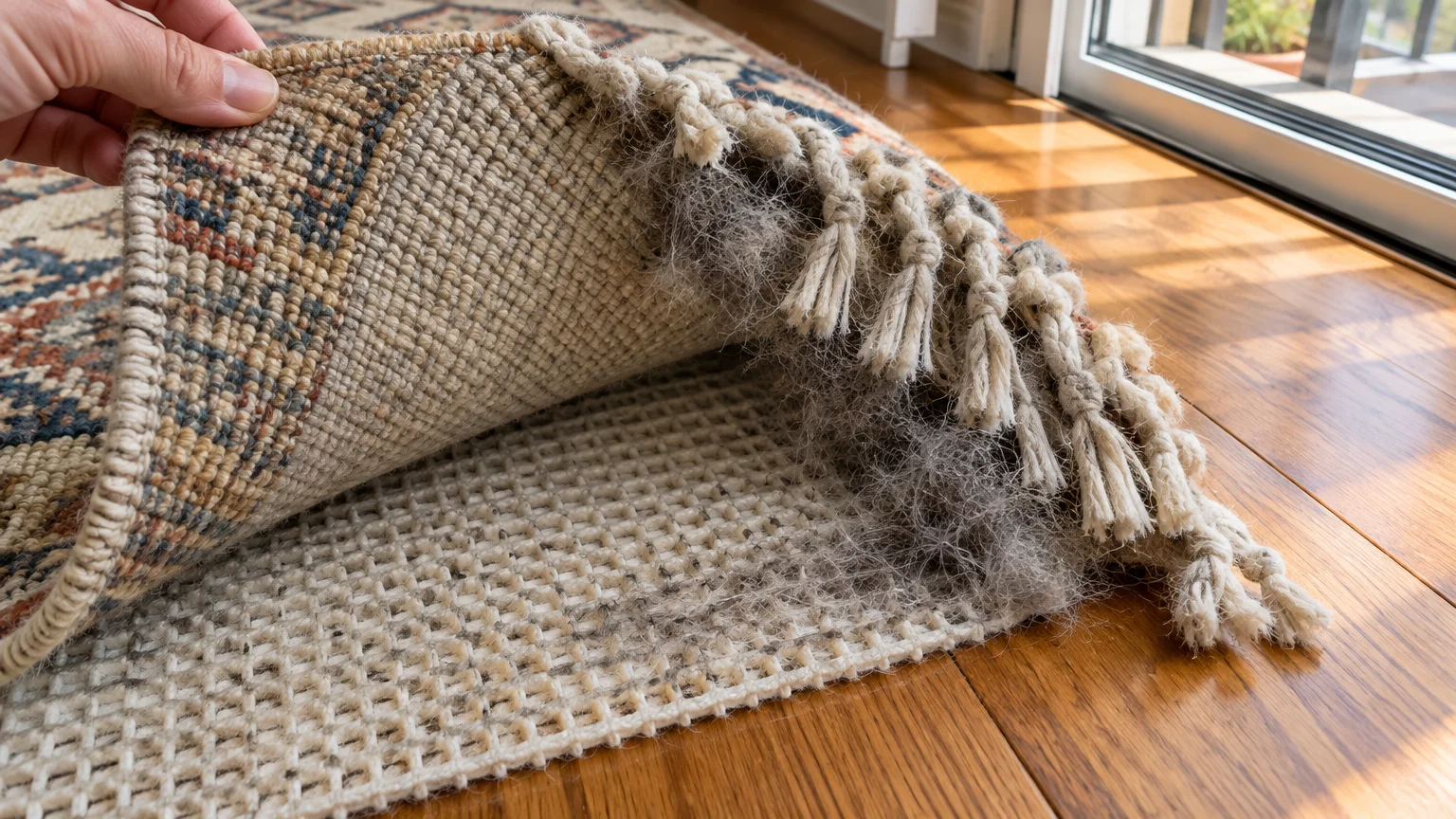
The border between an area rug and hard flooring experiences intense foot friction. This constant compression wedges loose hair deep into rug fringe and perimeter binding.
Pet hair also works its way past the rug edge and migrates under the backing. Rubber rug pads develop a sticky, tacky surface over time that traps fur against the floor.
Standard upright vacuum cleaners often skip these edges to avoid chewing up decorative fringe. As a result, perimeter hair accumulates into dense, felted mats.
Restoring Rug Edges and Pads
Comb decorative fringe with a wide-tooth grooming comb or rubber carpet rake. Work from the rug edge outward to pull caught hair out of the tassel knots.
Fold back the edges of your rug by two to three feet around the entire perimeter. Vacuum the exposed floor and both sides of your rubber rug pad thoroughly.
Run a window squeegee with a firm rubber blade across the rug border. The rubber friction scrapes out deeply embedded hairs that vacuum brush rolls miss.
05 Textured Accent Pillows, Throws, and Woven Baskets
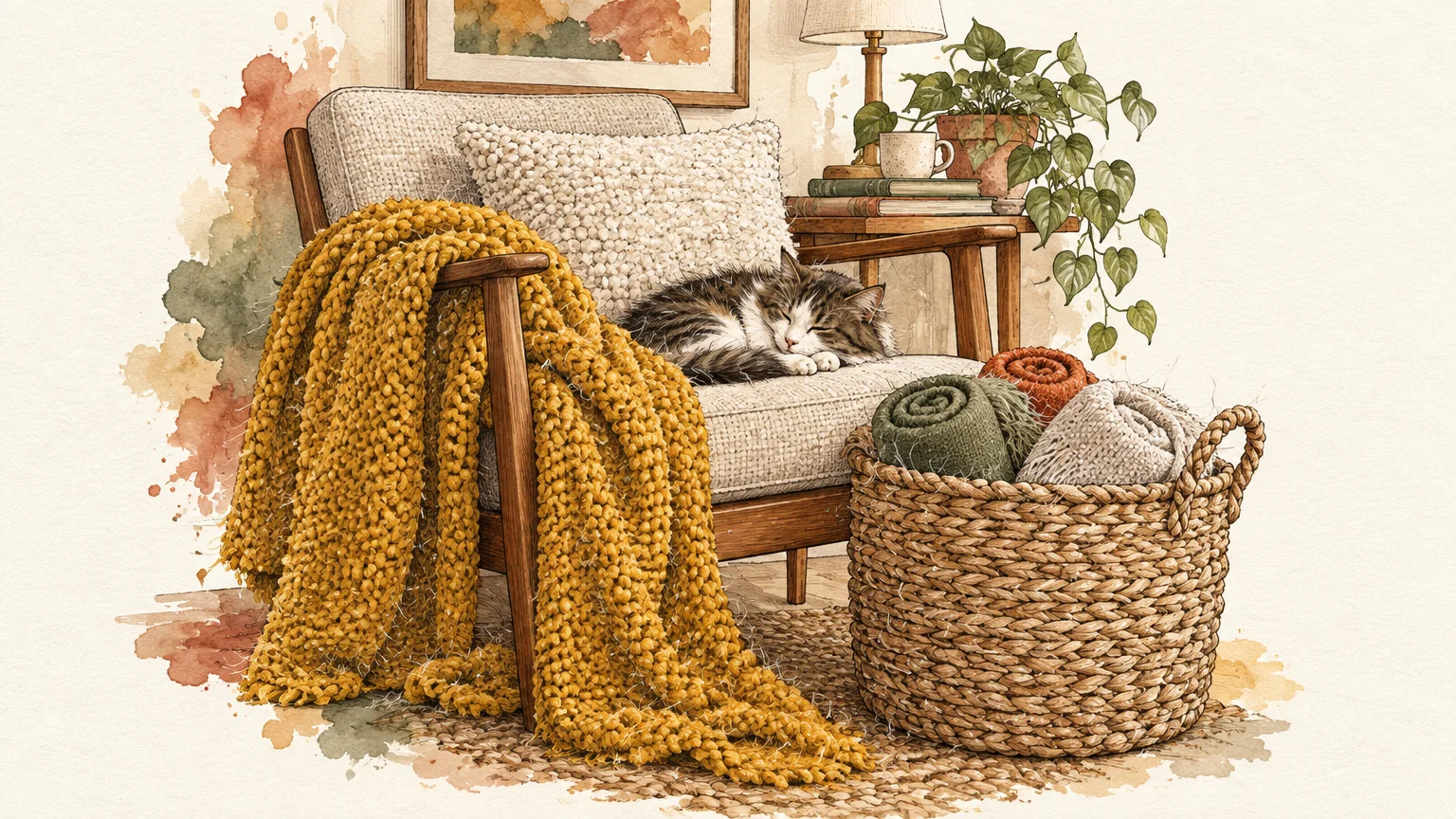
Chunky knit blankets and waffle-weave accent pillows offer ideal texture for anchoring shed fur. Dogs and cats naturally rub against soft cushions, embedding undercoat fur into textile loops.
Woven storage baskets placed on the floor also catch passing fur on rough wicker splints. Wicker creates mechanical friction that snags shedding as pets brush past the basket.
Laundering these textured items without pretreating them often ruins washing machines. Wet hair clumps together and clogs drain pumps, creating expensive plumbing issues.
Techniques to Remove Pet Hair from Textured Textiles
- Place dry throw pillows and blankets into your clothes dryer on the no-heat air cycle.
- Tumble the items for ten minutes with two wool dryer balls to dislodge embedded hair.
- Empty your dryer lint trap halfway through the tumble cycle to maintain strong airflow.
- Brush the exterior of wicker and seagrass baskets using a stiff, dry dish scrub brush.
- Vacuum the loosened debris from the basket interior with an upholstery nozzle.
Wash slipcovers and blanket throws only after pulling out the bulk of the loose fur. This simple step keeps your washer clean and prevents fur from redepositing onto other laundry.
06 Fabric Lamp Shades and Wall Sconces
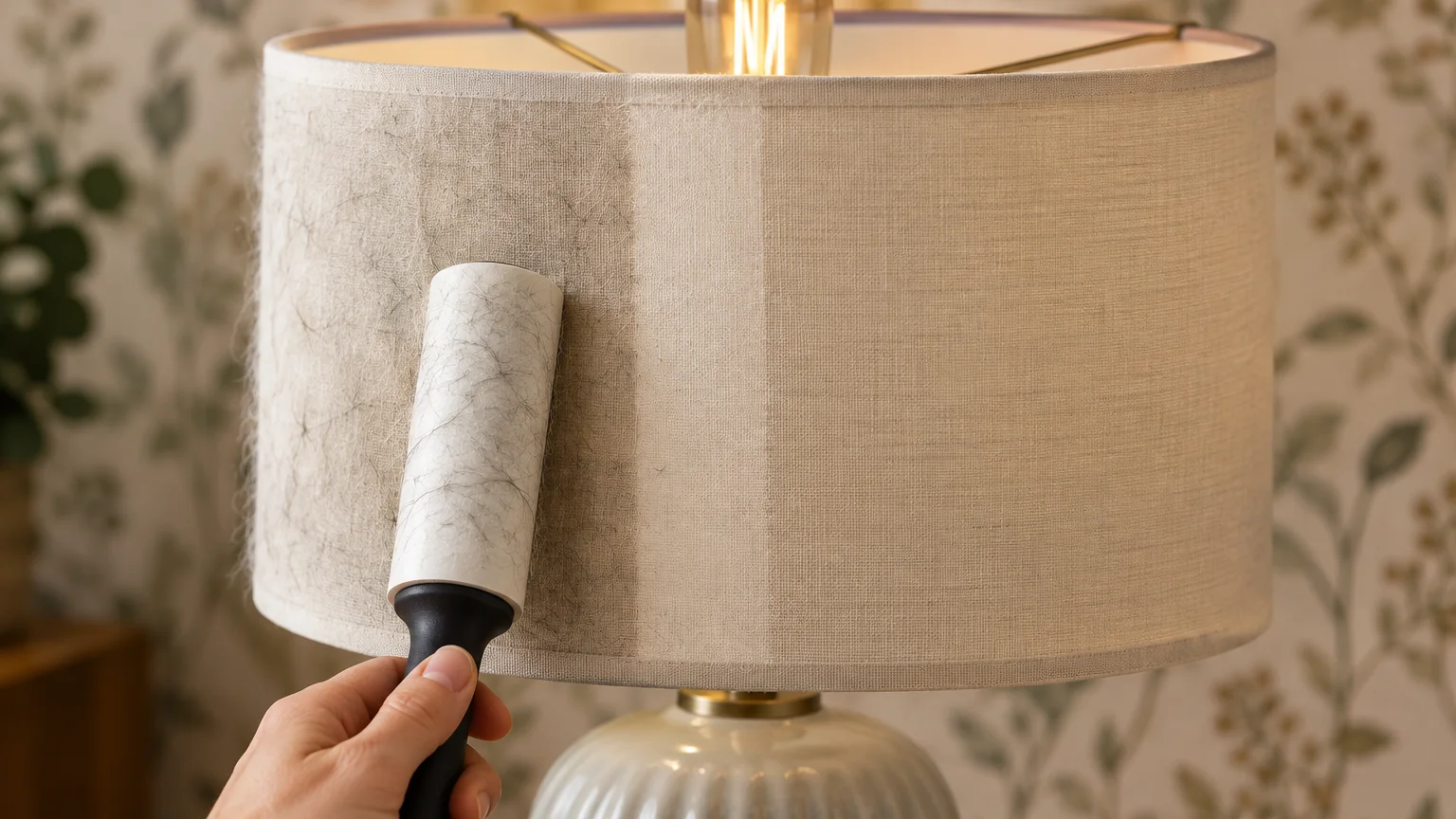
Lamps generate heat that draws cool, hair-laden air upward toward the shade. As warm air rises past the bulb, pet fur deposits onto the textured shade fabric.
Pleated fabric and linen shades act as fine screens that capture drifting animal dander. Because these fixtures sit at eye level, collected hair looks unsightly whenever you switch lights on.
Wiping delicate lamp shades with wet cloths creates muddy streaks that ruin the shade. Dry mechanical removal remains the safest option for these fragile surfaces.
Safe Lamp Shade Cleaning Steps
Unplug the lamp from the electrical wall outlet before beginning your cleaning work. Let the light bulb cool down completely to avoid accidental burns.
Roll an extra-sticky masking tape lint roller gently down each shade panel. Support the inside of the shade with your free hand to prevent creasing the material.
Use a dry, soft-bristled paintbrush to whisk pet hair out of delicate shade pleats. Direct the sweeping motion downward toward the tabletop where you can vacuum it easily.
07 Entertainment Centers, Cable Clusters, and Subwoofers
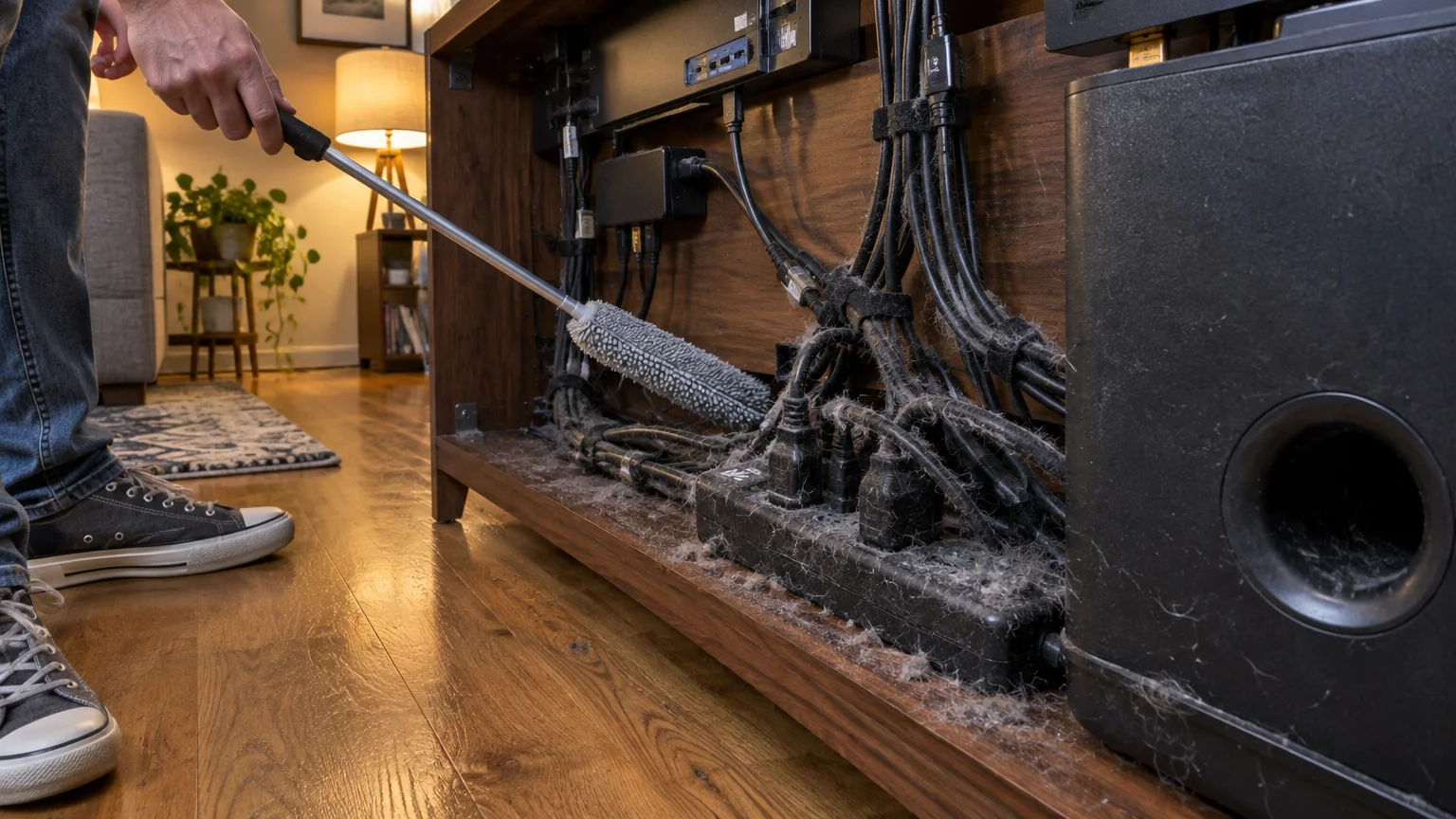
Modern living room electronics pull air continuously through active cooling intake vents. Televisions, streaming consoles, and audio receivers suck in surrounding pet fur like miniature vacuums.
Electrical cords clustered behind media consoles generate electromagnetic fields that draw floating fur. These messy cable bundles quickly turn into dense, dusty hairballs.
Subwoofers sitting directly on carpets vibrate continuously during use. These microscopic vibrations pull loose fur deep into the fabric speaker grilles.
Streamlining Electronics and Cable Zones
Power down and unplug delicate electronic consoles before attempting to clear hair buildup. Safety comes first whenever you work around sensitive circuit boards and power lines.
Clear cooling vents using a vacuum hose fitted with a dedicated antistatic brush. Avoid blowing compressed air into vents, which merely pushes pet hair deeper inside components.
Wrap loose cords together inside split-tubing cable sleeves or zippered neoprene organizers. Smooth cable bundles resist static cling and allow dusters to glide over them effortlessly.
Wipe speaker grille cloth with an ordinary dry foam craft block. The dense foam generates just enough friction to lift pet hair without stretching the grille fabric.
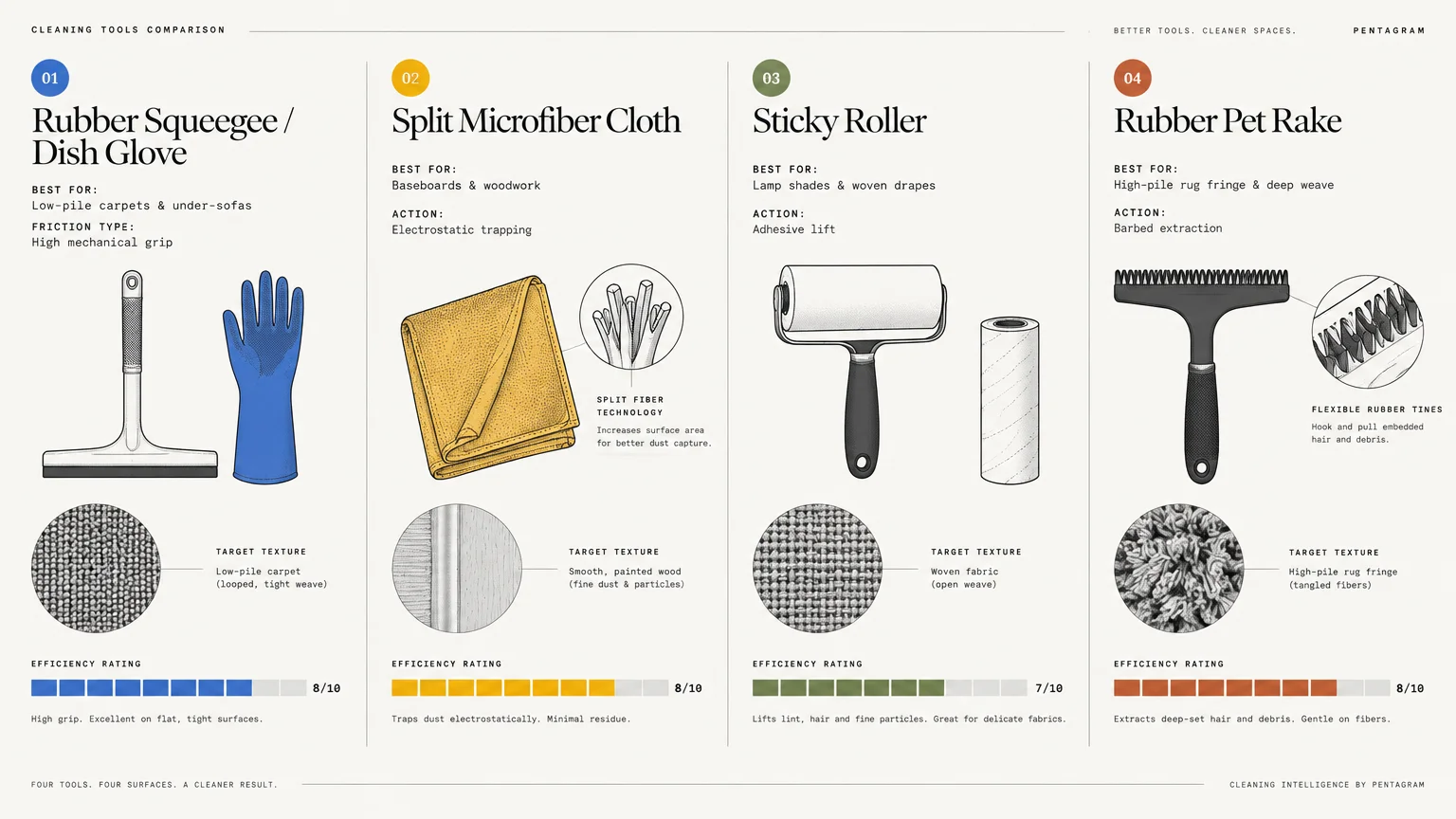
Mechanical Pet Hair Removal Tools Compared
Different surfaces in your living room respond best to specific mechanical actions. Using the wrong tool can damage sensitive fabrics or push hair deeper into structural crevices.
Selecting the right tool saves you time and protects your furniture investments. Refer to the reference table below to match tools with their ideal surfaces.
| Cleaning Tool | Target Surface | Operating Mechanism | Surface Safety Notes |
|---|---|---|---|
| Rubber Squeegee | Rugs, carpet borders, low-pile upholstery | Frictional shear creates static clumping | Safe for pile; avoid snagging loose threads |
| Latex or Rubber Glove | Sofa dust covers, curved cushions, drapes | Natural grip rolls fur into easy ropes | Safe for almost all woven materials |
| Used Dryer Sheet | Painted baseboards, trim, wooden legs | Leaves light antistatic surface film | Test hidden spot on antique wood finishes |
| Dense Dry Foam Block | Speaker grilles, textured wall sconces | Surface grip without moisture or residue | Extremely gentle on delicate, thin weaves |
| Stiff Paintbrush | Lamp shade pleats, intricate carving | Flicks hair out of deep structural grooves | Use natural bristles to prevent scratches |
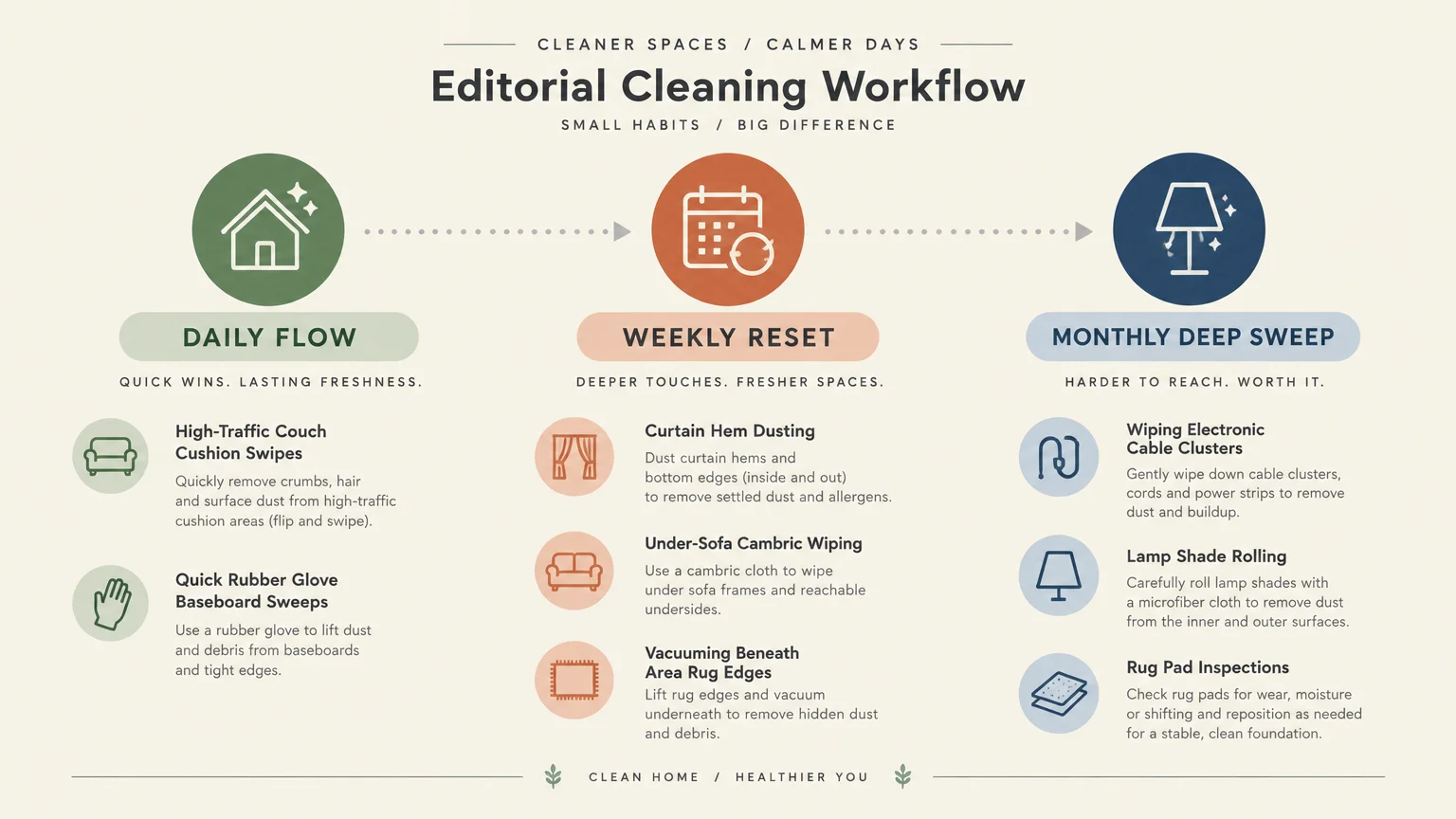
A Manageable Living Room Pet Hair Maintenance Schedule
Cleaning with pets becomes exhausting if you try to tackle every hotspot every afternoon. Breaking tasks into practical intervals keeps hair under control without consuming your free time.
Pairing quick weekly touchups with targeted monthly deep cleaning keeps pet fur manageable. Consistency prevents hair from matting into permanent textile stains.
Weekly Quick-Clear Routine (10 Minutes)
- Sweep a rubber squeegee around the immediate perimeter of your main area rug.
- Roll a sticky tape tool over the bottom hem of your window drapes.
- Wipe the top ledge of your main baseboards with a dry microfiber wand.
- Empty the vacuum canister or install a fresh bag before airflow drops.
Monthly Deep Maintenance (30 Minutes)
- Pull sofas forward to vacuum the undercarriage and wipe the cambric dust cover.
- Tumble living room throw blankets and pillow shells through an unheated dryer cycle.
- Dust behind the television console and wipe down enclosed cable management sleeves.
- Comb through the fringe on area rugs with a wide-tooth grooming comb.
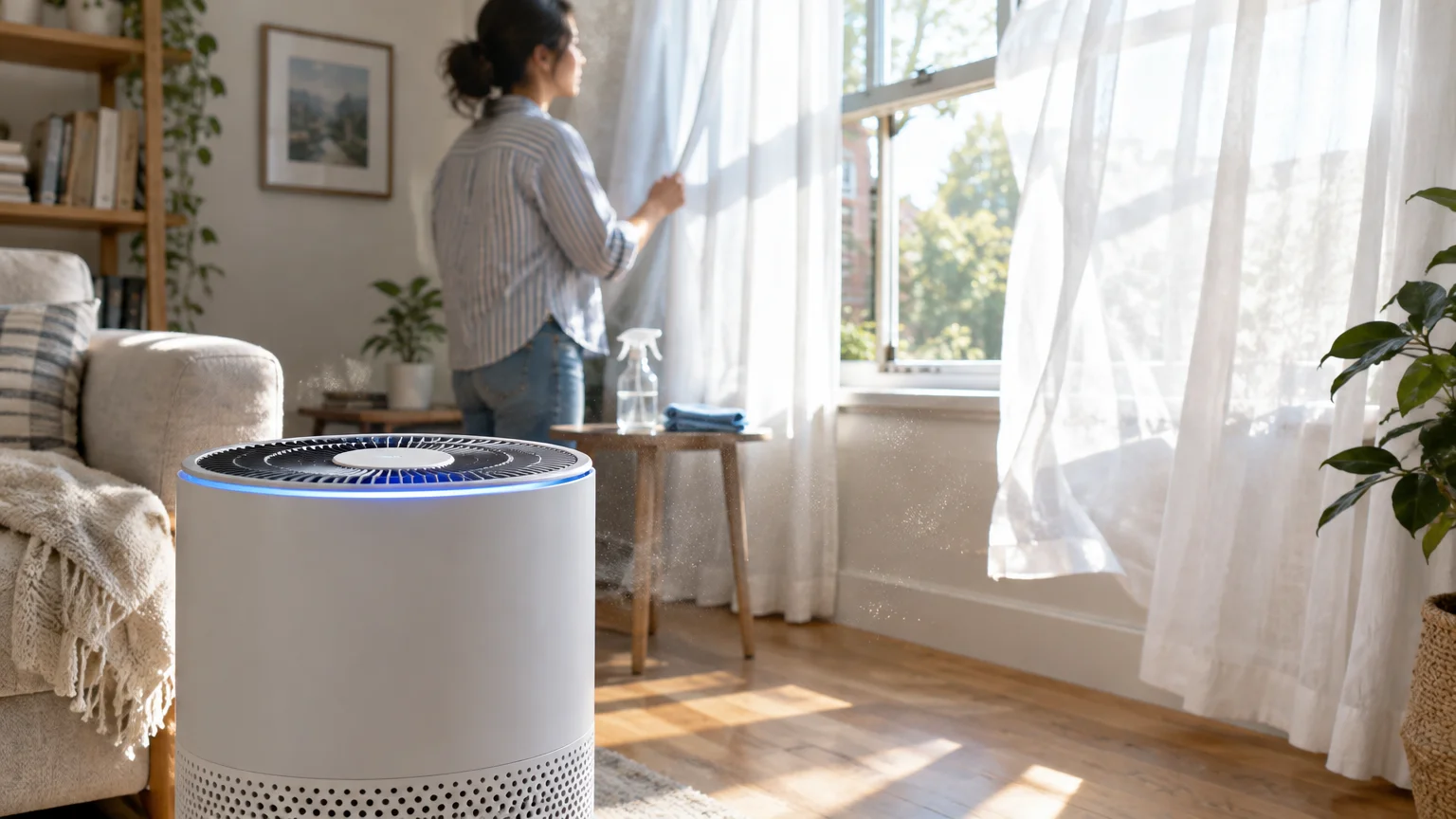
Protecting Indoor Air and Pet Health During Cleaning
Disturbing dry pet hair releases fine particles of animal dander and dried saliva into the air. These airborne allergens can trigger sneezing, watery eyes, and respiratory discomfort.
Always use a certified vacuum cleaner with an airtight HEPA exhaust system. The Environmental Protection Agency provides detailed HEPA guidelines explaining how high-efficiency particulate air filtration captures microscopic dander particles down to 0.3 microns.
Vacuums without sealed HEPA systems blow fine dander directly back out the exhaust port. This creates an invisible haze of irritants that settles across your freshly dusted surfaces.
Select cleaning sprays that do not leave harmful chemical residues on living room textiles. Pets lick their paws and coats after lying on floors, ingesting whatever residues remain on your rugs.
Review safety guidance from the ASPCA Animal Poison Control Center before using commercial fabric deodorizers or antistatic solutions. Simple water-dampened microfiber cloths remain the safest cleaning tools for pet-friendly homes.
Regular grooming significantly lowers the volume of hair your home collects every week. For comprehensive pet hygiene advice, consult the Centers for Disease Control and Prevention healthy pets resource to maintain a safe home environment for everyone.
Your Next Step for a Fur-Free Living Room
Pick one hotspot from this list right now—your sofa dust cover or baseboards make fast targets. Spend five minutes testing a damp rubber glove or squeegee along that single surface to see how much hidden pet hair you lift.