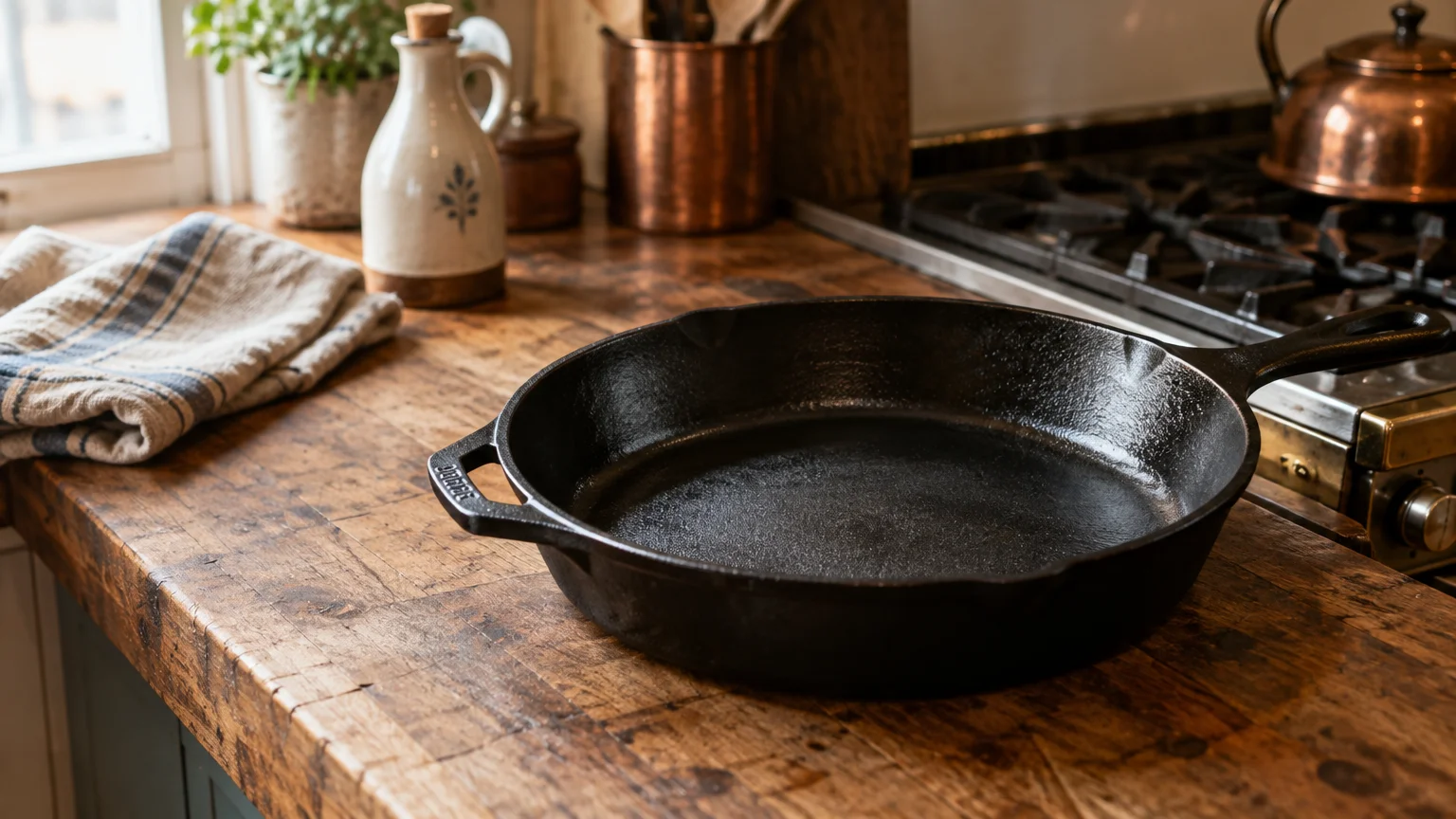
A well-seasoned cast iron skillet delivers an effortless nonstick cooking surface that can last for generations. However, a few everyday cleaning habits can quickly strip that hard-earned protective patina and invite stubborn rust.
Understanding the science behind cast iron seasoning care protects your culinary investment from accidental damage. You do not need an elaborate routine to keep your skillet slick, pristine, and ready for your next meal.
Avoid these common cast iron cleaning mistakes to preserve your pan’s polymerized oil barrier and ensure lifetime performance in your kitchen.
Mistake 1: Soaking the Skillet in the Sink
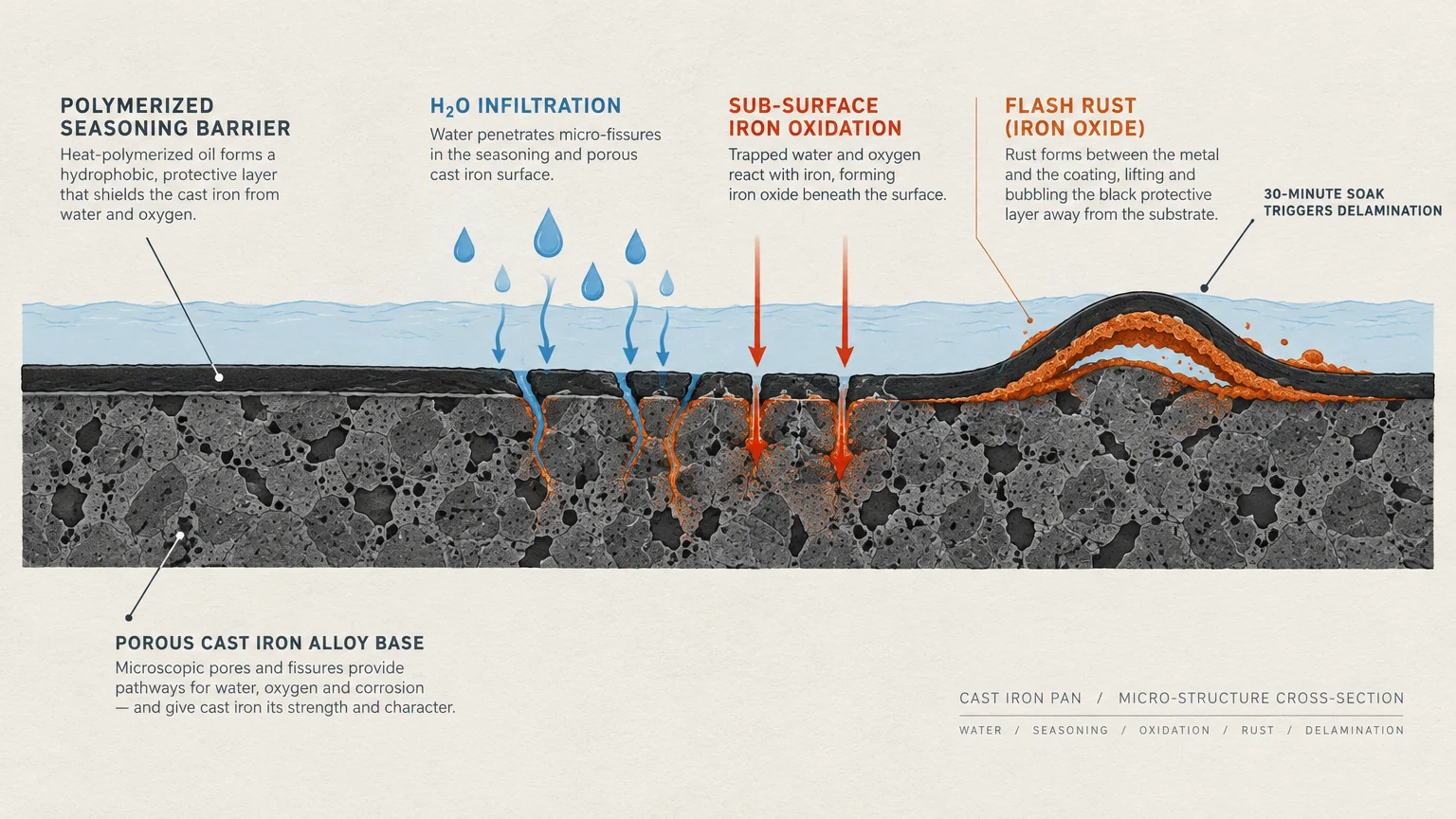
Placing a dirty skillet into a sink filled with soapy water seems like an effortless way to loosen stubborn food. For cast iron, however, soaking represents the fastest route to surface corrosion and ruined cast iron seasoning.
Cast iron is an alloy composed of iron and carbon that remains inherently porous beneath its dark sheen. When you submerge the skillet, water molecules slip past micro-fissures in the seasoning layer and reach the raw iron beneath.
Iron oxidizes almost immediately upon prolonged contact with moisture and oxygen. This chemical reaction produces iron oxide—commonly known as rust—which lifts the seasoning right off the metal.
Even a brief thirty-minute soak can loosen the bond between the iron and your carefully built patina. Once rust forms underneath the coating, the seasoning bubbles, flakes off, and exposes bare metal.
Instead of soaking, loosen stuck-on bits by simmering half an inch of water directly in the pan for two minutes. Burnt food lifts effortlessly; scrape the softened debris away using a flat wooden spatula.
Mistake 2: Running Your Pan Through the Dishwasher
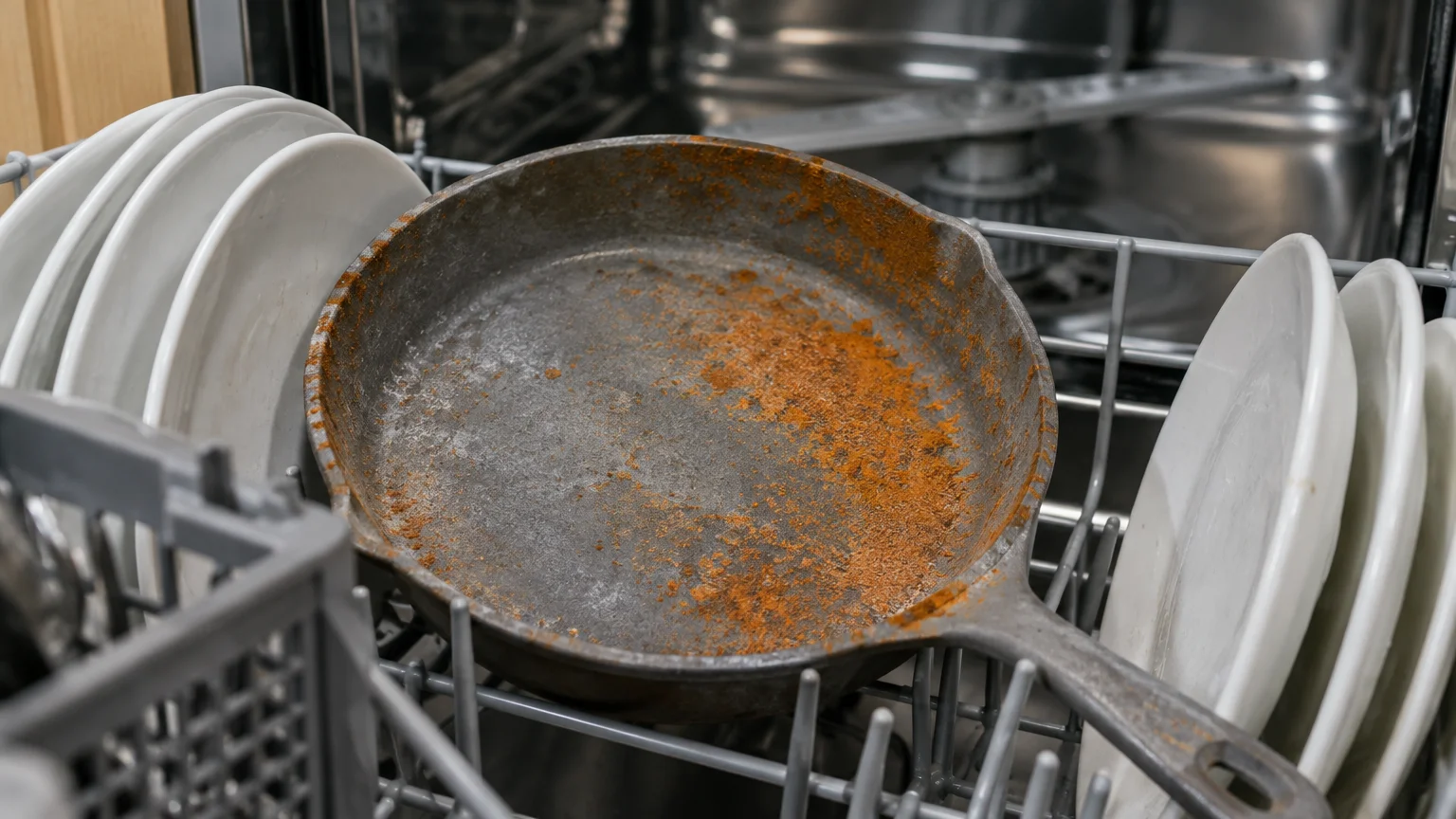
A dishwasher serves as an absolute death sentence for any seasoned iron cookware. Dishwashing cycles expose your cookware to aggressive alkaline chemicals, sustained high heat, and saturated humidity for over an hour.
Modern dishwasher detergents contain high concentrations of sodium carbonate and caustic phosphates. These aggressive cleaning agents chemically dissolve polymerized fat bonds just as effectively as commercial paint strippers.
According to official care guidance from Lodge Cast Iron, harsh dishwasher detergents strip the protective oil layer completely. The machine leaves your pan dull, gray, and coated in a destructive layer of orange flash rust.
Restoring a dishwasher-damaged pan requires aggressive mechanical sanding and multiple oven seasoning rounds from scratch. Always wash your skillet manually at the sink to avoid hours of unnecessary restoration work.
Mistake 3: Air-Drying on the Counter or Drying Rack
Setting your freshly rinsed skillet onto a dish drying rack feels like standard kitchen cleanup protocol. With cast iron, leaving the surface wet invites atmospheric moisture to initiate oxidation within minutes.
Standard cotton dish towels remove bulk surface water, but they leave micro-droplets trapped inside the pan’s textured iron pores. Evaporating water draws oxygen directly against the raw metal, creating a dull orange film called flash rust.
Flash rust destroys your pan’s smooth finish and taints delicate foods with an unpleasant metallic aftertaste. You can prevent this oxidation entirely by making heat your primary drying tool.
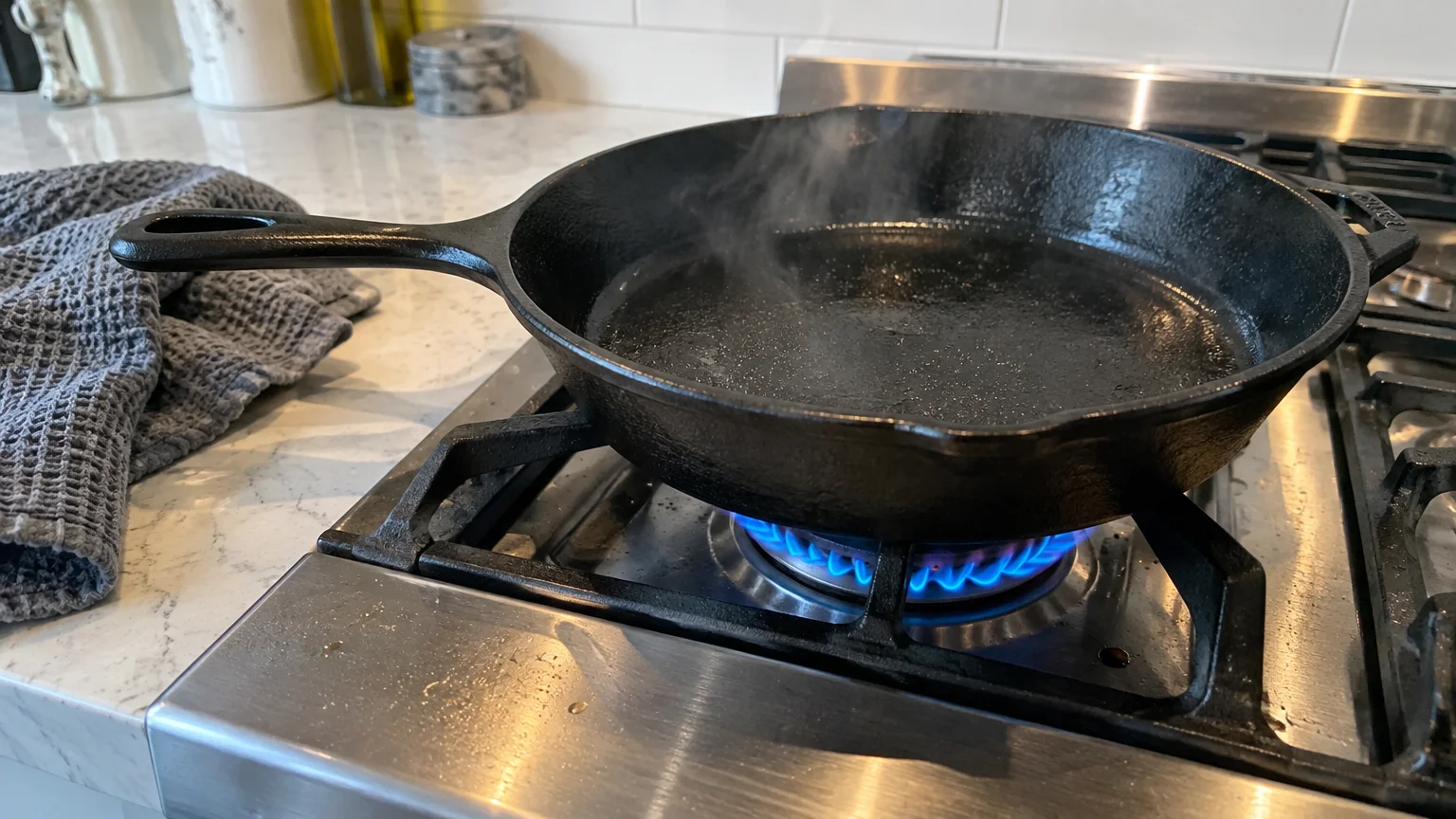
Place your towel-dried pan over low heat on your stove burner for two to three minutes until all moisture evaporates completely. This gentle thermal evaporation drives every microscopic drop of water out of the iron’s textured surface.
Mistake 4: Scrubbing with Harsh Metal Abrasives
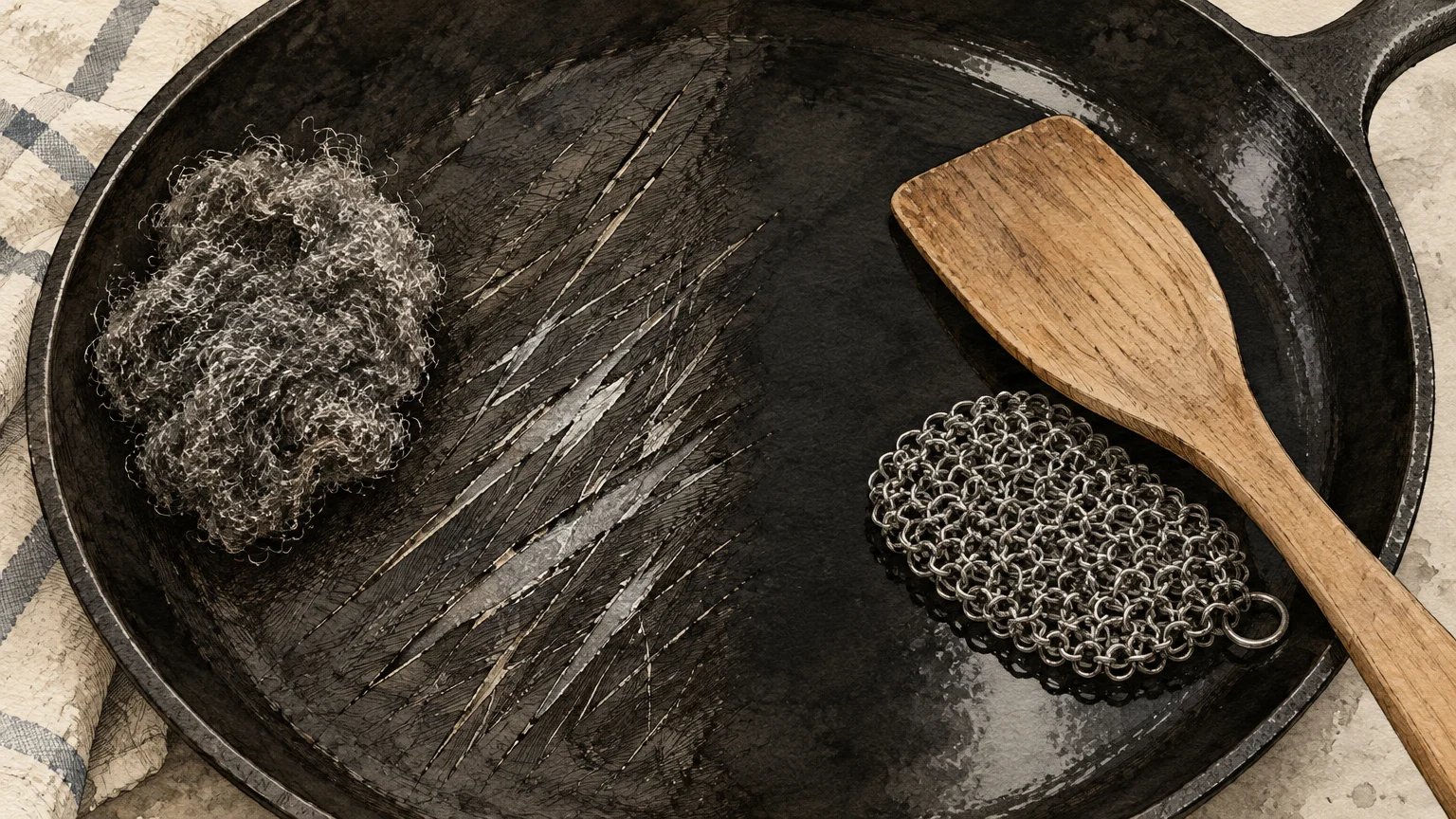
When food scorches onto cooking surfaces, reaching for steel wool or copper scouring pads seems logical. However, these aggressive scouring pads act like coarse sandpaper against your skillet’s delicate polymerized surface.
Steel wool features sharp edges that slice directly through hardened oil layers—leaving raw iron exposed to ambient moisture and food acids. Vigorous scrubbing with metallic pads gouges your seasoned surface, creating uneven cooking spots that grab onto fresh food.
A smooth stainless steel chainmail scrubber offers a far safer mechanical cleaning alternative. The rounded rings glide across stuck food deposits, dislodging burnt solids without biting into the cured patina underneath.
Alternatively, pour two tablespoons of coarse kosher salt into the warm pan and scrub with a dry folded cloth. The coarse salt granules act as a natural, food-safe abrasive that shears off debris while leaving seasoning intact.
Mistake 5: Fearing Soap and Allowing Rancid Grease to Accumulate
The persistent myth that soap destroys cast iron stems from historical frontier days when soap contained harsh, unreacted lye. Free lye readily breaks down organic fats, which stripped early cast iron cookware down to raw metal.
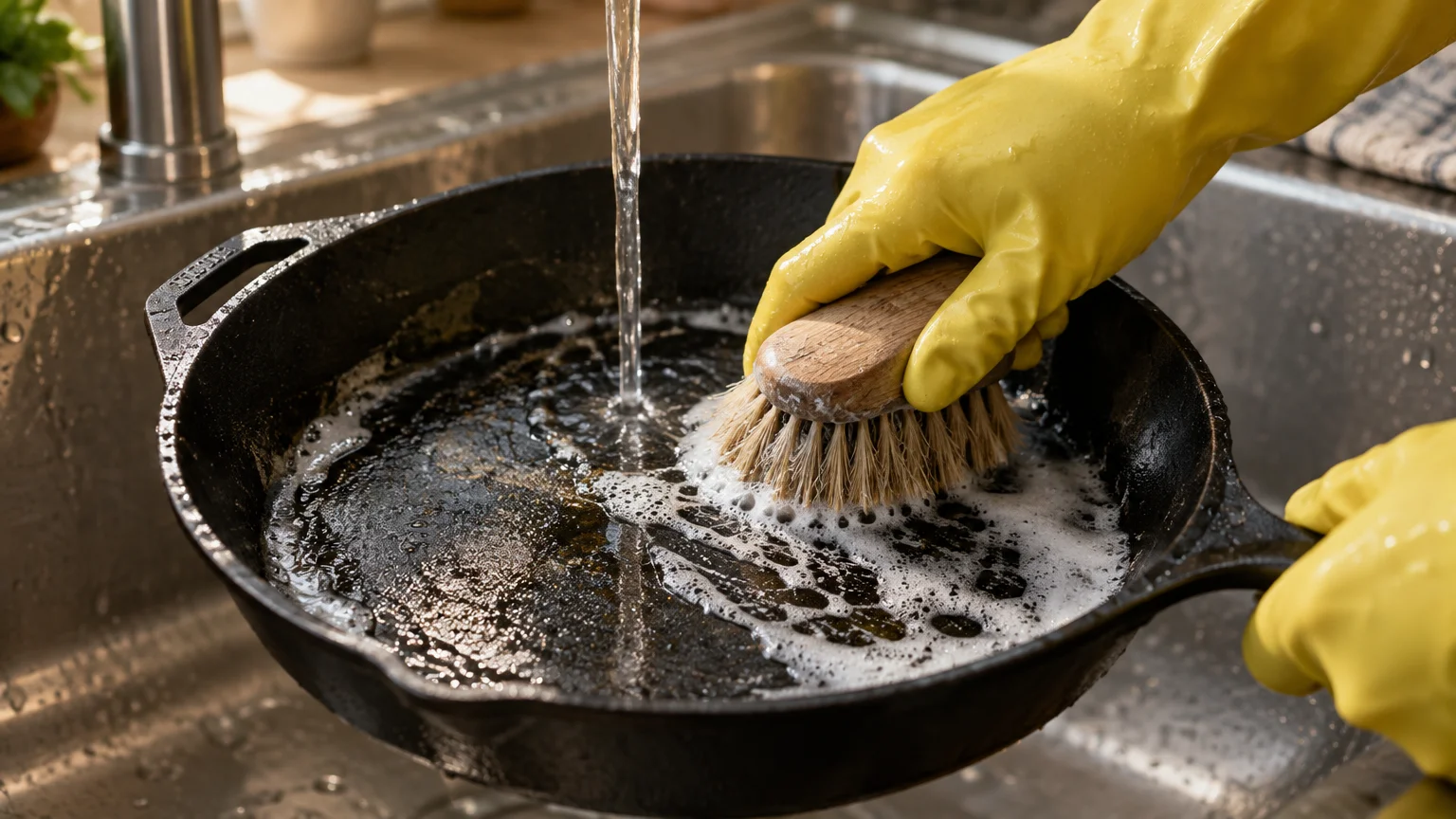
Modern liquid dish soaps rely on gentle surfactants; they trap free grease without dissolving cured polymers. As culinary scientists at Serious Eats explain, cured seasoning is no longer oil, but a tough, plastic-like polymer cross-linked directly to the metal.
Skipping soap altogether allows unpolymerized cooking fats and animal greases to pool on the cooking surface. Over several days, these leftover lipids oxidize, turn rancid, and impart sour flavors into subsequent meals.
Rancid grease layers also create a gummy, sticky varnish that attracts dust and traps moisture against the iron. A few drops of mild dish soap wash away dirty fats while leaving your polymerized base layer completely unharmed.
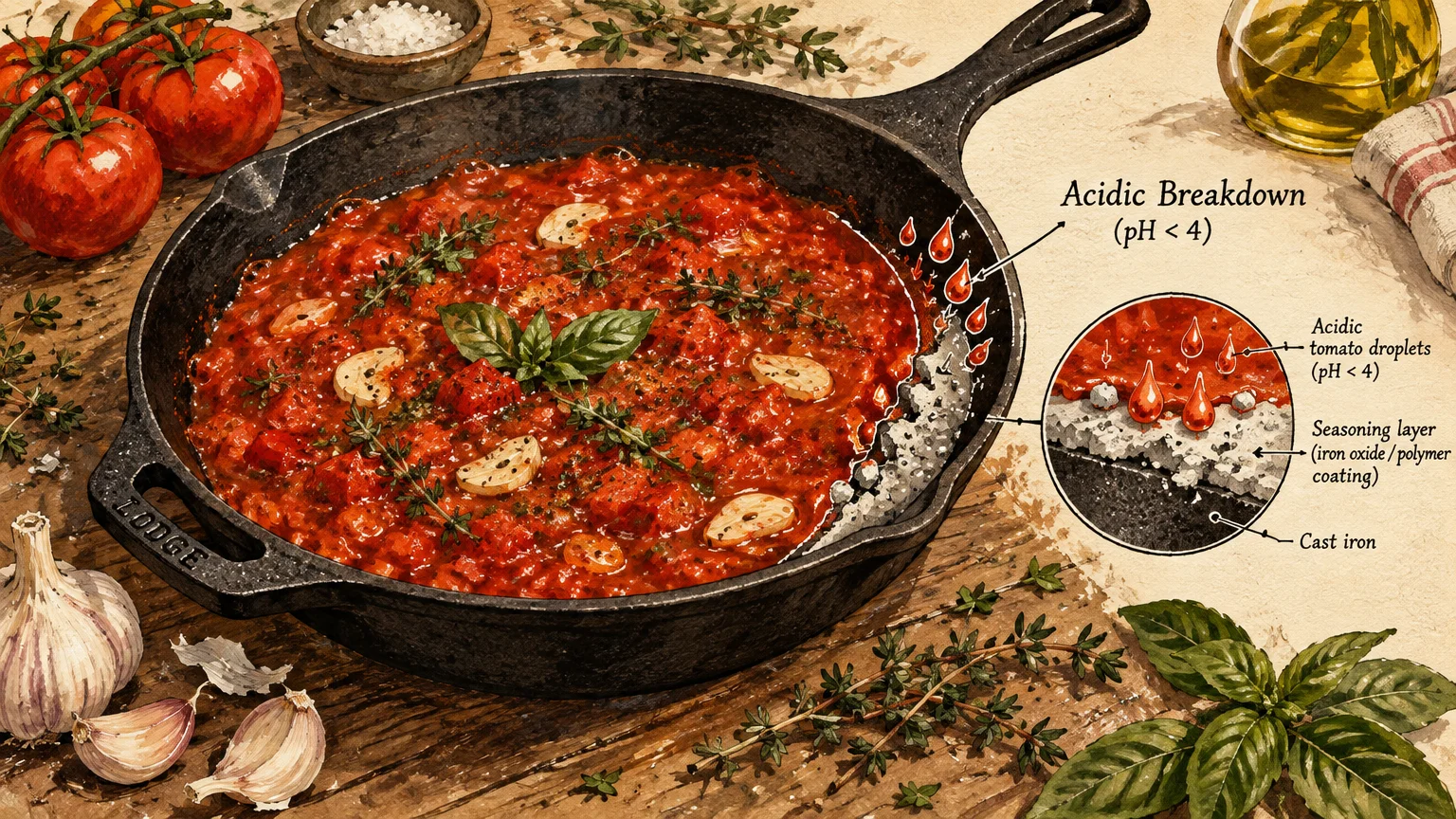
Mistake 6: Simmering Acidic Foods on Immature Seasoning
Preparing quick pan sauces with a splash of wine or lemon juice rarely damages a well-established skillet. However, simmering acidic ingredients for extended periods presents serious chemical hazards for younger seasoning layers.
Highly acidic ingredients like crushed tomatoes, citrus juices, and vinegar chemically eat through thin, fragile oil polymers. Once the acid dissolves the protective barrier, it begins reacting directly with the raw iron base underneath.
This chemical reaction causes your food to turn a muddy gray color while creating a sharp, bitter metallic taste. The USDA Food Safety and Inspection Service notes that while dietary iron is safe, excessive chemical leaching ruins recipe flavor profiles and damages cookware surfaces.
Reserve heavy tomato sauces, wine braises, and citrus glazes for enameled cast iron or stainless steel cookware instead. Once your skillet has accumulated months of solid, dark seasoning, it can tolerate brief contact with mild acids without degradation.
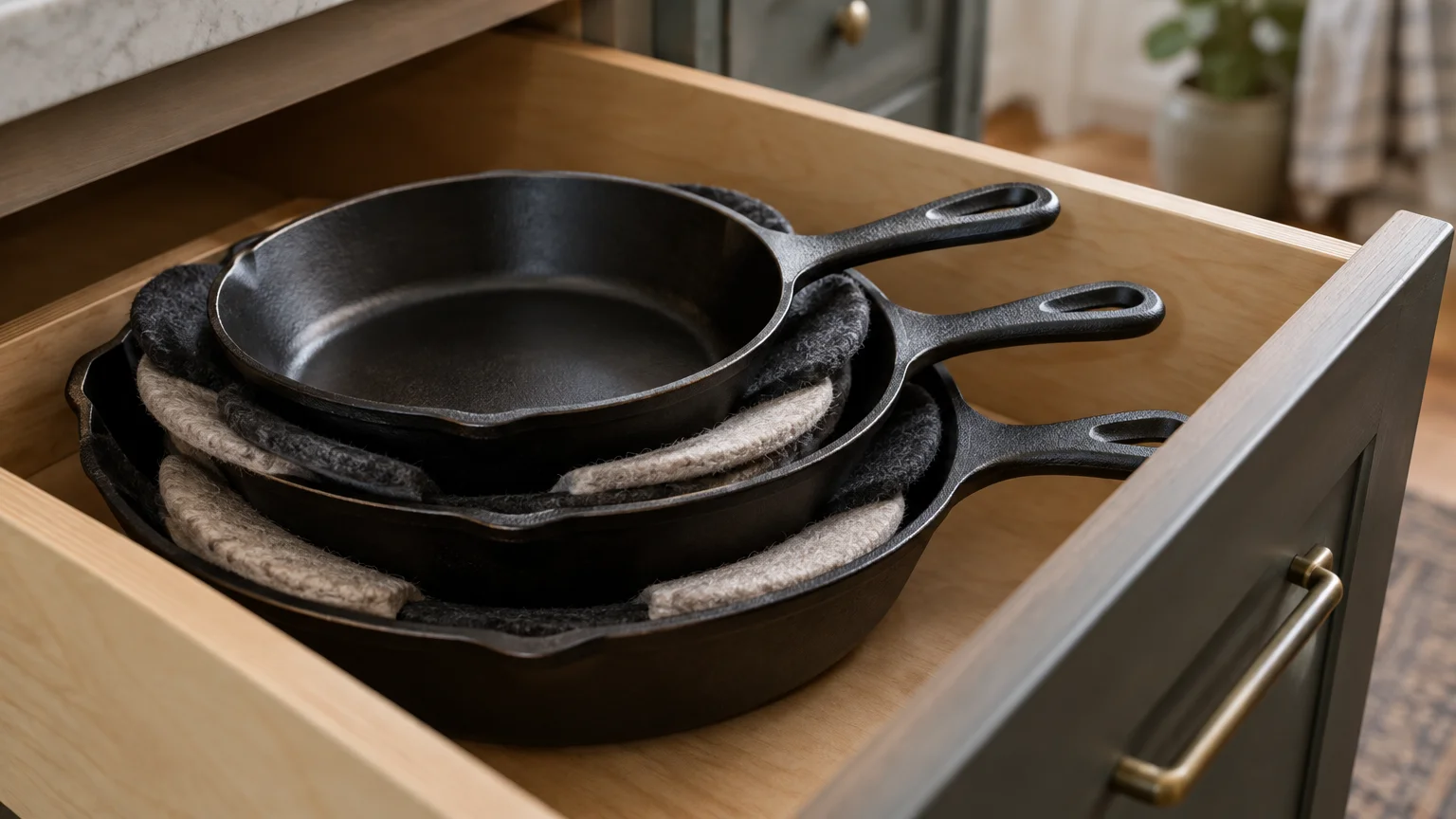
Mistake 7: Storing Skillets Nested Without Protection
Stacking heavy cast iron pans directly inside one another in dark cabinets saves vital kitchen storage space. Unfortunately, the rough, heavy underside of one skillet can gouge and abrade the cooking surface of the pan beneath it.
Every time you slide nested pans into your cupboards, metal-on-metal friction chips away your cured seasoning layer. Furthermore, dark enclosed storage cabinets trap lingering ambient humidity, fostering an ideal microclimate for rust to develop between touching pans.
You can prevent impact chipping and rust formation by placing a protective buffer between stacked pans. Simple felt pan protectors, thick silicone mats, or even two folded paper towels cushion the contact surfaces effectively.
Paper towels offer an added advantage by absorbing ambient moisture inside your cabinets during humid weather. If kitchen space allows, hang your skillets on a wall-mounted rack to ensure superior airflow and eliminate contact damage completely.
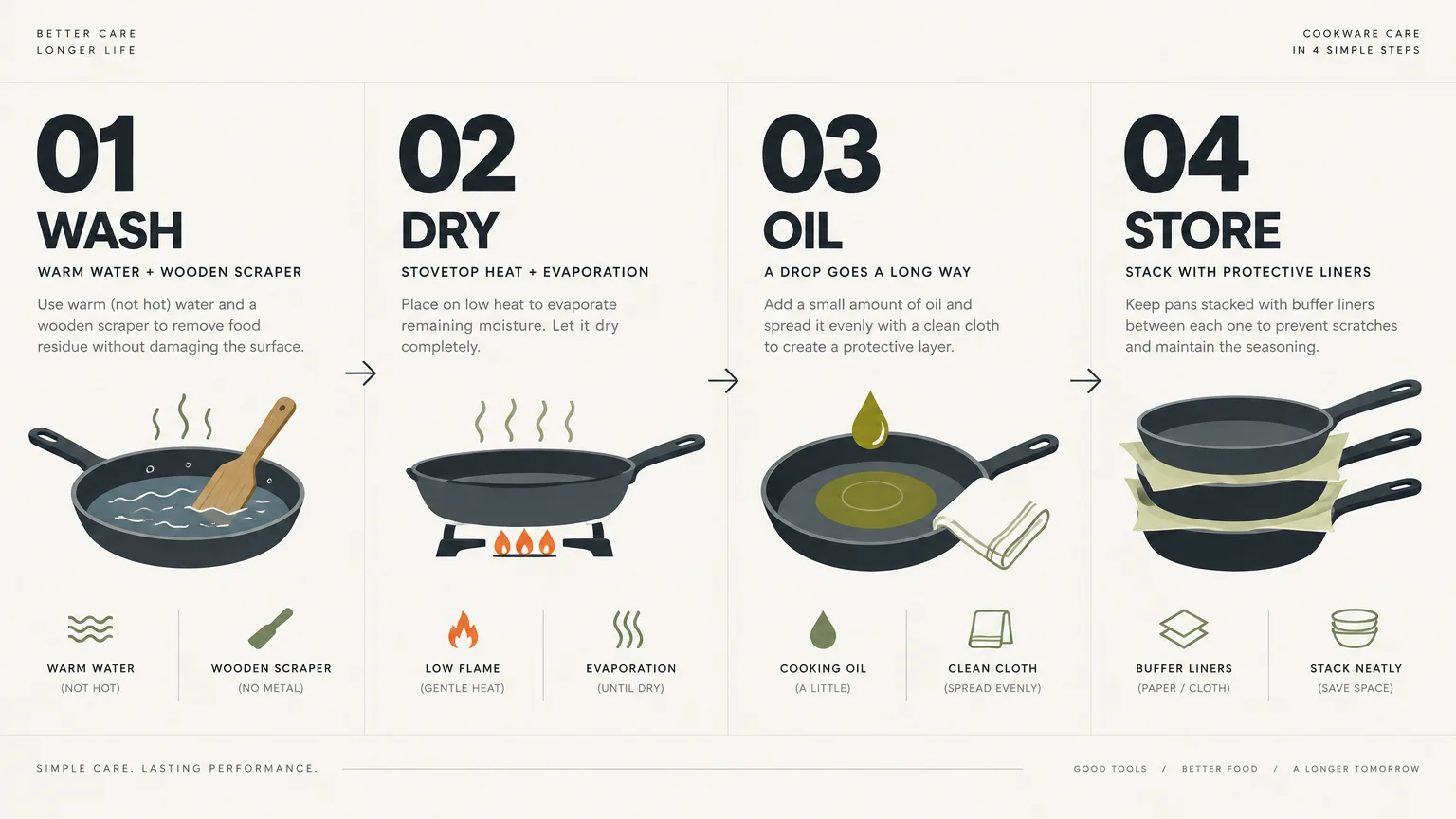
How to Clean a Cast Iron Skillet the Right Way
Mastering proper cast iron seasoning care requires a fast, consistent cleanup routine right after cooking. Follow these straightforward steps every time you use your skillet to maintain an immaculate, naturally nonstick cooking surface.
-
Clean while warm: Wash the skillet while it remains warm to the touch, as lingering heat softens cooking oils and debris. Never run cold water over a scorching pan, which can crack the iron.
-
Scrub gently with mild soap: Rinse the pan with hot water, add a drop of mild dish soap, and scrub using a nylon brush. For stubborn residues, scrub the surface with coarse kosher salt or a chainmail scrubber.
-
Dry completely with stove heat: Wipe the pan with a clean lint-free cloth, then place it onto a stove burner over low heat. Allow the heat to warm the iron for two minutes until every trace of moisture evaporates.
-
Apply a micro-layer of oil: Pour a half-teaspoon of neutral, high-smoke-point oil into the warm pan. Spread the oil evenly across the entire interior cooking surface using a clean paper towel.
-
Buff away all excess oil: Take a fresh, dry paper towel and vigorously wipe the pan until the surface looks completely matte. Leaving wet oil behind causes sticky, gummy deposits during cabinet storage.
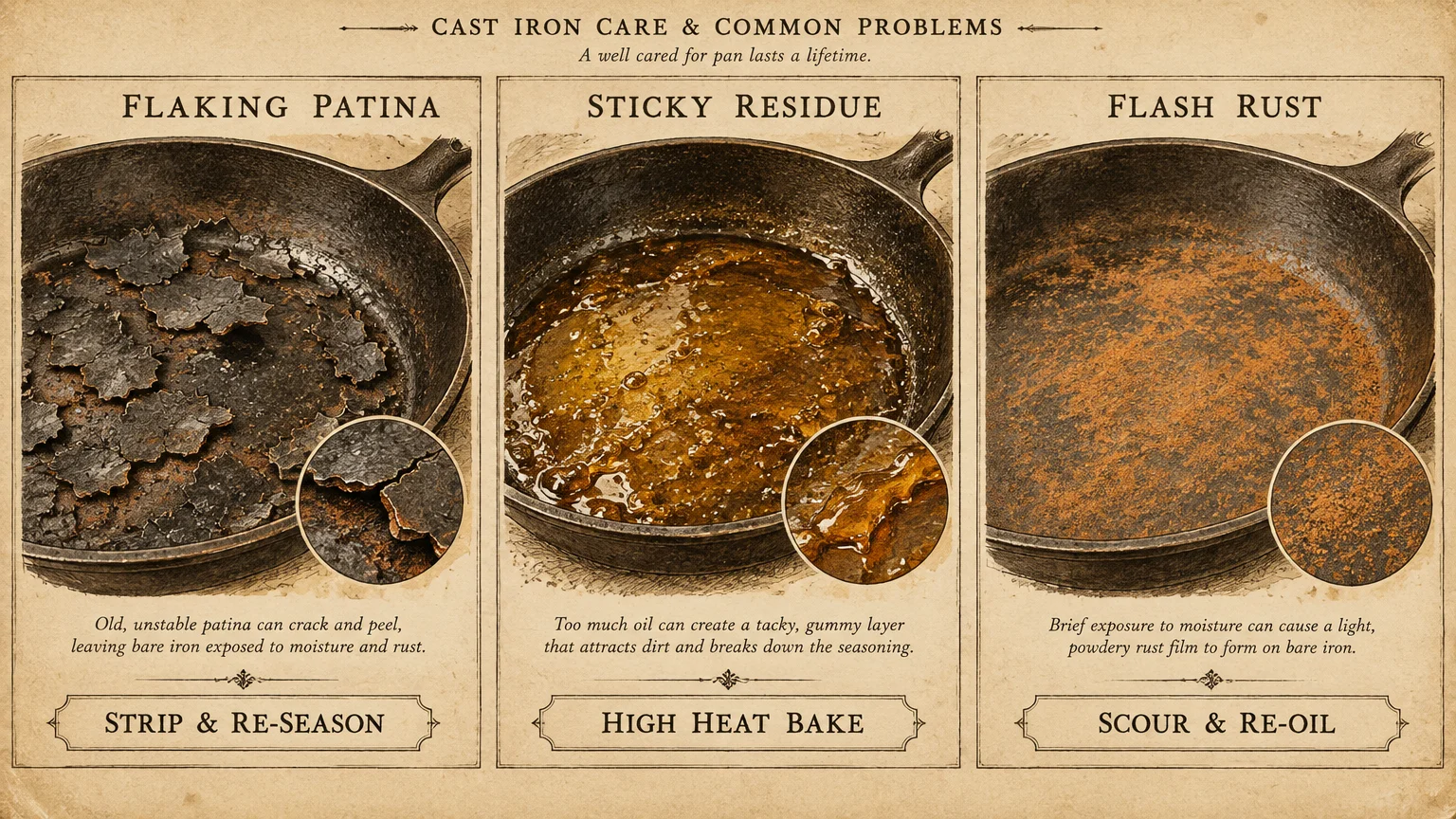
Troubleshooting Ruined Cast Iron Seasoning
Even diligent cooks encounter occasional seasoning issues due to cooking mishaps or storage errors. Use this troubleshooting guide to identify common problems and restore your skillet to peak condition quickly.
| Visible Symptom | Root Cause | Corrective Action |
|---|---|---|
| Sticky or Gummy Surface | Excess oil applied during maintenance without sufficient heating to cure the layer. | Bake pan upside down at 450°F for one hour to harden uncured oil, or scrub with hot water and coarse salt. |
| Orange Flash Rust | Water left on surface during air-drying or prolonged soaking in the sink. | Scrub rust away with fine steel wool, wash with mild soap, dry with heat, and apply fresh seasoning. |
| Flaking Black Flecks | Burnt food residue mistaken for seasoning, or degradation from prolonged acidic cooking. | Vigorously scrub away loose flecks with chainmail or a stiff brush, then build two fresh oil layers. |
| Dull Gray Patches | Dishwasher cycle or harsh lye-based cleaning chemicals stripped the polymer patina. | Wash thoroughly, heat pan on stovetop, apply thin oil coats, and bake multiple rounds at 450°F. |
Sticky oil surfaces occur when you apply too much oil or heat the pan insufficiently during maintenance. Heat the skillet upside down in a 450-degree oven for one hour to fully polymerize the excess oil layer.
If you encounter flaking black specks in your food, your underlying seasoning has lost its mechanical bond to the iron. Scrub away all loose particles with a stiff brush and rebuild two fresh protective layers using cooking oil.
Choosing the Best Oils for Cast Iron Seasoning Care
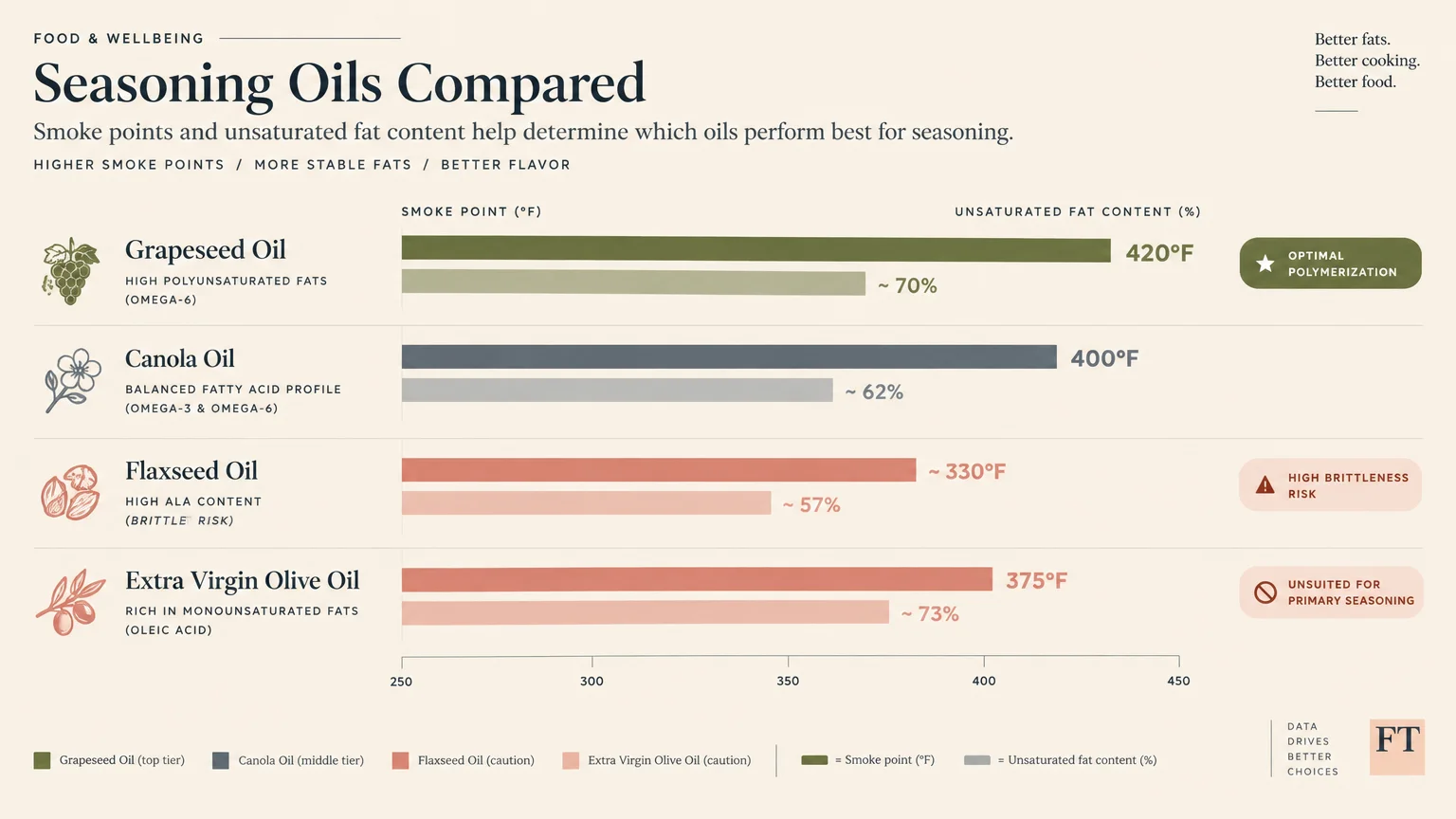
Not all culinary fats perform equally when building and sustaining a durable nonstick seasoning layer. Successful seasoning relies on oil polymerization, a process where unsaturated fatty acids oxidize and link into a tough protective plastic.
Polyunsaturated oils rich in linoleic acids polymerize faster and produce much harder, more resilient surface coatings. High smoke points also allow these oils to withstand intense cooking temperatures without burning away prematurely.
Grapeseed oil remains an industry standard because it balances high polyunsaturated fat content with a 420-degree smoke point. Canola oil and refined sunflower oil also offer budget-friendly, widely accessible choices that create durable seasoning films.
Avoid using butter, bacon grease, or unrefined olive oil for routine skillet maintenance and seasoning storage. These fats contain water, milk solids, or saturated fatty chains that degrade quickly, smoke at low heat, and turn rancid in storage.
Scientific research published by the American Chemical Society demonstrates that highly unsaturated drying oils form denser polymer matrices than saturated animal fats. Choose your maintenance oils strategically to establish lasting nonstick properties on every skillet.
Essential Kitchen Tools for Cast Iron Maintenance Tips
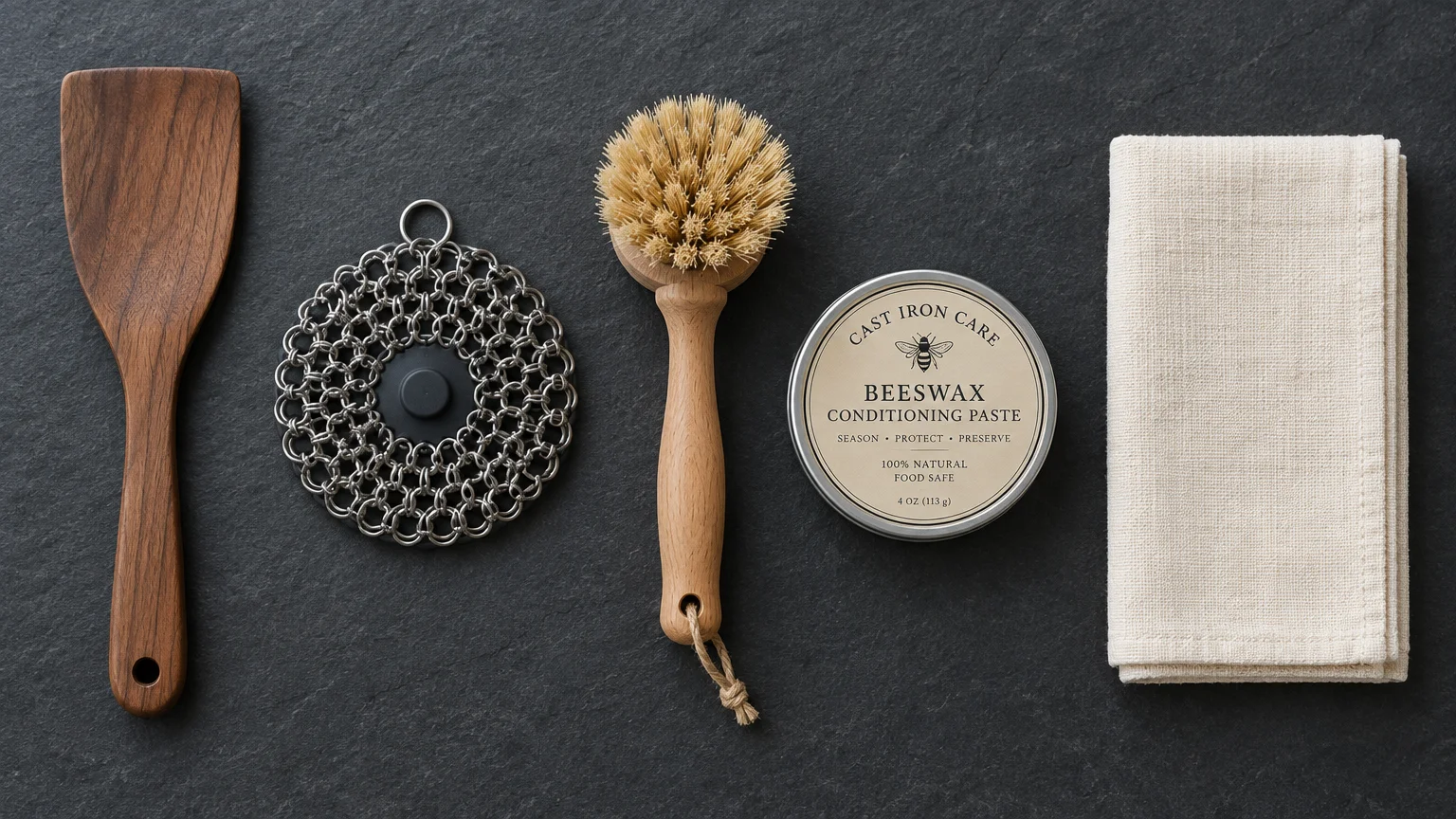
Equipping your kitchen sink with the right tools transforms cast iron cleanup from an intimidating chore into a thirty-second habit. Having purpose-built implements on hand eliminates the temptation to use destructive cleaning methods.
- Stainless steel chainmail scrubber: Smooth, interlocking rings dislodge burnt crusts quickly without gouging your cured seasoning base.
- Stiff nylon dish brush: Sweeps away daily food residues without stripping the oil layer or scratching the pan bottom.
- Rigid polycarbonate pan scrapers: Flat, beveled plastic edges lift stubborn charred food safely out of corners and flat surfaces.
- Lint-free cotton shop towels: Buffs maintenance oil onto iron surfaces without leaving paper lint or loose fibers behind.
- Cushioned felt pan protectors: Separates stacked cookware inside cabinets to stop metal-on-metal scratching and impact chipping.
Investing in durable, non-scratch accessories keeps your seasoning intact through years of high-heat searing and frying. Replace traditional abrasive sponges with these tools to streamline your daily cleanup routine.

Daily Cooking Habits That Protect Your Skillet
How you cook in your cast iron directly influences how clean and resilient your seasoning remains over time. Adopting smart culinary habits prevents heavy sticking before you ever carry your pan to the kitchen sink.
Always preheat your skillet over medium-low heat for three to five minutes before adding any cooking oil. Gradual preheating expands the iron evenly and minimizes microscopic pores where cool food can seize and stick stubbornly.
Add your cooking oil or fat only after the pan reaches proper cooking temperature. Cold oil poured into a cold skillet soaks into micro-pores and polymerizes unevenly, creating sticky residues that tear away delicate seasoning.
Allow meats and proteins to sear thoroughly before attempting to flip them in your pan. Well-seared proteins naturally release from polymerized iron once they form a crisp crust, leaving virtually no burnt debris behind.
Your Next Step for a Protected Skillet
Inspect your cast iron skillet today for signs of moisture dullness, flaking spots, or sticky grease accumulation. If your pan looks dry or feels slightly rough, warm it on the stove and apply a micro-layer of oil.
Wiping your pan thoroughly after every dinner creates an impenetrable barrier that repels rust and ensures effortless cleanup for decades to come.