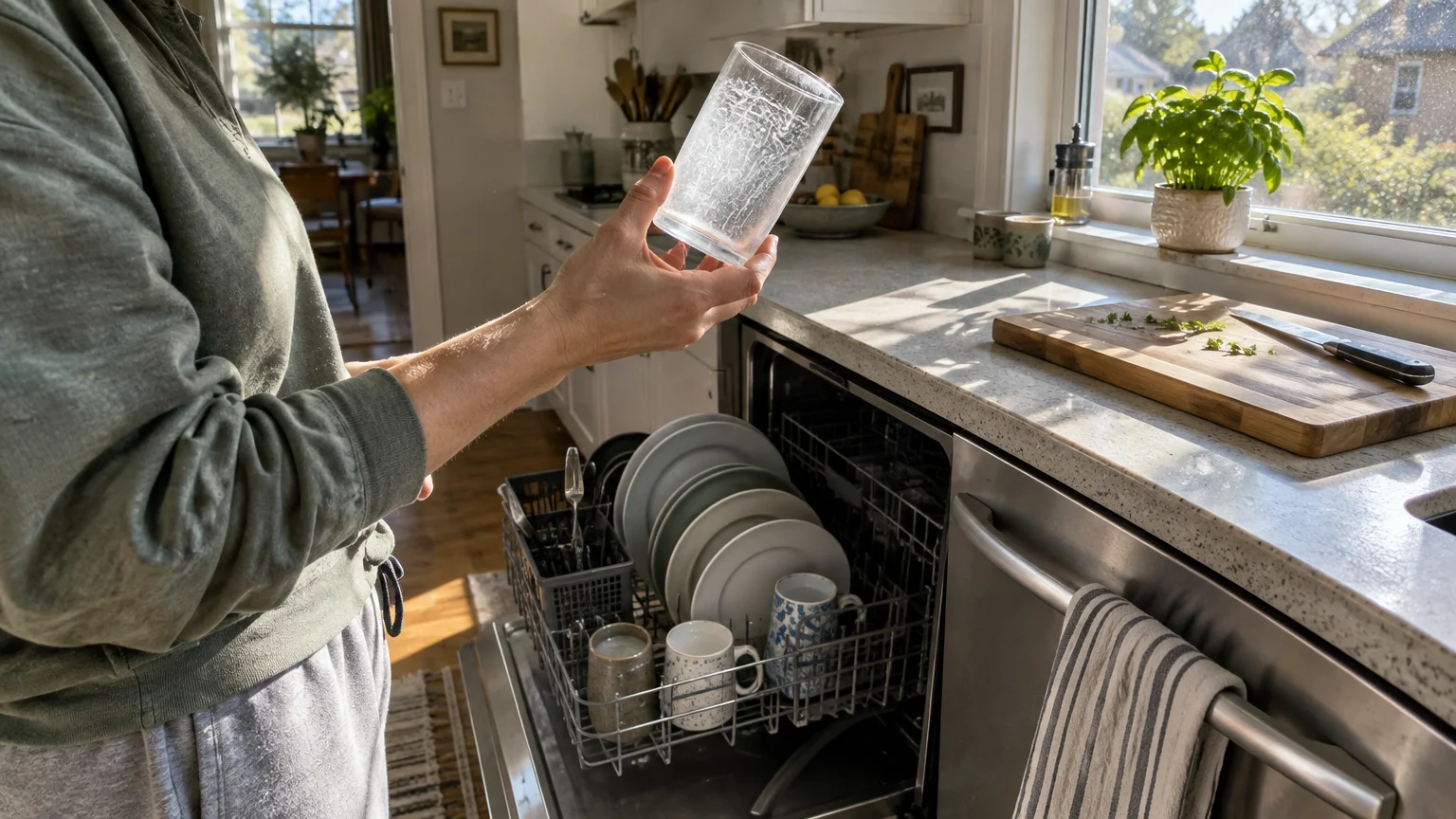
You pull glassware from your dishwasher expecting crystal clarity, only to discover a dull, chalky film across every surface. Cloudy dishes usually stem from simple routine oversights rather than a failing appliance.
Identifying the root cause saves your glassware from permanent damage and restores brilliance to your kitchenware. Most cloudy residue vanishes quickly once you correct a few common dishwasher cleaning mistakes.
From managing water chemistry to refining daily loading habits, small practical adjustments keep your dinnerware shining bright after every single wash cycle.
01 Overlooking Hard Water Mineral Accumulation
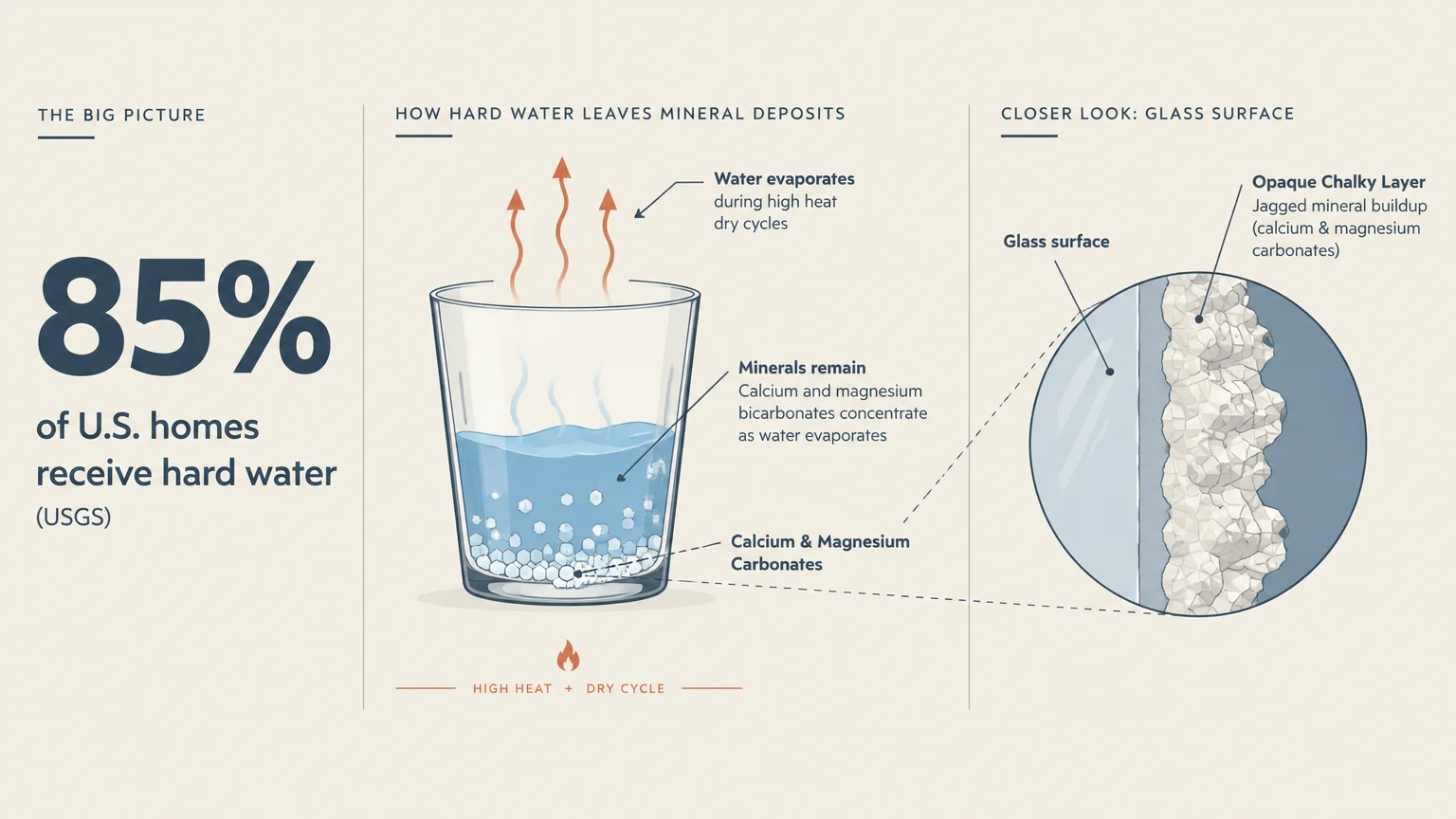
Hard water represents the single most common reason glasses lose their luster. When tap water contains high concentrations of dissolved minerals, those elements bake directly onto your plates during the drying cycle.
According to data from the U.S. Geological Survey, approximately 85 percent of American homes receive hard water. Calcium and magnesium carbonates remain behind when wash water evaporates under high heat.
This chalky deposit produces cloudy dishes that feel rough or gritty beneath your fingertips. Over time, recurring mineral layers compound into an opaque, stubborn haze across your glassware.
If you ask why are my dishes cloudy after every cycle, check your local municipal water report. The Environmental Protection Agency (EPA) notes that high mineral concentrations frequently affect water aesthetics without posing health hazards.
To counteract hard water dishes, add a specialized water-softening booster or use detergent formulated for high mineral content. Installing an in-line water softener provides whole-home protection for your appliances and plumbing fixtures.
02 Using Too Much or the Wrong Detergent
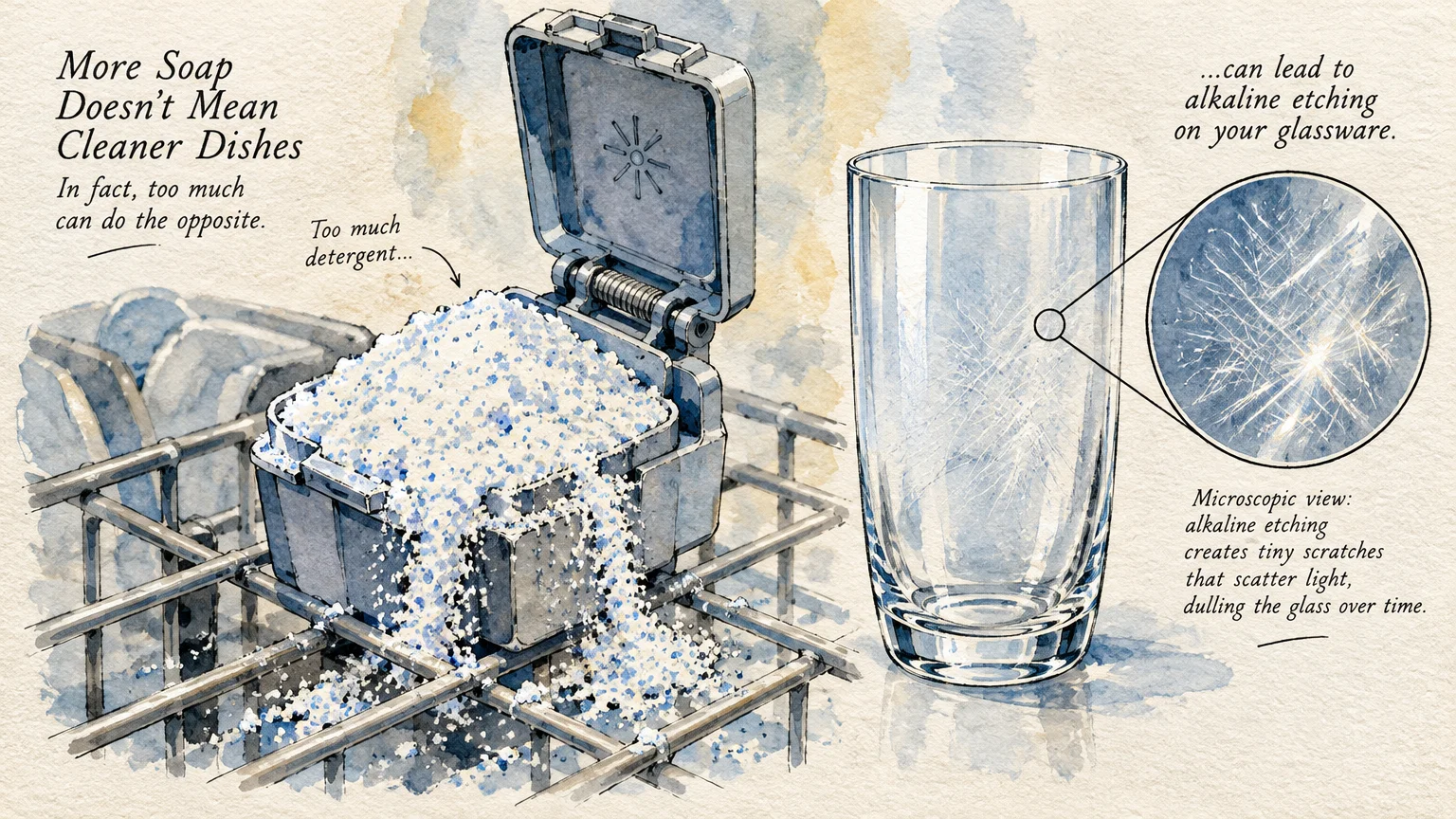
Pouring extra detergent into the dispenser tray does not yield cleaner tableware. In fact, excess soap creates thick chemical residues that fail to rinse away thoroughly in modern efficient cycles.
Modern automatic dishwasher detergents rely heavily on concentrated enzymes and alkaline builders rather than sudsing agents. When you overdose detergent in soft water, excess alkalinity suspended in hot water chemically attacks delicate glass surfaces.
This phenomenon leads to permanent etching, which mimics mineral cloudiness but cannot be wiped away. Etching permanently alters the glass matrix, creating microscopic scratches that scatter light across the surface.
Conversely, using cheap liquid gels that lack active enzymes leaves grease behind to form a sticky film. The American Cleaning Institute recommends using premium single-dose pacs or targeted powders calibrated to your load size.
Always match detergent quantity to your home’s specific water hardness levels. If you possess naturally soft water, fill your detergent cup only halfway to prevent irreversible damage.
03 Skipping Rinse Aid in the Dispenser
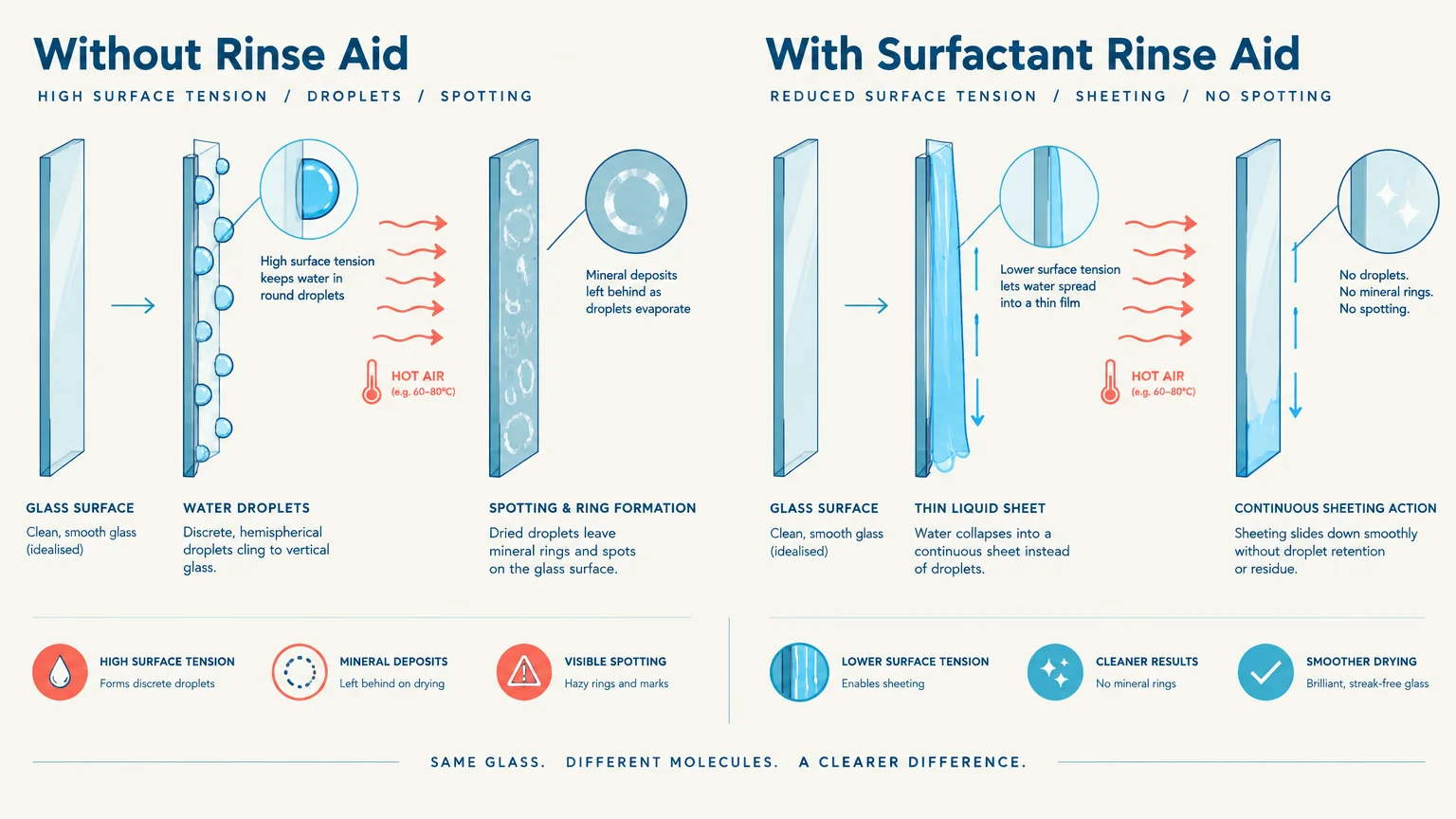
Many homeowners view rinse aid as an optional luxury, yet modern dishwashers depend on it for basic performance. Without rinse aid, water forms distinct droplets across smooth glass instead of sheeting off evenly.
As these stagnant water droplets dry under high heat, they leave concentrated mineral spots behind. Over successive washes, these tiny circular deposits overlap into an unsightly, generalized fog.
Rinse aids contain specialized surface-active agents, known as surfactants, that dramatically lower water surface tension. By eliminating droplet formation, the liquid slides away smoothly before mineral evaporation begins.
Modern ENERGY STAR certified dishwashers utilize condensation drying systems rather than exposed heating coils to conserve electricity. Without rinse aid assisting water drainage, condensation redeposits dissolved minerals directly onto cooling glass.
Inspect your rinse aid indicator window every few weeks; top off the reservoir whenever the level drops. Adjust the dispenser dial to a higher setting if you notice stubborn water spots persisting.
04 Running Cycles with Inadequate Water Temperature
Washing dishes with lukewarm water guarantees poor cleaning results and stubborn haze. Detergent enzymes and wash boosters require hot water to activate and dissolve completely.
Animal fats and butter solidify at lower temperatures, coating glassware in an invisible, greasy smear. Cold water merely pushes these lipids around the tub rather than emulsifying them for proper drainage.
The U.S. Department of Energy recommends setting residential water heaters to 120 degrees Fahrenheit (49 degrees Celsius). This temperature balances biological safety and cleaning efficiency without scalding risks.
Water sitting inside supply pipes cools down significantly between uses. If your dishwasher draws cold water during its initial fill, detergent tablets may fail to dissolve properly.
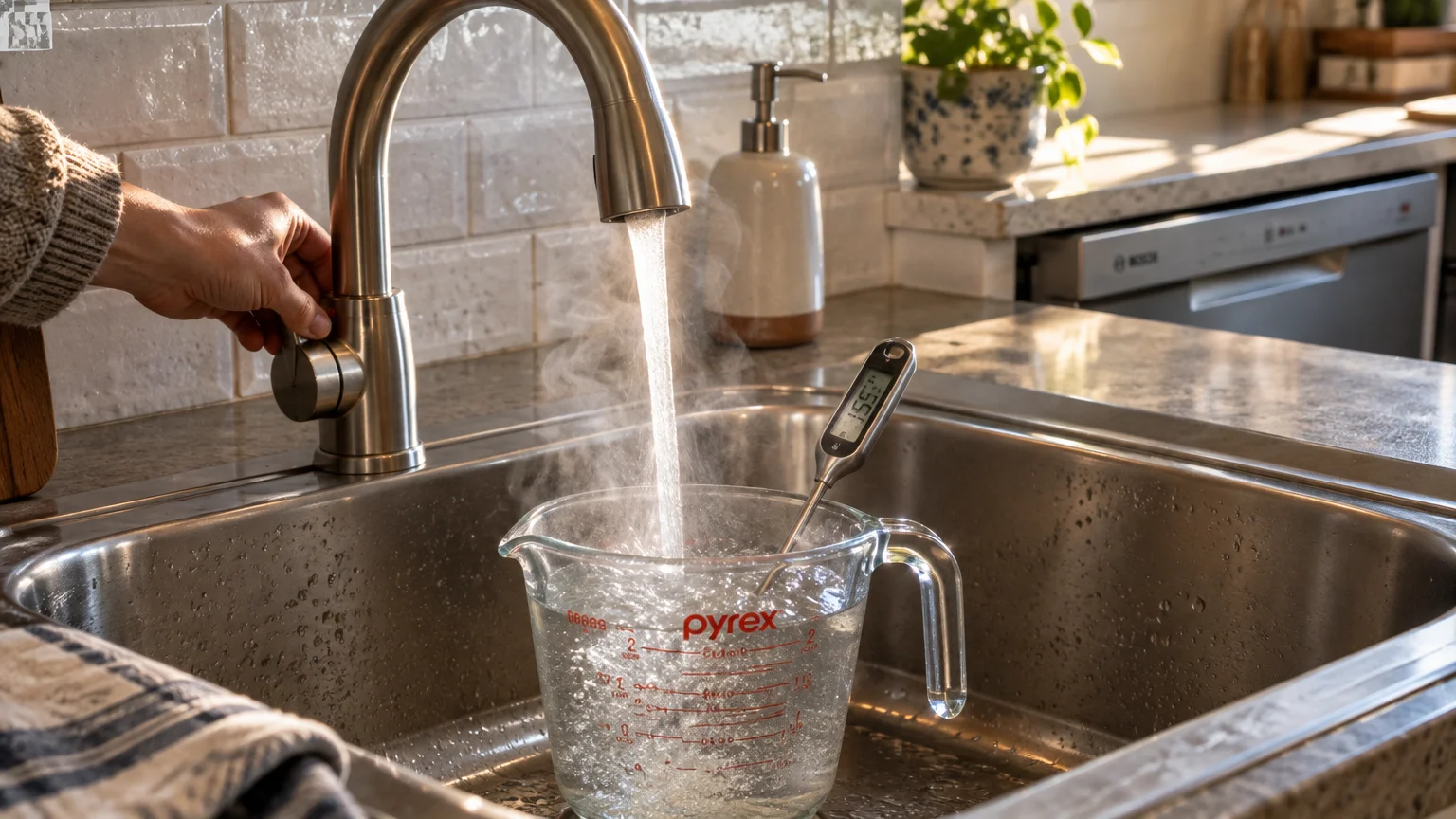
Always run your kitchen sink faucet on hot for thirty seconds before pressing start on your dishwasher. This simple habit guarantees piping-hot water enters the tub immediately during the wash phase.
05 Pre-Rinsing Dishes Completely Clean
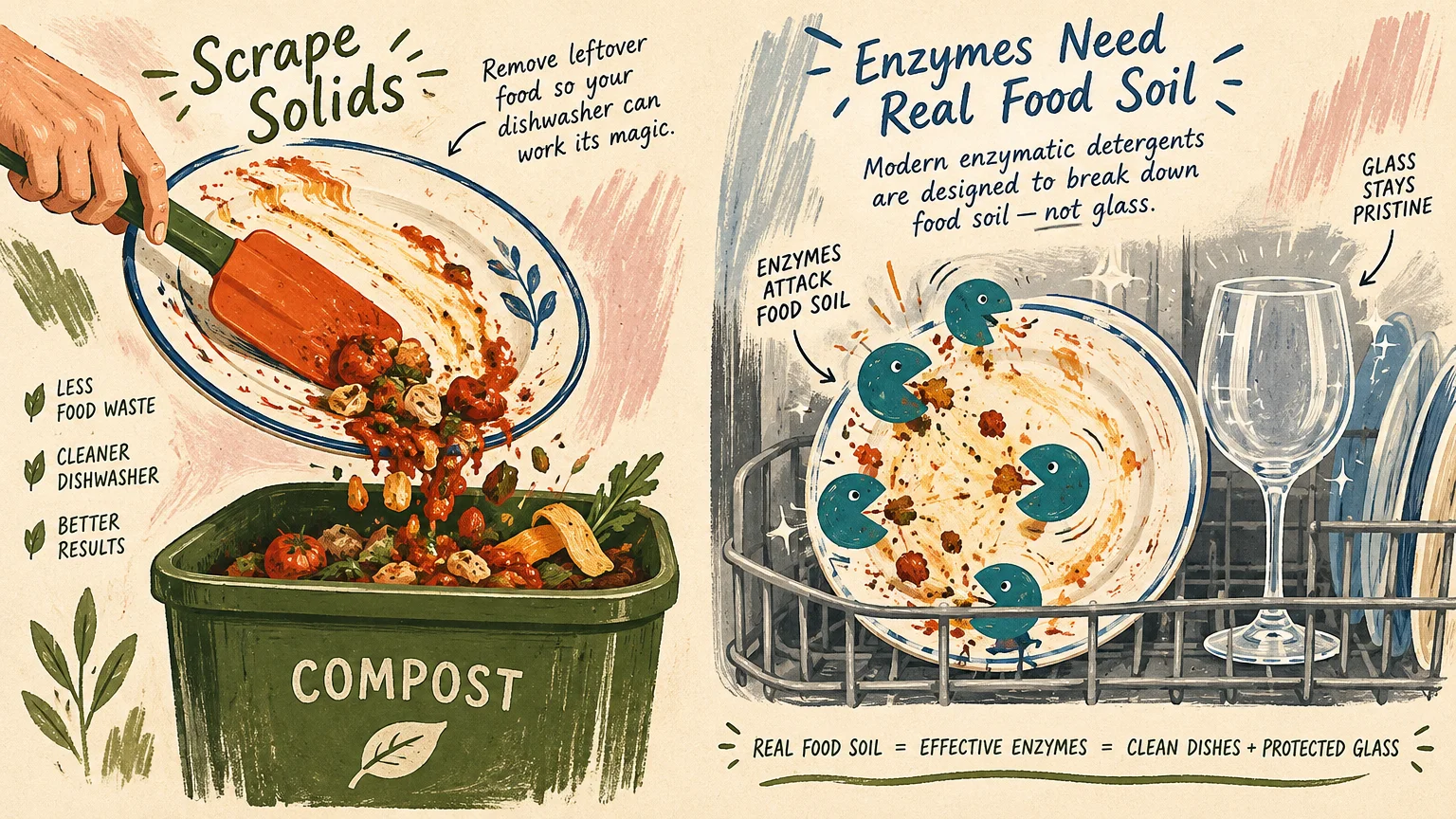
Scraping food scraps into the compost bin is essential, but thoroughly rinsing your plates under the faucet does more harm than good. Modern dishwasher detergents are chemically formulated to latch directly onto food soil.
When you wash spotless plates, aggressive enzymes and alkaline salts have no grease or proteins to break down. Instead, these active chemicals react directly against the surface of your glassware.
Modern appliances also feature optical soil sensors that measure the turbidity, or cloudiness, of wash water. Clear water tricks the machine into selecting a shorter, gentler cycle with insufficient rinsing.
Residual detergent then remains on your dishes when the dry cycle starts, baking on as a milky film. Leave sauces, light grease, and small particles on your plates so detergent works as intended.
Simply scrape large bones, rinds, and solid scraps into the trash; let the machine perform the washing.
06 Neglecting the Dishwasher Filter and Spray Arms
If you have never removed and washed your dishwasher filter, food soil is likely recirculating across your dishes. A clogged filter traps old grease, coffee grounds, and paper labels inside the wash basin.
During wash cycles, powerful pumps push this dirty water repeatedly over your plates and cups. This leaves behind a greasy, gritty film that looks identical to cloudy hard water.
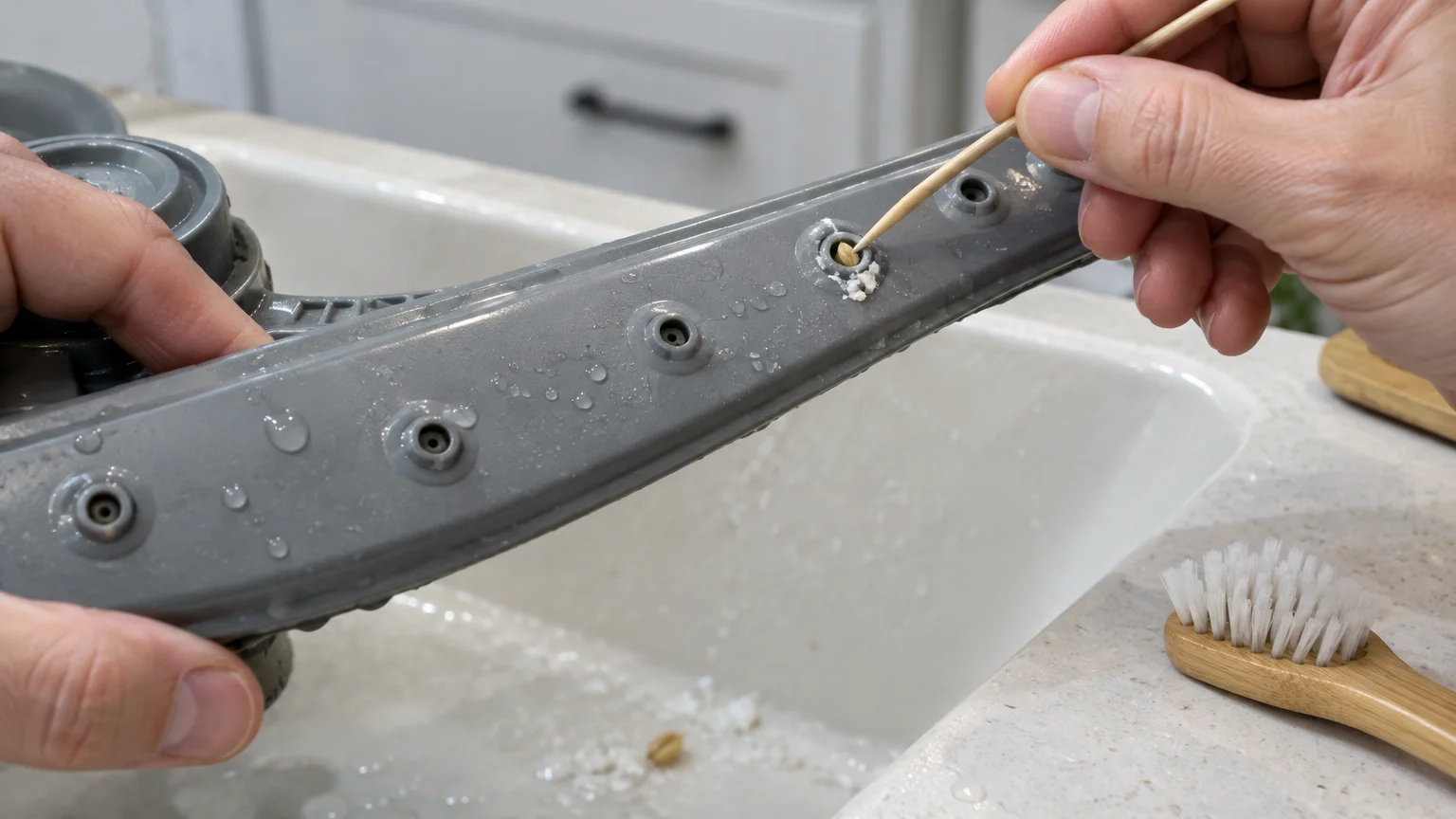
Similarly, tiny mineral crystals and food debris can clog the spray arm nozzles. Obstructed jets reduce water pressure, leaving large dead zones where detergent and food residue linger unwashed.
Twist out the cylindrical filter assembly at the bottom of the tub once every month. Scrub the mesh screen using warm water, liquid dish soap, and a soft-bristled brush.
Inspect the spray arm holes every few months, clearing stubborn clogs using a wooden toothpick or needle. Proper water flow ensures full coverage and crystal-clear results.
07 Overloading Racks and Nesting Utensils
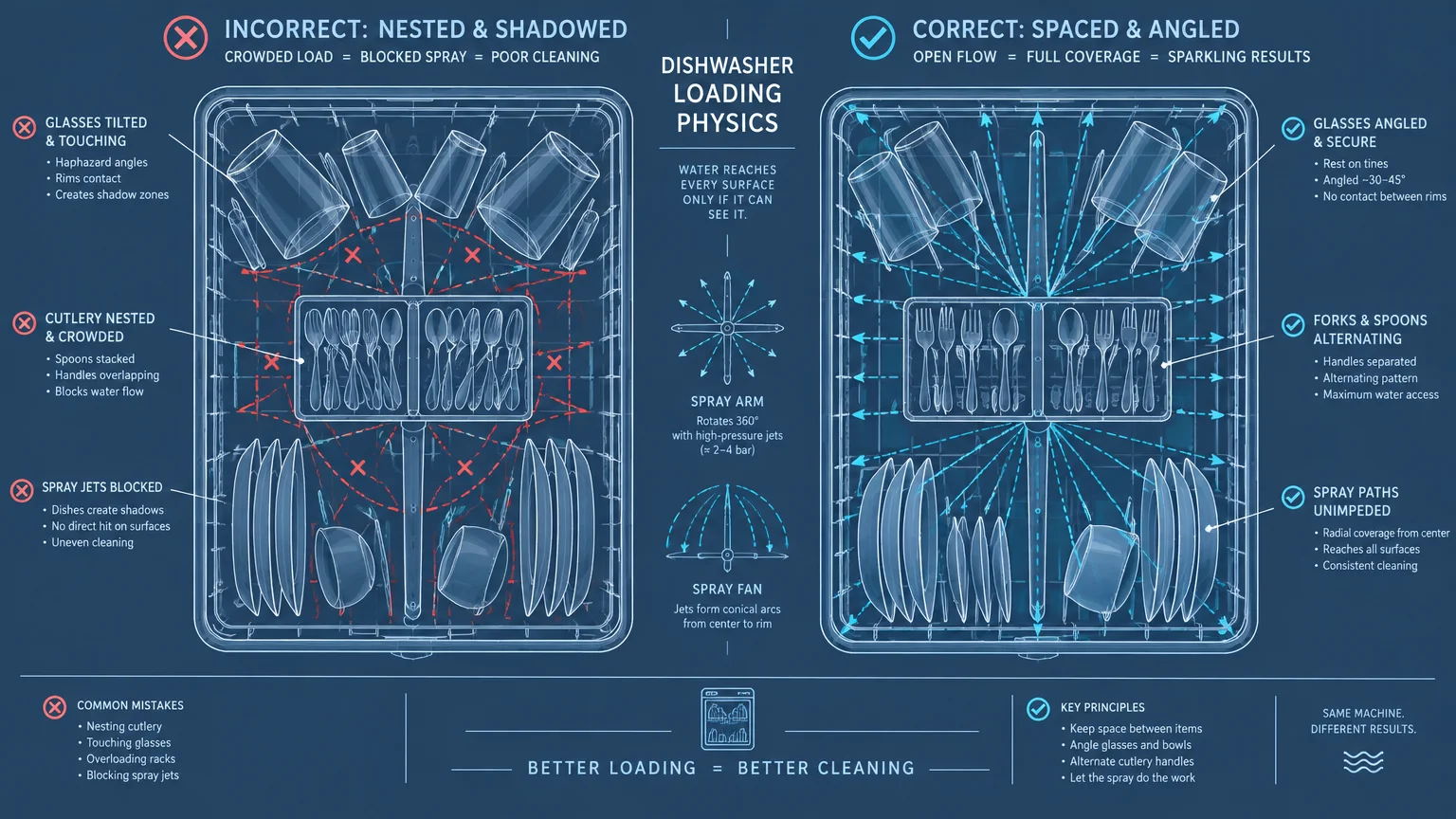
Cramming every item into a single load saves time upfront, but it prevents water from reaching dirty surfaces. When bowls nest inside each other, wash water cannot spray inside the concave cavities.
Tall baking sheets or cutting boards placed along the front edge can block the detergent dispenser door from springing open. The trapped tablet dissolves late in the cycle, coating glassware in unrinsed soap.
Spoons that nest together inside silverware baskets trap food particles and detergent between their curved bowls. Alternate placing utensils handle-up and handle-down to maintain proper separation.
Ensure glassware sits securely between rack tines without touching neighboring pieces. Vibrations during wash cycles can cause rubbing glasses to scratch each other, creating permanent hazing.
Angle concave mugs and cups downward so water drains freely from their recessed bases instead of pooling.
Cloudy Dishes Diagnostic: Hard Water Film vs. Permanent Etching
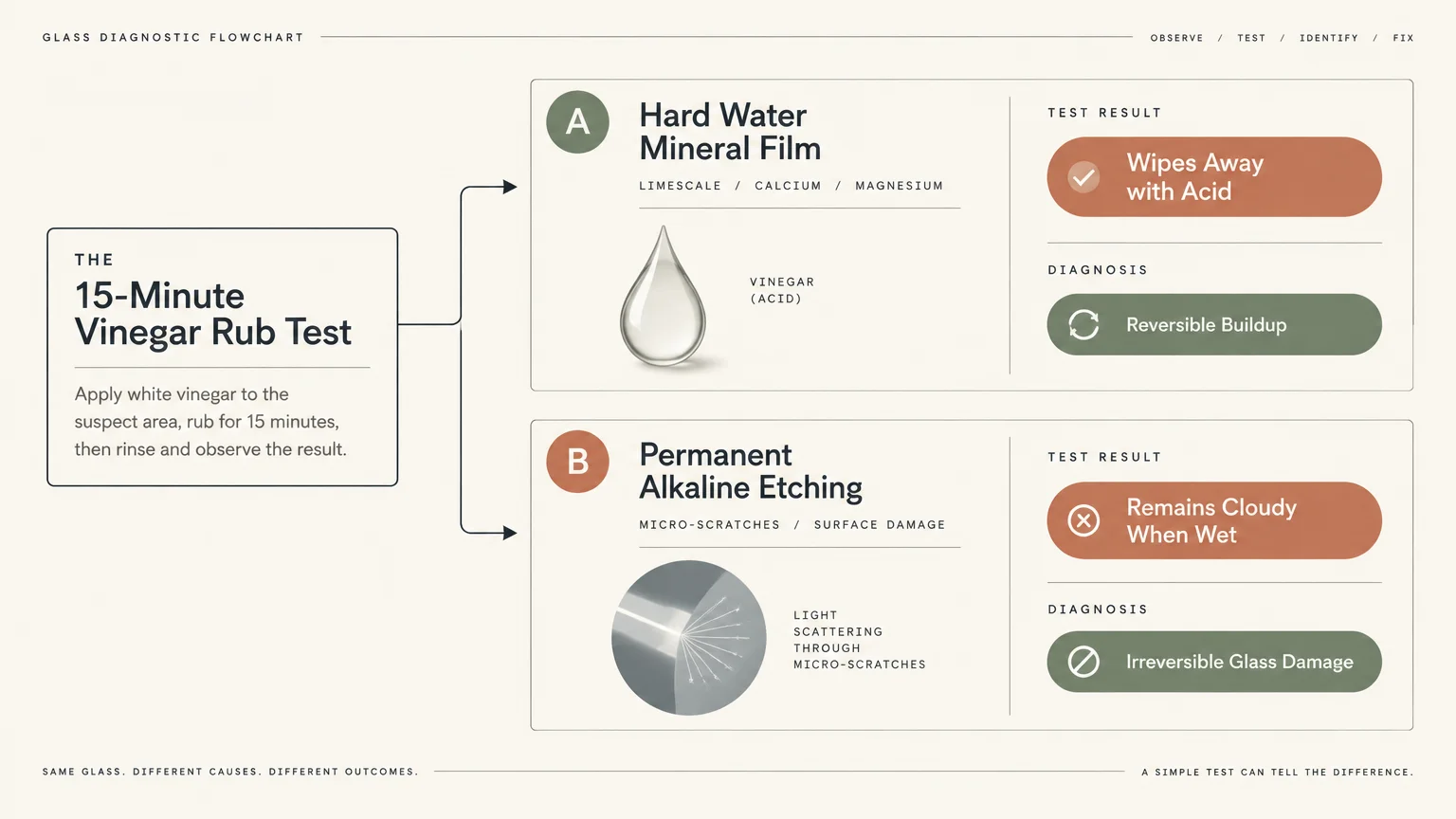
Before attempting to fix hazy glassware, you must identify whether you face mineral deposits or permanent etching. The distinction matters because hard water film washes away, whereas etched glass cannot be reversed.
Place a single drop of white vinegar onto a hazy glass and let it sit for five minutes. If the haze wipes away clean, you have hard water deposits; if the haze persists, the glass is etched.
| Diagnostic Factor | Hard Water Mineral Film | Permanent Glass Etching |
|---|---|---|
| Root Cause | Calcium and magnesium carbonates baking onto glass surfaces. | Alkaline corrosion from soft water, excess heat, and detergent overdose. |
| Surface Texture | Feels rough, chalky, or gritty under fingertips. | Feels completely smooth or displays microscopic pitting and scratches. |
| Appearance Pattern | Uniform cloudy sheet or concentrated circular droplet rings. | Presents as a prismatic, rainbow-like sheen or cloudy internal scratches. |
| Vinegar Test Reaction | Dissolves rapidly and wipes away completely with mild acid. | Does not react; cloudiness remains entirely unchanged. |
| Long-Term Reversibility | One hundred percent reversible through acid-based stripping baths. | Irreversible physical damage; the glass matrix is permanently corroded. |
How to Remove Hard Water Film from Cloudy Glassware
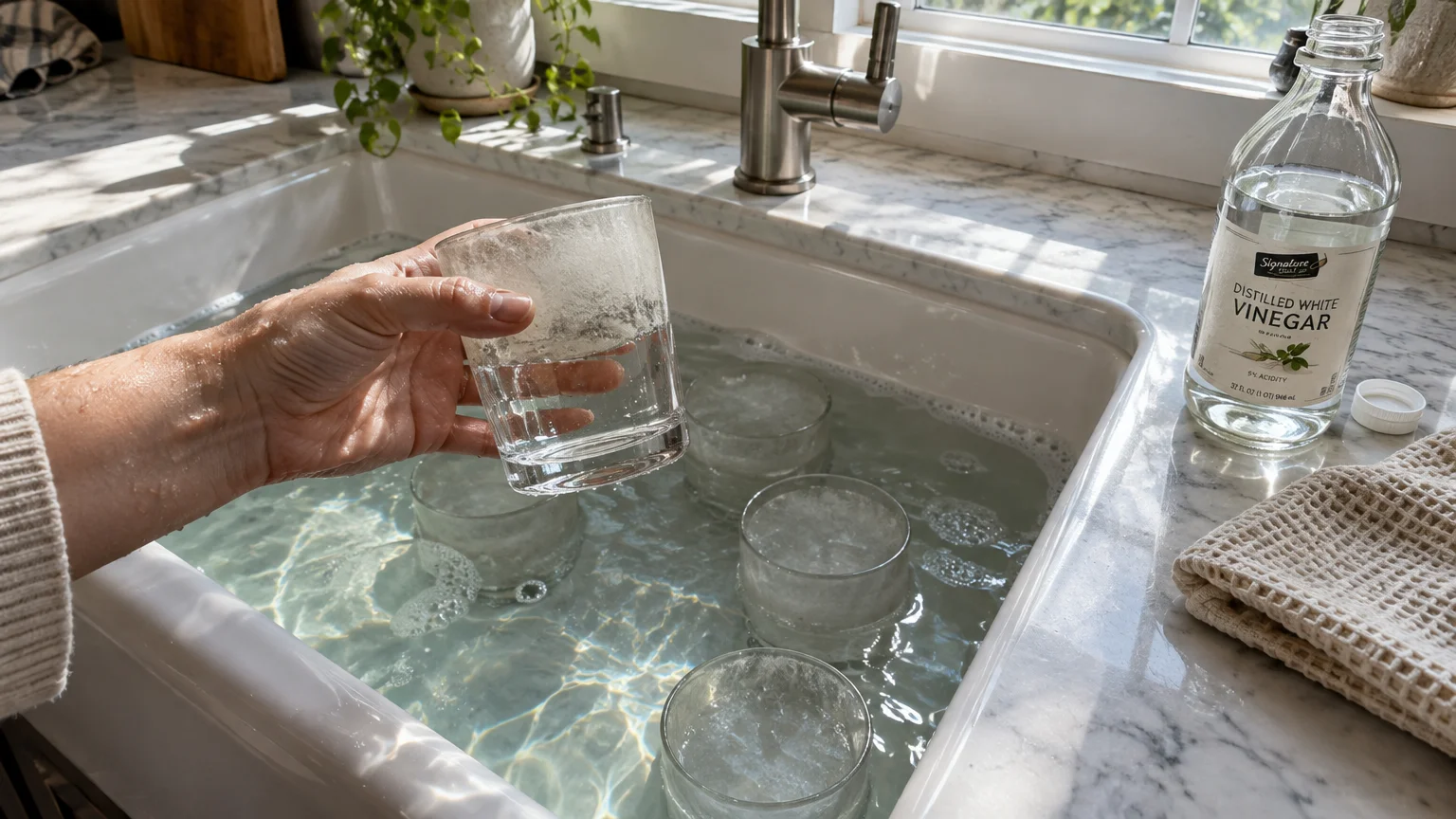
If mineral buildup has turned your glassware cloudy, a concentrated acid treatment restores original clarity without harsh scouring. Follow this simple restorative process to dissolve stubborn calcium deposits safely.
- Fill your kitchen sink or a wash basin with equal parts warm water and distilled white vinegar.
- Submerge your cloudy glasses completely in the solution, allowing them to soak for fifteen to thirty minutes.
- Gently wipe the glass surfaces with a microfiber cloth or soft sponge to lift softened mineral scale.
- Rinse each glass under warm, running tap water to remove remaining vinegar acidity and loosened minerals.
- Dry each item promptly using a clean, lint-free cotton flour-sack towel to prevent new water spots from forming.
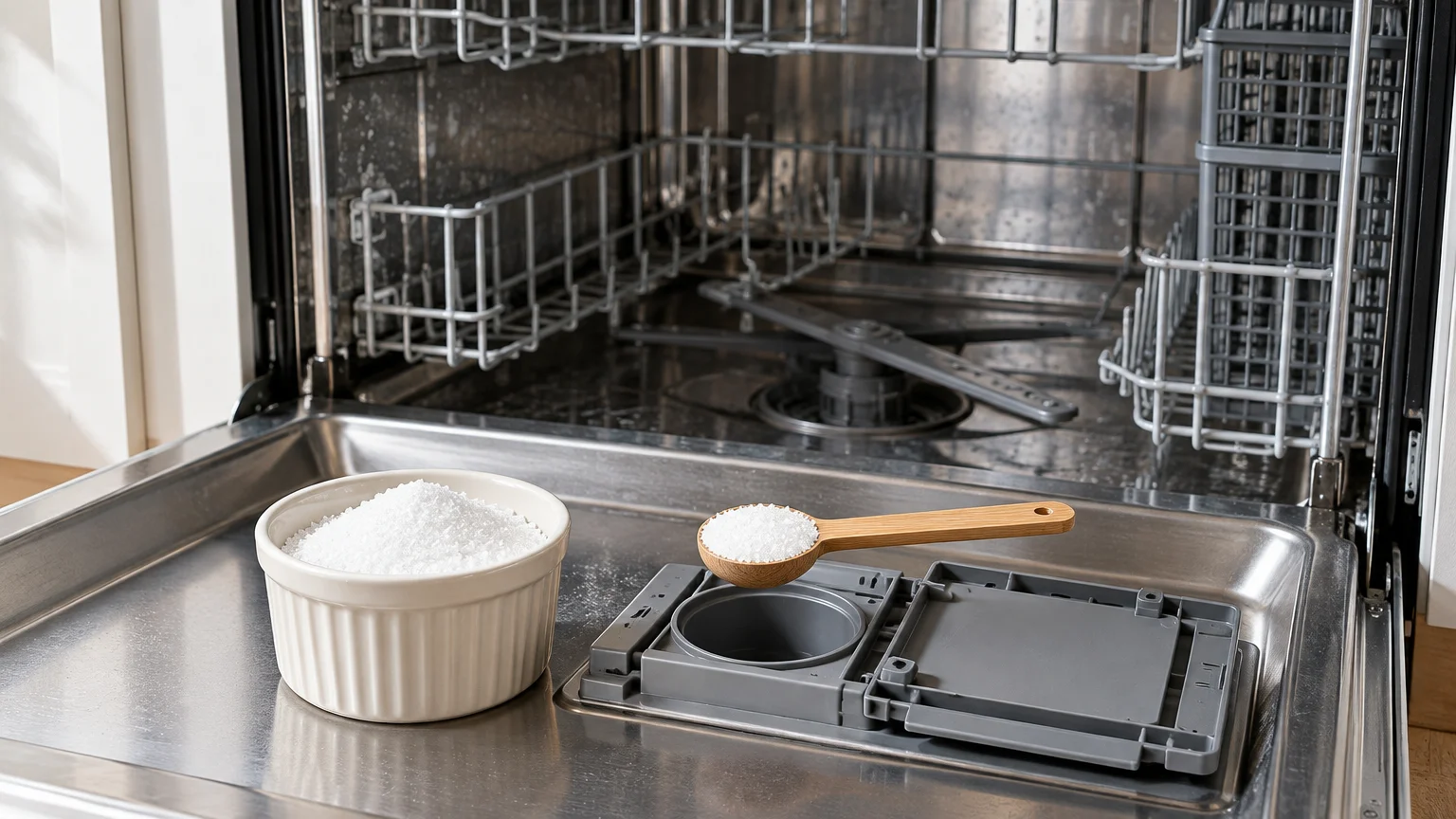
Deep Cleaning Your Dishwasher with Citric Acid
When cloudy dishes plague every single wash load, mineral scale has likely coated the interior walls and heating elements of your machine. A periodic citric acid cycle strips built-up limescale quickly.
Citric acid crystals dissolve mineral crust far more effectively than mild vinegar without damaging delicate internal rubber gaskets. Many leading appliance manufacturers endorse food-grade citric acid for periodic maintenance descaling.
Empty your dishwasher completely of all dishes, cutlery, and metallic items. Citric acid can discolor stainless steel flatware and strip decorative metallic rims from china.
Pour two to three tablespoons of food-grade citric acid powder directly into the main detergent dispenser cup. Close the dispenser door securely.
Run a full, heavy-duty wash cycle utilizing the highest water temperature setting available on your machine. Allow the cycle to complete fully, including the heated drying phase.
Inspect the interior tub floor after the cycle finishes; the stainless steel or plastic walls should gleam like new. Repeat this descaling treatment every three to six months depending on water hardness.
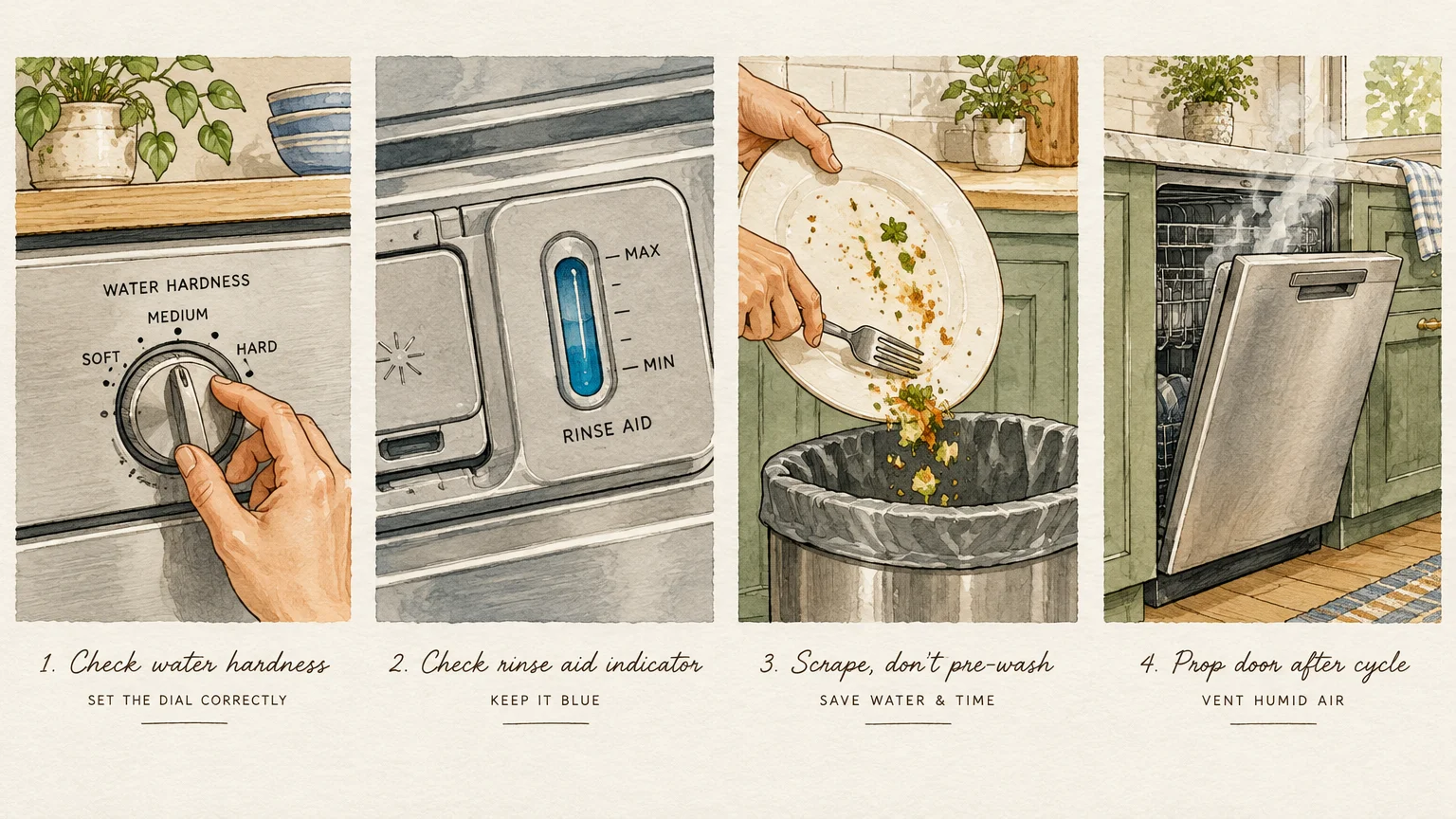
Everyday Dishwasher Tips to Keep Dishes Crystal Clear
Adopting consistent dishwashing habits prevents mineral film from ever settling on your glasses again. Integrate these practical dishwasher tips into your daily kitchen routine to maintain sparkling dinnerware.
- Check rinse aid levels monthly to ensure water sheets off smoothly during dry cycles.
- Scrape food plates thoroughly into trash or compost, but never rinse them spotless.
- Run your kitchen sink hot water faucet for thirty seconds before activating the wash cycle.
- Clean your cylindrical drain filter once a month with warm water and liquid dish soap.
- Inspect rotating spray arms periodically to clear blocked spray nozzles using a toothpick.
- Reduce detergent dose if your home features soft water to prevent permanent glass etching.
- Leave ample space between delicate wine glasses and tumblers to eliminate vibration damage.
- Store detergent pods in a cool, dry place to prevent moisture from degrading active cleaning enzymes prematurely.

Your Next Step for Sparkling Dishes
Grab one cloudy glass from your cabinet and rub a few drops of white vinegar across its surface right now. If the haze vanishes, top off your rinse aid dispenser and schedule a hot descaling cycle today.