Maintaining a spotlessly clean home does not require endless hours of exhausting labor or an innate love for domestic chores. You can dramatically reduce your cleaning time and keep a tidy space simply by shifting your daily strategy and taking advantage of basic chemical science. Modern cleaning shortcuts let you achieve professional-level results with minimal physical effort; for instance, letting standard cleaners sit on surfaces eliminates hours of intense scrubbing. Whether you struggle with physical fatigue, busy schedules, or an overwhelming dislike for household chores, these seven practical cleaning hacks for lazy people will streamline your daily routine. Implement these practical methods today to transform your home into a calm, low-maintenance haven without sacrificing your weekends.
Hack 1: Harness Chemical Dwell Time to Stop Scrubbing
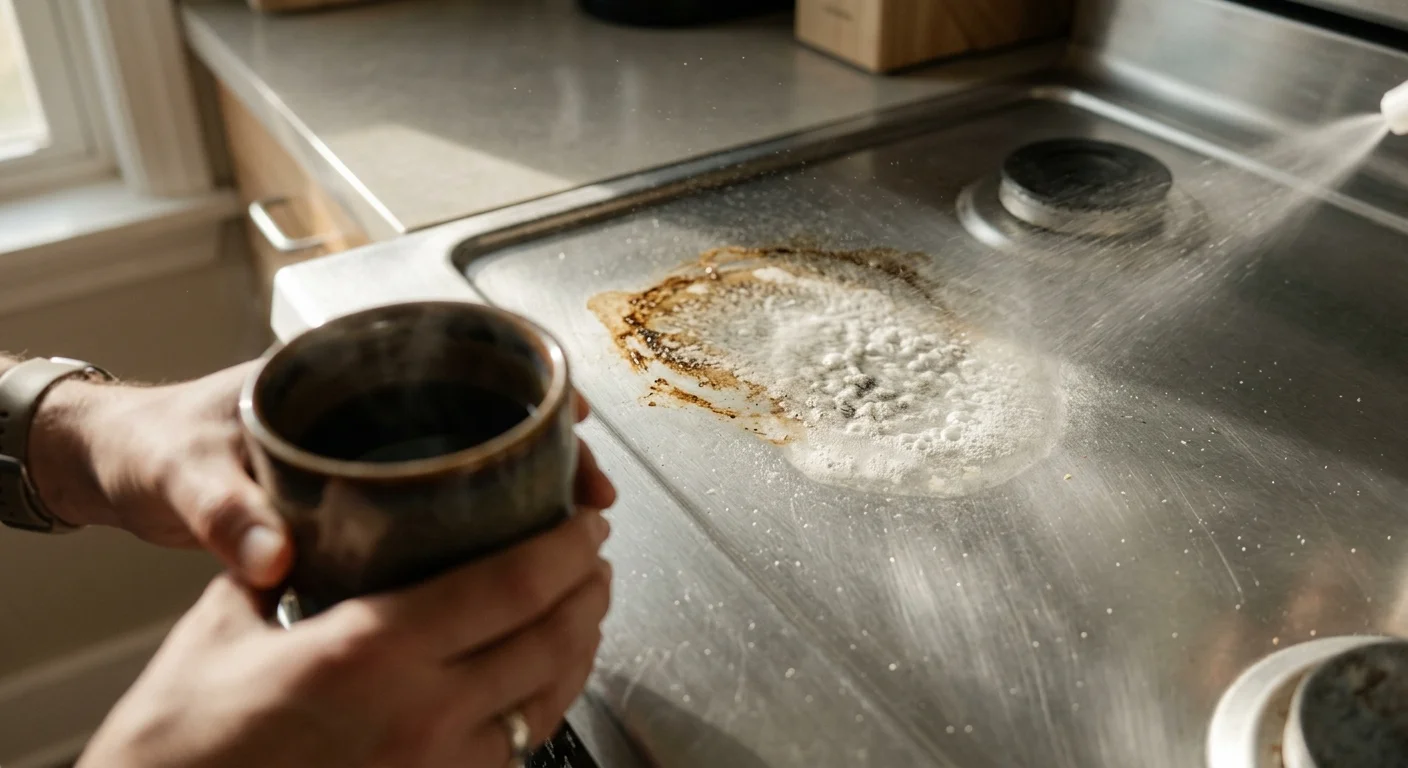
Most people waste energy scrubbing surfaces because they wipe away spray cleaners immediately after application. Chemical cleaning agents require contact time—known in the industry as dwell time—to emulsify grease, dissolve mineral deposits, and break down organic matter. When you spray a surface and instantly scrub it, you force your muscles to do the work that liquid chemistry should perform for you.
According to the U.S. Environmental Protection Agency (EPA) disinfectant guidelines, most registered household disinfectants require between 3 and 10 minutes of wet contact time to properly neutralize pathogens and break down residue. If you wipe the cleaner off within seconds, you render the chemical inactive and leave hard soap scum or baked-on grease intact.
To put this quick cleaning hack into immediate action in your kitchen or bathroom, follow this effort-saving sequence:
- Spray your greasy stovetop, bathroom sink, or glass shower door generously with your chosen cleaner.
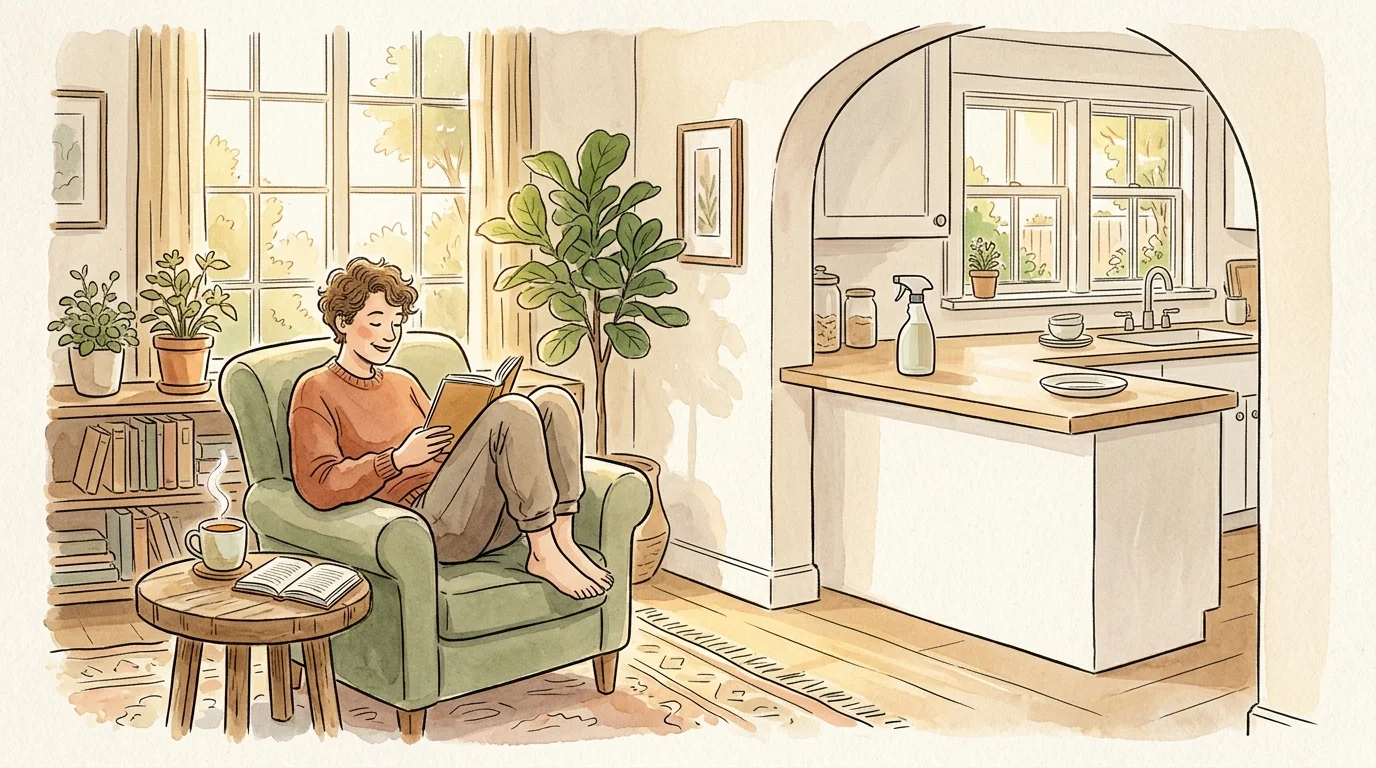
- Walk completely away from the room for 10 full minutes. Use this break to read, listen to music, or drink coffee.
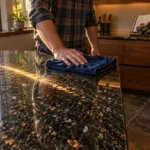
- Return with a clean, damp microfiber cloth and gently wipe the surface. The loosened grime will slide off without aggressive physical exertion.
By delegating the heavy mechanical labor to liquid active ingredients, you protect your joints, save your hands from fatigue, and finish bathroom and kitchen maintenance in a fraction of the time.
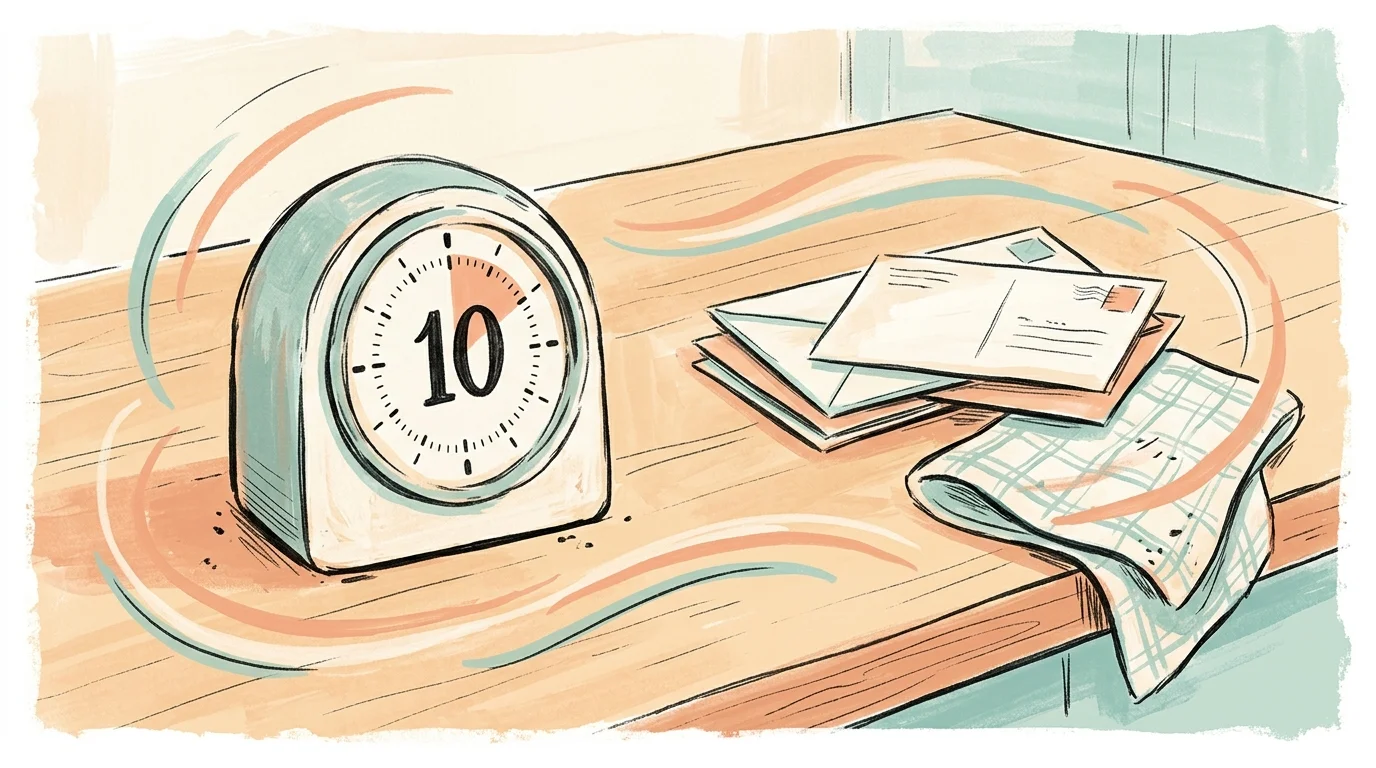
Hack 2: Execute the 10-Minute Micro-Burst Routine
Marathon cleaning sessions on Saturday mornings drain your energy and create immense psychological resistance. When you anticipate spending four continuous hours cleaning, you naturally procrastinate. You can eliminate this mental hurdle entirely by adopting a micro-burst routine: short, intense periods of focused movement capped at exactly ten minutes.
Health experts at the Mayo Clinic health guidelines on daily movement highlight that short periods of light activity reduce physical stress and improve mood without triggering physical exhaustion. For older adults or individuals dealing with chronic fatigue, short bursts provide a sustainable alternative to taxing physical routines.
Use this step-by-step daily micro-burst blueprint to keep your living room and kitchen manageable without burning out:
- Set a digital timer: Program your smartphone timer for 10 minutes—no more, no less.
- Pick one targeted zone: Focus strictly on a single area, such as the kitchen counters, the coffee table, or the entryway shoe rack.
- Move continuously: Clear surface items, throw away loose trash, and wipe flat areas briskly until the alarm sounds.
- Stop immediately: Drop your rag and step away the second the timer rings. Celebrate the progress you made within that brief window.
Executing one micro-burst every afternoon keeps clutter from compounding. Over seven days, you complete over an hour of total cleaning without ever feeling like you spent your day doing chores.
Hack 3: Store Point-of-Use Tools directly in Heavy-Use Zones
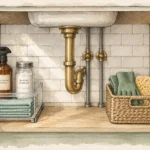
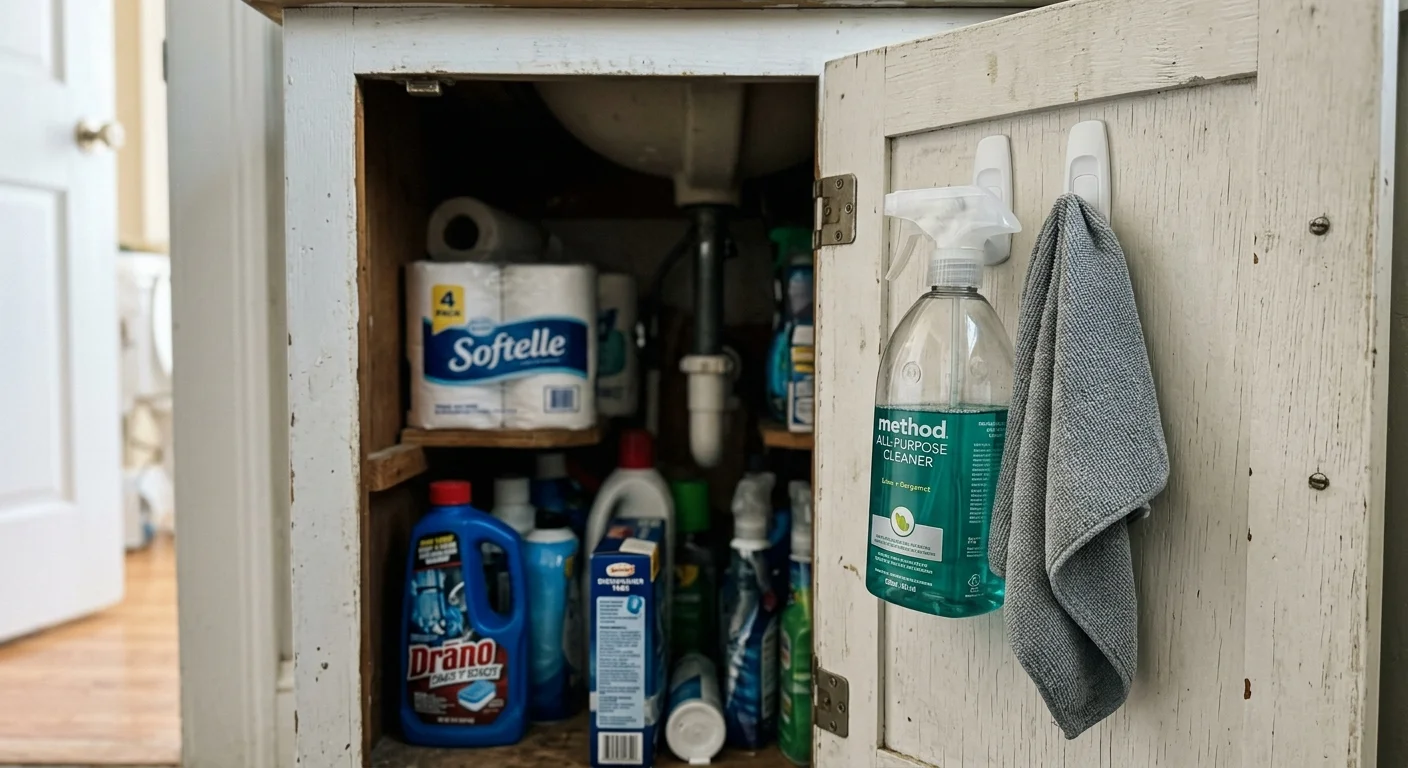
Friction stops routine cleaning in its tracks. If you spill toothpaste on the bathroom mirror but must walk to the laundry room downstairs to grab a spray bottle and paper towels, you will likely postpone the chore. Storing cleaning tools directly at the point of use eliminates physical friction and keeps your home tidy automatically.
One of the ultimate easy cleaning tips for shower stalls involves keeping a dish-washing wand inside the shower itself. Prepare and store this tool using the following quick procedure:
- Purchase a clear dish-wand handle equipped with an integrated scrub sponge.
- Fill the handle reservoir with equal parts liquid dish soap and distilled white vinegar.
- Hang the wand on a suction hook directly inside your shower enclosure.
- While standing in the shower waiting for your hair conditioner to work, scrub one wall tile panel or the glass door for 30 seconds.
- Rinse the area with the showerhead before stepping out.
This single habit eliminates dedicated shower-scrubbing sessions entirely. The dish soap cuts through body oils while the mild acetic acid in the vinegar prevents hard-water scale from bonding to your tile grout. Duplicate this point-of-use principle by placing microfiber cloths under every bathroom sink and small trash cans beside every seating area in your home.
Hack 4: Follow the Top-to-Bottom, Left-to-Right Physics Strategy
Cleaning out of order wastes time because gravity constantly pulls dust and debris downward. If you vacuum your carpet first and then dust your ceiling fan or bookshelves, falling dust particles re-contaminate your fresh carpet. You end up cleaning the same surface twice, which amplifies your frustration and doubles your workload.
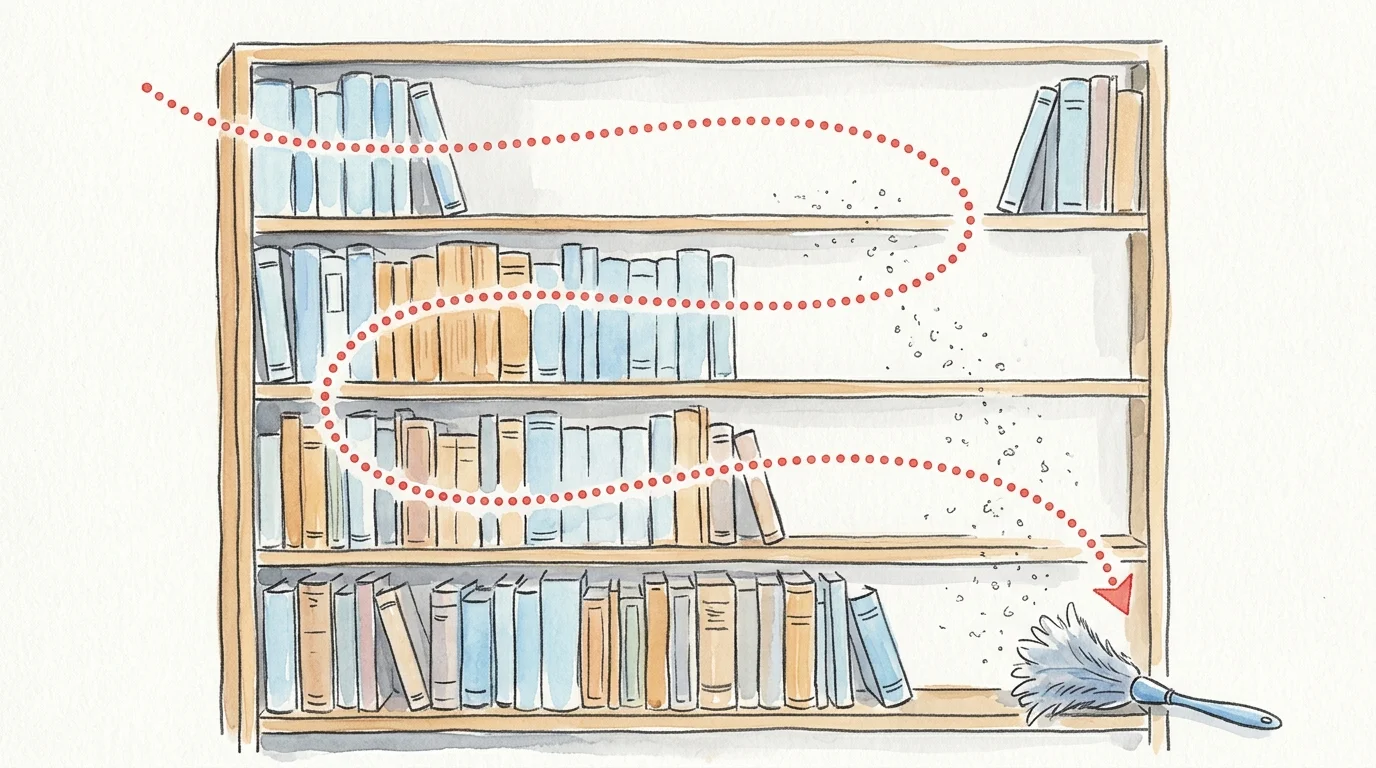
Adopting directional physics streamlines your flow and ensures zero wasted movement. Always navigate every room using a structured top-to-bottom and left-to-right approach:
Start at the highest physical point near the door. Dust ceiling fan blades, high moldings, and light fixtures first. Move to mid-level surfaces like picture frames, window sills, countertops, and coffee tables. Finish at floor level by vacuuming carpets, sweeping hard floors, and mopping traffic lanes. As you work through each vertical level, move systematically around the room from left to right so you never miss a corner or re-trace your steps.
Field tests demonstrate that systematic directional cleaning cuts total movement time by up to 35% compared to random room cleaning. You eliminate back-and-forth walking across rooms and achieve total surface coverage effortlessly.
Hack 5: Institute the One-Touch Rule for Daily Clutter
People often confuse clutter with dirt. A room covered in unread mail, abandoned jackets, and unsorted packages feels dirty even if the floors and counters are spotless. In fact, research published by the American Cleaning Institute’s research on cleaning science confirms that eliminating surface clutter reduces total household cleaning time by up to 40%.
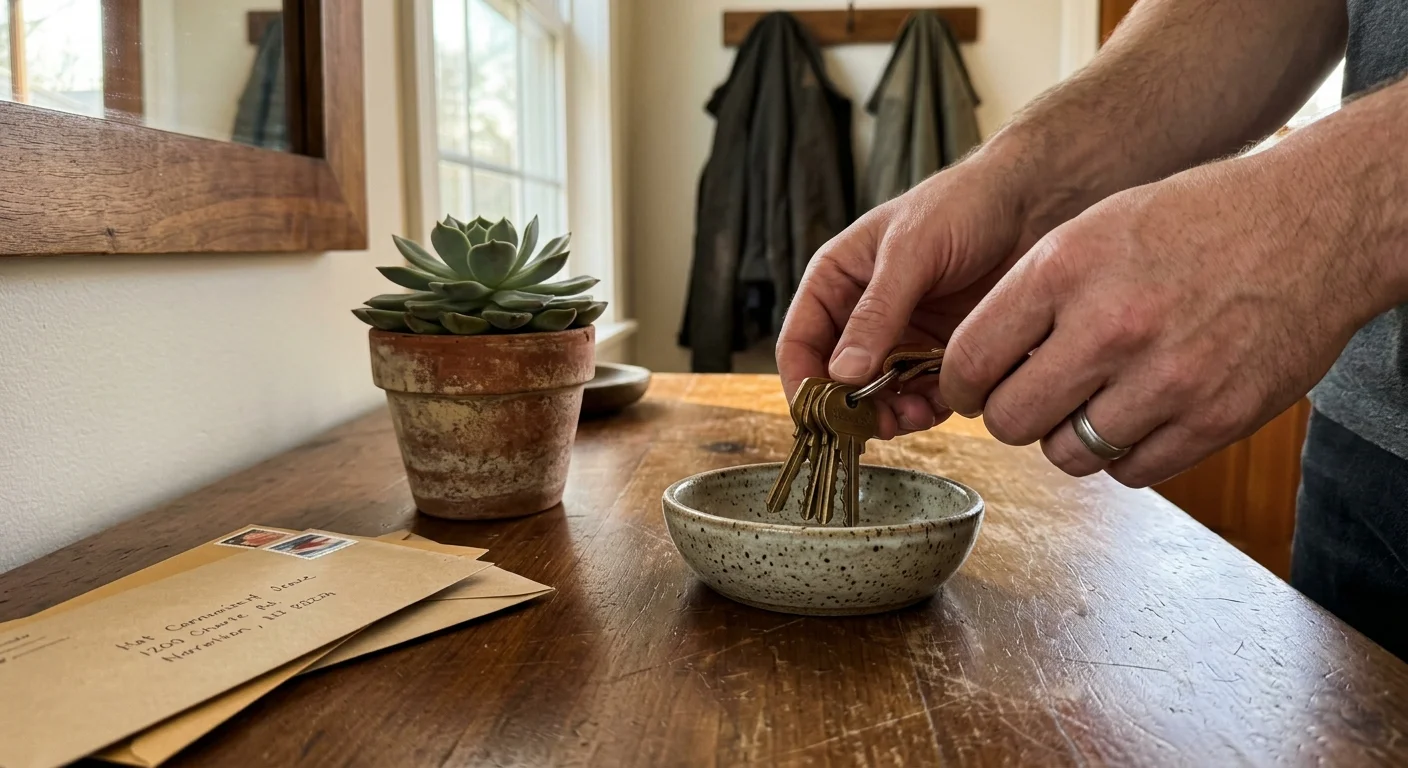
You can stop clutter from accumulating on flat surfaces by strictly enforcing the “One-Touch Rule.” This rule dictates that you touch every item entering your home exactly once until it reaches its final resting place. Avoid creating temporary landing pads on dining tables or kitchen islands.
Consider how the One-Touch Rule alters daily habits:
- Incoming Mail: Do not drop envelopes on the kitchen counter. Walk straight from the front door to the recycling bin, drop junk mail inside immediately, and place bills on your desk tray.
- Winter Coats and Shoes: Do not drape your coat over a living room chair. Hang it directly in the closet or on an entryway hook the moment you take it off.
- Cooking Ingredients: Return spices, oils, and cutting boards to their pantry shelves immediately after adding ingredients to the pan, rather than leaving them out until dinner finishes.
Enforcing single-touch handling prevents items from building up into massive, intimidating piles. When your counters stay clear, wiping them down takes less than ten seconds.
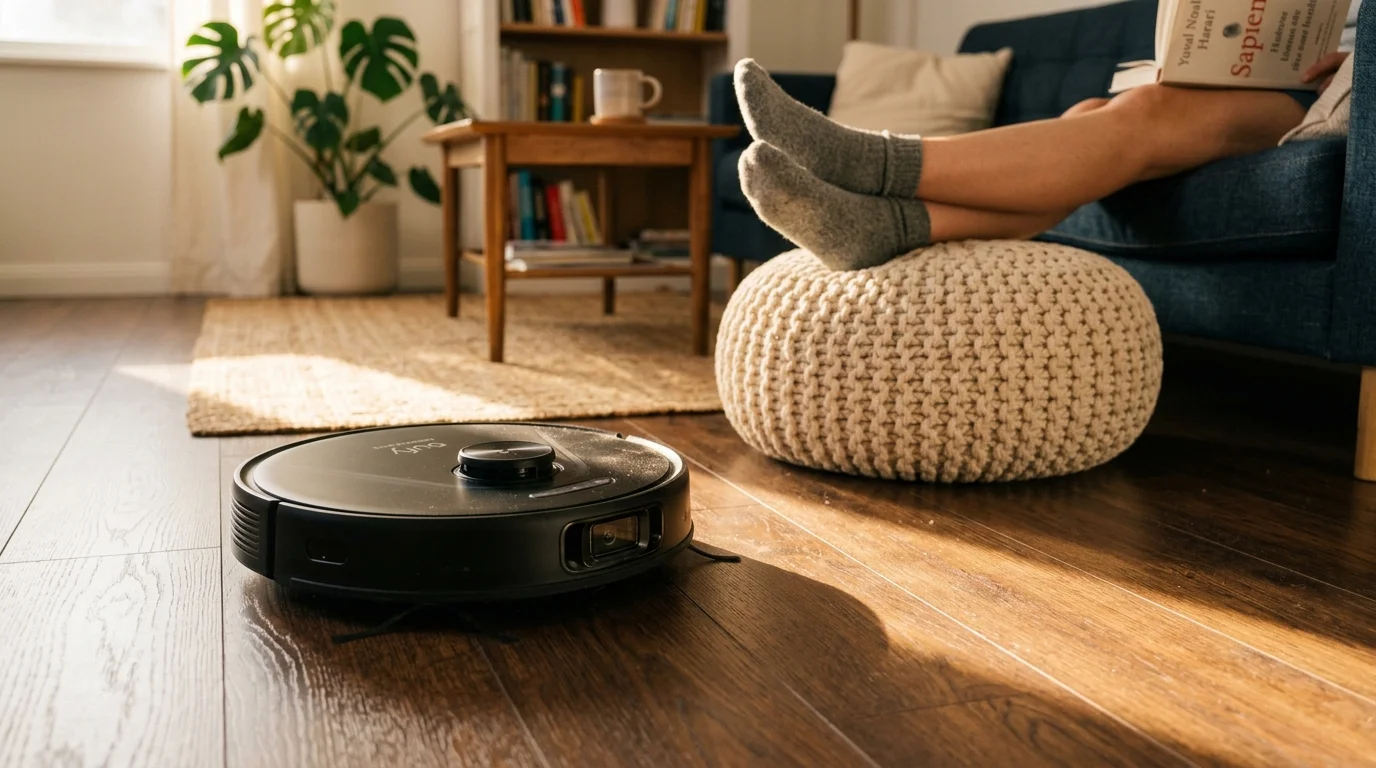
Hack 6: Automate Routine Floor Care with Smart Tech
Manual vacuuming and sweeping consume an average of 90 minutes per week in a typical home. Pushing heavy upright vacuums also puts unnecessary strain on your lower back and shoulders. If you dislike cleaning, delegating routine floor maintenance to smart technology offers the highest return on investment of any household shortcut.
Robotic vacuums have evolved beyond expensive novelties into highly effective, labor-saving appliances. Modern units handle daily dust accumulation, pet hair, and floor grit automatically while you sleep or run errands. Guidelines from the Centers for Disease Control and Prevention (CDC) home hygiene recommendations emphasize keeping floor surfaces free of dust particles and outdoor tracks to maintain healthy indoor air quality.
Maximize the efficiency of automatic floor cleaners with these operational hate cleaning tips:
- Select a robotic vacuum featuring programmable smartphone scheduling and drop sensors.
- Lift loose phone chargers, curtain hems, and thin bath mats off floor surfaces to eliminate machine entanglements.
- Schedule your robot vacuum to run daily at 10:00 AM after everyone leaves for work or starts their morning activities.
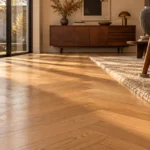
- Pair the vacuum with low-profile, washable entry mats that trap dirt right at exterior doors before it reaches your main living rooms.
Delegating daily dust pickup to an automated robot leaves you responsible only for occasional spot-cleaning, saving you dozens of hours of manual labor every month.
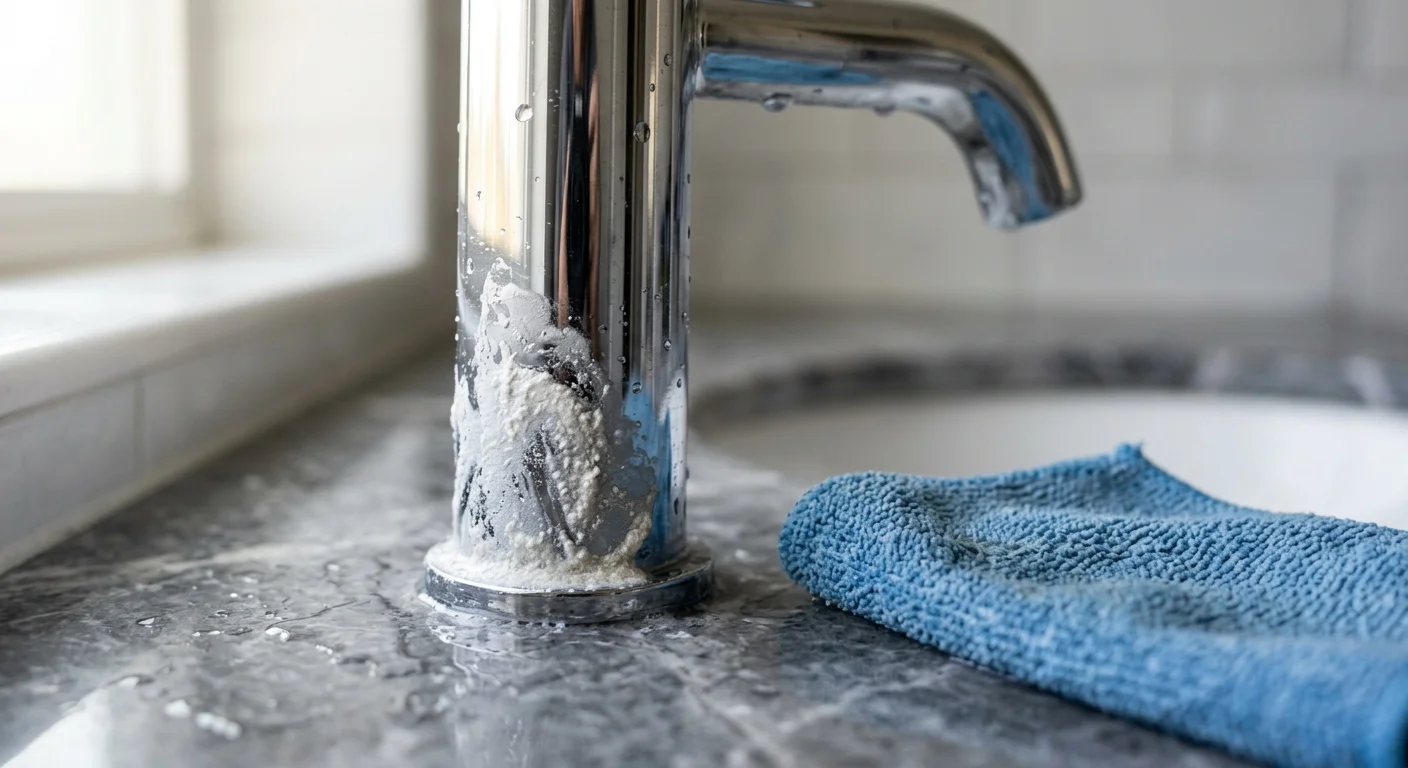
Hack 7: Deploy Frictionless Pastes for Deep Mineral and Soap Stains
Scrubbing baked-on food on glass cooktops, discolored tile grout, or mineral crust around faucet bases usually requires severe physical strain. Avoid tedious scrubbing by mixing a high-potency, non-toxic paste that uses mild chemical reactions to lift stubborn residues without scratching your surfaces.
Create this powerful, frictionless cleaning paste using three basic household ingredients:
Combine one-half cup of baking soda, one-quarter cup of hydrogen peroxide, and one tablespoon of concentrated liquid dish soap in a small bowl. Stir the mixture into a smooth spreadable paste. The baking soda acts as a soft, non-abrasive scrubber, the hydrogen peroxide oxidizes deep discolorations, and the dish soap breaks down surface lipid fats.
Apply the paste directly to dirty grout lines, burnt oven door glass, or stained porcelain sinks using a soft paint brush or sponge. Allow the paste to sit undisturbed for 15 minutes. The chemical combination lifts ground-in dirt to the surface. Finish by wiping the paste away with a damp microfiber cloth and rinsing the area with warm water—no aggressive muscular force required.
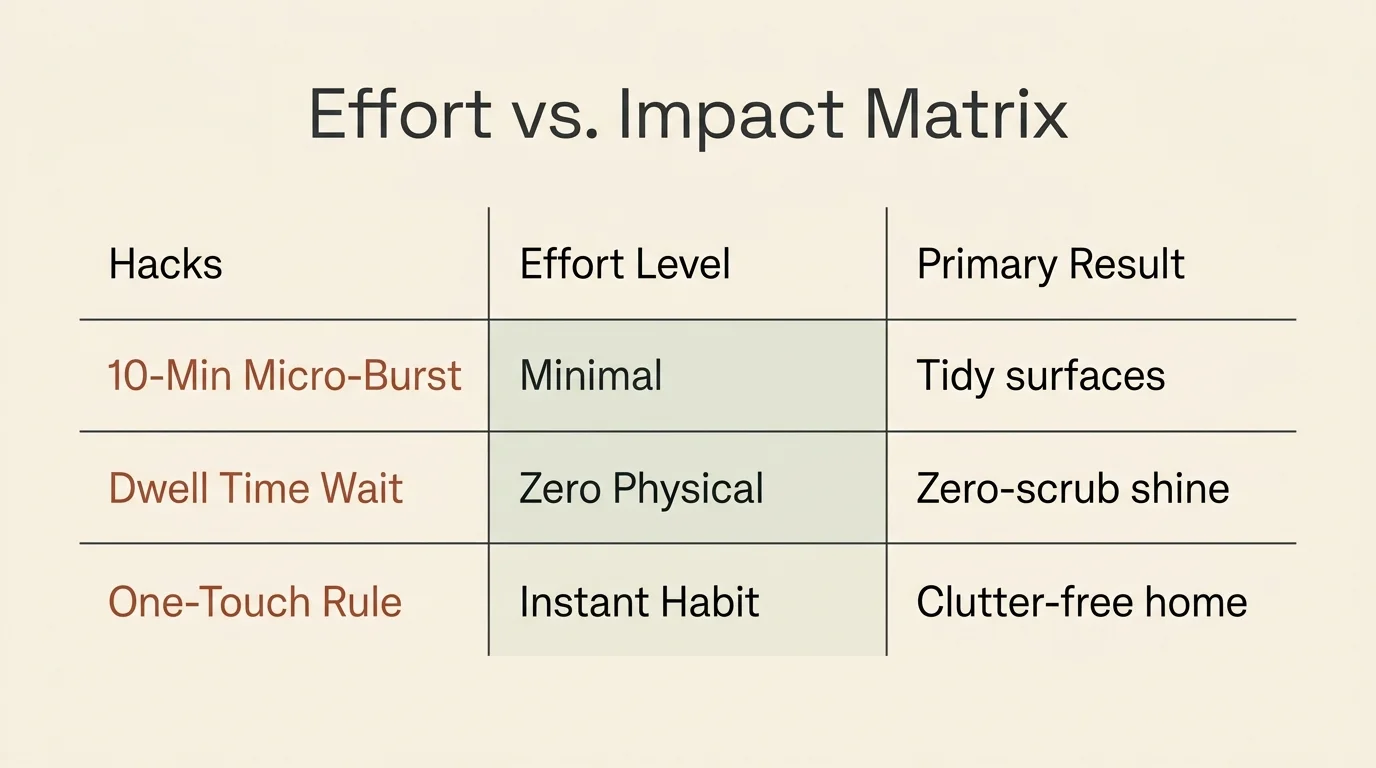
Essential Cleaning Hack Comparison Matrix
Review this strategic comparison table to select the most effective cleaning shortcuts based on your specific daily challenges and available time:
| Cleaning Hack | Primary Application | Estimated Time Saved / Week | Physical Effort Level | Key Tool Required |
|---|---|---|---|---|
| Chemical Dwell Time | Bathrooms, ovens, and greasy counters | 45 Minutes | Very Low | Spray cleaner and microfiber cloth |
| 10-Minute Micro-Burst | Living rooms and kitchen counters | 60 Minutes | Moderate | Digital smartphone timer |
| Point-of-Use Storage | Shower stalls and vanity sinks | 30 Minutes | Very Low | Soap-dispensing dish wand |
| Top-to-Bottom Flow | Whole-house dusting and sweeping | 40 Minutes | Low | Microfiber duster and vacuum |
| One-Touch Rule | Entryways, mail, and daily clutter | 90 Minutes | Low | Entryway hooks and recycling bins |
| Automated Floor Care | Hardwood, tile, and low-pile carpets | 90 Minutes | Zero (Automated) | Robotic vacuum cleaner |
| Frictionless Pastes | Tile grout, stove glass, and sinks | 30 Minutes | Low | Baking soda and hydrogen peroxide paste |
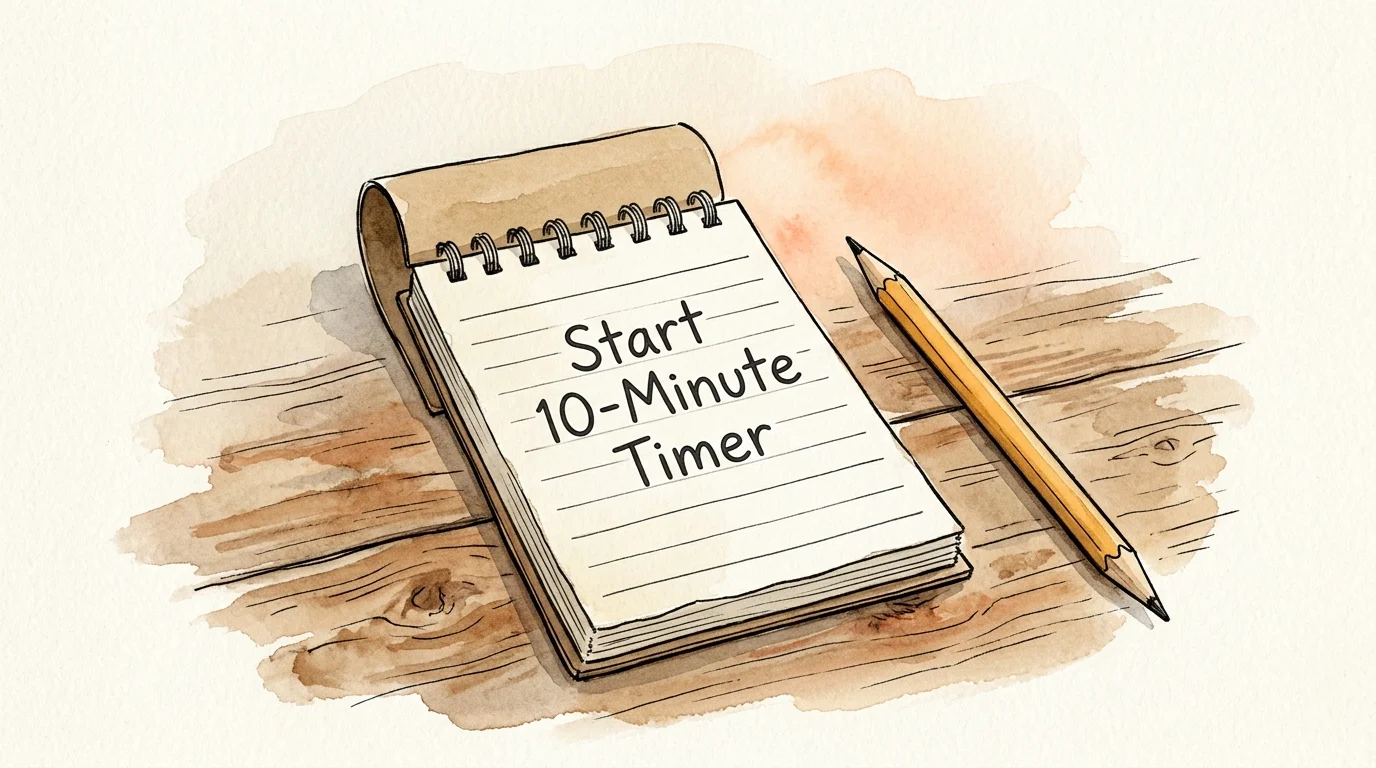
Your Immediate Next Step
Do not attempt to overhaul your entire house cleaning strategy in a single day. Choose just one hack from this list—such as placing a soap-filled dish wand inside your shower stall or setting a 10-minute timer for your living room counters—and test it today. Once that shortcut becomes second nature, layer in a second strategy to build a low-maintenance home routine that works for you.