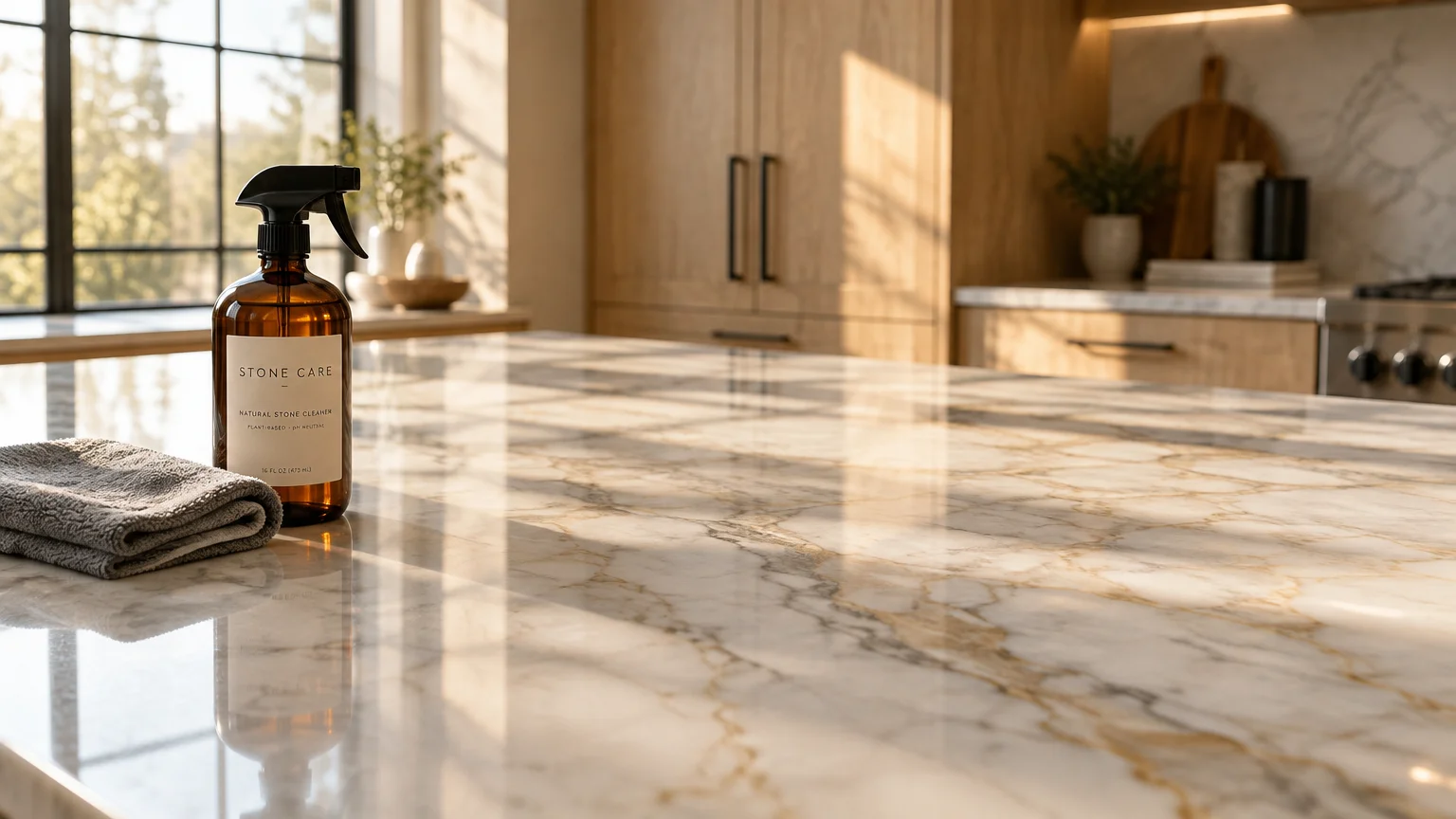
You can ruin polished marble or granite in seconds by reaching for the wrong cleaning bottle under your sink. Natural and engineered stones require gentle, pH-balanced care to maintain their deep shine and protective factory seal.
Harsh chemicals, acidic sprays, and rough pads strip away defensive coatings and dissolve delicate minerals beneath the surface. Repairing this chemical damage often requires costly professional diamond honing.
Knowing which everyday household cleaners destroy natural surfaces protects your home investment and keeps your daily kitchen routine simple. Here are the top six items professional cleaners advise you to banish from your countertops immediately.
Why Natural and Engineered Stone React So Quickly to Harsh Cleaners
Natural stone surfaces add enduring beauty and value to your home. However, their geological makeup leaves them vulnerable to common household cleaning agents.
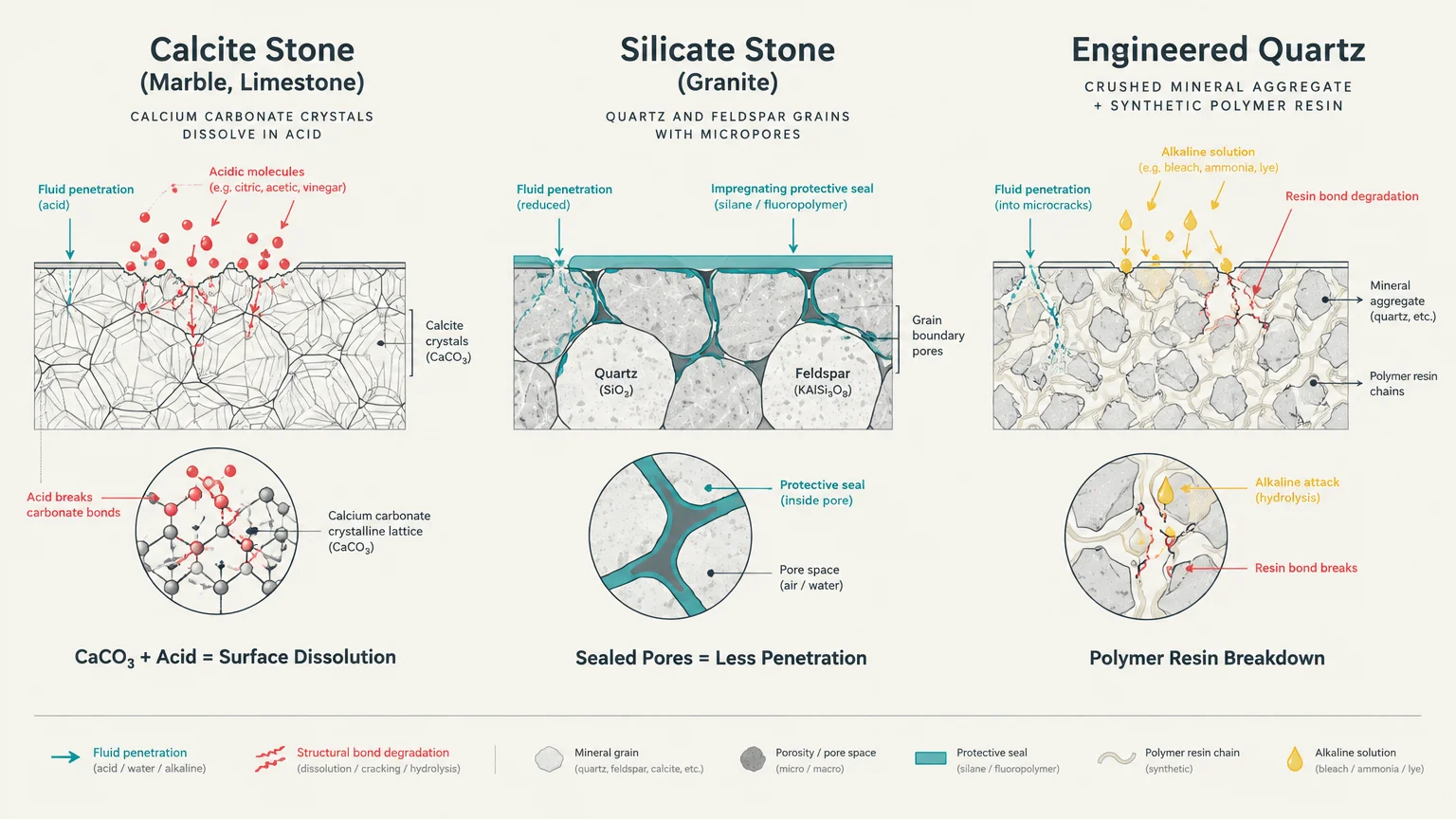
Many popular natural stones—including marble, travertine, and limestone—contain large amounts of calcium carbonate. This mineral reacts immediately with acidic compounds, dissolving the surface on contact.
Granite and quartzite consist of harder silicate minerals, but they still feature microscopic pores that absorb liquids. Installers apply penetrating impregnating sealers to block these pores and protect the stone from deep stains.
Engineered quartz combines crushed natural quartz minerals with synthetic polymer resins and pigments. While quartz resists acid etching better than marble, harsh alkalis and solvents break down those synthetic resins permanently.
Understanding these material differences helps you avoid common cleaning mistakes stone countertops suffer from every day. A single incorrect spray can turn a mirror-smooth slab into a dull, chalky surface.
01 White Vinegar and Citrus-Based Cleaners
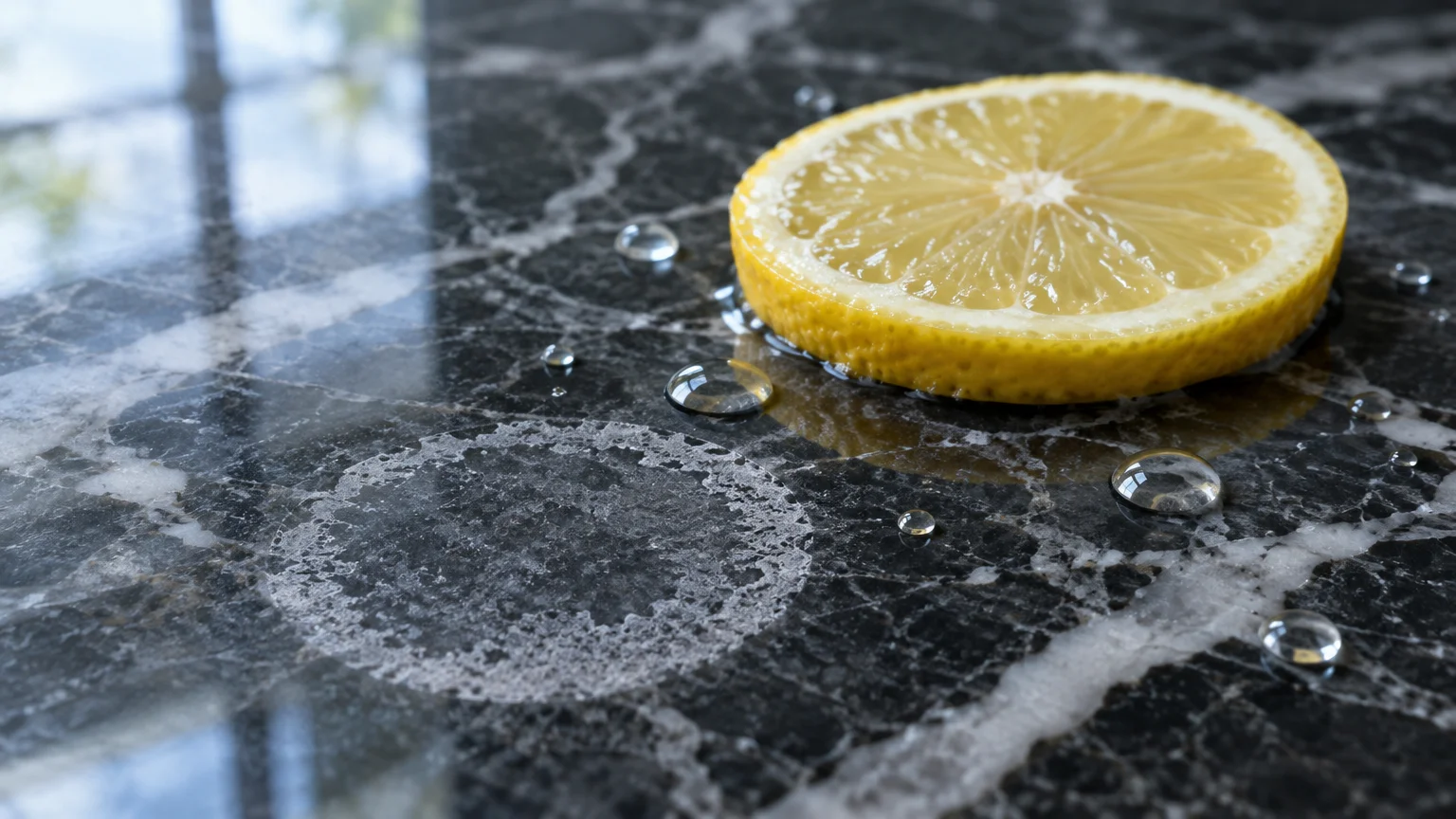
Many eco-friendly cleaning guides praise white distilled vinegar and fresh lemon juice as universal disinfectants. While these pantry staples cut grime on ceramic tile, you must avoid these countertop cleaners when maintaining natural stone.
White vinegar contains approximately 5 percent acetic acid, which produces a pH level between 2 and 3. Lemon juice contains citric acid and carries an even lower, more aggressive pH level.
When an acid touches calcium-based stone, a chemical reaction takes place instantly. The acid breaks the bonds of the calcium carbonate crystals, releasing carbon dioxide gas and physically eroding the polished face.
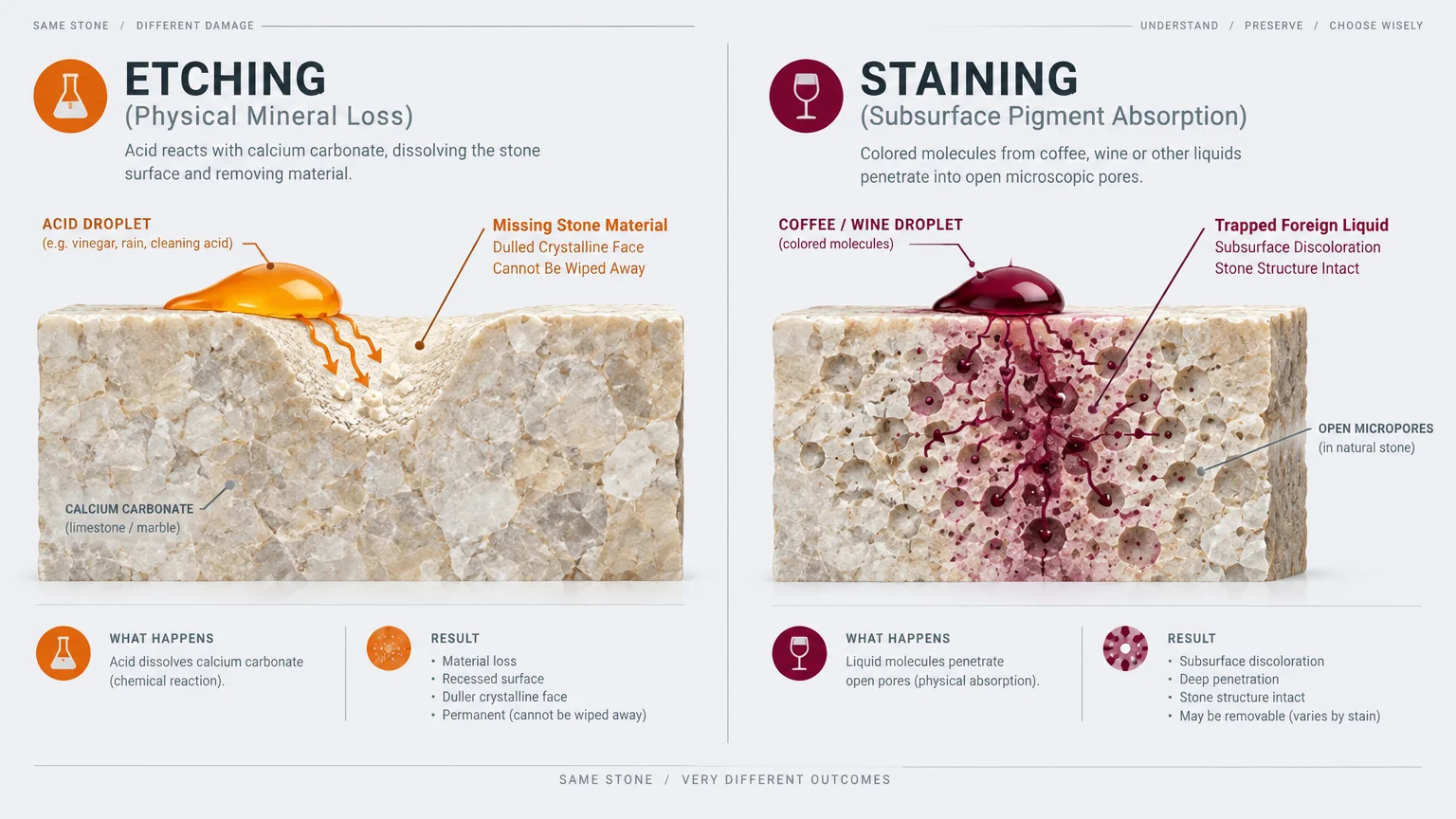
Professionals call this damage etching. Etching looks like a dull, cloudy water spot or glass ring that refuses to wipe away.
Unlike a grease stain, an etch mark represents missing stone material rather than surface dirt. Restoring an etched slab requires mechanical abrasion and progressive polishing pastes to re-level the surface.
Citrus-based commercial degreasers containing d-limonene present similar hazards. Even if a product claims to use natural orange oil, its low pH can degrade your sealer and dull the stone.
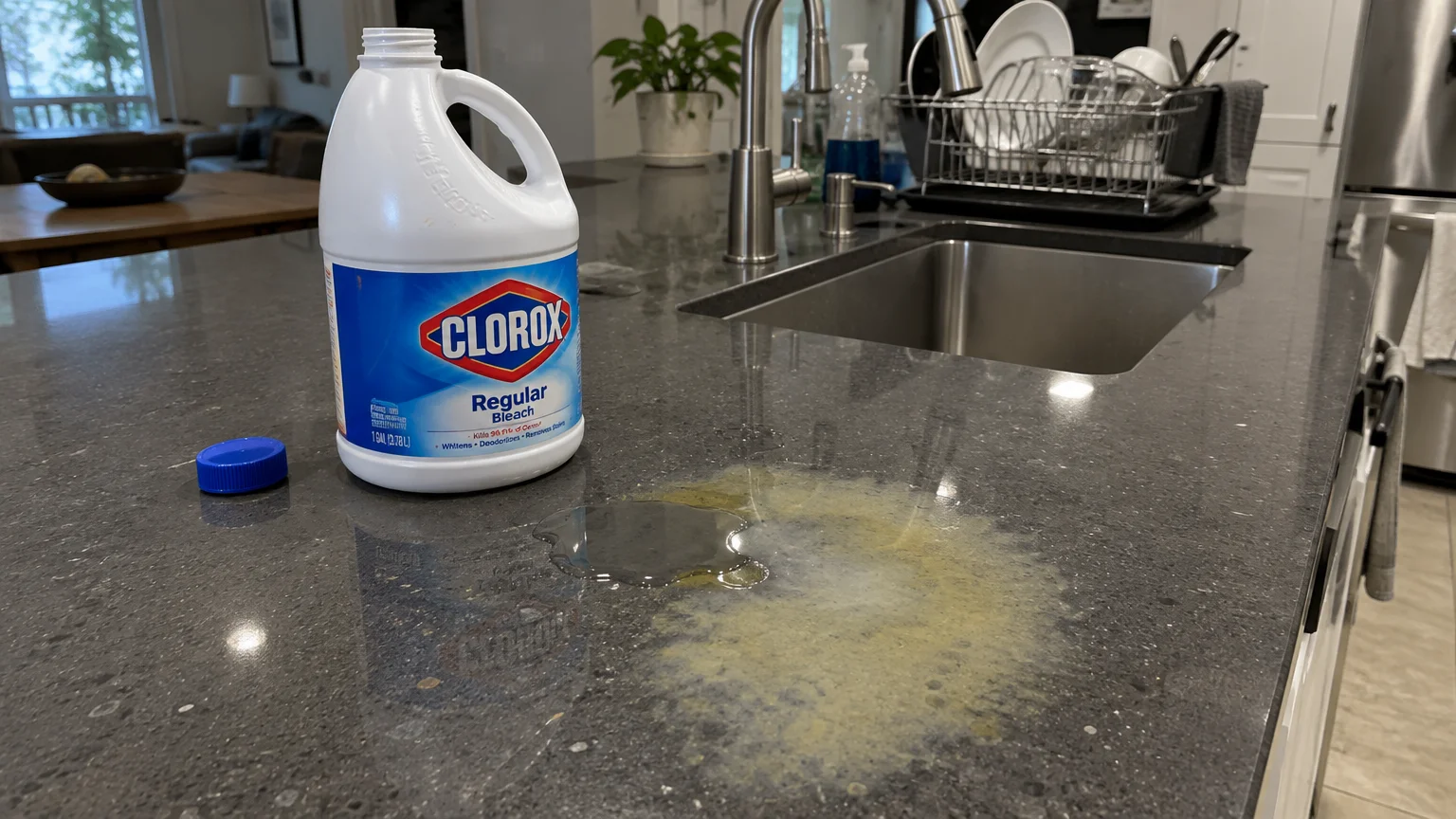
02 Undiluted Chlorine Bleach and Heavy Oxidizers
Homeowners often reach for chlorine bleach to sanitize prep areas after handling raw poultry or meat. While bleach kills bacteria effectively, using it on stone countertops creates long-term structural and cosmetic problems.
Sodium hypochlorite, the active chemical in liquid household bleach, registers as heavily alkaline with a pH around 11 to 13. Extreme alkalis attack stone sealers just as aggressively as acids do.
Repeated bleach applications strip the fluorochemical or silicone resins inside penetrating sealers. Once the sealer degrades, everyday kitchen spills like olive oil, coffee, and wine penetrate deep into the stone pores.
Bleach also causes catastrophic discoloration on engineered quartz. The strong oxidizer reacts with the organic polymer binders, causing dark quartz surfaces to fade or develop permanent yellowish stains.
The CDC surface cleaning guidelines recommend safer sanitizing methods that do not rely on concentrated corrosive bleaches for delicate surfaces. Safer alternatives keep your food preparation zones hygienic without ruining expensive finishes.
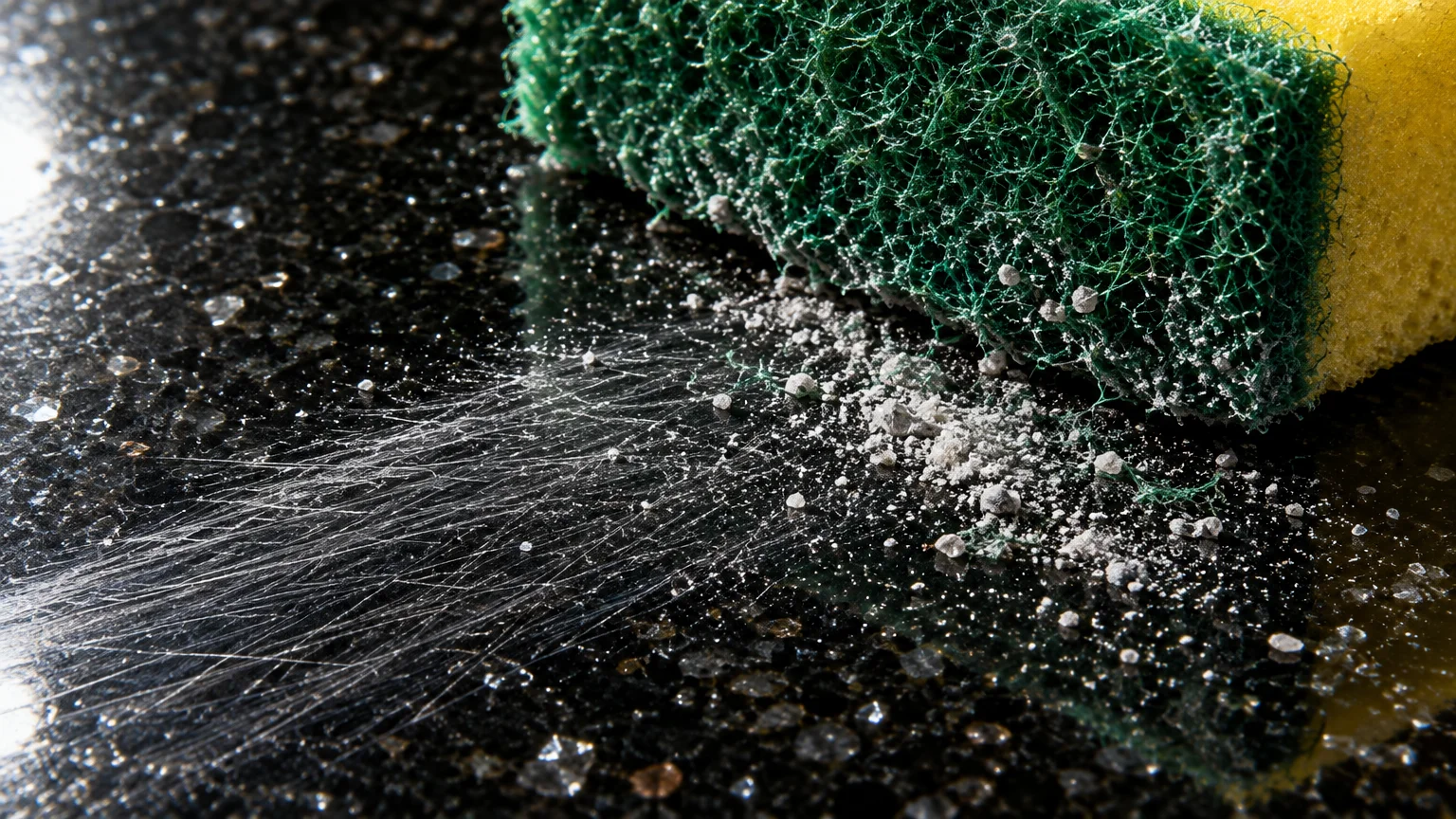
03 Abrasive Scrubbing Powders and Coarse Pads
Dried pasta sauce and burnt grease often tempt homeowners to grab abrasive powders or scouring sponges. Unfortunately, mechanical abrasion represents a leading cause of what damages stone countertops over time.
Common scouring powders contain pulverized minerals such as quartz, calcite, or feldspar. Many heavy-duty pads contain microscopic grains of aluminum oxide embedded directly into their green or red synthetic fibers.
Mineral hardness follows the Mohs scale, which ranks materials from 1 (talc) to 10 (diamond). Calcite-based marble ranks at roughly 3, while granite ranks around 6 to 7.
Scrubbing a polished marble surface with a pad rated at 8 or 9 creates thousands of microscopic scratches. These micro-fissures scatter reflected light, stripping away the factory shine and leaving the countertop hazy.
Worse still, those tiny scratches create micro-crevices where bacteria, oil, and moisture accumulate. You end up with a surface that collects dirt faster and resists routine wiping.
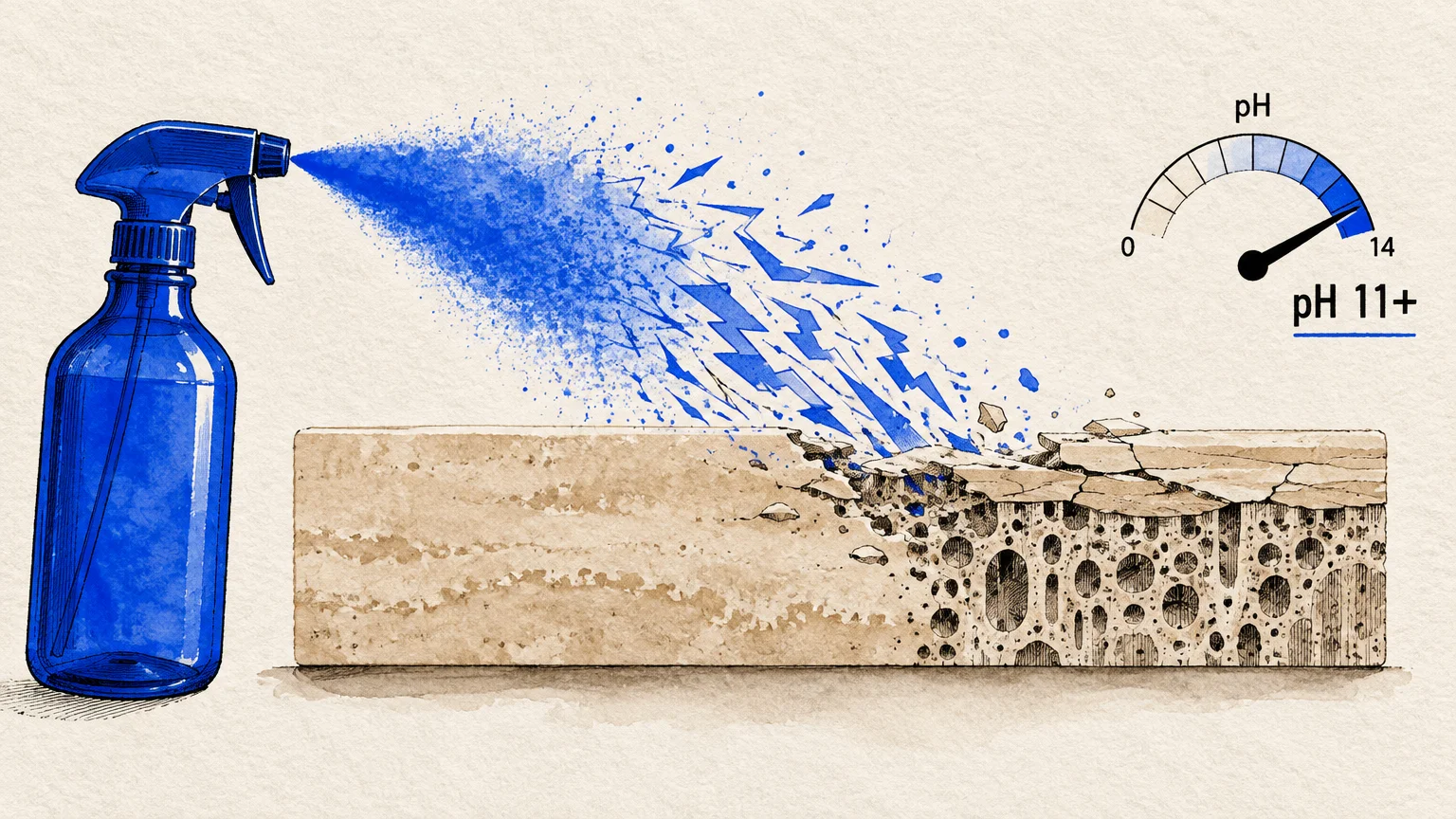
04 Ammonia and Generic Glass Cleaners
A classic household myth suggests that blue glass cleaner provides a streak-free shine on granite countertops. Professional stone restorers frequently encounter countertops ruined by this exact habit.
Most commercial window cleaners rely on a combination of water, synthetic surfactants, and concentrated ammonia. Ammonia possesses a high alkaline pH of approximately 11.5.
Just like bleach, high-pH ammonia chemically dissolves the protective fluoropolymer sealers applied to natural granite and quartzite. As the sealer deteriorates, the liquid evaporates and leaves behind a sticky surfactant residue.
This chemical residue attracts airborne dust and cooking oils like a magnet. Over several weeks, the countertop develops an unsightly, cloudy patina that feels tacky to the touch.
The Natural Stone Institute explicitly warns against using ammonia-based formulas on sealed stone. Dedicated stone cleaners rinse away cleanly without leaving residue or compromising the stone’s barrier layer.
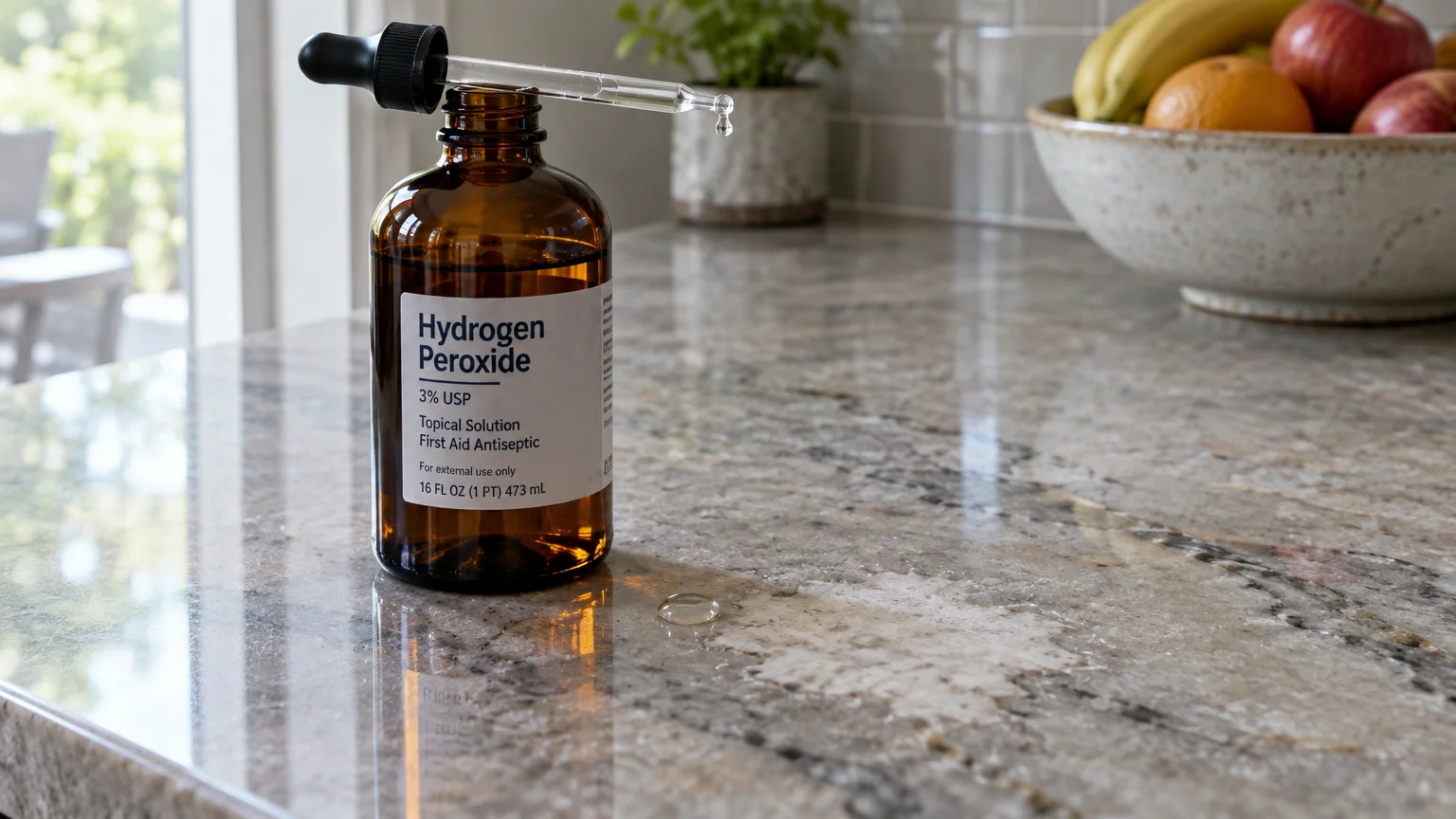
05 Hydrogen Peroxide (When Used Undiluted or Incorrectly)
Hydrogen peroxide serves as a popular household disinfectant and stain lifter. Many online tutorials recommend pouring 3 percent peroxide directly onto countertop stains to pull out discoloration.
While stone professionals do utilize peroxide in controlled poultice mixtures for light-colored marble, improper use causes severe damage. Peroxide acts as an active bleaching agent that lifts color from darker natural stones.
Dark granites like Uba Tuba, Black Galaxy, or Saint Henry contain natural iron and mica deposits. Peroxide can oxidize these minerals, turning rich black or charcoal tones into rusty orange patches.
Engineered quartz slabs also react poorly to concentrated hydrogen peroxide pools. The chemical breaks down color pigments added to the resin during manufacturing, leaving permanent pale spots.
Never spray peroxide across your entire counter as an everyday disinfectant. Confine its use to targeted stain-poultice applications guided by professional stone-care instructions.
06 Caustic Degreasers and Oven Cleaners
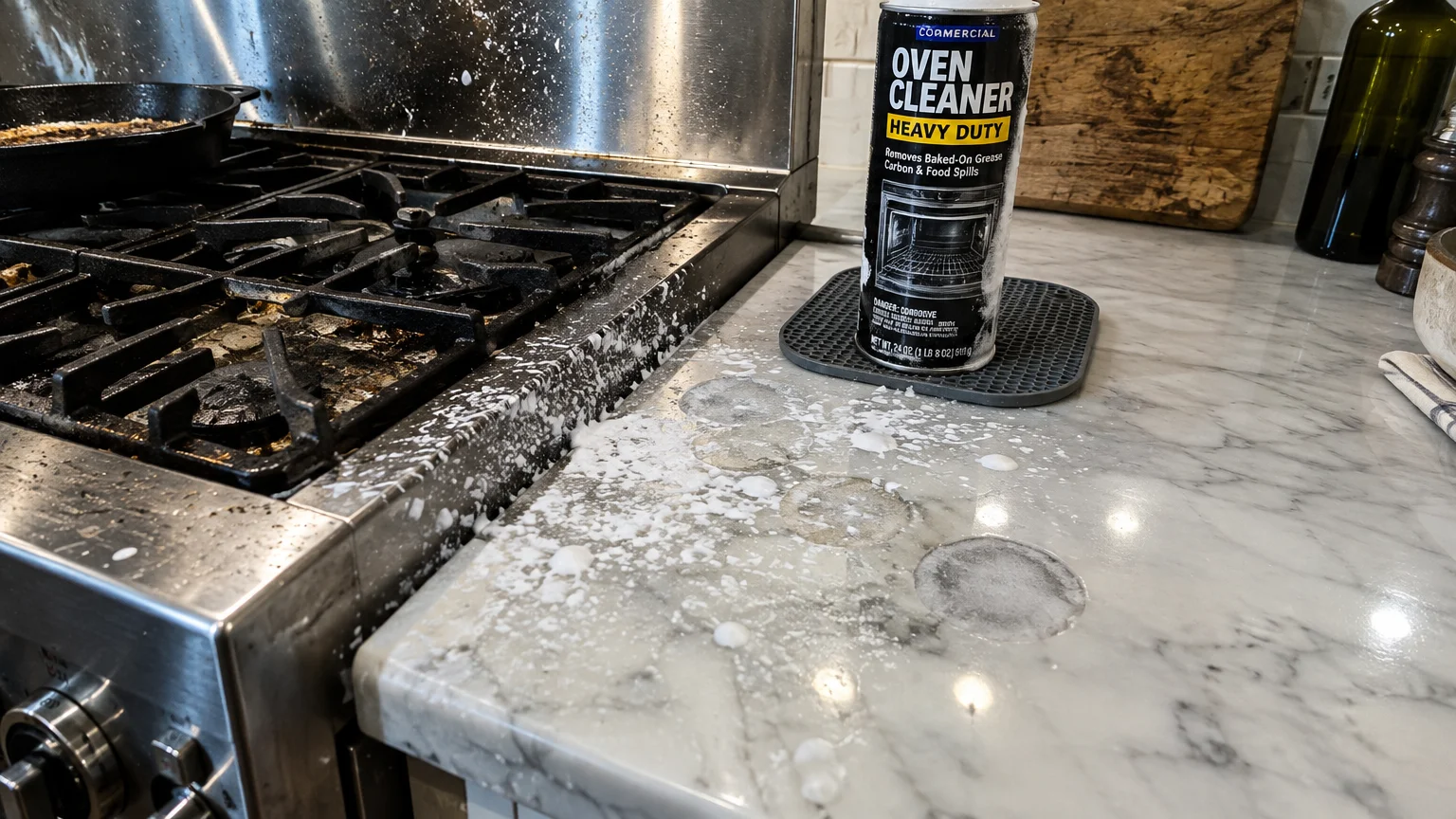
Oven cleaners and heavy automotive-style kitchen degreasers are designed to dissolve carbonized fat and baked-on grease. To accomplish this, manufacturers use concentrated sodium hydroxide (lye) or potassium hydroxide.
These caustic chemicals exhibit extreme pH ratings ranging between 13 and 14. Contact with caustic lye creates immediate chemical burns on polished stone surfaces.
According to safety profiles maintained by the Occupational Safety and Health Administration, caustic hydroxides dissolve organic tissues and synthetic polymers rapidly. On engineered quartz, lye permanently softens and melts the resin binder.
On natural granite and marble, caustic degreasers strip impregnating sealants on contact. They can also react with trace mineral inclusions, causing irreversible graying and pitting.
Even overspray from cleaning an adjacent oven or cooktop can pit your stone countertops. Always protect adjacent stone surfaces with towels whenever you use heavy degreasers on nearby appliances.
Understanding the Difference Between Etching and Staining
Homeowners often confuse etching with staining, but the two problems represent fundamentally different forms of damage. Knowing the difference dictates how you repair the stone.
A stain occurs when a liquid penetrates the pores of the stone and deposits colored molecules below the surface. Stains appear darker than the surrounding area and do not alter the texture of the polish.
An etch mark occurs when a chemical physically dissolves the surface minerals. Etches appear lighter or duller than the polished stone and often feel rough under your fingertips.
You can often remove stains using an absorbent clay poultice mixed with a solvent to draw the pigment out. Etching, however, represents lost mineral volume that no cleaner or poultice can restore.
Stone Surface Vulnerability Comparison
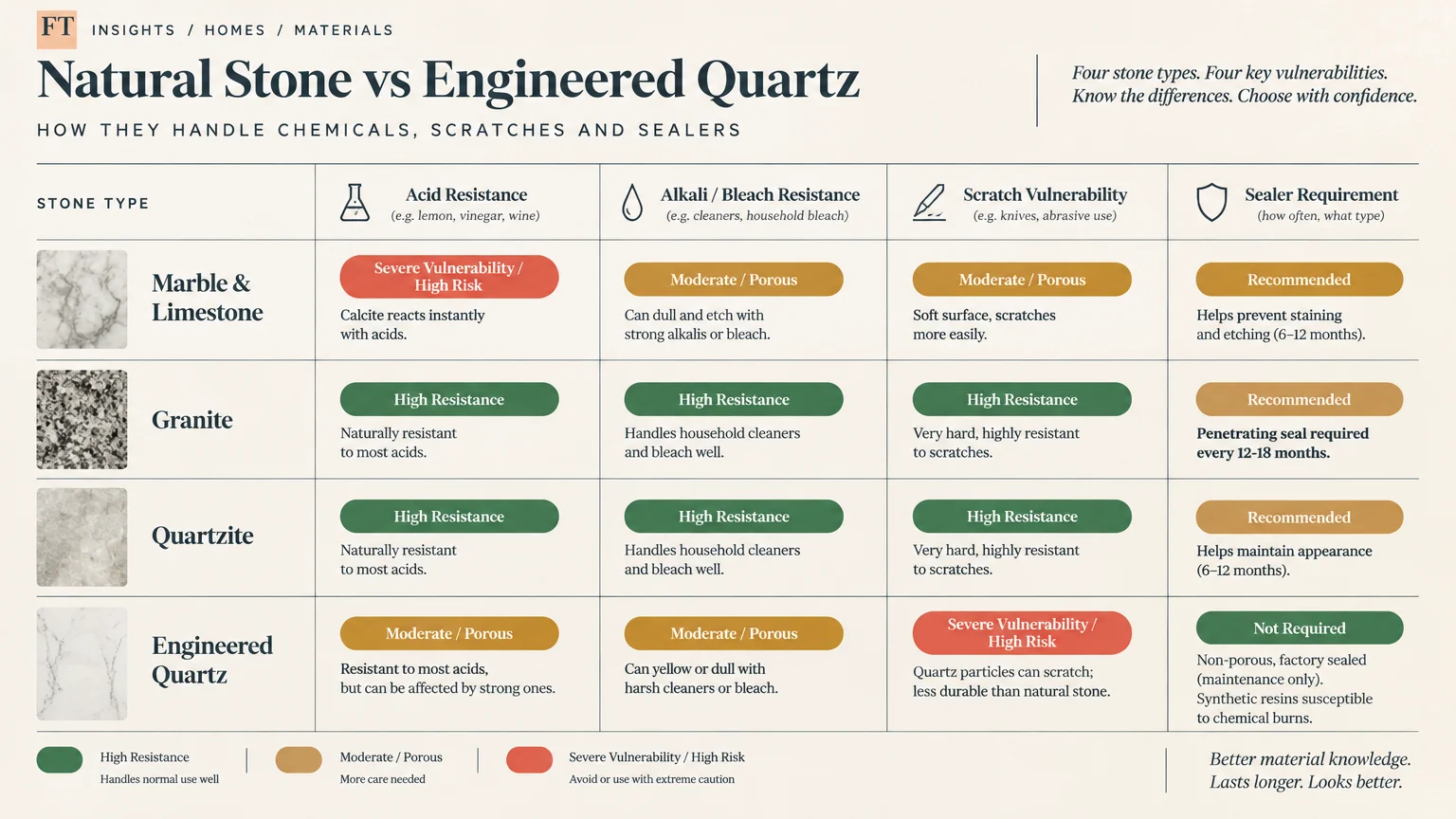
Different stone varieties react uniquely to chemical exposure. Use this reference table to understand the specific vulnerabilities of your countertops.
| Countertop Material | Primary Mineral Composition | Biggest Chemical Threat | Primary Damage Type | Safe pH Range |
|---|---|---|---|---|
| Polished Marble | Calcium Carbonate (Calcite) | Acids (Vinegar, Lemon, Wine) | Severe surface etching and dulling | 6.5 to 7.5 |
| Travertine & Limestone | Calcium Carbonate | Acids and caustic degreasers | Etching, pitting, and void erosion | 6.5 to 7.5 |
| Granite | Quartz, Feldspar, Mica | Bleach, ammonia, strong alkalis | Sealer breakdown and deep staining | 6.0 to 8.0 |
| Quartzite | Metamorphic Quartz | Abrasives and heavy degreasers | Sealer degradation and scratching | 6.0 to 8.0 |
| Engineered Quartz | Crushed Quartz + Polymer Resin | Bleach, high-heat solvents, lye | Resin discoloration, melting, hazing | 5.0 to 8.5 |
| Soapstone | Talc, Magnesite, Chlorite | Heavy abrasives and gouging | Mechanical scratching (Acid resistant) | 4.0 to 9.0 |
Pro Tips for Cleaning Countertops Safely Every Day
Caring for natural and engineered stone does not require complicated routines or expensive specialty chemicals. Following a few practical stone countertop care tips keeps your surfaces pristine for decades.
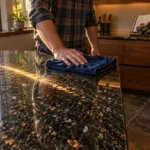
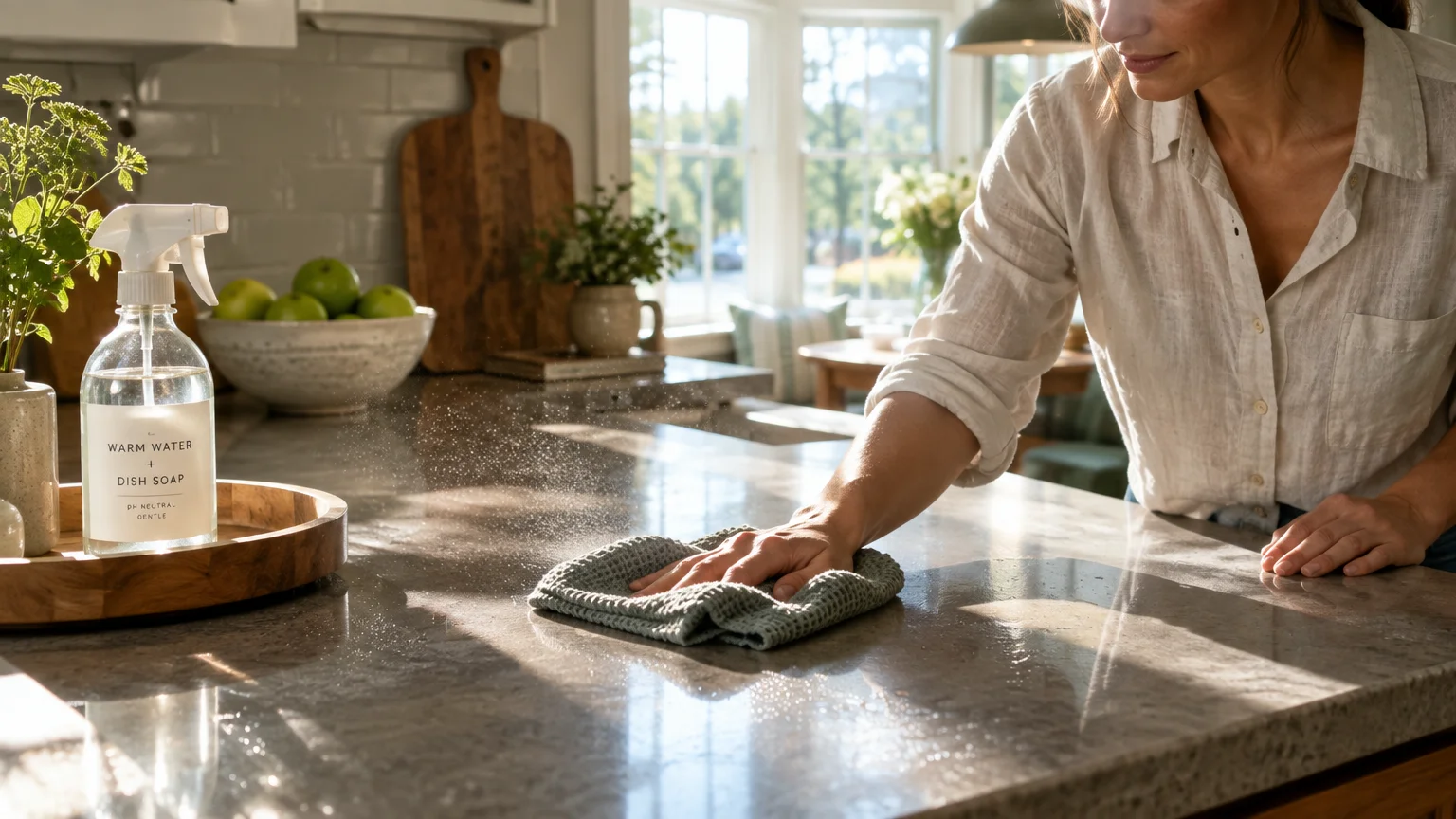
Keep your daily maintenance routine centered on warm water, soft microfiber cloths, and mild, neutral detergents. This simple approach prevents grime buildup without compromising the sealer.
- Clear surface debris: Sweep away loose crumbs and dry dirt using a clean, dry microfiber cloth before introducing any moisture.
- Wash with mild soap: Mix a few drops of mild dish soap into warm tap water, or apply a pH-balanced specialty stone spray.
- Wipe gently: Clean the counter using non-abrasive, circular motions with a damp microfiber cloth to lift grease and food spills.
- Rinse away soap: Wipe the surface a second time using a clean cloth moistened with plain fresh water to remove surfactant film.
- Dry thoroughly: Buff the entire slab dry with a plush microfiber towel to prevent hard water mineral deposits.
Drying the stone represents a critical step that many homeowners skip. Evaporating tap water leaves dissolved calcium and magnesium behind, creating a chalky haze that mimics chemical damage.
Look for products evaluated under the EPA Safer Choice standard when selecting household detergents. These formulas reduce corrosive hazards while providing dependable cleaning performance.
How to Disinfect Stone Safely Without Harsh Chemicals
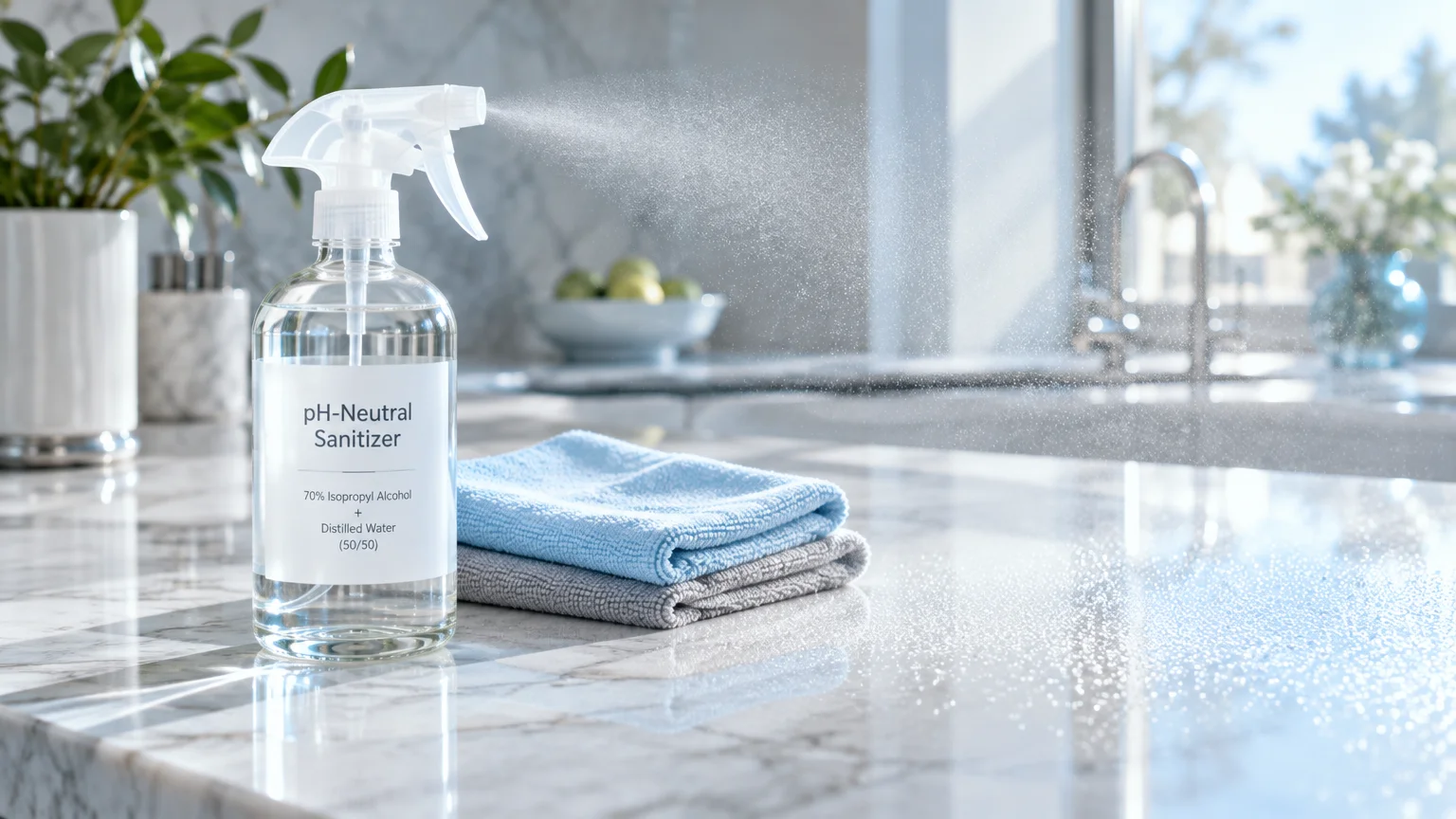
You do not need bleach or ammonia to create a hygienic food preparation surface. You can mix an effective, stone-safe sanitizing solution at home using inexpensive drugstore ingredients.
Isopropyl alcohol provides exceptional broad-spectrum antimicrobial activity without attacking calcium carbonate or degrading factory sealers. It evaporates rapidly, leaving zero chemical residue behind.
- Combine equal parts: Mix 50 percent 70-percent isopropyl alcohol with 50 percent distilled water in a clean spray bottle.
- Add gentle scent (optional): Add two to three drops of mild dish soap to assist in lifting surface oils during sanitization.
- Spray the surface: Mist the solution evenly across your stone countertop after washing away visible food debris.
- Allow dwell time: Let the alcohol solution sit on the surface for three to five minutes to neutralize bacteria and viruses.
- Wipe completely dry: Buff the counter dry using a clean microfiber cloth to produce a streak-free shine.
This alcohol solution works safely across marble, granite, engineered quartz, and quartzite. It delivers reliable sanitation without risking the chemical burns caused by chlorine or quaternary ammonium compounds.
The Water Drop Test: How to Tell When Your Stone Needs Resealing
Natural stone requires routine resealing to maintain its defense against moisture and oil. How often you reseal depends on foot traffic, cooking habits, and previous cleaning methods.
Aggressive cleaners strip sealers quickly, meaning damaged countertops need attention sooner than well-maintained ones. You can evaluate your sealer’s integrity in under thirty minutes using plain water.
- Clean and dry the counter: Wash a section of your countertop thoroughly and let it dry completely for at least one hour.
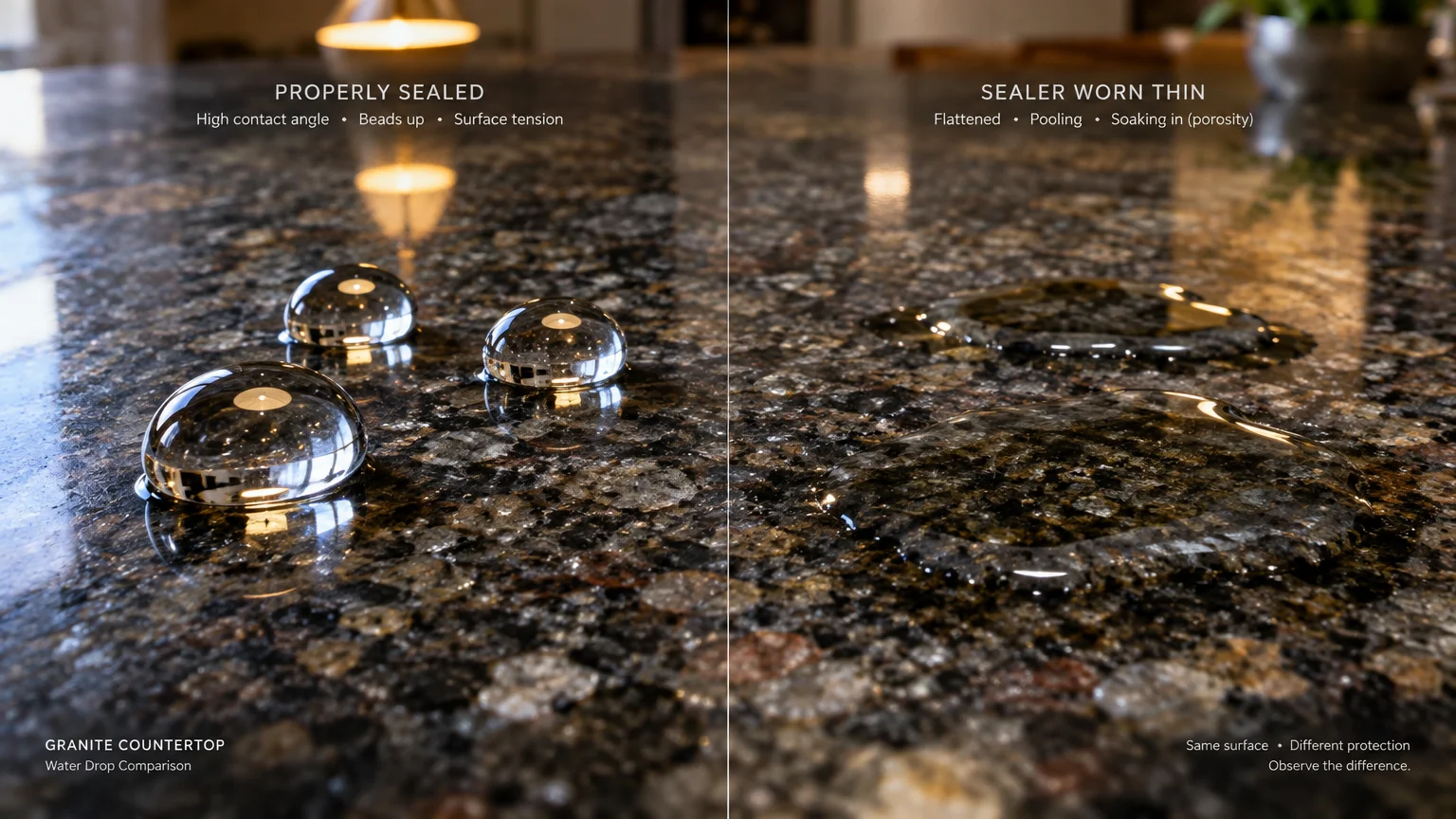
- Deposit water puddles: Place several quarter-sized puddles of tap water across high-use areas, especially near the sink and cooktop.
- Observe the reaction: Check the water puddles at 5-minute, 15-minute, and 30-minute intervals to observe penetration.
If the water beads tightly on the surface after 30 minutes, your protective sealer remains in excellent condition. You do not need to apply sealer at this time.
If the stone underneath the puddle darkens within 5 to 15 minutes, moisture is penetrating the microscopic pores. Your sealer has worn thin and requires a fresh application of an impregnating stone sealer.
If the water puddle soaks in and darkens the stone immediately, your surface is completely unprotected. Reseal the stone right away to prevent stubborn oil and tannin stains from setting permanently.
Keep Countertop Care Simple and Stress-Free
Protecting your stone counters comes down to subtraction rather than addition. Clearing acidic sprays, scouring pads, and caustic chemicals out of your kitchen cabinet eliminates 95 percent of potential damage risks.
Take five minutes today to audit the cleaning supplies stored directly beneath your kitchen sink. Toss out abrasive scouring sponges and relocate vinegar-based and ammonia sprays to rooms without natural stone surfaces.
Replace those harsh chemicals with a dedicated spray bottle of 70 percent isopropyl alcohol diluted with water, a bottle of neutral dish soap, and a stack of fresh microfiber towels. This simple swap will protect your investment, preserve your counter’s brilliant polish, and keep your daily routine effortlessly calm.