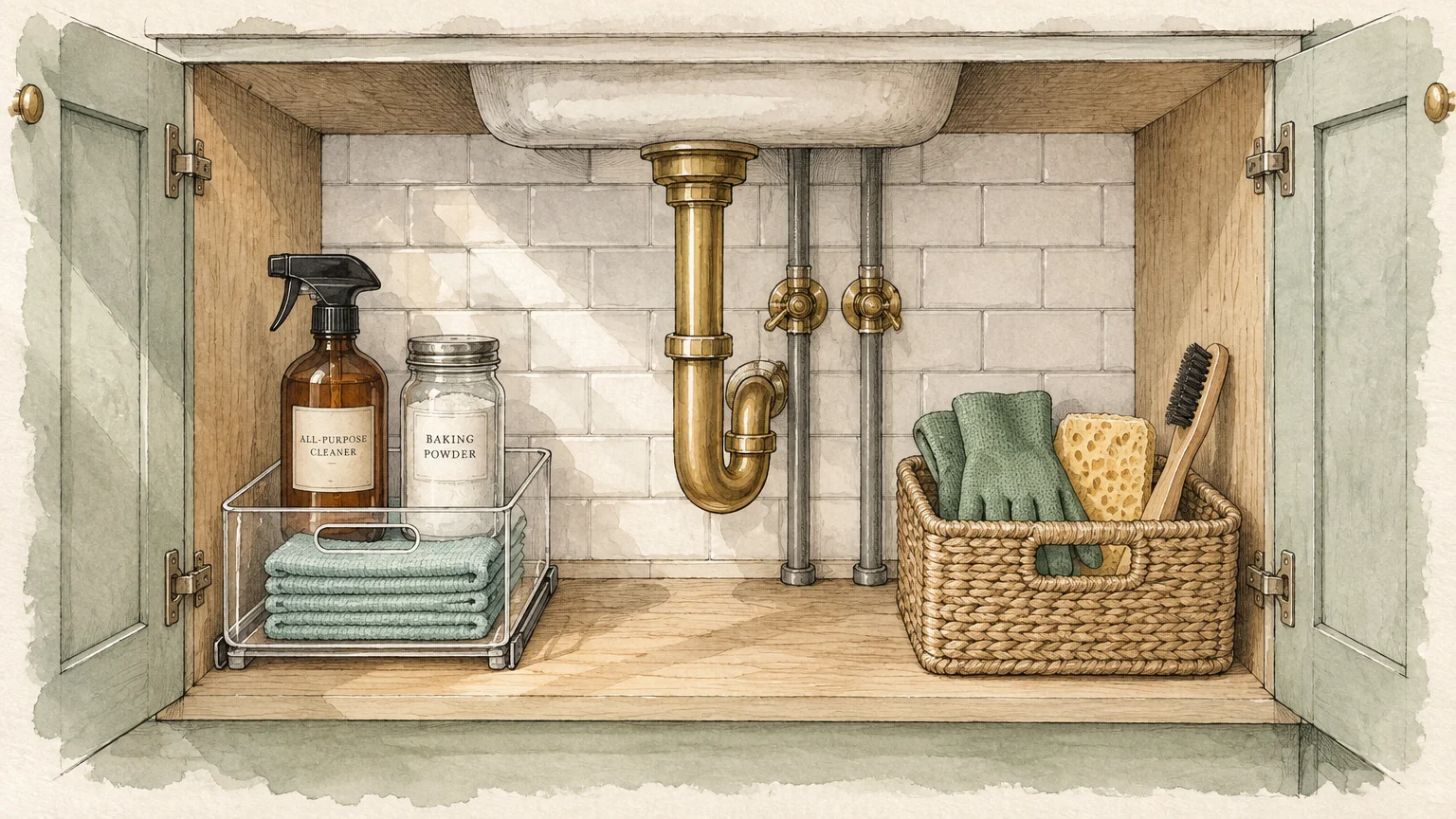
A streamlined cabinet under your kitchen sink cuts cleaning time in half and keeps daily chores effortless. Stashing the right kitchen cleaning supplies eliminates cabinet clutter and prevents frantic searches for missing bottles.
Cramming twenty specialty sprays beneath plumbing pipes creates chaos and invites hazardous leaks. You only need a tight roster of versatile cleaning essentials to handle everyday messes.
Here are the ten best cleaning products worth keeping under your sink to maintain a spotless, hygienic kitchen with zero wasted effort.
Why a Curated Under-Sink Cabinet Matters
The space beneath your kitchen sink presents unique challenges. Dark, damp, and crowded with plumbing valves, this small area easily turns into an unmanageable catchall.
Overcrowded cabinets hide slow pipe drips until structural water damage occurs. Limiting your inventory protects your cabinetry and gives you instant visibility across every shelf.
A simplified collection also protects your physical well-being. Lifting heavy, bulky buckets strains wrists and lower backs, especially during repetitive daily tidying.
Choosing multipurpose formulas eliminates redundant purchases. You save cabinet space, spend less money at the grocery store, and simplify your routine.
01 Concentrated Liquid Dish Soap
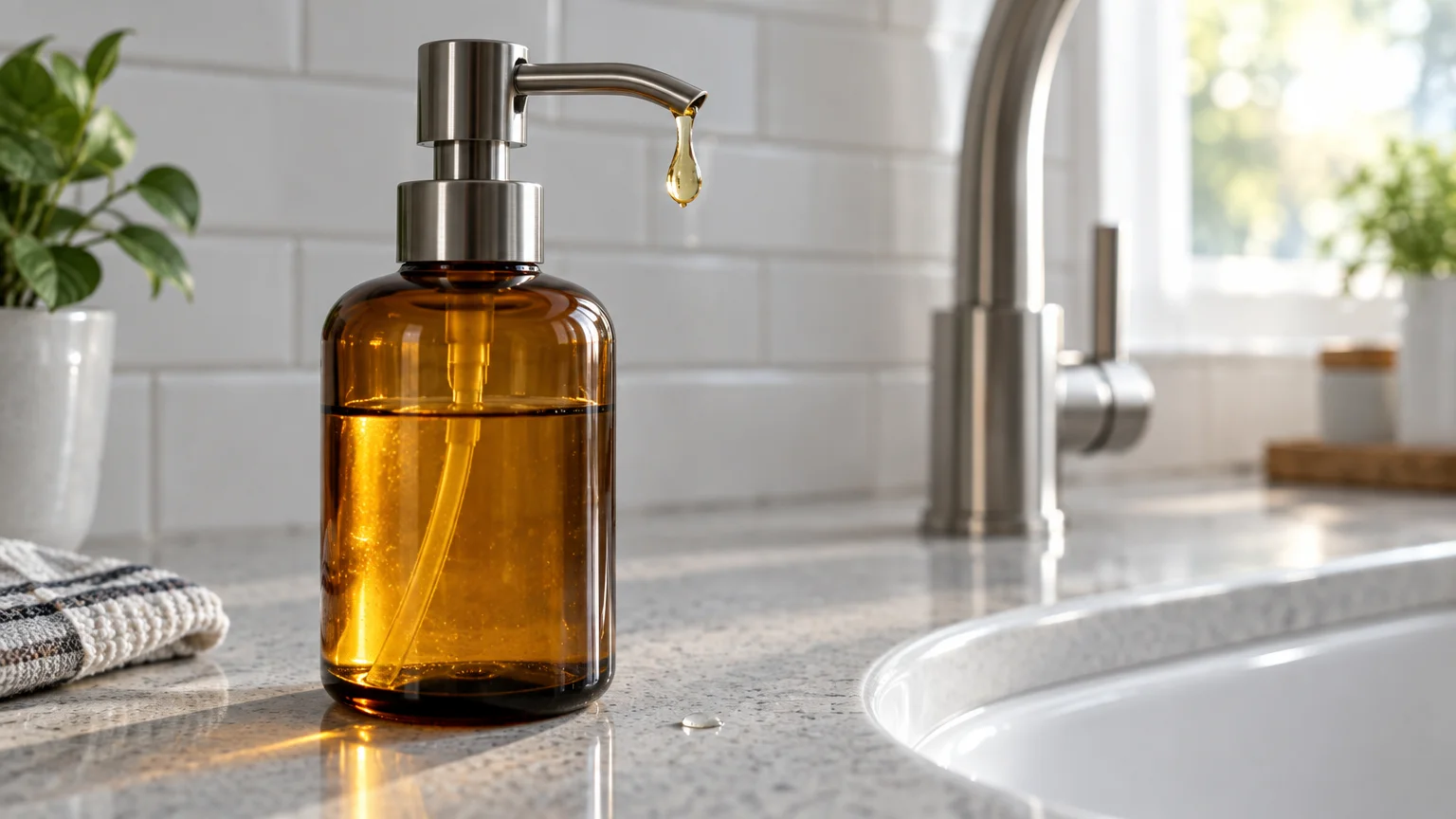
Liquid dish soap is arguably the hardest-working formula in your entire home. Its powerful surfactants bind to grease molecules and suspend food solids in warm water.
Beyond dinner plates, mild dish soap acts as your safest everyday surface degreaser. It lifts oily fingerprints from cabinet fronts without stripping delicate finishes.
A single drop diluted in warm water gently cleans natural stone countertops. Unlike acidic cleaners, pH-neutral dish soap preserves porous granite, quartzite, and marble sealants.
Look for concentrated, dye-free formulas to maximize shelf longevity. A single 16-ounce bottle can sustain months of daily kitchen tasks when measured thoughtfully.
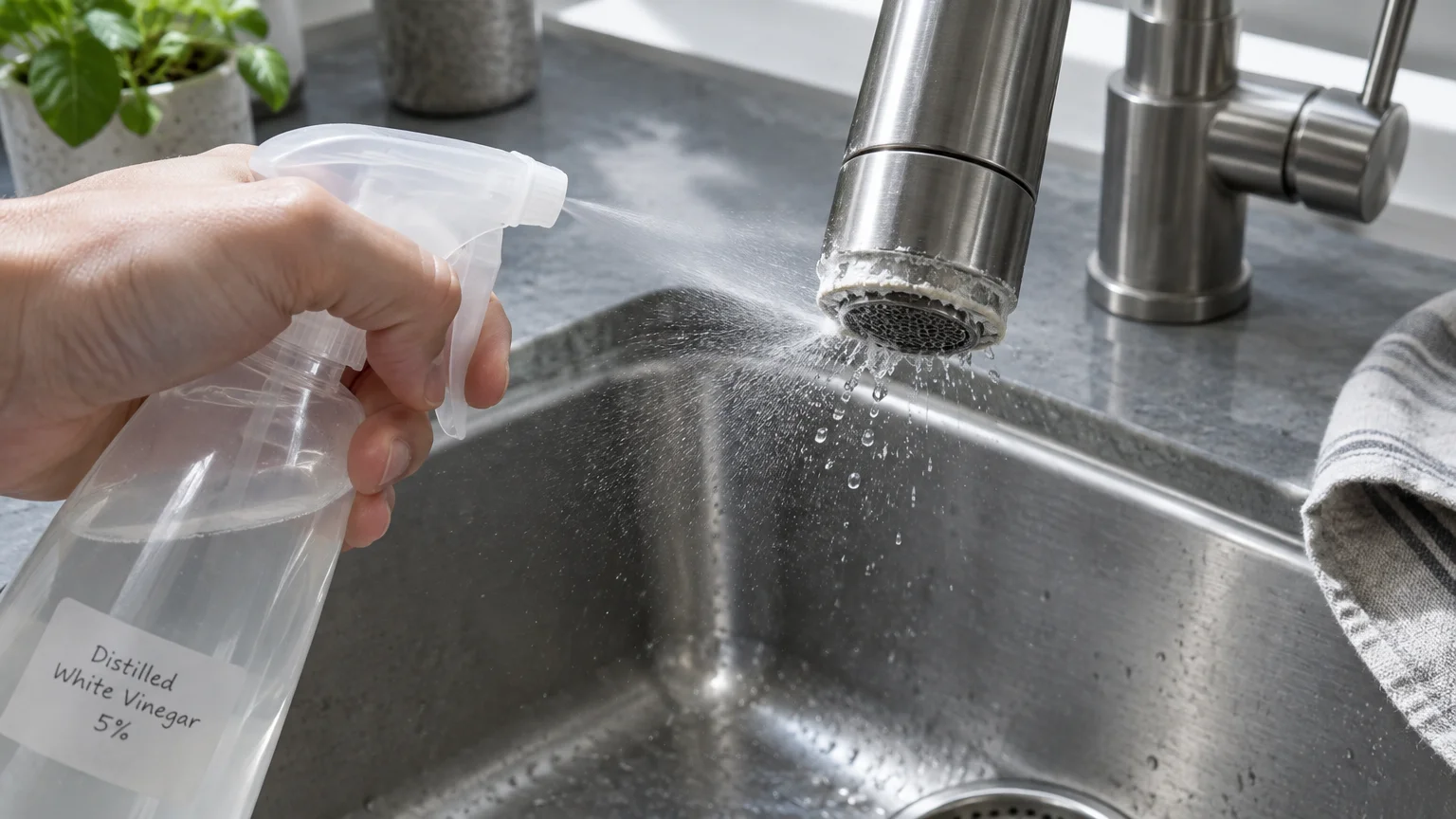
02 Distilled White Vinegar (5% Acidity)
Distilled white vinegar provides reliable acidic cleaning power without harsh synthetic fragrances. Its standard five percent acetic acid concentration cuts through alkaline mineral scale effortlessly.
Keep a dedicated squirt bottle ready for chrome faucet aerators and sink drains. Vinegar dissolves crusty hard-water buildup and leaves polished stainless steel sparkling clean.
Use vinegar to deodorize your garbage disposal and clear cloudy glass mugs. Run a diluted cycle through your drip coffee maker monthly to clear calcified water channels.
Never apply vinegar to natural stone, cast iron, or hardwood surfaces. The acid reacts with calcium carbonate in marble and limestone, creating permanent dull etch marks.
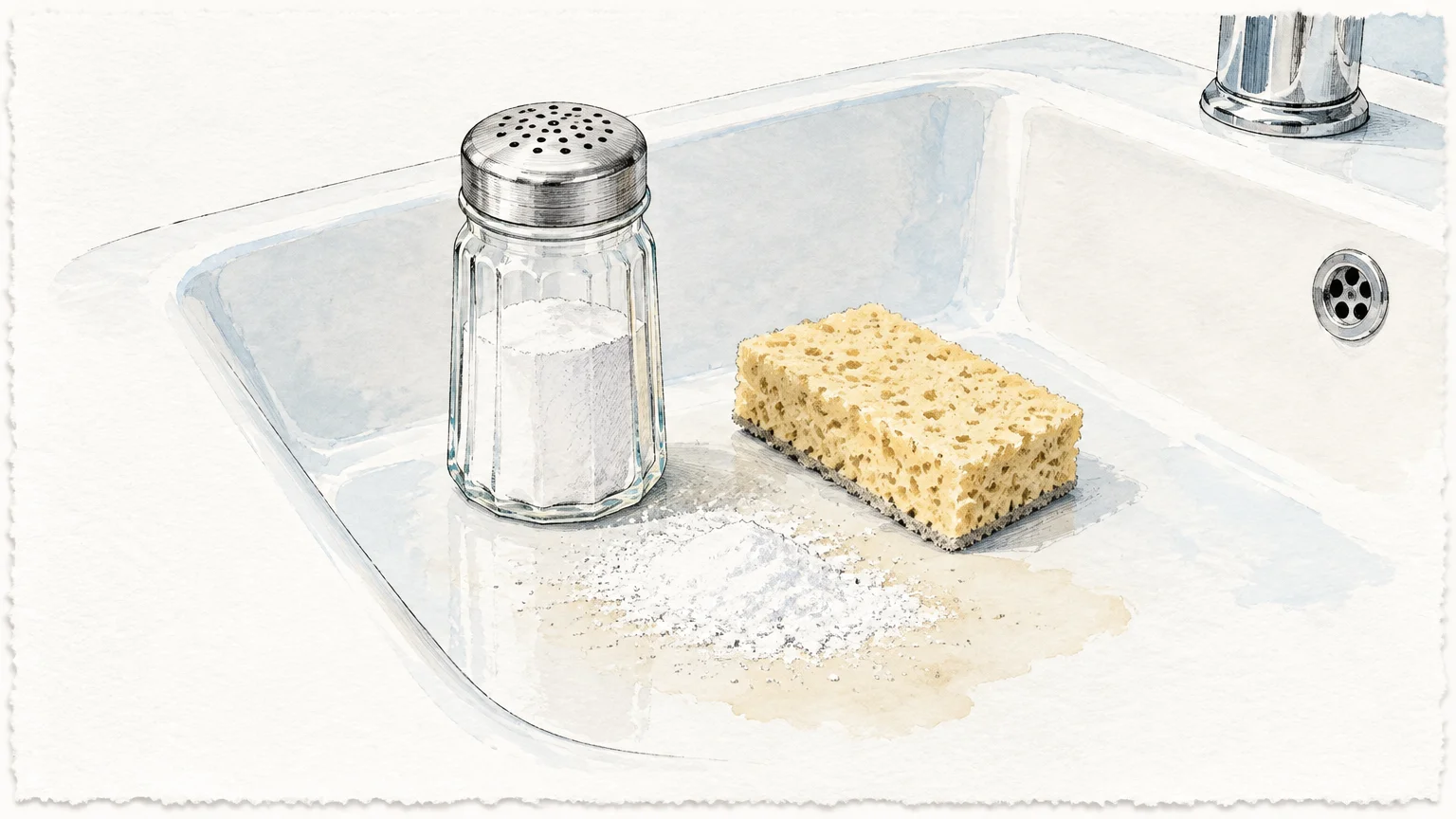
03 Baking Soda (Sodium Bicarbonate)
Baking soda delivers gentle physical abrasion alongside natural chemical deodorization. Measuring roughly 2.5 on the Mohs hardness scale, it cleans without gouging smooth surfaces.
Store your baking soda under the sink in a sealed, moisture-proof shaker jar. Humidity under plumbing fixtures can quickly turn an open cardboard box into a solid brick.
Sprinkle it directly onto scorched stainless steel cookware or ceramic baking dishes. Paired with a damp sponge, it lifts baked-on grease through mechanical friction.
Baking soda also cleans porcelain sink basins safely. Scrubbing the basin walls removes stubborn tea stains and grey flatware scuffs without dulling the protective enamel glaze.
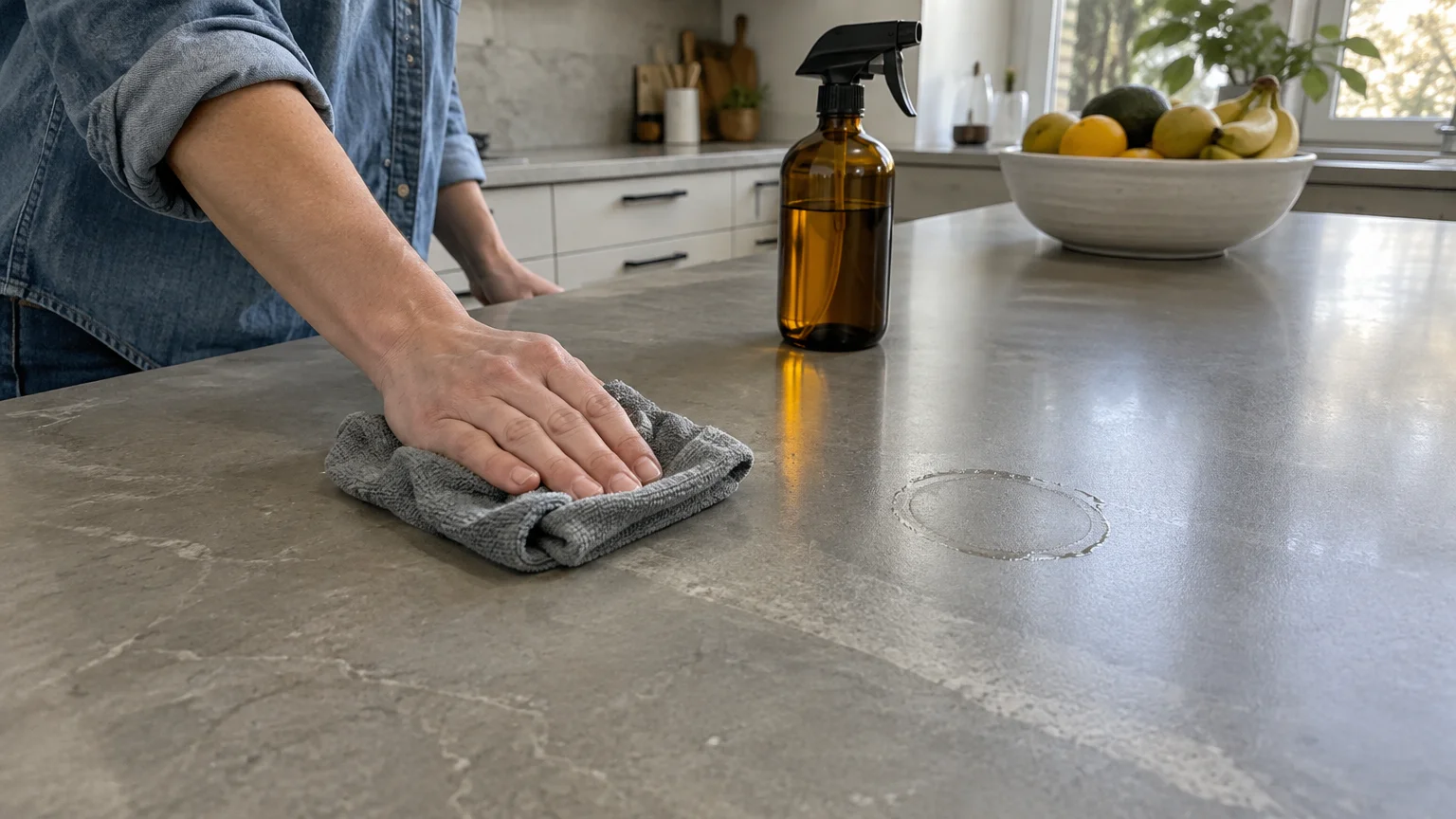
04 Multi-Surface Cleaner Spray
Every home needs a reliable, grab-and-go spray for high-touch surface maintenance. A quality all-purpose spray cuts cooking grease, sticky jelly drips, and dust in seconds.
Select formulas certified by environmental standards like the EPA Safer Choice program. These products clean effectively without releasing aggressive volatile organic compounds into your indoor air.
Reserve this spray for laminate counters, tile backsplashes, appliance exteriors, and dining tables. Keep the trigger nozzle set to a wide mist for even, economical coverage.
Choose refillable bottles paired with concentrated dissolvable tablets or pouch refills. Refill systems reduce plastic waste and save valuable storage room beneath your sink pipes.
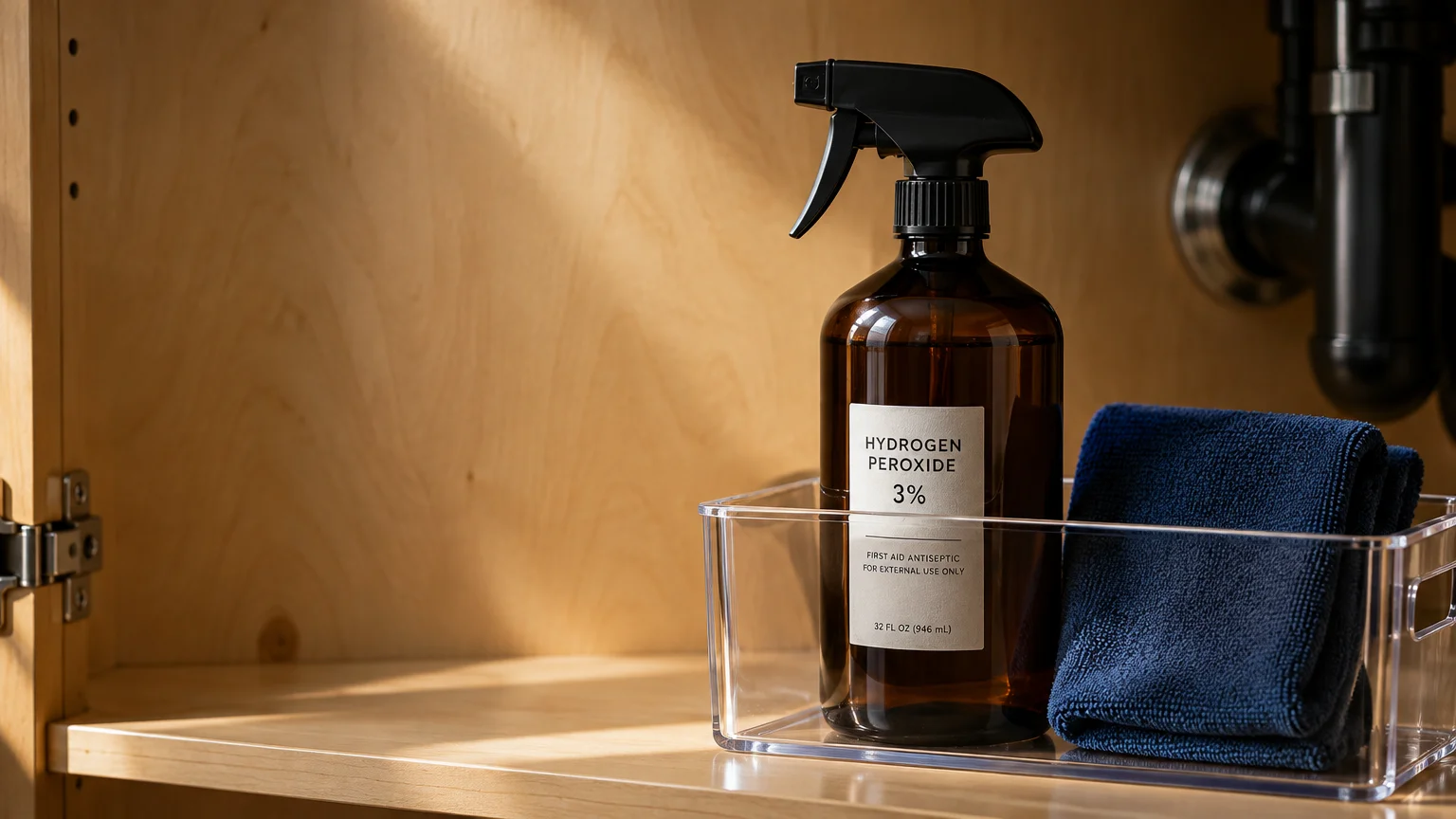
05 EPA-Registered Disinfectant or 3% Hydrogen Peroxide
Cleaning removes visible soil, but sanitizing neutralizes harmful foodborne pathogens. Raw poultry juices, meat prep boards, and trash can lids require genuine antimicrobial action.
Keep an authentic sanitizer verified by the CDC cleaning and disinfecting guidelines nearby. Proper disinfection requires the liquid to remain visibly wet on surfaces for the stated contact time.
Standard three-percent hydrogen peroxide offers an exceptional, bleach-free alternative. It breaks down into harmless water and oxygen molecules while eliminating bacteria, viruses, and mold spores.
Store hydrogen peroxide in its original dark, opaque bottle to maintain potency. Exposure to UV light and air rapidly degrades peroxide into plain water.

06 Professional-Grade Microfiber Cloths
Ditch single-use paper towels in favor of high-density split microfiber cloths. These synthetic polyester and polyamide textiles mechanically trap dirt, bacteria, and moisture between tiny split fibers.
Microfiber polishes stainless steel appliances and windows to a streak-free shine using plain tap water. You eliminate chemical residues while speeding up your evening cleanup routine.
Store a stack of six to eight folded cloths inside a narrow, open bin. Designate specific colors for different zones, such as yellow for counters and blue for appliances.
Wash your microfiber cloths separately without fabric softeners or dryer sheets. Softening agents coat the microscopic synthetic hooks with waxy residue, destroying their natural absorbency.
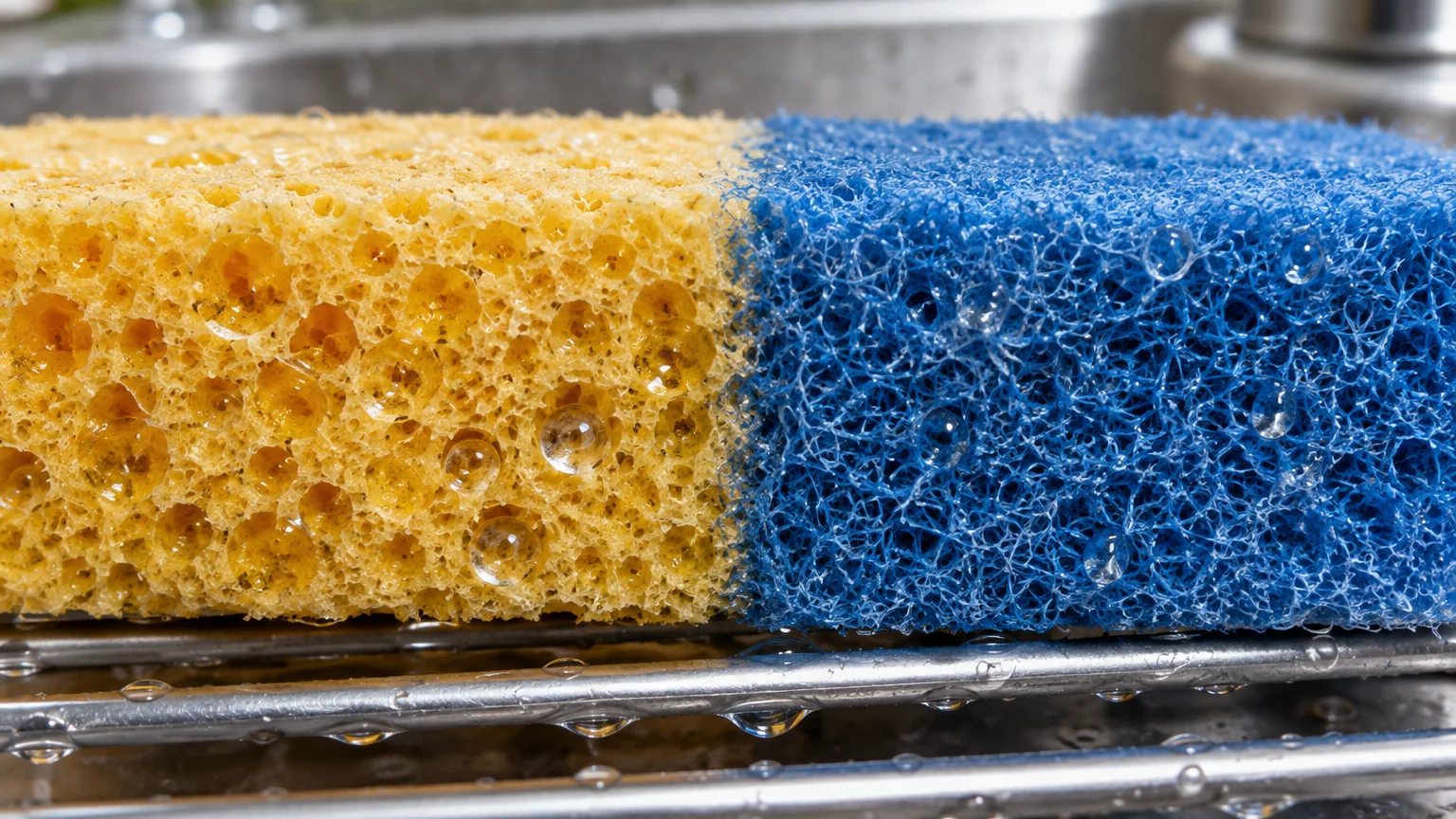
07 Dual-Action Non-Scratch Scrub Sponges
Tough cooking residues require targeted scrubbing power that will not damage expensive cookware. A high-grade non-scratch sponge features a soft cellulose side paired with an acrylic scouring pad.
Use the textured abrasive side to lift cooked eggs from non-stick skillets and enamel Dutch ovens. The porous cellulose side wipes up liquids and holds rich dish soap suds.
Sponges trap moisture and bacteria when left flat inside the sink basin. Store yours in a ventilated wire caddy mounted directly to your interior cabinet door.
Replace sponges every two to three weeks, or sanitize them regularly in your dishwasher. If a sponge develops a lingering sour smell, discard it immediately.
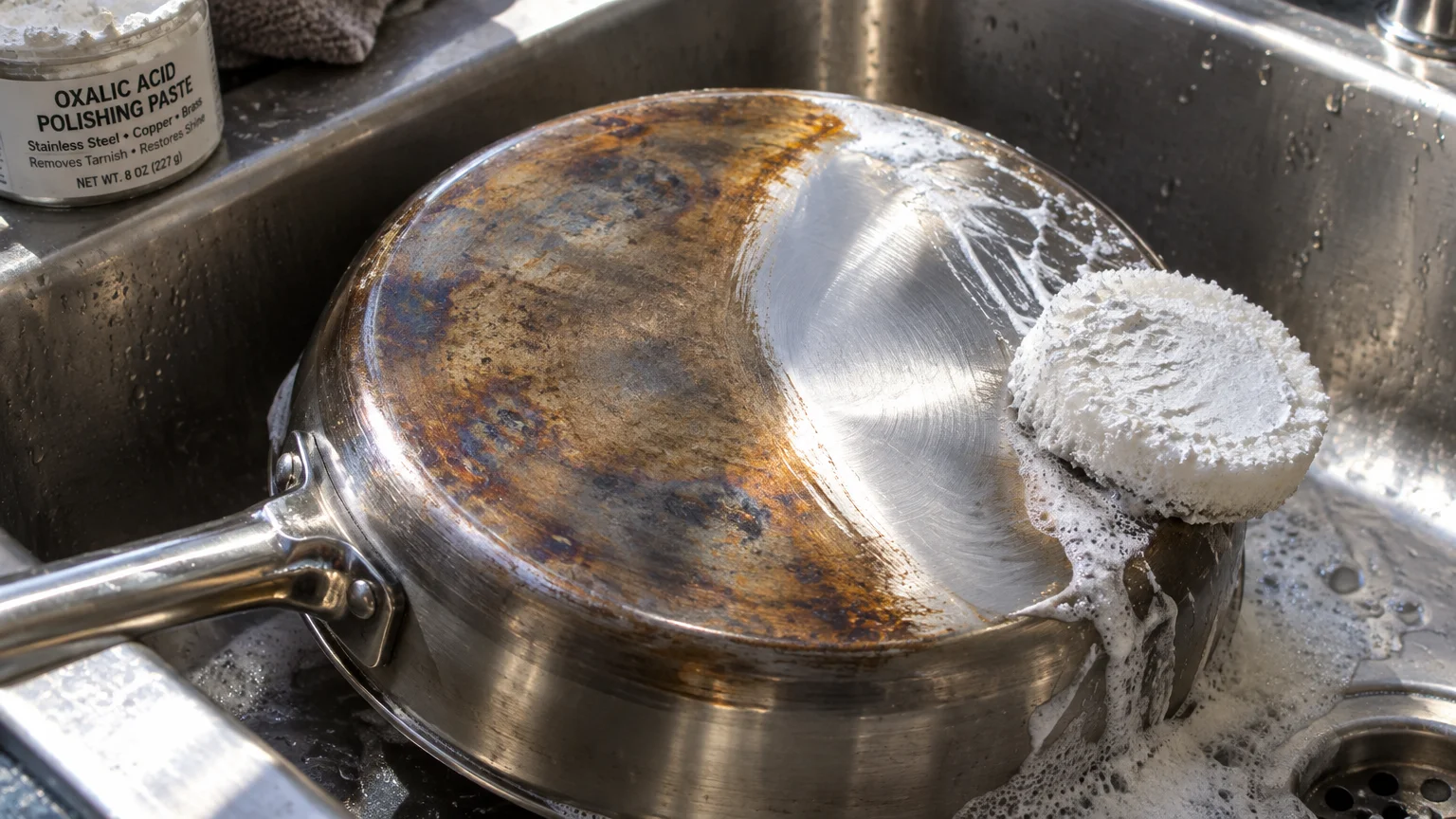
08 Oxalic Acid Cleanser (Powder or Cream)
When mild dish soap and baking soda fail, an oxalic acid cleanser provides heavy-duty restoration. Oxalic acid acts as a chelating agent, binding to stubborn mineral salts and oxidized metals.
It removes dark rust spots, hard water rings, and cooked-on grease pan residues effortlessly. It is the premier formula for restoring brushed stainless steel sink basins.
Choose a squeeze cream cleanser if you prefer low-dust applications. The liquid cream formula clings directly to vertical sink walls without sliding down the drain.
Always rinse oxalic acid thoroughly with cold water after scrubbing. Leaving acidic residues on stainless steel can lead to localized surface discoloration over time.
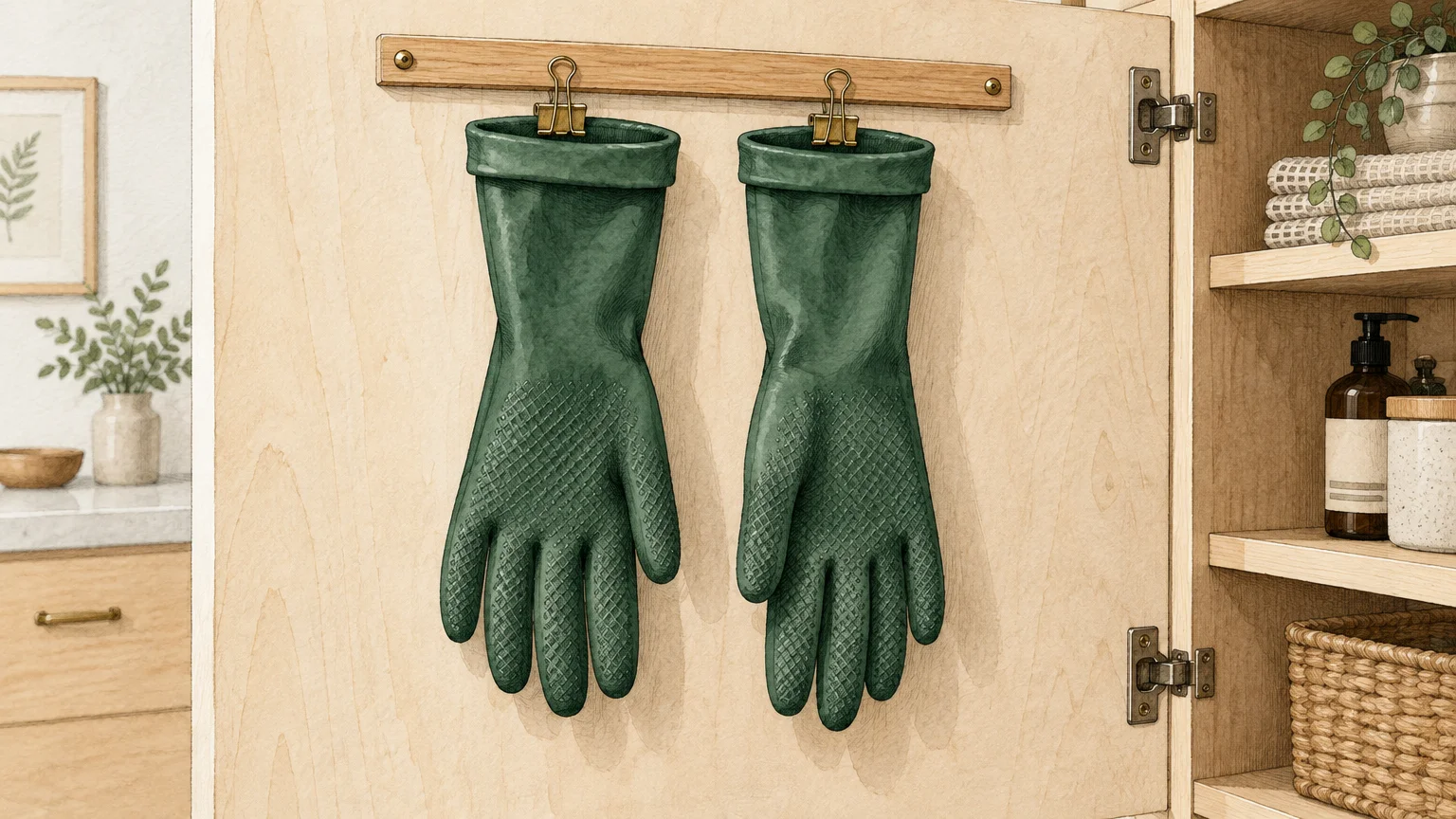
09 Durable Rubber or Nitrile Cleaning Gloves
Frequent exposure to hot water, detergents, and degreasers compromises your skin barrier. A sturdy pair of reusable gloves prevents dry, cracked knuckles and chemical dermatitis.
Select unlined silicone or cotton-flocked nitrile gloves with textured grip patterns on the palms. The textured surface prevents wet glasses and fragile ceramic mugs from slipping through soapy fingers.
Choose gloves with extended cuffs that fold up slightly to catch stray water drips. This feature keeps dirty cleaning runoff from trickling down your forearms while scouring elevated surfaces.
Hang your gloves on an adhesive hook fixed to the cabinet wall to dry thoroughly. Proper air circulation prevents interior mold growth and extends the lifespan of the rubber.
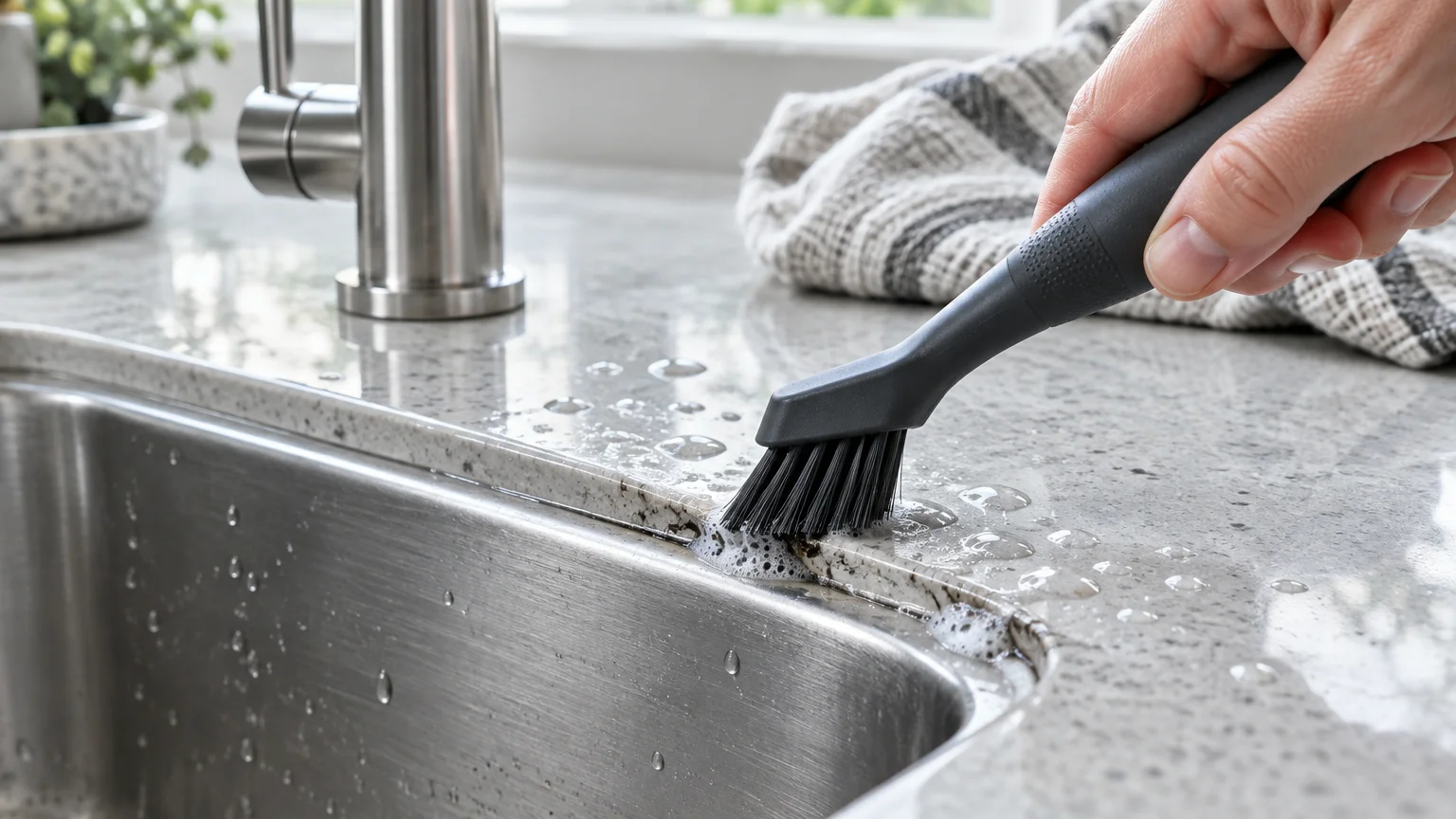
10 Angled Detail and Crevice Grout Brush
Large sponges cannot reach into tight corners, faucet neck joints, or sink rim seams. A narrow, stiff-bristled detail brush removes built-up grime from these forgotten kitchen zones.
Look for brushes with angled heads and ergonomic, slip-resistant rubber handles. Angled nylon bristles focus downward pressure directly into tight crevices without splaying outward.
Use this tool to clean around the rubber splash guard of your garbage disposal. It lifts slimy bacterial biofilms that cause persistent, mysterious sink odors in minutes.
A detail brush also scours tile grout lines and refrigerator door gasket seals safely. Rinse the brush with hot water after use, shake dry, and store upright in your caddy.

Under-Sink Cleaning Essentials Guide
Balancing these core supplies ensures you can clean every kitchen surface safely and efficiently. Review this quick reference guide to match each product with its best application.
| Cleaning Product | Primary Kitchen Duty | Surfaces to Avoid | Storage & Usage Tip |
|---|---|---|---|
| Concentrated Dish Soap | Grease removal, dishwashing, gentle surfaces | None (safe for all sealed materials) | Dilute in warm water; use sparingly. |
| Distilled White Vinegar | Limescale removal, coffee pots, deodorizing | Marble, granite, limestone, bare iron | Keep in a spray bottle for mineral scale. |
| Baking Soda | Mild scouring, odor absorption, pan restoration | Raw aluminum, unsealed wood | Store in an airtight shaker container. |
| Multi-Surface Spray | Daily wipedowns, grease splatters, spills | Unsealed stone (unless labeled safe) | Choose concentrated refills to save space. |
| EPA-Registered Disinfectant | Eliminating raw food bacteria and viruses | Food-contact zones without a potable rinse | Observe required wet contact times. |
| Microfiber Cloths | Streak-free polishing, dust capture, wiping | Extremely rough, splintered surfaces | Wash without fabric softeners or bleach. |
| Non-Scratch Sponges | Cookware washing, gentle scouring | Delicate gold leaf or mirror metals | Allow to air dry in an elevated wire rack. |
| Oxalic Acid Cleanser | Restoring stainless sinks, burnt pan bases | Polished stone, silver, soft plastics | Rinse thoroughly with cold running water. |
| Heavy-Duty Gloves | Skin barrier protection from moisture/chemicals | Hot ovens and open flames | Hang by the cuff to air dry completely. |
| Detail Grout Brush | Faucet bases, sink rims, disposal baffles | High-gloss acrylics that scratch easily | Store upright or hang from a caddy loop. |
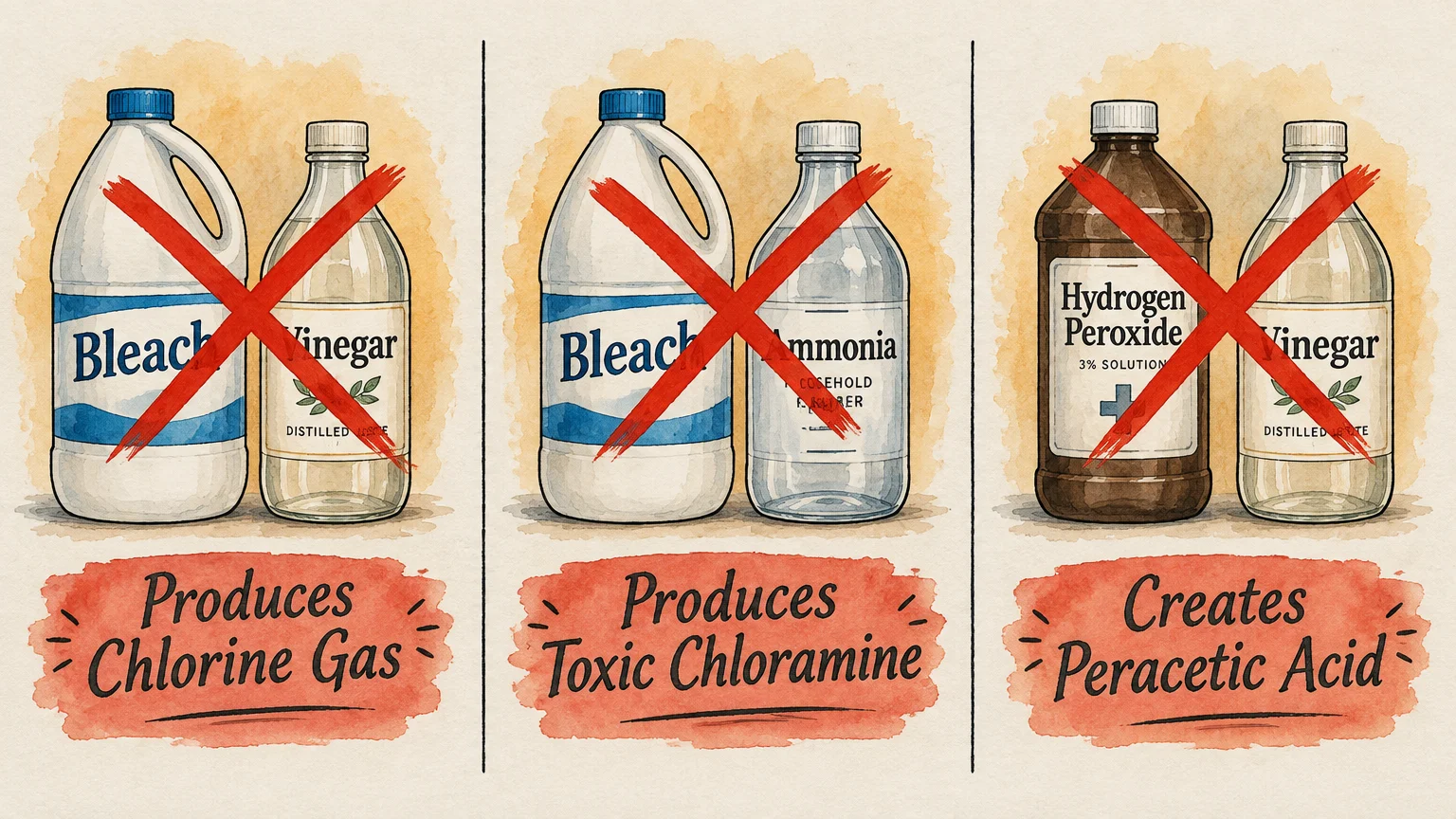
Chemical Safety: What Never to Mix Under Your Sink
Storing multiple cleaning formulas in close quarters requires strict chemical safety discipline. Accidental mixtures create hazardous fumes that irritate mucous membranes and damage lung tissues.
Consult safety resources like Poison Control guidance on household cleaning products to understand common household hazards. Never combine household cleaners unless the manufacturer explicitly directs you to do so.
Never mix chlorine bleach with vinegar or any other acid. The reaction releases toxic chlorine gas, which causes severe respiratory distress, coughing, and eye irritation.
Never combine bleach with ammonia-based products. This combination generates dangerous chloramine vapors that cause shortness of breath, nausea, and fluid buildup in the lungs.
Avoid mixing hydrogen peroxide and vinegar inside the same closed spray bottle. This creates peracetic acid, an unstable compound that irritates skin, eyes, and throat tissues.
Keep products in their original manufacturer containers whenever possible. If you transfer solutions into spray bottles, clearly label each container with permanent ink immediately.
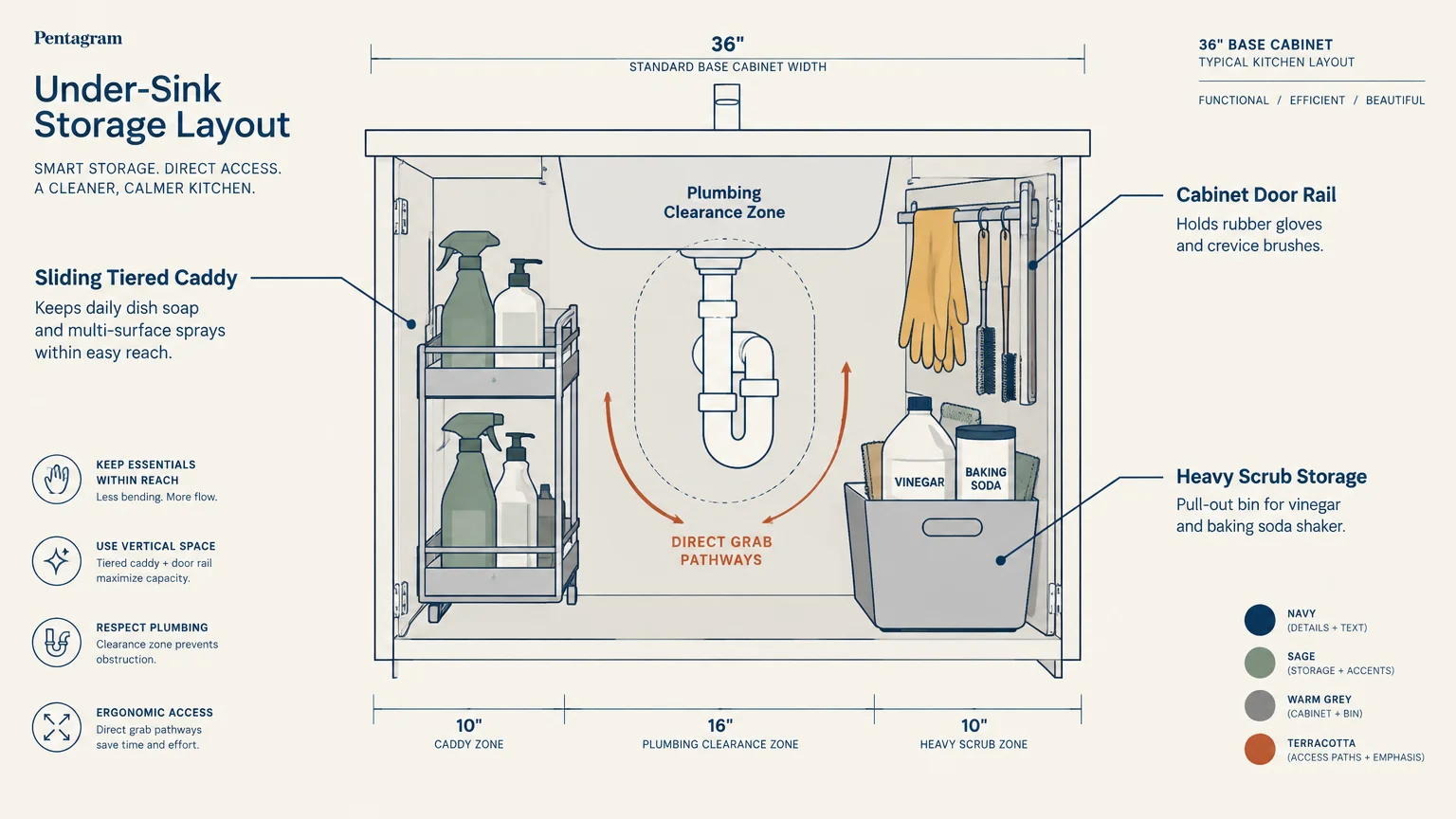
How to Organize Your Cabinet for Quick Access
Having the best cleaning products under your sink means little if they sit buried behind clutter. A deliberate organizing framework keeps your supplies clean, dry, and instantly accessible.
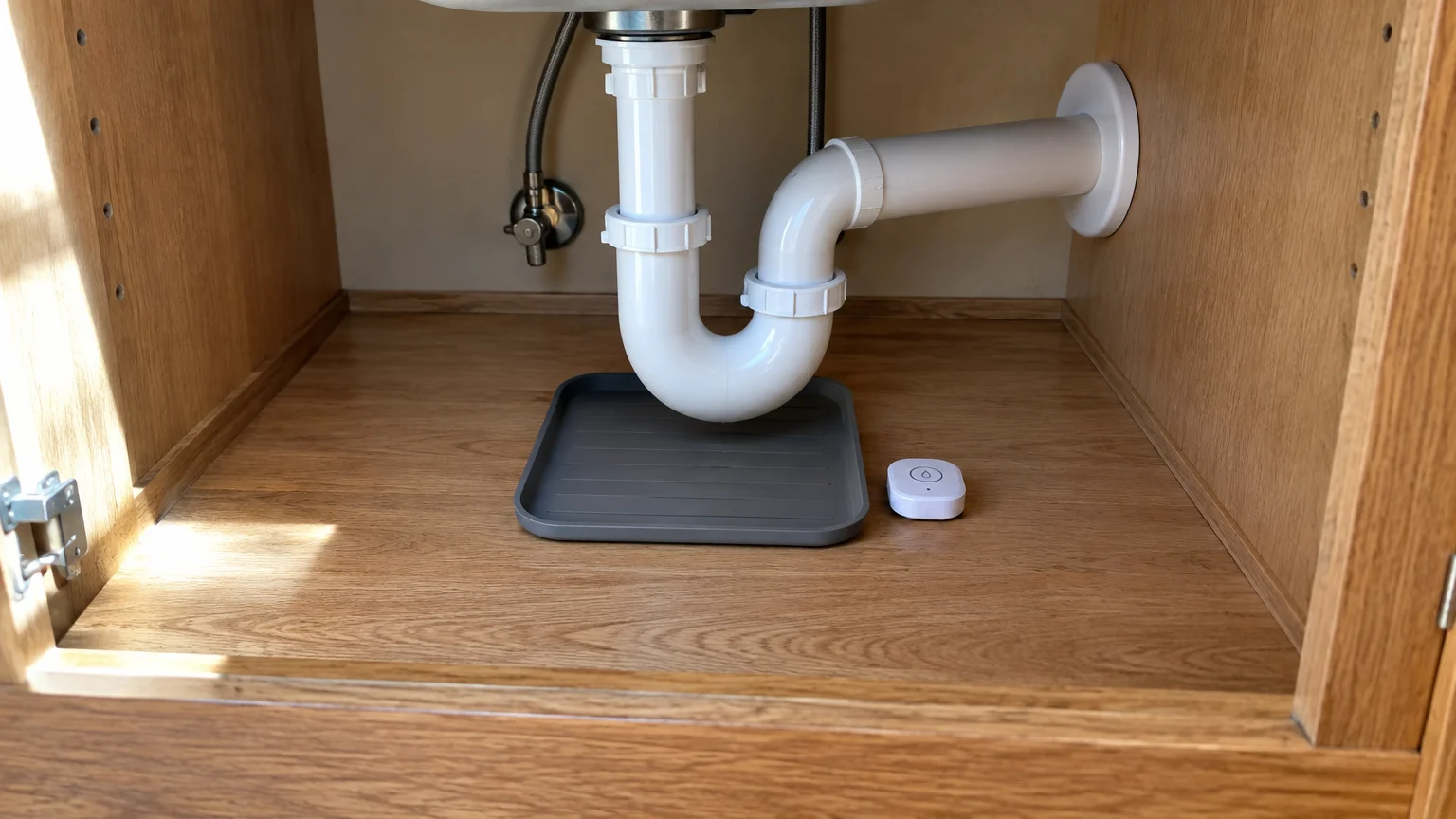
- Install a waterproof silicone tray. Place an edged drip mat across the bottom shelf of your cabinet. This flexible barrier contains minor plumbing leaks and prevents chemical bottle rings from staining wood.
- Mount a tension rod for spray bottles. Secure an adjustable tension rod horizontally near the top of the cabinet opening. Hang your multi-surface and vinegar spray bottles by their triggers to free up valuable floor space below.
- Use a portable cleaning caddy. Place your dish soap, sponge, detail brush, and cream cleanser inside a handled caddy. You can lift the entire cleaning kit out with one motion whenever you need it.
- Add two-tier sliding wire drawers. Position pull-out drawers on the open side opposite your disposal plumbing. Use the lower drawer for heavy bottles and the upper drawer for clean microfiber cloths.
- Utilize the cabinet doors. Affix adhesive hooks and narrow wire wire racks to the inside of each cabinet door. Hang your cleaning gloves and store your non-scratch sponges upright so they air dry quickly.
Maintain clear space directly beneath your plumbing p-traps and shutoff valves. Unobstructed valves let you turn off water supplies instantly during sudden household plumbing emergencies.
Never store paper goods, electrical appliances, or pet food beneath your kitchen sink. Plumbing moisture breeds mold on paper towels, while pipe condensation damages sensitive electrical mechanisms.

Your Next Step
Take ten minutes today to clear out every item currently resting beneath your kitchen sink. Discard empty containers, wipe down the cabinet floor, and check your plumbing pipes for small leaks.
Sort your supplies down to these ten cleaning essentials, recycle duplicates, and store your curated kit neatly. You will enjoy a calm, functional cabinet that makes daily kitchen cleanup effortless.