Professional cleaners do not carry dozens of specialized sprays; they carry a lean set of proven workhorses. Streamlining your supplies cuts cleaning time in half and saves hundreds of dollars each year.
When you replace gimmicky trend products with tested cleaning essentials, you reduce clutter and protect delicate home surfaces. Every item in a pro caddy serves a clear, reliable purpose.
These ten must have cleaning products will simplify your routine, eliminate stubborn grime effortlessly, and keep your home sparkling with minimal physical strain.
01 Concentrated Neutral pH Multi-Surface Cleaner
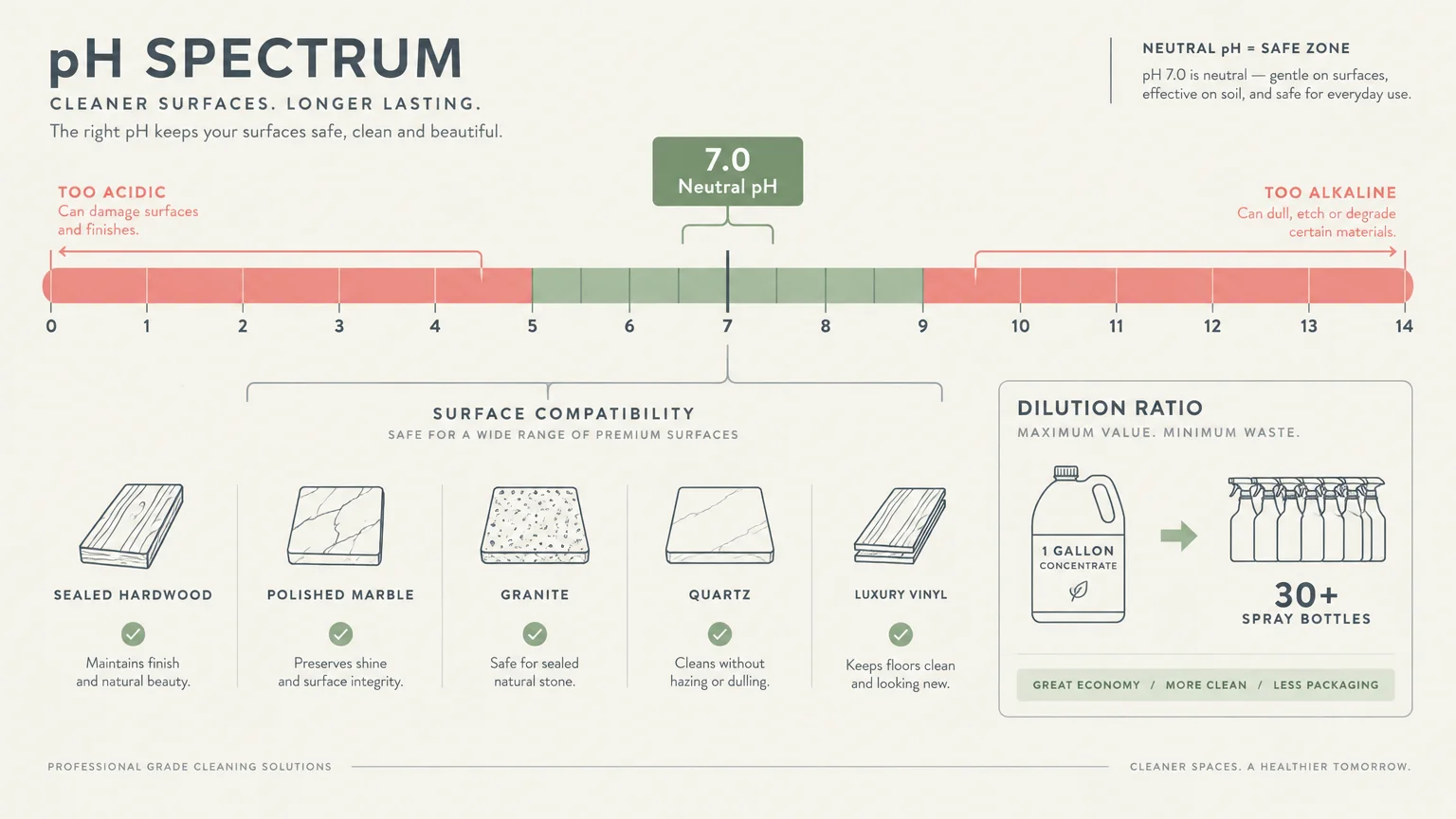
Most commercial sprays contain harsh acids or aggressive alkalines that gradually degrade surface sealants. Professional cleaners favor neutral pH detergents—hovering right at 7.0—because they lift grease safely from virtually any washable material.
You can use a neutral cleaner on sealed hardwood, polished marble, granite, quartz, and luxury vinyl without dulling the finish. It cleans thoroughly without leaving behind sticky residues that attract fresh dust.
Purchasing professional cleaning products in concentrated formulas saves money and reduces plastic waste. A single gallon of concentrate typically yields over thirty standard spray bottles of ready-to-use solution.
Look for formulas certified under the EPA Safer Choice program to protect indoor air quality. These formulations clean aggressively while avoiding harsh volatile organic compounds that irritate sensitive lungs.
02 High-Density Split Microfiber Cloths (300+ GSM)
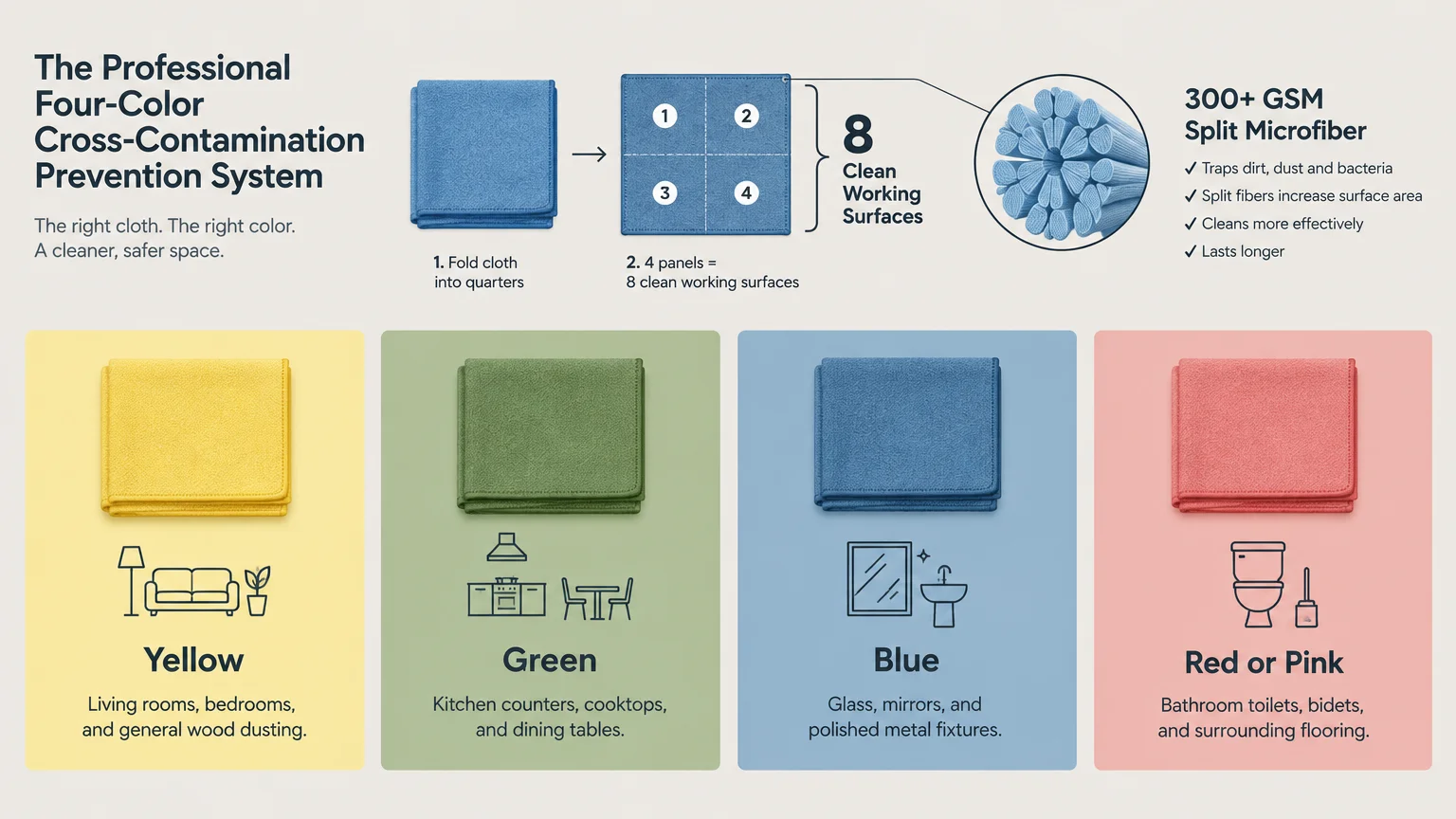
Flimsy cotton rags and disposable paper towels push dirt around instead of trapping it. Pro cleaner favorites always feature split-fiber microfiber with a density of at least 300 grams per square meter (GSM).
During manufacturing, engineers split each synthetic fiber until it measures roughly one-sixteenth the width of a human hair. This creates an electrostatic web that grabs microscopic dust particles and grease without requiring heavy chemical cleaners.
To eliminate cross-contamination between rooms, implement a strict color-coded wiping system throughout your house.
- Yellow: Living rooms, bedrooms, and general wood dusting.
- Green: Kitchen counters, cooktops, and dining tables.
- Blue: Glass, mirrors, and polished metal fixtures.
- Red or Pink: Bathroom toilets, bidets, and surrounding flooring.
Fold each cloth into quarters to provide eight clean working surfaces per rag. Wash them in warm water without fabric softeners, which coat the synthetic fibers and destroy their electrostatic charge.
03 Oxalic Acid Cleanser (Bar Keepers Friend)
Bleach-based scouring powders merely whiten stains; they rarely dissolve the underlying mineral deposits. Professionals rely on oxalic acid powder to break down tough oxidation, rust streaks, and limescale chemically.
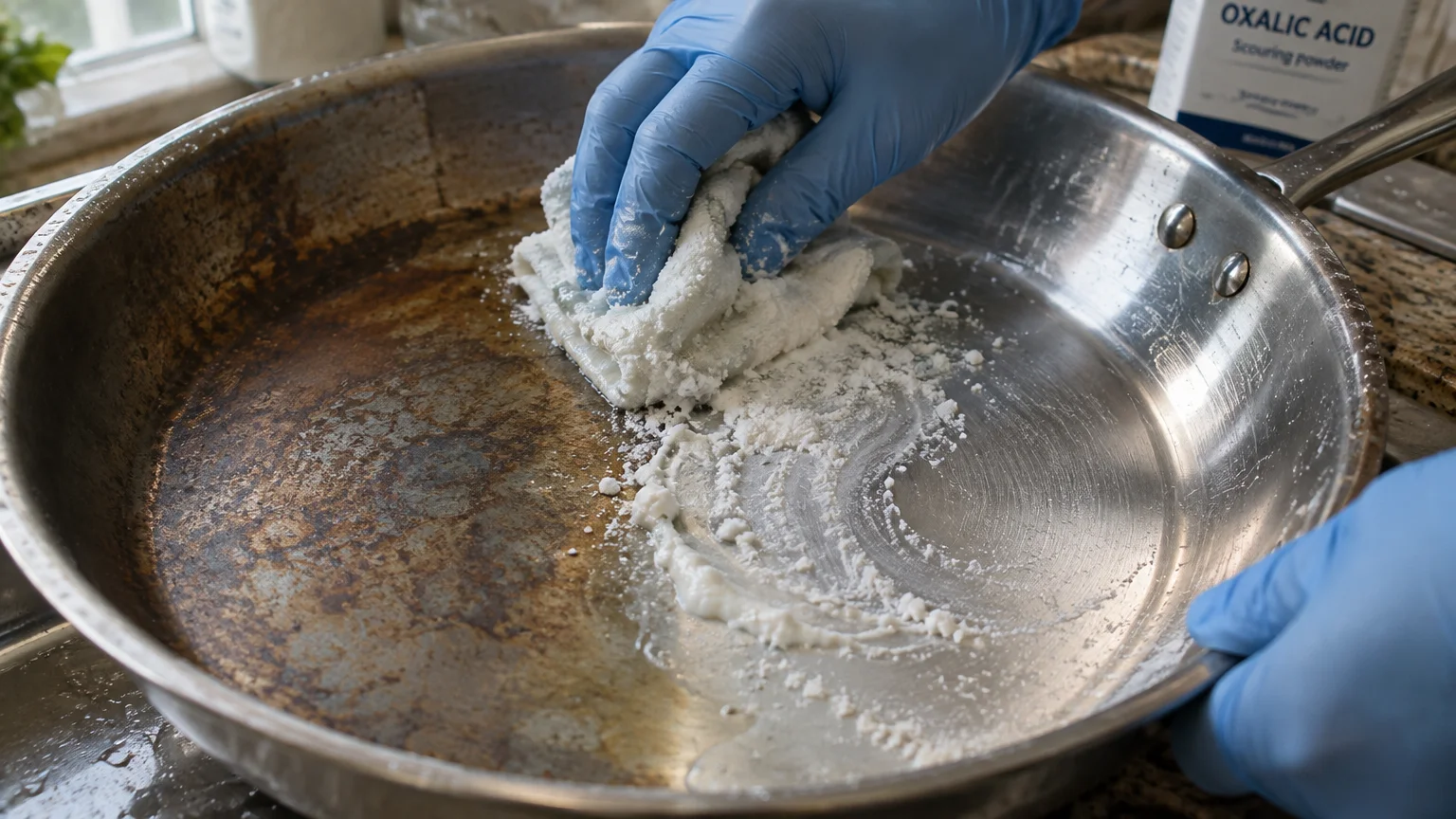
Oxalic acid binds with stubborn iron and calcium ions on a molecular level, loosening them without excessive abrasive scratching. It transforms tarnished stainless steel sinks, cloudy porcelain basins, and scorched cookware in minutes.
Sprinkle the powder onto a damp cloth rather than dumping it directly onto dry surfaces. Work it into a smooth paste and rinse thoroughly within two minutes to prevent etching.
Avoid using oxalic acid on polished marble, limestone, or porous granite countertops. The acid will instantly react with calcium carbonate in natural stone, creating irreversible cloudy etch marks.
04 70% Isopropyl Alcohol
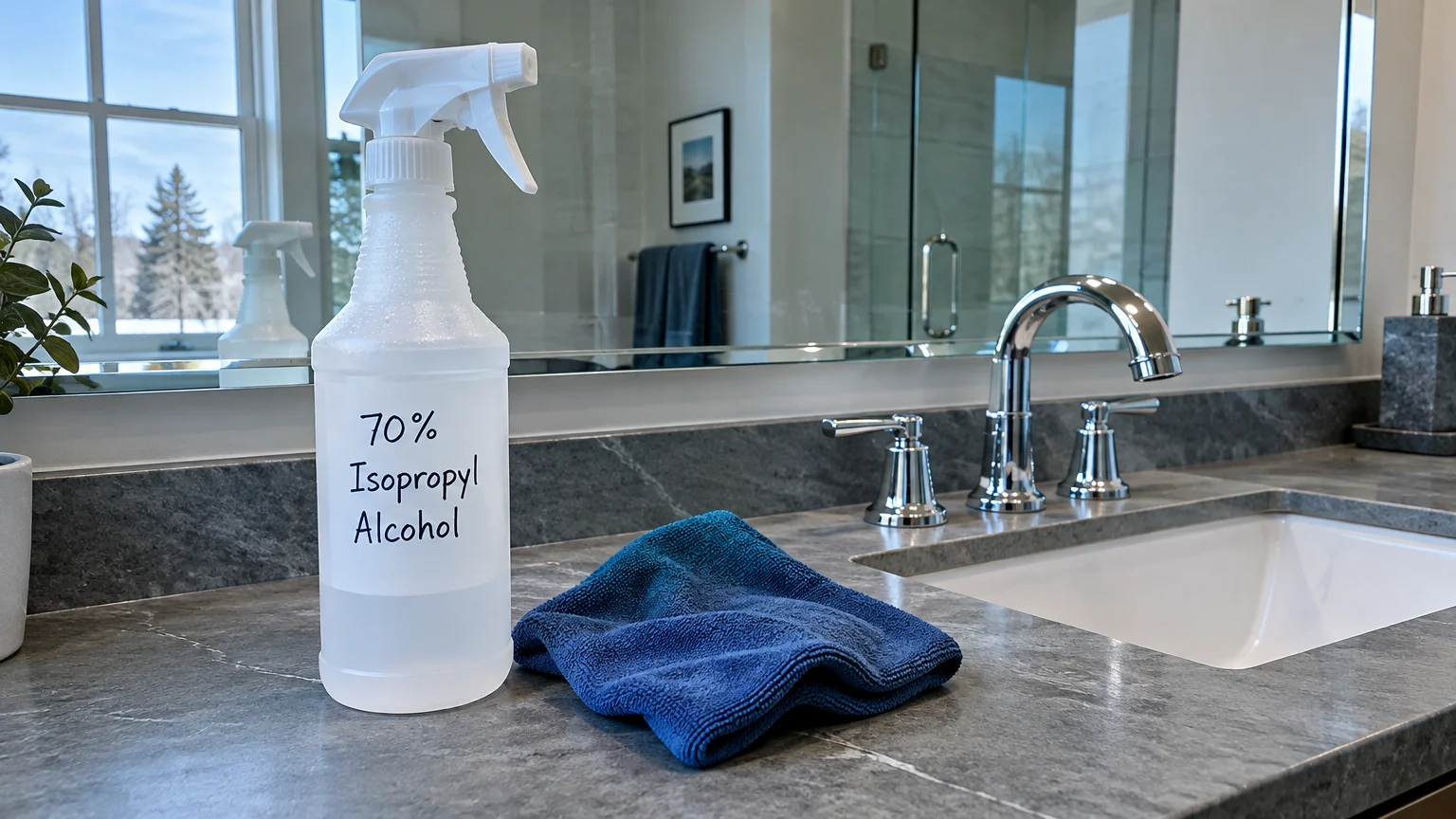
While many homeowners default to ammonia glass cleaners, pros keep pure 70% isopropyl alcohol close at hand. It cuts light body oils and fingerprints cleanly, leaving zero haze behind on glass and polished fixtures.
Higher alcohol concentrations like 91% evaporate too quickly to sanitize surfaces effectively. According to CDC home hygiene guidance, a 70% alcohol solution provides sufficient contact time to break down microbial cell membranes.
Mix equal parts 70% isopropyl alcohol and distilled water in a dedicated spray bottle for everyday mirror duty. Distilled water prevents mineral spots, giving you a crystal-clear reflection in a single swipe.
This simple mixture also dries almost instantly on chrome plumbing hardware and modern stainless steel appliances. It restores mirror-bright shine without requiring endless buffing with dry towels.
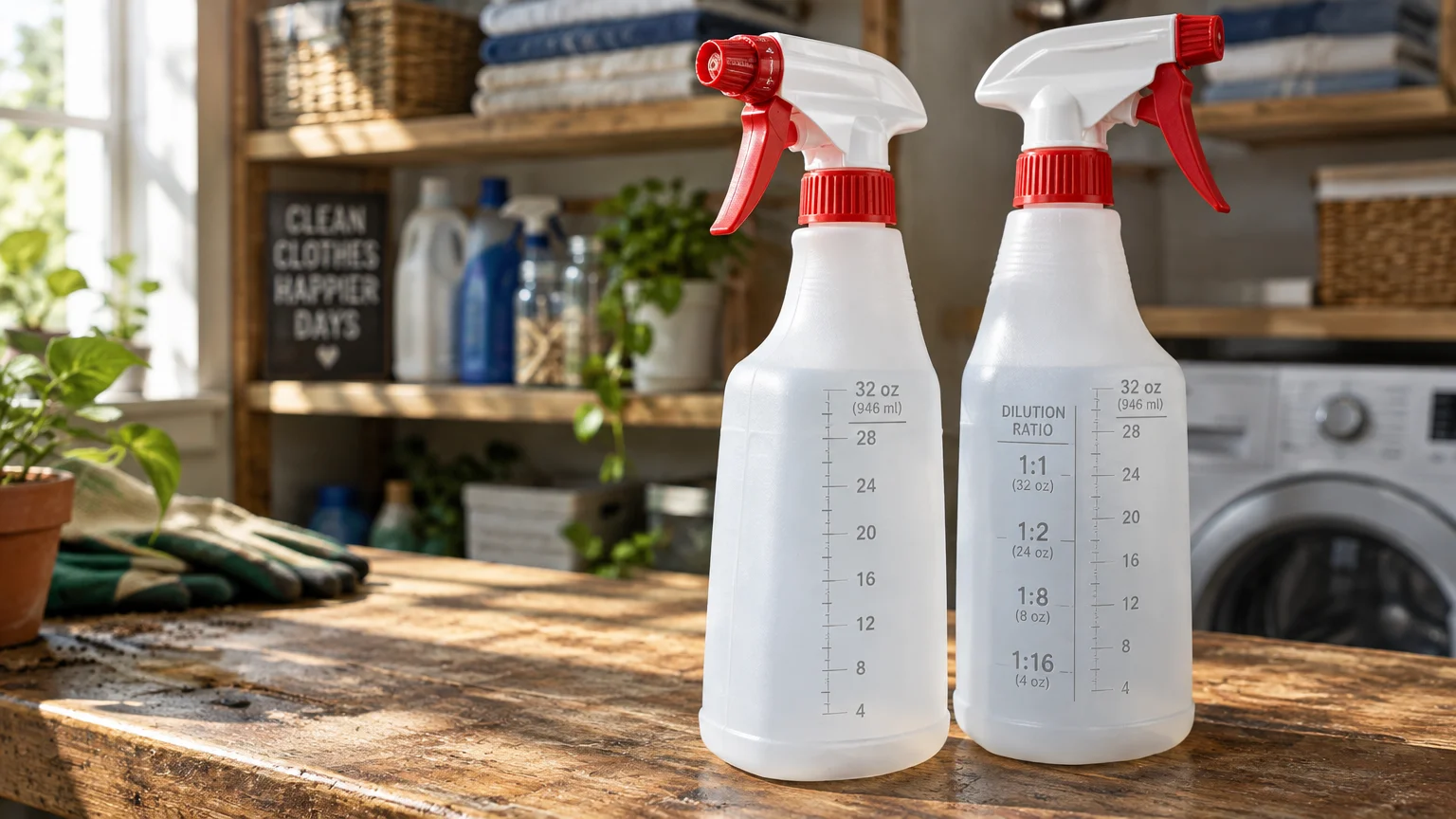
05 Commercial-Grade Heavy-Duty Spray Bottles
Standard grocery store spray bottles often leak around the neck, producing hand fatigue and uneven droplet distribution. Commercial cleaners invest in professional impact-resistant bottles equipped with high-output ergonomic trigger sprayers.
Quality sprayers deliver up to three times the liquid volume per squeeze compared to budget consumer bottles. This reduces repetitive wrist strain significantly—an important benefit for anyone managing arthritis or hand stiffness.
Choose bottles stamped with clear ounce and ratio dilution markers along the side. Accurate measuring prevents wasted concentrate and stops product build-up on floors and counters.
Always label your bottles clearly with permanent markers or waterproof labels. Mixing up concentrated chemicals creates serious safety hazards and risks damaging sensitive household surfaces.
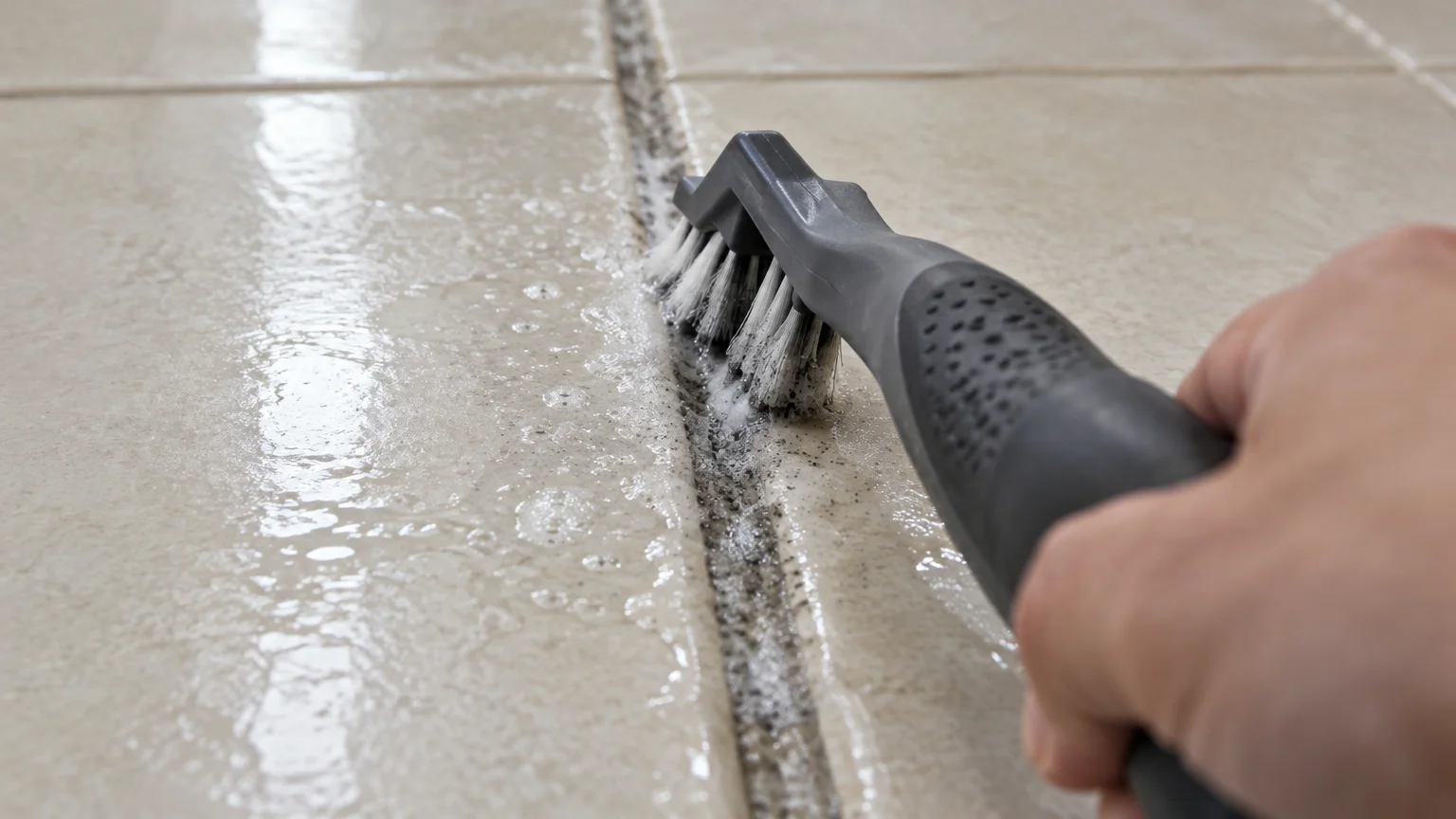
06 Ergonomic V-Trim Grout and Crevice Brush
Old toothbrushes lack the bristle stiffness and handle leverage needed to pull grime out of tile joints. A dedicated grout brush features stiff nylon bristles cut into a narrow V-shape that channels force straight down.
This angled bristle design wedges deep into textured tile grout and shower door tracks. It forces dirt up to the surface without splaying out or slipping onto soft surrounding materials.
Select brushes that feature raised, rubberized handles designed for an overhand grip. This ergonomic shape transfers your arm weight directly into the scrub stroke, sparing your wrist tendons from painful twisting.
Pair your grout brush with a neutral detergent or mild oxygen bleach paste for periodic tile maintenance. Let the cleaning solution sit for ten minutes before brushing to let the chemistry do the hard labor.
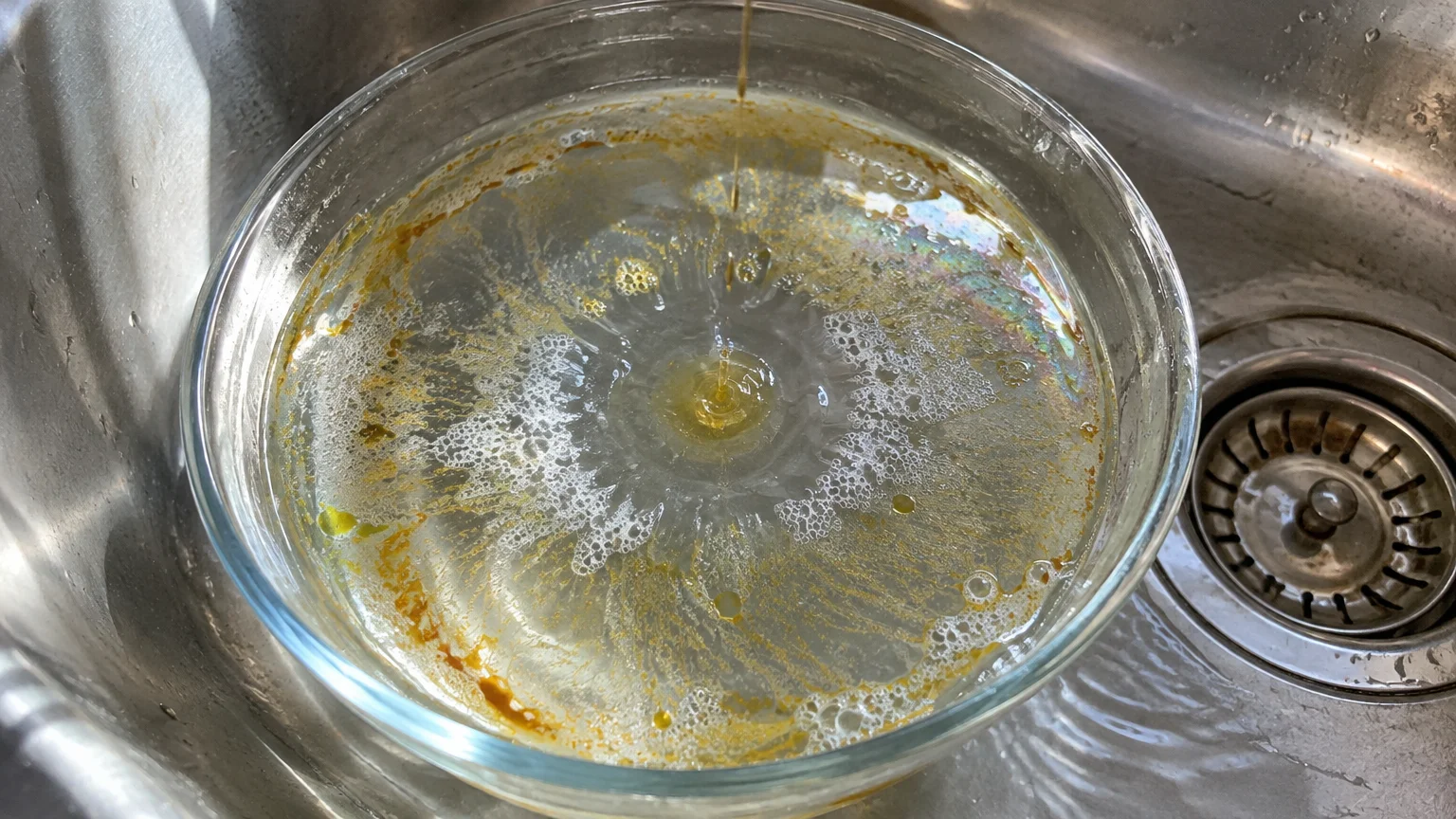
07 Pure Surfactant Dish Detergent
You do not need specialty degreasers to dissolve oily stove splatters or greasy range hood filters. A standard bottle of concentrated, dye-free liquid dish soap is one of the most versatile best cleaning supplies available.
Dish detergents contain concentrated surfactants with dual-ended molecules. As explained by the American Cleaning Institute, one end bonds with grease while the other binds with water, suspending oily dirt so you can rinse it away effortlessly.
Add two drops of liquid dish soap to two cups of warm water for a gentle window washing fluid. The surfactants break surface tension, allowing your squeegee blade to glide effortlessly without skipping or chattering.
This mild soapy mixture also works wonders on sticky kitchen cabinets and painted baseboards. It dissolves cooking oils without stripping durable latex paint or softening polyurethane clear coats.
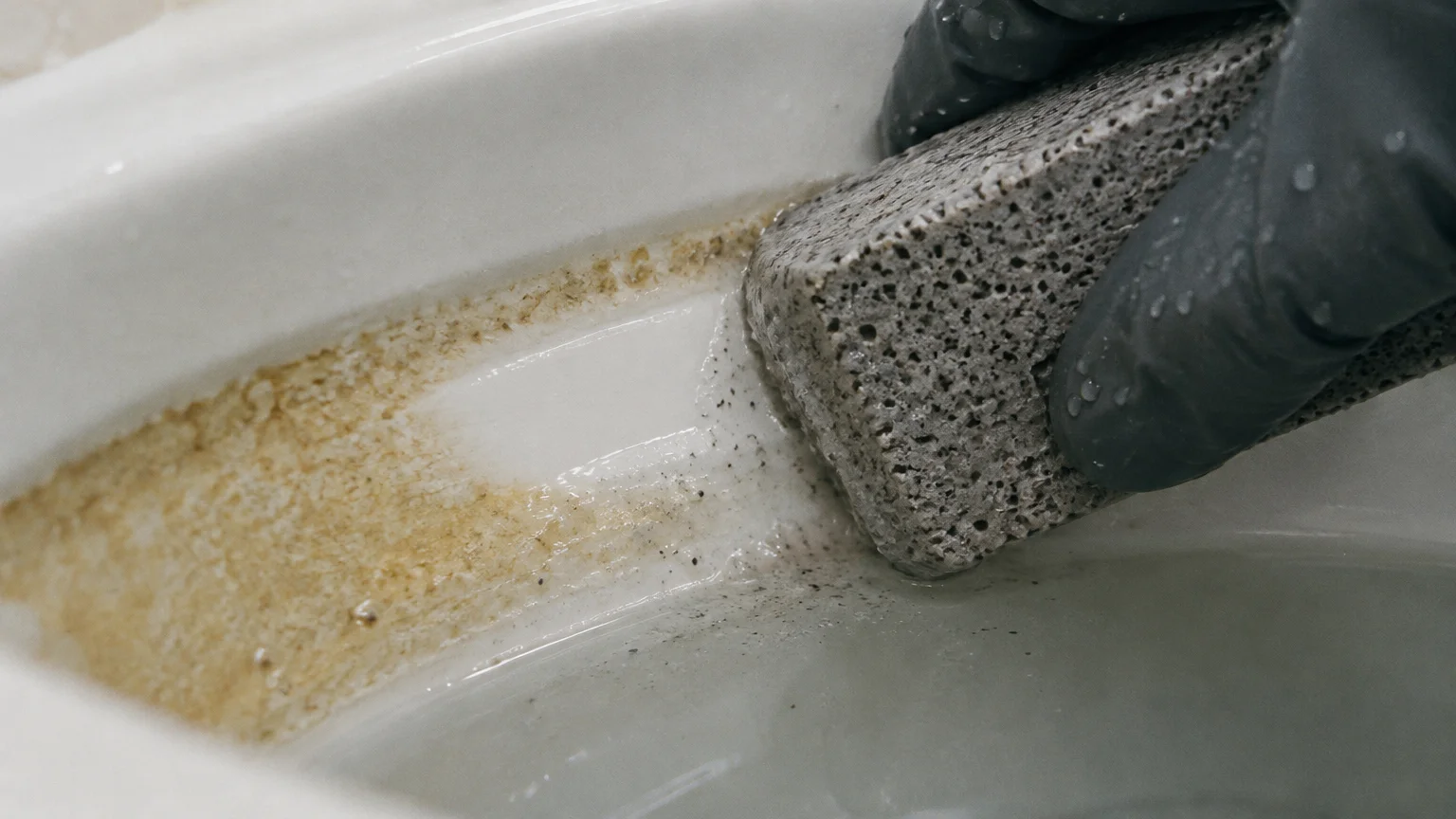
08 100% Natural Pumice Scouring Sticks
Stubborn hard water rings inside porcelain toilet bowls resist standard toilet bowl cleaners and nylon brushes. Commercial technicians skip caustic fuming acids in favor of an inexpensive, natural pumice scouring stick.
Natural volcanic pumice is harder than mineral scale but softer than glazed vitreous china. It gently abrades limescale deposits, iron streaks, and rust without scratching the underlying porcelain glaze.
Never use a dry pumice stick on any household fixture. Both the stone and the surface must remain thoroughly wet during use so water acts as a protective lubricant.
Restrict pumice stones exclusively to vitreous china toilet fixtures. Never use them on fiberglass tubs, acrylic showers, plastic toilet seats, or stainless steel fixtures, which will scratch easily.
09 Professional Vulcanized Rubber Squeegee
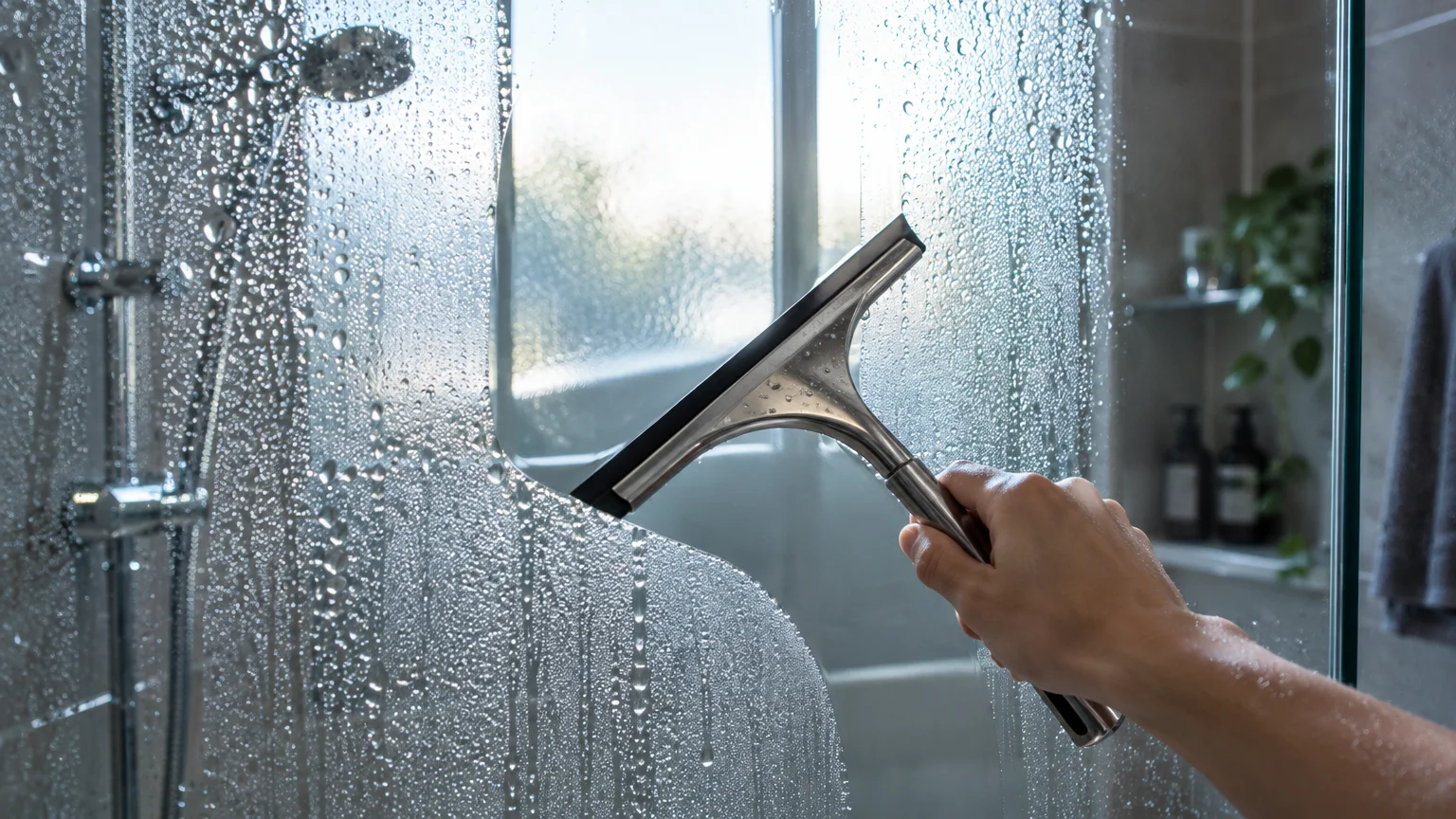
Wiping large glass shower enclosures with cloths leaves behind micro-streaks and lint fibers. A twelve-inch brass or stainless steel squeegee fitted with a replaceable vulcanized rubber blade clears glass in seconds.
Vulcanized rubber maintains a razor-sharp, flexible edge that contours against flat surfaces to peel away water drops completely. Preventing water droplets from evaporating on shower glass eliminates limescale formation before it starts.
Keep a squeegee hung inside every shower stall and wipe down the glass immediately after bathing. This thirty-second daily routine prevents stubborn hard water buildup and eliminates the need for aggressive weekly chemical scrubbing.
Wipe the squeegee blade dry with a clean microfiber cloth after every pass. Running a dry blade over glass prevents water lines from forming along the edge of your strokes.

10 Telescopic Microfiber High Duster
Balancing on step stools or chairs to reach ceiling fans creates an unnecessary fall hazard, especially for older adults. Professional cleaners maintain high surfaces using lightweight aluminum extension poles equipped with bendable microfiber sleeves.
Poles that extend from three to six feet let you clean ceiling corners, crown molding, and hanging lights with both feet safely on the floor. Look for twist-locking poles that hold their position securely under pressure.
Microfiber duster heads bend to ninety-degree angles, allowing you to dust the top side of ceiling fan blades easily. The dense synthetic fibers trap dust securely instead of raining loose debris down onto your furniture below.
Choose dusting heads that detach easily for machine washing. Reusing clean duster sleeves guarantees you are removing household dust rather than redistributing allergens from room to room.
Pro Cleaner Toolkit at a Glance
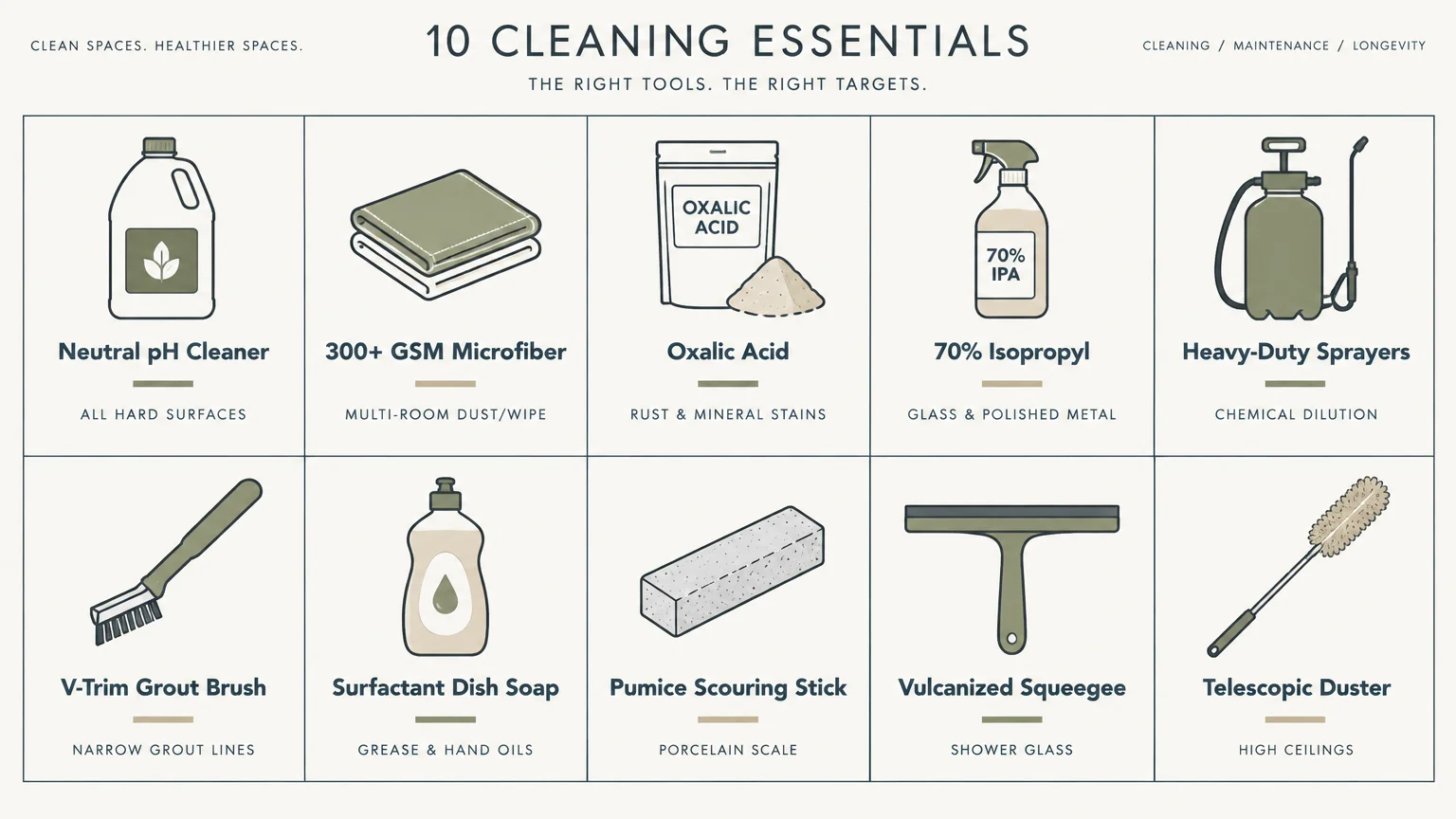
Use this reference table to match the right tool to the correct home surface, keeping your routine safe and effective.
| Product / Tool | Primary Surfaces | Core Pro Benefit | Safety Precaution |
|---|---|---|---|
| Neutral pH Cleaner | Hardwood, tile, natural stone | Will not strip sealants or leave film | Dilute accurately according to label instructions |
| Split Microfiber (300+ GSM) | All non-rough surfaces | Lifts grime without harsh chemicals | Wash without fabric softeners or high dryer heat |
| Oxalic Acid Cleanser | Porcelain sinks, stainless steel | Dissolves stubborn rust and mineral deposits | Never use on marble, granite, or limestone |
| 70% Isopropyl Alcohol | Mirrors, chrome, touch points | Evaporates streak-free and sanitizes | Keep away from open flames and varnished wood |
| Commercial Spray Bottle | Universal chemical delivery | Prevents hand strain and leaks | Label contents clearly with waterproof ink |
| V-Trim Grout Brush | Tile joints, shower tracks | Drives mechanical force into crevices | Do not use brass bristles on soft acrylic |
| Concentrated Dish Soap | Cooktops, cabinets, greasy pans | Breaks surface tension on oils | Rinse thoroughly to avoid soapy residue |
| Pumice Scouring Stick | Vitreous china toilet bowls | Removes mineral rings without harsh acids | Keep stone wet; never use on acrylic or plastic |
| Vulcanized Squeegee | Shower enclosures, large windows | Stops limescale deposits before they form | Inspect rubber edge frequently for nicks |
| Telescopic High Duster | Ceiling fans, moldings, vents | Reaches high zones without ladders | Bend head gently to prevent internal wire breakage |

Organize Your Cleaning Caddy for Maximum Speed
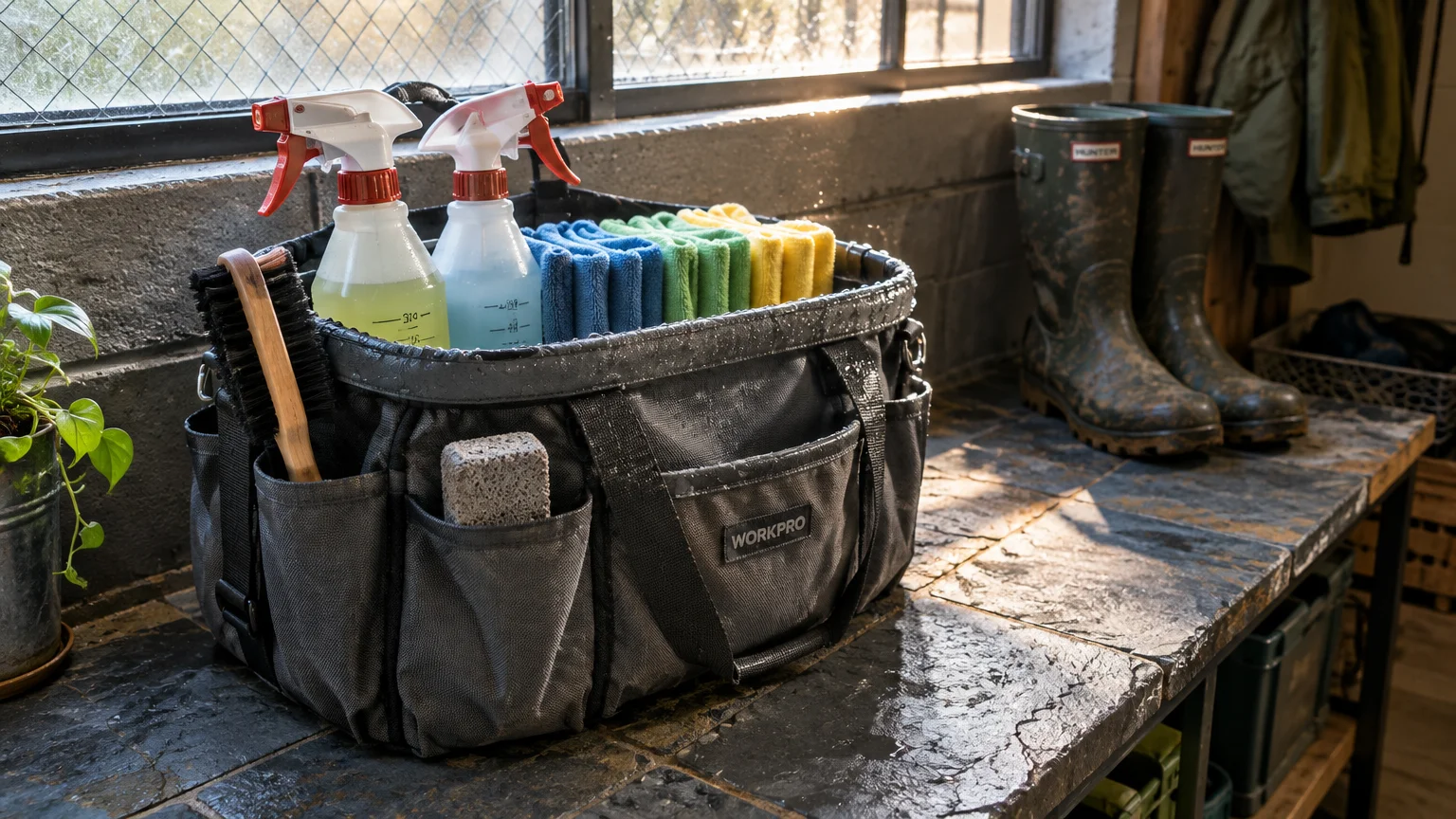
Owning the right cleaning essentials only helps if you can transport and access them without frustration. Professional cleaners keep their core kit organized in a lightweight, double-sided plastic caddy.
A balanced caddy prevents endless trips back to laundry cabinets or under-sink cupboards. Everything you need to clean an entire floor stays right at your fingertips as you work.
- Right Pocket: Reserve this compartment for your two main wet sprays—neutral cleaner and diluted alcohol.
- Left Pocket: Store dry tools, including your folded microfiber cloths, grout brush, and pumice stick.
- Center Handle: Drape clean microfiber cloths over the handle for quick, one-handed grabs.
- Exterior Hooks: Hang your squeegee and spray bottles by their triggers to maximize interior storage space.
Keep your extension duster leaning alongside the caddy in an easily accessible utility closet. Moving with a complete kit eliminates wasted steps and keeps your momentum steady throughout cleaning day.
Work from Top to Bottom and Dry to Wet
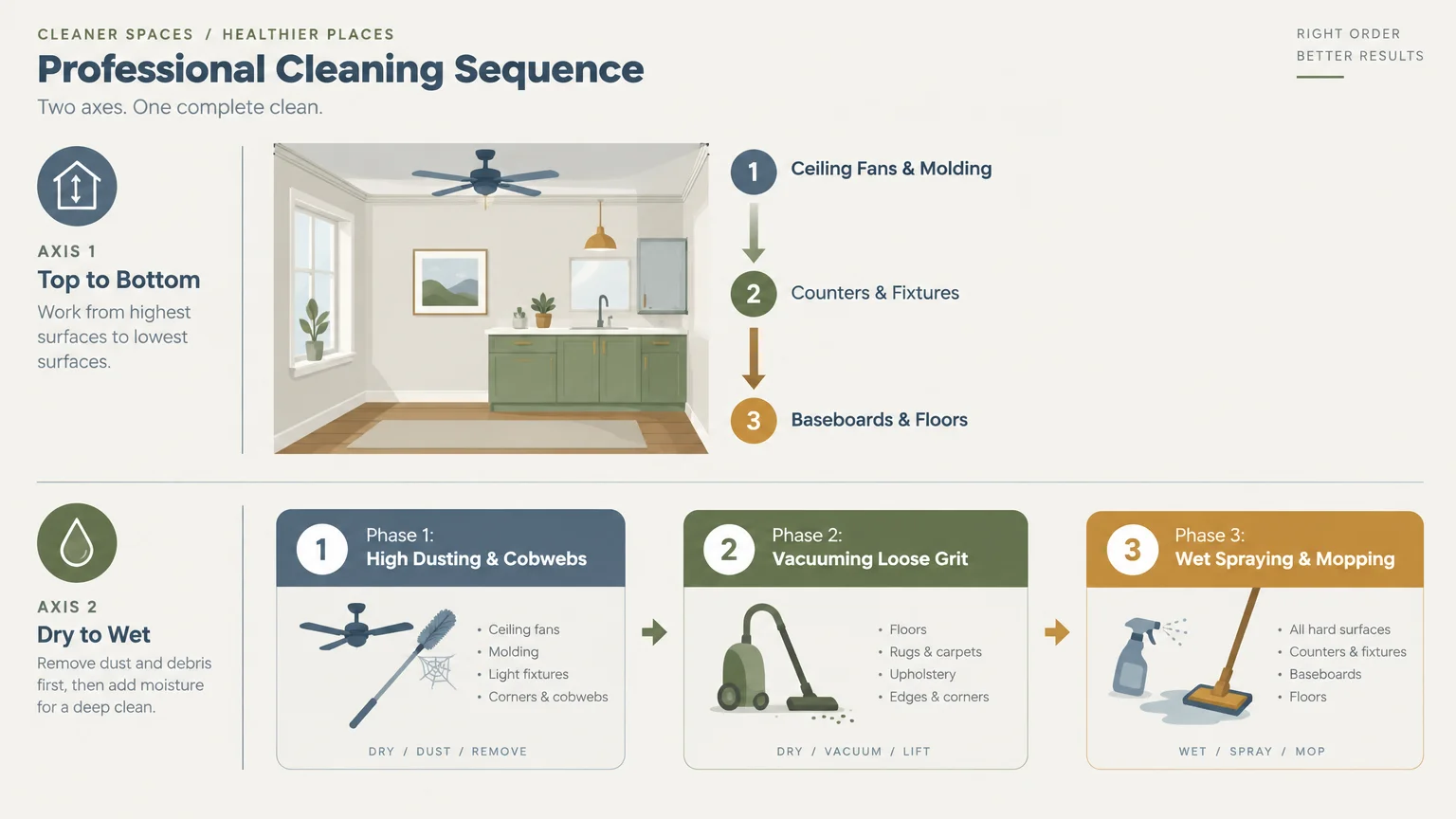
Even the finest supplies fail if applied out of sequence. Professional cleaners follow a strict spatial workflow to prevent re-soiling areas they have already cleaned.
Always clean from top to bottom. Start by dusting ceiling corners, light fixtures, and ceiling fans using your extension pole so loose particles drop downward.
Next, wipe furniture, countertops, and appliances with your damp microfiber cloths and neutral cleaner. Vacuum and mop hard floors last, collecting every crumb and fallen dust speck in a single final pass.
Follow a dry-to-wet progression within each room. Vacuuming or sweeping dry debris before introducing wet sprays prevents dirt from turning into sticky mud that stains grout and baseboards.
Ditch the Single-Use Gadgets Today
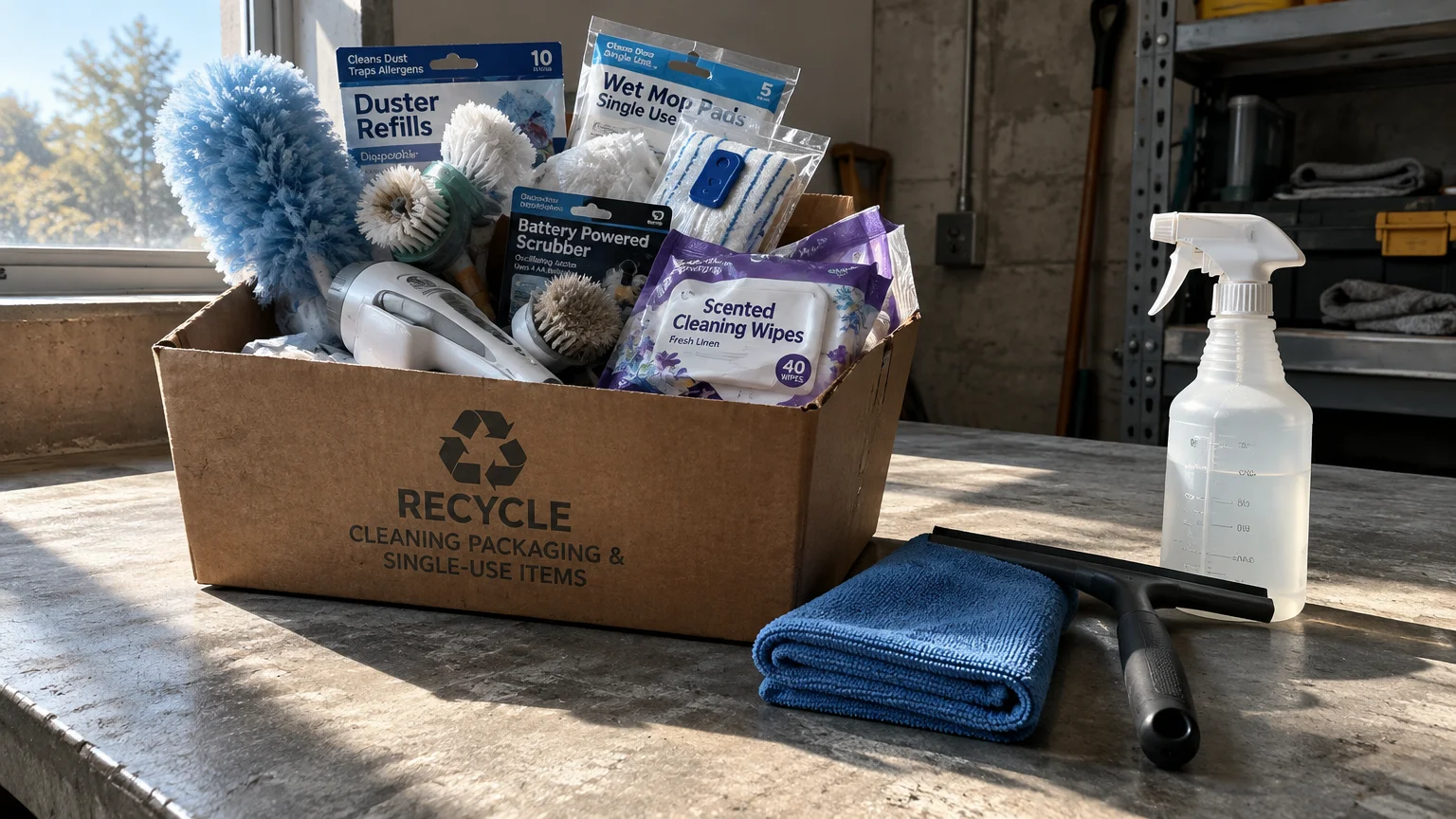
Walk to your cleaning closet right now and gather every half-empty, specialized chemical bottle you have not touched in six months. Check the labels, discard expired bottles safely according to your municipal guidelines, and consolidate your supplies down to these ten essentials.