Proper mattress care preserves structural support and saves you thousands of dollars in premature replacement costs. Common mattress cleaning mistakes quietly destroy delicate comfort layers, degrade foam cells, and void manufacturer warranties long before their expected ten-year lifespan.
You spend a third of your life in bed, making routine hygiene essential for allergy control and restorative sleep. However, aggressive scrubbing and improper liquids introduce trapped moisture that breeds hidden mildew inside interior spring pockets and memory foams.
Learning how to clean a mattress safely protects your investment while creating a healthier sleeping environment. Avoiding these ten frequent errors will keep your sleep surface supportive, clean, and structurally sound for years to come.
01 Soaking the Mattress with Liquid Cleaners
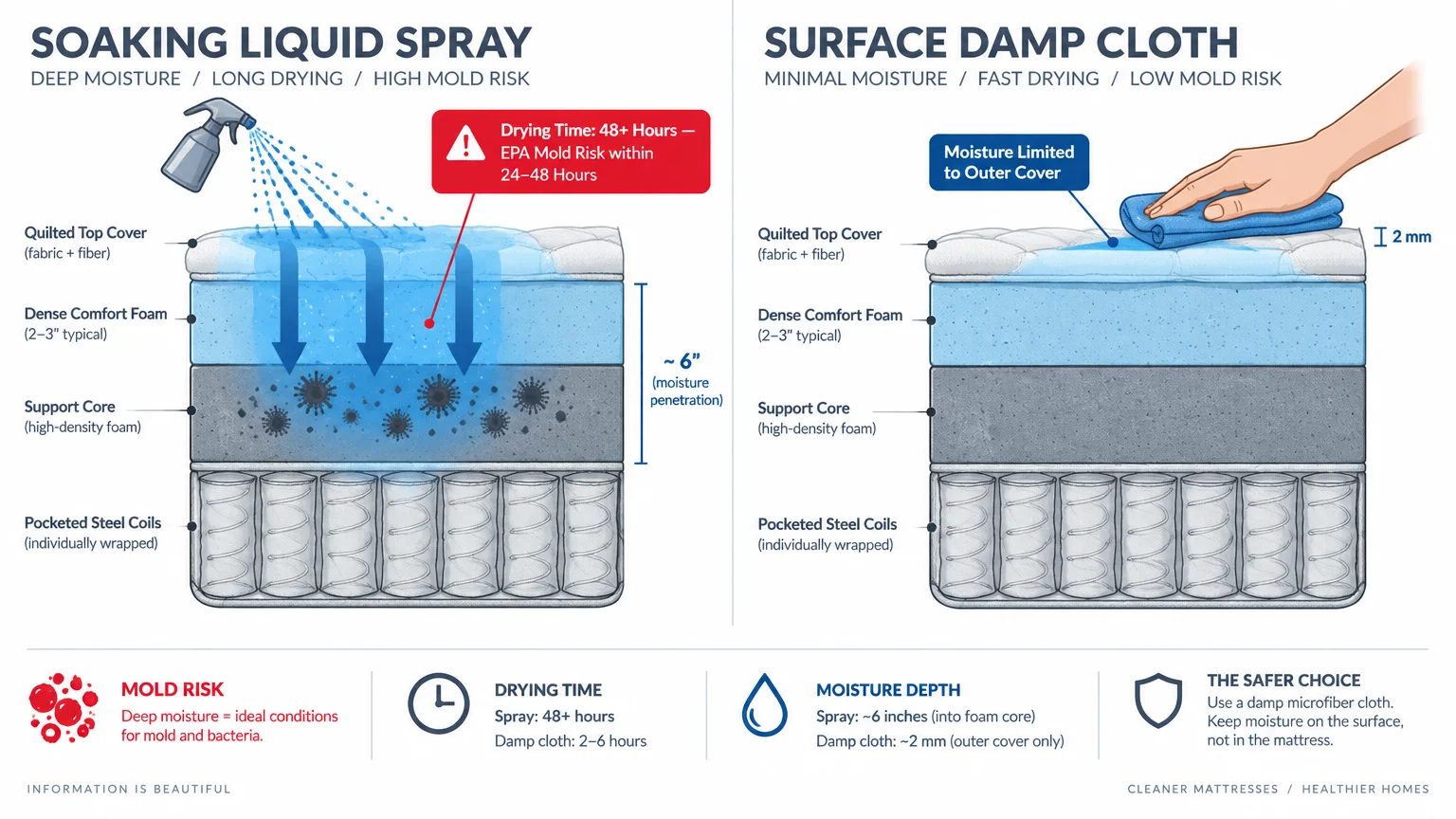
Drenching your mattress with carpet cleaner, soapy water, or heavy liquid spray causes catastrophic moisture retention. Traditional innerspring and foam mattresses act like dense sponges that trap dampness deep within their cores.
Because interior layers lack airflow, wet padding takes days to dry completely. This dark environment creates prime breeding conditions for mold and mildew.
According to the U.S. Environmental Protection Agency, indoor mold can proliferate within 24 to 48 hours of water exposure.
Mold spores destroy batting materials, trigger respiratory issues, and permanently ruin polyurethane foam. Once mildew colonizes your mattress core, you cannot salvage the bed.
Always spot-treat stains using a damp microfiber cloth wrung out until nearly dry. Apply cleaning agents to the cloth rather than spraying the mattress directly.
This controlled approach limits moisture penetration to the outer cover. You protect the inner comfort layers while lifting topical spots effectively.
02 Using Steam Cleaners on Memory Foam and Latex
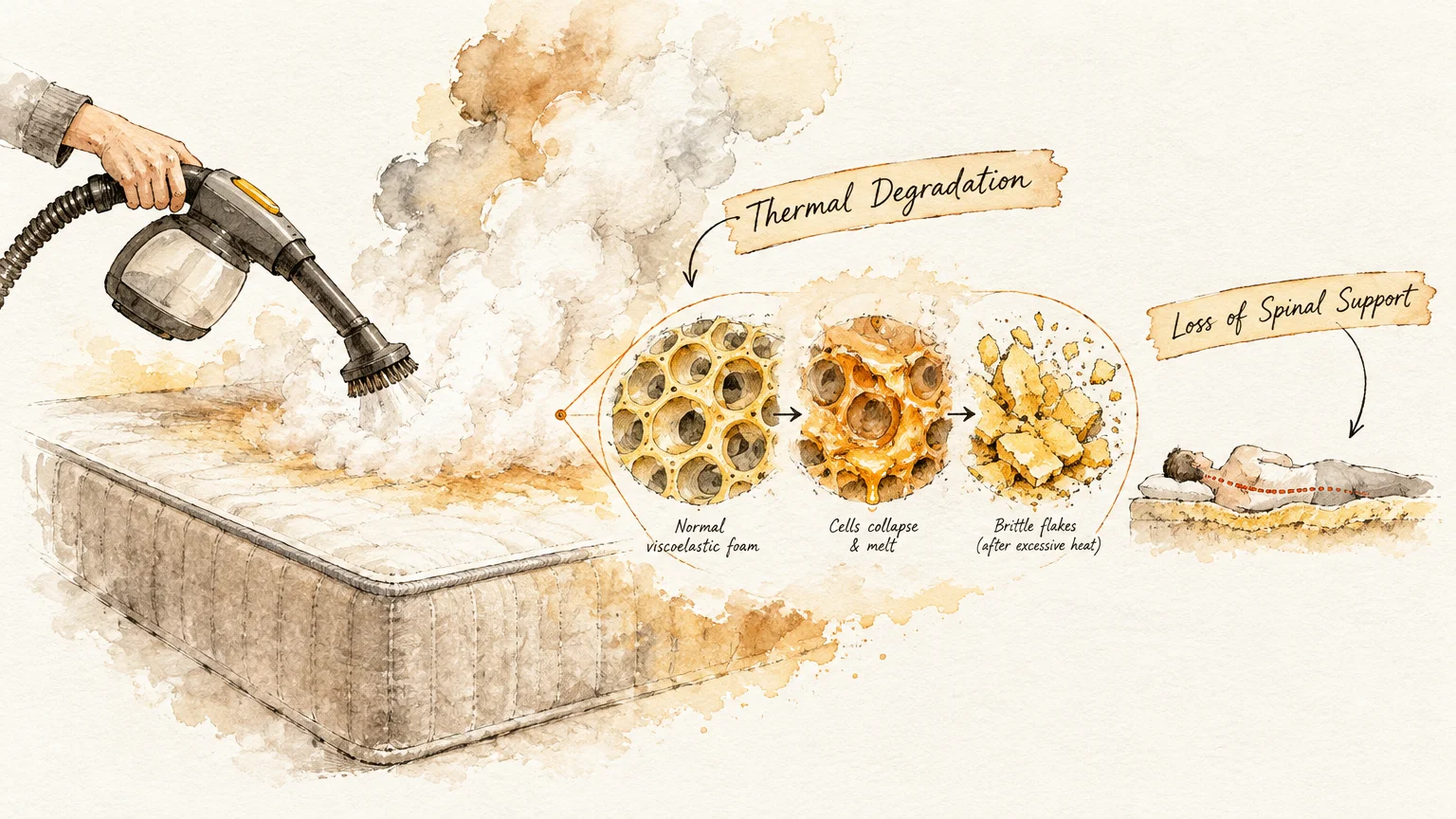
Steam cleaners blast pressurized, boiling moisture directly into fabrics to sanitize surfaces. While steam works wonders on tile grout, high heat destroys temperature-sensitive memory foam and natural latex.
Excessive thermal energy breaks the chemical bonds in viscoelastic polyurethane foam. Over time, the material loses its elastic recovery and fails to support your spinal alignment.
Natural latex rubber also deteriorates rapidly under concentrated steam heat, hardening and crumbling into brittle yellow flakes. Steam also injects gallons of trapped vapor inside dense upholstery layers.
To sanitize your bed safely, rely on dry vacuuming combined with UV light exposure or mild enzyme sprays. Keep all high-heat steam machines far away from your bedroom mattress.
Targeted enzyme solutions dissolve biological stains without introducing high thermal stress. This technique keeps your foam resilient and preserves your mattress warranty.
03 Applying Undiluted Bleach and Harsh Chemical Solvents
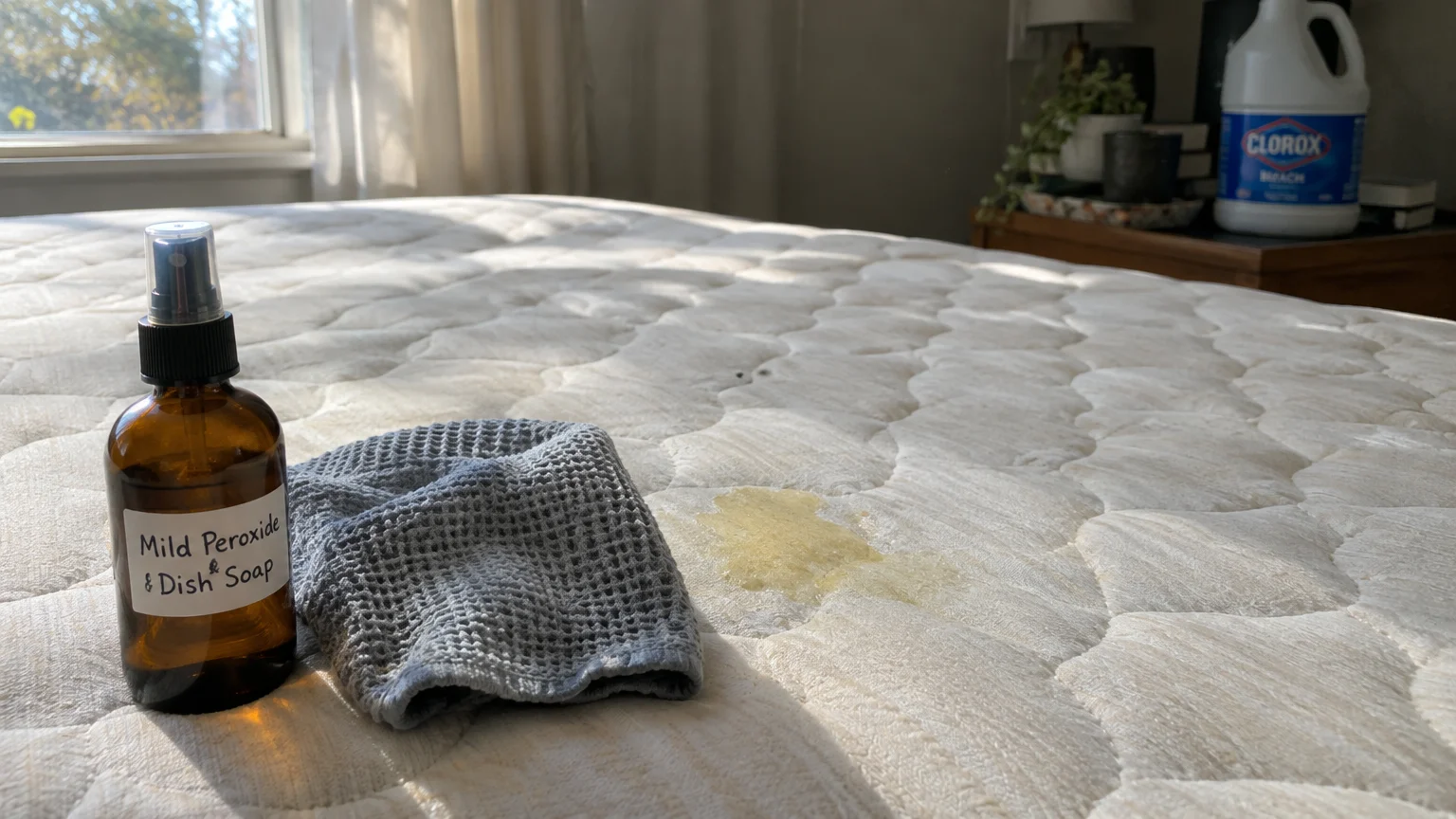
Chlorine bleach, ammonia, and chemical solvents seem tempting when tackling stubborn yellow sweat stains or blood. Unfortunately, harsh chemicals dissolve synthetic fibers and disintegrate delicate quilted mattress ticking.
Bleach also oxidizes the protective fire retardant barriers built beneath the fabric cover. Chemical breakdown can expose inner fire-resistant socks or release irritating particulate fibers into your bedroom air.
In addition, solvent residues leave behind noxious fumes that linger in dense bedding materials for weeks. Inhaling these persistent vapors disrupts sleep quality and inflames sensitive respiratory pathways.
Instead, use a mild mixture of diluted hydrogen peroxide, gentle dish soap, and cool water for stubborn organic marks. This mild combination lifts discoloration without eroding protective synthetic textiles.
Always spot-test any homemade or commercial solution on a small, hidden corner of the mattress first. This precaution confirms the liquid will not discolor your fabric before you treat visible areas.
04 Skipping Routine Dry Vacuuming
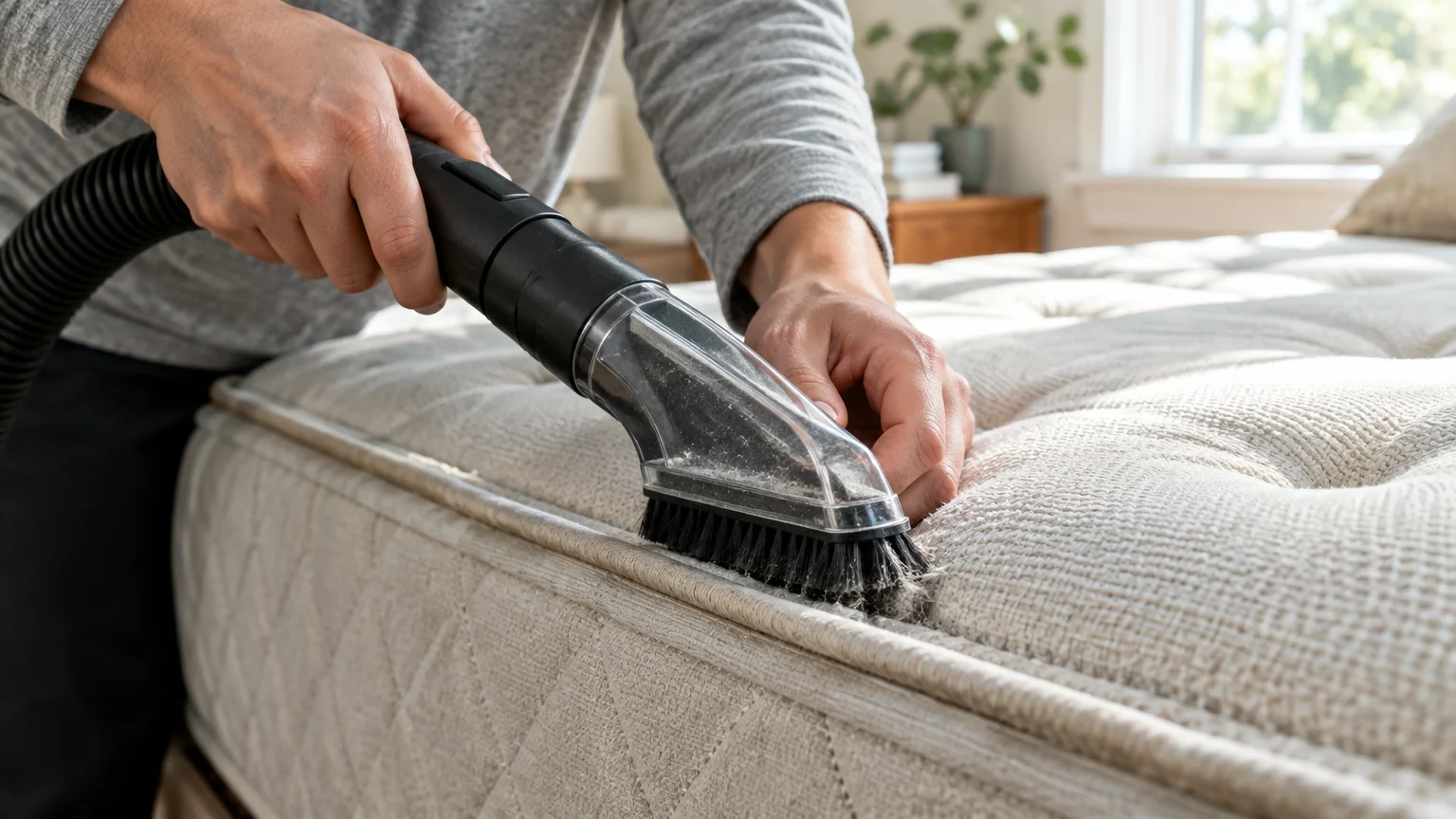
Neglecting your vacuum attachment allows microscopic debris to accumulate across the quilted sleep surface. Dead skin cells, dust mites, pet dander, and gritty outdoor dust collect in deep tufted crevices every night.
The American Lung Association highlights dust mites as a primary trigger for chronic allergic reactions and asthma flare-ups.
Beyond health concerns, dry particulate grit behaves like microscopic sandpaper against woven threads. Every movement you make rubs this abrasive dust against fabric fibers, fraying the cover prematurely.
Vacuum your mattress thoroughly once every month using a clean upholstery tool. Pay close attention to sewn edges, piping seams, and decorative surface depressions.
A vacuum equipped with a HEPA filter traps tiny particles without blowing them back into your sleeping quarters. This simple habit forms the cornerstone of effective mattress maintenance.
05 Aggressively Scrubbing Wet Stains
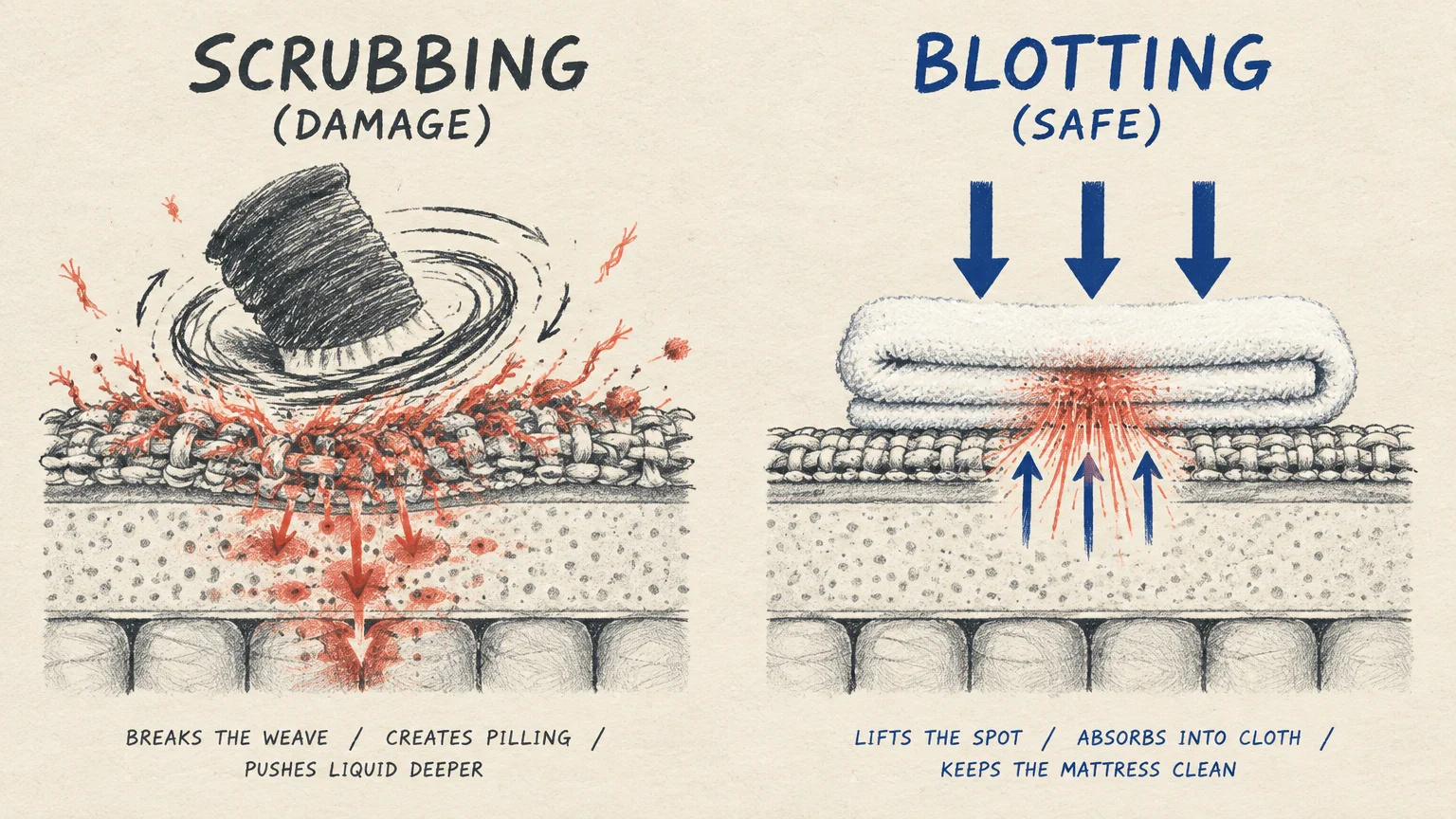
Scrubbing spills with vigorous circular motions causes immediate physical damage to delicate mattress knits. Heavy friction frays exterior threading, creates stubborn fabric pilling, and tears protective quilted batting.
Rubbing also forces liquid stains deeper into underlying foam cushions instead of lifting them out. Once liquid penetrates the inner core, surface treatments will no longer reach the source.
Practice patient blot-and-press motions whenever accidents occur. Press clean white towels firmly into the damp area to wick moisture straight upward out of the material.
Fold the towel to expose dry sections as you continue pressing down. Working inward from the outer edges of the spot prevents the liquid from spreading outward into clean fabric.
Patience during this blotting stage removes most of the staining liquid before you even apply specialized cleaners. Gentle pressure protects the woven fabric while preserving the underlying cushion.
06 Leaving Baking Soda on the Fabric Indefinitely
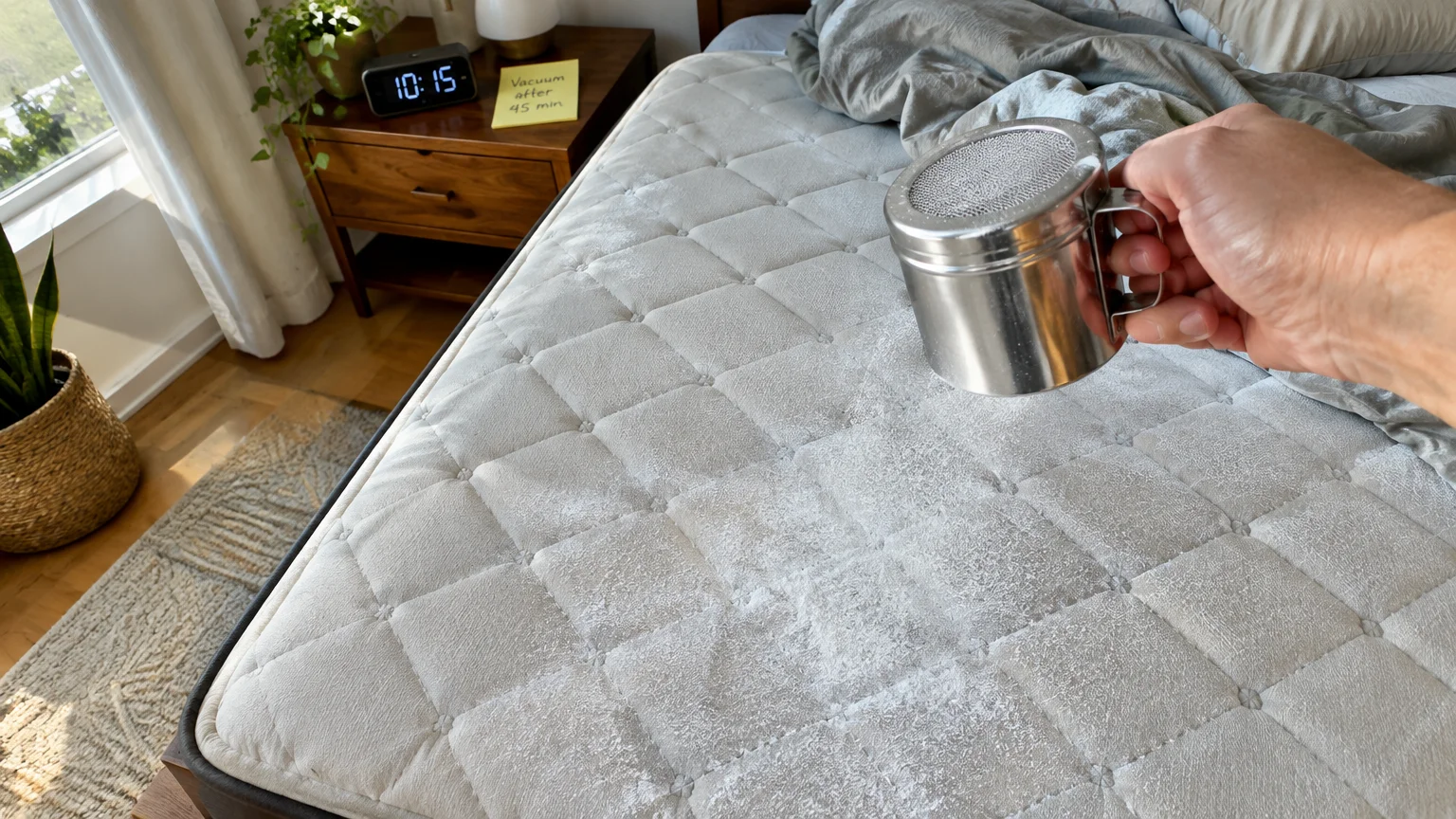
Baking soda absorbs odors effectively, but leaving it on your bed for days causes hidden problems. Sodium bicarbonate is hygroscopic, meaning it steadily absorbs ambient humidity from surrounding bedroom air.
When powdered baking soda absorbs humidity, it forms a pasty, chalky residue that cakes deep inside knit fabrics. Standard vacuum nozzles struggle to pull these damp granules out of porous comfort layers.
Ultra-fine baking soda particles can also bypass household vacuum filters, overheating and destroying consumer-grade vacuum motors. Dust trapped within foam cells can stiffen cushions and produce abrasive friction over time.
Sprinkle a thin layer across the surface and let it rest for only two to four hours. Vacuum it up thoroughly using high suction before replacing your sheets.
This focused time window deodorizes the mattress without allowing moisture absorption to cake the powder. Your vacuum easily captures the dry particles, leaving a fresh, scent-free surface.
07 Washing Removable Covers in Hot Water
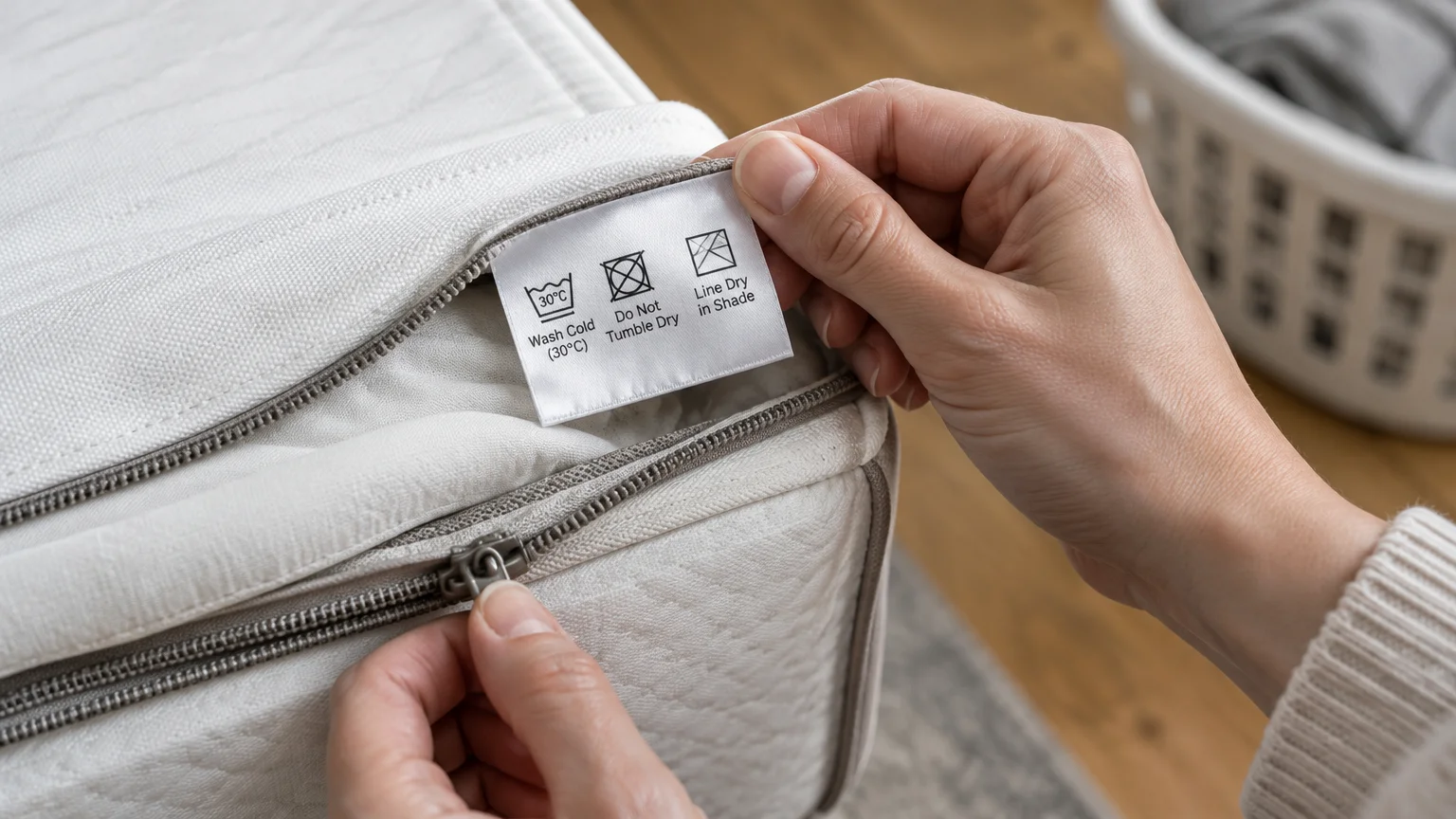
Many modern beds feature zippered exterior covers, tempting owners to toss them into hot washing cycles. However, hot water and tumble-dry heat dramatically shrink polyester, rayon, and organic cotton weaves.
A shrunken cover will no longer zip around the interior foam layers without compressing the core. Distorting the core ruins the mattress ergonomics and causes uneven body weight distribution.
Worse still, removing the outer cover on certain mattresses can disturb an underlying fiberglass fire barrier. The U.S. Consumer Product Safety Commission warns that disturbing damaged fire barriers can shed glass fibers throughout living areas.
Always inspect law tags carefully before unzipping any outer layer. If your mattress cover is non-washable, protect it with a separate, fully washable waterproof mattress protector instead.
If the manufacturer explicitly permits washing the cover, wash it in cold water on a delicate cycle. Hang the cover to air dry completely to avoid heat-induced shrinkage.
08 Beating the Mattress to Dislodge Dust
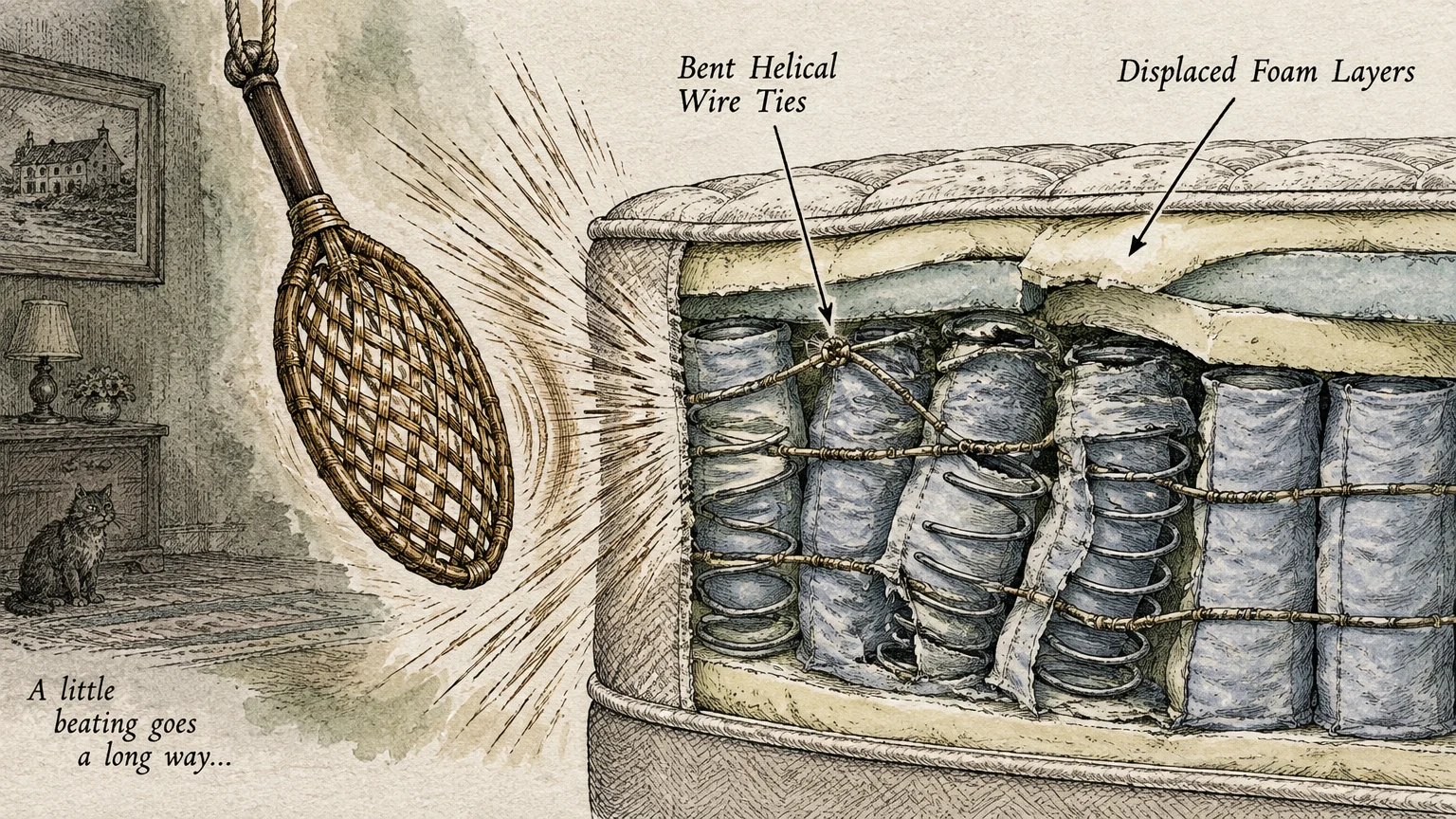
Striking an indoor mattress with a rug beater, broom handle, or bare hands damages intricate internal architecture. Modern beds contain precise pocketed coils, micro-springs, and glued foam layers rather than basic cotton stuffing.
Blunt impacts can snap interior steel coil ties, bend perimeter edge-support frames, or tear internal foam glue seams. Once an internal support pocket tears loose, adjacent springs collapse and produce permanent structural sagging.
In addition, violent impacts send clouds of settled allergens airborne rather than trapping them cleanly. These airborne particles quickly resettle across your bedroom furniture, flooring, and air ducts.
Let modern suction replace blunt force. A HEPA-filtered vacuum removes embedded dust gently without disturbing delicate internal construction or edge support rails.
If you want to refresh the bed thoroughly, stand it on its side near an open window. Good air circulation removes stale odors without risking mechanical damage to inner springs.
09 Using Hair Dryers or Direct Heat to Speed Up Drying
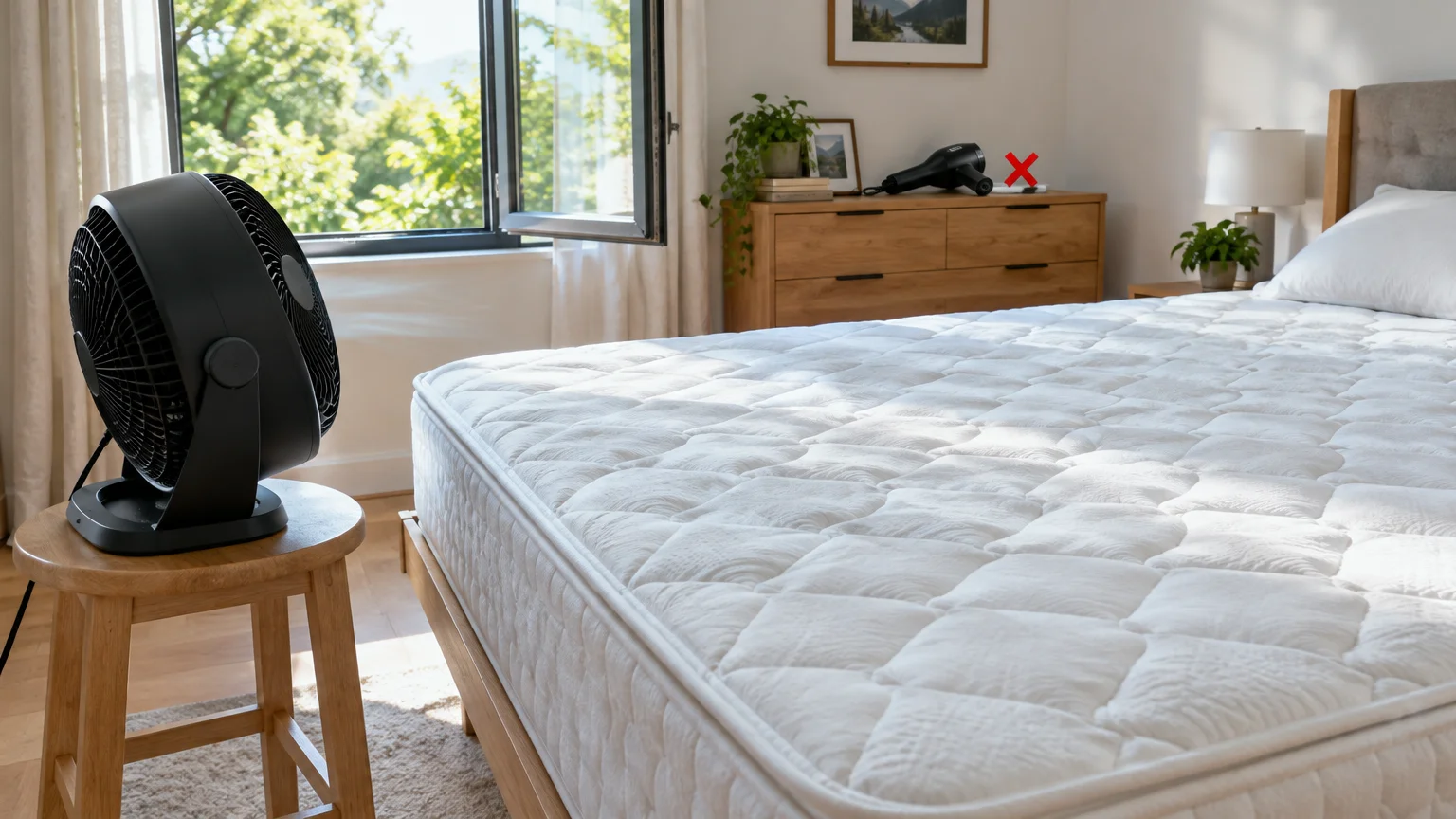
Pointing a high-heat blow dryer directly at a damp mattress spot damages synthetic fibers and foam layers. Concentrated heat melts memory foam cell walls, causing localized dips that will never bounce back.
Extreme surface temperatures can also scorch delicate quilted fabrics, turning soft knits rough, brown, and brittle. Weakened fibers split open under regular nocturnal body movement and friction.
Heat also bakes protein stains—such as sweat, urine, or blood—permanently into the fibers. Once heat sets these organic proteins, discoloration and lingering odors become nearly impossible to extract.
Accelerate drying safely with moving, ambient room air instead of intense heat. Position an electric oscillating fan directly over the damp spot and open nearby windows for cross-ventilation.
Running a room dehumidifier alongside the fan pulls moisture out of the fabric even faster. This cool-air method prevents heat damage while ensuring the damp area dries within hours.
10 Neglecting the Foundation and Mattress Protector
Cleaning your mattress surface while ignoring the foundation beneath it ruins your sanitizing efforts. Dusty platform slats, broken box springs, and soiled mattress protectors transfer grime straight back onto clean fabrics.
Wooden slats accumulate dust, mold, and splintered edges that snag and tear bottom mattress ticking. Sagging bed frames also distort internal coil alignment, causing uneven wear regardless of how clean you keep the top.
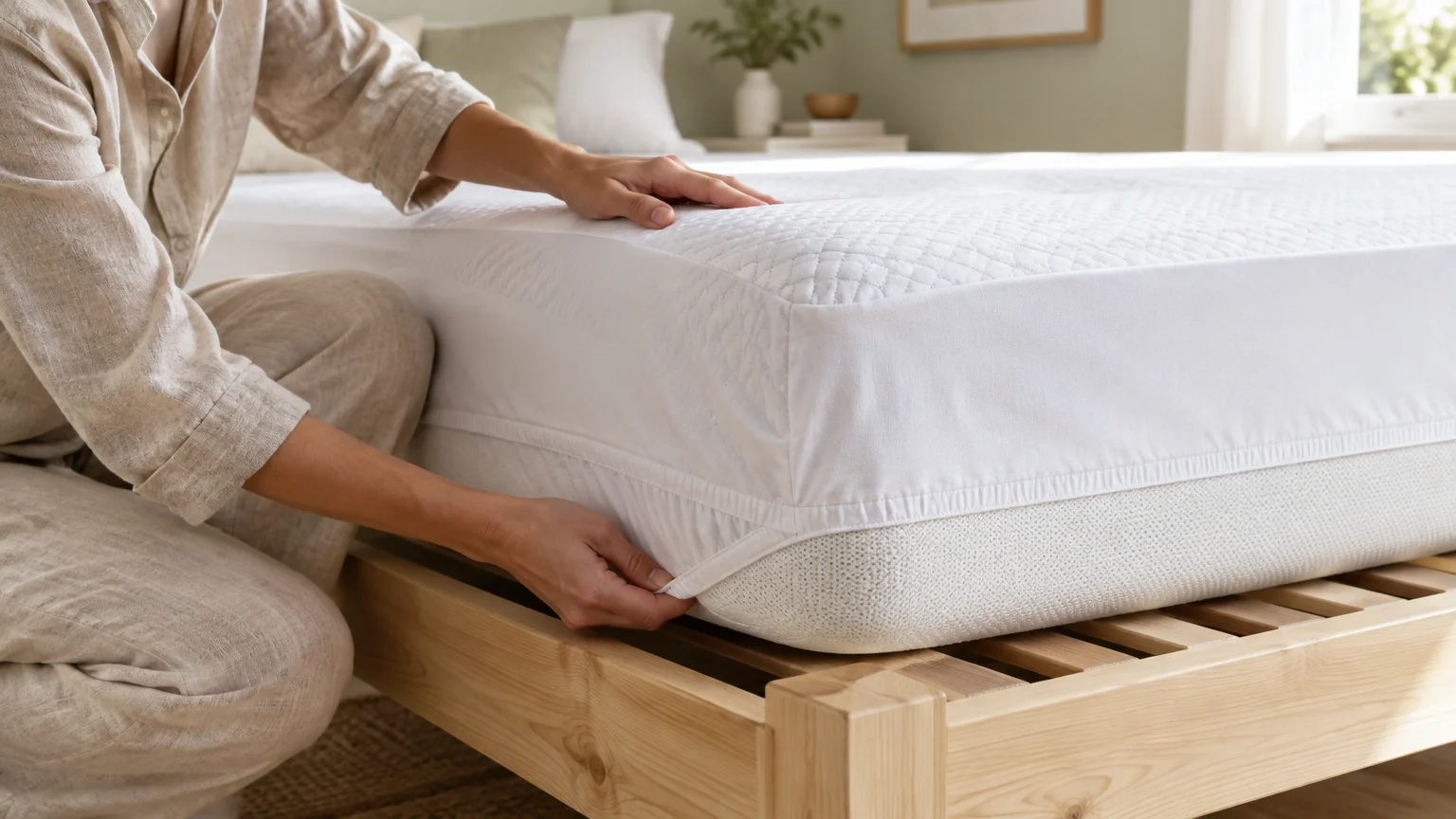
Furthermore, skipping a protective cover forces your bare mattress to absorb up to a pint of nocturnal sweat each night. The Sleep Foundation recommends using a breathable, waterproof protector to extend mattress life dramatically.
Wash your mattress protector every two to four weeks alongside your regular bed sheets. Wipe down bed frames and vacuum wooden slats whenever you rotate your mattress.
A clean, stable foundation preserves mattress flatness and provides adequate airflow underneath the bed. This complete system prevents trapped moisture and maintains structural balance across all sleep zones.
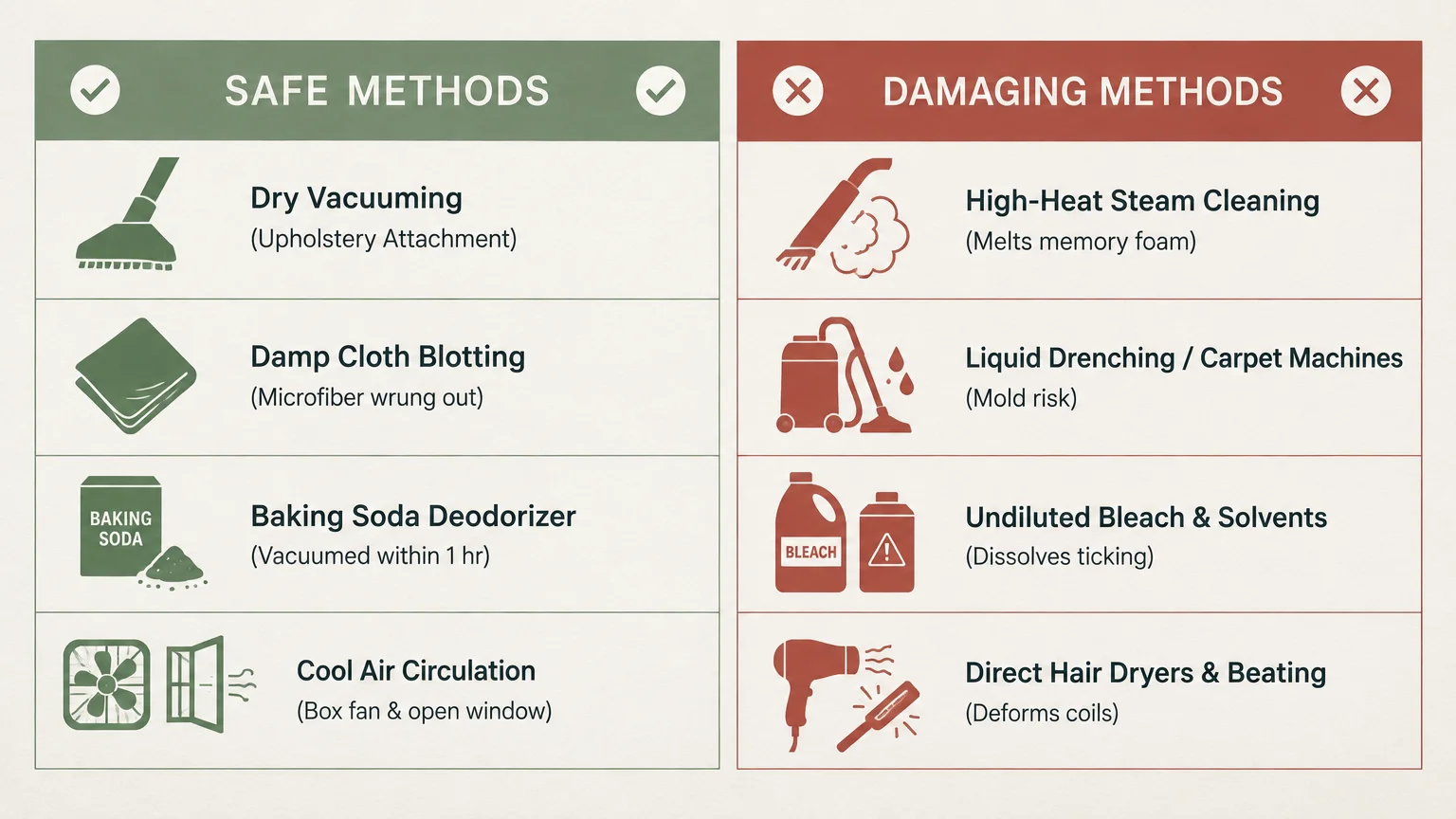
Safe vs. Damaging Mattress Cleaning Methods
Selecting the right technique protects delicate upholstery materials while eliminating stubborn odors and grime. The following comparison clarifies which methods preserve mattress integrity and which cause permanent damage.
| Cleaning Method | The Hidden Risk | Safe Alternative | Best Application |
|---|---|---|---|
| Steam Cleaning | Thermal breakdown of memory foam; trapped internal moisture | Dry HEPA vacuuming and enzyme spot cleaning | Odor and dust removal |
| Liquid Soaking | Core mildew growth and rusted metal innersprings | Microfiber cloth dampened with mild detergent solution | Light surface spills |
| Chlorine Bleach | Fabric degradation, toxic fumes, and fire barrier erosion | Diluted hydrogen peroxide (3%) and cool water | Sweat and biological stains |
| High-Heat Blow Dryer | Melted foam cell walls and heat-set protein stains | High-velocity oscillating room fan and dehumidifier | Drying treated damp spots |
| Mechanical Beating | Broken coil ties, bent edge rails, and torn foam baffles | Slow upholstery nozzle vacuuming with firm pressure | Routine monthly maintenance |
Reviewing this reference prevents costly cleaning accidents before they happen. Always match your cleaning technique to your specific mattress material and construction type.
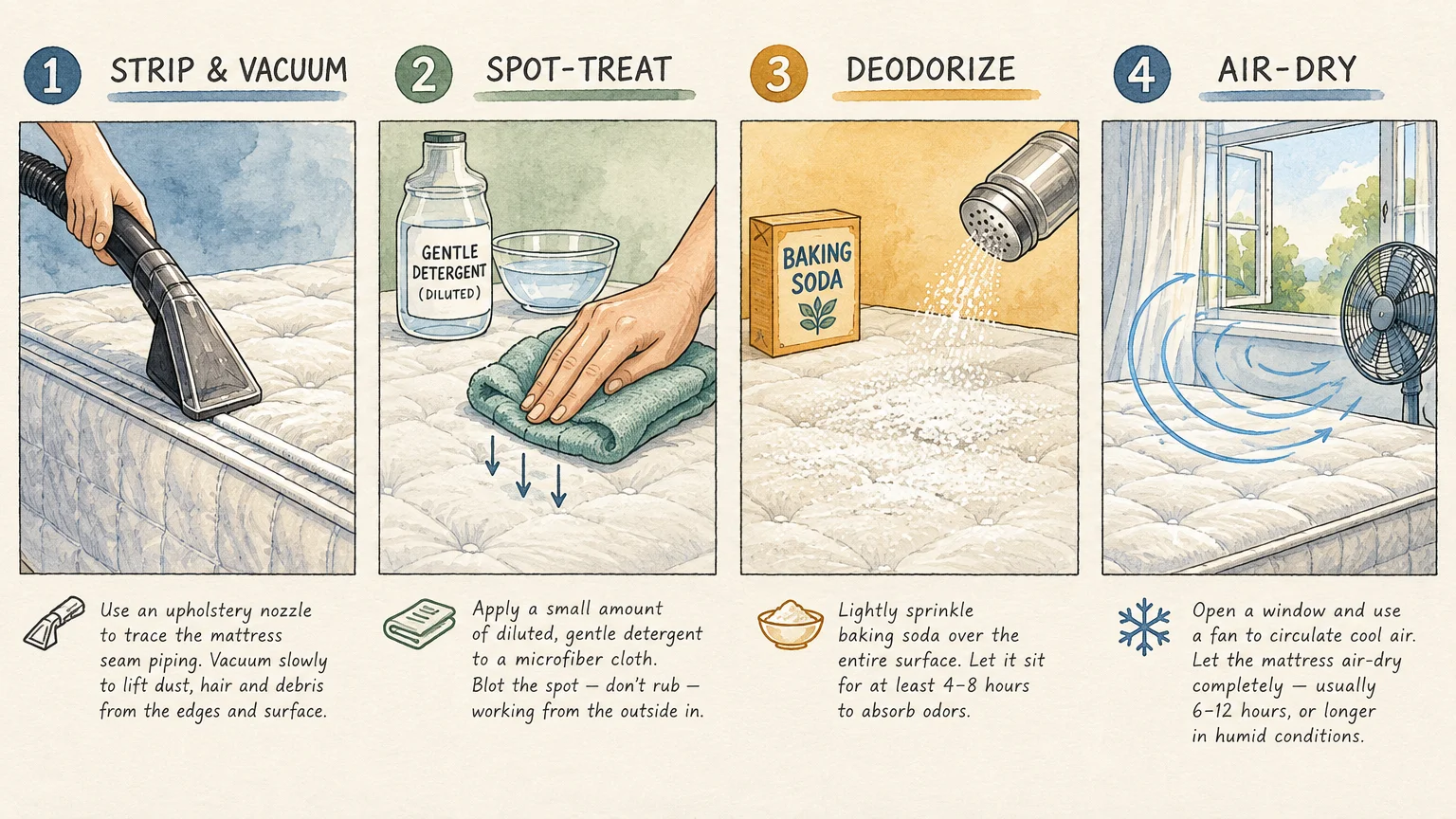
How to Clean a Mattress the Right Way
Following a methodical routine prevents excess moisture while lifting settled allergens and surface stains. Complete these four straightforward steps every three to six months for optimal mattress hygiene.
Step 1: Strip Bedding and Launder Linens
Remove sheets, pillowcases, and your mattress protector before cleaning the bare mattress. Wash all bedding in hot water at or above 130 degrees Fahrenheit to eliminate dust mites.
While your linens run through the wash cycle, your mattress surface has room to breathe. Open your bedroom windows to allow fresh outdoor air to circulate through the room.
Step 2: Vacuum with an Upholstery Attachment
Fit your vacuum with a clean upholstery attachment and select maximum suction power. Work in slow, overlapping horizontal sweeps from the top of the bed down to the foot.
Press the nozzle firmly into piping seams, tufts, and edge binding where debris collects. Repeat this process along the vertical side panels to capture settled dust.
Step 3: Spot-Treat Stains with Diluted Cleaner
Mix two tablespoons of mild dish soap into one cup of cool water. For organic protein marks, use a 50/50 mixture of cool water and three percent hydrogen peroxide.
Dip a clean white microfiber cloth into the liquid and wring it out until nearly dry. Blot the stain gently from the perimeter toward the center without rubbing the fibers.
Press a dry towel over the damp area to extract remaining liquid immediately. Repeat this gentle blotting technique until the spot fades completely.
Step 4: Deodorize and Air-Dry with Ambient Air
Dust a light layer of baking soda across the mattress surface to neutralize lingering odors. Let the powder sit undisturbed for two to four hours while drawing out stale smells.
Vacuum up every trace of powder using your upholstery attachment and slow, steady strokes. Set up a box fan pointing across the mattress to speed up air drying before making the bed.
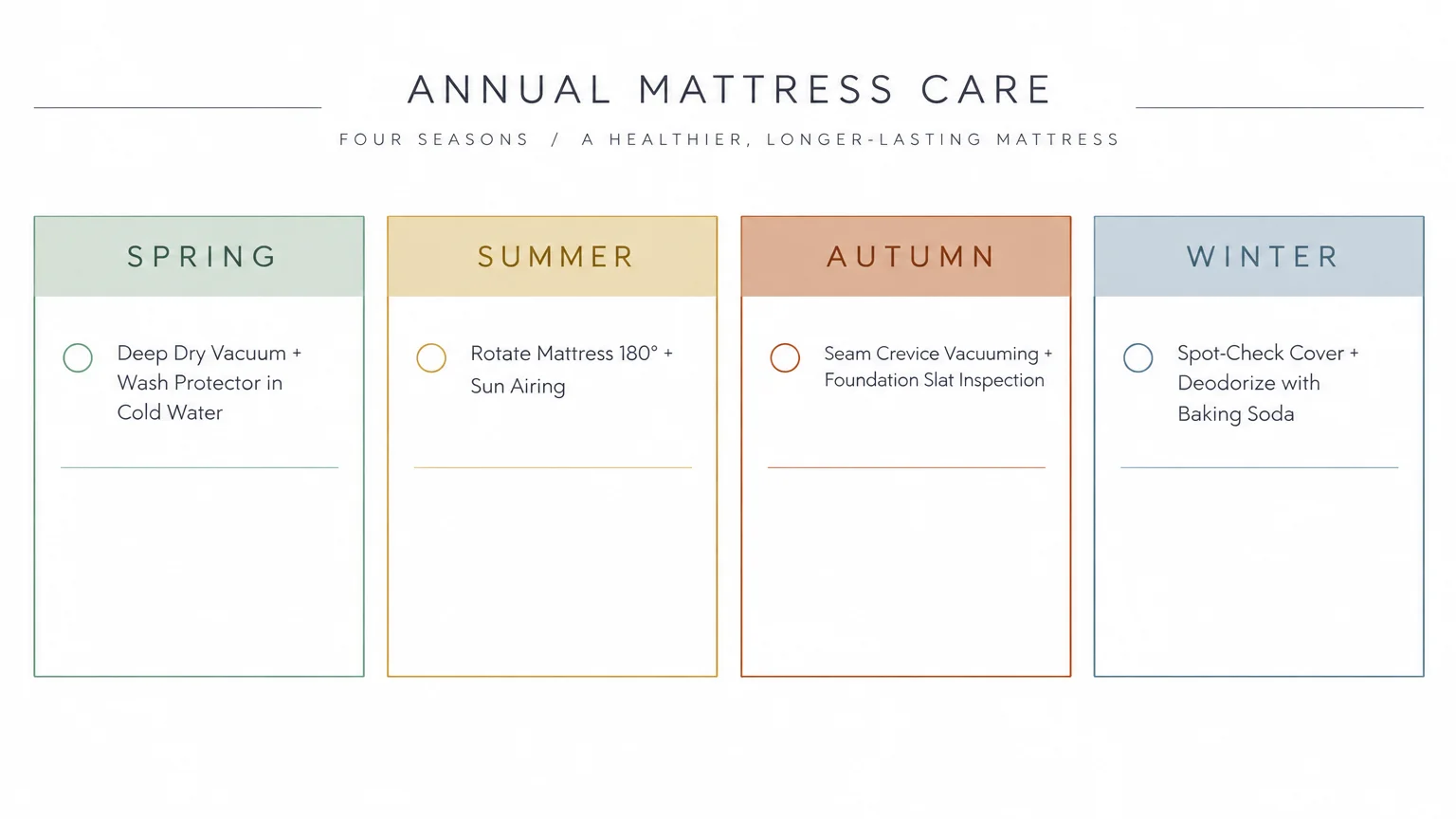
Seasonal Mattress Maintenance Checklist
Consistent mattress care requires simple, scheduled tasks throughout the year rather than emergency deep cleanings. Use this straightforward checklist to keep your sleep sanctuary clean, supportive, and allergen-free.
- Rotate the mattress 180 degrees every three to six months to distribute body weight evenly.
- Wash the waterproof mattress protector every two to four weeks in warm or hot water.
- Vacuum the bare mattress surface monthly using an upholstery nozzle and HEPA filtration.
- Inspect bed frame slats and center support legs twice annually for bowing or loose hardware.
- Spot-treat spills immediately using damp blotting cloths before liquids penetrate the core.
- Open bedroom windows quarterly for two hours to ventilate core materials and dissipate body humidity.
Rotating your bed 180 degrees every three to six months evens out body impressions across comfort layers. This single adjustment prevents premature body indentations and extends mattress life significantly.
Inspect your mattress support foundation during each rotation to verify center support legs touch the floor securely. A sagging base compromises mattress support, voiding warranties and ruining sleep posture.

Your Next Step for a Cleaner, Longer-Lasting Mattress
Take five minutes today to strip your bedding and inspect your mattress surface for wear, dust, or stains. Place your washable mattress protector into the washing machine right away.
Attach your vacuum upholstery nozzle and give the bare surface a gentle five-minute pass before putting on clean sheets. This simple maintenance habit immediately improves your sleep hygiene and protects your mattress investment.