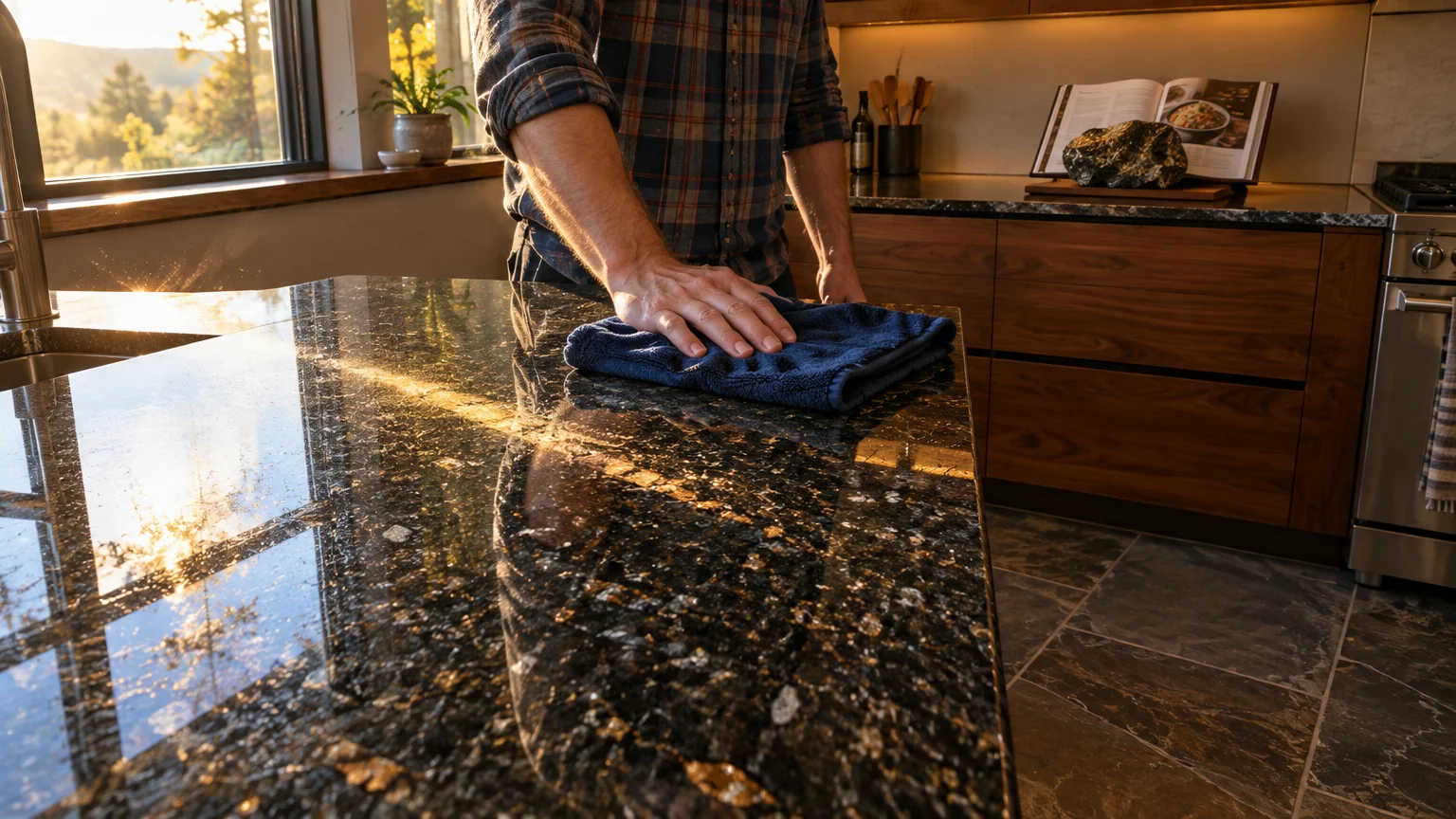
You invest in granite countertops for their luminous, mirror-like finish, but everyday cleaning habits can quietly strip that shine away. Minor routine errors erode the protective sealer and etch the stone underneath.
When your stone loses its luster, harsh store-bought sprays and well-meaning DIY tricks are usually the culprits. Restoring cloudy, dull granite countertops starts with spotting these hidden hazards.
Discover the most common granite cleaning mistakes that cause surface hazing, plus the simple, gentle techniques that keep your natural stone looking pristine for decades.
The Chemistry of Granite and Why It Loses Its Luster
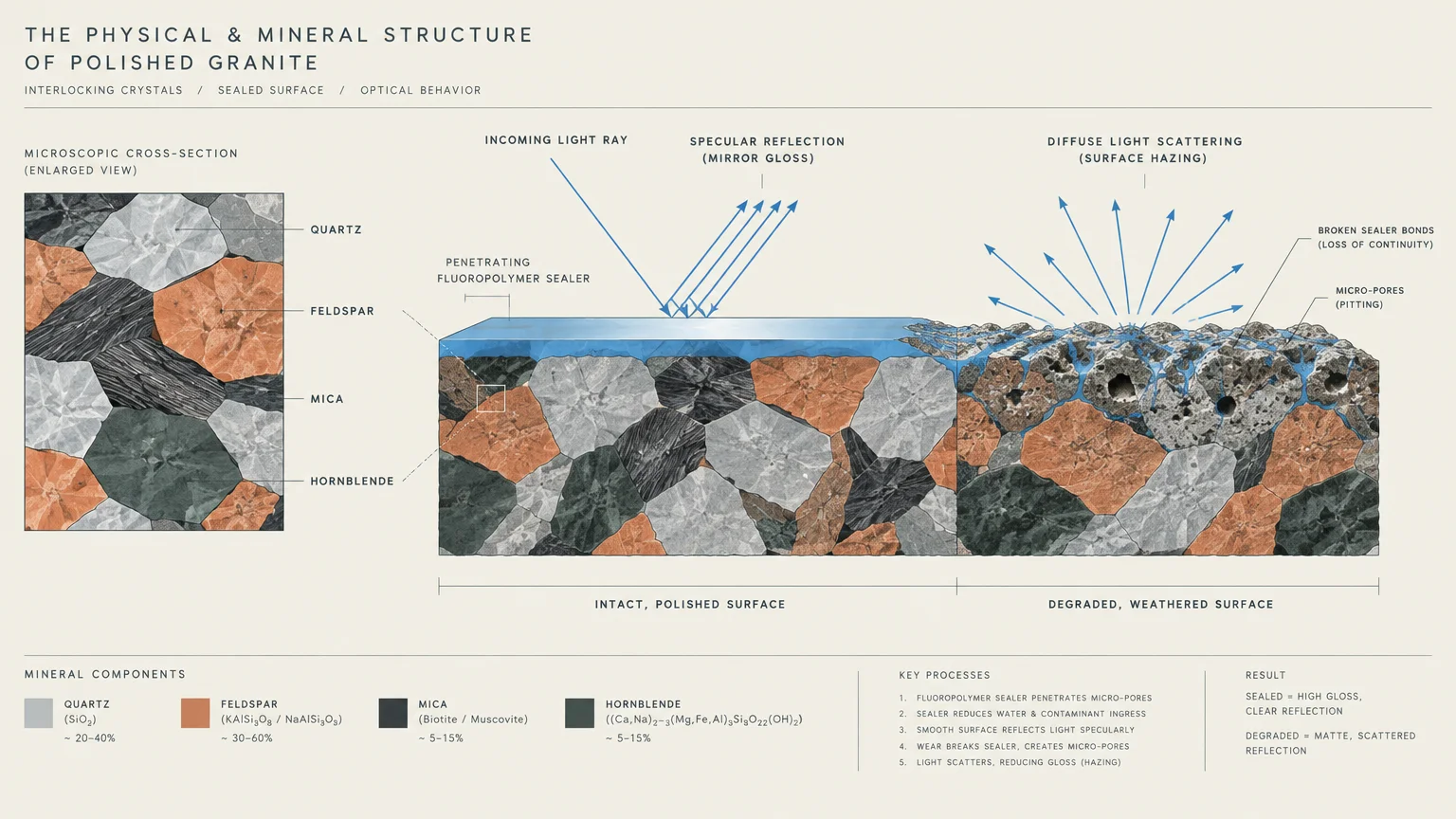
Granite is an igneous rock formed from cooled magma deep beneath the earth. It consists primarily of quartz, feldspar, and trace minerals like mica and hornblende.
The glossy sheen on your kitchen counter does not come from a topical wax. Instead, factory diamond abrasives polish the raw stone until it reflects light like a mirror.
Because natural stone contains microscopic pores, fabricators apply an impregnating sealer to stop liquid absorption. When cleaning products damage that seal or the underlying minerals, light scatters unpredictably, and the surface looks dull.
01 Using Vinegar, Lemon Juice, and Acidic Pantry Staples
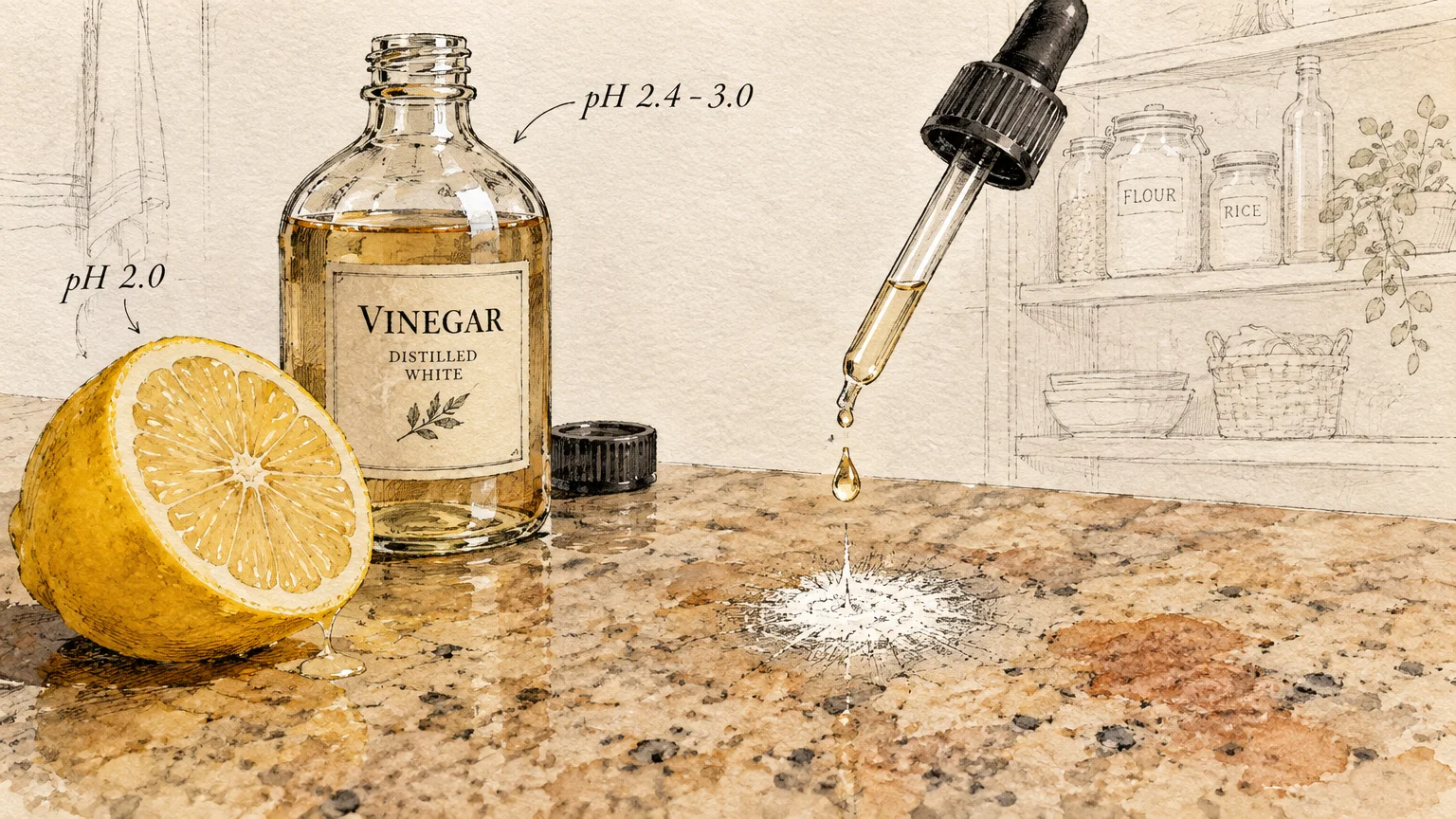
Many homeowners assume distilled white vinegar is the ultimate eco-friendly disinfectant for kitchen countertops. Unfortunately, acidic liquids represent one of the most destructive granite cleaning mistakes you can make.
Vinegar has a pH between 2.4 and 3.0, while lemon juice registers around 2.0. Both acids chemically dissolve the penetrating sealer within minutes of contact.
Once the sealer degrades, the acid attacks calcite and feldspar deposits within the stone. This chemical burn, known as etching, removes the polished surface layer and leaves pale, hazy patches behind.
According to care standards from the Natural Stone Institute, natural stone requires pH-neutral cleaners to avoid permanent mineral degradation.
02 Reaching for Ammonia, Bleach, and High-pH Alkaline Cleaners
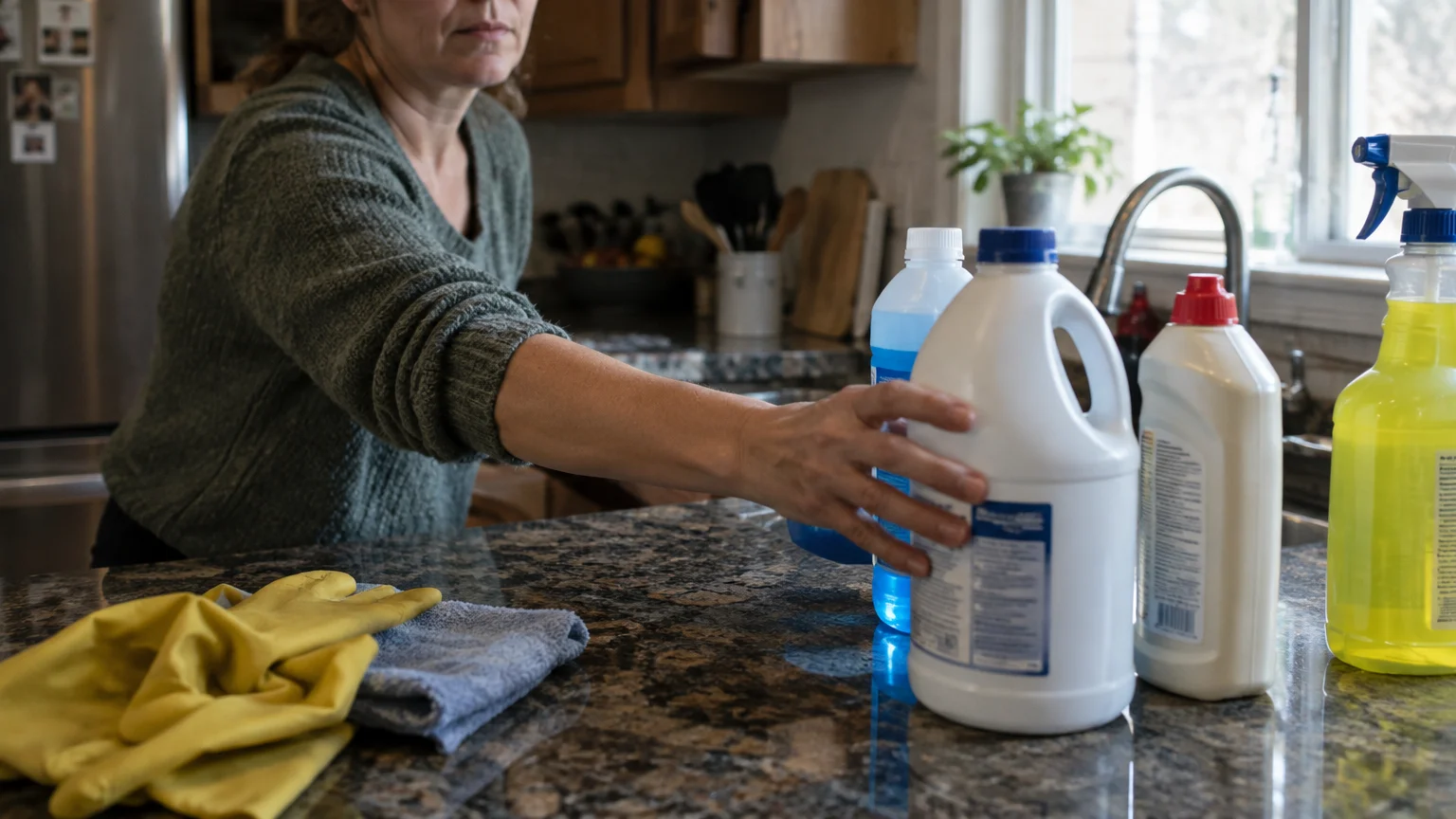
At the opposite end of the chemical spectrum lie harsh alkaline chemicals like chlorine bleach and ammonia. Many people reach for these aggressive agents to eliminate bacteria or lighten dark grease marks.
Pure bleach carries a pH around 11 to 13, making it intensely caustic to delicate stone seals. Over repeated applications, bleach breaks down the synthetic fluoropolymer bonds that keep sealers impermeable.
Ammonia causes similar chemical degradation, leading to cloudy micro-pitting across high-traffic prep areas. High-pH cleansers also leave microscopic pits that capture grease, which accelerates future dulling.
Instead of industrial bleaches, choose disinfectants registered with the EPA Safer Choice program that list stone compatibility on their technical labels.
03 Scrubbing with Abrasive Sponges and Scouring Pads
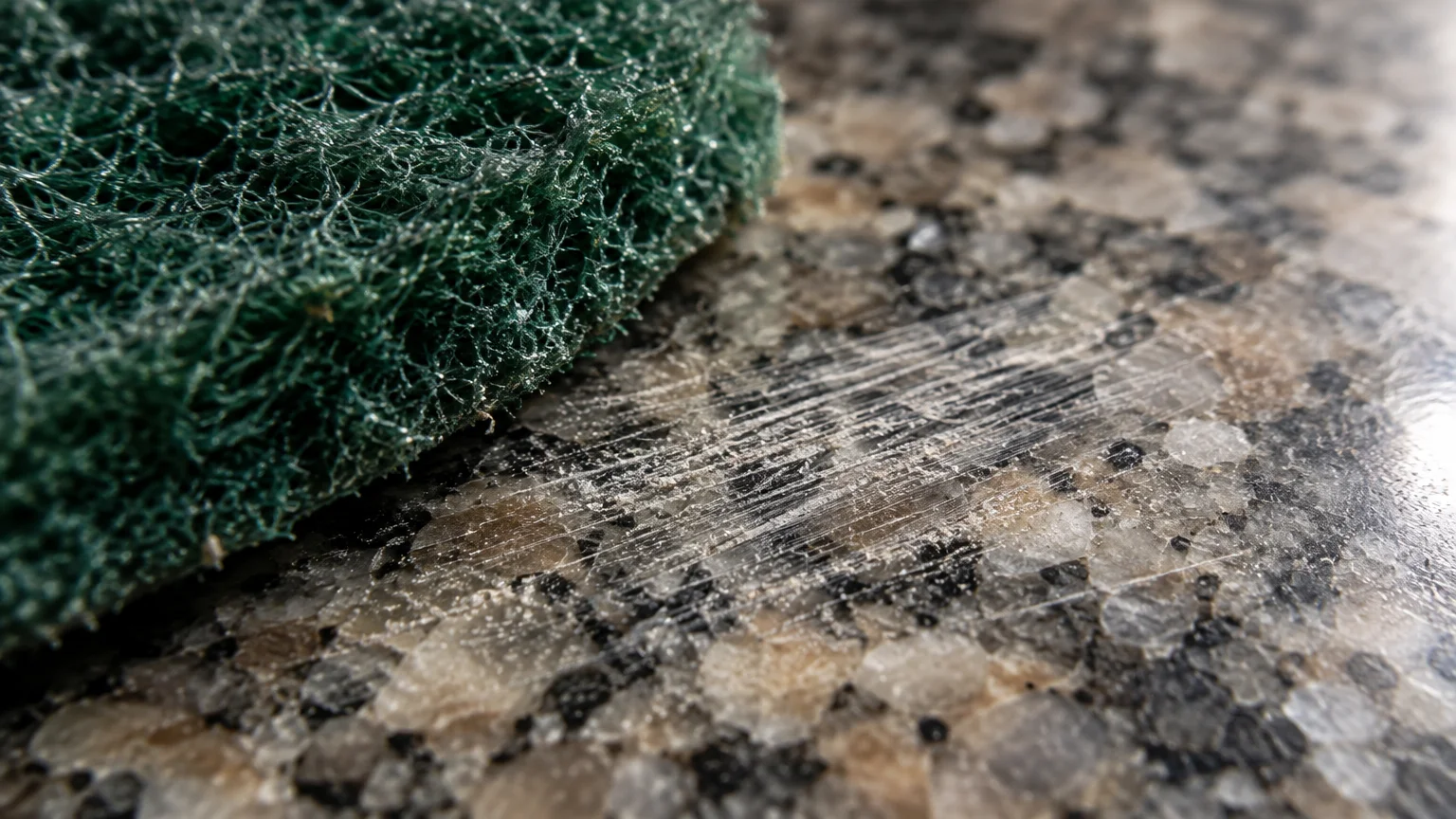
Green scouring pads, steel wool, and pumice powders might speed up cleanup after a messy dinner. However, abrasive mechanical tools physically scratch the polished surface of your slab.
Standard green nylon scouring pads frequently contain microscopic mineral abrasives such as silicon carbide or aluminum oxide. These compounds are harder than the feldspar and mica crystals embedded in granite.
Every stroke creates microscopic gouges that trap ambient dust and cooking oil. Over time, those tiny scratches scatter reflected light, giving your counters a cloudy, worn appearance.
Always substitute coarse scouring pads with soft, double-sided microfiber cloths or non-scratch cellulose sponges designed for delicate cooktops.
04 Overusing Dish Soap and Creating Residue Films
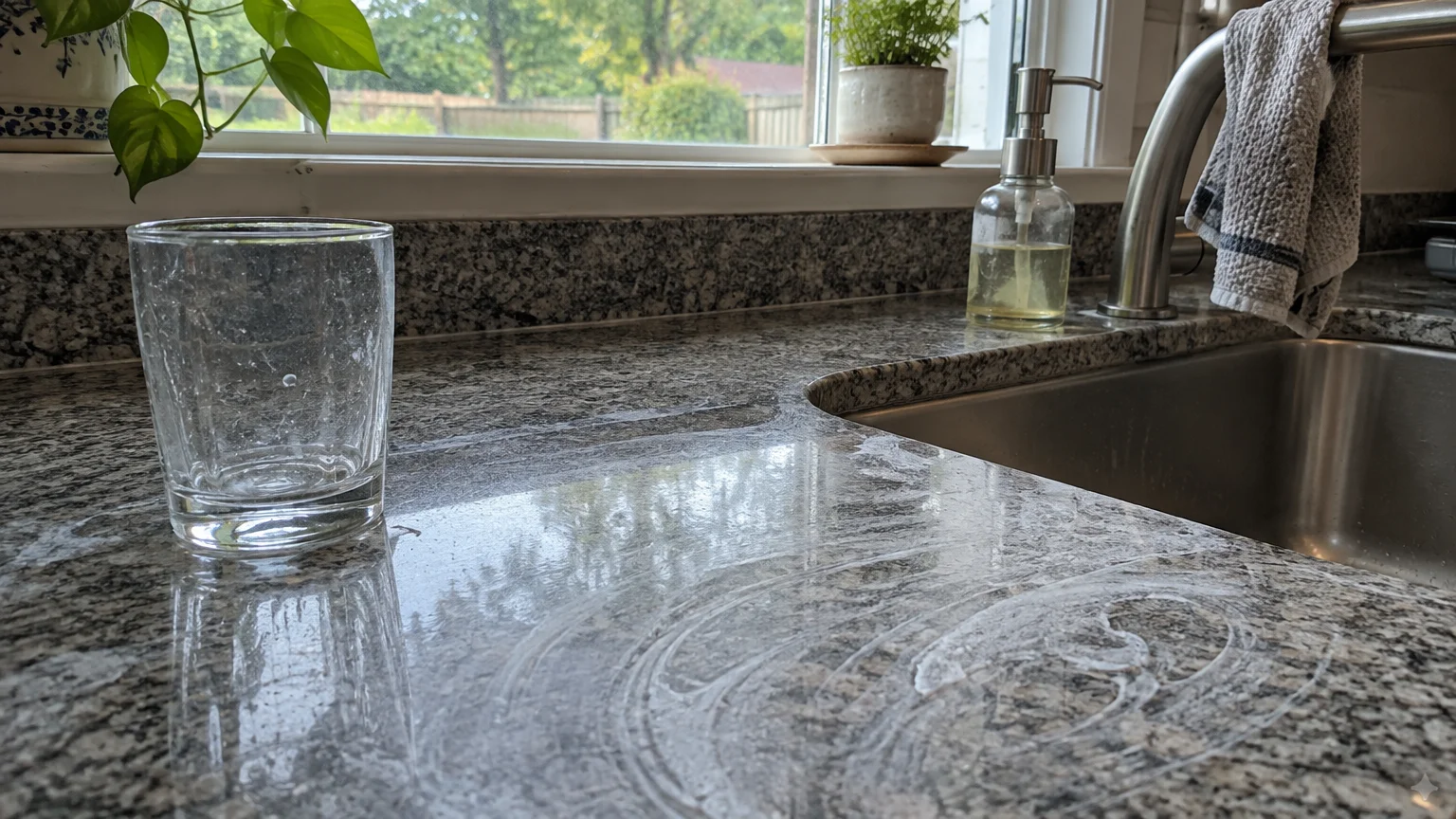
Washing your counters with warm water and liquid dish soap sounds harmless, and many blogs actively recommend it. In reality, habitual dish soap use is a leading cause of dull granite countertops.
Dish soaps contain concentrated degreasers and foaming agents engineered to cling to oily dishes. Because you rarely rinse counters with gallons of clean running water, soap films linger behind.
This microscopic film thickens with every cleaning session, creating an oily, fingerprint-prone haze. The stone underneath remains intact, but the soapy residue blocks the granite’s natural luster.
Reserve mild dish soap for occasional greasy emergencies, and follow every soapy wash with two damp, soap-free wipe-downs to lift residual lather.
05 Relying on Generic Glass Cleaners and Disinfectant Wipes
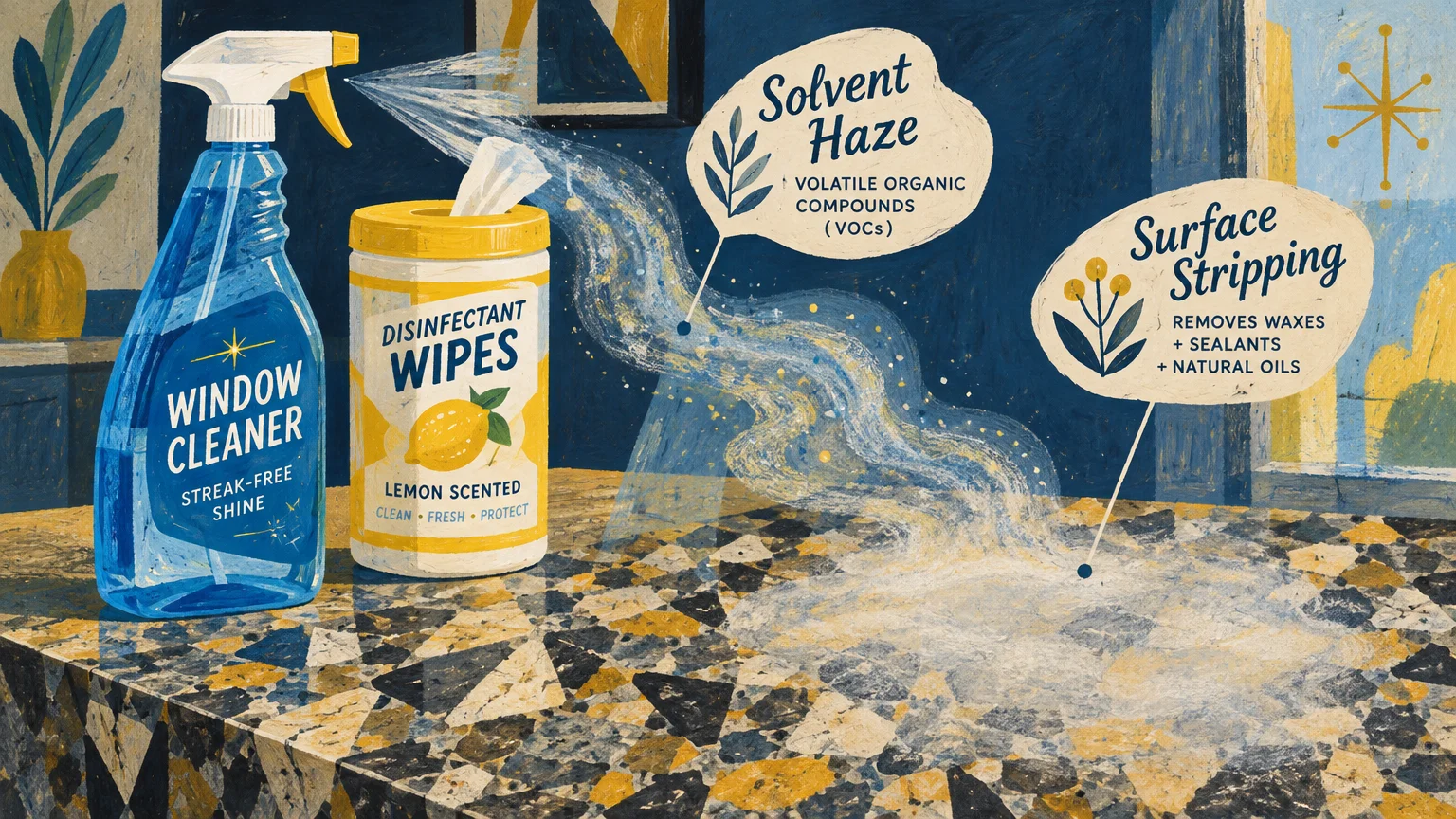
Pre-moistened antibacterial wipes provide fast convenience, but they pose significant risks during routine granite care. Many commercial wipes leave quaternary ammonium compounds and surfactant residues that bake onto the surface.
Similarly, standard blue glass cleaners rely on isopropyl alcohol blends or aggressive solvents to produce a streak-free shine on glass. While glass is non-porous and chemically inert, sealed granite reacts very differently.
These solvents thin the protective sealer over time, leaving the underlying stone unprotected against stains. Once the seal fails, moisture and airborne grease seep directly into the porous matrix.
Review the food surface hygiene guidelines published by Clemson University Cooperative Extension to select sanitizers that protect both family health and natural stone finishes.
06 Skipping the Crucial Microfiber Drying Step
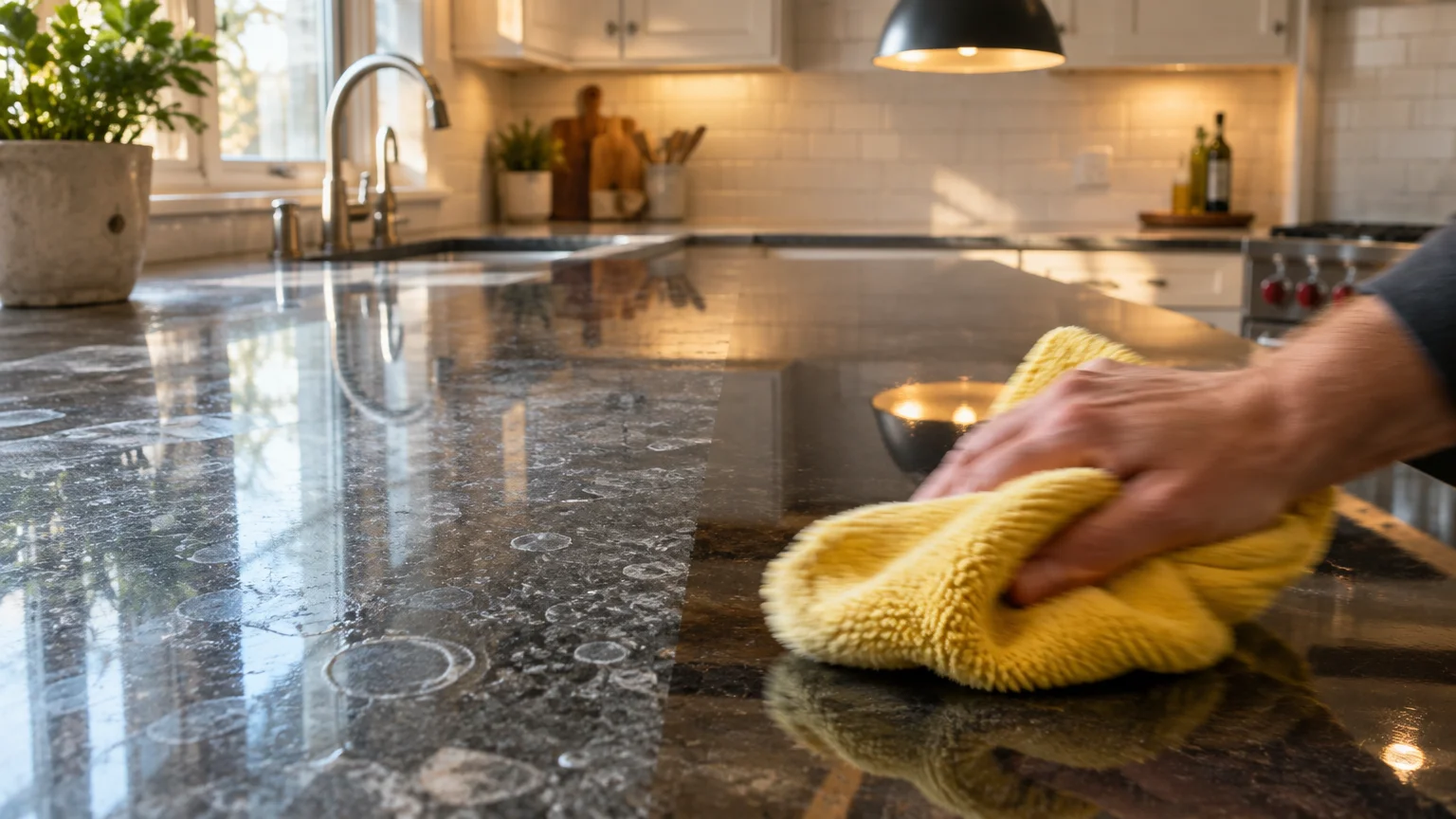
Wiping your counters and walking away while they are still wet invites mineral haze. When tap water evaporates naturally into the air, it leaves its dissolved mineral load behind.
Municipal tap water and private well supplies contain significant amounts of dissolved calcium, magnesium, and silica. As moisture evaporates, these dissolved minerals precipitate as micro-scale limescale across the polished granite.
This mineral deposit acts like frosted glass over your countertop, masking the crystalline depth of the granite. The stone feels dry, but looks dull and chalky under direct kitchen lighting.
Keep a dry, plush microfiber towel beside the sink. Taking thirty seconds to buff the granite dry immediately after wiping prevents hard water haze entirely.
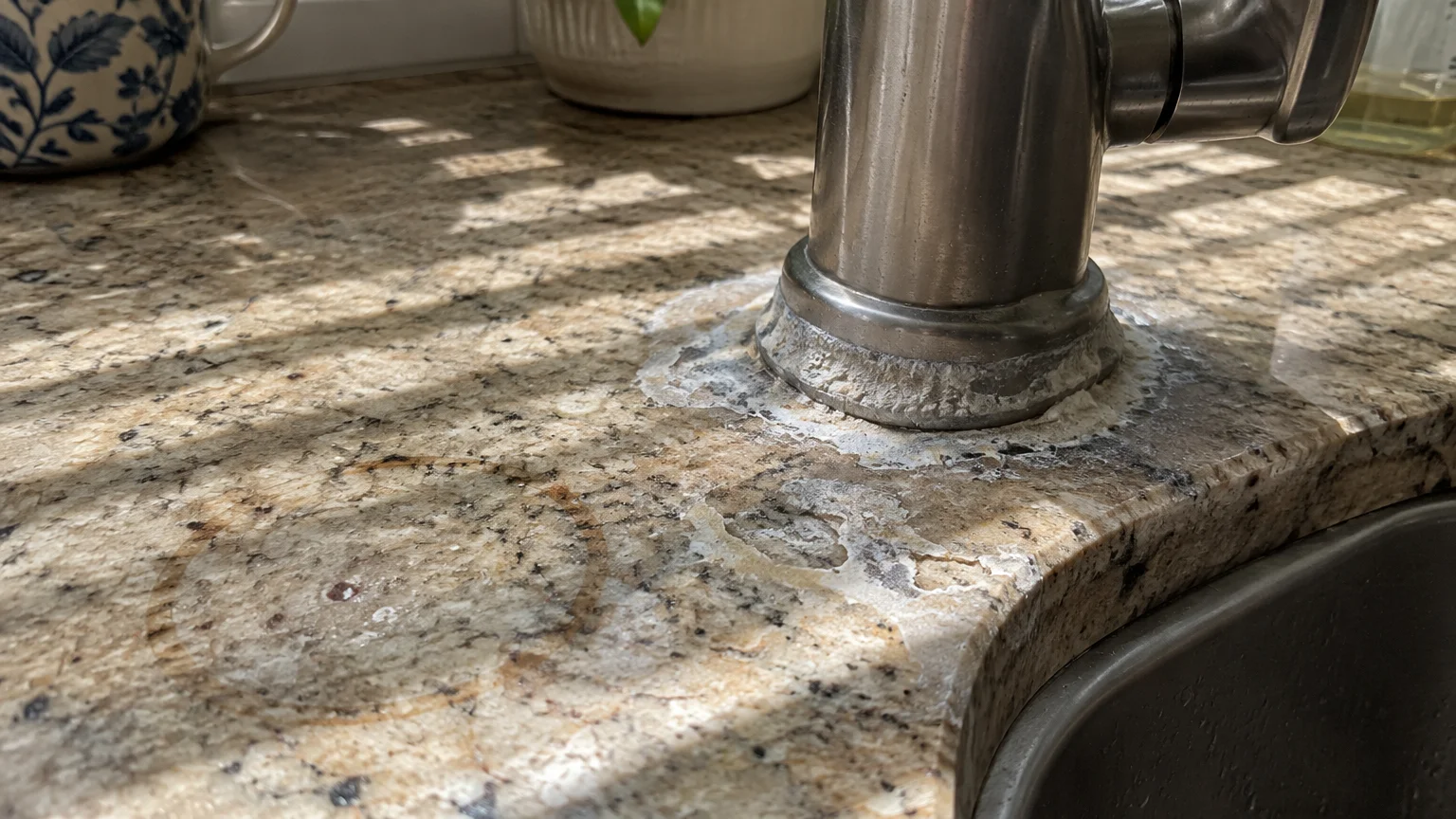
07 Letting Spills and Hard Water Stand on the Stone
Granite resists brief contact with moisture, but prolonged exposure causes stubborn discoloration. Leaving water glasses, wet sponges, or cooking oil bottles directly on the counter leads to dull rings.
Even properly sealed granite possesses slight porosity that permits capillary absorption during extended contact. Water that pools around faucets slowly dissolves topical sealants and deposits insoluble mineral crusts.
Cooking oils and dark liquids like red wine or coffee penetrate even deeper into microscopic fissures. Once trapped, these liquids oxidize and darken, creating cloudy, shadowed areas that ruin visual clarity.
Place silicone coasters under soap dispensers and wipe up cooking splatters immediately to prevent liquid intrusion into the stone pores.
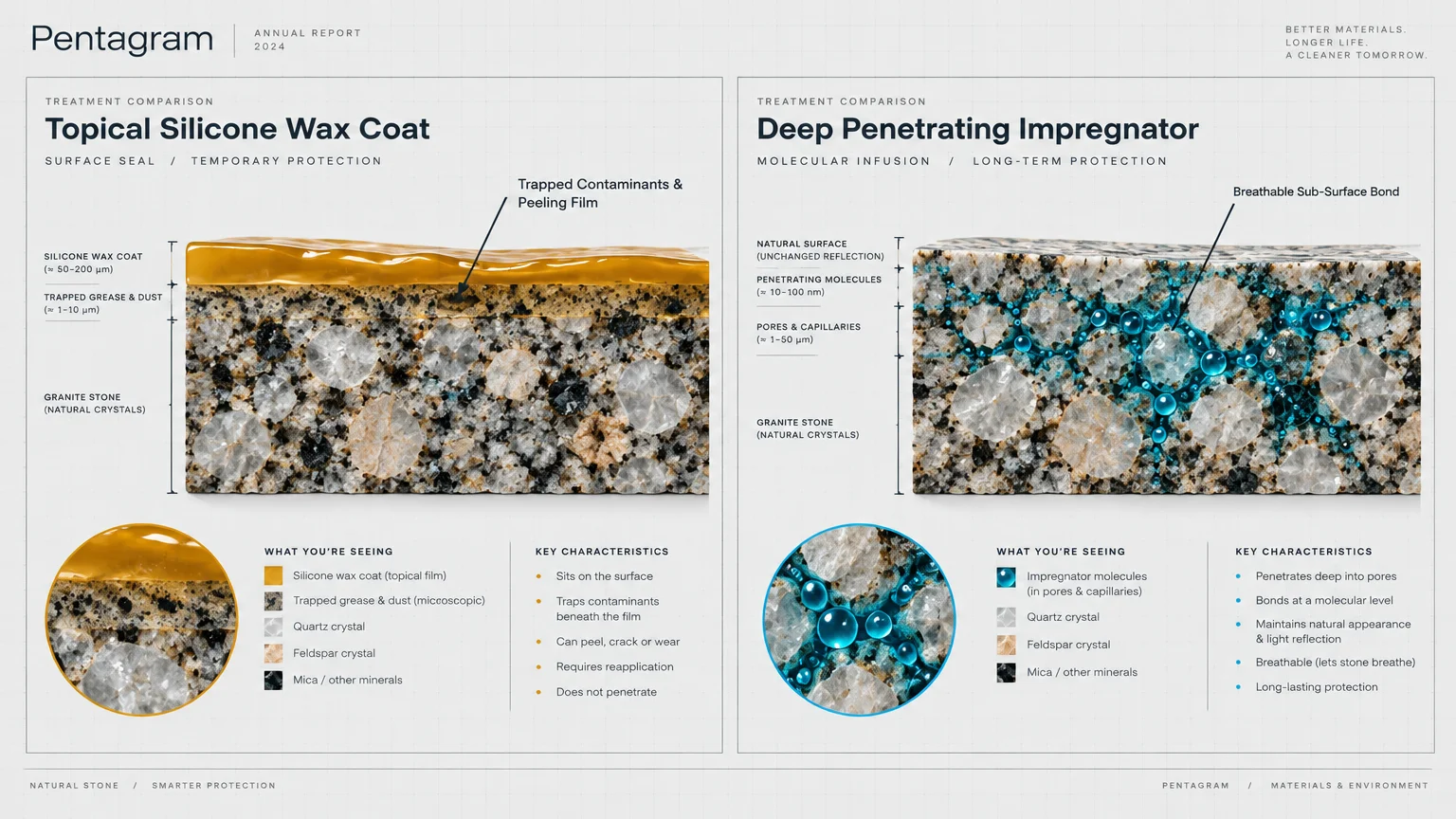
08 Applying Commercial Polishing Waxes and Silicone Sealers
When counters start looking slightly faded, many homeowners try quick fixes like furniture polish, automotive paste wax, or silicone sprays. This represents a severe misstep in ongoing granite countertop maintenance.
Topical waxes cannot penetrate the microscopic pore structure of granite. Instead, they form an artificial surface film that traps ambient dust, grease, and airborne moisture underneath.
Over time, these surface coatings oxidize, turning amber or cloudy under ambient room lighting and sunlight. Removing oxidized wax requires harsh chemical strippers that can permanently damage the authentic factory polish.
Natural stone requires penetrating, breathable impregnating sealers rather than topical waxes. Breathable sealers protect internal pores while allowing trapped moisture vapor to escape freely.
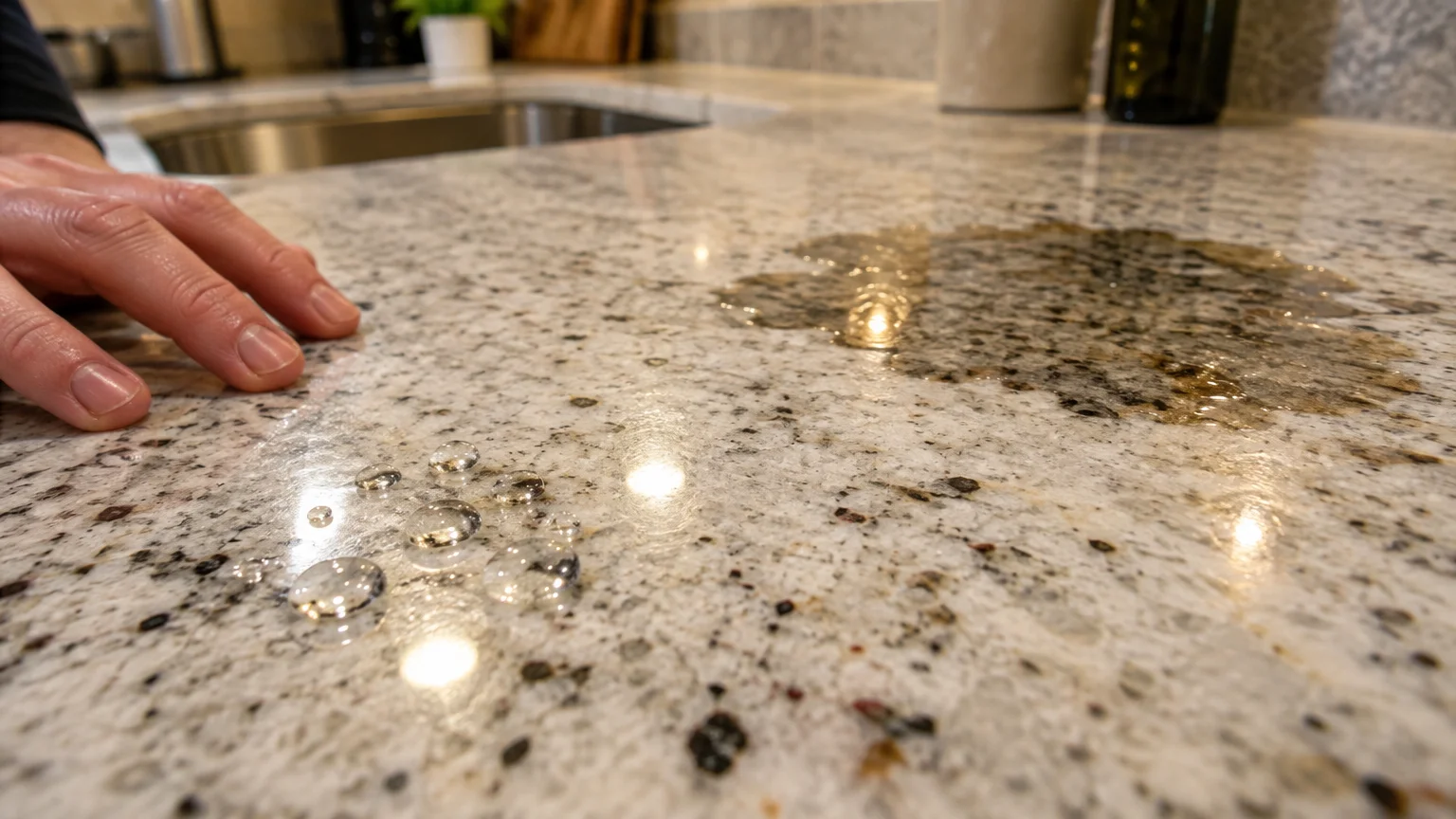
09 Neglecting Regular Sealer Integrity Checks
No impregnating sealer lasts forever, especially on heavily used food preparation surfaces. Assuming your original factory sealer will protect the stone indefinitely is a costly oversight.
Cooking friction, thermal contact from warm cookware, and daily wiping gradually wear away the protective barrier. When the barrier wears thin, everyday moisture and oils soak straight into the stone.
Unsealed granite rapidly loses its reflective pop as grease and water saturate the upper microscopic layers. Fortunately, you can check your countertop sealer status in just fifteen minutes at home.
Conducting seasonal sealer checks ensures you reapply protective impregnators before deep staining and surface hazing occur.
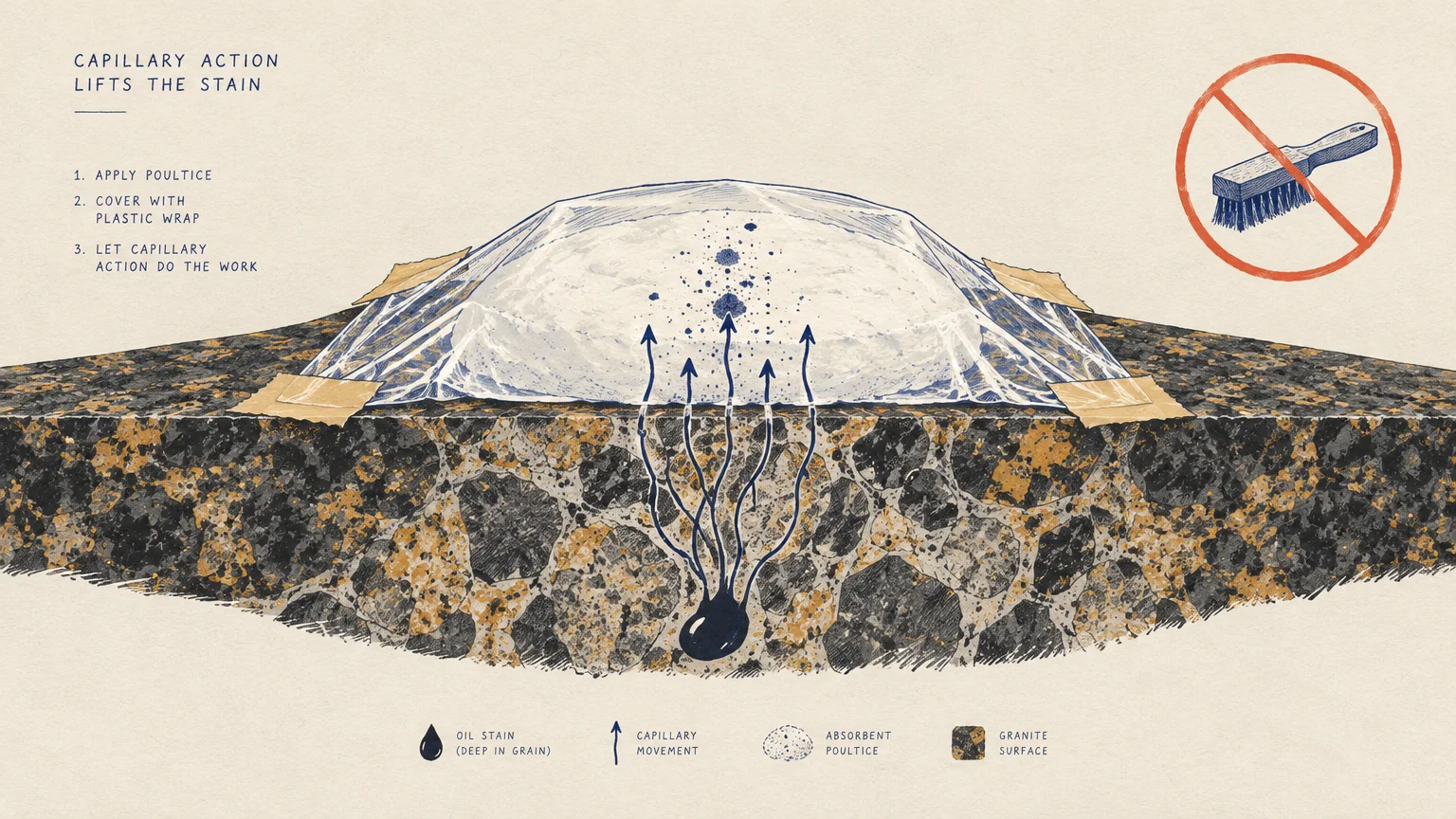
10 Scrubbing Stains Dry Instead of Using a Poultice
Discovering a dried splatter of sauce or hardened candle wax tempts many people to scrape it off with butter knives or scouring powder. Dry scraping frequently chips small mineral crystals out of the granite matrix.
When you dislodge quartz or biotite flakes, you create permanent pits that scatter light and collect grime. The surrounding area looks scratched, dull, and prematurely aged.
For stubborn dried food, soften the residue first by placing a warm, damp microfiber cloth over it for ten minutes. The moisture rehydrates the food bond so you can wipe it away effortlessly.
For set-in oil or pigment stains, apply a specialized poultice paste rather than scrubbing. Safe stain management guidelines from public health sources like the CDC emphasize gentle chemical lifting over abrasive force.
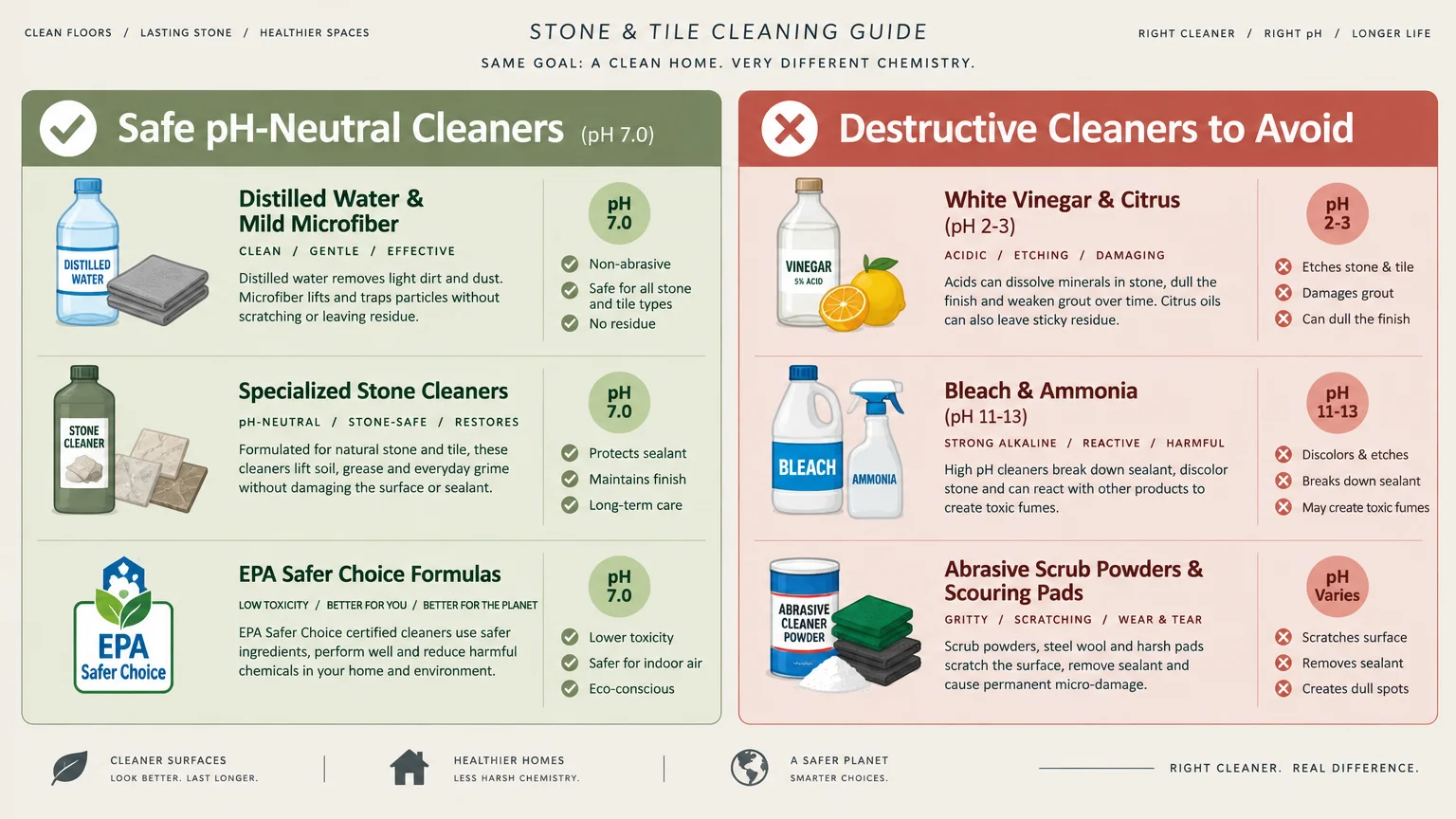
Safe vs. Harmful Cleaners for Granite Countertop Maintenance
Understanding which cleaners protect your investment helps you make smart choices in the cleaning aisle. The right chemical formulation preserves both your seal and your granite’s factory shine.
Refer to this quick reference guide to see how common household cleaners affect your stone surfaces over time.
| Cleaning Solution | pH Level | Impact on Granite | Safe Alternative |
|---|---|---|---|
| Distilled White Vinegar | 2.4 – 3.0 (Acidic) | Etches stone and strips protective sealers | pH-neutral stone wash or warm water |
| Chlorine Bleach | 11.0 – 13.0 (Caustic) | Degrades sealant bonds and causes micro-pitting | 70% isopropyl alcohol solution |
| Standard Dish Soap | 7.0 – 8.5 (Mild) | Leaves stubborn, light-blocking surfactant haze | Specialized rinse-free stone cleaner |
| Ammonia / Glass Cleaners | 11.0 – 12.0 (Caustic) | Dissolves sealer matrix and hazes finish | Distilled water with microfiber cloth |
| Baking Soda Paste (Poultice) | 8.0 – 9.0 (Mild base) | Safe for drawing out stains when used wet | Wet poultice lifted without dry scrubbing |
| Dedicated Stone Cleaners | 7.0 (Neutral) | Cleans grime without degrading seals or gloss | Use daily for optimal maintenance |
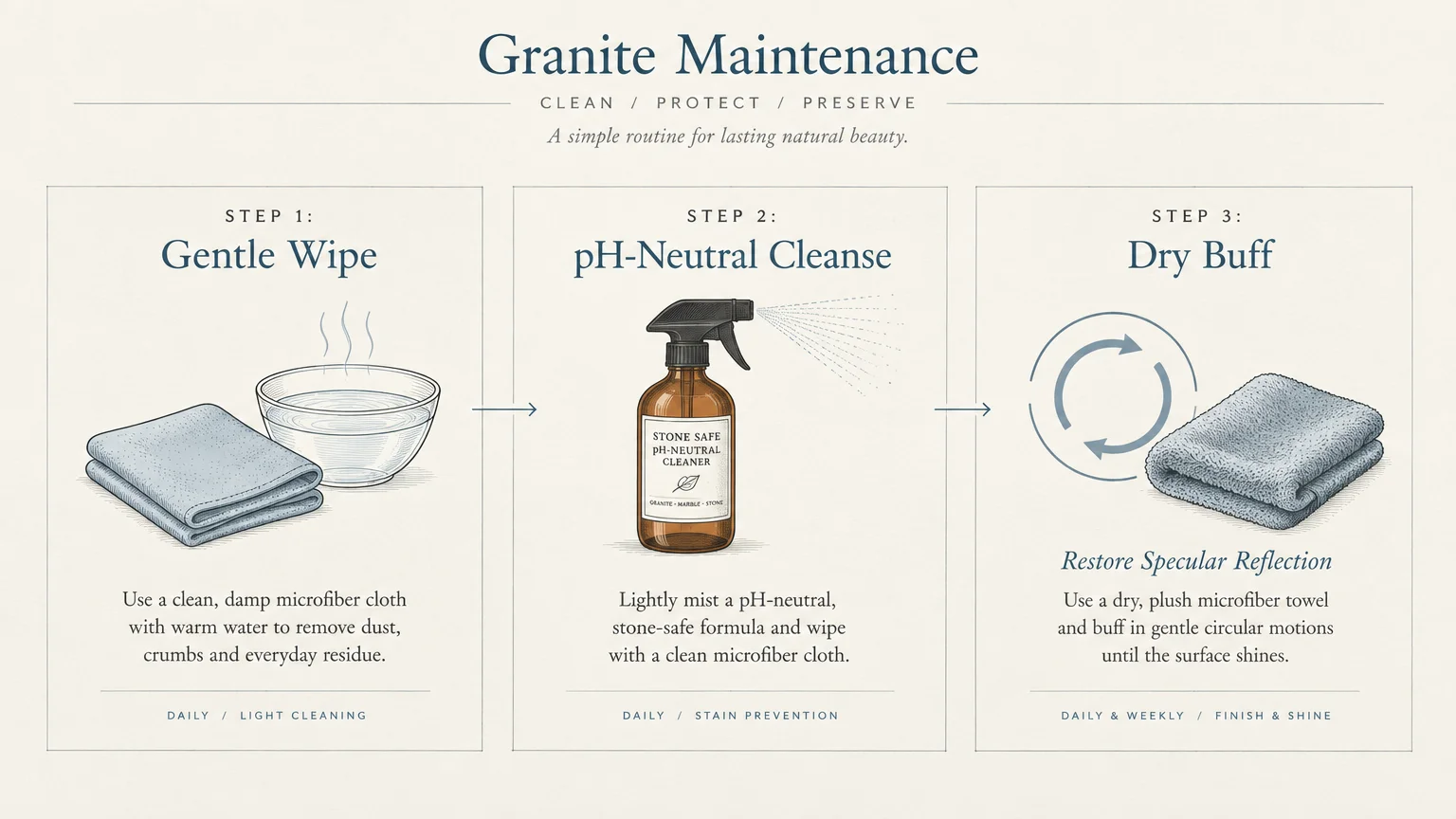
How to Clean Granite: A Safe Daily and Weekly Routine
Establishing a dependable routine prevents grime accumulation and keeps your stone gleaming without unnecessary elbow grease. Follow these straightforward daily and weekly steps for lasting results.
Daily Maintenance Steps
- Clear and dry: Brush away loose crumbs with a dry microfiber cloth before introducing any liquid.
- Mist lightly: Spray a pH-neutral granite cleaner or a 50/50 mix of distilled water and 70% isopropyl alcohol across the surface.
- Wipe smoothly: Wipe down the counter using a clean, damp microfiber cloth in broad S-shaped strokes.
- Buff dry: Follow immediately with a dry, plush microfiber towel to eliminate moisture and prevent mineral deposits.
Weekly Deep Cleaning and Inspection
- Degrease cooktop perimeters: Apply dedicated stone cleaner around high-grease cooking zones and let dwell for two minutes.
- Clear faucet collars: Use a soft-bristled toothbrush dampened with neutral stone cleaner to gently lift limescale around faucet bases.
- Inspect high-use zones: Run your bare hand across the slab to feel for rough spots, sticky soap film, or moisture retention.
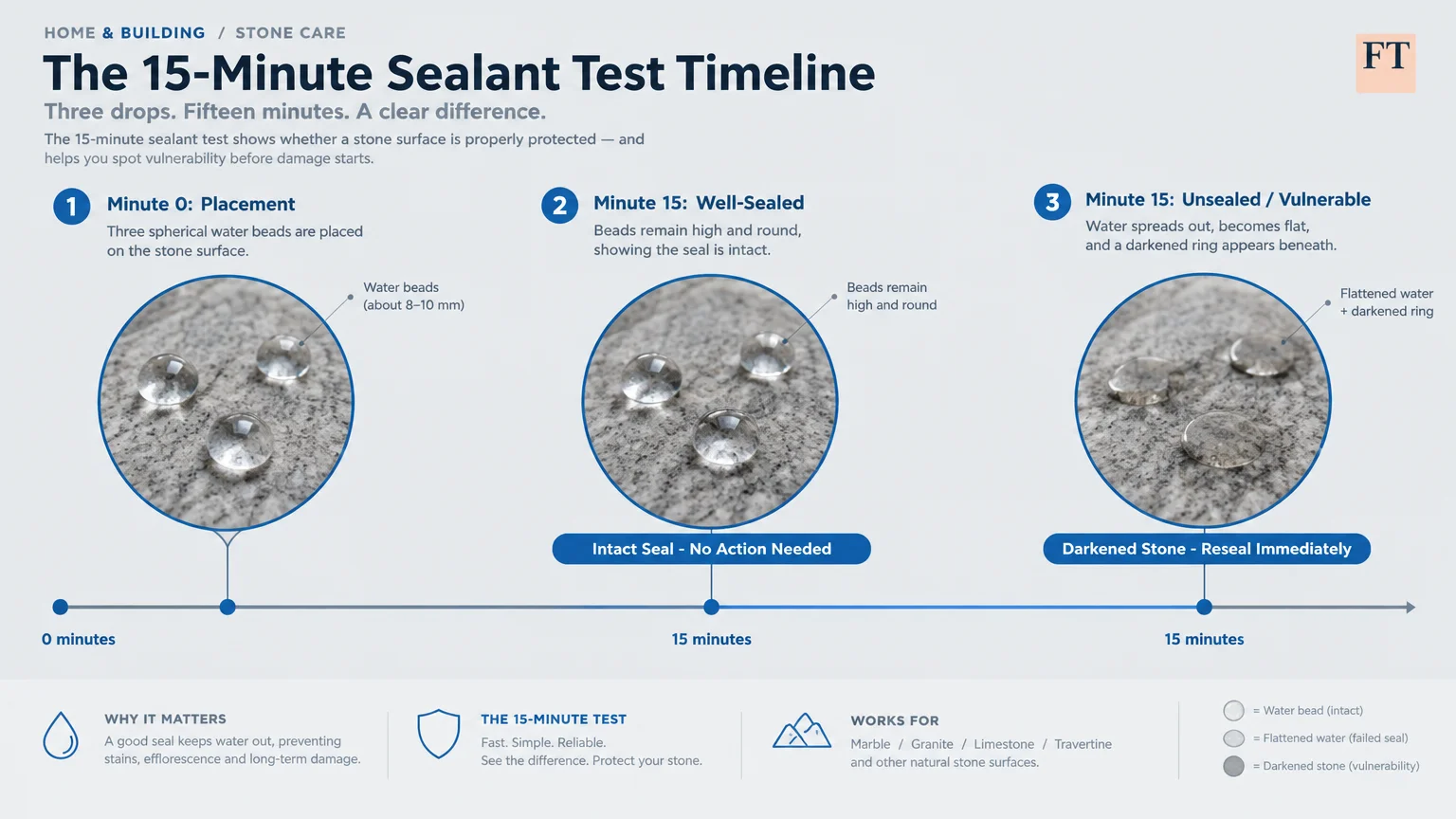
The 15-Minute Water Drop Test for Sealant Integrity
You do not need specialized equipment to determine whether your granite countertops require resealing. The water drop test provides immediate, reliable feedback on your stone’s moisture resistance.
- Step 1: Pour about three tablespoons of clean water directly onto high-traffic areas of your countertop.
- Step 2: Note the exact time and leave the puddle undisturbed for fifteen minutes.
- Step 3: Wipe the water puddle completely dry with a clean microfiber cloth.
- Step 4: Inspect the stone beneath the test area under bright light.
- Result A (Well-Sealed): The stone remains light and shows no color change; the sealer is intact and functioning properly.
- Result B (Needs Resealing): The granite beneath the water droplet appears noticeably dark or damp; the sealer has worn thin and requires reapplication.
Perform this simple evaluation every spring and autumn to protect your counters before invisible porosity leads to permanent discoloration.
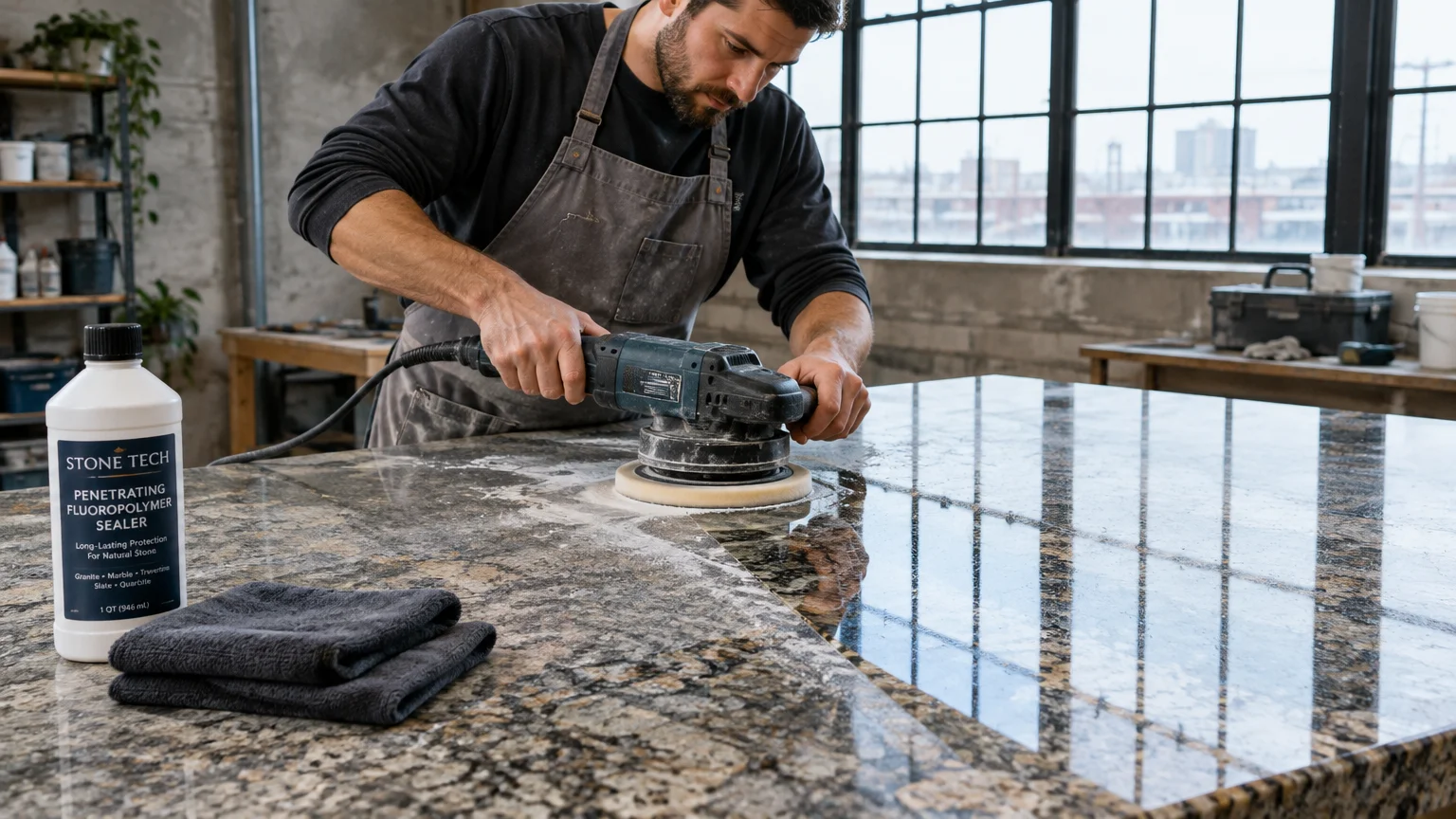
How to Restore Luster to Dull Granite Countertops
If your granite already looks dull from years of dish soap buildup, you rarely need expensive professional resurfacing. Most surface cloudiness stems from soap scum rather than deep mechanical scratches.
You can strip away old soap residue using a gentle deep-cleansing protocol that preserves the underlying stone seal.
- Prepare the stripping solution: Mix equal parts distilled water and 70% isopropyl alcohol in a clean spray bottle.
- Spray generously: Coat the cloudy section evenly and allow the alcohol to break down the surface surfactants for three minutes.
- Agitate gently: Work the surface with a soft microfiber towel in tight circular motions to lift the dissolved soap film.
- Rinse thoroughly: Wipe the entire area with a fresh microfiber cloth saturated with warm distilled water.
- Buff dry: Use a dry waffle-weave microfiber towel to buff the surface until light reflects evenly across the granite.
If the surface remains dull after removing soap film, the stone may suffer from acid etching or fine scratches. Light etching often responds well to stone polishing powders formulated specifically for natural granite.
Your Next Step for Reviving Dull Granite
Walk over to your kitchen counter today and perform the quick fifteen-minute water drop test. This single test will instantly tell you whether your stone needs a fresh impregnating sealer or simply a residue-stripping polish.
Once you verify the seal, replace abrasive sponges and acidic pantry sprays with a dedicated pH-neutral stone cleaner and plush microfiber cloths.