
Cooking aromas can quickly turn stale, yet artificial air fresheners only mask food odors with synthetic chemicals. Adopting consistent kitchen cleaning habits removes unwanted scents directly at their source.
These ten practical habits will make your kitchen smell fresh naturally every day. You will eliminate trapped moisture, stubborn grease films, and hidden bacterial growth without harsh chemicals.
Simple pantry staples like baking soda, lemon, and distilled white vinegar do the heavy lifting for you. Let us explore the daily steps that keep your home clean, fresh, and inviting.
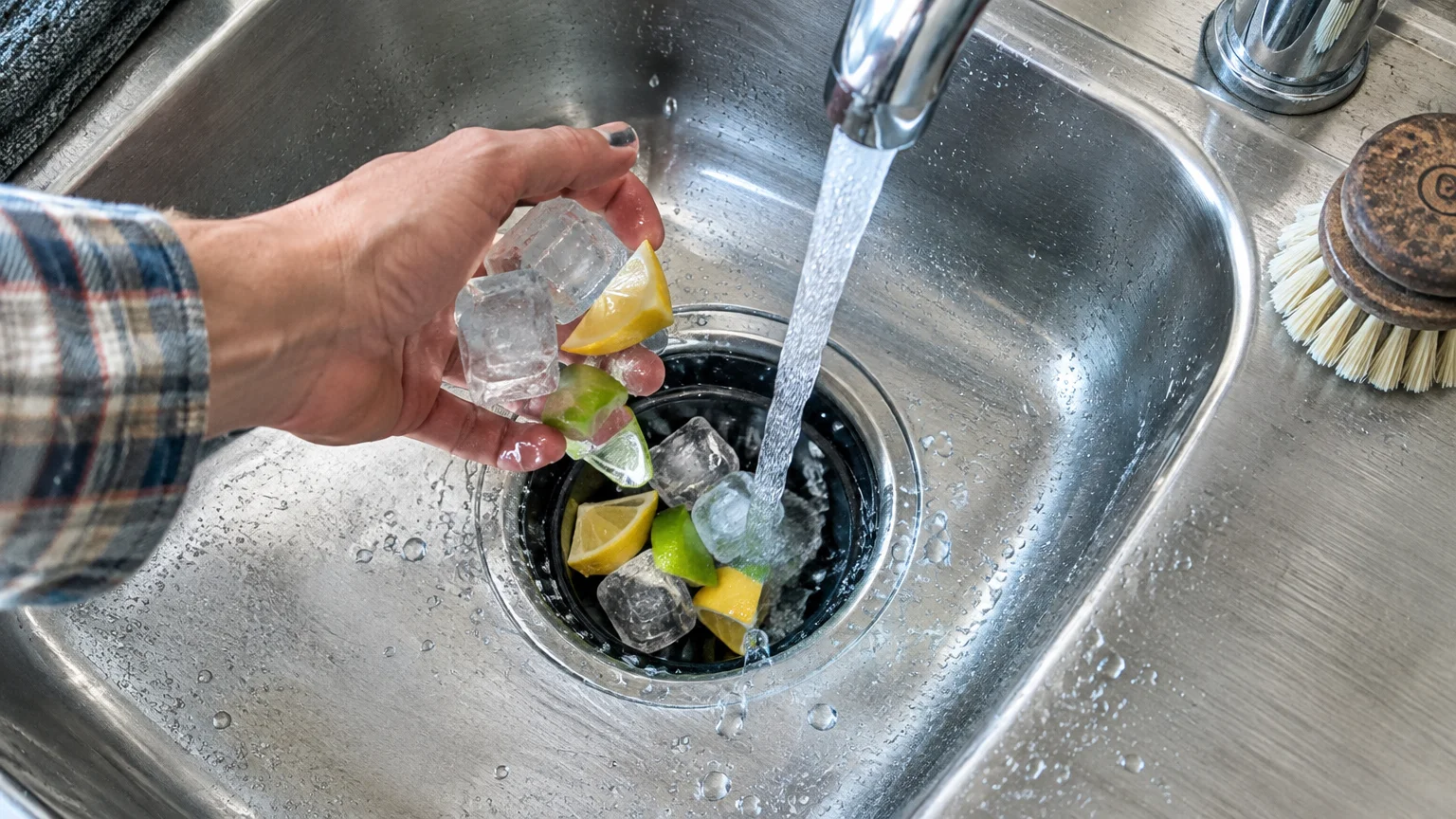
01 Flush the Garbage Disposal with Citrus and Ice
Food scraps trapped under disposal baffles decay quickly and push sour odors into your sink. Regular flushing stops organic waste from adhering to the grind chamber.
Drop a handful of ice cubes and fresh citrus peels into the drain basin. The ice dislodges stubborn grease from the impellers, while natural citrus oils release a crisp aroma.
Run cold tap water and operate the unit for thirty seconds. Cold water solidifies fats so the blades can chop them apart without smearing grease along the pipe walls.
You can also sanitize the drain weekly with baking soda and warm distilled white vinegar. Let the foaming mixture rest for ten minutes before rinsing it with steaming hot tap water.
- Turn off the disposal and inspect the black rubber splash guard for food slime.
- Scrub the underside of the rubber flaps using an old toothbrush dipped in soapy water.
- Add one cup of ice cubes and several quartered lemon or lime wedges.
- Turn on cold water, activate the disposal, and run it until the grinding sound subsides.

02 Simmer Stovetop Botanicals After Pungent Meals
Strong aromas from fish, onions, or curry can saturate kitchen air long after mealtime ends. A simmering botanical pot serves as an effective natural kitchen deodorizer that neutralizes heavy airborne grease.
Fill a small saucepan three-quarters full with water and bring it to a gentle simmer. Add lemon slices, rosemary sprigs, and a cinnamon stick to create a subtle steam.
The rising moisture binds with airborne scent molecules and carries them out of suspension. Meanwhile, natural botanical oils perfume your cooking space without relying on artificial aerosols.
Check the water level every thirty minutes so the botanical ingredients do not scorch. Always turn off the stove burner before leaving your kitchen unattended.
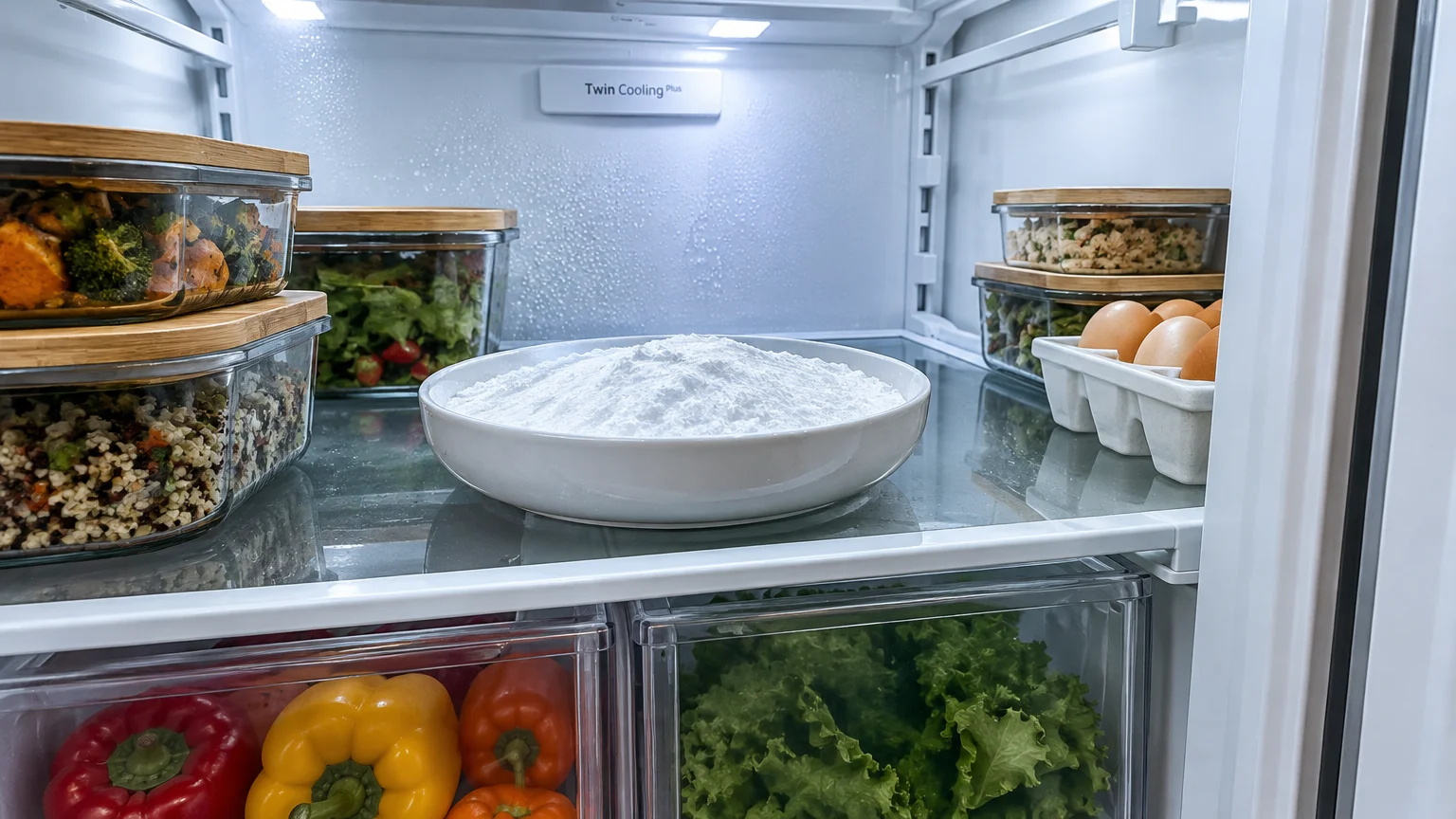
03 Deodorize the Refrigerator with an Open Baking Soda Dish
Closed refrigerator compartments trap escaping humidity and pungent food compounds. Over time, those stale aromas migrate into delicate foods like milk, cheese, and uncovered produce.
Place a wide, shallow dish filled with dry baking soda onto a central shelf. A shallow dish exposes far more surface area than a standard cardboard box with a small opening.
Baking soda chemically neutralizes both acidic and alkaline volatile organic compounds. Swap out the powder every thirty to sixty days to keep absorption power high.
According to the USDA Food Safety and Inspection Service, maintaining your refrigerator below 40°F slows bacterial activity and stops spoilage odors before they begin.
Wipe down door gaskets and wire shelves every month using a microfiber cloth dampened with baking soda water. This quick wash prevents sticky spills from decaying in dark shelf corners.
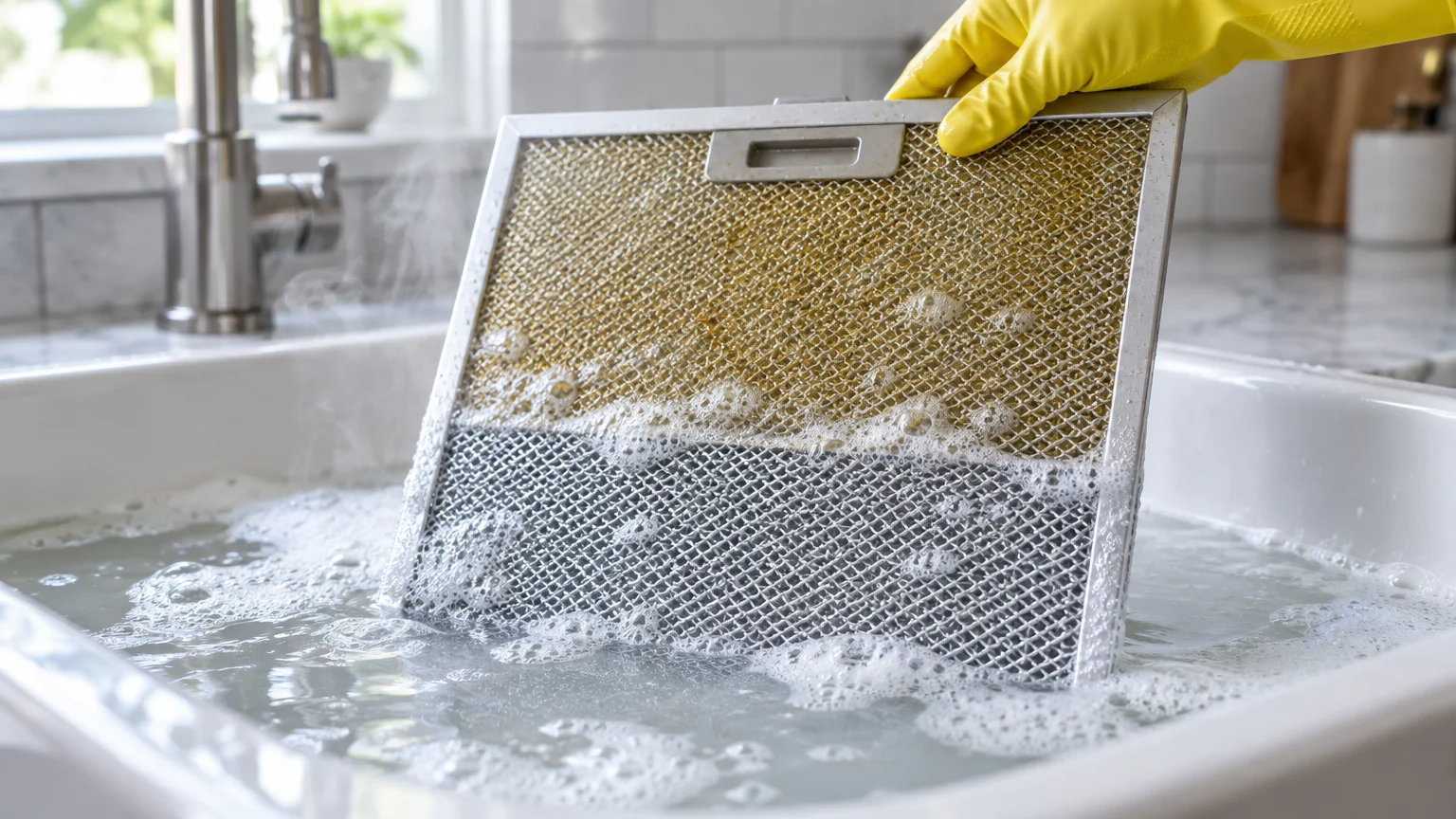
04 Degrease Range Hood Mesh Filters Monthly
Range hood fans capture vaporized fats before they spread into your home. Over several weeks, that cooking oil solidifies inside the metal mesh and turns stale.
Saturated filters emit a heavy, rancid grease smell whenever your cooktop warms up. Soaking the mesh once each month eliminates this hidden odor source and restores proper airflow.
Fill your sink basin with boiling water, half a cup of baking soda, and grease-cutting dish soap. Submerge the metal filters and let them soak for fifteen minutes.
Scrub the mesh gently with a soft nylon brush, rinse thoroughly under running water, and let it dry. Clean filters capture new cooking fumes much more efficiently.
- Slide or unlatch the metal filters from the underside of your range hood.
- Dissolve a generous squirt of dish soap and a half cup of baking soda in hot water.
- Soak the filters completely, flipping them halfway through if your sink is compact.
- Rinse with warm tap water and allow the filters to air-dry completely on a towel.
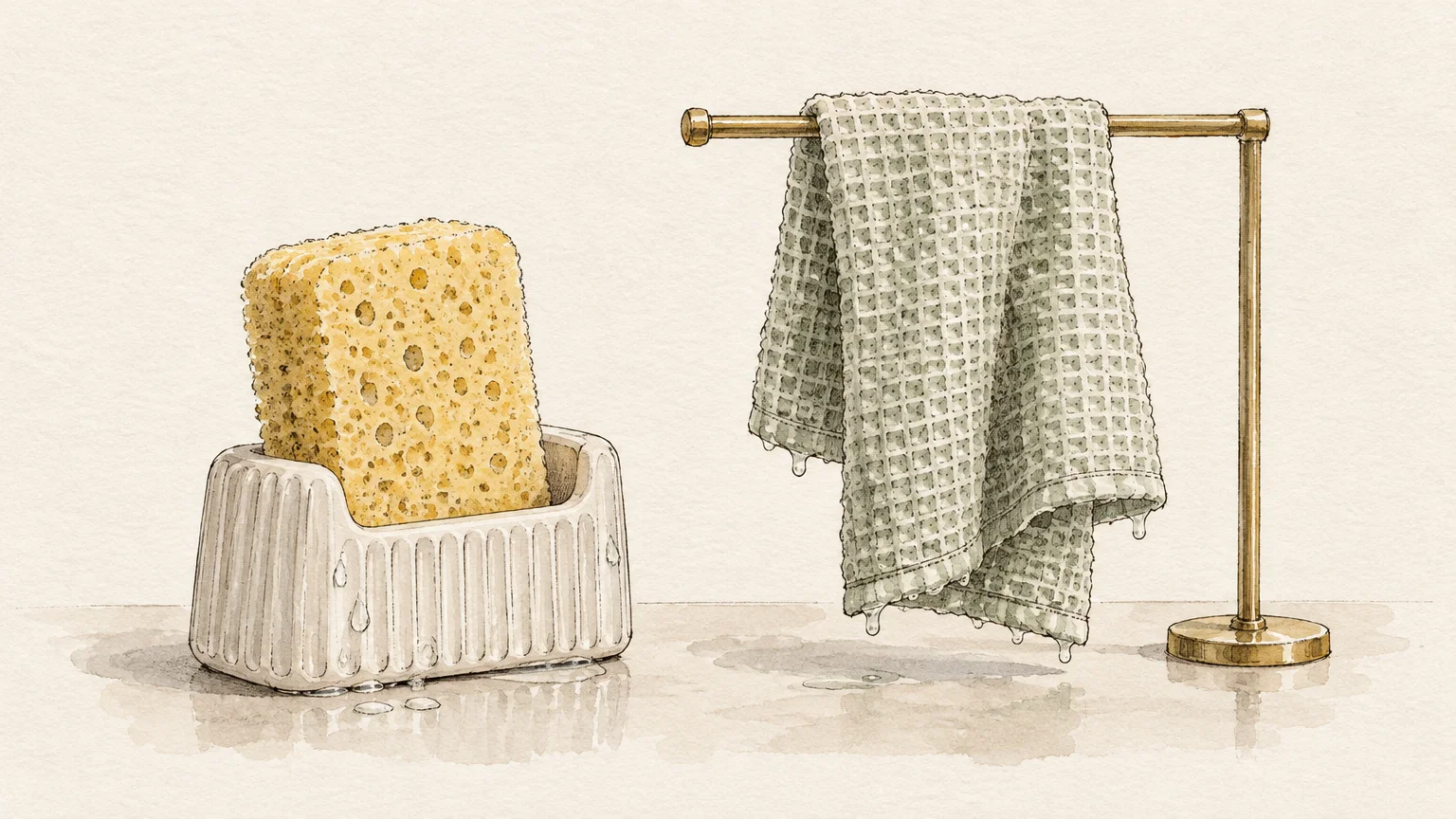
05 Sanitize Dish Sponges and Replace Cloths Daily
Damp cellulose sponges provide an ideal environment for rapid bacterial reproduction. Wiping surfaces with a sour sponge spreads invisible microbes and foul odors across your countertops.
Research shared by Michigan State University Extension demonstrates that microwaving a wet sponge or running it through a dishwasher cycle destroys harmful pathogens.
Squeeze excess water from your sponge after each use and set it upright in a ventilated holder. Allowing airflow between uses prevents moisture-loving bacteria from creating musty scents.
Retire your dishcloths at the end of every evening and grab a clean one each morning. Hanging damp towels to dry inside laundry baskets prevents mildew odors throughout your home.
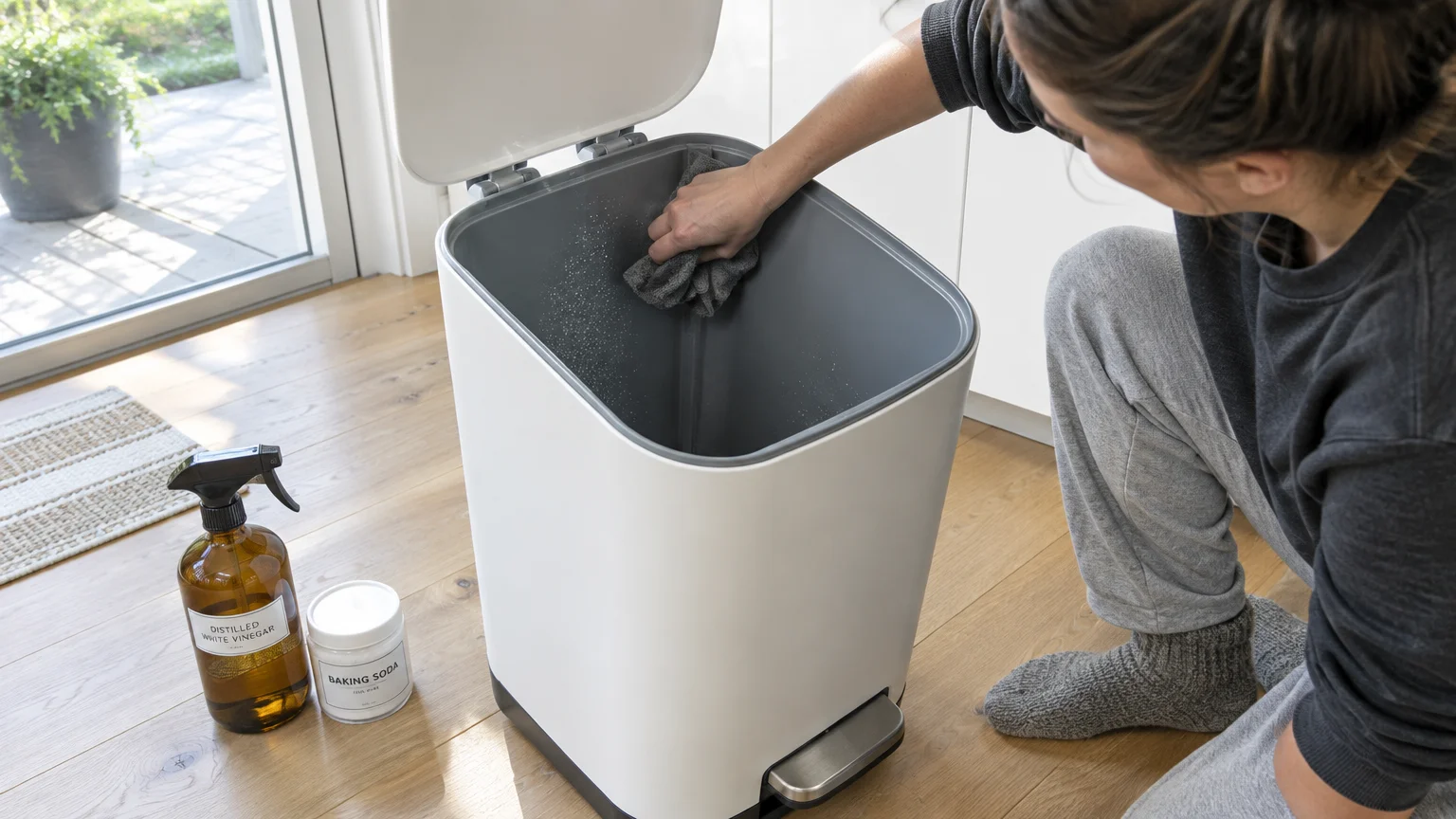
06 Wipe Down Trash Can Interiors with Distilled Vinegar
Plastic trash cans absorb organic fluids through micro-tears in trash liners. That accumulated moisture creates stubborn bacterial slime that smells foul even when the can is empty.
Spray the interior walls and base of your bin weekly with a fifty-fifty blend of distilled white vinegar and warm water. Vinegar neutralizes alkaline smells and dissolves sticky grime.
Dry the interior thoroughly with a clean rag before putting in a replacement bag. Trapping residual moisture beneath plastic creates a humid breeding ground for sour odors.
Dust a light layer of baking soda directly across the dry bottom of the bin. This sacrificial layer absorbs minor spills and traps rogue smells between weekly cleanings.

07 Empty the Sink Strainer and Scrub the Basin Every Evening
Food particles sitting in your sink drain basket will decompose overnight. As indoor temperatures rise, these rotting scraps release sour gases into your kitchen air.
Dump the strainer into your compost or trash bin as part of your evening routine. Rinse the basket under hot water to dislodge clinging fibers and vegetable peelings.
Coat your wet sink basin with baking soda and scrub it with a damp sponge. The mild abrasive lifts sticky residue without scratching stainless steel, porcelain, or quartz composite basins.
Rinse the basin clean with warm water and wipe down the faucet handles. A dry, debris-free sink ensures you wake up to a fresh, odorless kitchen every single morning.
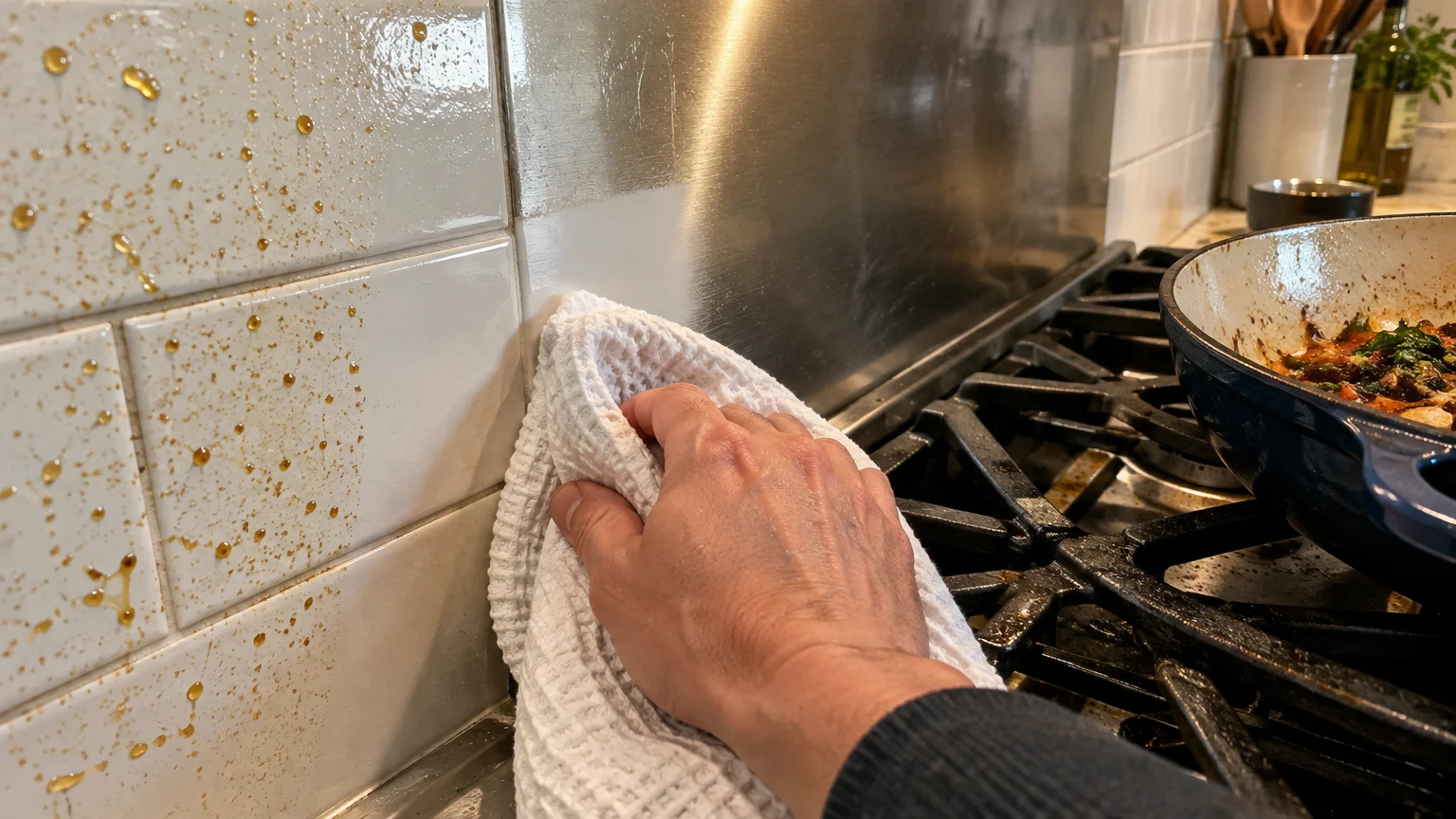
08 Wipe Splattered Cooking Oil Off Surfaces Immediately
Sautéing and frying cast fine mists of grease onto backsplashes, cooktops, and adjacent countertops. When exposed to oxygen, these exposed fats turn rancid and release a stale oil smell.
Wipe your cooktop while it remains slightly warm using a damp microfiber cloth and gentle dish soap. Fresh grease lifts effortlessly before it hardens into an adhesive film.
Mist nearby tiles and backsplashes with a mild vinegar spray to break surface grease. Avoid using vinegar on unsealed granite or natural marble to protect the stone finish.
Taking ninety seconds to wipe cooking surfaces prevents grease buildup from baking into hard enamel during future cooking sessions. Your kitchen maintains a crisp, neutral scent without scrubbing marathons.
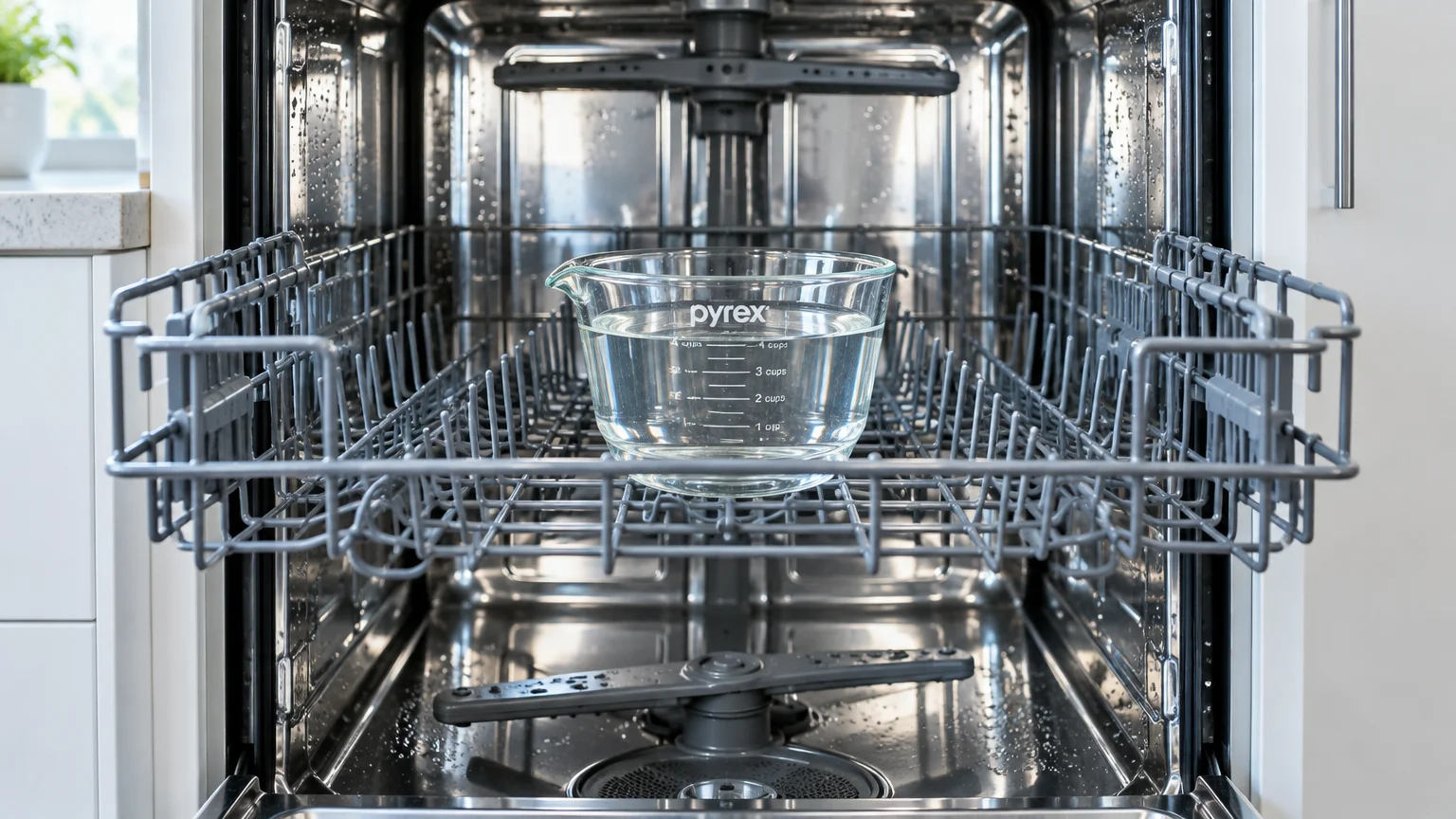
09 Run a Hot Dishwasher Cycle with a Vinegar Rinse
Dishwashers accumulate food scraps, grease film, and mineral scale inside their lower filter basins. Stagnant moisture and decomposing food combine into a sour smell that escapes whenever you open the door.
Remove the lower filter screen monthly and wash it under warm tap water using a soft brush. Clearing trapped solids keeps wash water clean and prevents foul odors from circulating.
Set an upright, dishwasher-safe bowl filled with one cup of distilled white vinegar on the top rack. Run a heavy-duty cycle using the highest heat setting without adding detergent.
The acid breaks down soap scum and dissolves trapped grease deposits inside the spray arms. Prop the appliance door slightly open afterward to allow humid air to vent freely.

10 Establish Cross-Ventilation While Preparing Food
The Environmental Protection Agency reports that indoor air pollutants frequently exceed outdoor levels without adequate air exchange. Cooking fumes release microscopic particles that linger on drapery and soft furnishings.
Fragrance compounds and aerosolized cooking fats can also contribute to higher indoor levels of volatile organic compounds. Circulating fresh air clears these suspended particles before they attach to interior surfaces.
Power on your range hood fan several minutes prior to cooking and keep it running for ten minutes after you finish. This creates an exhaust path that pulls greasy vapor out.
Open a window in an adjacent room to encourage continuous cross-ventilation. Moving outdoor air across your kitchen dilutes heavy aromas naturally without requiring chemical sprays.
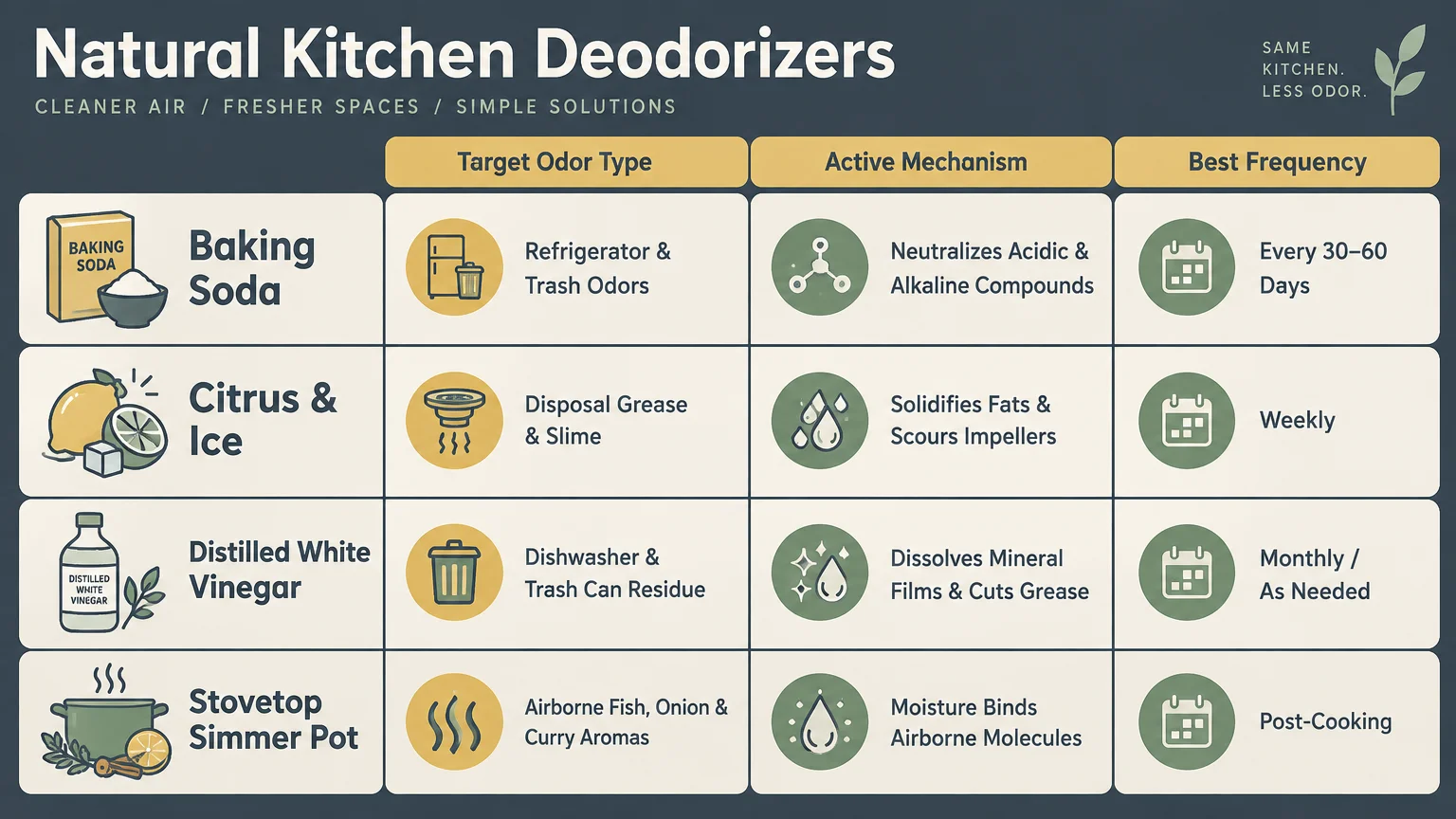
Natural Deodorizers Compared by Kitchen Odor Target
Different kitchen odors require distinct natural agents to neutralize their specific chemical structures. Matching the right pantry staple to the odor source produces fast, reliable results.
The reference table below illustrates how everyday household ingredients solve common odor challenges across your cooking space.
| Natural Deodorizer | Primary Kitchen Target | Deodorizing Mechanism | Recommended Frequency |
|---|---|---|---|
| Baking Soda (Sodium Bicarbonate) | Refrigerators, sink basins, trash cans | Neutralizes acidic and alkaline odor molecules via chemical buffering | Replace bowls every 30 to 60 days; scrub sinks daily |
| Distilled White Vinegar | Dishwashers, trash cans, tile backsplashes | Acetic acid dissolves alkaline residues, grease, and mineral scale | Weekly spray wipe-downs; monthly dishwasher rinse |
| Citrus Peels (Lemon, Orange, Lime) | Garbage disposals, stovetop simmer pots | D-limonene solvent cuts through fat while releasing natural botanical oils | Twice weekly or after cooking fish and garlic |
| Whole Spices (Cinnamon, Cloves) | Airborne cooking vapors, stale kitchen air | Aromatic essential oils mask and disperse dense airborne food odors | Simmer on stovetop as needed after heavy meal prep |
| Ice Cubes | Garbage disposal impellers and grind ring | Mechanical friction knocks congealed grease off rotating disposal blades | Weekly or whenever drainage slows down |

Simple Simmer Pot Recipes for Clean Kitchen Fragrance
Simmer pots offer a safe, chemical-free method to freshen your kitchen air after frying or baking. You can easily assemble custom blends using leftover fruit trimmings and whole spices.
Try these three reliable simmer pot recipes whenever you want your kitchen to smell clean and inviting.
- Bright Citrus and Herb Blend: Combine one sliced lemon, two sprigs of fresh rosemary, and one teaspoon of pure vanilla extract in three cups of water.
- Warm Spiced Kitchen Neutralizer: Simmer apple peelings, two whole cinnamon sticks, four cloves, and one thin slice of fresh ginger root.
- Crisp Mint and Eucalyptus Cleanser: Blend half a sliced grapefruit, a handful of fresh spearmint leaves, and three drops of pure eucalyptus oil.
Simmering botanicals gently humidifies dry indoor air while neutralizing unwanted scents. Keep your stove set on the lowest heat setting to prevent ingredients from scorching.
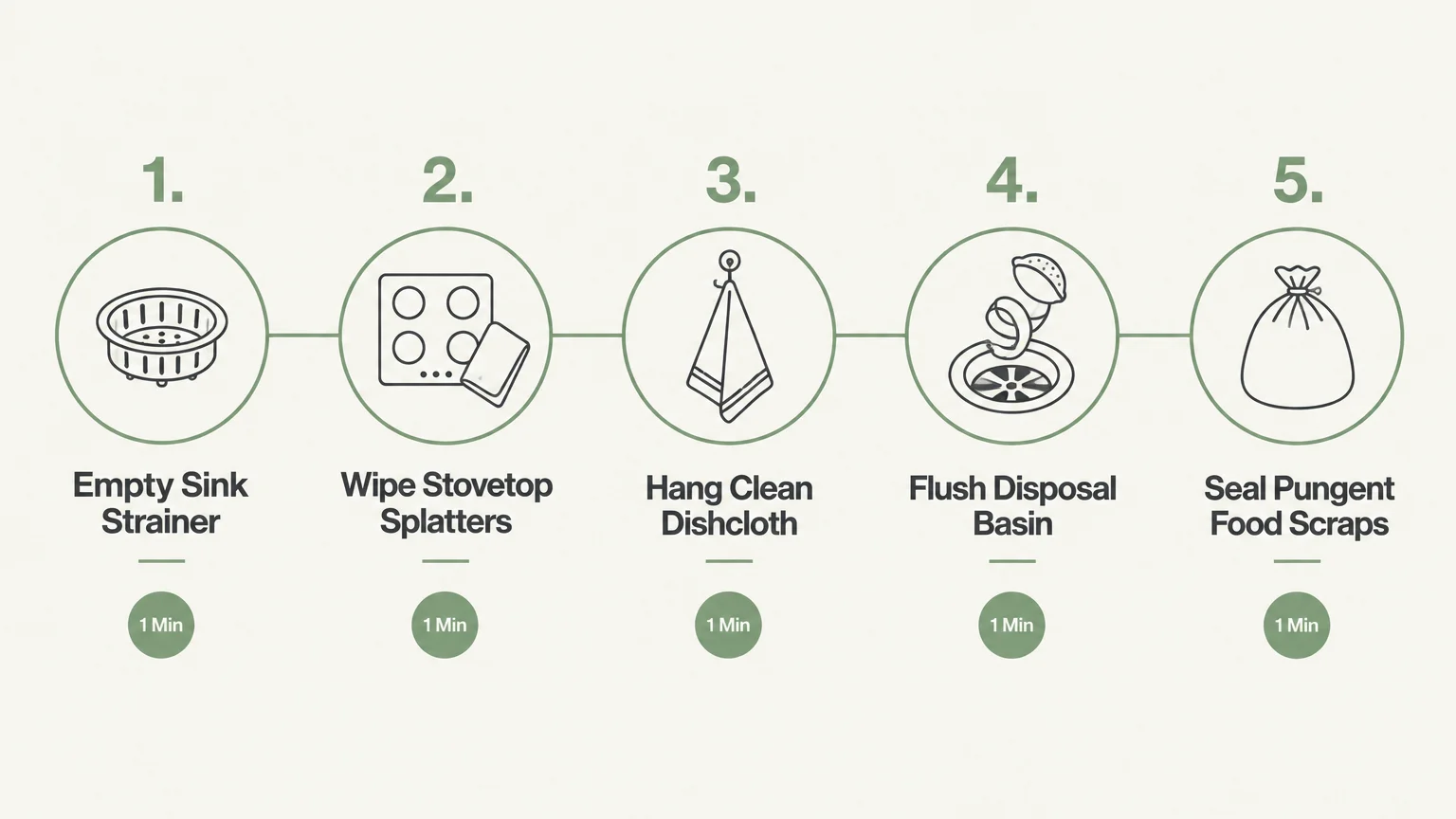
The 5-Minute Evening Kitchen Odor Reset Checklist
Committing to a brief routine before bed stops odors from establishing a foothold overnight. Consistent micro-habits save you from tackling massive cleaning chores on weekends.
Run through this quick checklist each evening after dinner dishes are finished.
- Scrape plate scraps into the compost or trash bin and empty the sink strainer basket.
- Wipe the stovetop and backsplash with a warm, damp microfiber cloth to remove fresh oil splatters.
- Squeeze rinse water from your kitchen sponge and rest it upright in a drying caddy.
- Toss damp dish towels into the laundry hamper and drape a fresh towel over the oven handle.
- Tie off trash bags containing meat or fish scraps and take them straight out to exterior bins.
- Run cold water through the disposal with a citrus wedge for fifteen seconds.
Completing these straightforward steps takes less than five minutes of focused effort. You will protect your home from stale odors while waking up to an orderly cooking space.

Maintain Fresh Kitchen Air with Daily Micro-Habits
A truly fresh kitchen relies on steady prevention rather than heavy artificial perfumes. Addressing moisture, food scraps, and grease films at the source keeps foul odors from forming.
Pick two simple cleaning habits from this guide and integrate them into your evening routine tonight. Small, repeated actions will keep your kitchen smelling clean, welcoming, and naturally fresh.