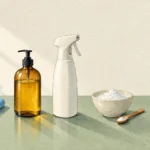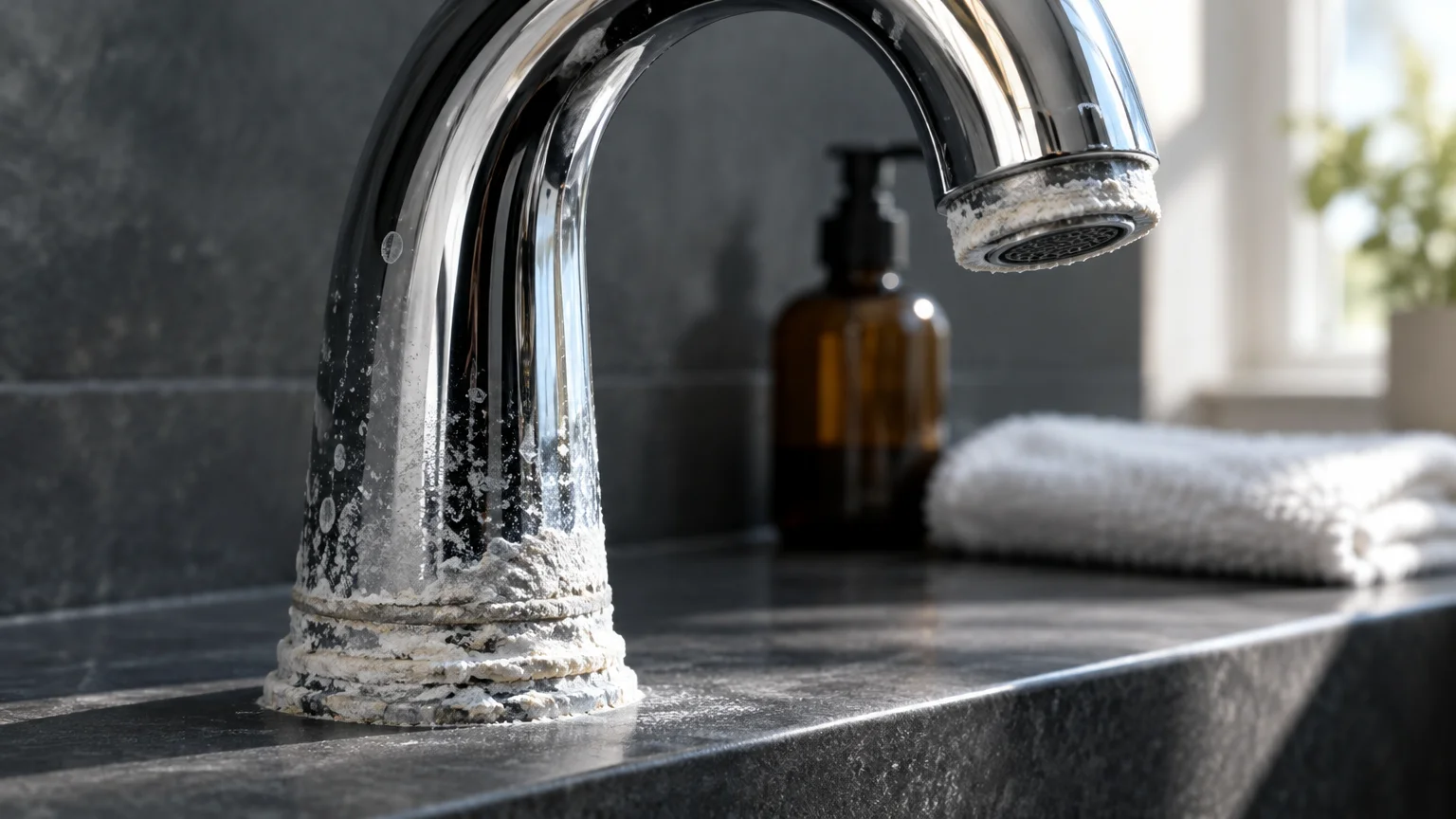
Mineral crust and cloudy glass make a clean bathroom feel dingy no matter how often you scrub. You can dissolve these stubborn deposits without harsh chemicals or heavy physical strain by targeting the alkaline minerals directly.
Everyday household items—like warm distilled white vinegar and gentle citric acid—break the chemical bond between calcium carbonate and your fixtures. This approach restores your bathroom’s sparkle while saving you hours of exhausting physical effort.
The following ten proven techniques will help you conquer hard water stains on shower glass, faucets, tile, and toilets. Choose the method that fits your bathroom surfaces and watch limescale vanish.
Why Hard Water Stains Form on Bathroom Surfaces
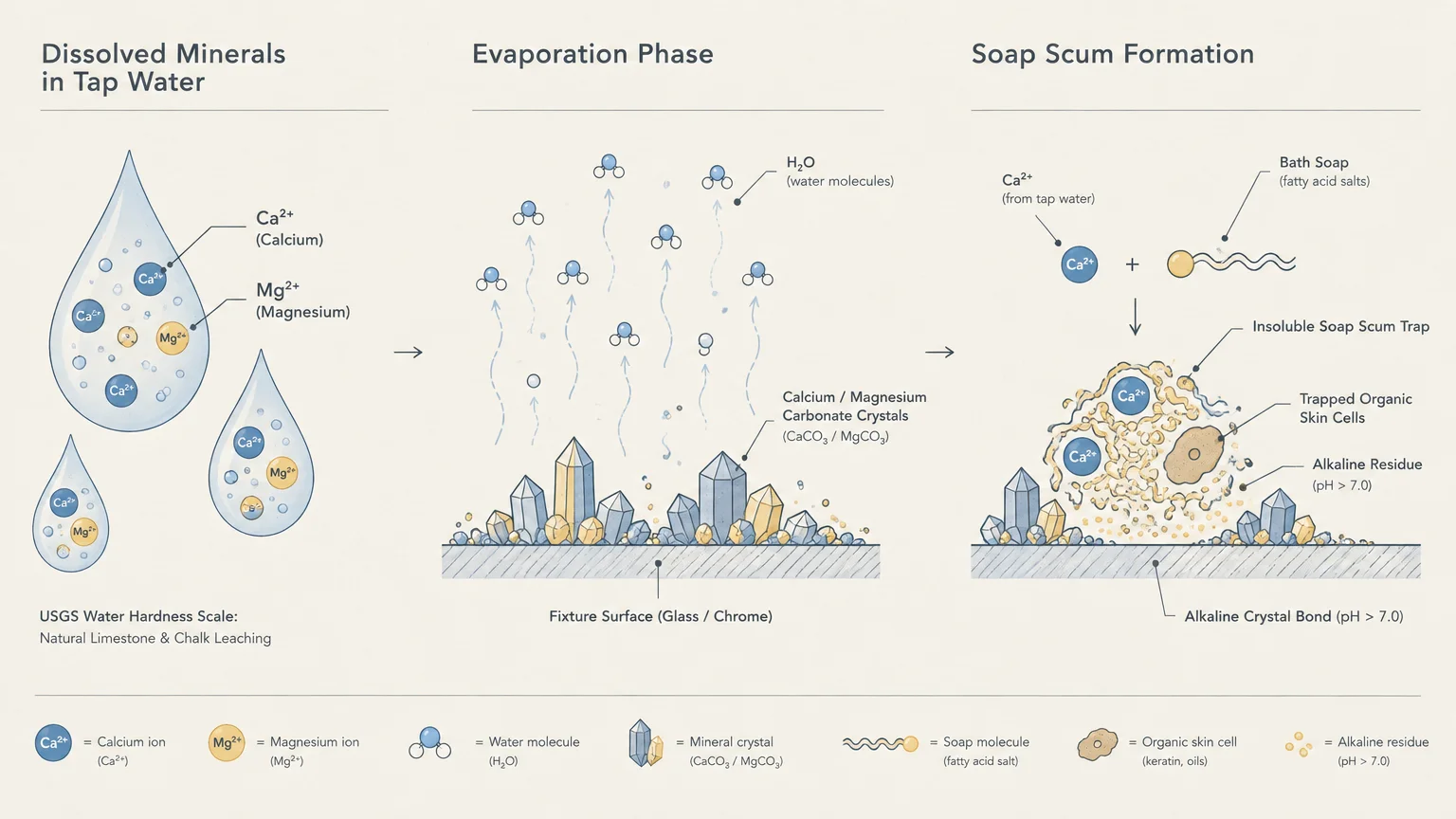
Hard water contains elevated concentrations of dissolved minerals, predominantly calcium and magnesium. When water splashes onto surfaces and evaporates, it leaves these minerals behind as solid, crusty crystals.
According to the USGS water hardness guidelines, water accumulates these minerals naturally as it filters through limestone and chalk. Over time, these minerals bond tightly to porous and non-porous surfaces alike.
Standard bath soaps worsen this problem by reacting with calcium to form insoluble soap scum. This sticky residue traps shed skin cells and grime, creating dull, stubborn deposits.
Because limescale is naturally alkaline, basic cleaning soaps cannot break its chemical structure. You need a mild acidic solution to dissolve the mineral bonds and release the grime.
Essential Safety Rules Before You Clean
Tackling bathroom stains requires careful handling of common household chemicals. Protecting your respiratory tract, skin, and delicate fixtures ensures a safe and productive cleaning session.
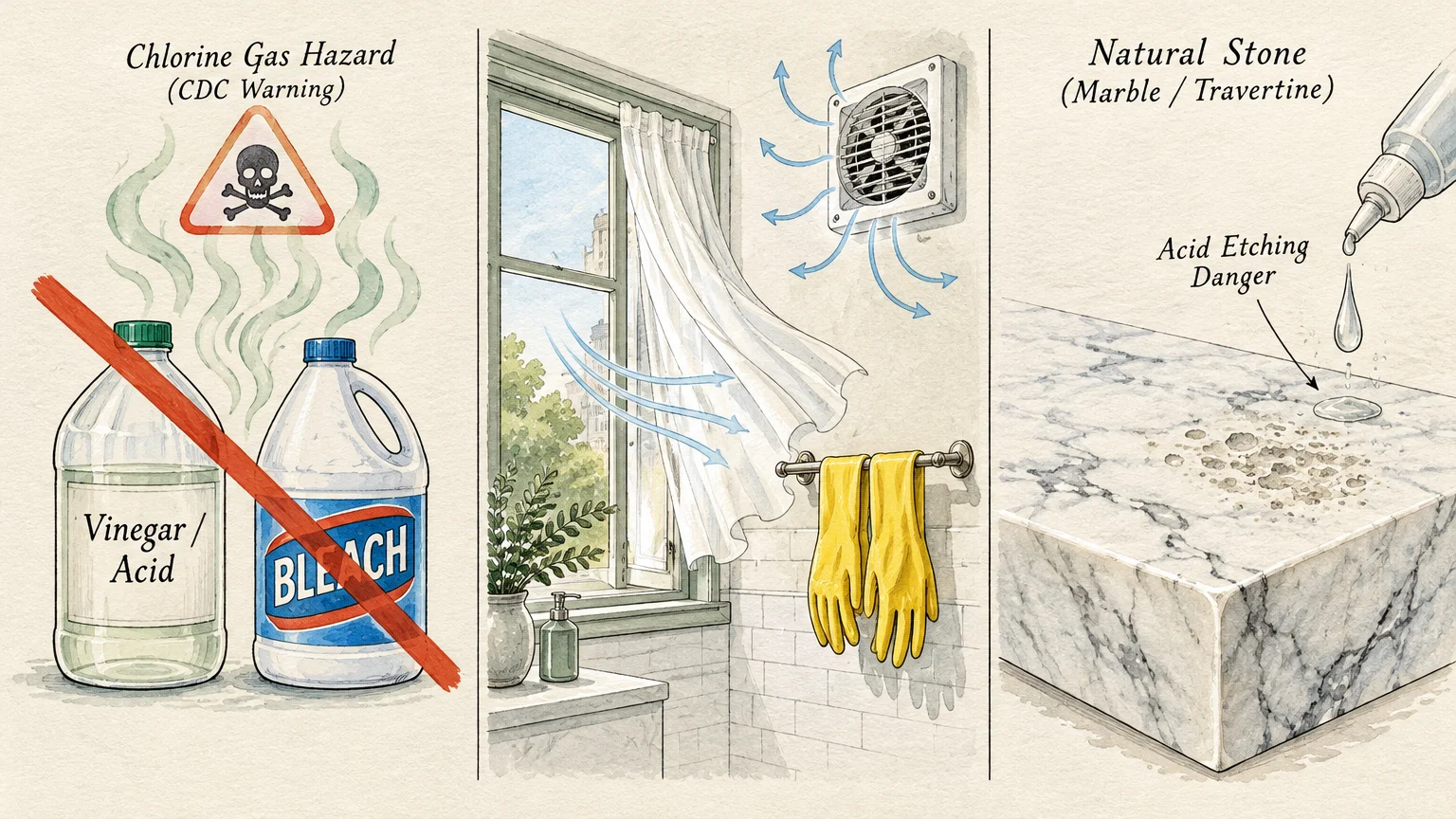
Never combine acidic cleaners—such as vinegar, lemon juice, or citric acid—with chlorine bleach. The CDC warns that mixing acids with bleach releases toxic chlorine gas, which causes severe airway irritation and lung damage.
Always ventilate your bathroom thoroughly before you begin applying acidic mixtures. Turn on the exhaust fan and prop the door open to maintain continuous airflow.
Wear rubber gloves to protect your hands from prolonged contact with acidic cleaners or abrasive pastes. Gloves prevent irritation, cracked skin, and allergic sensitivity.
Never apply acids to natural stone surfaces, including marble, travertine, limestone, and unsealed granite. Acidic substances cause instant chemical etching, leaving dull, unfixable blemishes on luxury stone.
10 Practical Hacks to Remove Hard Water Spots
1. The Warm Vinegar Bag Soak for Faucets
Showerheads and sink spouts frequently clog from mineral buildup, which causes erratic water spray patterns. A warm vinegar soak dissolves limescale from the inside out without requiring plumbing disassembly.
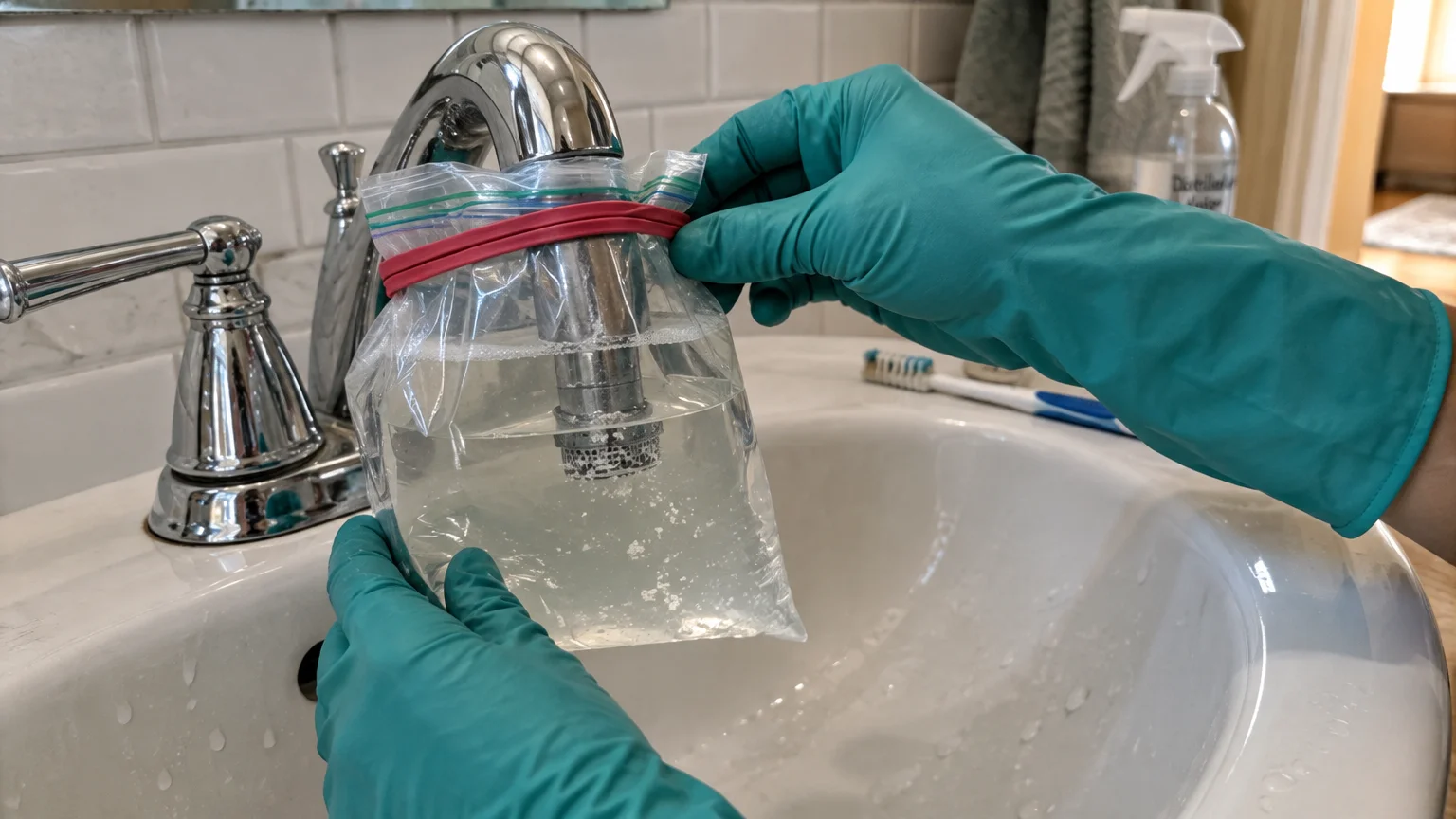
Fill a heavy-duty plastic sandwich bag halfway with distilled white vinegar. Warm the vinegar slightly in the microwave beforehand, as heat accelerates the chemical breakdown of calcium carbonate.
Submerge the faucet spout or showerhead completely in the vinegar-filled bag. Fasten the top securely around the fixture neck using a sturdy rubber band or zip tie.
Allow the fixture to soak undisturbed for 45 to 60 minutes. For severe encrustations, leave the bag in place for up to two hours to dissolve deep deposits.
Remove the bag and scrub away softened mineral flakes with an old nylon toothbrush. Run hot tap water for one full minute to flush dissolved debris through the aerator.
2. Citric Acid Spray for Cloudy Shower Glass
Shower doors develop a cloudy film when mineral droplets evaporate repeatedly under high heat. Citric acid powder provides an odorless, potent acidic alternative to vinegar that cuts through mineral haze.
Whisk two tablespoons of food-grade citric acid powder into two cups of warm tap water. Pour the mixture into a clean spray bottle and shake until the crystals dissolve completely.
Mist the solution generously across the entire glass surface, working from top to bottom. Allow the liquid to dwell on the glass for ten minutes to soften mineral deposits.
Wipe the glass down using a wet microfiber cloth in firm circular motions. Rinse the glass with clean water from your shower wand to wash away loosened minerals.
Clear all remaining water immediately using a handheld rubber squeegee. Drying the glass prevents fresh minerals from reforming into spots as the shower cools.
3. Baking Soda and Hydrogen Peroxide Paste for Grout
Tile grout lines absorb mineral-laden water, which leaves behind dark yellow discoloration and stubborn limescale crusts. A foaming paste lifts these deep-set minerals without degrading your cementitious grout.
Combine three parts baking soda with one part three-percent hydrogen peroxide in a bowl. Stir until the mixture forms a thick, spreadable paste with a frosting-like consistency.
Spread the paste directly over stained grout seams and textured floor tiles using an old spatula or gloved fingers. Ensure full coverage across every discolored mineral ring.
Allow the paste to sit for 15 minutes while the oxygenating bubbles lift trapped grime. Scrub the grout lines gently using a narrow nylon detail brush.
Rinse the area thoroughly with warm water and wipe it dry with a microfiber cloth. The combination cleans mineral stains while brightening dull grout lines.
4. Fresh Lemon and Table Salt for Chrome Fixtures
Polished chrome fixtures can scratch easily if you clean them with harsh commercial scouring powders. A halved lemon combined with table salt offers natural acidity and gentle, water-soluble abrasion.
Slice a fresh lemon in half and dip the exposed fruit flesh into a dish of fine table salt. The fine salt crystals adhere to the moist pulp, creating a soft scrubbing pad.
Rub the salted lemon over stained chrome handles, spouts, and shower bars using gentle pressure. The natural citric acid dissolves limescale while the salt loosens stubborn surface scale.
Rinse the chrome thoroughly with warm water immediately after scrubbing. Leaving citrus juice on metal finishes can cause unwanted streaking or finish damage over time.
Buff the metal dry with a soft, lint-free microfiber towel to reveal a mirror-like shine. This method leaves your bathroom smelling fresh without relying on synthetic fragrances.
5. Wet Pumice Stone Scouring for Porcelain Toilet Bowls
Hard water creates persistent brown, orange, or gray rings along toilet bowl water lines. A natural volcanic pumice stone scrubs away mineral buildup that chemical bowl cleaners fail to remove.
Always soak the pumice stone in warm water for at least five minutes before use. A dry stone will scratch porcelain glaze, whereas a thoroughly wet stone softens safely.
Push the standing bowl water down the trap using your toilet brush to expose the full mineral ring. Wetting the porcelain surface thoroughly ensures smooth, friction-free rubbing.
Rub the wet stone gently across the mineral ring using light, back-and-forth strokes. The wet stone wears away into a fine gray paste that lifts the limescale safely.
Flush the toilet to rinse away the pulverized mineral residue. Only use pumice on vitrified porcelain; never use it on fiberglass, plastic, or painted surfaces.
6. Melamine Foam Buffing for Shower Enclosures
Melamine foam acts as an ultra-fine abrasive that shears off mineral scales without scratching tempered glass. It eliminates the need for liquid chemical sprays on lightly spotted shower doors.
Wet the melamine eraser thoroughly with warm tap water, then gently press out excess moisture. Working with a damp sponge prevents excessive friction and extends the life of the foam.
Buff the glass using tight, overlapping circles, applying gentle to moderate pressure. You will feel the sponge glide smoothly once it shears away the crusty mineral ridges.
Rinse the glass with clean water to flush away the loosened chalky mineral powder. Dry the pane immediately using a clean microfiber cloth or rubber squeegee.
This technique works exceptionally well for quick weekly touch-ups before mineral deposits bond permanently. It produces spotless results without generating irritating chemical fumes.
7. Rubbing Alcohol and Vinegar Spray for Vanity Mirrors
Bathroom mirrors frequently catch hard water splashes from tooth brushing and hand washing. Combining rubbing alcohol with white vinegar creates a fast-evaporating mist that dissolves mineral marks without leaving streaks.
Mix one cup of distilled water, one cup of 70 percent isopropyl alcohol, and one tablespoon of white vinegar. Using distilled water guarantees that the cleaning solution leaves zero mineral residue behind.
Spray the mixture onto a flat-weave microfiber cloth rather than spraying the mirror directly. Direct spraying allows liquid to drip into the frame seams, which can ruin mirror backing over time.
Wipe the glass from top to bottom using an overlapping S-shaped motion. The alcohol speeds evaporation while the mild acid cuts through alkaline water spots effortlessly.
Turn your cloth to a completely dry section and buff the surface lightly. Your mirror will remain crystal-clear and streak-free under bright vanity lighting.
8. Repurposed Dryer Sheets for Water Droplets on Hardware
Used fabric softener dryer sheets contain textured polyester fibers and residual conditioning agents. They make surprisingly effective, non-abrasive scrubbers for water-spotted chrome and brushed metal hardware.
Dampen a used dryer sheet with a few drops of warm water from the faucet. Squeeze it lightly to distribute the moisture throughout the fabric fibers.
Rub the damp sheet across spotted sink handles, towel racks, and shower curtain rods. The textured weave lifts mineral scale while the conditioning agents dissolve stubborn soap film.
Rinse the hardware with warm water to wash away loose mineral grime and conditioning residue. The light coating left behind temporarily repels new water droplets.
Buff the metal completely dry using a clean rag to bring out a brilliant finish. Store used dryer sheets in a bathroom drawer for fast, convenient spot treatments.
9. Dental Floss and Wooden Skewers for Tight Faucet Seams
Hard water pools around faucet bases, handle collars, and silicone caulk joints. These tight crevices trap moisture, allowing thick crusts of limescale to accumulate where sponges cannot reach.
Saturate a strip of paper towel with warm white vinegar and wrap it around the faucet base. Let the wet wrap sit for twenty minutes to soften dense mineral calcifications.
Slide a strand of unflavored, waxed dental floss into the tight joint between the faucet and countertop. Pull the floss back and forth to saw through softened limescale deposits.
Use the tip of a wooden bamboo skewer to dislodge stubborn mineral flakes from tiny corners. Bamboo is strong enough to chip away limescale without scratching chrome or porcelain.
Wipe the cleared seam with a damp cloth and dry the area thoroughly with a towel. Removing these mineral dams stops water from stagnating around delicate fixture seals.
10. Hydrophobic Glass Protectant to Repel Future Spots
The smartest cleaning hack is preventing mineral spots from sticking to surfaces in the first place. Applying a hydrophobic coating makes water bead up and roll off shower doors before it evaporates.
Clean and dry your shower glass thoroughly using citric acid or vinegar to ensure a pristine base. Sealing over existing mineral spots locks them against the glass permanently.
Apply an automotive glass protectant or specialty bathroom water repellent using a dry microfiber cloth. Work in small sections, wiping the product in overlapping circular patterns.
Allow the protectant to haze according to product label directions, usually taking five to ten minutes. Buff the haze away vigorously using a fresh, dry microfiber towel until transparent.
Water will now bead tightly and slide straight into the shower drain. Reapply the treatment every three to four months to maintain effortless, spot-free glass.
Surface Compatibility Guide for Hard Water Removal
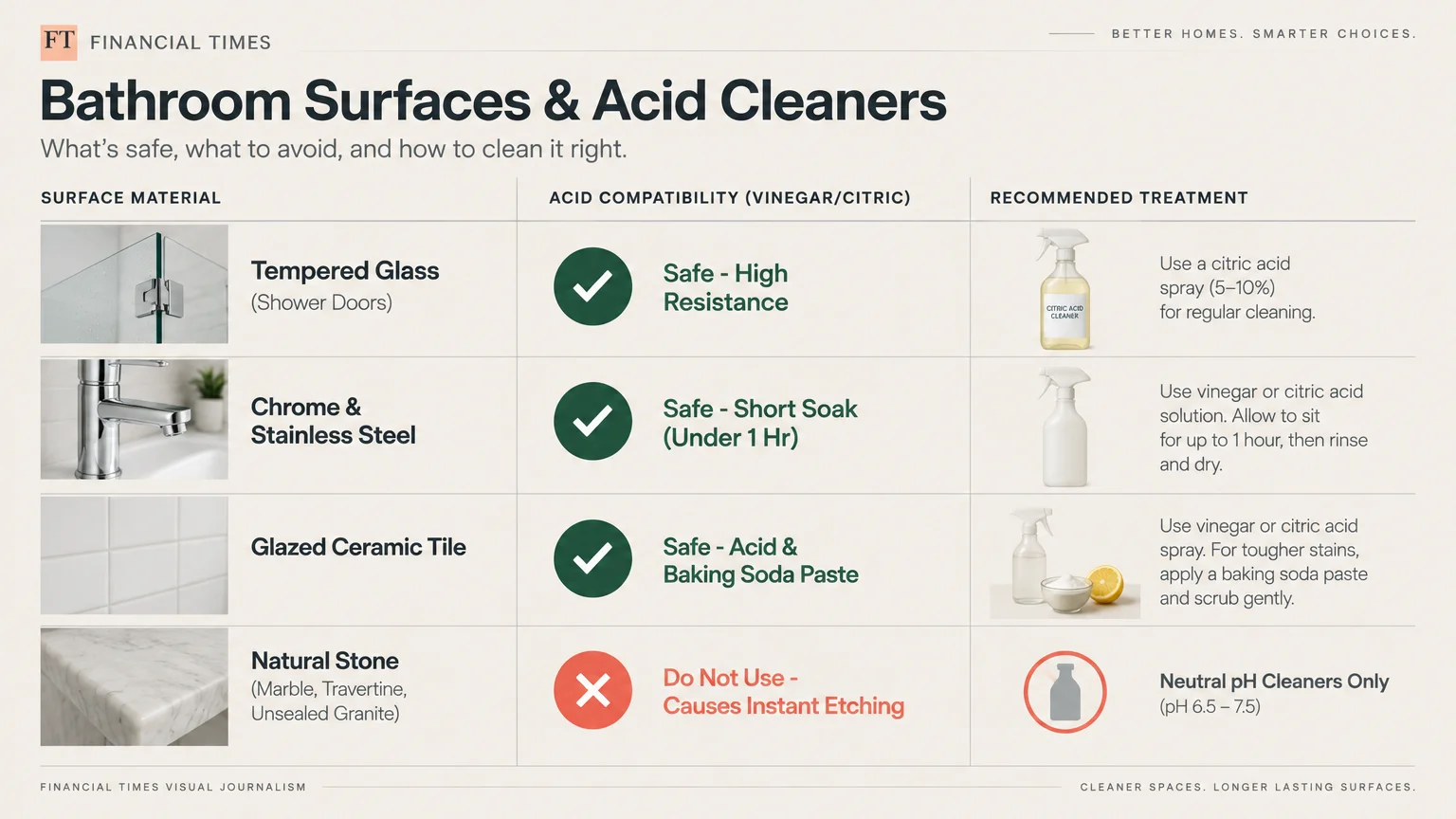
Using the wrong cleaning technique on sensitive bathroom materials can cause irreversible damage. Review this reference table before choosing a cleaning hack for your bathroom surfaces.
| Surface Material | Recommended Hack | Acid Safe? | Key Precaution |
|---|---|---|---|
| Shower Glass | Citric acid spray or melamine foam | Yes | Always dry with a squeegee to prevent new spots |
| Chrome Fixtures | Warm vinegar bag or salted lemon | Yes (short dwell time) | Rinse thoroughly and avoid abrasive scouring pads |
| Porcelain Sinks & Tubs | Baking soda and peroxide paste | Yes | Do not use hard metal scrapers that scratch glaze |
| Porcelain Toilet Bowls | Wet volcanic pumice stone | Yes | Keep pumice soaking wet; never use on plastic |
| Grout & Ceramic Tile | Baking soda paste or vinegar spray | Yes | Reseal grout lines annually to prevent deep penetration |
| Natural Stone (Marble, Granite) | Neutral pH stone cleaner only | No (Never use acids) | Acids cause instant etching and dull surface marks |
Pay close attention to natural stone surfaces when cleaning nearby fixtures. If vinegar or lemon juice splashes onto marble, rinse it away immediately with copious amounts of fresh water.
Step-by-Step Weekly Hard Water Maintenance Checklist
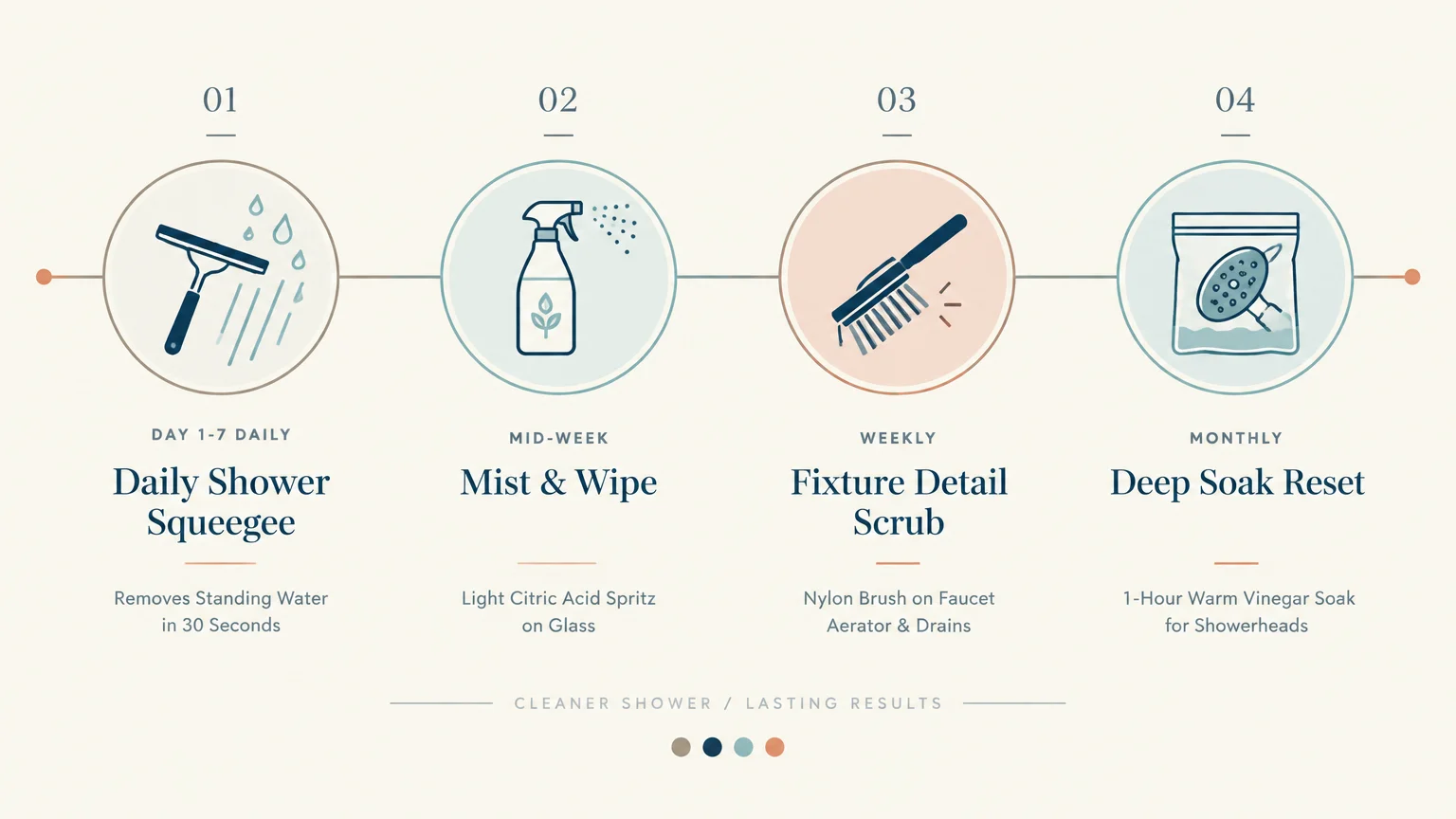
Establishing a simple maintenance rhythm prevents stubborn mineral crusts from accumulating. Follow this streamlined routine to keep your bathroom sparkling with minimal physical effort.
- Post-Shower Squeegee: Spend thirty seconds wiping shower glass and tile walls after every shower to remove standing water droplets before they dry.
- Microfiber Fixture Buff: Keep a dry microfiber towel beside your sink to quickly wipe faucet necks and handles dry after daily use.
- Weekly Glass Mist: Spray your shower glass once weekly with a dilute citric acid solution, let it sit for five minutes, and rinse thoroughly.
- Aerator Inspection: Check faucet aerators monthly for mineral crusts, soaking nozzles in warm vinegar baggies whenever water streams deflect.
- Sealant Reapplication: Reapply hydrophobic glass treatment every season to maintain strong water beading performance.
Consistent daily wiping cuts your deep-cleaning workload by more than half. Removing moisture before it evaporates stops limescale crystal formation entirely.
Choosing Safer Cleaners for Heavy Mineral Buildup
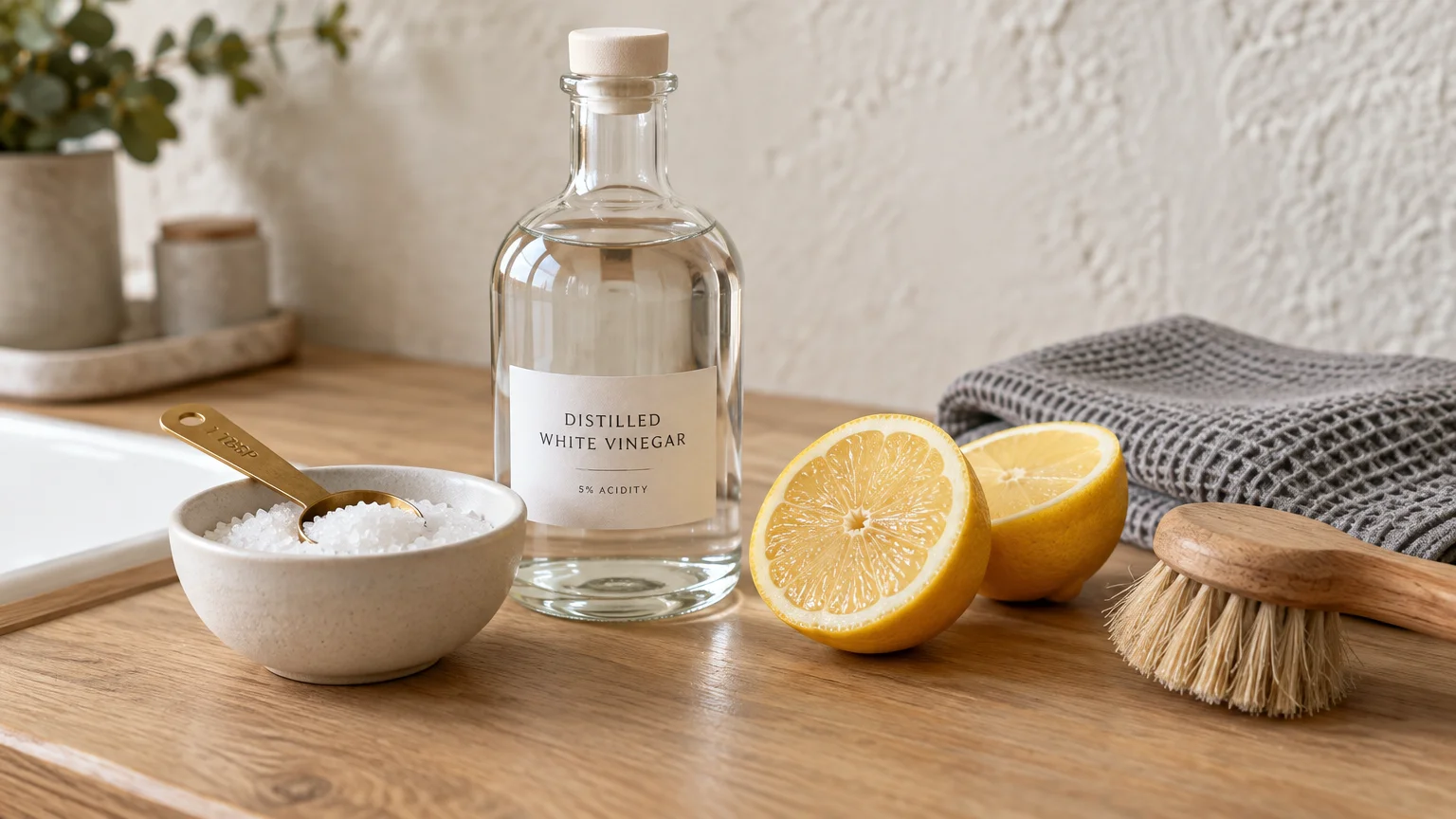
Some homes suffer from extremely hard municipal or well water that overwhelms mild kitchen ingredients. When commercial intervention becomes necessary, look for formulations that prioritize environmental and respiratory safety.
The EPA Safer Choice program certifies cleaning products that dissolve tough mineral scales using safer chemical alternatives. These certified formulas replace aggressive hydrochloric and sulfuric acids with biodegradable organic acids.
Always inspect product labels for certification seals before purchasing heavy-duty descalers. Products bearing verified eco-labels protect your household plumbing and indoor air quality while breaking down thick limescale.
Follow the manufacturer’s specified dwell times precisely when using commercial descalers. Allowing even safe commercial acids to sit on metallic finishes too long can degrade delicate protective lacquers.
Practical Next Steps for Your Bathroom
Pick one surface in your bathroom that shows noticeable water spots today—such as your main shower door or primary sink faucet. Gather your distilled white vinegar or a lemon, and spend ten minutes testing that targeted technique.
Once you see how quickly mild acids dissolve cloudy limescale, add a quick squeegee wipe to your daily routine. Enjoying a sparkling, spotless bathroom takes only a few smart habits and the right basic chemistry.