
Professional organizers look past surface tidiness the moment they enter your bedroom. They immediately spot subtle visual bottlenecks that disrupt your rest and signal hidden organizational systems breaking down.
You might assume that a closed closet door or a pulled-up duvet conceals your daily routines. In reality, specific visual friction points telegraph disorder to an expert eye within seconds.
Learning to spot these seven telltale signs helps you transform your room into a peaceful sanctuary. Addressing these key areas will save you valuable time every morning and calm your mind every evening.
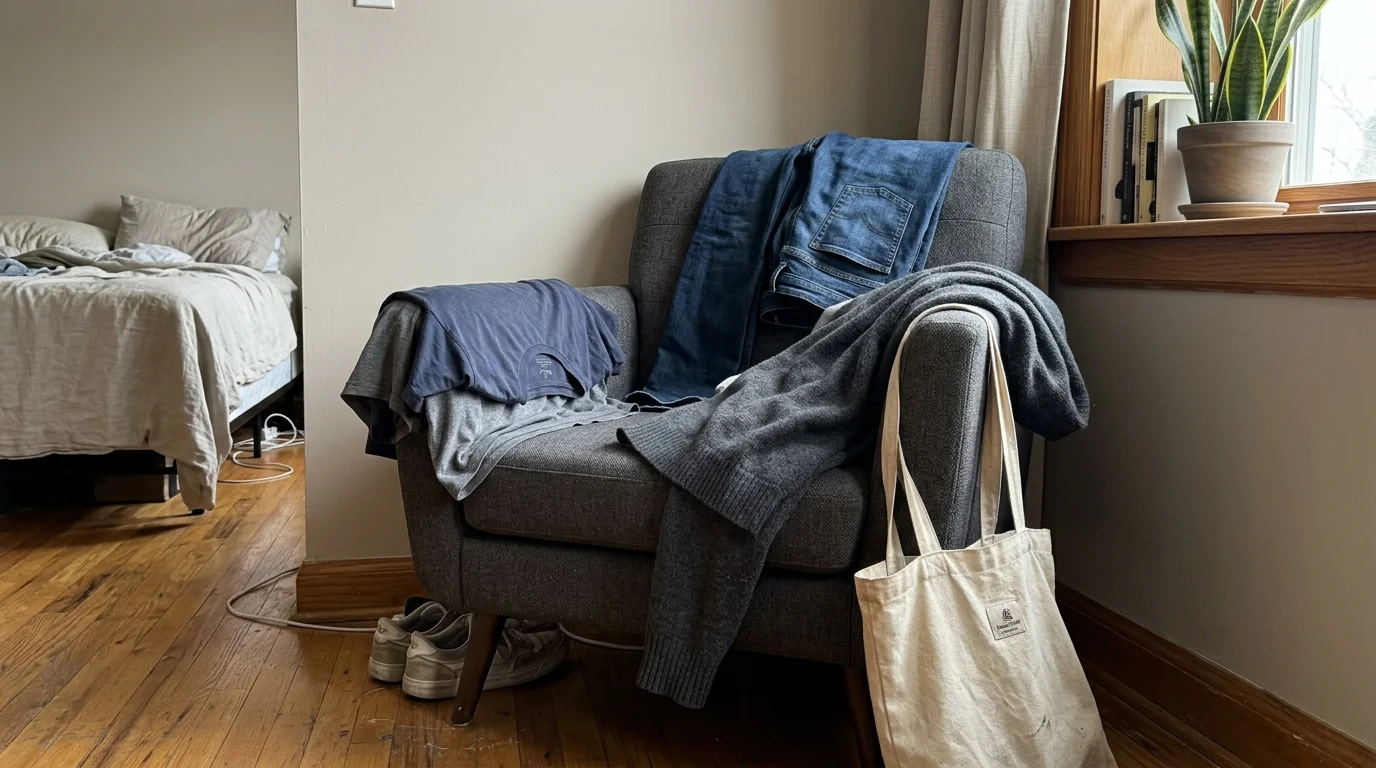
01 The “Clothes Purgatory” Chair or Exercise Bench
A solitary bedroom armchair frequently devolves into a dumping ground for semi-clean garments. Professional organizers instantly spot this pile as evidence of an incomplete laundry workflow.
These are items you wore briefly for an hour or two. You hesitate to wash them again, yet you resist hanging them back among pristine garments.
When items stack up on furniture, they wrinkle and gather dust. Over time, that mounting fabric tower creates persistent visual stress right beside your bed.
How to Fix the Mid-Wear Pile
You must establish a designated holding zone that keeps items off the seating. Dedicated wall hooks inside your closet or behind your bedroom door provide a tidy middle ground.
Alternatively, place an attractive, open-top valet basket inside your wardrobe. If an item remains in the valet basket for more than three days, launder it or hang it up immediately.

02 The Overflowing, Multi-Tasking Nightstand
Your nightstand should serve as a restful launchpad for sleep. Pro organizers know a messy bedroom lurks behind any bedside table covered in water cups, receipts, and loose lip balms.
A crowded tabletop forces your brain to process micro-decisions right before you sleep. Research highlighted by the Sleep Foundation shows that bedroom chaos actively undermines your sleep hygiene.
When bedside surfaces collect utility clutter, they cease functioning as peaceful boundaries. You deserve to wake up without knocking over half-empty tumblers or rummaging for reading glasses.
Streamlining Your Bedside Surface
Adopt the strict rule of three for the tabletop surface. Limit your display to a bedside lamp, a coaster for a water glass, and your current book.
Stash daily necessities like hand cream, lip balm, and medications inside a top drawer. Use shallow drawer dividers to prevent items from rolling together into a tangled heap.
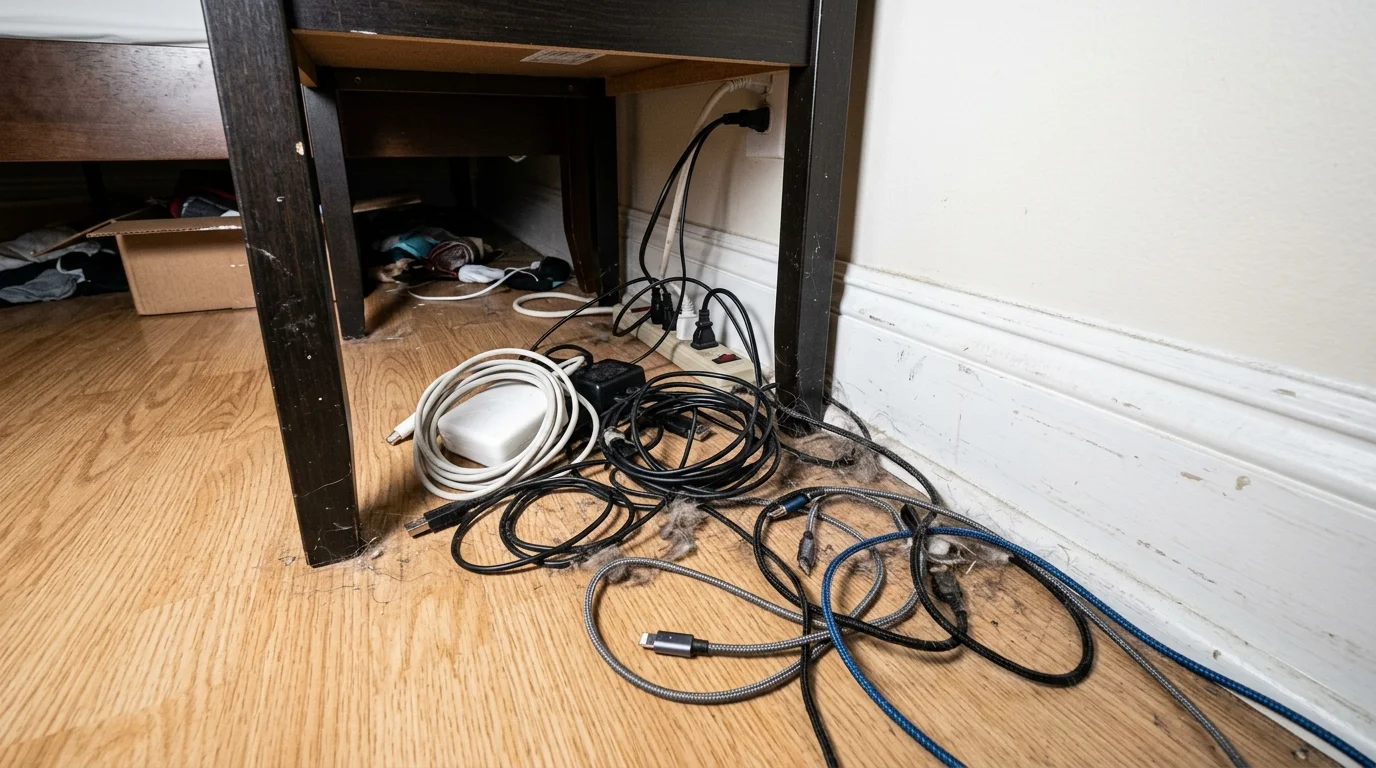
03 Tangled Electrical Cords and Charger Spaghetti
Nothing betrays a disorganized bedroom faster than an unruly knot of black and white charging cords. Pros immediately clock exposed cords snaking beneath bedside tables and across baseboards.
This clutter is not just an aesthetic annoyance; it presents an active household hazard. The National Fire Protection Association warns that overloaded extension cords and pinched wiring create serious fire and tripping risks.
Dust clings aggressively to tangled cables, creating dirty clumps that are difficult to sweep or vacuum. Cleaning around exposed electrical clusters quickly becomes an abandoned chore.
Mastering Bedroom Cable Management
Elevate your power strip by mounting it to the back panel of your nightstand with heavy-duty adhesive strips. This simple trick lifts wires completely off the floor.
Use silicone cable clips along furniture legs to guide phone cords right to your tabletop. Consolidate your phone, smartwatch, and earbuds onto a single multi-device charging dock.
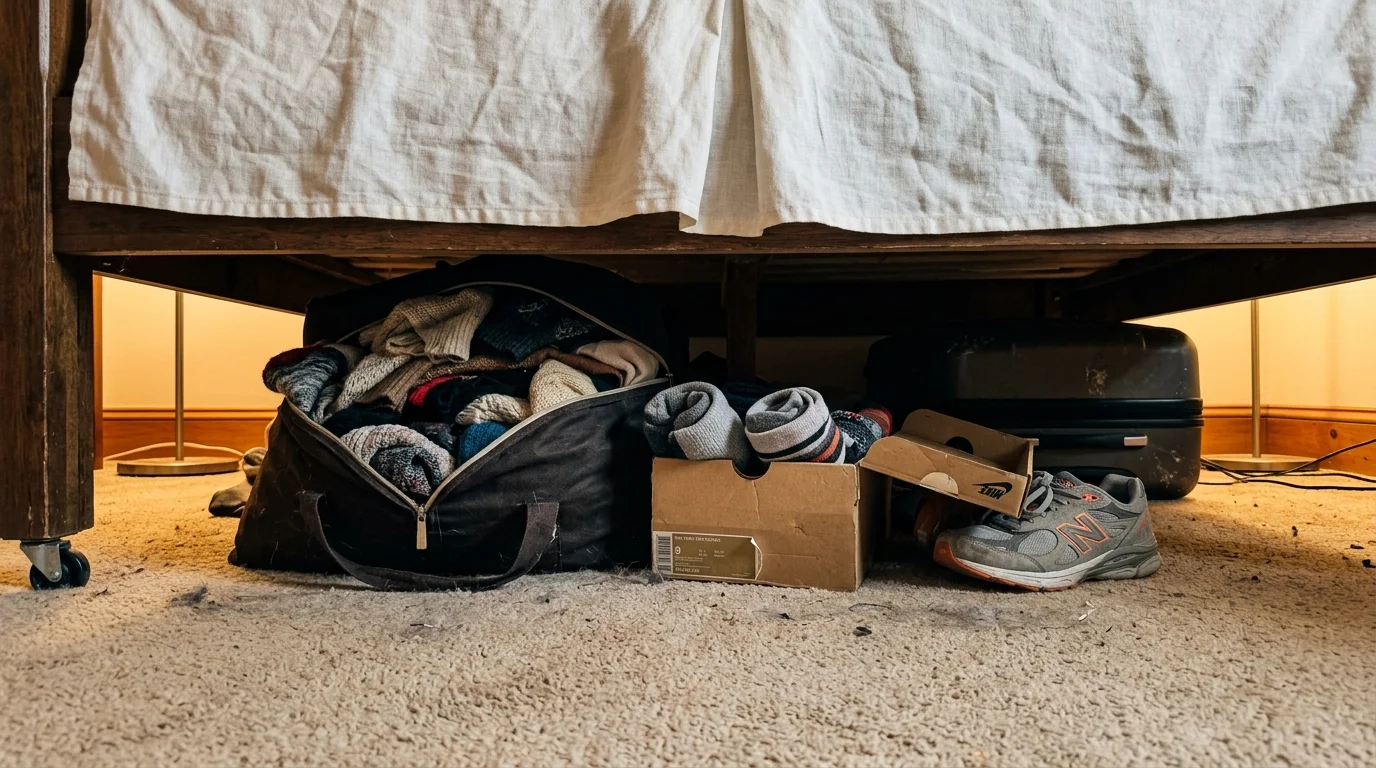
04 The Unregulated Under-Bed “Black Hole”
Many people treat the cavern under their bed frame like an invisible attic. Professional organizers routinely check this clearance and recognize haphazard storage as a sign of closet overflow.
Shoving unsealed cardboard boxes, loose winter boots, and discarded wrapping paper beneath your mattress invites allergen accumulation. The Asthma and Allergy Foundation of America notes that dust mites thrive in undisturbed, fibrous environments.
Cardboard also breaks down over time, shedding fibers and absorbing ambient room humidity. Storing sentimental keepsakes in loose cardboard under your bed exposes them to irreversible damage.
Implementing Protected Under-Bed Storage
If you must store items beneath your mattress, invest in long, low-profile plastic bins with locking lids. Smooth-rolling wheels prevent floor scratches and make regular cleaning effortless.
Reserve this real estate strictly for seasonal textiles, extra bed linens, or out-of-season footwear. Label every container clearly so you never have to blindly drag out multiple bins.
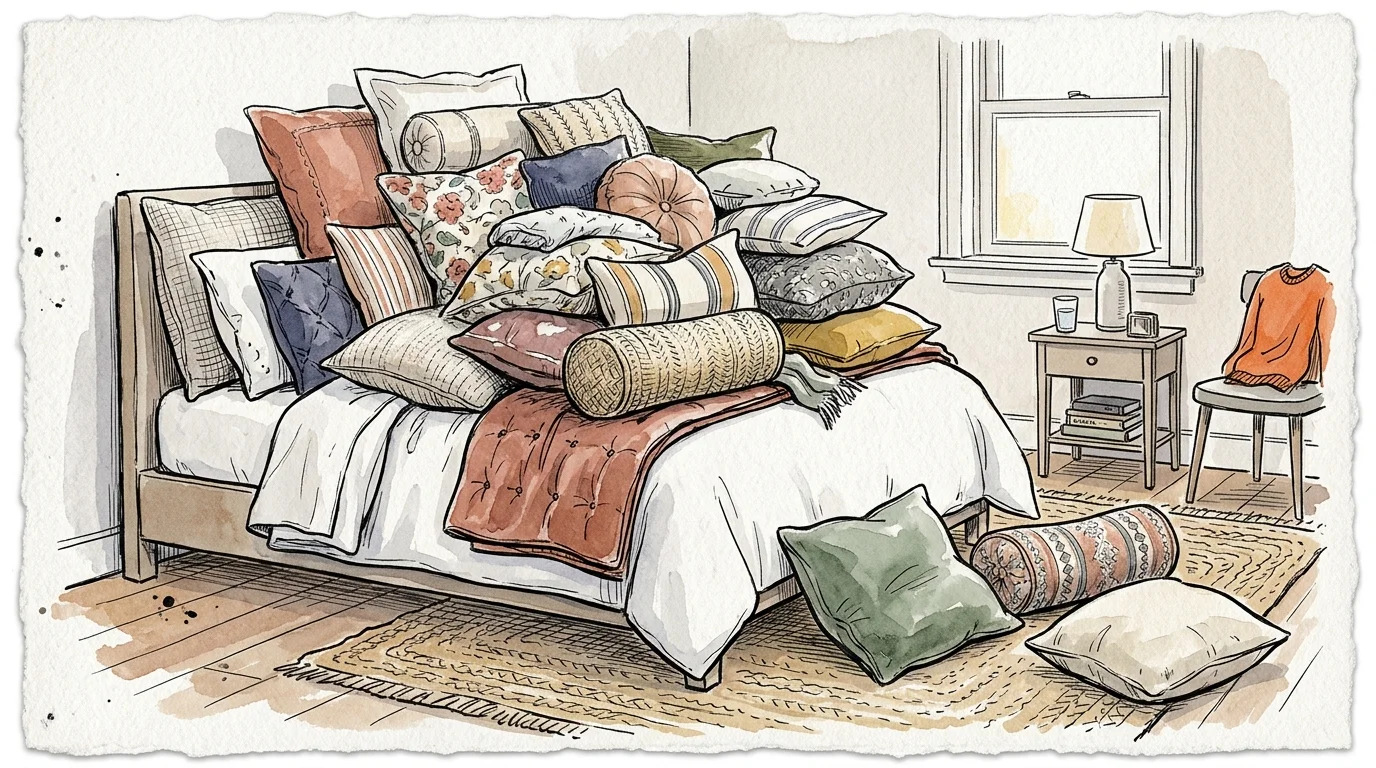
05 Pillow Overload and Complicated Bedding
A bed buried under seven decorative shams and three heavy throws looks great in staging photos. To a professional organizer, however, excessive bedding signals daily functional frustration.
When making your bed requires an elaborate, multi-step construction project, you will inevitably abandon the habit. Most people end up throwing decorative accent pillows onto the floor every night.
Pillows left sitting on the bedroom rug gather dander, pet hair, and floor dust. Returning those dusty pillows to your bedding each morning degrades your sleeping environment.
Designing a Practical Bed Routine
Limit your decorative pillow arrangement to one or two accent pieces at most. Choose items that take less than sixty seconds to arrange every morning.
Switch to a lightweight duvet with a washable cover to eliminate frustrating flat sheets if they tangle your feet. Simplifying your bedding makes daily bed-making effortless.
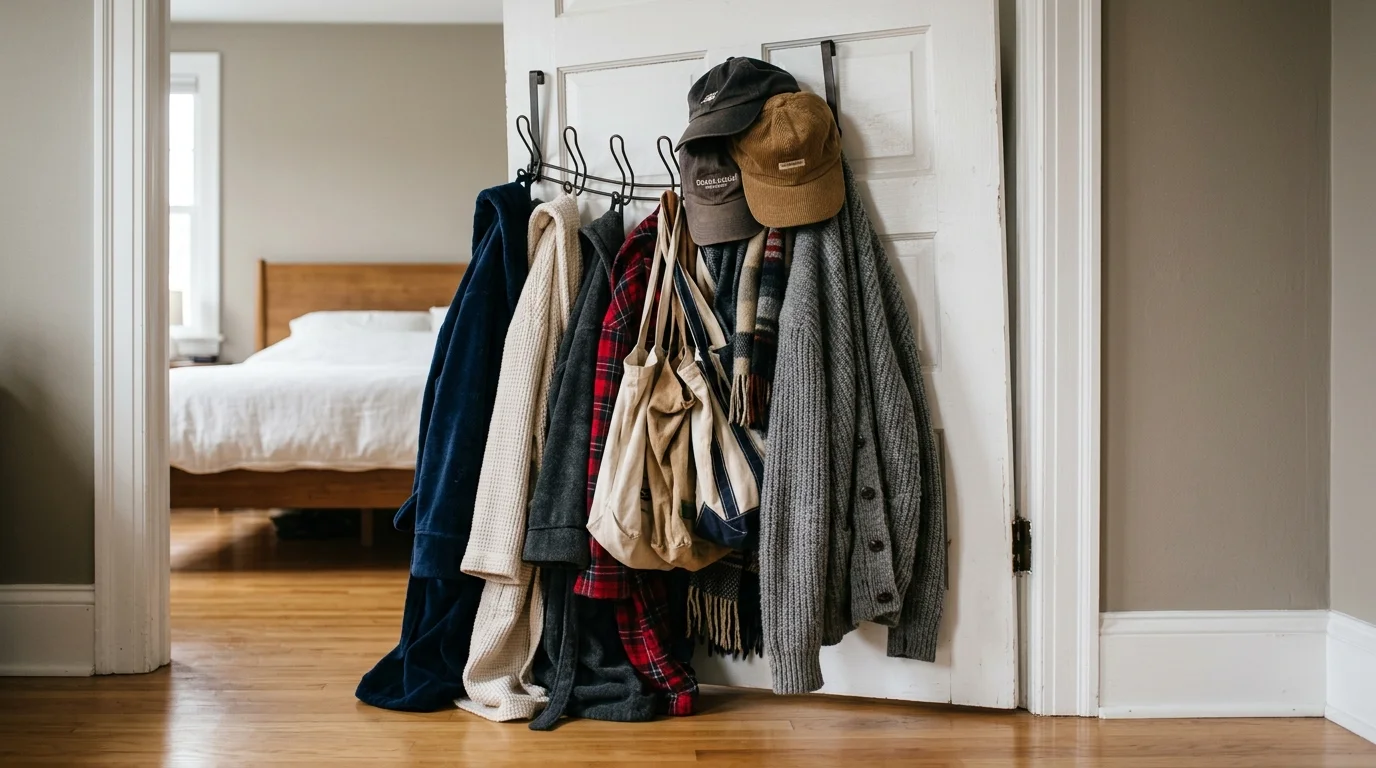
06 Overloaded Door Backs and Closet Spillover
The back of a bedroom or closet door offers convenient utility, but it often becomes a chaotic catch-all. Organizers spot bulging over-the-door racks as an instant symptom of closet congestion.
When bags, bathrobes, belts, and coats hang in heavy layers, items disappear beneath the bulk. The door ceases to close smoothly, rattling against the doorframe whenever breezes pass through.
This physical spillover indicates your primary storage compartments have reached absolute maximum capacity. Forcing items onto door backs usually means you need to edit your closet inventory.
Restoring Door and Entryway Flow
Establish a strict single-item rule for each hook on your door organizer. Never drape multiple heavy jackets or purses across the same peg.
Conduct a thorough purge of your primary closet to free up hanging bar space. Shifting out-of-season coats into a front hall closet relieves bedroom pressure immediately.
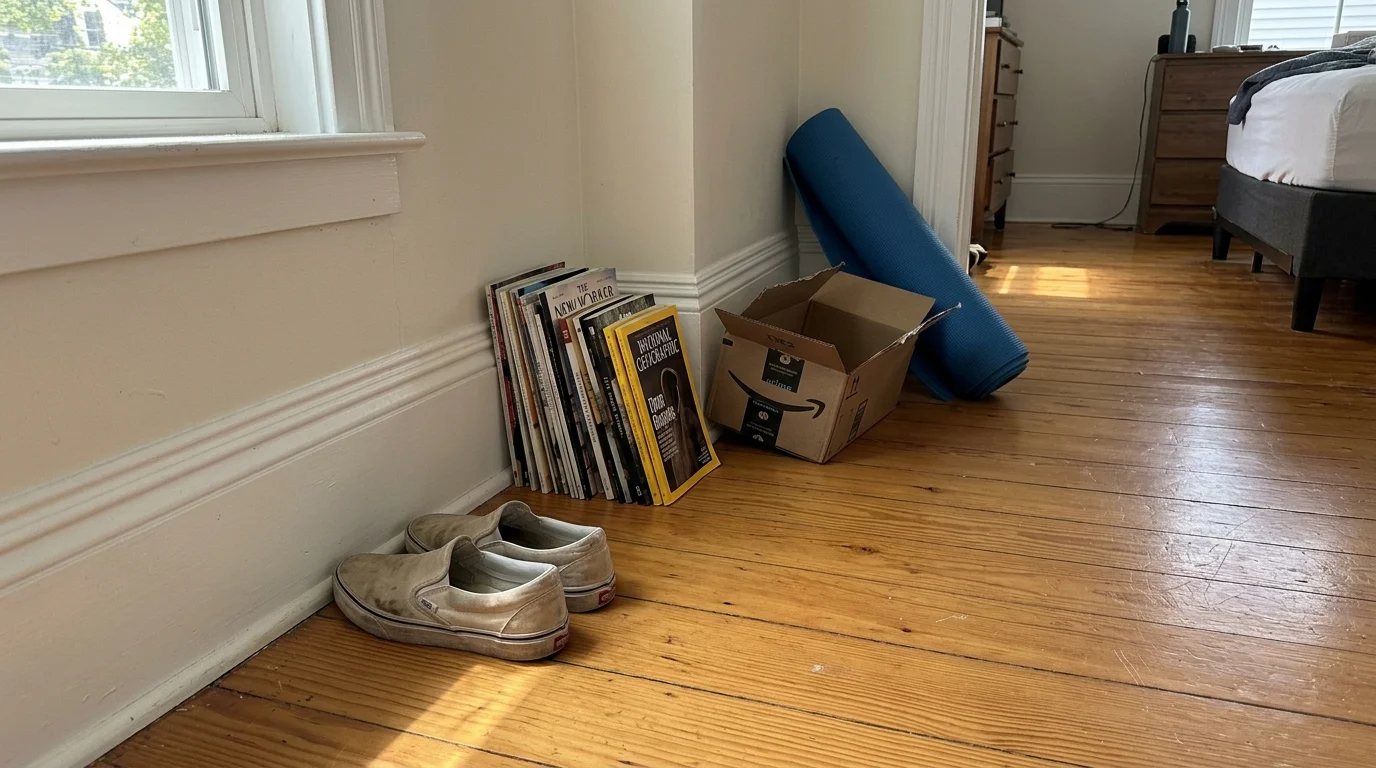
07 Baseboard Creep and Floor Perimeter Clutter
Floor space should offer clear, unbroken pathways throughout your bedroom. Organizers notice baseboard creep—the gradual lining of shopping bags, unread magazines, and shoeboxes against room walls.
Items naturally collect along wall perimeters when people run out of shelf space and drawer room. Over time, these small piles shrink your walkable floor area and make the bedroom feel claustrophobic.
Clutter resting along baseboards also creates significant trip hazards, especially during nighttime trips to the bathroom. Keeping floor perimeters completely bare protects your mobility and safety.
Clearing the Bedroom Perimeter
Institute a strict policy of keeping everything off the floor except foundational furniture legs. If an item lacks a shelf, hanger, or drawer home, reevaluate its presence in your bedroom.
Use vertical wall shelving if you need additional book storage without sacrificing floor footprint. Clean baseboards instantly expand the visual boundaries of small rooms.

Quick Fixes for the 7 Bedroom Clutter Hotspots
Compare these common bedroom clutter indicators with actionable solutions tested by professional organizers. Implementing these simple structural tweaks will restore order permanently.
| Clutter Hotspot | The Organizer Diagnosis | Practical Solution |
|---|---|---|
| The Clothes Chair | Missing transition system for mid-wear garments. | Install two designated hooks inside your closet or add an open valet basket. |
| The Crowded Nightstand | Surface used for storage rather than rest support. | Enforce the “rule of three” on top; organize bedside essentials in divided drawers. |
| Tangled Cables | Unmanaged charging cords creating safety hazards and dust traps. | Mount a power strip behind furniture and run cables through silicone clips. |
| Under-Bed Dumping Ground | Unregulated overflow gathering allergens and moisture. | Use wheeled, sealed plastic bins reserved strictly for out-of-season textiles. |
| Excess Bedding | Overcomplicated decorative layers that end up on the floor. | Strip down to two sleep pillows, one accent sham, and an easy-pull duvet. |
| Overloaded Doors | Wardrobe storage deficit causing external structural spillover. | Enforce one item per hook and prune twenty percent of closet inventory. |
| Baseboard Creep | Items placed down without assigned storage homes. | Enforce a strict bare-floor rule; utilize vertical wall shelves for excess books. |

Why Visual Bedroom Clutter Degrades Your Health
Visual clutter is not merely an interior design flaw; it directly stimulates chronic stress responses in your nervous system. Your brain constantly registers piles and unfinished tasks within your peripheral vision.
A landmark study published in PubMed Central found that individuals in cluttered home environments exhibited chronically elevated cortisol levels throughout the day. High cortisol impairs your ability to wind down before sleep.
A messy bedroom keeps your sensory processing system on constant high alert. When you clear visual clutter, you signal to your brain that it is safe to relax.
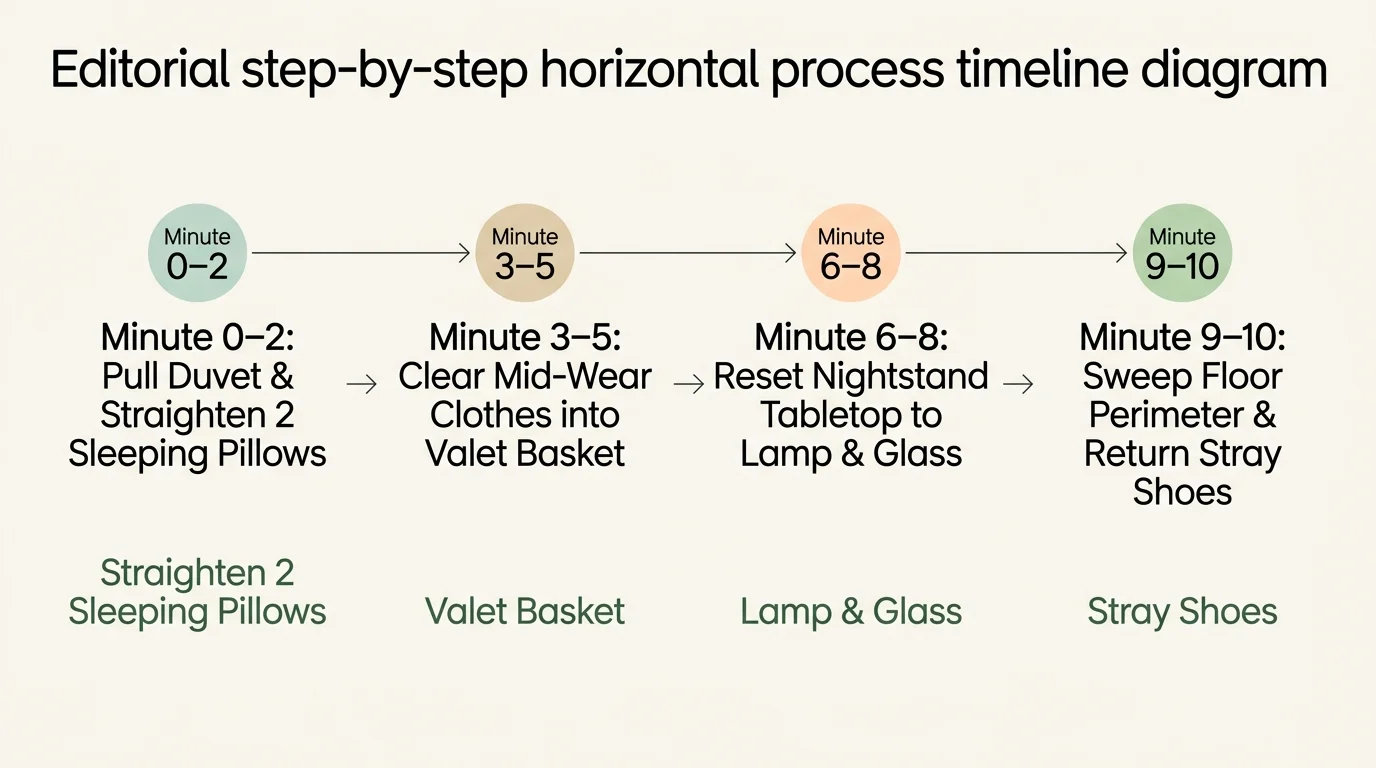
The 10-Minute Daily Bedroom Reset Checklist
You do not need hours of weekend cleaning to maintain an immaculate bedroom. Practicing this rapid, sequential evening checklist ensures clutter never regains a foothold.
- Clear the floor pathways: Pick up stray slippers, dropped socks, or stray laundry and assign them directly to hampers or closets.
- Reset your bedside surface: Return empty water glasses to the kitchen sink, file receipts away, and stow hand creams inside your top drawer.
- Tackle the clothing chair: Take three minutes to inspect items resting on seating; hang up salvageable pieces and toss soiled items into the wash.
- Smooth the bed linens: Pull your duvet taut and straighten your sleeping pillows so your bed feels welcoming at bedtime.
- Check cord positions: Ensure phone charging cables remain securely docked on clips rather than dangling across high-traffic floor areas.
3 Costly Mistakes People Make When Organizing Bedrooms
Many well-intentioned homeowners attempt to fix bedroom disorganization using methods that actually compound the problem. Avoiding these three pitfalls will save you time, energy, and money.
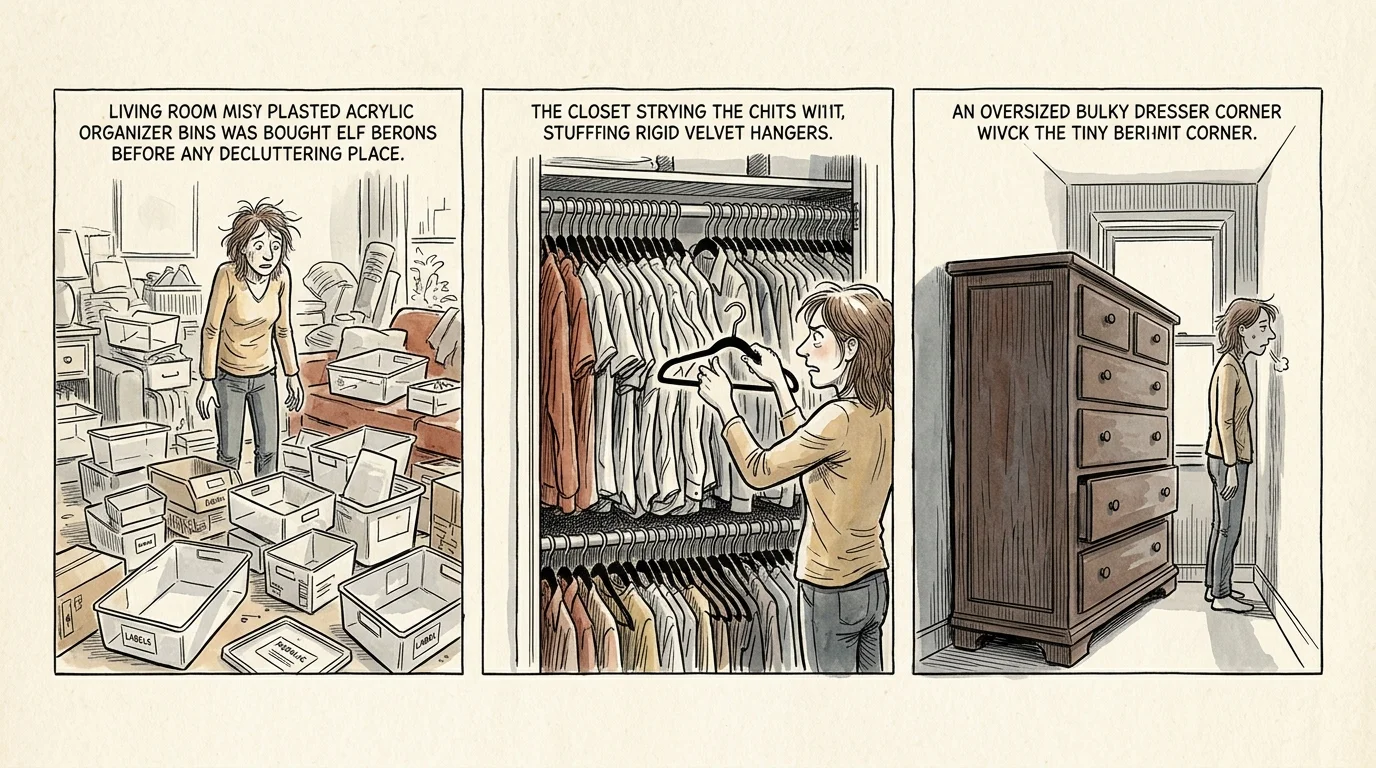
Buying Bins Before Decluttering
Purchasing pretty storage baskets before discarding unwanted items merely organizes your clutter. Always purge your belongings before measuring your storage spaces for matching containers.
Store-bought organizers take up physical volume themselves. When you buy bins prematurely, you often end up storing empty boxes alongside items you never use.
Treating the Bedroom Like an Overflow Attic
Dumping holiday decorations, tax paperwork, or unused sports gear into your sleeping quarters compromises your rest. Reserve your bedroom strictly for sleep, dressing, and quiet relaxation.
Relocate commercial boxes and seasonal gear to basements, utility closets, or garage storage. Removing irrelevant items immediately restores the emotional sanctuary of your bedroom.
Relying on “Someday” Clothes
Filling your closet with garments that do not fit your current lifestyle creates daily emotional friction. Keep only clothes that fit you comfortably today within easy reach.
Store aspirational sizes or legacy formalwear in separate garment bags at the back of the closet. Your main wardrobe should support who you are right now.

Organizing for Safety and Ease: Tips for Older Adults
Streamlining a bedroom becomes even more critical as physical mobility and vision change. Professional organizers prioritize safety alongside visual calm to create supportive living spaces.
Keep pathway widths at thirty-six inches or wider between your bed, dresser, and bathroom doorway. This clearance prevents painful stumbles and accommodates walking aids if necessary.
Accessible Drawer and Closet Heights
Store everyday clothing between waist and shoulder height to reduce uncomfortable bending or reaching. Reserve higher shelves and lowest drawers for lightweight items you rarely need.
Replace heavy, slippery hangers with lightweight velvet alternatives that keep delicate garments secure. This simple switch prevents shirts and slacks from sliding onto the closet floor.
Motion-Activated Bedside Lighting
Install low-wattage, motion-sensor nightlights under your bed frame or along floor baseboards. Soft illumination guides your footing instantly during midnight trips without jarring your sleep cycle.
Ensure table lamps feature touch-sensitive bases or rocker switches positioned within easy arm’s reach of your pillow. Fumbling in the dark across a cluttered surface invites accidental spills and falls.
Your Practical Next Step
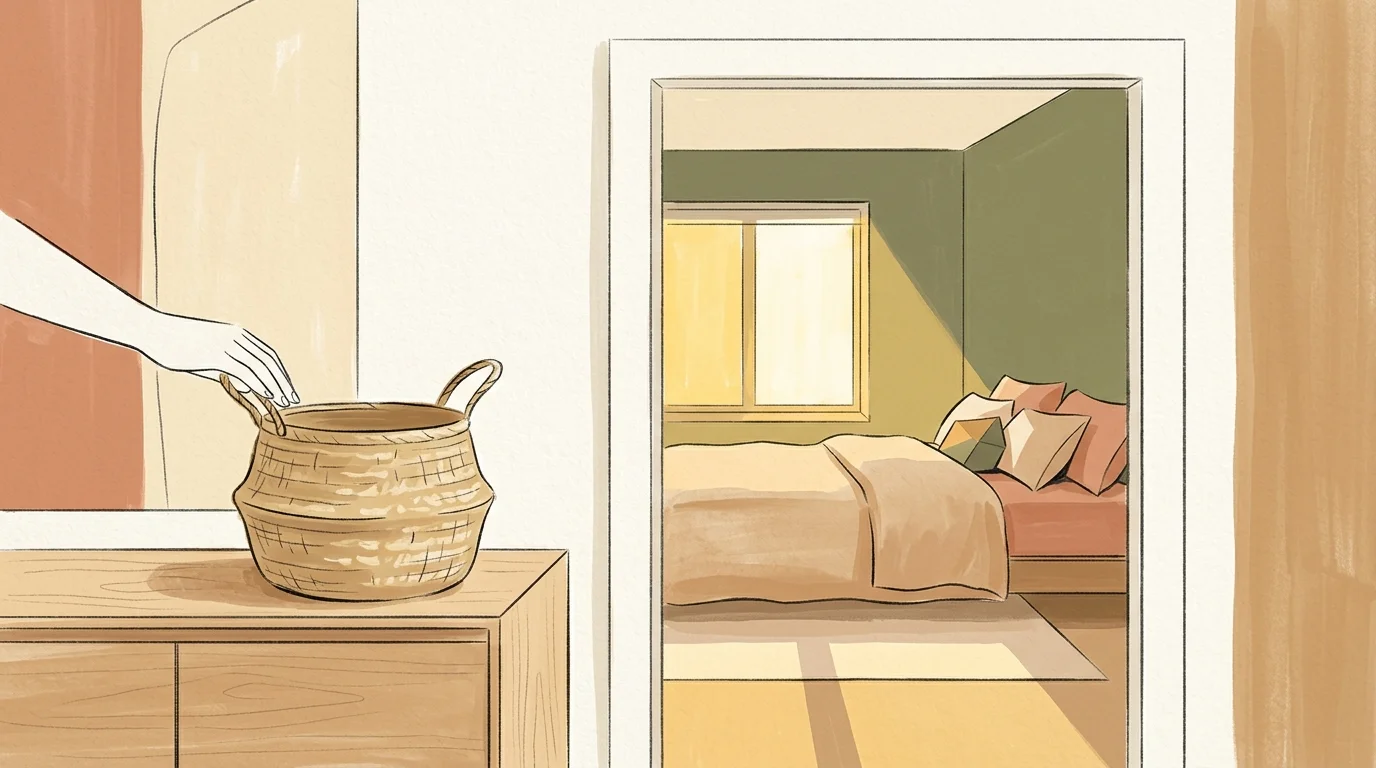
Do not try to overhaul your entire bedroom this afternoon. Pick just one trouble zone—such as your nightstand surface or the clothes chair—and spend ten focused minutes clearing it today.
Once that single surface stays clear for a full week, pick your next target. Consistent small adjustments create the lasting calm you deserve.