Packing for a trip should feel like the exciting start to an adventure, not a chaotic battle with zippers and overstuffed luggage. You can eliminate travel anxiety and breeze through the airport by adopting a few streamlined packing methods used by professional organizers. Optimizing your suitcase space protects your wardrobe and saves you significant money on rising baggage fees. By utilizing strategic rolling techniques, containing your items properly, and understanding the physical weight distribution of your luggage, you will arrive at your destination with unwrinkled clothes and total peace of mind. Here is exactly how to transform your packing routine into a highly efficient, foolproof system for your next getaway.
Trick 1: Distribute Your Luggage Weight to Prevent Tipping
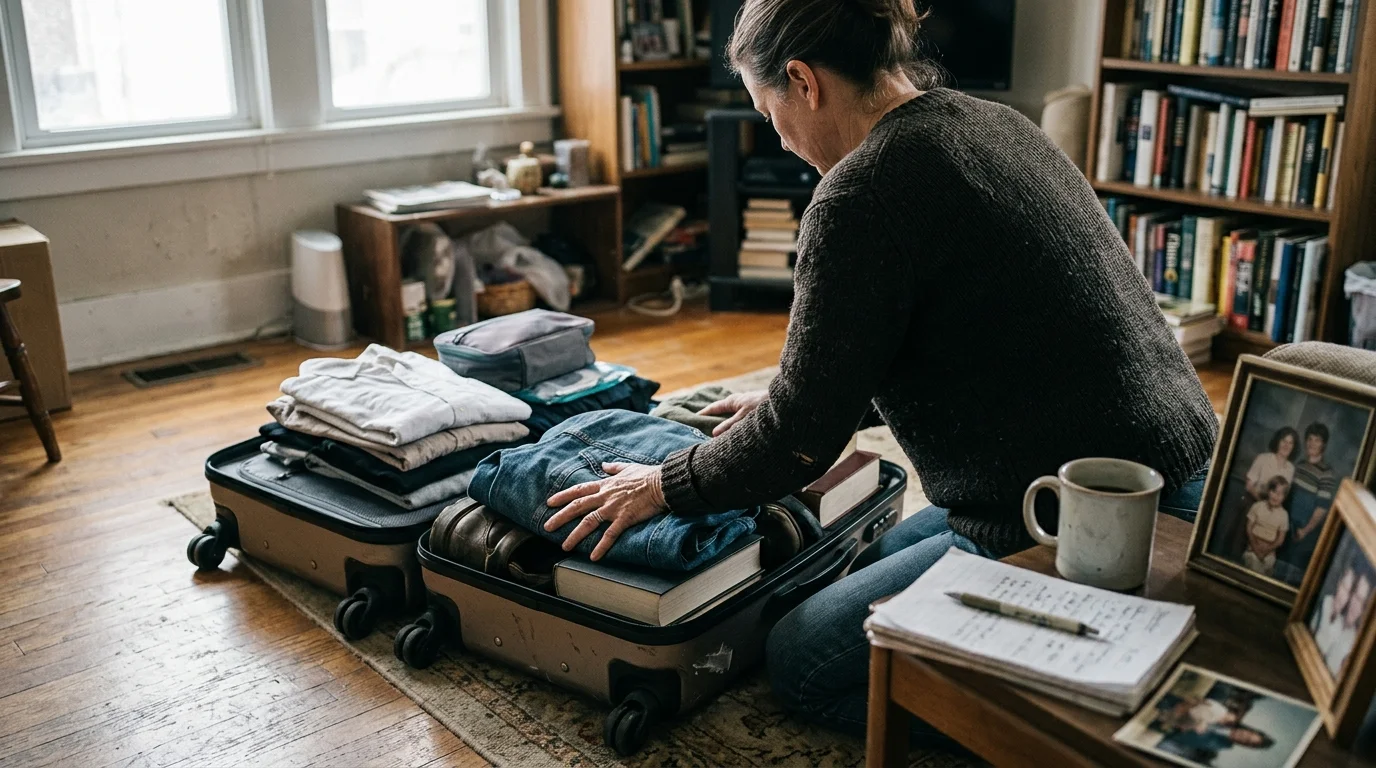
When you pack a suitcase, the physical distribution of weight dictates how smoothly the bag rolls through the airport. Many travelers haphazardly toss heavy items on top of their clothes, creating a top-heavy nightmare that constantly tips forward at the terminal. If you use luggage with four spinner wheels, a skewed center of gravity forces the bag to pitch out of control, straining your wrist as you wrestle to keep it upright.
Instead, place your heaviest items—such as shoes, thick denim, and bulky toiletry bags—at the very bottom of the suitcase near the wheels. This simple base layer anchors the luggage, allowing it to glide effortlessly beside you. Maneuvering a well-balanced bag also protects your physical health. When a suitcase drags awkwardly, it strains your rotator cuff and forces your lower back to overcompensate. Health experts evaluating luggage safety emphasize keeping carry-on bags below 10 to 15 percent of your total body weight to prevent joint and muscle injuries. A balanced, reasonably weighted suitcase spares your shoulders and keeps you moving swiftly toward your gate. When you finally board the plane, lifting a properly balanced bag into the overhead bin feels significantly easier because the heaviest weight sits securely near the bottom handle.
Trick 2: Master the Ranger Roll and the File Fold
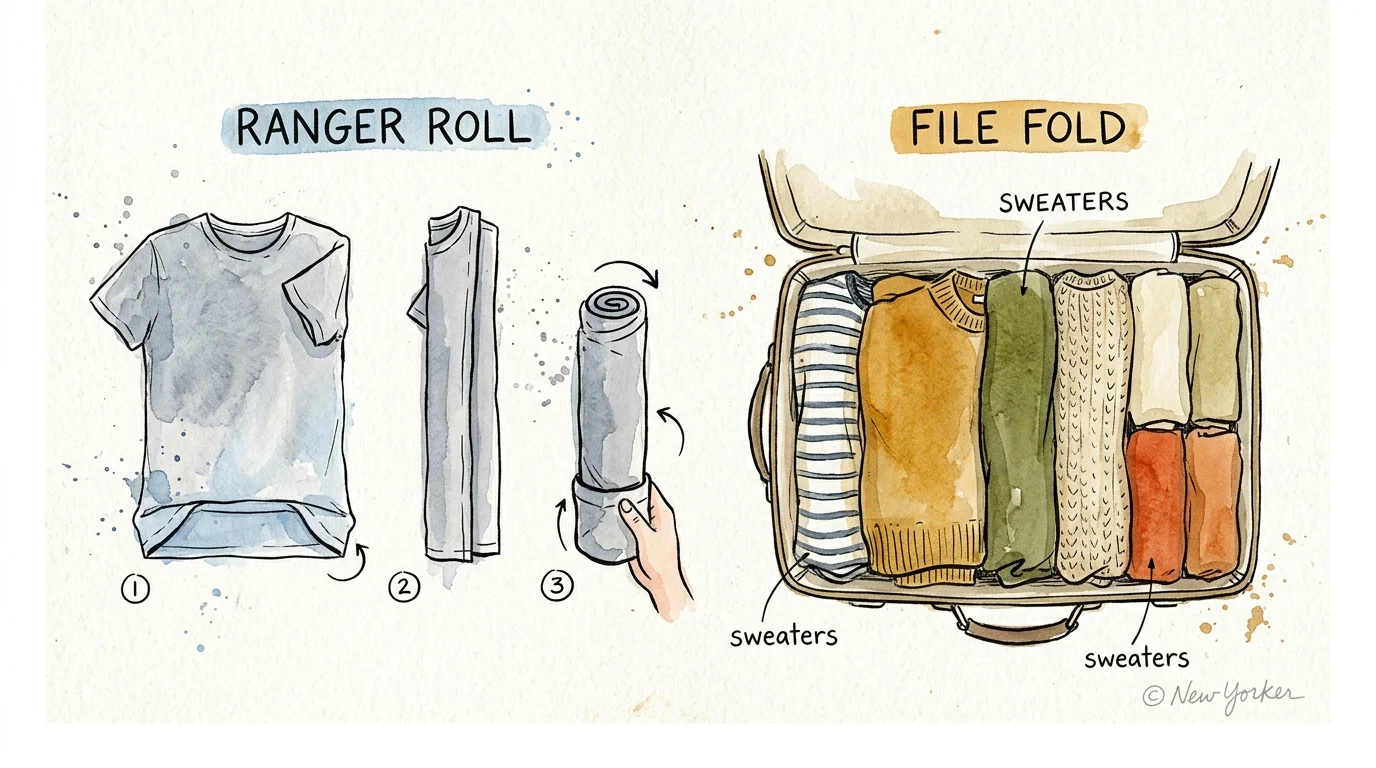
Professional organizers fiercely debate the merits of rolling versus folding, but the most efficient packers use a strategic combination of both methods. Rolling your clothes tightly—specifically using the military-style “Ranger Roll” technique—eliminates trapped air and drastically reduces wrinkles in synthetic blends, cotton t-shirts, and activewear. To execute a Ranger Roll, fold the bottom hem of your shirt inside out by about two inches. Fold the sides inward, roll the shirt tightly from the collar down to the hem, and tuck the rolled fabric into the inverted pocket you created. The result is a compact, burrito-like bundle that stays securely fastened and will not unroll if your suitcase gets jostled.
For bulkier items like stiff denim, thick wool sweaters, or linen trousers, rolling creates awkward, space-wasting cylinders that refuse to lay flat. Instead, deploy the file-folding method popularized by home organizing professionals. Fold these garments flat and stand them upright side-by-side, much like files in a filing cabinet. Ensure you fold the garment so its height precisely matches the depth of your suitcase compartment. This technique allows you to see the folded edge of every single garment simultaneously, eliminating the need to dig through a towering stack and ruin your perfectly packed clothes just to find one sweater.
Trick 3: Deploy Packing Cubes to Compartmentalize
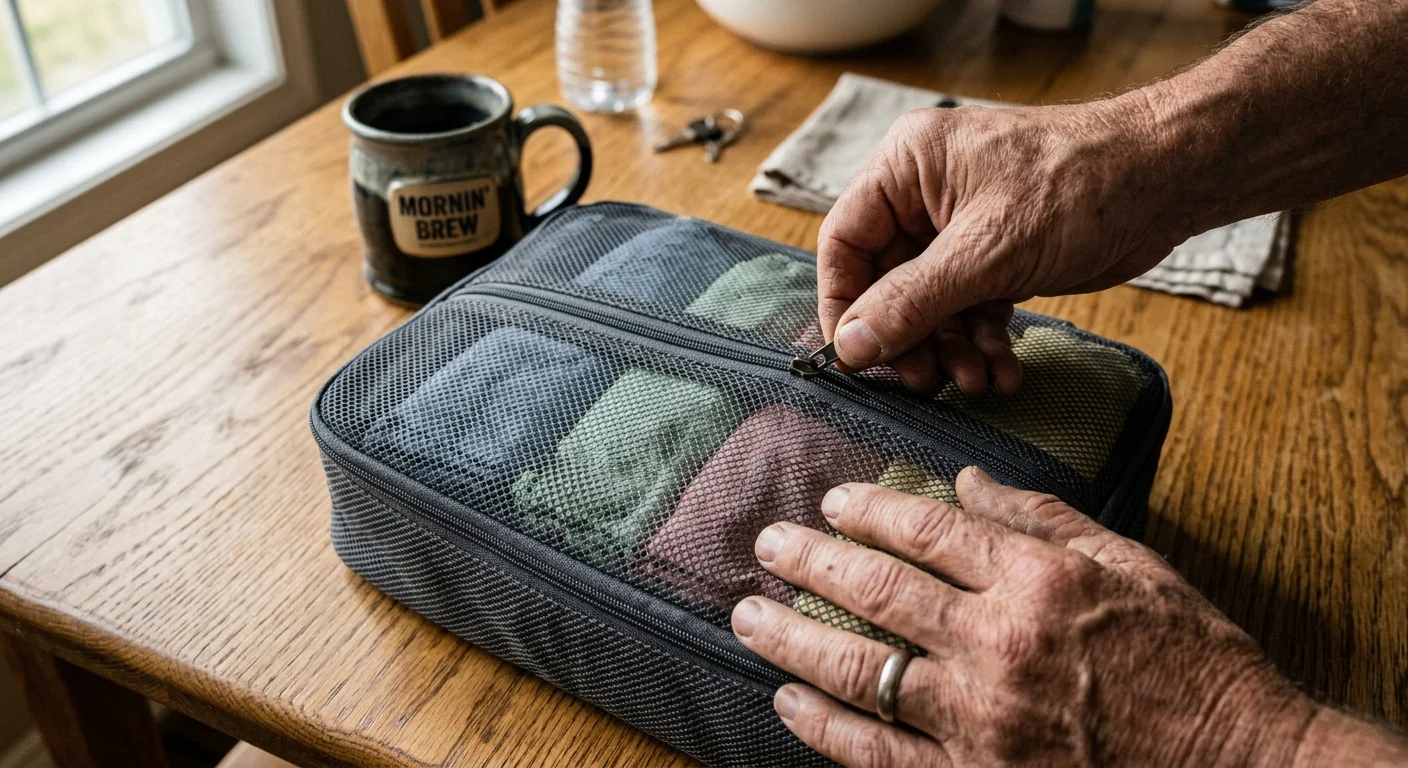
If you treat your suitcase like one massive, open cavern, your clothes will inevitably shift into a chaotic jumble the second baggage handlers toss your bag onto the conveyor belt. Packing cubes solve this common problem by transforming the empty space into neat, structured compartments. Compression cubes take this efficiency a step further by utilizing an extra outer zipper to squeeze excess air out of bulky layers, saving you up to thirty percent more space.
Follow this step-by-step process to optimize your luggage using packing cubes:
- Sort by category or day: Dedicate specific cubes to specific clothing types. Use one medium cube for tops, another for bottoms, and a smaller cube for undergarments. Alternatively, if you are taking a short trip, pack one complete outfit per cube.
- Color-code for shared bags: If you are packing for multiple family members in one large shared suitcase, assign a specific cube color to each person so everyone can grab their items without tearing the bag apart.
- Pack vertically: Rather than stacking clothes flat inside the cube, use the file-folding method to stand them upright so you can see your options at a glance.
- Fill the remaining gaps: Slide tightly rolled socks or coiled belts into any empty crevices inside the cube to maximize the internal structure and prevent fabrics from shifting.
- Reserve a laundry cube: Bring an empty, lightweight, water-resistant cube to isolate dirty laundry during your trip. This prevents unpleasant odors and dampness from transferring to your clean garments.
Trick 4: Capitalize on the Dead Space Inside Your Shoes
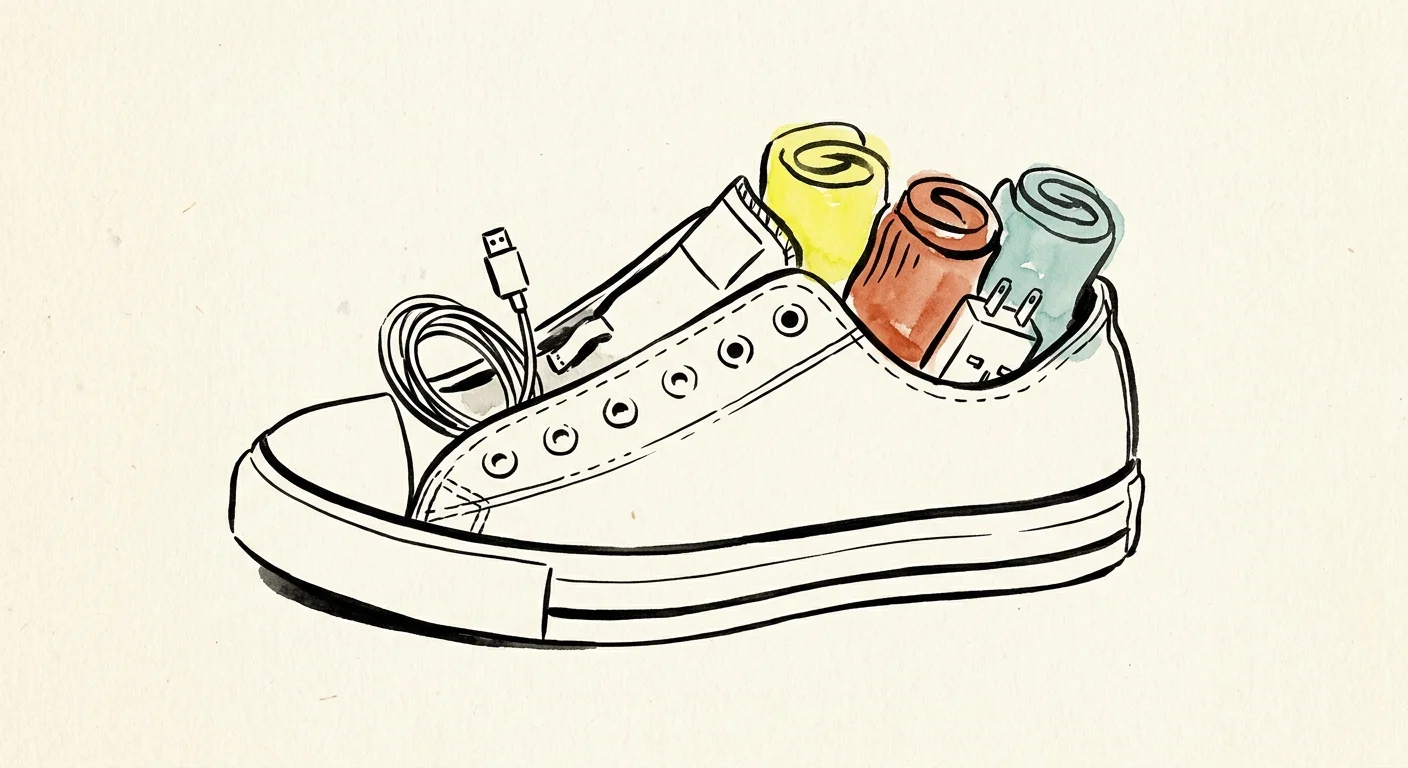
Shoes consume a massive footprint inside any suitcase; however, they also offer built-in, protective storage space that mostly goes ignored. The rigid structure of sneakers, loafers, and boots makes them the perfect vessel for transporting fragile or easily wrinkled items. Stuff your socks, rolled ties, and tightly coiled belts directly into the toe boxes of your footwear. This trick instantly reclaims lost real estate while simultaneously acting as a makeshift shoe tree to prevent your footwear from crushing under the heavy weight of your luggage.
If you travel with delicate electronics—such as wall chargers, power banks, or international plug adapters—slip them inside a clean sock and push them securely into your sneakers. Once your shoes are fully stuffed, ensure you place them inside a designated cloth shoe bag. If you do not own shoe bags, wrap the soles in a simple plastic hotel shower cap before resting them against your clean clothes. This barrier traps dirt, street grime, and scuff marks, keeping your pristine capsule wardrobe completely safe and sanitary during transit.
Trick 5: Navigate the 2026 TSA Liquids Rule With a Transparent Pouch
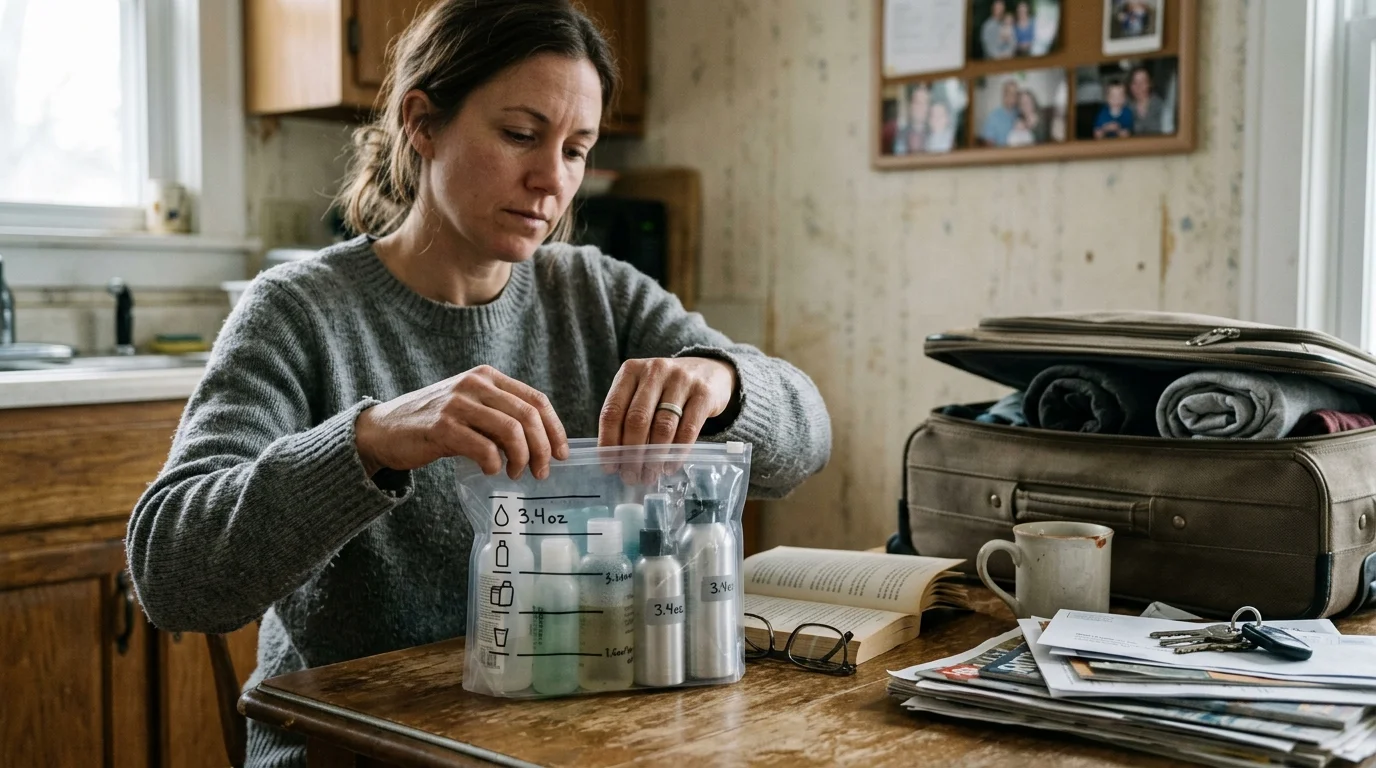
Security checkpoints present the ultimate test of your packing efficiency. Digging blindly through your bag to find a rogue bottle of shampoo holds up the line and skyrockets your stress levels. In 2026, the United States still strictly enforces the standard 3-1-1 rule across all domestic security checkpoints. The Transportation Security Administration mandates that all liquids, aerosols, gels, creams, and pastes must be carried in travel-sized containers that are 3.4 ounces (100 milliliters) or smaller.
Furthermore, all of these items must fit comfortably into a single, transparent, quart-sized resealable bag per passenger. Pay close attention to the printed volume on your containers; a six-ounce tube of toothpaste with only a tiny drop remaining will still be confiscated because TSA agents screen the maximum physical capacity of the container, not the remaining volume inside. Store this clear liquid pouch at the very top of your carry-on or in an easily accessible exterior pocket so you can extract it in seconds.
Keep in mind that certain exceptions exist for essential items. Liquid medications, baby formula, and breast milk are generally permitted in quantities larger than 3.4 ounces. However, you must declare these specific items to the security officer at the checkpoint before your bag enters the X-ray machine. Staying organized and knowing the current regulations ensures you move through security without costly confiscations.
Trick 6: Build a Mini Travel Capsule Wardrobe
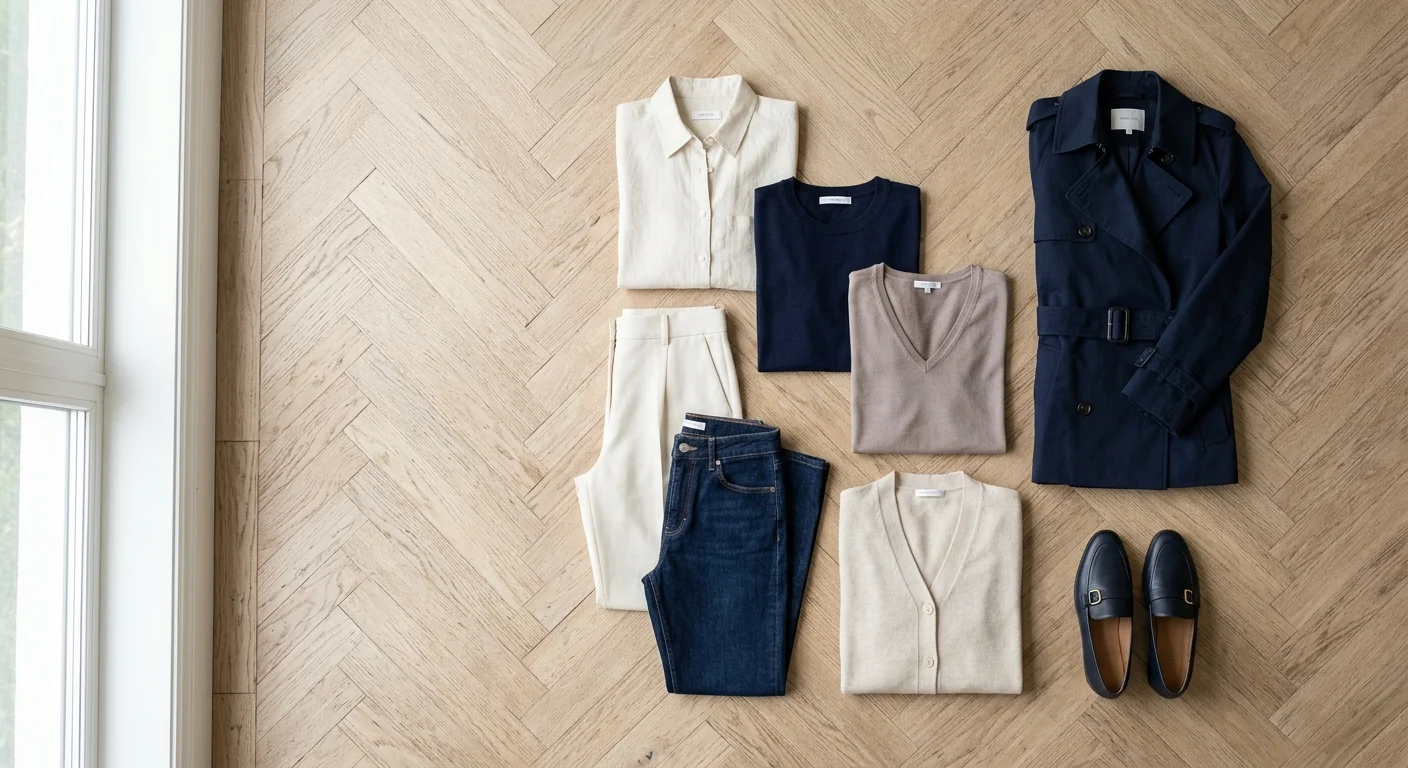
The single biggest packing mistake you can make is throwing random, disjointed outfits into your bag out of sheer panic. Overpacking almost always happens when you try to anticipate every hypothetical weather event and social scenario. Professional organizers bypass this trap by designing a travel capsule wardrobe—a tightly curated collection of versatile, color-coordinated garments that mix and match seamlessly.
By sticking to a neutral base color palette (such as navy, black, or beige) and adding one or two accent colors, you multiply your outfit possibilities without increasing your luggage volume. Choose synthetic blends or merino wool fabrics that resist wrinkles and dry quickly if you need to wash them in a hotel sink. A simple change of shoes and a patterned scarf can easily transition a daytime sightseeing outfit into appropriate attire for a formal dinner. To illustrate how powerful this technique is, review this sample five-day capsule wardrobe formula that fits easily into a standard carry-on bag:
| Wardrobe Category | Items to Pack | Outfit Potential & Strategy |
|---|---|---|
| Tops | 3 lightweight shirts; 1 crisp button-down | Can be layered for warmth or worn solo. Neutral colors pair effortlessly with all bottoms. |
| Bottoms | 1 pair of dark denim jeans; 1 pair of versatile trousers | Darker shades hide travel stains. Trousers easily dress up the button-down shirt. |
| Outerwear | 1 neutral cardigan or lightweight water-resistant jacket | Adds crucial warmth for chilly airplane cabins and dresses up a casual daytime look. |
| Footwear | 1 pair of comfortable walking shoes; 1 pair of dressier loafers or flats | Covers both extensive daytime exploring and upscale evening dinners without causing blisters. |
| Accessories | 1 patterned scarf; 1 versatile belt | Changes the focal point of repeated outfits, making the same clothes look entirely different. |
Trick 7: Keep a Pre-Packed Toiletry Kit on Standby
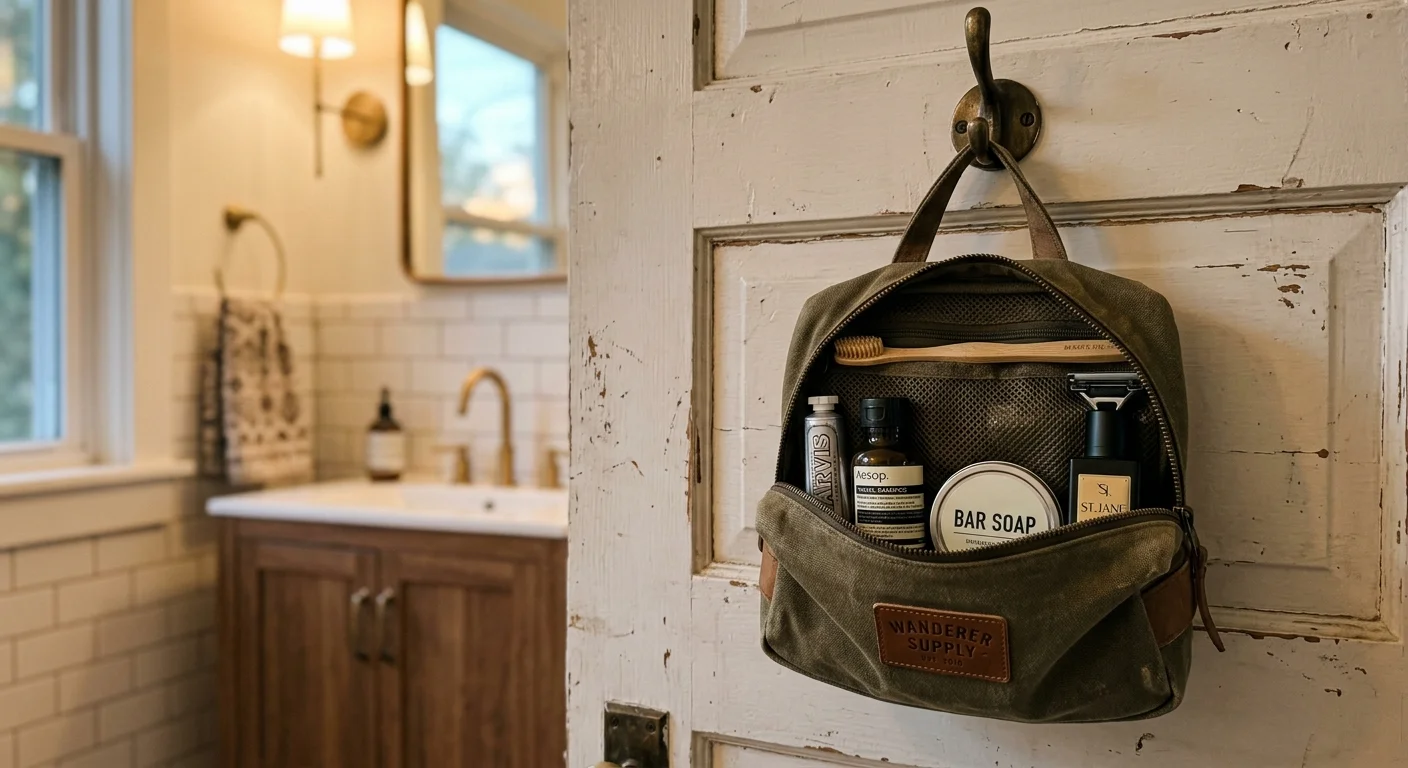
Packing your bathroom essentials often feels like the most tedious part of trip preparation because you actively use these items right up until the minute you leave your house. Forgetting your toothbrush, daily moisturizer, or contact lens solution happens frequently when you pack in a morning rush. Eliminate this last-minute scramble entirely by building a dedicated, pre-packed travel toiletry kit that lives permanently in your suitcase or bathroom cabinet.
Rather than buying expensive, pre-packaged travel minis for every single trip, purchase duplicate travel-sized bottles and decant your absolute favorite full-sized daily products into them. Leak-proof silicone travel bottles are highly recommended because they safely expand and contract with changing cabin air pressure, preventing explosive leaks over your clothes. Restock this grab-and-go kit immediately upon returning home from a trip, rather than waiting until the night before your next departure. When your bag is perpetually loaded with the essentials, you cut your packing time in half. You also drastically reduce the cognitive load of remembering every tiny swab, serum, and medication. Keeping this kit fully stocked guarantees you will never find yourself paying triple the retail price for a mediocre bottle of hotel lobby sunscreen again.
How Efficient Packing Protects Your Wallet From Rising Baggage Fees
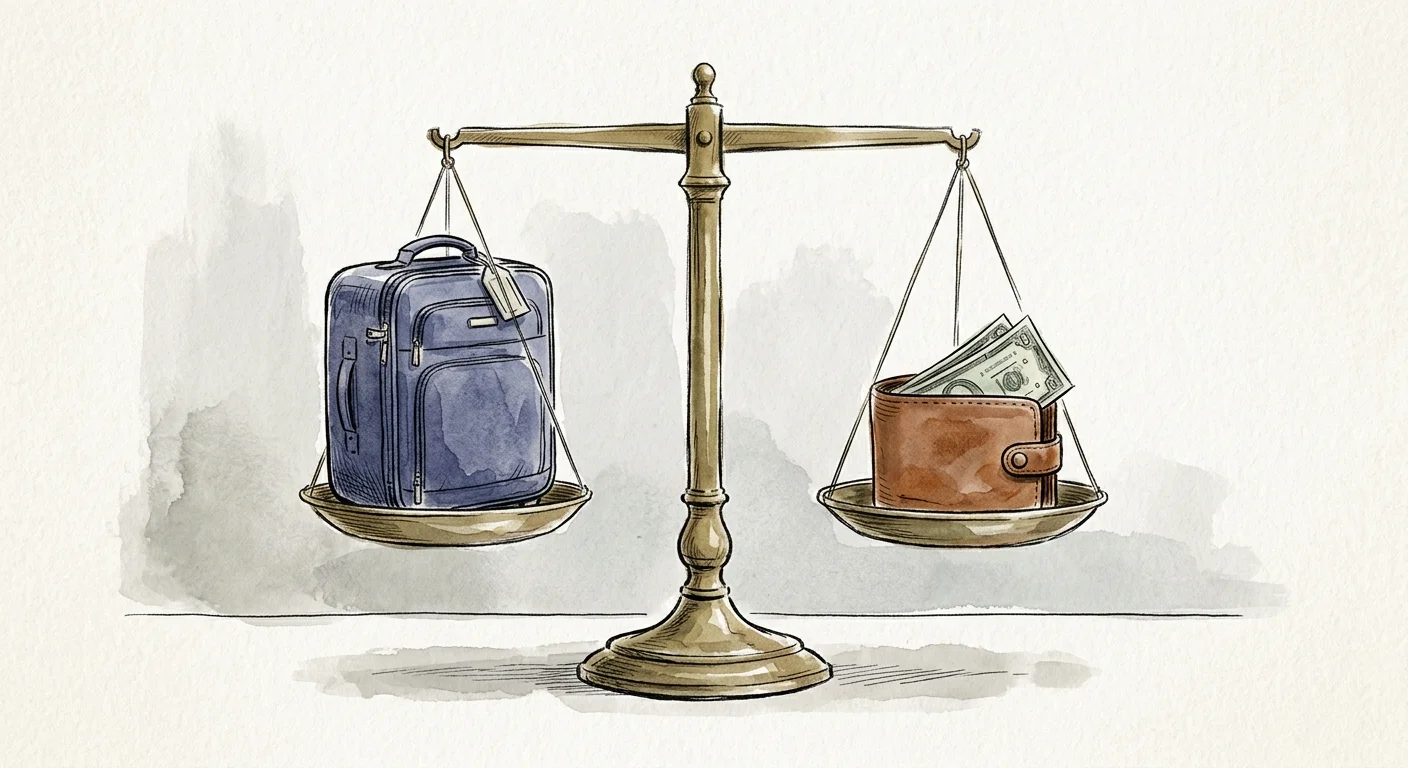
Mastering these seven practical organization tricks does far more than soothe your pre-travel anxiety; it directly protects your bank account. In early 2026, the travel industry saw another significant shift in checked luggage costs, with several major carriers hiking their standard fees. For example, American Airlines raised its first checked bag fee to $50 at the airport, while a second bag will cost you $60. When you multiply those fees across a round-trip ticket for an entire family, you could easily spend hundreds of extra dollars just to transport your everyday clothing.
Furthermore, basic economy fares have become increasingly restrictive, with some tickets no longer including a standard overhead carry-on allowance. If you are forced to pack your trip into an under-seat personal item, implementing the Ranger Roll and compression cubes becomes an absolute financial necessity. Even if you absolutely must check a large bag for an extended overseas excursion, efficient packing prevents your suitcase from crossing the dreaded fifty-pound overweight threshold. The National Institute for Occupational Safety and Health (NIOSH) evaluates 51 pounds as the absolute safe maximum lifting limit for workers operating under ideal conditions. Airlines adhere strictly to these ergonomic guidelines, which is exactly why bags exceeding 50 pounds immediately trigger exorbitant overweight penalties. Keep your luggage compact, logically organized, and lightweight to navigate the airport smoothly and keep your hard-earned travel budget entirely intact.
Your next step is to evaluate your packing habits immediately after your next trip ends. As you unpack, take note of any garments you never wore and remove them from your future packing lists. Wash and restock your dedicated toiletry kit today, so your suitcase is perfectly primed and ready for your next adventure.