A cloudy glass cooktop quickly ruins the clean appearance of an otherwise spotless kitchen. You wipe the smooth surface repeatedly, yet greasy films and dull rainbow smears linger behind.
These frustrating marks rarely come from stubborn food spills or permanent glass damage. Instead, common glass stovetop cleaning mistakes leave behind evaporated mineral residues and trapped chemical layers.
By correcting ten everyday habits, you can restore a streak-free glass cooktop with minimal physical effort. Simple adjustments to your daily routine will deliver a flawless mirror finish every single night.
1. Cleaning the Cooktop While the Surface Is Still Hot
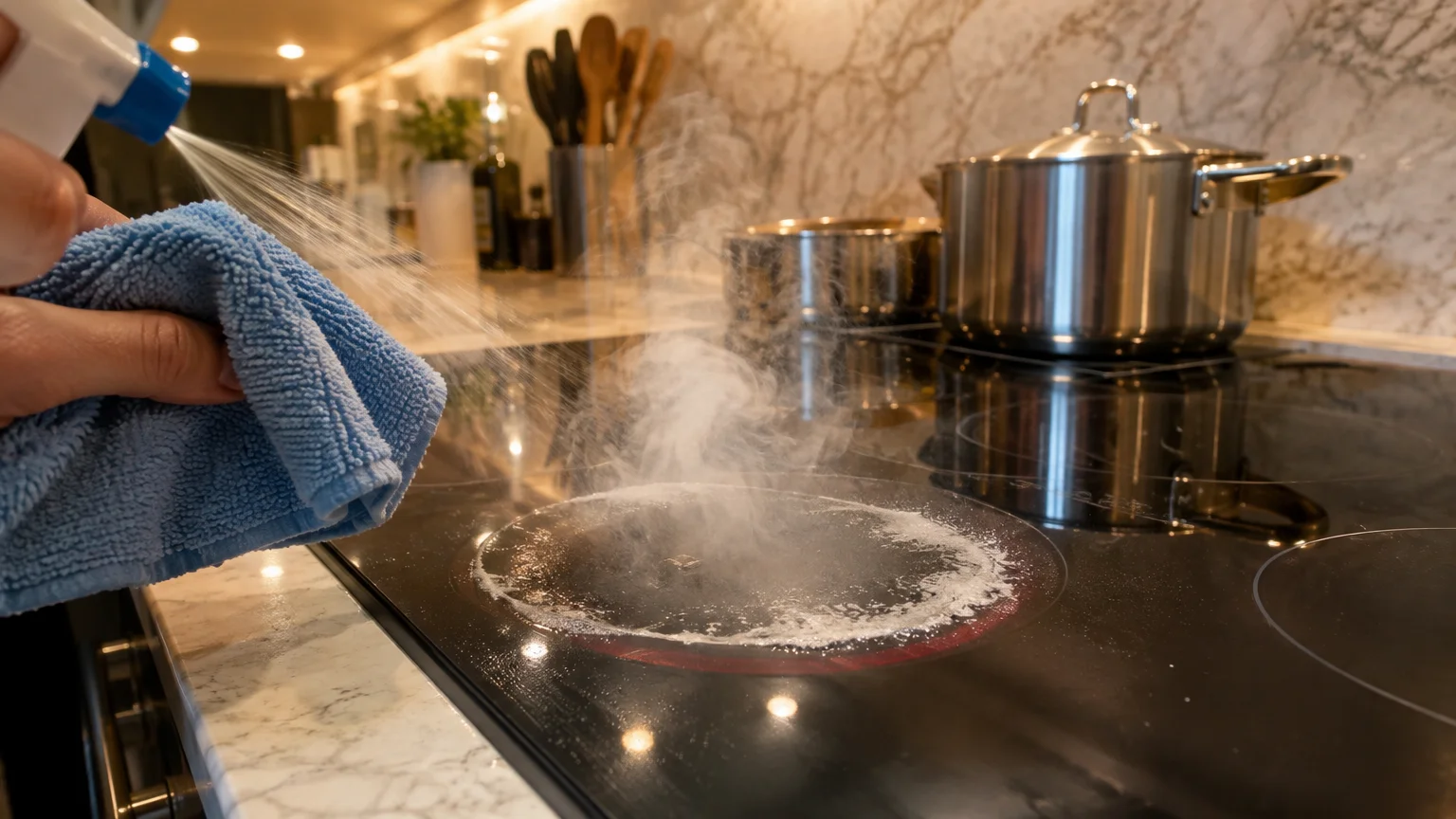
Wiping hot ceramic glass seems like an efficient way to tackle fresh splatters, but it instantly creates unsightly surface haze.
Cleaning formulas flash-evaporate against heated glass, baking chemical detergents directly into the ceramic pores before you can wipe them away.
This rapid evaporation leaves behind a baked-on chemical glaze that resists standard wiping and turns dull under kitchen lights.
Furthermore, sudden temperature swings risk thermal shock, which can cause micro-fractures in ceramic surfaces over time.
Always wait until the heat indicator light turns off completely before applying any moisture or cleaning spray to the glass.
2. Relying on Standard Window Cleaners and Ammonia Sprays
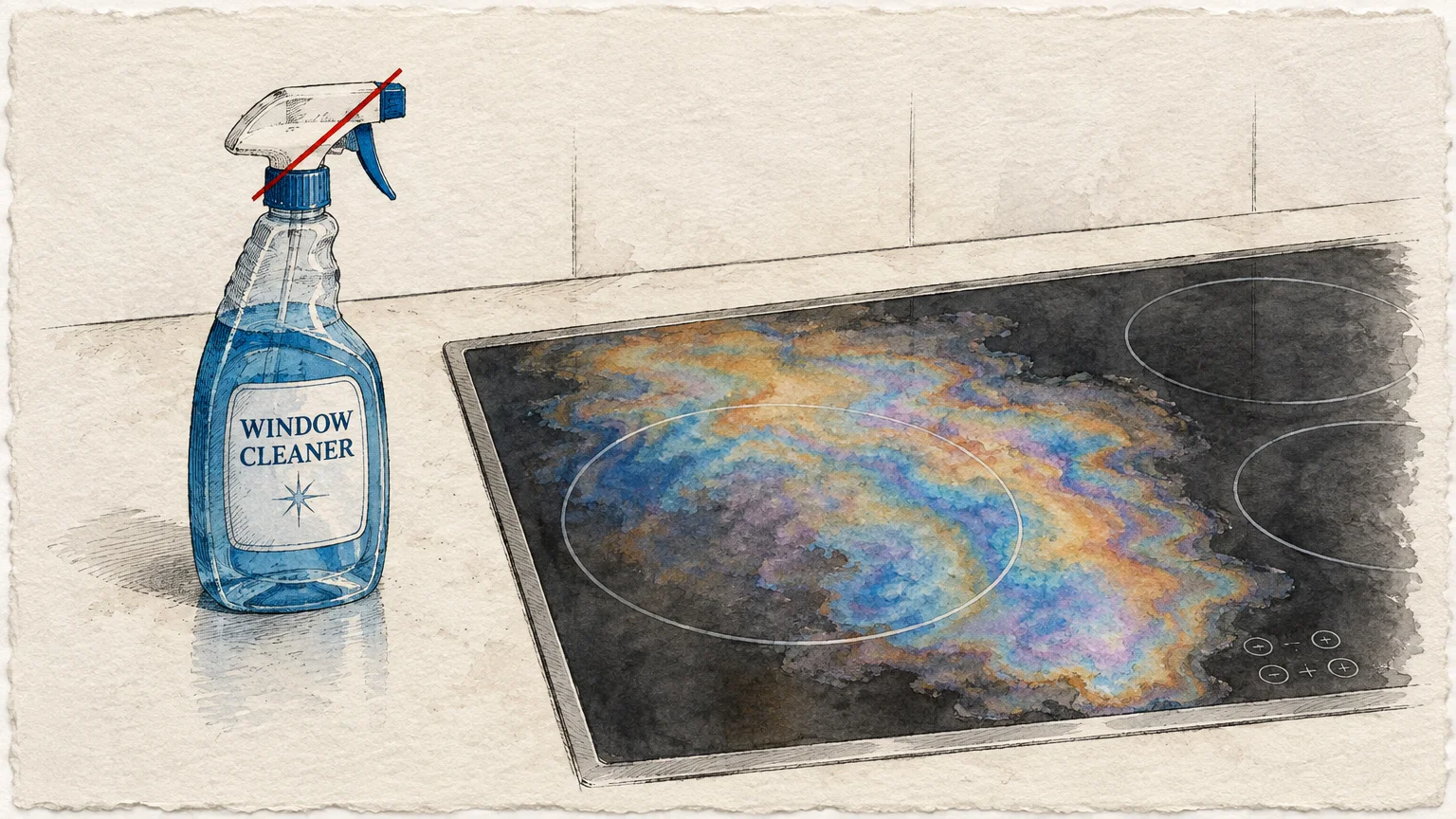
Standard blue window sprays contain ammonia and artificial dyes formulated strictly for vertical window panes.
Ceramic cooktops require different care because high cooking temperatures chemically alter ammonia compounds.
Heat bakes ammonia into the smooth ceramic glass, producing a stubborn, iridescent rainbow film that dulls the glass finish.
According to appliance maintenance guidance from GE Appliances, ammonia-based cleaners can permanently etch smooth ceramic glass during subsequent heating cycles.
Swap household glass sprays for dedicated ceramic cooktop cleaners, or use a basic blend of distilled water and white vinegar.
3. Scrubbing With Abrasive Sponges and Steel Wool
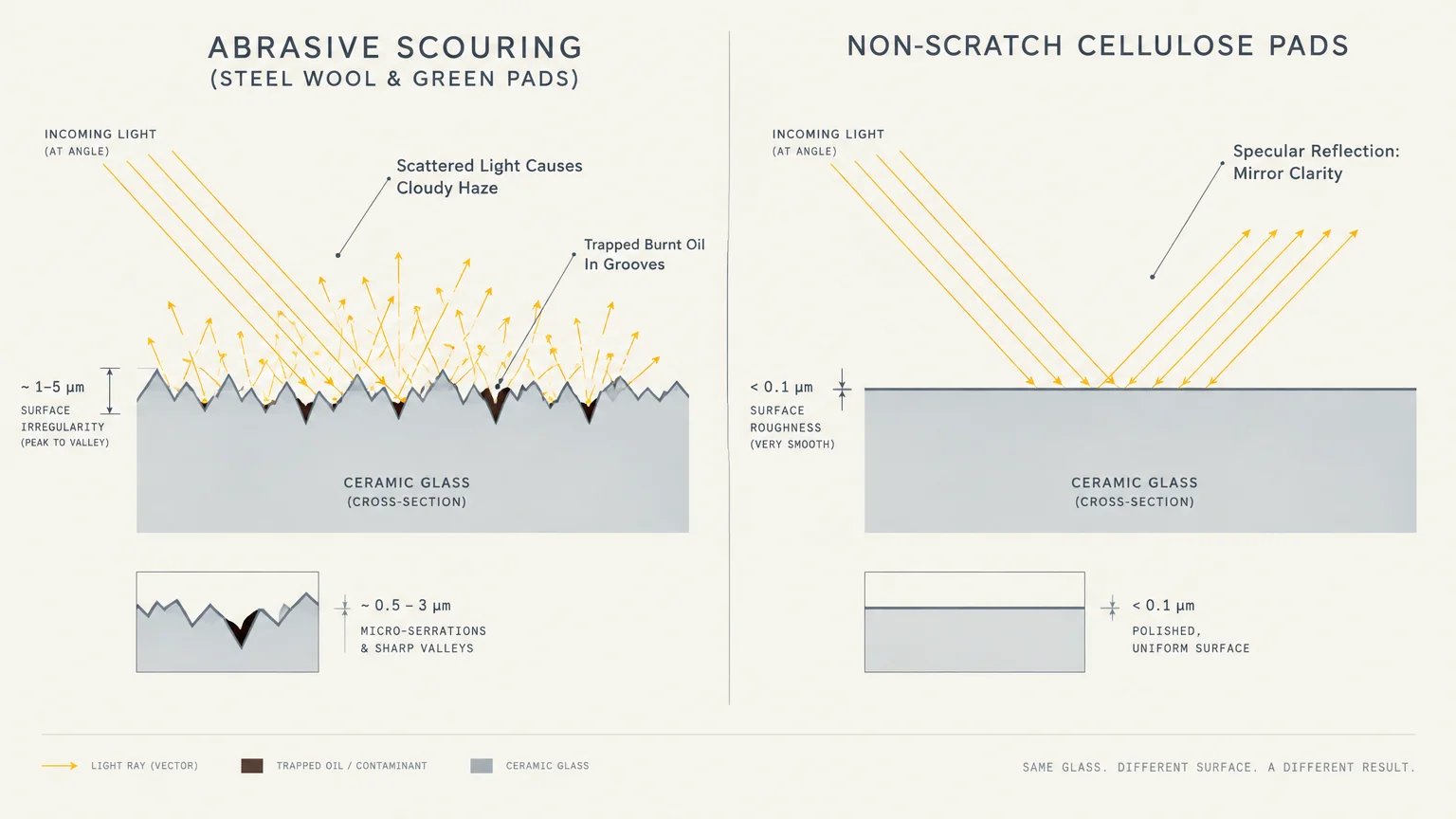
Green scouring pads, steel wool, and heavy-duty scouring sponges remove charred sugar quickly, but they extract a heavy toll.
These coarse abrasives carve thousands of microscopic scratches into the polished surface of your cooktop.
Light scatters unevenly across scratched glass, creating the visual illusion of cloudy stovetop streaks that no cleaning spray can fix.
These microscopic valleys also collect airborne grease and scorched oils, making future cooking spills significantly harder to lift.
Rely instead on soft cellulose sponges or non-scratch scrubbing pads certified specifically for delicate glass and ceramic surfaces.
4. Using Heavy Coats of Liquid Dish Soap
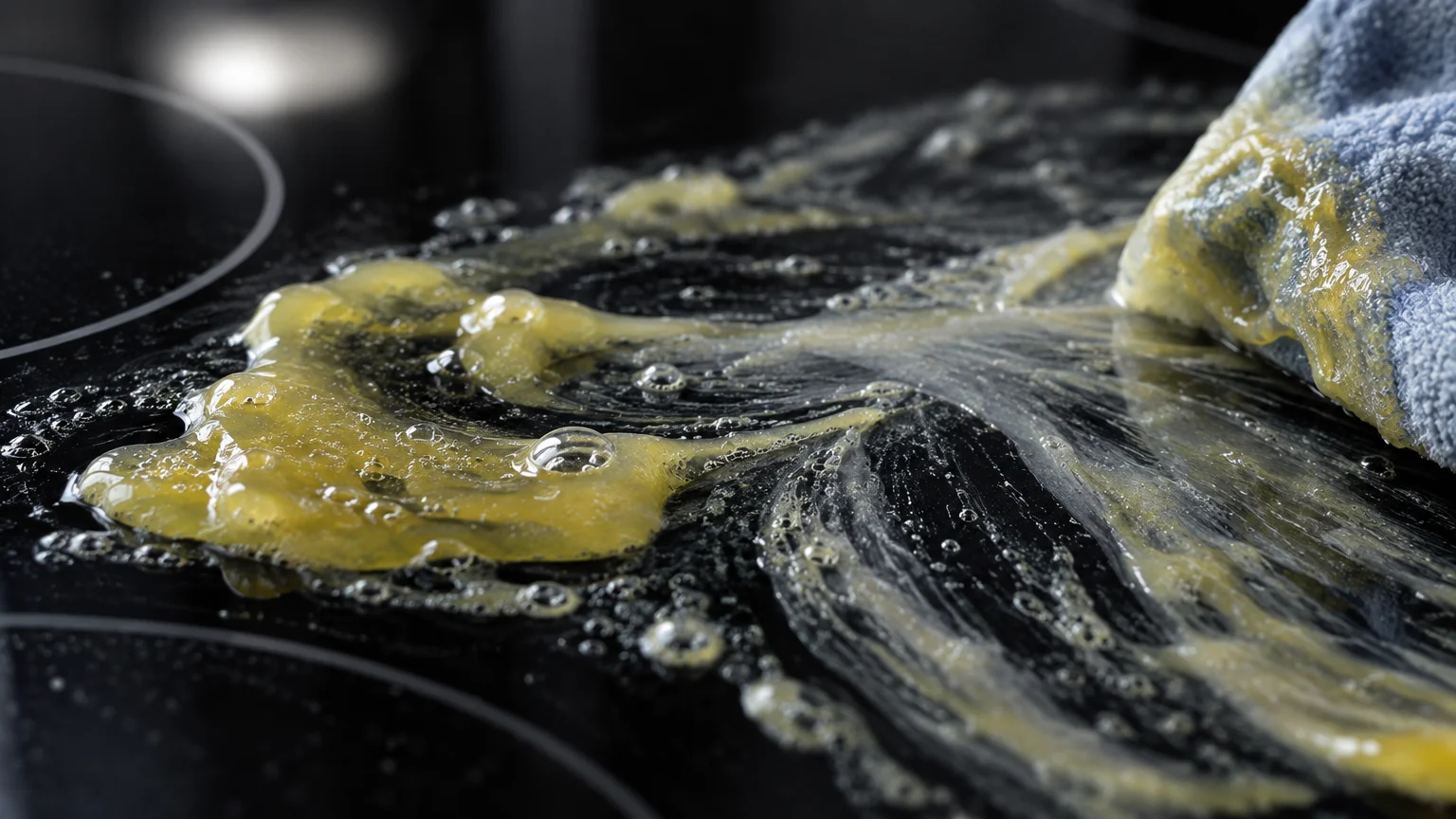
Liquid dish soap cuts grease effectively, but squirted straight onto a stovetop, it causes severe visual streaking.
Dish detergents contain dense surfactants, synthetic thickeners, and skin-softening additives that adhere firmly to smooth glass.
Industry research from The American Cleaning Institute highlights how excess surfactant residue creates dull surface hazing unless thoroughly rinsed away.
Because you cannot rinse a stovetop under running water, removing heavy soap requires dozens of damp towel passes.
If you use dish soap, dilute a single drop into two cups of warm water rather than applying it directly to the glass.
5. Skipping the Razor Blade Scraper for Burnt Rings
Many people try to dissolve thick, burnt-on food spills entirely with liquid cleaners and vigorous wiping.
Rubbing a cloth across raised, charred sugar rings simply smears liquefied carbon across the entire glass panel.
This spread-out carbon creates wide, greasy halos around your burners that look like permanent discoloration.
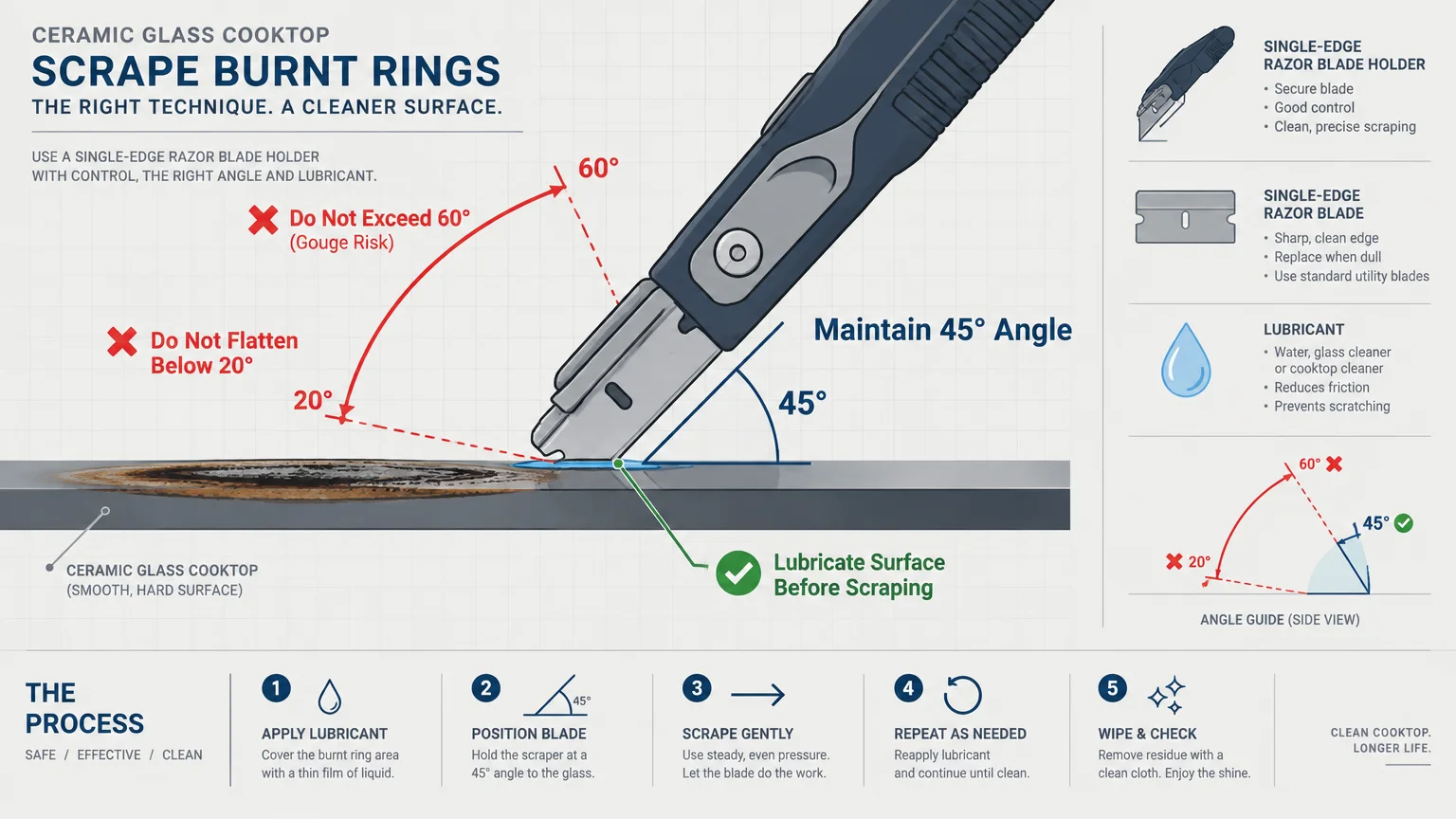
A specialized razor scraper removes hardened spills cleanly without smearing burnt residue into surrounding clean areas.
Hold a fresh carbon steel blade at a strict 45-degree angle against wet glass to shave off burnt debris safely.
6. Rinsing With Mineral-Rich Tap Water
If your tap water contains elevated concentrations of calcium and magnesium, it actively undermines your cleaning efforts.
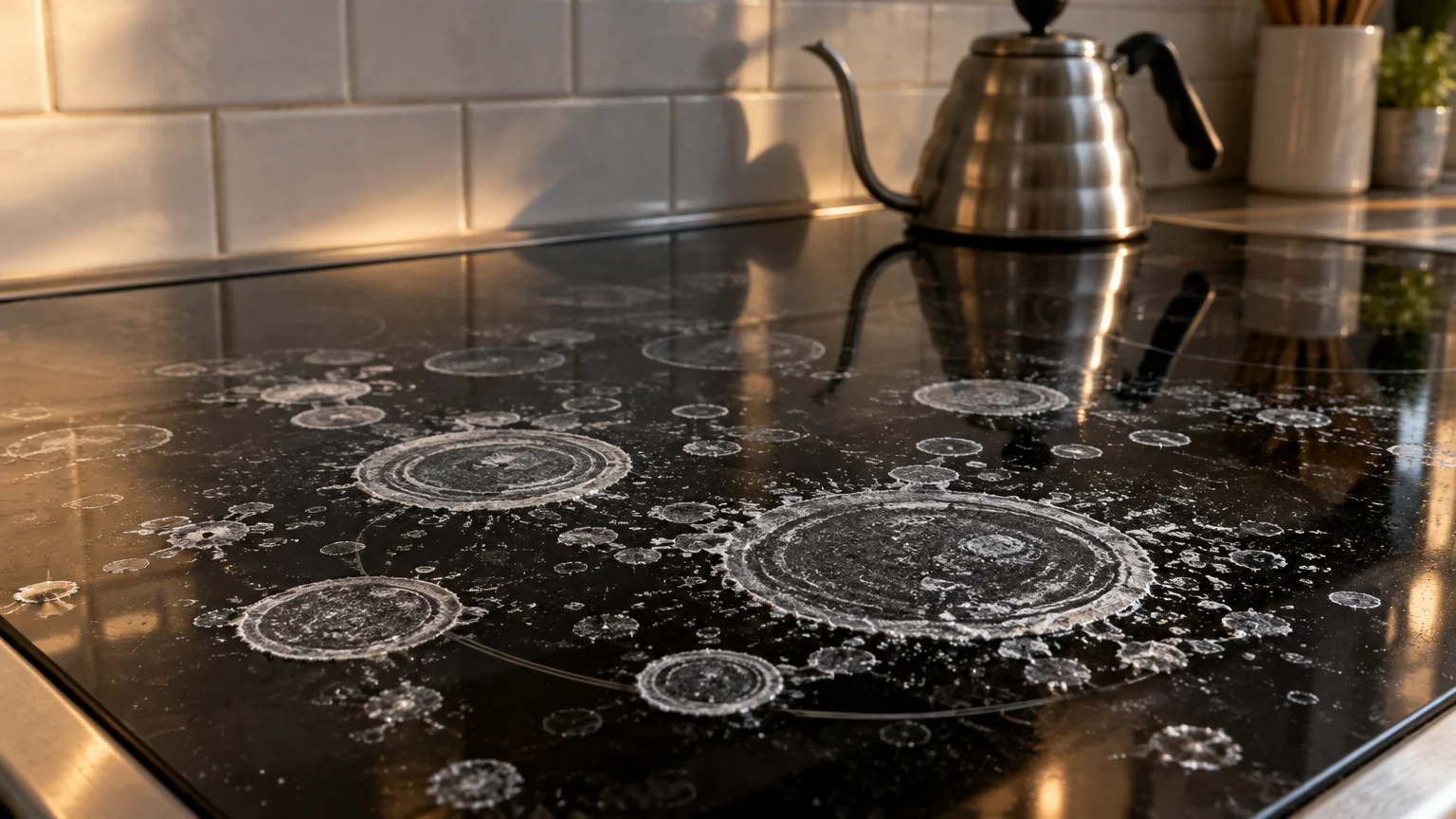
As tap water evaporates from dark glass, it leaves behind chalky mineral scale known as limescale.
Data provided by the USGS Water Science School shows that hard water leaves visible carbonate salts behind on smooth surfaces.
These mineral streaks mimic greasy smudges, prompting people to scrub harder with even more hard water.
Keep a spray bottle of inexpensive distilled water under your sink to use for the final rinse and wipe down.
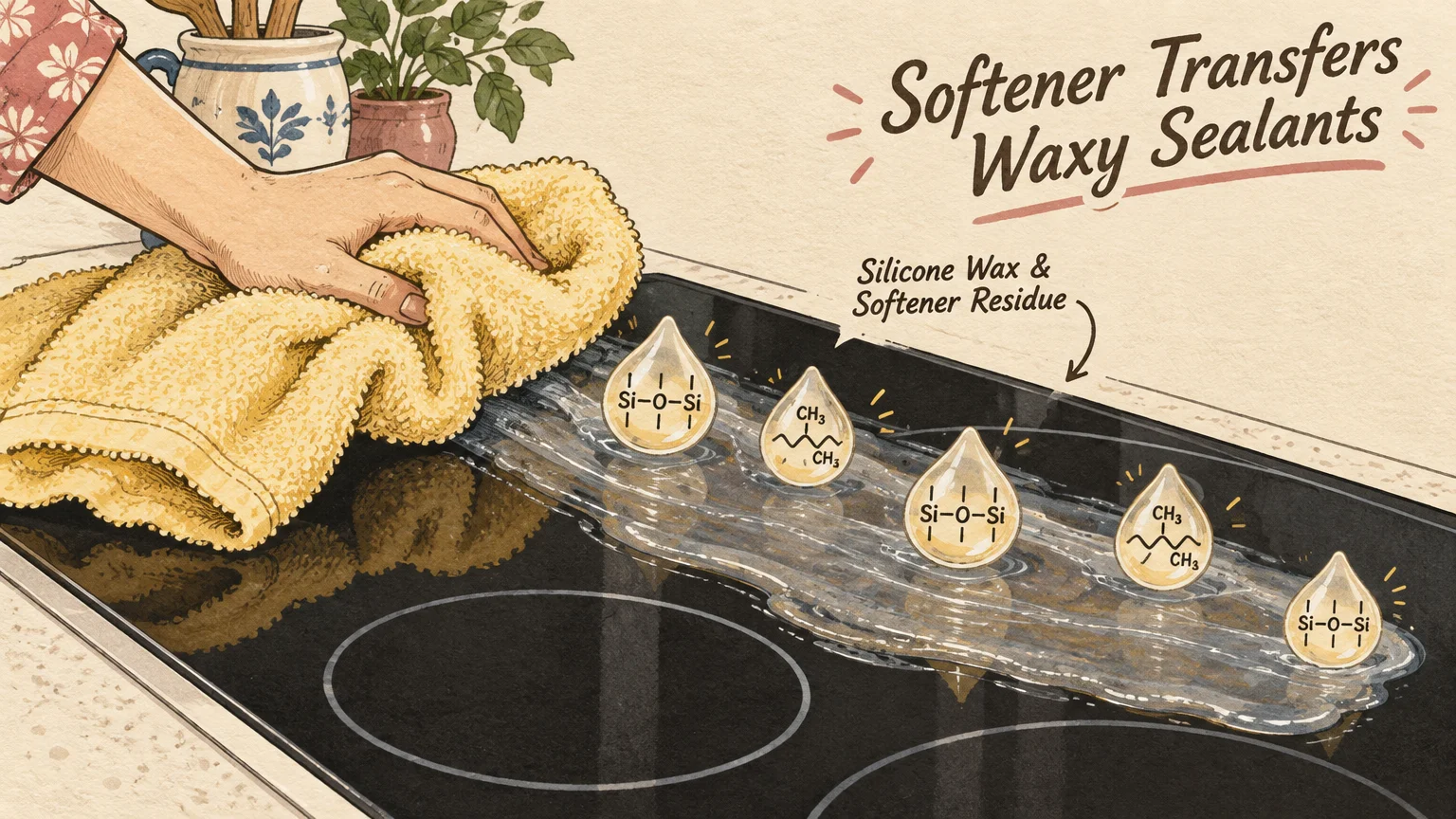
7. Buffing With Towels Treated With Fabric Softeners
Drying your clean cooktop with an everyday kitchen towel often deposits invisible waxes onto the surface.
Commercial fabric softeners and dryer sheets coat cotton and microfiber strands in slick silicones and synthetic oils.
When you buff the glass, these oily softeners transfer directly onto the cooktop, creating wide, milky rainbow smears.
These transferred waxes smoke slightly and darken when you ignite the burner during your next meal preparation.
Wash your cooktop microfiber cloths separately in warm water with fragrance-free detergent, and omit fabric softeners completely.
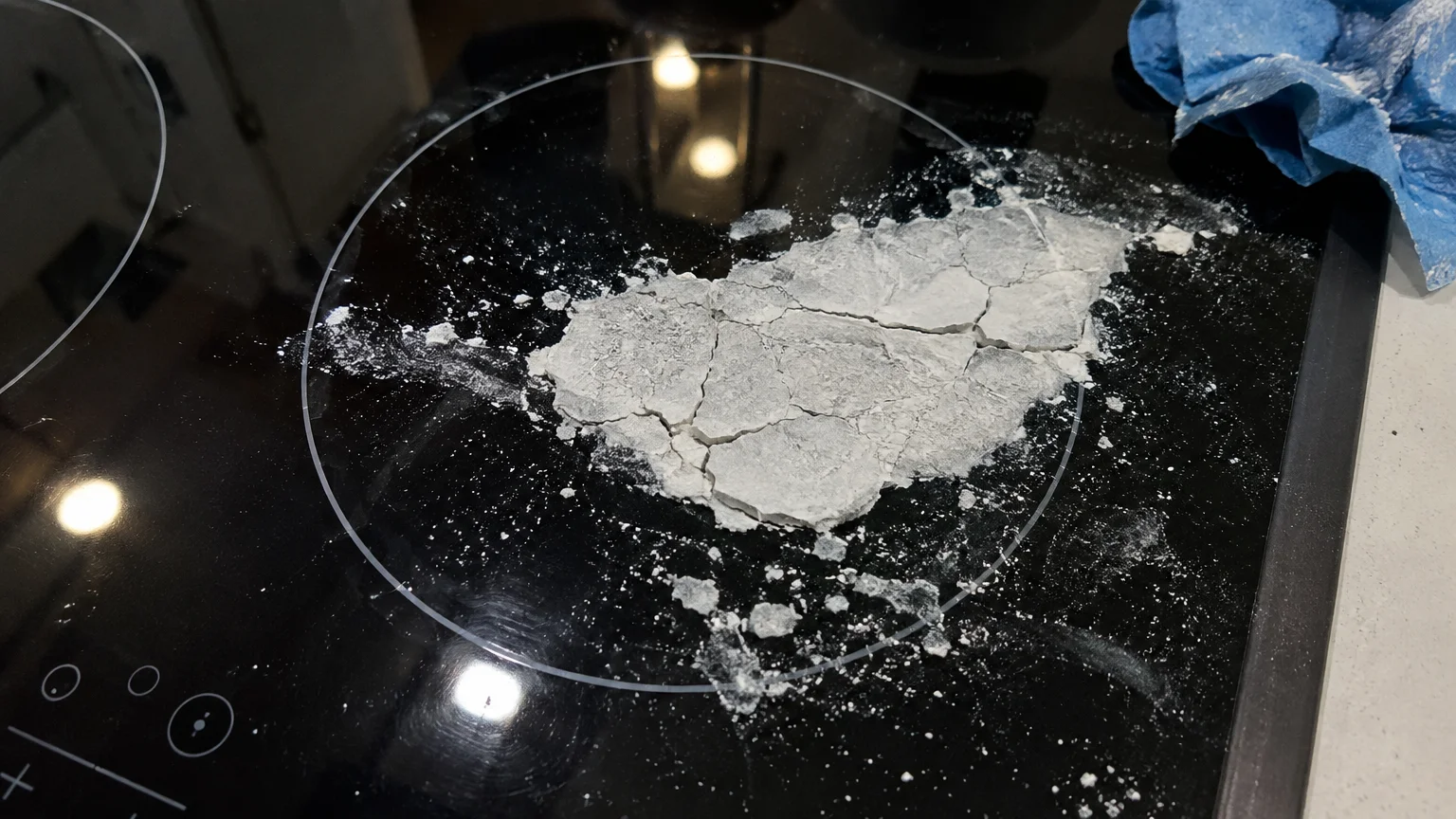
8. Letting Baking Soda Dry Into a Crust
Baking soda offers gentle abrasive power for tough spills, but letting it dry out creates a frustrating white haze.
Dried sodium bicarbonate clings stubbornly to smooth glass and turns into a chalky powder that smears whenever wiped.
Scrubbing dry baking soda crystals against glass can also cause fine micro-abrasions over time.
Always maintain a wet, paste-like consistency when working with baking soda on ceramic cooktops.
Spritz dried paste with distilled white vinegar to neutralize the alkaline powder into an easily wipeable liquid before removal.
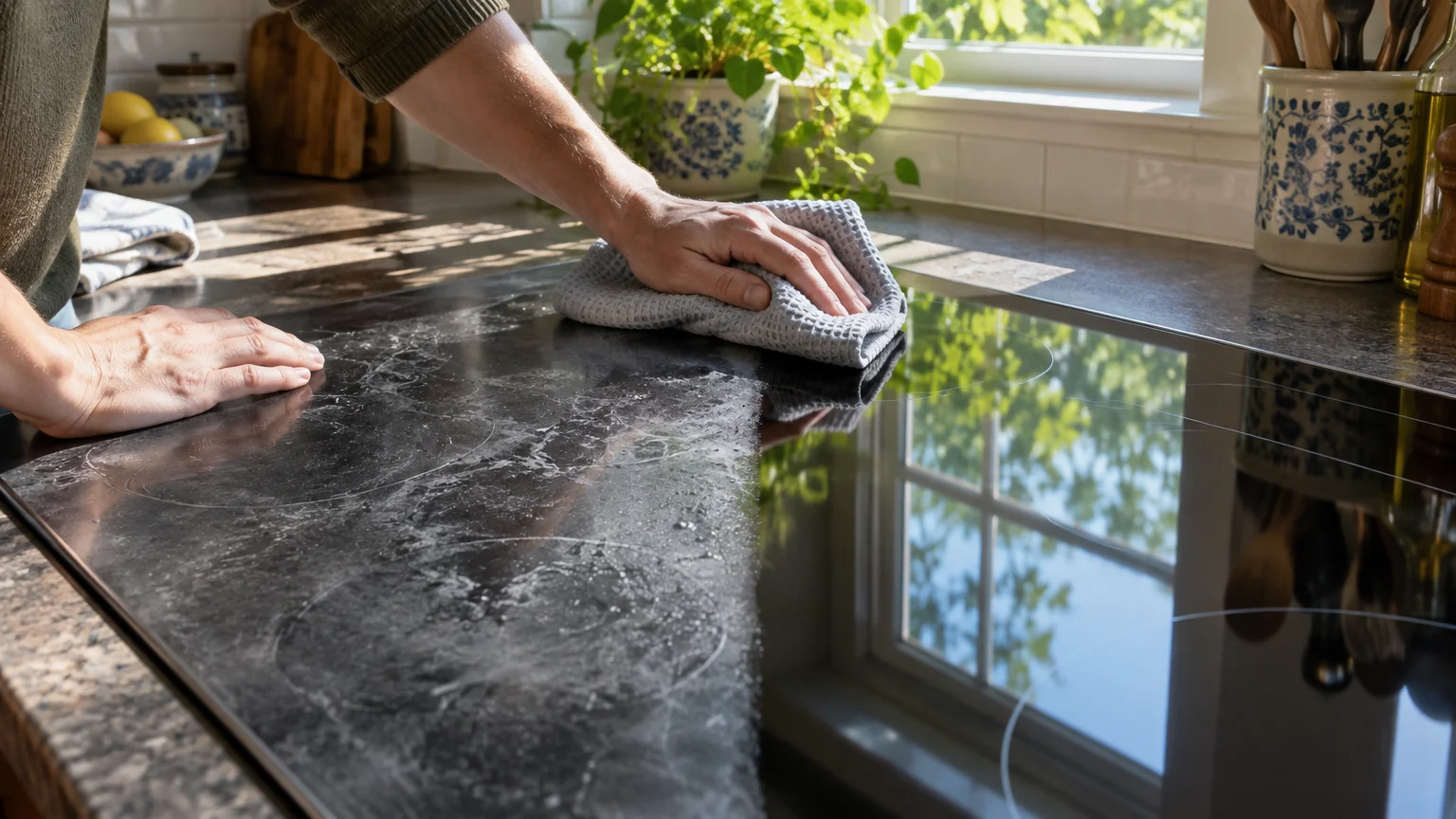
9. Skipping the Final Dry-Buffing Stage
Allowing your glass cooktop to air-dry guarantees streaks, even when you use the highest-quality specialty cleaners.
Tiny water droplets capture airborne dust as they sit, drying into tiny rings across the cooktop surface.
Achieving a streak-free glass cooktop requires a two-cloth system: one cloth for cleaning and another dry cloth for buffing.
The drying phase removes suspended dirt particles before the cleaning liquid evaporates off the surface.
Take a clean, waffle-weave or low-pile microfiber cloth and buff the surface using circular motions until completely dry.
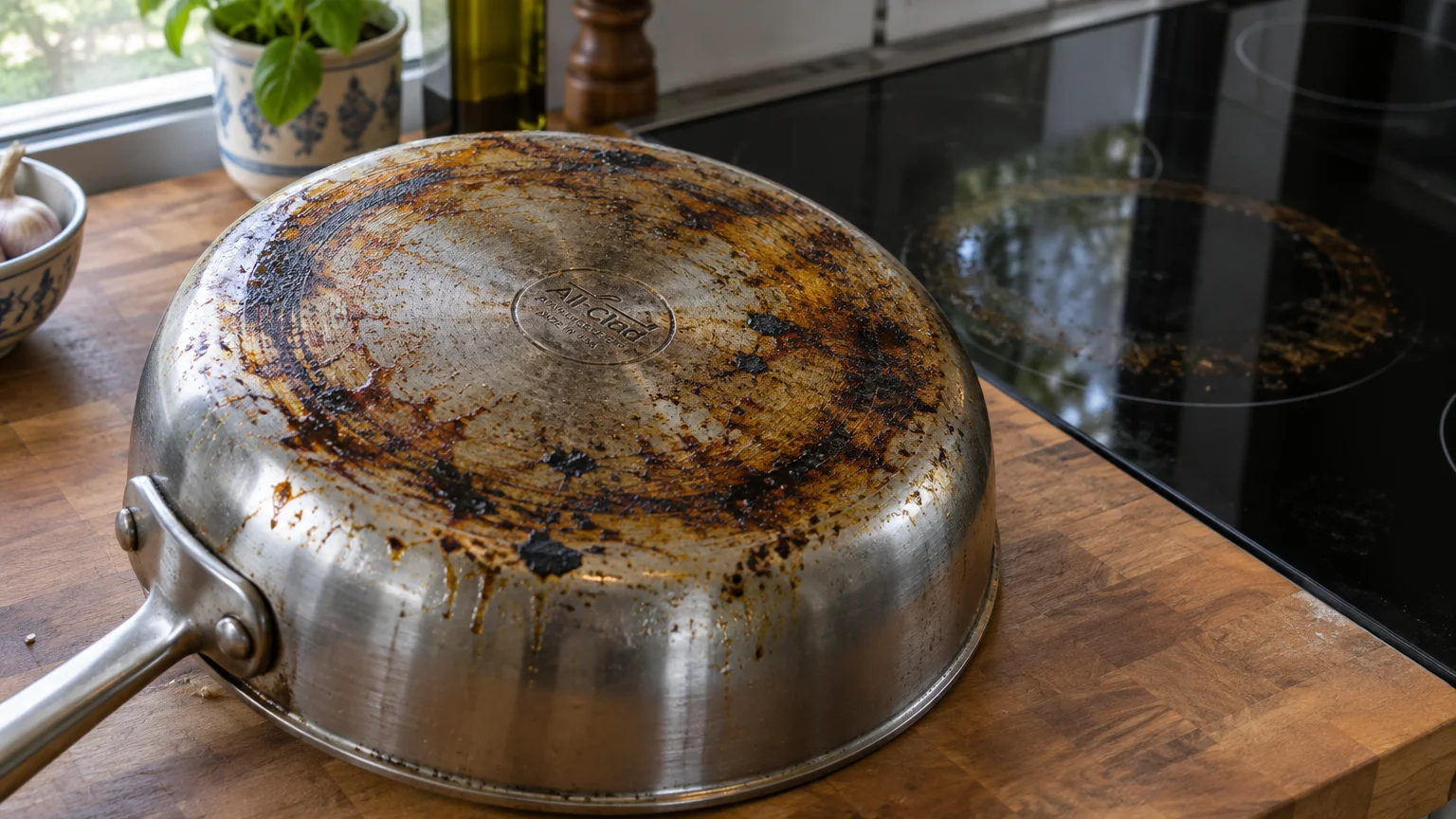
10. Forgetting to Clean the Bottoms of Your Cookware
You can clean your glass stovetop perfectly, only to watch fresh streaks bloom the moment you turn on a burner.
Grease splatters and burnt starches accumulating on cookware bases transfer straight onto hot glass.
Manufacturer cleaning guides from Whirlpool stress that foreign debris on pan bottoms directly causes baked-on cooktop stains.
The intense heat cooks that transferred grease directly onto the ceramic surface, creating milky halo streaks around cooking zones.
Inspect the undersides of your pans before cooking, washing away burnt residue with warm water and detergent.
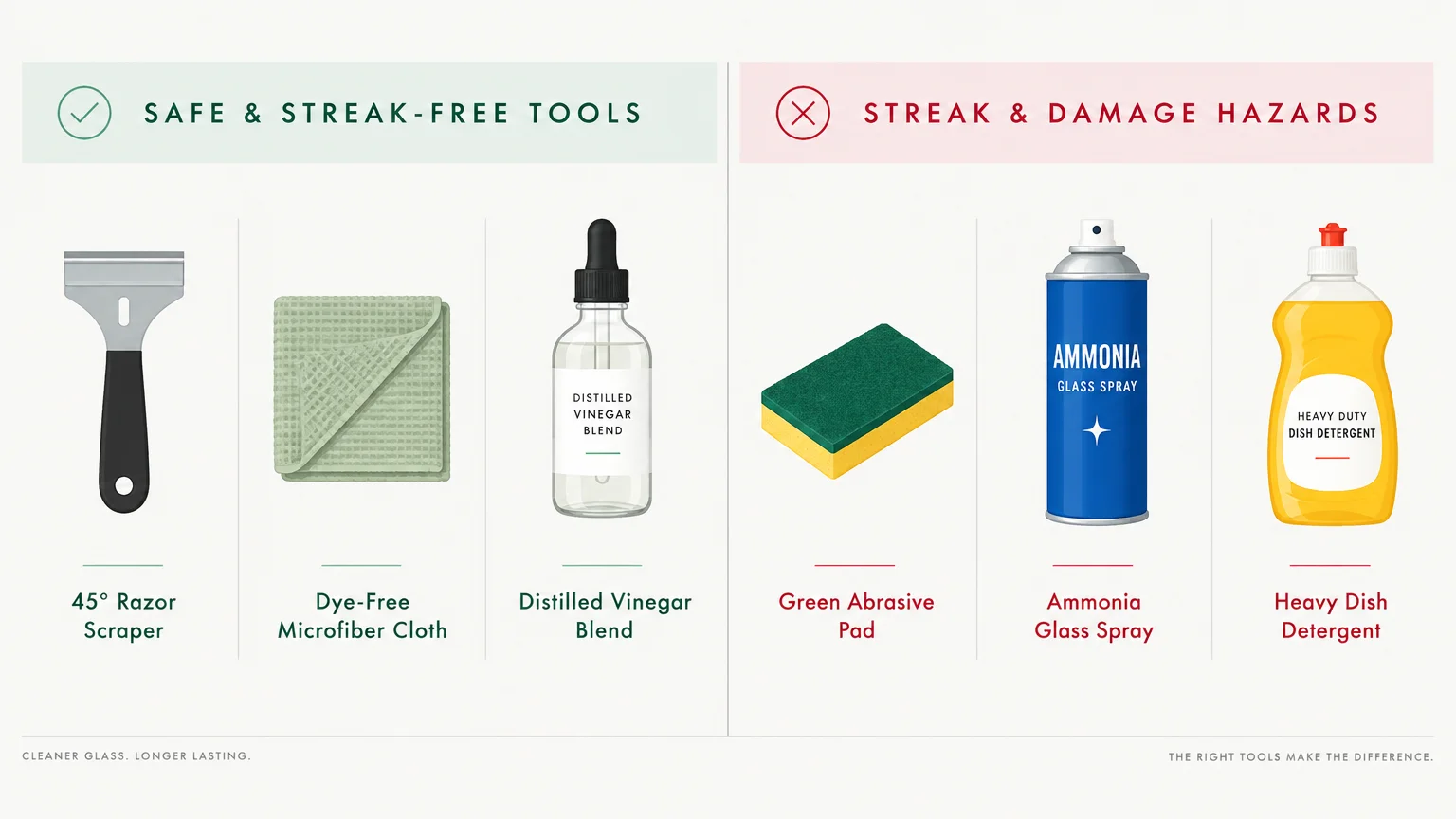
Safe vs. Streak-Causing Tools: Quick Reference Guide
Understanding which products cause streaks helps you streamline your kitchen cleaning caddy.
| Cleaning Tool or Product | Why It Causes Streaks | Streak-Free Alternative |
|---|---|---|
| Standard window spray | Ammonia creates baked-on rainbow hazing under heat | Specialty cooktop cleaner or diluted vinegar |
| Green scrubbing pads | Scratches glass surface, scattering reflected light | Ceramic-safe non-scratch scrubbing pad |
| Straight dish soap | Heavy surfactants leave cloudy, sticky films | Single diluted soap drop or enzyme spray |
| Hard tap water | Evaporates into chalky calcium and magnesium scale | Distilled water mist for final rinse |
| Fabric-softened towels | Transfers silicone oils directly to smooth glass | Untreated, dedicated microfiber cloths |
| Paper towels | Sheds wood-pulp lint and smears cleaning solutions | Tight-weave microfiber or glass buffing cloth |
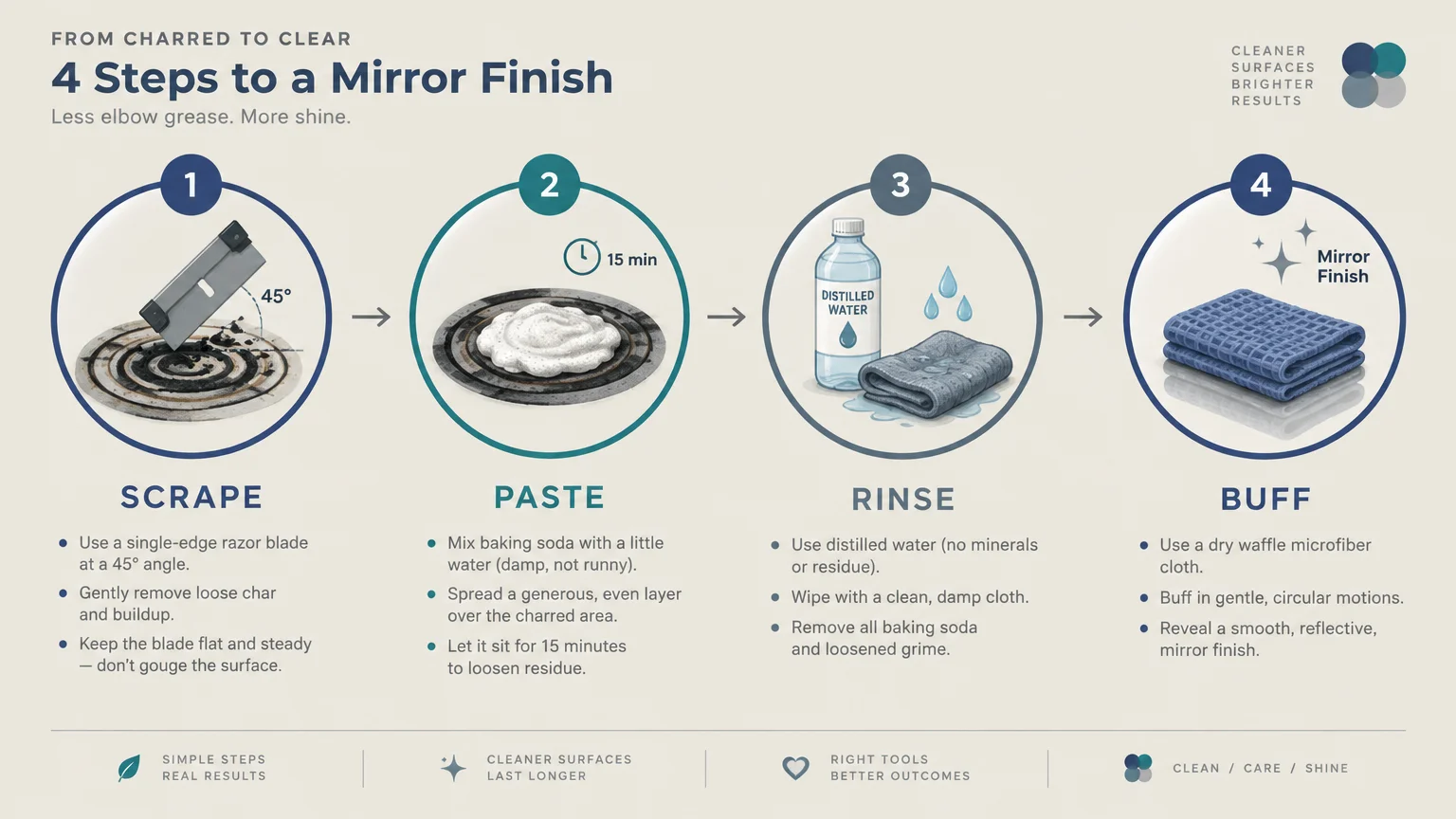
Step-by-Step Restoration Protocol for a Streak-Free Glass Cooktop
If your cooktop currently suffers from cloudy films or baked-on streaks, use this reset procedure to restore clarity.
Step 1: Cool and Clear
Ensure the stovetop feels completely cool to the touch before starting your cleaning session.
Remove loose crumbs and coarse debris using a dry, plush microfiber cloth to avoid dragging grit across the glass.
Step 2: Scrape Carbon Deposits
Mist the glass lightly with warm distilled water to lubricate the surface for the blade.
Hold your ceramic cooktop razor scraper at a 45-degree angle, applying steady, forward pressure across charred rings.
Step 3: Apply Dedicated Ceramic Cleaner
Shake your ceramic cooktop cleaning paste thoroughly to distribute the polishing agents evenly.
Apply several quarter-sized dollops directly to the glass, concentrating on hazy areas around the primary burners.
Step 4: Polish With Non-Scratch Media
Work the cream into the surface using a damp, non-scratch pad in tight, overlapping circular motions.
The specialized micro-polishing agents will lift stubborn chemical films without abrading the tempered glass.
Step 5: Rinse With Distilled Water
Wipe away the bulk of the cleaning cream using a clean, damp microfiber cloth.
Spritz the entire surface with distilled water to pick up suspended polish particles and lingering surfactants.
Step 6: Buff to a Mirror Finish
Immediately fold a dry, clean microfiber cloth into quarters to provide a firm, flat surface.
Buff the cooktop briskly from edge to edge until every trace of moisture disappears and the glass gleams.
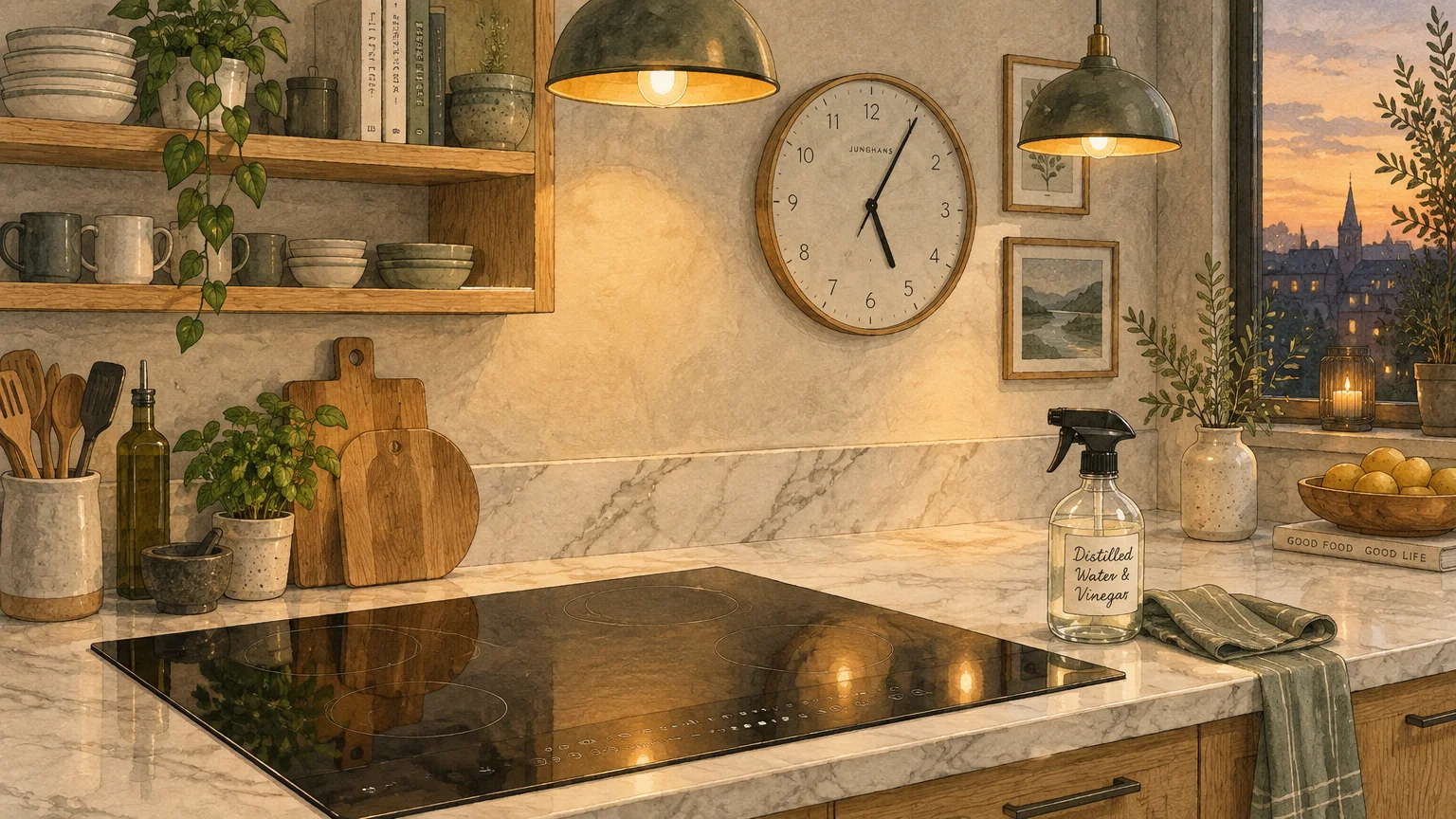
Your 5-Minute Daily Maintenance Routine
Preventing buildup takes far less time than repeatedly restoring cloudy, neglected glass surfaces.
Once your cooktop cools each evening, mist the surface with a balanced blend of equal parts distilled water and white vinegar.
The mild acetic acid cuts fresh cooking grease instantly without leaving surfactant films behind.
Wipe the spray away using your damp cleaning cloth, then immediately flip to your dry microfiber cloth to buff.
This quick two-minute habit prevents grease layers from polymerizing during your next cooking session.

Put This Technique Into Action Today
Inspect your kitchen cleaning supplies right now and remove any scouring pads or fabric-softened rags from your stovetop kit.
Grab a clean, untreated microfiber cloth and a bottle of distilled water, then buff your cool cooktop for sixty seconds.
You will immediately notice surface clarity return as dry mineral films and leftover detergent residues lift away.