You can ruin a five-figure hardwood floor in minutes by reaching for the wrong bottle under your sink. Choosing the correct solution preserves the polyurethane seal and prevents expensive board replacement.
Modern wood finishes protect against everyday foot traffic, yet harsh chemicals strip this protective barrier and invite deep water rot. Knowing what not to use on hardwood shields your investment for decades.
Below, you will discover the worst cleaning products that damage wood floors, the science behind their destructive effects, and the simple everyday habits that keep your planks looking pristine.
1. White Vinegar and Acidic DIY Solutions
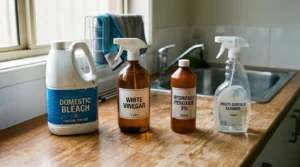
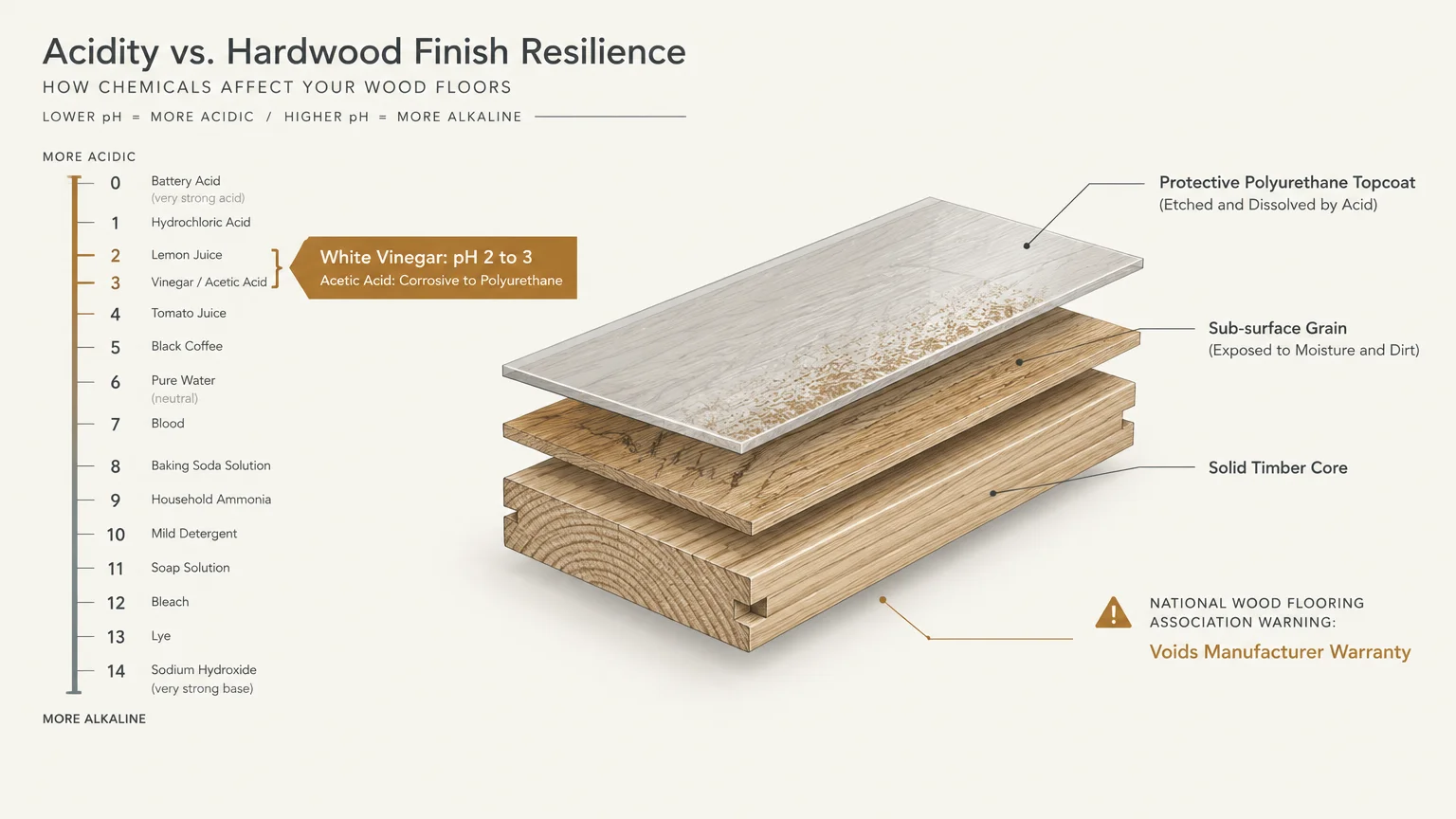
Many popular lifestyle blogs praise diluted white vinegar as a miraculous, budget-friendly floor wash. Unfortunately, acetic acid eats directly through the protective topcoat of modern timber floors.
White vinegar registers an acidic pH level between 2 and 3; repeated contact etches your polyurethane seal over time. Once the finish dissolves, the exposed raw grain absorbs dirt and loses its luster.
According to care standards from the National Wood Flooring Association, acidic solutions permanently void most manufacturer warranties. The acid creates an uneven, patchy finish that no microfiber pad can shine.
If you have mopped with vinegar previously, wipe the planks down with clean water on a barely damp microfiber cloth. This quick rinse neutralizes any leftover acetic acid sitting on the finish.
2. Steam Mops and High-Heat Pressurized Cleaners
Steam mops market themselves as the ultimate sanitizing tool for busy, health-conscious households. In reality, steam poses the fastest mechanical threat to both solid and engineered hardwood planks.
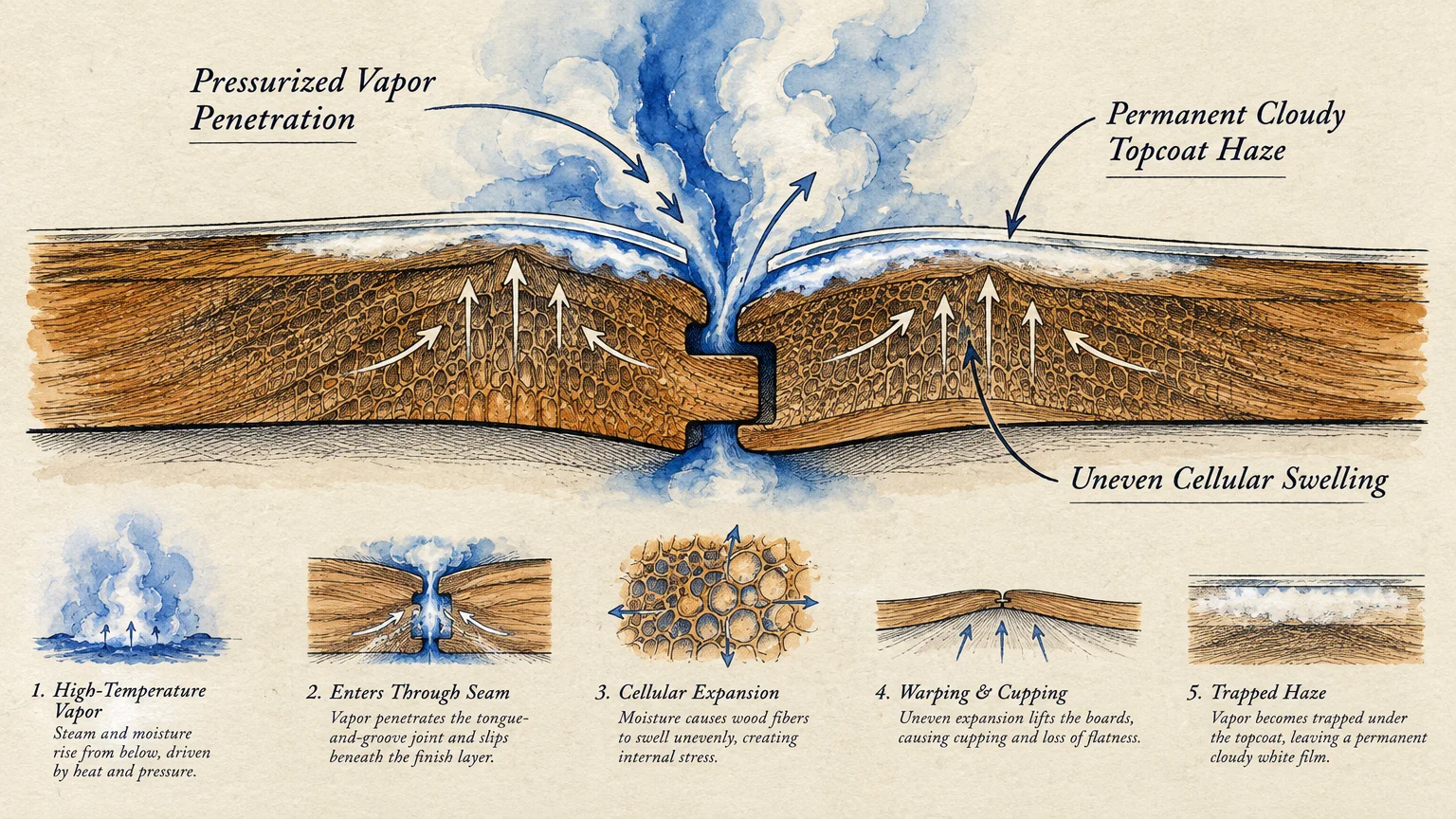
Intense heat forces pressurized vapor between floor seams and past microscopic gaps in the polyurethane finish. That moisture penetrates deep into the cellular structure of dry timber.
The USDA Forest Products Laboratory emphasizes that rapid moisture fluctuations cause wood cells to expand unevenly. This internal pressure leads to permanent cupping, crowning, and board separation.
Once steam forces water beneath the clear finish, the trapped moisture cannot evaporate cleanly. It leaves a cloudy, white haze trapped permanently inside the polyurethane layer.
Fixing steam damage requires costly professional interventions, including full sanding and plank replacement. Never allow high heat or pressurized vapor anywhere near your hardwood.
3. Ammonia-Based Cleaners and Glass Sprays
Window cleaners and all-purpose degreasers frequently contain ammonia to slice through grease. While ammonia cleans glass and ceramic tile effectively, it reacts aggressively with polyurethane and varnish.
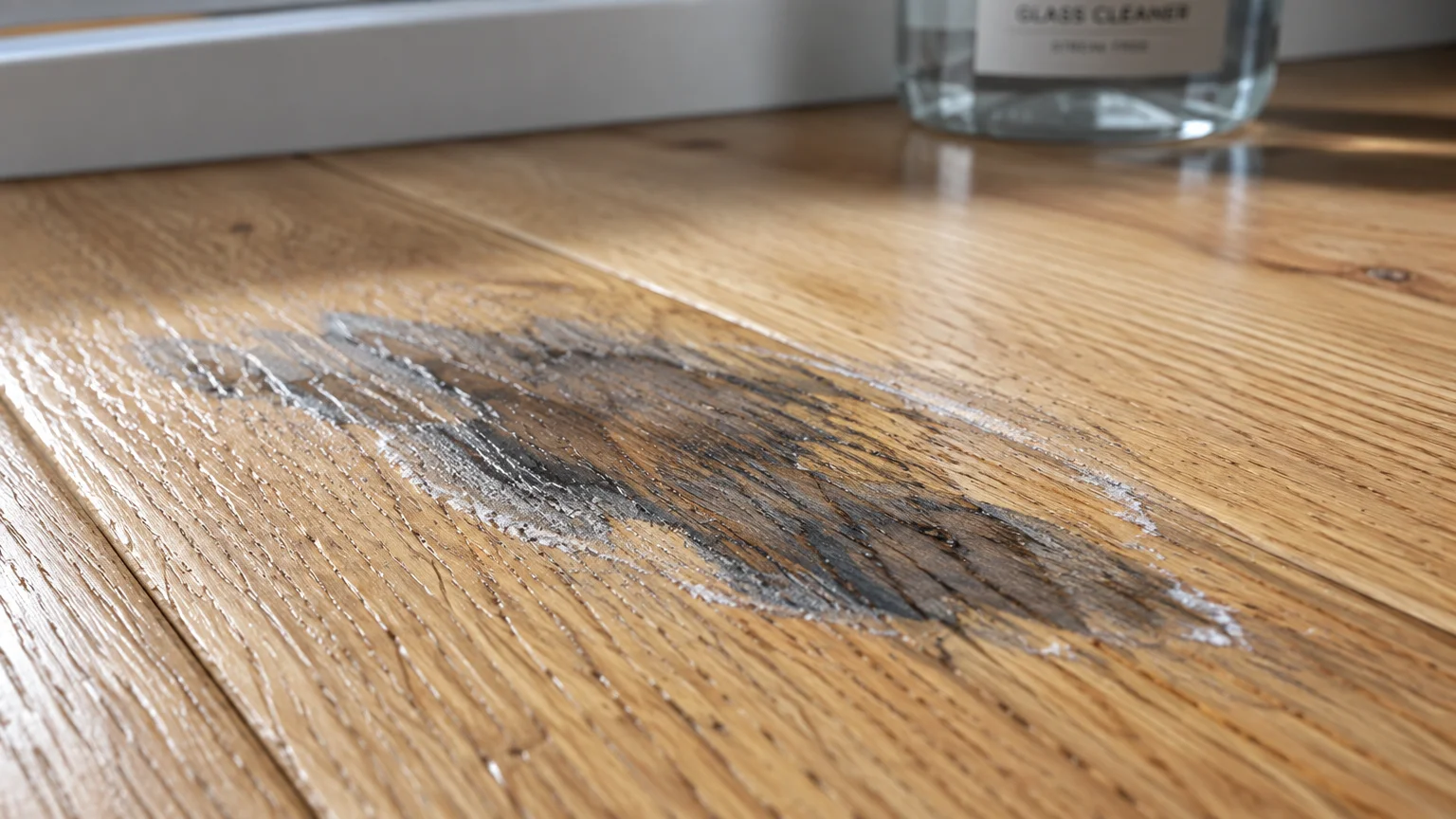
Ammonia is a strong alkali that chemically breaks down the synthetic resins protecting your hardwood. As this protective shield dissolves, your floor develops a faded, chalky surface.
In addition to stripping surface finishes, ammonia reacts with the natural tannins inside white oak and other hardwood species. This chemical reaction leaves dark, blotchy grey spots deep in the wood fiber.
These tannin burns do not wash away with water or soap. Sanding down past the chemical discoloration remains the only way to remove ammonia burn marks.
Always read the ingredient list on multipurpose sprays before cleaning your floors. Store window cleaners in a separate caddy so you never mistake them for safe wood floor cleaners.
4. Chlorine Bleach and Antibacterial Wet Wipes
Disinfecting household surfaces has become a standard routine in modern homes. However, chlorine bleach and heavy-duty sanitizing wipes represent severe wood floor cleaning mistakes.
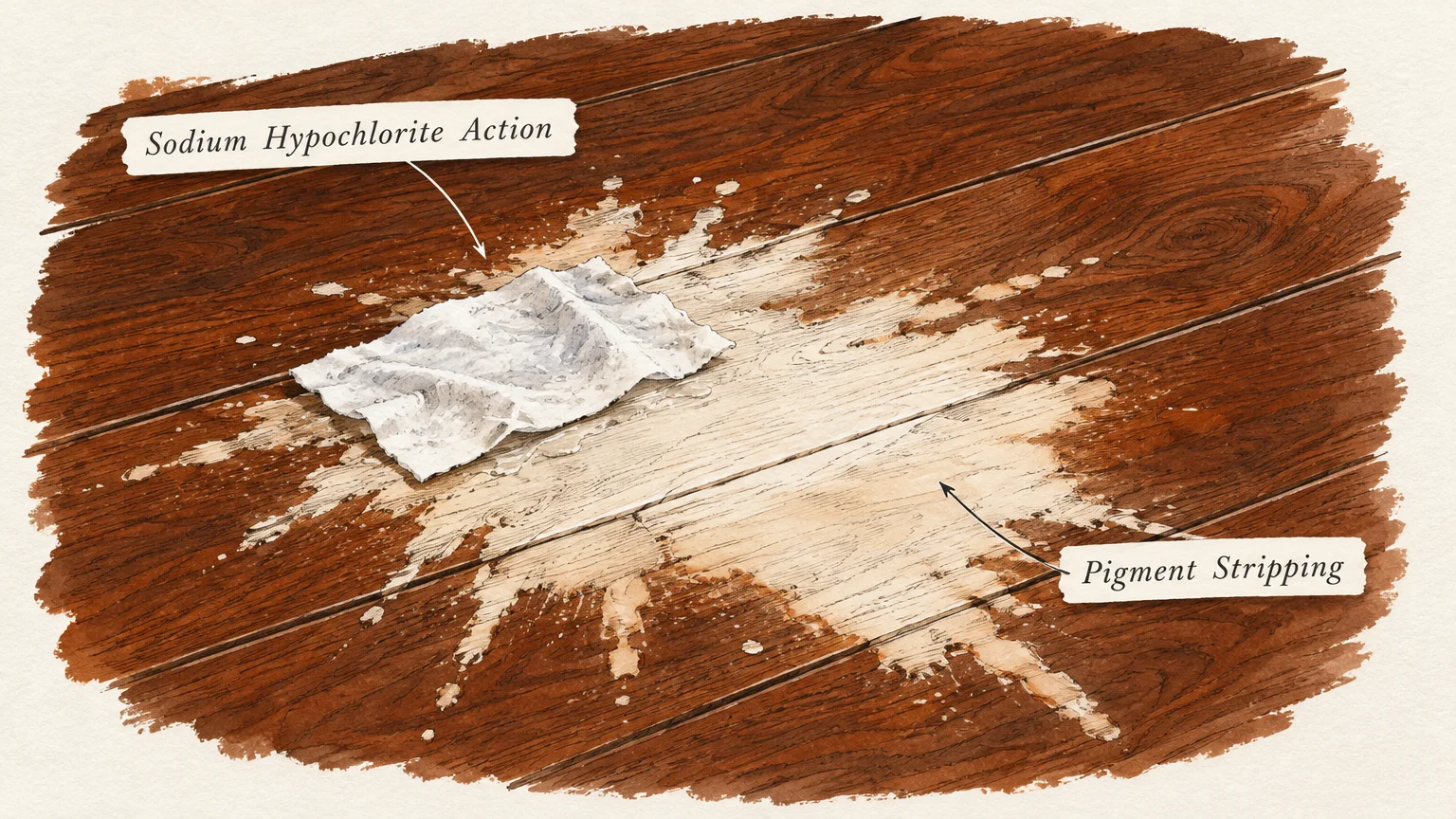
Sodium hypochlorite—the active chemical in liquid chlorine bleach—oxidizes protective sealants and strips natural pigments from wood fibers. Bleach leaves permanent pale halos and discolored patches across your boards.
Bleach solutions also degrade wood cellulose fibers, causing the surface to splinter and weaken over time. Wet sanitizing wipes are just as problematic because they deposit harsh chemical residues.
Most disinfectant wipes contain high concentrations of rubbing alcohol or quaternary ammonium compounds. These fast-drying solvents dissolve the resin in factory-applied topcoats, turning glossy finishes dull and brittle.
To disinfect safely, check the EPA Safer Choice standard for pH-neutral products that kill germs without eroding protective sealants. A gentle microfiber cloth dampened with safe solutions keeps wood pristine.
5. Concentrated Oil Soaps and Vegetable-Based Cleaners
For generations, homeowners relied on vegetable-based oil soaps to clean and shine raw woodwork. On modern polyurethane-sealed floors, however, oil soaps do far more damage than good.
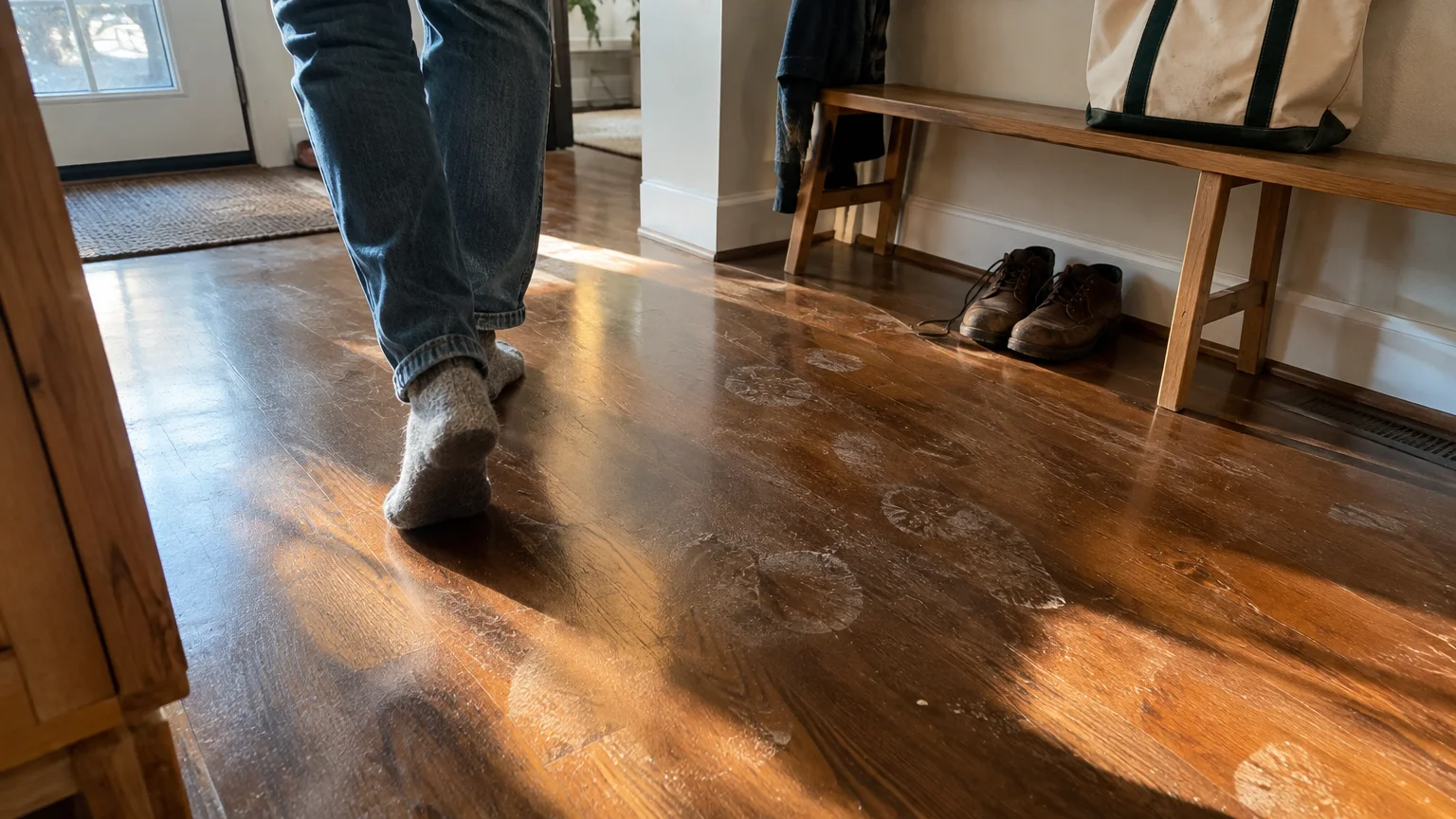
Modern timber floors do not need conditioning oils because the natural wood sits safely under a hardened synthetic barrier. Oil soaps cannot penetrate this barrier; instead, they leave a sticky film behind.
Over time, this oily residue traps dust, pet hair, and airborne kitchen grease. Every fresh application bakes more grime into a cloudy, gummy layer across your living space.
This sticky accumulation also ruins your chances of performing a simple screen-and-recoat maintenance procedure. Fresh polyurethane cannot bond to an oil-contaminated surface, forcing you to pay for expensive bare-wood sanding.
According to consumer cleaning science guidelines from the American Cleaning Institute, non-rinsing oil cleaners cause heavy soil redeposition on non-porous coatings. Switch to dedicated residue-free cleaners instead.
6. Paste Wax and Liquid Acrylic Floor Polishes
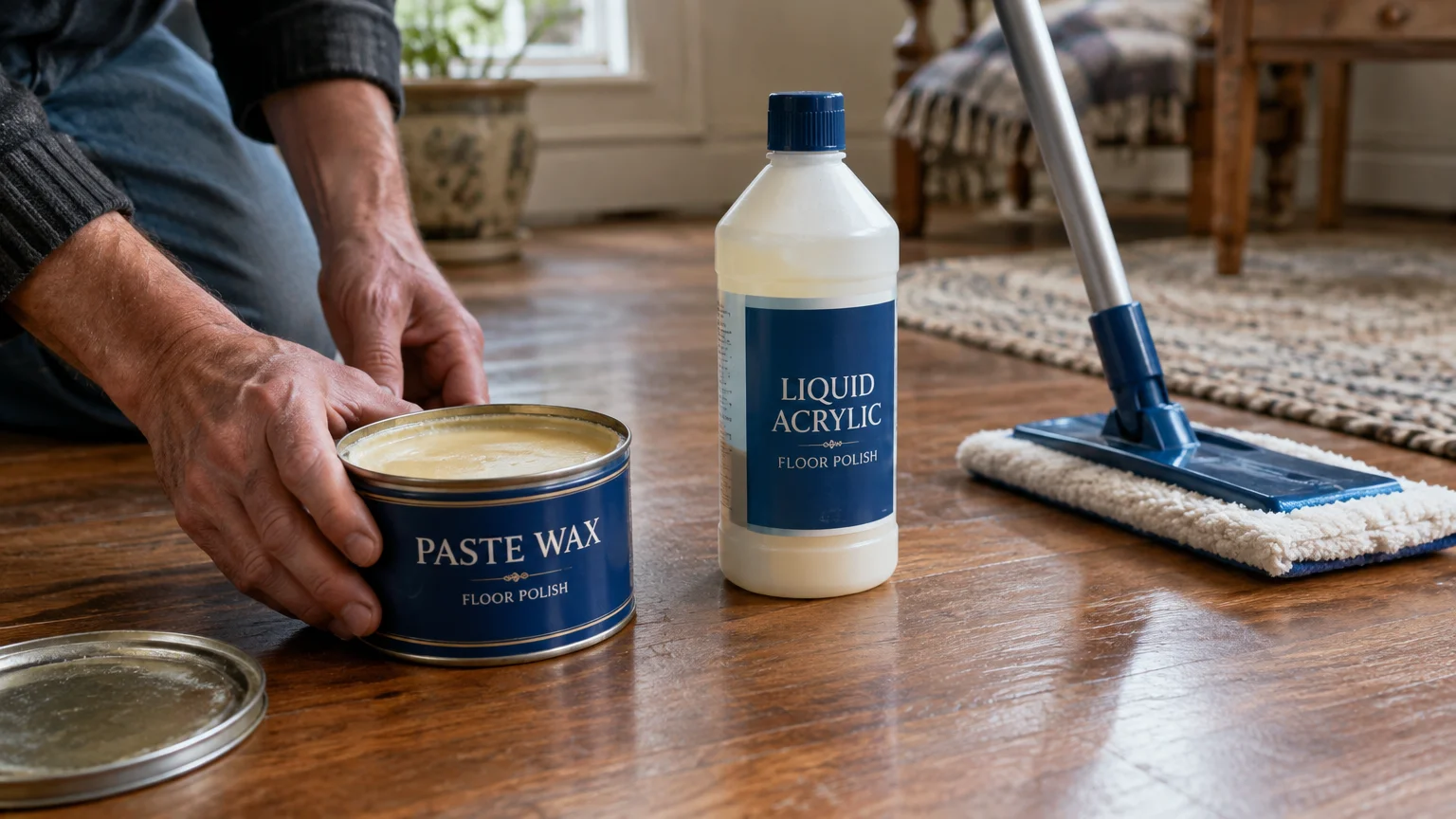
Traditional paste wax produces an exquisite sheen on antique, penetrating-oil floors. Applying paste wax or liquid acrylic shine restorers over surface-sealed polyurethane creates an expensive maintenance nightmare.
Wax cannot sink into modern polyurethane finishes; it simply floats on top of the cured plastic seal. Normal foot traffic quickly wears unsightly paths through this soft wax layer.
Once you apply wax or liquid acrylic restorers, you trap yourself in an endless cycle of stripping and buffing. Everyday damp mopping turns the wax layer cloudy, streaked, and blotchy.
Just like oil soaps, wax prevents new protective finishes from adhering to the boards. Professional refinishers cannot recoat a waxed floor without completely stripping the timber down to bare wood.
If your polyurethane floors look dull, never apply a quick-shine bottle from the supermarket. Schedule a professional deep cleaning or a topcoat refresh to restore the original luster safely.
7. High-Concentration Hydrogen Peroxide
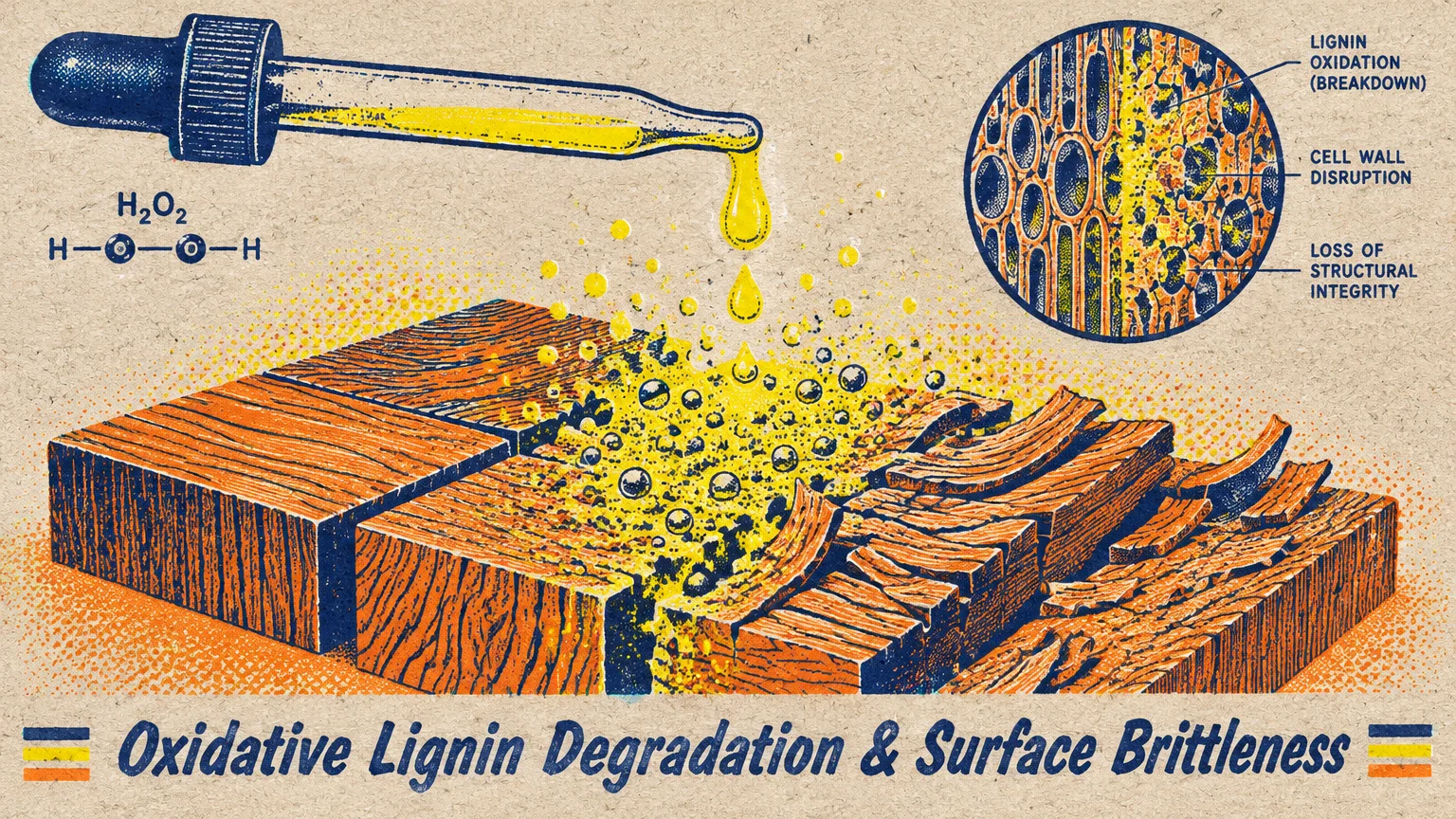
Internet cleaning hacks frequently suggest pouring hydrogen peroxide over dark pet urine stains. While hydrogen peroxide oxidizes organic odors effectively, it acts as an aggressive, uncontrollable bleaching agent.
Peroxide reacts with wood cells, lightening the natural wood grain unevenly and leaving stark, chalky patches behind. It permanently alters the wood color under the finish.
In addition to bleaching timber, hydrogen peroxide softens water-based polyurethane topcoats. As the sealant breaks down, your floor loses its water resistance right where accidents happen most.
When pet accidents occur, blot the liquid immediately with dry paper towels without rubbing. Clean the area with an enzymatic cleaner designed specifically for polyurethane-sealed wood floors.
Enzyme cleaners break down uric acid crystals and odor compounds safely without bleaching the timber. This approach neutralizes stains while keeping your floor finish completely intact.
8. Abrasive Scouring Powders and Cream Cleansers
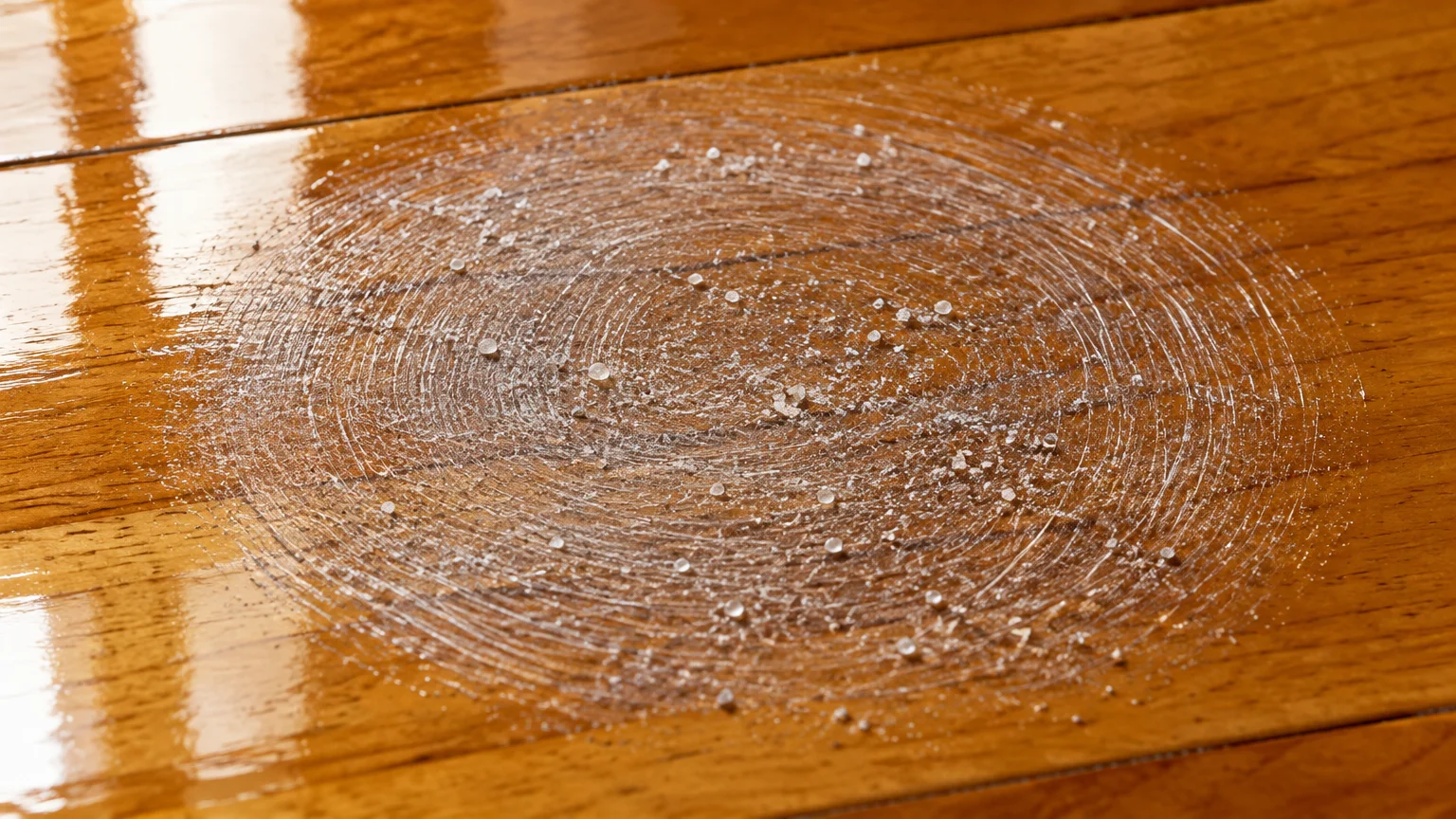
Scouring powders and abrasive cream cleansers rely on crushed minerals such as silica, feldspar, or calcite to scour grime. Using these abrasive agents on hardwood creates immediate, irreparable surface scratching.
Even the gentlest scrubbing cream behaves like fine-grit sandpaper against a polyurethane topcoat. The microscopic minerals gouge thousands of tiny scratches into the clear finish with every pass.
These micro-scratches scatter light across the floorboards, instantly transforming a rich semi-gloss finish into a dull, cloudy haze. Once the finish is scratched, sweeping cannot keep it clean.
Dirt, food grease, and outdoor soil settle into these micro-grooves over time. No mop can pull dirt out of gouged scratches without abrading the floor further.
Never use rough scouring sponges, melamine foam erasers, or steel wool on your timber planks. Stick to soft microfiber pads that lift dirt through electrostatic charge rather than physical abrasion.
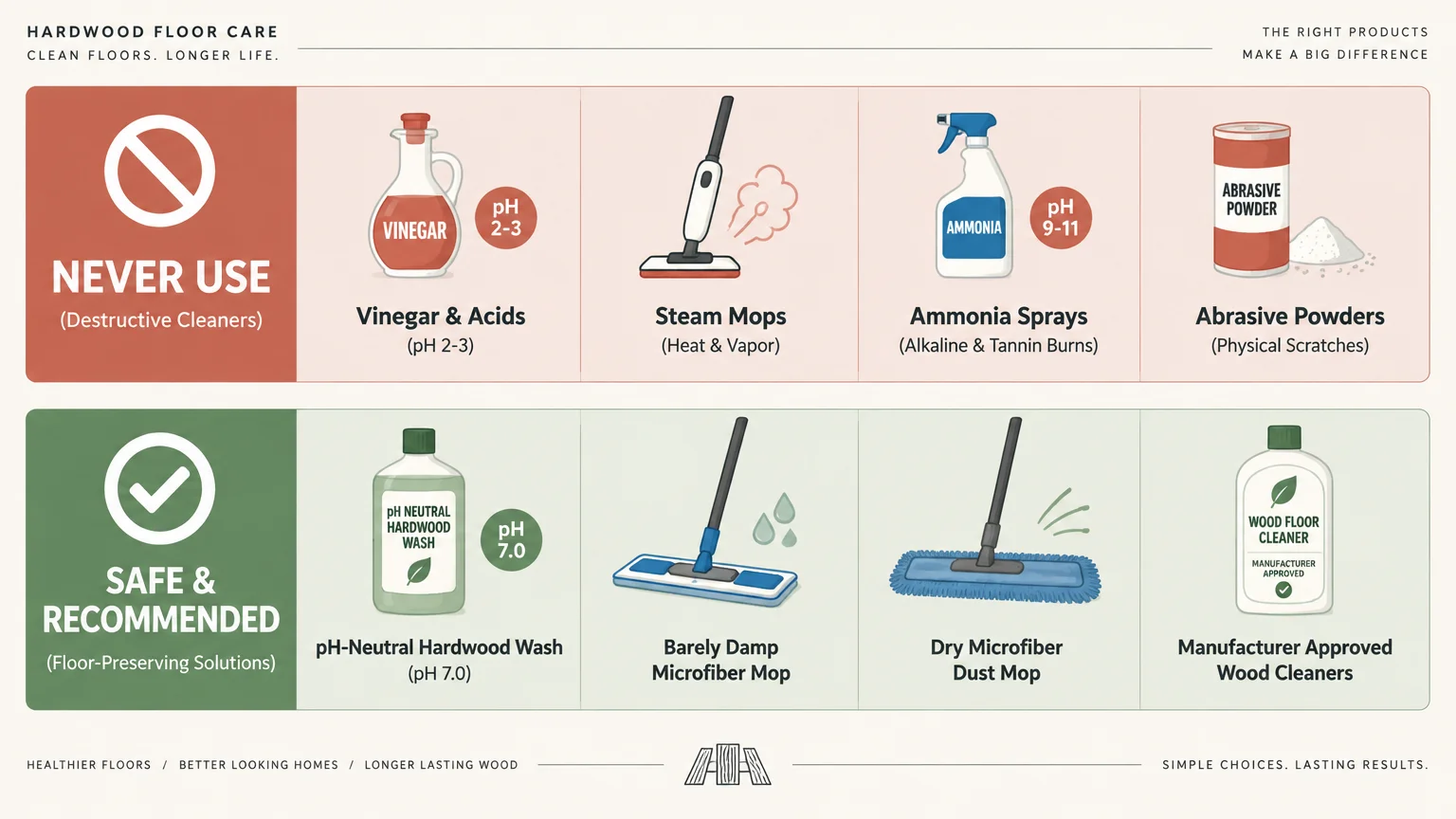
Damaging Cleaners Versus Safe Wood Floor Cleaners
Selecting safe wood floor cleaners requires understanding how chemical compounds interact with modern topcoats. The comparison table below outlines the destructive agents you must avoid alongside proven, non-destructive alternatives.
Keep this chemical cheat sheet in mind whenever you restock your utility pantry or address an unexpected floor spill.
| Hazardous Product | Mechanism of Damage | Visible Floor Symptom | Safe Alternative |
|---|---|---|---|
| White Vinegar | Acetic acid dissolves protective synthetic polyurethane resins over time. | Dull spots, premature finish wear, and patchy sheen loss. | pH-neutral specialty hardwood floor wash. |
| Steam Mops | Pressurized vapor forces high-temperature moisture past seams and finish pores. | Cupping, crowning, board swelling, and white trapped-water hazing. | Barely damp microfiber flat mop with misted cleaner. |
| Ammonia Sprays | Caustic alkaline chemicals strip resins and react with internal wood tannins. | Chalky finish breakdown and dark grey tannin burn stains. | Ammonia-free, surfactant-based multi-surface cleaner approved for wood. |
| Chlorine Bleach | Sodium hypochlorite oxidizes protective coatings and destroys wood lignin. | Faded white halos, wood fiber splintering, and brittle finish. | EPA Safer Choice certified disinfectant misted on microfiber. |
| Oil Soaps | Non-drying vegetable oils deposit an uncurable film over sealed coatings. | Sticky residue, greasy footprints, and dark soil entrapment. | Residue-free, plant-derived non-ionic surfactant spray. |
| Paste Wax | Soft wax floats on polyurethane, attracting dirt and preventing future recoating. | Scuff marks, smeary tracking, and yellowed wax buildup. | Professional mechanical buffing and polyurethane screening. |
| Hydrogen Peroxide | Strong oxidation bleaches natural wood pigments and softens clear coats. | Chalky white bleached patches and localized finish peeling. | Bio-enzymatic urine digester formulated for finished wood. |
| Scouring Powders | Crushed mineral abrasives scratch fine micro-grooves into the topcoat. | Loss of gloss, scratch haze, and embedded grime lines. | Non-abrasive microfiber pad with warm water and neutral cleaner. |
Crucial Hardwood Floor Care Tips for Daily Maintenance
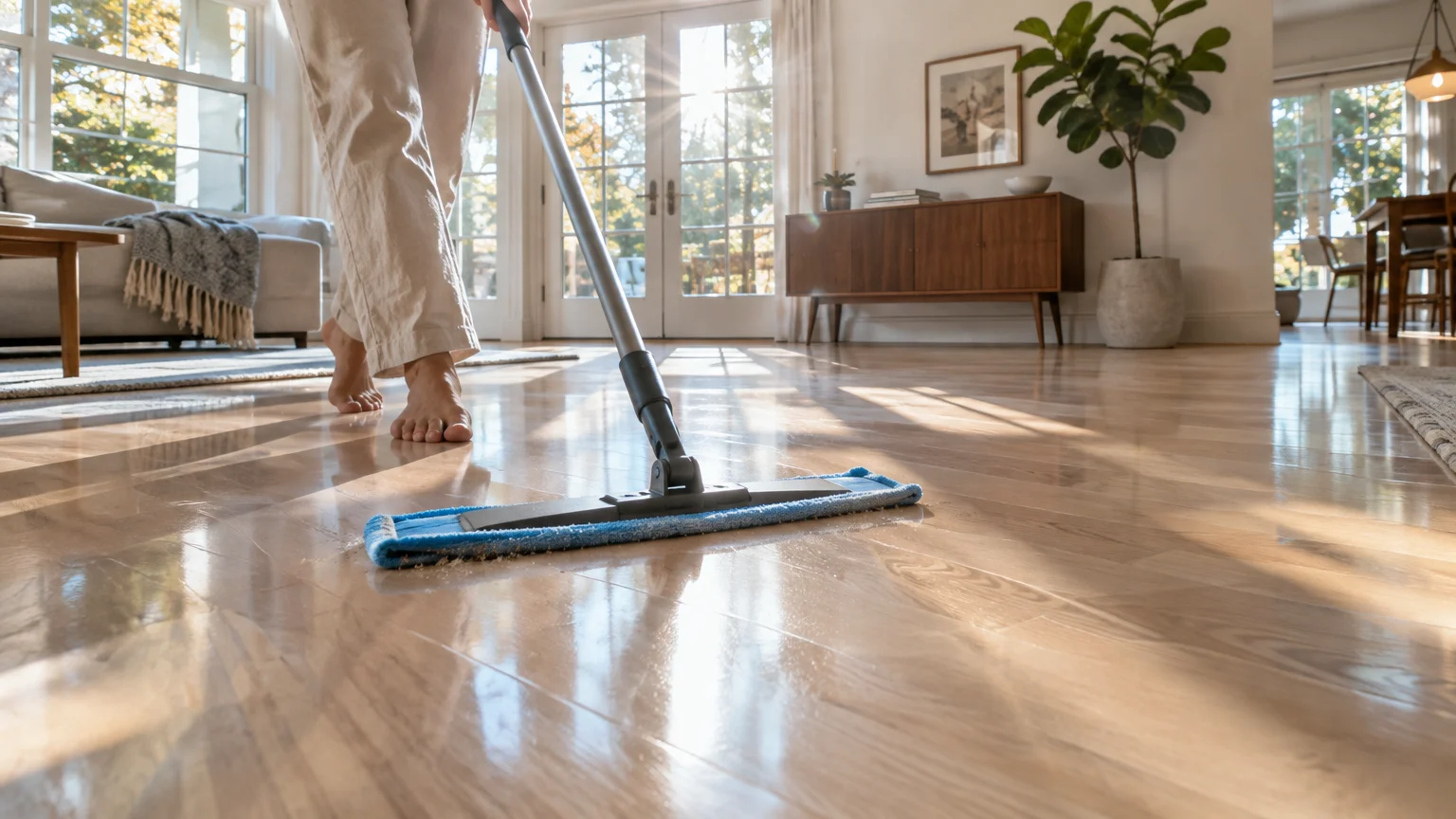
Maintaining pristine hardwood does not require exhaustive manual labor or a dozen specialty chemicals. A consistent, protective routine prevents grit abrasion while preserving your sealant for decades.
-
Daily Dry Dusting with Microfiber:
Sweep daily with a dry microfiber dust mop rather than a traditional broom. Microfiber traps sharp mineral grit that would otherwise act like sandpaper beneath your family’s footwear.
-
Strategic Entryway Matting:
Place coarse scraper mats outside exterior doors and plush capture rugs directly inside entryways. This two-tier mat system stops over eighty percent of outdoor gravel before it reaches your planks.
-
Controlled Spray Mopping:
Never pour buckets of standing water or soapy liquids directly onto wood floors. Instead, mist a pH-neutral cleaner lightly over a microfiber mop head to clean without introducing moisture hazards.
-
Protective Furniture Glides:
Attach heavy-duty felt pads to the legs of all chairs, dining tables, and couches. Inspect these felt pads twice each year to remove embedded debris that can gouge timber.
-
Indoor Humidity Management:
Maintain your indoor relative humidity between thirty-five and fifty-five percent year-round. Consistent moisture levels prevent dry winter plank shrinkage and humid summer board cupping.
How to Reverse Common Wood Floor Cleaning Mistakes
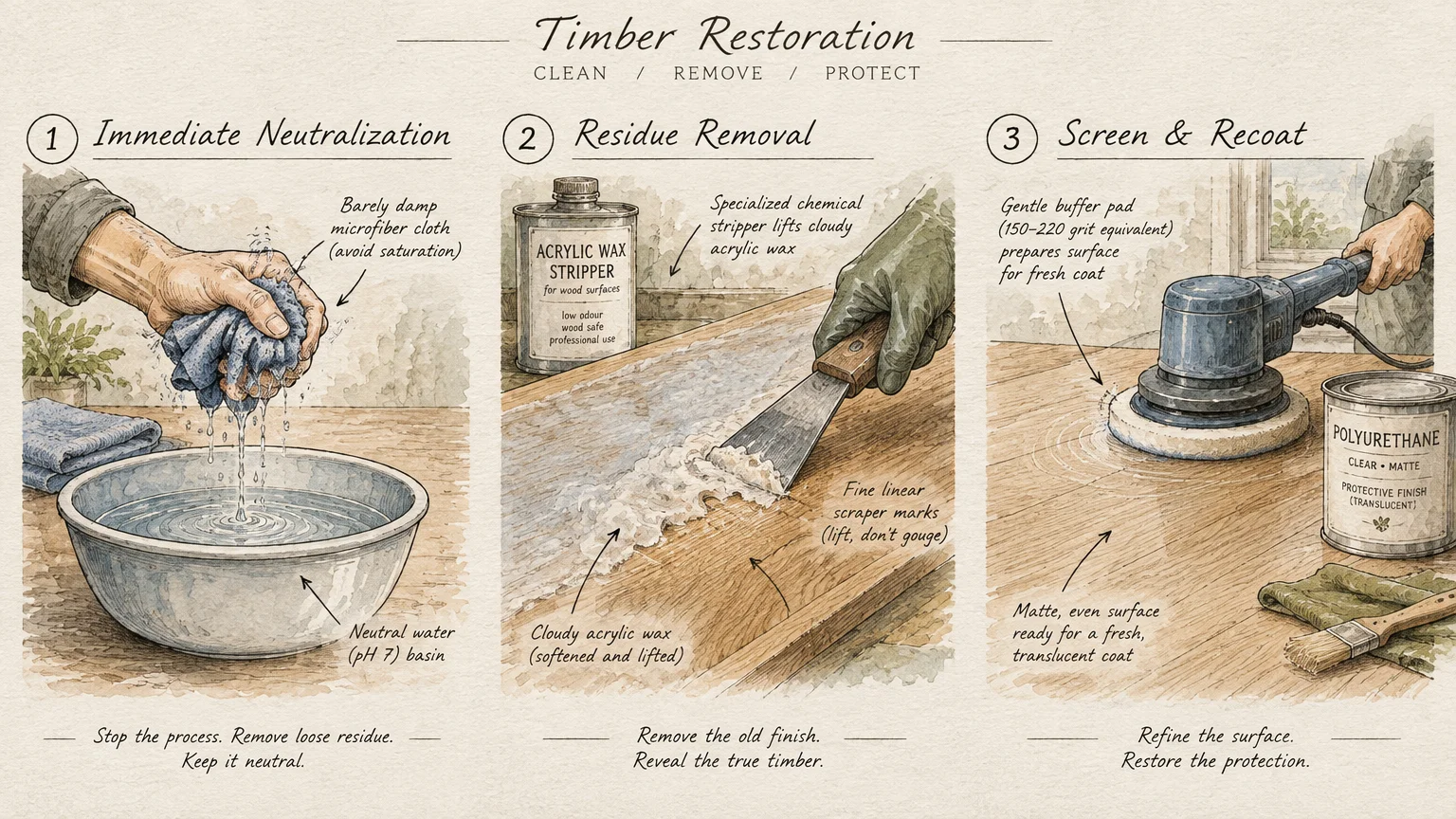
If you recently used one of these damaging products, fast intervention can often prevent permanent structural damage. The recovery method depends entirely on whether you face surface residue or deep chemical etching.
For sticky residues caused by oil soaps or paste wax, use an odorless mineral spirits rub. Dampen a clean microfiber cloth with mineral spirits and wipe a small test section gently.
Mineral spirits dissolve stubborn petroleum and vegetable oils without softening cured polyurethane. Turn the cloth frequently to lift the dissolved residue off the floor completely.
After lifting the gummy buildup, wipe the boards with a cloth barely dampened with clean water. Dry the area immediately with a clean towel to prevent moisture infiltration.
If steam or trapped water produced milky white clouds, moisture is locked inside the finish. You can often draw this moisture out by running a dehumidifier continuously for two days.
When chemical etching or deep bleaching permanently discolors the wood, topical cleaners cannot solve the problem. In those cases, consult a certified flooring professional for a screen-and-recoat or complete board refinishing.
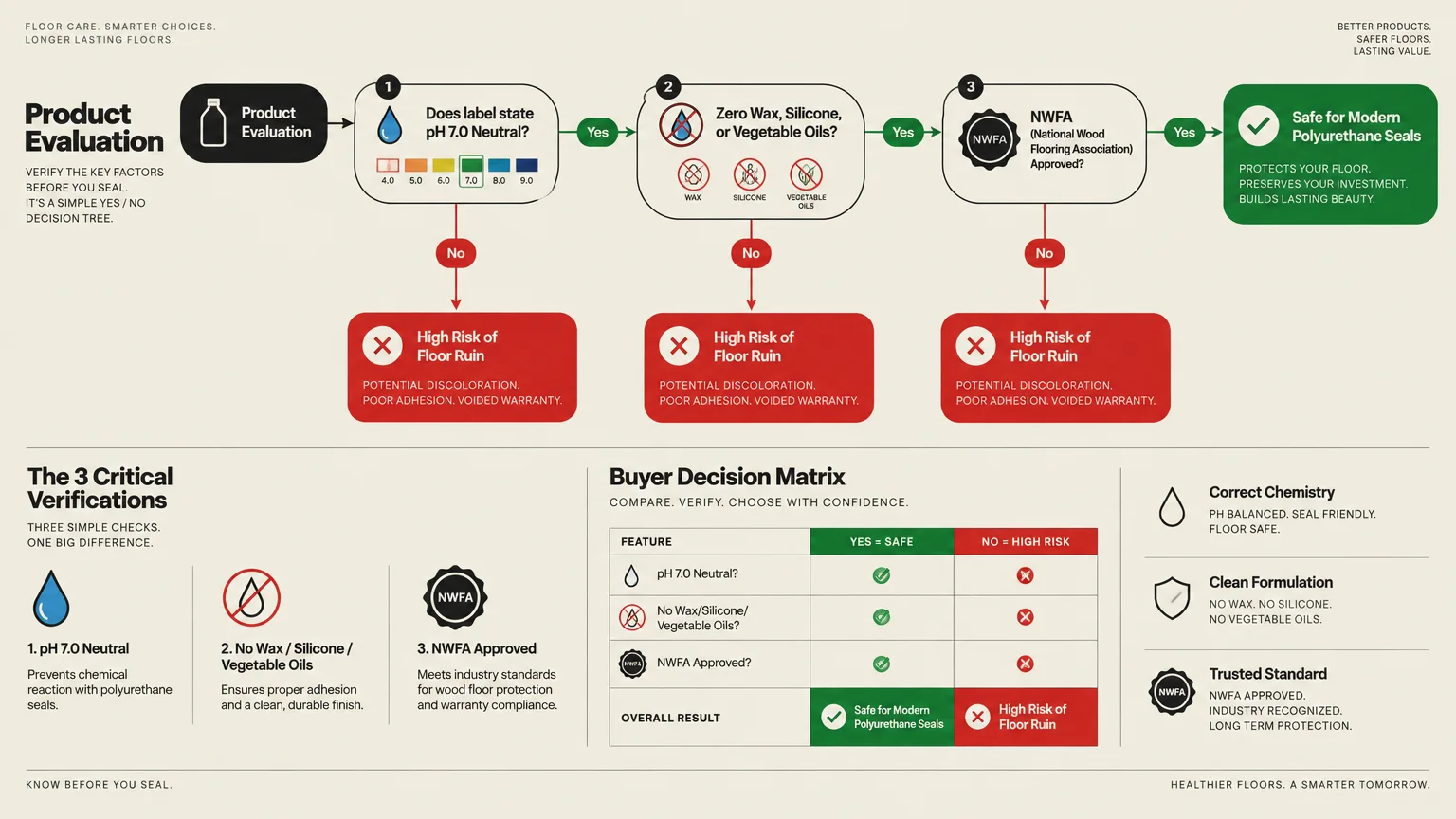
How to Choose Truly Safe Wood Floor Cleaners
Navigating store aisles filled with conflicting marketing labels can feel overwhelming. Many commercial bottles claim to restore shine while secretly packing harsh detergents and wax.
Look specifically for cleaners labeled as pH-neutral, which means they balance around a rating of 7.0. A neutral formulation lifts grease and soil without degrading synthetic polyurethane bonds.
Choose ready-to-use spray formulas instead of concentrates that require sink mixing. Concentrates tempt homeowners to mix overly strong solutions that leave soapy films across the floor.
Check that your chosen product leaves zero residue upon drying. Residue-free formulations evaporate cleanly, ensuring that dust and shoe grime have no tacky surface to cling to.
When in doubt, check your flooring manufacturer’s official maintenance guide before spraying a new product. Adhering strictly to manufacturer guidelines preserves your structural warranty and safeguards your investment.
Your Immediate Action Plan for Healthy Hardwood
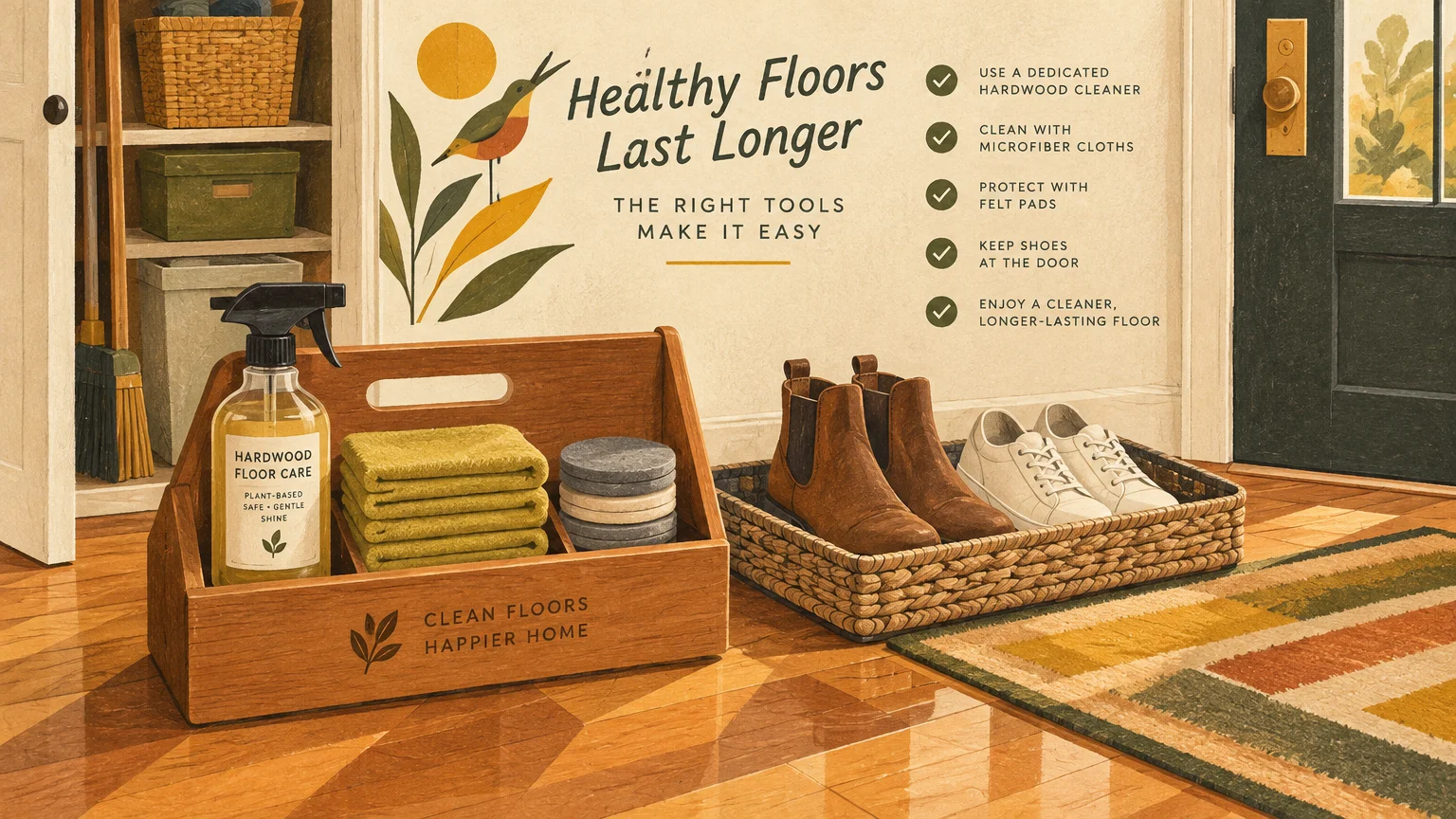
Take five minutes today to audit the cleaning cabinet under your kitchen sink. Toss out abrasive powders, wax emulsions, vinegar sprays, and ammonia bottles that threaten your flooring.
Invest in a dedicated microfiber spray mop and an EPA-certified, pH-neutral hardwood cleaner. Your floors will reward you with decades of rich warmth, effortless cleaning, and lasting value.