Storing your household cleaners side by side under the sink seems harmless, but accidental leaks or off-gassing can trigger dangerous chemical reactions right inside your home. Separating incompatible formulas safeguards your indoor air quality and prevents emergency room visits.
Most people know never to mix active chemicals in a bucket, yet tight cabinet storage poses an identical hazard if containers degrade, tip, or vent over time. Leaking vapors can mingle silently in poorly ventilated utility spaces.
Learning which cleaning products you should never store together gives you peace of mind and keeps your daily household routine entirely safe. Here are the eight chemical pairings to separate immediately.
Why Chemical Proximity Creates Severe Household Hazards
You probably understand the golden rule of housekeeping: never pour different chemical cleaners into the same bucket. However, chemical safety cleaning products principles apply just as strictly to your storage shelves.
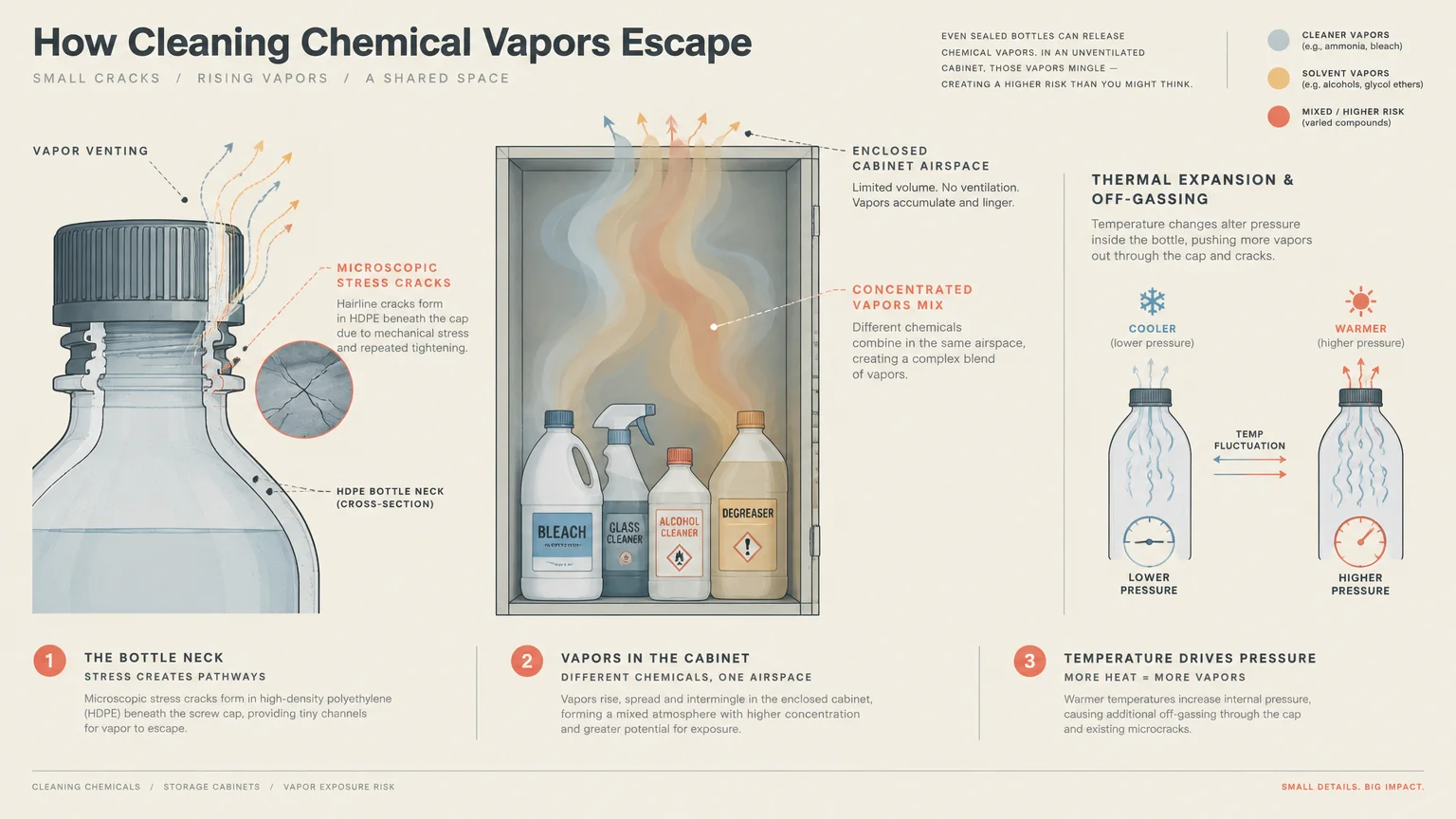
Plastic cleaning bottles degrade under fluctuating temperatures, and thin bottle caps often develop micro-cracks over time. When volatile liquids seep out, their lingering vapors mix in enclosed cabinet spaces without any physical mixing required.
Many commercial cleaners also vent microscopic traces of gas through factory cap seals to relieve internal pressure. In a cramped, unventilated cupboard, those concentrated vapors collect and react spontaneously.
Keeping dangerous cleaning product combinations in separate zones eliminates this threat before accidental spills occur. It transforms an unpredictable cabinet into an organized, risk-free storage area.
1. Bleach and Ammonia
Chlorine bleach and ammonia represent one of the most notorious cleaning products not to mix under any circumstances. Storing them in the same cabinet invites severe respiratory risk if bottles drip or leak.
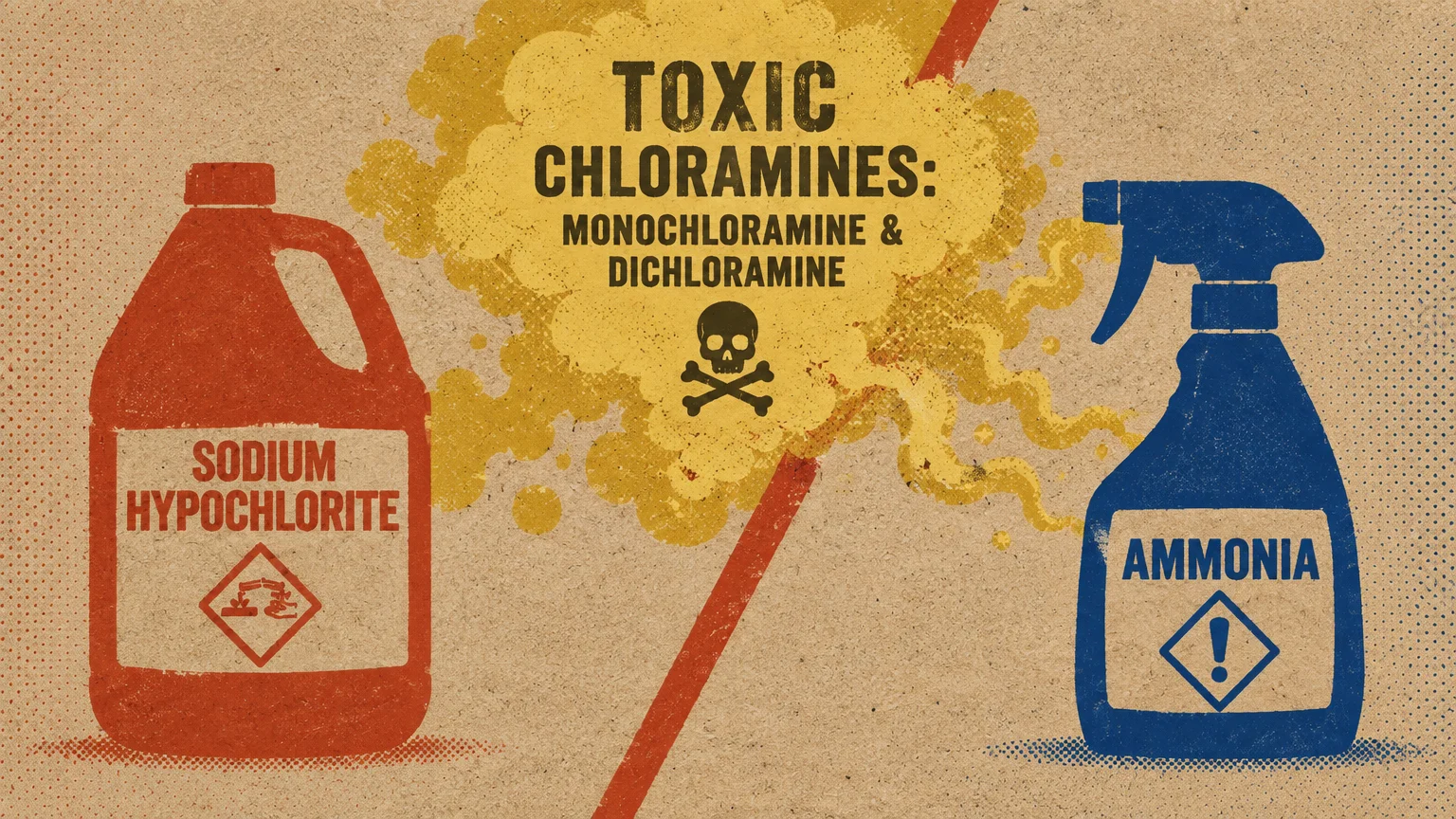
Bleach contains sodium hypochlorite, while many glass cleaners, multi-surface sprays, and floor polishes contain dissolved ammonium hydroxide. When these two chemicals meet, they produce toxic chloramine gases, specifically monochloramine and dichloramine.
Inhaling chloramine vapors causes rapid eye irritation, throat constriction, severe coughing, and fluid buildup in lung tissue. If you inhale high concentrations within an enclosed under-sink cabinet, the exposure can cause chemical pneumonia.
Always store bleach bottles in a dedicated, well-ventilated cabinet or on a high shelf isolated from other supplies. You can reference chemical injury protocols on Poison Control if accidental inhalation ever occurs.
Inspect the ingredient labels on all blue window sprays and heavy-duty degreasers before shelving them anywhere near bleach. Store ammonia-based formulas in a separate plastic caddy across the room.
2. Bleach and Vinegar (or Acidic Cleaners)
Natural cleaners feel gentle, but combining natural acids with commercial disinfectants creates deadly results. White vinegar, cleaning vinegar, and descaling solutions must never share a shelf with chlorine bleach.
Vinegar contains acetic acid, which quickly lowers the pH level of sodium hypochlorite. This chemical shift releases pure chlorine gas along with hypochlorous acid vapor directly into the surrounding atmosphere.
Even tiny concentrations of chlorine gas attack your mucous membranes, burning your eyes and burning the lining of your nasal passages. Higher exposures lead to chest pain, violent coughing, and chronic airway inflammation.
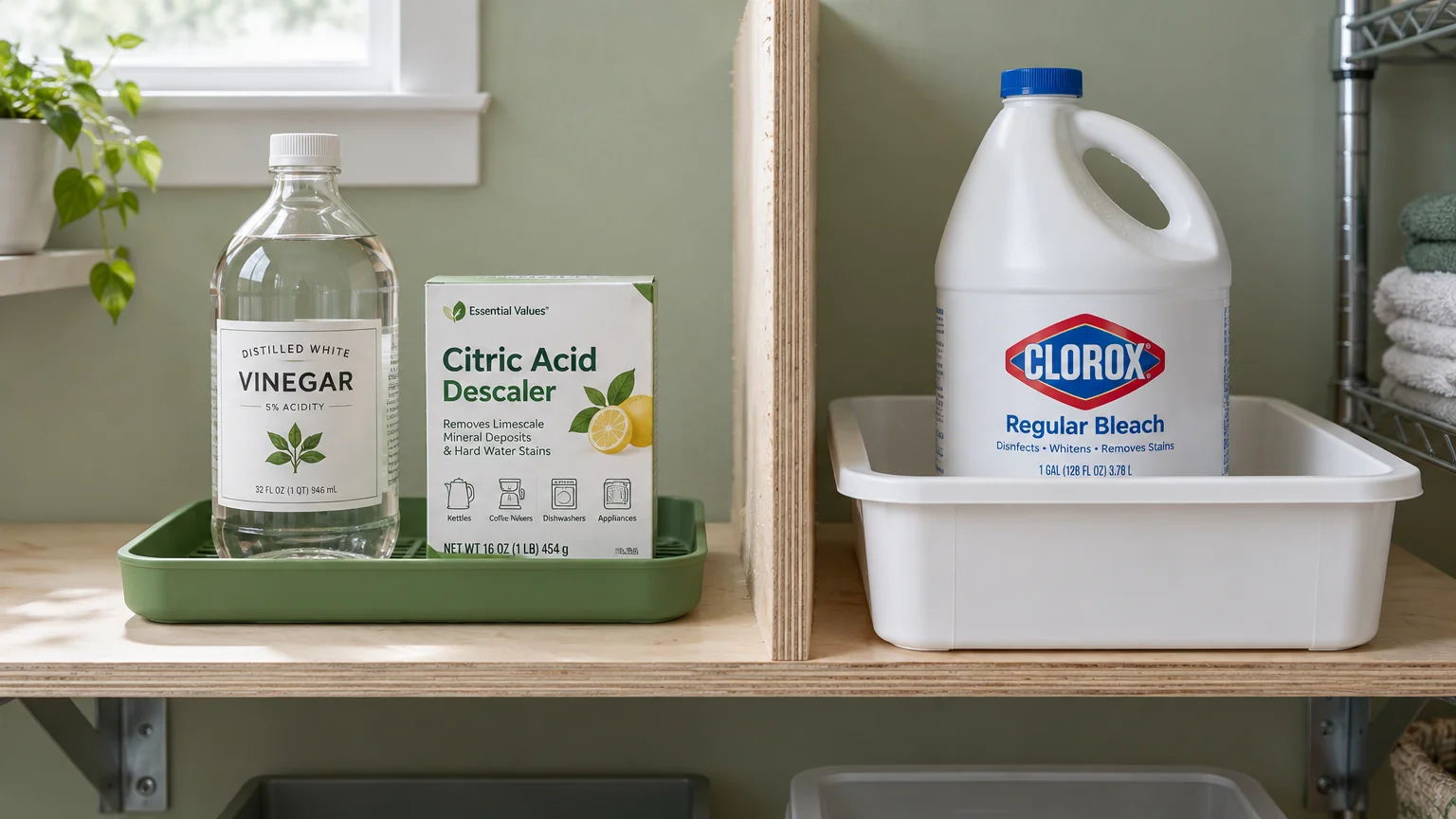
This hazard extends beyond salad vinegar to any acidic product, including citric acid descalers, coffee maker cleaners, and rust removers. Keep your green acid-based alternatives on a completely distinct shelf from conventional bleach sanitizers.
Placing a shallow plastic tray under each bottle catches unintended drips and stops acidic residues from pooling near halogen disinfectants.
3. Bleach and Rubbing Alcohol
Rubbing alcohol and chlorine bleach are frequent staples during cold and flu season, making their coexistence in utility closets common. However, these two staples are cleaning products that shouldn’t be combined under any circumstance.
Isopropyl alcohol reacts chemically with sodium hypochlorite to produce chloroform, along with hydrochloric acid and chloroacetone. Chloroform suppresses the central nervous system, causing sudden dizziness, nausea, headaches, and loss of consciousness.
Hydrochloric acid vapors also emit from this mixture, which can corrode metal hinges, cabinet screws, and plumbing pipes under your sink. An enclosed vanity quickly turns into a concentrated reservoir of corrosive vapor.
Store rubbing alcohol bottles alongside standard first-aid supplies in a linen closet or medicine cabinet rather than under the kitchen sink. Keep chlorine bleach sequestered in your laundry room away from all solvents.
This separation ensures that an accidental leak during storage never creates a toxic haze in your bathroom or utility space.
4. Hydrogen Peroxide and Vinegar
Many eco-friendly cleaning blogs recommend using hydrogen peroxide and white vinegar successively to sanitize food prep surfaces. While alternating them on surfaces is common practice, co-storing or pre-mixing them in a single cabinet invites danger.
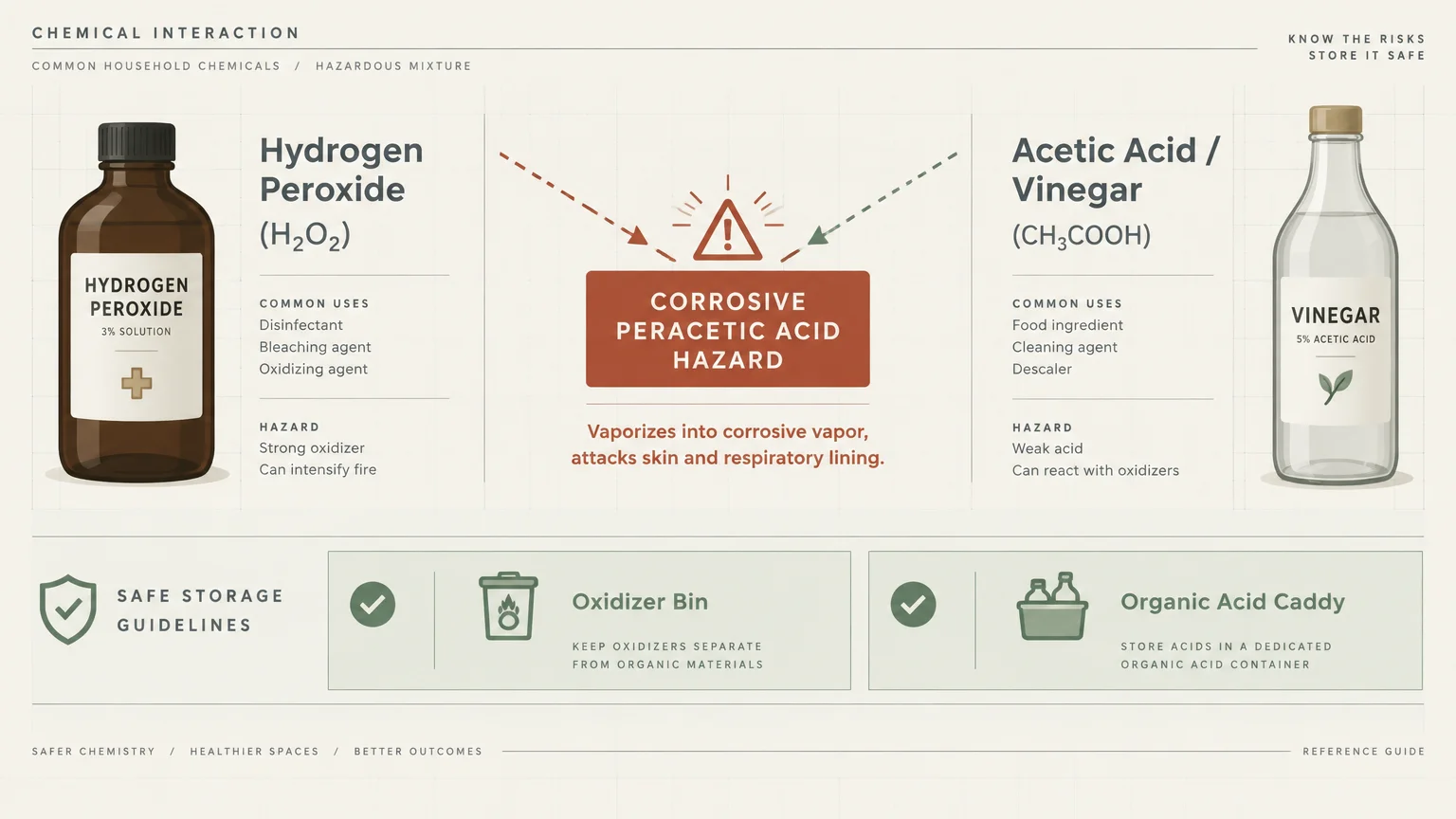
When hydrogen peroxide and vinegar mix in an unventilated space, they react to synthesize peracetic acid. Peracetic acid is a corrosive oxidizer that irritates your eyes, burns sensitive skin, and damages lung tissues upon vapor inhalation.
If both containers leak into the same storage bin, the resulting chemical reaction can also erode surrounding plastic storage containers. In tightly sealed secondary totes, accumulating reaction vapors generate pressure that risks container rupture.
Keep hydrogen peroxide in its original opaque brown bottle on an upper laundry shelf. Store your cleaning vinegar in a separate, labeled caddy with your standard mild detergent sprays.
Follow verified sanitization protocols from the Centers for Disease Control and Prevention rather than mixing homemade disinfectant cocktails in tight cupboards.
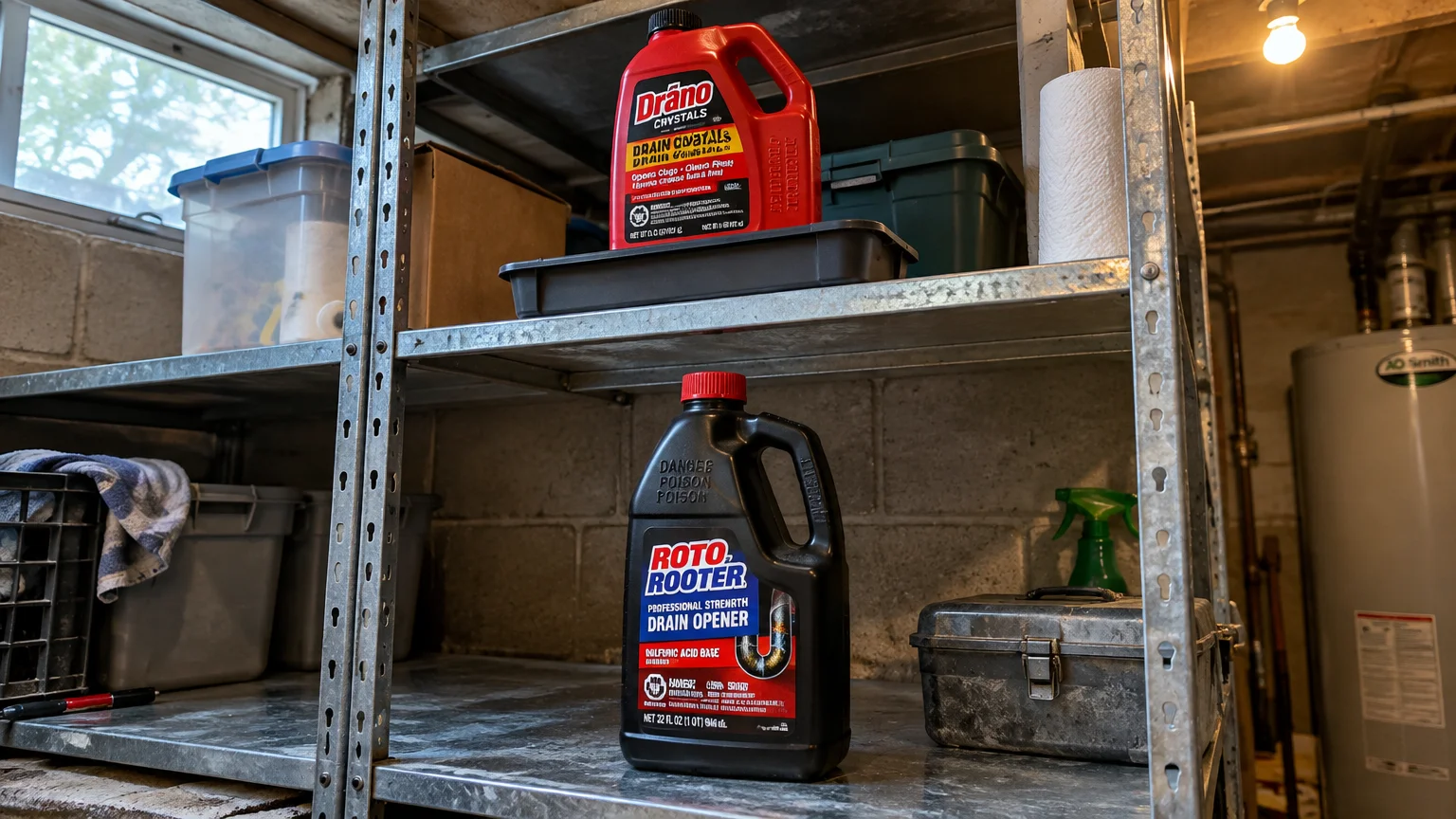
5. Different Brands or Types of Drain Openers
Chemical drain cleaners are among the most reactive formulas in your home, relying on powerful chemistry to dissolve organic clogs. Storing different brands or formulations side by side invites catastrophic exothermic reactions if spills happen.
Some commercial drain openers rely on concentrated sulfuric acid, while others utilize sodium hydroxide (lye) paired with sodium hypochlorite. When an acid-based opener encounters an alkaline opener, an intense neutralization reaction occurs immediately.
This reaction releases extreme thermal heat, frequently generating enough energy to melt plastic bottles, boil standing liquid, and violently spray caustic chemicals outward. If bottles leak into the same storage drip pan, explosive boiling can occur.
The resulting splatter can cause severe eye trauma or third-degree chemical burns to your skin. Furthermore, chlorine gas can evolve instantly if lye-bleach drain openers contact acidic drain formulas.
Buy drain openers only when you need them, and purchase a single bottle rather than hoarding conflicting backstock. Store individual drain cleaners inside heavy-duty, separate containment buckets away from all other cleaning solutions.
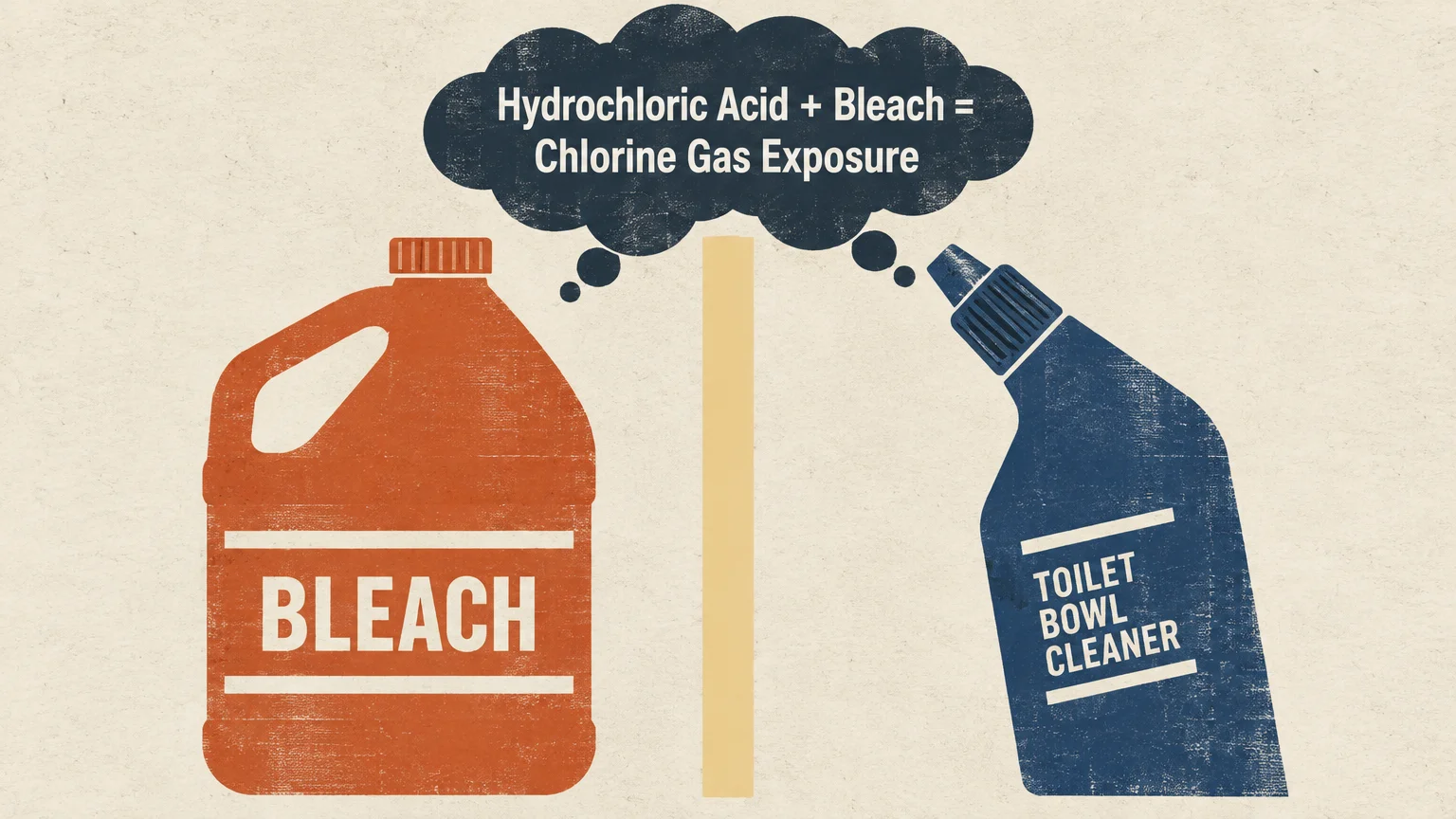
6. Bleach and Toilet Bowl Cleaners
Many homeowners purchase bleach tablets or liquid sanitizers along with dedicated commercial toilet bowl cleaners. Storing them together in a small bathroom vanity cabinet creates an immediate hazard.
Most liquid and gel toilet bowl cleaners contain hydrochloric acid or sodium bisulfate to dissolve mineral deposits and rust rings. Chlorine bleach, as an alkaline oxidizer, reacts aggressively with both chemical compounds.
If an acidic toilet bowl cleaner bottle seeps and contacts bleach residue on a storage shelf, heavy chlorine and chlororganic fumes produce instantly. Because bathroom vanities lack mechanical airflow, opening the cabinet door releases a dense toxic plume.
Inhaling this concentrated air pocket triggers immediate coughing spasms, acute respiratory irritation, and stinging tears. For older adults or family members with asthma, this chemical spike can precipitate a medical emergency.
Place your acidic toilet cleaners in a dedicated caddy inside the bathroom, but store bleach supplies in your well-ventilated laundry room. Physical separation across different rooms provides foolproof protection against cross-contamination.
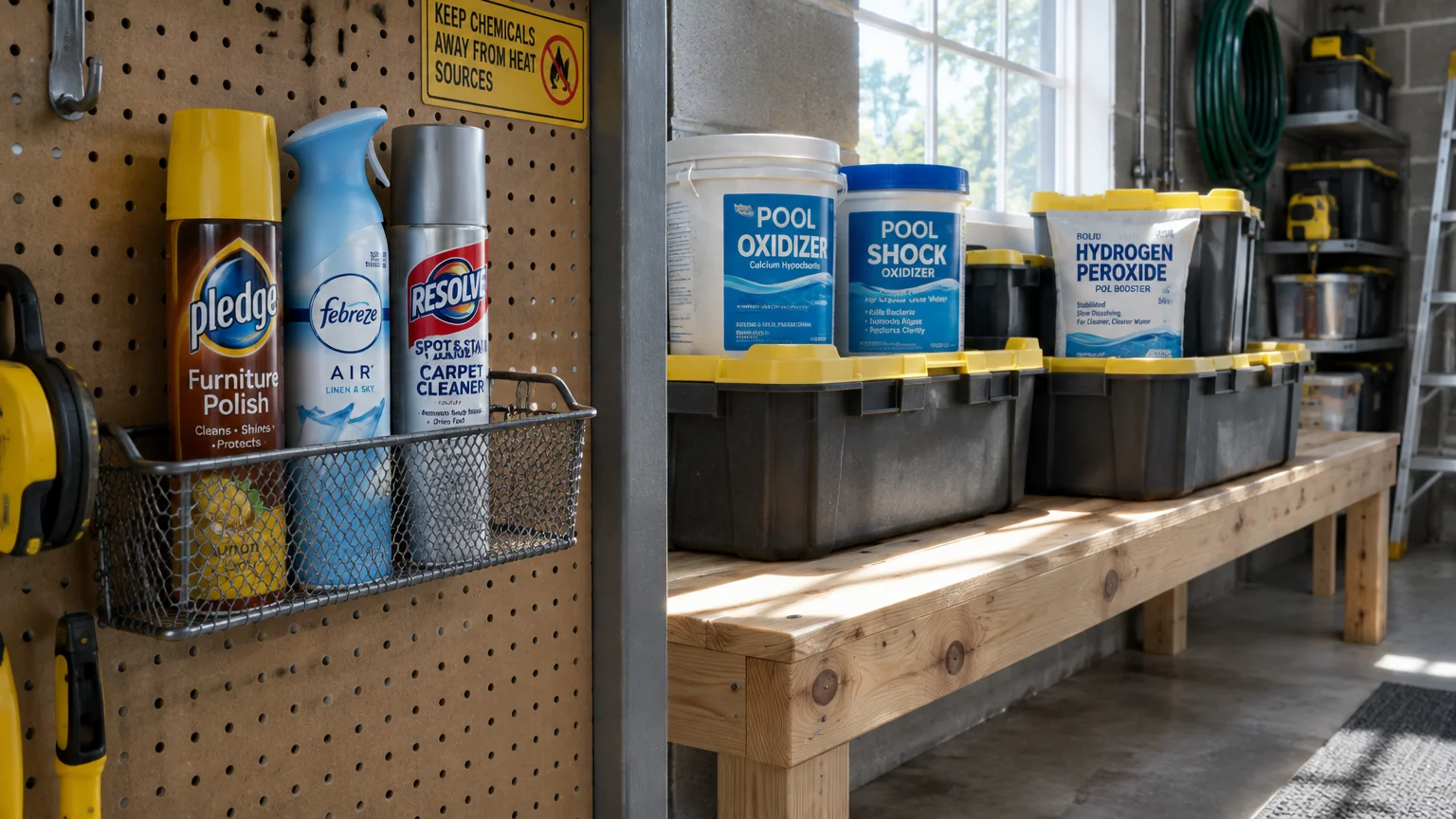
7. Flammable Aerosols and Strong Oxidizers
Utility closets often collect aerosol furniture polishes, spray paints, and bug sprays alongside high-strength oxidizers. This close proximity poses a severe fire and combustion threat that many homeowners overlook.
Aerosol cans contain pressurized hydrocarbon propellants like propane, butane, or isobutane, which are exceptionally flammable. Oxidizers like pool shock, concentrated hydrogen peroxide, and bleach supply continuous oxygen that accelerates fire.
If an aerosol can vents near an oxidizer, any minor spark from a water heater or electrical switch can cause violent ignition. The oxidizer feeds the fire rapidly, making extinguishing the flames exceptionally difficult.
Review guidance from the Environmental Protection Agency regarding the proper containment of hazardous household waste and pressurized canisters.
Store all flammable sprays in a cool, dry cabinet far from appliances, pilot lights, and any oxidizing chemical solutions.
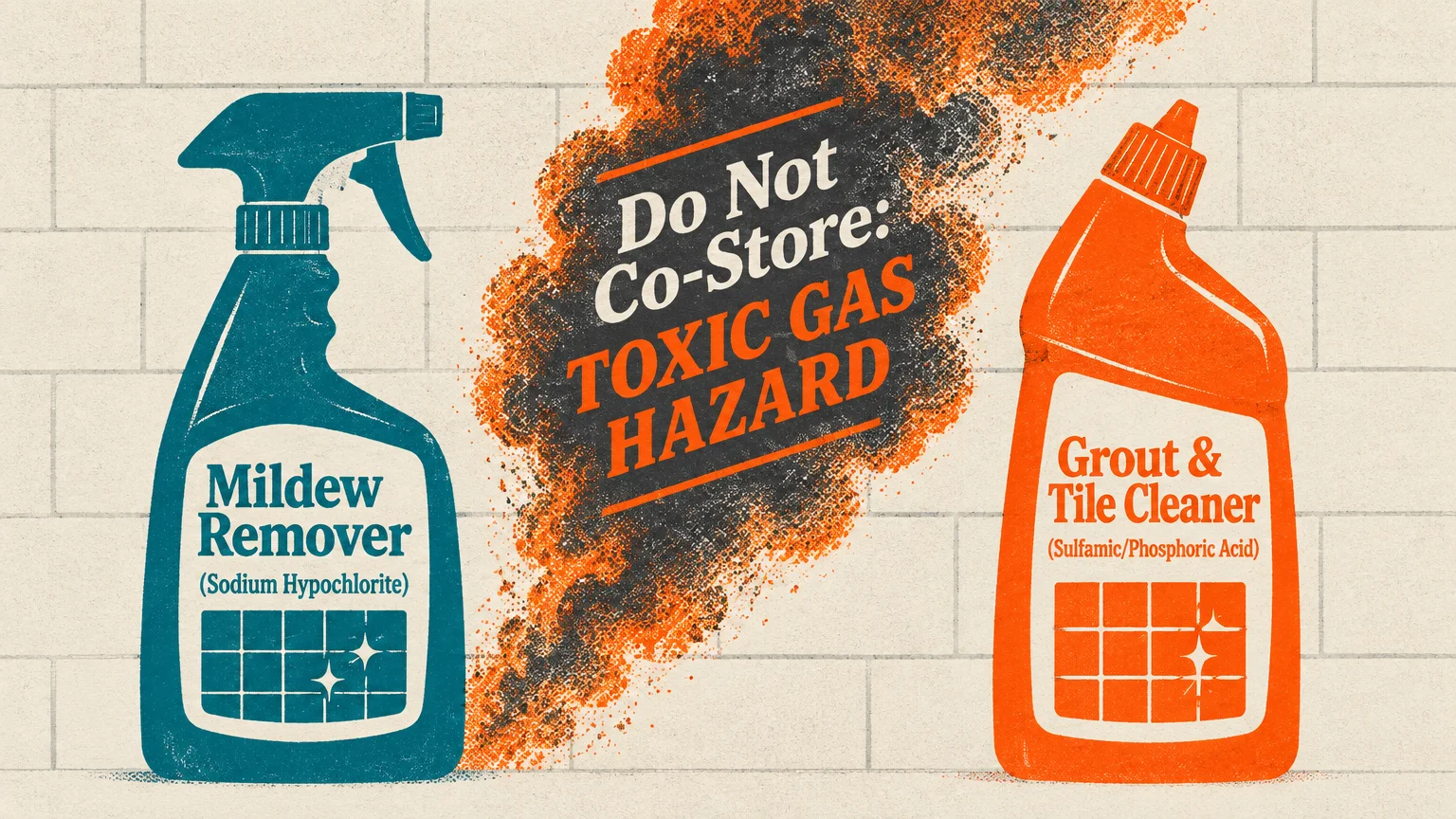
8. Mildew Removers and Acidic Tile Cleaners
Bathrooms often harbor both specialized mildew sprays and heavy-duty tile descalers on the same bottom shelf. This convenience creates dangerous cleaning product combinations in a room that often has minimal natural ventilation.
Commercial mildew stain removers almost always rely on concentrated sodium hypochlorite to bleach stubborn fungal spores. Conversely, grout and tile cleaners often contain phosphoric, sulfamic, or oxalic acids to break down soap scum.
When bottles leak and their liquid puddles combine on a cabinet shelf, toxic chlorine and chloramine fumes develop instantly. In damp bathroom environments, humidity speeds up the dispersion of these harmful vapors.
Store your mildew eliminator in your primary laundry utility zone instead of keeping it directly in the bathroom vanity. Reserve bathroom under-sink spaces for mild surfactants, microfiber cloths, and gentle everyday soaps.
This deliberate division prevents accidental chemical mixing and keeps your personal bathroom space completely clean and vapor-free.
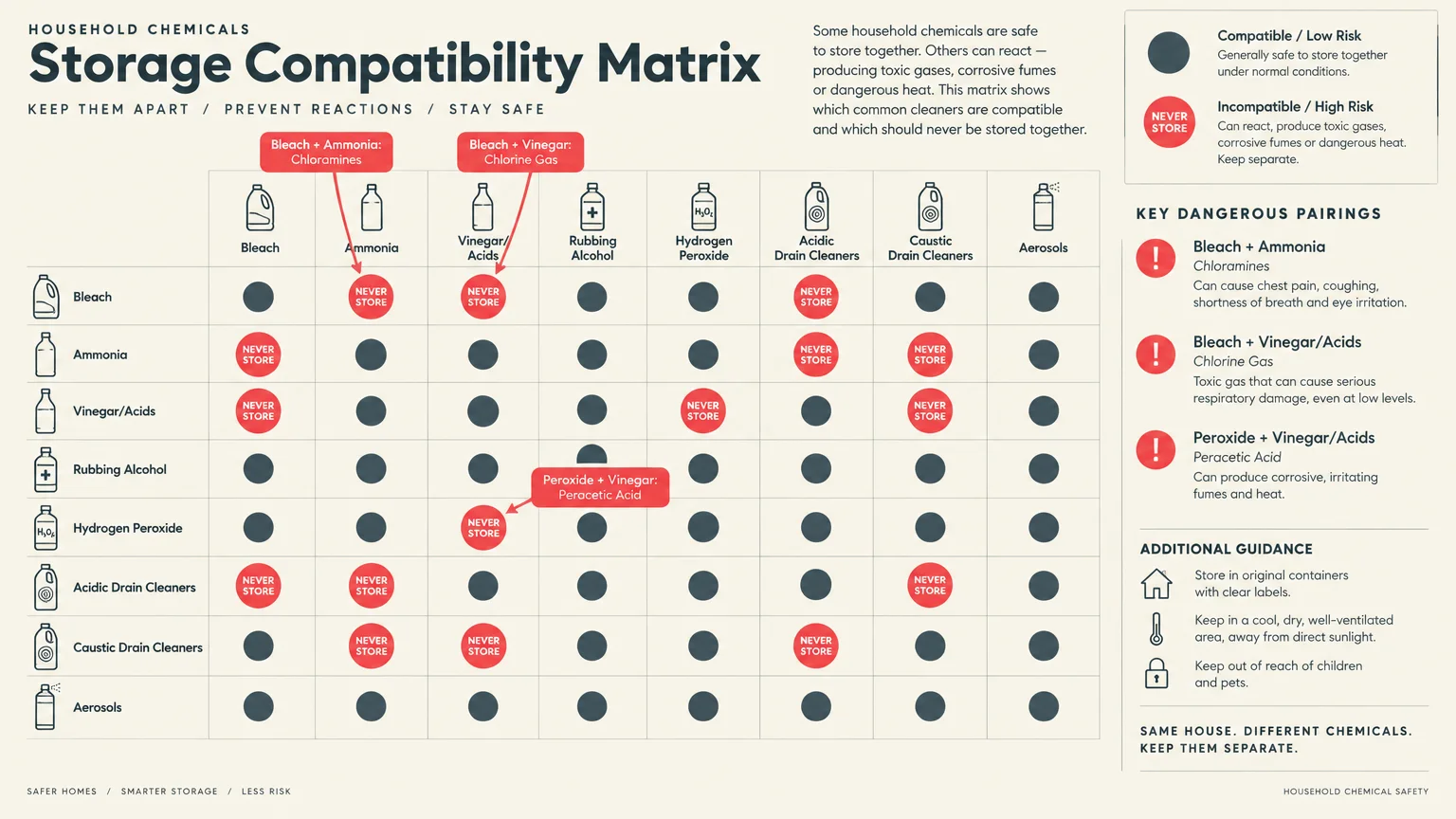
Hazardous Chemical Storage Compatibility Guide
Consult this reference guide to verify which cleaning chemicals require strict separation across different storage areas.
| Primary Cleaner | Incompatible Neighbor | Hazardous Byproduct or Reaction | Safe Storage Strategy |
|---|---|---|---|
| Chlorine Bleach | Ammonia (Glass / Floor Cleaners) | Toxic Chloramine Vapors | Store in different rooms or separate isolated bins. |
| Chlorine Bleach | Acids (Vinegar, Descalers) | Deadly Chlorine Gas | Keep vinegar in pantry; store bleach in laundry area. |
| Chlorine Bleach | Rubbing Alcohol (Isopropyl) | Chloroform and Hydrochloric Acid | Store alcohol in first-aid kit; isolate bleach bottles. |
| Hydrogen Peroxide | White Vinegar / Cleaning Acids | Corrosive Peracetic Acid | Keep peroxide in medicine cabinet; store vinegar separately. |
| Acidic Drain Cleaners | Caustic Drain Cleaners (Lye / Bleach) | Violent Heat, Splattering, Ruptured Bottles | Never stock duplicates; store single bottles in bucket. |
| Bleach Tablets / Liquid | Acidic Toilet Bowl Cleaners | Heavy Chlorine Vapors | Store bowl descalers in bathroom; store bleach elsewhere. |
| Flammable Aerosols | Oxidizers (Pool Chemicals, Bleach) | Accelerated Combustion, Fire Risk | Keep aerosols away from heat, pilot lights, and oxidizers. |
| Mildew Removers | Grout & Tile Acid Descalers | Chlorine Gas in Enclosed Vanities | Separate mildew sprays into a dedicated laundry tote. |
Reviewing these pairings ensures you avoid accidental exposure and maintain pristine indoor air quality throughout your living spaces.
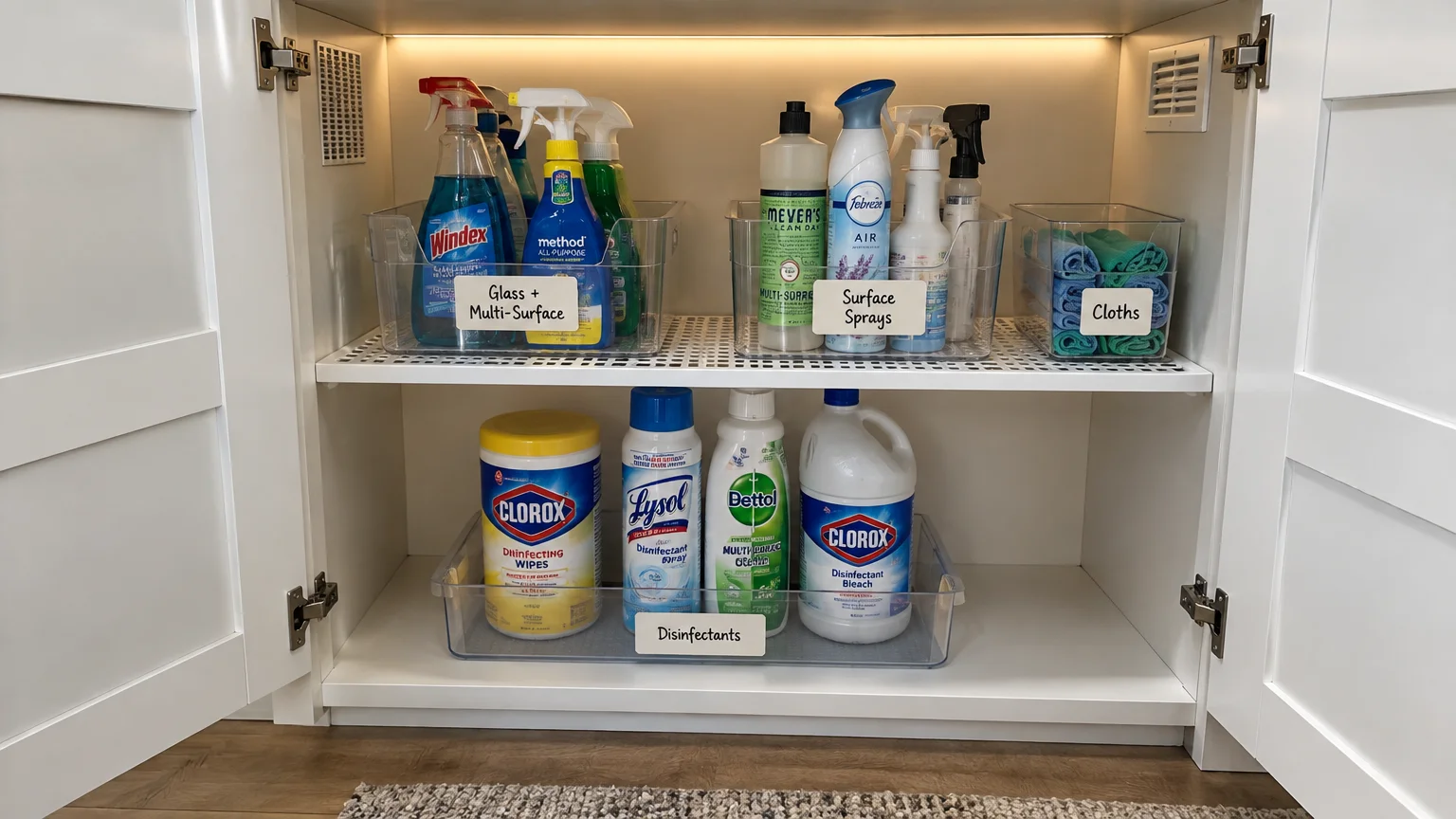
Essential Home Cleaning Safety Tips for Organized Storage
Establishing a systematic storage routine keeps your home running smoothly and prevents accidental chemical reactions. Applying practical organizational strategies ensures that everyday housekeeping remains stress-free and completely safe.
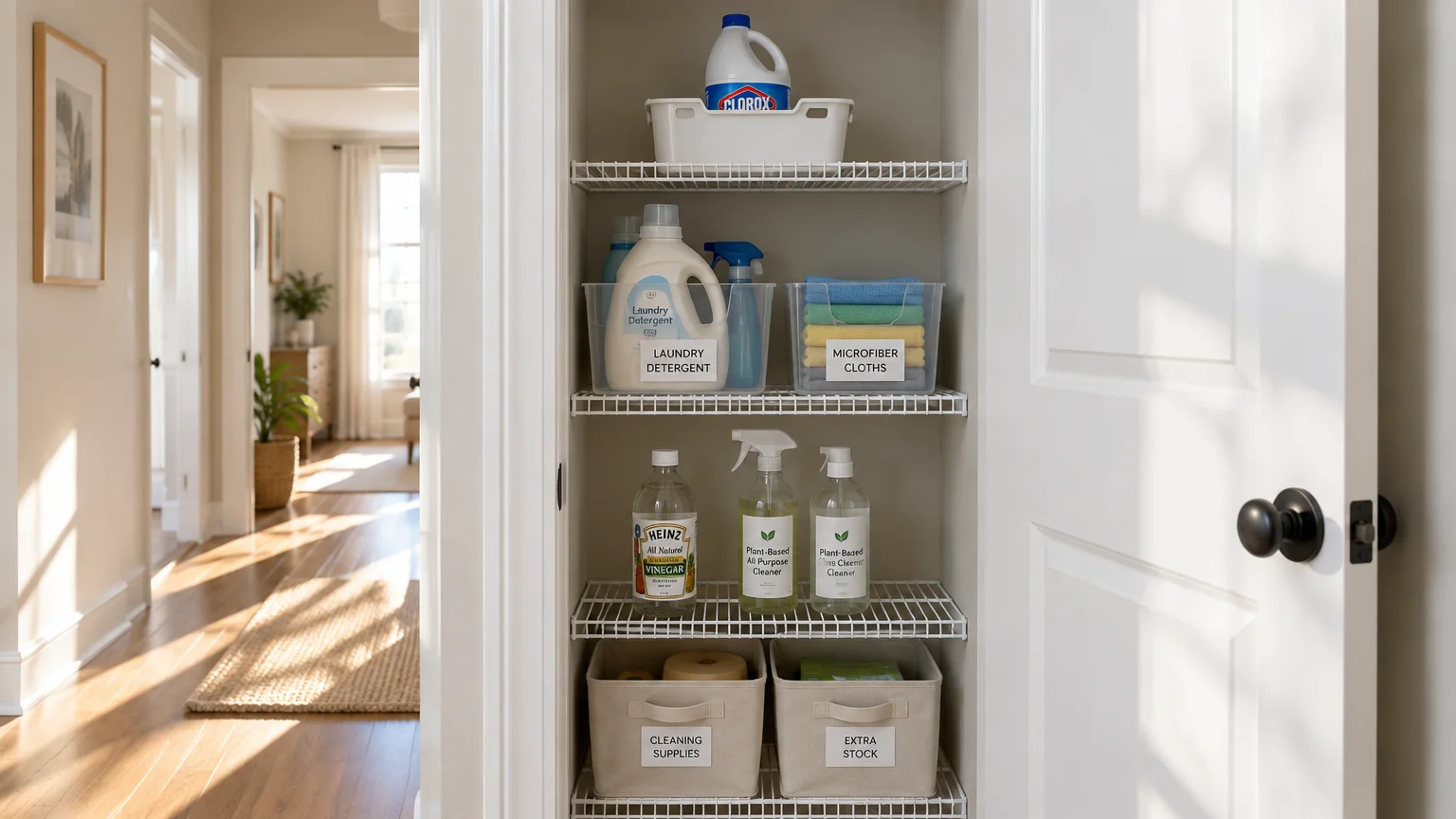
Group your products strictly by chemical category rather than by the room where you use them. When you separate acids, oxidizers, alkalis, and neutral cleaners into distinct bins, you eliminate accidental mixing.
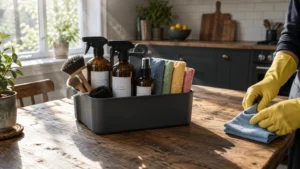
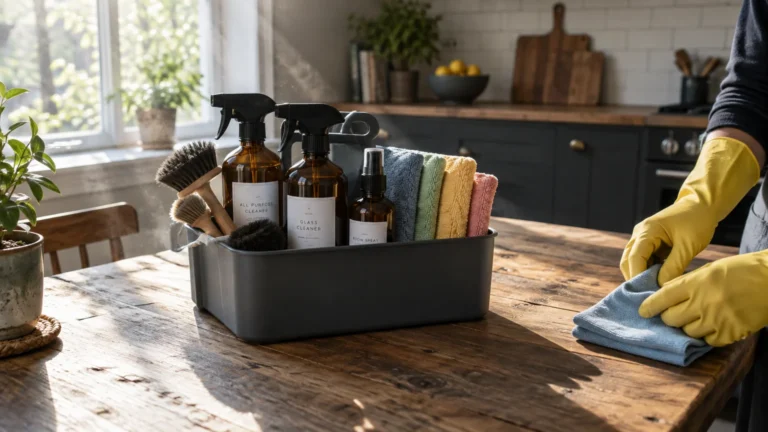
Use heavy-duty, clear plastic totes as secondary containment under sinks and inside pantry closets. If a bottle cracks or a cap fails, the plastic tote catches the spill before it spreads across the cabinet.
Maintain high ventilation and moderate temperatures wherever you choose to store your household cleaning inventory. Storing chemicals in hot furnace closets or humid sunrooms accelerates container degradation and cap failure.
Keep cleaning supplies out of direct reach of grandchildren and curious pets by using magnetic cabinet latches. For older adults, positioning primary cleaners between waist and chest height reduces awkward bending and drops.
Check workplace chemical safety standards from OSHA for professional insights on hazardous vapor control and container segregation.
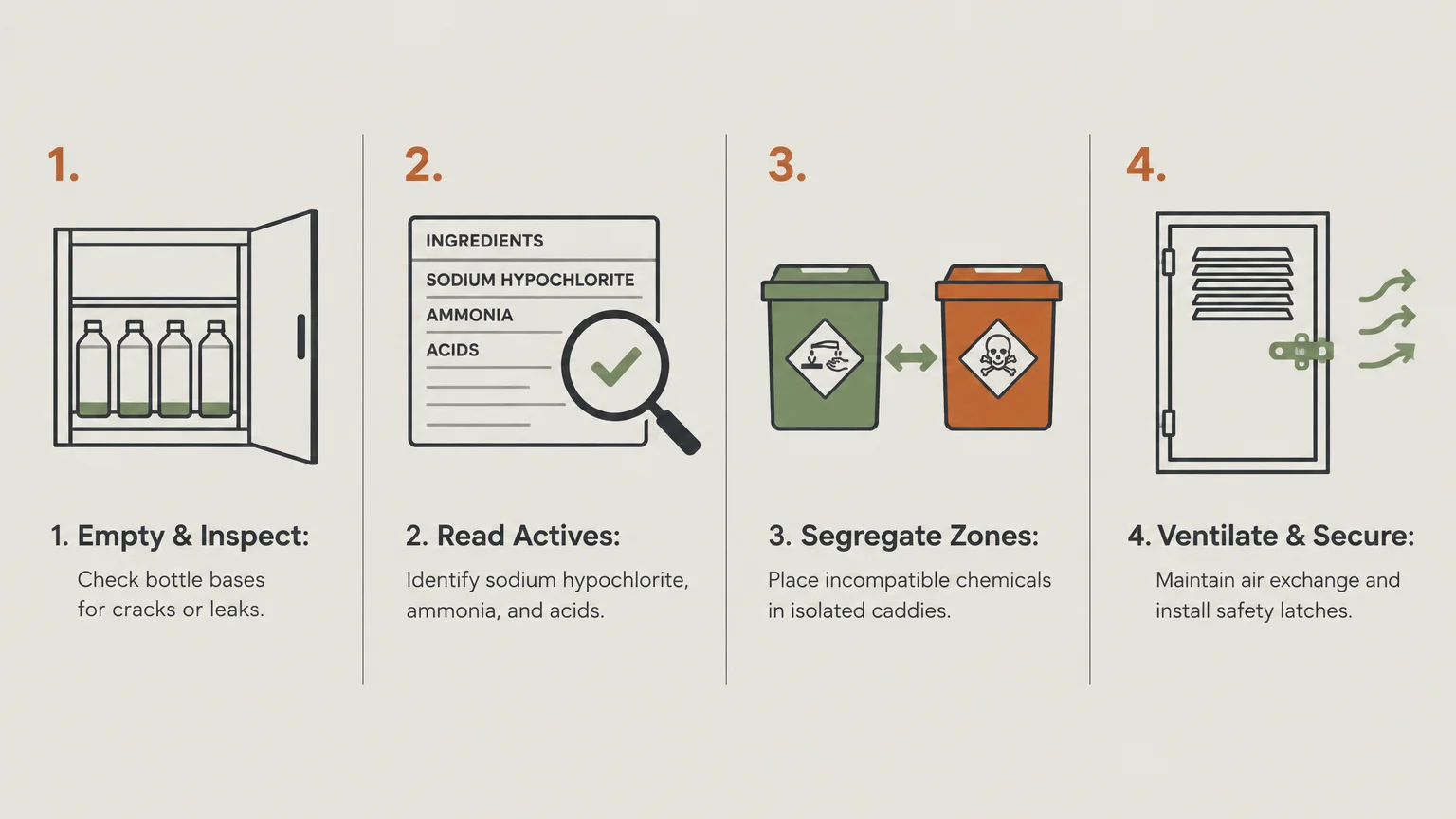
Step-by-Step Cabinet Safety Audit
Performing a comprehensive safety audit takes less than an hour and protects your household from toxic accidents. Follow these structured steps to evaluate, sort, and organize your cleaning cabinets safely today.
- Empty the cabinet completely: Remove all bottles, sponges, and tools onto a well-ventilated, protected countertop so you can examine every item clearly.
- Inspect container integrity: Check bottles for cracked caps, bulging sidewalls, chemical discoloration, or sticky residues around the neck.
- Read chemical active ingredients: Note which formulas contain bleach, ammonia, hydrochloric acid, acetic acid, or flammable hydrocarbon propellants.
- Wipe and dry cabinet surfaces: Clean shelf liners using warm water and a mild dish soap to remove dried chemical residues from past leaks.
- Sort into dedicated containment caddies: Place bleach products into one dedicated plastic bin, acids into a second, and neutral detergents into a third.
- Establish physical distance: Return bins to shelves with at least several feet of separation, or relocate incompatible categories to different rooms entirely.
Completing this quick inspection twice a year guarantees that expired bottles never linger and storage zones stay safe and tidy.
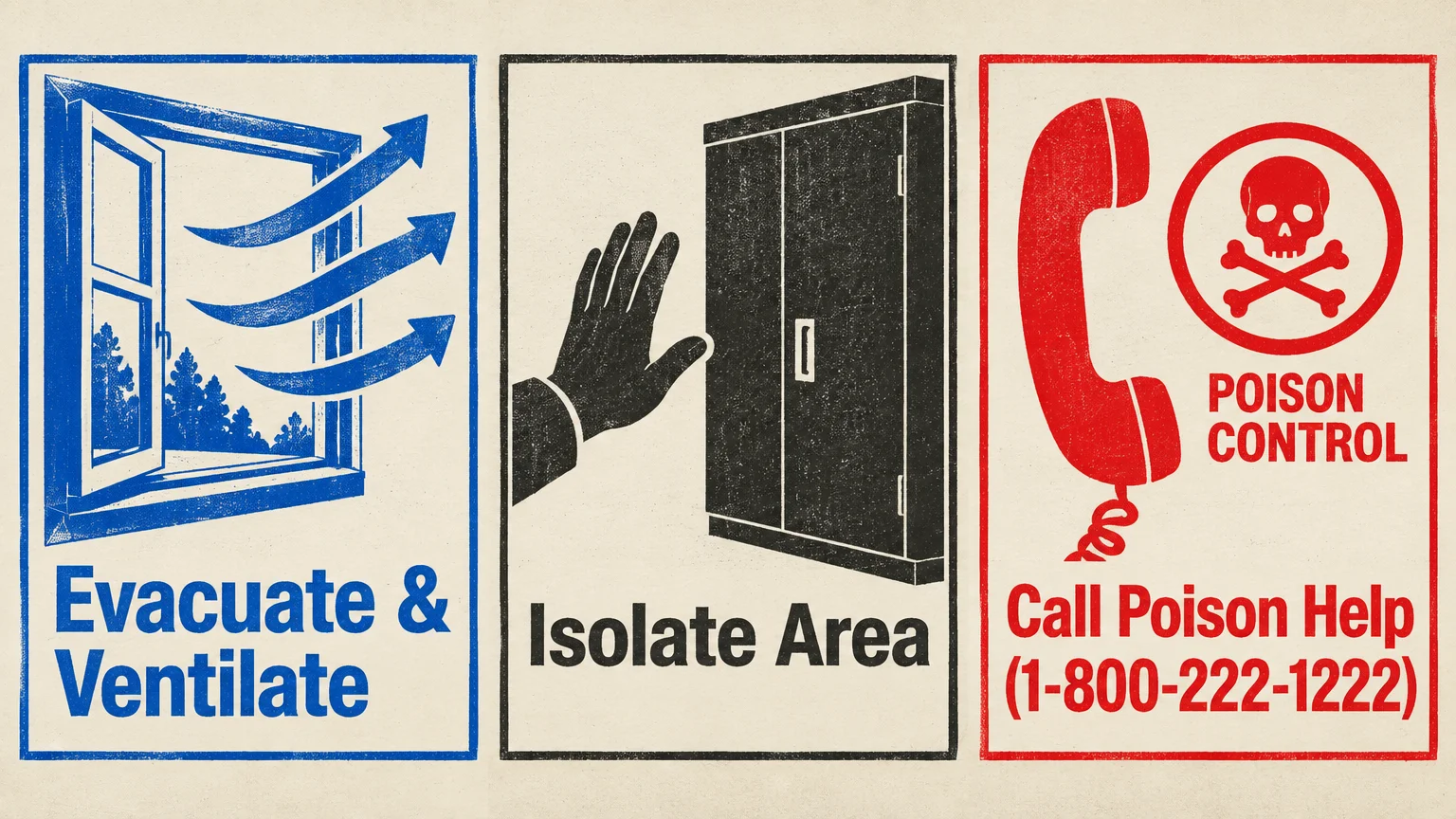
Emergency Protocol: What to Do If Cleaners Leak or React
Even the most careful households occasionally experience spills, leaks, or sudden pungent odors inside utility cabinets. Acting swiftly and methodically minimizes health risks and protects your living space.
If you smell harsh fumes or notice bubbling liquids inside a cabinet, evacuate the immediate area without delay. Do not lean close to inspect the leak or attempt to identify the smell by sniffing.
Open nearby exterior windows from a safe vantage point to clear air pathways, and turn on exhaust fans. Never attempt to neutralize an acid spill with an alkaline cleaner, as this intensifies heat and vapor generation.
Call the national Poison Help line at 1-800-222-1222 immediately for tailored chemical guidance from certified medical specialists. Seek emergency medical attention right away if anyone experiences shortness of breath, dizziness, or intense eye pain.
Safe Storage Habits to Implement Today
Taking control of your utility storage creates a calm, orderly environment where you can find exactly what you need. A few simple adjustments to your storage layout prevent catastrophic chemical interactions.
Pick one cabinet in your home right now—such as the space under your kitchen sink—and check bottle labels. Separate any conflicting formulas into distinct plastic storage caddies before you finish your housekeeping today.