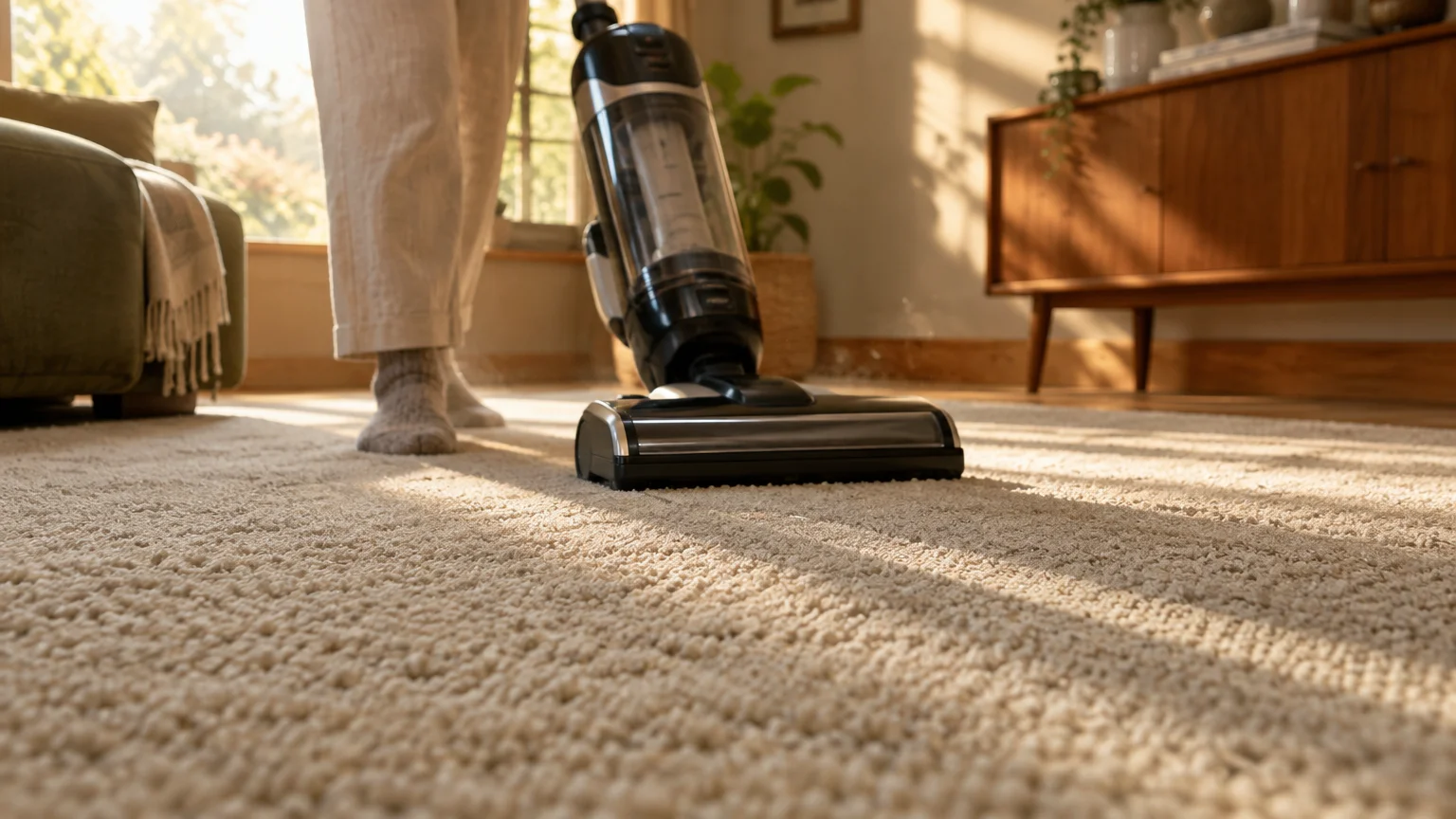
Setting your vacuum brush roll too low grinds away valuable carpet pile every time you clean. This common mistake shreds individual yarn fibers and embeds sharp dirt deep into the floor backing.
When rotating bristles dig aggressively into the pile, mechanical friction weakens your carpet threads. You end up replacing your flooring years ahead of schedule.
Adjusting your cleaner’s height and slowing down your passes protects your investment immediately. Learning how to vacuum properly restores comfort and keeps your rooms looking pristine.

The Hidden Culprit: How Wrong Brush Roll Settings Destroy Carpet Fibers
Most homeowners assume that dropping a vacuum to its lowest setting yields the deepest possible clean. In reality, jamming spinning bristles directly into your carpet pile causes rapid, irreversible wear.
A vacuum’s motorized beater bar is designed to agitate loose dirt gently, not scrub carpet fibers aggressively. Excessive mechanical friction frays yarn tips and breaks down individual carpet strands.
Over time, this intense friction creates noticeable pilling and fuzzing on cut-pile carpets. The yarn tips untwist, lose their natural springiness, and take on a matted, prematurely worn appearance.
The damage escalates rapidly on loop-pile styles like Berber. High-speed bristles can snag exposed loops, pulling long runner threads out of the floor and ruining an entire room.

The Science of Soil Abrasion: What Happens Beneath Your Floor
To understand how carpets deteriorate, you must examine the soil entering your home. Daily foot traffic tracks microscopic quartz, clay, and silica particles deep into carpet backing.
Under magnification, these tiny soil granules feature sharp, jagged edges that behave like miniature razor blades. When walked upon, they slice directly into neighboring fibers.
The Carpet and Rug Institute confirms that dry, gritty soil represents roughly 79 percent of all carpet dirt. Gentle suction removes this particulate matter before it can sever your floor’s backing.
When you set a vacuum head too low, downward pressure compresses grit against the floor rather than lifting it. The spinning brush then rubs those sharp granules directly against the primary backing.
Once backing threads fray and separate, individual carpet tufts shed permanently. You end up with thinned, worn traffic patterns that no professional deep cleaning can salvage.

Frictional Heat and Synthetic Fibers: The Melting Danger
Modern residential carpets rely heavily on synthetic materials like polyester, olefin, and nylon. While these synthetic polymers resist moisture and stains, they remain sensitive to heat.
A motorized brush roll spinning at thousands of revolutions per minute generates significant friction heat against carpet pile. When pressed too hard, that heat can singe synthetic fibers.
Olefin and polyester melt at comparatively low temperatures. Excessive friction creates hard, discolored fiber tips that feel scratchy under barefoot contact.
Maintaining proper brush roll clearance prevents this localized heat buildup entirely. Your carpet stays soft, pliable, and comfortable for years to come.

The Speed Trap: Why Rushing Leaves Destructive Dirt Behind
Rushing through vacuuming represents another prevalent mistake that wears out flooring. Pushing a vacuum briskly across the floor leaves behind the heaviest, most destructive soil particles.
Modern vacuum cleaners rely on sustained negative airflow pressure to pull dirt out of dense pile. Agitation loosens the soil, but airflow must carry it into the collection system.
When you sweep the cleaning head rapidly across a room, you constantly break that air seal. The machine grabs easy surface lint while leaving heavy grit trapped at the carpet base.
Moving at a slow, deliberate pace gives the vacuum motor necessary dwell time. That brief pause allows the pressure differential to lift dense soil from deep within the backing.
A calm, measured tempo also reduces physical fatigue on your back and shoulders. You clean your floors far more thoroughly while expending less physical effort.

How to Vacuum Properly: The Step-by-Step Height Test
Finding the ideal height setting on your vacuum takes less than one minute. Use this simple adjustment technique to protect your flooring from unnecessary friction.
- Start at maximum height: Turn the adjustment dial to its highest setting before turning on the power, keeping the roller well above the carpet.
- Power on the unit: Switch the vacuum on and listen to the clear, unburdened pitch of the spinning motor.
- Lower the head gradually: Step the dial down one click at a time until you hear the motor pitch drop slightly as bristles contact carpet tips.
- Check push resistance: Push the machine forward; it should glide smoothly across the carpet without pulling your arms or feeling glued to the floor.
- Back off if resistance spikes: If the vacuum requires heavy effort to push, raise the dial up one notch to restore healthy airflow.
You should hear the bristles lightly sweeping the carpet tips without dragging against the backing. The machine should feel light and maneuverable in your hands.

Carpet Care Tips by Pile Style: Matching Machine to Material
Every carpet weave requires a different cleaning approach. Adjusting your technique according to pile structure prevents accidental snags and keeps yarn tufts upright.
Berber and Loop-Pile Flooring
Berber carpets consist of continuous, uncut fiber loops stitched tightly into backing material. A spinning brush roll can catch a single loop and pull an entire row across the room.
Always disengage your vacuum’s brush roll when cleaning loop pile. If your vacuum lacks a shut-off switch, use a dedicated suction-only floor attachment instead.
Plush and High-Pile Carpets
Thick, plush carpets create powerful suction locks that can stall vacuum motors. When the head sits too low, the vacuum chokes on dense fibers and starves for air.
Raise your vacuum head to its highest setting so air circulates freely around the tall fibers. This setting preserves the fluffy texture without straining drive belts.
Wool and Delicate Natural Fibers
Natural wool fibers possess delicate protective outer layers that break under aggressive mechanical brushing. Harsh beater bars create excessive shedding and thin expensive rugs prematurely.
Clean wool carpeting using suction only, or set the roller bar to maximum clearance. Gentle airflow lifts dust while protecting natural fiber oils.

Carpet Type and Vacuum Setting Guide
Use this reference table to match your vacuum settings and speeds to your home’s flooring types.
| Carpet Style | Brush Roll Status | Height Adjustment | Recommended Vacuum Speed |
|---|---|---|---|
| Plush / Saxony (Cut-Pile) | Engaged (Rotating) | Medium to High | Slow, deliberate passes (approx. 1 foot per second). |
| Berber / Level Loop | Disengaged (Off) | High / Suction Only | Moderate pace using linear strokes to avoid snags. |
| Commercial Low-Pile | Engaged (Rotating) | Low to Medium | Slow, overlapping strokes to extract fine grit. |
| Frieze / Shag | Disengaged (Off) | Maximum Clearance | Very slow glide to prevent yarn tangling in wheels. |
| Woven Wool Area Rugs | Disengaged (Suction Only) | High Clearance | Gentle passes working from center outward to protect fringes. |

Four Additional Vacuum Cleaning Mistakes That Age Your Floors
Setting the wrong height is the most destructive error, but other routine habits also cause premature wear. Eliminating these four vacuum cleaning mistakes protects your carpets further.
1. Vacuuming in Only One Direction
Pushing your vacuum back and forth along the same path bends carpet tufts in a single direction. Over time, that repetitive pressure causes permanent pile crushing and traffic lanes.
Vacuum in a crisscross pattern across high-use areas. Make a pass from north to south, then make another pass from east to west to lift fibers evenly.
2. Letting the Dust Container Fill Past Capacity
Allowing vacuum bags or canisters to pack completely full cripples suction performance. Most cleaners lose substantial airflow efficiency once collection chambers reach half capacity.
Weak suction leaves abrasive soil resting inside the carpet backing. Empty bagless dust cups after every use, and replace bagged models when two-thirds full.
3. Ignoring Wrapped Strings and Hair
Hair and long threads wrap tightly around rotating brush rollers during normal use. This buildup binds the roller bearings, creating friction that overheats and breaks vacuum belts.
A stalled brush drags bluntly across your carpet pile instead of grooming it smoothly. Inspect the roller monthly and slice away tangled hair with small scissors.
4. Neglecting Filter Maintenance
Dirty filters restrict exhaust airflow, forcing the vacuum motor to work hotter and harder. Clogged filtration also allows fine allergens to blow straight back into your living space.
The U.S. Environmental Protection Agency warns that unmaintained vacuums reintroduce fine dust into indoor air. Wash reusable filters monthly and replace HEPA filters annually.

Fiber Resilience: Understanding Nylon, Polyester, and Triexta
Different carpet fibers react uniquely to mechanical stress. Understanding your carpet’s chemical makeup helps you prevent wear before it starts.
Nylon Resilience
Nylon remains the most durable synthetic fiber available for residential carpet. Its molecular structure boasts excellent memory, springing back after compression from heavy furniture or footsteps.
Even nylon wears down when subjected to aggressive brush friction and ground-in soil. Regular, gentle vacuuming preserves its protective factory coatings.
Polyester Softness
Polyester offers vibrant colors and natural stain resistance at budget-friendly prices. However, its yarn tufts lack the structural resilience of nylon under heavy foot traffic.
Polyester fibers crush and mat easily when attacked by low beater bars. Use a higher roller height to keep polyester soft and lofty.
Triexta Performance
Triexta combines the softness of polyester with springy durability comparable to nylon. It resists permanent staining naturally without requiring topical chemical treatments.
Because triexta yarn is often spun into dense, plush carpets, proper airflow is vital. Raise your vacuum head so the motor does not choke during cleaning.

Strategic Carpet Maintenance: Simplifying Your Cleaning Schedule
Effective carpet maintenance should create a cleaner home without creating daily exhaustion. You do not need to deep clean every carpeted room every single day.
Divide your living space into distinct traffic zones based on daily movement. Entryways, hallways, and living rooms absorb over eighty percent of incoming shoe soil.
Clean these high-traffic paths two to three times each week with slow, overlapping passes. Reserve guest rooms and low-traffic areas for a quick bi-weekly refresh.
Place durable walk-off mats at every exterior doorway to catch grit before it crosses your threshold. Removing outdoor shoes indoors eliminates the vast majority of abrasive dirt.
Safety research from the U.S. Consumer Product Safety Commission highlights that keeping floors clean and clear reduces residential fall risks. Maintained carpets provide reliable traction and a welcoming, peaceful environment.
The National Institute of Environmental Health Sciences notes that proper allergen removal supports long-term respiratory health. Regular, gentle vacuuming keeps indoor allergens under control without damaging floor fibers.

Your Pre-Vacuum Equipment Checklist
Spend two minutes checking your equipment before starting your next vacuuming session. This simple checklist ensures your cleaner operates at peak suction without damaging your flooring.
- Clear the brush roll: Verify that the roller spins freely by hand and remove any wrapped hairs, threads, or cords.
- Set the pile height: Adjust the dial to match the carpet thickness of the specific room you are cleaning.
- Check suction pathways: Peek into the lower hose to confirm pet fur or pennies have not created an internal blockage.
- Empty the chamber: Dump the dust container or verify your vacuum bag still has ample room for incoming dirt.
- Clear floor obstacles: Pick up stray cords, coins, and hard toys that could gouge vacuum wheels or snap roller belts.
Performing these quick checks prevents mechanical jams and protects your motor from unnecessary strain. Your vacuum will run cooler, quieter, and last years longer.

Put This Technique Into Practice Today
Before you vacuum your floors today, lift your cleaning head one notch higher than usual. Listen for a relaxed, steady motor hum as you push the machine forward.
Slow your pace down to give airflow time to pull grit from the backing. This simple two-second adjustment protects your carpets, saves your energy, and extends your flooring’s lifespan.