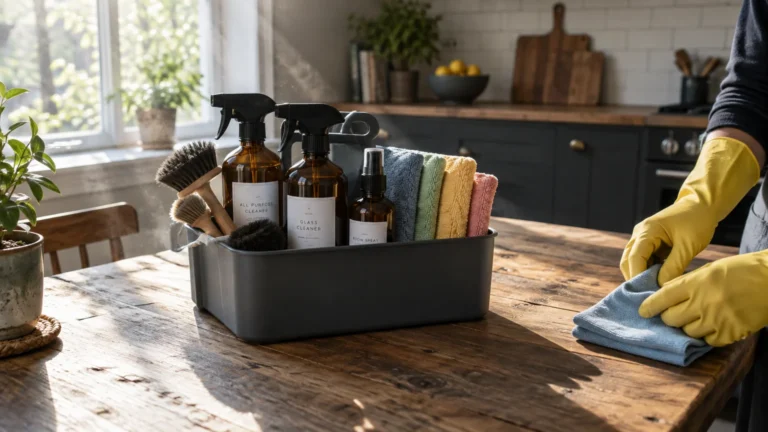
You can restore your patio setup quickly without risking costly, irreversible surface damage. Avoiding major cleaning mistakes outdoor furniture owners make saves you hundreds of dollars in seasonal replacements.
Many common household cleaners strip protective UV sealants, pit lightweight metals, and degrade performance fabrics. Choosing the wrong bottle turns a quick Saturday chore into an expensive renovation.
Knowing what damages outdoor furniture keeps your outdoor living area fresh, functional, and durable for decades. Review these seven harmful cleaners and adopt gentler, professional-grade alternatives today.
1. High-Pressure Power Washers
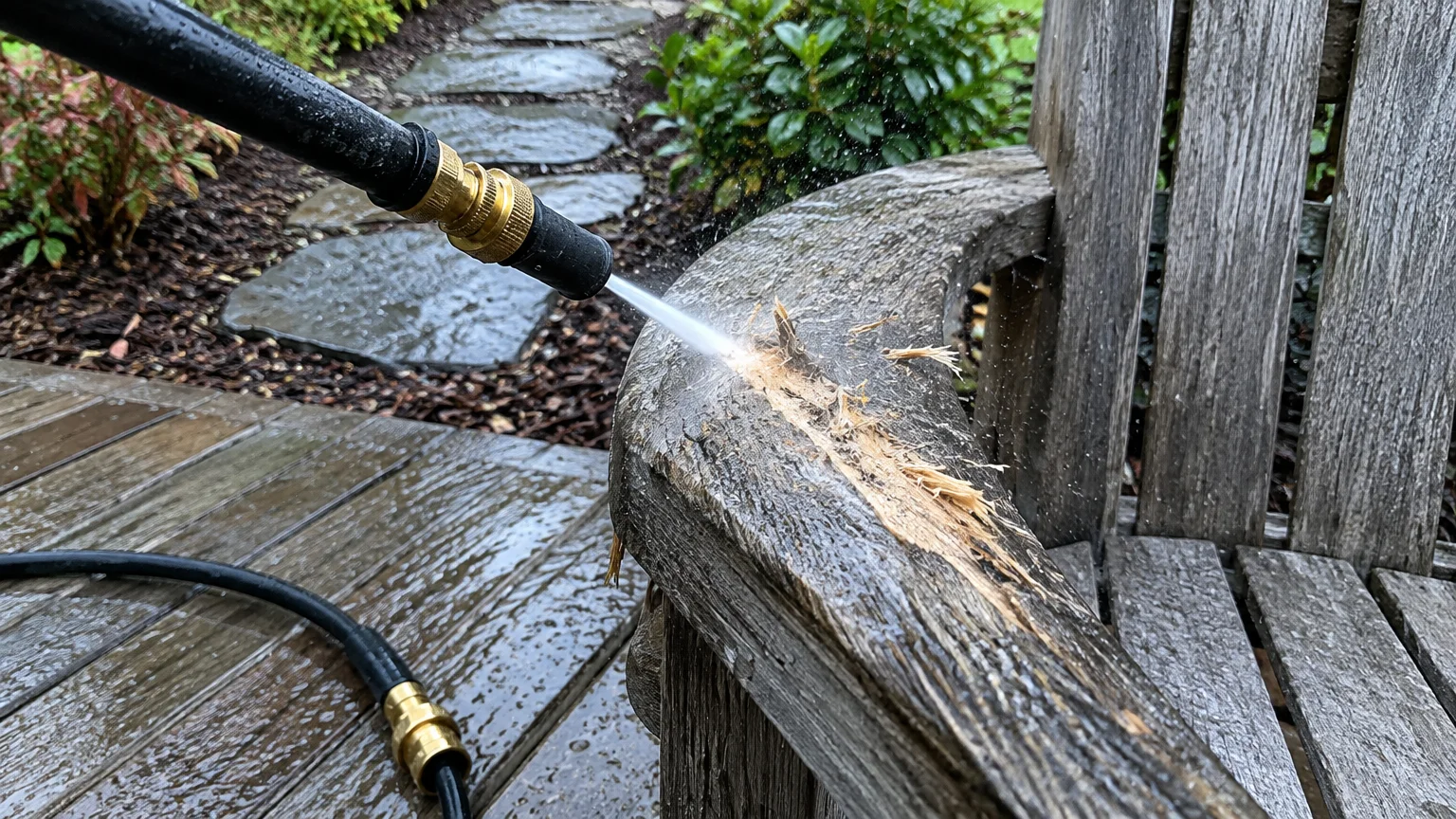
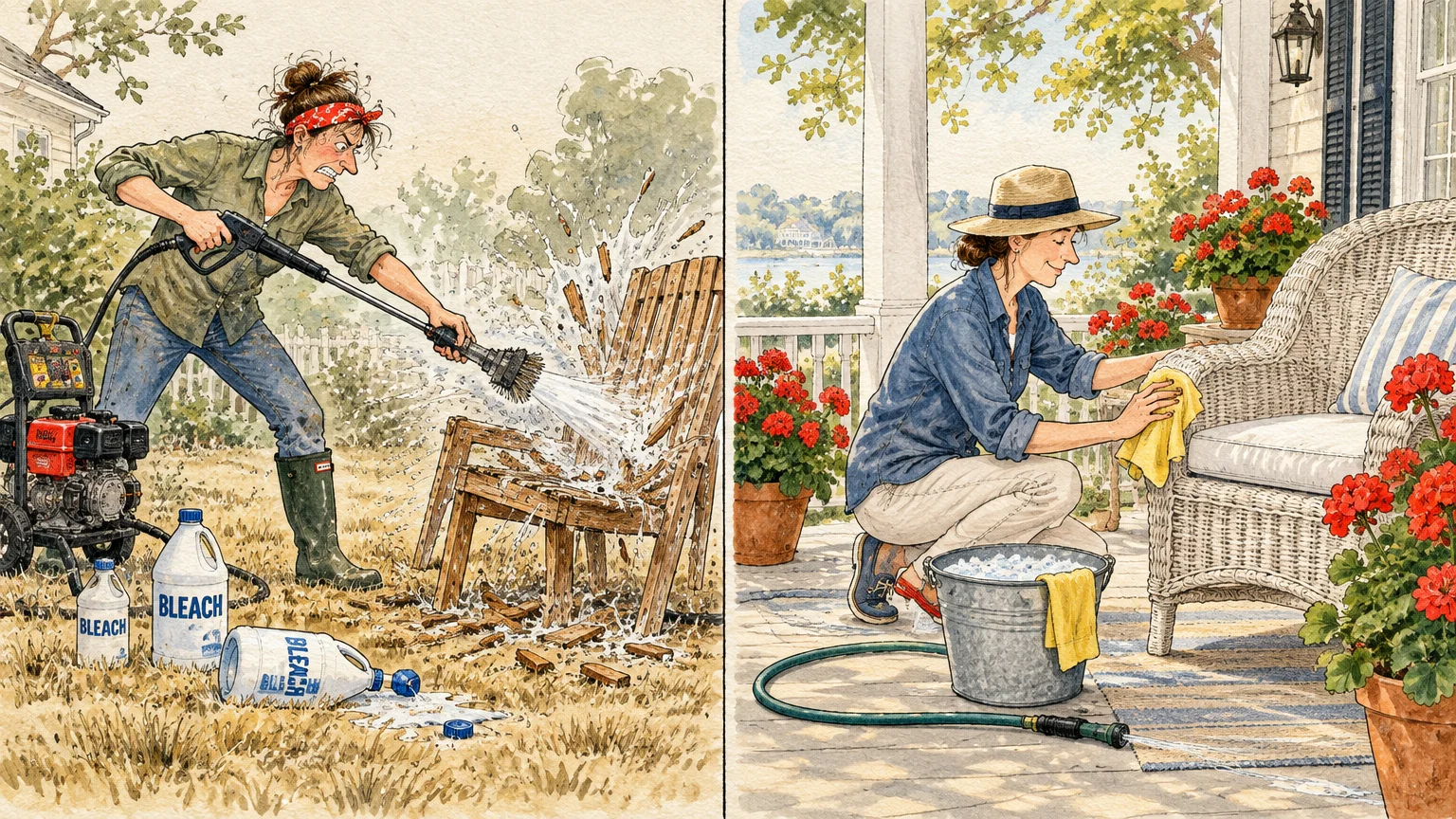
You might feel tempted to blast away stubborn grime using an electric or gas pressure washer. While high pressure clears concrete driveways effectively, it rapidly tears through delicate patio materials.
Pressurized water gouges natural wood grain on teak, cedar, and eucalyptus chairs. It raises wood fibers, leaving rough splinters that require extensive sanding to repair.
High pressure also shatters brittle resin wicker strands and forces water behind synthetic joints. Once trapped inside tubular metal frames, moisture rusts furniture from the inside out.
Pressure sprayers strip the powder coating off cast aluminum and wrought iron frames. Once that protective finish chips away, moisture and oxidation attack the bare metal underneath.
Swap the power washer for a standard garden hose equipped with an adjustable brass nozzle. Pair that gentle stream with a soft-bristled brush to lift patio grime safely.
2. Undiluted Chlorine Bleach
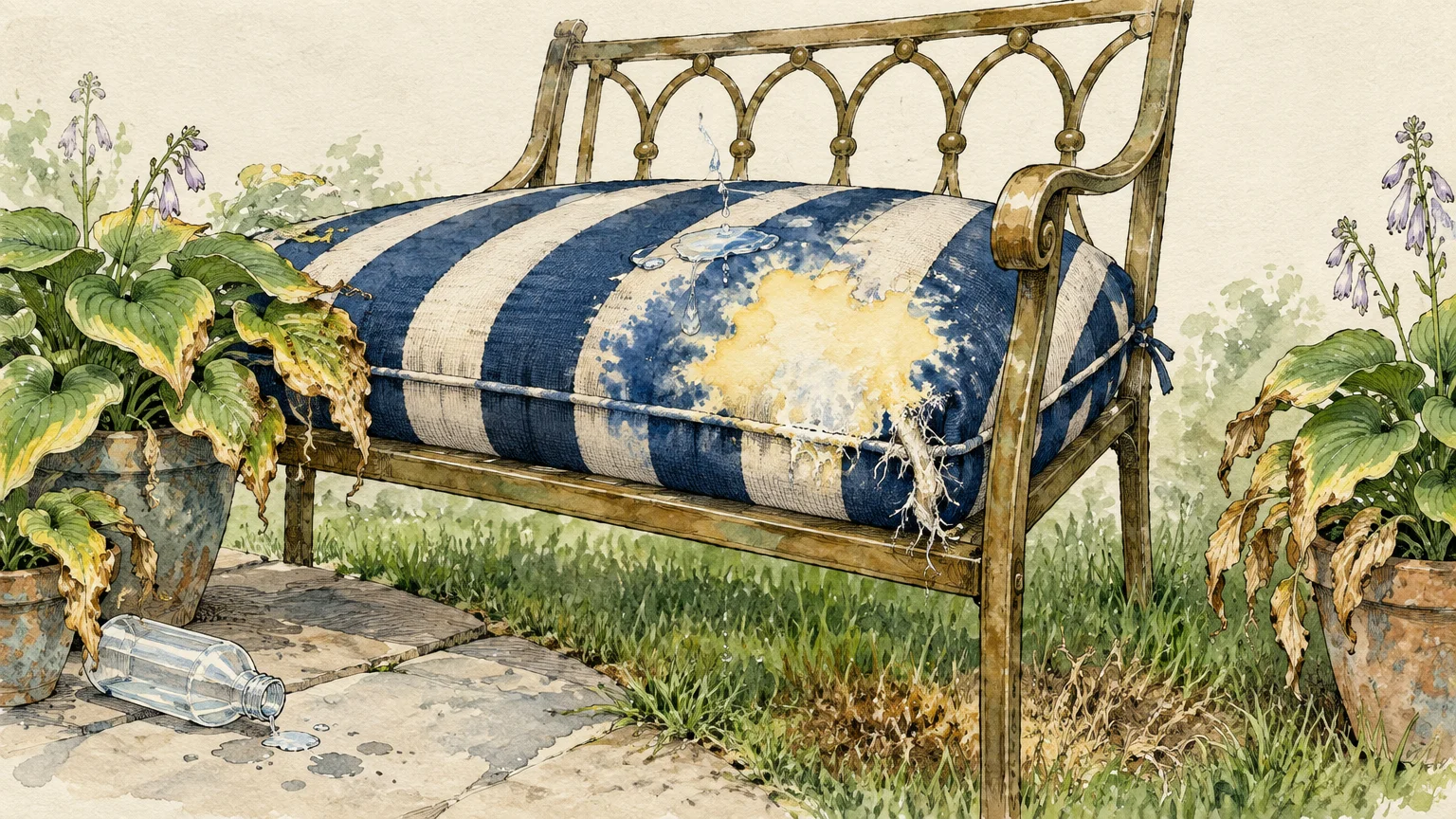
Many homeowners pour liquid chlorine bleach directly onto mildew spots to brighten faded cushions and frames. Bleach works as a potent sanitizer, but it wreaks havoc on outdoor finishes and surrounding landscapes.
Undiluted bleach degrades synthetic sewing threads and weakens acrylic outdoor textiles like Sunbrella fabrics. It leaches dye molecules, leaving behind blotchy yellow stains and brittle fibers that rip easily.
Bleach also oxidizes metal hardware, tarnishing brass screws and corroding stainless steel hinges. Runoff from patio washing can kill your surrounding grass, perennial beds, and delicate container plants.
According to the U.S. Environmental Protection Agency (EPA), bleach requires careful handling and precise dilution to prevent hazardous fumes and surface etching.
Replace chlorine bleach with powdered oxygen bleach, also known as sodium percarbonate. Mixed with warm water, oxygen bleach releases harmless oxygen bubbles that lift mold without degrading fabrics or stripping wood oils.
3. Steel Wool and Stiff Wire Brushes
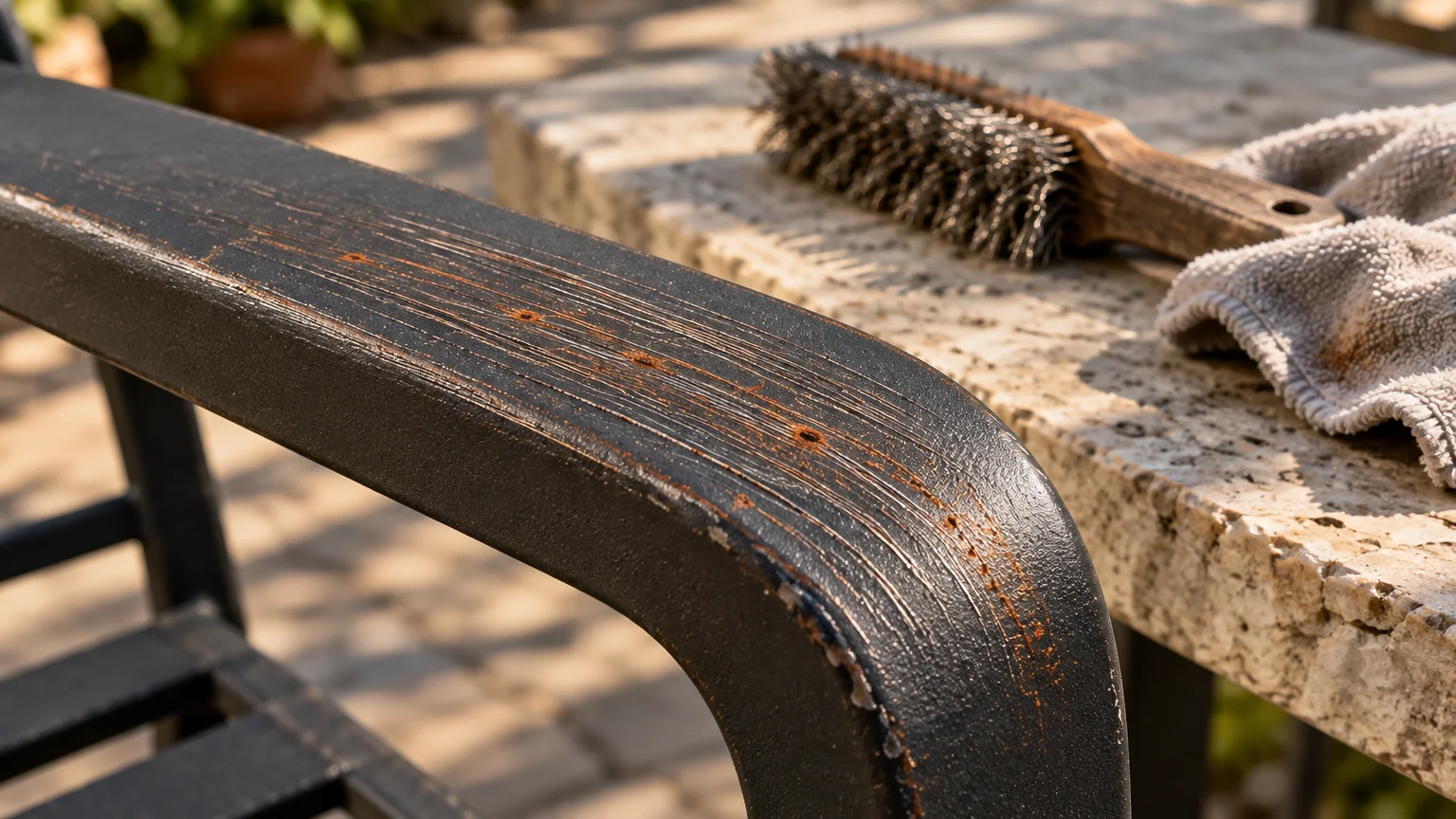
Scrubbing baked-on pollen and bird droppings with abrasive metal pads might feel satisfying. Unfortunately, coarse wire bristles and steel wool gouge virtually every outdoor furniture surface.
Wire bristles carve micro-grooves into powder-coated metal and painted finishes. These tiny scratches expose bare metal to atmospheric humidity, triggering stubborn rust blooms within weeks.
Steel wool leaves behind microscopic iron particles trapped inside porous surfaces. As those microscopic metal shavings oxidize outdoors, they leave behind dark rust streaks that permanently stain teak and light-colored fabrics.
Wire brushes also shred composite lumber and splinter soft wood furniture. Research from the USDA Forest Products Laboratory demonstrates that mechanical abrasives gouge wood fibers, which accelerates moisture penetration and fungal decay.
Protect your investments by scrubbing exclusively with non-scratch nylon pads, Tampico fiber brushes, or microfiber cloths. These tools provide adequate mechanical friction without scratching durable surface coatings.
4. Acetone and Aggressive Chemical Solvents
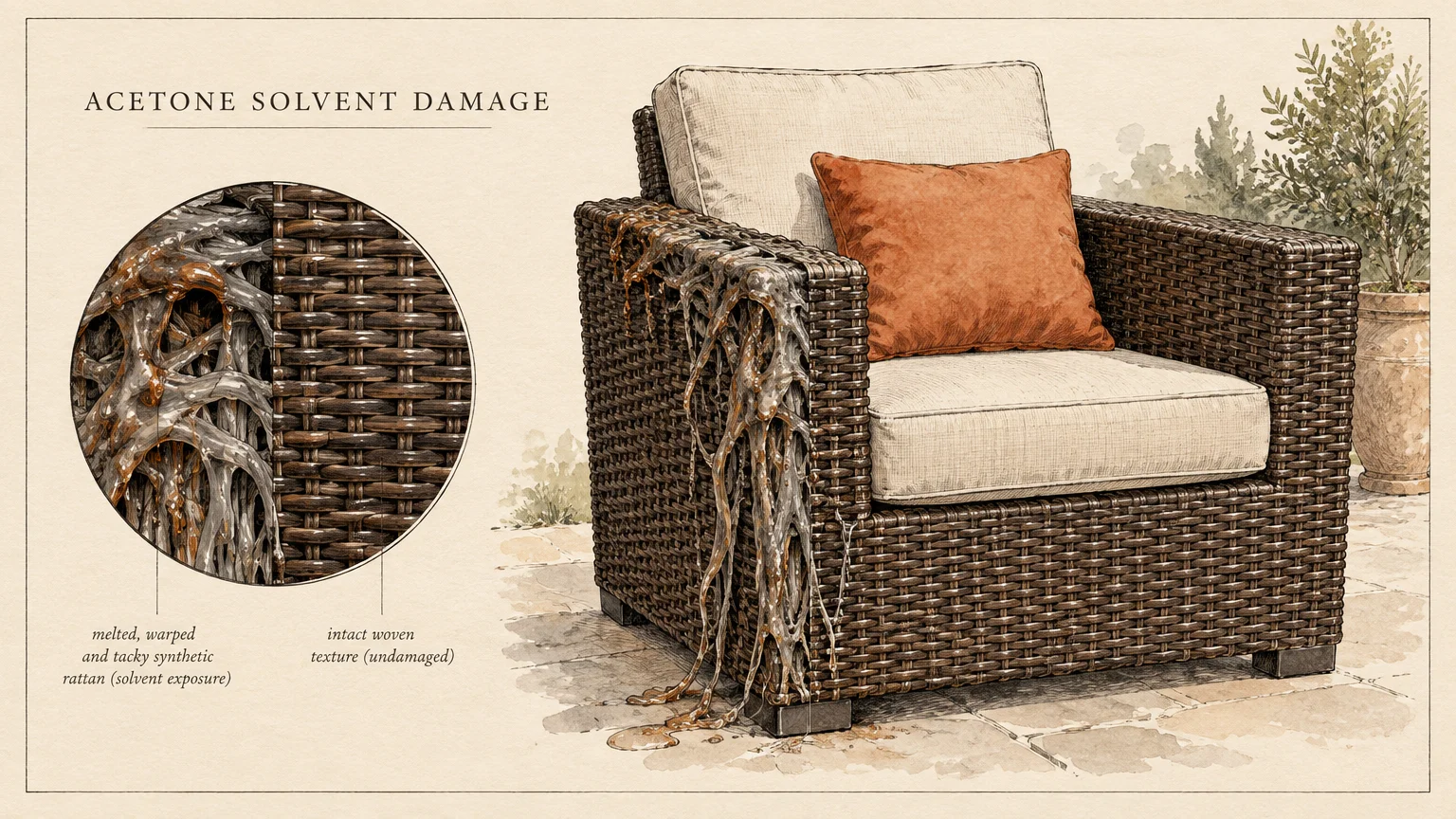
Solvents like acetone, nail polish remover, lacquer thinner, and mineral spirits excel at dissolving adhesive residues. However, you should never apply chemical solvents to outdoor furniture materials.
Acetone dissolves synthetic polymers, chemically melting plastic resin chairs and polyurethane woven wicker. The solvent softens the plastic instantly, creating gummy, cloudy patches that you cannot buff out or repair.
Harsh solvents also strip protective clear coats from sealed hardwoods. They dissolve natural teak oils, leaving patchy white rings and drying out natural wood pores.
If you spill tree sap or sticker residue on your patio table, skip the chemical solvents entirely. Use vegetable oil or a small drop of isopropyl alcohol diluted with water on a clean cloth.
Work the oil into the sticky spot gently to dissolve the bond without melting the underlying plastic or finish. Wash the area immediately with warm soapy water to remove the oily residue.
5. Ammonia and Harsh Acidic Cleaners
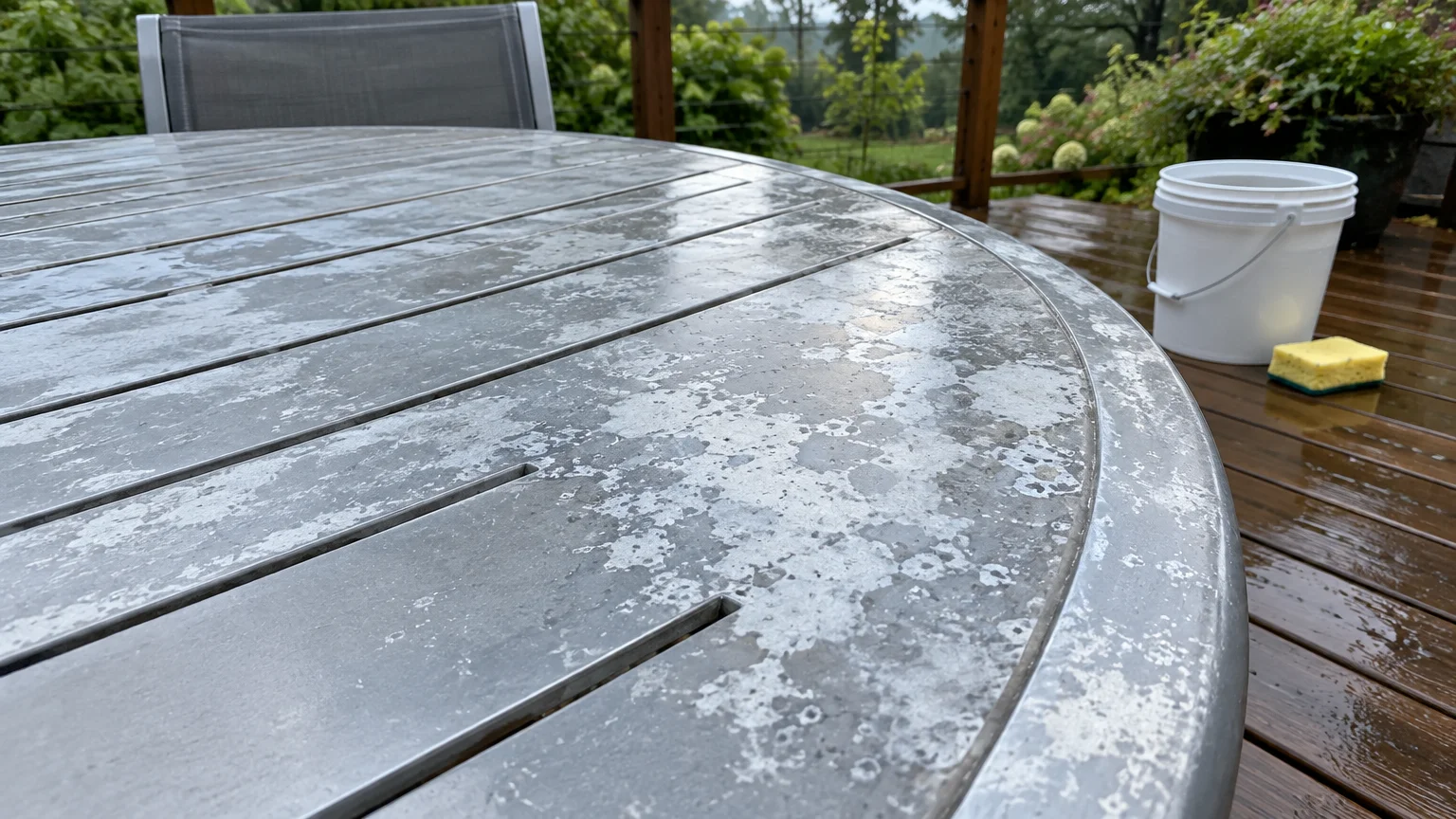
Pure ammonia and concentrated acidic cleaners, including muriatic acid and neat vinegar, cause severe surface degradation. Chemical reactions between aggressive acids or alkalis and outdoor materials create irreversible structural flaws.
Ammonia attacks aluminum patio furniture by reacting with the protective aluminum oxide layer. This chemical reaction causes severe pitting, surface dullness, and white chalky oxidation across your metal frames.
Highly acidic cleaners etch natural stone tabletops, including slate, travertine, marble, and concrete. The acid eats through calcium carbonate in stone, stripping polished finishes and leaving rough, permanently cloudy spots.
Vinegar also attacks rubber seals, bungee suspension cords, and synthetic sling fabrics over time. While mild vinegar solutions kill surface mold on non-reactive materials, never apply acidic liquids to natural stone or unsealed metals.
Wash stone tabletops and aluminum frames with pH-neutral stone soap or mild castile soap instead. These gentle formulations lift dirt and greasy barbecue residues without etching delicate mineral surfaces.
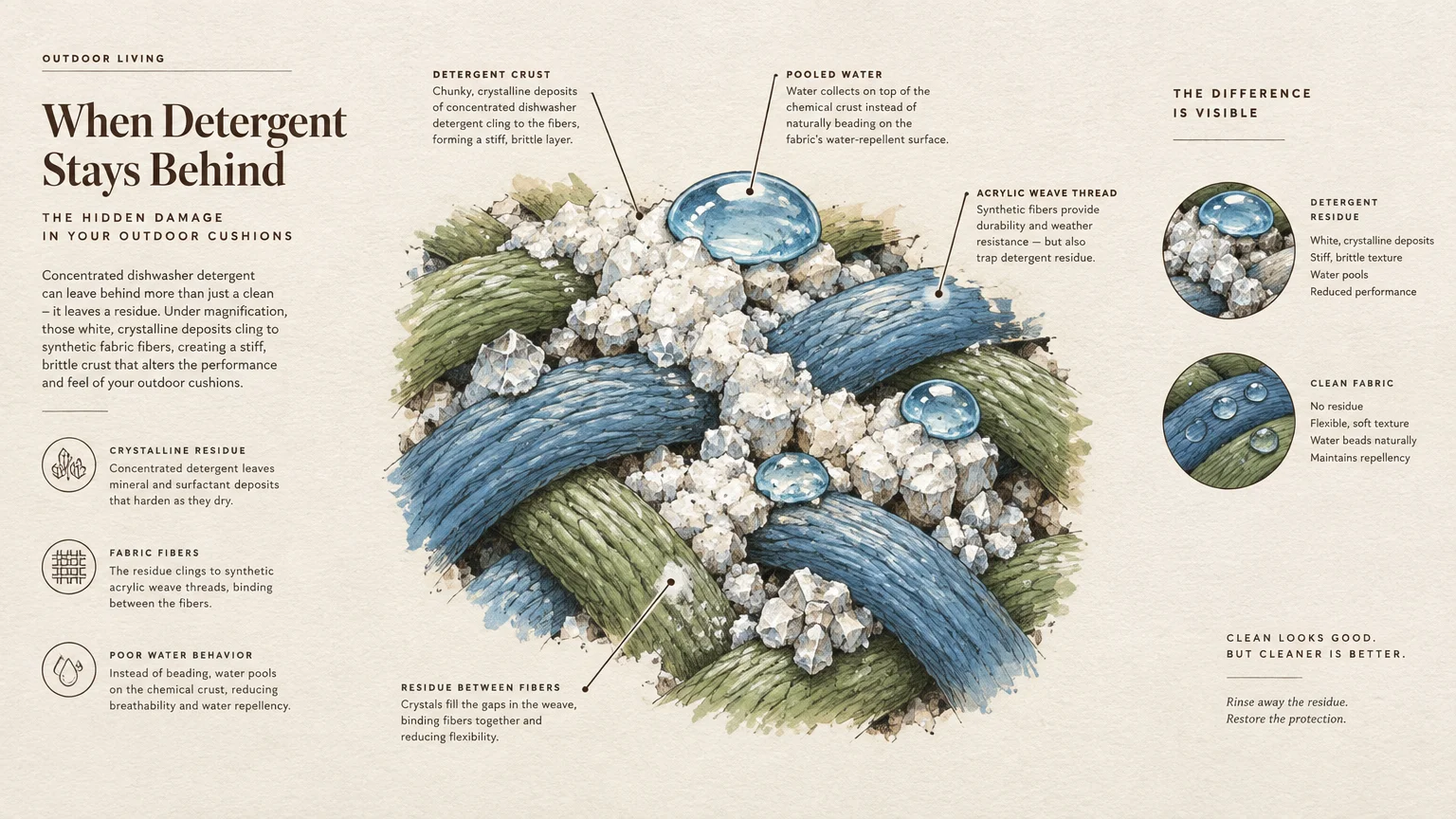
6. Heavy Household Detergents and Dishwasher Powders
Grabbing laundry detergent pods or automated dishwasher powder seems like a convenient shortcut for outdoor cleaning. However, commercial laundry and dishwasher detergents contain highly alkaline builders, enzymes, and optical brighteners.
Dishwasher powders contain strong caustic agents designed to strip food grease from glass and ceramics. Applied to outdoor furniture, these compounds strip factory sealants, dull gloss finishes, and leave a cloudy, chalky residue.
Laundry detergents contain optical brighteners that react poorly to direct ultraviolet sunlight. These chemicals break down outdoors, causing light-colored fabric cushions to turn dingy yellow or grayish-brown under intense UV exposure.
Detergent powders are notoriously difficult to rinse away completely from textured wicker and porous canvas. Leftover alkaline residue attracts airborne dirt particles and feeds active mildew spores during humid summer months.
Use concentrated liquid dish soap designed for hand washing instead. Standard dish liquid breaks down food stains and atmospheric oils gently, rinsing clean without leaving behind harmful residues.
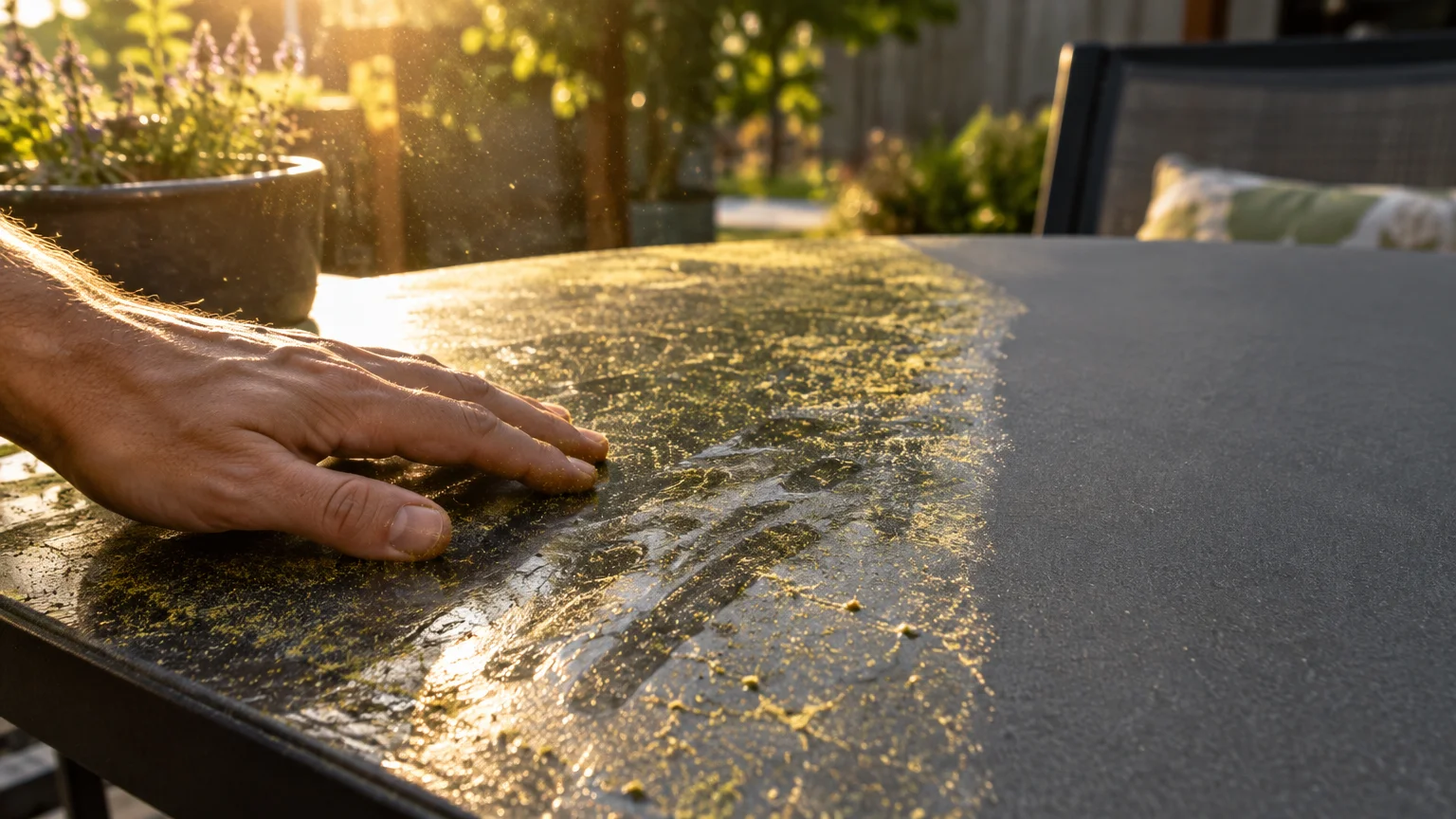
7. Automotive Silicone Waxes and Heavy Floor Polishes
Many homeowners apply automotive paste wax or silicone spray to restore shine to sun-faded furniture. While silicone provides an instant glossy sheen, it causes major long-term maintenance headaches.
Silicone sealants form a non-breathable barrier over wood and wicker fibers. This barrier traps ambient moisture beneath the surface, accelerating internal rot and encouraging hidden mold colonies to flourish.
Automotive waxes also degrade rapidly under intense, direct outdoor sun exposure. They turn cloudy and yellow, creating a sticky surface film that attracts airborne pollen, soot, and dust.
Once silicone bonds to your furniture frames, you cannot easily strip it away. It prevents future coats of wood stain, paint, or marine sealers from properly adhering to the surface.
Protect metal and synthetic surfaces using a breathable, water-based UV protectant formulated specifically for marine or outdoor use. For teak and hardwoods, apply specialized outdoor furniture oil or breathable finishing wax.
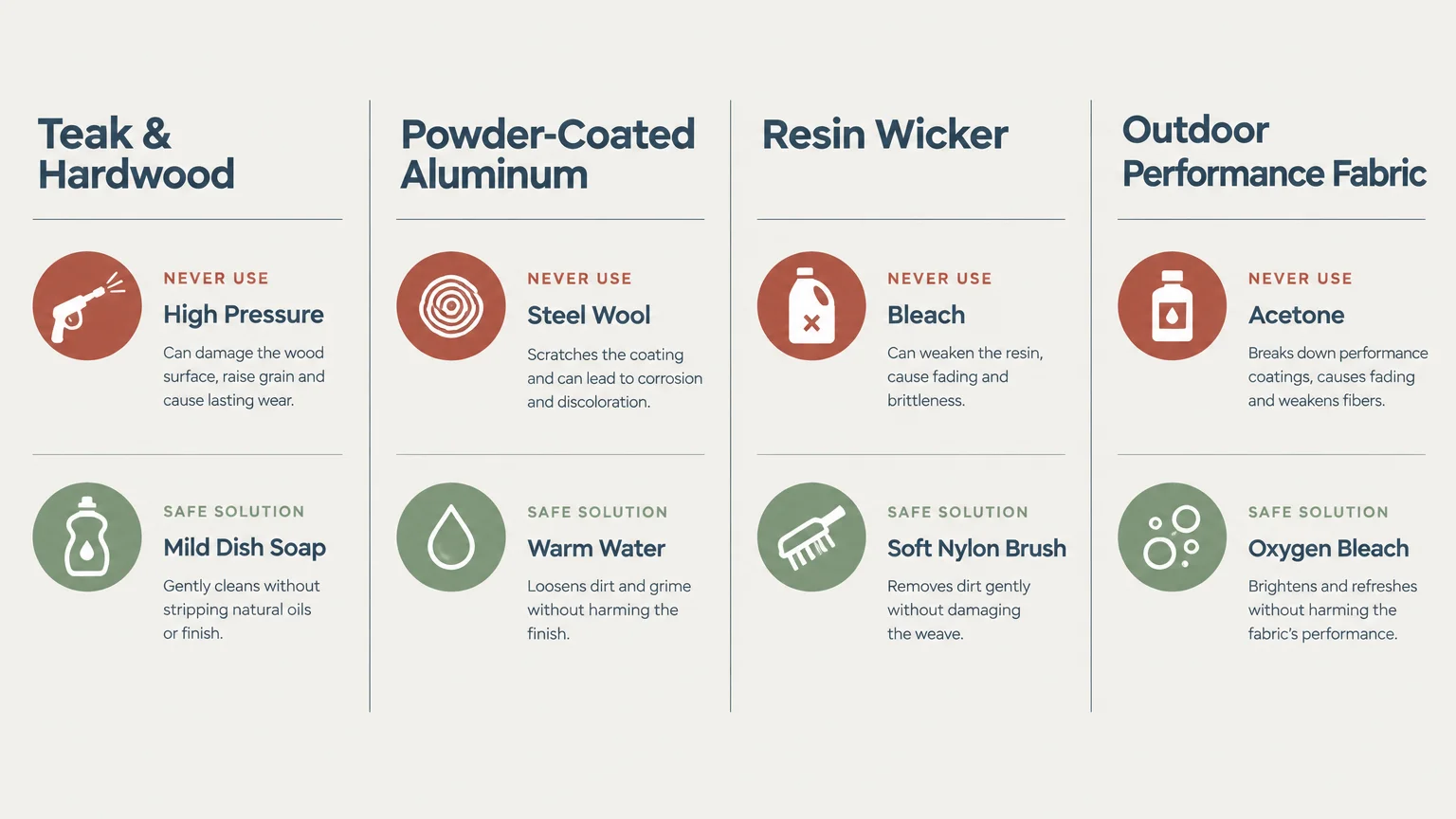
Quick-Reference Guide: Material vs. Safe Cleaning Solutions
Matching your patio materials to the correct cleanser prevents accidental damage and extends furniture life. Consult this reference table before mixing your next bucket of cleaning solution.
| Material | Harmful Cleaners to Avoid | Safe Everyday Cleaner | Deep Stain Treatment |
|---|---|---|---|
| Teak & Hardwoods | Pressure washers, chlorine bleach, wire brushes, ammonia | Warm water, mild dish soap, soft nylon brush | Oxygen bleach paste followed by teak brightener |
| Powder-Coated Aluminum | Ammonia, abrasive scouring pads, neat vinegar | Warm water, mild liquid soap, microfiber cloth | Mild baking soda paste for scuffs, rinsed immediately |
| Synthetic Resin Wicker | Acetone, lacquer thinner, power washers, boiling water | Low-pressure garden hose, mild dish soap, horsehair brush | Diluted oxygen bleach bath for stubborn mildew |
| Outdoor Fabrics (Acrylic/Olefin) | Automotive degreasers, laundry brighteners, neat bleach | Gentle liquid soap mixed with lukewarm water | Oxygen bleach soak for set-in mildew stains |
| Natural Stone & Concrete | Vinegar, lemon juice, muriatic acid, citrus cleaners | pH-neutral stone soap, warm water, soft sponge | Baking soda and water poultice for grease marks |
| Wrought Iron & Steel | Coarse steel wool, undiluted bleach, hydrochloric acid | Dish soap solution, dry immediately with microfiber towels | Fine sandpaper on rust spots, sealed with touch-up paint |
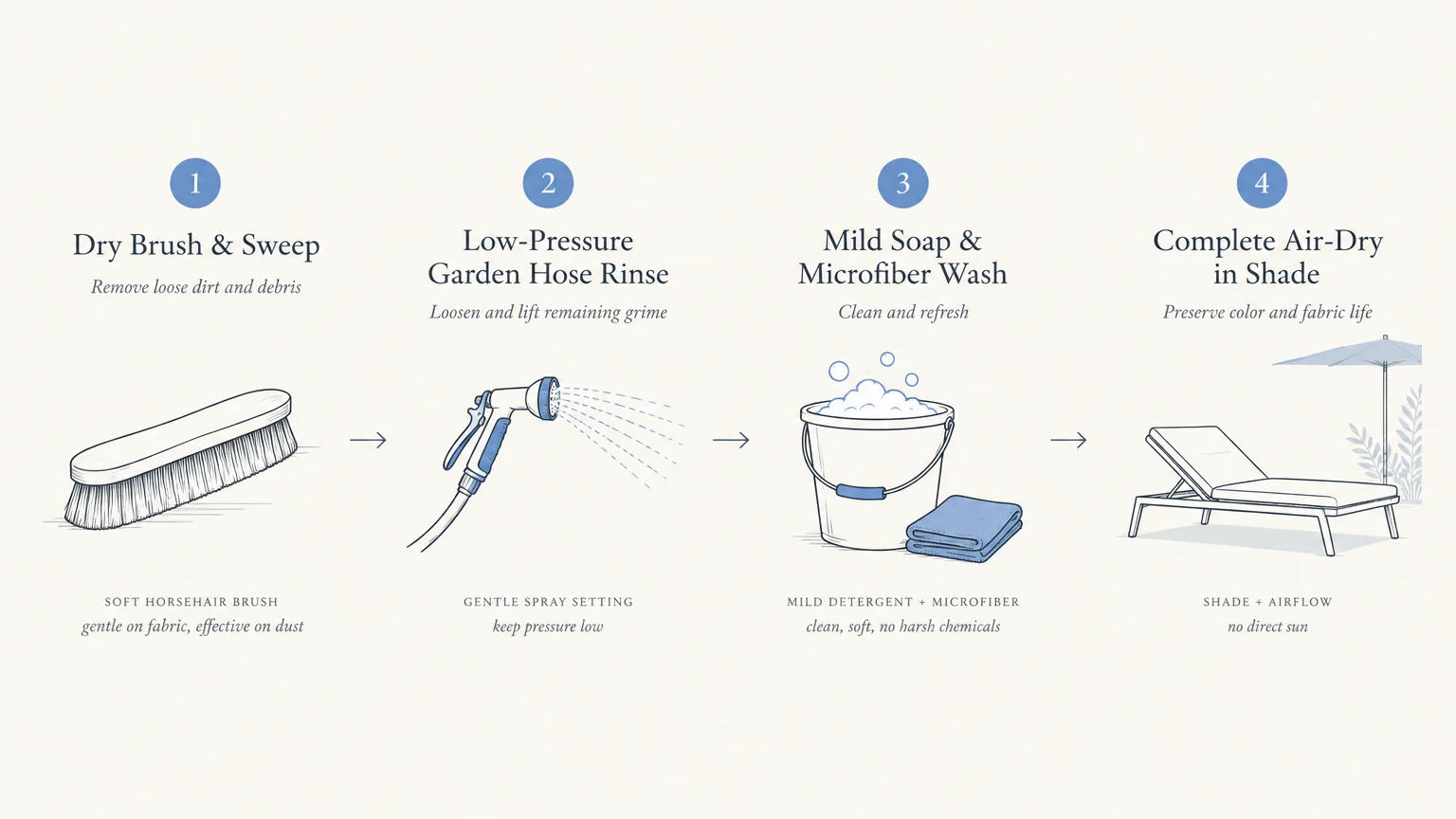
Step-by-Step: The Safe Seasonal Furniture Washing Routine
Following an orderly cleaning sequence protects delicate finishes while lifting stubborn seasonal dirt. Use this step-by-step method to refresh your patio setup safely every spring and autumn.
-
Dry Dust and Vacuum First:
Brush off dry pollen, dead leaves, and loose soil before introducing any water. Applying water to loose dirt creates gritty mud that scratches glossy finishes during scrubbing.
-
Spot-Clean Removable Fabrics:
Remove fabric cushion covers if they feature zippers, or spot-clean them while resting on a clean tarp. Guidelines from the Centers for Disease Control and Prevention (CDC) suggest prompt cleaning to stop mold from penetrating soft porous surfaces.
-
Mix a Mild Washing Solution:
Combine two tablespoons of mild dish soap with one gallon of lukewarm water in a clean bucket. Avoid scalding water, which can soften synthetic plastic weaves and melt glue bonds.
-
Scrub Gently in Small Sections:
Dip a soft microfiber cloth or nylon horsehair brush into your sudsy solution. Wash wood pieces along the direction of the grain to prevent fiber tearing.
-
Rinse with Low-Pressure Water:
Rinse every surface thoroughly using a wide shower setting on your garden hose. Ensure you rinse all soapy residue out of crevices where dried soap might trap dust.
-
Dry Surfaces Thoroughly:
Wipe metal and glass surfaces dry with a lint-free microfiber towel to stop water spots. Stand fabric cushions vertically on their edges in a shaded, well-ventilated area until completely dry.
Outdoor Furniture Care Tips That Prevent Permanent Damage
Pairing gentle cleansers with smart daily habits keeps your patio investment looking pristine without exhausting labor. Implement these outdoor furniture care tips to minimize deep cleaning sessions throughout the year.
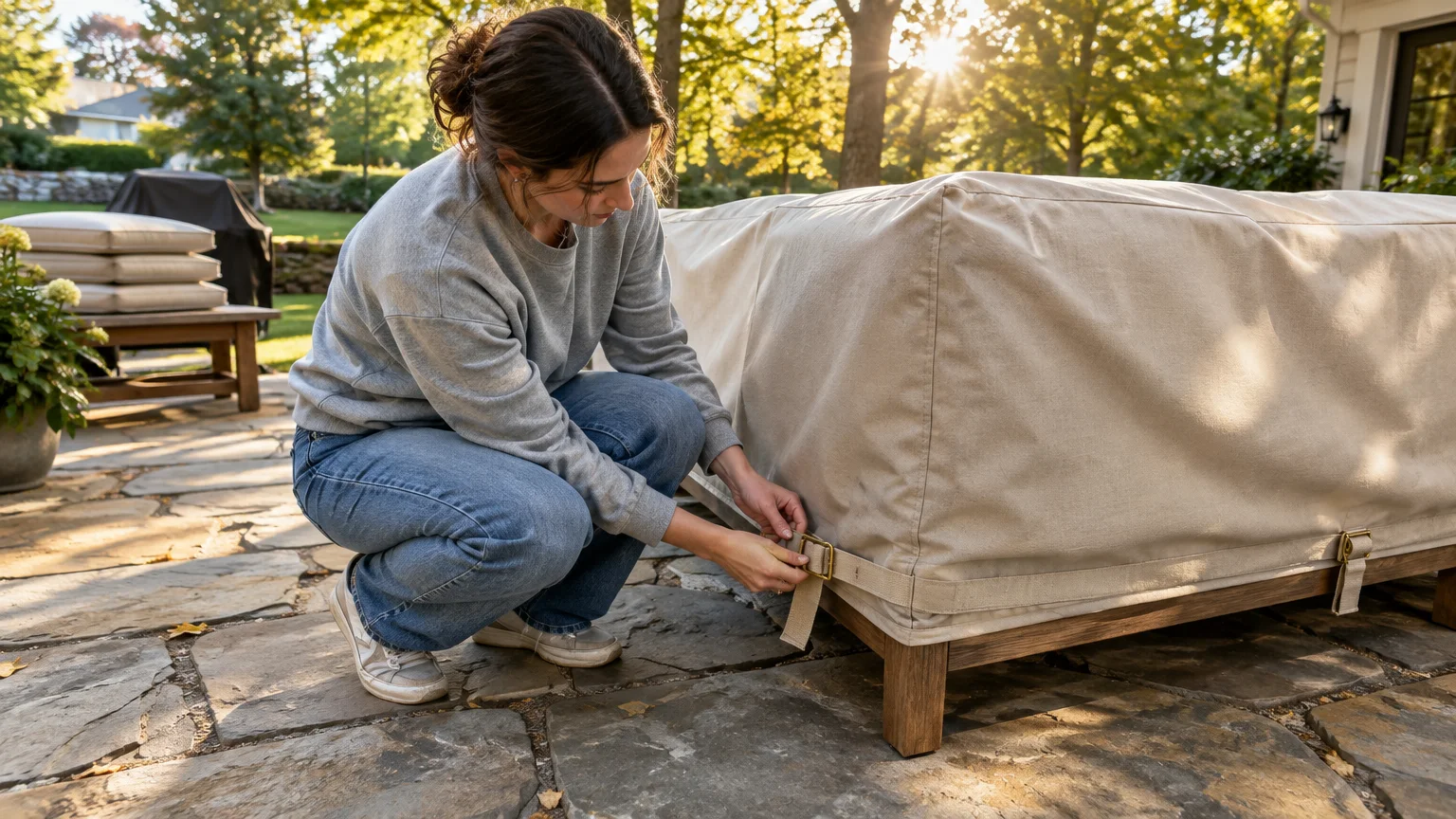
Invest in breathable, water-resistant patio covers equipped with ventilation vents. Airflow prevents condensation from getting trapped against table tops, which prevents mold blooms and wood rotting.
Never place covers over wet or damp furniture pieces after a rainstorm. Trapping moisture under tightly cinched polyester creates an artificial greenhouse effect that degrades sealers within days.
Clean spills from food, sunscreen, and bird droppings as soon as you notice them. High temperatures bake acidic bird droppings into powder coatings, causing permanent circular etching on tabletops.
Store fabric cushions indoors inside ventilated deck boxes or storage closets during the off-season. Shielding textiles from continuous freezing and thawing cycles doubles their usable lifespan.
Common Cleaning Mistakes Outdoor Furniture Owners Make
Even when you use mild cleaners, small procedural errors can compromise your furniture. Watch out for these four widespread cleaning mistakes outdoor furniture owners make during seasonal maintenance.
Washing Under Direct, Scorching Sunlight
Cleaning outdoor dining sets in midday heat causes soapy water to evaporate before you can rinse it. The dried soap forms unsightly streaks and deposits concentrated mineral spots that are difficult to buff away.
Tackle your patio maintenance during early morning hours or late afternoon shade. Cooler temperatures give your cleaning solution adequate dwell time to break down surface grime without flashing dry.
Stacking Heavy Resin Chairs When Hot
Resin and plastic furniture becomes soft and pliable when sitting under blistering sun or hot wash water. Stacking plastic chairs while they remain warm warps their legs and causes permanent frame twisting.
Allow plastic armchairs and chaise lounges to cool completely in a shaded area before stacking. This simple pause preserves their structural geometry and keeps the chair legs perfectly aligned.
Neglecting Undersides and Frame Joints
Focusing exclusively on visible tabletop surfaces leaves hidden structural joints vulnerable to decay. Spiders, wasp nests, and damp soil collect under seat slats and inside tubular metal joints.
Flip chairs carefully onto a soft drop cloth during your annual cleaning to inspect frame welds. Wipe down the underside joints to eliminate trapped grime and identify early signs of frame rust.
Ignoring Protective Glides and Hardware
Missing plastic foot caps allow metal chair legs to scrape across patio pavers, scraping away protective coatings. Once exposed, bare metal scratches pavers and rusts rapidly from ground moisture.
Inspect the bottom of every furniture leg each spring, replacing cracked or missing nylon glides promptly. Tighten loose stainless steel screws and bolts using a hand tool rather than an over-torquing power drill.
Essential Outdoor Furniture Maintenance Checklist
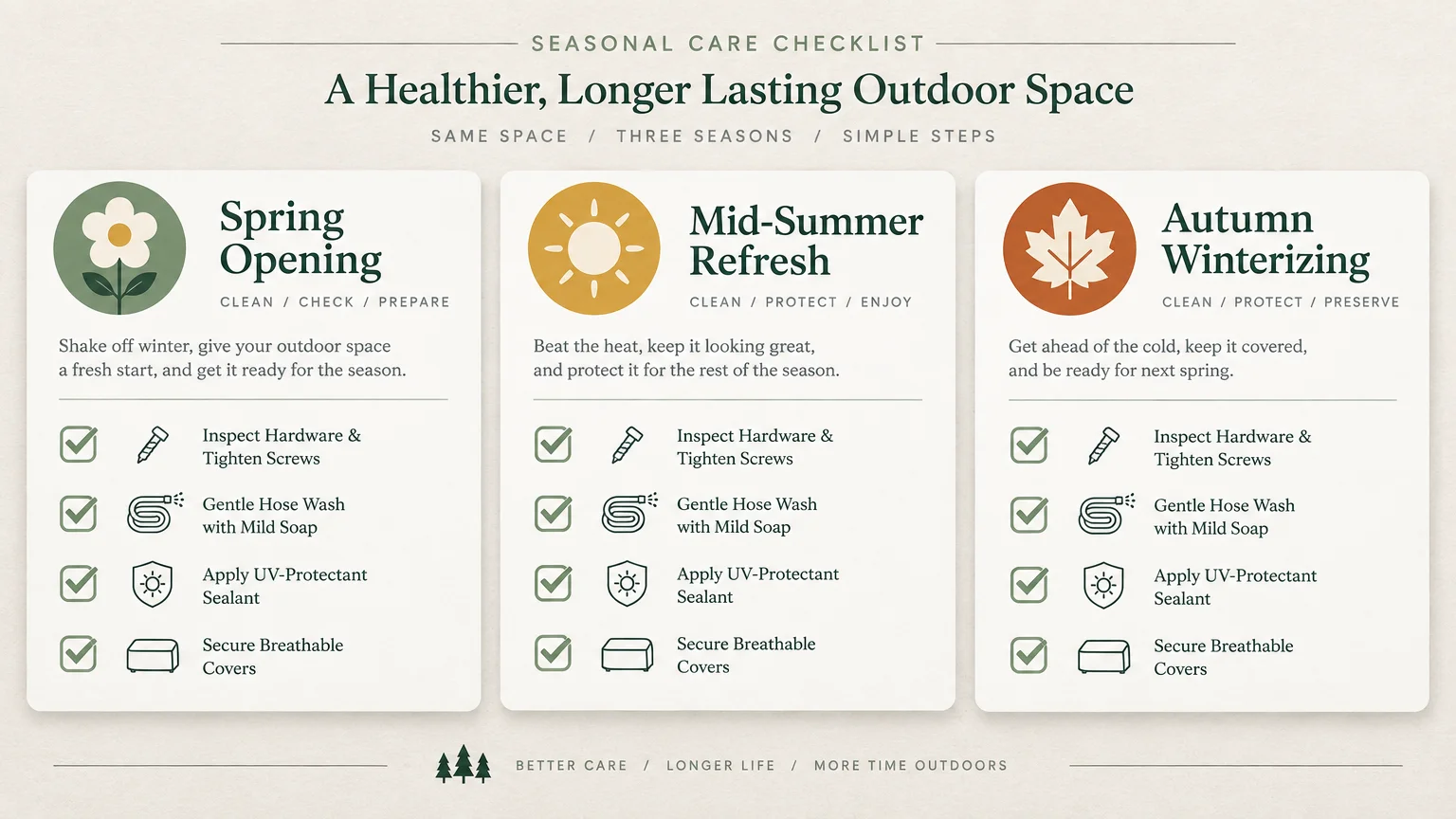
Use this quick maintenance checklist at the beginning and end of each outdoor season. Routine inspections catch small surface defects before they escalate into structural failure.
- Frame Inspection: Check for flaking paint, hairline wood cracks, or rusted hardware connections.
- Foot Glides: Verify every leg has an intact rubber or plastic cap to prevent scraping.
- Cushion Seams: Examine textile seams and zipper teeth for frayed polyester threads or mildew.
- Wicker Integrity: Inspect synthetic weave corners to detect unraveling strands before they snap.
- Umbrella Mechanisms: Lubricate crank gears with dry silicone or Teflon spray to avoid sticky grease.
Your Practical Next Step for a Cleaner Patio
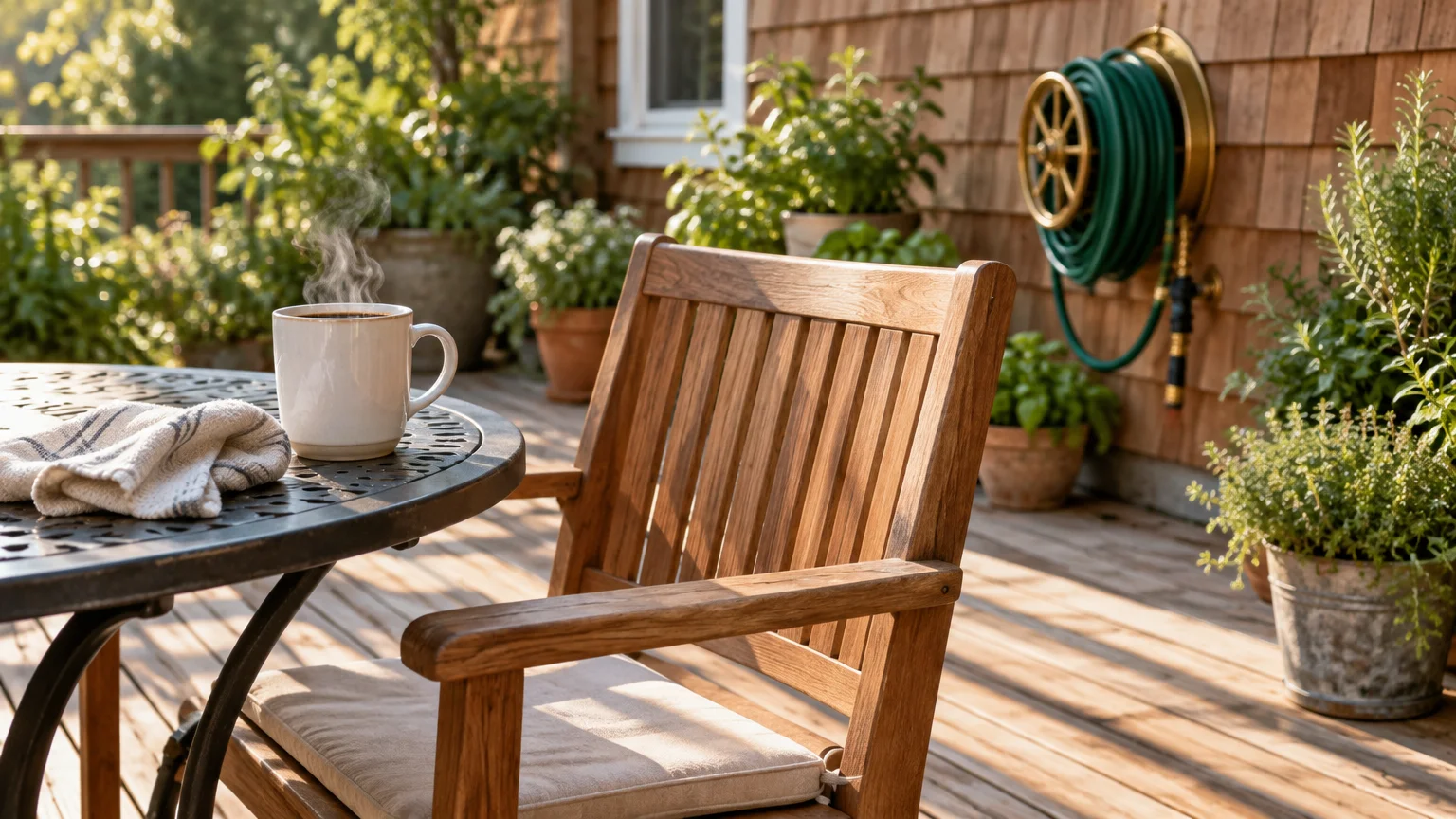
Walk out to your patio today and check your current cleaning supplies against this guide. Toss out wire brushes, set aside abrasive scouring powders, and store undiluted bleach bottles strictly for indoor laundry.
Fill a single bucket with warm tap water, add two tablespoons of gentle dish liquid, and grab a soft microfiber cloth. Cleaning your outdoor furniture safely takes only minutes and keeps your patio retreat looking beautiful for years to come.