
Leaving the workforce clears your daily schedule, but it also exposes how much physical clutter anchored your old career. Shedding these relics immediately frees up physical space and lightens your daily cleaning routine.
Major retirement lifestyle changes start at home, where former work routines no longer dictate your storage needs. Identifying items you no longer need in retirement lets you reclaim valuable closets, shelves, and peace of mind.
Once you strip away the tools of your former grind, you create a calmer environment tailored to personal freedom.

1. Aggressive Alarm Clocks and Rigid Daily Planners
Few sounds trigger visceral stress quite like a shrieking electronic buzzer at 5:30 in the morning. When your professional obligations vanish, your reliance on artificial wake-up alarms disappears along with them.
Your body naturally shifts toward an internal circadian schedule when you remove early morning commutes. You can prioritize natural rest patterns without worrying about meeting punch clocks or early client calls.
The CDC highlights healthy sleep as an essential foundation for longevity, memory retention, and cardiovascular health. Waking up to soft ambient sunlight instead of a harsh siren fundamentally transforms your morning wellbeing.
Hourly desk planners, pocket appointment books, and interval timers also lose their daily purpose. Replace strict time-blocking pads with an open-ended personal journal or a simple whiteboard for leisure activities.
Keep one reliable digital clock visible in the house for travel days or doctor appointments. Donate the redundant bedside screamers and recycle the half-used corporate planning binders taking up desk space.

2. High-Maintenance Business Suits and Restrictive Workwear
Tailored wool blazers, stiff pencil skirts, starchy dress shirts, and silk neckties consume valuable closet real estate. These garments demand constant dry cleaning, delicate pressing, and protective plastic wrapping that clutters your wardrobes.
Holding onto dozens of professional outfits creates unnecessary mental weight during your laundry routine. You only need one or two versatile formal ensembles for weddings, galas, or memorial services.
You can clear several linear feet of closet rail space by reviewing your suits right now. Group your tailored garments into keepsakes, consignment candidates, and immediate donation pieces.
Organizations like Goodwill accept career clothing donations to support community members interviewing for new employment opportunities. Donating clean suits helps job seekers re-entering the workforce while giving you room to breathe.
Pack away your remaining semi-formal wear in breathable canvas garment bags on sturdy wooden hangers. Relocate everyday comfort wear, activewear, and casual cotton knits to your most accessible closet zones.

3. The Commuter Vehicle and Redundant Transit Passes
Maintaining two separate commuter vehicles often becomes an unjustifiable household expense once both partners leave regular employment. Monthly auto loan payments, registration fees, maintenance costs, and insurance premiums drain financial reserves unnecessarily.
One vehicle easily handles shared errands, volunteer trips, and spontaneous weekend road excursions. Downsizing to a single car instantly frees up an entire garage bay for storage or hobbies.
Peak-hour highway toll transponders, reserved commuter parking passes, and monthly light-rail passes also become useless. Cancel subscription-based commuter passes to stop recurring bank drafts immediately.
If you keep one car, contact your auto insurance provider to adjust your estimated annual mileage. Informing your carrier that you no longer commute daily often slashes your monthly premium rates.
Use your newly liberated garage space for organized storage racks, a gardening bench, or functional exercise gear.
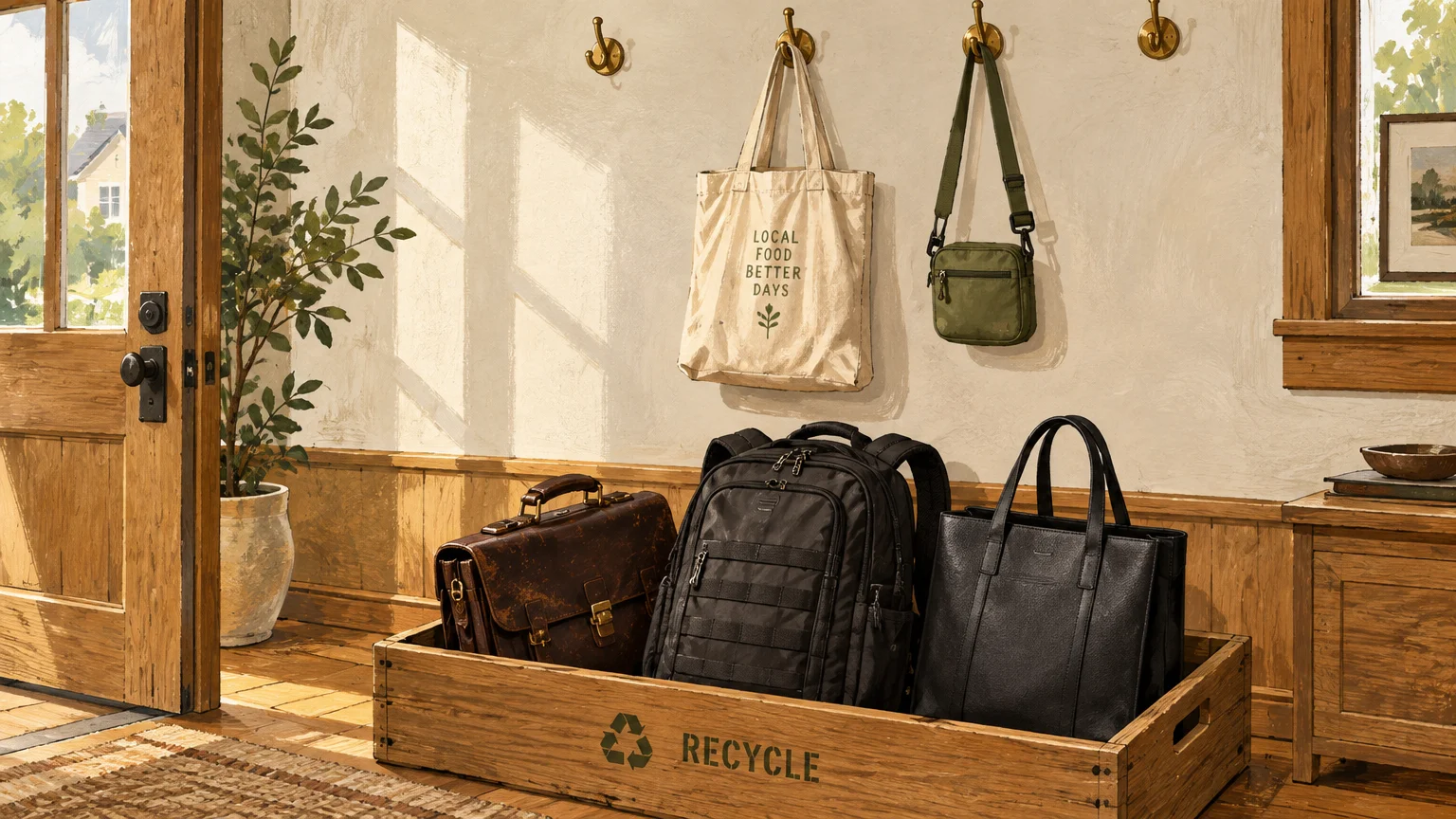
4. Bulky Briefcases, Heavy Totes, and Tech Backpacks
Rigid leather briefcases and multi-compartment commuter packs exist to haul heavy laptops, paperwork, and power cables. Once you transition away from the office, these stiff, bulky carriers collect dust in entryways.
Commuter bags add unnecessary weight to your shoulders and take up substantial shelf space in hall closets. Their padded interior dividers make them awkward and impractical for general errands or recreational day trips.
Inspect your collection of leather attaché cases, branded conference messenger bags, and ergonomic backpacks. High-end leather briefcases hold solid resale value on secondary marketplaces if you sell them promptly.
Swap out industrial commuter bags for flexible, washable canvas totes or an ultralight daypack. Lightweight bags handle library books, market produce, and picnic supplies far better than heavy corporate cases.
Retain one padded sleeve for your personal laptop or tablet, and safely donate the remaining bags.
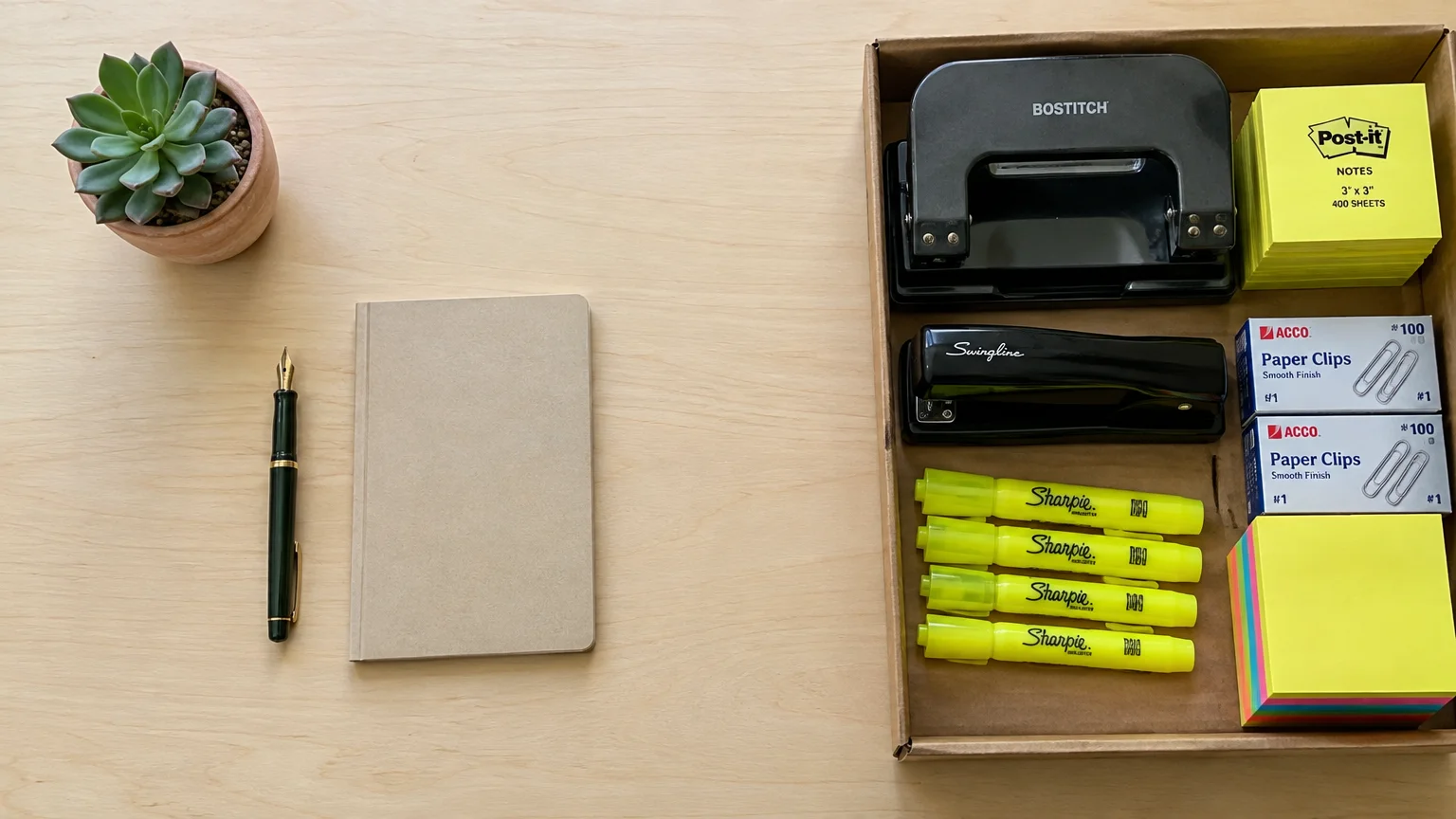
5. Commercial Desktop Supplies and Bulk Stationery
Home offices often resemble supply warehouses filled with relics from decades of corporate project deadlines. Heavy desktop tape dispensers, three-hole punches, giant staplers, and boxes of binder clips rapidly lose practical value.
You rarely need to collate fifty-page printed client dossiers or bind thick paper training manuals during retirement. These industrial desktop gadgets sit on surfaces, gathering dust and creating visual chaos.
Examine your supply drawers and pull out excess reams of printer paper, surplus legal pads, and unused folders. Keeping dozens of cheap plastic pens that dry out over time wastes drawer space.
Consolidate your daily writing tools into a single, high-quality ceramic cup or a compact desk organizer. Select three or four smooth-writing pens, a couple of pencils, one reliable scissors, and a modest ruler.
Pack surplus pens, paper reams, and unused folders into a sturdy box for your local public school. Teachers consistently spend personal funds on classroom supplies and welcome these surplus materials enthusiastically.

6. Obsolete Trade Books, Industry Periodicals, and Manuals
Professional libraries age rapidly once you step away from your industry’s daily technical developments. Stacks of software handbooks, tax code annuals, regulatory guides, and compliance manuals become obsolete almost immediately.
These heavy reference books burden your bookshelves and make dusting an exhausting, tedious chore. Information stored inside older technical books is largely superseded by digital updates anyway.
Take an honest inventory of your reference collection and separate historical milestones from outdated technical manuals. Keep personal awards or significant collaborative retrospectives, but purge manuals older than five years.
Box up out-of-date regulatory reference books and take them directly to your municipal paper recycling center. Most community libraries decline outdated technical textbooks because readers require modern digital editions.
Clearing these dense shelves creates open display space for family framed photographs, ceramics, and leisure reading.

7. Commercial Lunch Coolers and Compartmentalized Meal Prep Gear
Surviving a demanding workday required careful food planning, leakproof bento boxes, and insulated commuter lunch bags. You needed specialized containers that fit into crowded communal breakroom refrigerators without spilling during travel.
Retirement changes how and when you eat, shifting food preparation back into your own comfortable kitchen. You no longer need to pack a cold lunch at six in the morning.
Open your kitchen cabinets and evaluate your plastic food-storage containers and branded cooler totes. Eliminate the rigid bento boxes, branded promotional mugs, and frozen ice packs filling your freezer shelves.
Eating lunch at home means you can enjoy fresh, hot food served on real ceramic dinner plates. This simple pleasure replaces rushed desk meals and clears entire cabinet shelves of warped plastic containers.
Keep a few high-quality glass storage containers for leftover dinners, and recycle stained plastic meal-prep tubs.

8. Corporate Security Badges, Keycards, and Access Fobs
Nothing highlights what retirement makes obsolete quite as clearly as security clearance cards and encrypted login tokens. The moment your company access shuts off, those plastic IDs and digital key fobs turn into dead weight.
Many retirees stash company lanyards and identity pins in desk drawers out of sheer habit. These items serve no functional purpose once you turn in your company-owned equipment.
Verify whether your former employer requires badge return for facility audit records or electronic security protocols. If the company does not request them back, destroy keycards containing your photo or embedded RFID chips.
Electronic hardware tokens, duplicate USB drives, and retired cell accessories require thoughtful disposal rather than standard trash processing. Review the EPA guide on electronics donation and recycling to find verified recycling drop-off centers near your home.
Disposing of old digital fobs safely prevents heavy metals and lithium batteries from entering municipal landfills.
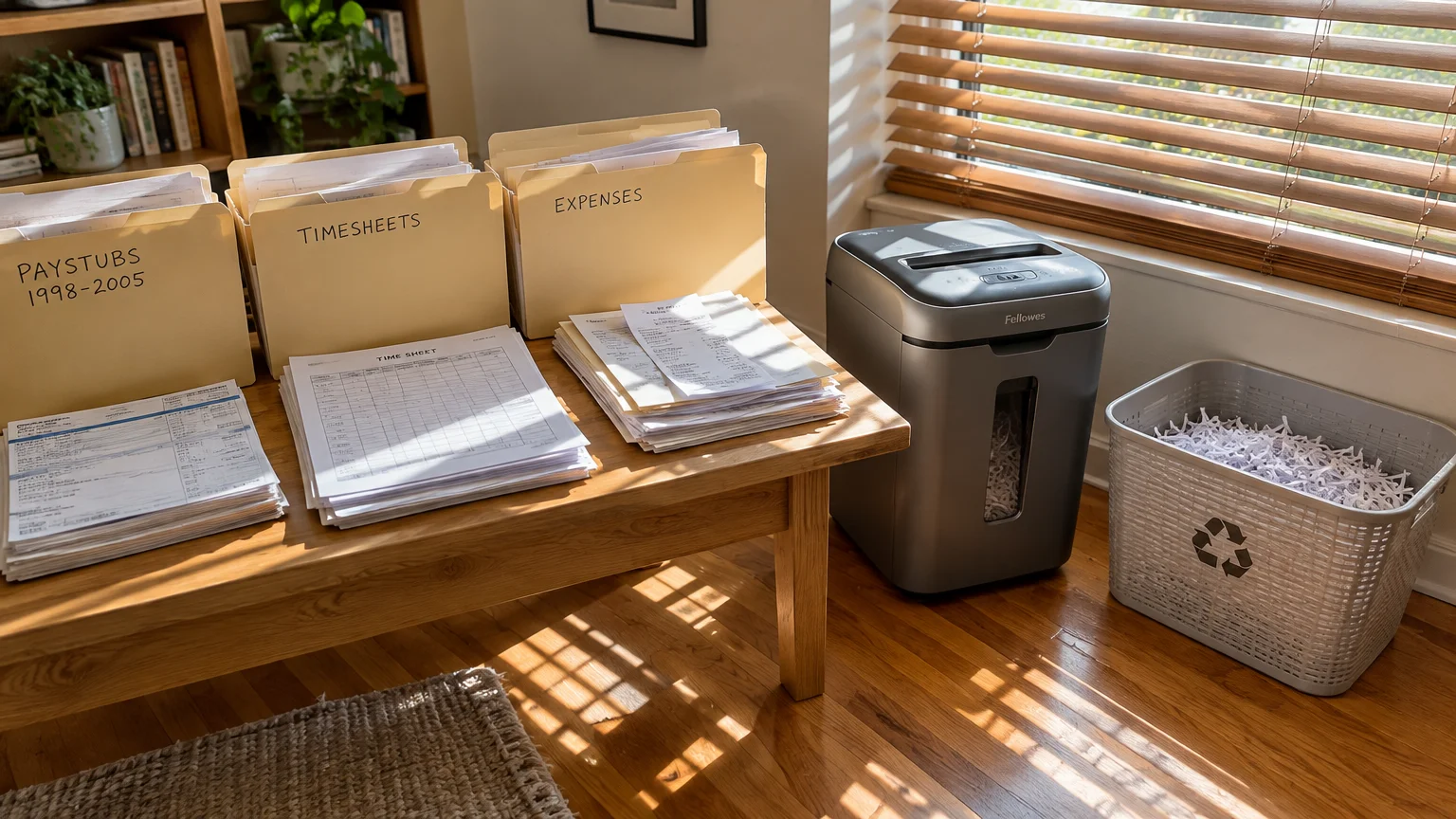
9. Decades of Paper Paystubs, Timesheets, and Expired Tax Files
Filing cabinets frequently harbor decades of historical paperwork that retirees no longer need to safeguard. Bi-weekly pay stubs from 1994, expired medical flex-spending receipts, and past quarterly bonus statements waste physical room.
Sorting through this paperwork may feel intimidating, but clear legal guidelines exist to guide your choices. You do not need to keep every piece of paper generated throughout a forty-year career.
The IRS record retention guidelines generally require holding tax documents between three and seven years depending on the filing specifics. Retain the deed to your home, current estate plans, pension documentation, and recent tax returns.
Feed outdated pay stubs, old health insurance claim forms, and ancient timesheets into a reliable cross-cut shredder. Cross-cut shredding destroys your social security number, account balances, and former corporate credentials to prevent identity theft.
Emptying old metal filing cabinets allows you to remove bulky furniture pieces entirely from your living space.
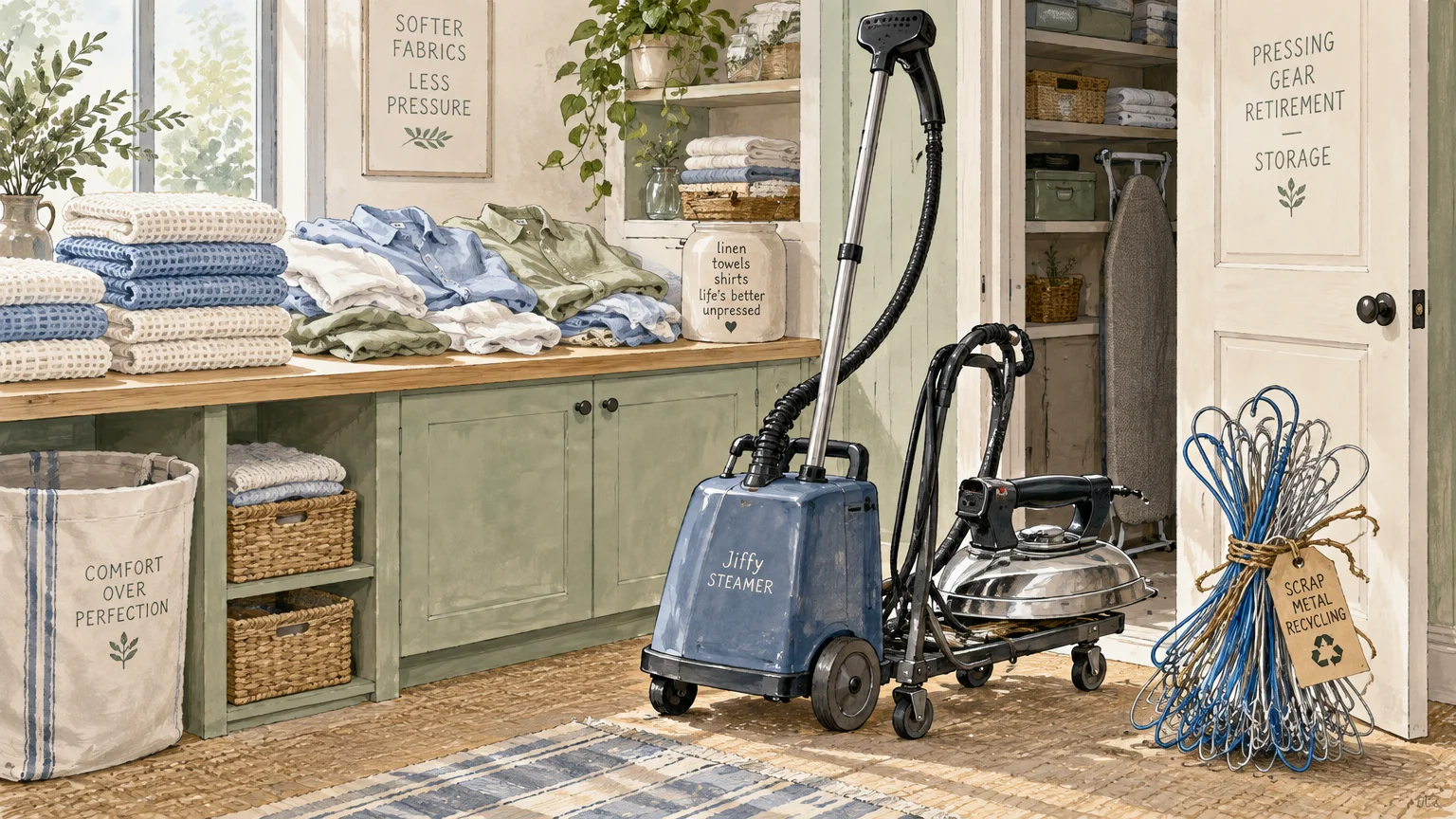
10. Heavy Garment Steamers, Commercial Irons, and Wire Hangers
Rigid corporate dressing standards demanded weekly ironing marathons, heavy starching, and endless trips to the commercial dry cleaner. Flimsy wire dry-cleaning hangers accumulate in closets quickly, tangling together and damaging garment shoulders.
As you transition to breathable, casual fabrics, high-powered upright garment steamers become largely unnecessary appliances. Bulky ironing boards take up significant floor space in laundry rooms or behind bedroom doors.
Swap out thin wire hangers by returning them to your local dry cleaner for direct reuse. Invest in uniform, space-saving velvet or smooth wooden hangers for your remaining coats and collared shirts.
Replace heavy industrial steamers with a compact, handheld wrinkle releaser or a quick misting bottle. Hang your casual cottons and linens immediately after drying to eliminate the need for routine pressing.
Your laundry room transforms from a high-pressure maintenance station into a simple, efficient utility area.
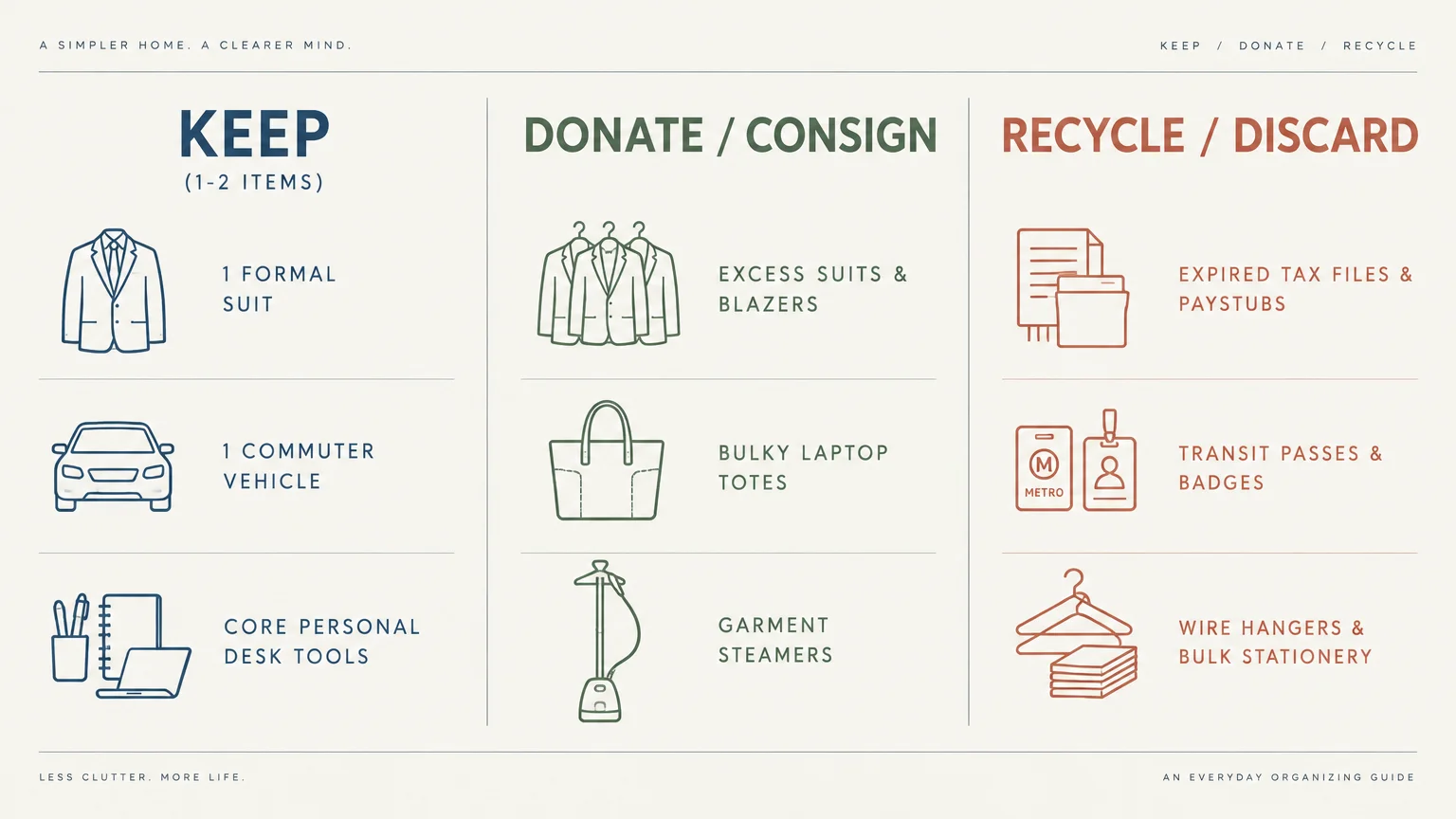
Quick Sorting Guide: Handling Common Career Clutter
Deciding what to discard, donate, or recycle requires a clear, decisive sorting framework. The table below outlines how to process common professional relics effectively.
| Category | Items to Purge | Recommended Action | Space / Benefit Regained |
|---|---|---|---|
| Workplace Wardrobe | Stiff suits, blazers, ties, formal work footwear | Donate to career training non-profits or consignment | Reclaims up to 50% of your hanging closet space |
| Desk & Stationery | Hole punches, duplicate staplers, legal pads | Donate surplus supplies to local community schools | Empties desk drawers for crafts and personal mail |
| Identity & Electronics | Security fobs, old laptops, flash drives, badges | Recycle through certified electronic waste stations | Protects personal privacy and eliminates cable tangles |
| Transit & Vehicles | Secondary car, toll transponders, metro cards | Downsize insurance policy, sell surplus commuter car | Frees an entire garage bay and lowers monthly bills |
| Paper Archives | Old paystubs, expired tax receipts, project briefs | Cross-cut shred personal data; recycle regular paper | Eliminates heavy two-drawer or four-drawer filing cabinets |
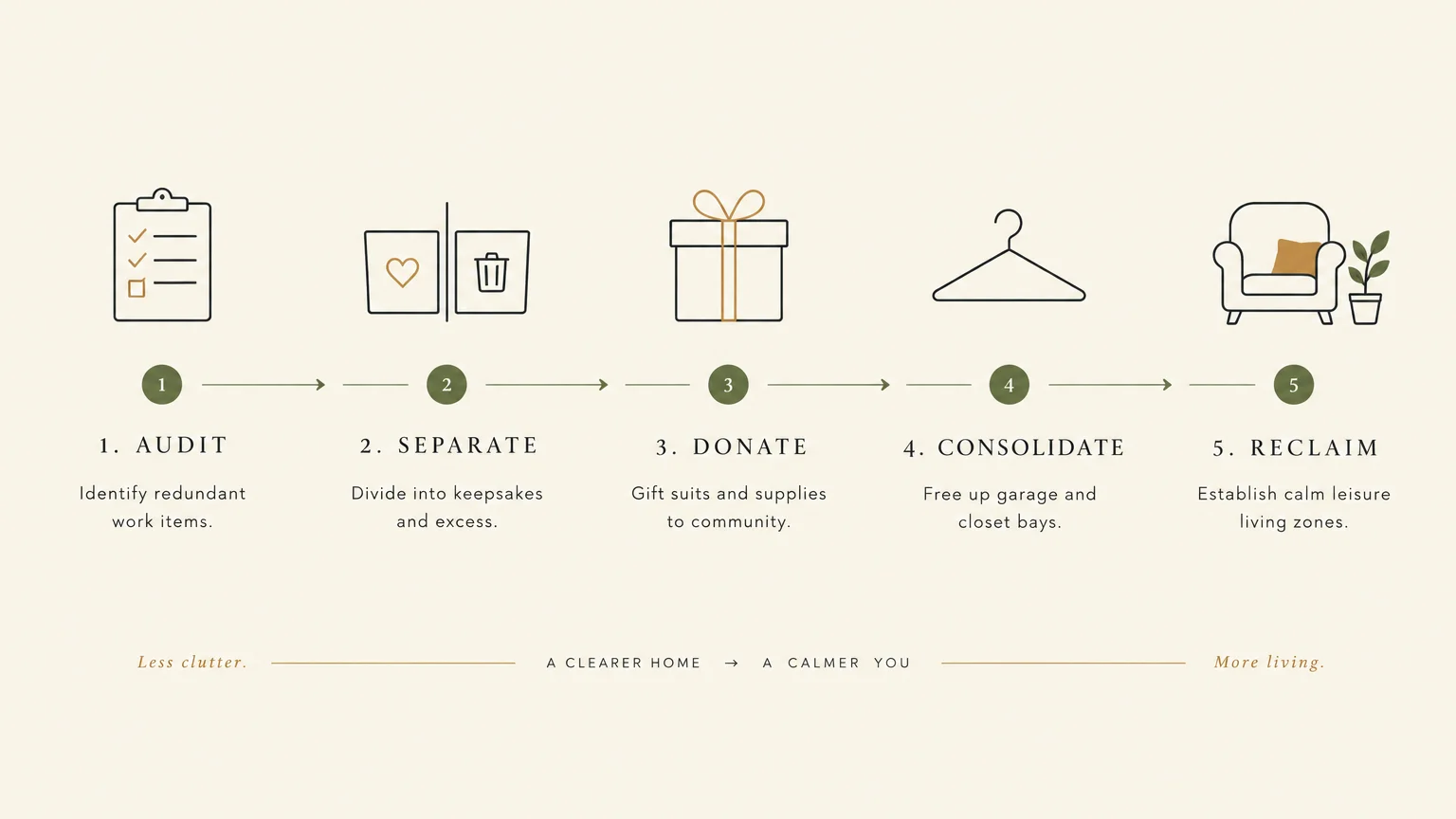
A Five-Step Strategy for Adjusting to Retirement Life at Home
Clearing out your home office and closet should feel liberating rather than overwhelming. Use this systematic checklist to eliminate career clutter room by room without exhaustion.
- Audit the Master Closet First: Strip away dry-clean-only garments you have not worn in the past six months. Keep only comfortable, high-versatility items that match your current casual lifestyle.
- Empty and Sanitize the Desk: Remove every item from your desk drawers and place them on a flat tabletop. Return only daily essentials to the drawers, boxing everything else for donation.
- Process Paper Archives Systematically: Shred expired pay stubs, benefits booklets, and outdated tax documents beyond the recommended retention periods. File current deeds, wills, and insurance policies in one fireproof lockbox.
- Consolidate Utility and Travel Gear: Recycle worn commuter bags, broken lunch coolers, and warped plastic meal containers. Transition to lightweight daypacks and clean glass storage dishes.
- Reconfigure Your Physical Rooms: Repurpose your former corporate office into an inspiring hobby space, reading den, or exercise room. Move bulky desks out to create open, peaceful floor plans.
Taking gradual, methodical steps keeps you in total control of your surrounding environment. Celebrating each cleared shelf reinforces your transition toward a relaxed, self-directed daily schedule.

Your Immediate Action Plan
Pick one small, high-impact zone today—like your top desk drawer or master closet tie rack. Pull out three things that become useless after retirement and permanently remove them from your home right now.