Your kitchen cabinets should streamline your daily meal routine, not hide safety hazards or create avoidable frustration. Storing the wrong items behind closed cabinet doors ruins food, degrades essential medication, and turns cooking into an obstacle course.
Professional organizers know that an efficient kitchen begins with strict boundary setting. Relocating misplaced items immediately opens valuable space and protects your household’s safety.
Here are the top seven items to remove from kitchen cabinets right now, along with practical spots to store them safely.
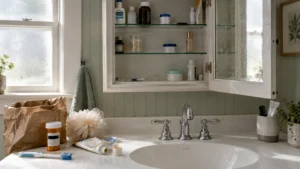
1. Prescription Medications and Daily Supplements
You might reach for your daily vitamins while brewing morning coffee, but keeping pills near your stove creates serious problems. Kitchen cabinets experience rapid temperature swings and high humidity every time you boil water or run the dishwasher.
Heat and moisture degrade active chemical compounds in tablets, capsules, and liquid suspensions. This exposure reduces therapeutic potency long before the printed expiration date arrives.
Storage guidance from MedlinePlus confirms that prescription drugs require a cool, dry environment far away from kitchen heat and bathroom steam.
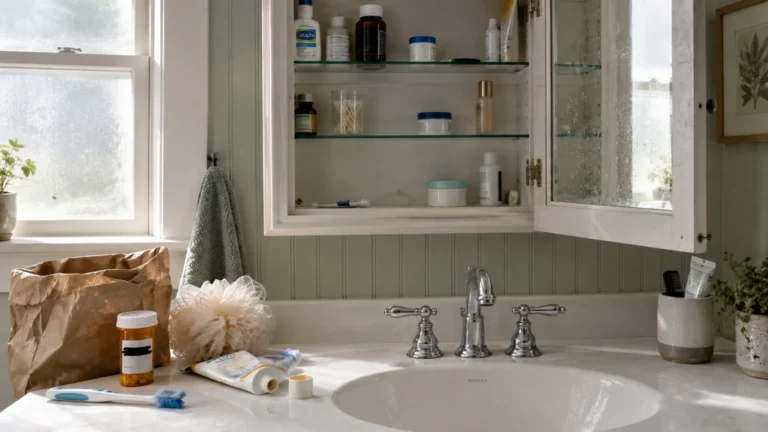
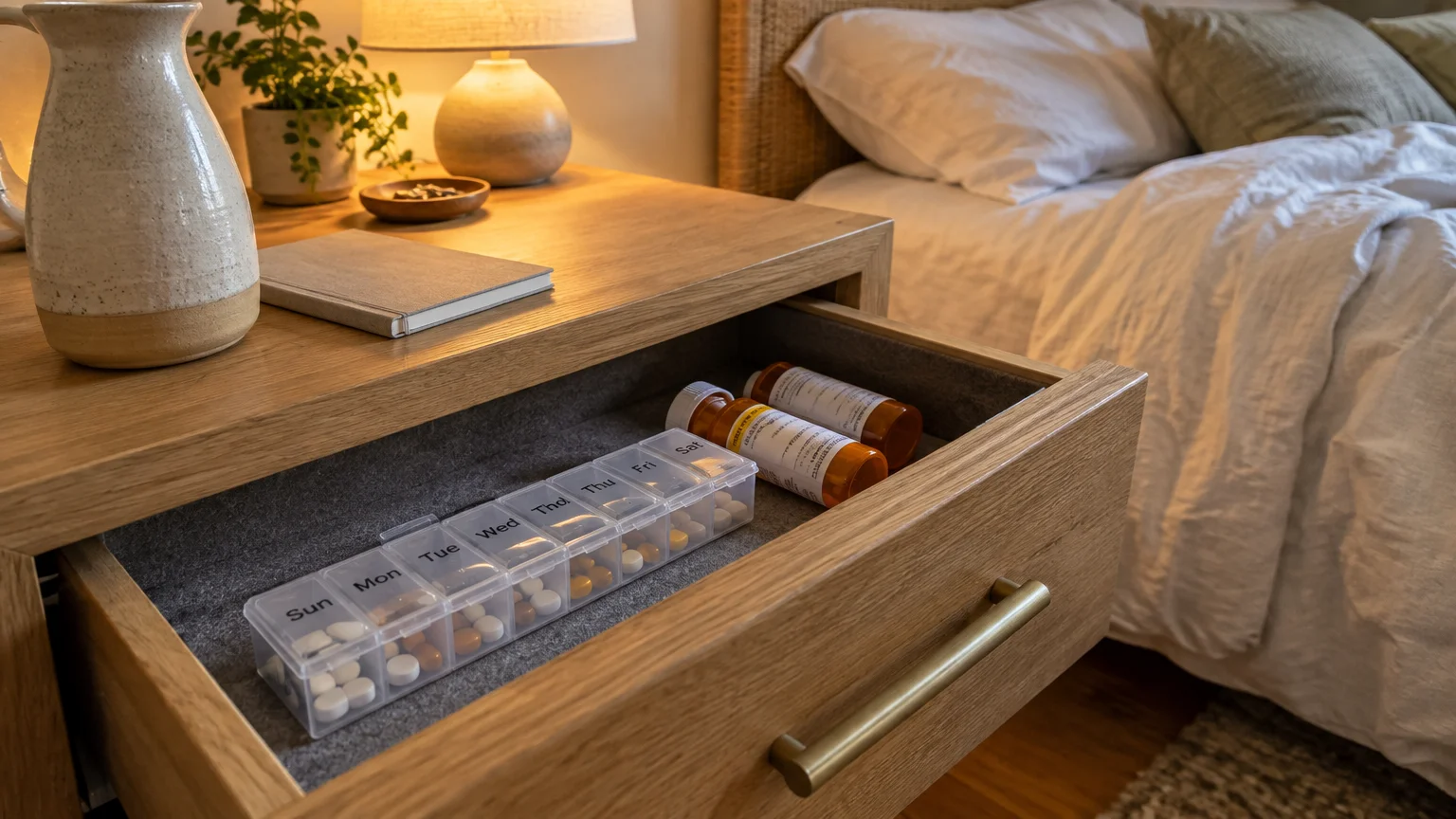
Relocate your daily pill organizers to a linen closet, your bedside nightstand, or a dedicated desk drawer. These dry, climate-controlled locations protect medicine quality and keep dangerous prescriptions out of sight.
2. Heavy Countertop Appliances on Upper Shelves
Storing a heavy stand mixer or cast-iron Dutch oven on an overhead shelf creates an immediate physical hazard. Reaching above shoulder height to retrieve dense items ranks among the most dangerous kitchen organization mistakes.
Awkward overhead lifting forces your shoulders and lower back into strained, unstable positions. A momentary slip can easily cause severe personal injury or smash your stone countertops.
Upper cabinets also carry structural weight limits that many homeowners overlook. Overloading these shelves strains the mounting brackets and can pull the entire unit loose from wall studs.
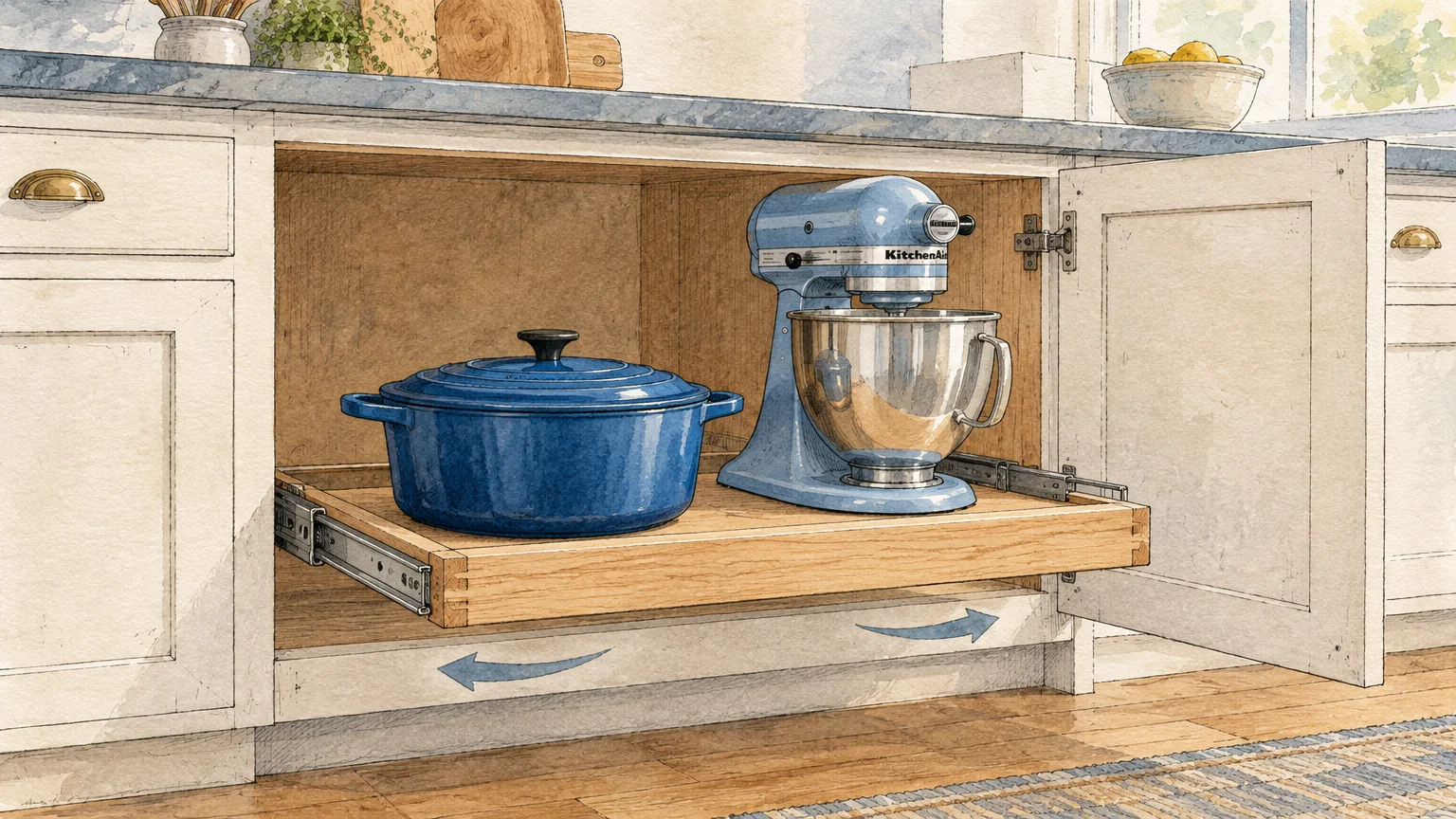
Place heavy culinary equipment into base cabinets fitted with sturdy roll-out shelves. You can also dedicate a permanent countertop zone to your most-used appliance, eliminating unnecessary heavy lifting altogether.
3. Harsh Cleaning Chemicals and Toxic Sprays
Storing abrasive oven sprays, bleach bottles, and ammonia cleaners near food cupboards invites chemical cross-contamination. A loose bottle cap or a hairline plastic fracture can easily leak toxic liquids onto dry ingredients below.
Chemical vapors also permeate porous wooden cutting boards and penetrate paper food packaging. The U.S. Centers for Disease Control and Prevention warns against storing caustic household cleaners in close proximity to food items.
Inhaling these concentrated vapors or accidentally ingesting cleaning residue threatens your household’s safety. Cleaners require separate, secure storage away from anything you consume.
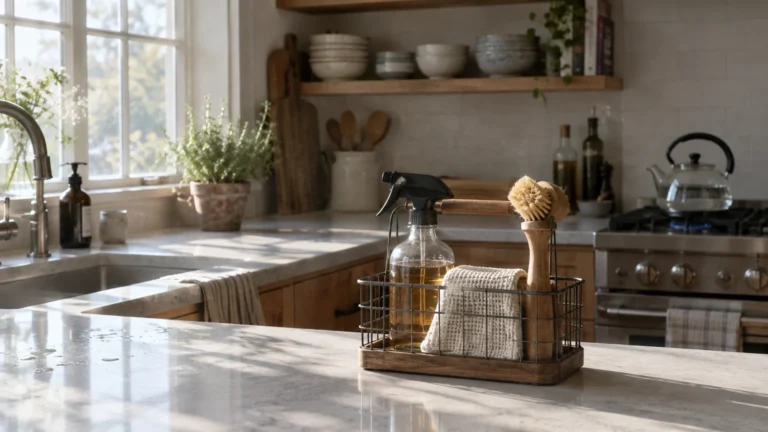
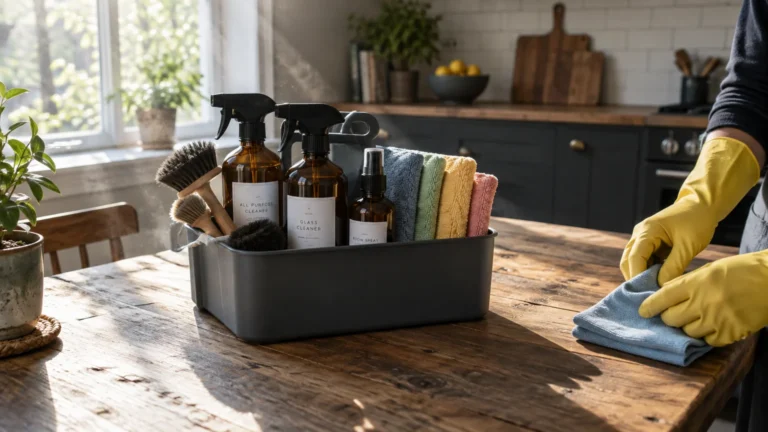
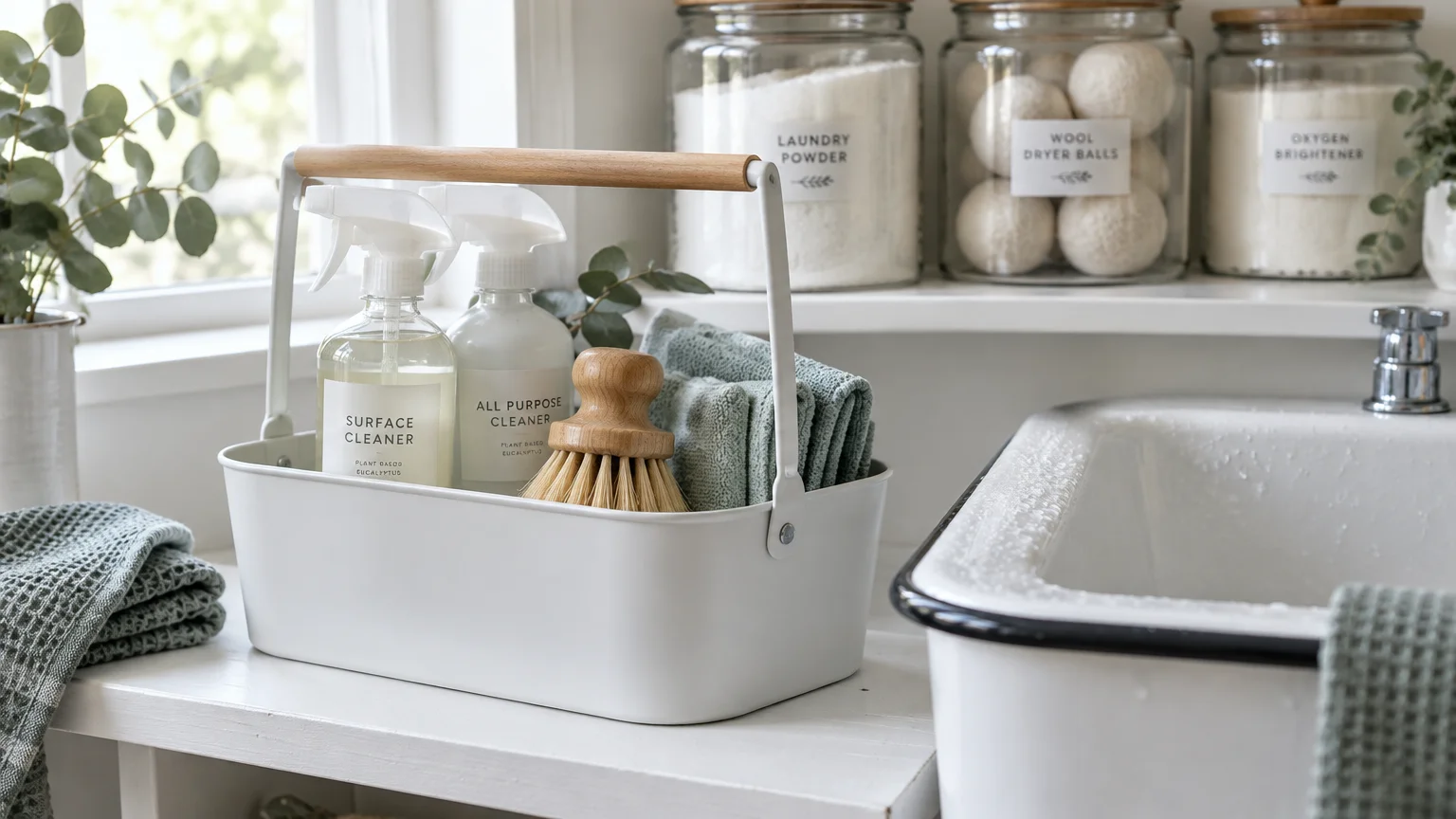
Relocate chemical cleaners to a dedicated laundry room shelf or an isolated under-sink caddy. Install safety latches on these lower cabinet doors if young grandchildren or pets visit your home.
4. Fresh Potatoes, Onions, and Whole Garlic
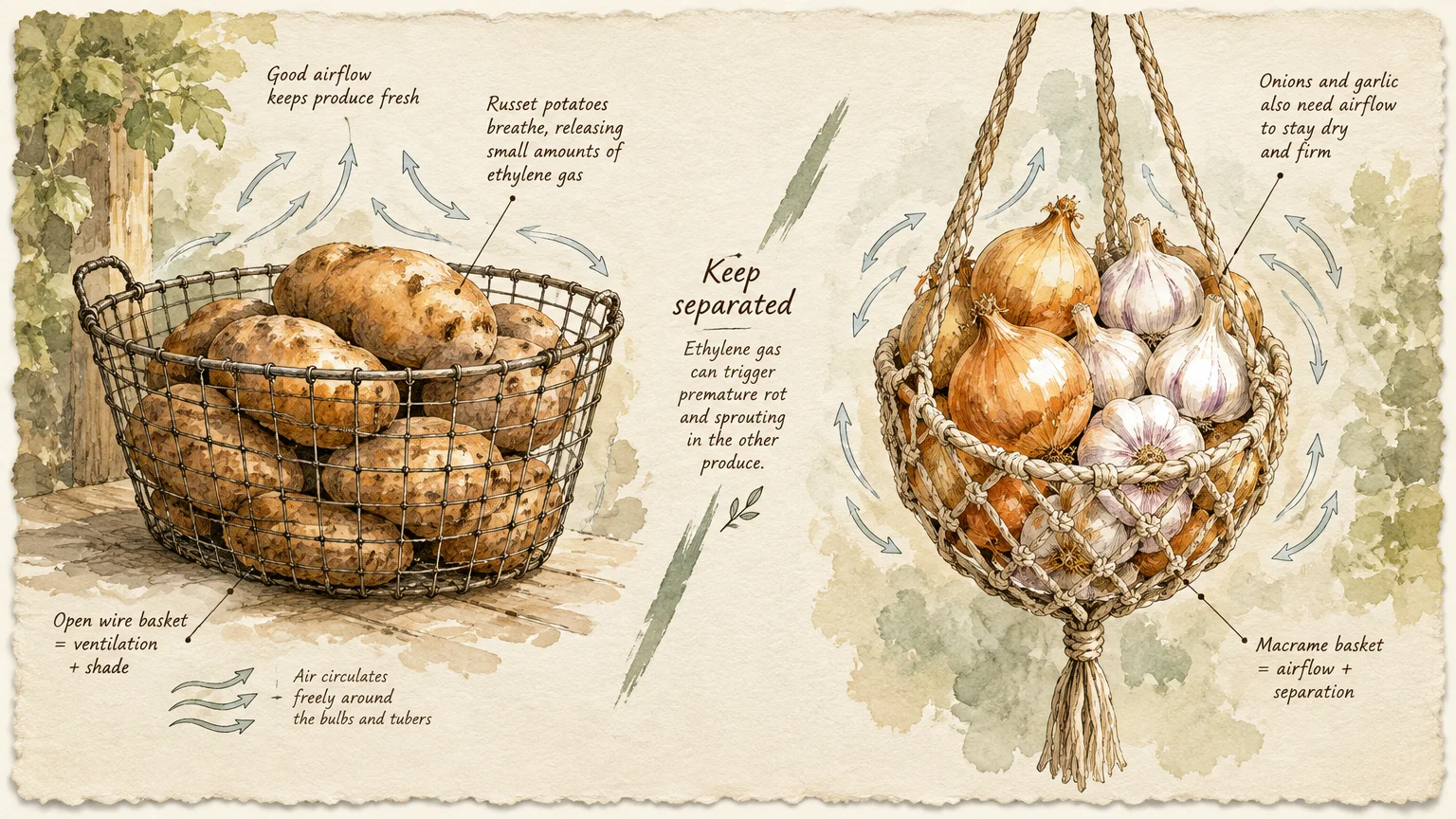
Dark cabinets may seem like natural pantry cellars, but standard cupboards lack the air movement that root crops need. Trapped ambient humidity breeds mold spores, encourages rot, and makes your produce sprout prematurely.
Storing raw potatoes and onions together in the same dark cabinet accelerates decay dramatically. Onions release ethylene gas as they rest, which causes neighboring potatoes to soften, turn green, and spoil within days.
According to produce guidelines from the U.S. Department of Agriculture, good airflow and proper temperature separation keep raw root vegetables fresh far longer.
Place onions, shallots, and potatoes into separate open-wire baskets or breathable mesh containers. Keep these baskets on a cool pantry floor or an open utility cart away from direct sunlight.
5. Open Cardboard Boxes and Paper Flour Bags
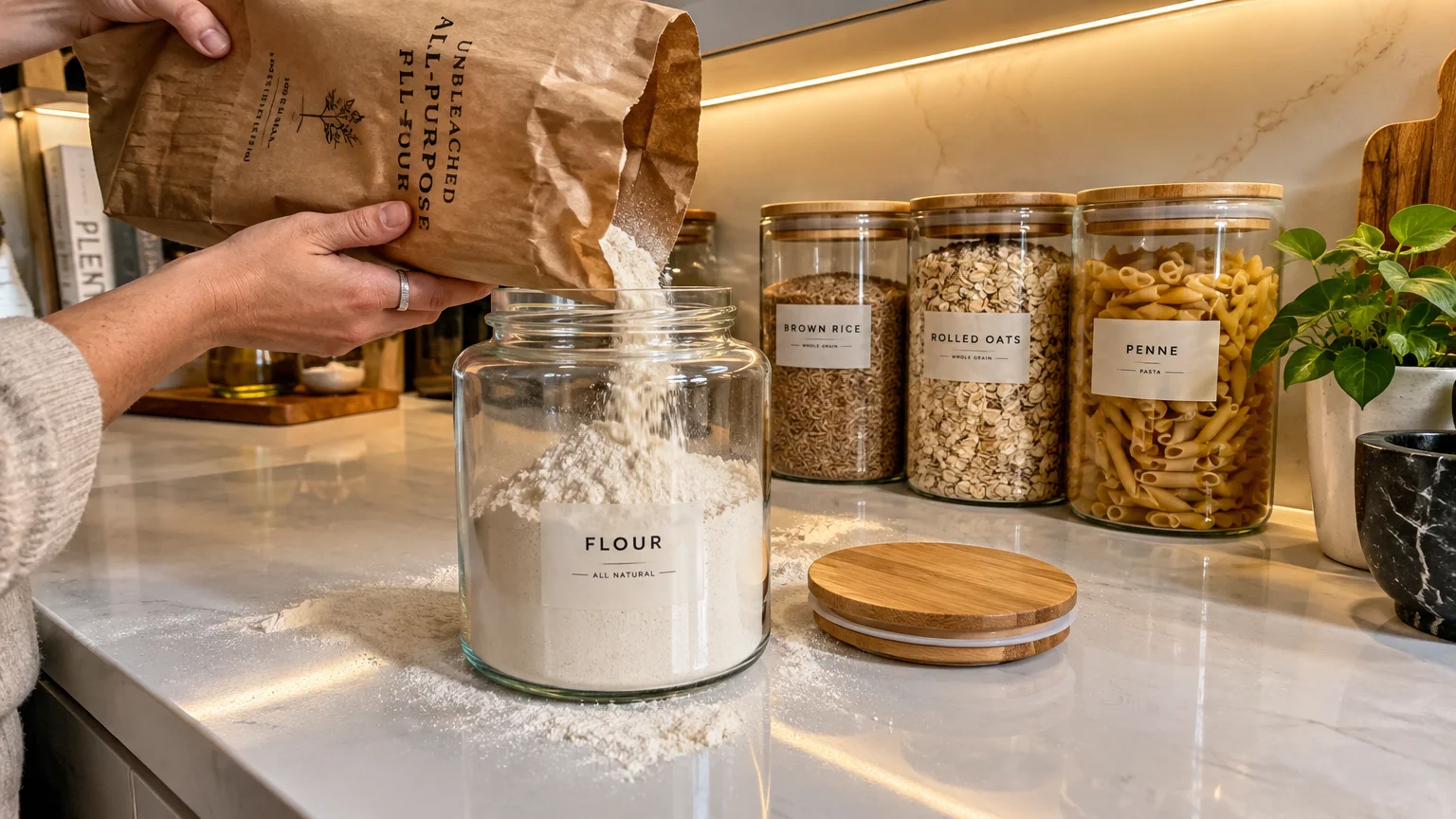
Storing opened bags of flour, cereal, and white rice in their original paper packaging invites pantry pests into your home. Weevils, beetles, and pantry moths easily chew through thin cardboard boxes and folded paper tops.
Open paper sacks also absorb ambient humidity and kitchen odors, which turns staple grains stale and unpalatable. Furthermore, loose paper sacks tip over easily, scattering fine dust across your cabinet corners.
Decant your dry staples into airtight glass jars or food-grade, BPA-free plastic canisters as soon as you bring them home. These sealed containers lock in freshness and prevent insect infestations from spreading.
Choose uniform, rectangular canisters that stack cleanly against one another. This uniform design eliminates dead air space and maximizes every square inch of vertical cabinet capacity.
6. Rarely Used Heirloom China and Entertaining Platters
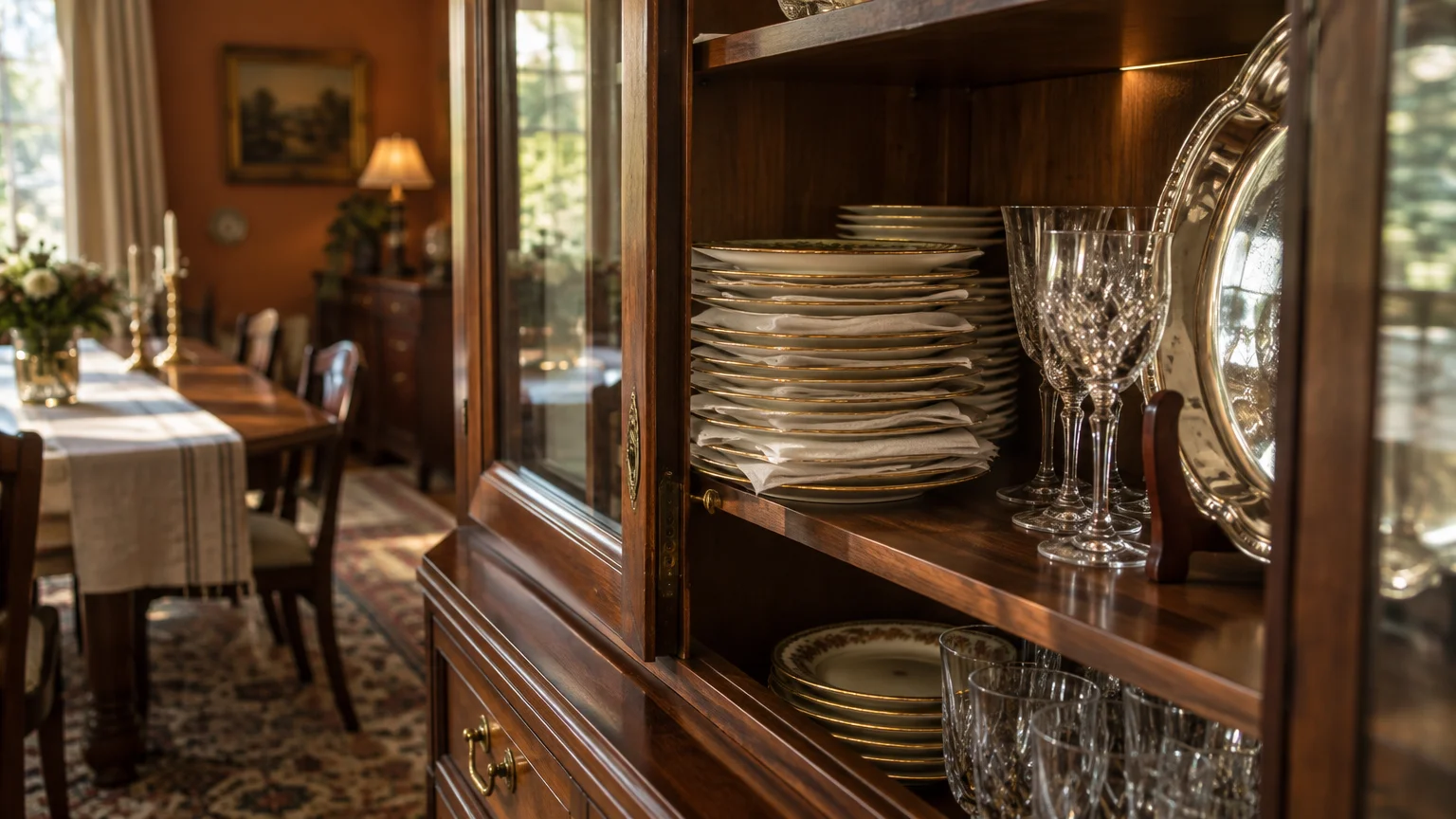
Everyday cabinets should hold the dishware you use on an ordinary Tuesday, not rare holiday treasures. Storing delicate heirloom china, silver platters, and seasonal turkey roasters in main cupboards wastes prime kitchen storage.
Reaching around fragile champagne flutes to grab an ordinary water glass raises your risk of accidental breakage. It also turns basic meal preparation into an irritating juggling match.
Shift specialty entertaining platters to a dining room sideboard, a buffet, or a high decorative shelf. If you lack extra furniture, pack heirloom dishware inside padded fabric storage cases and store them in a hall closet.
Clearing these bulky pieces frees up eye-level shelves for everyday plates and bowls. Your kitchen will immediately feel lighter, calmer, and much easier to navigate.
7. Flammable Materials and Concealed Fire Extinguishers
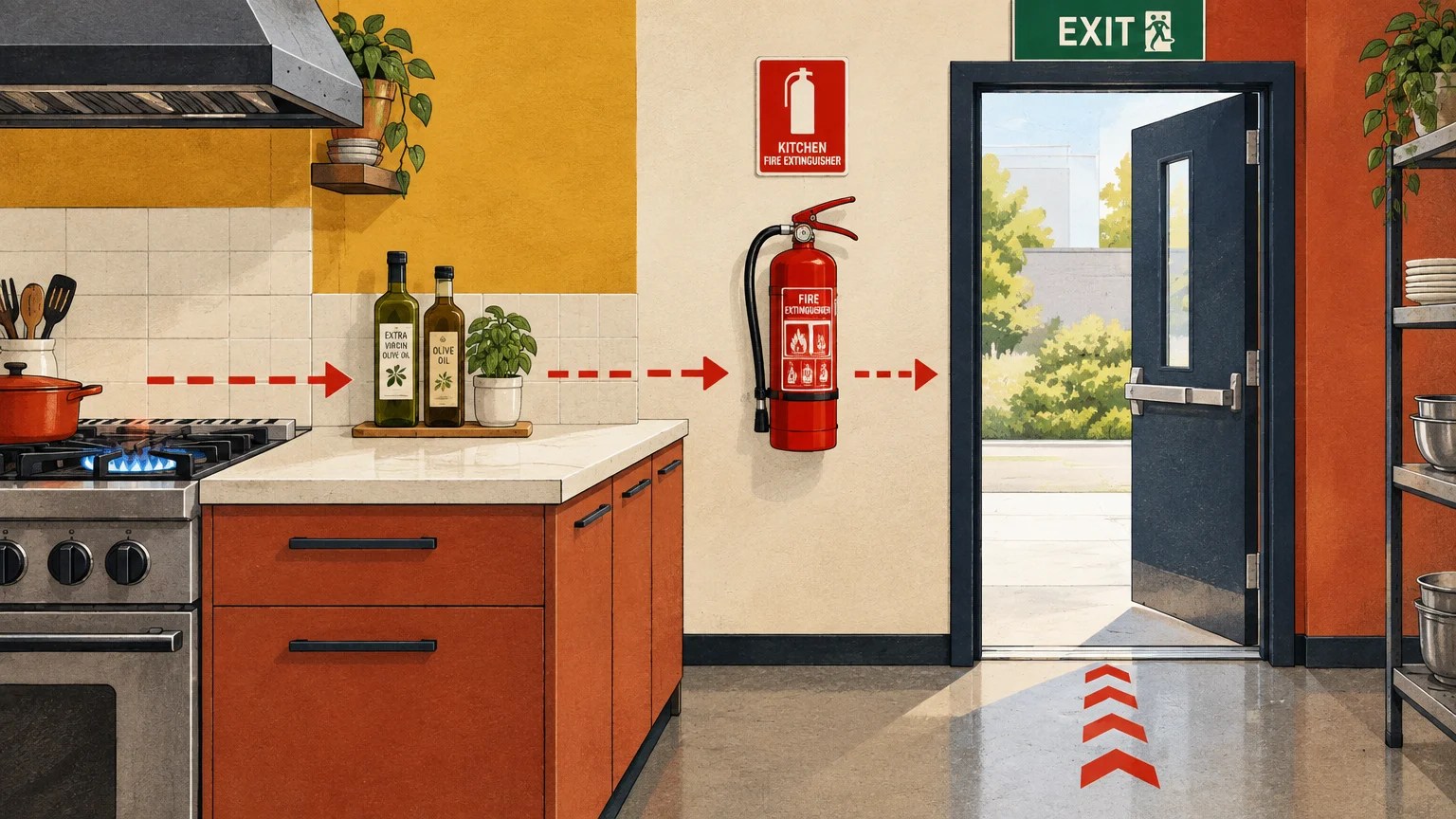
Tucking a fire extinguisher deep inside a crowded under-sink cabinet behind cleaning bottles is a dangerous practice. In an emergency kitchen fire, scrambling through cluttered cabinets wastes precious seconds.
Safety standards from the National Fire Protection Association emphasize mounting fire extinguishers in plain sight near an exit path. You must keep safety equipment immediately accessible and free from obstructions.
In addition, never store combustible materials like cooking spray cans, rubbing alcohol, or lighter fluid in cabinets near your stove. Radiant heat from your oven can pressurize aerosol cans and trigger a sudden explosion.
Mount your fire extinguisher on an open kitchen wall at least four feet away from cooking appliances. Store aerosol cooking oils in a cool pantry cabinet positioned safely away from the stove’s heat zone.
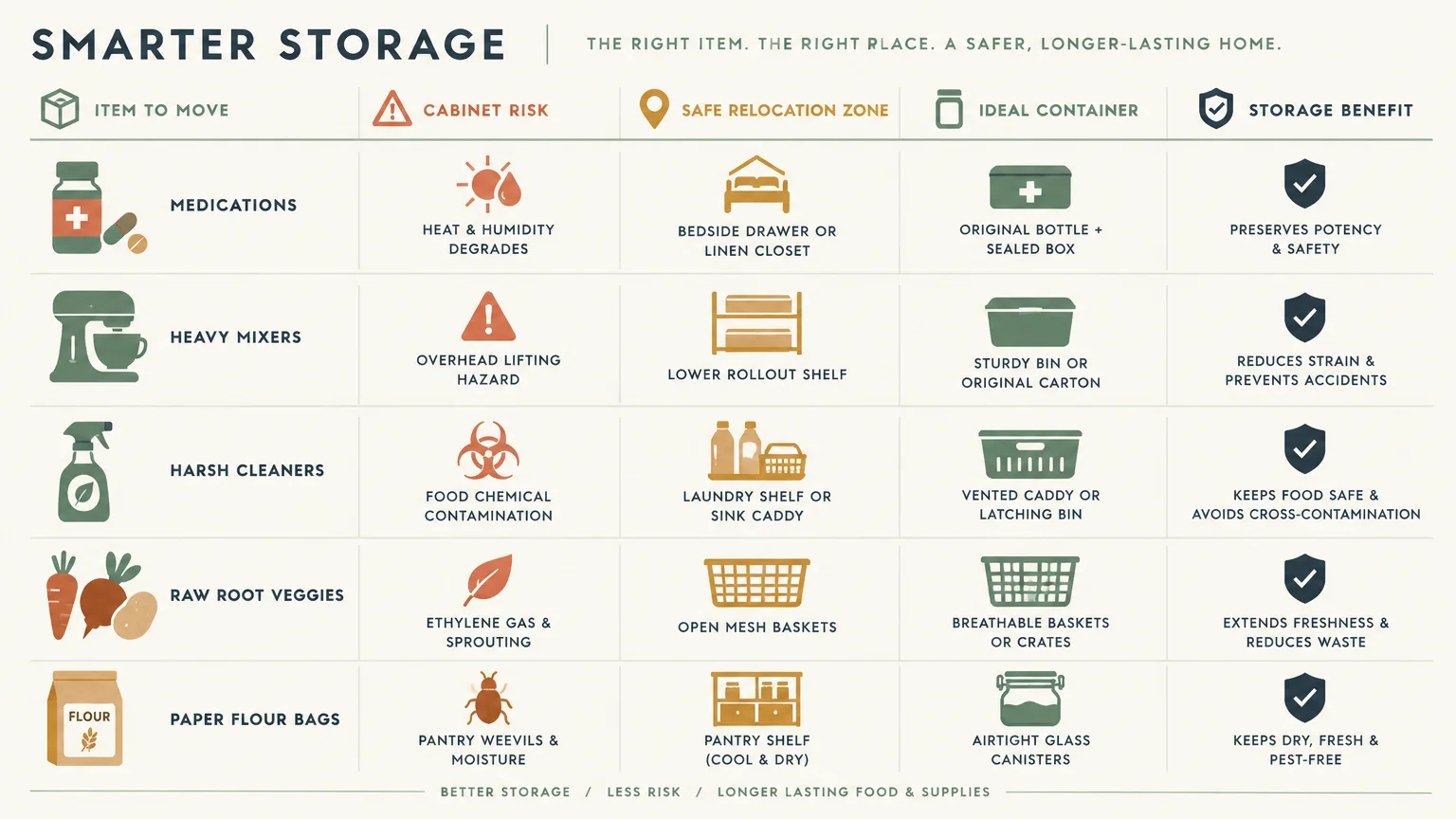
Quick Reference: What to Relocate and Where It Belongs
Understanding what not to store in cabinets transforms your kitchen into a safer, more efficient workspace. Use this reference summary to identify quick wins across your cupboards today.
| Item to Remove | The Hidden Hazard | Safer Storage Location |
|---|---|---|
| Medications & Vitamins | Heat and humidity destroy chemical potency. | Linen closet, bedroom nightstand, or home office. |
| Heavy Stand Mixers & Dutch Ovens | Risk of drops, muscle strain, and shelf collapse. | Waist-level base cabinets with pull-out drawers. |
| Harsh Cleaning Chemicals | Fumes penetrate food; spills contaminate cookware. | Dedicated laundry room cabinet or locked utility area. |
| Raw Potatoes & Onions | Poor ventilation causes mold; ethylene triggers rot. | Well-ventilated wire baskets in a cool pantry spot. |
| Open Paper Flour & Cereal Bags | Attracts weevils, pantry moths, and ambient moisture. | Airtight glass or BPA-free plastic canisters. |
| Fine China & Holiday Platters | Clutters everyday workflow and invites breakage. | Dining room sideboard, china hutch, or storage cases. |
| Aerosols & Fire Extinguishers | Heat pressurizes cans; hidden extinguishers delay safety. | Mount extinguisher on wall; store oils in cool pantry. |
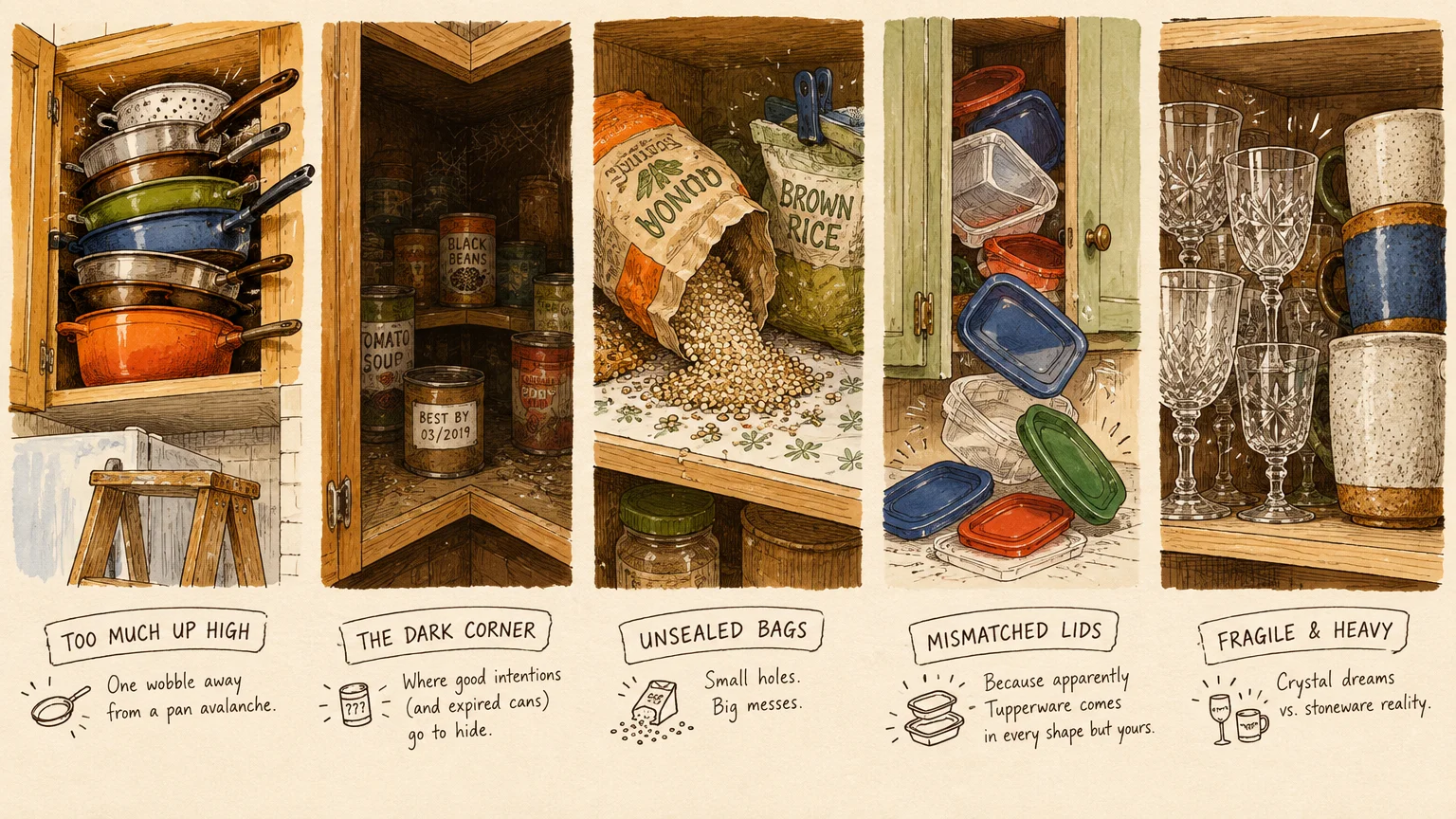
5 Kitchen Organization Mistakes That Create Daily Chaos
Disorganized cabinets rarely stem from a lack of square footage; they stem from inefficient habits. Applying smart kitchen storage tips will keep your cupboards neat and manageable long after you finish your project.
Ignoring Prime Real Estate
Store your daily essentials between your shoulders and knees for optimal convenience and body mechanics. Reserve high shelves and floor-level spaces strictly for lightweight, rarely used items.
Leaving Vertical Air Space Empty
Many cabinets feature fixed shelves with twelve inches of unused vertical clearance above mugs and bowls. Add freestanding shelf risers or install undershelf wire baskets to double your usable flat surface area.
Storing Items by Convenience Rather Than Work Zone
Efficient kitchens follow dedicated work zones. Keep cutting boards and prep knives near your chopping surface, and store pots, pans, and cooking oils directly beside your cooktop.
Overcrowding Shelves Beyond Eighty Percent
Packing cabinets to the brim forces you to displace three items just to reach one plate. Maintain an eighty percent fullness limit so you can retrieve and return items with a single hand.
Hoarding Duplicate Tools and Specialty Gadgets
Multiple vegetable peelers, novelty egg slicers, and extra travel mugs silently rob you of prime cabinet volume. Keep only your favorite, most durable tools and donate the rest to reduce visual clutter.
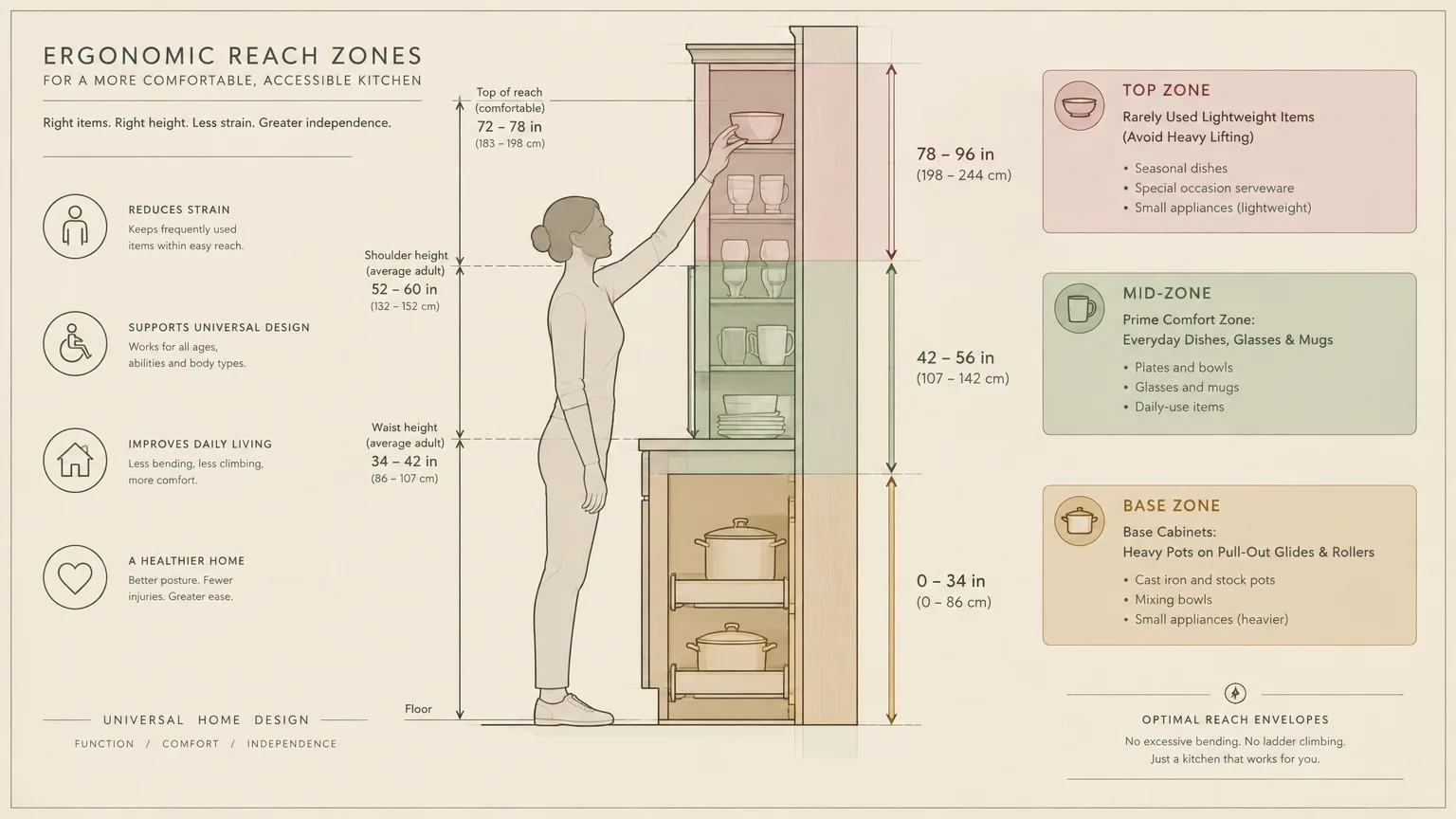
Ergonomic Kitchen Storage Tips for Older Adults
Simplifying your kitchen layout preserves physical energy and protects your joints as you age. Thoughtful ergonomic adjustments make daily cooking safer and significantly more comfortable.
Swap fixed lower shelves for full-extension pull-out sliding drawers. Sliders bring heavy pots and pantry items forward smoothly, eliminating the need to kneel or bend awkwardly to reach deep corners.
Replace tight cabinet knobs with broad D-shaped pull handles. These handles provide superior leverage and accommodate arthritic hands or reduced grip strength with ease.
Add peel-and-stick, battery-operated LED motion lights inside dark lower cupboards. Clear illumination ensures you can read product labels effortlessly and prevents accidental drops.
Transfer heavy bulk food items into lightweight, half-gallon containers with easy-grip handles. Handling smaller, balanced containers prevents hand fatigue and accidental spills during daily meal preparation.
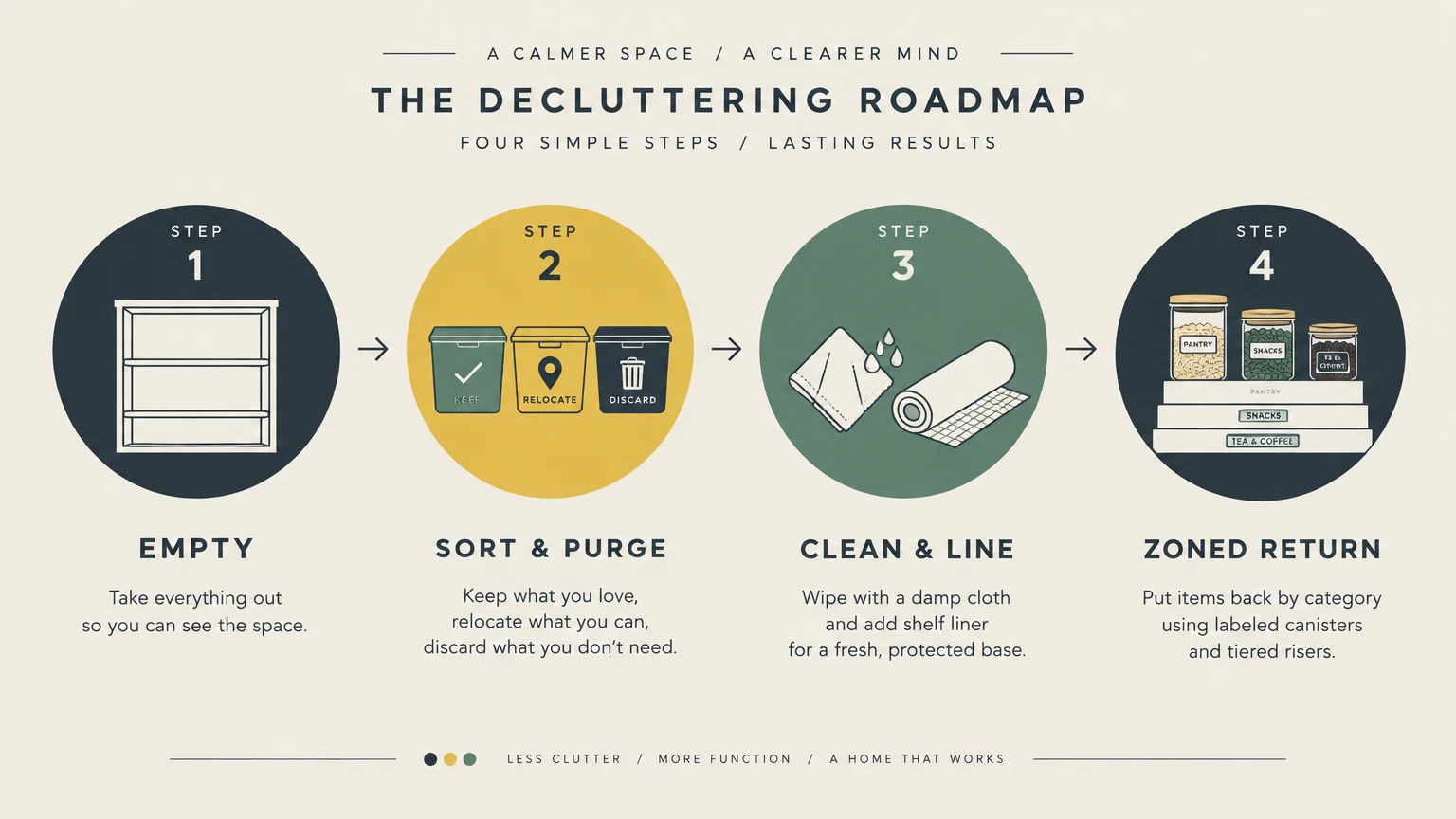
A Step-by-Step Guide to Decluttering the Kitchen
Overhauling an entire kitchen in a single afternoon often leads to decision fatigue and half-finished projects. Use this structured, step-by-step checklist to systematically transform your cabinets while decluttering the kitchen.
Step 1: Tackle One Cabinet at a Time
Focus your energy on a single cabinet or drawer rather than emptying the whole kitchen at once. Completing small, discrete zones delivers immediate satisfaction and keeps your counters usable.
Step 2: Empty the Shelves Completely
Remove every single item from the cabinet onto a cleared counter or kitchen table. Seeing the bare shelf gives you a clean slate and reveals the true volume of contents you own.
Step 3: Clean the Interior Surfaces
Vacuum stray crumbs from the shelf corners using a handheld vacuum attachment. Wipe down the interior surfaces with a damp microfiber cloth and a gentle, unscented soap solution.
Step 4: Sort Items into Three Definite Piles
Categorize your items into keep, relocate, and discard piles. Toss expired dry goods, immediately move the seven prohibited items, and set aside duplicate cooking utensils for donation.
Step 5: Reload Using Clear Categories
Place your most frequently used items back into the cabinet at eye level. Group similar goods together using clear acrylic bins or turntable organizers to keep loose containers from sliding out of reach.
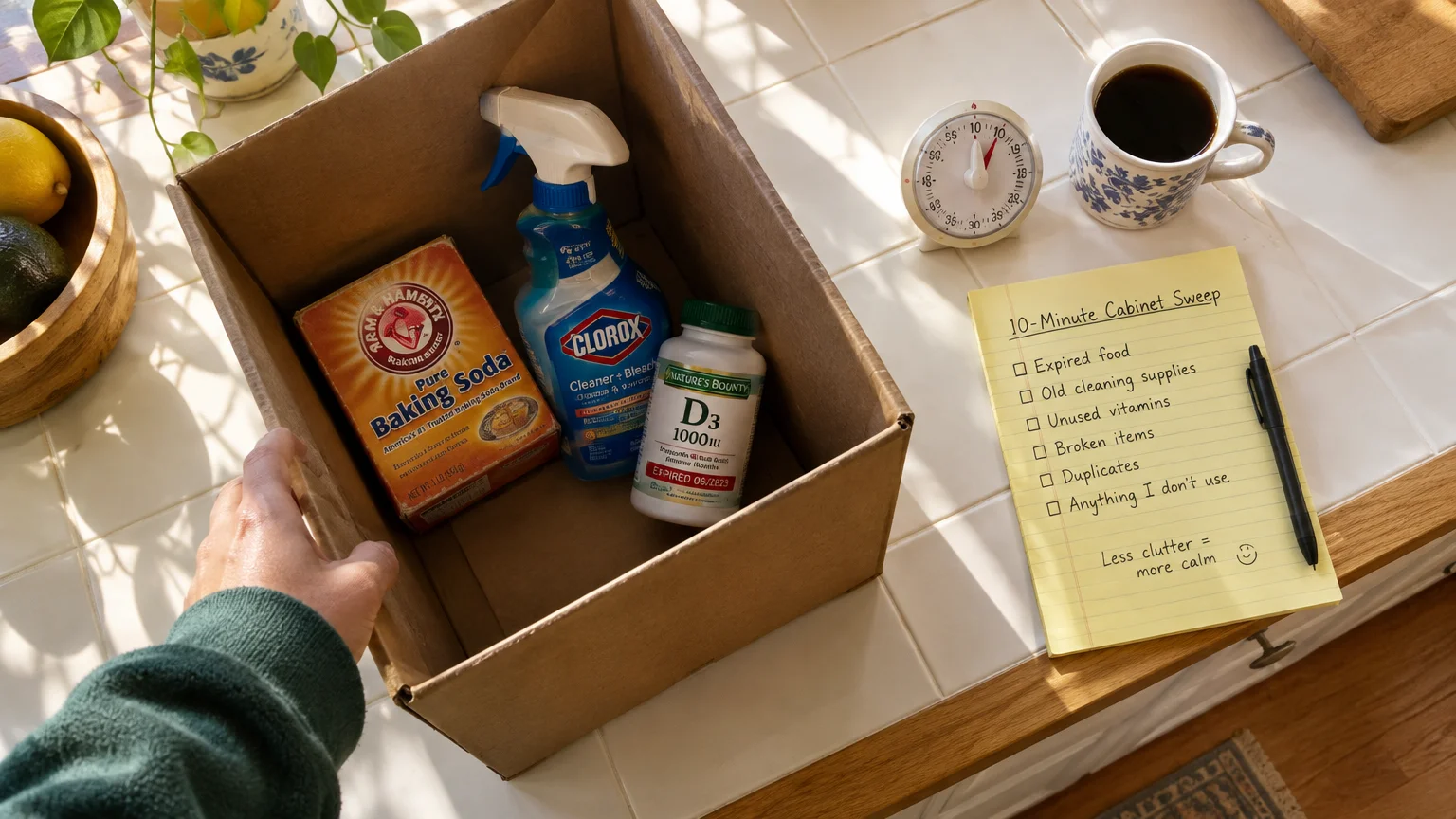
Take Action: Your 10-Minute Cabinet Audit
You do not need an entire weekend to make meaningful progress in your kitchen. Right now, pick just one upper cabinet near your stove and open the door.
Scan for misplaced medications, flammable aerosol sprays, or heavy cast iron resting on high shelves. Relocate those items to their proper homes immediately.
That simple ten-minute audit removes immediate safety hazards and sets the stage for a calmer, more functional cooking space.