Your refrigerator’s humidity drawers promise to keep produce crisp and fresh, yet they often turn into slimy graveyards for expensive greens and forgotten berries. Sliding fresh vegetables into these low-visibility bins represents one of the most common refrigerator organization mistakes because out of sight almost always means out of mind. High humidity traps excess moisture, which accelerates mold growth on delicate produce like strawberries and spinach, while unmonitored ethylene gas causes nearby carrots and cucumbers to spoil prematurely. By understanding these crisper drawer problems, you can transform your fridge into an efficient system that stops food waste, saves money, and simplifies your daily cooking routine.
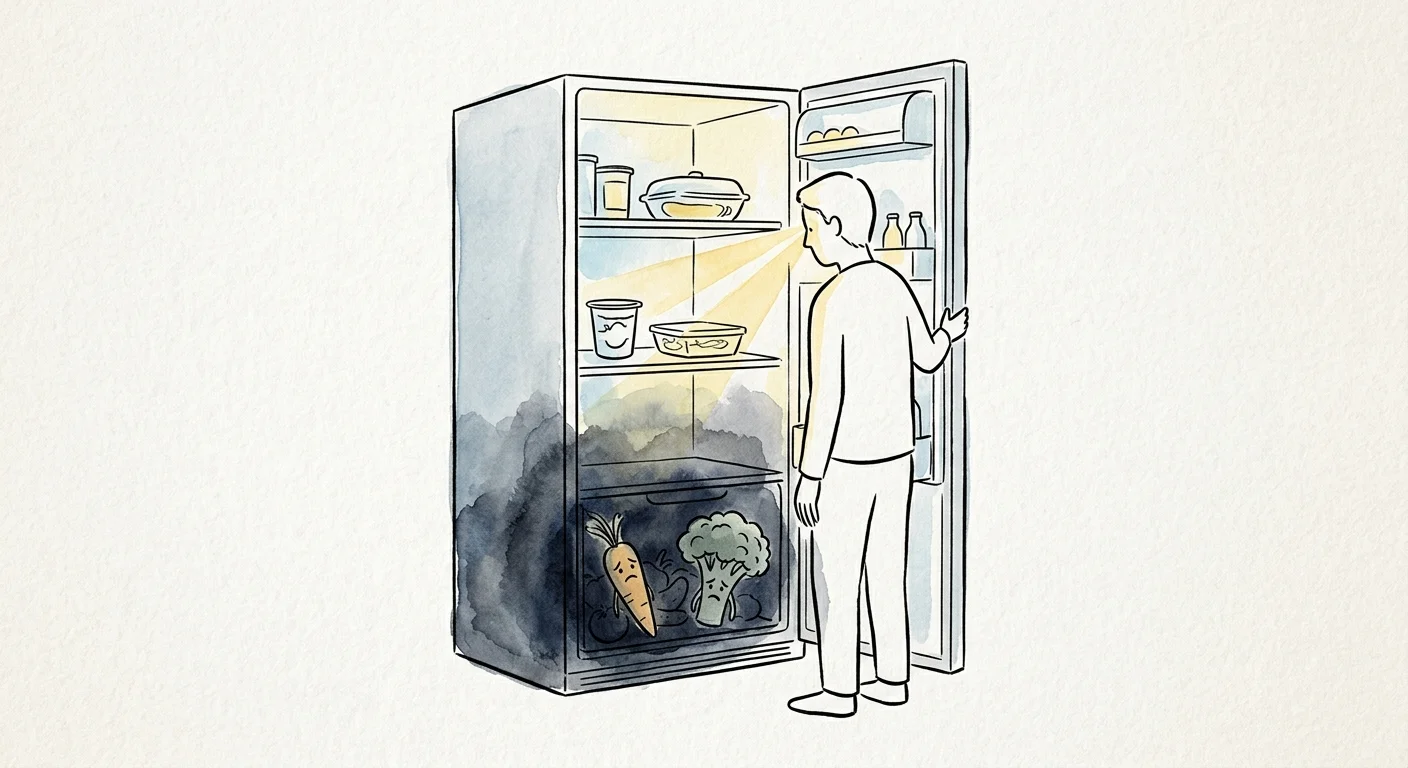
1. The “Out of Sight, Out of Mind” Trap Leads to Severe Food Waste
Opaque plastic drawers tucked away at the bottom of your appliance create an intentional visual barrier. When you return home from the grocery store, you pack fresh produce away into deep bins; over the following days, your attention naturally gravities toward items stored at eye level. Convenience drives eating habits—especially during busy weeknights or when fatigue sets in—and out-of-sight ingredients remain untouched until they transform into liquid sludge.
According to data published by the United States Department of Agriculture (USDA), the average American family of four discards approximately 225 pounds of food every year, amounting to a financial loss of nearly $1,500. Fresh produce makes up the largest percentage of this discarded inventory. Deep crisper drawers compound this problem by requiring physical bending, stooping, and digging to audit your stock. For older adults or anyone managing chronic back pain, joint stiffness, or mobility constraints, reaching down into bottom bins creates unnecessary friction.
Shifting to open, high-visibility storage is the single best way to store vegetables effectively. When you arrange colorful peppers, crisp radishes, and washed greens in clear glass jars or transparent containers on eye-level wire shelves, your brain registers those options instantly whenever you open the door. Visual cues prompt immediate consumption, ensuring you eat high-nutrition foods while they retain their peak flavor and texture.
2. Trapped Moisture Promotes Rapid Mold and Bacterial Proliferation
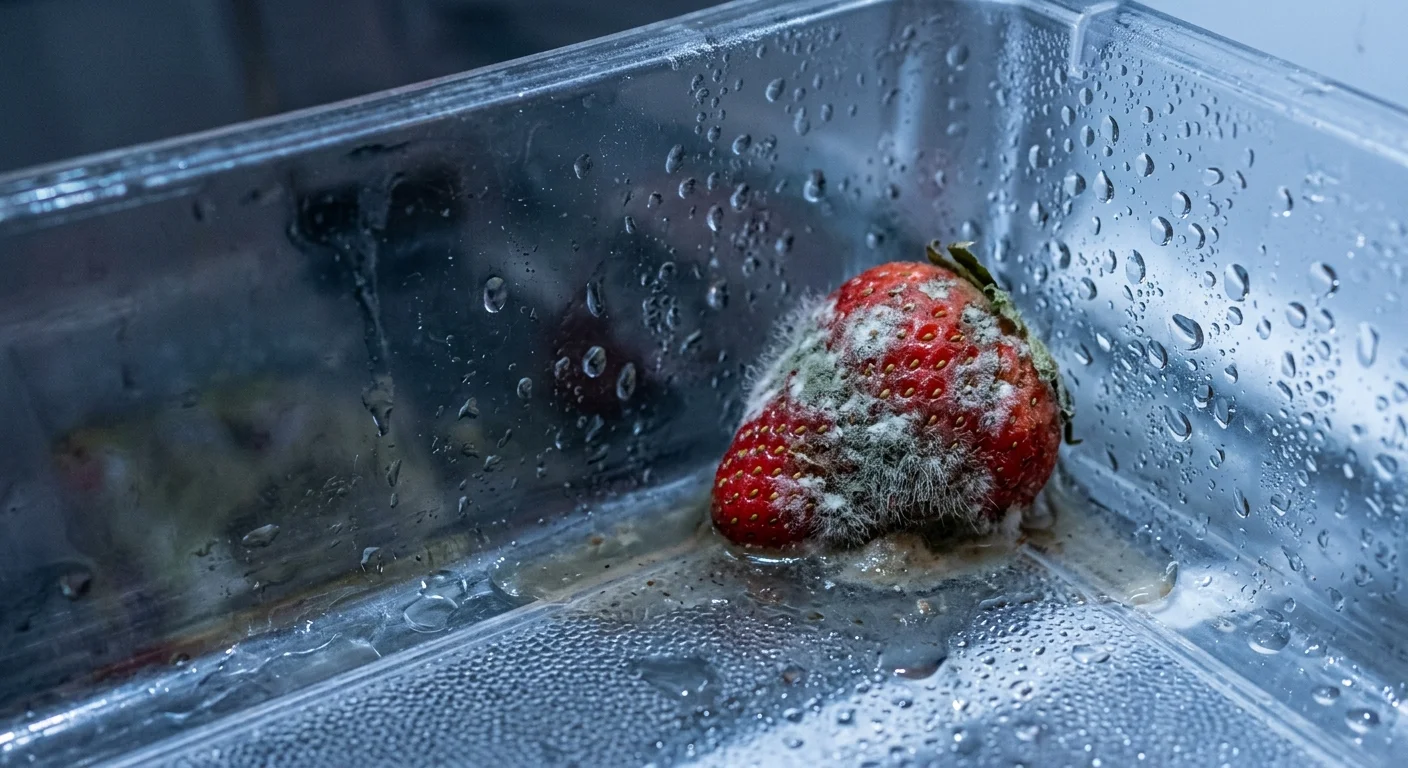
Appliance designers engineered crisper drawers to restrict ambient airflow, aiming to maintain elevated humidity that slows down moisture loss in leafy vegetables. However, this closed microclimate backfires frequently. Fresh produce continuously exhales water vapor through natural respiration; inside a sealed plastic box, that released moisture has nowhere to escape. Condensation collects along the interior walls of the drawer, eventually pooling at the bottom around your produce.
Standing water combined with dark, restricted air spaces creates an ideal breeding ground for mold spores, fungi, and dangerous pathogens. The U.S. Food and Drug Administration (FDA) highlights that maintaining proper refrigeration temperatures (at or below 40°F) slows microbial proliferation, but damp microclimates inside closed drawers override these safety boundaries. Soft fruits such as raspberries, blackberries, and strawberries absorb trapped surface water quickly, rupturing delicate cell membranes and inviting rapid gray mold (Botrytis cinerea) colonization within 48 to 72 hours.
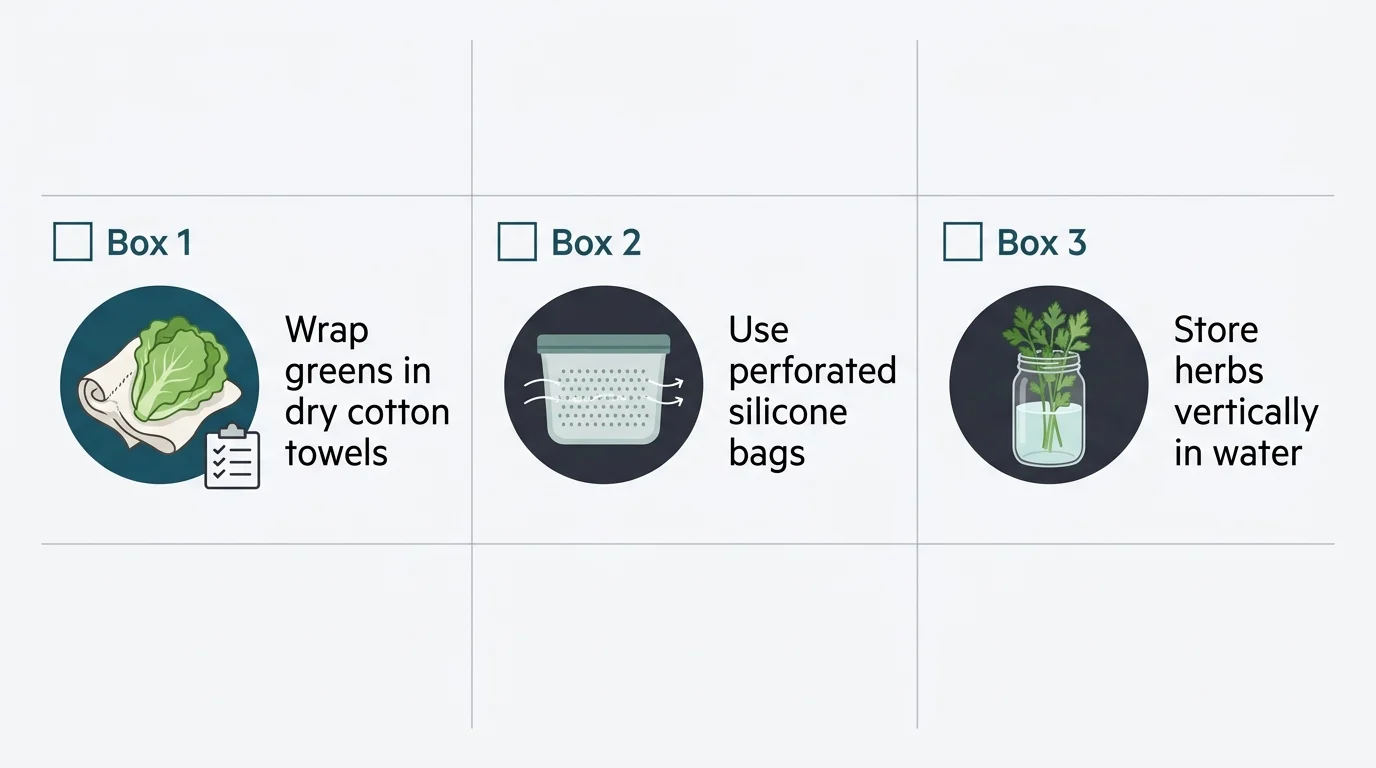
Keeping produce fresh longer requires balanced airflow and active moisture management rather than total sealing. Enclosing produce inside tight plastic drawers suffocates delicate plant tissues; wrapping unwashed greens loosely in dry cotton towels or perforated silicone bags absorbs excess humidity while allowing essential gas exchange to preserve cellular structure.
3. Concentrated Ethylene Gas Accelerates Premature Spoilage
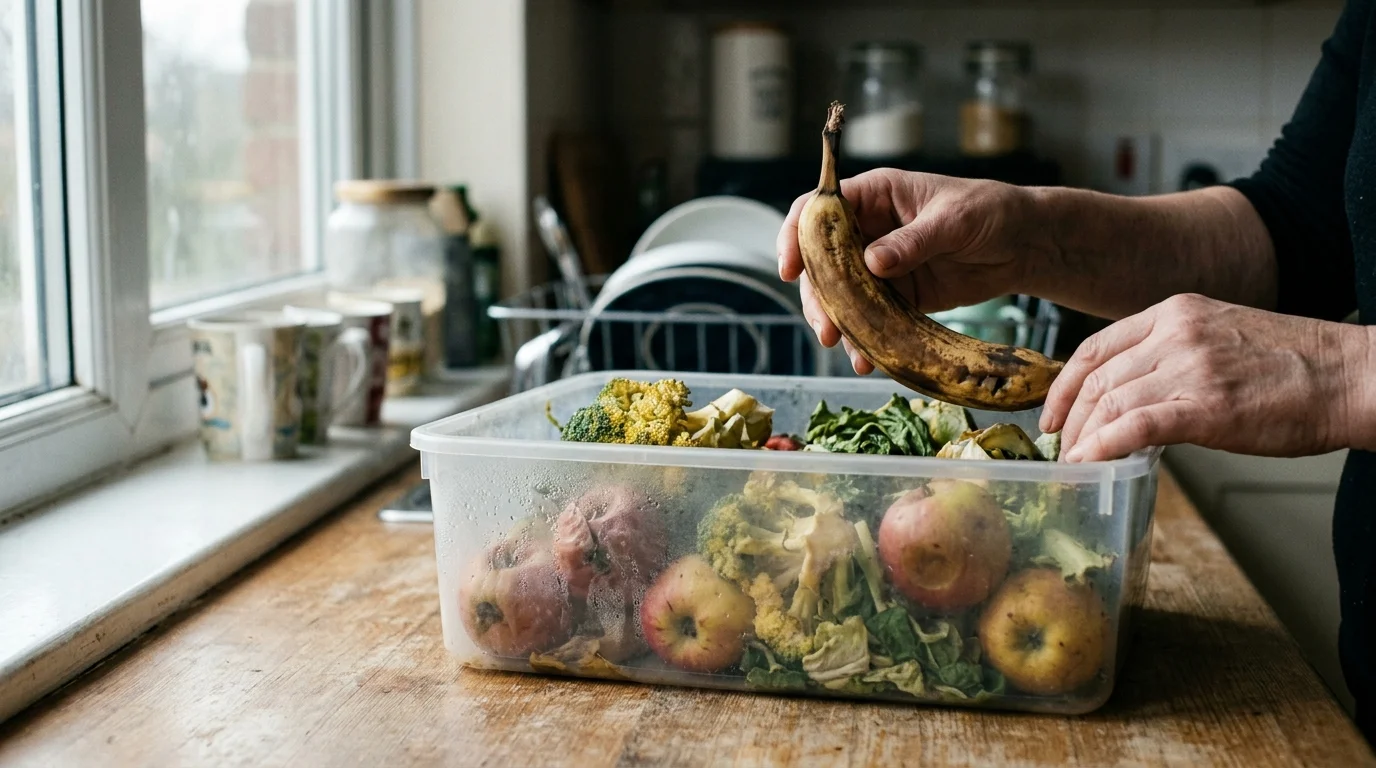
Plants produce a natural, odorless hydrocarbon gas called ethylene, which functions as a ripening hormone. Certain fruits and vegetables—classified as high ethylene producers—release significant amounts of this gas as they mature. When you seal these items inside an enclosed crisper drawer, ethylene concentrations skyrocket, turning the compartment into an accidental decay chamber for surrounding food.
High ethylene emitters include:
- Apples and pears
- Avocados and bananas
- Ripe tomatoes and cantaloupes
- Peaches, plums, and nectarines
When high ethylene producers sit inside a sealed drawer next to ethylene-sensitive vegetables, destructive chemical reactions occur quickly. Research from the UC Davis Postharvest Technology Center demonstrates that even trace amounts of ambient ethylene accelerate chlorophyll destruction in green vegetables. This chemical exposure turns vibrant broccoli yellow, imparts a harsh, bitter flavor to carrots by stimulating isocoumarin production, and induces rapid spotting and softening in cucumbers and leafy greens.
While many refrigerators feature small adjustable plastic sliders labeled “high humidity” and “low humidity,” these manual vents rarely provide sufficient air exchange to clear concentrated ethylene. Eliminating drawers and storing ethylene producers away from sensitive crops prevents this invisible gas from destroying your weekly grocery investment.
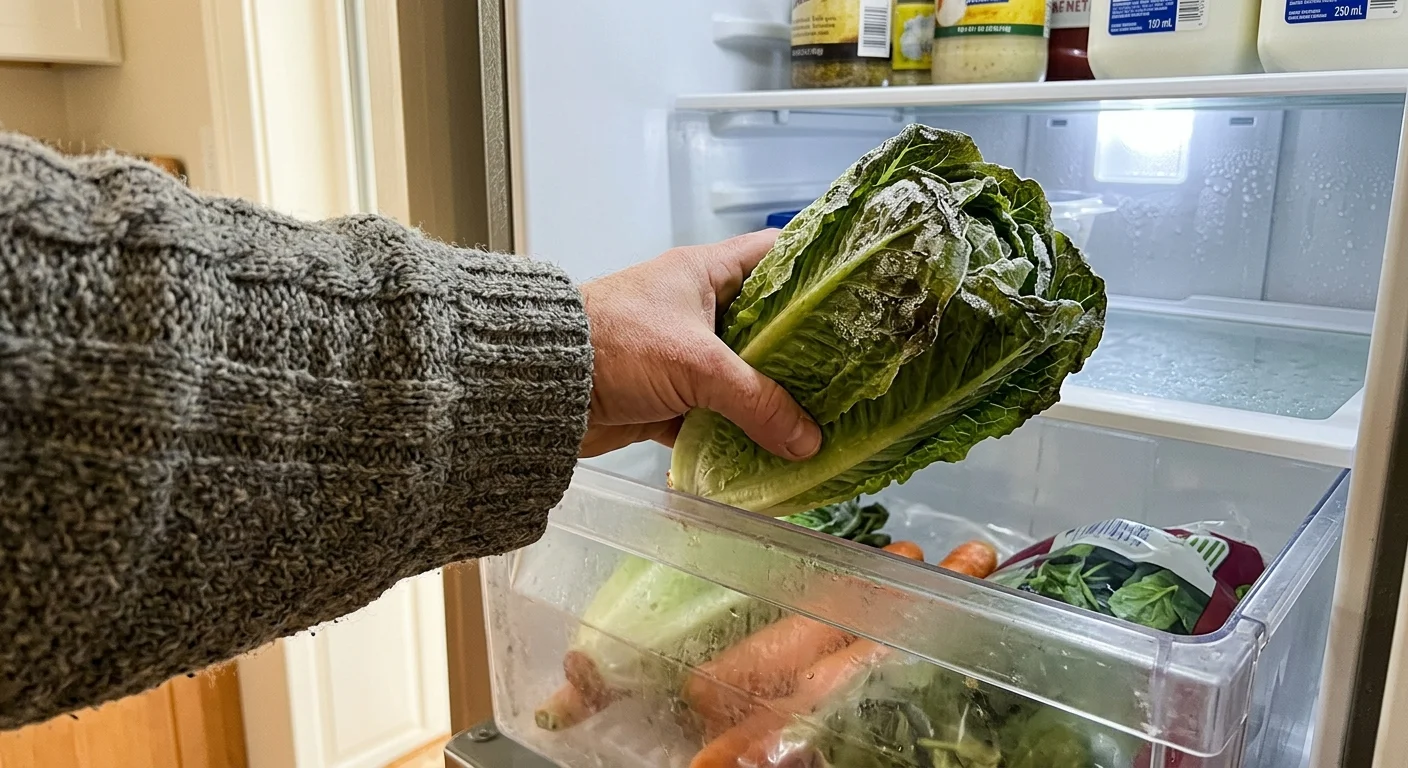
4. Unpredictable Temperature Microclimates Cause Freezing Damage
Domestic refrigerators rely on a main cooling coil—usually located behind the freezer compartment—to generate frigid air. The cooling system routes this cold air down the back interior wall toward the bottom of the cabinet. Because cold air is denser than warm air, it naturally collects at the floor of the appliance, precisely where manufacturers install crisper drawers.
This thermodynamic reality creates severe temperature variations. While your main cabinet thermometer displays a safe 37°F (2.7°C), localized pockets inside bottom crisper drawers frequently drop below 32°F (0°C). When freezing air blows directly against thin plastic drawer walls, delicate vegetable tissues freeze solid. Ice crystals expand inside the plant cells, puncturing the cell walls from the inside out. Once you pull affected spinach, celery, or zucchini out of the drawer and return it to ambient room temperature, the damaged tissue collapses into a mushy, unappetizing liquid.
Furthermore, jamming tight plastic drawers full of produce blocks internal air distribution. Items trapped against the back wall freeze completely, while items packed near the front door remain too warm. Storing produce on middle wire or glass shelves ensures uniform ambient air movement, protecting delicate items from localized frost damage.
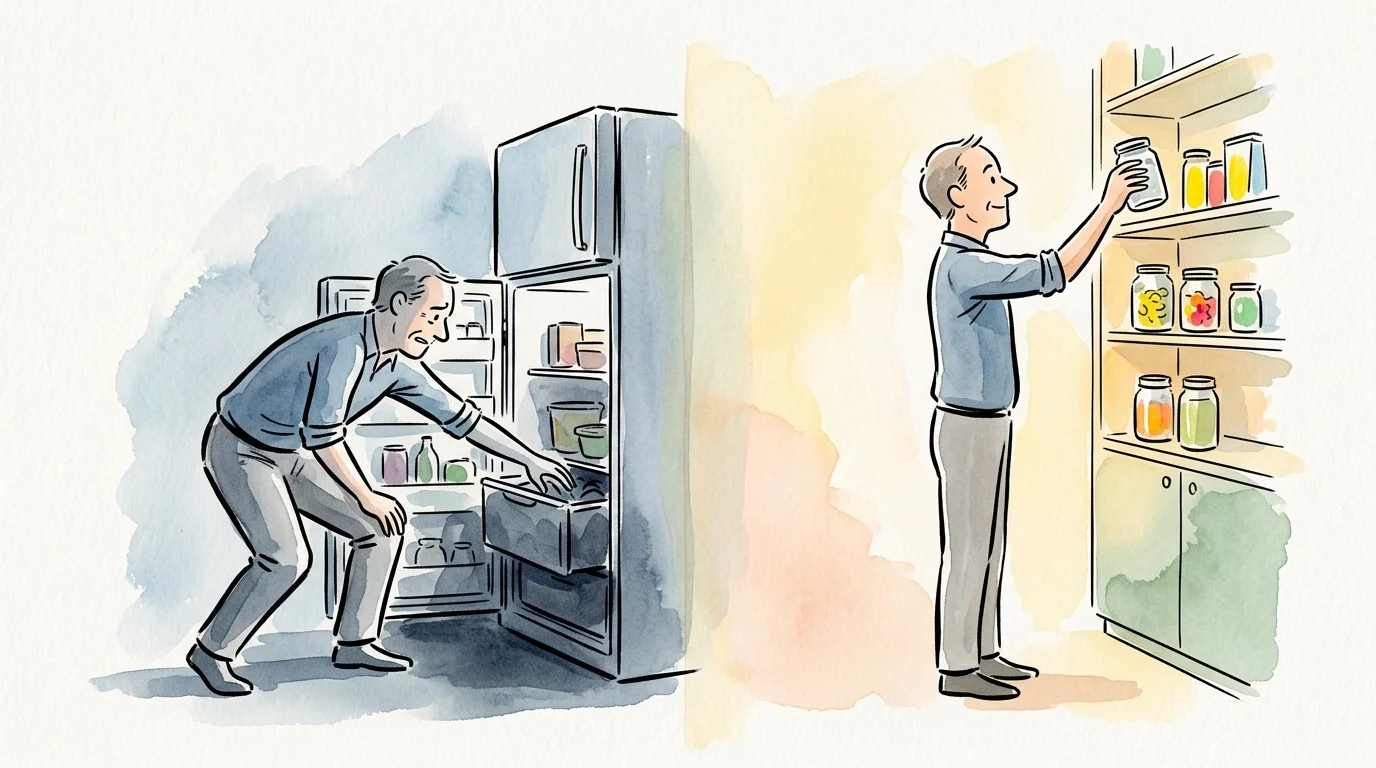
5. Awkward Ergonomics and Heightened Cross-Contamination Risks
Beyond spoiling food, standard crisper drawers present persistent physical and sanitary challenges. Removing bulky plastic bins forces you to bend down, stoop over, and tug against sticky plastic side rails. For seniors or individuals recovering from joint injuries, lifting a heavy drawer loaded with potatoes or citrus fruits causes unnecessary physical strain and increases the risk of accidental drops and cracked plastic hardware.
Sanitation poses an even greater concern. Positioned at the absolute bottom of the refrigerator, crisper drawers catch every stray drip, spill, and fallen crumb from upper shelves. If raw meat packaging leaks on an upper shelf, contaminated juices travel downward along the interior walls, dripping into open or ill-fitting produce drawers below. According to food safety guidelines from the Centers for Disease Control and Prevention (CDC), raw poultry and meat juices carry harmful pathogens like Salmonella, E. coli, and Campylobacter, which cause severe illness if transferred onto unwashed raw salads or fruits.
Cleaning these oversized plastic bins requires complete removal, which usually results in awkward wrestling matches over small kitchen sinks. Eliminating your reliance on these bottom bins eliminates one of the most frustrating, back-straining cleaning chores in your home management routine.
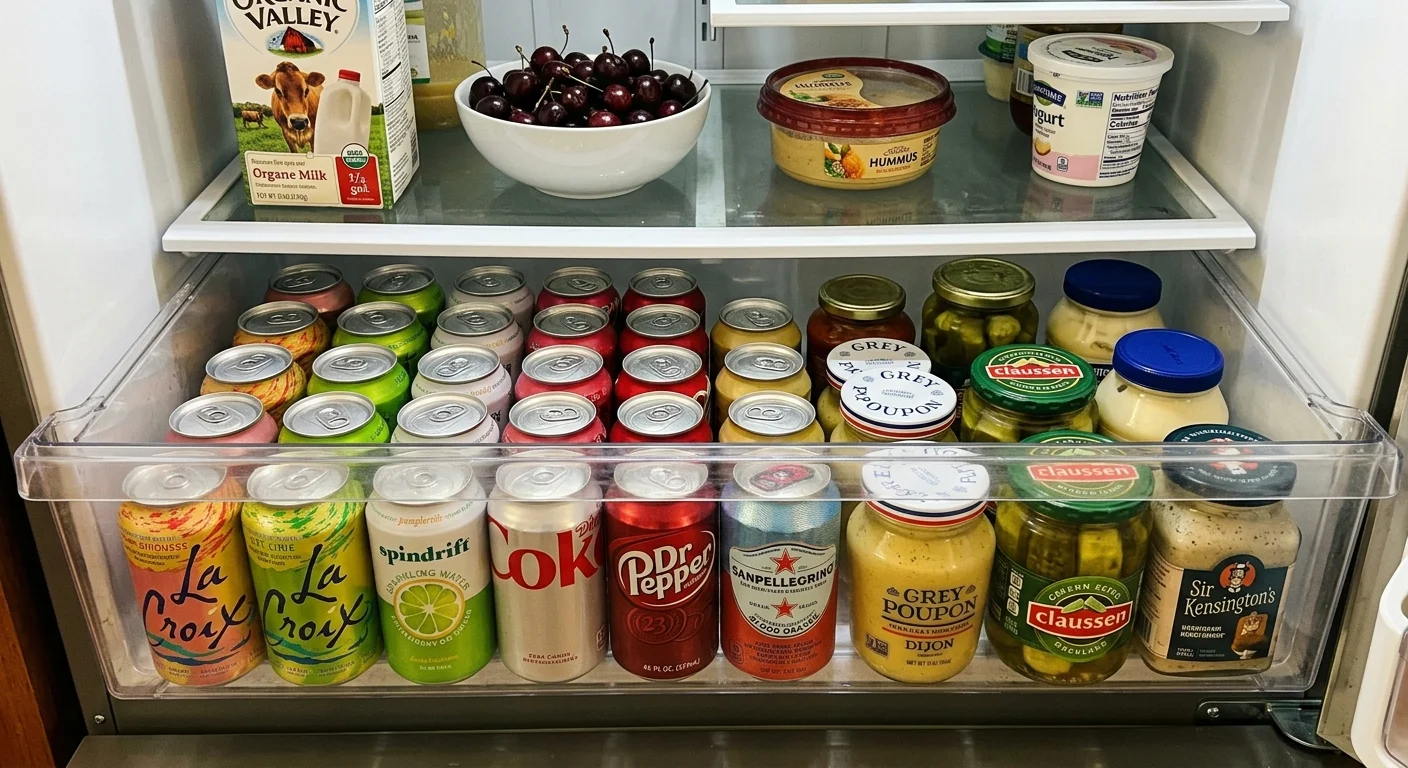
Reimagining Your Fridge: What to Store in Crisper Bins Instead
Stepping away from traditional crisper drawer usage does not mean leaving those bottom compartments empty. Instead of placing delicate, high-value produce inside them, convert those low bins into dedicated storage zones for non-perishable, highly stable, or double-sealed goods. This simple shift repurposes an ergonomic liability into an organized storage asset.
Consider reallocating your bottom drawers for these sturdy items:
- Canned beverages, sparkling waters, and soda tins
- Sealed condiments, salad dressing backups, and pasteurized sauces
- Vacuum-sealed hard cheeses and unopened deli meat packages
- Pre-wrapped meal prep containers containing fully cooked, sturdy grains
- Baking nuts, seeds, and whole-bean coffee stored in airtight glass containers
Review this strategic storage comparison to optimize your refrigerator layout for maximum freshness and food safety:
| Produce Category | Crisper Drawer Storage (Traditional) | Eye-Level Shelf Storage (Recommended) | Primary Risk of Crisper Drawer |
|---|---|---|---|
| Leafy Greens (Spinach, Arugula, Kale) | Trapped condensation; suffocates plant tissue. | Clear glass jar with dry towel layer on middle shelf. | Rapid slimy rot & mold proliferation. |
| Ethylene Emitters (Apples, Pears, Avocados) | Traps gas; accelerates decay of surrounding items. | Open top shelf or room-temperature counter basket. | Premature yellowing and softening of nearby veggies. |
| Ethylene Sensitive (Cucumbers, Carrots) | Absorbs trapped ethylene gas from neighboring fruit. | Clear glass containers filled with fresh water on middle shelf. | Bitter flavors and rapid structural breakdown. |
| Tender Herbs (Cilantro, Parsley, Mint) | Gets crushed under heavier items; structural collapse. | Upright in 1 inch of water inside clear jar (like flowers). | Freezing damage & rapid leaf browning. |
| Berries (Strawberries, Raspberries) | Absorbs excess humidity; zero airflow. | Original vented container lined with paper towel on eye-level shelf. | Gray mold growth within 48 hours. |
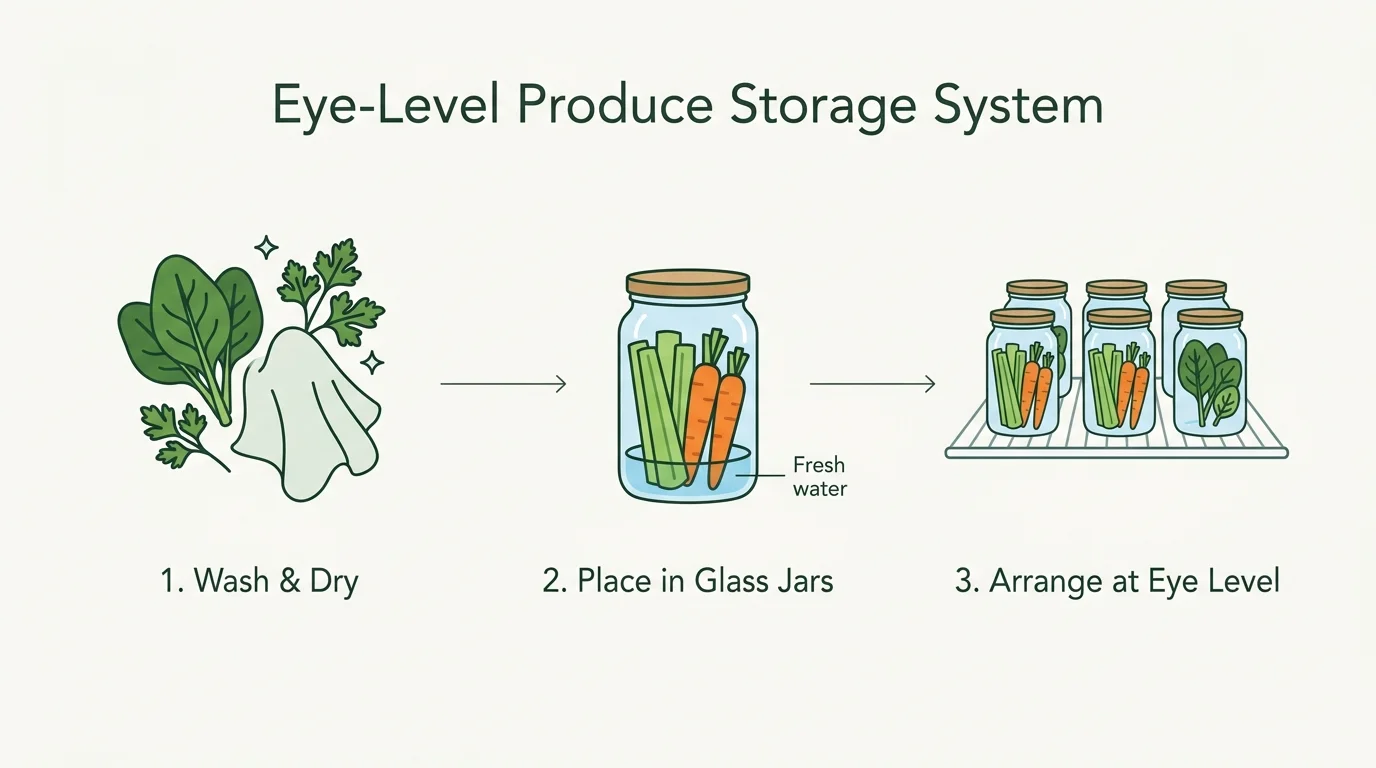
Step-by-Step Guide to the “Eye-Level” Produce Storage System
Transitioning to a transparent, high-visibility storage system stops produce waste and makes meal preparation effortless. Follow these practical fridge produce storage tips to overhaul your kitchen setup today:
- Evacuate and Clean: Remove all contents from your existing bottom drawers. Wash the bins thoroughly using warm water and mild dish soap to eliminate residual fungal spores, sticky residues, and dust.
- Reassign the Drawers: Reorganize those bottom bins exclusively for bottled drinks, sealed condiments, or heavy packaged items that cannot leak onto other foods.
- Unpack and Unseal Fresh Produce: Inspect fresh produce as soon as you bring it home. Remove tight plastic wrapping, rubber bands, and twist ties that restrict airflow and create localized moisture traps.
- Implement Moisture Controls: Wash leafy greens in cold water, spin them thoroughly dry in a salad spinner, and wrap them gently in clean paper towels or breathable cotton bags. Place these prepped greens into clear glass food storage containers.
- Store Vegetables at Eye Level: Position your clear storage containers on the middle or upper shelves directly in your primary line of sight. Group similar items together so you can survey your available fresh ingredients in three seconds or less.
- Isolate Ethylene Producers: Keep apples, pears, and avocados on a separate open shelf away from your green vegetables, or allow them to ripen on your kitchen counter before chilling them uncovered.
- Practice FIFO (First In, First Out): When adding new produce to your shelves, move older glass containers to the front of the shelf and place newly purchased items behind them.
Checklist for Keeping Produce Fresh Longer Without Crisper Drawers
Maintain an efficient, clean, and low-waste kitchen by integrating these quick daily and weekly habits into your home routine:
- Check middle fridge shelves daily during meal prep to identify ingredients that need immediate use.
- Verify your refrigerator interior temperature stays steadily between 35°F and 38°F (1.6°C to 3.3°C) using a standalone digital thermometer.
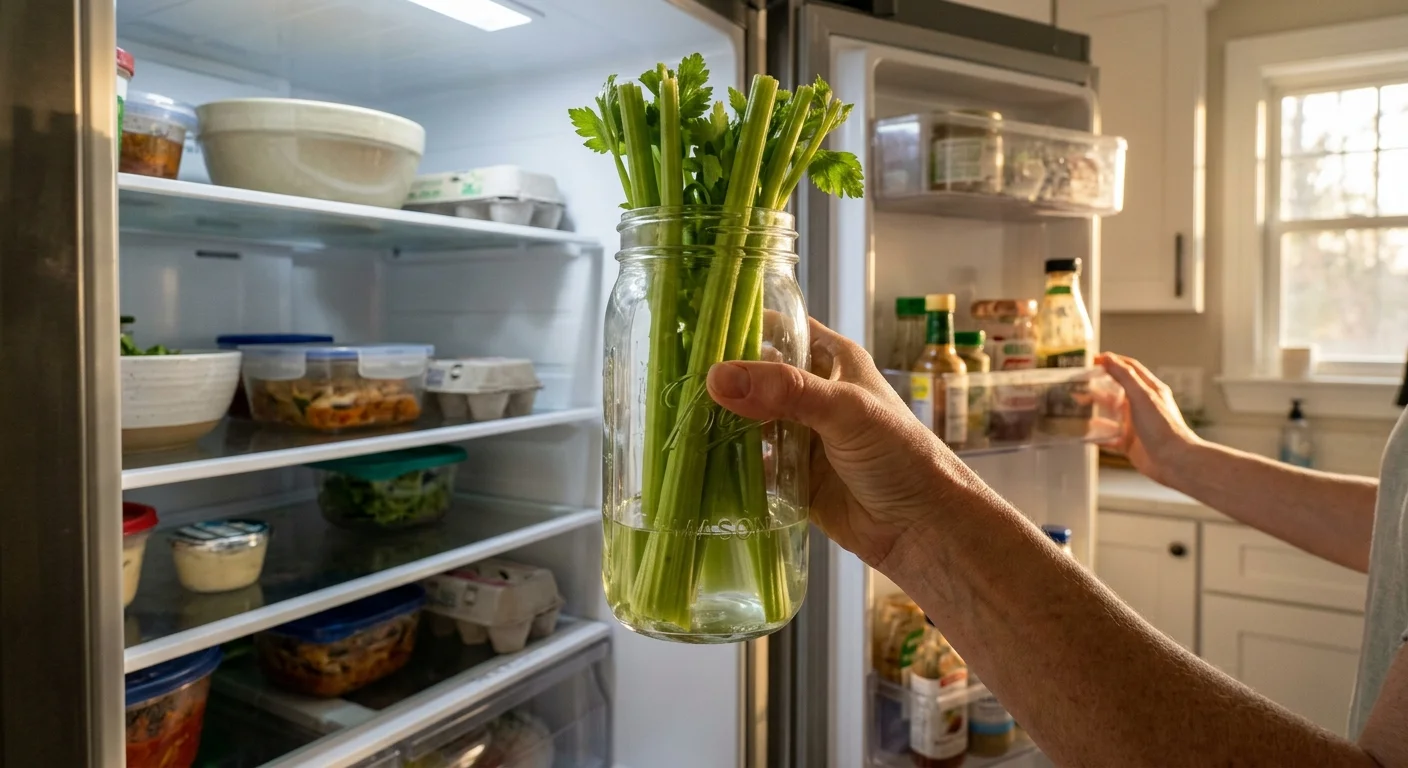
- Store fresh herbs upright in glass mason jars containing one inch of fresh water, replacing the water every two days.
- Dry all washed produce completely before placing it into glass containers or reusable storage bags.
- Leave two inches of open space between storage containers on middle shelves to allow optimal cold air circulation.
- Replace damp paper towels inside produce containers every two to three days to keep fungal growth suppressed.
- Store raw meats and poultry strictly on the lowest solid wire shelf above the bottom bins to eliminate cross-contamination dripping risks.
Your Immediate Action Step for a Greener, Cleaner Kitchen
Open your refrigerator right now, pull open those bottom crisper drawers, and rescue any fresh produce hiding in the dark. Move your greens, carrots, and berries up onto your middle shelf at eye level, wrapping damp items in fresh paper towels and transferring them into clear glass containers. Taking your fresh food out of the dark cuts food waste immediately, protects your weekly grocery budget, and puts fresh, healthy ingredients front and center for your next meal.