Storing the wrong items in your freezer door leads directly to freezer burn, ruined textures, and unnecessary food waste. Every time you open your freezer, warm room air rushes over the door shelves, causing minor thaw-and-refreeze cycles that degrade delicate items. Keeping sensitive items away from this unstable zone protects your grocery budget and preserves the true flavor of your meals. While the door looks like a convenient spot for everyday staples, it remains the warmest and most temperature-variable area in your entire appliance. Reorganizing a few key items today ensures your frozen goods remain fresh, safe, and ready to enjoy whenever you need them.
Why Your Freezer Door Is a Hazard Zone for Food Quality
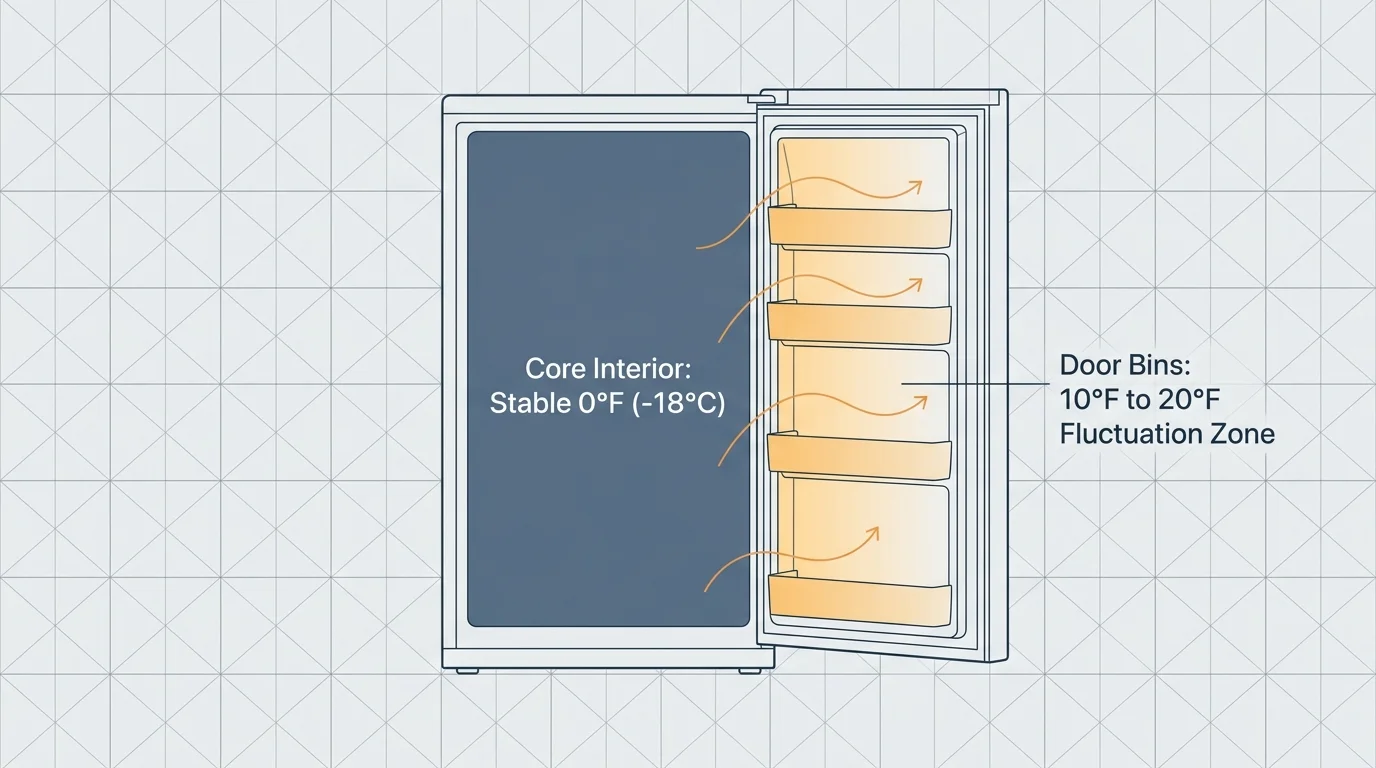
Your freezer maintains safe food storage by keeping ambient temperatures at a steady 0°F (-18°C). However, that uniform cold drops significantly the moment you open the appliance door. Warm kitchen air enters immediately, striking the door shelves first and longest. Over the course of a normal day—as family members open the door for ice, meal prep, or snacks—door-stored items experience frequent micro-thawing cycles. While the core interior remains cold, these door bins fluctuate between 10°F and 20°F above the ideal setting.
Understanding these thermal dynamics helps you avoid major freezer storage mistakes that shorten the lifespan of your food. According to guidelines from the USDA Food Safety and Inspection Service, keeping frozen foods at a constant 0°F preserves nutritional value, texture, and flavor while completely halting bacterial growth. When food sits in the door, fluctuating temperatures force moisture out of the food matrix. That moisture converts into surface ice crystals, leaving behind dry, discolored, and flavorless food. Storing sensitive ingredients on interior shelves eliminates this environmental stress and extends shelf life dramatically.
1. Ice Cream and Frozen Desserts
Placing a tub of premium ice cream in the freezer door is one of the most common storage errors in home kitchens. Ice cream is a delicate emulsion of milk fat, water, sugar, and tiny air bubbles. Maintaining that smooth, velvety texture requires constant, deep-cold conditions without thermal interruptions.
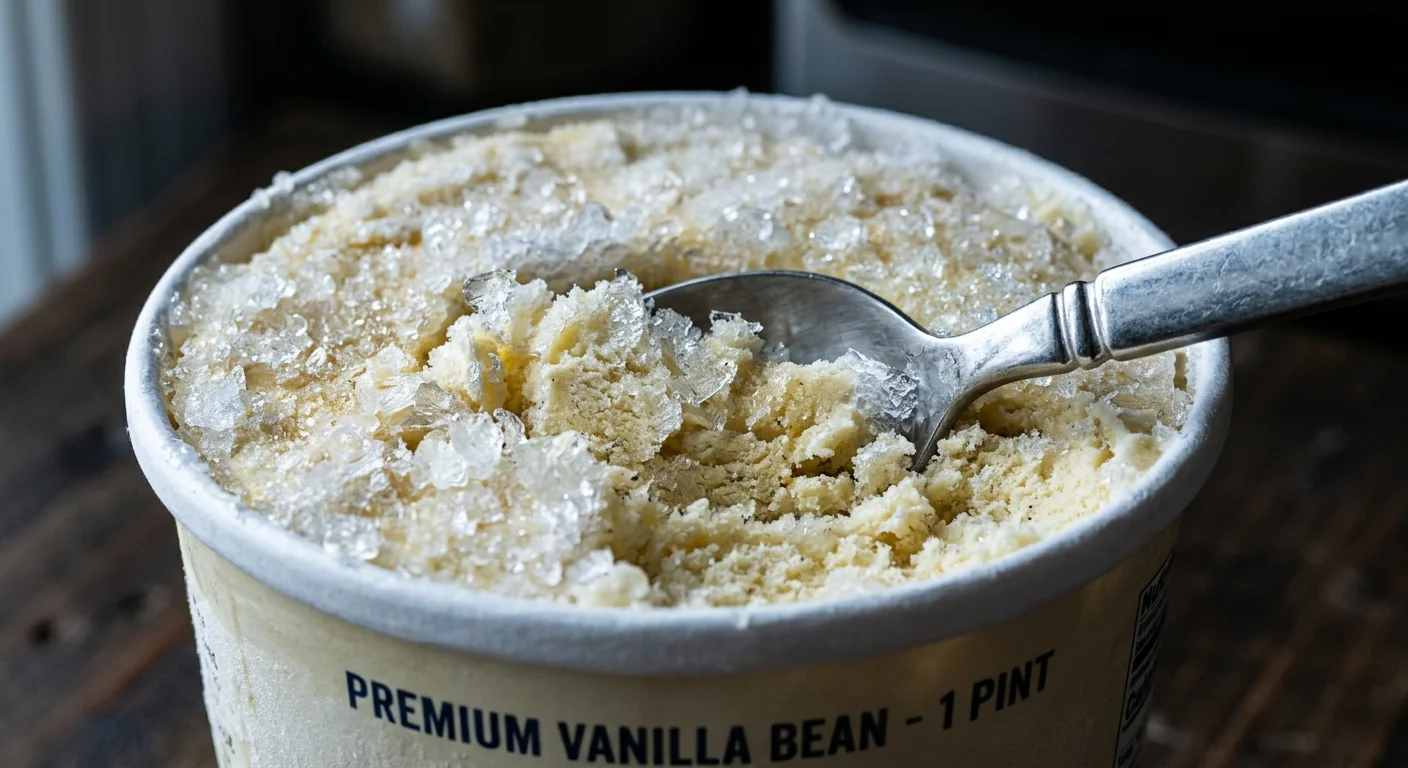
When you store ice cream in the door shelves, temperature swings cause the tiny ice crystals inside the cream to melt slightly. When the door closes and the temperature drops again, those melted water droplets refreeze into larger, coarse ice crystals. Over time, your rich dessert develops a gritty, crunchy surface and a heavy, gummy base. The top layer often forms a thick skin of freezer burn, ruining the mouthfeel entirely.
To keep ice cream silky smooth, store it in the deepest section of your main freezer cavity—preferably toward the back of a middle shelf. For extra protection, press a sheet of wax paper or plastic wrap directly onto the surface of the ice cream before securing the lid. This extra layer seals out ambient air, keeping your dessert bakery-fresh for weeks.
2. Raw Meat, Poultry, and Seafood
Raw proteins require the most stable cold environment in your kitchen to guarantee food safety and quality. Placing raw chicken breasts, ground beef, steaks, or fish fillets in the freezer door poses two major risks: rapid quality degradation and potential cross-contamination.
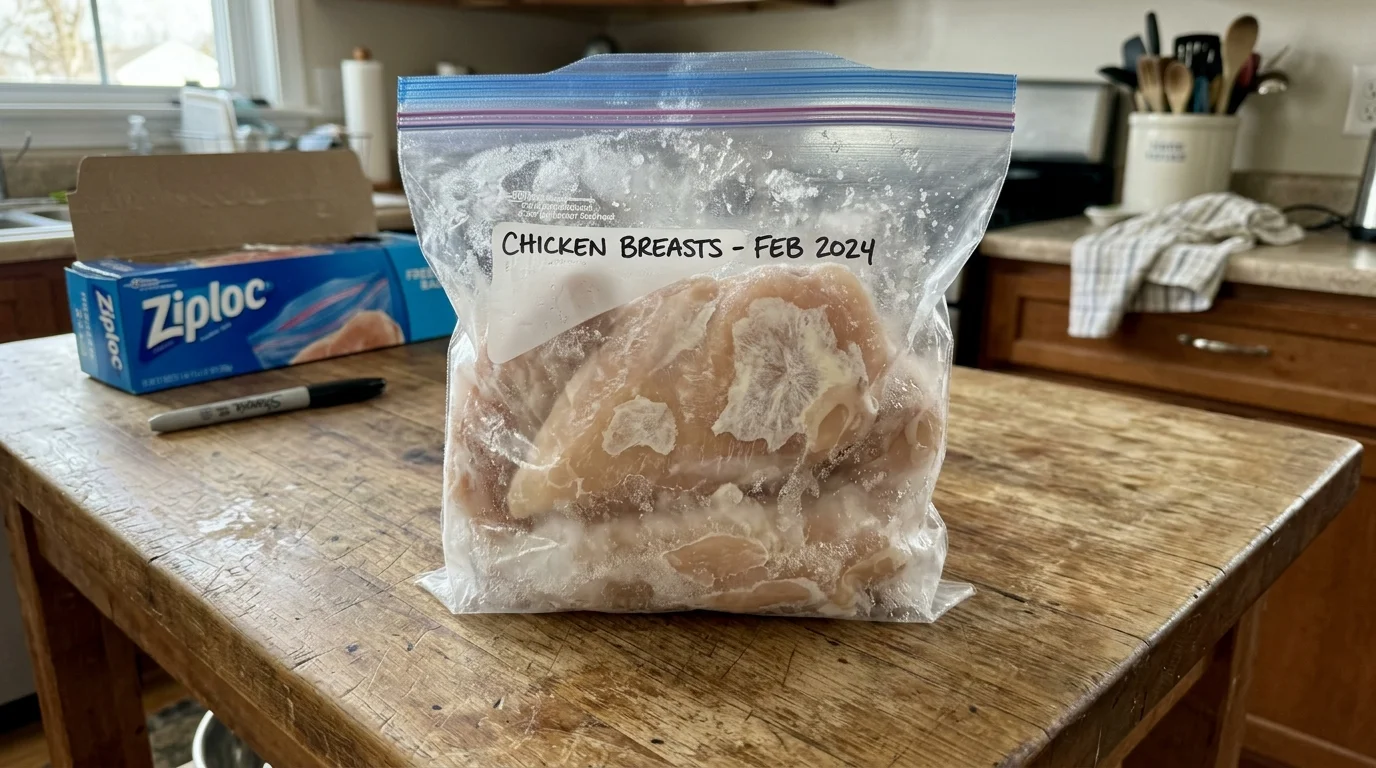
Because the door experiences frequent temperature spikes, raw meats undergo partial thawing along their exterior surfaces. This temperature instability activates enzymes that break down protein fibers, resulting in a mushy texture once cooked. Furthermore, moisture escaping from partially thawed meat creates ice glaze inside the package, drying out expensive cuts. Official handling charts at FoodSafety.gov emphasize that stable zero-degree storage is essential to maintain structural integrity and guard against microbial risks during long-term storage.
Cross-contamination presents an even greater hazard. If a package of raw meat thaws slightly in a door bin, raw juices can drip through rack gaps onto items stored below. To protect your family, always store raw meat on the lowest interior shelf of your freezer. Place packages inside a leak-proof plastic bin or rimmed tray; this setup traps potential drips and keeps raw juices away from ready-to-eat foods.
3. Milk, Cream, and Dairy Products
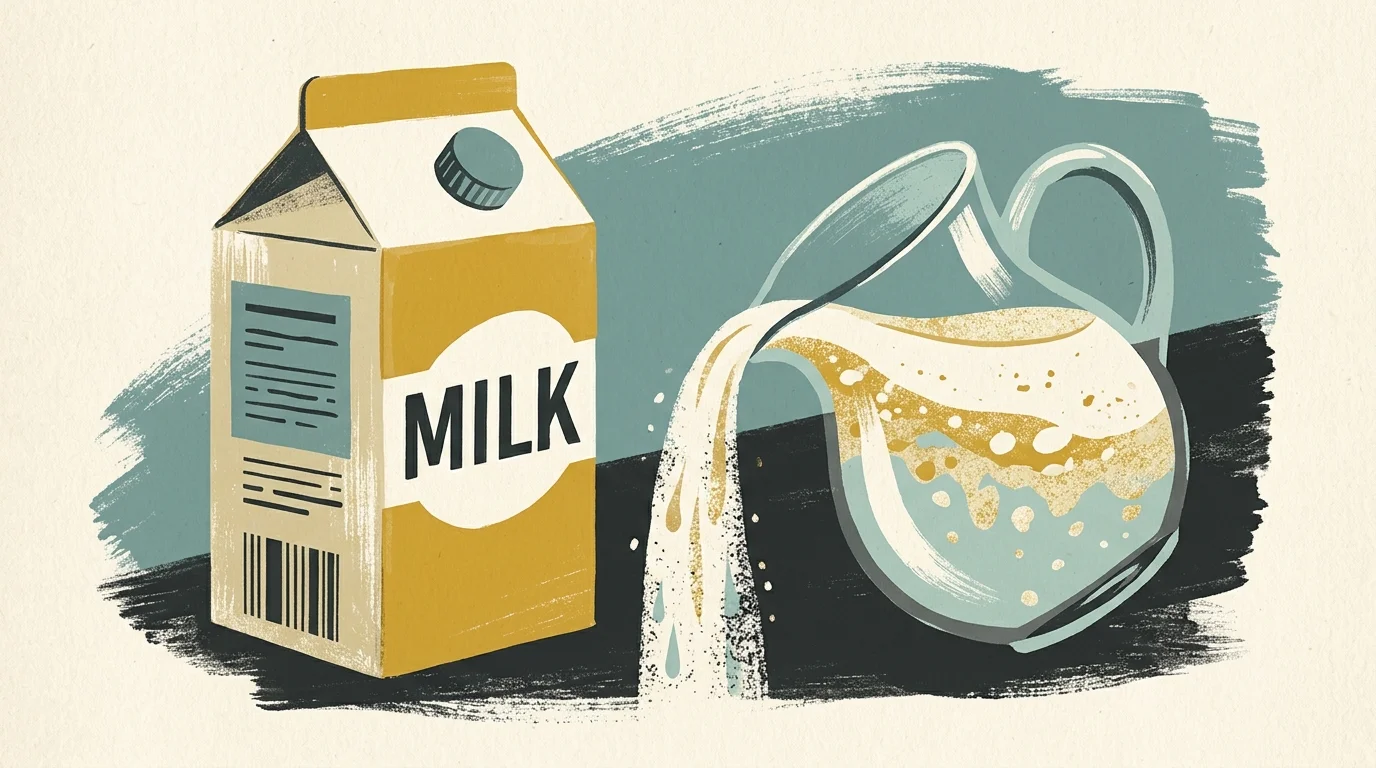
Whether you freeze extra cartons of milk, heavy cream, or specialty dairy sauces, keeping these items in the freezer door causes severe physical separation. Dairy products contain delicate fats and proteins suspended in water. When subjected to continuous temperature shifts, these components separate rapidly.
As the outer edges of a dairy carton warm up and refreeze, fat molecules cluster together while liquid water forms ice blocks. When you eventually thaw the product, you are left with a watery, curdled liquid that refuses to re-emulsify. Heavy cream loses its ability to whip properly, and milk takes on an unappealing, grainy consistency that ruins hot coffee or morning cereal.
Apply simple proper food storage tips to protect your dairy products. Freeze liquids in rigid, airtight containers on an interior shelf, leaving roughly an inch of headspace at the top to allow for natural liquid expansion. Keeping dairy deep within the freezer cavity stabilizes the fat structure, allowing the product to thaw evenly when you are ready to cook.
4. Delicate Frozen Fruit and Vegetables
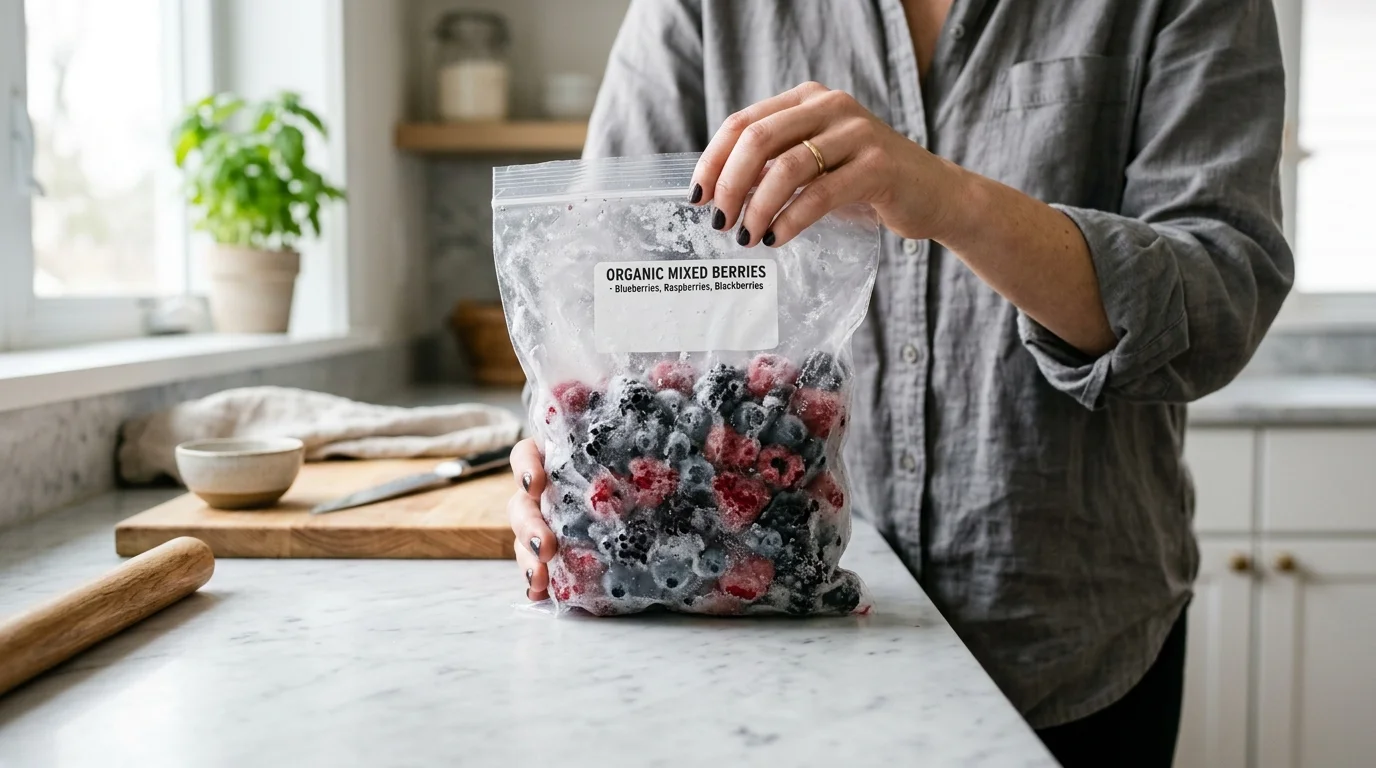
Frozen berries, sliced peaches, spinach, and sweet corn feature delicate cellular walls filled with natural water. Commercial flash-freezing preserves these structures by forming microscopic ice crystals that do not puncture plant cells. However, storing opened bags of produce in your freezer door reverses this benefit entirely.
The constant warm air exposure from opening the door melts those microscopic internal ice crystals. As the moisture refreezes, it forms large, jagged ice sheets inside the bag, destroying the plant tissue. When thawed, your berries turn into a soggy, watery pool instead of plump, juicy fruit. Vegetable pieces fuse into solid, impenetrable blocks of ice that are difficult to measure out for recipes.
Consulting resource guides at the National Center for Home Food Preservation highlights the importance of consistent freezing environments for preserving nutrient density and cellular structure in produce. Store your frozen fruits and vegetables in the main freezer compartment, preferably inside dedicated pull-out drawers or bins. Seal opened bags with sturdy freezer clips or transfer contents into heavy-duty, zip-top freezer bags with all excess air squeezed out.
5. Cooked Leftovers and Prepared Casseroles
Prepped meals, homemade soups, and leftover casseroles represent an investment of your time and money. Unfortunately, placing cooked leftovers in door racks often leads to premature spoilage and unpalatable meals. Leftovers contain mixed ingredients with varying moisture levels—cooked grains, tender vegetables, and savory sauces—all of which react differently to temperature changes.
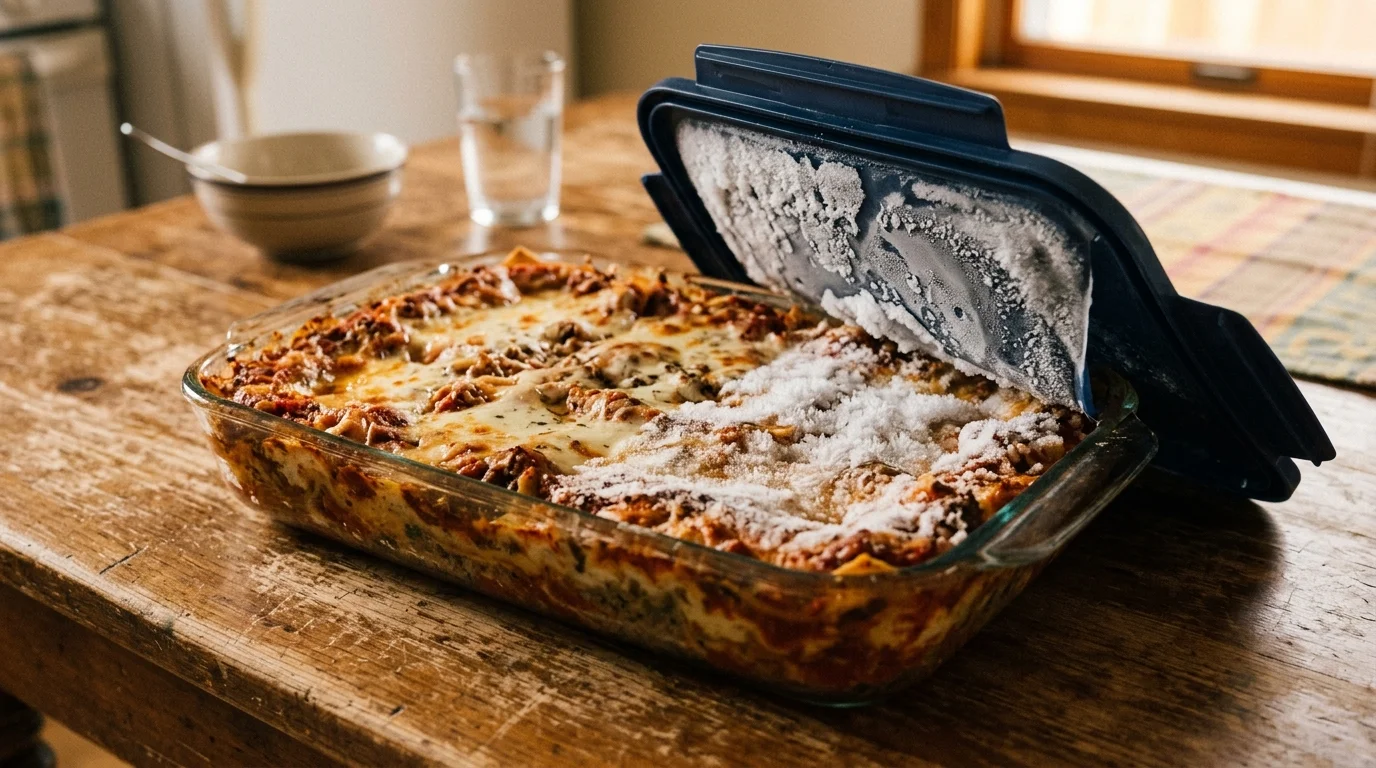
When stored in the door, condensation forms on the inside lid of your leftover containers during warm spikes. That trapped moisture freezes into a thick layer of frost right on top of your food, leaching flavor out of sauces and making grains soggy. Cooked proteins inside the container dry out quickly, taking on a stale, oxidized taste that reheating cannot fix. These are prime examples of foods that spoil in freezer door locations due to localized environmental stress.
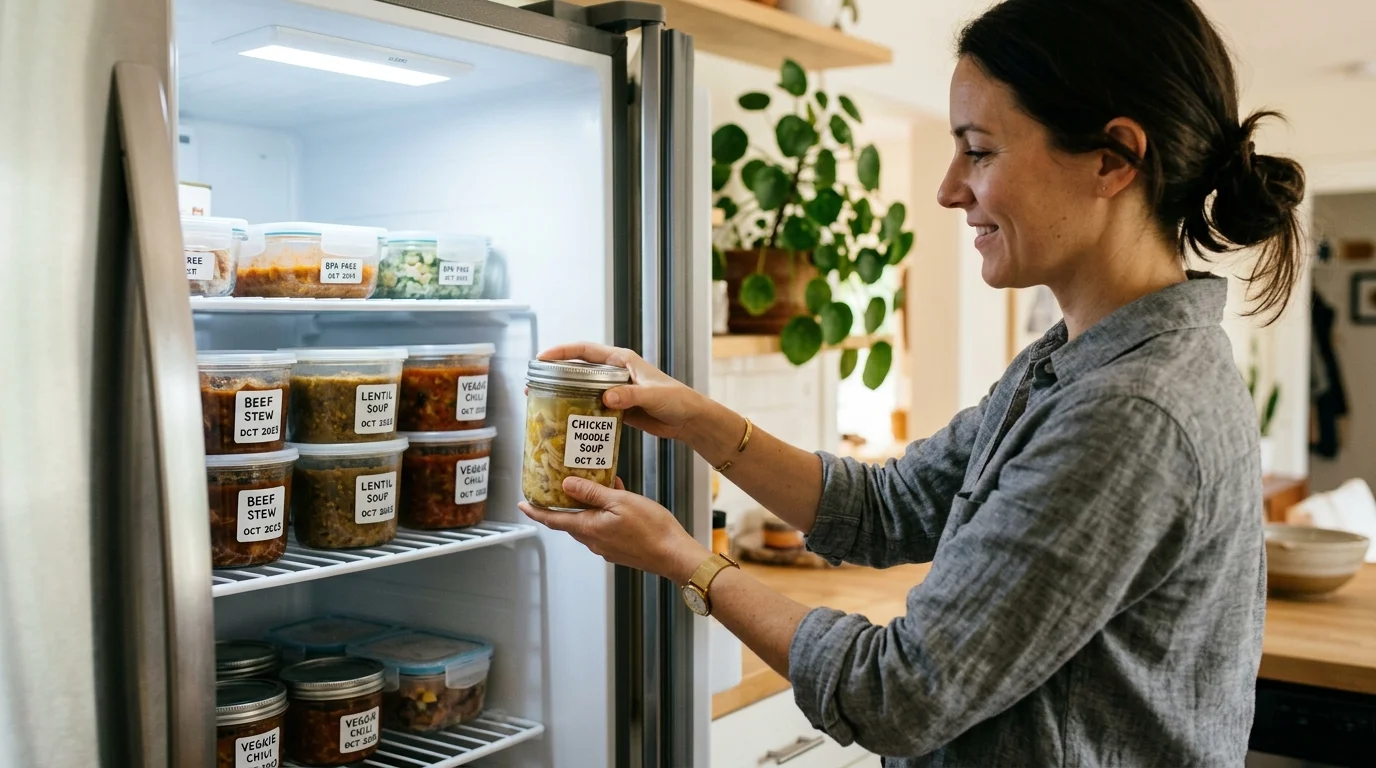
To preserve your home-cooked meals, let dishes cool completely in the refrigerator before moving them into the main freezer compartment. Store containers on upper or middle interior shelves where air circulates freely. Stacking flat, vacuum-sealed bags of soup or stew on main shelves saves space while keeping temperatures perfectly stable.
How Temperature Swings Cause Freezer Burn and Food Spoilage
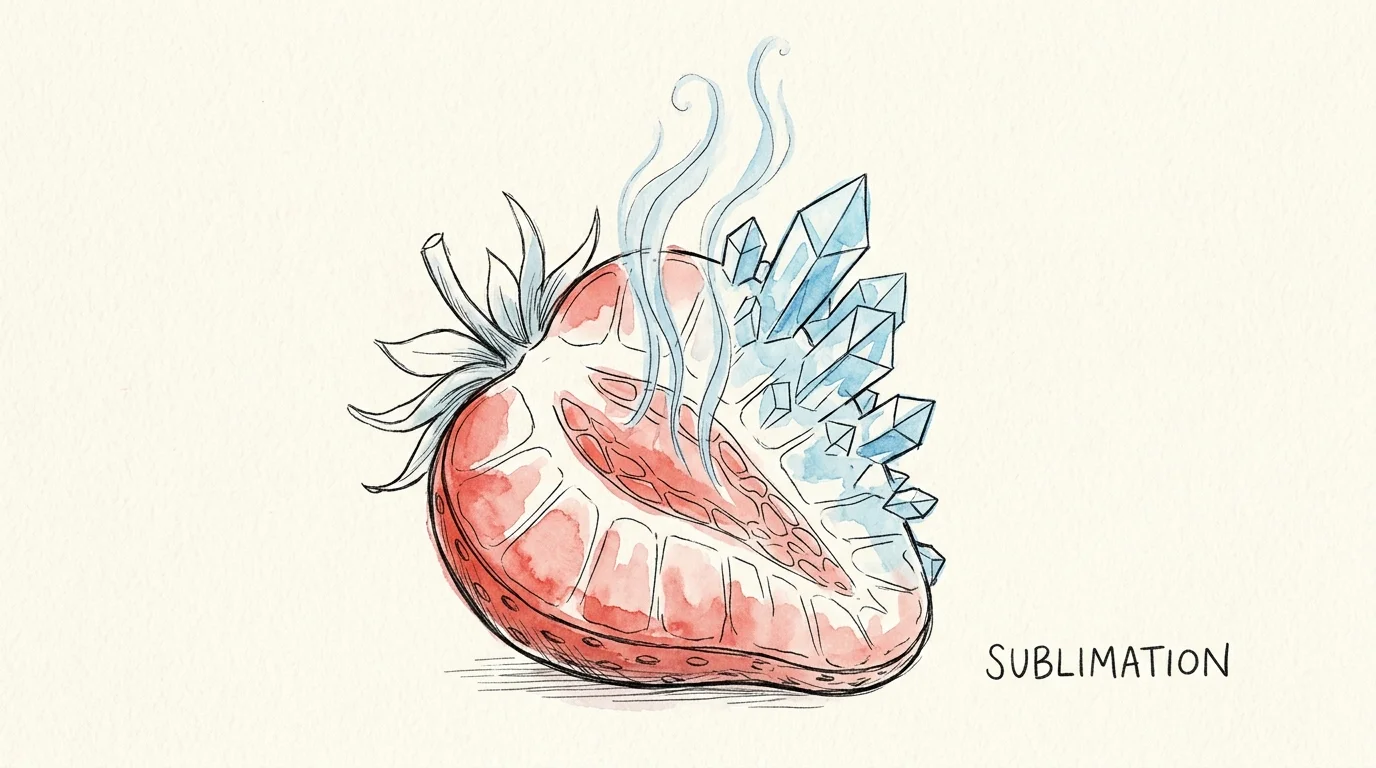
To understand why door storage fails, you must understand the scientific process of sublimation. Sublimation occurs when water turns directly from a solid state (ice) into a gas (water vapor) without becoming liquid first. Inside your freezer, warm air shocks cause ice inside your food to vaporize into dry freezer air.
When the door shuts and the cooling compressor kicks back on, that moisture settles back onto the surface of your food as tiny frost crystals. Every single time you open the door, this drying cycle repeats. Moisture leaves the interior of the food, leaving behind empty pockets in the food tissue. Oxygen enters those empty spaces, oxidizing fats and turning meat dark brown or gray.
According to safety resource updates from the U.S. Food and Drug Administration, freezer burn does not make food inherently unsafe to eat, but it severely degrades quality, taste, and nutritional integrity. Moving vulnerable items off door shelves prevents sublimation cycles, keeping your meals flavorful and nutrient-dense.
Smart Freezer Organization: What Actually Belongs in the Door
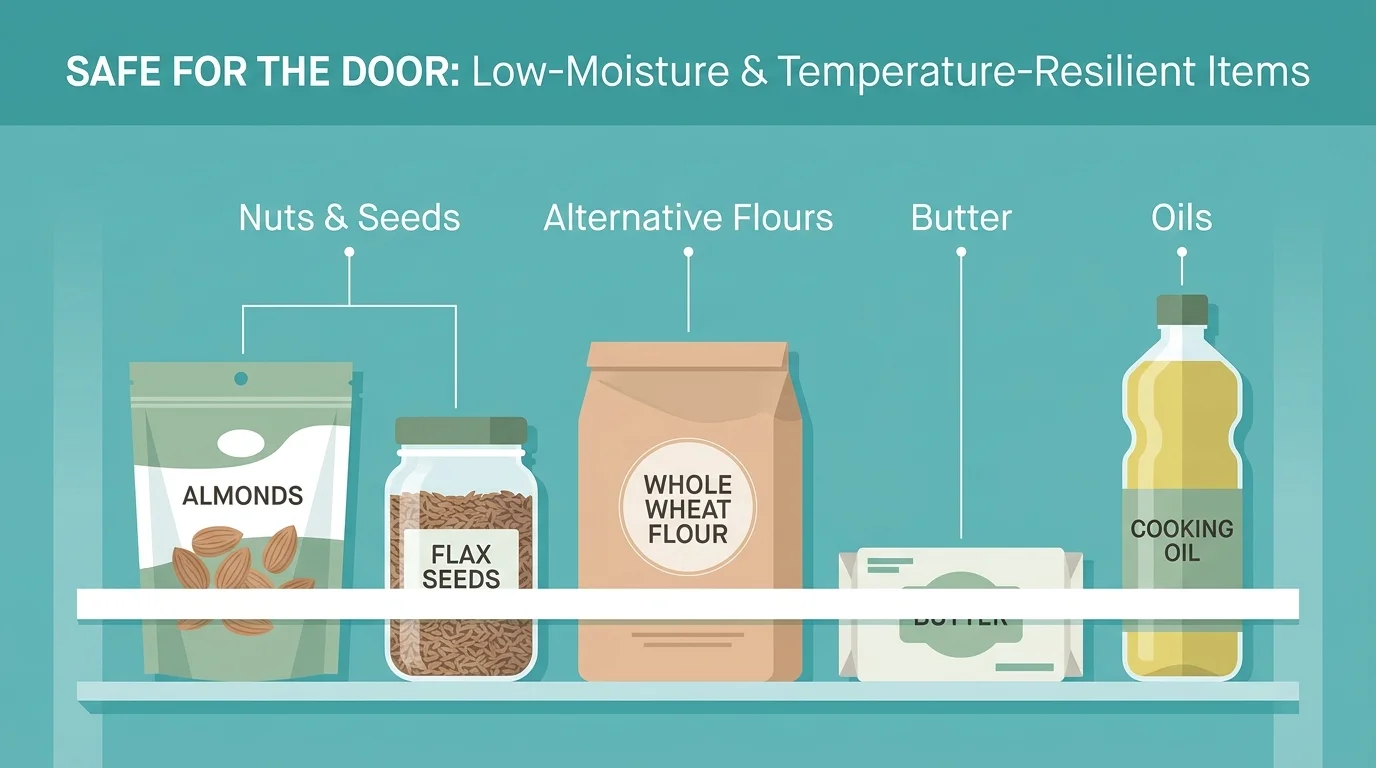
Because door shelves experience continuous temperature shifts, you should reserve these compartments exclusively for low-water, high-fat, or heavily processed items that resist structural damage. High-oil items do not freeze rock-hard, and low-moisture goods are immune to sublimation damage.
Shifting low-risk items into door shelves frees up valuable real estate on your main interior racks. Utilizing proper freezer organization tips transforms your appliance from a chaotic storage box into an efficient, easy-to-manage pantry system.
| Food Item | Safe for Door Storage? | Why It Works / Safety Note | Recommended Shelf Location |
|---|---|---|---|
| Ice Cream & Gelato | No | Melts easily; forms large ice crystals and grainy texture. | Back of middle shelf |
| Raw Poultry & Meat | No | Drip hazard; temperature spikes degrade protein fibers. | Bottom shelf in a rimmed tray |
| Nuts & Seeds | Yes | High oil content prevents freezing; low water prevents burn. | Door shelves |
| Whole Grain Flours | Yes | Low moisture level; door storage prevents oil rancidity. | Door shelves |
| Ice Packs & Gel Compresses | Yes | Designed for thermal fluctuations; easy quick access. | Door shelves |
| Butter Sticks | Yes (short term) | High fat content buffers against minor temperature shifts. | Upper door rack |
| Frozen Berries | No | Cell walls rupture; turns into watery mush when thawed. | Main drawer or middle shelf |
Step-by-Step Guide to Reorganizing Your Freezer for Maximum Freshness
Reclaiming control of your freezer takes less than twenty minutes, yet it yields immediate savings on your grocery bill. Follow this straightforward step-by-step process to eliminate freezer storage mistakes and optimize your cold storage layout.
- Empty the door completely: Take every container, bag, and box out of the door bins and set them on your kitchen counter.
- Audit for damage: Inspect each item for thick frost buildup, discolored surfaces, or stale smells. Discard any items that show severe freezer burn.
- Clean the door bins: Wipe down door shelves with a mixture of warm water and mild dish soap to remove sticky drips or frozen crumbs; dry thoroughly with a microfiber towel.
- Relocate sensitive items: Move all meats, dairy, ice cream, cooked leftovers, and frozen fruits onto the main interior shelves, grouping like items together.
- Stock the door correctly: Fill empty door racks with nuts, whole grain flours, butter, clear spirits, and reusable ice packs.
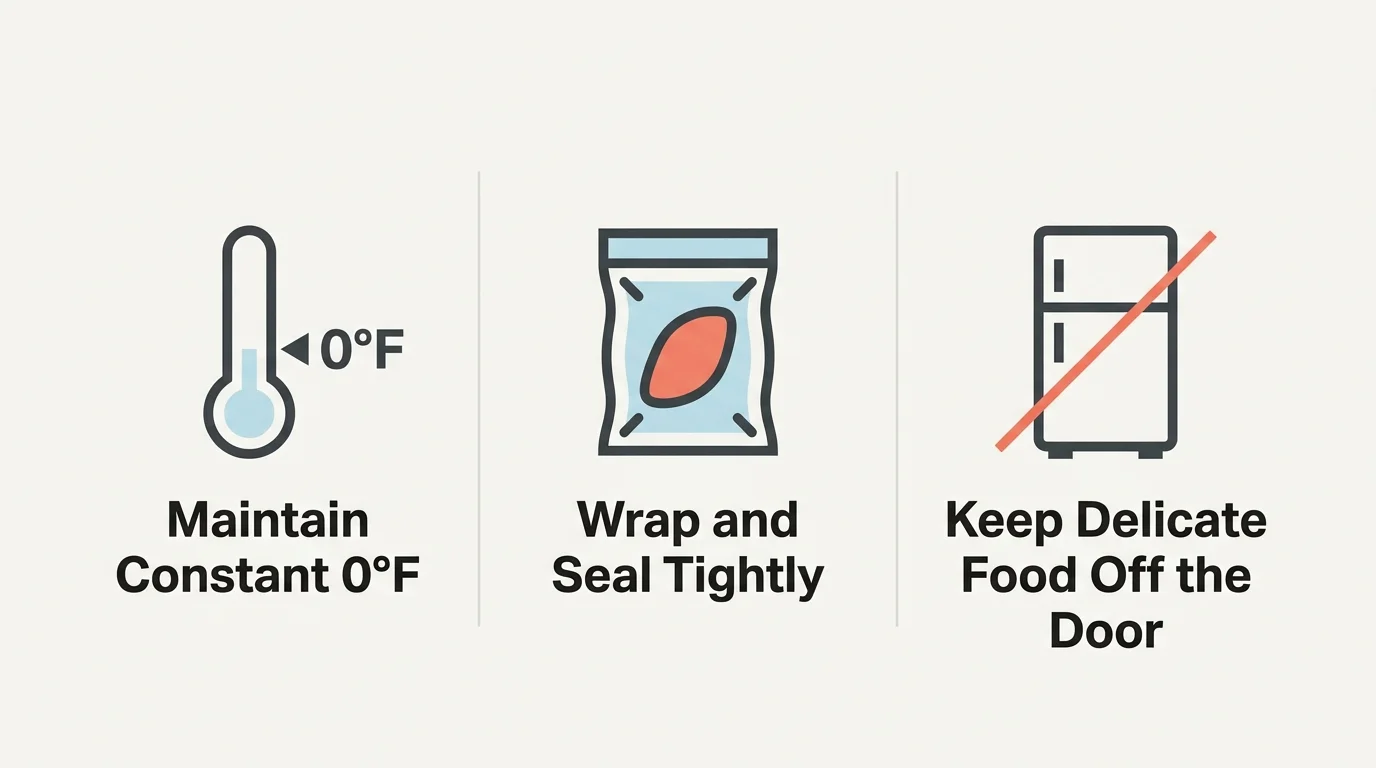
- Set a maintenance temperature: Check your internal freezer thermometer to confirm the appliance maintains a steady 0°F (-18°C) environment.
Checklist for Perfect Freezer Storage
Keep your appliance running efficiently and your food tasting fresh by implementing these core daily storage habits:
- Verify that your freezer temperature dial reads exactly 0°F (-18°C) or slightly below.
- Leave 2 inches of clearance near interior vents so cold air circulates freely around main shelves.
- Wrap raw meats in a layer of freezer paper followed by aluminum foil, or use a heavy-duty vacuum sealer.
- Label every freezer container with the food name and the date you packed it.
- Keep door openings brief—know what you need before swinging the door wide open.
- Place older items toward the front of main shelves and newer items toward the back to ensure smooth stock rotation.
Take five minutes right now to open your freezer door and inspect what is currently sitting on those front shelves. Move your raw meats to the bottom rack, relocate your ice cream to the back of a middle shelf, and fill those door racks with baking flours or ice packs instead. Making these quick adjustments today protects your food investments, improves daily meal preparation, and gives you a cleaner, calmer kitchen routine.