Streamlining your home cleaning routine means abandoning the time-consuming chores that actually make your space dirtier over time. You likely spend hours scrubbing, spraying, and wiping your home each week under the assumption that more effort equals better results. Unfortunately, many common cleaning habits leave behind sticky residues, spread bacteria, or force you to redo the exact same tasks a few days later. Relying on outdated methods destroys your efficiency and exhausts your energy. By identifying and correcting these counterproductive techniques, you reclaim your weekend and maintain a pristine living space with significantly less labor. Evaluate your current approach to organization and sanitation to discover exactly where you are wasting your valuable time.
Habit 1: Using Too Much Cleaning Product
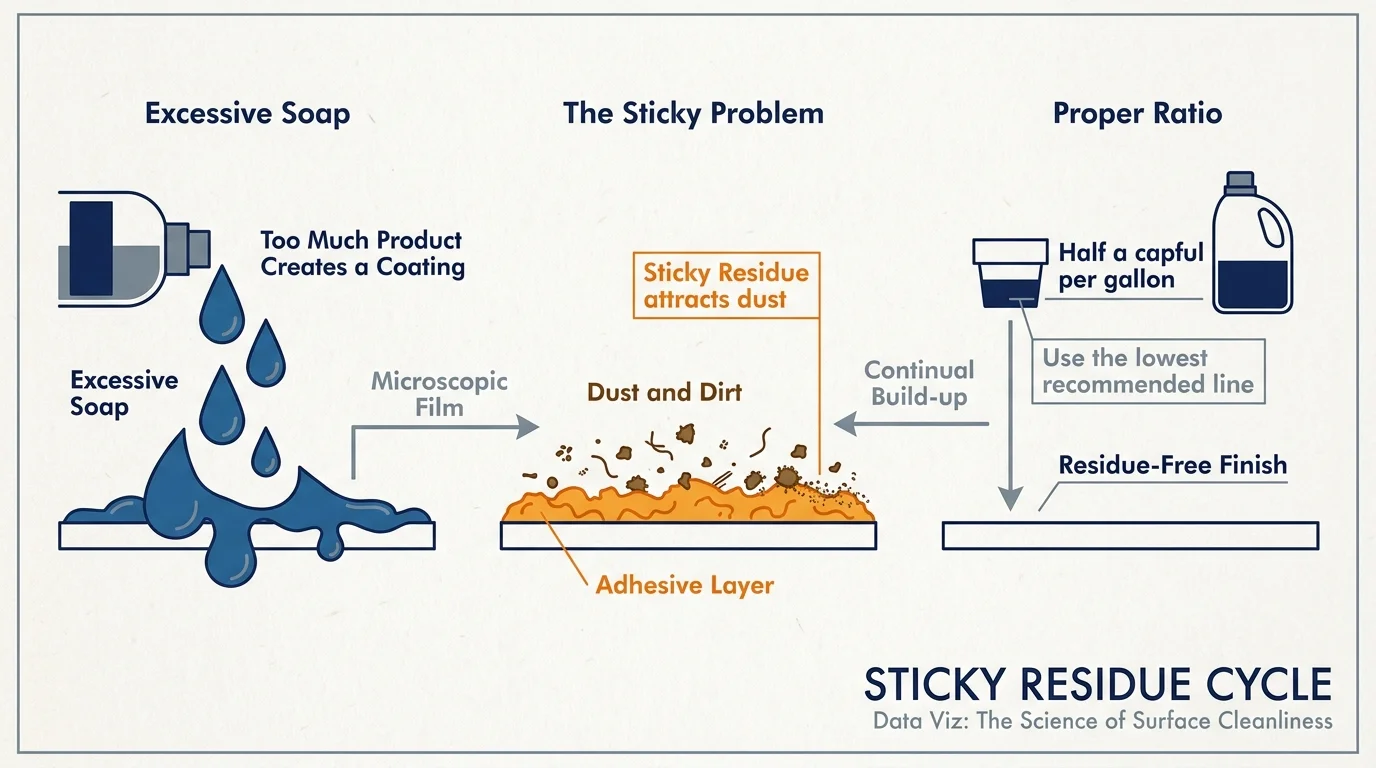
You likely believe that adding an extra splash of floor cleaner or a heavier scoop of laundry detergent will power through grime faster. In reality, using excessive amounts of cleaning product actively sabotages your efforts and forces you to clean more frequently. Manufacturers formulate soaps and detergents to bind with dirt, grease, and oils so water can wash them away. When you apply more soap than your water can fully rinse, you leave behind a microscopic, sticky residue.
This lingering film acts like an adhesive across your floors, kitchen counters, and clothing fibers. According to professional cleaning experts, soap residue attracts dust and dirt almost immediately after you finish mopping or wiping down a surface. You will notice your floors feeling tacky underfoot or your dark clothes looking dull and stiff. If you rent a carpet cleaner, pouring extra shampoo into the tank guarantees the fibers will attract dirt the moment they dry. Always prioritize thorough rinsing over heavy soap application.
Furthermore, excess detergent destroys your washing machine over time. The leftover suds accumulate in the drum and hoses, creating a damp environment that breeds mold and mildew. You end up having to run empty sanitizing cycles just to remove the foul odor from your clothes. To break this habit, start measuring your products precisely. If a concentrated floor cleaner calls for half a capful per gallon of water, adhere strictly to that ratio. For laundry, use the lowest recommended line on the detergent cup; modern high-efficiency machines require a surprisingly small amount of liquid to clean a full load. When wiping down heavily soiled surfaces, follow up your soapy pass with a clean cloth dampened only with warm water. This crucial rinsing step removes the leftover chemical film, ensuring your surfaces remain clean and streak-free for days longer.
Habit 2: Spraying Surfaces Directly Instead of Your Cloth
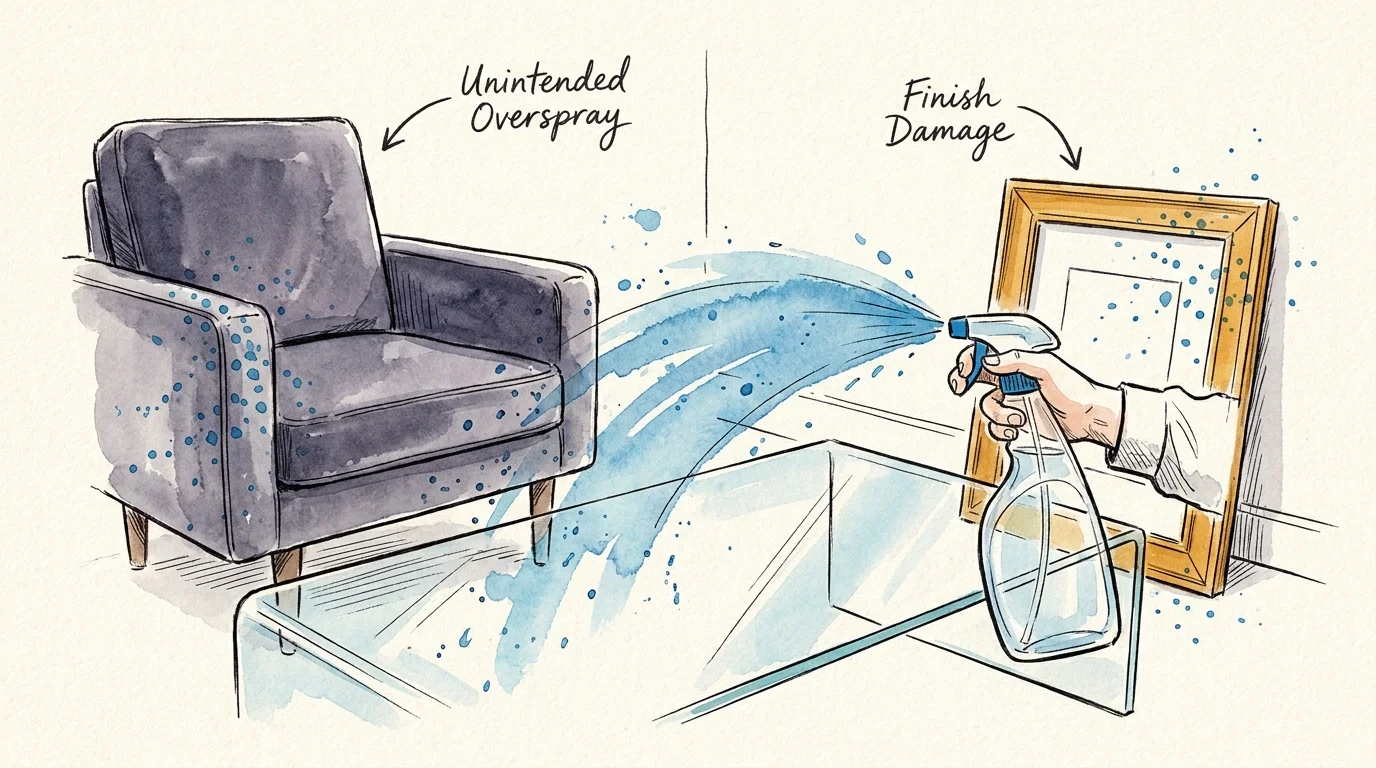
The satisfying squirt of a spray bottle right onto a dusty coffee table feels like progress, but it frequently creates more work than it eliminates. Spraying a surface directly causes microscopic droplets to disperse into the air and settle on surrounding areas. This phenomenon—known as overspray—means your glass cleaner ends up coating the wooden frame of your mirror, or your harsh bathroom bleach mists onto your decorative shower curtain. When you mist a glass table, the surrounding hardwood chairs inevitably get coated in chemical droplets. You then have to walk over, inspect the wood, and carefully buff out the spots before they strip the finish. This chain reaction turns a simple one-minute task into a ten-minute ordeal.
Furthermore, applying liquid directly to porous materials or electronics allows the cleaner to seep into unsealed seams, potentially causing permanent water damage or short circuits. Modern flat-screen televisions and computer monitors feature delicate anti-glare coatings; a direct blast of harsh ammonia-based cleaner will strip this coating permanently. You waste time tracking down stray droplets and repairing the damage they cause.
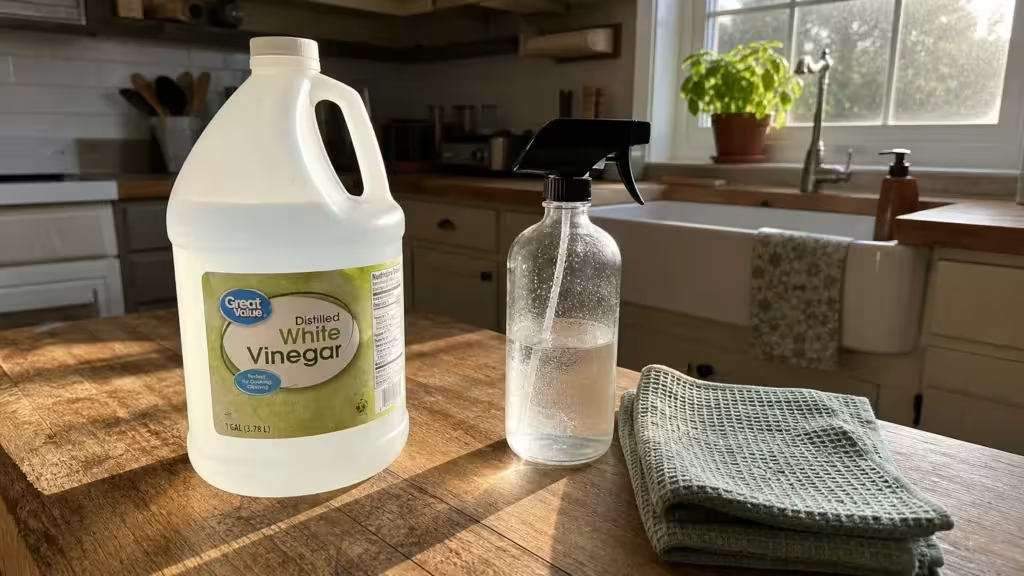
You can easily fix this inefficiency by spraying your cleaning solution directly onto your cloth instead of the surface. Holding a microfiber cloth in one hand and your spray bottle in the other allows you to control exactly where the chemicals go. Lightly misting your microfiber cloth ensures the screen or wood receives just enough moisture to lift fingerprints without causing irreversible damage. Microfiber proves especially effective for this method; its unique woven structure traps dirt and moisture within the fabric rather than pushing it around. By altering your technique, you protect your furniture, conserve your cleaning supplies, and eliminate the need to wipe down adjacent surfaces caused by careless overspray.
Habit 3: Washing Windows on a Warm, Sunny Day
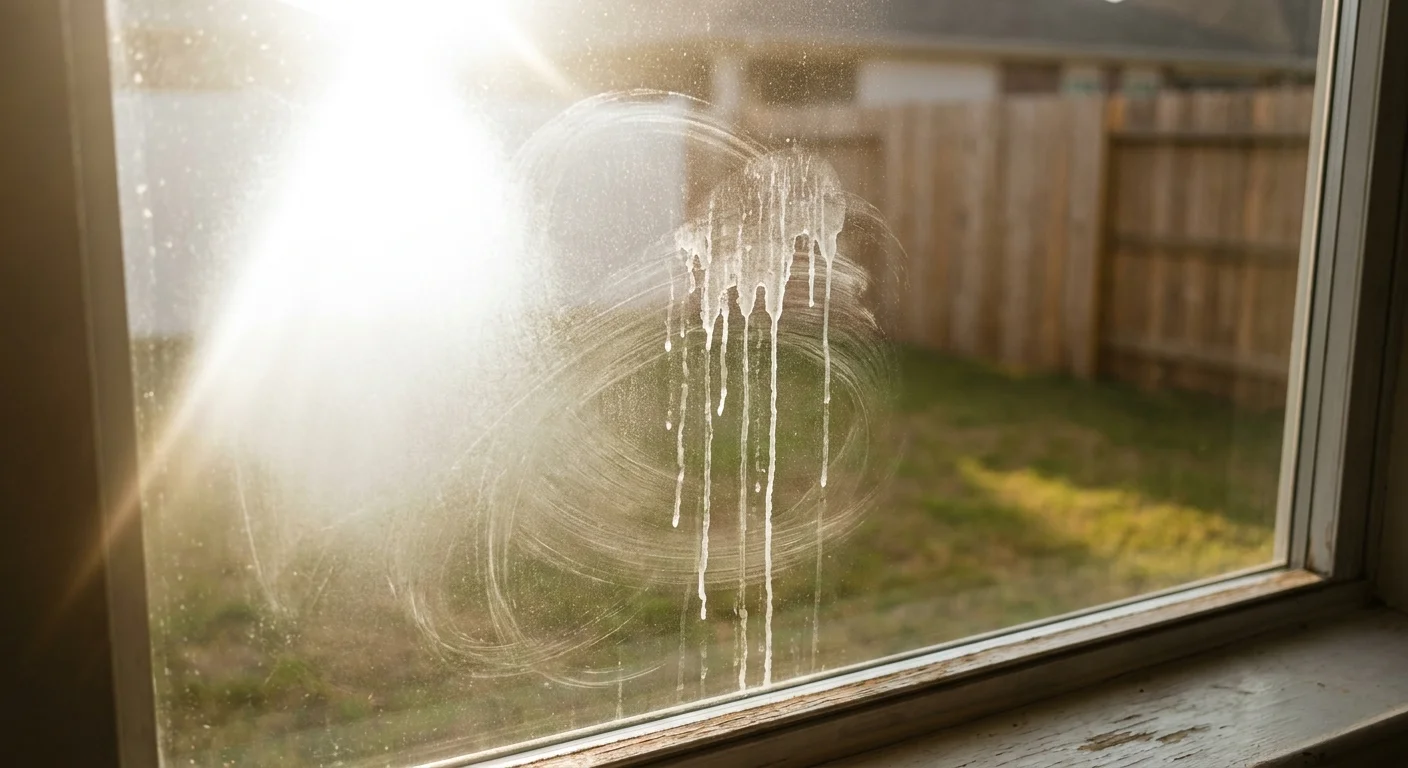
A bright, clear afternoon often motivates homeowners to finally tackle their grimy exterior windows. Unfortunately, tackling this chore in direct sunlight guarantees you will have to do it all over again the next day. The heat from the sun dramatically raises the temperature of the glass panes. When you apply your water and vinegar solution or commercial glass cleaner to a hot window, the liquid evaporates within seconds.
This rapid drying process prevents you from wiping away the dissolved dirt, leaving behind a heavily streaked, cloudy mess. Cleaning experts and window manufacturers agree that direct sunlight acts as a massive hindrance to a streak-free shine. To achieve crystal-clear glass on the first try, plan your window washing around the weather forecast. Overcast, dry days provide the ideal conditions, giving you ample time to apply the cleaner, agitate the dirt, and squeegee the moisture away before it sets.
If you must wash windows on a sunny day, work during the early morning or late evening hours when the sun sits low in the sky and the temperatures drop. Professional window washers rely on the S-technique for a reason. Starting at the top left corner of the pane, you glide the squeegee horizontally, pivoting at the edge to pull the water down and back across the glass in a continuous S-pattern. This unbroken motion prevents the vertical drip lines that plague amateur window cleaners. Wiping your squeegee blade with a dry rag after every single pass prevents dirty water from dripping back onto your freshly cleaned glass, saving you from frustrating touch-ups.
Habit 4: Using the Same Sponge for the Entire House
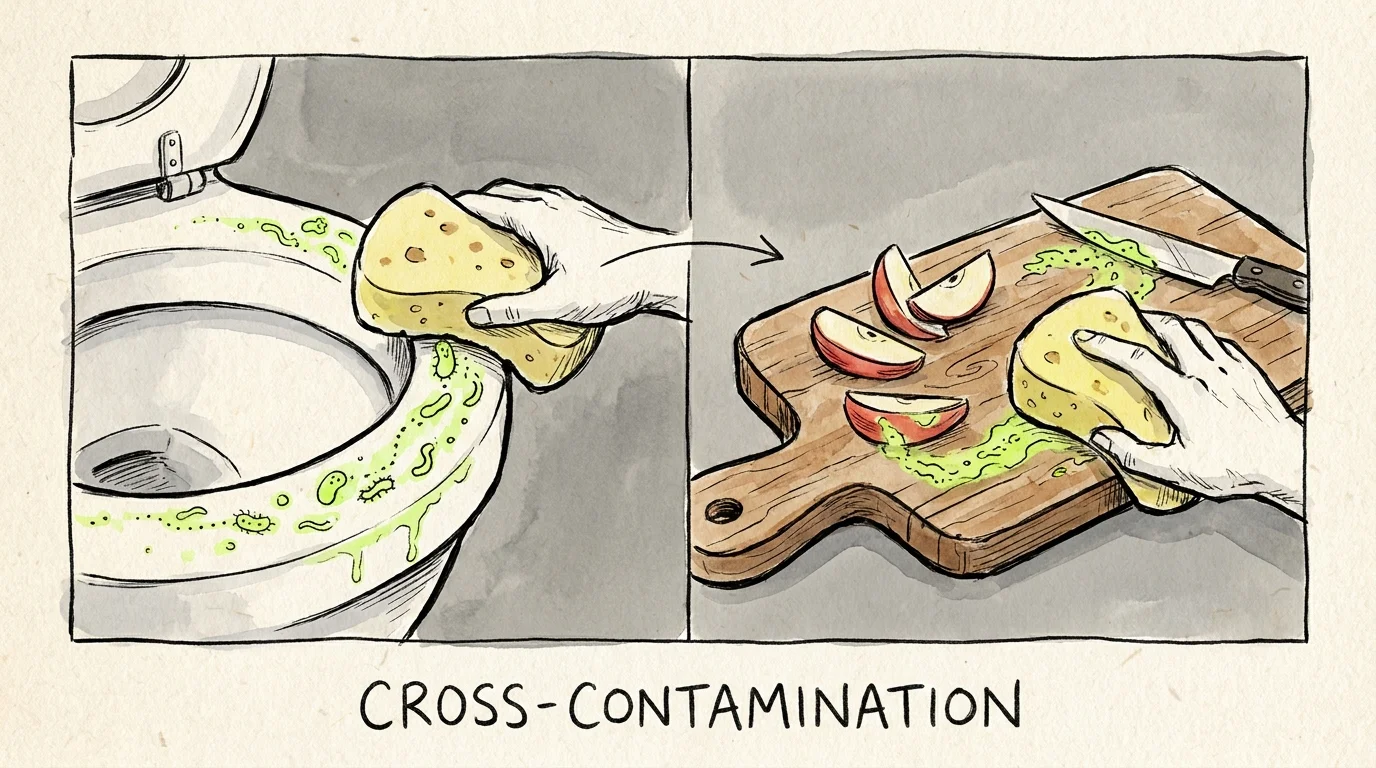
Carrying a single damp sponge from room to room feels like an efficient way to knock out your weekly chores, but you are actually engaging in dangerous cross-contamination. Sponges possess a highly porous structure designed to retain moisture and absorb spills. This same design makes them the perfect breeding ground for microscopic pathogens.
A comprehensive study from researchers at Clemson University revealed that a standard kitchen sponge can harbor millions of bacteria, including coliform bacteria, which indicates fecal contamination. When you use that sponge to scrub your kitchen sink and then immediately carry it over to wipe down the dining room table, you drag those pathogens across the exact surfaces where you eat. You might assume that dipping the sponge in hot soapy water resets its cleanliness; unfortunately, this creates a false sense of security. Pathogens cling to the inner pores of the material. When you squeeze the sponge over a new surface, you release a fresh wave of microscopic contaminants. You waste time because instead of sanitizing your home, you are actively spreading a thin layer of bacteria that requires a secondary disinfection pass.
Many people attempt to extend a sponge’s lifespan by microwaving it or boiling it in water. While this kills some surface bacteria, studies show that the most resilient, dangerous strains survive the heat and rapidly multiply to fill the empty space. Protect your household and streamline your routine by assigning specific cleaning tools to distinct zones. Purchase a multipack of microfiber cloths in different colors to establish a visual boundary for your supplies. Use blue cloths exclusively for the kitchen, red cloths for the bathrooms, and yellow cloths for general dusting in the living areas. Throw these cloths directly into the washing machine on a hot sanitizing cycle after use. If you prefer traditional sponges for dishwashing, replace them every single week to prevent bacterial buildup, and never let them touch your food preparation counters.
Habit 5: Vacuuming Before You Dust the Room
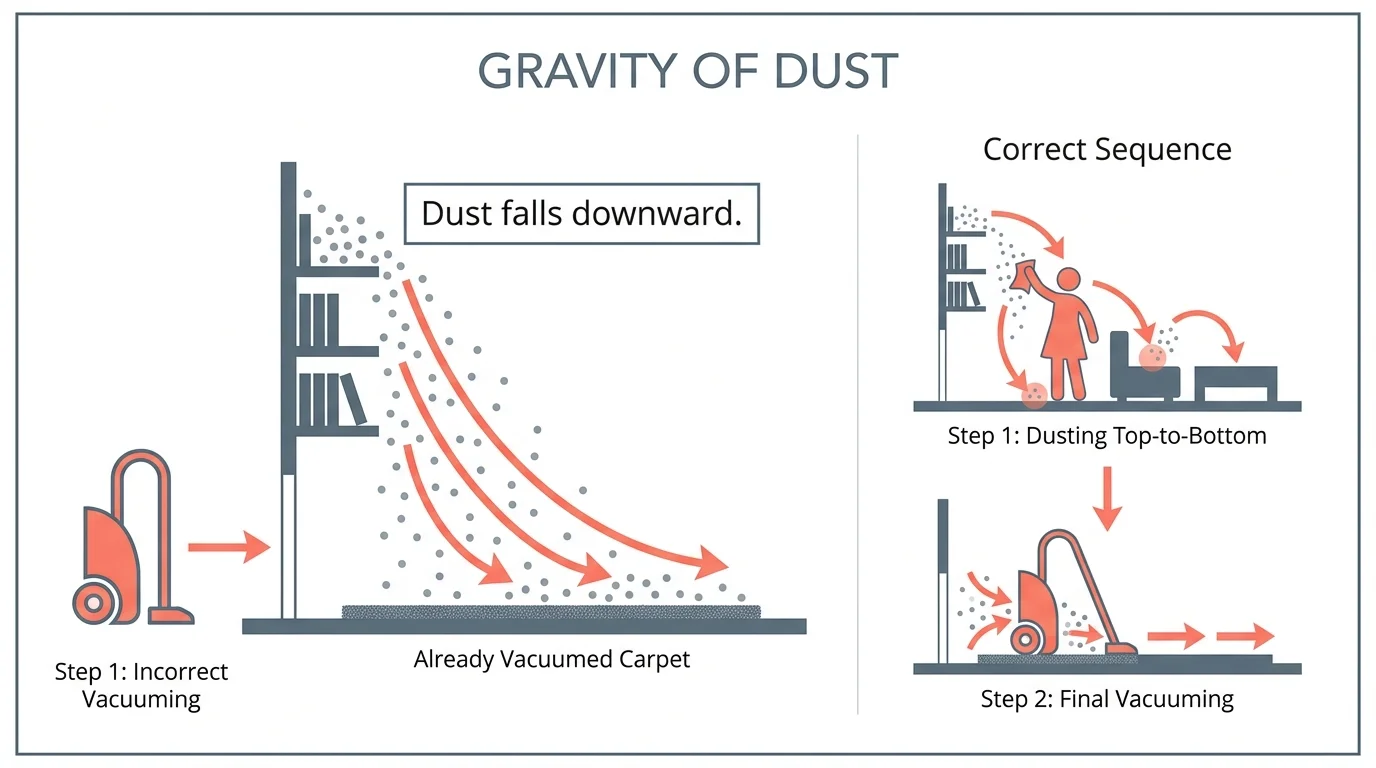
Defying the laws of physics guarantees you will spend your weekend cleaning the same rooms twice. Gravity pulls dust, pet dander, and debris straight down to the floor. If you start your routine by carefully vacuuming your carpets and mopping the hardwood, you temporarily achieve a spotless foundation. However, the moment you grab your duster to wipe down the ceiling fan blades, bookshelves, and windowsills, you knock a fresh shower of dirt directly onto your clean floors.
Ceiling fans are notorious dust traps. When you wipe a blade, thick clumps of gray dust inevitably plummet to the furniture and rugs below. You now face a frustrating choice: drag the heavy vacuum back out of the closet or live with dirty floors for another week. Establishing a strict top-to-bottom workflow eliminates this redundant labor entirely. Force yourself to clean the highest points in the room first, allowing the loose debris to settle onto the floor where it belongs. Follow this exact progression to maximize your efficiency:
- Clear away cobwebs from the crown molding and dust the ceiling light fixtures.
- Wipe down the tops of door frames, tall bookshelves, and wall-mounted art.
- Clean your mid-level surfaces, including countertops, desks, and end tables.
- Brush crumbs off the couches and chairs onto the floor.
- Perform your final sweep, vacuum, and mop to capture all the fallen debris at once.
By organizing your tasks vertically, every swipe of your duster pushes the mess toward its final destination. You only need to run your vacuum once, cutting your active cleaning time drastically and saving your energy for other tasks.
Habit 6: Pre-Rinsing Dishes Before Using the Dishwasher
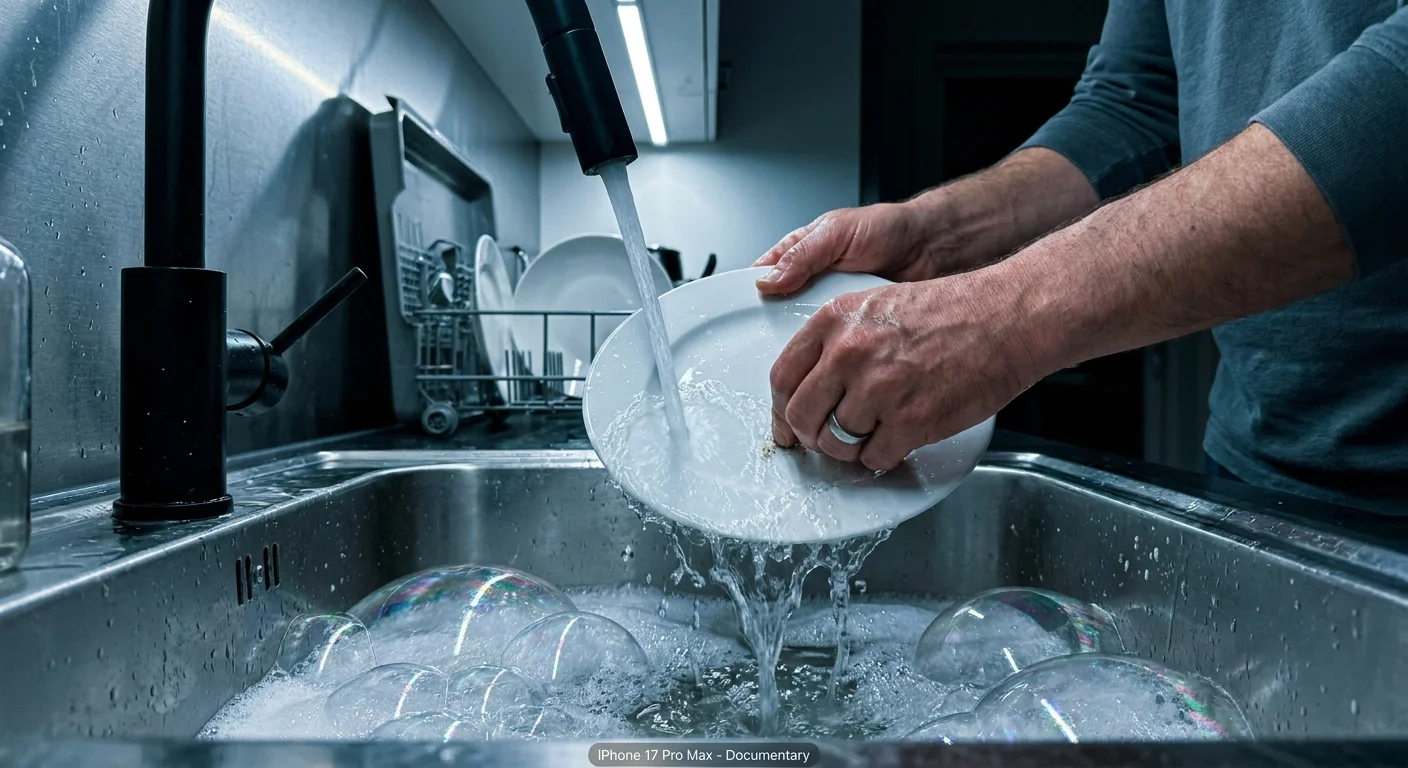
Standing at the kitchen sink to meticulously scrub every plate before placing it into the dishwasher remains one of the most persistent and unnecessary household chores. Leaving a sink full of soaking dishes often disguises itself as a necessary cleaning step, but it usually serves as a procrastination tactic. You tell yourself the lasagna pan needs to soak overnight, creating a massive visual clutter in your kitchen. The reality is that modern dishwashers handle baked-on cheese and dried sauces effortlessly.
Many older adults adopted this manual scrubbing habit decades ago when earlier appliance models lacked the power to handle heavy grease. Today, modern machines feature advanced soil sensors and heavy-duty water jets that render the pre-rinse entirely obsolete. More importantly, pre-rinsing actually degrades the performance of your cleaning supplies. The powerful enzymes inside premium dishwasher detergent tablets require food particles to attach to in order to activate properly. When you load plates that already look spotless, the enzymes have nothing to break down; instead, they can leave a chalky, cloudy film across your delicate glassware.
Furthermore, running the kitchen faucet to rinse a large dinner load wastes gallons of fresh water and extends your evening cleanup time by ten to fifteen minutes. You can reclaim that lost time tonight by trusting your appliances to do the heavy lifting. Simply use a fork to scrape the large, solid chunks of food directly into the garbage can or compost bin. Load the sticky, sauce-covered plates straight into the racks. If you notice your dishes emerging less than perfectly clean, the solution involves checking the machine’s internal trap filter for clogs. Located at the bottom of the dishwasher tub, this cylindrical screen catches the large food particles you scraped off. Removing this filter once a month and rinsing it under hot water maintains your machine’s efficiency far better than manually scrubbing your plates every night.
Habit 7: Storing All Cleaning Supplies in One Central Location
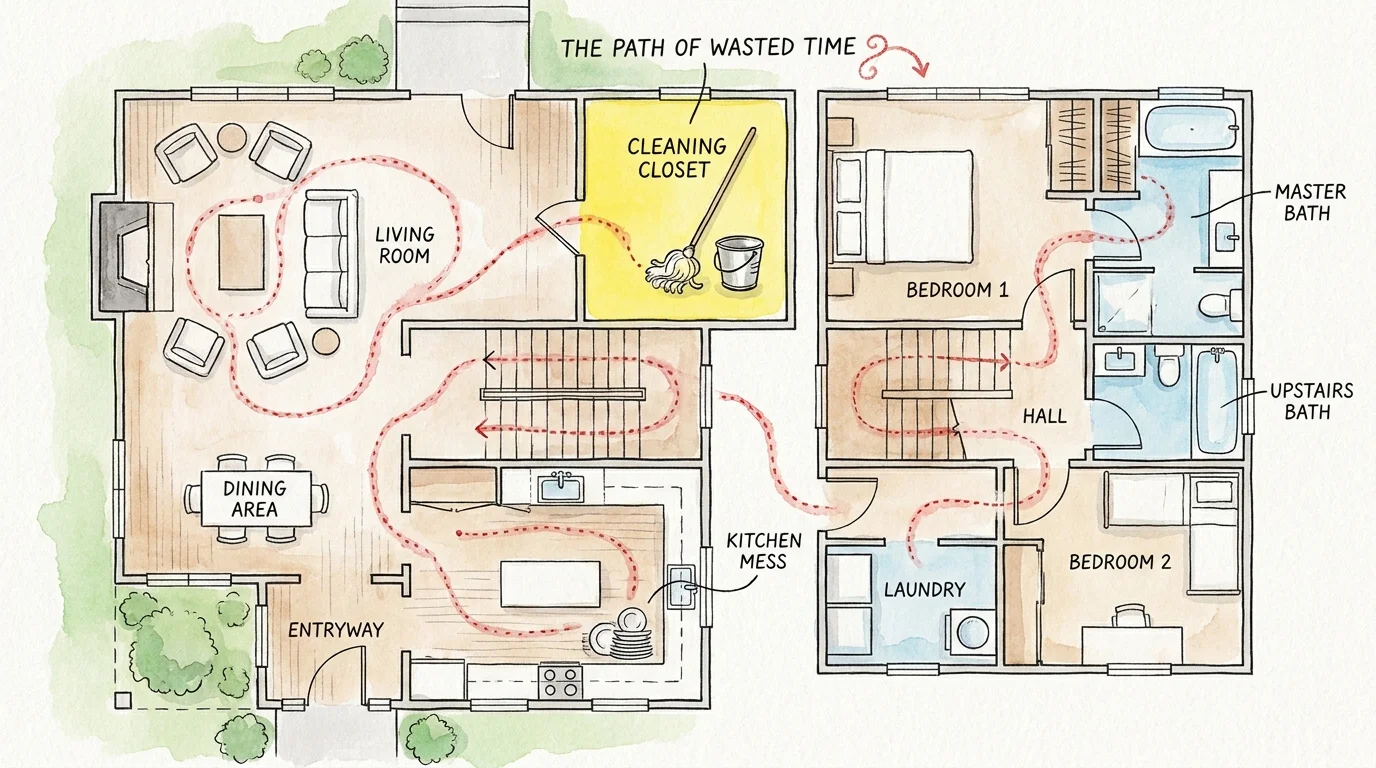
Designating a single hallway closet or under-sink cabinet as the central hub for all your cleaning supplies severely disrupts your momentum. When you notice toothpaste splatters on the upstairs bathroom mirror, walking all the way down to the kitchen to fetch the glass cleaner feels like an exhausting detour. This physical friction encourages procrastination; you tell yourself you will clean it later, allowing the mess to harden and become more difficult to remove.
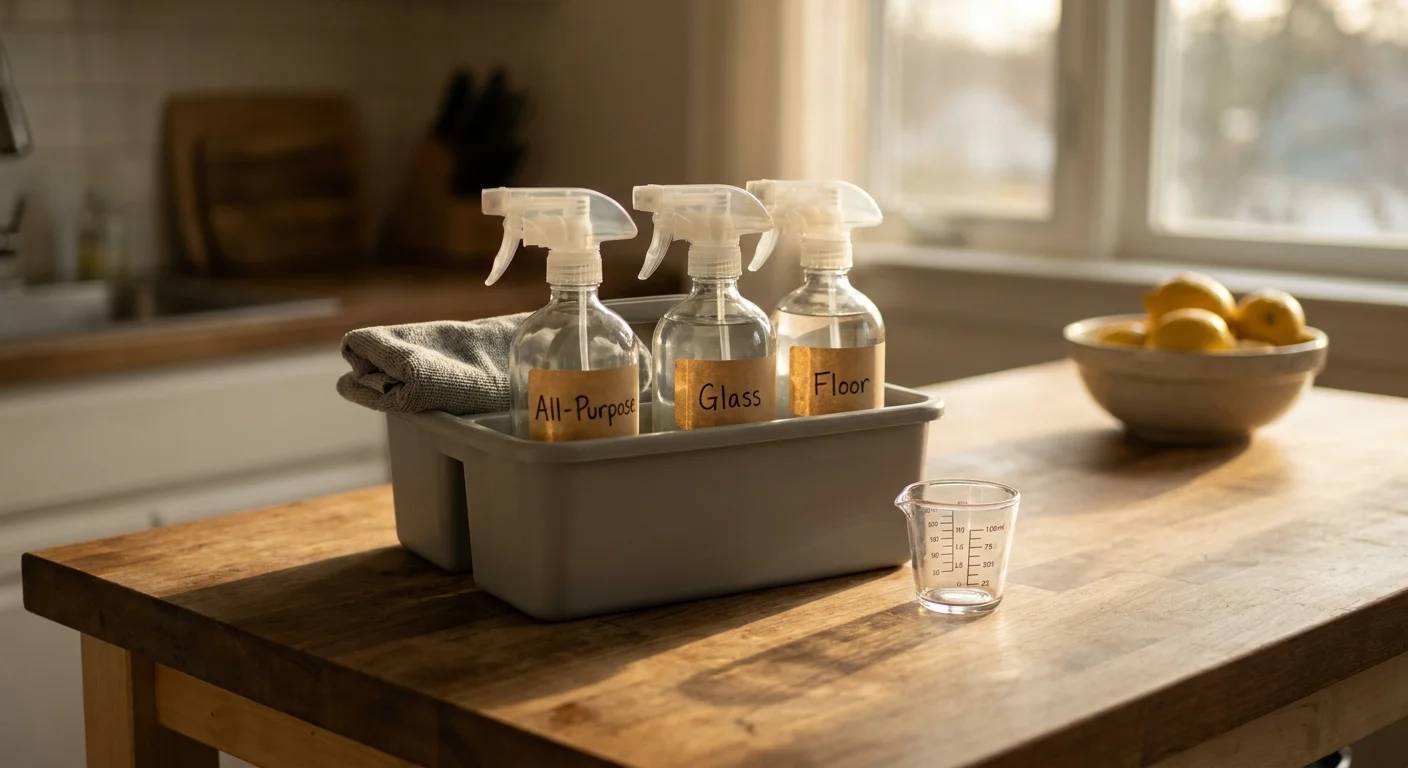
When you finally dedicate a day to deep cleaning, you spend a significant portion of your energy just carrying heavy bottles and caddies back and forth across your house. While a large master caddy makes sense for a professional cleaner tackling an entire house in one session, homeowners benefit far more from localized convenience. You can instantly bypass this bottleneck by creating localized mini-caddies for each major zone in your home. Purchasing duplicate bottles of your most-used sprays costs very little upfront but saves you countless hours of walking over the years. Store these small kits discreetly under the sinks or on utility shelves exactly where you use them.
| Household Zone | Essential Supplies for the Localized Caddy |
|---|---|
| Kitchen | Multi-surface degreaser, dish soap, fresh microfiber cloths, heavy-duty scrub brush |
| Bathrooms | Toilet bowl cleaner, glass spray, tub and tile foaming scrub, disposable sanitizing wipes |
| Laundry Room | Enzyme stain remover spray, lint roller, detail brush for mud, gentle delicate wash |
| Living Areas | Wood polish, extendable dusting wand, upholstery spot cleaner |
If your home spans multiple levels, you absolutely need duplicate supplies on each floor. A bathroom caddy should live under the primary bathroom sink, containing your toilet bowl cleaner, glass spray, and foaming tub scrub. When you finish showering and notice soap scum on the tiles, you simply reach under the sink and handle the problem in thirty seconds. Having the right tools within arm’s reach empowers you to handle minor spills and smudges the exact moment they happen. A ten-second wipe down prevents the need for a grueling, hours-long scrubbing session at the end of the month.
Take Action Today
Knowledge alone will not keep your house tidy; you must physically alter your routine to see tangible benefits. Pick just one of these inefficient habits and banish it from your life this week. If you want an immediate win, go to your kitchen right now, scrape your dinner plates directly into the trash, and load them into the dishwasher without turning on the faucet. By trusting your detergent and stepping away from the sink, you instantly buy back ten minutes of your evening.