
You can eliminate the overwhelming pile of clean clothes taking over your living room by shifting how you approach the wash cycle. Most people dread laundry day because the final step—folding and putting away—creates a frustrating bottleneck that lasts all week. By adopting a system that matches your energy levels and available time, you stop the cycle of endless sorting and re-washing wrinkled loads. Whether you prefer the daily micro-habit approach or a structured weekly blitz, specific routines prevent garments from languishing in baskets. Implementing a streamlined laundry process recovers hours of lost time, protects the fabric of your favorite garments, and restores a sense of order to your home.
System 1: The One-Touch Daily Micro-Load
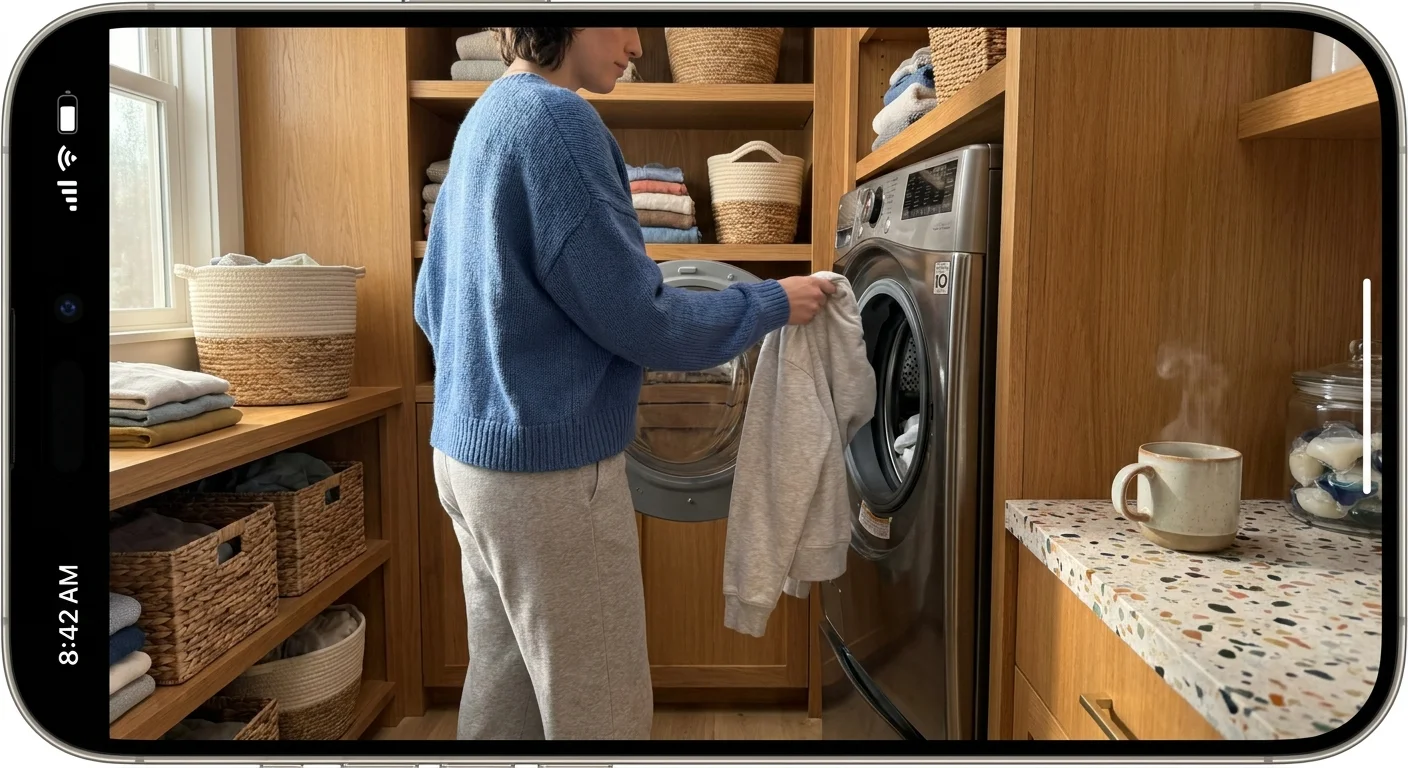
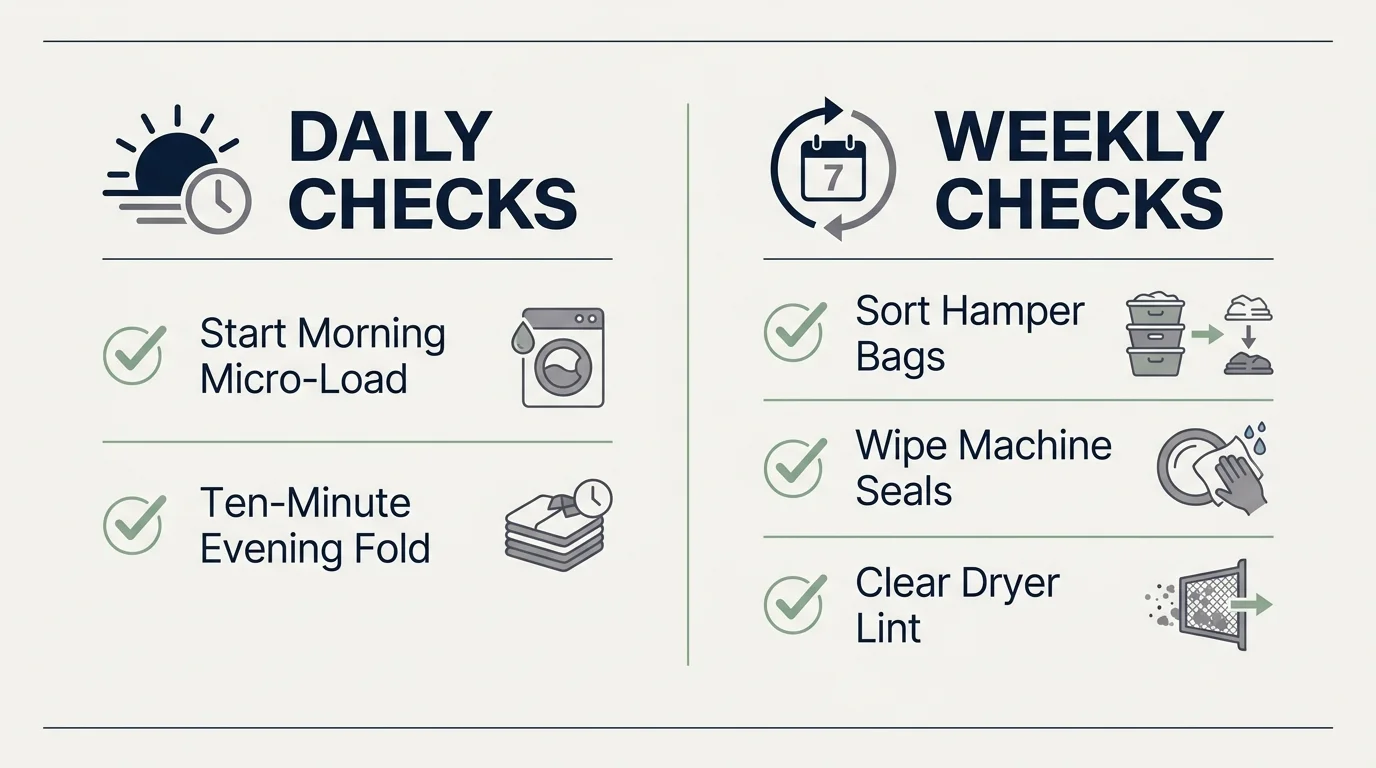
If you wait until Saturday to tackle the entire household’s garments, you create an impossible mountain of work that ruins your weekend. The daily micro-load system breaks this massive chore down into a highly manageable routine that integrates seamlessly into your existing schedule. You place one small load into the washing machine each morning before brewing your coffee. By the time you finish your workday or afternoon activities, you transfer the damp garments directly to the dryer. After dinner, you spend exactly ten minutes folding and putting away that single load.
If you commute to an office, you can leverage the delay-start feature found on most modern washing machines. You load the drum and add your detergent the night before, setting the timer so the wash cycle finishes exactly when you wake up. This allows you to quickly transfer the damp items to the dryer before walking out the door. When you return home, the garments are waiting for a brief ten-minute folding session. A typical micro-load requires fewer than three minutes to sort and start, one minute to transition to the dryer, and a short sprint to fold. By processing small batches, you never confront a daunting pile that demands hours of uninterrupted attention. Over the course of a month, this consistency yields completely empty hampers and permanently clear living room furniture.
Many homeowners resist daily washing because they fear exorbitant utility bills; however, adjusting your water temperature settings mitigates this concern completely. According to the U.S. Department of Energy, water heating consumes about 90 percent of the energy it takes to operate a clothes washer. Washing your clothes in cold water drastically reduces your energy usage while maintaining fabric integrity. Modern detergents formulate specifically for cold water efficacy, ensuring your garments emerge perfectly clean without the heavy financial or environmental cost of running daily hot-water cycles.
System 2: The Sort-as-You-Go Basket Strategy
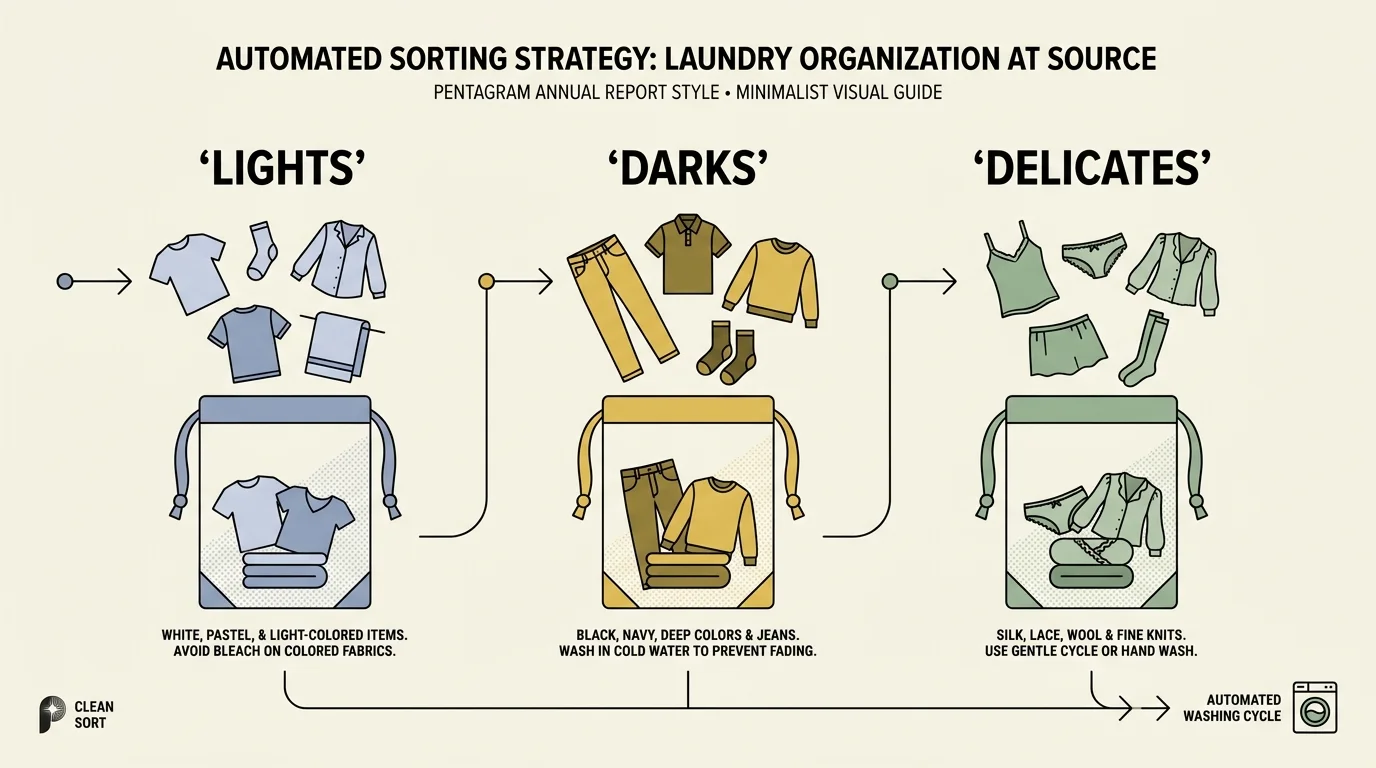
A major roadblock in the laundry process occurs before the washing machine even turns on. Dumping mixed hampers onto the floor to separate darks, lights, and delicates wastes precious time and visually clutters your space. You can bypass this tedious step entirely by implementing a multi-compartment sorting station at the exact point where you undress. When you utilize a three-bag rolling cart in your bedroom or primary bathroom, you sort your garments automatically as you discard them. Once a specific bag reaches capacity, you know exactly which load to run next.
To ensure household compliance, prominently label each section of your sorting cart. When family members know exactly where to place their dark denim versus their white athletic socks, you eliminate the mental friction of decision-making. You might also want to designate a small, separate bin specifically for heavily soiled yard-work clothes or delicate items that require hand washing. This separation prevents cross-contamination and ensures a muddy pair of jeans never ruins a pristine blouse during a mixed wash cycle.
This pre-sorting method not only speeds up the washing process but also protects your physical health by minimizing unnecessary bending and lifting. Older adults and those dealing with mobility issues often suffer lower back strain from hauling awkward, heavy baskets across the house. The Occupational Safety and Health Administration notes that reducing the need to lift heavy items from floor level—such as using spring-loaded platforms or wheeled carts—prevents musculoskeletal strains. By rolling your pre-sorted garments directly to the machine, you eliminate the physical strain and streamline the transition from dirty to clean.
System 3: The Immediate Hanger Transfer Method
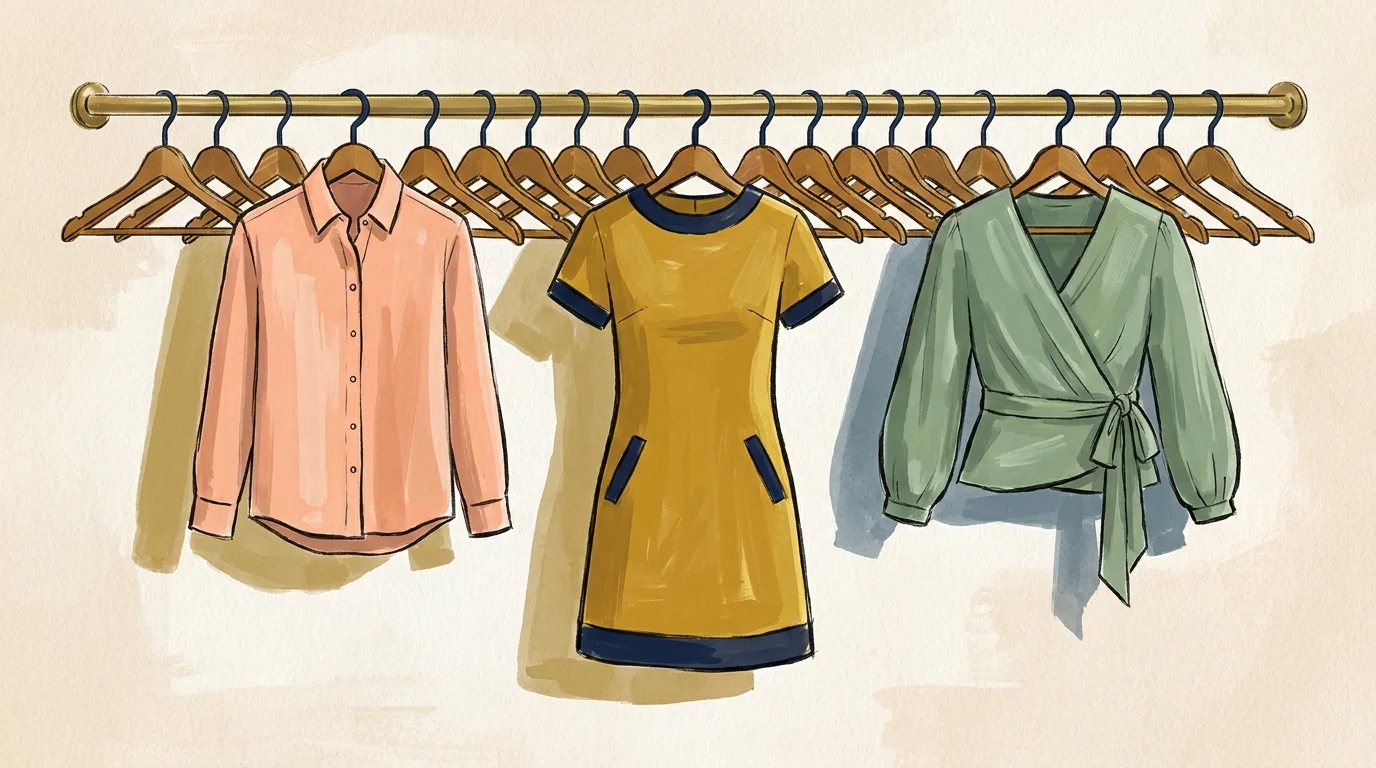
The traditional laundry basket serves as a notorious trap for clean clothes, where garments sit for days gathering deep wrinkles. The immediate hanger transfer method eliminates the clean-clothes basket entirely by moving items directly from the dryer to their storage hardware. You install a tension rod or a fold-down drying rack directly above or adjacent to your dryer. When the cycle ends, you pull shirts and trousers out one by one, immediately placing them on hangers while the fabric remains warm and pliable. This proactive technique smooths out wrinkles naturally, saving you countless hours of ironing over a year.
Investing in uniform, slim-line velvet hangers or durable wooden hangers elevates your closet organization while providing an excellent grip for freshly dried garments. When you fold trousers over the crossbar while hanging shirts by their shoulders immediately, the residual heat from the dryer acts as a gentle steamer, giving each garment ample room to breathe and settle smoothly. You walk the clustered hangers directly to your closet, completely bypassing the folding table.
If you prefer to air-dry delicate items indoors to preserve their shape and elasticity, you must actively manage your home’s climate. The Environmental Protection Agency warns that inadequate ventilation during indoor drying significantly increases ambient moisture, which can lead to rapid mold growth on walls, window frames, and hidden surfaces. To implement indoor drying safely, always utilize an exhaust fan, open a window to allow airflow, or run a dehumidifier near your drying racks to pull excess moisture from the room.
System 4: The Point-of-Use Machine Routine
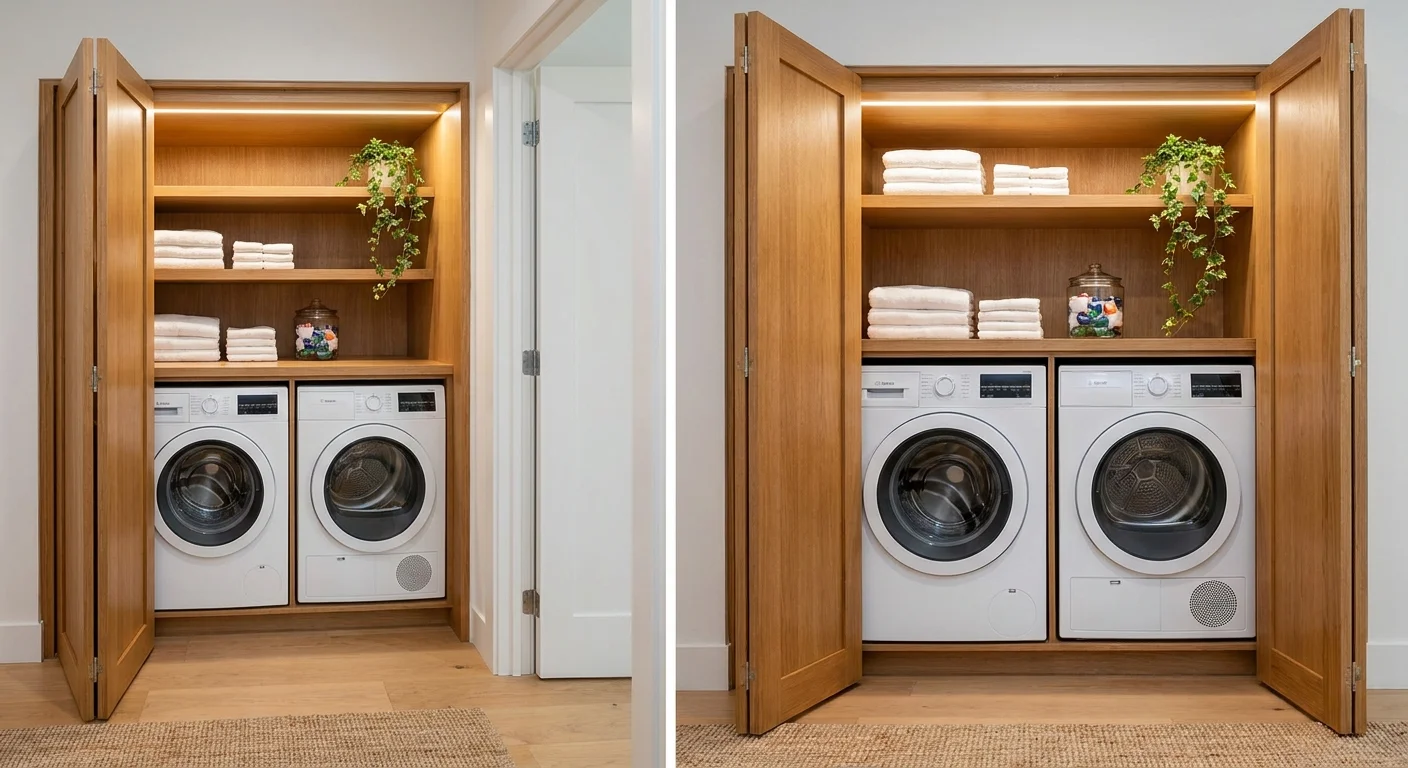
Sometimes the environment where you clean your clothes actively discourages you from finishing the job. Dark, cramped, or uninviting laundry rooms prompt you to grab the heavy basket of clean clothes and carry it to the living room, where the folding process inevitably stalls. Optimizing your machine area keeps the entire workflow contained to one dedicated space. You can transform a dreary basement laundry room by upgrading the overhead lighting with bright LED fixtures, painting the walls a crisp white, and installing a sturdy folding counter directly above front-loading machines.
If your machines sit side-by-side, installing a continuous countertop directly across the top of both units creates an expansive, dedicated folding zone. When you keep this surface completely clear of miscellaneous household clutter, you remove the physical friction of needing to clear a workspace before you can begin folding. A clean, bright space encourages you to process your garments immediately as they exit the dryer.
You must also maintain the washing machine itself to ensure your clothes smell fresh rather than musty. Front-loading washers utilize airtight rubber seals that efficiently trap moisture inside the drum, creating a dark, humid environment that acts as an ideal breeding ground for unpleasant odors. To prevent this stubborn issue, home appliance experts strongly advise wiping down the door gasket with a dry towel after each use and leaving the door slightly ajar to allow the drum to dry out completely. A fresh-smelling machine guarantees your clothes come out ready to wear, removing yet another mental barrier to completing the chore.
System 5: The Assigned Family Day Blitz
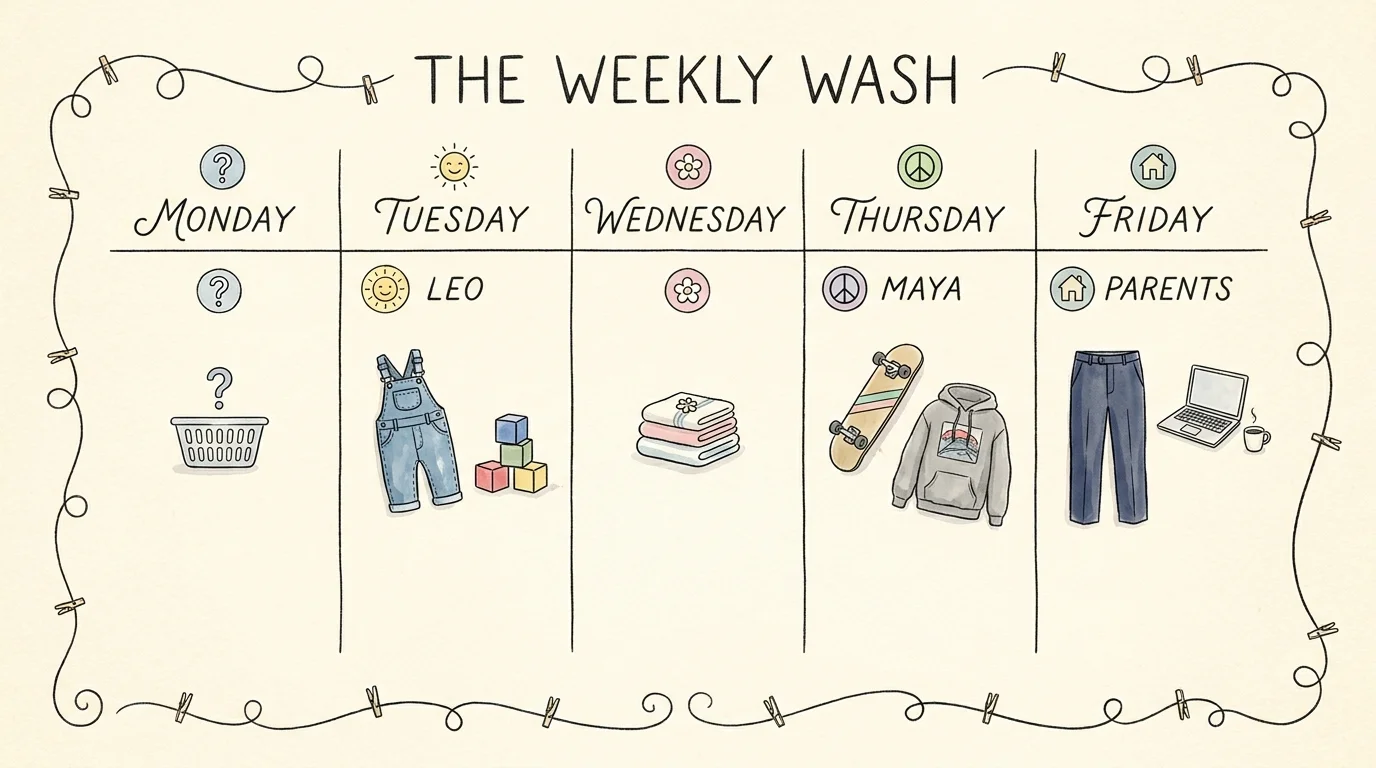
In multi-person households, mixing everyone’s garments together creates a massive sorting headache at the end of the line. You find yourself pacing between three different bedrooms trying to distribute individual socks, varied sizes of jeans, and randomly assigned t-shirts. The assigned family day blitz structure solves this logistical nightmare by dedicating specific days of the week to specific people or particular household categories. Because a single load contains only one person’s garments, you carry the finished batch directly to one room, fold it on that person’s bed, and put it directly into their drawers.
To visualize how this system organizes your week, consider this sample household schedule:
| Day of the Week | Assigned Category | Key Action Required |
|---|---|---|
| Monday | Child 1 | Wash, dry, and fold all school uniforms and play clothes. |
| Tuesday | Child 2 | Wash, dry, and fold daily wear; return to one designated dresser. |
| Wednesday | Towels and Linens | Strip beds in the morning; fold and store by the evening. |
| Thursday | Parents | Process adult workwear and casual clothing together. |
| Friday | Delicates and Extras | Run cold-water cycles for activewear, sweaters, and hand-wash items. |
This system also builds valuable accountability and independence in children, as they learn exactly which day they are responsible for bringing their hampers to the laundry room. If a schedule disruption—such as a late soccer game or an extended work meeting—causes someone to miss their assigned day, you simply pause their turn until the following week or utilize a designated catch-up day on Saturday morning. This firm boundary prevents one person’s missed chore from creating a cascading delay that derails the entire household’s routine.

System 6: The Strict Basketless Transport Rule
If you fundamentally change how you view a laundry hamper, you can permanently alter your household’s behavior. The strict basketless transport rule dictates that deep, high-walled baskets exist exclusively for soiled items. When garments emerge clean from the dryer, they never enter a traditional laundry basket. Instead, you utilize a flat, shallow tote bag or a rigid carrying tray designed specifically for clean items. Because a shallow tray physically cannot hold three loads of laundry at once, it forces you to process the garments immediately before running the next load.
When a deep basket sits continuously in the corner of a bedroom, it subtly invites rummaging. Within two days, a neatly folded stack of t-shirts devolves into a wrinkled, chaotic mess that requires re-ironing or, worse, re-washing just to remove the deep creases. This psychological shift stops the pervasive habit of treating a clean laundry basket as an alternative dresser.
When you force the clean clothes into a format that requires immediate handling—such as draping pressed trousers gently over your arm or laying delicates completely flat in a structured tote—you guarantee those items make it to their proper hangers and dresser drawers without unnecessary delay. You train your brain to associate the deep plastic basket strictly with dirty items, making it visually jarring to see clean clothes placed inside one.
Step-by-Step Weekly Laundry Room Reset
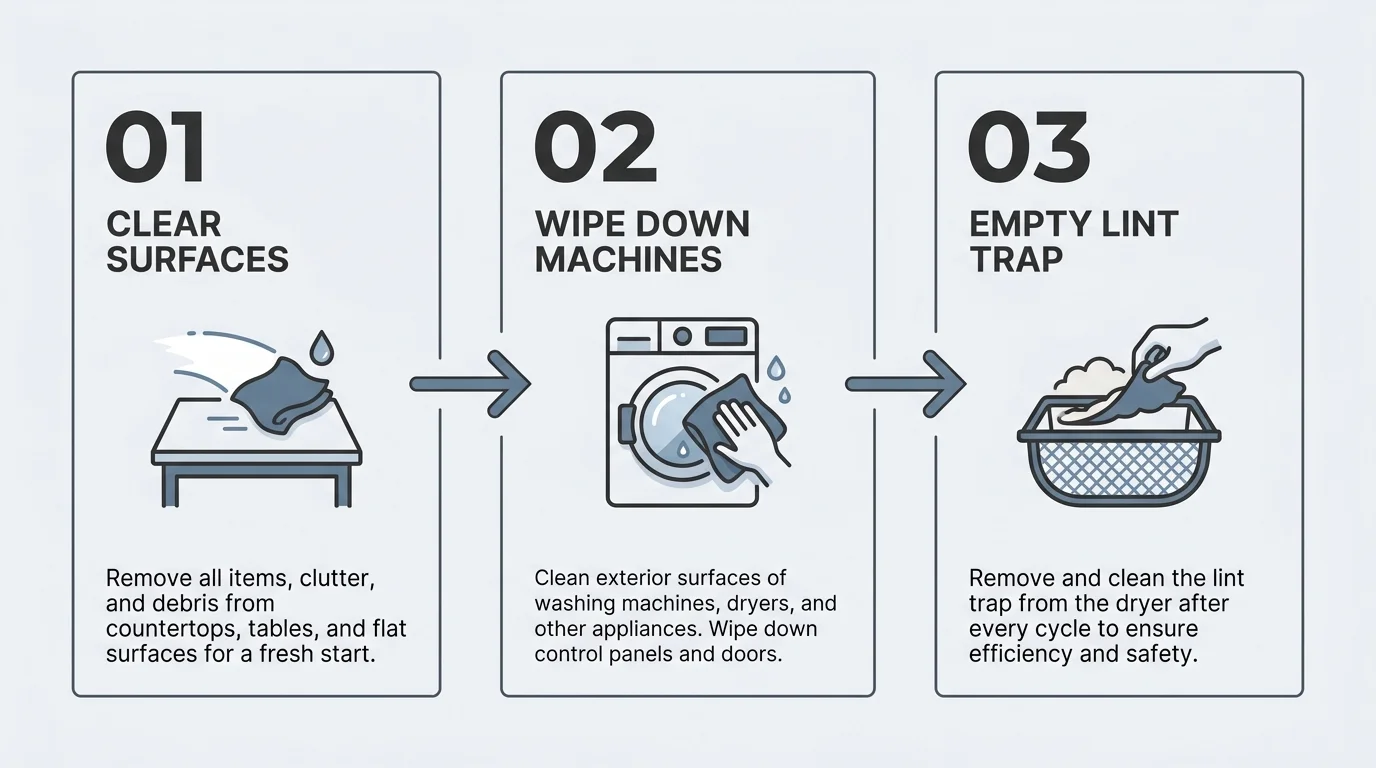
To guarantee your chosen system functions perfectly throughout the week, you need to perform a brief reset of the actual workspace. Follow this quick routine every weekend to prepare your station:
- Clear the folding surfaces: Remove any stray socks, empty cardboard boxes, or random household items that have slowly migrated onto your designated folding table throughout the week.
- Wipe down the machine exteriors: Use a slightly damp microfiber cloth to remove stubborn dust, sticky detergent drips, and fabric softener residue from the digital control panels and appliance lids.
- Empty the trash receptacle: Dispose of accumulated dryer lint, discarded dryer sheets, and empty product containers to maintain a fresh, visually appealing environment that encourages task completion.
- Check your supply inventory: Verify that you have enough high-efficiency detergent, specialized stain remover, and oxygen bleach to last through the upcoming week, preventing frustrating mid-cycle store runs.
- Run a maintenance cycle: Once a month, run an empty hot-water cycle combined with a specialized washer cleaner or pure white vinegar to safely flush out internal detergent residue and hard water buildup.
Checklist for Frictionless Laundry Maintenance
Adopting a new routine requires a few supplementary habits to keep the process running smoothly. Use this checklist to maintain your new workflow and protect your wardrobe investments:
- Clean the dryer lint screen before every single load to maximize hot airflow, reduce necessary drying times, and prevent dangerous household fire hazards.
- Inspect your washing machine rubber hoses annually for subtle signs of wear, exterior blistering, or minor leaks to prevent catastrophic water damage to your floors.
- Stock your primary laundry area with high-quality hangers, ensuring they remain readily available for the immediate transfer method right out of the dryer.
- Measure your liquid detergent precisely according to the manual; utilizing too much soap leaves a sticky, invisible residue on fabrics that actively attracts dirt and stiffens the material over time.
- Keep a small, dedicated stain-treatment brush and enzymatic spray directly next to the primary dirty hamper so you can treat stubborn spots immediately before they permanently set into the fabric fibers.

Finding the Flow That Fits Your Home
No single routine works perfectly for every household size, architectural floor plan, or demanding work schedule. The secret to lasting organization lies in selecting the specific framework that directly addresses your primary bottleneck. If sorting causes your longest delays, the multi-compartment cart provides the highest immediate return on your investment. If the sheer volume overwhelms you on weekends, transitioning to the daily micro-load will reclaim your Saturdays entirely. You possess the power to transform laundry from an exhausting, week-long marathon into a series of brief, highly manageable daily tasks. By establishing firm boundaries around exactly how garments move through your home, you protect your valuable living spaces from the visual and mental clutter of perpetual chores.
Your practical next step is to observe your specific laundry habits for the next three days. Identify exactly where your clean clothes tend to stall—whether they sit abandoned inside the dryer drum, pile up on top of a dining room chair, or overflow from a basket at the foot of your bed—and apply just one of these six targeted systems to eliminate that specific bottleneck today.