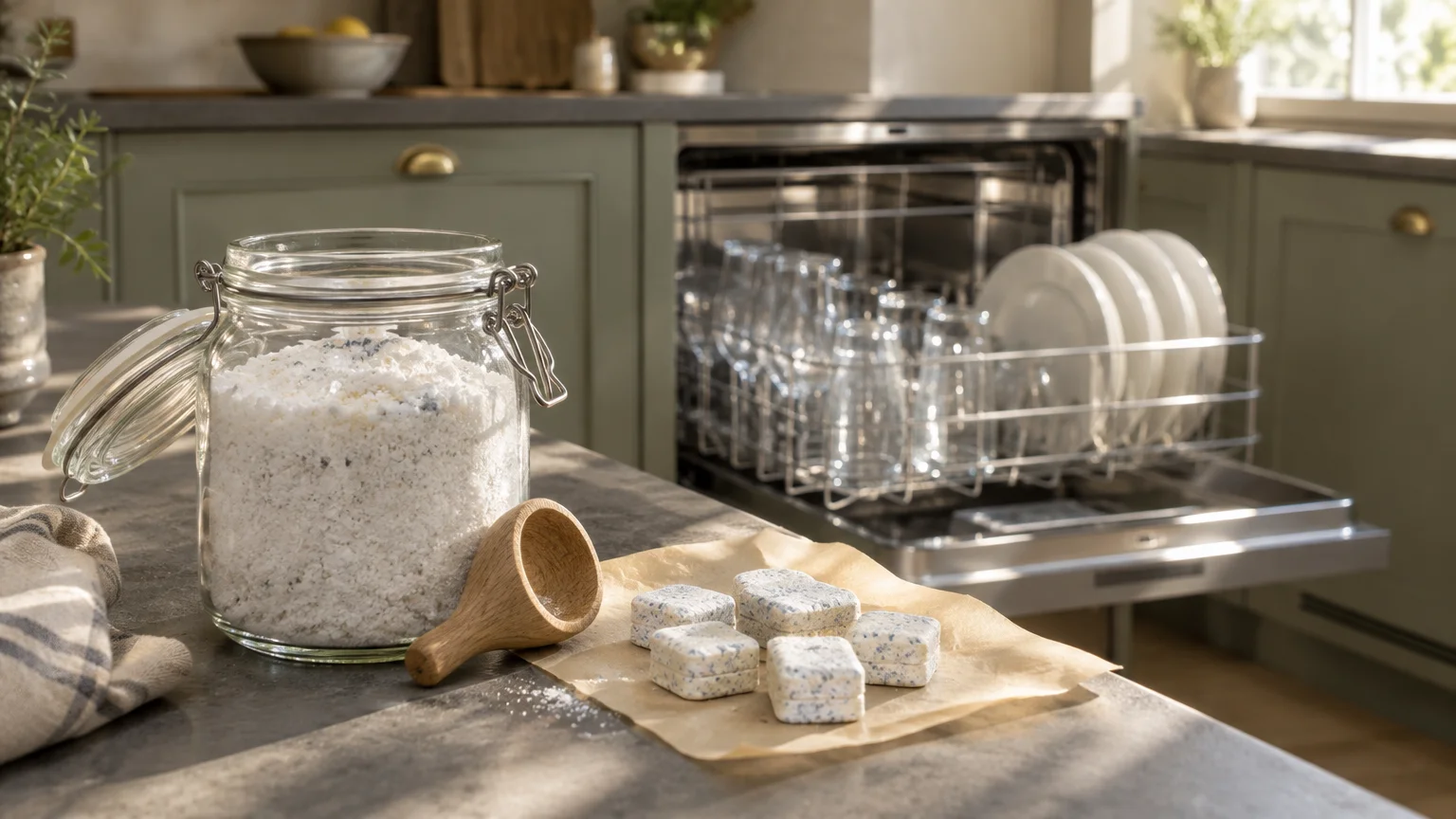
You can slash household expenses and skip synthetic fragrances by making a reliable diy dishwasher detergent at home. This balanced formula cuts stubborn grease, eliminates mineral film, and keeps your dinnerware clean.
Most internet recipes fail because they rely on conflicting ingredients that neutralize active cleaning power before the wash cycle begins. A working homemade dishwasher detergent requires alkaline builders, oxygen bleach, and water-softening agents to lift food soils effectively.
With five simple mineral powders, you will produce a custom dishwasher detergent recipe that rivals name-brand commercial pods.
The Science Behind Failed DIY Recipes
Most viral cleaning hacks do not survive modern kitchen testing. When you understand why standard recipes fail, you can build a natural dishwasher soap that actually delivers results.
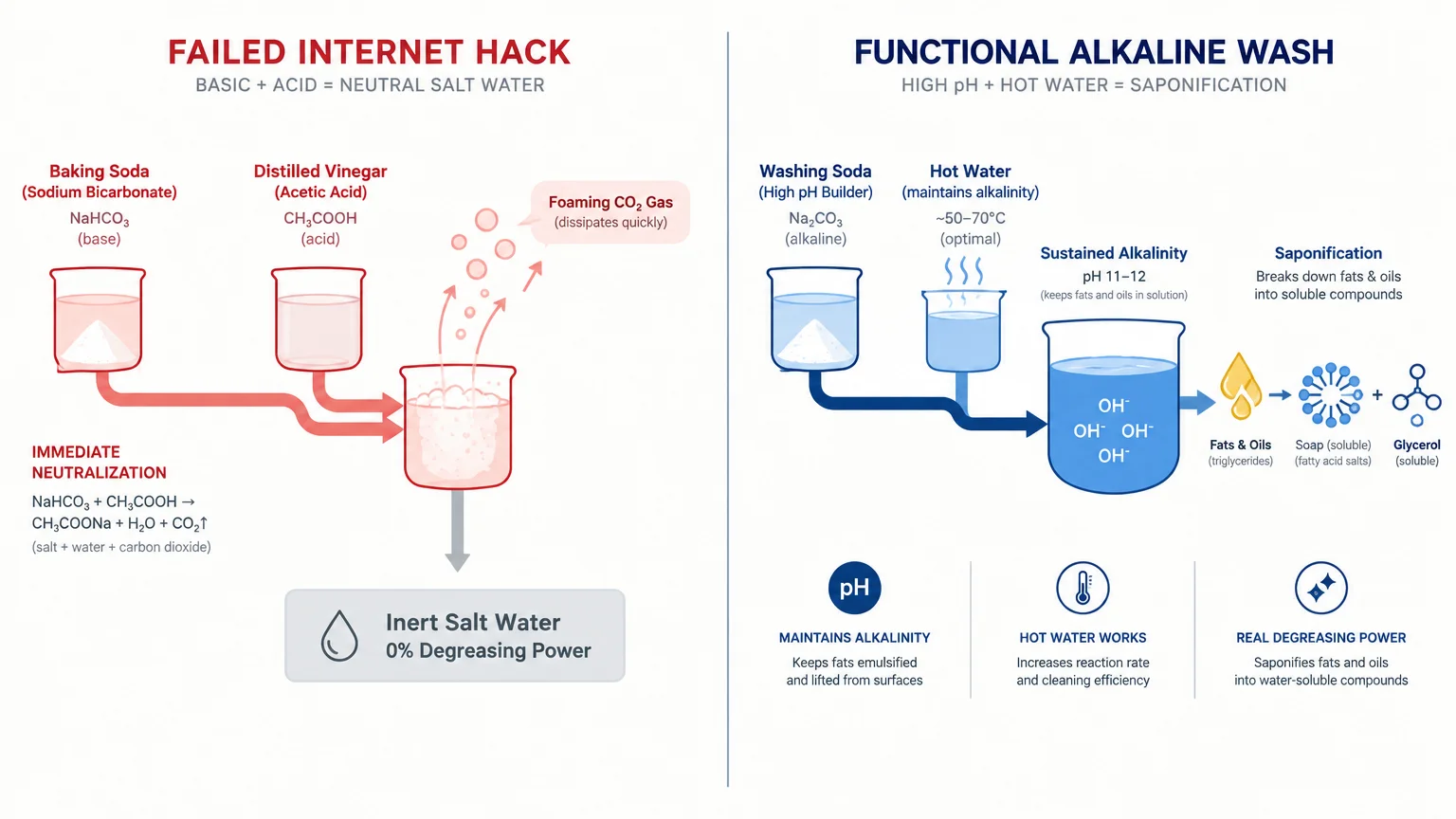
The most common DIY mistake combines baking soda directly with liquid vinegar. This mixture produces foaming carbon dioxide gas and leaves behind plain salt water with almost zero degreasing capability.
Commercial dishwashers rely on alkaline chemistry rather than mechanical suds to dissolve baked-on oils. Acids like vinegar belong in the final rinse stage, never in the main wash basin.
Another frequent misstep involves adding liquid dish soap or liquid Castile soap to the dispenser cup. Even a single teaspoon of standard liquid soap creates massive foam cushions that choke your wash pump and trigger kitchen floor leaks.
Vegetable-based Castile soaps also contain free fatty acids that bind instantly with calcium in hard tap water. This reaction creates insoluble soap scum that coats glassware in a cloudy, greasy gray film.
Industrial detergents use synthetic enzymes to dissolve proteins and starches. Because raw enzymes are difficult to purchase for home use, your homemade blend must rely on elevated alkalinity and active oxygen instead.
According to the American Cleaning Institute dishwasher cleaning guidelines, effective dish cleaning requires builders, buffers, and water-conditioning agents working in harmony. Missing even one component leads to dull plates and gritty residue.
Essential Chemistry for a Working Formula
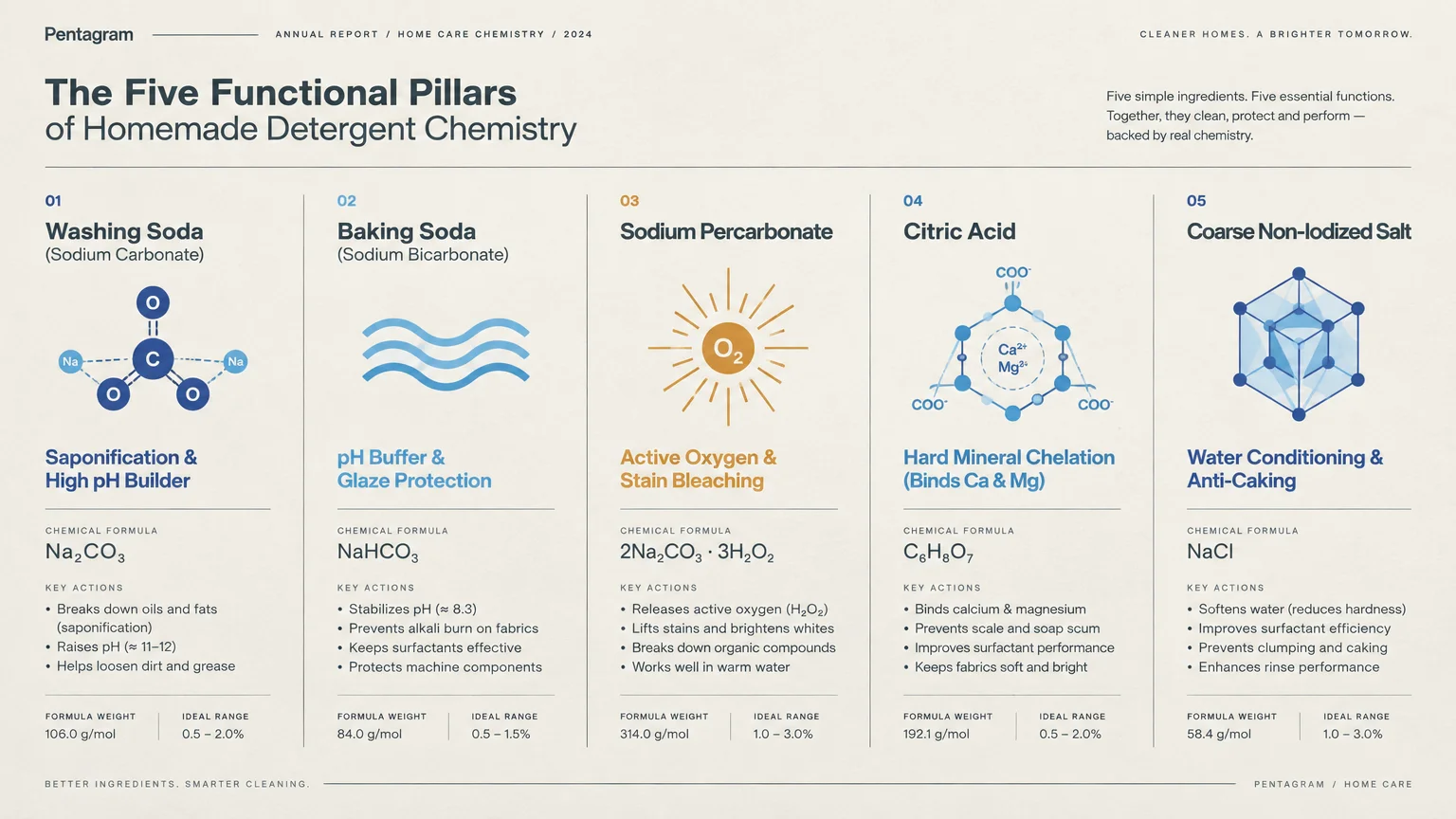
A high-performance dishwasher detergent recipe requires five distinct chemical jobs: water softening, soil suspension, saponification, stain oxidation, and anti-caking protection. Each ingredient in this formula handles one of these mechanical tasks.
Washing soda, known chemically as sodium carbonate, serves as your heavy-duty alkaline builder. With a high pH, washing soda converts grease into water-soluble soap through a natural chemical process called saponification.
Baking soda, or sodium bicarbonate, acts as a gentle buffering agent and odor neutralizer. It stabilizes the pH of the wash water so your machine cleans aggressively without etching delicate ceramic glazes.
Sodium percarbonate, commonly sold as powdered oxygen bleach, supplies stain-lifting oxidation. When exposed to hot wash water, it breaks down into sodium carbonate and hydrogen peroxide to bleach coffee stains and sanitize plates.
Citric acid provides critical chelation by binding dissolved calcium and magnesium ions before they attach to your dishes. This organic acid prevents the chalky mineral rings that ruin clear glassware.
Coarse non-iodized salt helps condition the wash water and prevents fine powder particles from binding into a solid brick inside your storage container. Avoid table salt, as commercial anti-caking additives interfere with the cleaning action.
The EPA Safer Choice standard classifies these simple mineral salts as safer alternatives to conventional phosphate and chlorine compounds. You gain industrial cleaning power while keeping synthetic dyes and artificial fragrances out of your home.
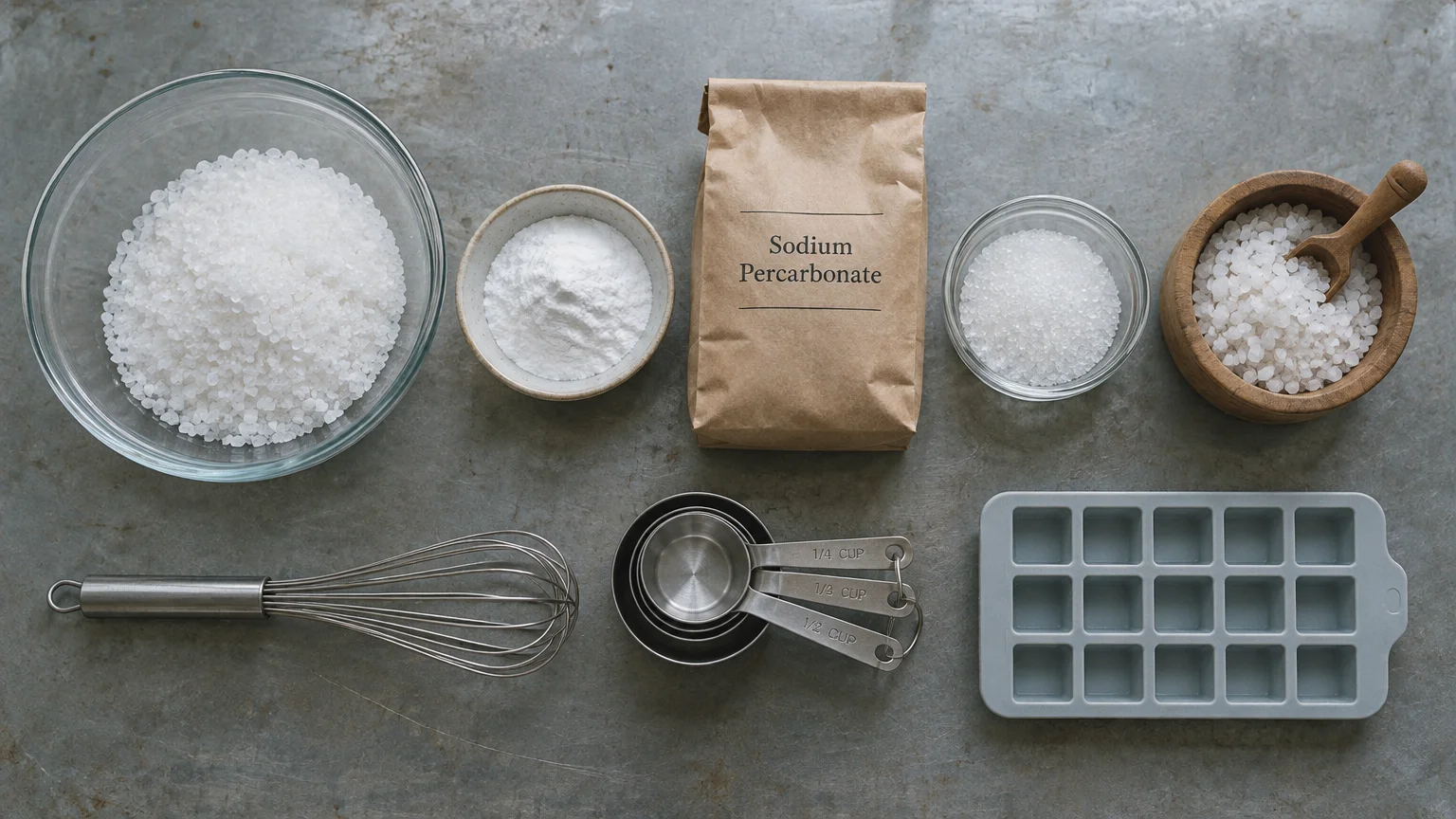
Equipment and Ingredient Checklist
Gather your supplies before mixing to prevent airborne dust and moisture absorption. Choose clean, dry tools made of glass, stainless steel, or durable plastic.
- Washing Soda: 1 cup (sodium carbonate)
- Baking Soda: 1 cup (sodium bicarbonate)
- Sodium Percarbonate: 1/2 cup (pure oxygen bleach powder)
- Citric Acid Powder: 1/2 cup (food-grade granulate)
- Coarse Non-Iodized Salt: 1/2 cup (kosher salt or coarse sea salt)
- Large Glass Mixing Bowl: Deep basin to contain airborne powder
- Stainless Steel Whisk: For distributing fine powders evenly
- Measuring Cups: Dedicated dry measuring tools
- Airtight Storage Container: Glass jar or plastic tub with a tight silicone gasket
- Desiccant Packet: Reusable silica pouch to block ambient humidity
- Dust Mask and Gloves: Protection against alkaline powder irritation
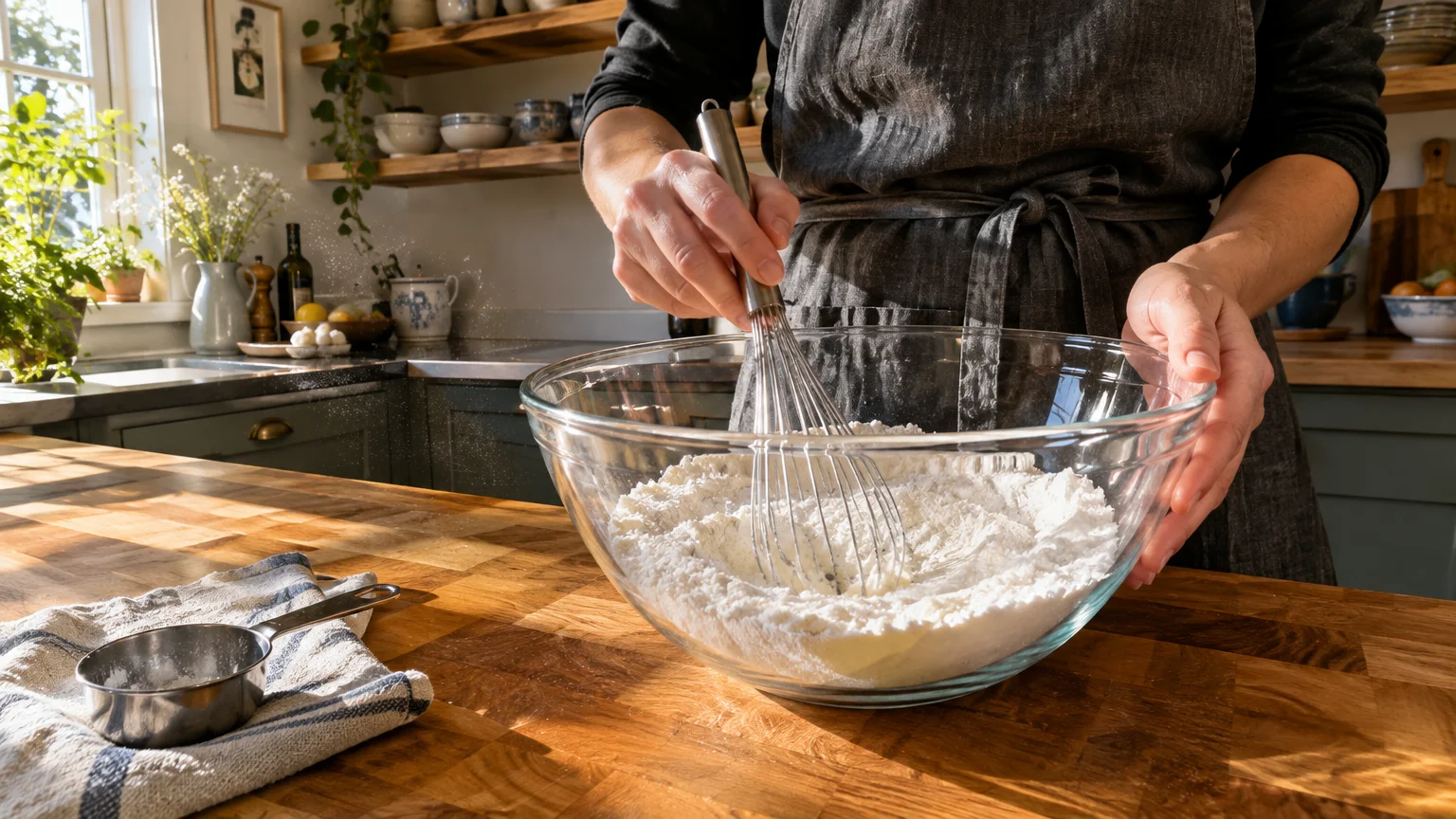
Master Recipe: High-Performance Powder Detergent
This dry powder formula provides the most reliable cleaning results because it stays stable in storage without premature chemical reactions. Follow these preparation steps to assemble your batch.
- Put on protective gear: Wear rubber gloves and a basic dust mask to avoid breathing fine mineral dust during mixing.
- Combine the alkaline base: Pour the washing soda, baking soda, and coarse salt into your large glass mixing bowl.
- Whisk thoroughly: Break up any existing clumps with your stainless steel whisk until the mixture looks uniform and powdery.
- Fold in the active agents: Add the sodium percarbonate and citric acid granulate into the bowl.
- Blend gently: Whisk the mixture for two full minutes, ensuring the oxygen bleach and citric acid disperse evenly across the batch.
- Transfer to storage: Pour the finished powder into your airtight container immediately to minimize moisture exposure from room air.
- Drop in a desiccant pack: Place a sealed silica packet on top of the powder before sealing the container lid tightly.
Store your finished powder in a dry cupboard away from direct steam or sink spray. If you store diy cleaning recipes under the sink, check the lid seal periodically to keep steam out.
Use one level tablespoon of powder for lightly soiled loads in soft water. Increase the dose to two level tablespoons for greasy pans or heavily soiled family dinner loads.
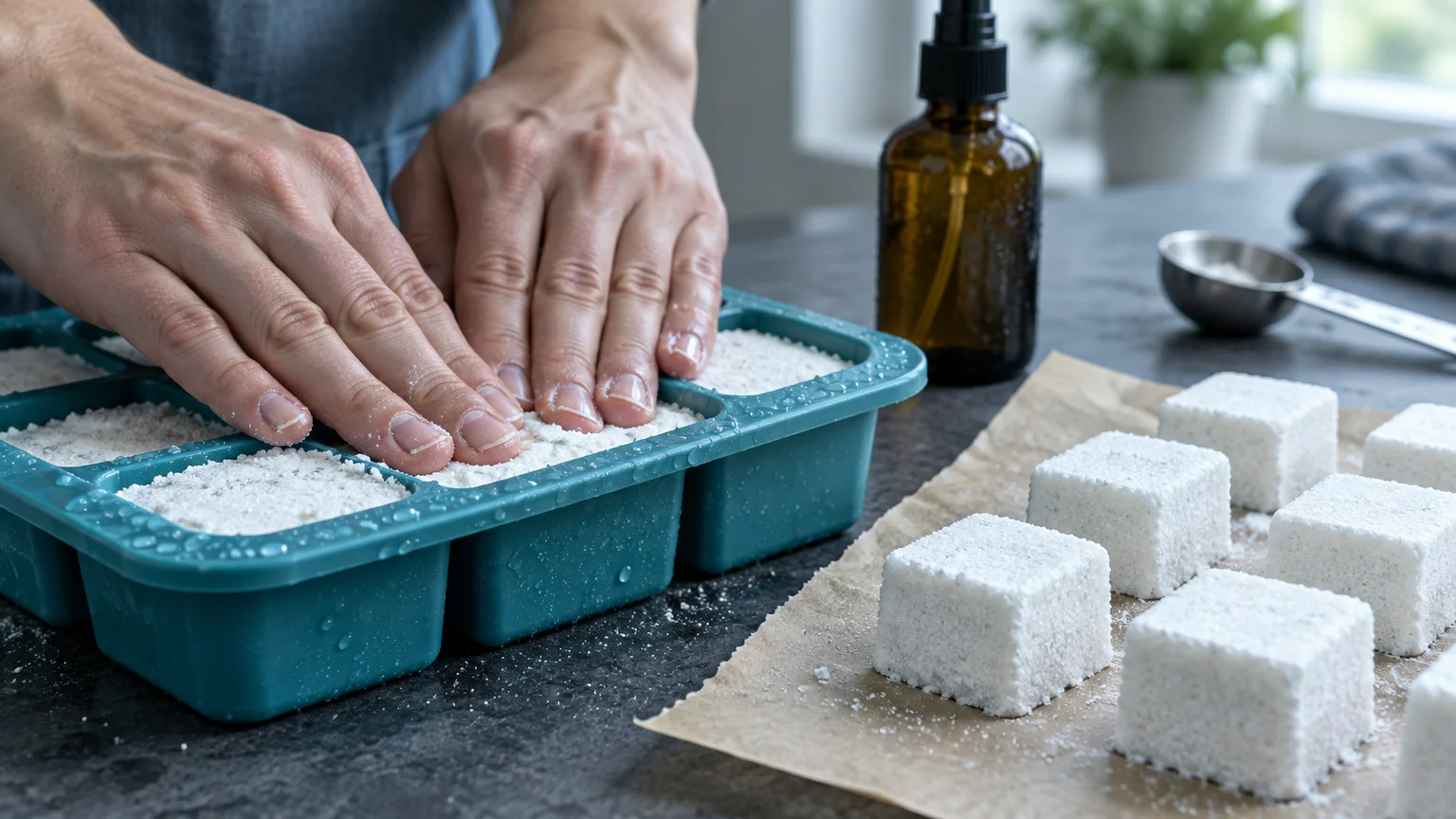
Recipe Two: Single-Dose Detergent Tablets
If you prefer the pre-measured convenience of pods, press your powder into solid, single-dose dishwasher tablets. These molded tabs drop directly into your dispenser door without measuring spoons.
Prepare the dry master recipe as described above in your mixing bowl. Have two flexible silicone ice cube trays ready on a flat baking sheet before adding any moisture.
Fill a clean spray bottle with distilled white vinegar or filtered water. Set the nozzle to its finest mist setting to avoid dumping liquid directly onto the reactive powders.
Mist the surface of the dry powder with three squirts of liquid, then fold the mixture immediately using a silicone spatula. The powder will fizz slightly as moisture touches the citric acid and carbonate base.
Repeat this process slowly until the powder feels like damp beach sand. You should be able to squeeze a clump in your fist and have it hold its shape without dripping wetness.
Scoop one rounded tablespoon of the damp mixture into each silicone mold cavity. Press the powder down firmly with the back of a metal spoon or your thumb to compact the grains tightly.
Allow the packed trays to dry uncovered in a low-humidity room for a full 24 hours. The mixture will expand slightly and set into stone-hard bricks as moisture evaporates.
Pop the hardened tablets out of the flexible silicone molds onto a clean towel. Store the tabs in an airtight glass jar with a silicone gasket, placing a desiccant pack at the bottom.
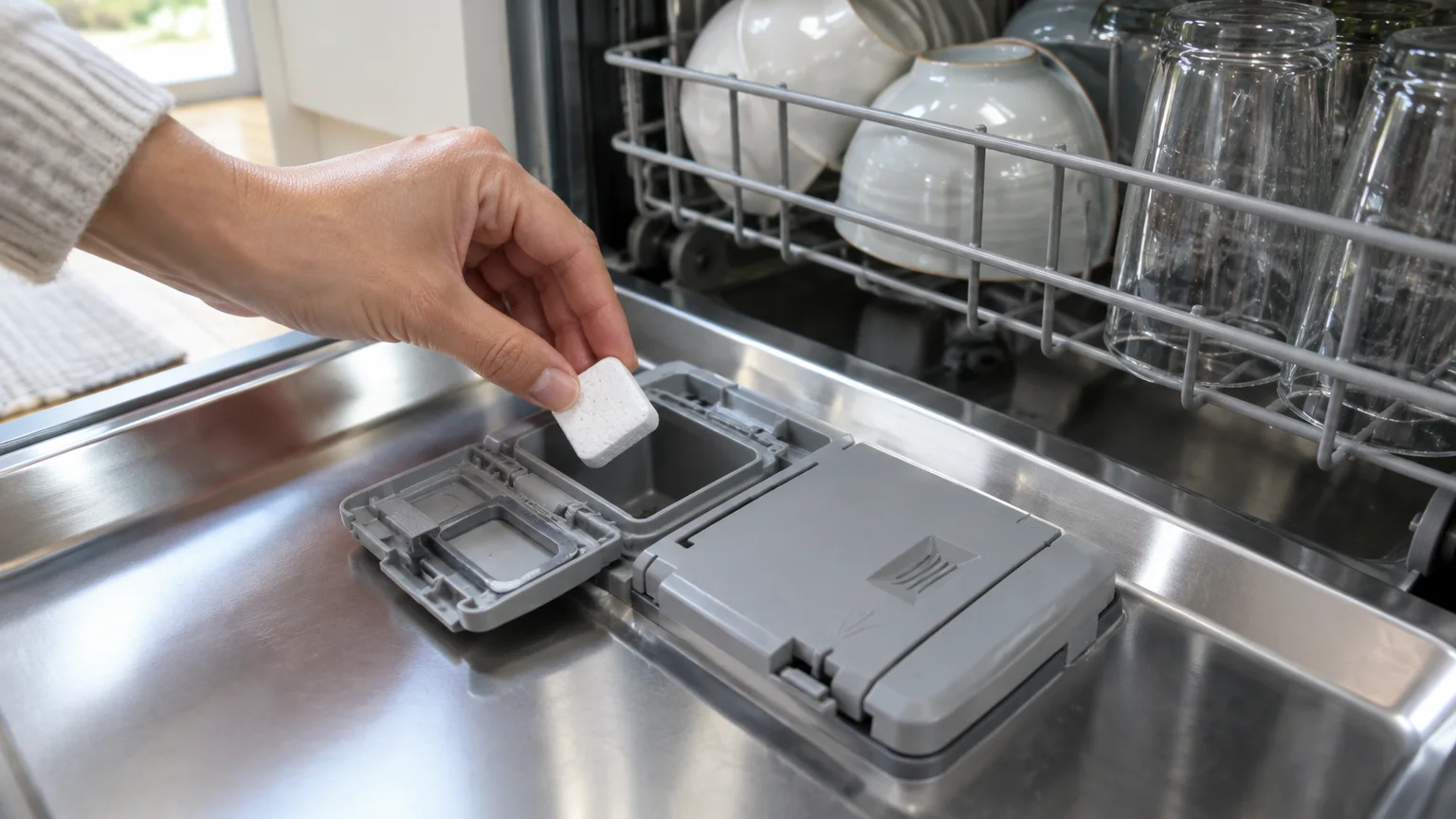
Use one tablet per wash cycle. Always place the tablet inside the closed dispenser cup rather than tossing it into the bottom of the machine tub.
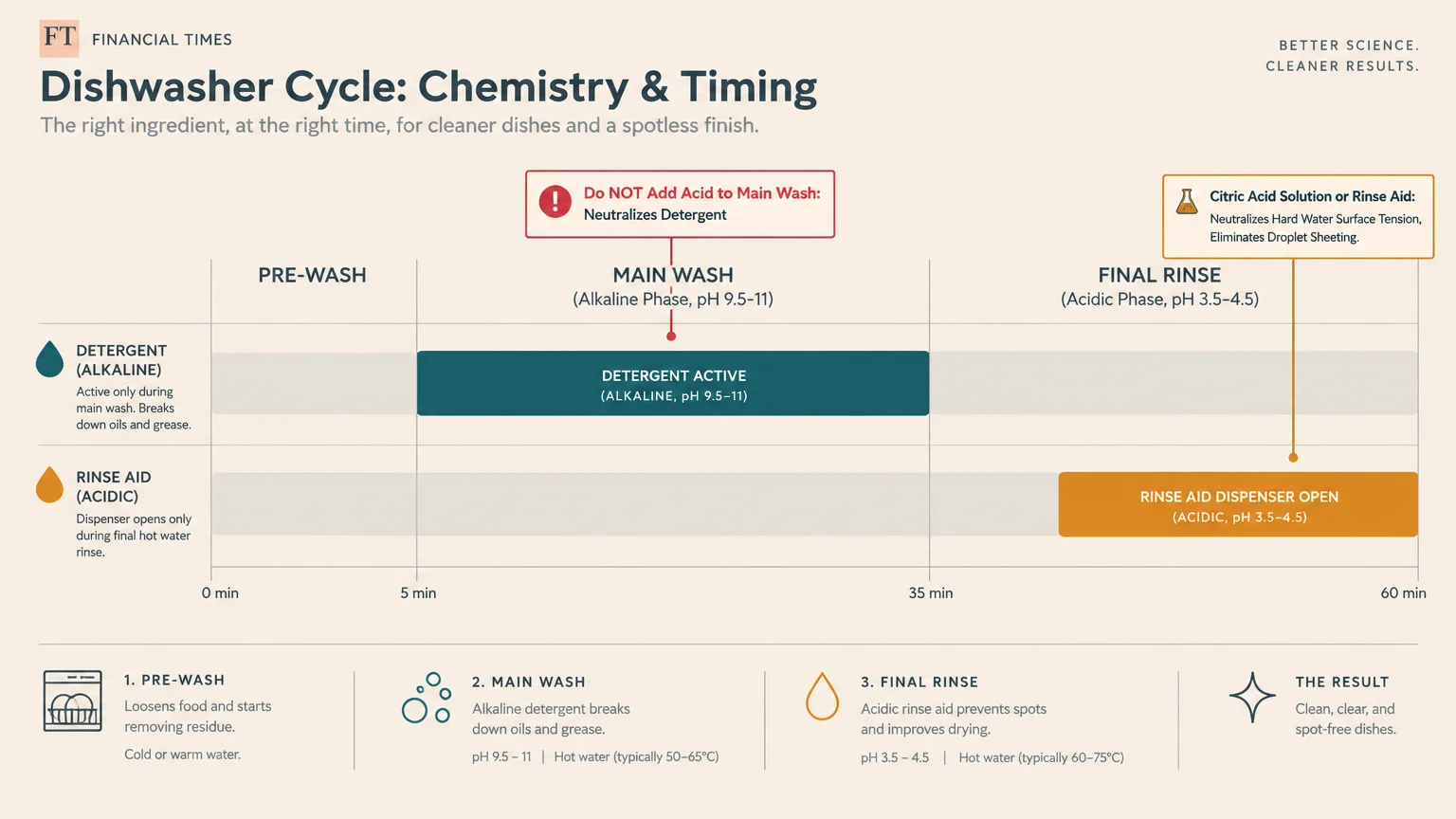
The Truth About Natural Rinse Aids
No homemade dishwasher detergent can finish the job without an effective rinse cycle strategy. Modern dishwashers use minimal water, meaning surface tension causes droplets to cling to plates and dry into spots.
Commercial rinse aids use synthetic surfactants to sheet water flat against plates so it evaporates instantly. If you skip this step, even the cleanest dishes emerge covered in mineral droplets.
Many eco-conscious blogs recommend pouring undiluted white vinegar directly into the machine rinse aid chamber. You should avoid this practice because continuous exposure to concentrated acetic acid damages appliance internals over time.
Major manufacturers note in their appliance manufacturer rinse aid recommendations that acidic liquids can swell and degrade internal rubber gaskets and valve seals. A compromised rinse dispenser mechanism requires expensive professional repairs.
Make a safer, highly effective natural rinse aid by dissolving two tablespoons of citric acid powder into one cup of warm distilled water. This creates a mild chelating rinse liquid that strips mineral film without dissolving rubber components.
Pour this citric rinse solution directly into your machine rinse aid compartment until full. Check the fluid level every two weeks and top it off whenever the indicator light illuminates.
If you prefer using white vinegar, place a small glass ramekin filled with vinegar upright on the top rack instead of filling the dispenser. This trick releases small vapor clouds during hot rinse phases without concentrating acid inside your dispensing valves.
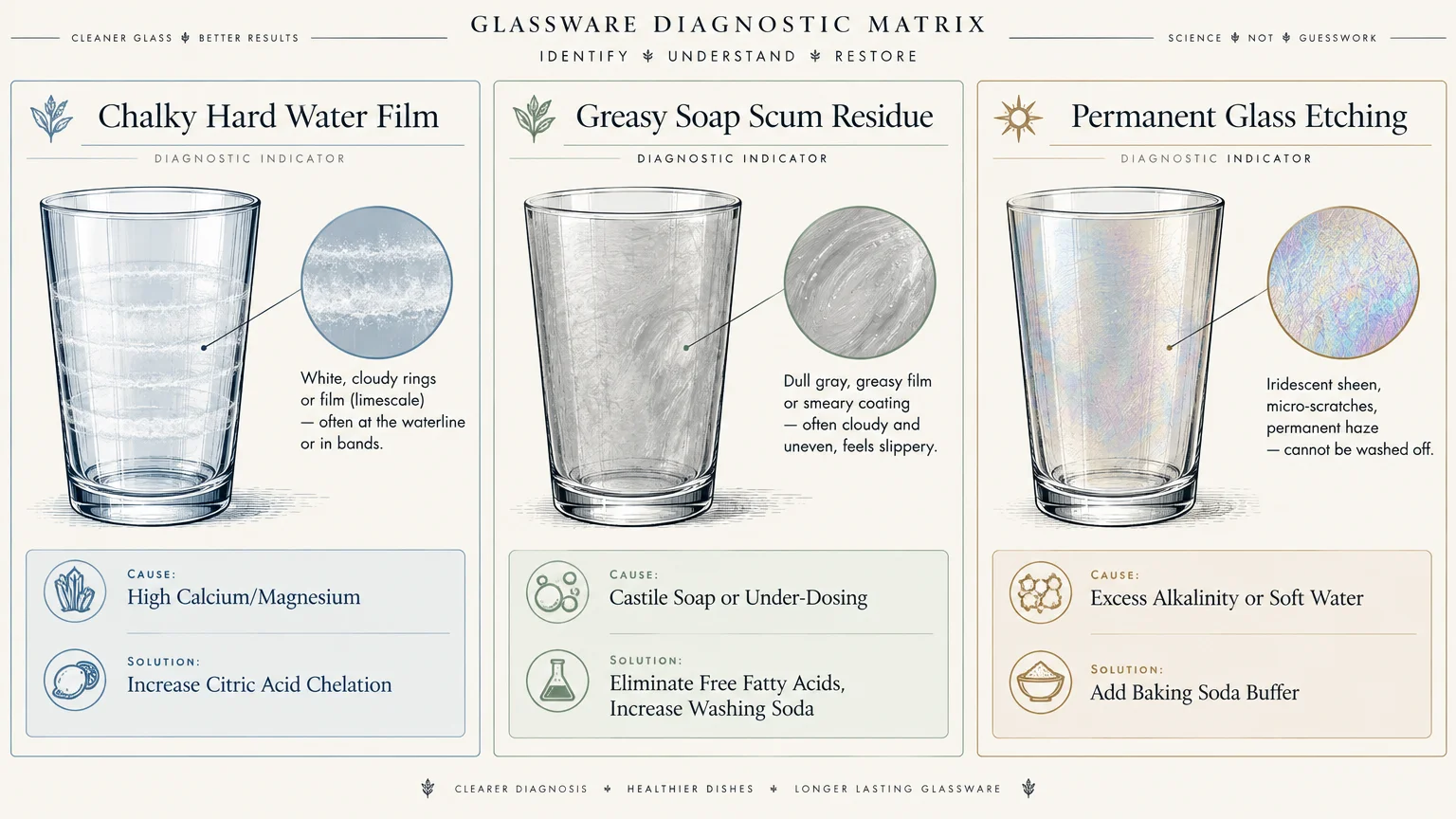
Troubleshooting Common Dishwasher Film and Spots
Transitioning from commercial pods to a natural dishwasher soap requires minor adjustments based on your home water profile. Use this diagnostic table to identify and resolve cleaning issues quickly.
| Problem | Likely Cause | Practical Solution |
|---|---|---|
| Chalky White Coating on Glassware | Hard water minerals combining with unchelated washing soda residue. | Double the citric acid in your master batch or top up your citric acid rinse aid dispenser. |
| Permanent Rainbow Hazing (Etching) | Water is too soft or wash temperature is too high for the dosage used. | Cut detergent dosage by half; remove citric acid from the wash powder and use it only in rinse aid. |
| Gritty Debris on Bowls and Plates | Clogged machine filter or food particles recirculating in cold wash water. | Clean bottom pump filter and verify incoming water reaches at least 120°F at the tap. |
| Greasy Film on Plastic Items | Water temperature is too low to melt animal fats, or washing soda ratio is low. | Run hot water at the sink before starting your cycle; increase washing soda by one-quarter cup. |
| Powder Caking Inside Dispenser Door | Dampness in the dispenser cup or premature activation from high humidity. | Wipe dispenser cup bone dry with a towel before loading powder; add a silica pack to storage jar. |
| Brown Tea or Coffee Mug Stains | Insufficient oxygen bleaching action in the wash cycle. | Increase sodium percarbonate in your recipe mix by one-quarter cup. |
Always distinguish between hard water mineral film and permanent glass etching before altering your recipe. Wet your finger and rub the cloudy glassware surface.
If the cloudiness clears temporarily while wet, you have mineral deposits that citric acid can dissolve. If the cloudiness remains visible under water, the glass surface is permanently etched from excessive chemical abrasion.
Optimizing Your Machine for Natural Detergent
Commercial detergent pods contain aggressive synthetic chemicals engineered to overcome poorly maintained dishwashers. When using homemade dishwasher detergent, proper machine maintenance becomes essential for sparkling results.
Always scrape large solid food debris into the compost bin, but do not pre-rinse your dishes completely clean in the sink. The alkaline salts in your DIY detergent require greasy food soils to react against during the wash cycle.
Verify your incoming hot water temperature reaches at least 120 degrees Fahrenheit. If water enters the machine colder than this threshold, animal fats solidify on dishes and the sodium percarbonate cannot activate.
Run your kitchen sink faucet on full hot until the water runs steaming before pushing start on your dishwasher. This guarantees your machine fills with scalding water from the very first seconds of the pre-wash cycle.
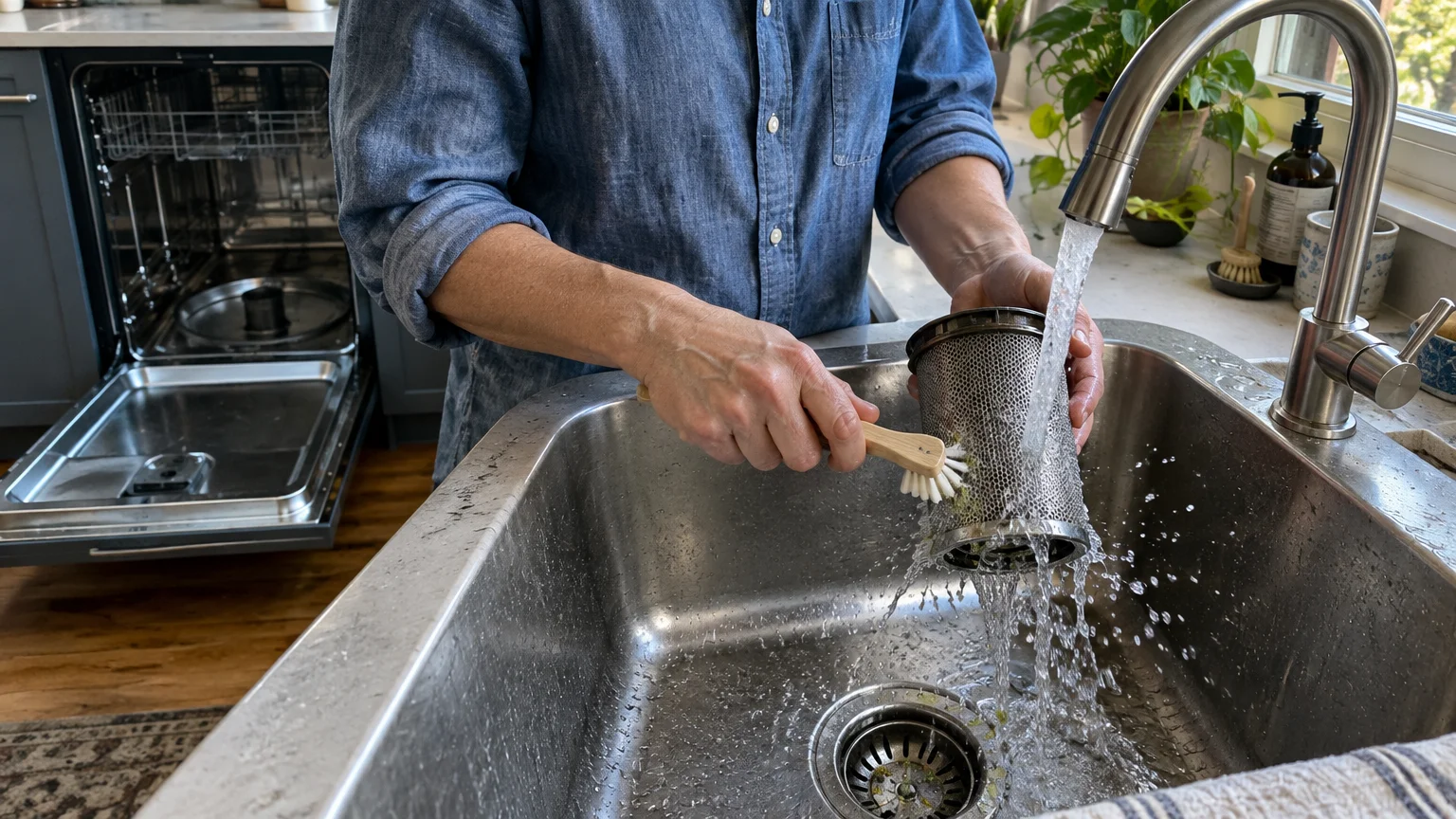
Clean your dishwasher pump filter at the bottom of the tub once every two weeks. Twist out the cylindrical filter screen and scrub trapped grease and debris under hot running water with an old dish brush.
Inspect the tiny spray holes along each rotating wash arm every month. Calcium pebbles and lemon seeds lodge inside these orifices, blocking water pressure and leaving dirty dead zones inside your racks.
Run a monthly maintenance cycle by pouring two cups of white vinegar into an upright bowl on the top rack of an empty machine. Run a standard hot cycle to strip grease buildup from internal plumbing lines and pump impellers.
Safety Precautions and Storage Best Practices
Even though natural ingredients originate from common minerals, concentrated alkaline powders still pose safety hazards if handled carelessly. Treat your DIY raw materials with the same respect as store-bought chemicals.
Washing soda and sodium percarbonate carry high pH levels that strip natural oils from human skin. Wear cleaning gloves while measuring and blending to prevent dry hands or skin irritation.
Avoid inhaling the fine airborne dust generated when pouring dry mineral powders. Mix your ingredients in a well-ventilated space or stand near an open window while whisking.
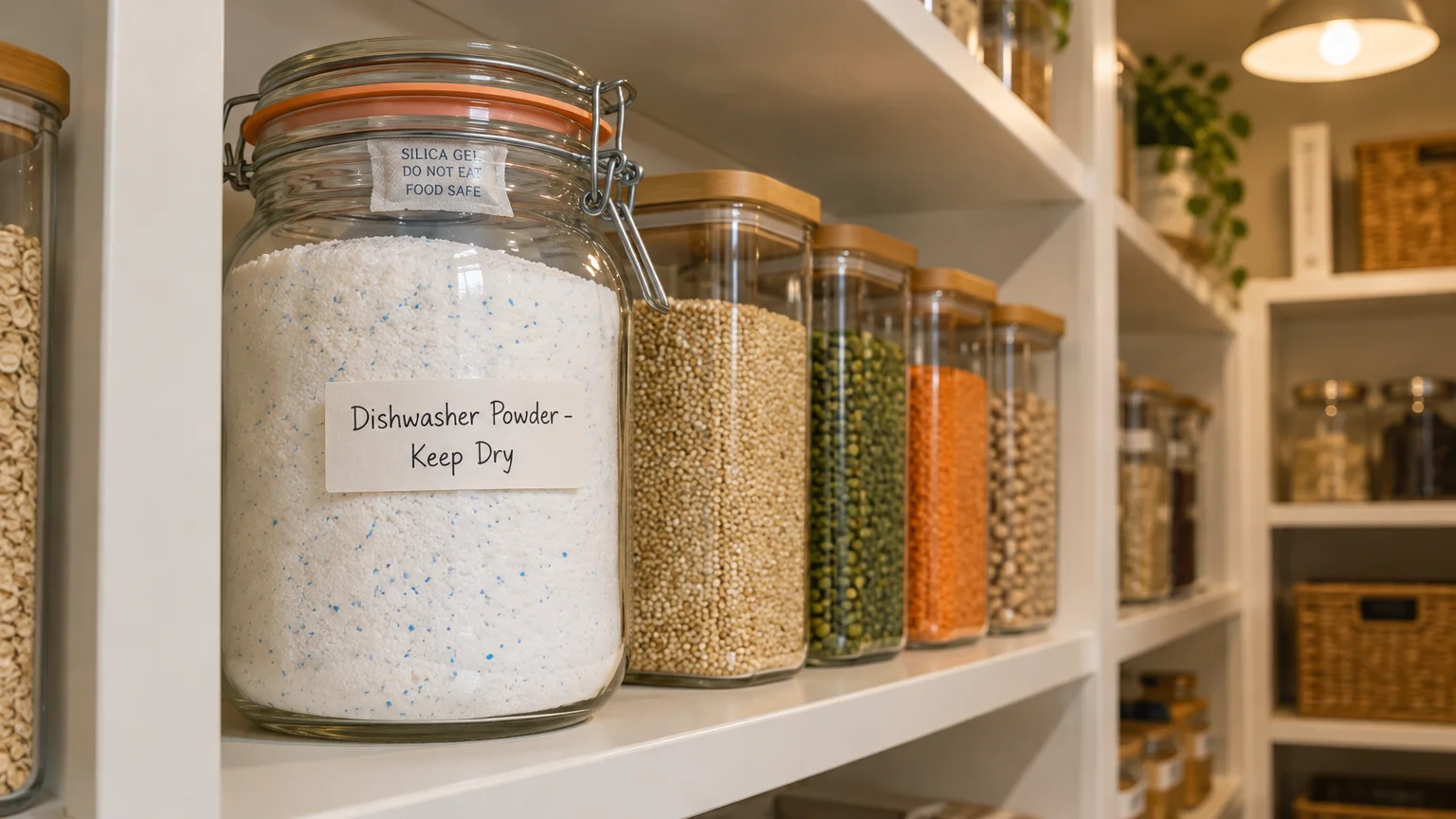
Keep your powder storage container completely airtight at all times. Citric acid and washing soda are both hygroscopic compounds, meaning they continuously pull moisture out of ambient air.
If moisture enters your storage jar, the citric acid and carbonate bases react prematurely, releasing carbon dioxide gas. This reaction hardens your powder into an unusable block and neutralizes the active cleaning power before wash day.
Label your storage containers clearly with ingredient names, usage directions, and safety warnings. Keep all cleaning blends out of reach of curious young children and household pets.
Cost Comparison and Longevity
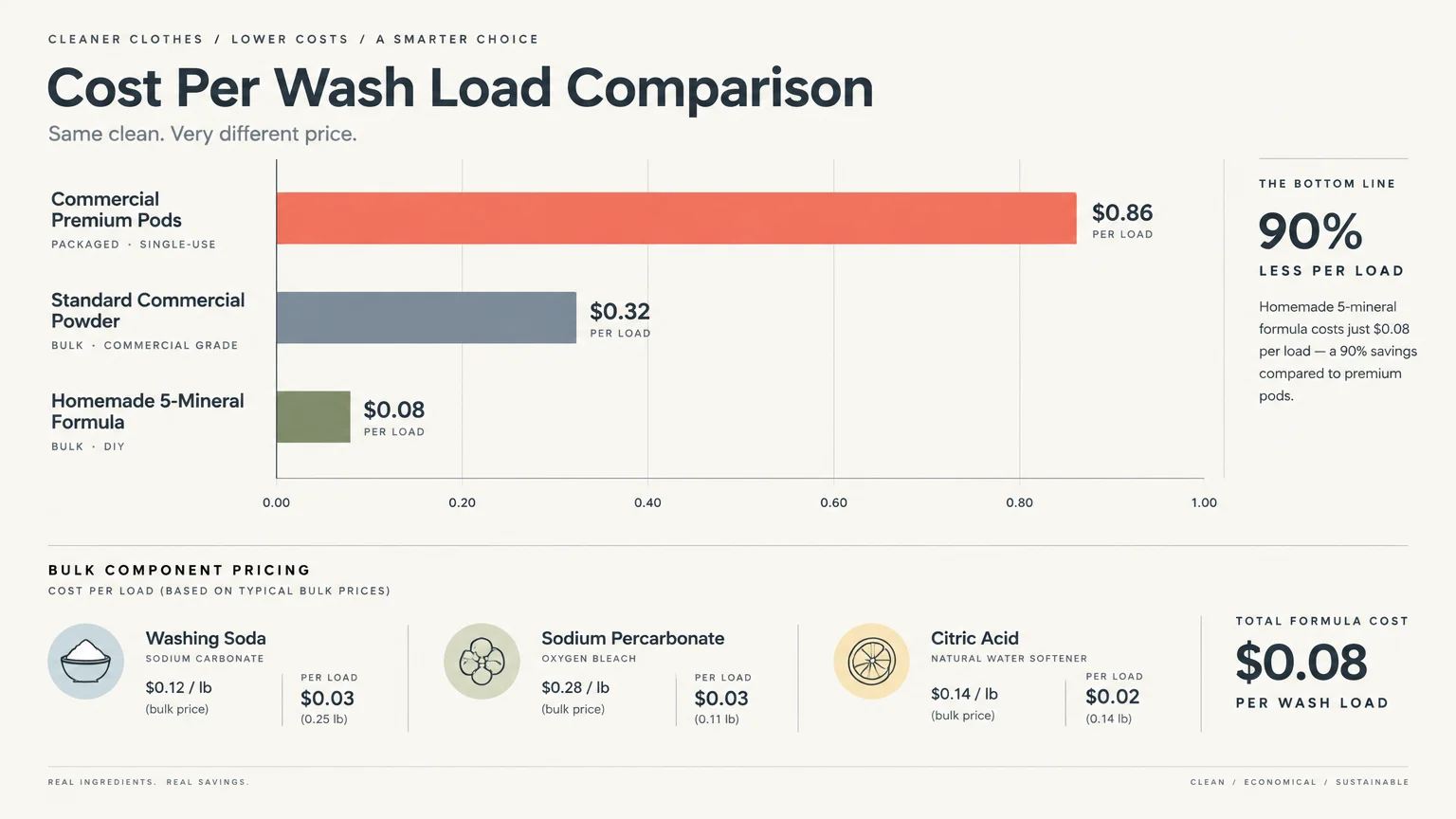
Switching to homemade dishwasher detergent delivers substantial annual savings compared to premium store-bought single-use pods. Bulk raw mineral salts cost a fraction of branded packaged tabs.
One batch of this master powder recipe yields approximately thirty loads of dishes. The raw ingredients cost pennies per load when purchased in standard grocery or hardware store quantities.
You can purchase washing soda, baking soda, and citric acid in multi-pound bulk bags online to drive your per-load cost down further. The savings multiply rapidly for busy households running daily cycles.
A properly stored batch of dry powder maintains its full chemical potency for up to six months. Molded tabs will stay stable for four months when protected from high ambient kitchen humidity.
Because you control the formulation, you never pay for synthetic perfumes, blue dye ribbons, or non-biodegradable PVA plastic film covers. Your dishes emerge clean, sanitary, and completely free of chemical fragrance residue.
Put Your First Batch to Work
Wipe your dishwasher dispenser cup completely dry with a clean microfiber cloth right now. Measure two tablespoons of washing soda, two tablespoons of baking soda, and a half-teaspoon of coarse salt into a small ramekin.
Dump that single-load test blend directly into your dry dispenser, fill your rinse aid chamber with dilute citric acid, and run a normal hot cycle on tonight’s dinner load. Seeing clear glasses on your drying rack tomorrow morning will give you the confidence to mix a full master batch this weekend.