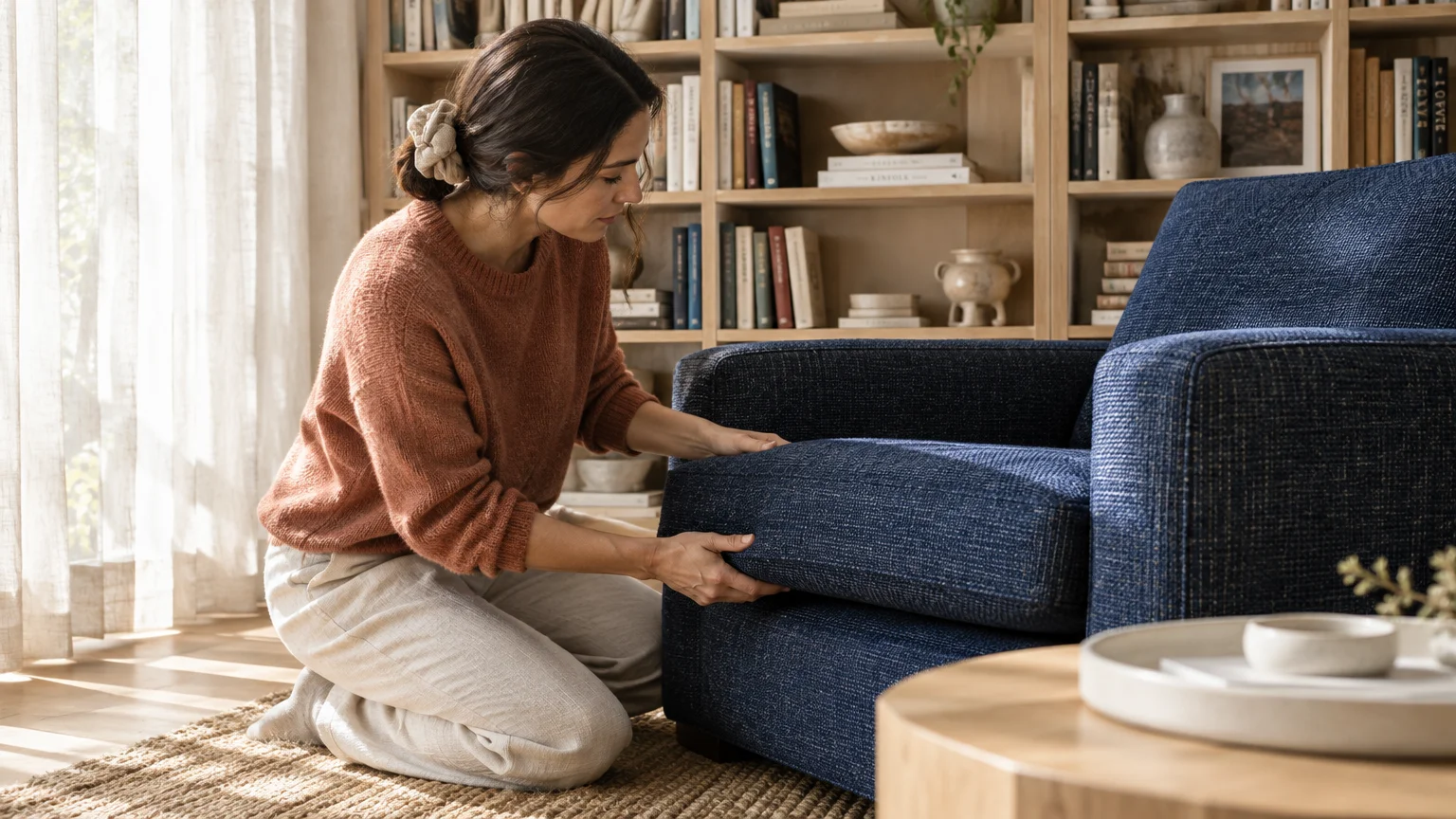
You can lift stubborn grime and freshen your couch without creating unsightly dark rings across delicate upholstery. The secret lies in controlling liquid levels and eliminating mineral deposits before they touch your cushions.
Most upholstery water marks happen when dissolved minerals in tap water travel outward and dry at the edge of a damp circle. Choosing the right solvent or dry cleaning alternative stops these rings before they start.
Here are seven proven couch cleaning tips to restore your seating safely without leaving a single moisture watermark behind.
Decode Your Upholstery Cleaning Code Before Starting
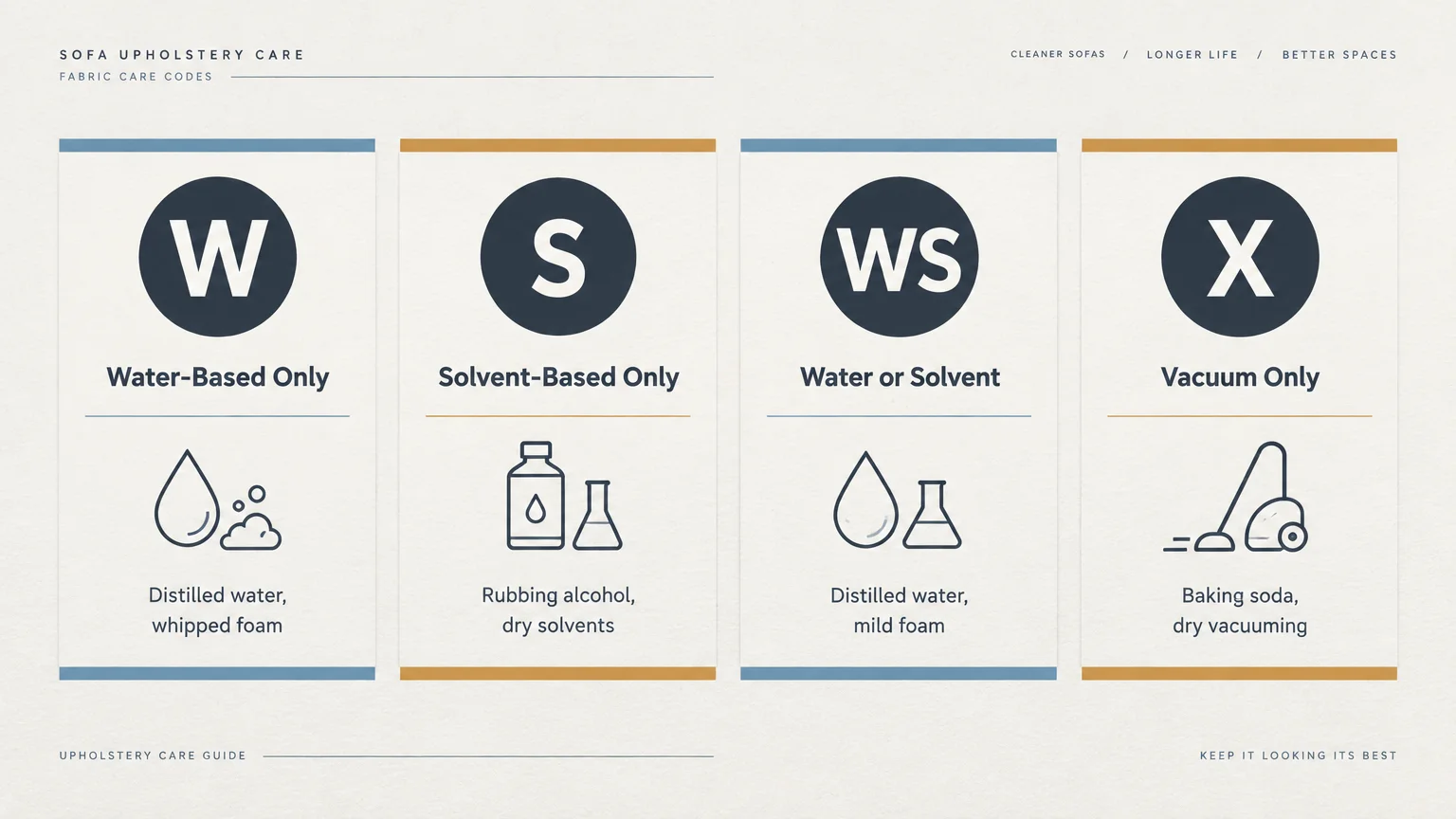
Before applying any cleaner to your couch, inspect its manufacturer care tag. Fabric producers use standardized letter codes to designate safe cleaning media for specific textiles.
You can usually find this tag sewn beneath seat cushions, along the platform decking, or on the bottom dust cover. Ignoring this label can cause permanent fabric shrinkage, dye bleeding, or severe water rings.
| Care Code | Cleaning Meaning | Recommended Cleaning Methods |
|---|---|---|
| W | Water-based cleaning only | Distilled water, whipped dry foam, mild upholstery shampoo |
| S | Solvent-based cleaning only | Rubbing alcohol, dry-cleaning solvent, dry powders |
| WS | Water or solvent cleaning | Distilled water, isopropyl alcohol, mild foam cleaners |
| X | Vacuum or light brush only | Baking soda, cornstarch, vacuuming without liquids |
According to the Federal Trade Commission guidelines on care labeling, matching your cleaning method to textile specifications prevents irreversible fiber damage. Always review these codes before applying any liquid or solvent to your furniture.
01 The Distilled Water and Feathering Method
Tap water contains dissolved minerals such as calcium, magnesium, and sodium. When tap water dries on upholstery, these minerals remain behind to form a rigid, discolored perimeter known as a water ring.
Data from the USGS on water hardness shows that tap water across many regions carries significant dissolved mineral content. Pure distilled water undergoes steam distillation to remove all minerals, ensuring it dries completely invisible on fabric.
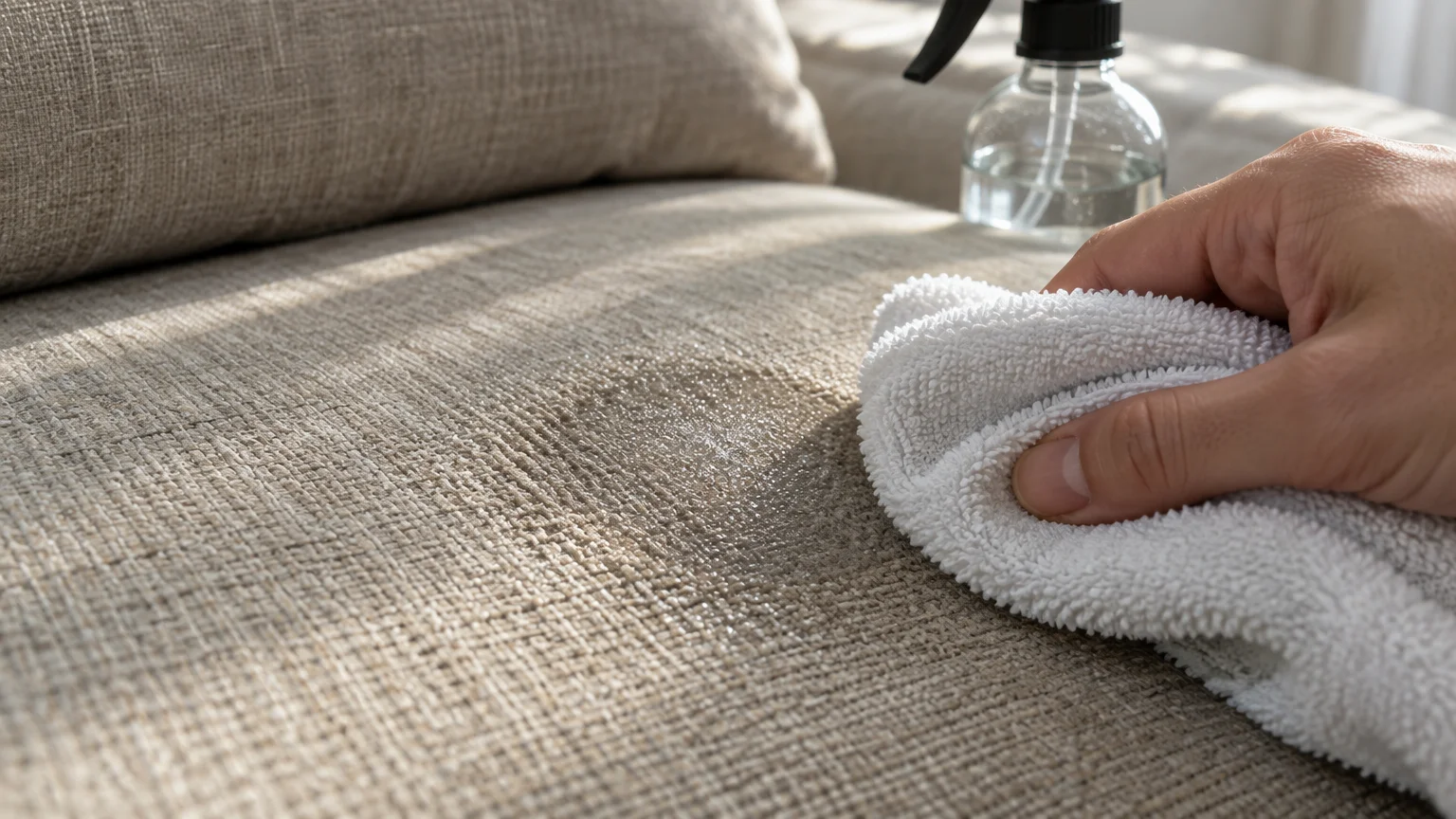
Fill a clean spray bottle with distilled water and set the nozzle to produce an ultra-fine mist. Lightly dampen the soiled area rather than soaking through into the cushion padding beneath.
Press a clean, white microfiber towel firmly against the damp zone to blot away surface grime. Always work gently from the outside boundary inward toward the center to keep the wet area compact.
Next, use the feathering technique to blend the damp edge seamlessly into the dry fabric. Lightly sweep the damp towel outward across the surrounding dry fibers in soft, sweeping strokes.
Feathering disperses the moisture edge across a wide area instead of leaving a distinct line. Because the boundary disappears, your couch dries evenly without a single watermark.
02 High-Proof Isopropyl Alcohol for Microfiber Couches
Microfiber sofas attract skin oils, food spills, and pet fur, but they easily develop dark rings when cleaned with water. Clear isopropyl alcohol offers an ideal solution because it breaks down oils without soaking the cushion backing.
Unlike water, rubbing alcohol evaporates almost instantaneously at room temperature. This rapid evaporation rate prevents moisture from penetrating the internal batting, which stops water stains before they can form.
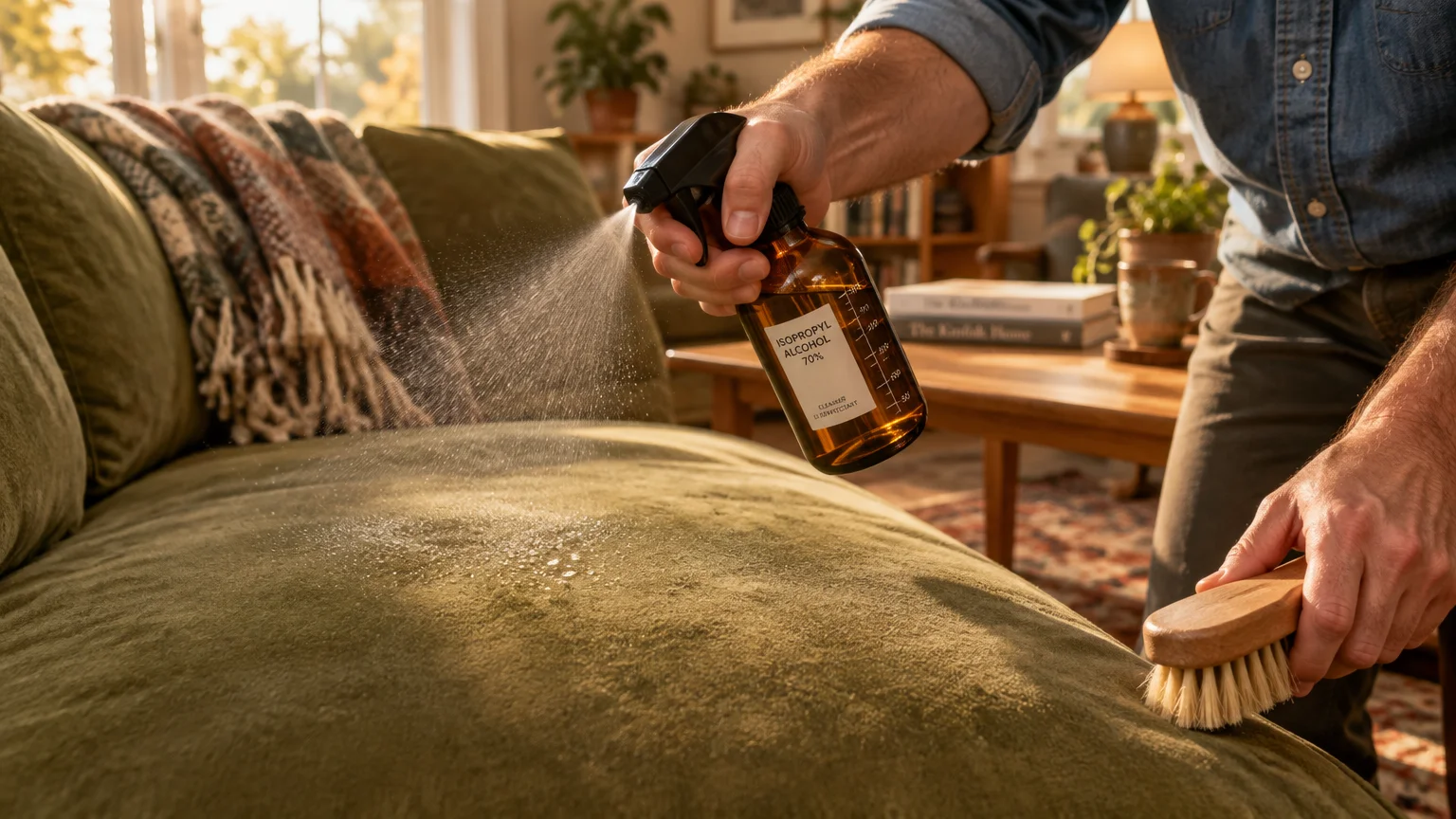
Pour 70 percent or 91 percent clear isopropyl alcohol into a clean, dedicated spray bottle. Lightly mist the stained fabric from a distance of six to eight inches.
Scrub the damp area immediately using a clean white kitchen sponge or a soft-bristled brush. Work in circular motions to lift embedded dirt directly into the sponge without spreading grime across the cushion.
Let the alcohol air-dry completely for fifteen to twenty minutes. The treated spot may feel slightly stiff or crusty to the touch once the alcohol evaporates.
Swirl a clean, dry nylon-bristle brush over the stiff fibers to restore their plush, velvety texture. The microfibers will immediately separate and return to their original softness.
Always maintain strong air circulation in the room while spraying alcohol. Chemical safety data from PubChem on Isopropanol emphasizes that alcohol vapors require adequate room ventilation and must remain away from open flames.
03 The Whipped Dry Foam Cleaning Technique
Soaking a fabric cushion drives surface soil deep into the internal foam filling. As the cushion dries, that trapped moisture wicks back to the surface and creates brown, muddy water rings.
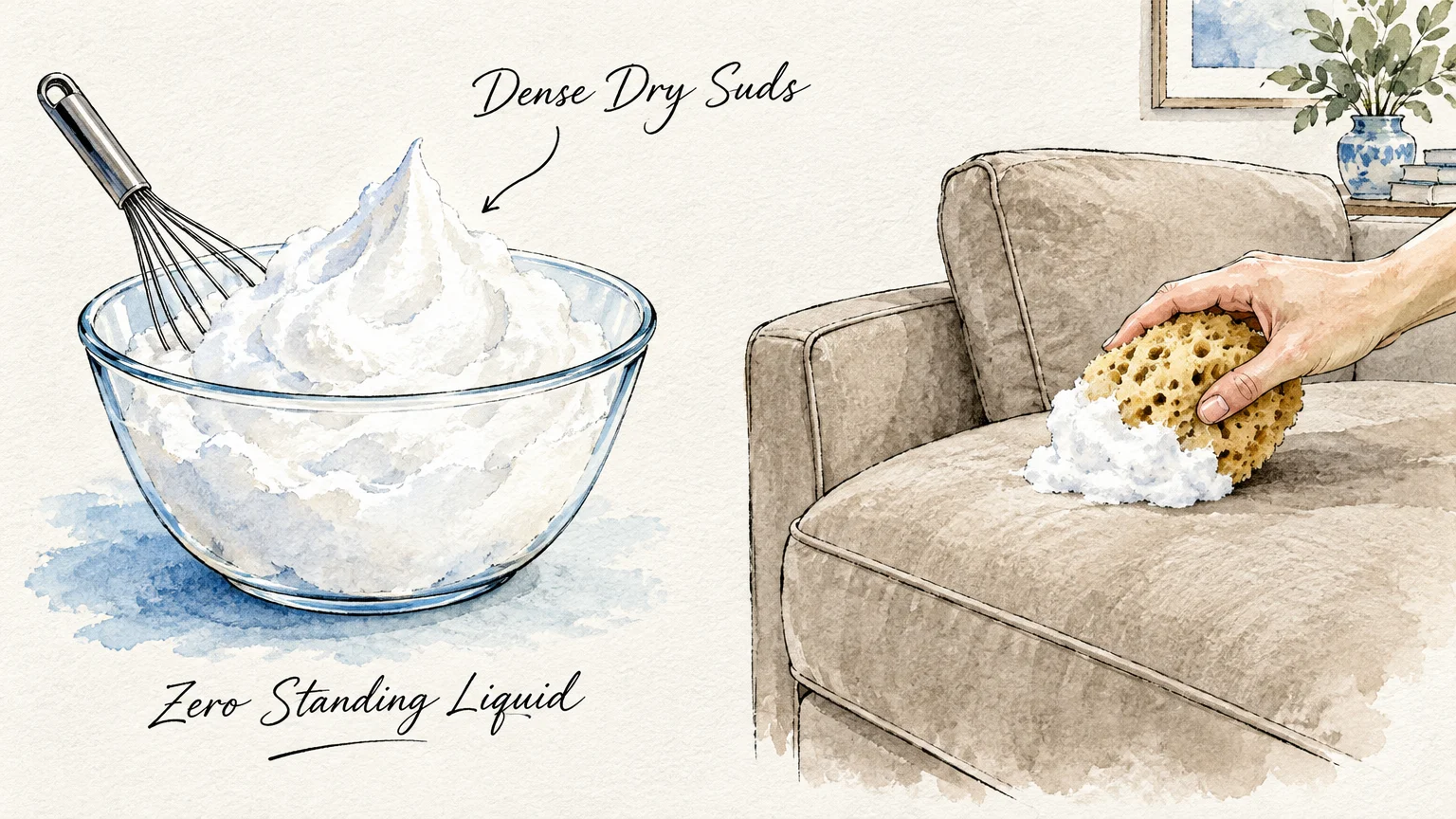
Whipped dry foam cleans fabric surfaces thoroughly while keeping moisture out of the interior foam. You clean the textile fibers using only detergent bubbles rather than liquid moisture.
Combine one-fourth cup of mild, dye-free dish soap with one cup of warm distilled water in a bowl. Beat the mixture with an electric hand mixer or wire whisk until stiff, shaving-cream-like foam forms.
Scoop only the dry suds off the top using a clean microfiber cloth or soft sponge. Never dip your cleaning tool down into the liquid reservoir sitting at the bottom of the bowl.
Work the suds gently into the couch fabric using overlapping circular motions. The foam bubbles encapsulate grease and grime through surface tension without releasing free liquid into the cushion batting.
Wipe away the dirty lather immediately using a dry white towel, lifting the trapped dirt away. The fabric will feel lightly refreshed but never soaked through.
Position a portable fan directly in front of the cleaned section for twenty minutes. Fast airflow speeds up surface drying and ensures no moisture boundaries remain.
04 Baking Soda and Cornstarch Dry Absorption
When your couch care label displays code S or X, using liquid cleaners presents a serious risk of discoloration. An entirely dry powder treatment lets you lift soil, body oils, and odors without any water marks.
Baking soda acts as a mild alkaline deodorizer that neutralizes everyday household odors. Cornstarch contains microscopic structures that absorb hair oils, greasy food residues, and pet dander from upholstery strands.
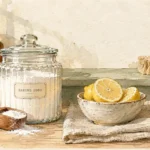
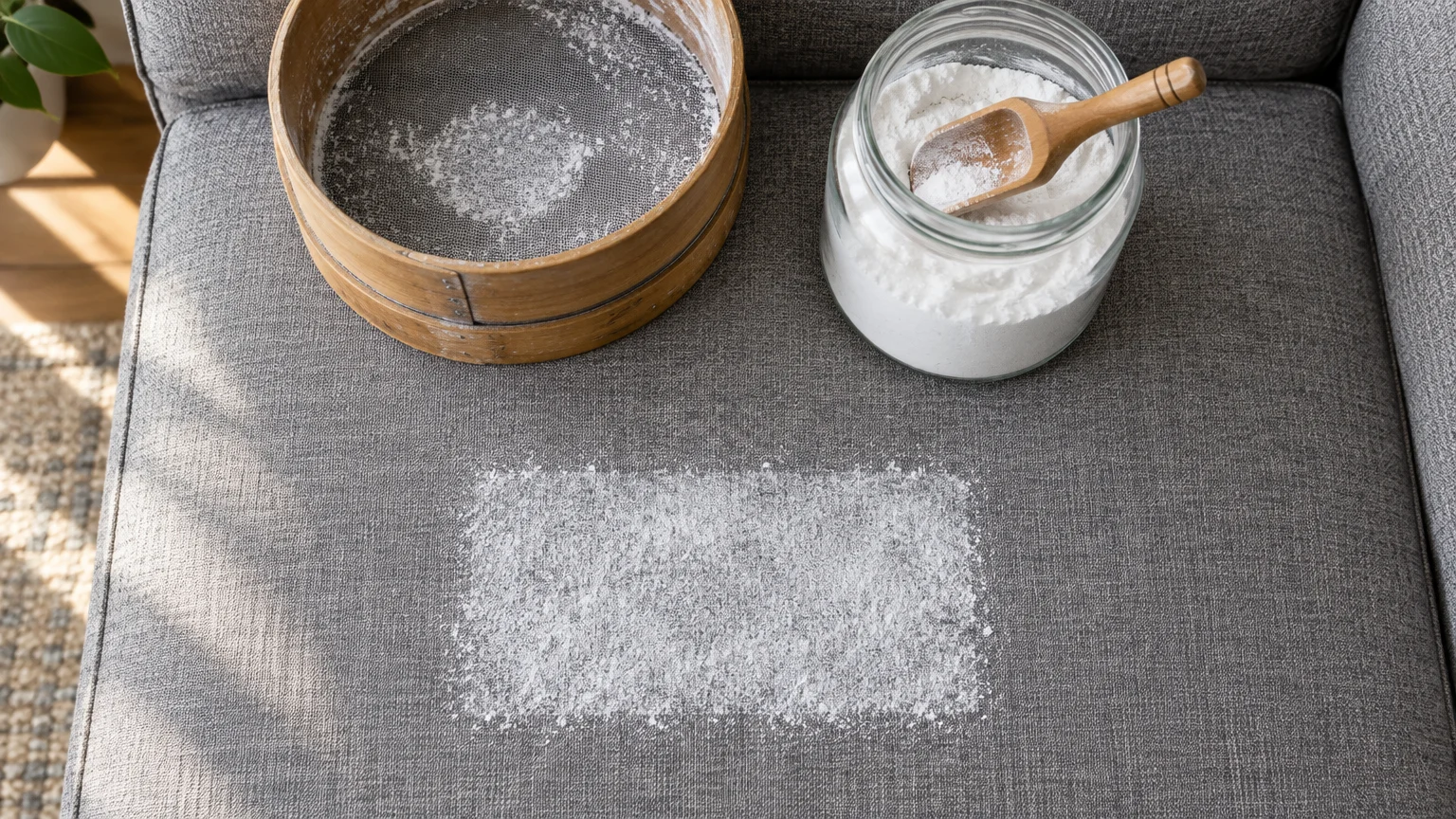
Mix equal parts baking soda and cornstarch together in a small shaker bottle or glass jar. Dust the mixture evenly across your sofa cushions using a fine kitchen mesh strainer.
Massage the dry powder blend gently into the upholstery weave using a soft horsehair brush. Use light pressure to ensure the powder reaches deep between fibers without causing fabric abrasion.
Allow the powder to sit undisturbed on the furniture for at least forty-five minutes. During this rest period, the starch absorbs embedded body oils while the baking soda neutralizes stale scents.
Vacuum the sofa thoroughly using an upholstery attachment fitted with a lint strip. Run the vacuum head across the cushion in overlapping horizontal and vertical rows until you remove all powder residue.
05 Distilled White Vinegar for Dissolving Mineral Rings
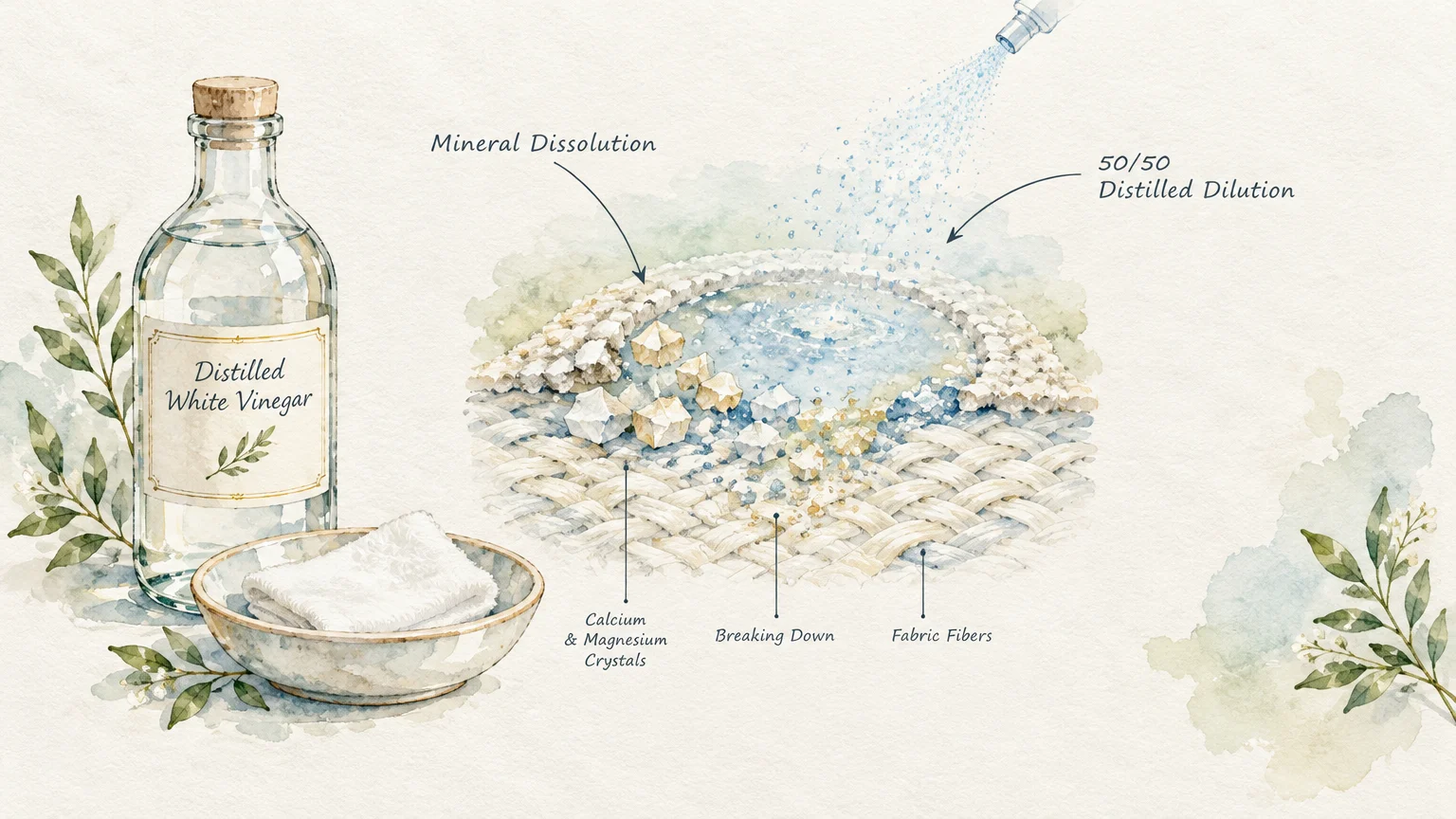
If tap water spills or past cleaning attempts have left cloudy rings on your couch, white vinegar provides a safe corrective remedy. The mild acetic acid dissolves dried mineral deposits and breaks down alkaline detergent films.
Combine equal parts plain white distilled vinegar and pure distilled water in a clean spray bottle. Never use tap water for this solution, because adding tap water introduces new minerals to the fabric.
Moisten a clean white cotton washcloth with the vinegar mixture until it feels damp but not saturated. Never spray the acidic liquid directly onto your sofa cushions.
Press the damp cloth firmly along the outer perimeter of the existing water ring. Work inward toward the center to avoid spreading the mineral boundary outward into surrounding dry fibers.
Press a clean, dry microfiber cloth over the area to blot up both the vinegar solution and the dissolved mineral particles. The mild vinegar scent will evaporate completely as the fabric dries.
06 Commercial Dry-Cleaning Solvents for Code S Fabrics
Natural upholstery fibers like linen, cotton blends, and rayon often shrink or brown when exposed to water. Furniture with these delicate textiles requires water-free dry-cleaning solvents to lift soils safely.
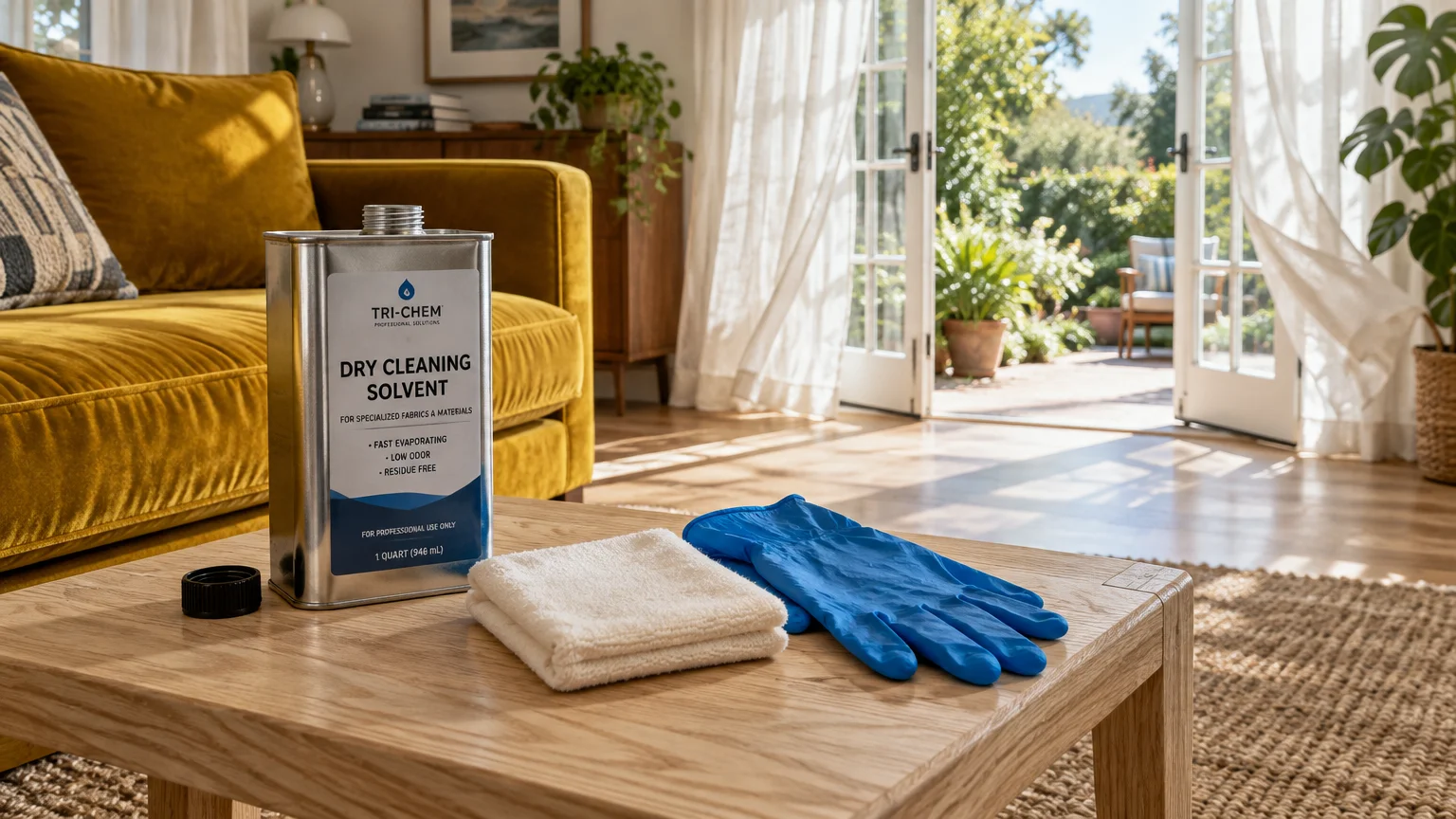
Commercial upholstery dry-cleaning fluids use non-aqueous hydrocarbon solvents to dissolve oily stains and grime. Because these professional solutions contain zero water, they cannot produce water rings or fiber puckering.
Pour a small splash of dry-cleaning solvent onto a clean, colorfast white cotton cloth. Never pour chemical solvent directly onto couch upholstery, as excess liquid can dissolve the underlying polyurethane foam.
Blot the stained area gently with your solvent-moistened cloth, working from the exterior edge inward. Rotate the cloth frequently so you always apply a fresh, clean section to the fabric.
Proper air exchange is essential whenever you handle chemical dry-cleaning fluids indoors. Follow the EPA guidelines on indoor volatile organic compounds by opening exterior windows and running a window exhaust fan during use.
Allow the treated section to air-dry completely before sitting on the furniture. The solvent will evaporate rapidly without leaving boundary marks or sticky chemical residues behind.
07 Low-Moisture Steam with a Terry Cloth Buffer
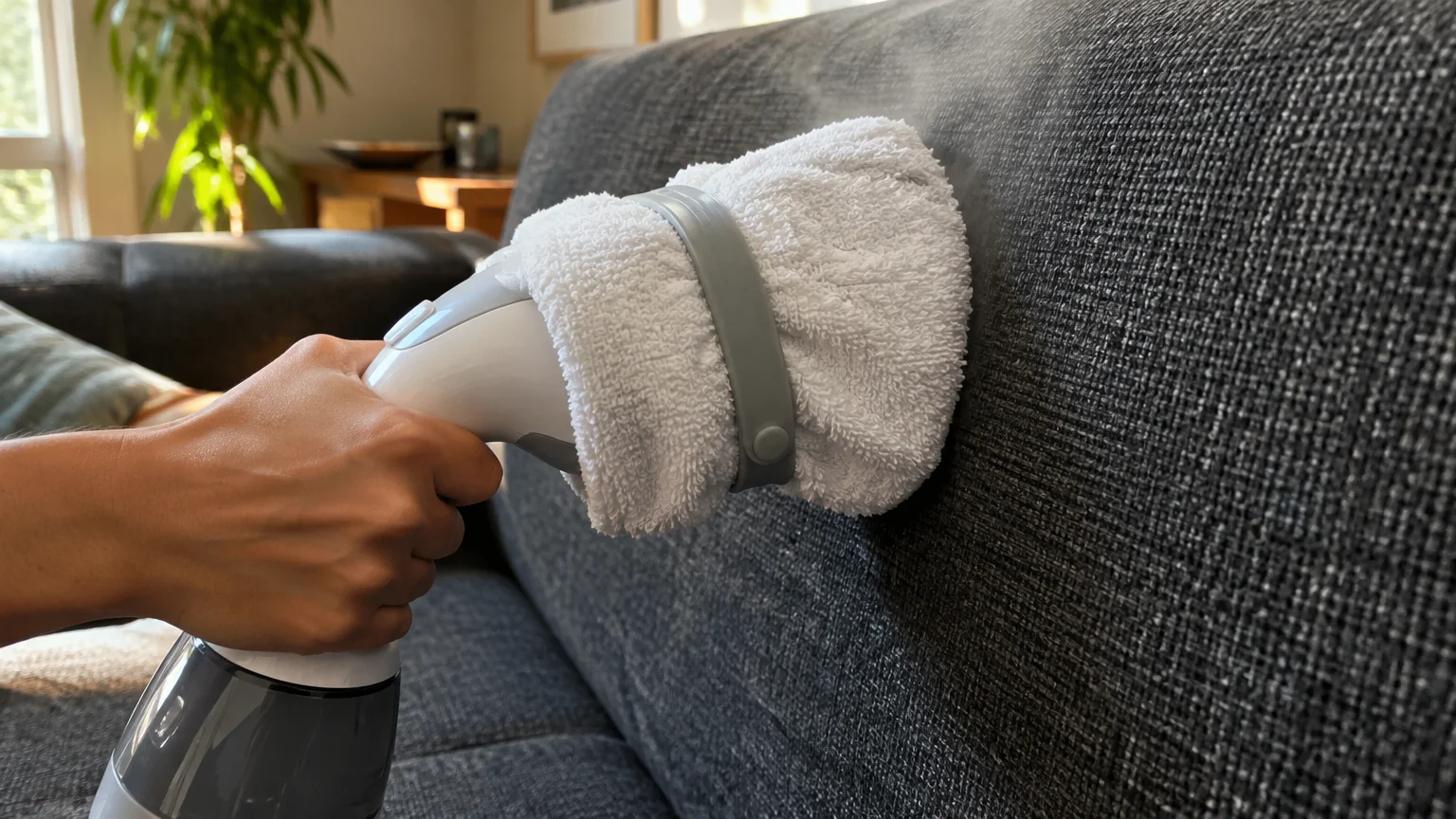
Steam cleaning provides deep thermal sanitization, but direct steam jets can quickly drench furniture foam. Wrapping a thick cotton terry cloth towel around your steam nozzle creates an effective moisture barrier.
The terry cloth towel catches liquid condensation droplets while permitting hot dry steam to pass through into the upholstery. This vapor loosens ground-in soil and kills allergens without soaking the internal padding.
Always fill your steam cleaner boiler with distilled water to avoid depositing hard water minerals onto your furniture. Let the appliance heat completely until it produces dry, pressurized vapor.
Secure a thick white cotton hand towel tightly over the upholstery steam head using heavy-duty elastic bands. Make sure the towel sits flat across the nozzle face with no loose folds.
Glide the padded steam head across your sofa fabric in slow, overlapping strokes. Inspect the towel face every few minutes and rotate it to a clean, dry section as it collects grime.
Standard CDC home hygiene and cleaning guidelines show that thermal steam safely reduces household allergens on porous surfaces without aggressive chemicals. Your furniture will dry in under fifteen minutes because the towel absorbed excess moisture.
Step-by-Step Guide to Erasing an Existing Water Stain Ring
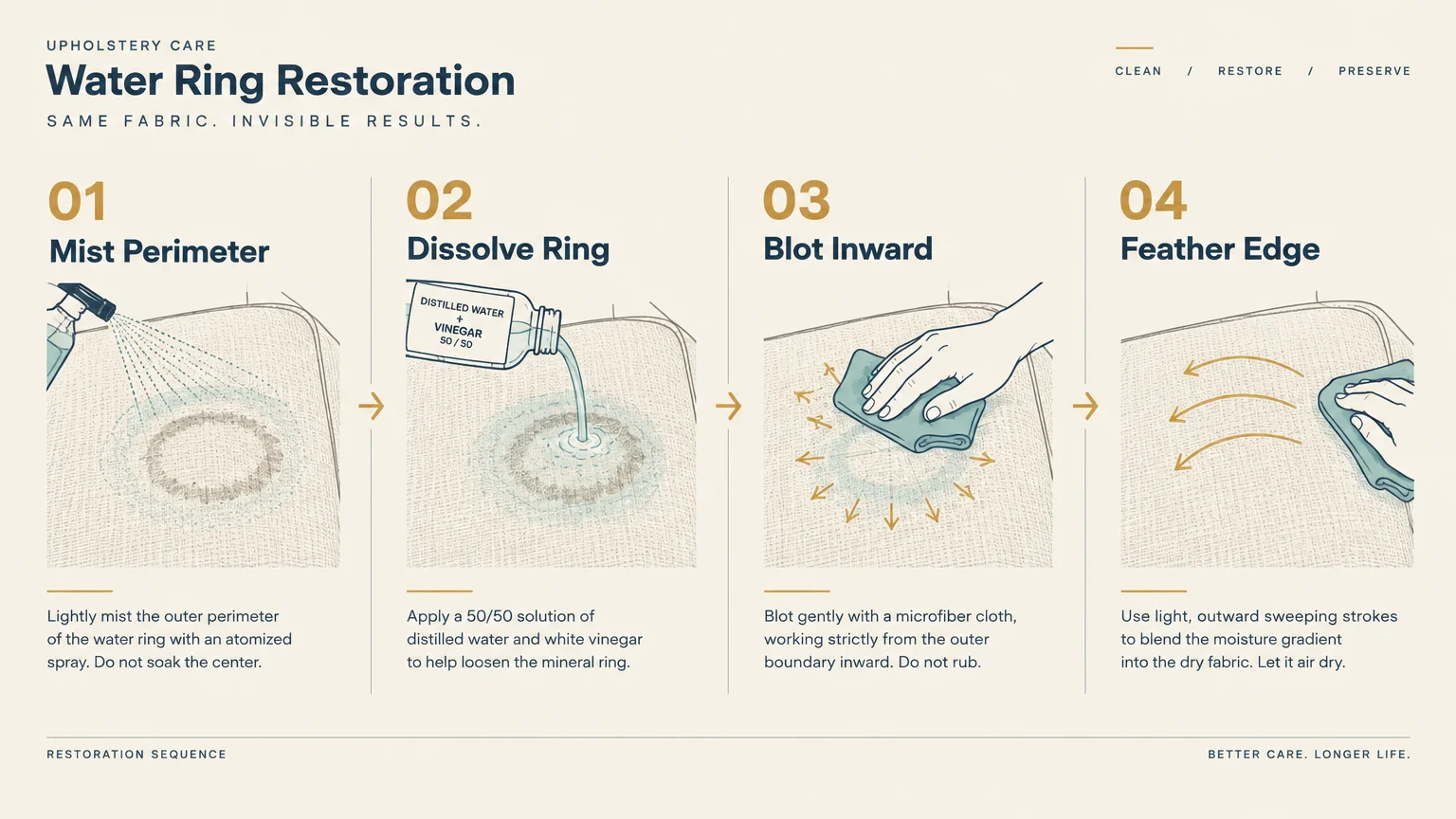
When an accidental drink spill or poor cleaning technique leaves a prominent watermark on your couch, you can erase it with methodical care. The goal is to reactivate the dried mineral line and feather it into the surrounding fabric.
Follow these actionable steps to dissolve the watermark boundary and restore an even, uniform cushion surface.
- Vacuum the entire cushion panel thoroughly with an upholstery attachment to eliminate loose surface dust.
- Moisten a clean white microfiber cloth with pure distilled water until damp to the touch.
- Press the damp cloth directly onto the dark perimeter line of the water ring to rehydrate the mineral edge.
- Rub the rehydrated line gently using short, outward strokes to feather the moisture into the dry surrounding fibers.
- Blot the area firmly with a dry, thick white terry cloth towel to draw out liberated minerals and moisture.
- Aim an electric fan directly at the treated spot on high speed to ensure rapid, seamless drying.
If the watermark covers a substantial portion of the cushion, clean the entire fabric panel from seam to seam. Forcing the moisture boundary to end at the sewn seams prevents visible lines from settling on flat cushion faces.
Rapid Drying Habits That Prevent Water Rings
How fast your furniture dries plays a critical role in whether water stains appear. Extended drying periods allow residual water deep inside cushion padding to wick back to the surface, creating dark rings.
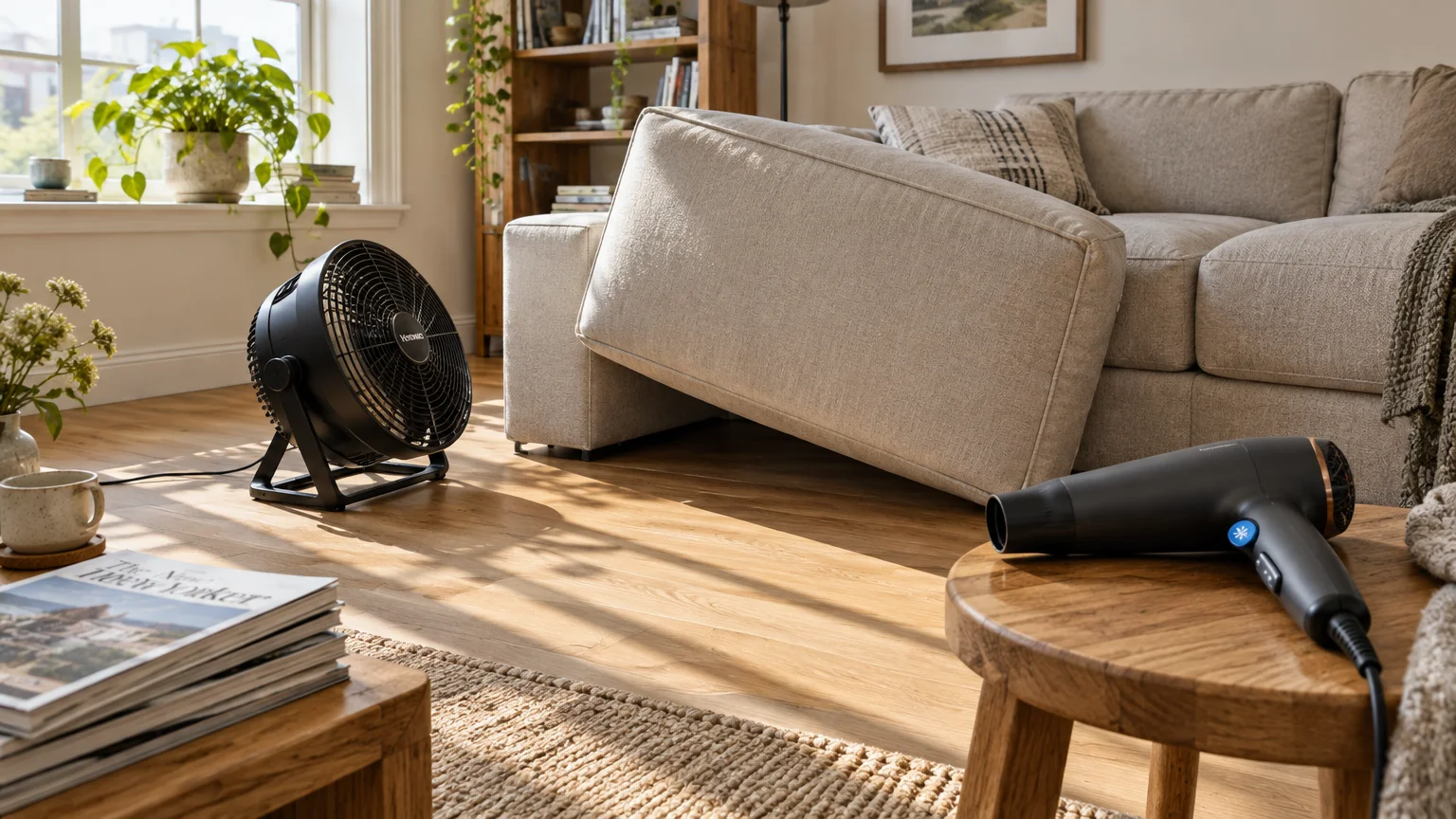
Set up high-velocity oscillating floor fans pointed directly at damp cushions immediately after cleaning. Increasing air circulation across fabric fibers cuts drying times by more than half.
If you need to spot-dry an area quickly, use a handheld hair dryer set strictly on its cool air mode. Keep the nozzle twelve inches away and move it continuously in wide circles to prevent heat damage.
Never leave freshly cleaned fabric furniture in a closed room with stagnant, humid air. Trapped moisture slows evaporation and can lead to musty odors and recurring boundary stains.
Long-Term Fabric Sofa Care and Maintenance Checklist
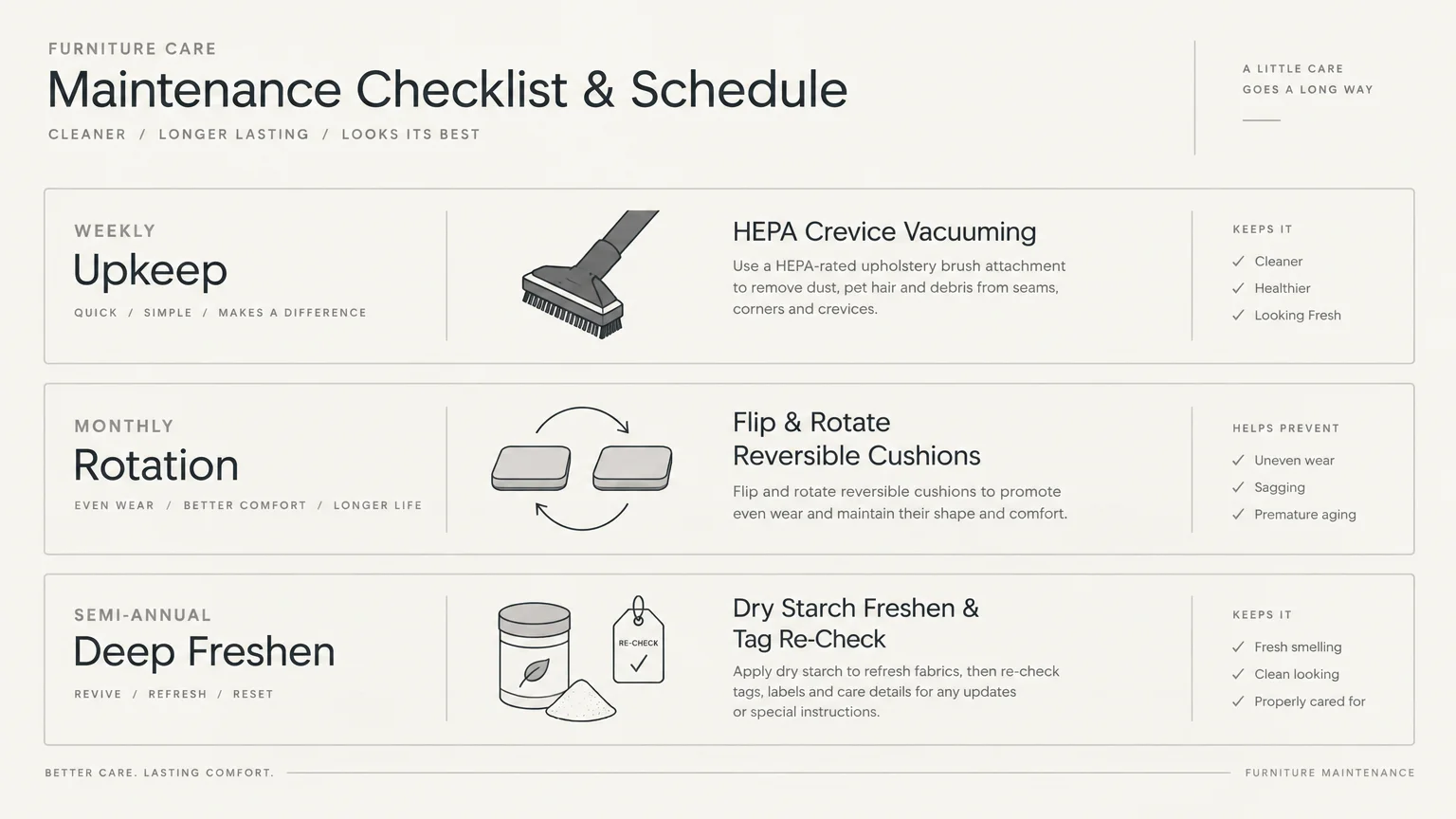
Consistent upholstery maintenance stops dry dirt from turning into mud when drinks spill or condensation lands on cushions. Simple preventative routines keep your furniture clean, comfortable, and ring-free.
- Vacuum all seating cushions and crevices weekly using a soft brush attachment to remove abrasive grit.
- Rotate and flip loose sofa cushions monthly to distribute everyday wear and sunlight exposure evenly.
- Blot accidental spills immediately with clean, dye-free paper towels instead of rubbing the stain into the fibers.
- Apply a manufacturer-approved fabric protector spray to repel liquid spills and prevent rapid absorption.
- Keep pets on washable throw blankets to protect couch cushions from body oils, dirt, and moisture.
Establishing these simple habits protects delicate upholstery fibers from premature wear. Your living room will stay fresher and more inviting with minimal effort.
Practical Next Steps for Your Living Room
Take five minutes today to check the care tag under your living room couch cushions. Knowing your furniture code lets you choose the safest cleaning method before an accidental spill happens.
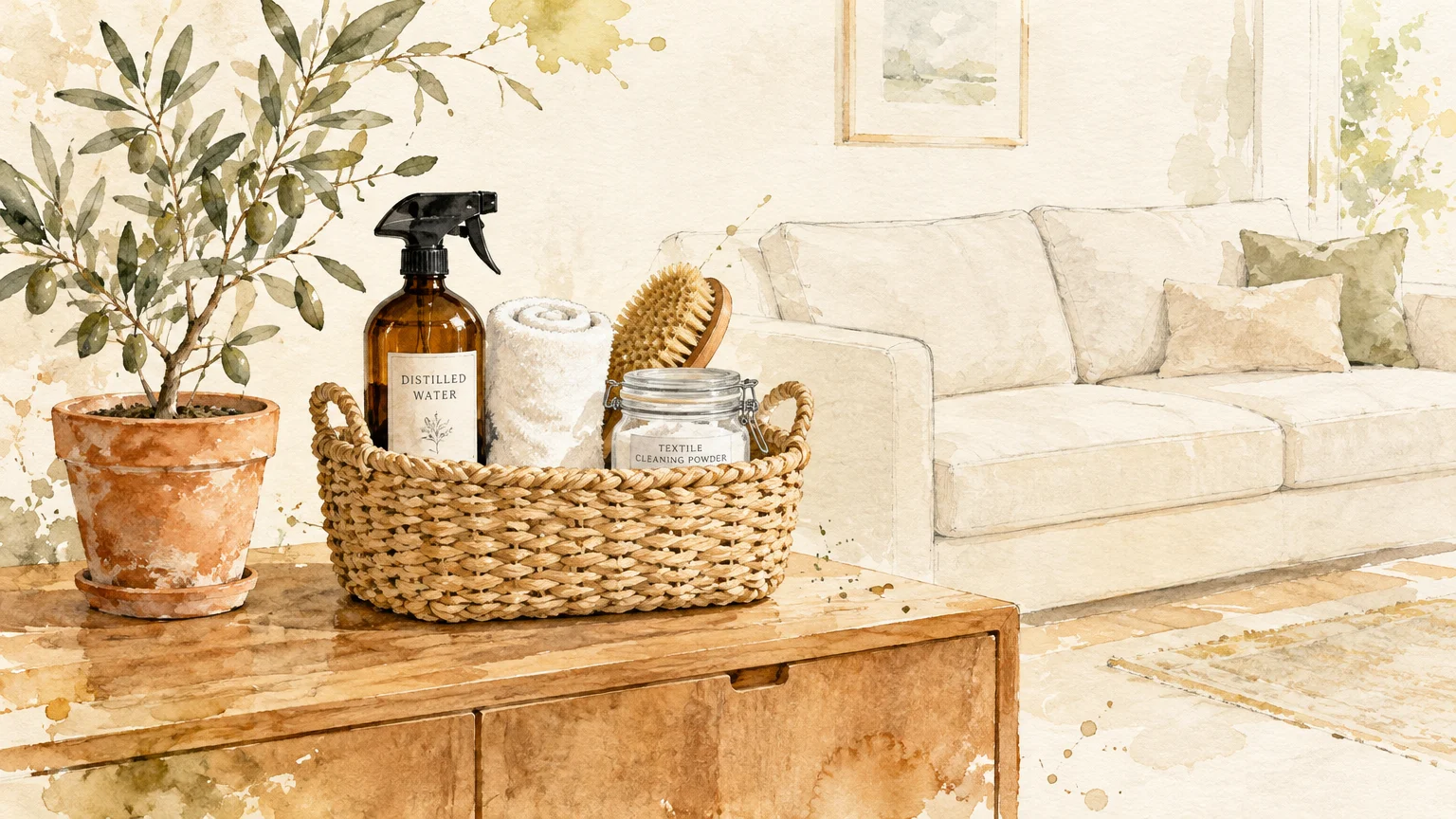
Place a bottle of distilled water and two clean white microfiber cloths in your cleaning cabinet today. Having the right tools ready ensures you can treat spots immediately without creating water stains.