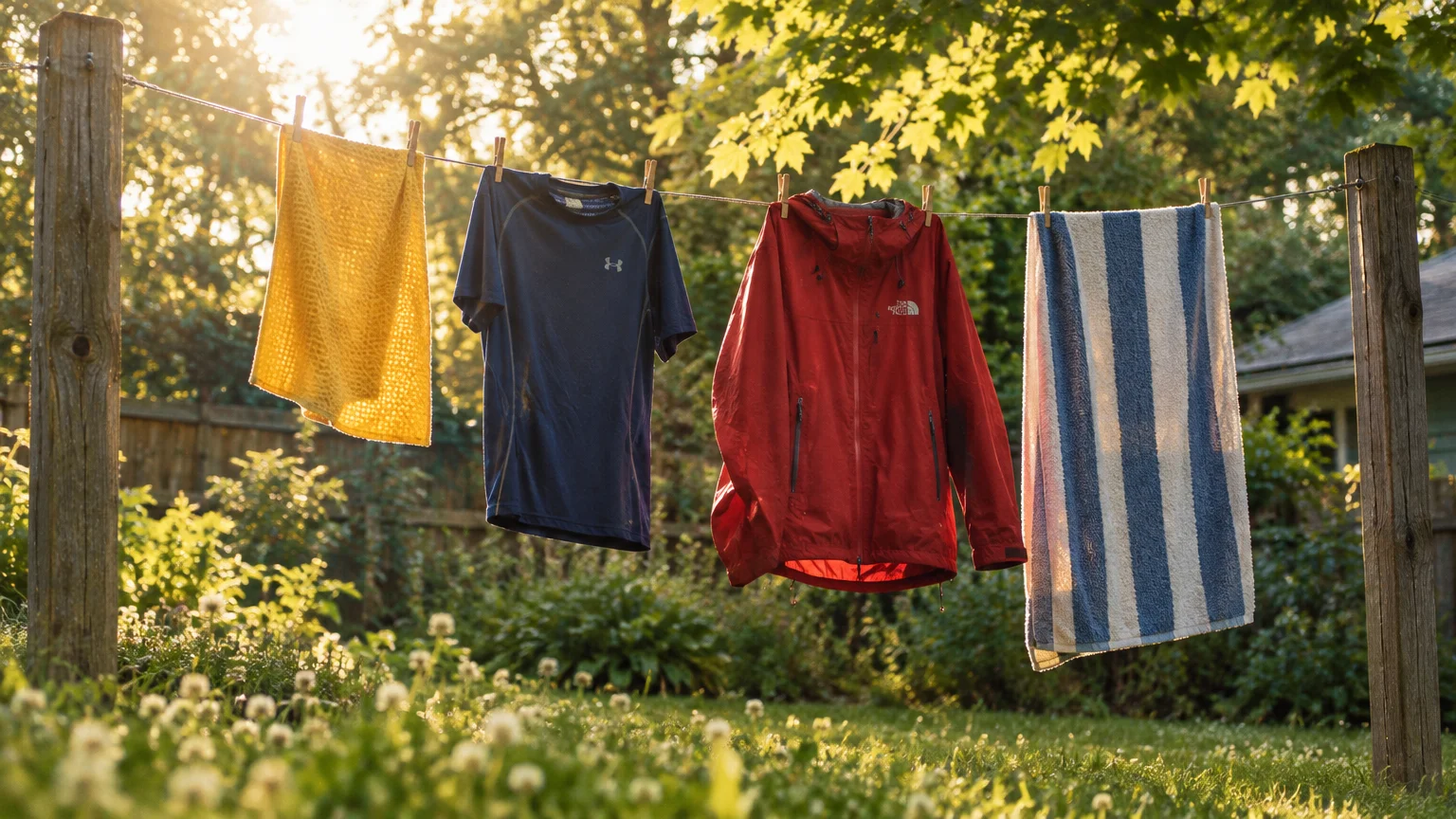
Pouring liquid fabric softener into your rinse cycle feels like an easy way to get fresh, fluffy laundry. Yet this routine often ruins your favorite garments, destroys absorbency, and locks in foul odors.
Fabric softeners work by depositing an oily, hydrophobic chemical layer over textile fibers. When you apply this waxy coating to the wrong materials, you compromise their function, safety, and lifespan.
Discover why you should never use fabric softener on specific household items, and explore proven laundry tips that keep your textiles soft, durable, and clean.
How Fabric Softeners Actually Treat Your Clothes
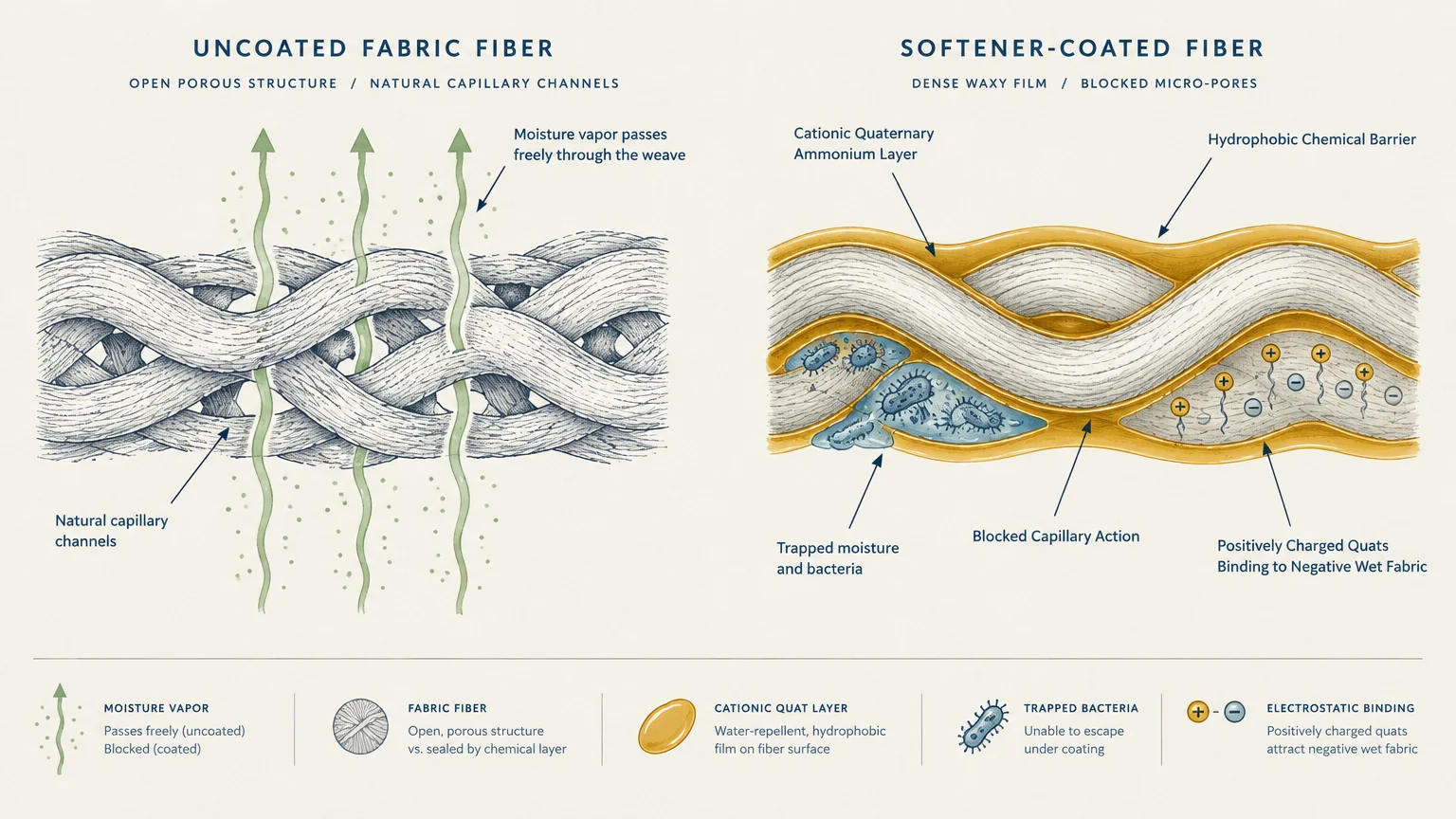
Most commercial fabric softeners rely on quaternary ammonium compounds, commonly known as quats, blended with silicone oils and synthetic fragrance. These cationic surfactants carry a positive electrical charge that clings directly to the negative charge on wet fabrics.
Instead of cleaning your clothes, the rinse cycle deposits this fatty emulsion evenly across every thread. The resulting lubricating layer makes fibers feel silky and eliminates static cling by keeping individual threads separated.
Unfortunately, that luxurious hand-feel comes with a steep functional penalty. The very barrier that softens your fabrics is hydrophobic, meaning it actively repels water and prevents air from circulating.
Over repeated wash cycles, this chemical residue accumulates into an impenetrable, waxy crust. This buildup traps sweat, shields bacteria from detergents, and permanently degrades specialized textile weaves.
01 Microfiber Cleaning Cloths and Mop Heads
Microfiber is a technological wonder made from ultra-fine strands of polyester and polyamide split to a fraction of a human hair. These split channels create millions of tiny hooks that grab dust, grease, and moisture through electrostatic attraction.
Using fabric softener on microfiber immediately ruins this microscopic structure. The oily lubricating agents fill the split wedge-shaped voids and coat the electrostatic fibers in slick silicone.
Once coated, your cleaning cloth cannot grab particles or absorb spilled liquids. Instead of cleaning surfaces, the compromised cloth smears grease across countertops and leaves cloudy streaks on glass and mirrors.
Microfiber mop heads suffer the same fate when exposed to rinse-cycle conditioners. The waxy film prevents the pad from lifting grime from tile or hardwood, leaving behind dull residue across your floors.
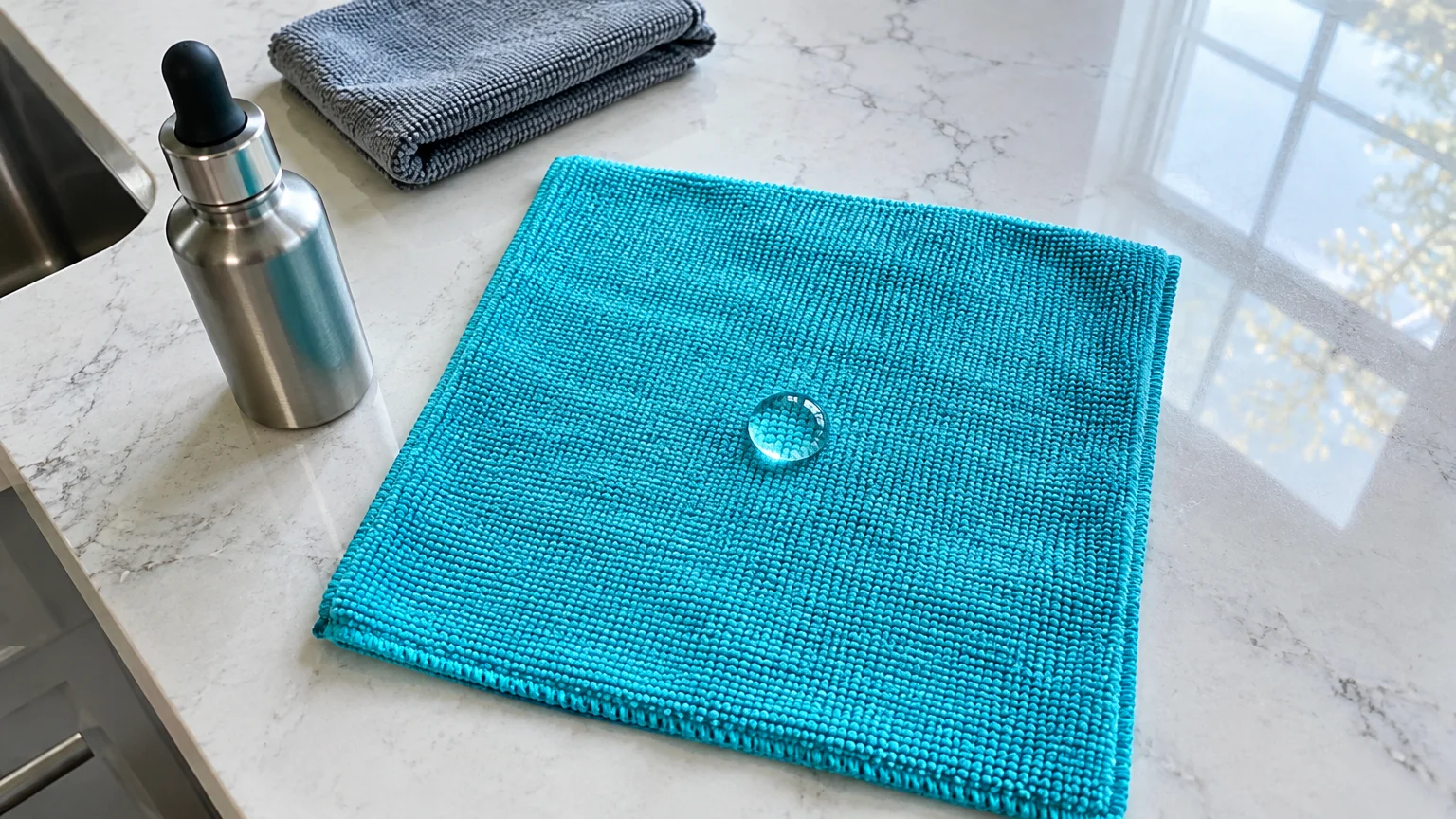
You can test your microfiber cloths for softener damage by placing a small water droplet on the surface. If the water beads up instead of sinking into the cloth immediately, waxy residues are present.
To protect your cleaning tools, wash all microfiber cloths separately in warm water using a mild liquid detergent. Skip dryer sheets entirely and tumble dry on low heat or hang them to air-dry.
02 Bath Towels, Hand Towels, and Washcloths
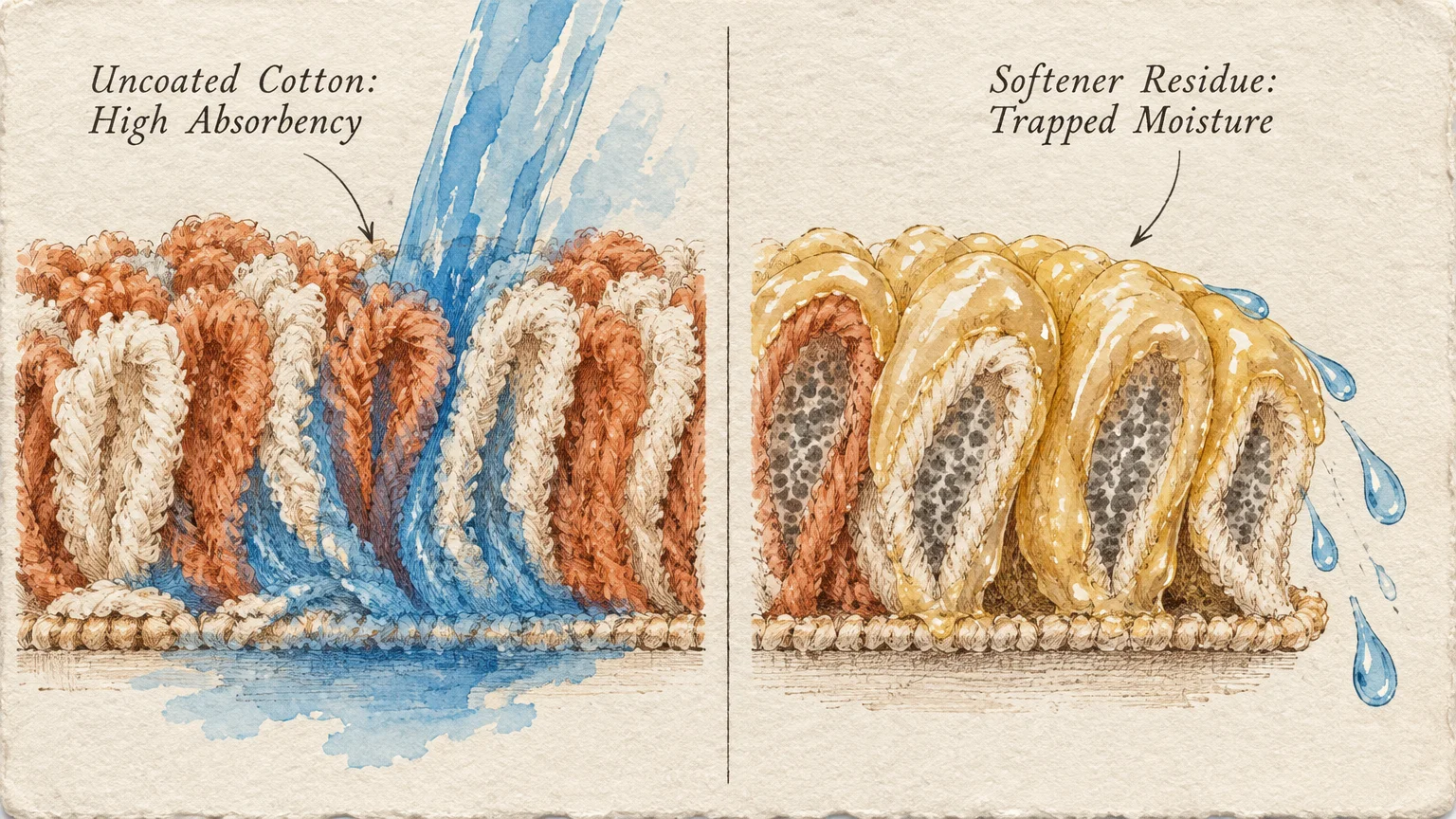
The relationship between towels and fabric softener is one of the most common fabric softener mistakes in modern homes. While everyone loves the plush sensation of a new bath sheet, commercial conditioners actively destroy towel absorbency.
Terrycloth towels rely on dense loops of pure cotton that pull water away from your skin through capillary action. When you add liquid conditioner, hydrophobic oils coat those cotton loops and block the capillary pores.
As a result, your towel stops absorbing water efficiently and simply pushes moisture around your body after a shower. You will find yourself rubbing harder just to dry off, which irritates sensitive skin.
Worse yet, the waxy barrier traps moisture inside the towel’s inner fibers long after you hang it up. Because the core stays damp, airborne fungi and bacteria thrive inside the fabric weave.
This bacterial colony produces that sour, musty odor that returns the moment clean towels touch warm water. Eliminating softener restores your towels’ natural thirst and keeps them smelling clean between washes.
Perform a quick absorbency check on your bath towels by pouring two tablespoons of water onto a flat towel surface. A healthy cotton towel absorbs the water instantly, while a softener-coated towel lets the puddle sit.
03 Athletic Wear and Moisture-Wicking Synthetic Apparel
Effective athletic wear care requires keeping synthetic technical weaves clean and porous. Modern workout shirts, leggings, and running socks rely on polyester, nylon, and elastane engineered to wick sweat away from your skin.
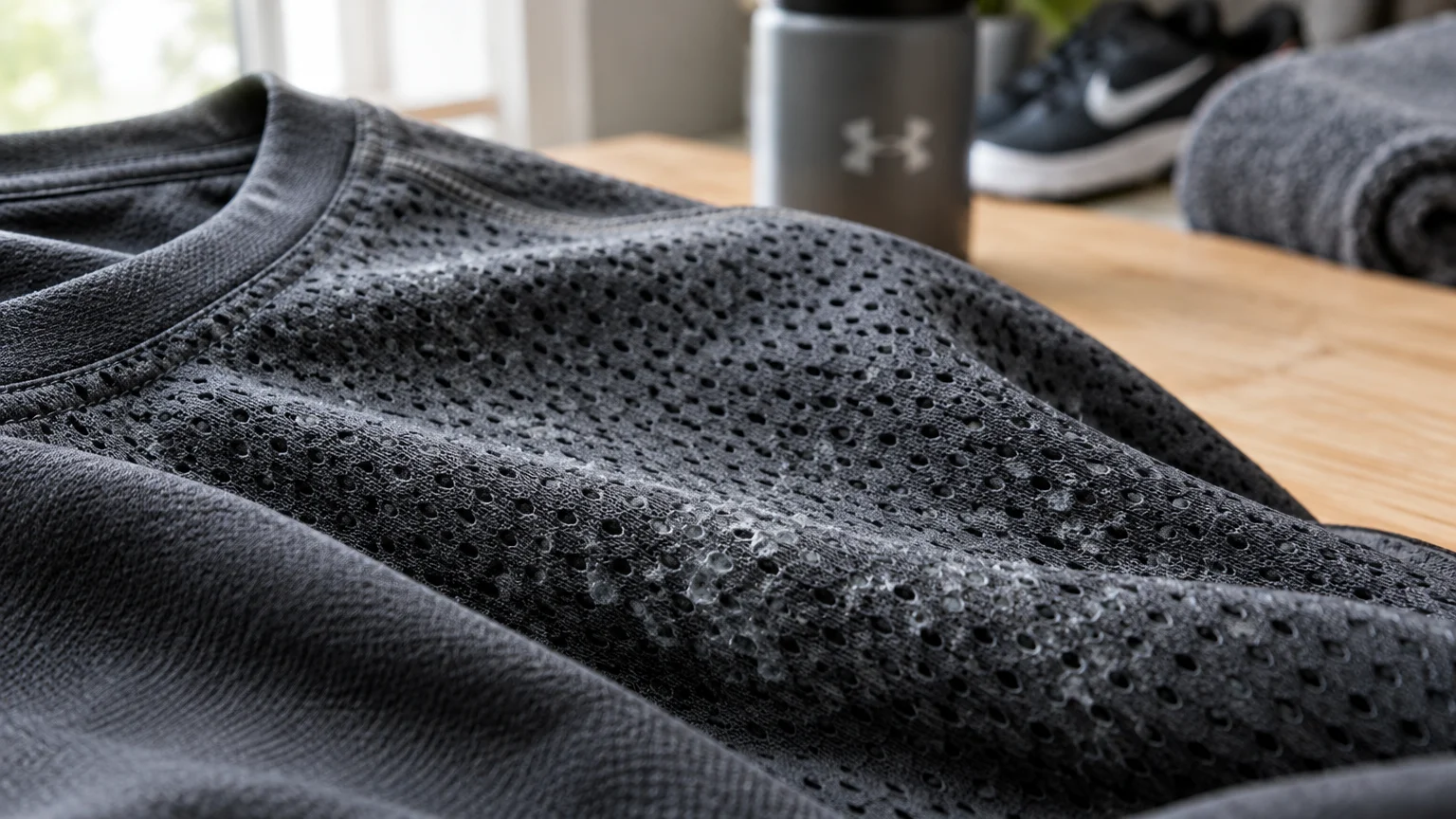
These technical fabrics move perspiration to the garment’s outer surface, where it evaporates quickly to regulate your body temperature. Fabric softener destroys this moisture management system by sealing the grooved micro-channels with water-resistant oils.
When you exercise in softener-treated activewear, sweat stays trapped against your skin. You feel hotter, heavier, and significantly less comfortable during demanding workouts or daily walks.
The oily coating also binds with body sebum, dead skin cells, and skin bacteria. Standard wash cycles cannot penetrate the waxy film, locking the sour sweat smell deep inside the synthetic threads.
Over time, body heat reactivates this trapped bacteria whenever you start moving. The garment develops a permanent gym stench that ordinary laundering cannot eliminate.
Furthermore, conditioners degrade elastane and spandex fibers, causing your favorite leggings and sports bras to lose their elasticity and sag prematurely.
For persistent odors in gym wear, wash your technical apparel with specialized sports detergents formulated to dissolve body oils. Alternatively, soak smelly garments in a solution of four parts cool water and one part white vinegar before washing.
04 Children’s Flame-Resistant Sleepwear
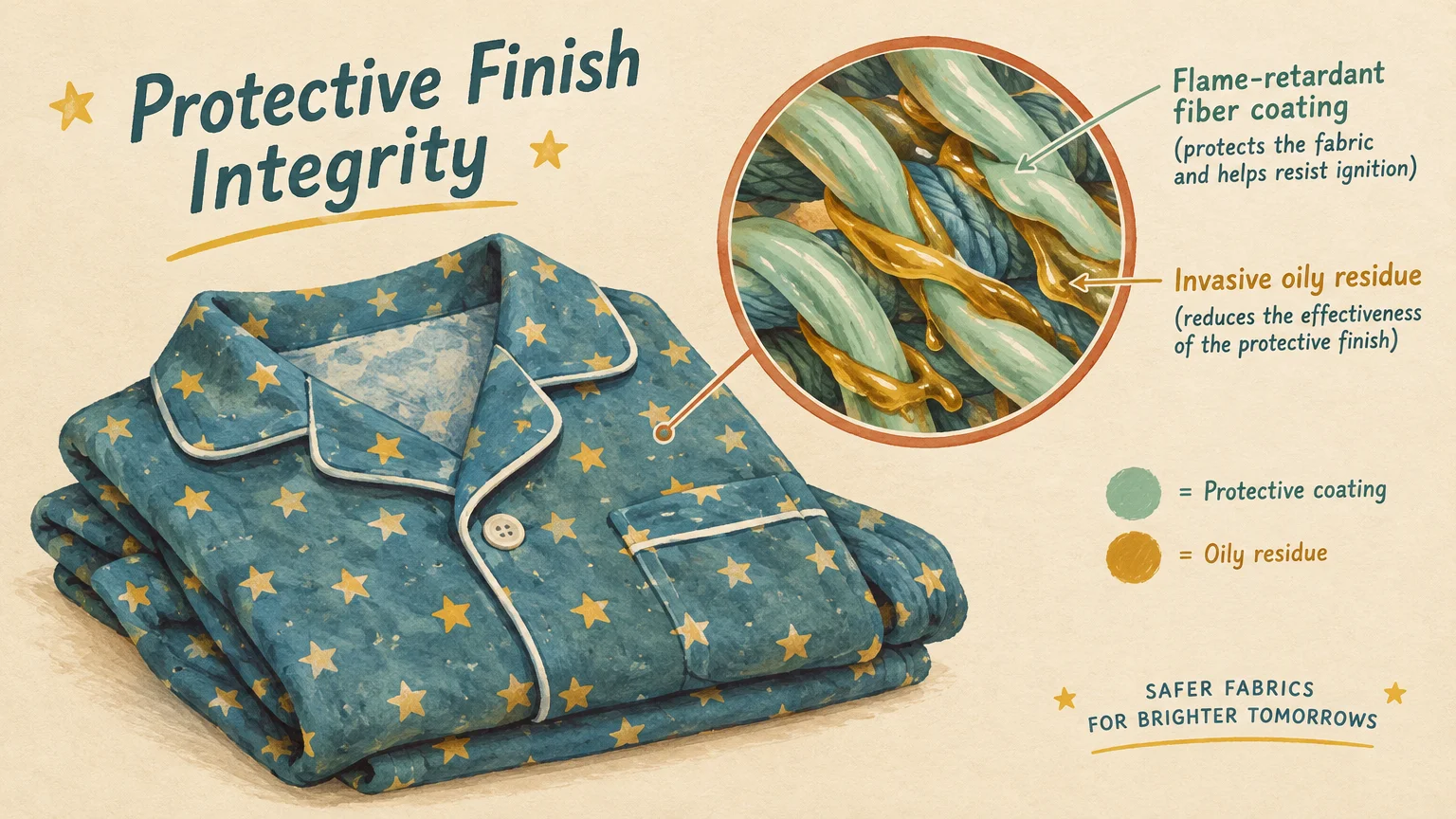
Never use fabric softener on children’s flame-resistant sleepwear, as doing so introduces a severe household safety hazard. Federal safety standards require children’s sleep garments to resist catching fire from small open flames.
Manufacturers treat these fabrics with specialized self-extinguishing chemistry or knit them from naturally flame-retardant fibers. According to safety guidance from the U.S. Consumer Product Safety Commission, softeners directly compromise this critical thermal protection.
Liquid softeners and dryer sheets deposit a layer of combustible fats and hydrocarbon waxes across the cloth surface. This oily coating acts like fuel if the garment comes into contact with a match, candle, or space heater.
Instead of self-extinguishing, the treated garment ignites more readily and burns more rapidly. Even a single laundry load with fabric softener can significantly diminish a garment’s flame resistance.
The U.S. Environmental Protection Agency Safer Choice program recommends checking product labels carefully to avoid synthetic chemical additives on sensitive garments. Maintaining flame resistance protects children from accidental burn injuries during everyday household accidents.
Always check garment tags on children’s pajamas and robes for flame-resistance warnings. Wash these essential items in warm water with standard detergent, avoiding all conditioning additives and dryer sheets.
05 Water-Repellent Outerwear and Rain Gear
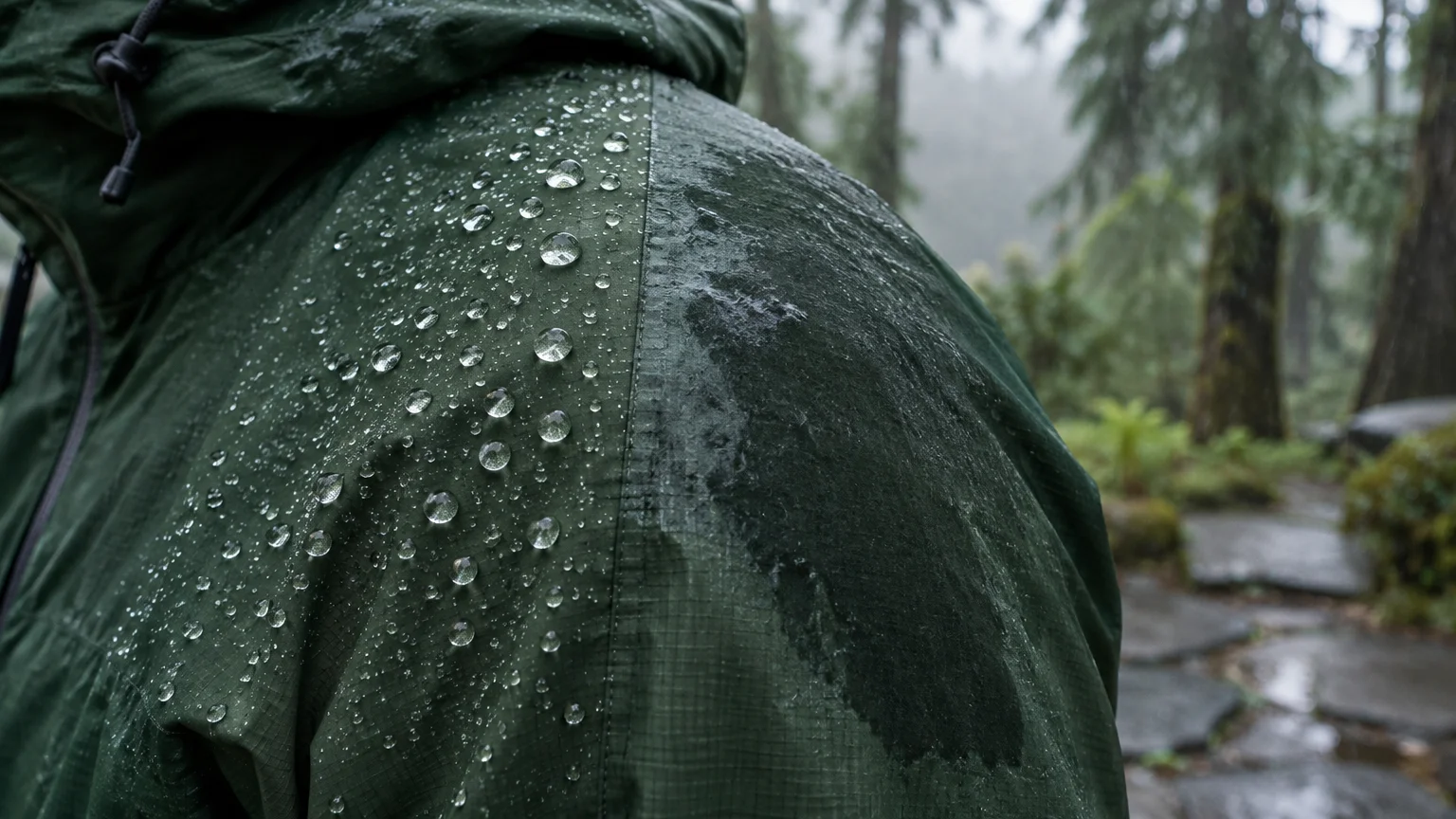
Waterproof jackets, softshell coats, and ski pants rely on a durable water repellent coating known as DWR. This chemical finish increases the surface tension of the fabric, forcing rain droplets to bead up and roll off.
Fabric softeners contain surfactants that fundamentally reduce surface tension. When you wash outdoor apparel with softener, the residues strip away the DWR coating and encourage water to penetrate the shell.
Leading outdoor technical fabric producers like Gore-Tex strictly warn against using fabric conditioners on waterproof breathable membranes. The waxy emulsion clogs microscopic pores, suffocating breathability while inviting external water to soak through.
Once the shell saturates—a failure known as wetting out—cold moisture clings to your inner layers. You end up wet from both trapped internal sweat and penetrating external precipitation.
If you have accidentally washed waterproof gear with fabric softener, wash it twice with a technical cleaner to remove the residue. Once dry, apply a spray-on DWR replenishment treatment and heat-set according to garment directions.
Clean technical outerwear using specialized performance washes or gentle liquid detergents. Reactivate the factory water repellency by tumbling the clean jacket on low heat instead of using chemical additives.
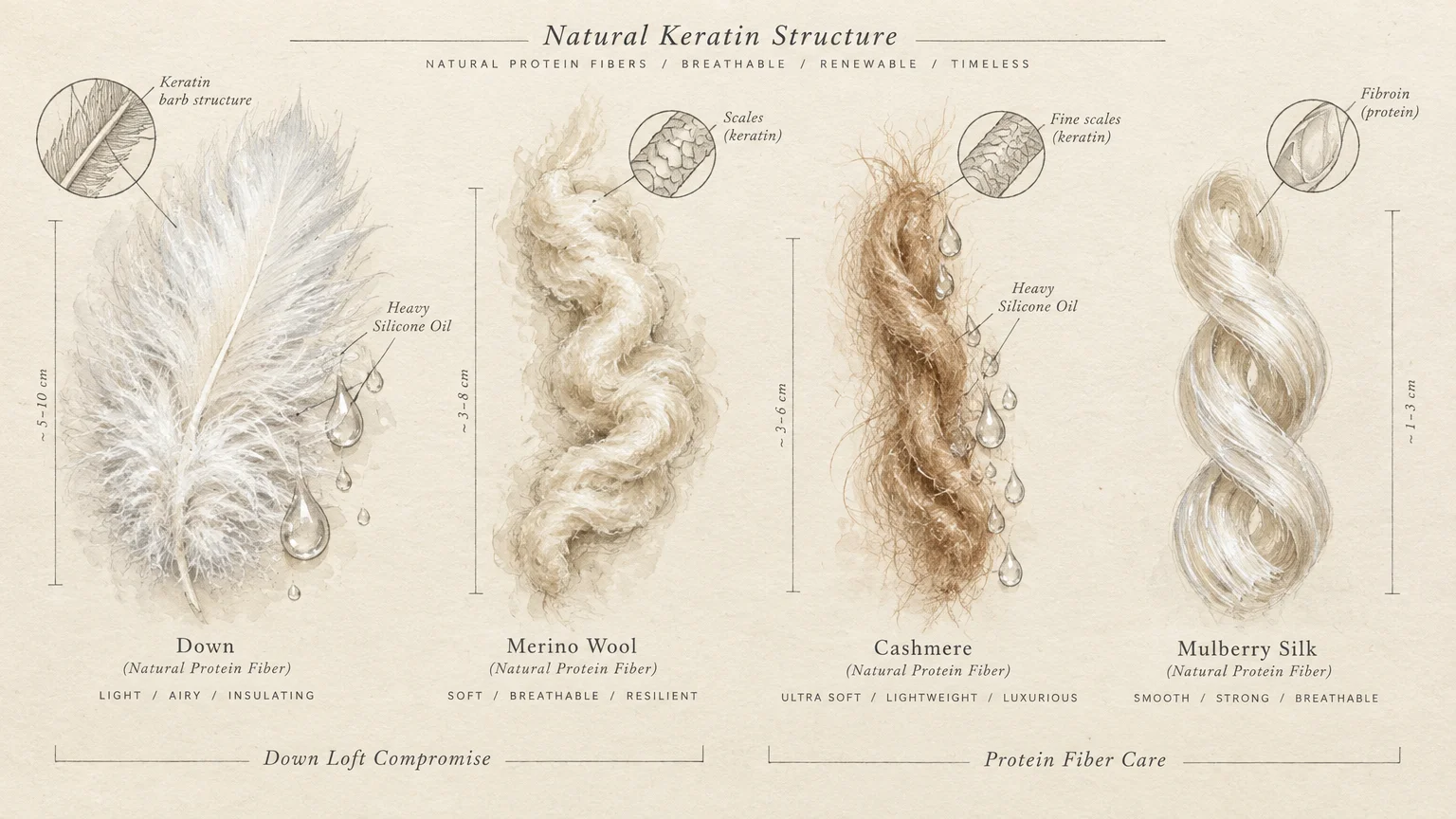
06 Wool, Cashmere, Down Feathers, and Silk
Natural animal fibers require delicate care that balances fiber strength with breathability. Wool, merino, and cashmere consist of keratin proteins covered in microscopic overlapping scales that regulate heat and repel surface dampness.
Commercial conditioners coat these delicate scales with dense chemical fats that weigh down the yarn. This artificial coating causes wool fibers to mat together, flattening the airy texture and accelerating pilling across the fabric.
Softener also strips wool of its natural lanolin protection while neutralizing its exceptional moisture-buffering capabilities. The sweater loses its ability to insulate your body effectively against fluctuating temperatures.
Natural down feathers in comforters, pillows, and puffer coats suffer even greater damage from fabric softeners. Down relies on delicate three-dimensional clusters that trap pocketed air to generate lightweight thermal insulation.
Waxy softener residues cause fragile down clusters to stick together and collapse into dense, lifeless clumps. Your winter jacket or duvet loses its loft, leaving cold spots where heat escapes unimpeded.
Silk garments also belong on your never-soften list alongside wool and down. Softener leaves greasy dark spots on delicate silk fibers and strips the material of its natural shimmering luster.
Wash animal fibers and down bedding with specialized wool or down washes. Fluff down items in the dryer using clean tennis balls or wool dryer balls to restore natural loft safely.
How Fabric Softener Damages Your Washing Machine
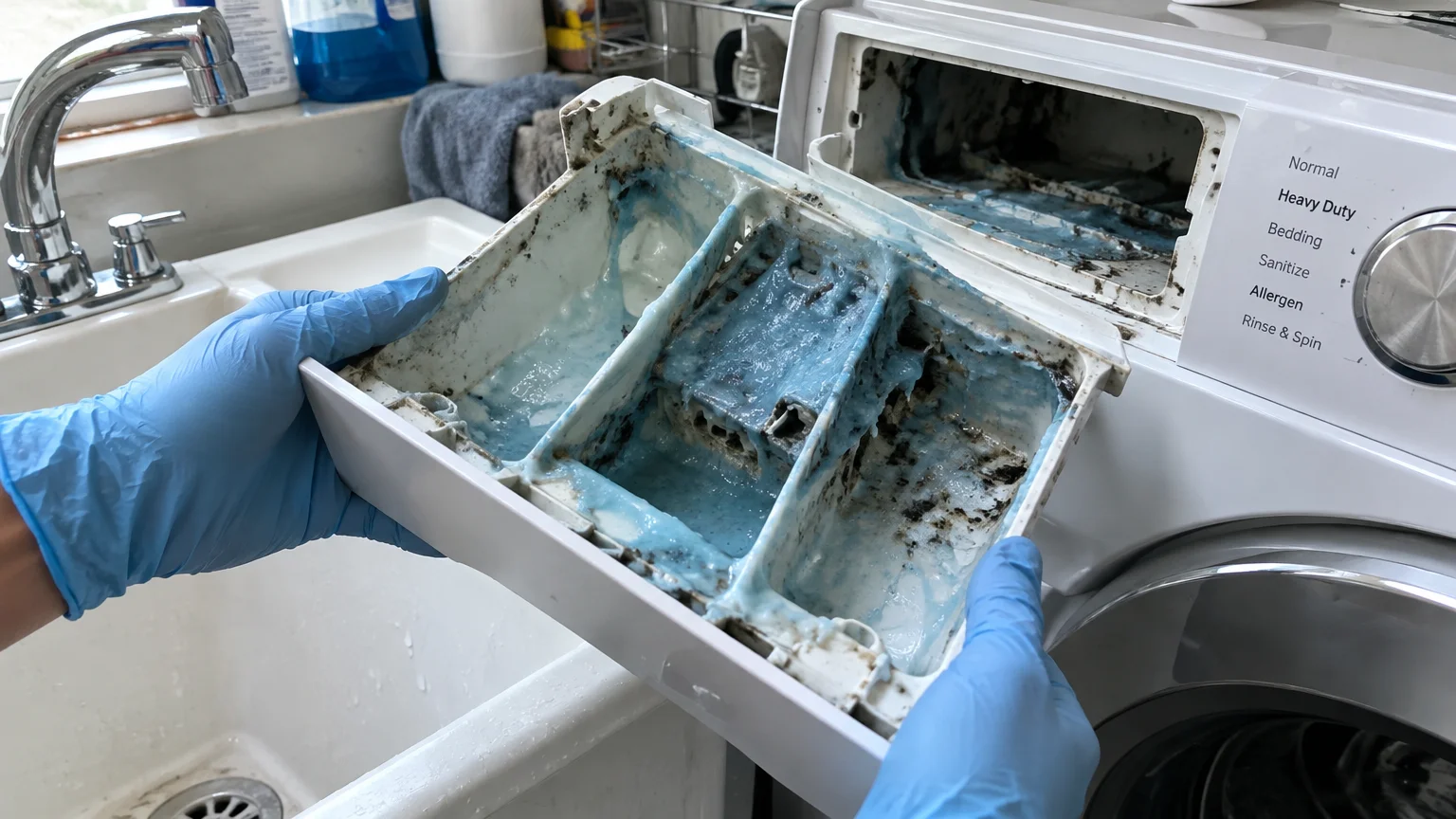
The damage caused by liquid conditioners extends well beyond your wardrobe and household linens. Inside your washing machine, the same oily surfactants collect on internal components to create a slimy substance called scrud.
Scrud forms when quaternary ammonium compounds mix with unrinsed detergent minerals and body soils. This sticky, gray sludge coats the exterior of your wash tub, drainage hoses, and dispenser drawer.
Because scrud retains moisture, it serves as a breeding ground for black mold, mildew, and anaerobic bacteria. This internal contamination causes washing machines to emit foul, sour odors that transfer directly onto your clean clothes.
Softener buildup can also coat water level sensors and heating elements, leading to operational errors and costly repair bills. The American Cleaning Institute highlights regular maintenance and proper dosing as vital steps for fabric and appliance longevity.
Front-load washing machines suffer particularly heavy damage from fabric softener buildup along the rubber door gasket. Wipe this gasket weekly with a vinegar-dampened cloth to remove slimy black deposits before mold spreads.
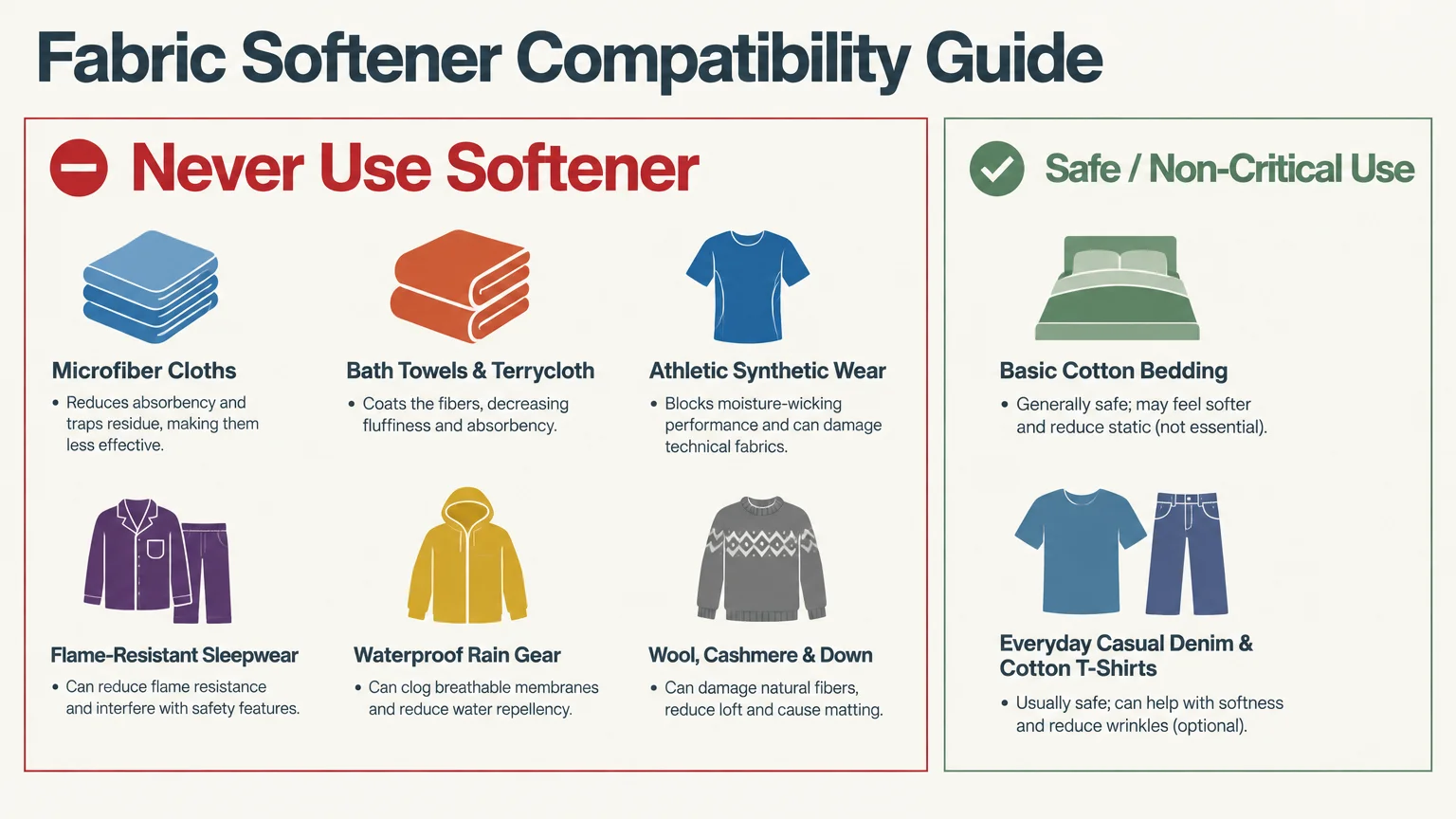
Fabric Softener Compatibility Guide
Use this reference table to evaluate household fabrics before loading your washing machine. Identifying vulnerable textiles saves your favorite clothing and preserves essential household cleaning tools.
| Item or Fabric Type | Primary Function | How Softener Damages It | Safe Care Alternative |
|---|---|---|---|
| Microfiber Cloths | Static dust trapping and absorption | Clogs micro-wedges; leaves greasy smears | Warm water, mild liquid detergent, air-dry |
| Bath Towels and Washcloths | Moisture absorption via cotton loops | Coats cotton fibers in hydrophobic wax; causes musty odor | Warm wash with half-cup vinegar in rinse cycle |
| Synthetic Athletic Wear | Moisture-wicking and body cooling | Plugs breathable channels; locks in permanent body odor | Sport detergent or pre-soak in diluted vinegar |
| Children’s Sleepwear | Fire safety and flame retardance | Deposits flammable hydrocarbon waxes onto fabric | Standard mild detergent; tumble dry low without dryer sheets |
| Waterproof Outerwear | Rain resistance and breathability | Strips DWR coating; causes wetting out and chills | Technical performance wash; heat reactivation |
| Wool and Natural Down | Thermal insulation and air loft | Mats delicate fibers; clumps down clusters | Wool-safe wash, gentle cycle, wool dryer balls |
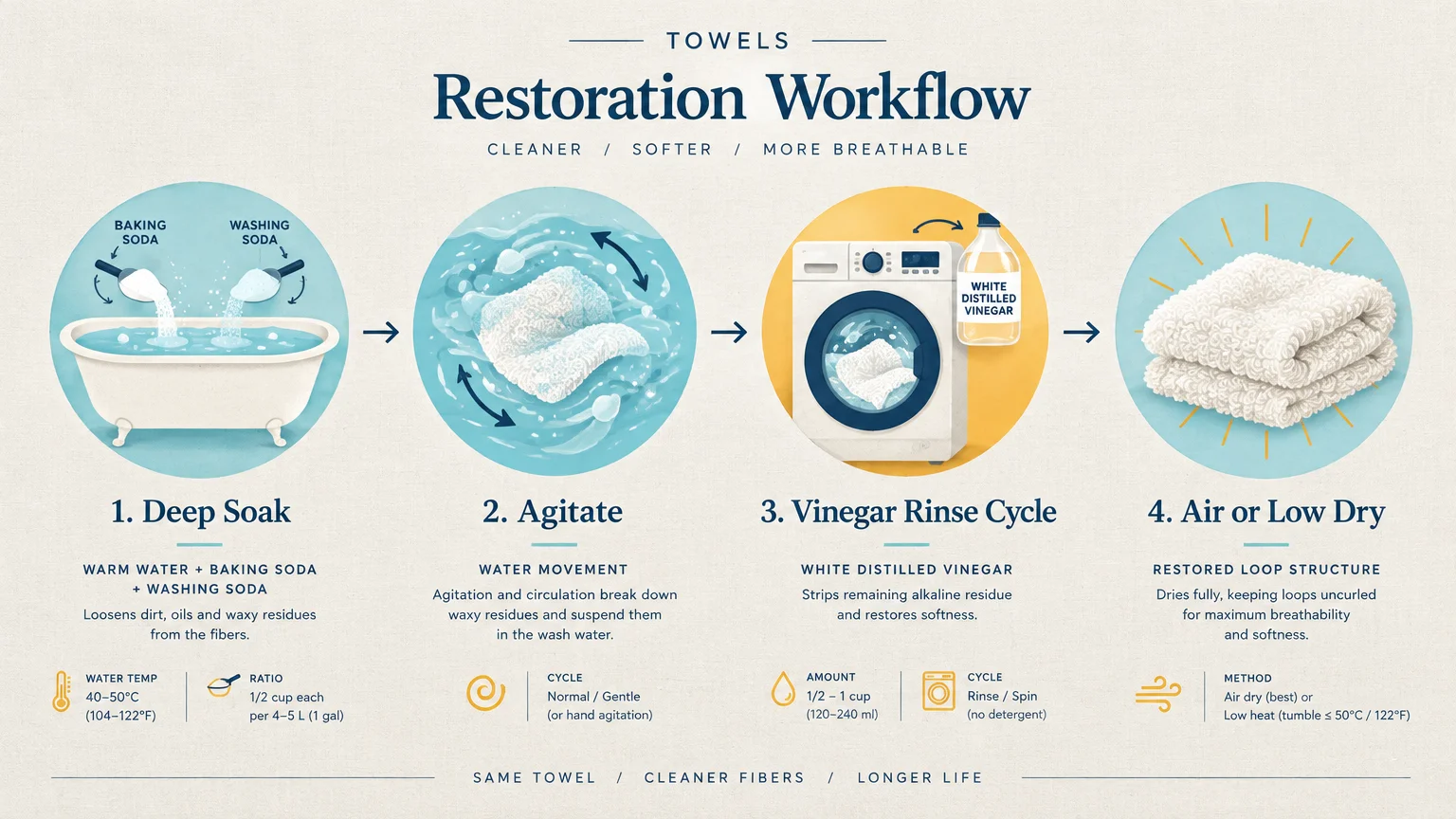
Step-by-Step Guide to Stripping Fabric Softener Buildup
Laundry stripping breaks down embedded chemical films and restores natural absorbency. Use this protocol to rejuvenate stiff towels, smelly gym apparel, or clouded microfiber cloths.
Run this simple restorative cycle every few months to reverse fabric softener mistakes and eliminate stubborn build-up.
-
Step 1: Clean the Washer Drum and Dispenser
Scrub your machine’s dispenser drawer with warm water to remove leftover conditioner sludge. Run a hot tub-cleaning cycle with two cups of white vinegar to purge residual scrud from internal hoses.
-
Step 2: Wash with Distilled White Vinegar
Load your affected fabrics into the drum without any commercial detergent or additives. Add one cup of distilled white vinegar directly into the detergent dispenser and run a complete hot water cycle.
-
Step 3: Wash with Sodium Bicarbonate
Keep the wet fabrics inside the drum and sprinkle one-half cup of baking soda directly across the load. Run a second hot wash cycle to neutralize dissolved oils and lift loosened mineral residues.
-
Step 4: Perform an Extra Rinse Cycle
Run one final plain water rinse cycle to flush every trace of dissolved residue from the textile fibers. Inspect the rinse water to confirm that no soapy bubbles or cloudy foam remain.
-
Step 5: Dry Thoroughly Without Dryer Sheets
Tumble dry your items on medium heat using wool dryer balls, or hang them in direct sunlight. Never add dryer sheets, which re-coat stripped fibers in the exact waxy film you just removed.
Four Natural Alternatives to Liquid Softener
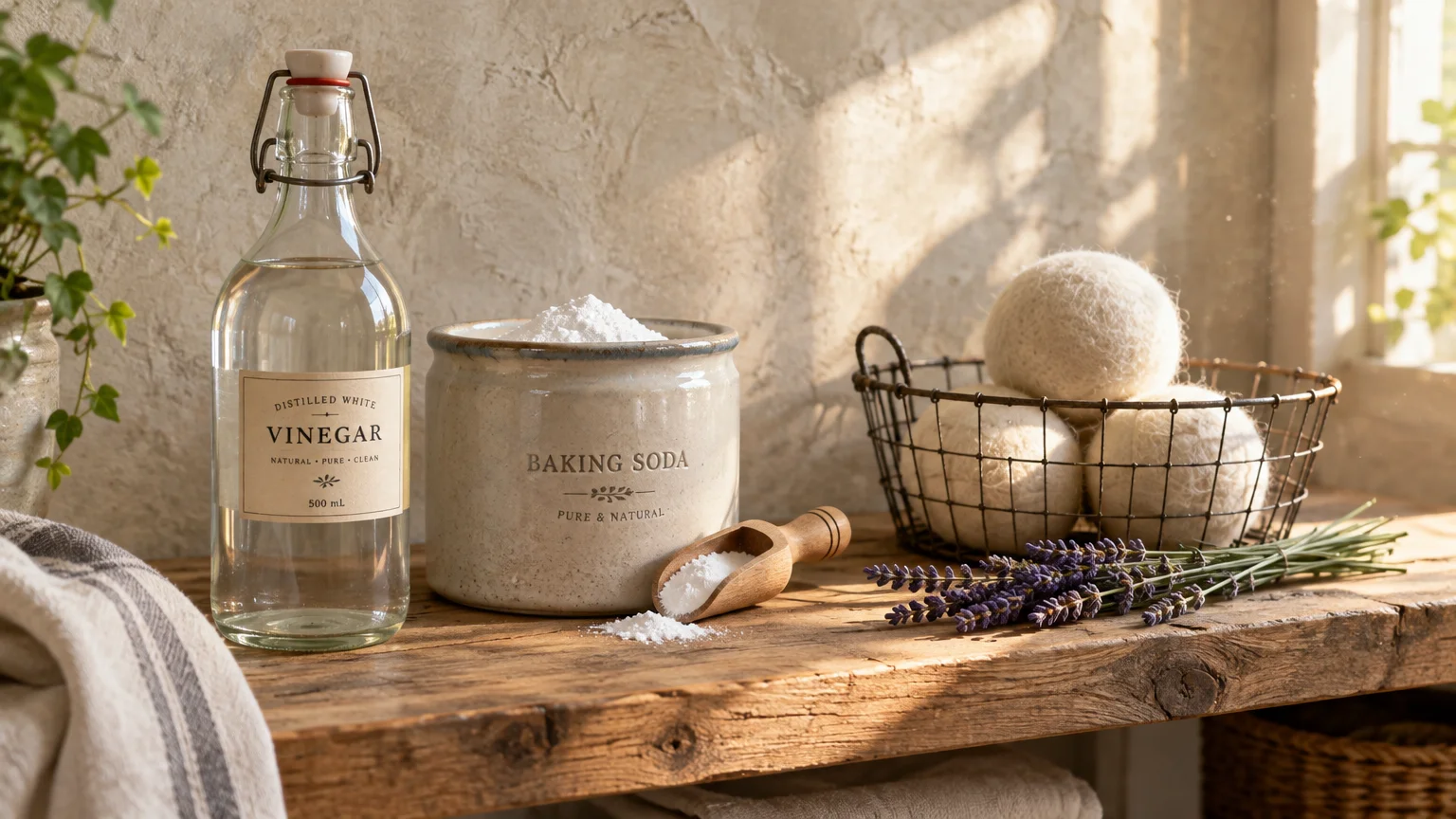
You do not need chemical coatings to keep your laundry feeling comfortable. Try these safe, inexpensive alternatives to maintain softness without sacrificing fabric performance.
-
Distilled White Vinegar in the Rinse Cup
Pour one-quarter cup of white vinegar into your fabric softener compartment before starting the load. The mild acetic acid strips detergent buildup and softens fabrics naturally without leaving any lingering scent.
-
100% Wool Dryer Balls
Toss three to six wool dryer balls into your dryer drum with every load. These natural wool spheres physically separate wet garments, increasing airflow to soften fabric weave while cutting drying time by twenty percent.
-
Baking Soda Boost in the Wash
Add one-half cup of baking soda directly into the wash drum alongside your regular laundry detergent. Baking soda regulates wash water pH levels, suspending mineral particles so laundry rinses cleaner and feels softer.
-
Proper Drying Techniques
Avoid baking your clothes on extreme heat, which bakes fibers and causes unnatural stiffness. Shake each garment vigorously before hanging to line-dry or drying on low heat to loosen tight threads.
Your Immediate Action Plan for Fresher Laundry
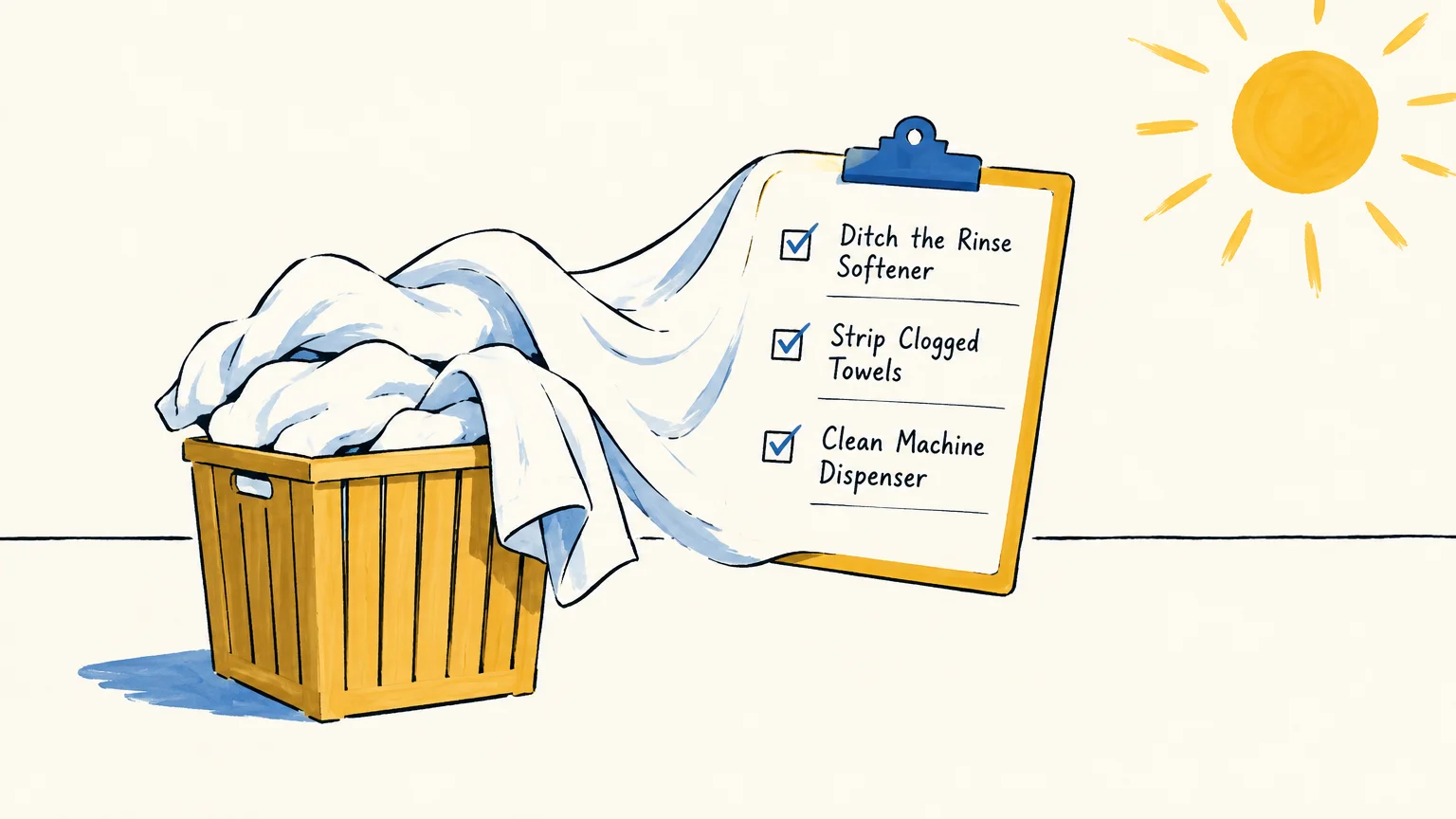
Transforming your laundry routine begins with small, deliberate adjustments that yield immediate improvements in freshness and absorbency. Start by sorting out items that need immediate wax removal.
Check the care labels on your activewear, towels, and outerwear right now to spot manufacturer warnings. Remove the softener bottle from your laundry shelf to break the automatic pouring habit.
Pick one load of musty bath towels or stiff workout clothes to strip with white vinegar today. You will feel the difference in absorbency and freshness after a single treatment.