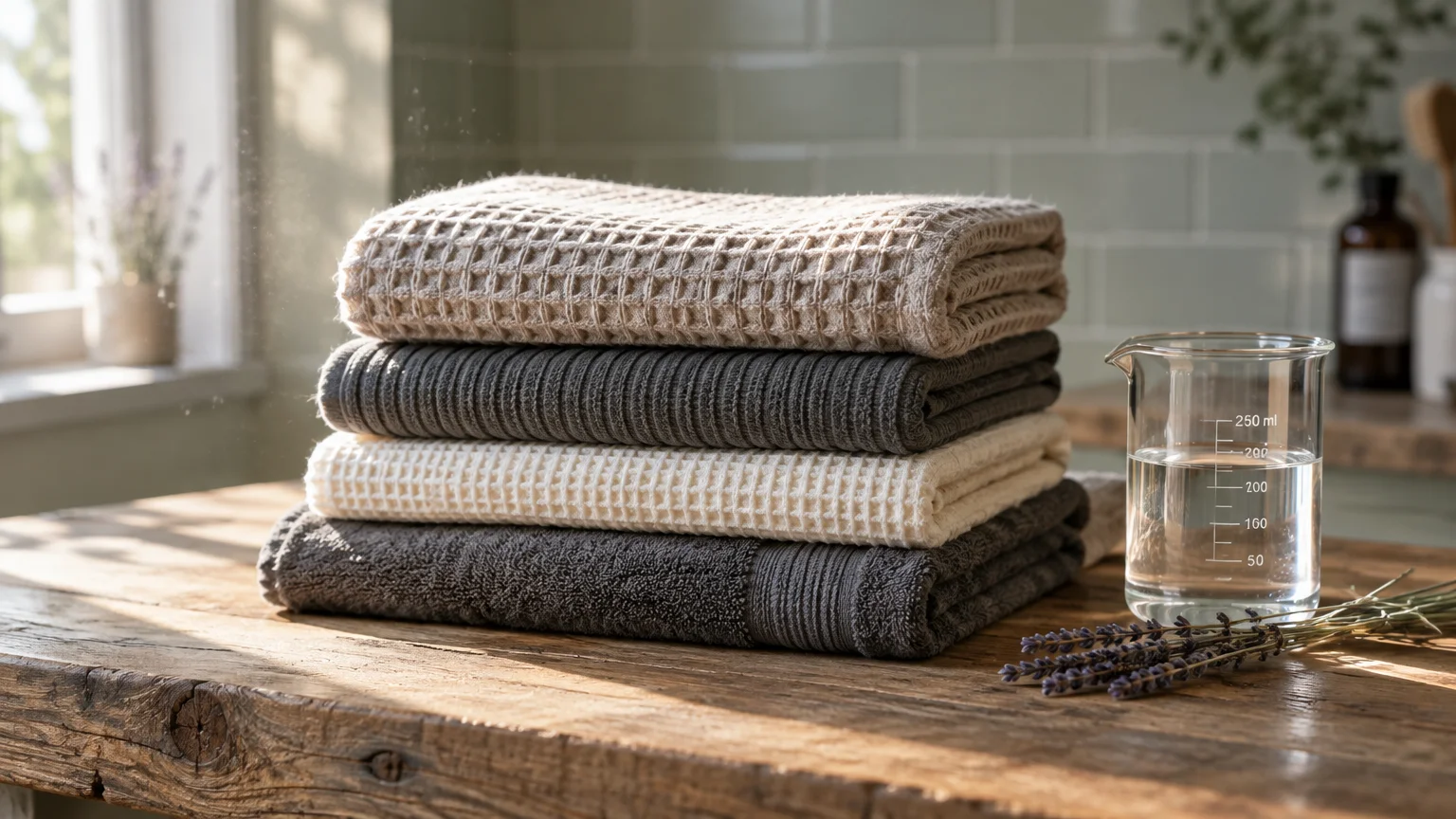
Adding standard distilled white vinegar to your wash transforms dingy fabrics, removes trapped odors, and leaves your wardrobe noticeably softer. This simple pantry staple delivers commercial-grade cleaning power without synthetic dyes or heavy perfumes.
Most laundry issues stem from stubborn detergent residues that trap dirt inside fabric fibers. Vinegar dissolves this microscopic film during the rinse, revitalizing your clothes effortlessly.
Discovering these laundry vinegar benefits will save you money and simplify your household routine. Here is why using vinegar in laundry can completely upgrade your weekly washing habits.
01 Dissolving Detergent Buildup for Softer Fabrics
Modern laundry detergents are concentrated and alkaline. When your washing machine rinses your clothes, it frequently leaves behind microscopic surfactant residues.
Over time, these soap residues accumulate within the weave of your clothing; they create a stiff, scratchy texture that makes garments feel prematurely aged.
Distilled white vinegar contains a mild 5% acetic acid concentration. This mild acid neutralizes alkaline detergent residues and strips them away cleanly.
By dissolving the chemical coating left behind by modern soaps, vinegar restores the natural drape and softness of your favorite fabrics.
You will notice an immediate difference in everyday cotton tees, bedsheets, and knitwear. Your clothes emerge soft and breathable rather than stiff and waxy.
02 Neutralizing Stubborn Odors Instead of Masking Them
Commercial laundry scents do not eliminate foul odors; they merely coat your clothing in synthetic fragrance chemicals that wear off quickly.
When body heat warms your garments, trapped sweat, bacteria, and mildew odors break through those artificial perfume barriers.
Vinegar attacks odor compounds at the chemical level. Its acetic acid binds to volatile organic compounds and neutralizes alkaline odors like ammonia and old sweat.
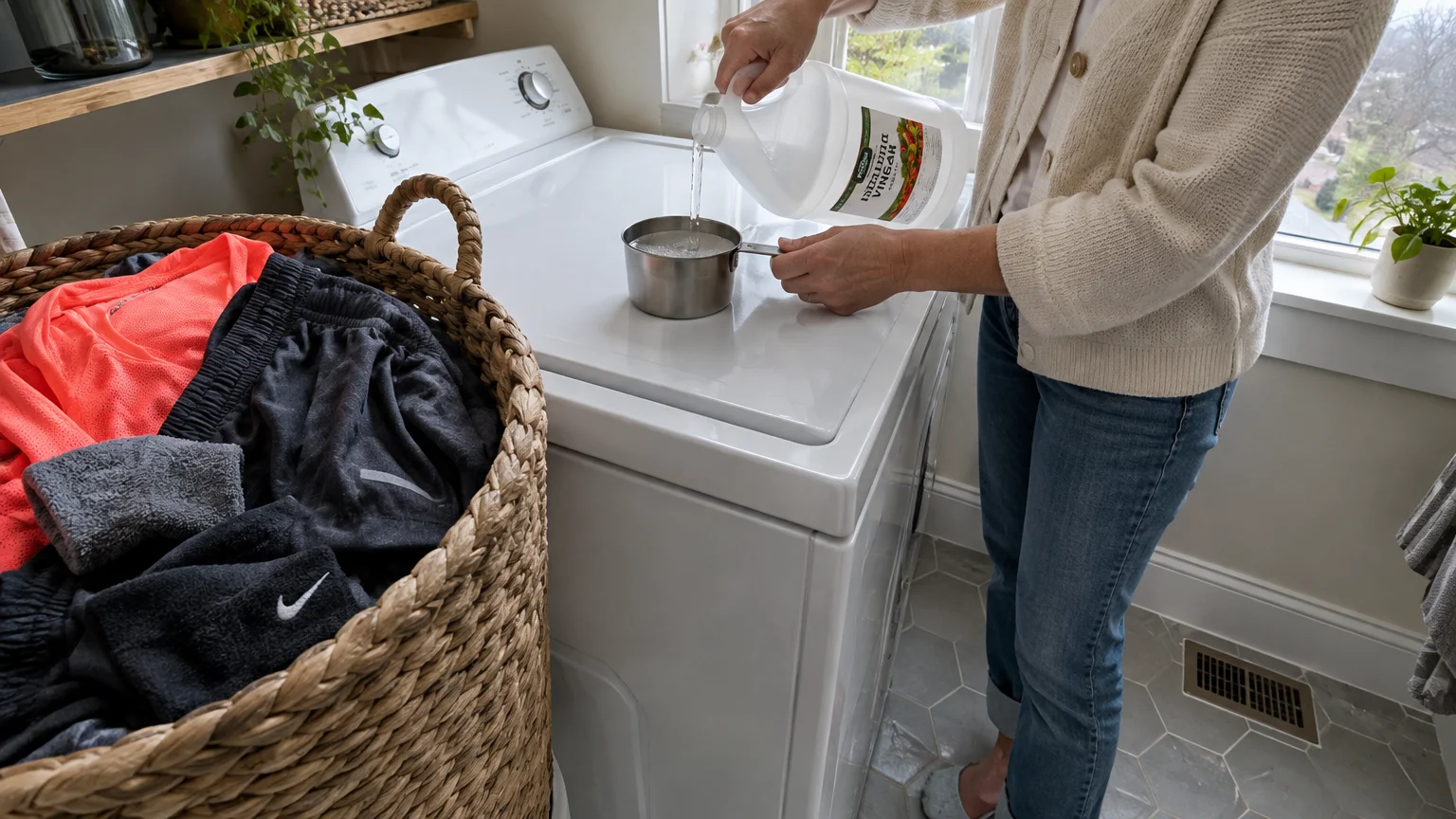
This odor-eliminating property makes vinegar in laundry indispensable for workout wear, pet bedding, and kitchen dishcloths.
Once your clothes dry completely, the faint vinegar aroma vanishes entirely. Your clothes smell truly clean and neutral rather than heavily perfumed.
03 Serving as an Economical Natural Fabric Softener
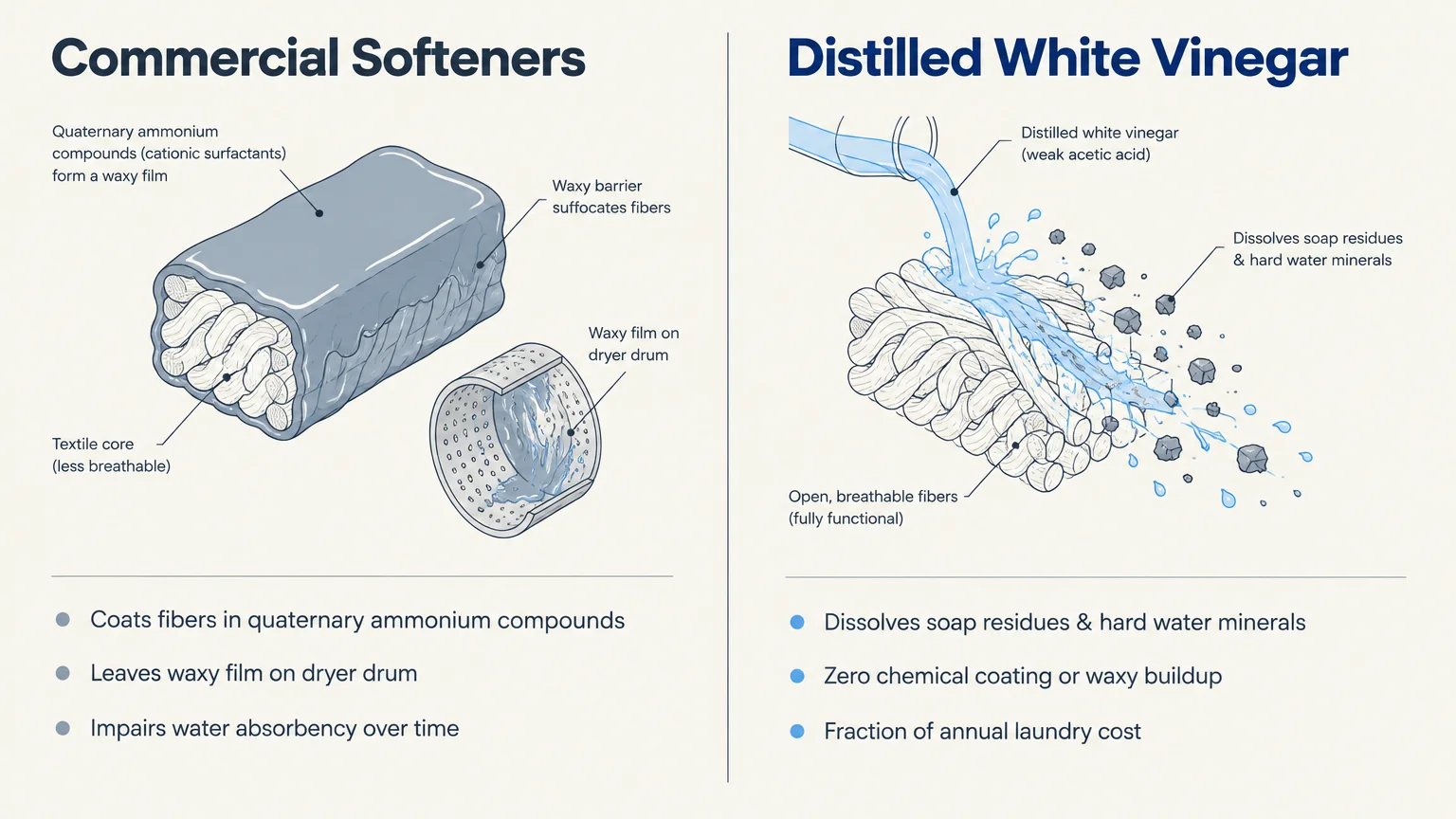
Commercial liquid fabric softeners coat your textiles with quaternary ammonium compounds and animal fats. This waxy layer prevents water absorption and causes long-term fabric decay.
Vinegar acts as an exceptional natural fabric softener that works by removing debris rather than depositing oils.
By stripping away hard water minerals and excess detergent, vinegar allows fabric fibers to relax naturally without any chemical barrier.
You can eliminate expensive chemical softeners from your shopping list entirely. A single jug of white vinegar delivers months of softening at a fraction of the cost.
Switching to vinegar also prevents that greasy coating that commercial softeners leave behind on your dryer drum and lint filter.
04 Preventing and Reducing Lint and Pet Hair Cling
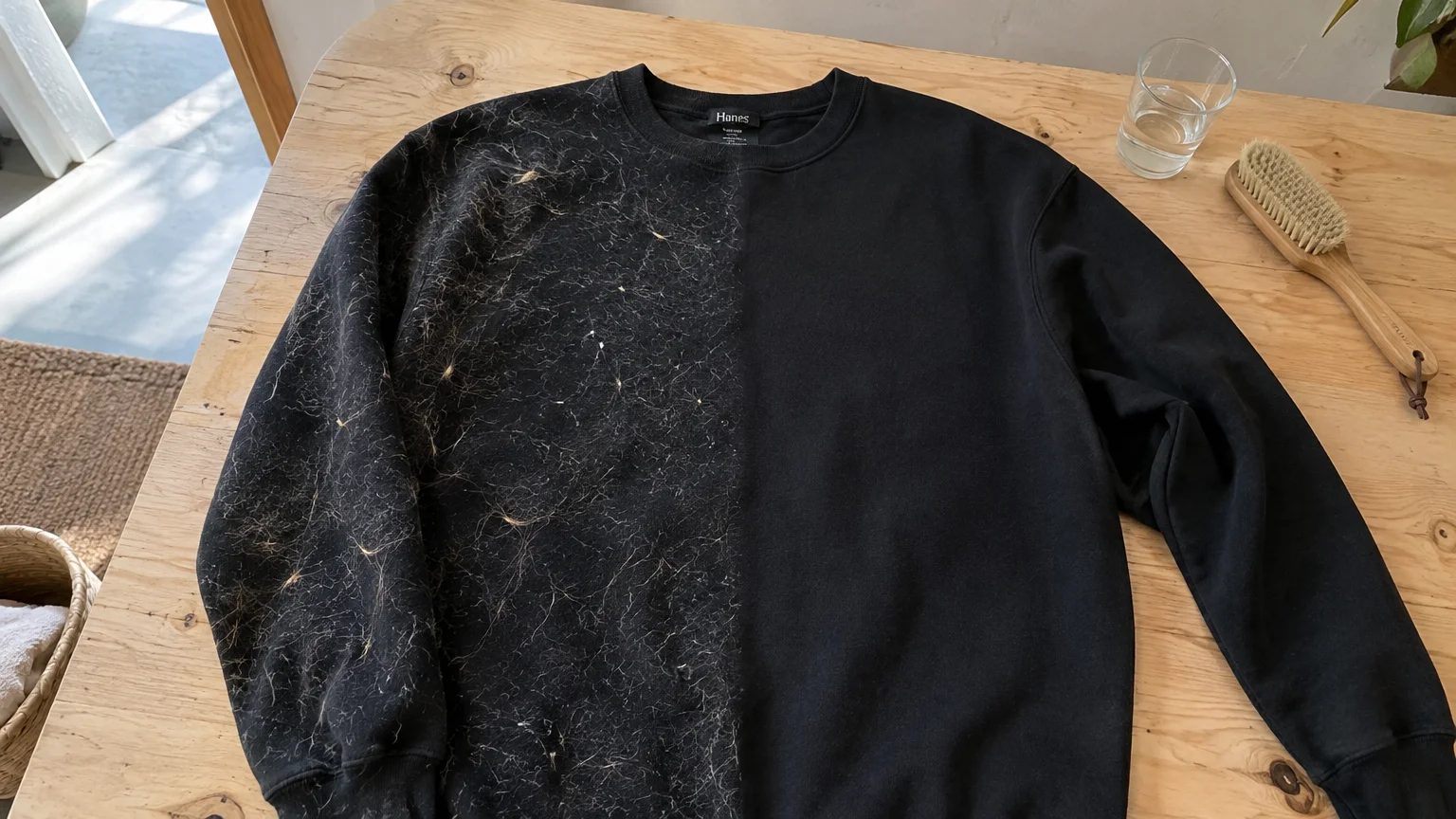
Pet hair and lint adhere to clothing due to static electricity and tacky detergent film. This combination glues stubborn fur directly to your garments.
Adding vinegar to the rinse cycle neutralizes the adhesive soap residue holding hair against the cloth weave.
As the acetic acid dissolves mineral and surfactant residues, the individual fibers relax. Pet hair releases easily into the rinse water and drains away.
Any remaining hair pulls away effortlessly during the drying cycle, gathering neatly in your dryer’s lint trap instead of clinging to your shirts.
Pet owners will find this single trick saves substantial time with sticky lint rollers before heading out the door.
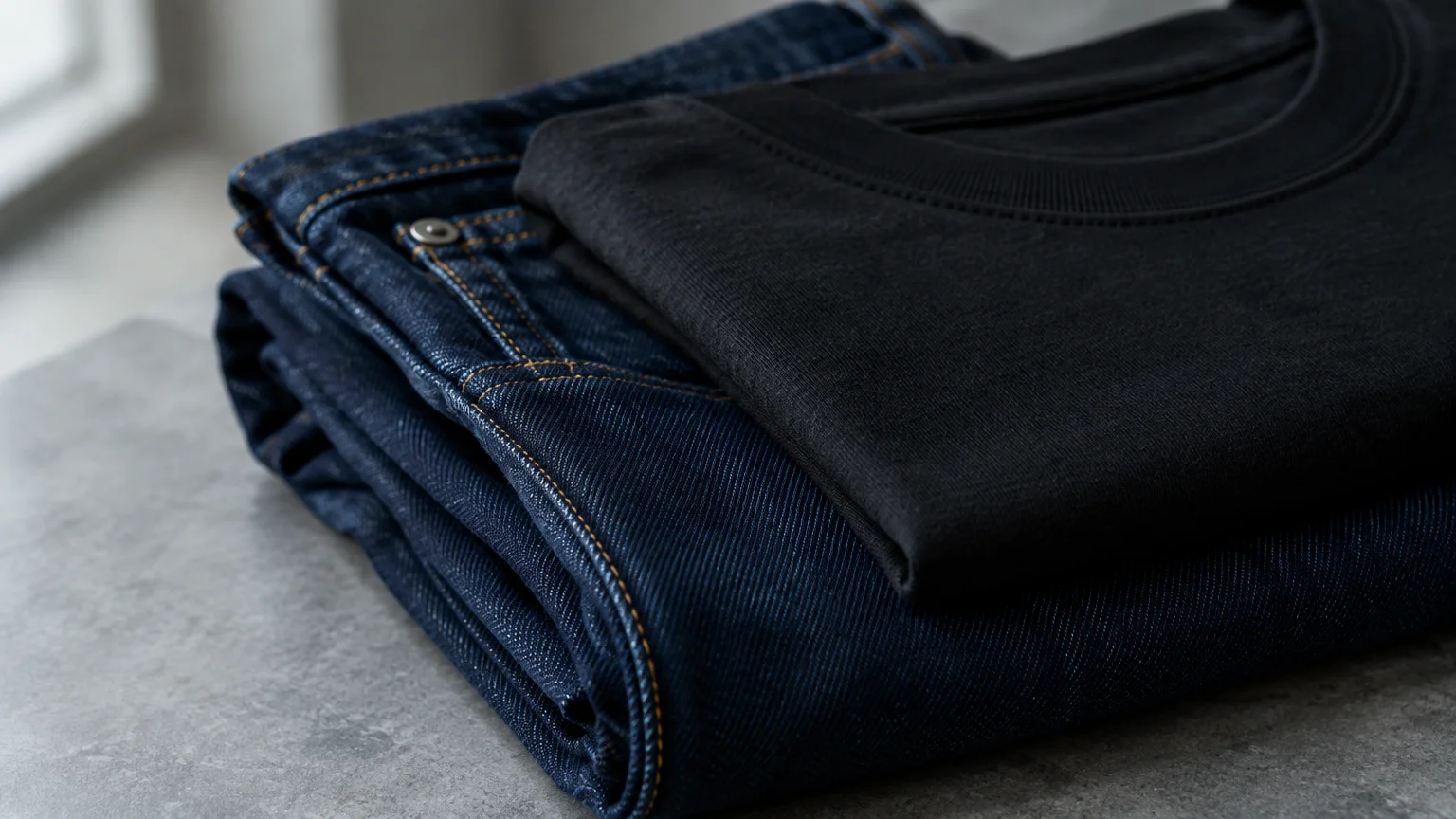
05 Preserving Dark Colors and Preventing Dye Bleed
Dark fabrics frequently turn dull, chalky, and faded after only a few wash cycles. In many cases, the color has not faded at all.
According to the U.S. Geological Survey, dissolved minerals in hard water bond with laundry soap to form a cloudy film over dark dyes.
Vinegar breaks the bond between calcium, magnesium, and fabric fibers. Removing this mineral haze immediately restores the rich depth of black jeans and navy sweaters.
Additionally, vinegar helps set certain acid-compatible dyes in natural fibers, minimizing color transfer when washing new garments.
Your dark clothing will maintain its rich, store-bought saturation wash after wash without relying on specialized color-guard detergents.

06 Brightening Dull Whites Without Harsh Bleach
Chlorine bleach is corrosive, damages delicate natural fibers, and can cause synthetic fabrics like polyester to turn permanently yellow.
White clothing turns gray or off-white primarily because it reabsorbs dirty wash water and body soils suspended in excess detergent foam.
A vinegar rinse strips away this trapped gray buildup, brightening your white shirts, cotton socks, and undershirts safely.
Because vinegar is gentle on cotton, linen, and synthetic blends, you can brighten everyday whites without accelerating fabric wear or fraying hems.
For an extra brightening boost on dingy white loads, combine a warm vinegar soak with direct sunlight drying.
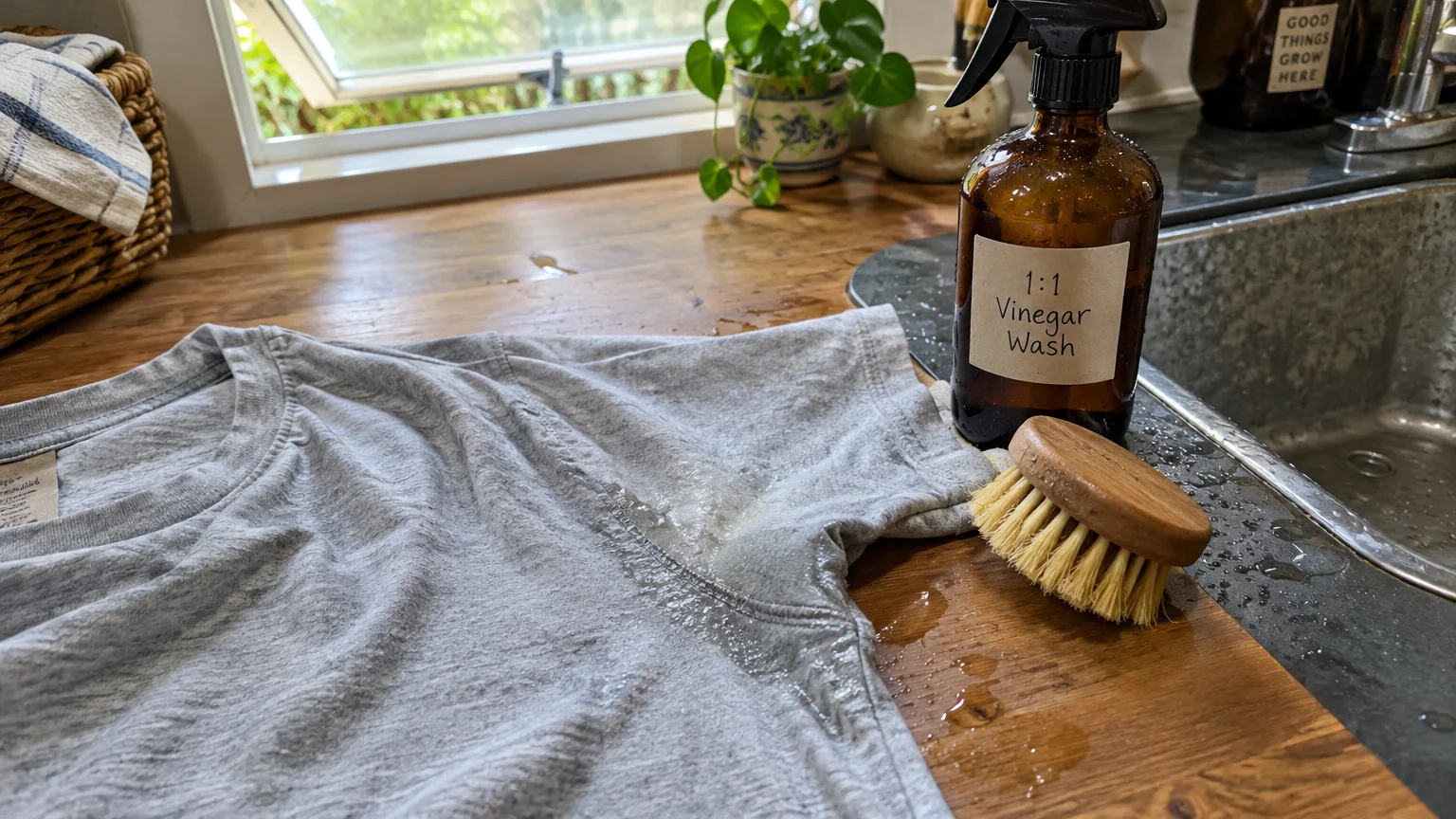
07 Lifting Underarm Stains and Deodorant Residue
Yellow underarm stains are not caused by sweat alone; they result from a chemical reaction between sweat proteins and aluminum antiperspirants.
This compound binds with detergent to form a stiff, waxy crust inside shirt armpits that standard wash cycles cannot dislodge.
Acetic acid breaks down the aluminum-protein bonds that anchor these crusty stains to your clothing.
Spritzing undiluted white vinegar directly onto affected underarms fifteen minutes before washing dissolves the stiff residue quickly.
Regular vinegar rinses stop this underarm buildup from forming initially, saving your favorite dress shirts and blouses from premature retirement.
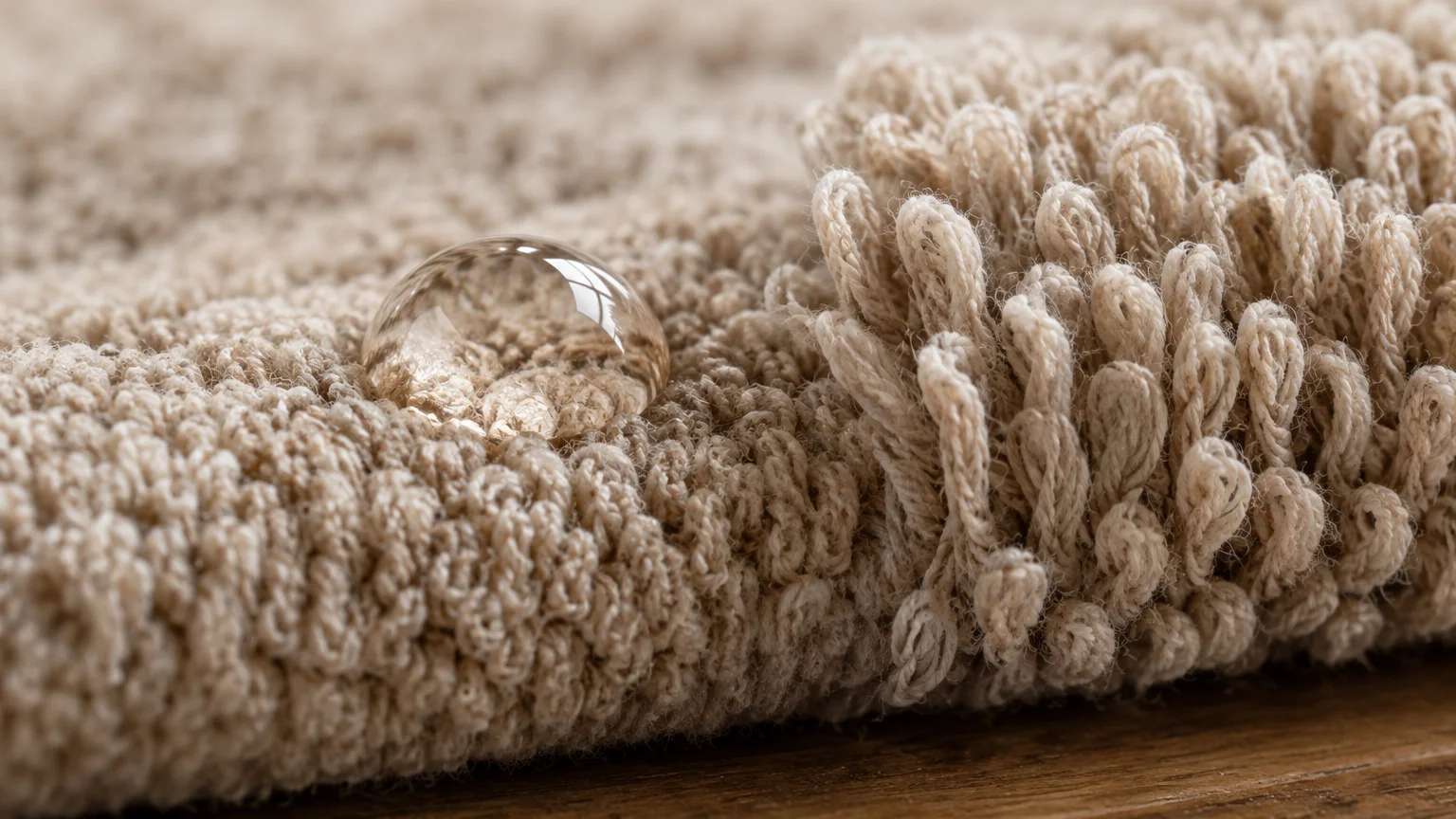
08 Restoring Towel Absorbency
Have your bath towels ever felt scratchy, heavy, and completely incapable of soaking up water? Towel degradation almost always stems from product overuse.
Fabric softeners coat the loops of terry cloth in silicone and fats, creating a hydrophobic layer that repels moisture instead of absorbing it.
Detergent also packs into the dense loops of cotton towels, trapping odor-causing bacteria deep inside the base weave.
Vinegar dissolves this built-up waxy coating completely, restoring the open structure of cotton loops so your towels fluff up and absorb water instantly.
Running your towels through a dedicated hot cycle with vinegar will eliminate that sour, damp smell that lingers after showering.

09 Eliminating Static Cling Naturally
Static cling occurs when synthetic fabrics rub against one another in an arid, friction-heavy environment. This friction exchanges electrons and generates annoying static shocks.
While commercial dryer sheets reduce static, they accomplish this by coating fabrics in synthetic scents and tallow derivatives.
A vinegar rinse cycle relaxes individual fibers and prevents fabrics from becoming brittle and prone to electrostatic buildup.
By softening textiles cleanly, vinegar significantly lowers surface friction as garments tumble inside your dryer drum.
You can skip single-use dryer sheets entirely, reducing household waste and keeping artificial fragrance chemicals away from your body.
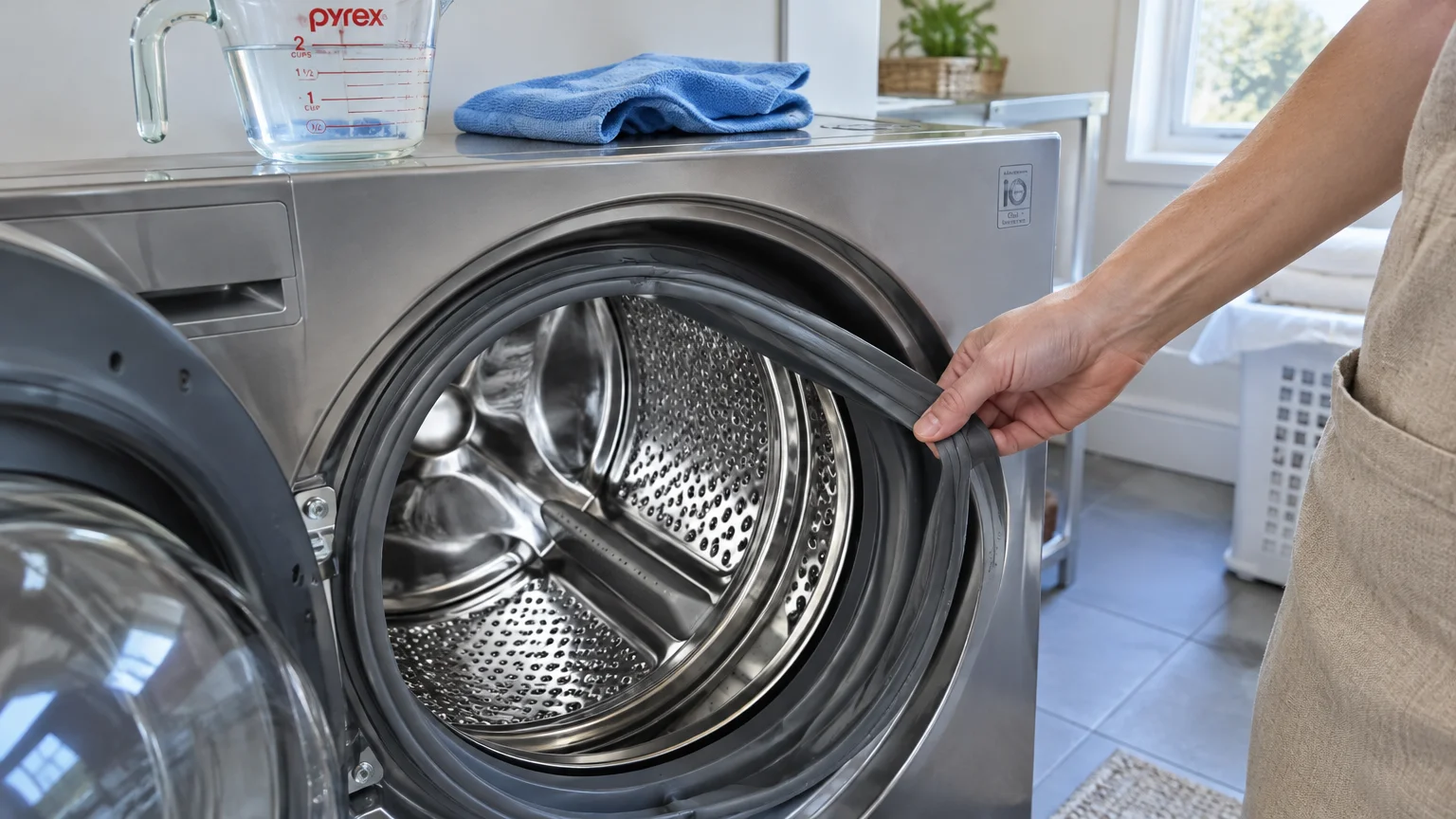
10 Keeping Your Washing Machine Clean and Fresh
Your washing machine cannot clean your wardrobe effectively if its internal drum, hoses, and agitator are coated in grime.
Modern high-efficiency front-loaders and top-loaders are notorious for accumulating stagnant water, detergent scum, and mold behind their wash drums.
Using vinegar in laundry routines cleans your machine continuously as wastewater drains through the internal pumps and lines.
The mild acid inhibits mildew growth, breaks down mineral scale on heating elements, and dissolves accumulated soap slime inside drainage hoses.
This effortless maintenance prevents foul washer odors from transferring onto your clean clothes, extending the mechanical lifespan of your appliance.
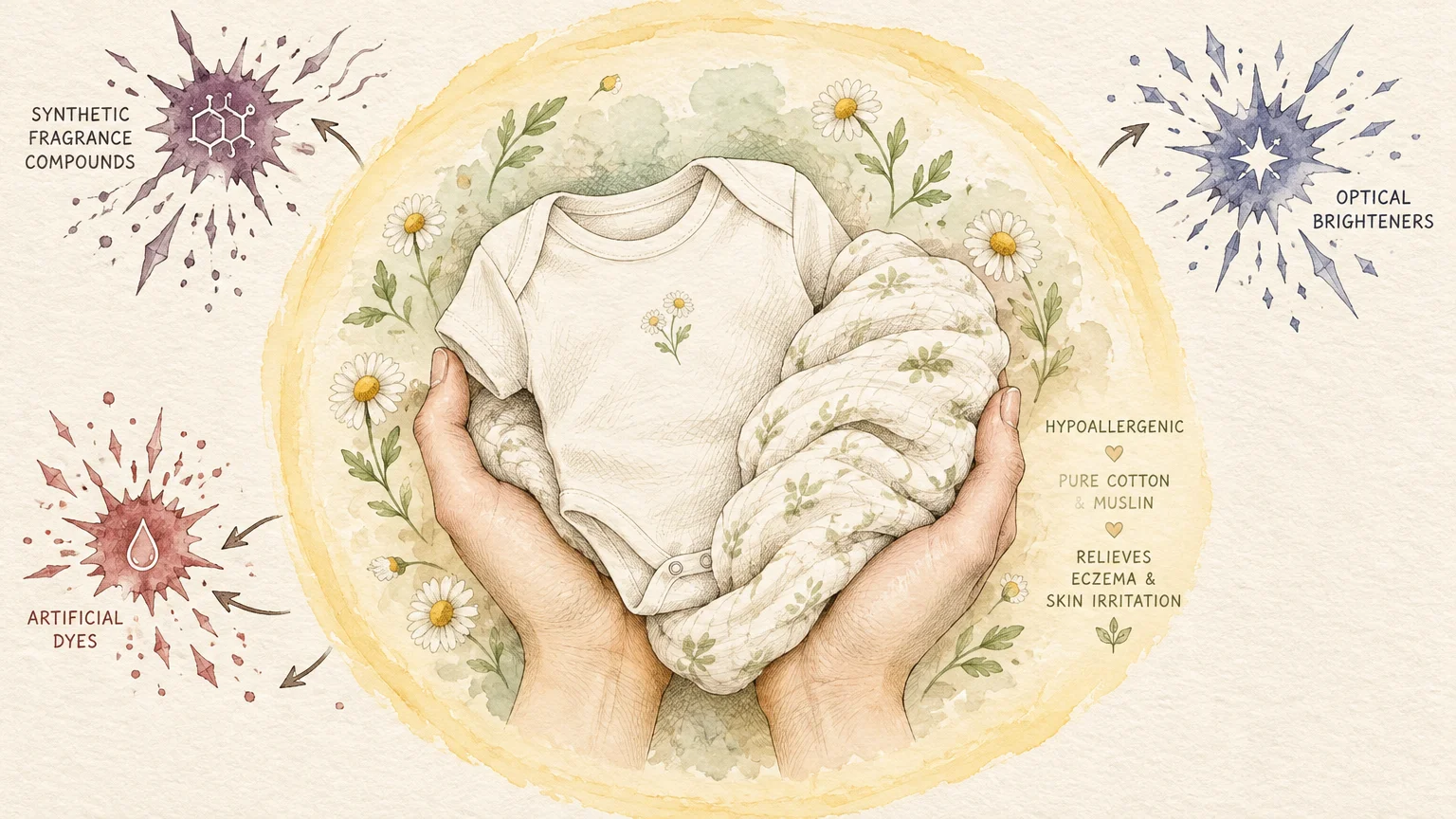
11 Protecting Sensitive Skin from Chemical Irritants
Unrinsed laundry detergent is a leading trigger for unexplained skin irritation, contact dermatitis, and eczema flares.
The National Eczema Association highlights that residual fragrances and surfactants left in clothing cause severe barrier disruption for sensitive skin.
When you sweat, moisture reactivates trapped soap residue within your clothes, pressing concentrated chemical surfactants directly into your pores.
Vinegar neutralizes these residues and rinses them away completely, leaving only clean, pH-balanced fabric against your skin.
Parents of infants and individuals managing chronic skin conditions will find that vinegar rinses dramatically decrease everyday itching and contact rash outbreaks.
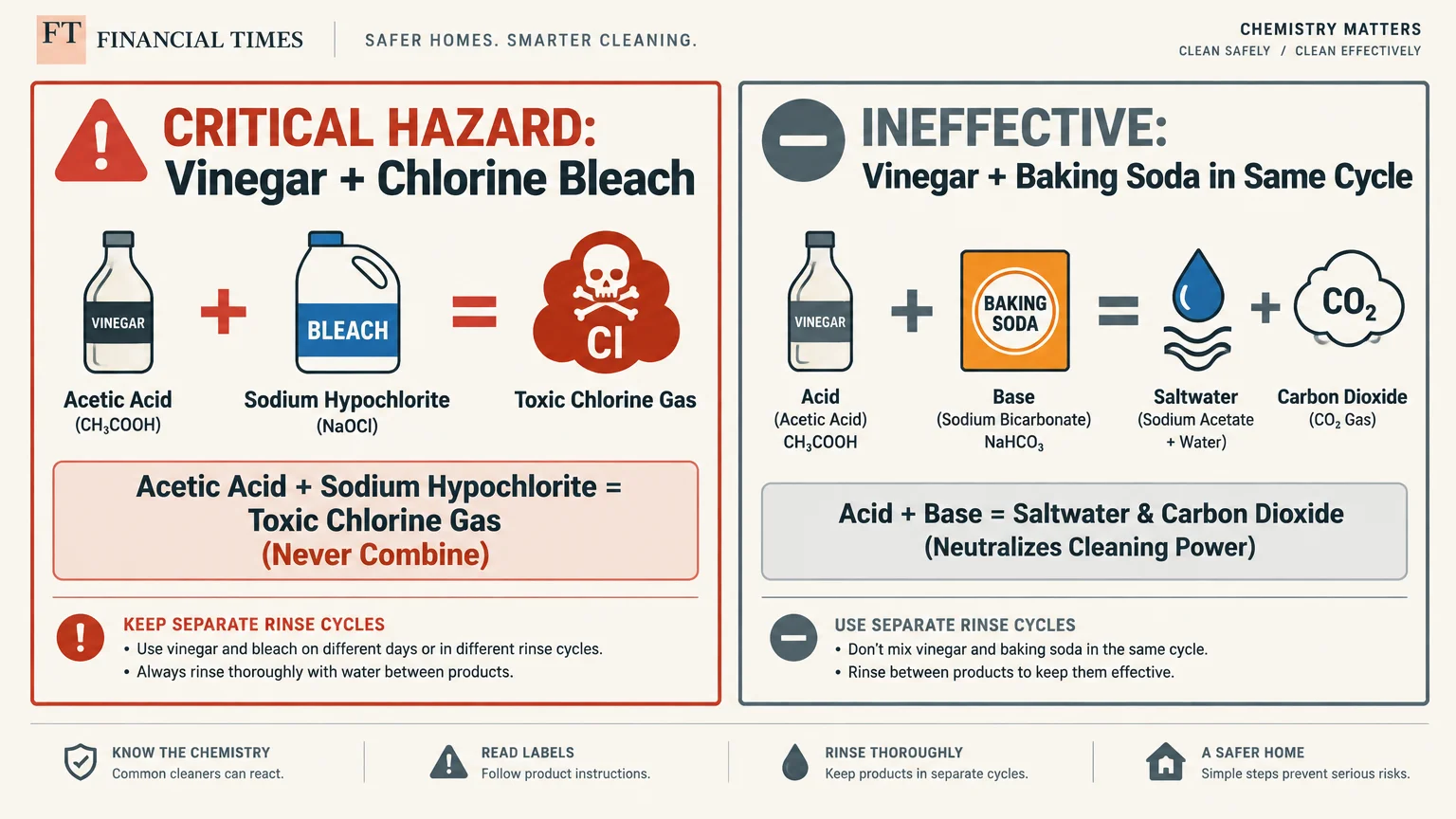
Essential Safety Rules: What Never to Mix with Vinegar
While vinegar is an exceptional household cleaner, basic chemical safety must always guide its use in your laundry room.
You must never mix vinegar with chlorine bleach under any circumstances. Combining bleach and vinegar creates toxic chloramine and chlorine gas.
According to CDC guidelines on chlorine hazards, inhaling chlorine gas damages airways immediately and can cause severe pulmonary distress.
Avoid mixing vinegar directly with hydrogen peroxide in the same container as well, as this produces corrosive peracetic acid.
Always verify that your detergent contains no bleach additives before pouring vinegar into the fabric softener compartment.
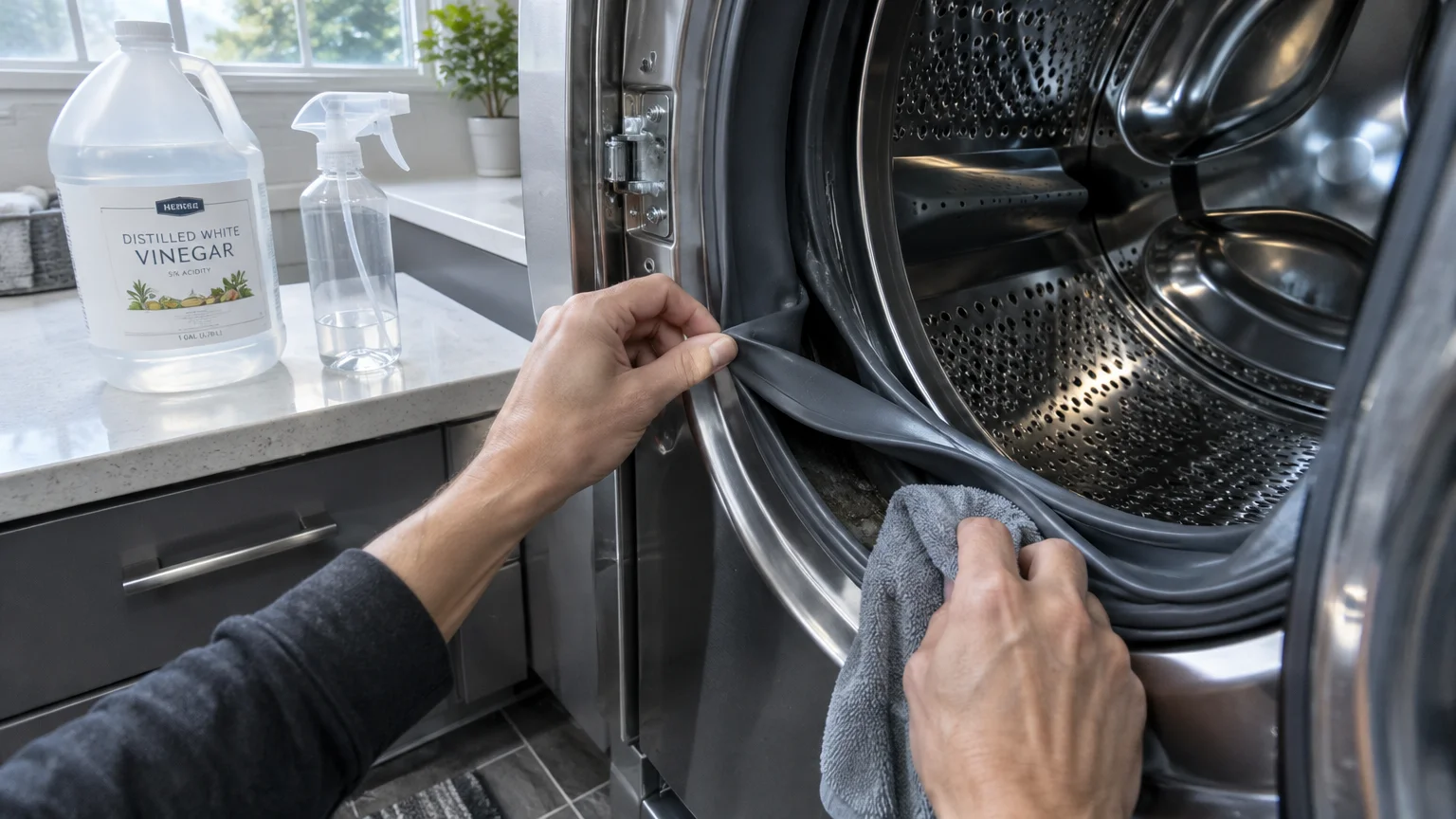
Caring for Washing Machine Rubber Seals
A common concern regarding vinegar in laundry is its potential effect on your washing machine’s internal rubber seals and hoses.
Pure, undiluted acetic acid can degrade natural rubber over long-term, continuous submersion. However, laundry applications involve immense water dilution.
Standard distilled white vinegar contains only 5% acetic acid, which dilutes thousands of times across a standard multi-gallon wash or rinse cycle.
Most modern front-load door gaskets utilize synthetic rubbers like ethylene propylene diene monomer (EPDM) or silicone, which tolerate mild acids exceptionally well.
To ensure total peace of mind, avoid soaking rubber gaskets in neat vinegar for hours, and stick to recommended dosing levels in your dispenser drawer.
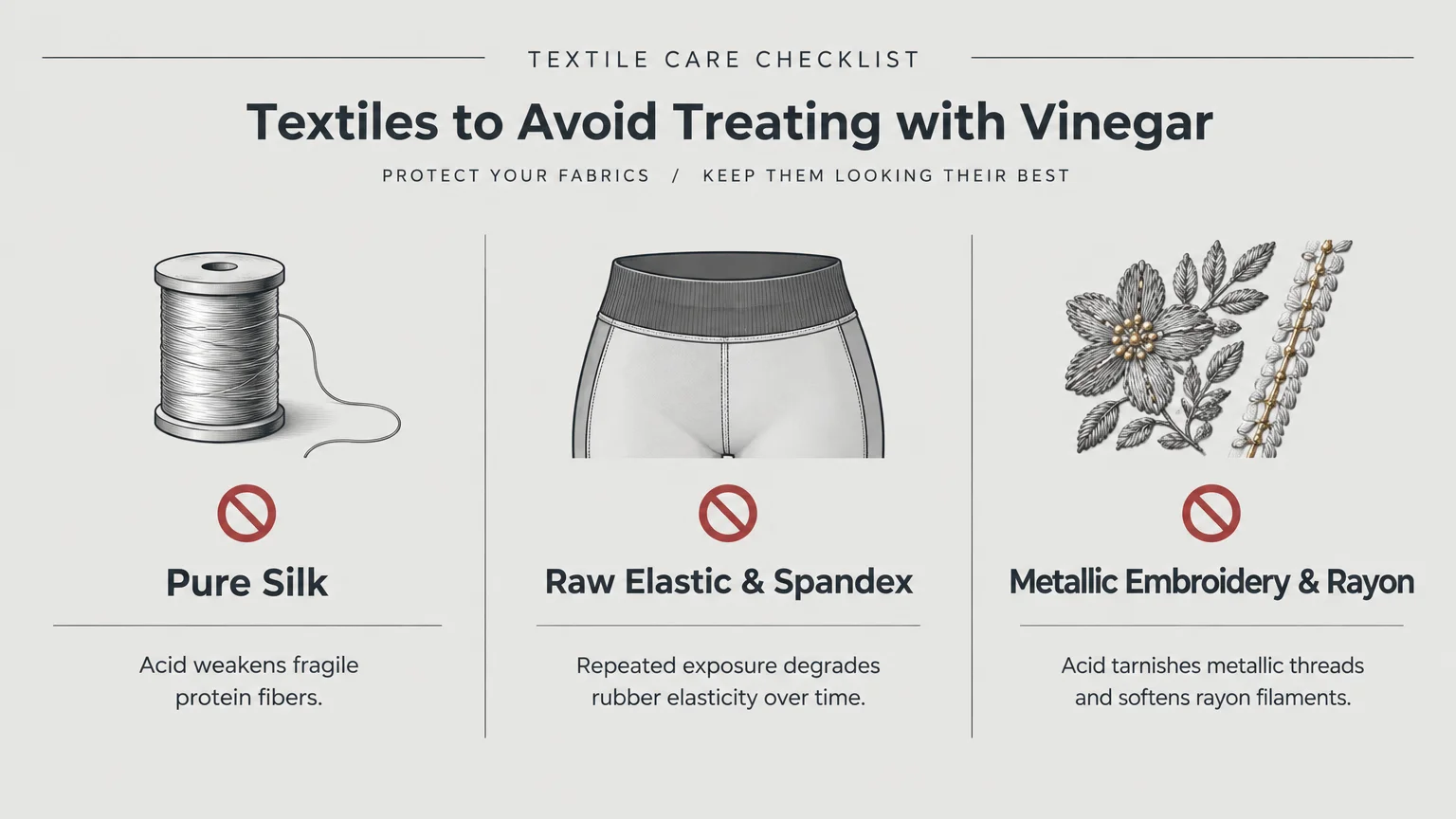
Fabrics That Should Skip the Vinegar Rinse
Although vinegar is safe for cottons, synthetics, and sturdy linens, certain specialty textiles require distinct care routines.
Do not use vinegar regularly on clothing made with high percentages of natural rubber latex or pure elastane, as frequent acid exposure reduces elasticity.
Delicate protein fibers like pure silk require gentle, pH-neutral detergents; acidic rinses can strip natural lusters if misapplied.
Fine wool garments should also be washed using dedicated wool washes rather than acid rinses, preserving natural lanolin protective oils.
When in doubt, always read your garment’s care tag and spot-test an inconspicuous inner hem before applying any home treatment.
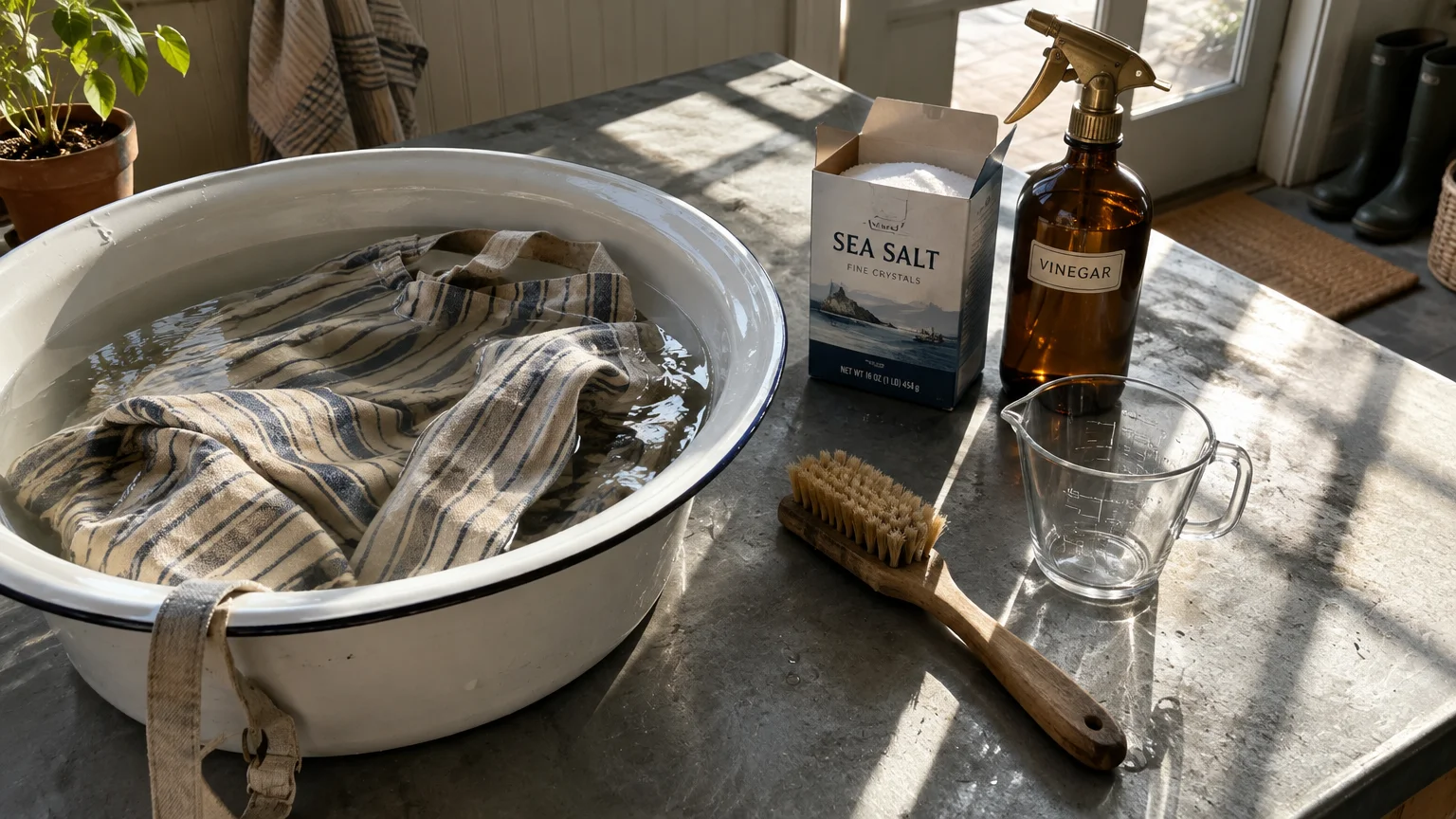
Vinegar Laundry Hacks for Tough Challenges
Beyond routine rinsing, practical vinegar laundry hacks solve several frustrating textile emergencies around the house.
Try these targeted methods whenever standard washing fails to produce clean, fresher clothes:
- The Towel Stripping Soak: Submerge sour towels in a basin of hot water mixed with two cups of white vinegar for three hours before washing to strip years of fabric softener buildup.
- Gym Wear De-Funker: Soak synthetic athletic clothes in cold water with one cup of vinegar for thirty minutes prior to washing to eradicate stubborn body odor bacteria.
- Pre-Treating Ring Around the Collar: Dab a mixture of equal parts white vinegar and baking soda onto sweaty shirt collars, scrub gently with a soft brush, and let sit for fifteen minutes.
- Thrift Store Disinfecting Rinse: Remove musty storage odors and perfumed sanitizers from vintage clothing by running a full rinse cycle with vinegar and an extra water flush.
- Mineral Crust Removal: Loosen calcium crust on baby bibs and cloth diapers by soaking them in warm vinegar water before laundering with gentle soap.
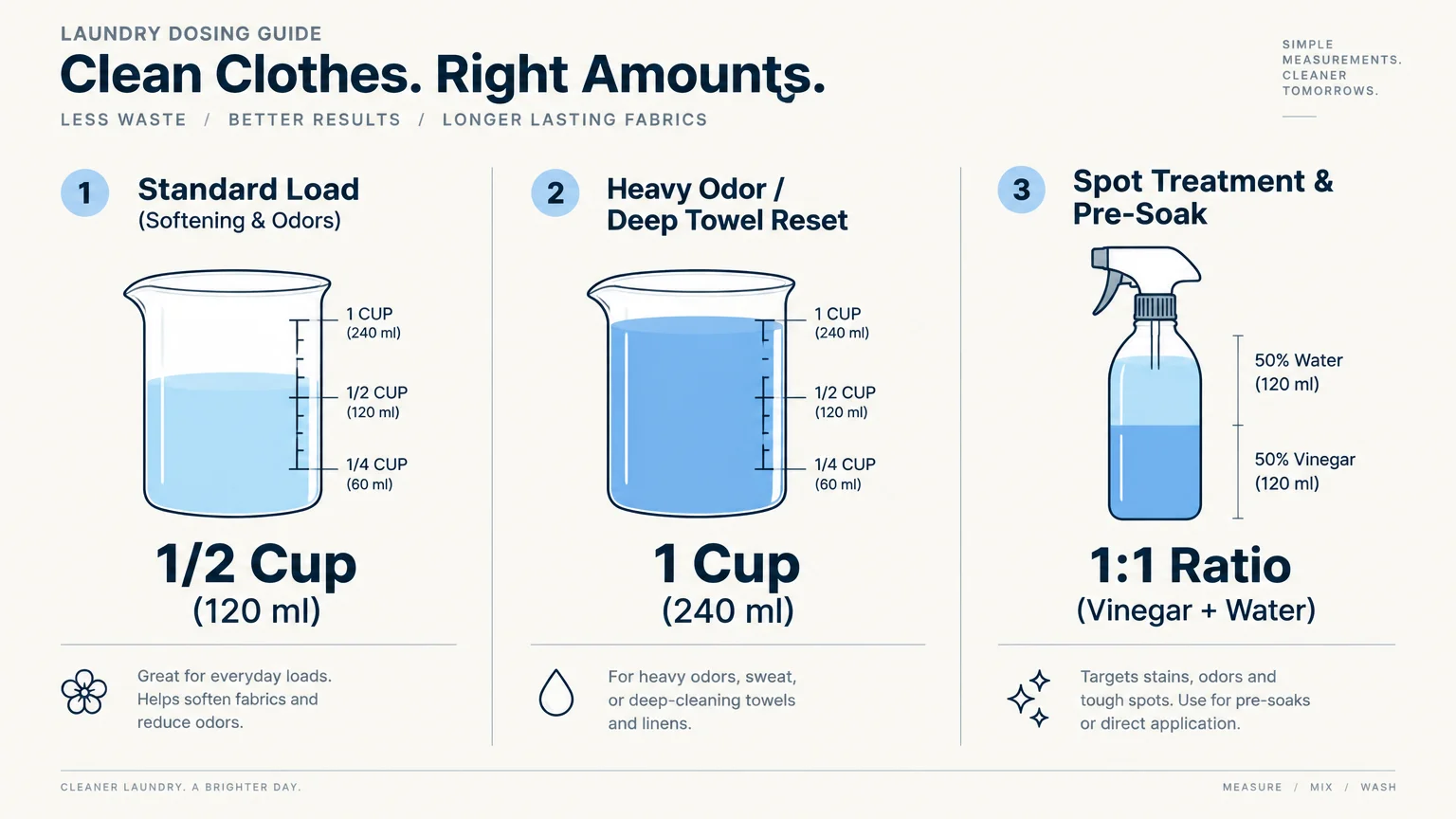
Dosing Reference Guide: How Much Vinegar to Use
Using the proper amount of vinegar ensures optimal cleaning performance without wasting product or overpowering your laundry space.
Refer to this simple dosing reference guide to tailor your measurements based on your specific load size and laundry goals:
| Load Type | Recommended Amount | Where to Pour | Primary Benefit |
|---|---|---|---|
| Standard Light Load | 1/4 cup | Fabric Softener Compartment | Light softening and soap rinse |
| Regular Medium Load | 1/2 cup | Fabric Softener Compartment | General odor neutralization and softness |
| Heavy Towels & Bedding | 1 cup | Fabric Softener Compartment | Strips waxy oils and fluffs terry loops |
| Heavy Workout Wear | 1/2 cup to 1 cup | Rinse cycle dispenser | Eliminates synthetic fiber sweat odor |
| Machine Maintenance Cycle | 2 cups | Directly into empty drum | Cleans scale, scum, and drum odor |
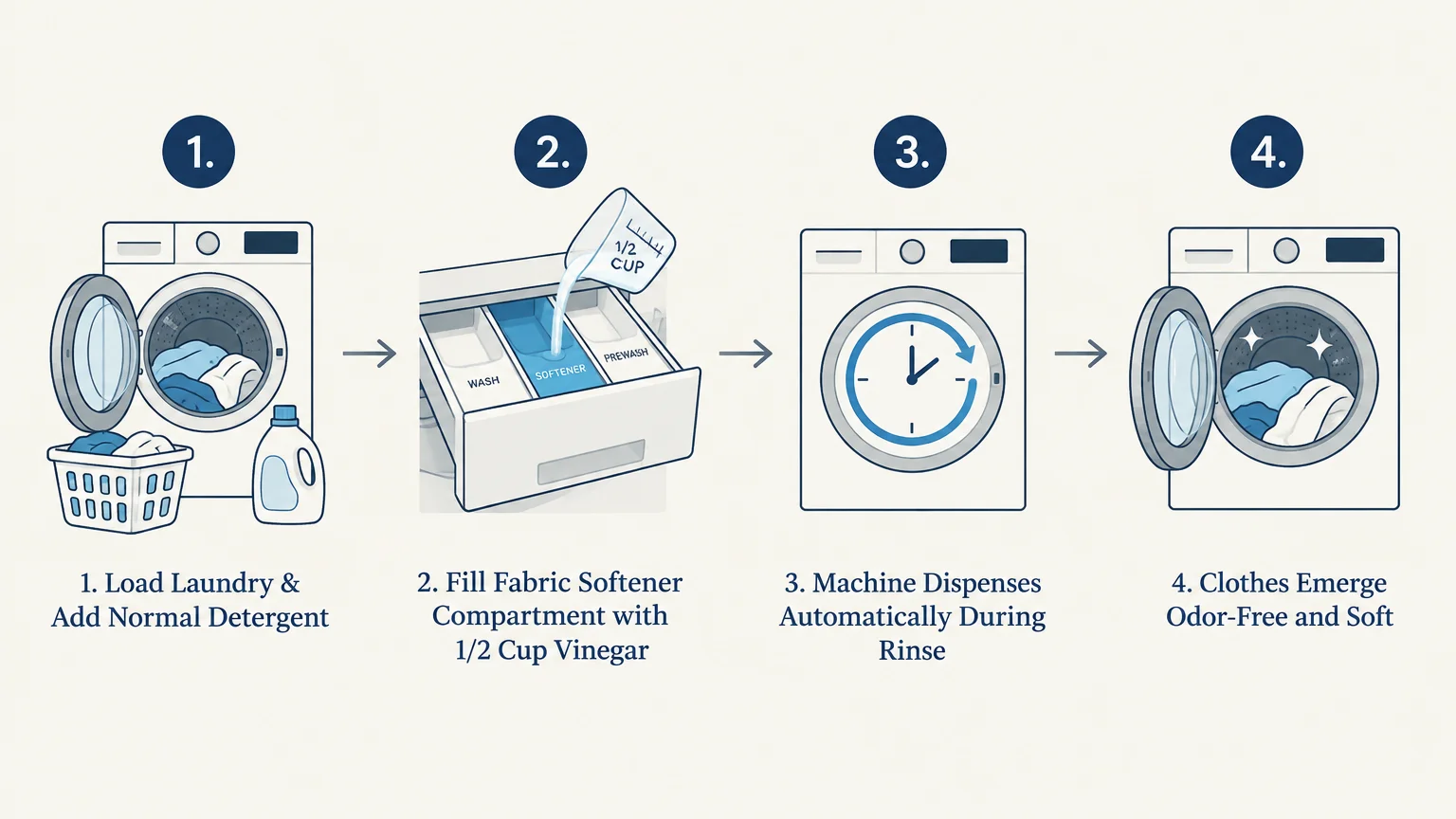
Step-by-Step Instructions: Adding Vinegar Correctly
Maximizing laundry vinegar benefits requires adding it at the correct moment in your washing machine’s operational cycle.
Follow these straightforward steps to ensure your vinegar works efficiently alongside your detergent:
- Sort your garments: Separate heavy cottons, towels, and workout apparel from delicate silks or garments containing untreated elastane.
- Add your regular detergent: Place your chosen laundry detergent directly into the main wash dispenser drawer or drum as directed by the manufacturer.
- Locate the fabric softener dispenser: Find the compartment labeled with a flower icon or the words “Fabric Softener” in your dispenser drawer.
- Measure distilled white vinegar: Pour one-half cup of standard 5% white vinegar into the fabric softener compartment, filling only to the “Max” line.
- Select your wash settings: Choose your normal cycle, water temperature, and spin speed, then start the machine.
- Let the machine dispense automatically: Your washer releases the vinegar during the final rinse cycle, neutralizing soap after primary cleaning finishes.
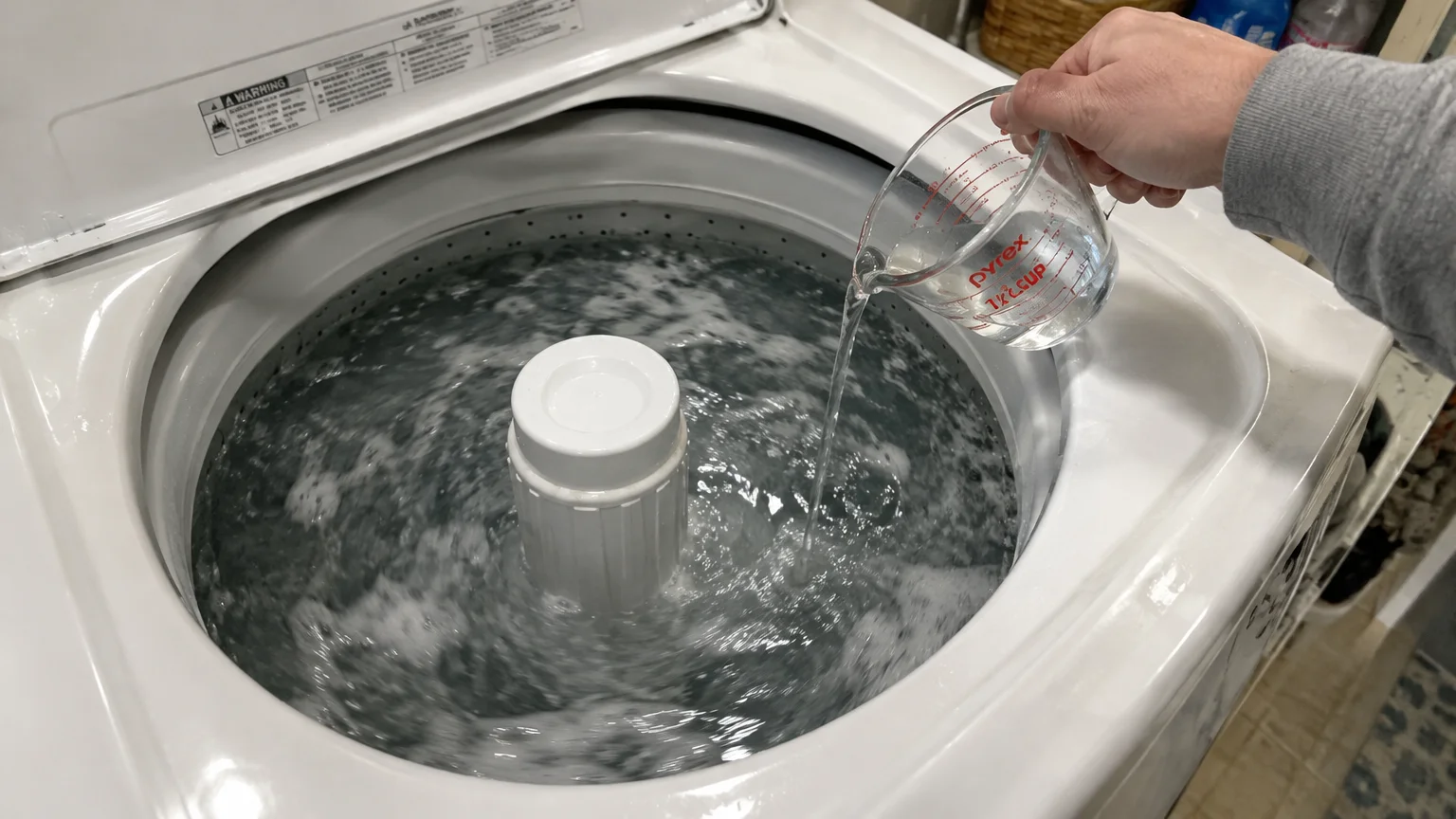
Top-Loading Machines Without an Automatic Dispenser
If you own an older top-loading washing machine lacking an automated dispenser tray, timing matters slightly more.
Never pour vinegar directly onto dry clothing before starting the wash cycle; doing so neutralizes your alkaline laundry detergent immediately.
When vinegar and detergent mix during the wash phase, both products lose their cleaning efficacy, resulting in poorly washed clothes.
Instead, let the wash cycle complete, watch for the tub to fill with fresh water for the final rinse, and pour one-half cup directly into the water.
Alternatively, purchase a reusable laundry rinse ball, fill it with white vinegar, and toss it onto your clothes before starting your load.
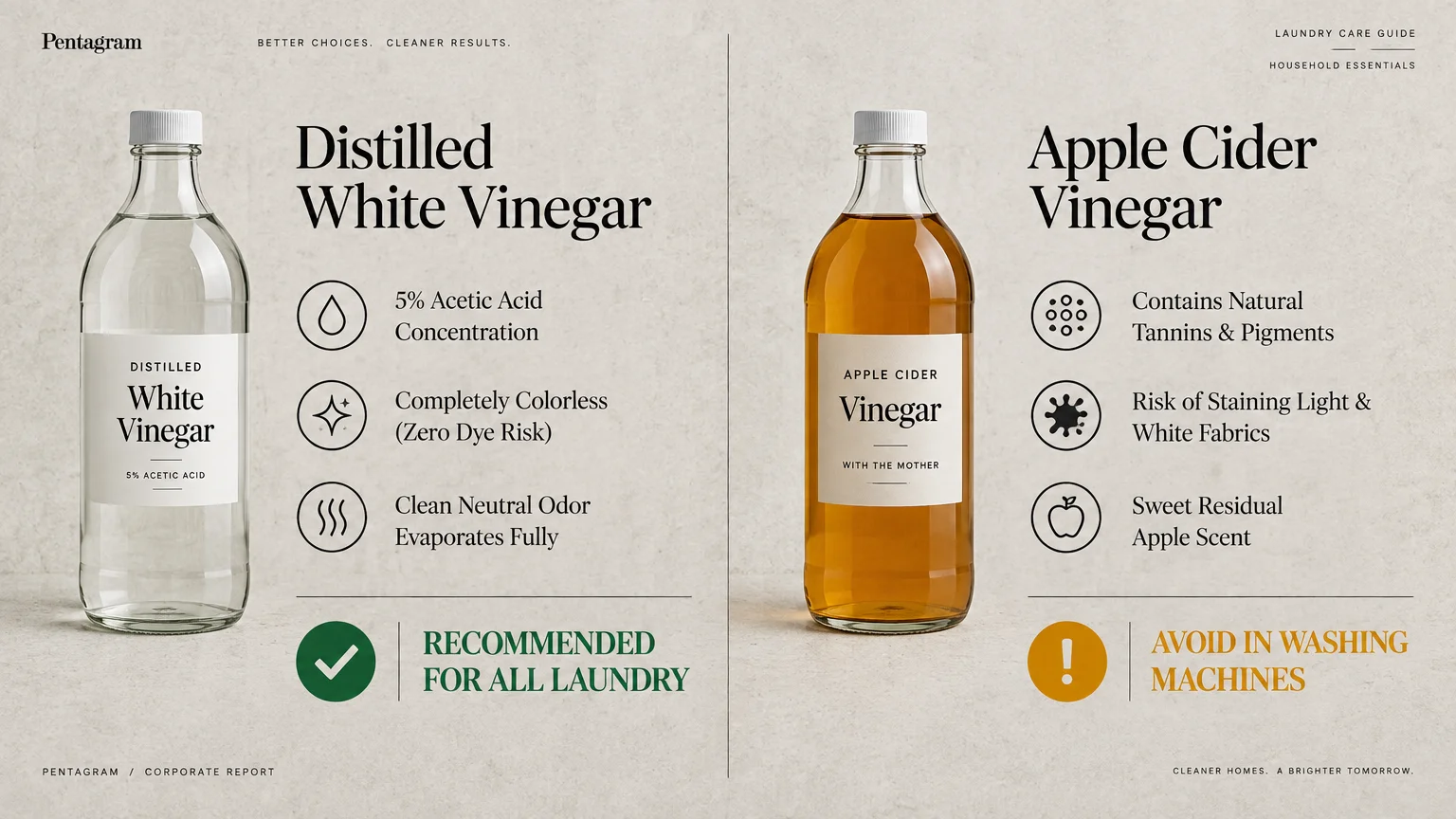
Distilled White Vinegar vs. Apple Cider Vinegar
Home cleaning guides sometimes mention apple cider vinegar as an alternative, but you should avoid using it in your laundry routine.
Apple cider vinegar is made from fermented apples and contains natural tannins, sugars, and brown coloring agents.
These natural plant pigments can cause permanent discoloration and brownish spots on light-colored fabrics, linens, and pure white clothing.
Furthermore, the residual fruit sugars in apple cider vinegar can feed bacteria if not completely rinsed from the fabric weave.
Always choose plain, clear distilled white vinegar for laundering. It provides consistent acidity, leaves no residue, and poses zero risk of staining.
Troubleshooting Common Vinegar Laundry Questions
If you are trying vinegar for the first time, you may have a few practical questions about laundry performance.
Here are clear answers to the most common questions homeowners ask about using vinegar in their wash:
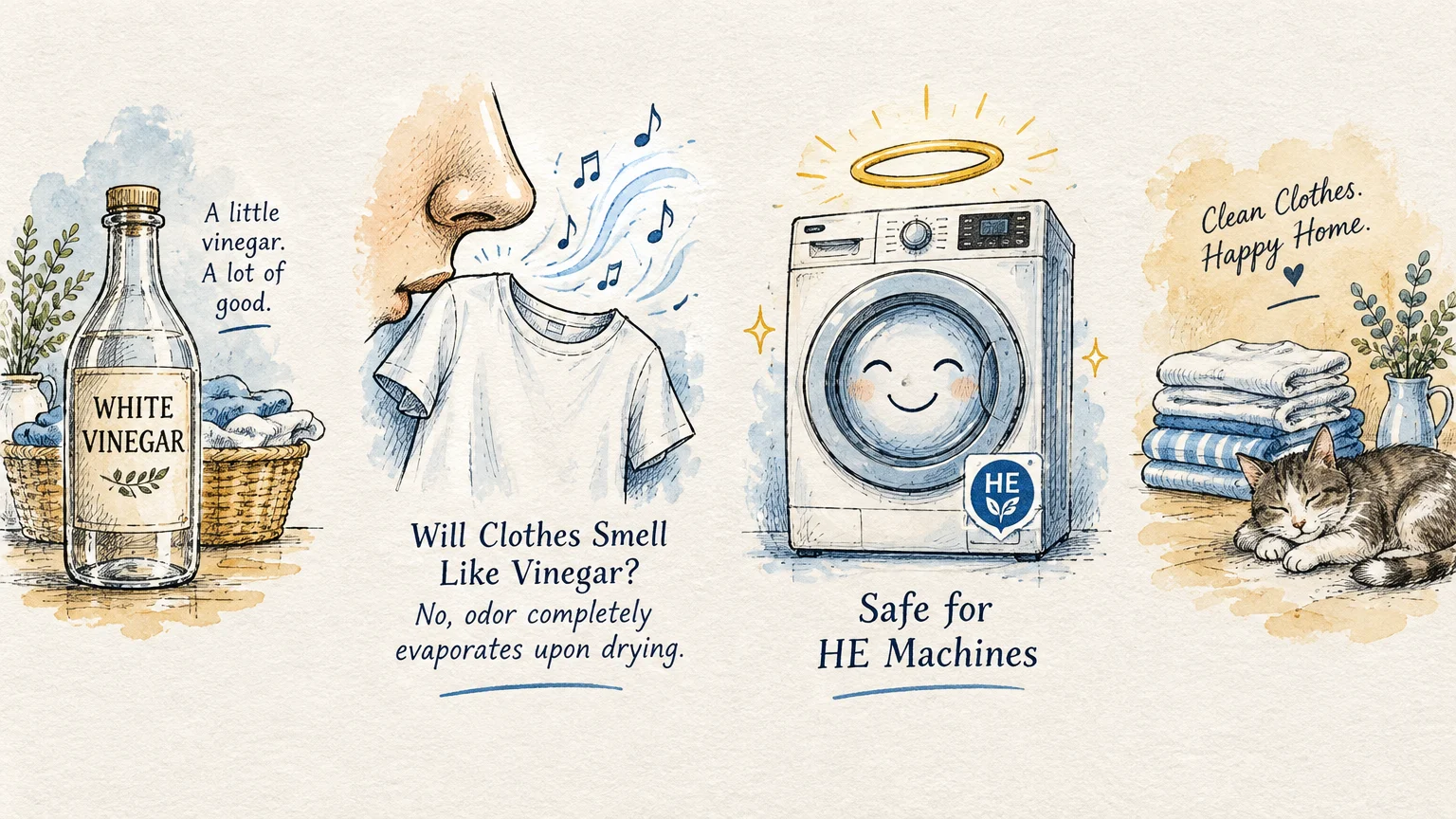
- Will my clothes smell like vinegar? No; the acidic scent evaporates entirely as the garments dry on a clothesline or in a warm dryer drum.
- Can I use cleaning vinegar instead? Cleaning vinegar contains 6% acetic acid—twenty percent stronger than standard vinegar—so dilute it slightly before adding it to clothes.
- Does vinegar sanitize laundry completely? Vinegar reduces bacteria counts significantly, but it does not sanitize textiles at medical or hospital-grade disinfection levels.
- Can I mix vinegar with baking soda in the drawer? Avoid combining them in the dispenser; their acid-base reaction cancels out both ingredients, leaving plain saltwater.
Your Practical Next Step
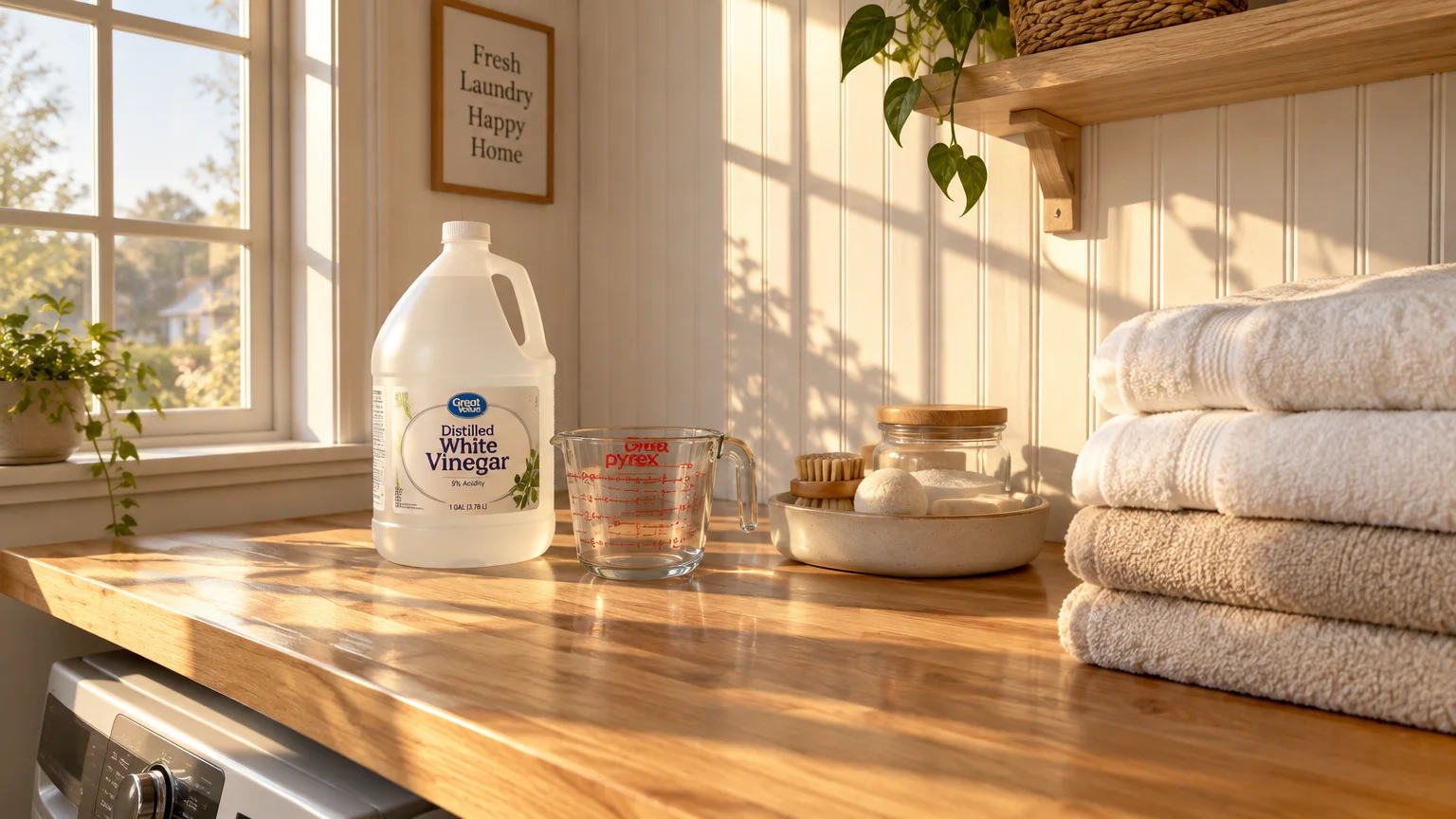
Upgrade your laundry routine today by purchasing a gallon jug of standard 5% distilled white vinegar on your next grocery run.
Start with a load of sour bath towels: pour one-half cup into your softener dispenser and run a warm cycle to experience the immediate difference yourself.