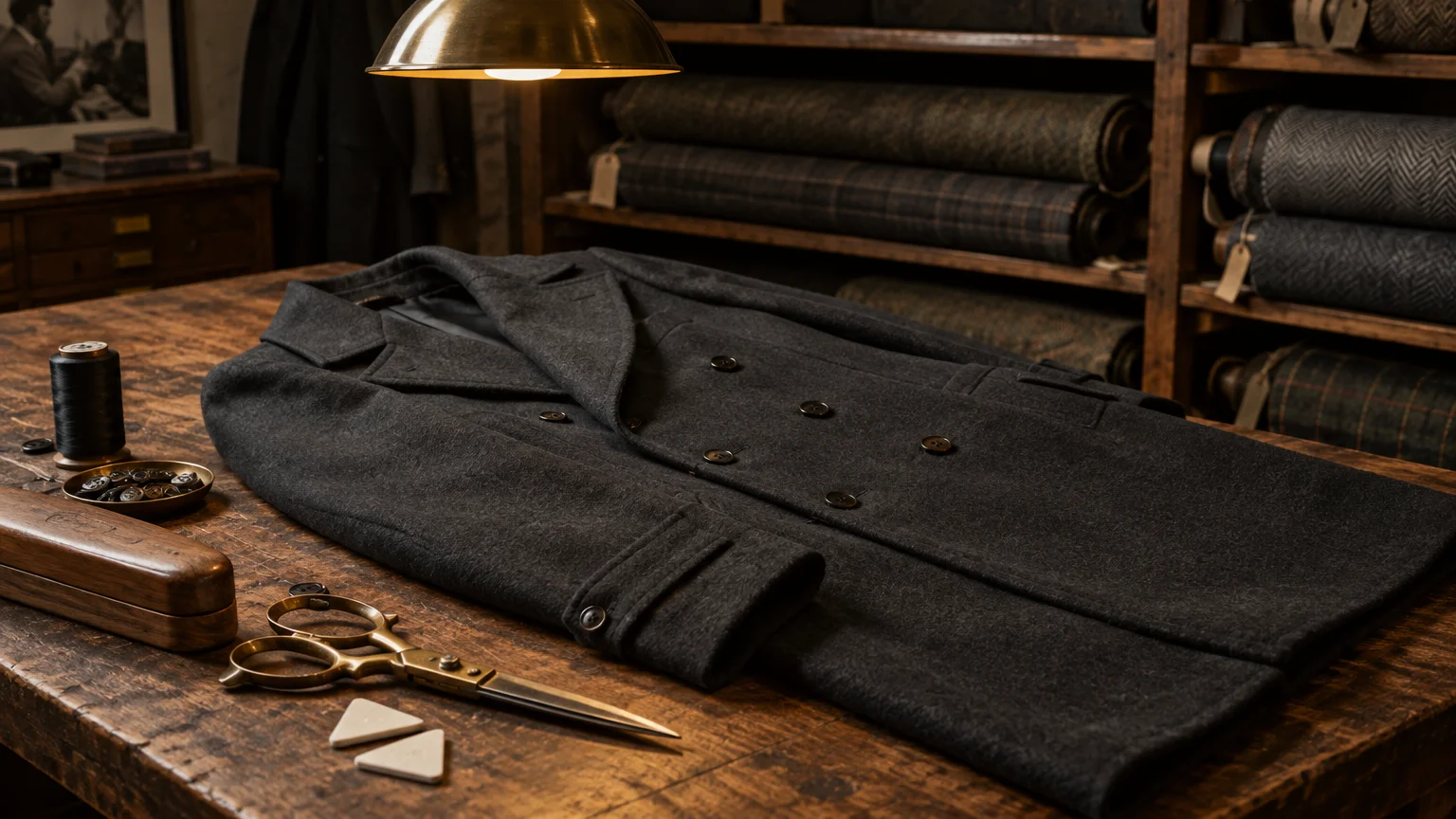
A quality wool coat can last decades, yet a single laundering misstep often causes irreversible shrinkage or warping. Learning proper wool coat care protects your investment and keeps natural fibers soft, structured, and warm.
Most coat disasters happen not from daily wear, but during well-intentioned attempts to remove stains and odors at home. When you understand how water, friction, and chemicals interact with wool, you avoid expensive wardrobe losses.
Here are ten common cleaning mistakes that ruin wool outerwear, along with simple adjustments to keep your garments pristine.
01 Tossing Wool Directly into the Washing Machine
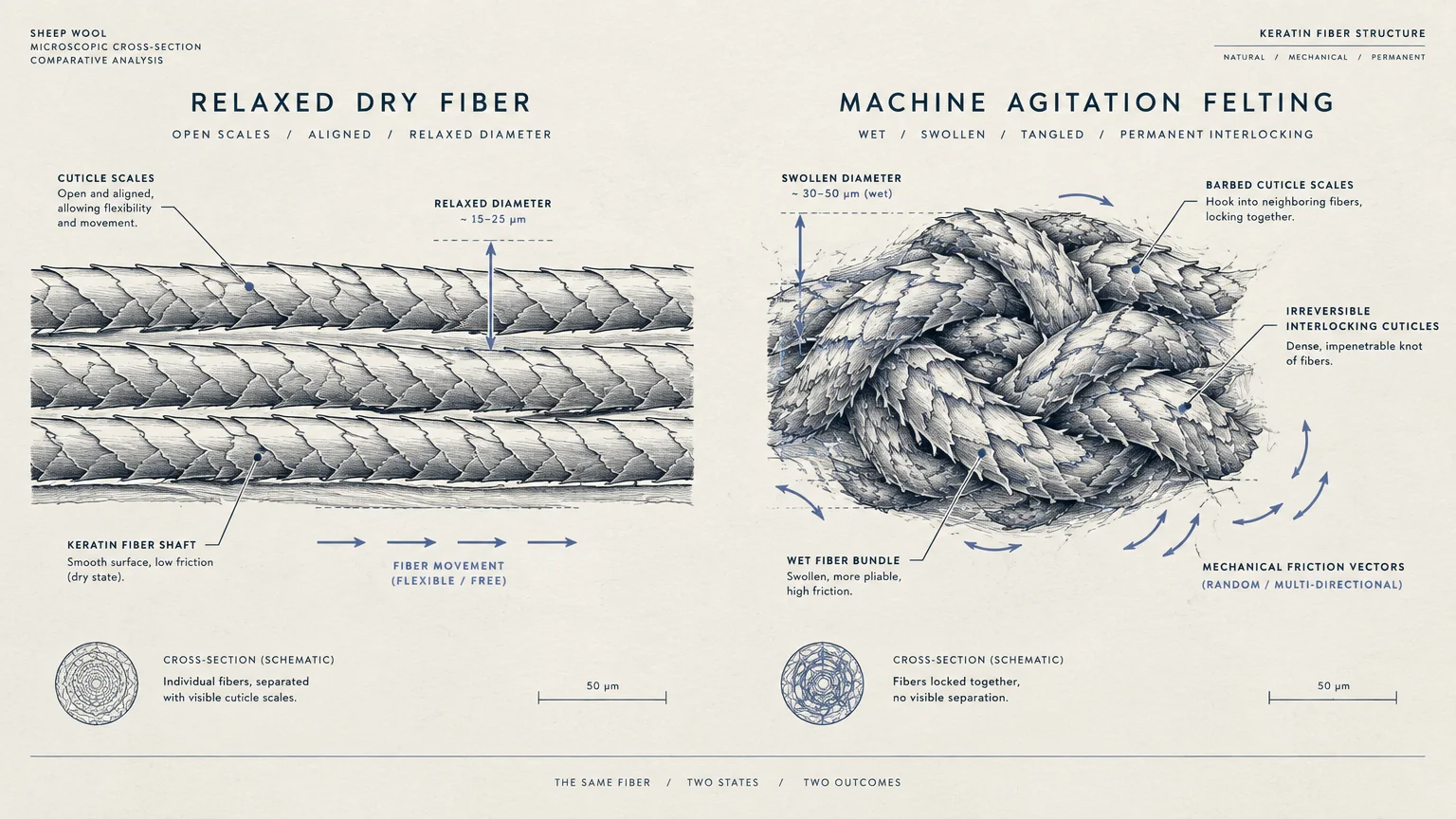
Wool fibers feature overlapping microscopic scales that expand when submerged in water. Machine agitation forces these scales to lock together permanently, causing dense shrinkage known as felting.
Once wool felts, the damage cannot be reversed. The coat loses its supple drape, stiffens into a cardboard-like texture, and shrinks several full sizes.
The mechanical spin cycle creates additional trauma by stretching wet seam threads against the metal drum wall. This violent rotation pulls linings out of alignment and warps armhole seams permanently.
If you choose to practice washing wool at home, reserve it solely for unlined, casual garments. Always check the garment tag first, because structured outerwear must never enter an agitator drum.
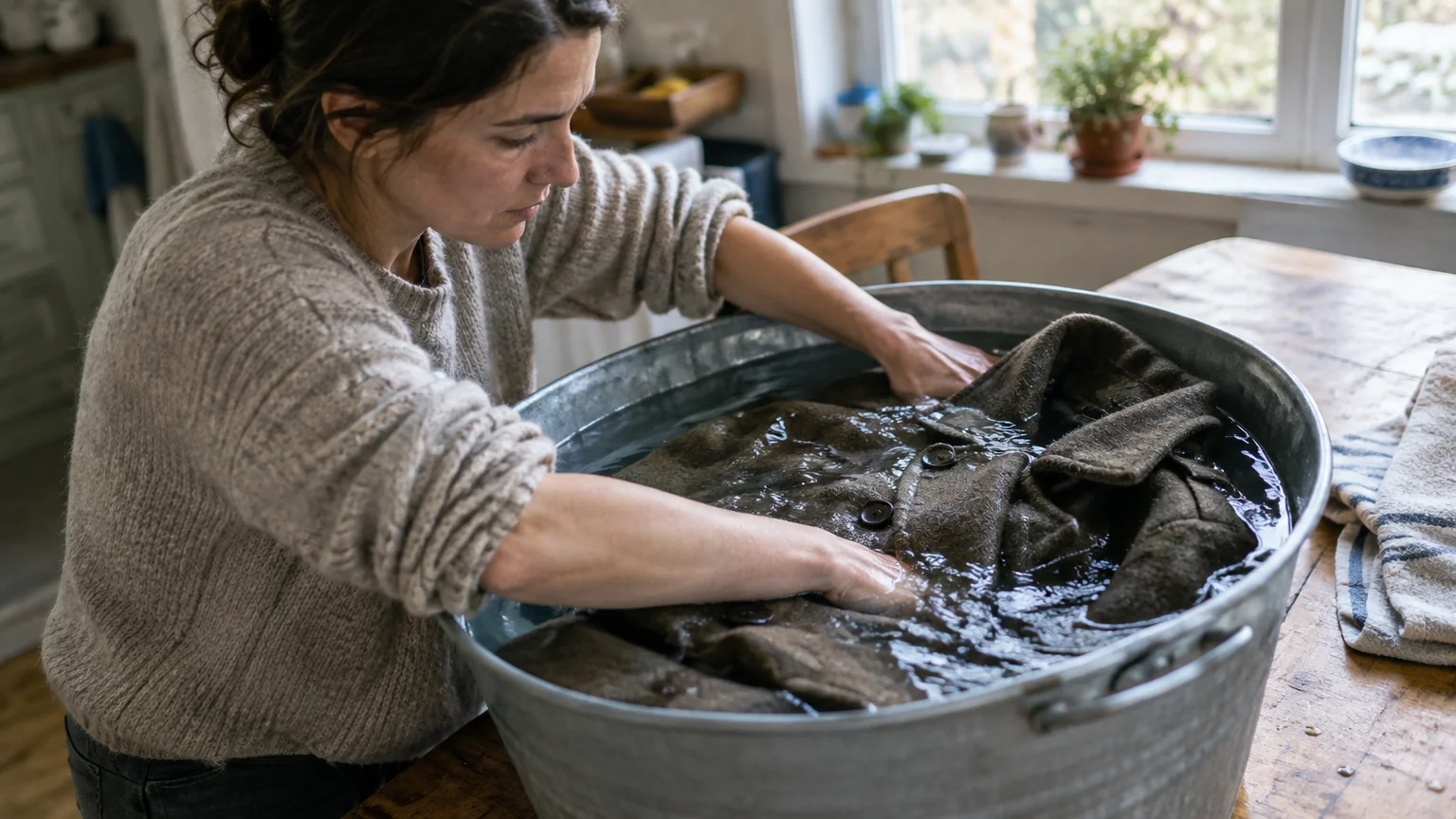
02 Submerging Structured Coats in Water
Tailored overcoats rely on hidden interior architecture to produce a crisp, sophisticated silhouette. Tailors insert horsehair canvas, fusible interfacings, and molded shoulder pads between the outer wool and the interior lining.
These hidden components absorb water at completely different rates than the outer wool shell. When soaked, internal stiffening glues dissolve while canvas layers contract unevenly.
This mismatch causes puckering, bubbling, and permanent distortion across the lapels and chest panels. Even professional pressers cannot restore a jacket after its internal interfacing detaches.
Keep tailored coats out of wash basins, bathtubs, and soaking sinks entirely. Instead, restrict home cleaning efforts to conservative surface spot treatments.
03 Using Standard Alkaline Laundry Detergents
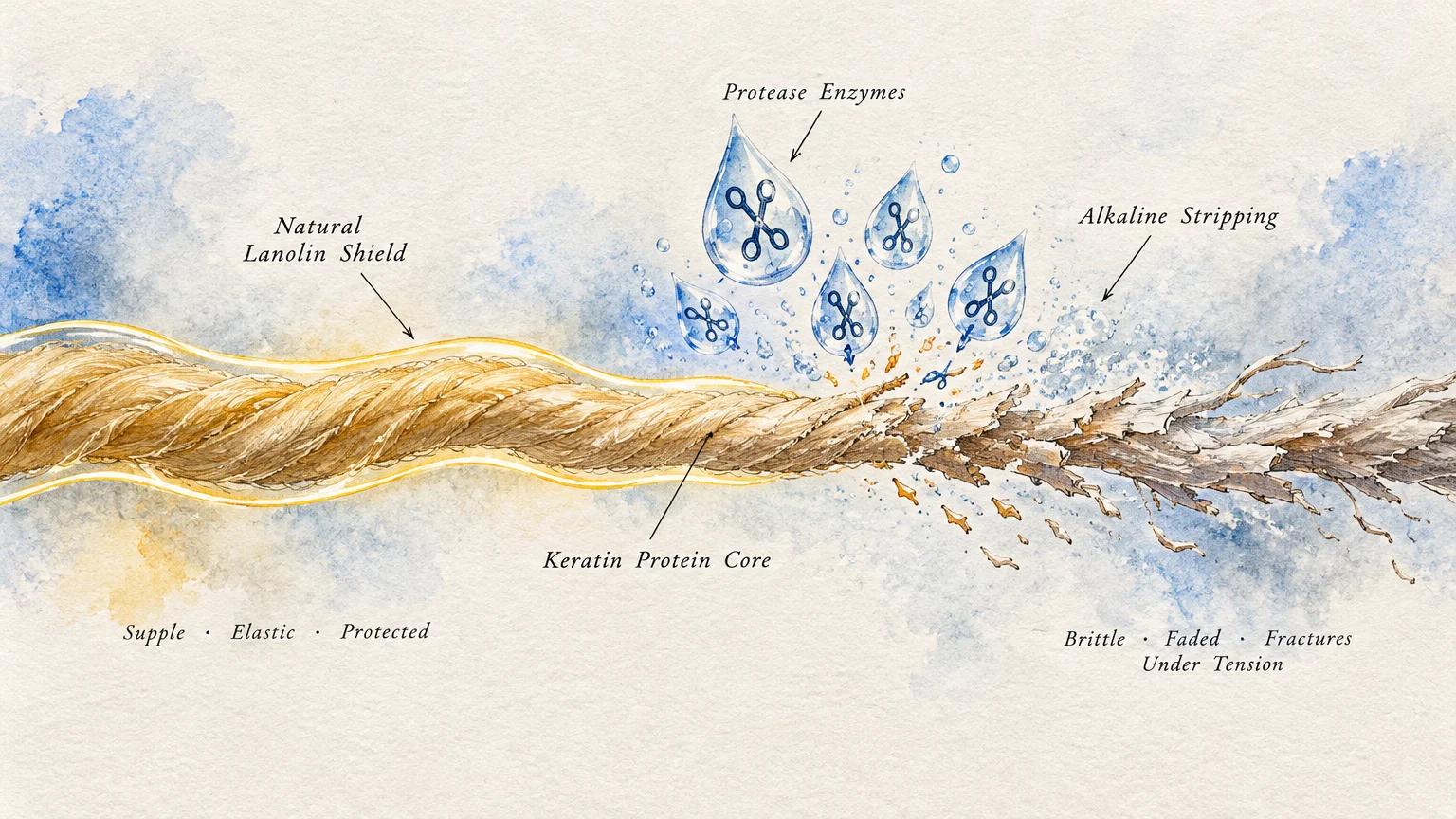
Most commercial laundry detergents rely on strong alkaline formulas and bio-engineered enzymes to break down food grease. Protease enzymes specifically target protein-based stains like meat juice, sweat, and dairy.
Because sheep wool consists of keratin—the exact same protein found in human hair—these enzymes digest the fiber itself. Over time, standard detergents thin the yarn, erode surface luster, and create mysterious holes.
Furthermore, alkaline soaps strip away lanolin, which is the natural protective wax found on raw wool. Deprived of lanolin, the fibers dry out, turn brittle, and snap under normal tension.
Protect delicate fibers by washing wool with pH-neutral cleansers certified by textile authorities like The Woolmark Company. These gentle formulas clean soils without breaking down the fiber’s structural protein core.
04 Scrubbing Spills and Stains Vigorously
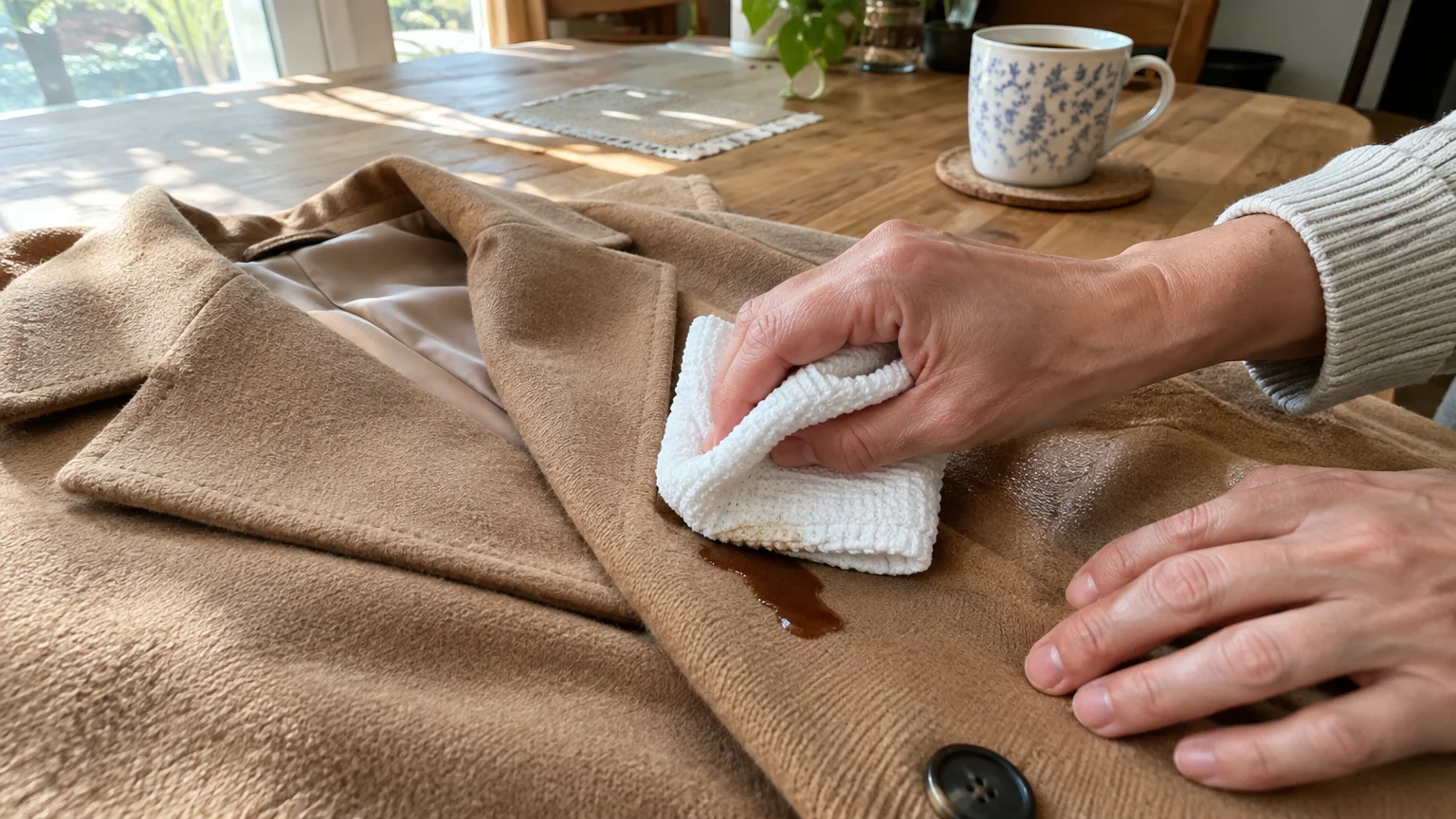
When coffee or food drops onto your lapel, panic often leads to aggressive rubbing. Unfortunately, heavy scrubbing abrades fragile wet wool fibers instantly.
Friction drives liquid pigments deep into the yarn core while breaking surface filaments. This creates a fuzzy, discolored patch that remains noticeable long after the stain dries.
Address unexpected spots with a gentle blotting action using a clean, undyed microfiber cloth. Press the cloth straight down into the spill to lift moisture out of the fabric.
Always work from the outer edges of the spill toward the center to avoid spreading the mark. Never scrub back and forth across woven wool outerwear.
05 Blasting Wool with High Heat and Tumble Dryers
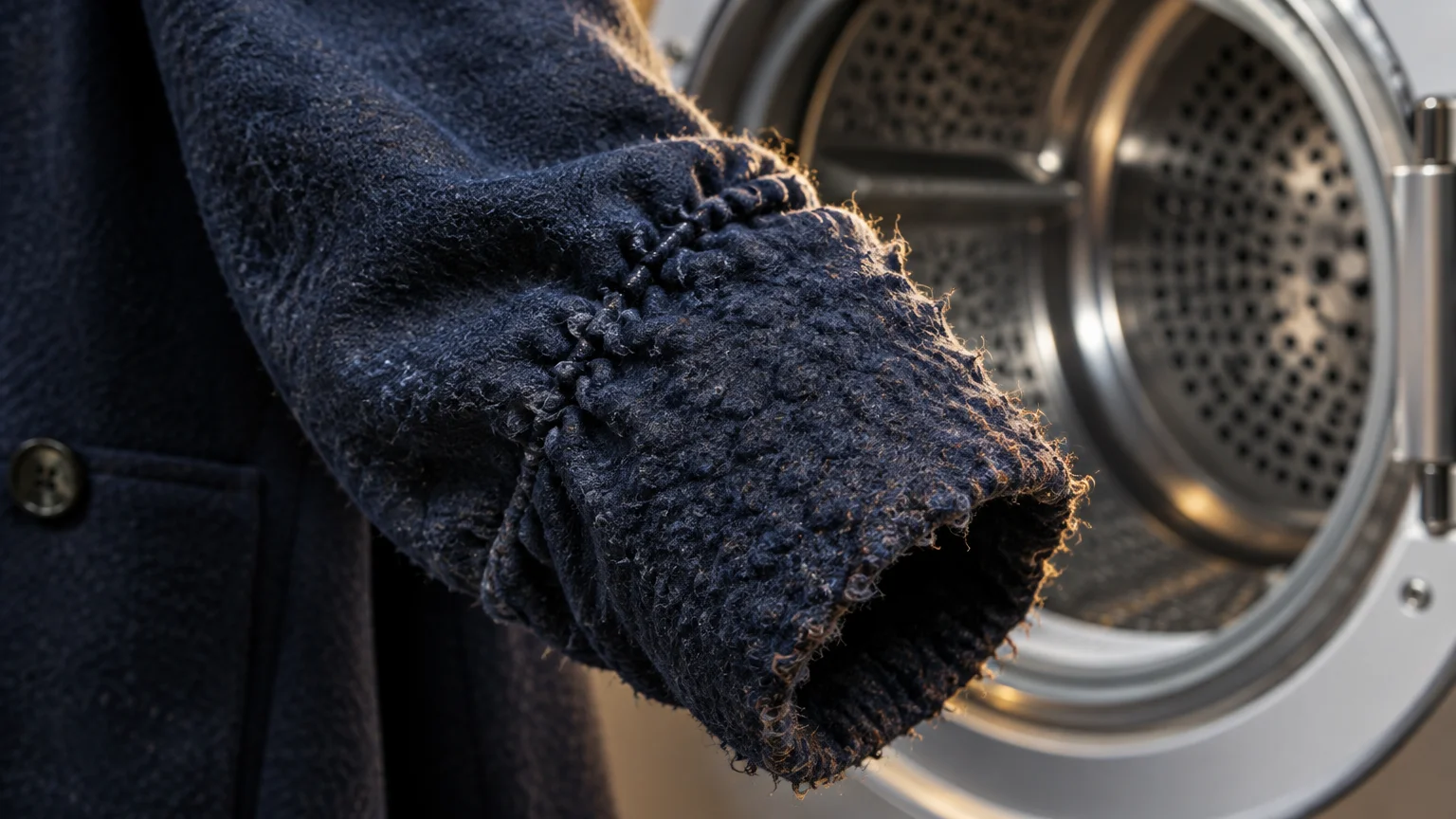
Tumble dryers combine direct heat with continuous physical friction, creating the worst possible environment for wool coats. Even a five-minute cycle can shrink heavy winter wool past the point of salvage.
Intense heat bakes moisture out of the fiber’s internal cellular structure, causing individual coils to contract permanently. The resulting fabric feels rough, rigid, and scratchy against bare skin.
Localized heat sources cause comparable destruction inside the home. Draping a wet coat across a hot radiator scorches outer yarns and shrinks lining materials unevenly.
Always air-dry damp wool outerwear at room temperature away from direct sunlight and heater vents. Good ambient air circulation dries garments safely without thermal fiber damage.

06 Hanging Coats on Flimsy Wire or Plastic Hangers
Heavy winter outerwear often weighs between three and six pounds. Flimsy wire or narrow plastic hangers cannot support that substantial downward load over time.
Thin hangers concentrate the coat’s entire weight onto narrow strips across your shoulder seams. Within weeks, this pressure causes sharp hanger dimples and stretches the tailored shoulders out of shape.
Switch to wide, contoured wooden coat hangers featuring broad shoulder pads. These sturdy supports distribute fabric weight evenly across the entire shoulder yoke, preserving the garment’s crisp shape.
07 Aggressively Shaving Off Fabric Pills
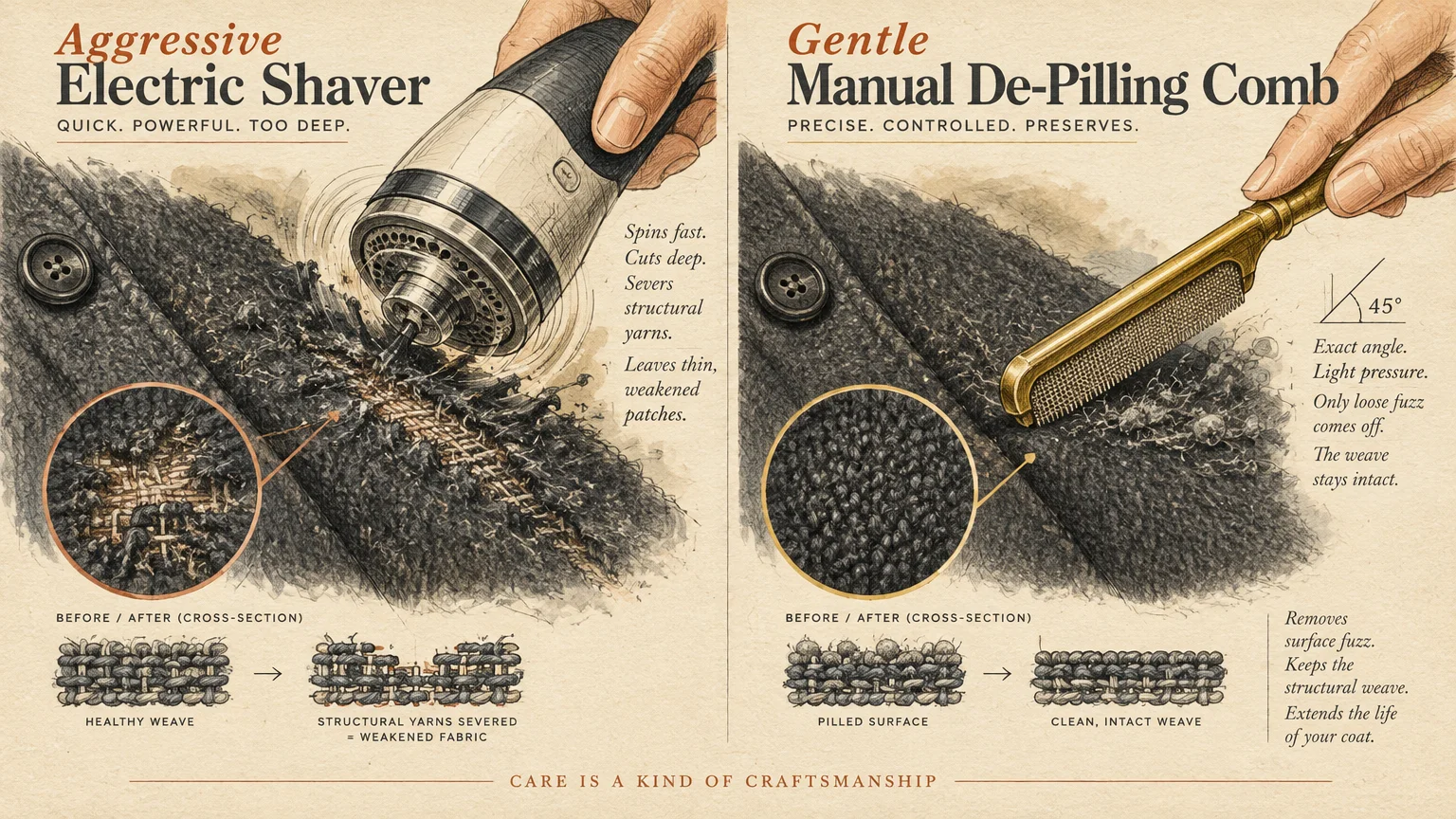
Friction from purse straps, car seat belts, and arm movement causes surface fibers to tangle into tiny fuzz balls. While pilling looks messy, hasty removal methods can destroy your garment.
Using disposable safety razors or cheap electric defuzzers poses a serious hazard. These sharp, unguarded blades easily catch on loose surface loops, slicing structural yarns and creating visible holes.
To safely remove pilling from wool, spread the garment out across a firm, flat surface. Hold the fabric taut with one hand to keep the work area level.
Gently stroke a fine-toothed wool comb or a sweater pumice stone along the grain of the fabric. This controlled action clears away loose fuzz without endangering the underlying structural threads.
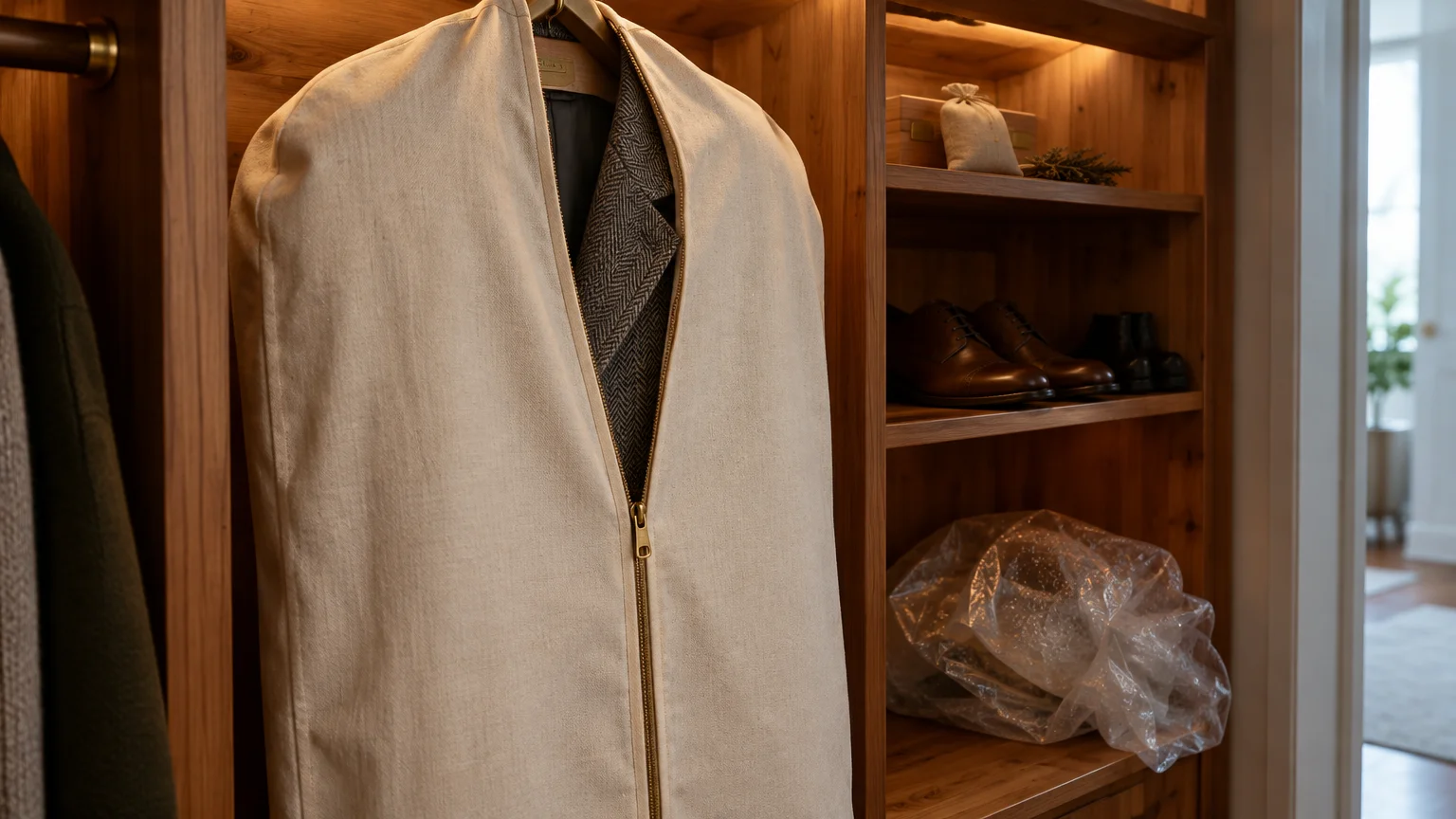
08 Storing Coats in Non-Breathable Plastic Covers
Many people hang coats inside the thin plastic film provided by commercial dry cleaners. Leaving garments sealed inside these non-breathable bags invites serious structural and aesthetic decay.
Plastic seals in ambient humidity, fostering an ideal greenhouse environment for mildew and mold growth. Over time, trapped condensation breaks down delicate fibers and produces foul, musty odors.
Additionally, degrading plastic releases chemical off-gasses that react with wool, turning light cream and camel shades dingy yellow. The trapped environment also prevents natural fibers from breathing.
When you store wool coats between seasons, switch to breathable 100% cotton garment bags. Cotton blocks settled dust and pests while allowing air to move freely through the fabric.
09 Packing Away Dirty Coats Without Moth Protection
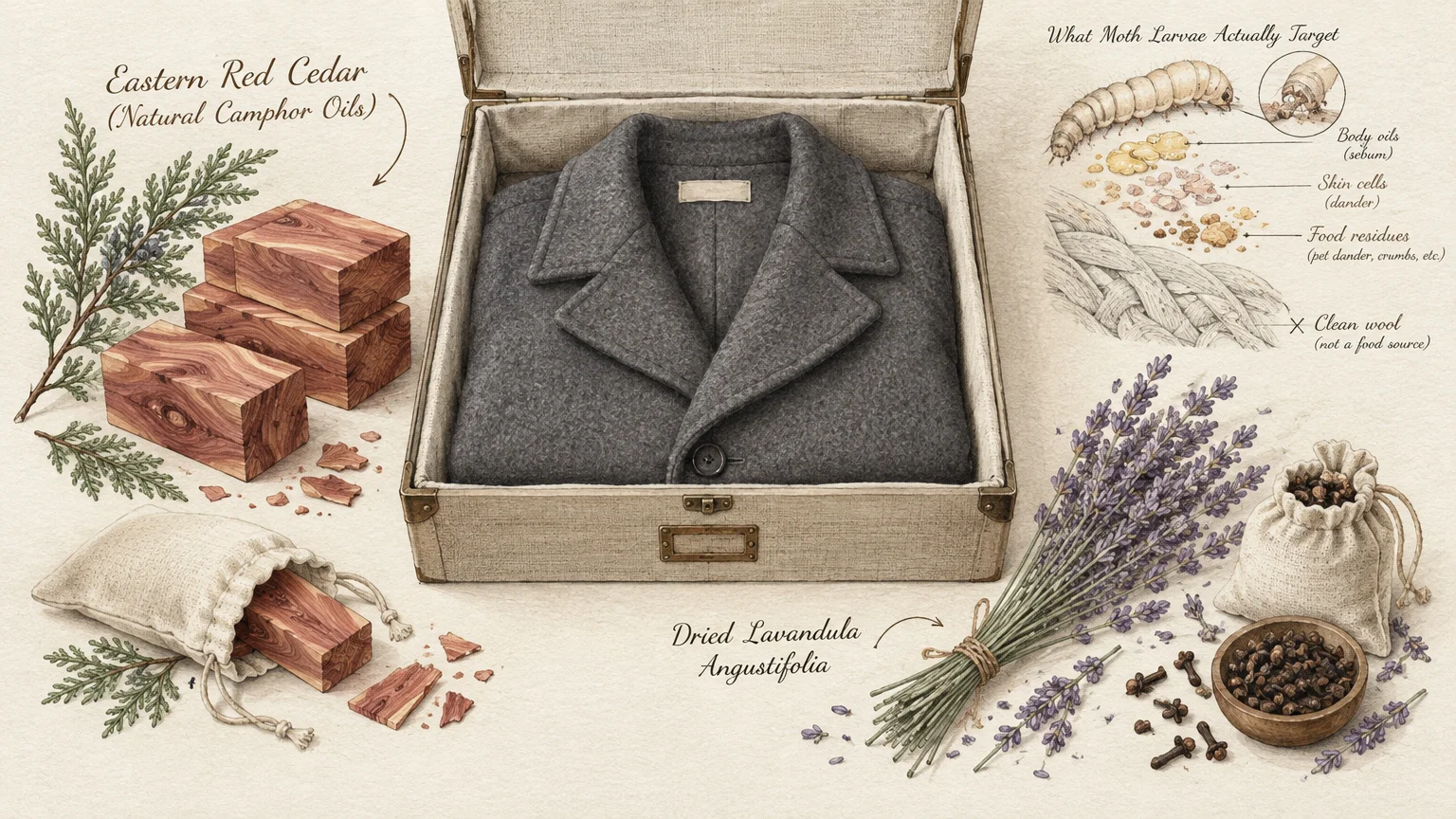
Tucking a worn coat into a closet for summer without washing it creates an open invitation for clothes moths. Adult moths do not eat wool, but their hatched larvae do.
Larvae require dietary minerals and proteins found in human sweat, body oils, and microscopic food residues. A coat that appears clean to your eye may still hold enough organic nourishment to sustain an infestation.
Guidance from the University of California Statewide IPM Program emphasizes that thorough sanitation is your front-line defense against clothes moths. Always clean outer layers before sealing them away for months.
Supplement clean storage with aromatic cedar blocks or natural lavender sachets to repel opportunistic insects. Sand cedar blocks lightly every autumn to refresh the natural aromatic oils that keep pests at bay.
10 Over-Dry Cleaning Your Outerwear
Professional dry cleaning provides essential care for structured wool coats, but excessive trips cause cumulative wear. Commercial cleaners use aggressive chemical solvents like perchloroethylene to lift soil without water.
Frequent solvent baths strip away remaining traces of lanolin, leaving the wool fibers dry, brittle, and lusterless. The coat gradually loses its natural weather resistance and develops a stiff, papery hand.
According to garment care standards from the American Cleaning Institute, seasonal outerwear generally requires dry cleaning only once or twice per year. Frequent trips subject fragile seams and lining stitches to unnecessary wear.
Rely on daily brushing and spot cleaning during the winter to keep your coat fresh between professional cleanings. Reserve dry cleaning for seasonal turnarounds or deep, oily stains.
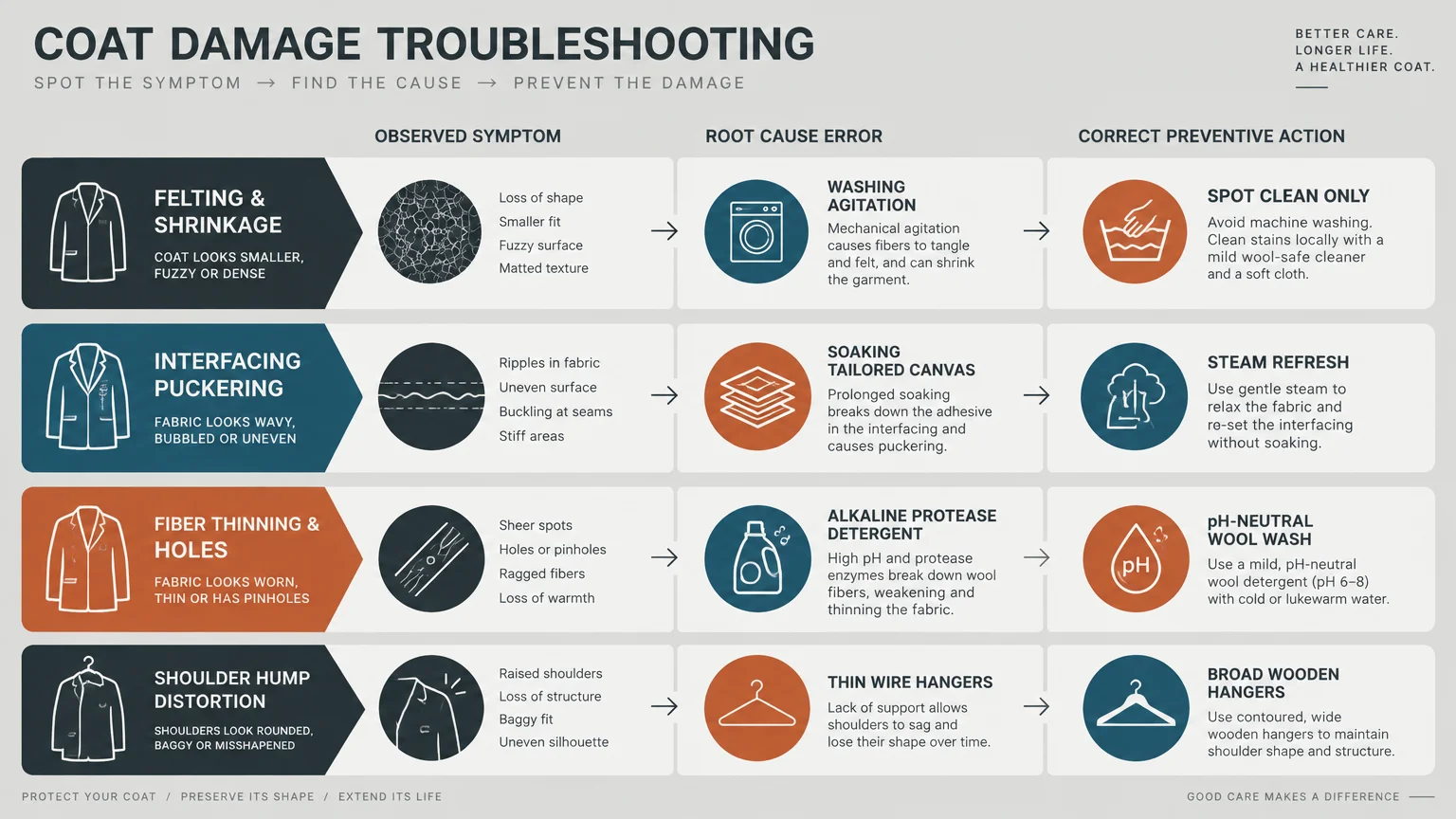
Wool Coat Care and Troubleshooting Guide
| Coat Issue | Root Cleaning Mistake | Recommended Safe Solution |
|---|---|---|
| Felting and Shrinking | Machine agitation and warm water | Soak briefly in lukewarm water with hair conditioner to relax fibers; reshape gently on a flat towel. |
| Bubbling on Lapels | Submerging structured coats in water | Avoid complete soaking; take the garment to a master tailor for specialized steam re-pressing. |
| Brittle, Frayed Threads | Using enzyme or bio detergents | Switch strictly to pH-neutral wool washes that preserve the natural keratin protein structure. |
| Shoulder Dimples | Using thin wire or plastic hangers | Hang coats exclusively on wide, contoured wooden hangers with broad shoulder flares. |
| Fabric Holes from Pilling | Using razor blades or aggressive shavers | Lay the coat flat and glide a fine-toothed brass sweater comb gently along the fabric surface. |
| Mildew and Yellowing | Storing coats in dry-cleaner plastic | Discard plastic immediately; air out the coat in indirect light and store inside breathable cotton garment bags. |
How to Spot Clean a Wool Coat at Home
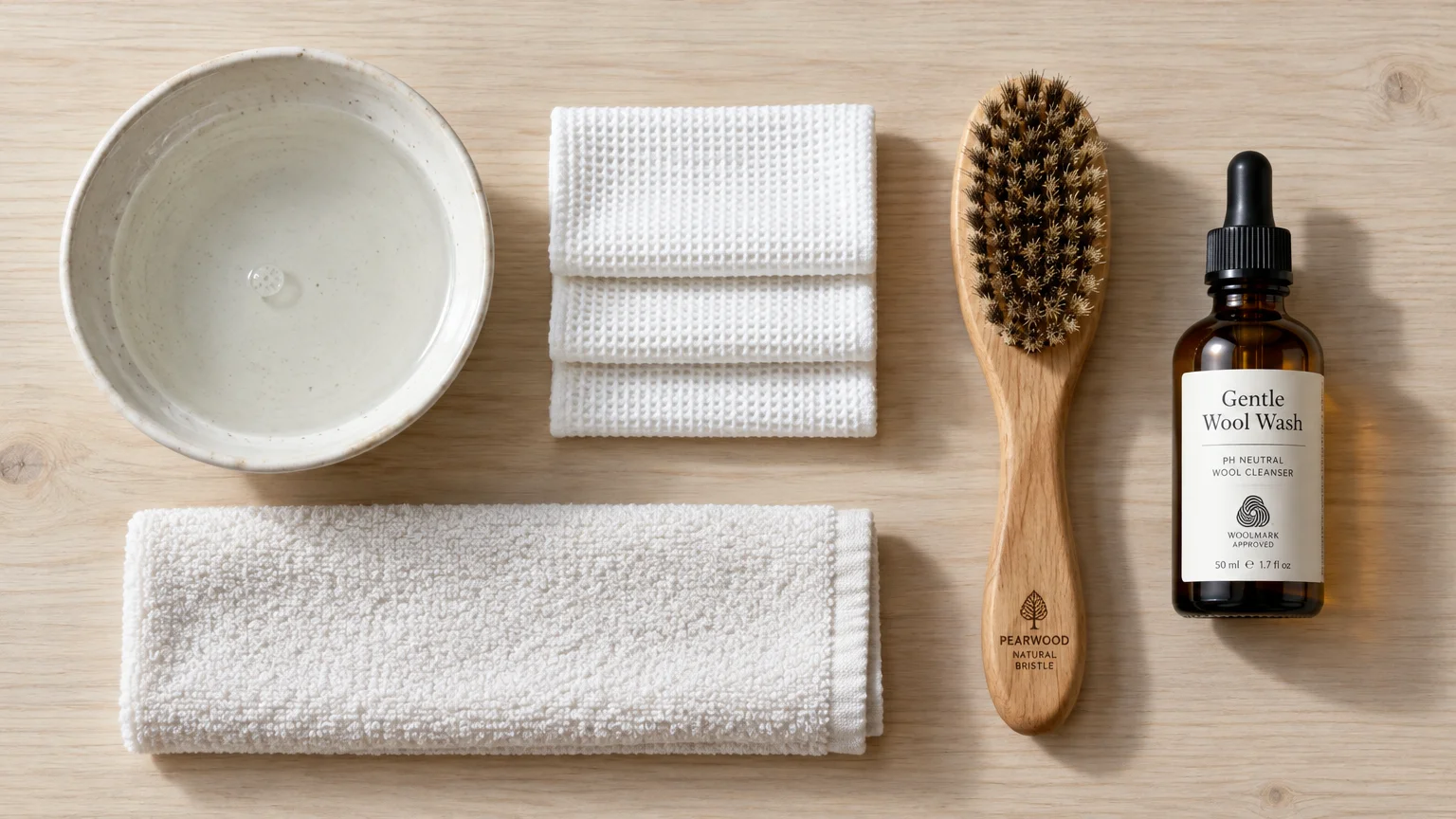
Spot cleaning removes minor spills immediately, sparing your coat from unnecessary immersion or chemical dry cleaning. Follow this conservative six-step procedure whenever accidents strike your outerwear.
- Brush surface soils away: Sweep a stiff boar-bristle garment brush over the affected area to loosen dried mud and grit before applying moisture.
- Prepare a mild cleaning bath: Mix two cups of cool water with a quarter-teaspoon of pH-neutral wool detergent in a small bowl until completely dissolved.
- Perform a hidden patch test: Dab a few drops of the soap solution onto an inside facing or interior hem. Wait five minutes and blot with a white tissue to verify colorfastness.
- Blot the spill gently: Dip a white microfiber cloth into the cleaning solution, wring it until barely damp, and press gently over the stain. Work steadily from the outer boundary inward.
- Rinse without soaking: Moisten a second cloth with clean cool water and blot the area repeatedly to lift out detergent residue. Residual soap attracts airborne dirt if left in the weave.
- Dry flat in open air: Place the coat flat over a dry bath towel away from radiators and direct sunlight. Allow the wool to dry completely before placing it back on a wooden hanger.
Daily Habits That Extend Wool Coat Life
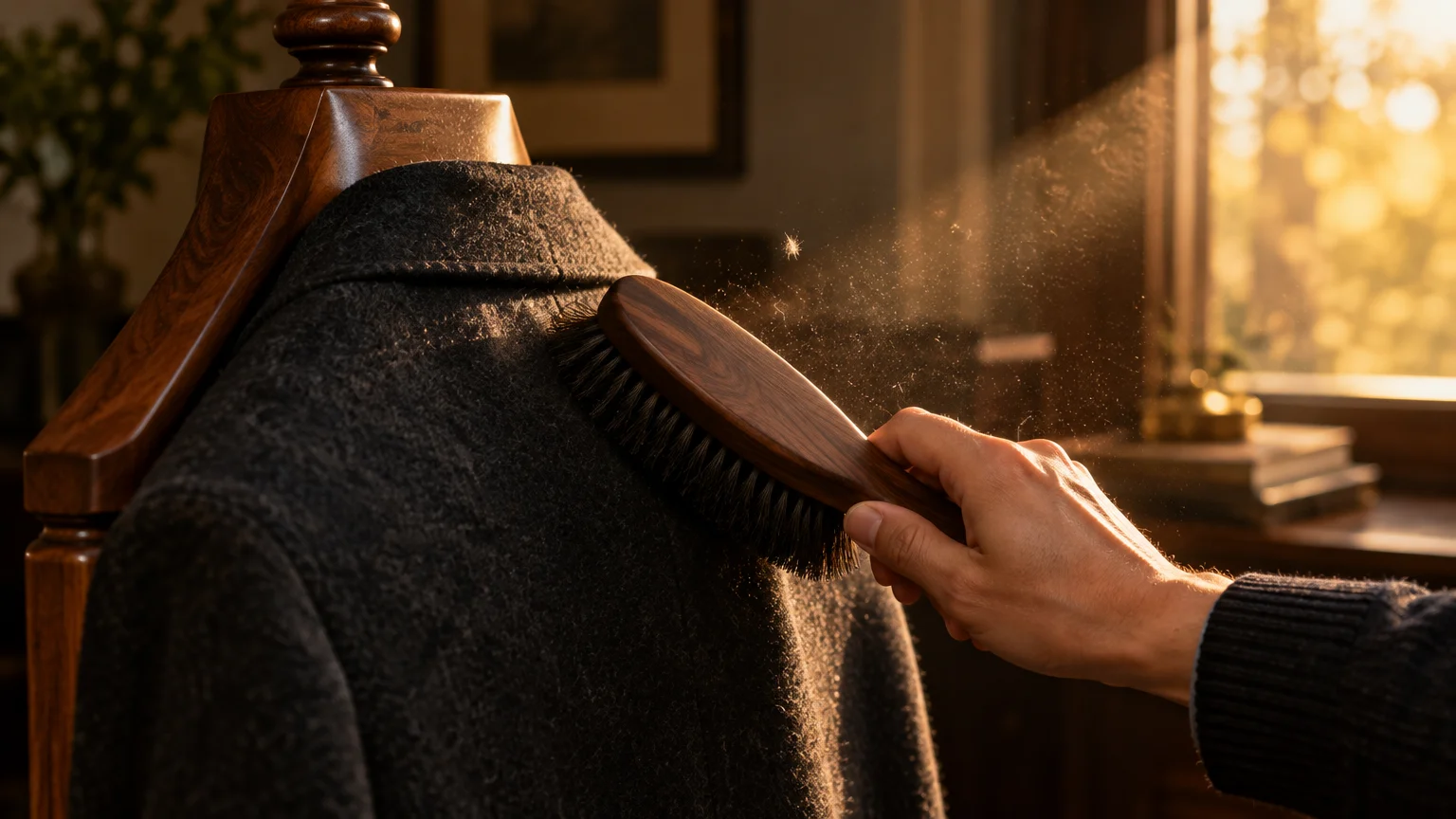
Preserving fine wool requires minimal effort when you integrate smart habits into your daily household routine. Consistent preventative care prevents soil accumulation and keeps fibers resilient.
Invest in a natural boar-bristle garment brush and brush your coat downward after every few wearings. Regular brushing lifts street soot, sloughs off lint, and realigns fiber scales before dirt settles into the weave.
Textile preservation specialists at the National Park Service Museum Management Program recommend gentle mechanical brushing as the safest way to maintain historic wool garments. Brushing eliminates the need for frequent washing cycles.
Give your coat twenty-four hours of rest between wearings whenever possible. Wool fibers naturally bounce back and shed wrinkles when allowed to breathe in a well-ventilated room.
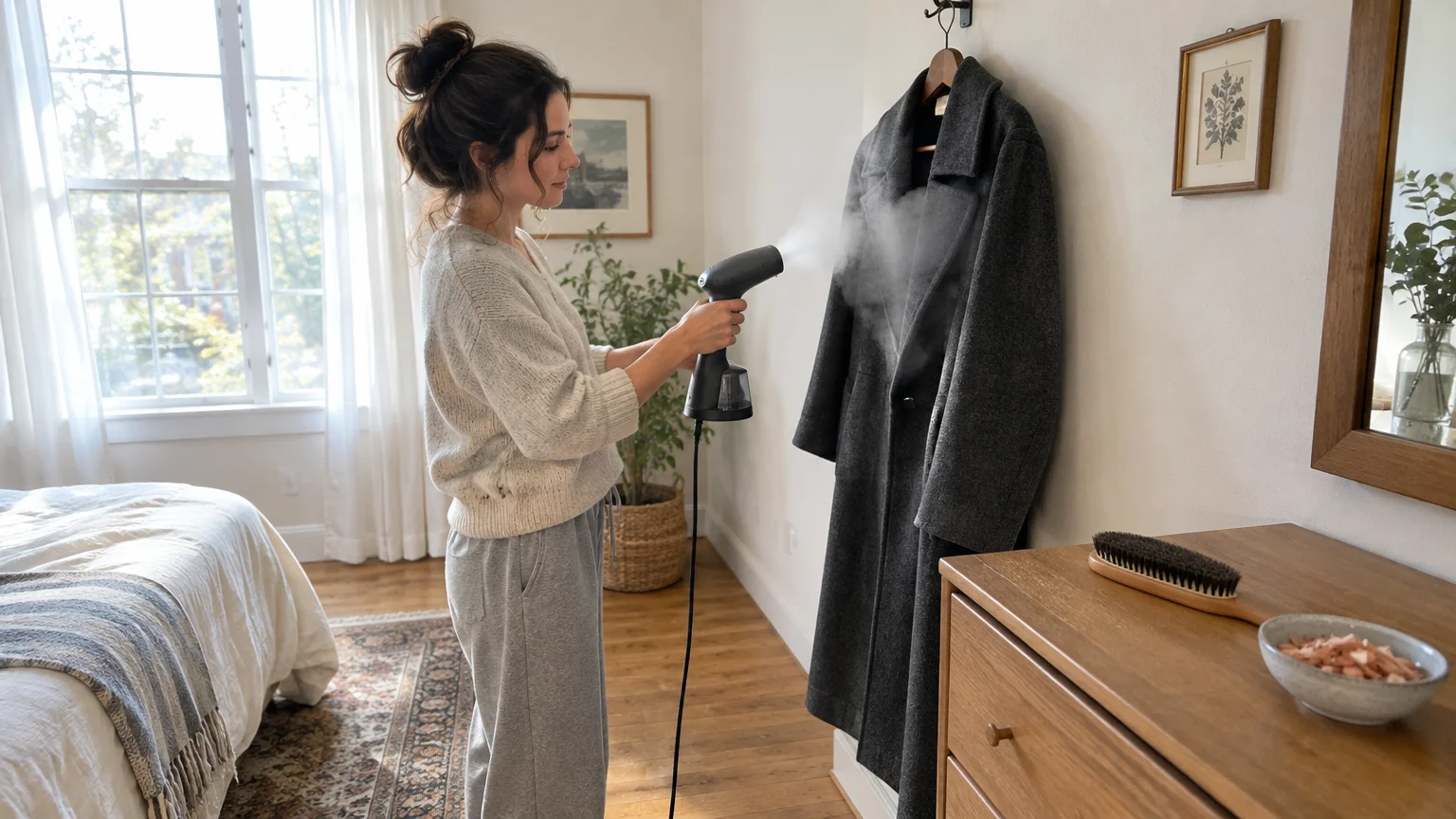
If your coat picks up lingering odors from cooking or smoke, hang it in the bathroom while you take a warm shower. The indirect steam relaxes creases and clears away smells without saturating internal canvas.
How to Safely Store Wool Coats for the Off-Season
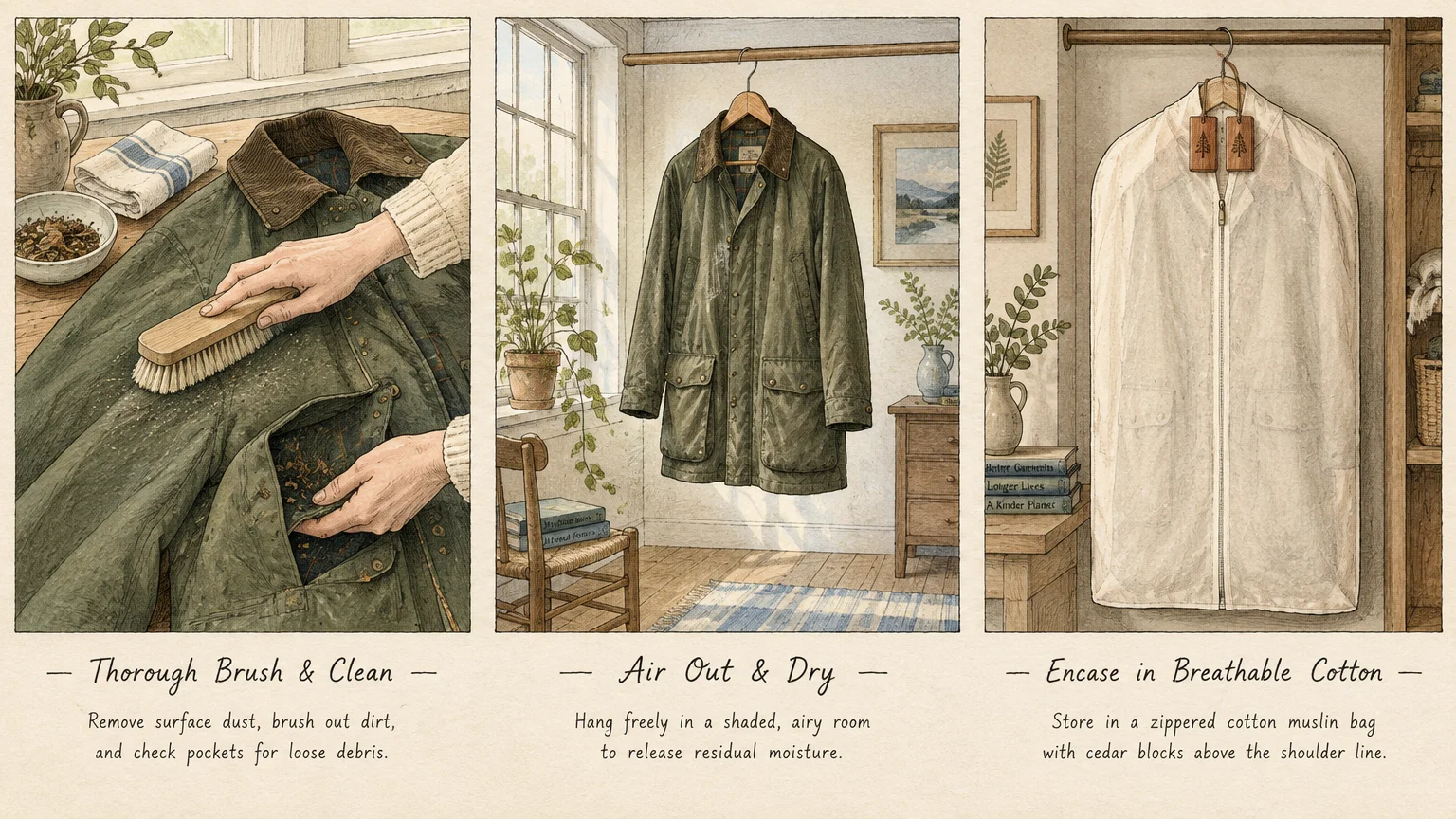
Proper end-of-winter preparation ensures your coat emerges fresh, structured, and ready to wear when cold weather returns. Never stash outerwear away without completing three basic steps.
First, inspect the garment under bright light for loose buttons, food stains, and surface pills. Repair seams and gently remove pilling from wool before packing your coat into seasonal storage.
Second, send the coat out for professional dry cleaning or execute a thorough spot clean. Removing body oils and ambient scents eliminates the food sources moth larvae seek out.
Third, slide the coat onto a wide wooden hanger and slip a breathable cotton cover over top. Place cedar sachets inside the closet, keeping the wood from touching the wool directly to prevent oil transfer.

Simple Action Steps for Tonight
Take five minutes tonight to inspect the wool coats hanging in your entryway closet. Swap out any wire or thin plastic hangers for wide wooden supports to protect your coats’ shoulders immediately.
Remove any remaining clear plastic dry-cleaning bags and let the natural fibers breathe. These two effortless adjustments will keep your wool outerwear handsome and resilient for years to come.