You can keep delicate silks, satins, and laces soft and vibrant for decades without expensive dry-cleaning bills. Avoiding common laundering errors preserves fine garments so they retain their luxurious drape and natural sheen.
Most fiber damage happens during basic home wash cycles when harsh friction, hot water, or aggressive chemicals strip natural proteins. Understanding delicate fabric care protects your wardrobe investment and eliminates laundry guesswork.
Here are the ten most common delicate fabric cleaning mistakes you should avoid, alongside proven methods for washing silk at home safely.
1. Using Standard Detergents with Protease Enzymes
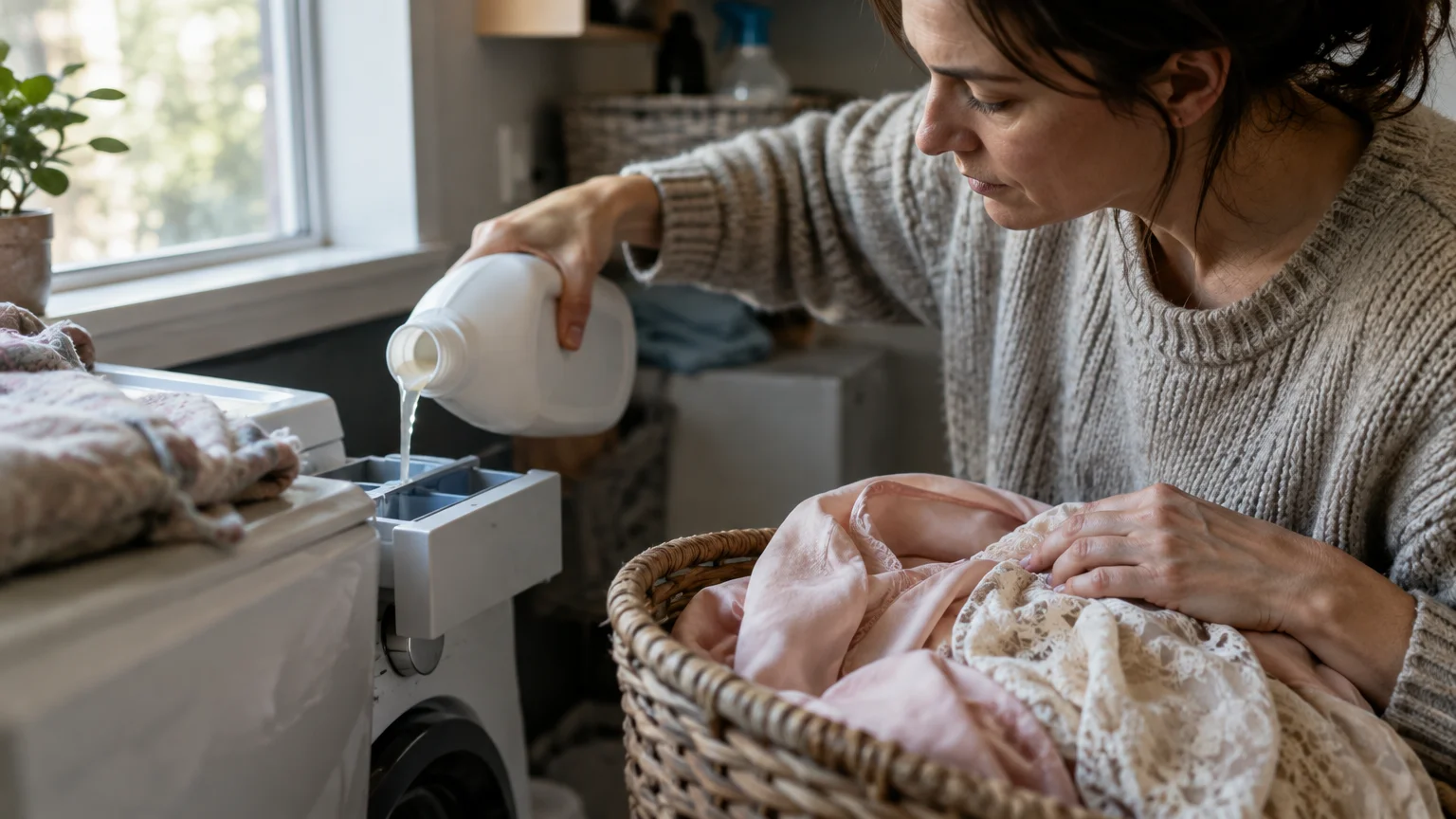
Standard household laundry detergents clean synthetic fabrics effectively because they contain biological enzymes. Protease enzymes target and dissolve protein-based stains like sweat, dairy, and blood.
Natural silk and wool consist almost entirely of animal proteins such as fibroin and keratin. When you expose these garments to protease, the detergent digests the fabric fibers, causing microscopic tears and fabric thinning.
Over time, enzyme damage leaves silk brittle, fuzzy, and prone to sudden splitting along seams. Delicate pieces quickly lose their smooth surface luster and develop permanent discoloration.
Always inspect product ingredient lists before washing fine garments. The American Cleaning Institute fabric care guide emphasizes matching detergents specifically to fiber construction.
Select a gentle, pH-neutral liquid detergent formulated explicitly for silk, cashmere, and fine delicates. Plant-based, enzyme-free washes clean delicate items thoroughly without dissolving the essential protein structure of the weave.
2. Rubbing Stains Aggressively During Spot Treatments
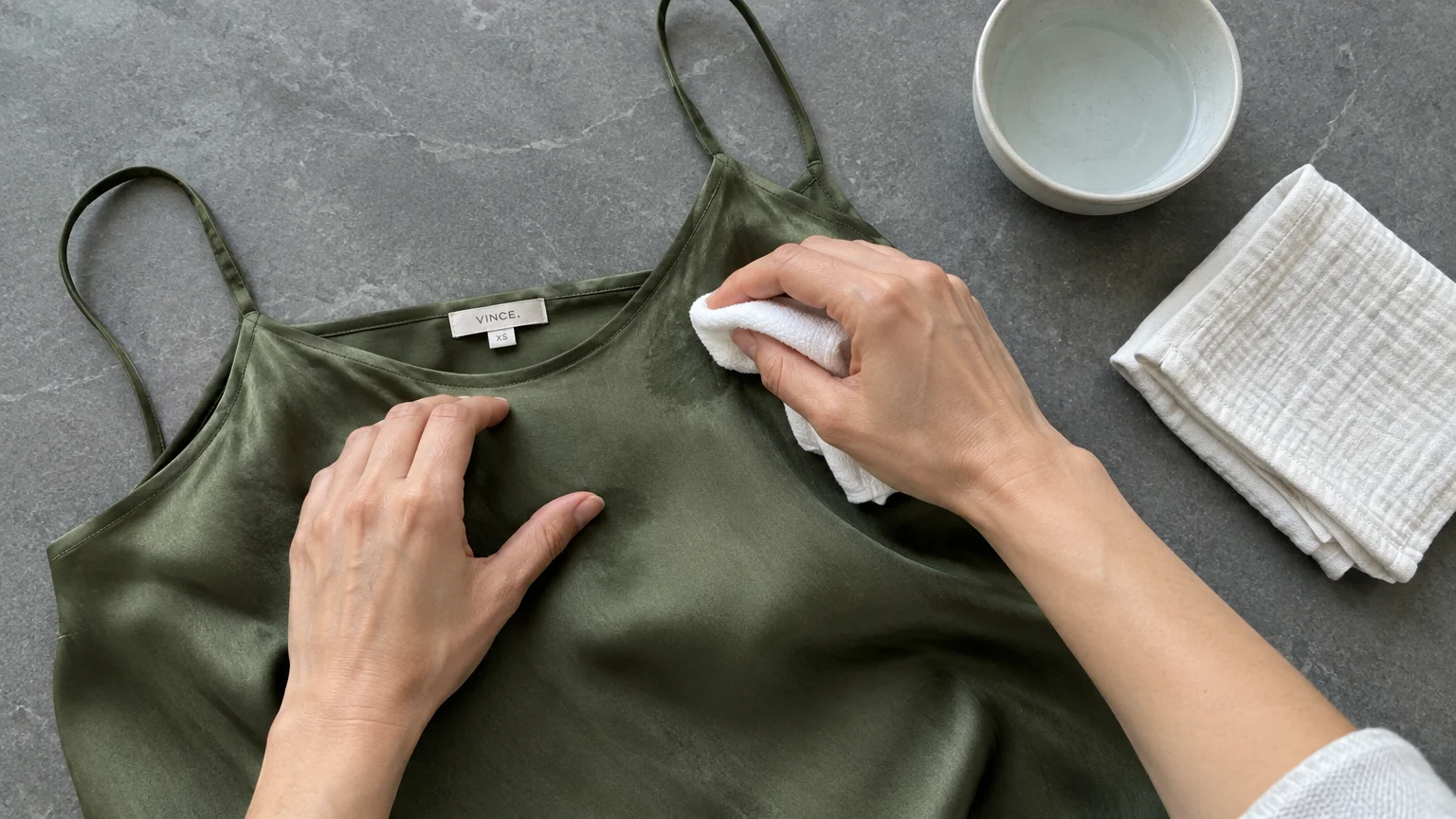
When you spill food or makeup on a delicate blouse, your first instinct is often to scrub the spot vigorously. However, wet silk fibers soften significantly and tear easily under mechanical friction.
Scrubbing creates localized fiber abrasion known as fabric chafing. This leaves a permanent dull, chalky patch on your garment that no wash cycle can repair.
Commercial stain pens and heavy chemical spot removers also cause problems on fine fabrics. Many contain harsh solvents or bleaching agents that strip dyes unevenly and leave visible rings around the spill.
Follow trusted stain removal guidelines, such as the Oregon State University Extension stain removal guide, which advises blotting stains rather than rubbing them.
Treat marks by gently dabbing the fabric with a clean white microfiber cloth dampened with cool water. Work methodically from the outside edge of the stain toward the center to avoid spreading the pigment.
If the spot resists water, mix a drop of pH-neutral delicate wash into cool water. Submerge the entire garment rather than spot-treating an isolated area to avoid leave-behind water rings.
3. Washing Delicates in Warm or Hot Water
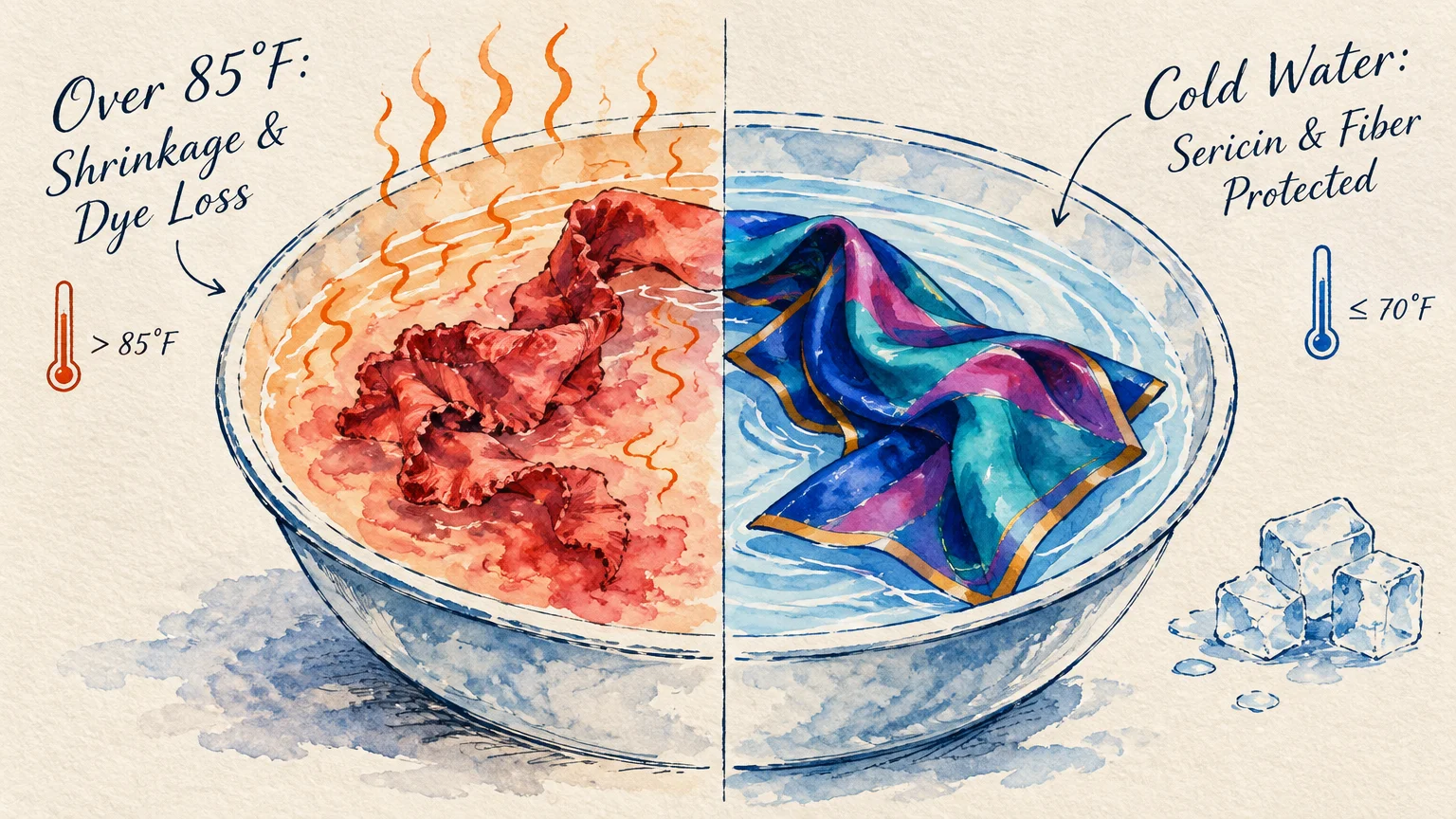
Heat weakens delicate protein and plant fibers instantly. Hot water relaxes the natural twist of fine yarns, leading to immediate shrinkage, misshapen necklines, and puckered seams.
High temperatures also strip the sericin coating that gives natural silk its luminous sheen. Once heat strips this coating, the fabric turns dull, stiff, and chalky.
Hot water accelerates color bleeding in dyed fabrics as well. Bright jewel tones and deep prints wash out quickly when exposed to temperatures above 85 degrees Fahrenheit (30 degrees Celsius).
Always choose cold water for washing silk at home. Cold water preserves fiber density, protects dye stability, and prevents structural shrinkage across all delicate fabric types.
Check your washing machine settings before pressing start. Select the dedicated delicate or hand-wash cycle, and verify manually that the water temperature defaults to cold.
4. Wringing and Twisting Wet Garments to Expel Water
Fine textiles lose up to 20 percent of their structural tensile strength when soaked with water. Twisting, squeezing, or wringing wet garments tears delicate warp and weft yarns internally.
Wringing causes severe dimensional distortion that steam ironing cannot reverse. Hems stretch unevenly, lace borders rip away from linings, and bias-cut skirts lose their symmetrical shape.
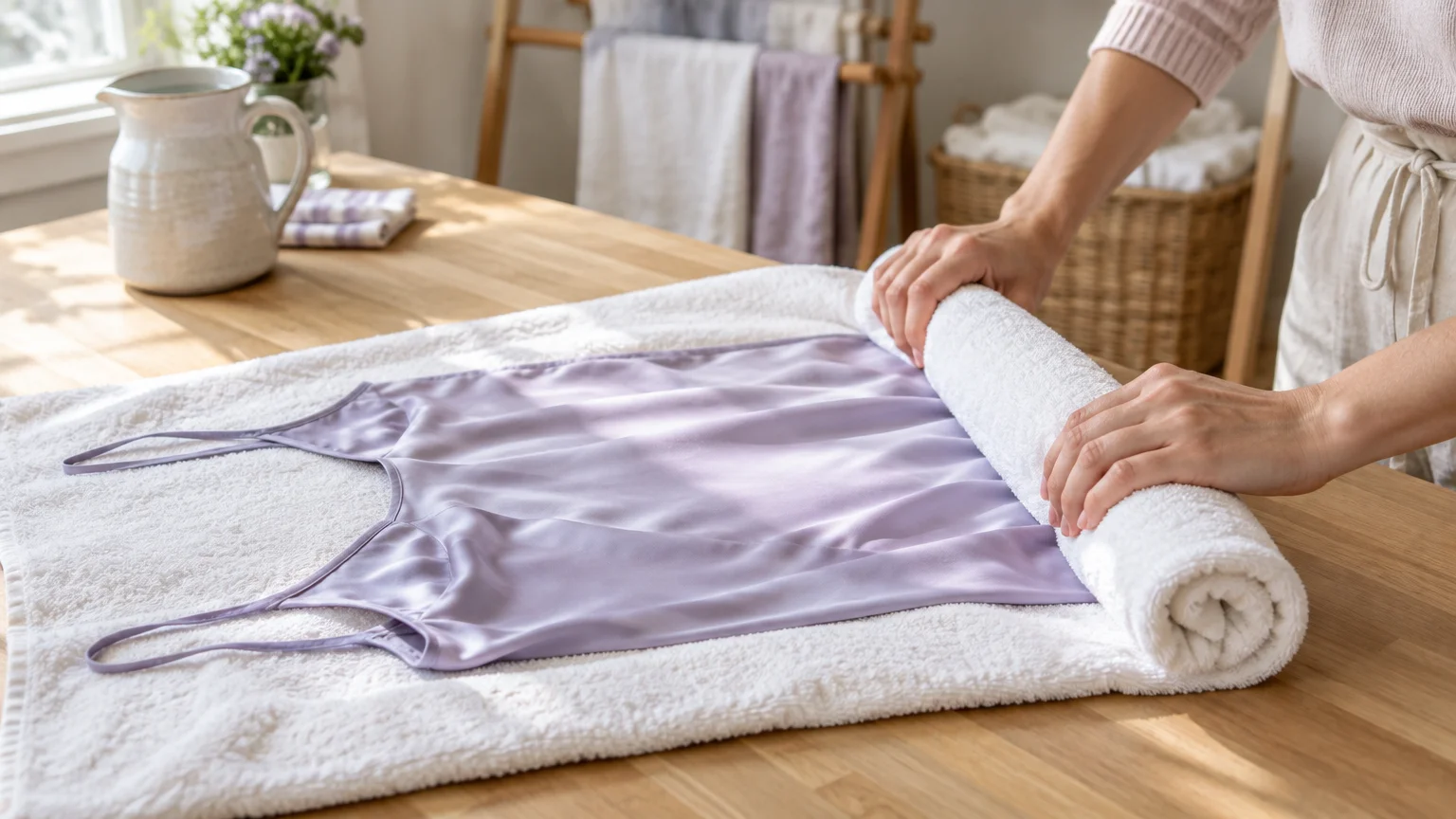
Instead of twisting water out, use the absorbent towel roll technique. This method removes excess moisture rapidly without exerting mechanical tension on delicate threads.
- Lay a thick, clean white bath towel flat on your countertop or laundry table.
- Place your freshly rinsed delicate garment flat on top of the towel.
- Roll the towel and garment together snugly into a firm cylinder shape.
- Press down gently along the towel roll with open hands to transfer the moisture.
- Unroll the towel immediately and transfer the garment to a flat drying rack.
This simple pressing process extracts most of the trapped water within thirty seconds. It leaves the garment damp rather than dripping, drastically reducing total drying time.
5. Misreading “Dry Clean” Versus “Dry Clean Only” Labels
Many people waste money dry cleaning washable garments or ruin non-washable items through careless washing. Understanding garment label terminology prevents both expensive laundry mistakes with delicates.
Federal trade regulations define specific standards for apparel manufacturers regarding care instructions. The FTC Care Labeling Rule requires garment makers to provide at least one reliable cleaning method.
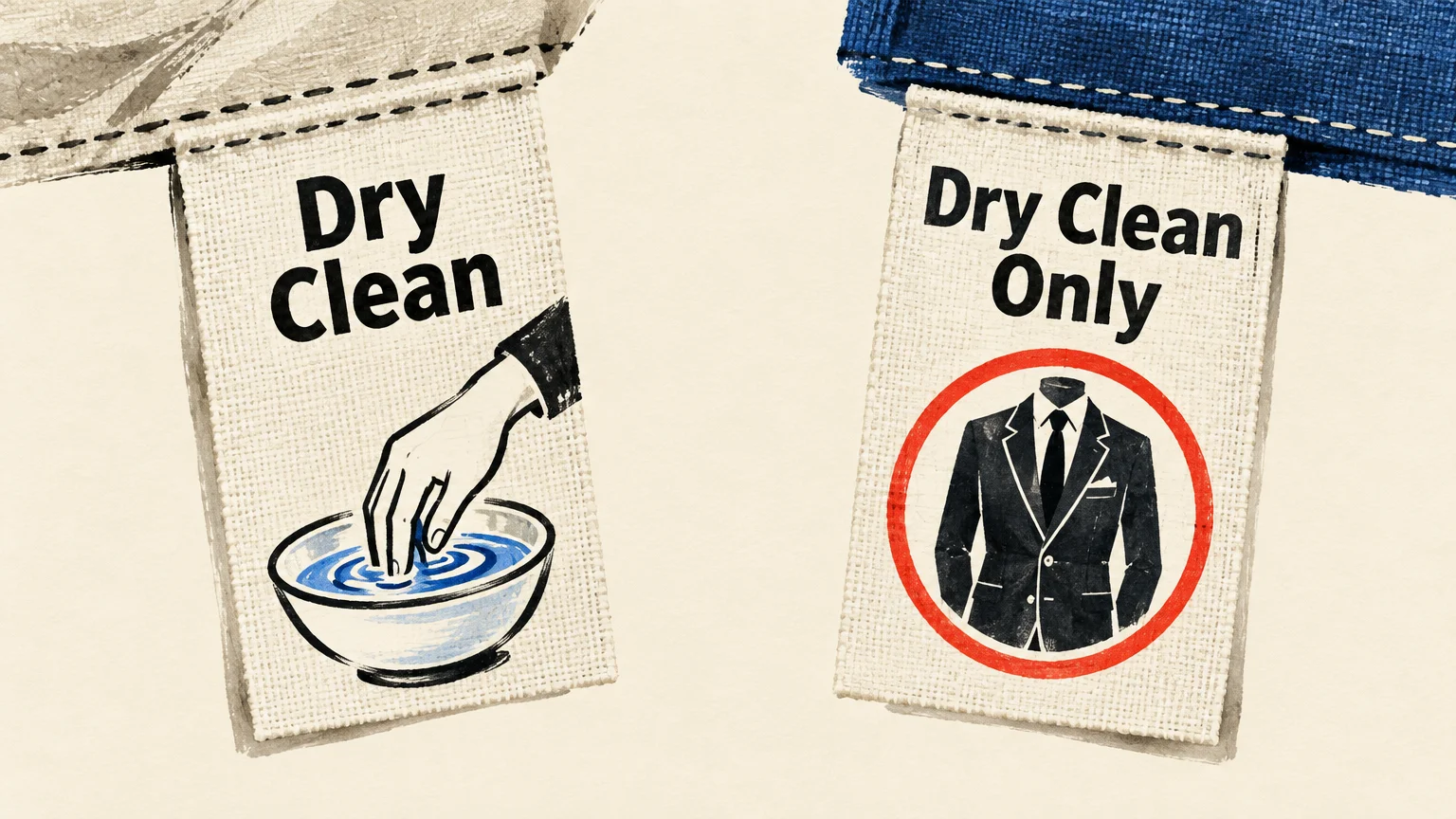
When a label states “Dry Clean,” the manufacturer recommends dry cleaning, but the fabric often tolerates gentle hand washing. Simple silk shirts, slip dresses, and modal knits usually wash beautifully in cold water.
Conversely, a label reading “Dry Clean Only” signals a strict warning you should never ignore. Structured blazers, lined garments, pleated silk, and beaded items lose their shape completely in water.
Before washing silk at home, test for colorfastness on an unexposed interior seam. Dab a wet cotton swab against the hem for twenty seconds to verify that dye does not transfer.
If dye transfers to the swab, stop immediately and take the item to a professional dry cleaner. If the swab stays clean, you can proceed safely with a cold hand wash.
6. Using the Tumble Dryer Even on Low Temperatures
The tumble dryer is the quickest way to ruin fine fabrics permanently. The combination of centrifugal tumbling, friction against the drum, and dry air destroys fragile weaves.
Even low heat settings bake delicate fibers, making them brittle and dry. This heat exposure shrinks rayon, scorches fine silk, and disintegrates the elastane threads in delicate lace underwear.
Dryer agitation also causes rapid surface abrasion. Fine fibers pull loose from the yarn core, creating fuzzy pills and weakening the garment along pocket edges and collar folds.
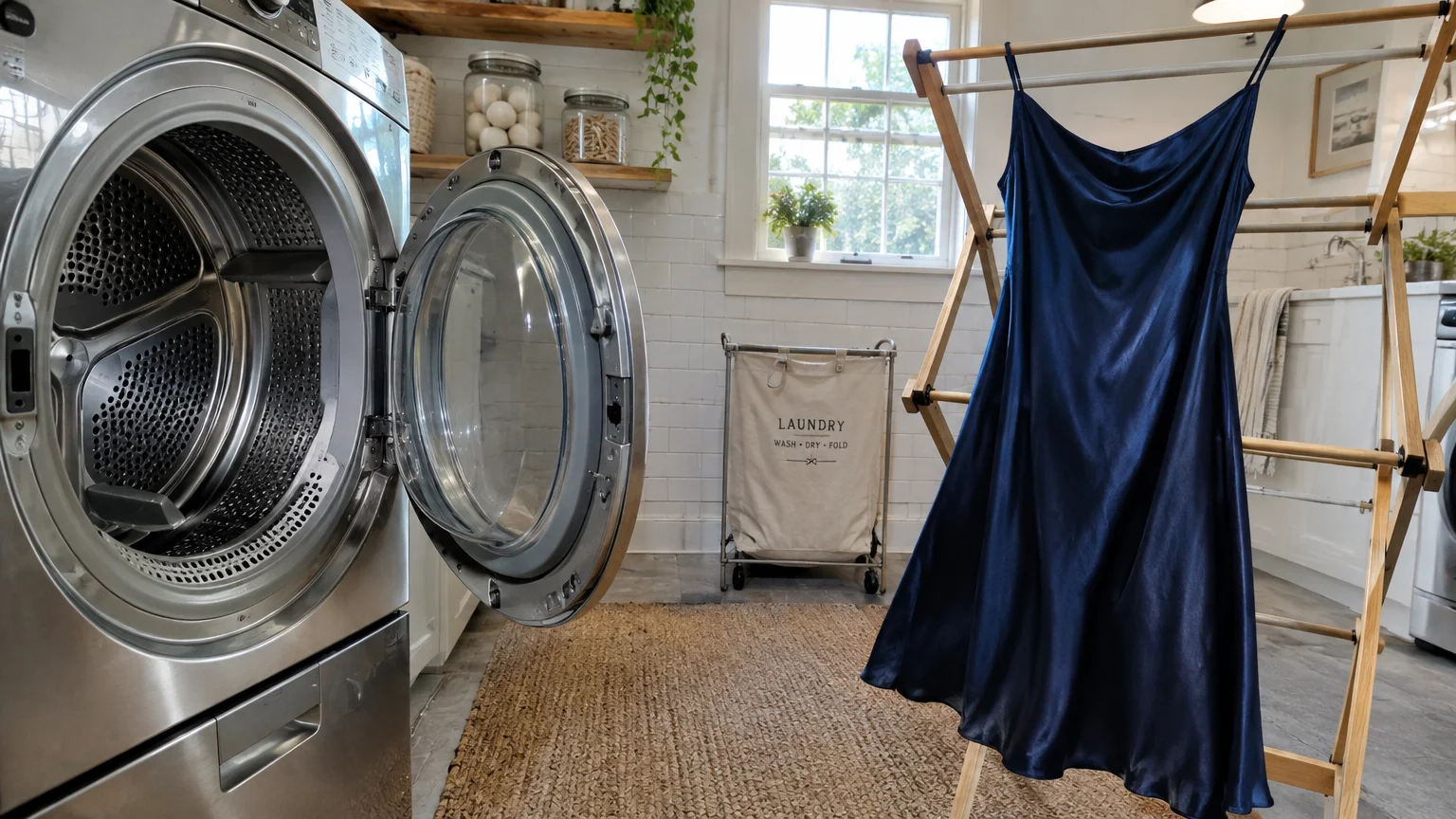
Air drying is the only safe method for caring for delicate clothes. Lay sweaters, fine knits, and heavy silk garments flat on a mesh drying rack to retain their dimensions.
Hang lightweight silk blouses and slip dresses on smooth, padded hangers away from heating vents. Padded hangers distribute weight evenly across the shoulder line without creating unsightly fabric bumps.

7. Drying Delicate Fabrics in Direct Sunlight
While air drying protects clothes from mechanical heat, placing delicates in direct sunlight causes photolytic degradation. Sunlight contains strong ultraviolet (UV) radiation that attacks natural proteins and cellulose.
UV rays break down chemical bonds inside silk fibroin fibers through photo-oxidation. This process turns pristine white silks into an unappealing yellow shade and leaves the fabric brittle.
Sunlight also fades reactive dyes rapidly. A vibrant navy or emerald silk blouse hung outdoors can lose its depth of color in just two hours of direct exposure.
Always dry your delicate garments indoors in a well-ventilated room. Place drying racks away from south-facing windows, radiators, and baseboard heaters.
If you want to speed up indoor air drying, position an oscillating electric fan nearby. Circulating room-temperature air evaporates moisture quickly without subjecting fabrics to thermal or light damage.
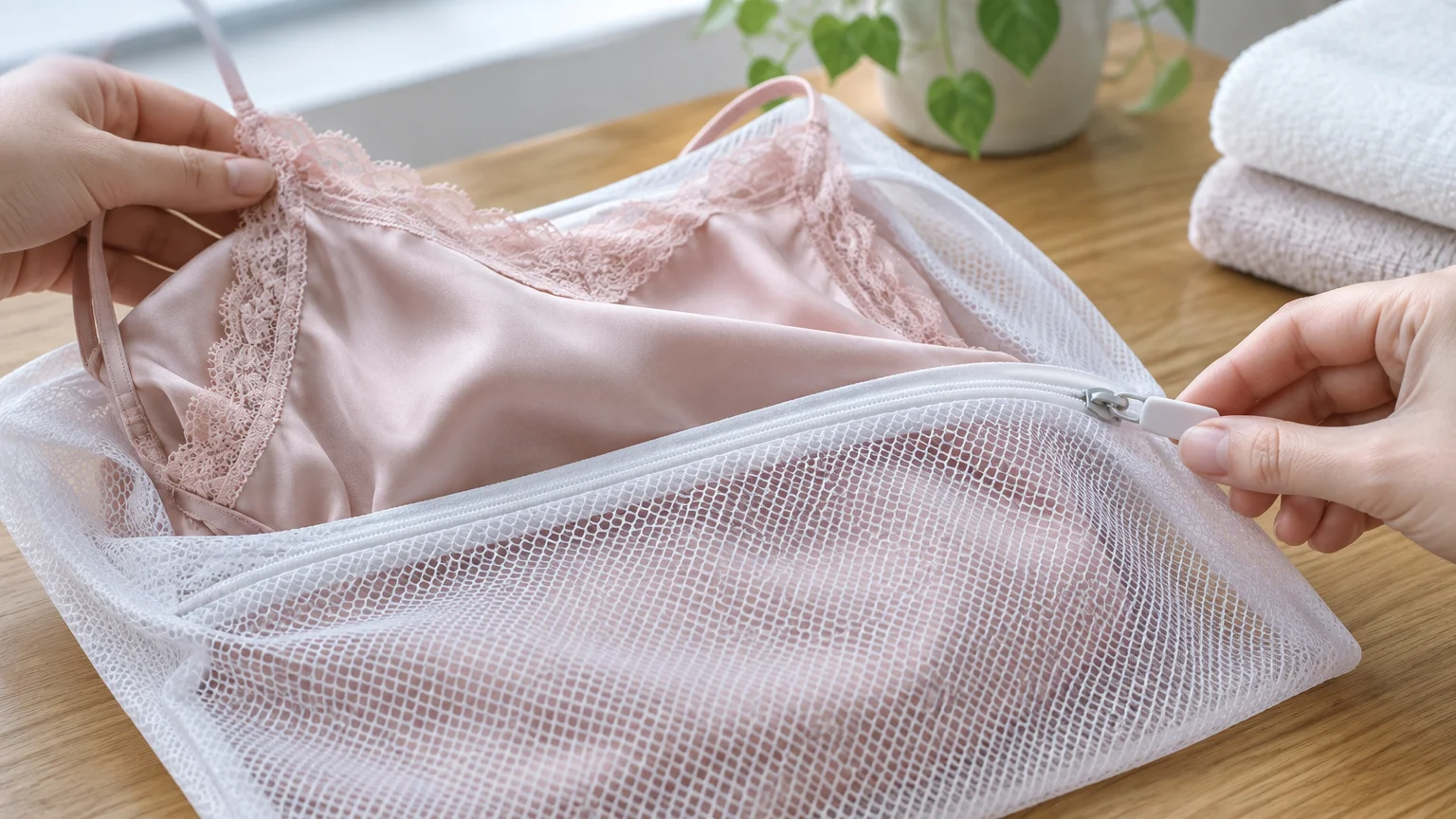
8. Washing Fine Pieces Without a Mesh Garment Bag
Placing delicate garments directly into a washing machine drum exposes them to severe mechanical hazards. Garments twist around the center agitator and pull against one another during high-speed spin cycles.
Exposed zippers, bra underwires, and metal buttons from other garments snag and tear fine sheer fabrics. A single loose metal zipper tooth can slice through a silk shirt or lace camisole in seconds.
Fine mesh laundry bags create an essential protective barrier between your delicates and the machine. They allow water and detergent to flow freely while shielding fabrics from snagging and stretching.
Select high-grade zippered mesh bags with tight weaves rather than coarse net bags. Ensure the zipper pull tucks securely under an elastic cover so it cannot scratch other clothes.
Never overstuff your wash bags with multiple bulky items. Place only one blouse or two small delicate garments per bag so the items rinse thoroughly without bunching.
9. Applying Perfume, Deodorant, and Alcohol-Based Sprays While Dressed
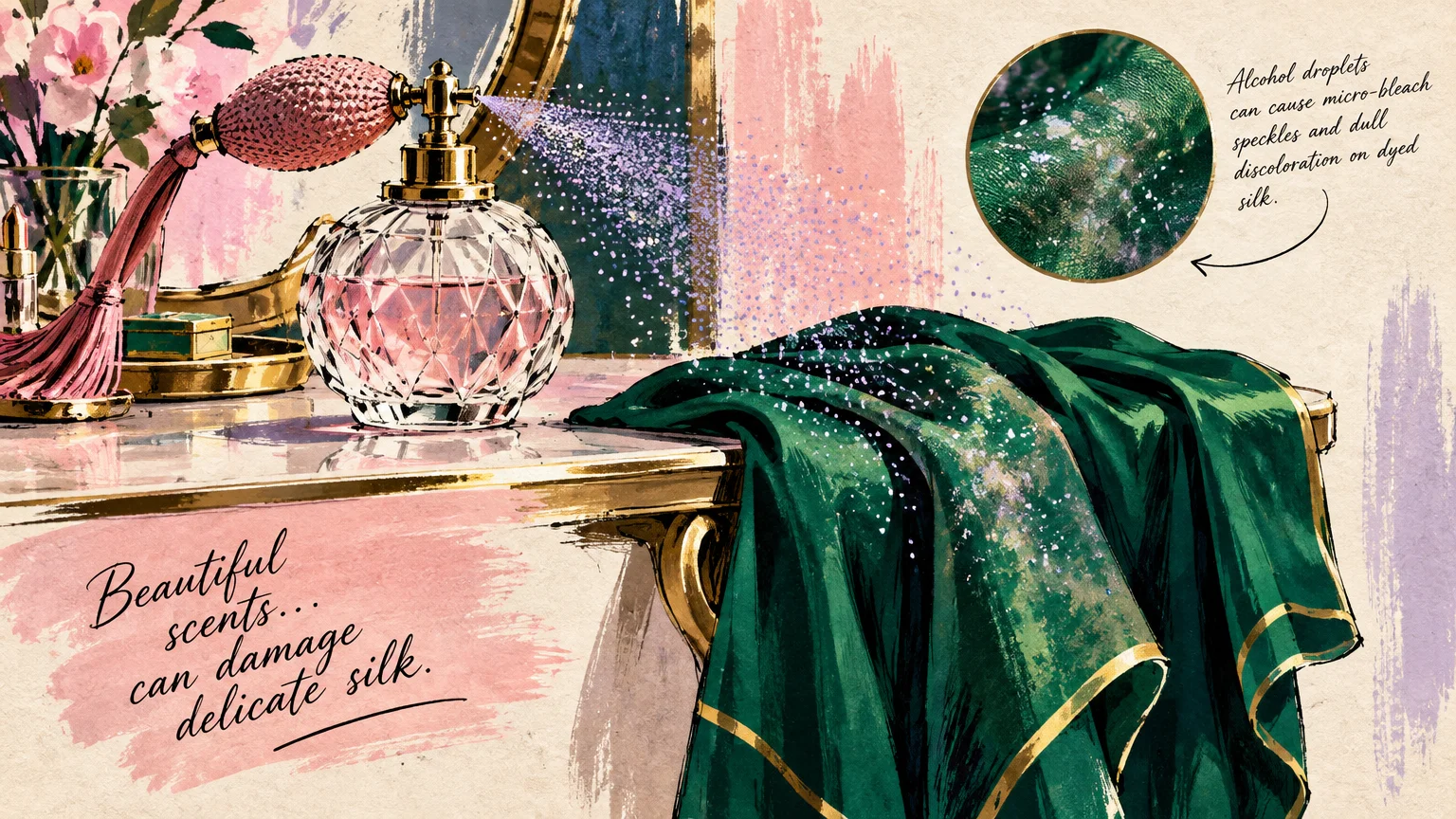
Personal grooming products cause some of the most stubborn delicate fabric cleaning mistakes. Perfumes, body mists, hairsprays, and deodorants contain concentrated alcohol and synthetic fixatives.
When you spray perfume directly onto a silk blouse, the alcohol solvent evaporates and leaves permanent water-like spots. It dissolves topical textile dyes, leaving pale bleached dots on dark fabrics.
Antiperspirants containing aluminum salts also react chemically with natural sweat and fine fibers. This chemical reaction creates stiff, yellow underarm crusts that permanently discolor light silks and fine linens.
To avoid these stains, apply all cosmetics, perfumes, lotions, and deodorants at least five minutes before dressing. Allow personal care products to dry completely on your skin before putting on delicate garments.
If you sweat while wearing silk, wash or steam the garment promptly rather than storing it dirty. Leaving acidic body salts in contact with silk for weeks weakens underarm fibers permanently.
10. Ironing on High Heat Without a Protective Pressing Cloth
Placing a scorching hot iron directly onto silk or fine synthetics burns the outer fiber layer instantly. High heat flattens the round yarns, creating shiny iron marks that ruin the matte texture of the weave.
Synthetic delicates like polyester, nylon, and acetate melt immediately under high temperatures. Natural silk scorches, turning brown and shedding fine powdery fibers as the heat cooks the proteins.
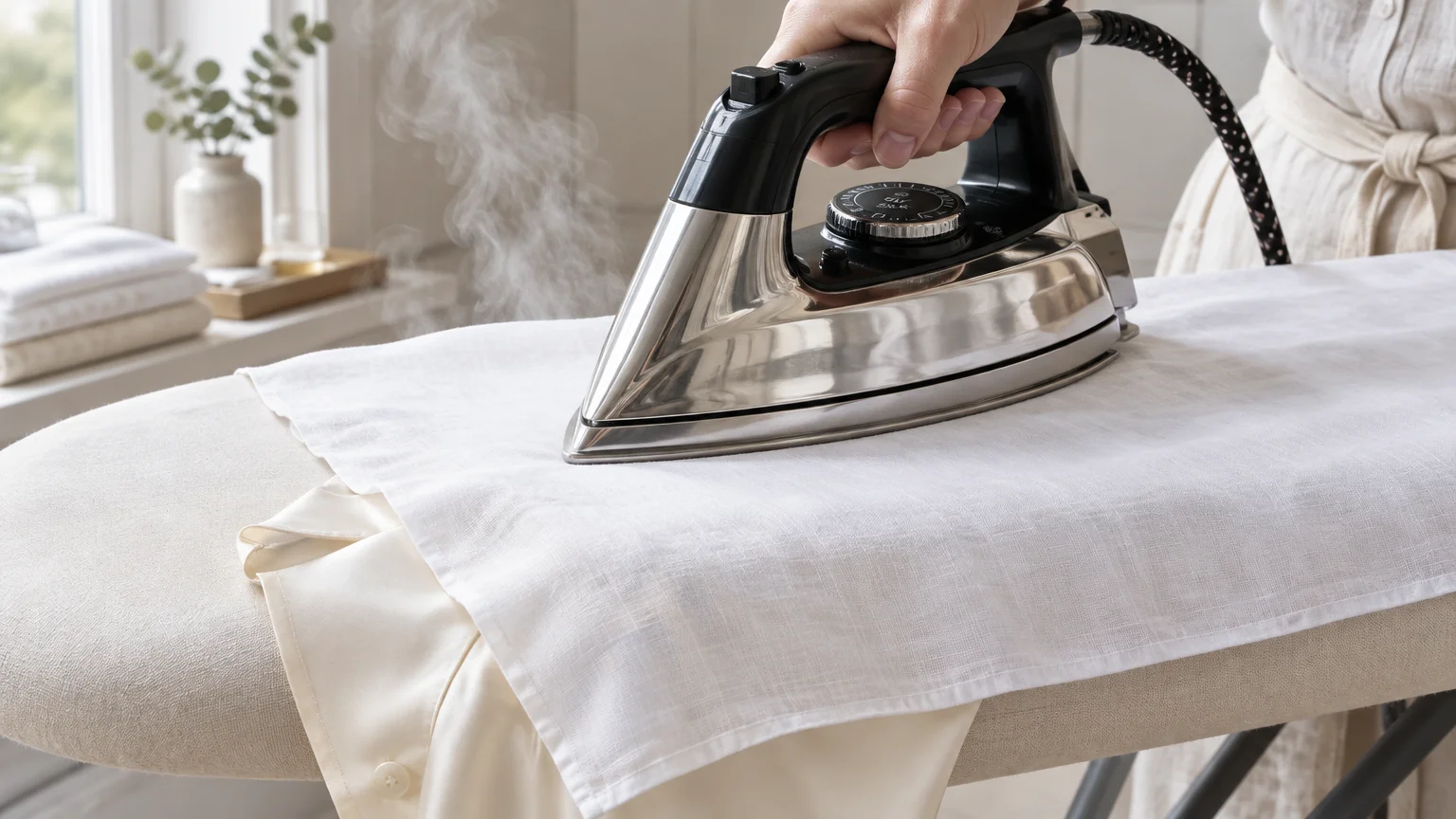
Always adjust your iron to its lowest heat setting, typically labeled as “Silk” or “Delicates.” Never use the cotton or linen setting on fine textiles.
Turn the garment inside out before pressing to protect the visible face of the fabric. Lay a clean, dry, lint-free white cotton pressing cloth directly between the iron soleplate and the garment.
Use smooth, lifting motions rather than dragging the iron across the fabric. A handheld clothes steamer offers an even gentler alternative, smoothing out wrinkles with zero direct pressure.
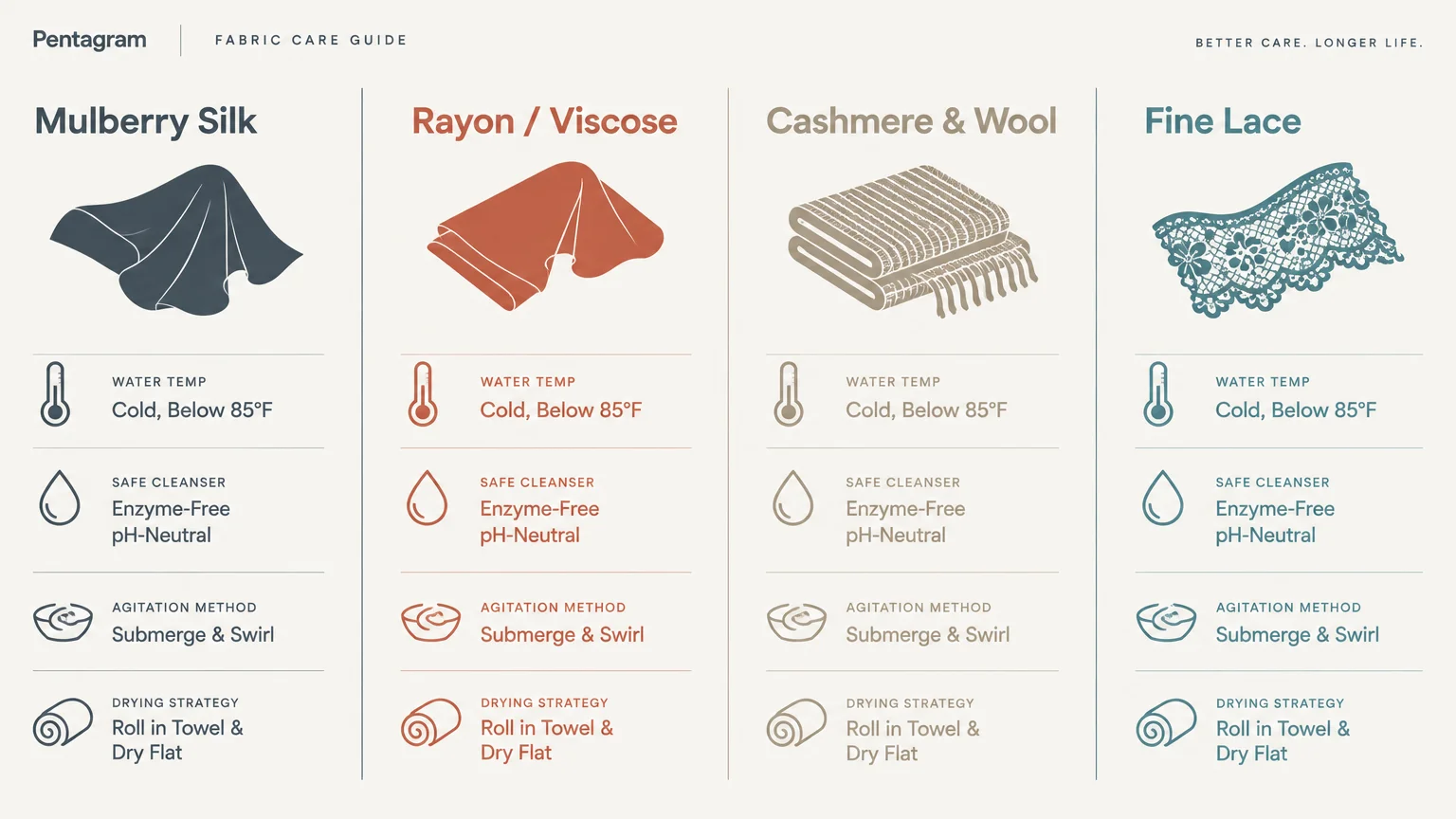
Quick-Reference Guide: Safe Cleaning by Delicate Fabric Type
Different delicate fabrics require tailored cleaning methods based on their specific raw fiber properties. Use this reference guide to choose the right laundering technique for each piece in your wardrobe.
| Fabric Type | Primary Fiber Content | Safest Cleaning Method | Critical Mistake to Avoid |
|---|---|---|---|
| Mulberry Silk | Animal protein (fibroin) | Cold hand wash with pH-neutral detergent | Using standard enzyme detergents |
| Cashmere & Fine Wool | Animal protein (keratin) | Gentle cold soak; dry flat on rack | Warm water agitation and wringing |
| Rayon & Viscose | Regenerated wood cellulose | Gentle hand wash cold or professional dry clean | Vigorous machine spinning while wet |
| Fine Lace | Polyamide, polyester, or cotton | Cold hand wash inside a mesh bag | Catching hooks and zippers on raw lace |
| Silk Chiffon & Georgette | Fine twisted silk fibers | Gentle hand wash; towel press; air dry flat | Rubbing localized stains directly |
Keep this table handy in your laundry space so you can verify washing methods before starting a load. Taking thirty seconds to check fabric composition prevents irreversible wardrobe accidents.
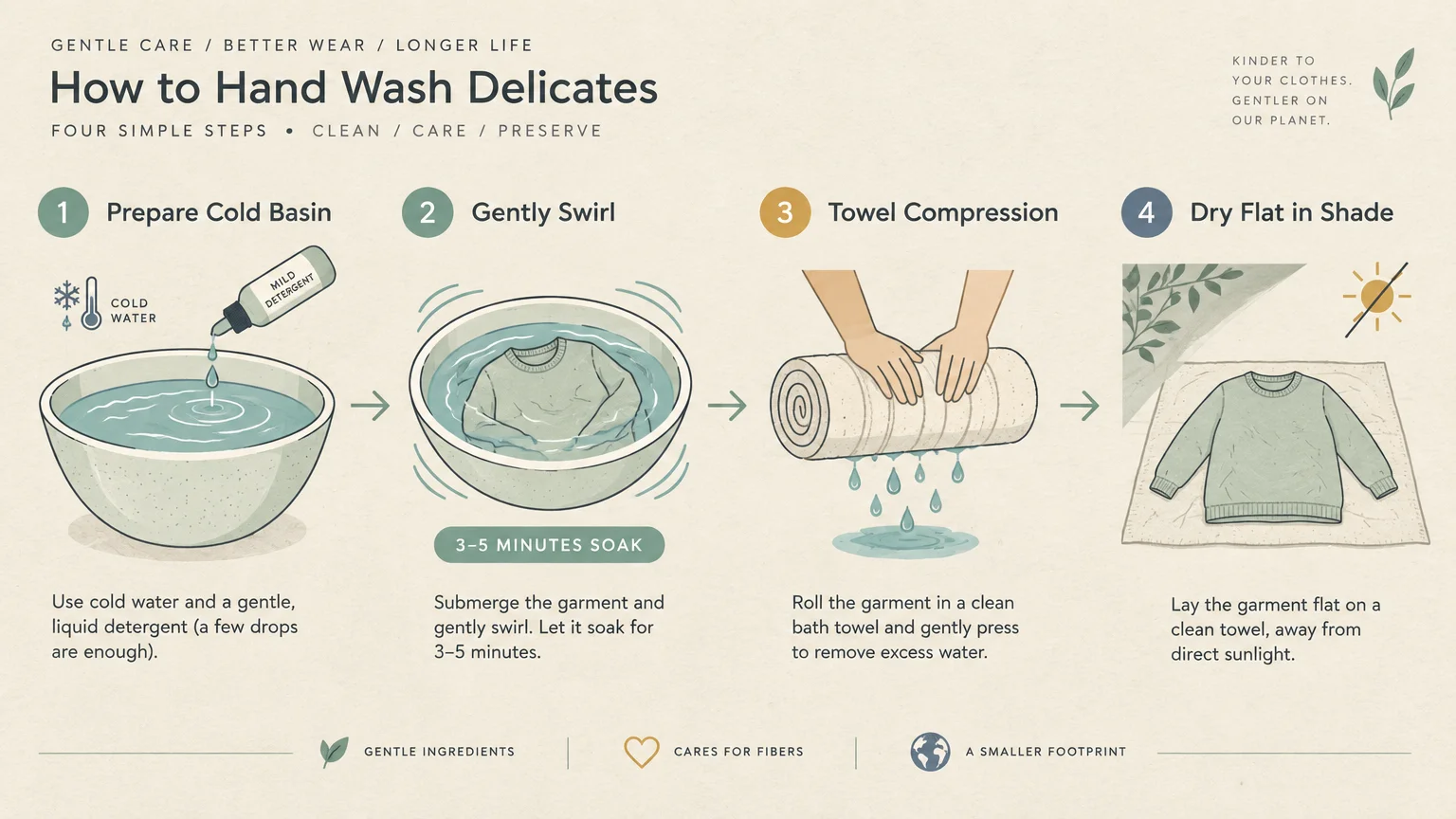
Step-by-Step Routine: How to Clean Silk Safely at Home
Washing silk at home is straightforward when you follow a structured, low-stress routine. This step-by-step process cleans garments thoroughly while protecting fragile threads.
- Inspect the garment: Check seams, buttons, and care labels. Test hidden inner seams for dye bleeding using a damp cotton swab.
- Fill a clean basin: Fill a clean washbasin or sink with cool tap water. Add one teaspoon of gentle, enzyme-free liquid delicate detergent and stir until dispersed.
- Submerge gently: Immerse the garment fully into the soapy water. Swirl the fabric slowly through the water with your hands for three minutes without scrubbing.
- Rinse in cool water: Drain the soapy water from the basin. Refill the basin with fresh, clean cold water and press the garment gently beneath the surface to flush out suds.
- Remove excess water: Lift the garment from the water and let gravity drain excess moisture. Do not squeeze, wring, or ball the garment up tightly.
- Execute the towel roll: Place the garment onto a clean white bath towel. Roll the towel tightly and press firmly along the cylinder to extract water.
- Air dry flat: Unroll the towel and place your damp garment on a horizontal drying rack away from sunlight and heaters. Reshape hems and collars gently while damp.
Completing this gentle soak-and-rinse sequence takes less than ten minutes from start to finish. It cleans deeply without exposing fine garments to the brutal friction of a standard washing machine.
Take Your Next Practical Step
Look through your laundry supplies today and check the ingredient labels on your detergents. Discard or relocate any enzyme-heavy formulas currently sitting near your fine washables.
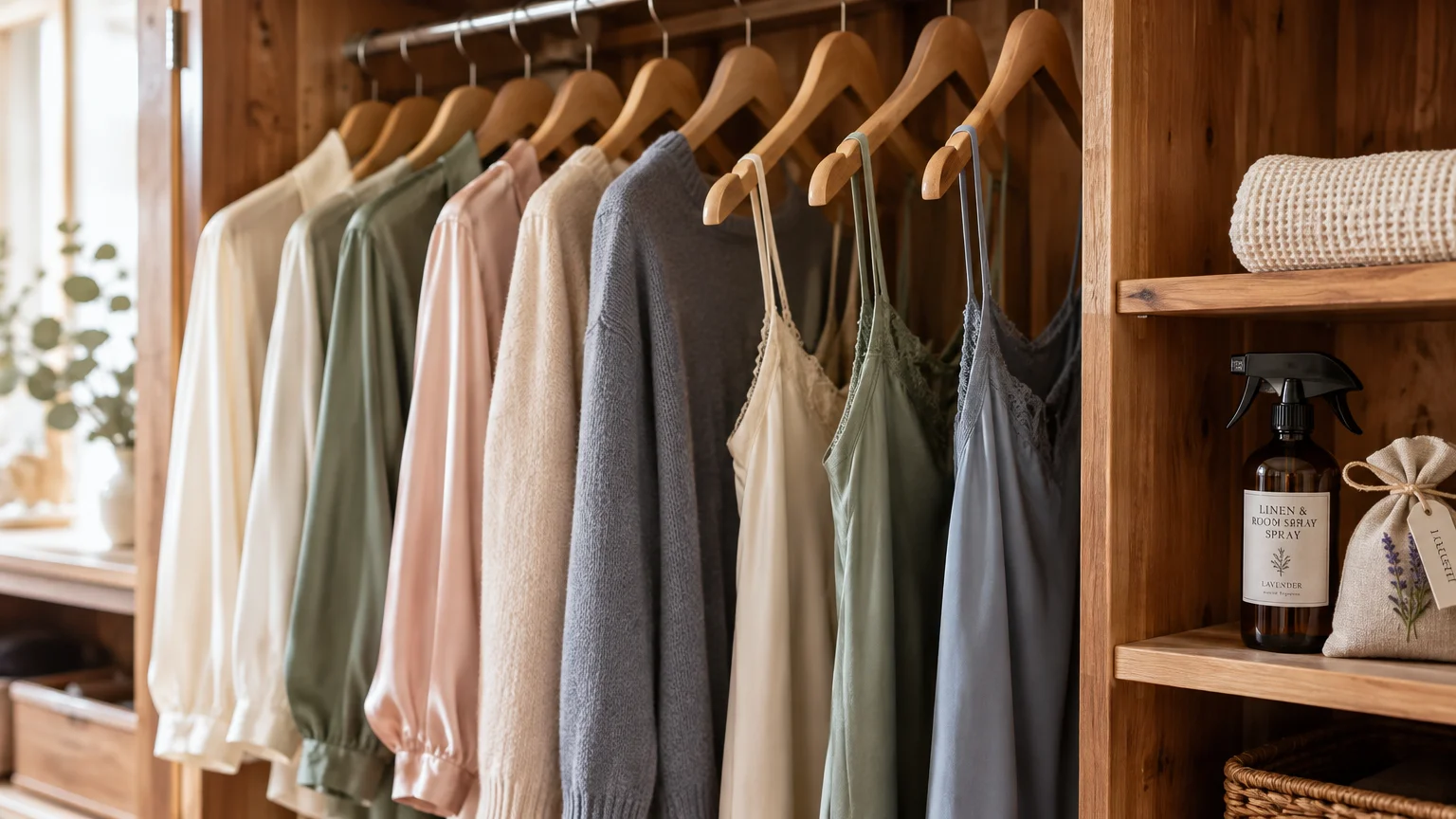
Set aside a dedicated, pH-neutral delicate wash, a fine mesh garment bag, and a white cotton pressing cloth in your laundry cabinet. Having these gentle cleaning essentials ready ensures you care for your favorite delicate garments with confidence every single wash.