Using worn-out cleaning tools spreads grime, allergens, and active bacteria across your home instead of removing them. Swapping out degraded equipment at the right time saves you hours of wasted scrubbing and protects your household health. Over time, friction frays microfiber weaves, moisture harbors persistent mold in mop strands, and chemical solutions quietly lose their disinfecting power. When you clean with exhausted gear, you work twice as hard for half the cleanliness. Recognizing the subtle signs your cleaning supplies are worn out helps you maintain a safer living space with far less physical effort.
1. Your Kitchen Sponge Smells Sour or Exceeds Two Weeks of Use
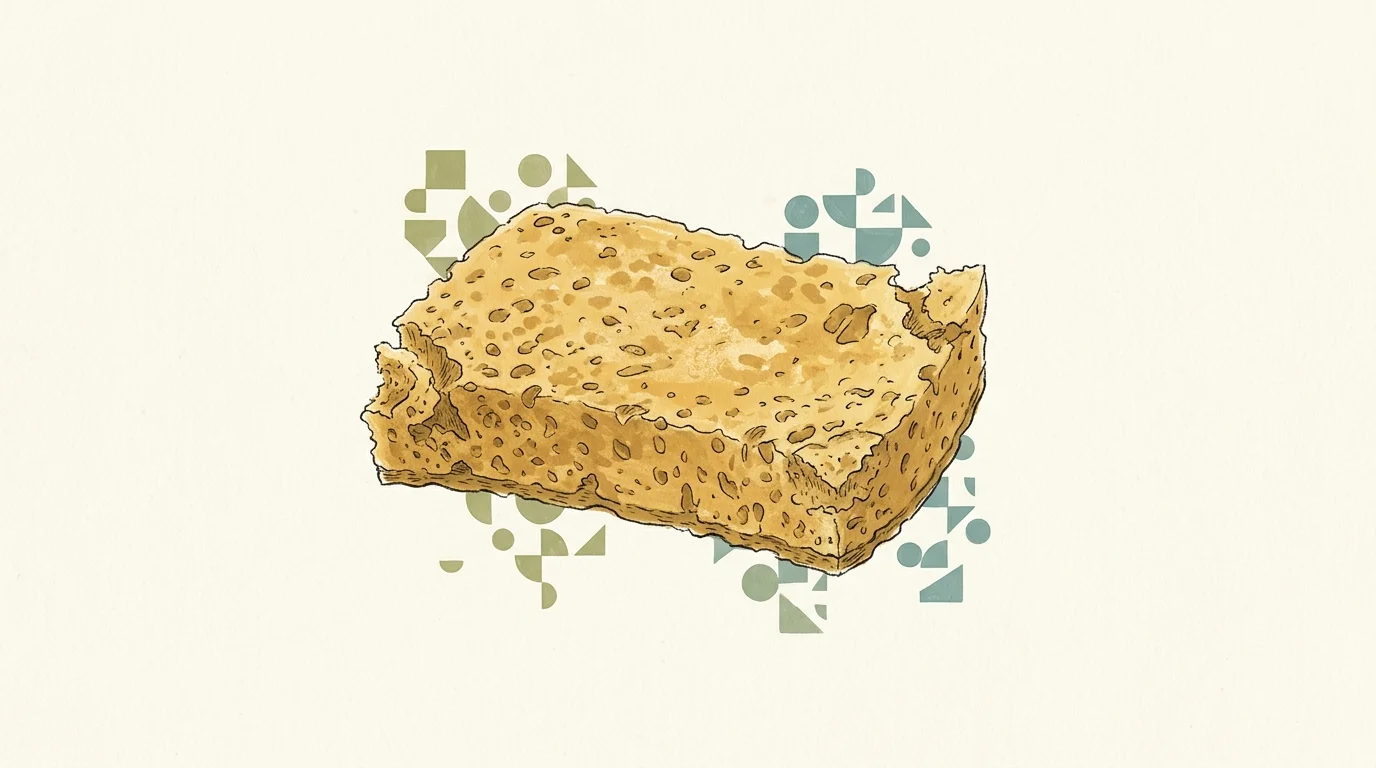
If your kitchen sponge develops a sour, musty odor, bacteria have already colonized its core. Porous cellulose structures trap food particles, moisture, and warmth, creating an ideal breeding environment for microbial colonies. Even if a sponge looks physically intact, microscopic contamination accumulates rapidly during daily dishwashing and countertop wipe-downs.
According to landmark microbiological research published in Scientific Reports, used kitchen sponges harbor up to 54 billion bacterial cells per cubic centimeter. The researchers discovered that common sanitization methods—such as microwaving or boiling—fail to eradicate all resistant bacterial strains and can actually increase the proportion of pathogenic species over time. Furthermore, data from the NSF International Household Germ Study identified kitchen sponges and cleaning rags as the single dirtiest items in modern homes, with more than 75 percent testing positive for coliform bacteria like E. coli and Salmonella.
Replace dish sponges every one to two weeks without exception. If you notice persistent odors, crumbling foam, or dark discoloration before the two-week mark, discard the sponge immediately. To extend utility safely, relegate a one-week-old dish sponge to heavy utility chores—like cleaning garage tools or outdoor trash cans—for a few days before throwing it away.
2. Microfiber Cloths Smear Water and Drop Lint
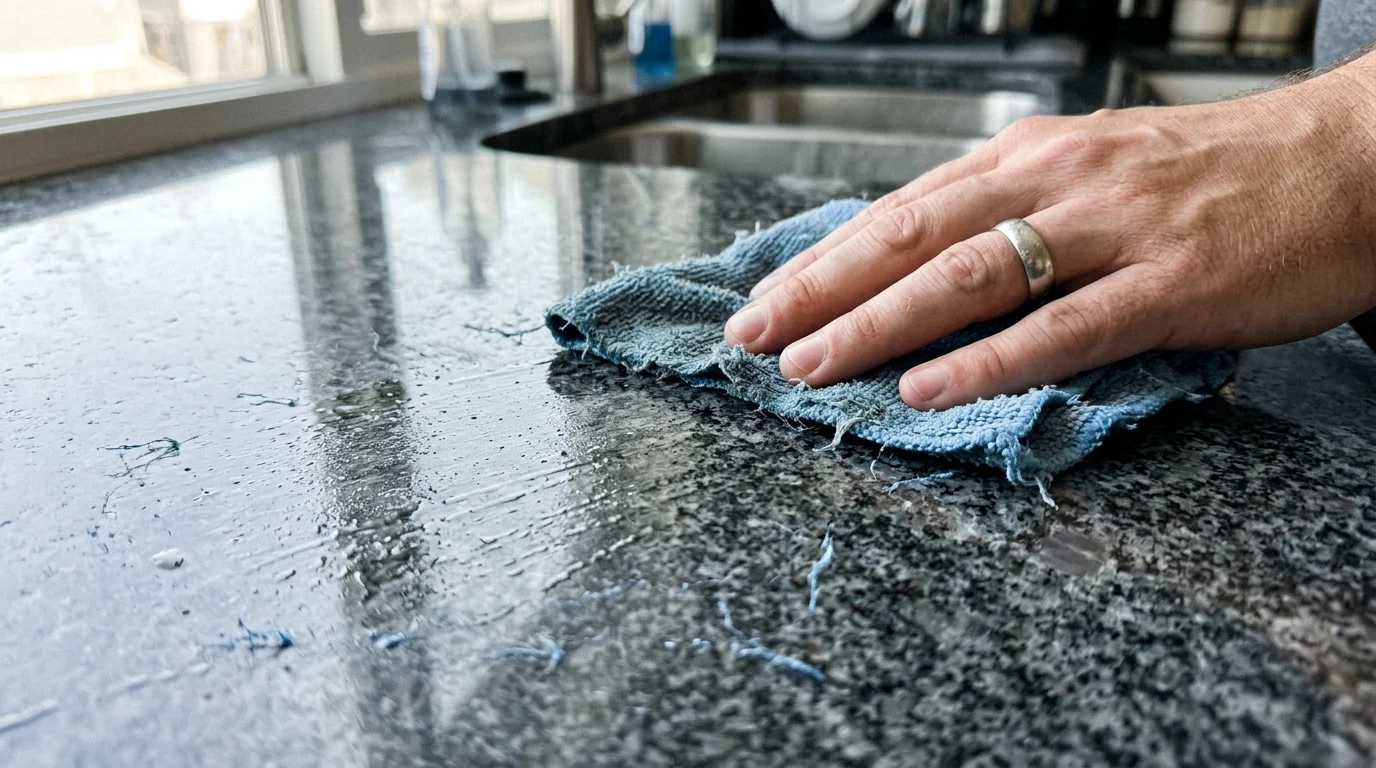
Quality microfiber cloths clean surfaces mechanically by utilizing microscopic, split polyester and polyamide fibers. These wedge-shaped strands create an electrostatic charge that attracts dust, oils, and liquid. However, repeated laundering and friction eventually break down these synthetic splits, turning a high-performance cleaning cloth into a flat, non-absorbent rag.
You can identify worn microfiber by observing how it interacts with liquid. When you wipe a wet countertop, a fresh microfiber cloth absorbs moisture instantly in a single pass. A degraded cloth simply pushes the water around, leaves streaks on glass, or sheds fine synthetic lint across polished surfaces. Standard microfiber cloths withstand between 100 and 500 wash cycles—roughly one to two years of regular household use—before their fibers degrade.
Washing microfiber with fabric softeners or drying it on high heat melts the microscopic polyamide tips instantly. When your cloths feel slick, waxy, or stiff rather than soft and grippy, replace them to maintain fast, streak-free surface maintenance.
3. Your Vacuum Smells Musty and Loses Suction Power
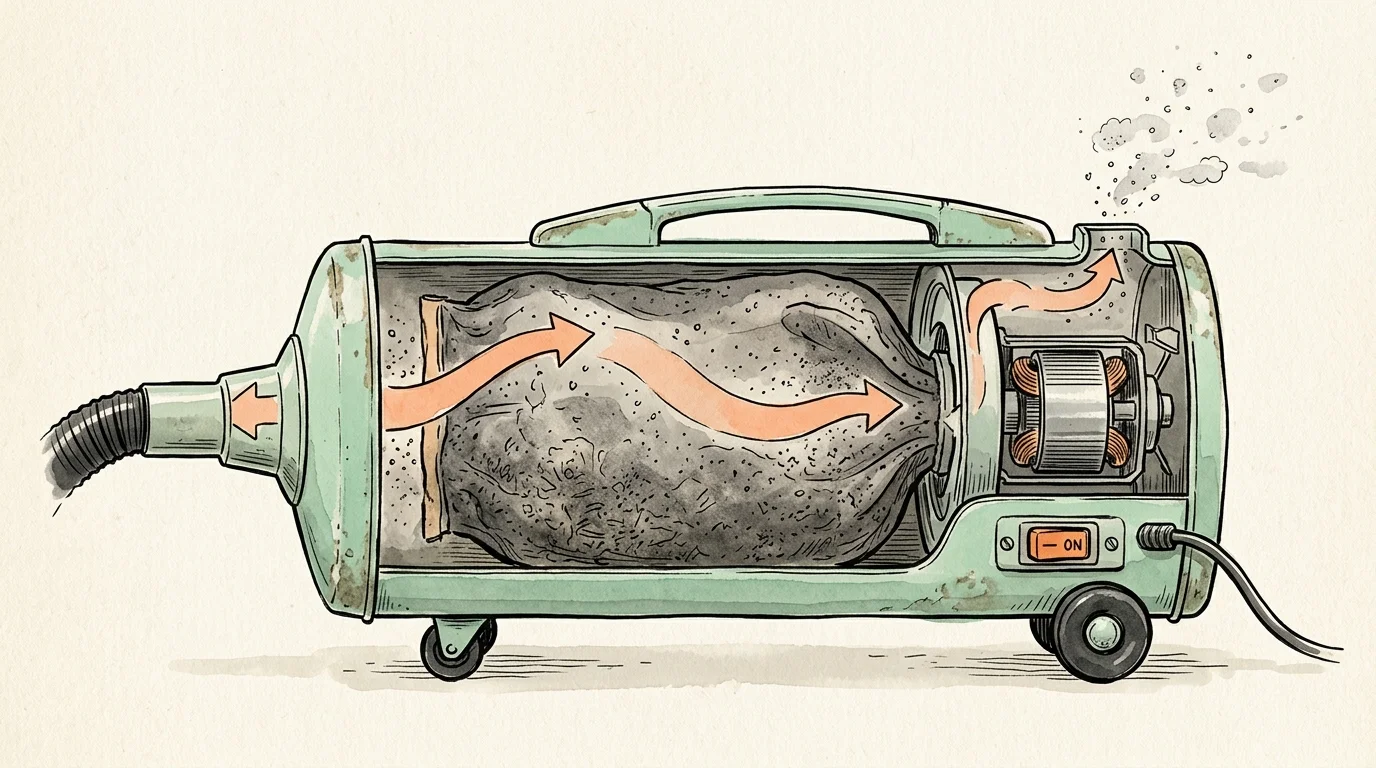
When a vacuum cleaner blows dusty air back into a room or requires multiple passes over the same patch of carpet, its internal filtration and brush systems have failed. Operating a vacuum with degraded components strains the electric motor, increases your power consumption, and exhausts fine particulate matter back into your living environment.
Modern vacuums rely on multi-stage filtration to protect indoor air quality. According to the U.S. Environmental Protection Agency (EPA), keeping indoor particulate levels low is critical for respiratory health. Follow these standard component lifespans when maintaining or replacing old cleaning equipment:
- Pleated Foam and Paper Filters: Replace every 3 to 6 months. Rinsing reusable foam filters helps temporarily, but microscopic pores eventually clog with fine drywall dust and pet dander.
- Sealed HEPA Exhaust Filters: Replace every 6 to 12 months. When a HEPA filter turns charcoal gray or emits an earthy odor during operation, air can no longer pass through the fiberglass matrix efficiently.
- Roller Brush (Beater Bar): Replace every 1 to 2 years. Inspect the nylon bristles along the roller. If the bristles feel soft, bend sideways, or fail to flick a business card held against the floorhead, they can no longer agitate carpet fibers to lift embedded dirt.
- Drive Belts: Replace every 6 to 12 months. Loose, stretched, or cracked rubber belts slip during operation, preventing the brush roller from spinning at full speed under load.
4. Broom Bristles Are Splayed, Curved, or Missing
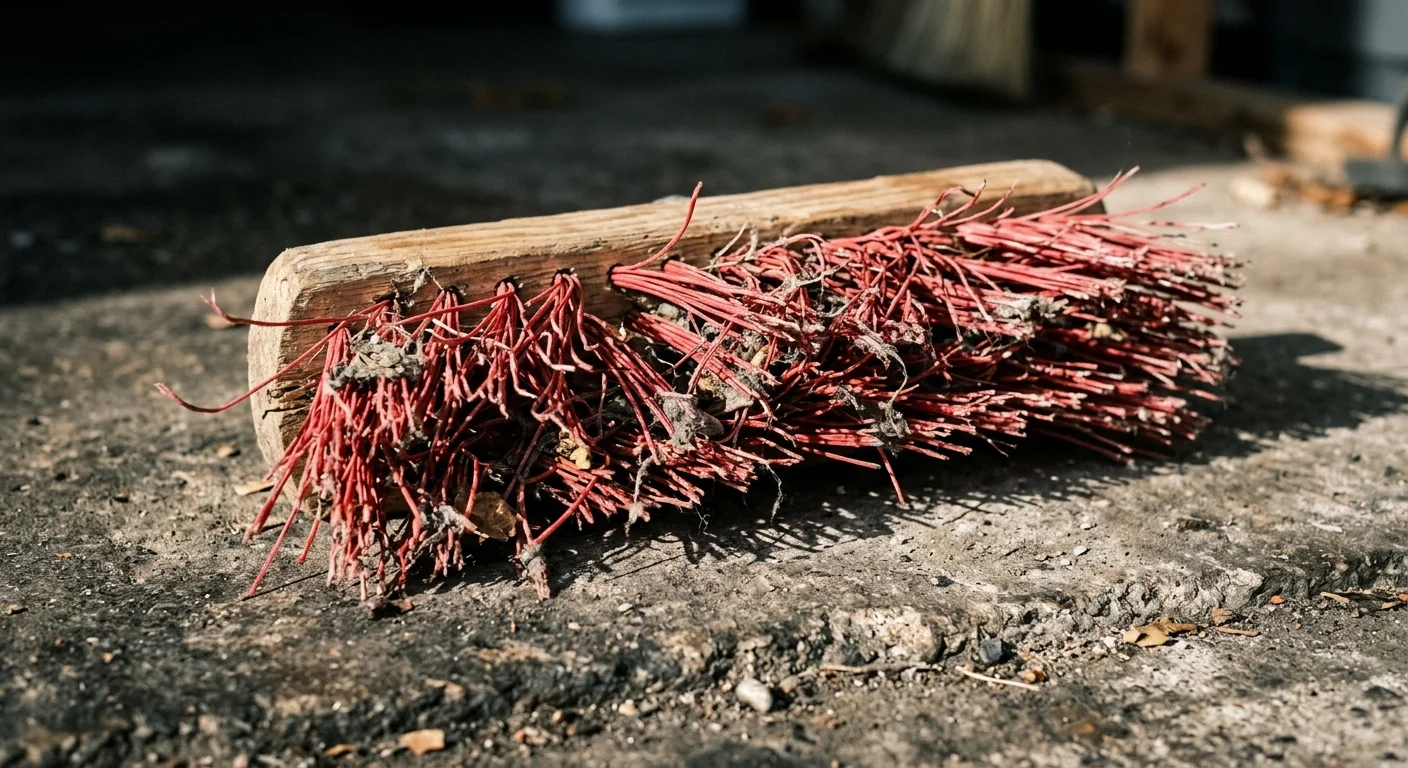
Brooms rely on straight, angled bristles to guide debris into a dustpan through kinetic contact. As plastic or natural broom fibers age, downward pressure and improper storage bend the tips outward. Splayed bristles ride over dust, crumbs, and hair instead of sweeping them forward, forcing you to sweep the same area repeatedly.
Examine the bottom edge of your broom head. If the bristles flare outward like a fan, shed synthetic needles on the floor, or curve permanently in one direction, the broom has reached the end of its useful life. Additionally, check the rubber lip of your dustpan. If the rubber edge has warped, cracked, or curled upward, dirt will sweep directly beneath the pan rather than into it. Replace your broom and dustpan set every two years—or sooner if you store the broom resting directly on its bristles rather than hanging from a wall mount.
5. Mop Heads Look Matted, Discolored, or Thin
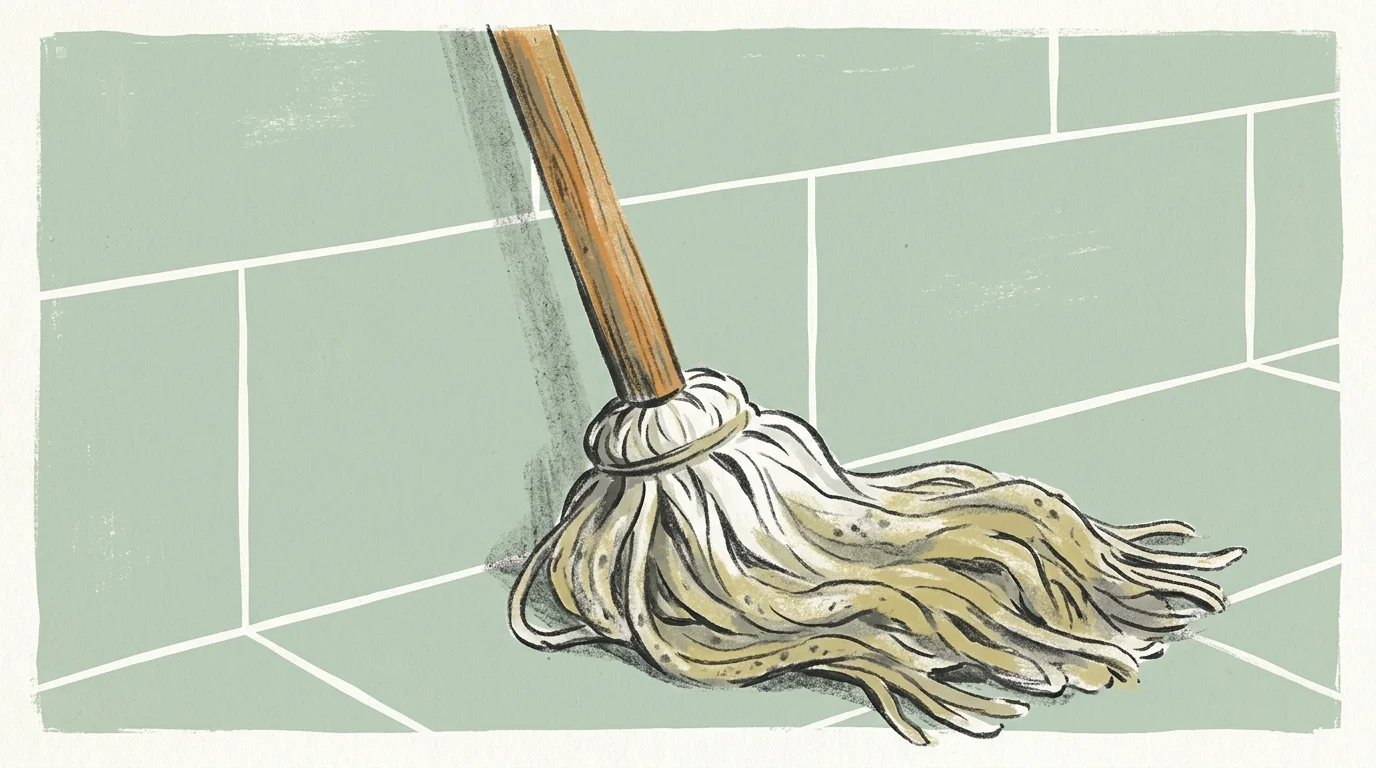
Whether you use a traditional cotton string mop, a spin mop, or a flat microfiber system, mopping with degraded fibers simply redistributes dirty water across your flooring. Over time, chemical detergents and friction break down mop strands, stripping their ability to trap soil and sanitize hard surfaces.
Cotton string mops deteriorate quickly; they hold onto bacteria, dry slowly, and develop mildew within weeks of consistent use. Replace cotton mop heads every two to three months, or after roughly 20 to 30 wash cycles. For flat microfiber mopping pads, watch for worn Velcro backings that peel away from the mop frame during use, as well as thinning fabric that allows the hard plastic head to scrape against hardwood or laminate finishes. Upgrading your cleaning supplies to fresh mop pads prevents floor scratches and cuts your floor-cleaning time in half.
6. Toilet Brush Bristles Are Flattened, Stiff, or Discolored
A degraded toilet brush makes bathroom sanitation inefficient and unpleasant. Constant exposure to acidic bowl cleaners, disinfectant chemicals, and moisture degrades polypropylene bristles, causing them to turn yellow, snap off, or flatten against the brush core.
Cleaning and hygiene industry standards recommend replacing plastic toilet brushes every six months. Flattened bristles cannot scrub beneath the toilet bowl rim or reach deep into the trap. Furthermore, the standing caddy base traps residual moisture, creating a dark, stagnant reservoir where bacteria and mold multiply. If the brush bristles appear permanently splayed, or if cleaning chemical residue has discolored the handle and base, discard the set immediately. Consider switching to a non-porous silicone toilet wand, which resists bacterial adhesion, rinses clean instantly, and lasts up to twice as long as traditional nylon-bristled brushes.
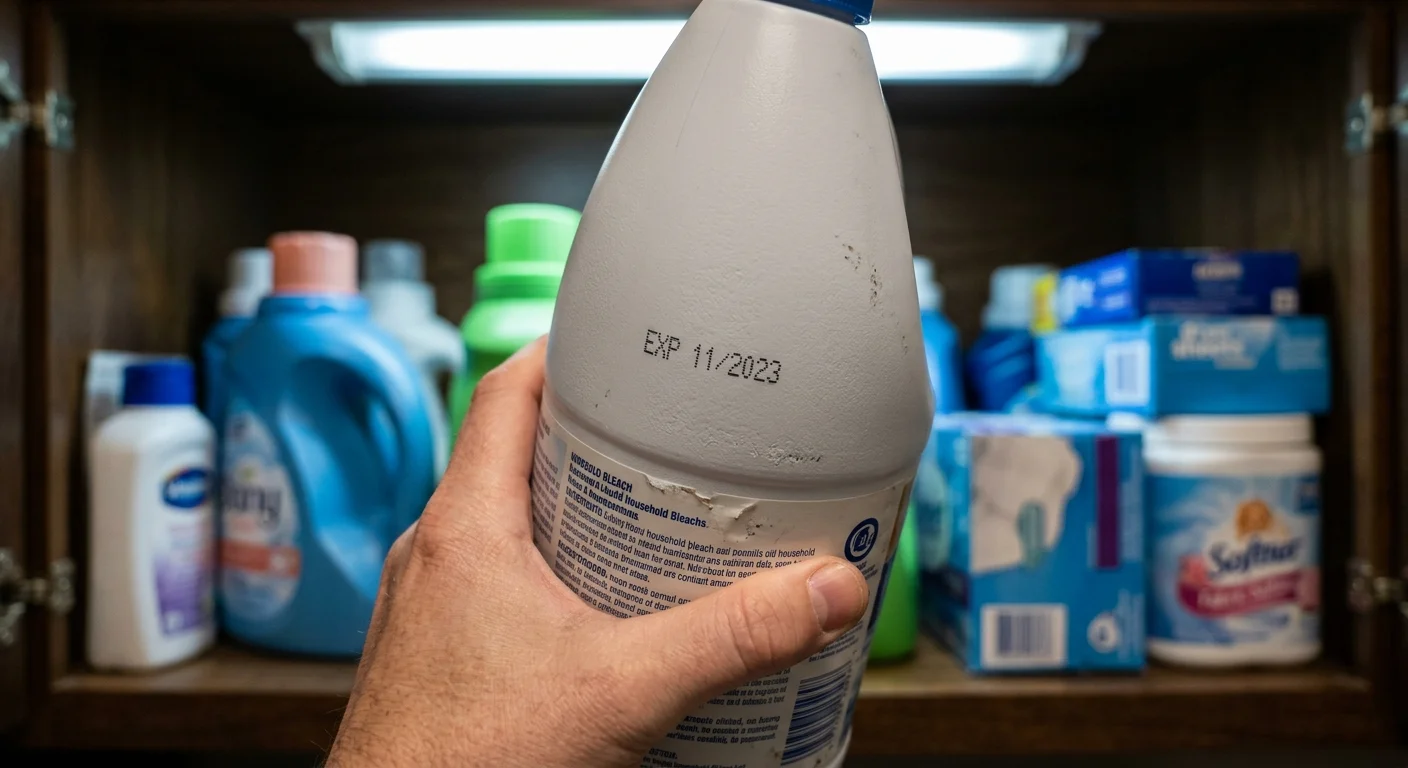
7. Liquid Bleach and Disinfectant Sprays Have Expired
Cleaning solutions and disinfectants do not last indefinitely. Many homeowners assume that chemical cleaners retain full sanitizing strength for years on a shelf, but active disinfecting agents degrade steadily through chemical oxidation and temperature exposure.
Liquid chlorine bleach (sodium hypochlorite) has a remarkably short shelf life. According to technical data from the American Cleaning Institute, liquid bleach remains stable in an unopened bottle for six to twelve months after manufacture. Once opened, it degrades into salt and water at a rate of roughly 20 percent potency loss per year. After three to six months of opening, commercial bleach no longer provides reliable antimicrobial disinfection against household pathogens.
Check the manufacturing date codes stamped on your chemical bottles. Discard and replace the following solutions if they exceed these timeframes:
- Opened Chlorine Bleach: Replace every 3 to 6 months.
- Hydrogen Peroxide Disinfectants: Replace 1 to 2 months after opening, as exposure to ambient air turns hydrogen peroxide into ordinary water.
- Antibacterial Sprays and Multi-Surface Cleaners: Replace after 1 to 2 years, as surfactants separate and active sanitizers break down.
- Enzyme Cleaners: Replace after 1 year, as active biological enzymes naturally denature and lose their stain-eating capabilities.
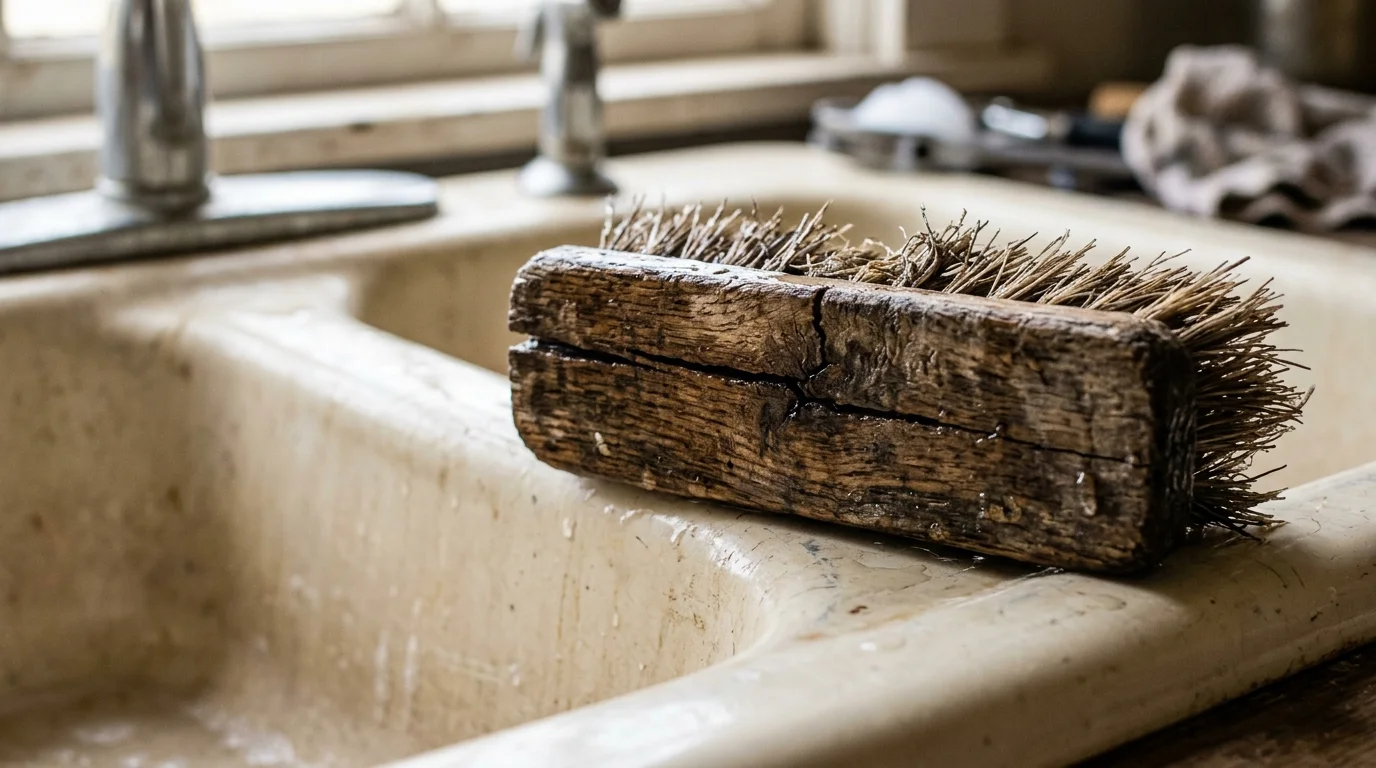
8. Scrub Brushes Show Cracked Blocks and Flattened Center Tufts
Heavy-duty scrub brushes handle demanding tasks on grout, tile, patio furniture, and oven racks. Because users apply direct downward force during scrubbing, the central bristle tufts absorb the brunt of the pressure. Over time, these center bristles crush outward, leaving an empty spot in the middle of the brush head.
When bristles crush flat, you end up rubbing the hard plastic or wooden block directly against your tile or grout lines, which can scratch delicate glazes and chip sealant. Wooden scrub blocks also split after repeated soaking cycles, creating deep crevices that harbor black mold and bacteria. If you must lean heavily on your brush to make the bristles contact the surface, replace the tool. Selecting an ergonomic brush with non-slip rubber grips relieves wrist strain and delivers better scrubbing power with minimal downward effort.
9. Dusters Shed Fibers and Scatter Dust Into the Air
A good duster holds onto fine particulates until you shake it outside or rinse it clean. When dusters age, they lose their static charge and structural integrity, knocking dust into the air rather than capturing it. That dust lingers in the room before settling right back onto your furniture and baseboards an hour later.
Watch for these specific signs that your dusting tools need replacement:
- Feather Dusters: Replace when quills snap, feathers thin out, or bare spots appear along the stem. Broken quills scratch delicate woodwork and acrylic surfaces.
- Electrostatic Synthetic Wands: Replace when the fibers become matted, greasy, or refuse to fluff up after washing. Matted fibers lose their static pull completely.
- Lambswool Dusters: Replace when the natural lanolin oil dissipates, the wool thins down to the leather backing, or the fibers mat together into tight cords.
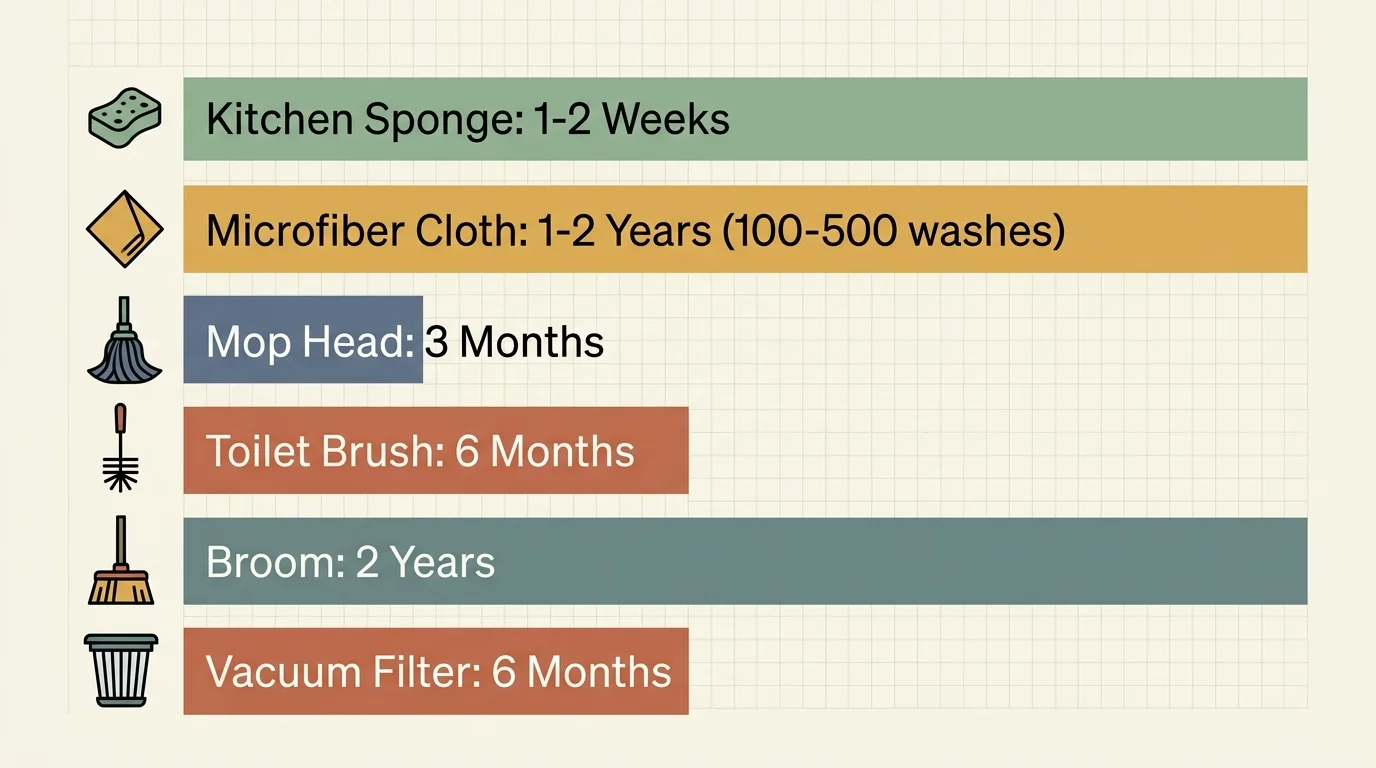
Cleaning Tool Lifespan Guide
Use this reference table to evaluate your cleaning inventory and plan timely replacements throughout the year.
| Cleaning Tool | Lifespan | Primary Warning Signs | Maintenance Best Practice |
|---|---|---|---|
| Kitchen Sponge | 1 to 2 weeks | Sour smell, tearing foam, dark stains, slimy feel. | Squeeze dry after every use; store in an open, aerated holder. |
| Microfiber Cloths | 1 to 2 years (100–500 washes) | Streaking on glass, water repulsion, lint shedding, stiff texture. | Wash in warm water without fabric softeners; air dry or use low heat. |
| Vacuum HEPA Filter | 6 to 12 months | Charcoal gray surface, musty exhaust odor, reduced floor suction. | Tap loose dirt out monthly; never wash non-washable paper HEPA pleats. |
| Mop Head (Microfiber/Cotton) | 2 to 3 months (20–30 washes) | Frayed strings, thinning pads, sour odor, streaky water residue. | Rinse thoroughly after mopping; hang upside down to dry completely. |
| Standard Broom | 2 years | Splayed or bent bristle tips, brittle shedding, skipped debris. | Hang from a wall hook; never store resting down on the bristle tips. |
| Plastic Toilet Brush | 6 months | Discolored nylon, flattened bristles, standing sludge in holder. | Allow brush to dry across the bowl rim before returning to the caddy. |
| Opened Liquid Bleach | 3 to 6 months | Weakened chlorine scent, ineffective stain removal, expired code. | Store in a cool, dark cupboard; write opening date on bottle in marker. |
| Handheld Scrub Brush | 1 year | Crushed center bristles, cracked block, black mold in grain. | Rinse free of grit; dry with bristles facing downward on a rack. |

A 10-Minute Cleaning Supply Audit
Take ten minutes this weekend to audit your primary cleaning cabinet. Gather all your sponges, microfiber cloths, chemical bottles, and scrubbers in one spot under good lighting. Discard sour sponges, check the date stamps on your disinfectants, and toss any scrub brushes with crushed bristles. Replacing old cleaning equipment ensures every minute you spend tidying translates into a genuinely clean, healthy, and comfortable home.