A well-designed cleaning routine should give you peace of mind and free time, not monopolize your entire weekend or leave you physically exhausted. If you constantly scrub, wipe, and tidy yet feel like your home remains in perpetual disarray, the problem is not your work ethic; your system is simply outdated. When life changes—whether through retirement, shifting family dynamics, or physical limitations—your chore strategy must adapt. Recognizing the signs your cleaning routine isn’t working allows you to strip away unproductive friction, balance daily maintenance with essential deep care, and reclaim control over your living environment without wasting precious energy on unnecessary tasks.

1. You Lose Your Weekends to Marathon Cleaning Sessions
Spending five or six consecutive hours every Saturday scrubbing tile and vacuuming rugs is a clear symptom of a broken system. When you defer every task to the weekend, cleaning feels like an exhausting second job rather than routine maintenance. This cycle robs you of rest, strains your physical stamina, and creates chronic resentment toward your living space.
According to the U.S. Bureau of Labor Statistics’ American Time Use Survey, Americans spend an average of 1.99 hours daily on total household activities, with interior cleaning accounting for roughly 20 minutes (0.33 hours) per day. However, data from the American Cleaning Institute (ACI) reveals that 28% of adults spend seven or more hours per week on cleaning chores. If you compress that workload into a single weekend marathon, you inevitably rush through complex tasks and finish the day depleted.
Revamping household cleaning habits requires distributing manageable daily micro-tasks throughout the week. A fifteen-minute focused evening sweep and a consistent load of laundry each morning eliminate the need for grueling weekend catch-up sessions.

2. You Experience Constant Anxiety Over Whether You Are Doing Enough
If you feel lingering guilt whenever you sit down to read or watch television, your schedule lacks definitive boundaries. Without clear benchmarks, your brain treats every surface as an ongoing, unfinished project. You find yourself pacing through rooms, wiping countertops impulsively, and wondering if you neglected critical hygiene tasks behind closed doors.
This psychological burden is widespread. The American Cleaning Institute’s National Cleaning Survey found that 34% of respondents worry about whether they clean frequently enough, while 31% express concern over whether they are cleaning correctly. This anxiety stems from arbitrary standards rather than structured workflows.
A functional schedule defines exactly what constitutes “finished” for any given day. It distinguishes between cosmetic tidying, functional sanitation, and periodic deep cleaning. When you establish transparent criteria, you can complete your designated task, close the cleaning caddy, and relax without second-guessing your home’s cleanliness.
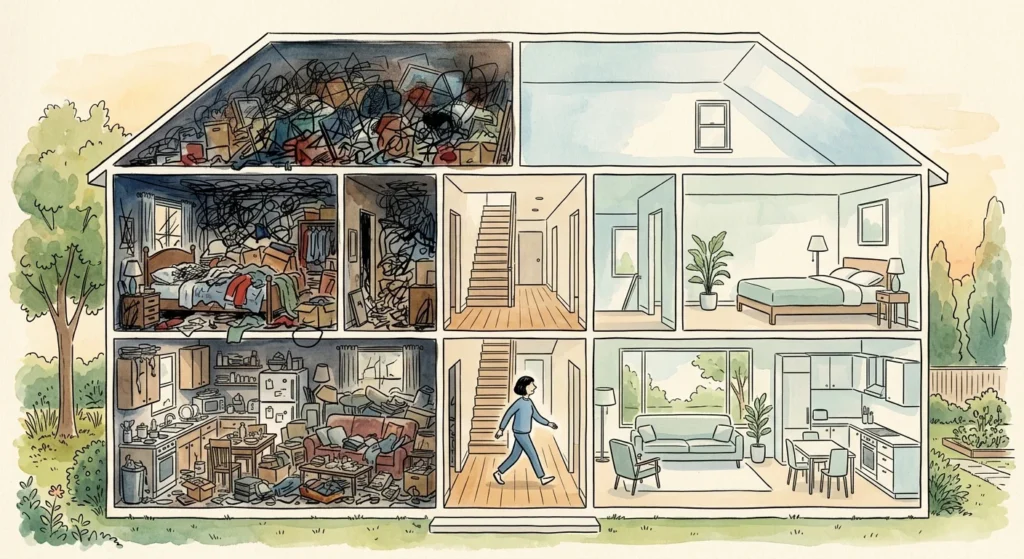
3. Visible Surfaces Look Clean, but Hidden Grime Accumulates
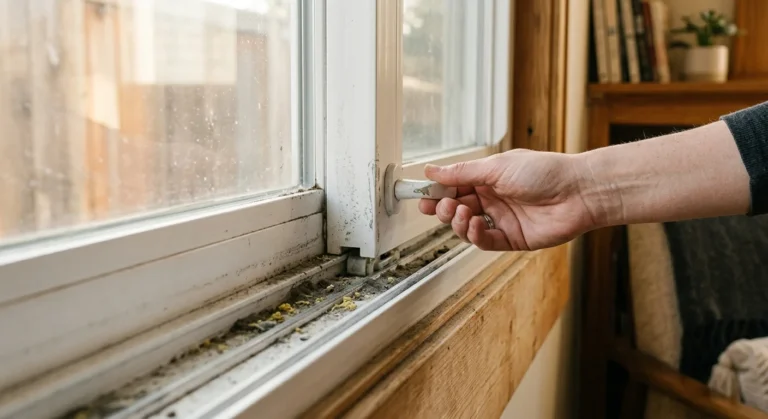
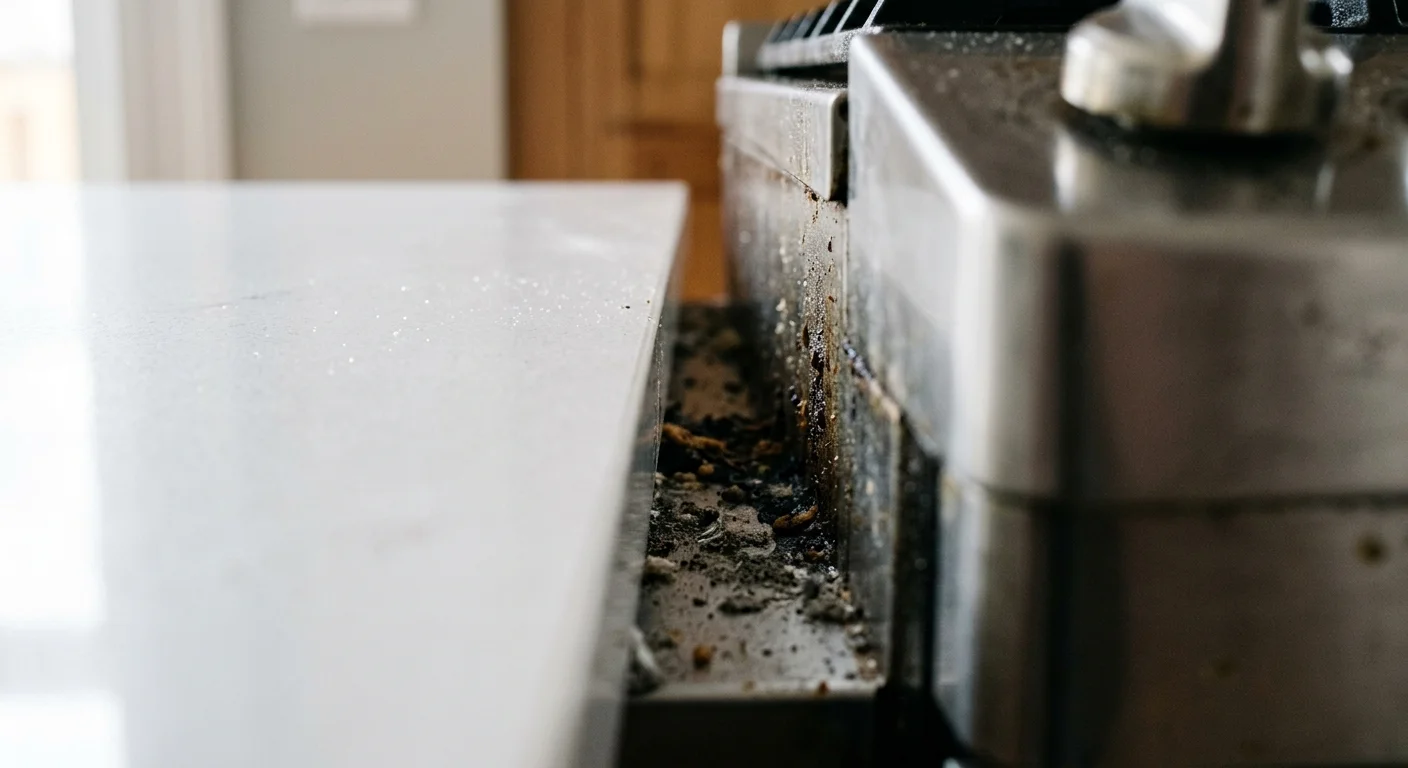
A common pitfall in domestic management is relying exclusively on surface-level wiping. You clear the kitchen island, run a dusting wand over open tables, and spray the bathroom vanity daily. Yet beneath that cosmetic order, oven interiors bake on grease, washing machine seals gather mildew, baseboards collect pet hair, and HVAC return vents choke on dust.
ACI survey findings show that 74% of Americans perform only light, surface-level cleaning regularly, compared to just 26% who engage in regular deep cleaning. This massive disparity explains why homes often look neat at a glance but still feel stale or trigger indoor allergies.
When you focus only on quick wipes, hidden grime builds up until it requires aggressive, caustic chemicals and hours of elbow grease to remove. Overhauling your cleaning schedule means embedding rotating deep-cleaning intervals—such as cleaning one major appliance or one set of baseboards each week—so deep buildup never occurs.
4. Daily Tasks Take Far Longer Than They Should
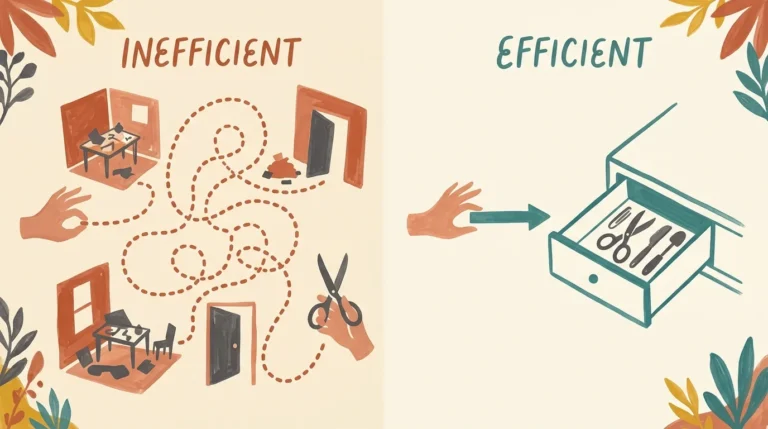
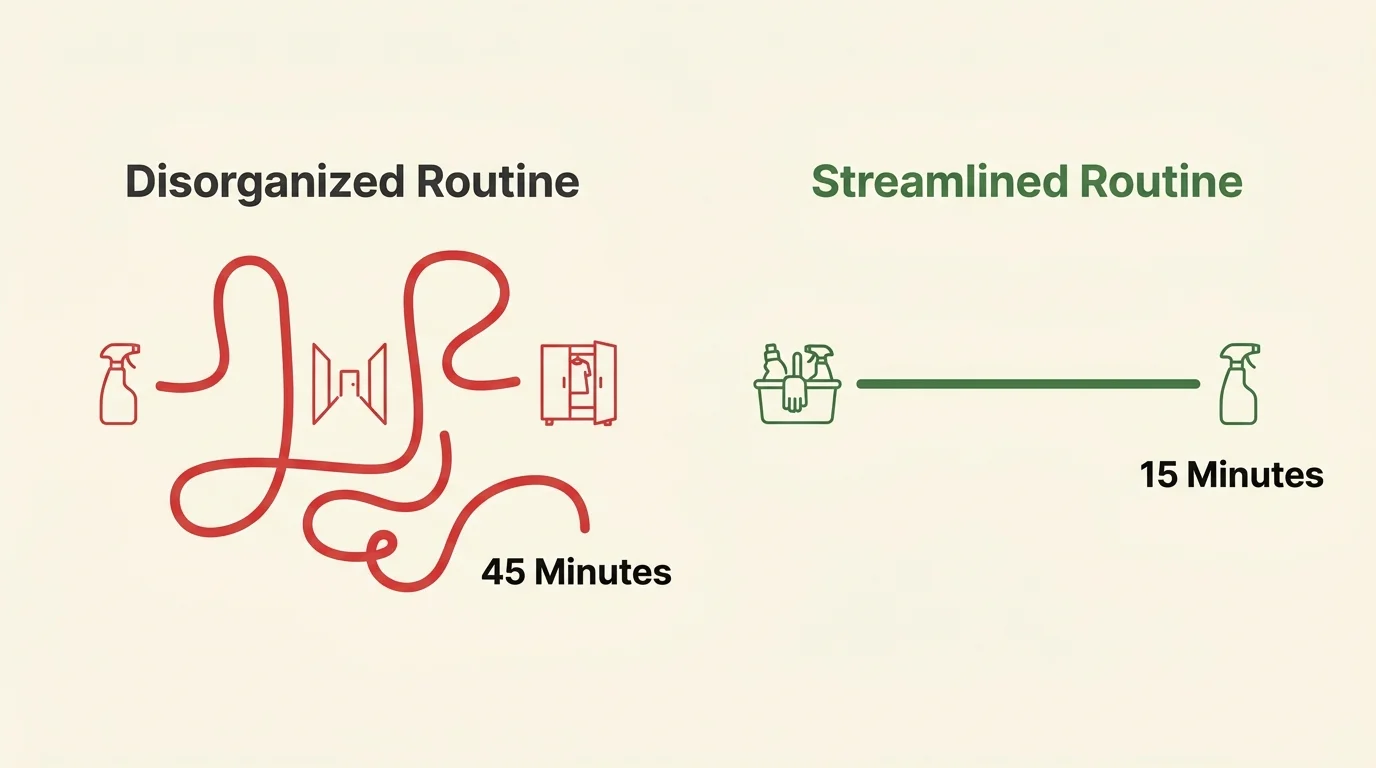
If a simple task like wiping down the kitchen or vacuuming the living room stretches past 45 minutes, your workflow suffers from systemic friction. Common cleaning routine mistakes include:
- Backtracking across the house multiple times to fetch forgotten rags, sprays, or trash bags.
- Moving piles of unassigned clutter off surfaces before you can actually wipe the dust underneath.
- Using dry cloths that push dust into the air rather than capturing it with damp microfiber.
- Applying cleaning solutions and immediately wiping them off without allowing proper dwell time to dissolve grime.
When your system lacks flow, simple tasks demand double the physical effort. Creating an effective cleaning schedule involves zoning your home and equipping each zone with dedicated, accessible tools so you never waste steps or duplicate effort.
5. Your Cleaning Routine Leaves You in Physical Pain
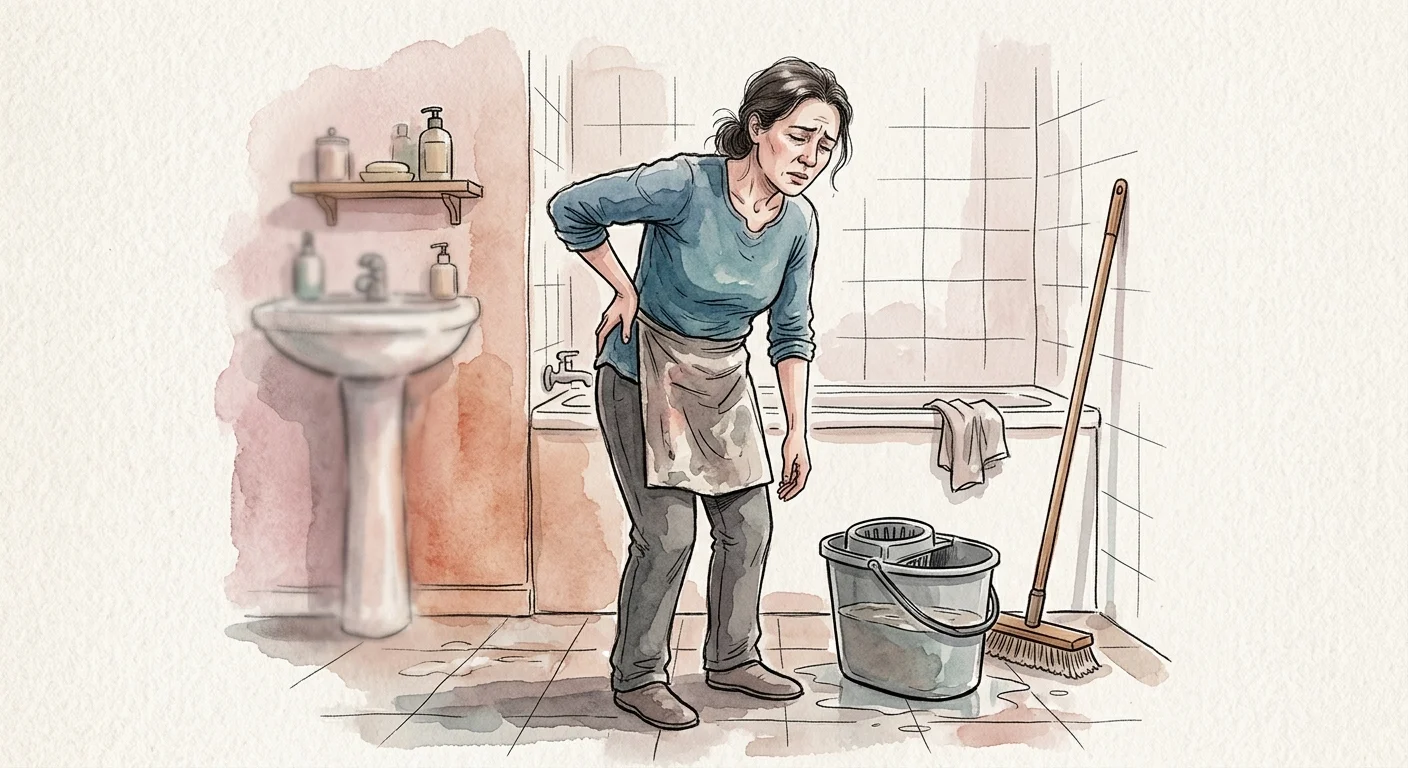
Household chores should not cause joint pain, back spasms, or total exhaustion. If your current routine leaves your knees aching from kneeling on tile, your shoulders inflamed from high reaching, or your back sore from lugging heavy equipment, your routine fails the test of sustainability.
As our bodies change, repetitive bending and heavy lifting become counterproductive. An outdated cleaning routine relies on brute force; an updated routine relies on mechanical advantage and ergonomic tools. Consider how modern upgrades reduce physical strain:
- Replacing a heavy upright vacuum with an ultra-lightweight cordless stick vacuum or robotic floor cleaner.
- Using extendable, telescoping scrubbing poles for bathtubs and shower walls to eliminate bending and kneeling.
- Implementing the “waist-high rule,” where you tackle low-reaching and high-reaching chores on separate days to minimize posture changes.
- Breaking 60-minute cleaning blocks into two gentle 15-minute segments with mandatory hydration breaks.

6. High-Traffic Drop Zones Collapse Within Hours
Entryway consoles, kitchen counters, and bedside tables often serve as household dumping grounds. If you spend 20 minutes clearing these surfaces only to find them buried under mail, keys, bags, and loose items by afternoon, your schedule is treating the symptom rather than the cause.
Surfaces collapse because your household lacks defined storage systems and quick reset habits. Cleaning cannot compensate for poor organization. When mail has no designated inbox and keys have no hook, they land on the nearest flat plane. Your overhauled schedule must integrate two-minute morning and evening resets that return items to designated homes before clutter accumulates into an overwhelming chore.
7. Cleaning Supplies Are Disorganized, Duplicated, or Toxic
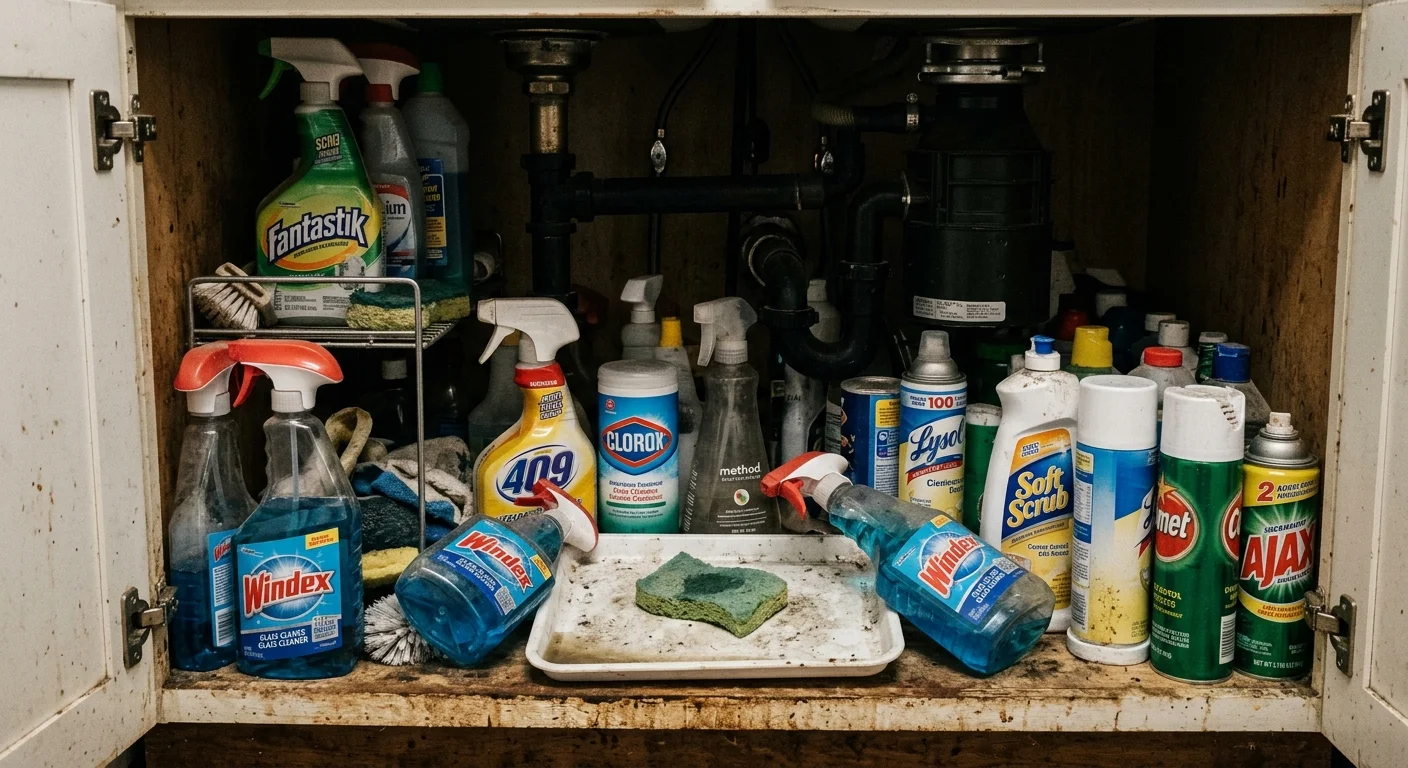
Open your under-sink cabinets and supply closets. Do you find twenty half-empty bottles of specialized cleaners, mismatched spray nozzles, and dirty, frayed sponges? A cluttered supply inventory creates decision fatigue and slows down every chore.
Managing an excessive array of harsh, single-use chemicals also introduces unnecessary health risks. The U.S. Environmental Protection Agency (EPA) Safer Choice Standard recommends simplifying your chemical footprint with versatile, lower-toxicity products that effectively clean multiple surface types without polluting indoor air.
Streamline your arsenal to four core essentials:
- A pH-neutral, multi-surface cleaner for daily counters, tables, and walls.
- A non-abrasive mineral cream or baking soda scrub for sinks, tubs, and cooktops.
- A dedicated glass and mirror microfiber cloth that requires only warm water.
- An EPA-registered disinfectant, reserved for targeted high-touch areas during illness, adhering strictly to CDC cleaning and disinfection guidance.
8. You Bear the Entire Household Mental Load Alone
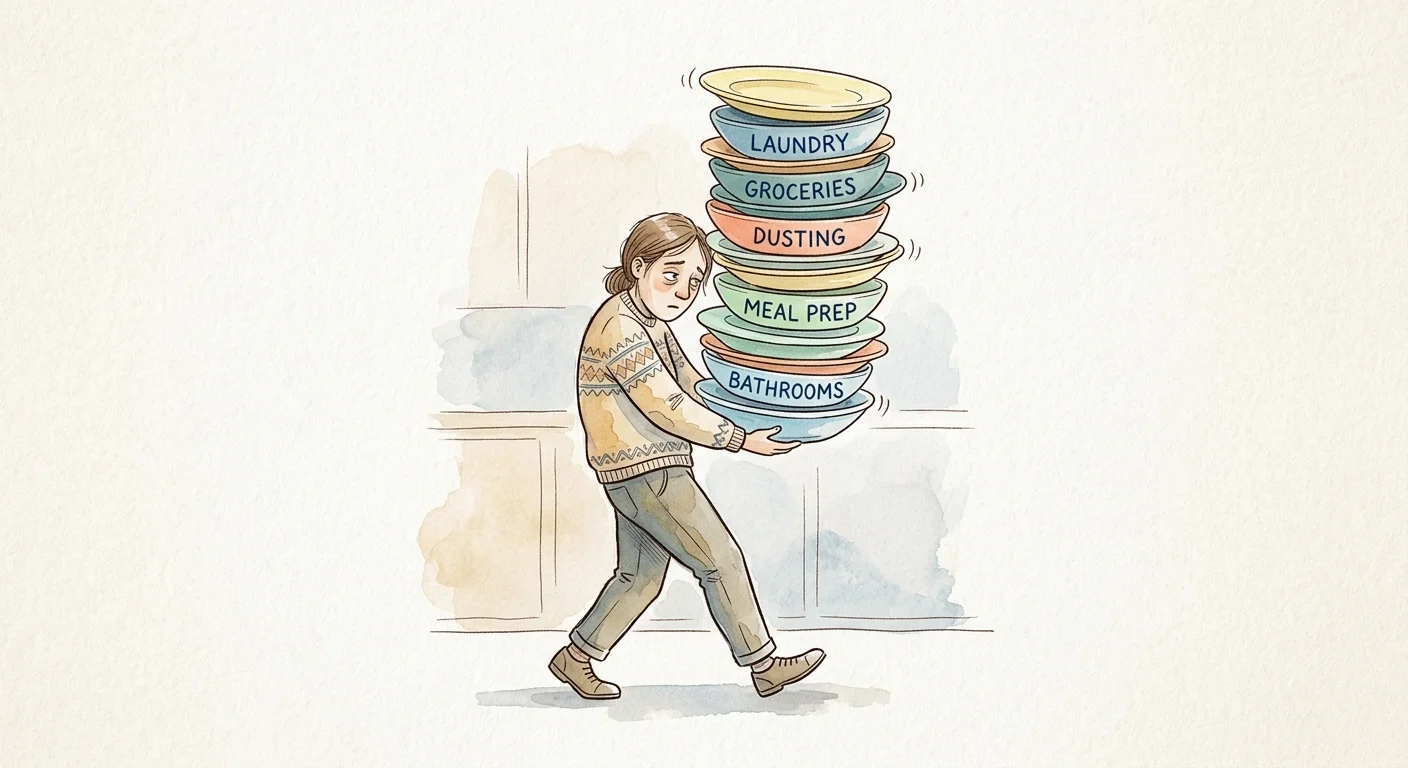
If you live with a partner, family members, or housemates, but household cleanliness hinges entirely on your vigilance, your schedule has failed structurally. A system that lives exclusively in your head forces you into the exhausting role of household manager, requiring you to delegate, instruct, and inspect every chore.
A successful cleaning schedule is visible, objective, and predictable. When tasks are tied to clear triggers (such as wiping the table immediately after dinner or running the dishwasher when full), other household members can participate without prompting. Clear checklists dismantle the mental load and establish shared ownership over the home environment.
Comparing an Outdated Routine with an Overhauled System
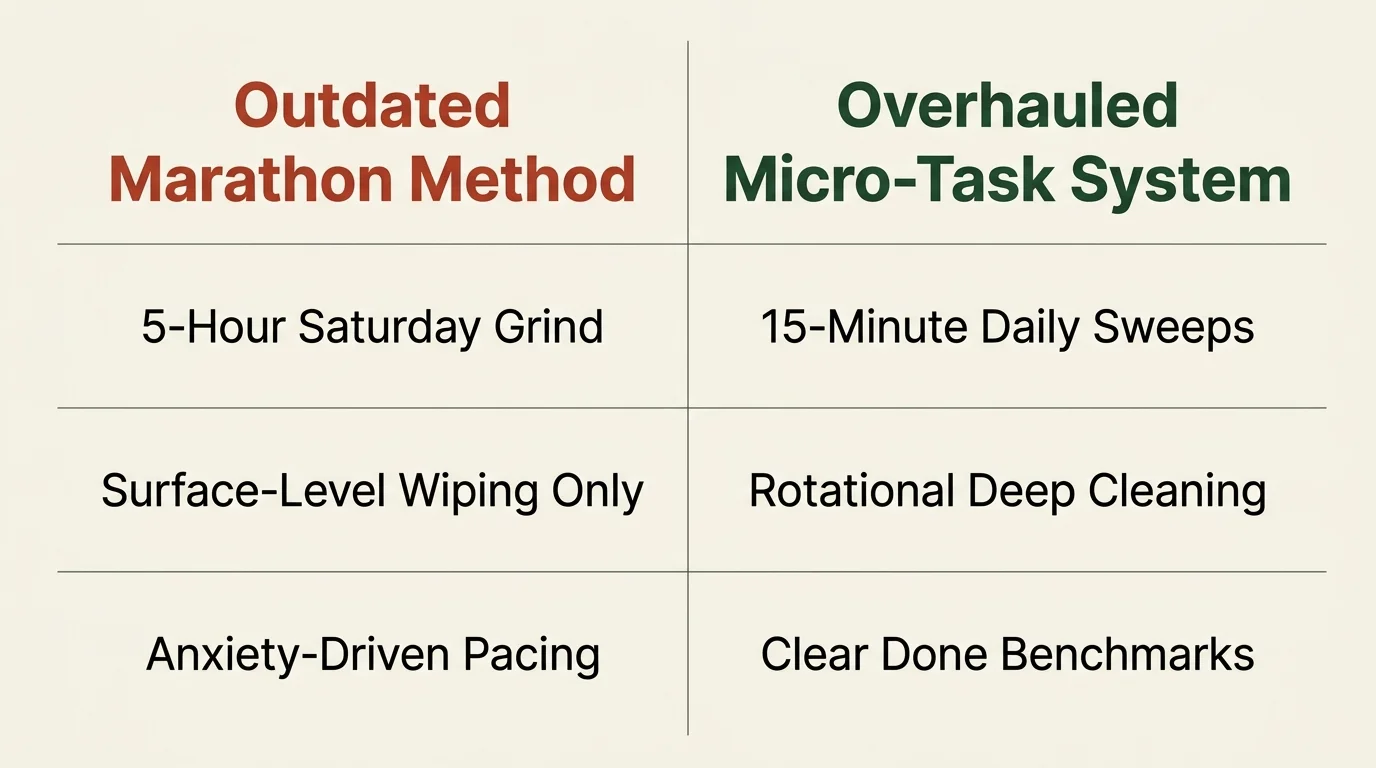
The table below highlights the operational differences between an exhausting, outdated routine and a modern, sustainable cleaning structure.
| Operational Dimension | The Outdated Routine | The Overhauled Routine |
|---|---|---|
| Time Allocation | 5–7 hour weekend marathons that trigger burnout. | 15–20 minute daily targeted resets with free weekends. |
| Work Distribution | Scattered, reactive cleaning across multiple rooms. | Focused zone cleaning (one room or system per day). |
| Physical Demand | Heavy lifting, deep bending, and aggressive scrubbing. | Ergonomic tools, extendable handles, and paced tasks. |
| Grime Management | 74% surface wiping; hidden dirt remains untouched. | Balanced daily upkeep with scheduled rotating deep tasks. |
| Mental Load | Internalized stress, continuous guilt, and vague goals. | Visible, transparent checklists shared across the home. |
A Step-by-Step Blueprint for Overhauling Your Cleaning Schedule
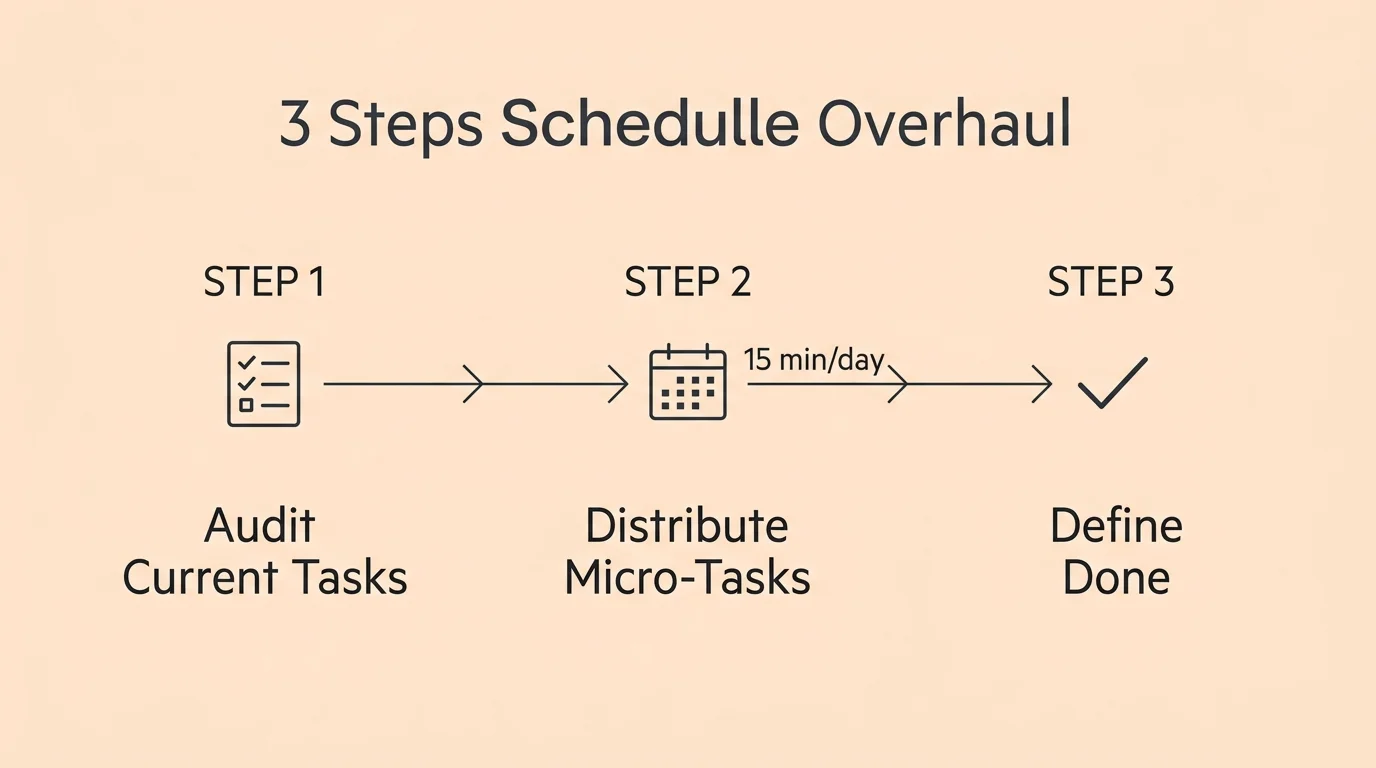
Transitioning to an efficient, low-stress routine requires a structured reset. Follow these four steps to build a sustainable schedule tailored to your home and physical comfort.
Step 1: Conduct a Three-Day Household Inventory
For three days, write down every chore you perform, how long it takes, and how your body feels afterward. Identify your primary friction points: Which rooms fall into chaos fastest? Which chores do you consistently avoid? This data reveals where your schedule needs structural support rather than extra effort.
Step 2: Establish the Non-Negotiable Daily Reset (15 Minutes Max)
Limit daily maintenance to four foundational tasks that preserve basic hygiene and visual peace:
- Make the bed to instantly establish order in the bedroom.
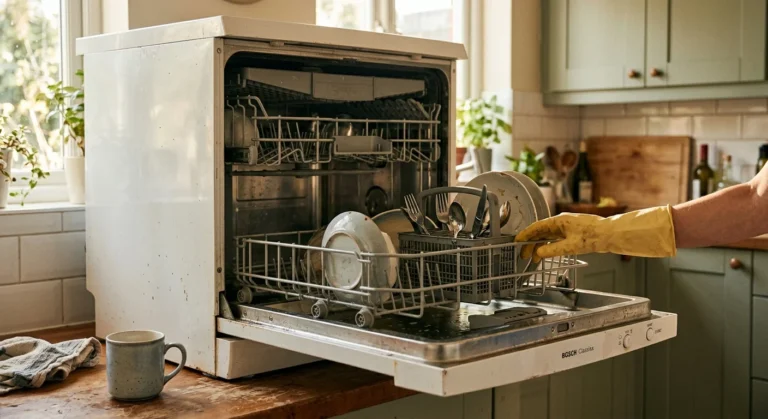
- Run or empty the dishwasher so dirty dishes never sit in the sink.
- Wipe the primary kitchen prep surfaces and dining table.
- Complete a 5-minute evening basket sweep to return misplaced items to their designated rooms.
Step 3: Implement the 5-Day Zone Method
Assign one specific zone to each weekday. Dedicate 20 minutes to that zone, handling both light tidying and one deeper task. Once the timer rings, stop—regardless of what remains.
- Monday: Kitchen & Pantry (Wipe appliance exteriors, clear expired fridge items, mop floor).
- Tuesday: Bathrooms (Scrub basin and toilet, polish mirrors, switch out bath towels).
- Wednesday: Living & Entertaining Areas (Dust hard surfaces, vacuum upholstery, fluff cushions).
- Thursday: Bedrooms & Linen Care (Wash sheets, dust nightstands, vacuum rugs).
- Friday: Entryways, Utility & Floors (Sweep porches, wipe high-touch light switches, run main floor mop).
Step 4: Centralize and Portable-Pack Your Tools
Ditch the chaotic under-sink graveyard. Assemble one lightweight, carry-all caddy containing your four essential cleaners, six color-coded microfiber cloths, an extendable duster, and a pair of gloves. When your supplies move effortlessly with you from room to room, you eliminate wasted steps and complete tasks in half the time.
Common Cleaning Routine Mistakes to Avoid
As you implement your new schedule, watch out for these subtle habits that sabotage household efficiency:
- Cleaning out of order: Always clean from top to bottom and dry to wet. Dust ceiling fans, high shelves, and window sills first so falling debris lands on uncleaned floors, which you vacuum and mop last.
- Skipping dwell time: Spraying a bathroom disinfectant and immediately wiping it away leaves bacteria behind and requires excessive scrubbing. Spray surfaces, wait 5 to 10 minutes according to product instructions, and wipe grime away effortlessly.
- Overcomplicating the schedule: Avoid rigid charts that schedule 40 micro-tasks every day. If your plan is too demanding to maintain during a busy or low-energy week, it will fail. Keep daily expectations minimal and flexible.
- Using the wrong cloth for the job: Paper towels tear, leave lint behind, and generate ongoing expense. High-density microfiber cloths trap dust and grease particles mechanically, cutting your cleaning time in half using less chemical product.

Your Immediate Next Step
Do not try to reorganize your entire home today. Pick one high-friction area—such as your kitchen counters or your cleaning supply cabinet—and set a kitchen timer for ten minutes. Clear out the expired bottles, discard worn-out sponges, assemble your core multi-surface supplies into a single portable caddy, and commit to testing the 15-minute daily reset tonight.