You can transform your chaotic wardrobe into an effortless dressing station in a single afternoon when you avoid the strategic traps that derail most cleaning projects. Most homeowners lose entire weekends to closet overhaul projects because they tackle the work backward, creating overwhelming messes and burning out before making real progress. Research indicates that eliminating household clutter reduces cleaning and sorting time by up to 40%. By pinpointing the seven most common closet decluttering mistakes beforehand, you preserve your energy, protect your valuable time, and build a streamlined wardrobe system that stays organized permanently.
1. Emptying the Entire Closet at Once
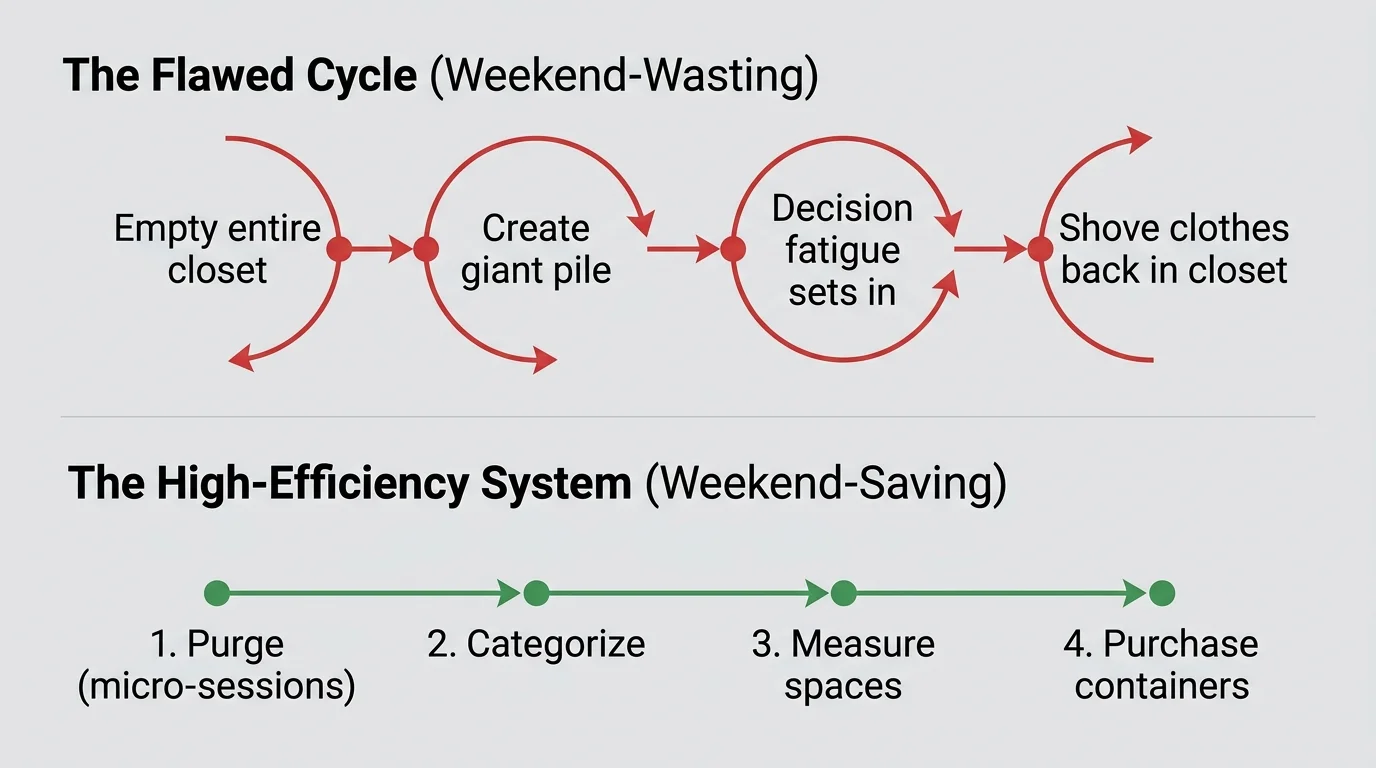
Dumping every garment, shoe box, and accessory onto your bed at 9:00 AM feels productive, but it represents one of the most punishing closet decluttering mistakes you can make. When you pull hundreds of items out simultaneously, you create a massive visual obstacle that rapidly drains your stamina. By mid-afternoon, decision fatigue sets in; looking at towering piles of clothes causes acute stress, and your initial motivation evaporates.
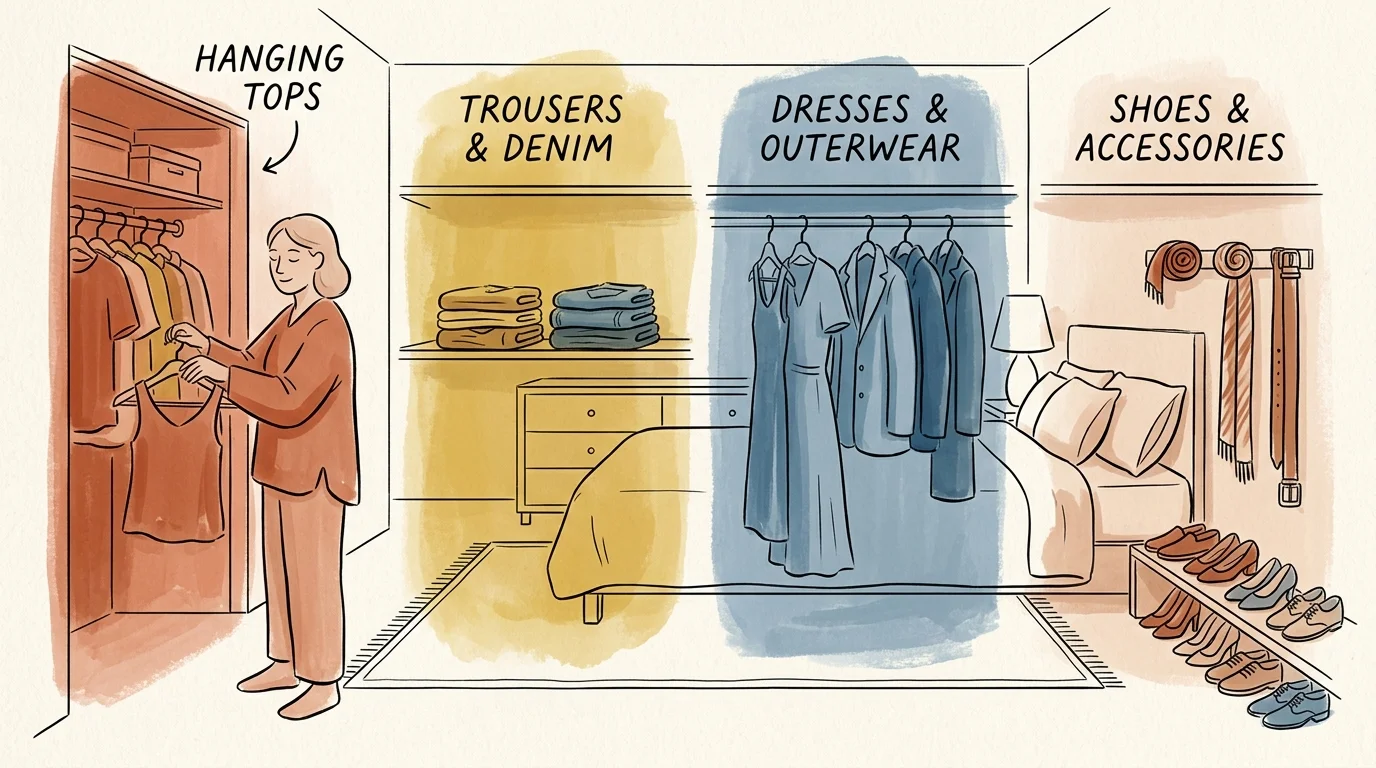
By 8:00 PM, exhaustion forces many people to shove unsorted garments back into the closet just to clear a space to sleep. This cycle wastes hours of physical labor without producing a sustainable system. Instead of the all-or-nothing method, implement the zone approach by dividing your closet into manageable, isolated categories:
- Hanging tops and blouses: Sort and edit these in a single 45-minute block.
- Trousers, denim, and skirts: Tackle pants next to quickly assess fit and wear frequency.
- Dresses, suits, and outerwear: Review formal and seasonal items in their own focused session.
- Shoes and accessories: Group footwear, belts, and bags separately so you can match pairs and inspect condition without cluttering your floor.
Working in micro-sessions keeps your space functional throughout the day. If an unexpected phone call or errand interrupts your work, your bedroom remains orderly, and you can resume the next category whenever your schedule permits.
2. Purchasing Storage Bins Before Editing Your Inventory
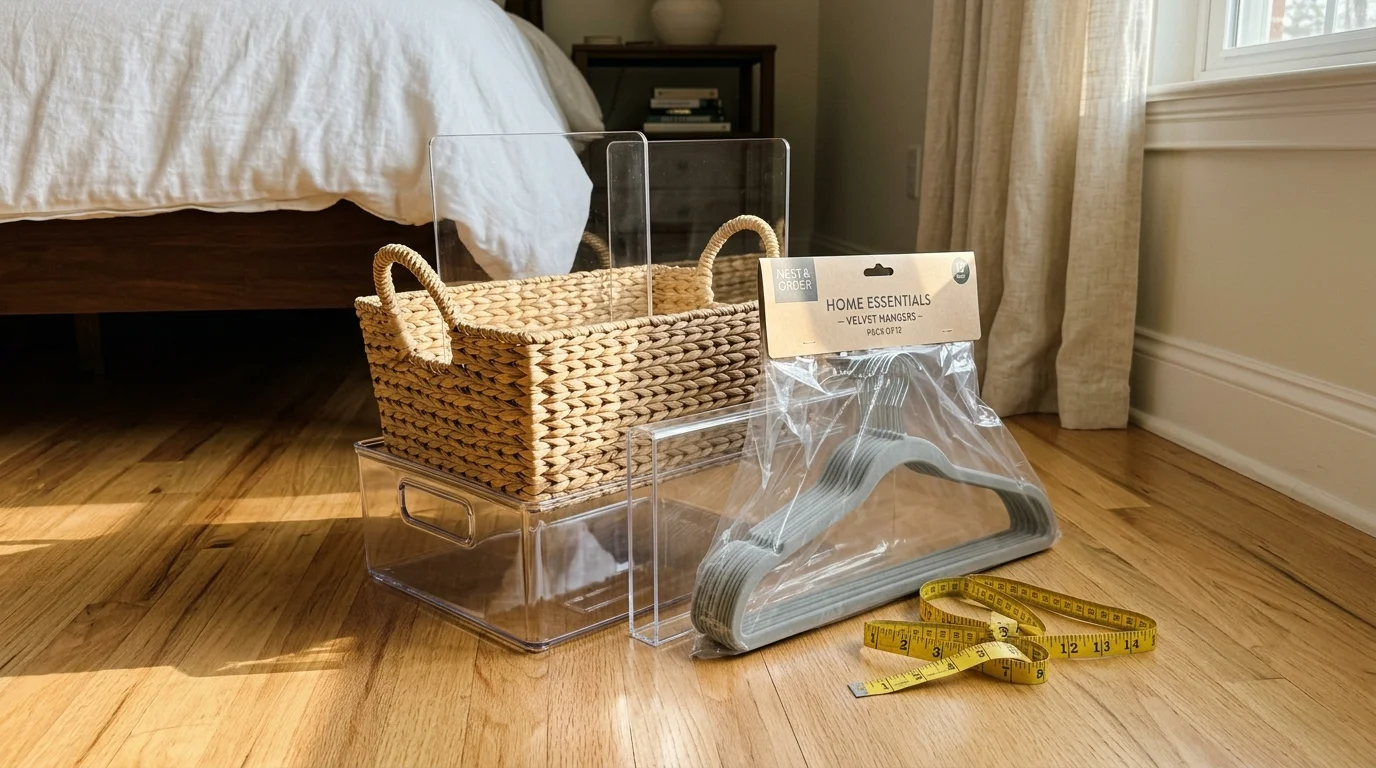
Browsing home goods aisles for velvet hangers, acrylic shelf dividers, and woven baskets is exciting, but buying storage products before sorting your clothes is among the classic closet organization pitfalls. When you purchase containers in advance, you inadvertently organize your clutter rather than eliminating it. You end up forcing unneeded garments into brand-new bins simply because you have the storage capacity available.
Containers should support your curated wardrobe—not dictate what you keep. Professional organizing standards established by groups like the National Association of Productivity and Organizing Professionals (NAPO) emphasize that containment is the final step of organization, never the first. When you buy bins prematurely, you often purchase the wrong dimensions, resulting in wasted shelf depth, awkward stack heights, and obstructed door swings.
Follow a strict sequence: purge first, categorize second, measure third, and purchase fourth. Measure the vertical clearance between shelves, the total shelf depth, and your hanging rod lengths. Only invest in organizing products once you know the exact volume of garments that require storage.
3. Falling for the “Someday” Fallacy and Sunk Cost Guilt
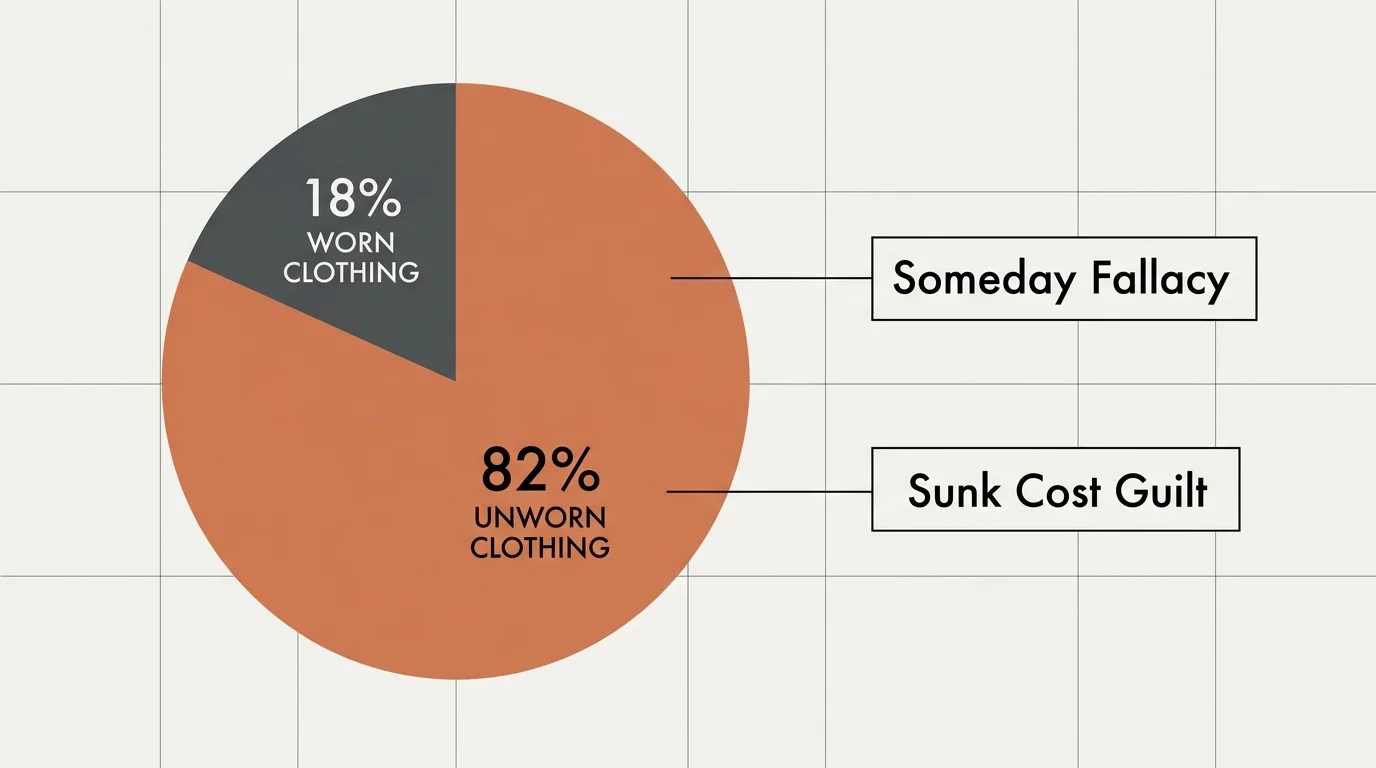
Emotional attachment to clothing wastes more time and mental energy than any physical sorting task. A global wardrobe study conducted by Movinga across 18,000 households revealed that consumers in the United States leave approximately 82% of their clothing unworn over any 12-month period, despite believing they wear the majority of their items. Furthermore, surveys show that roughly 77% of people retain unworn clothing solely on the hope that garments will fit or become relevant again “someday.”
This mindset triggers two major psychological traps: aspirational sizing and sunk-cost guilt. Keeping a dress that pinched your waist five years ago or expensive suits you no longer wear for work creates subtle, daily self-criticism. The money you spent on an item is gone whether it hangs in your closet or leaves your home; keeping an unworn $200 jacket in dark storage does not recover your investment.
The Pareto Principle applies directly to wardrobes: most people wear roughly 20% of their clothes 80% of the time. When sorting items, evaluate them against your current body, your current routine, and your current comfort requirements. If an item does not serve your life today, release it to free up physical space and eliminate daily decision friction.
4. Creating a “Maybe” Pile Without Strict Rules
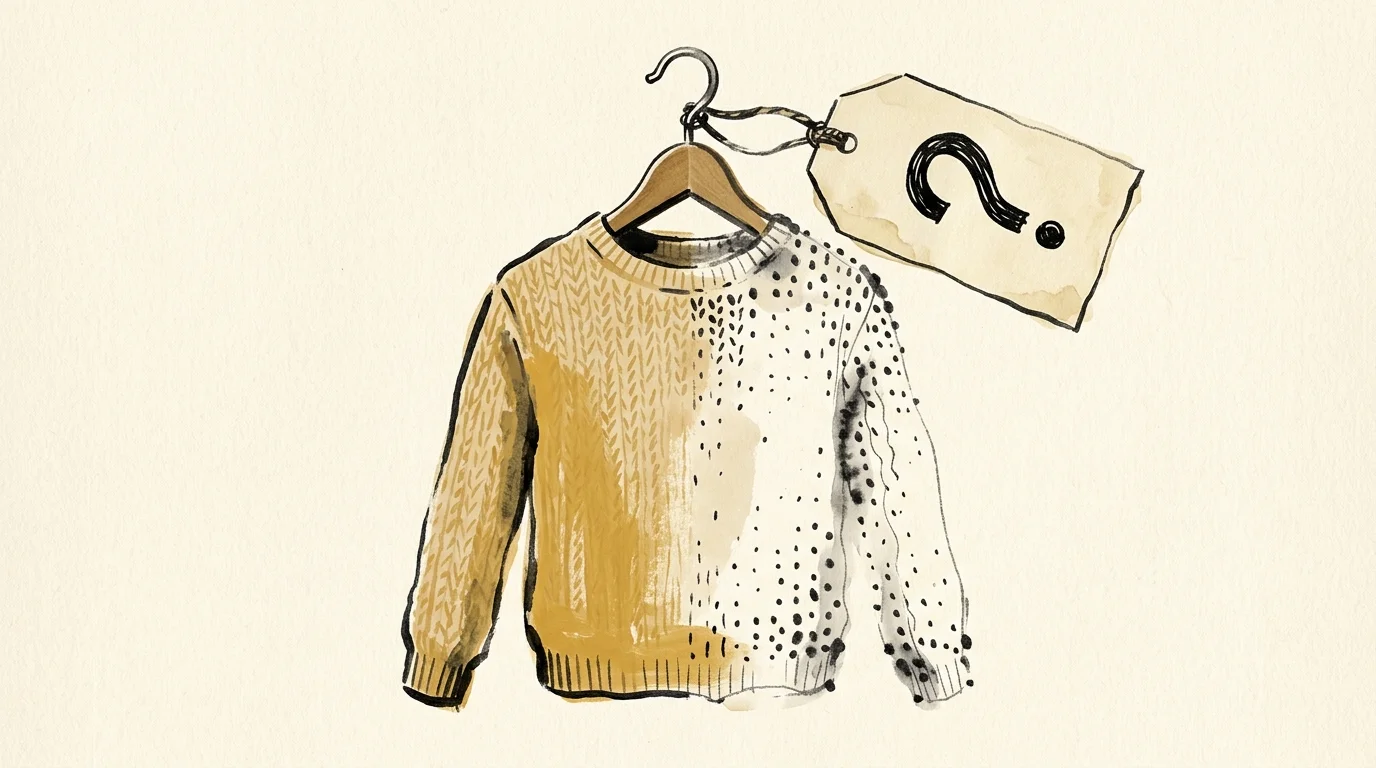
When you are indecisive, creating a “maybe” pile feels like a practical compromise, but it is one of the most common decluttering errors. A “maybe” pile quickly balloons until it holds 60% of your wardrobe, transferring your indecision from the hanging rod to a floor basket without making meaningful progress. Without clear parameters, you will simply inspect those same questionable garments six months from now.
To handle uncertainty without stalling your momentum, establish an objective evaluation process. When an item makes you hesitate, run it through three decisive criteria:
- Have you worn it in the past six months? (Exclude legitimate seasonal outerwear or formalwear).
- Does it fit your body comfortably right now without tugging or pinching?
- If you were shopping today, would you pay full price for it?
If an item fails these questions but you still cannot bear to part with it, implement the “quarantine box” strategy. Place the garments inside a clearly labeled storage tote, write an expiration date three months in the future on the lid, and store the container in an out-of-the-way space like a guest room closet or basement. If you do not retrieve an item within those 90 days to wear it, donate the box without opening it.

5. Failing to Plan an Immediate Exit Strategy for Discards
Your closet decluttering project is not finished when you zip up the trash bags; it is finished when those items leave your property. One of the biggest mistakes when clearing out closets is leaving donation bags sitting in your hallway, garage, or trunk for months. When bags linger inside your home, family members rummage through them, clothes get dragged back into circulation, and the lingering clutter continues to cause visual stress.
Before you pull a single hanger, determine exactly where your unwanted items will go. High-quality garments can go to local consignment shops or registered charities such as Goodwill, while worn-out basics require dedicated textile recycling. According to data from the Environmental Protection Agency (EPA), over 11 million tons of municipal textile waste end up in landfills each year, making conscious disposal essential.
Book a specific donation drop-off time on your calendar within 48 hours of your decluttering session, or arrange for a charity pickup at your front door. Knowing your exit path ahead of time keeps your momentum strong and ensures your home immediately feels the benefits of your hard work.
6. Organizing for Aesthetics Instead of Daily Routine
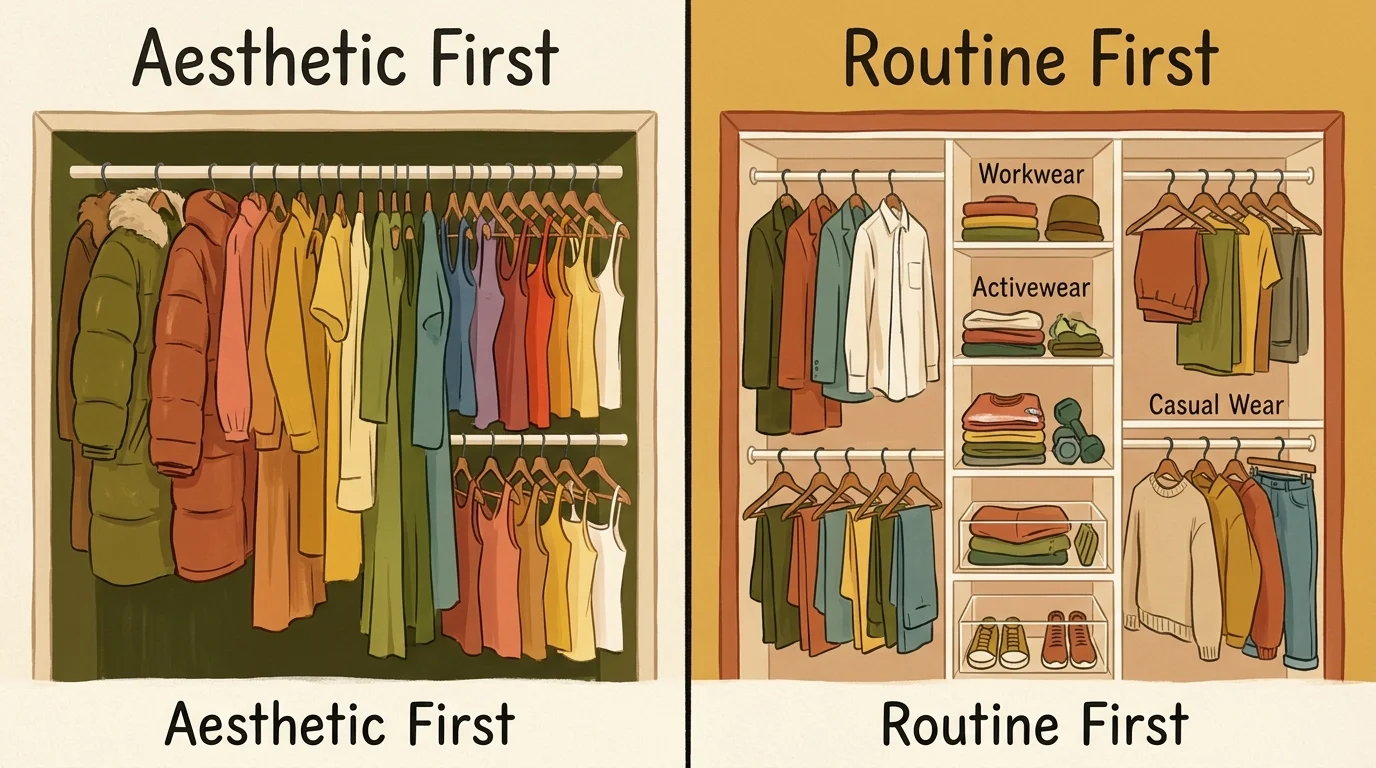
Social media is full of color-coordinated closets arranged in perfect rainbow gradients. While visually appealing, organizing your clothes strictly by color is often a critical mistake in how not to declutter a closet. A rainbow closet mixes formal gowns with casual tank tops and heavy winter knits with summer linen, creating friction every time you get dressed in the morning.
Consumer habit studies show that adults spend between 13 and 17 minutes every morning choosing what to wear—costing nearly four days per year—while over 51% of adults report experiencing morning “wardrobe paralysis.” You can eliminate this morning fatigue by organizing your closet around your daily lifestyle rather than abstract color palettes.
Structure your closet using the prime real estate principle:
- Eye and chest level (Prime Zone): Place the clothes you wear for your daily routine—workwear, casual basics, and activewear.
- Lower shelves and lower rods (Secondary Zone): Store denim, casual trousers, shoes, and everyday folded items.
- Top shelves and back corners (Infrequent Zone): Reserve these areas for seasonal items, formal evening wear, and specialty gear.
Within each functional category, you can group garments by sleeve length or color. This functional hierarchy ensures you can assemble an outfit in under two minutes without sorting through items you rarely wear.

7. Overlooking Fabric Care, Pest Prevention, and Hardware Needs
Decluttering involves more than just getting rid of items; it requires preserving the pieces you choose to keep. Putting clothes back into a dusty, poorly maintained closet compromises fabric integrity and invites pest infestations. Dust mites, carpet beetles, and clothes moths feed on dead skin cells, lingering body oils, and natural fibers like wool, silk, and cashmere.
Never return garments to an uncleaned space. Once you clear a section, thoroughly vacuum the baseboards, wipe down the shelves with a damp microfiber cloth, and inspect the corners for signs of moisture or pests. Replace thin wire dry-cleaner hangers, which warp collars and stretch shoulder seams over time. Uniform velvet-flocked hangers or sturdy wooden hangers protect fabric structures while saving up to 30% of your horizontal hanging space.
For seasonal storage, avoid non-breathable plastic garment bags, which trap humidity and encourage mildew growth. Use breathable cotton garment bags and add natural cedar blocks or dried lavender sachets to deter insects safely without the toxic chemicals found in traditional mothballs.
A Strategic Comparison: Flawed Habits vs. High-Efficiency Systems
Reviewing your approach before starting ensures you avoid common pitfalls. The table below outlines how typical decluttering errors compare to professional organizing strategies:
| Decluttering Stage | Common Mistake (Weekend Waste) | High-Efficiency Strategy |
|---|---|---|
| Initiation | Dumping the entire wardrobe onto the bed at once. | Working through focused 45-minute micro-zones. |
| Storage Prep | Buying storage containers before sorting garments. | Purging first, then measuring inventory and shelf dimensions. |
| Item Selection | Keeping 80%+ of unworn clothes for “someday” scenarios. | Applying the 80/20 rule to focus on current lifestyle fit. |
| Hesitation | Building an unchecked “maybe” pile that delays decisions. | Using a 90-day sealed quarantine box with an expiration date. |
| Disposal | Leaving donation bags in the hallway or car trunk for months. | Scheduling a drop-off or charity pickup within 48 hours. |
| Arrangement | Organizing solely by color, mixing all garment styles together. | Zoning by daily lifestyle frequency, then category and color. |
| Maintenance | Using wire hangers and ignoring dust, airflow, and fabric care. | Wiping surfaces, using slim velvet hangers, and adding cedar. |
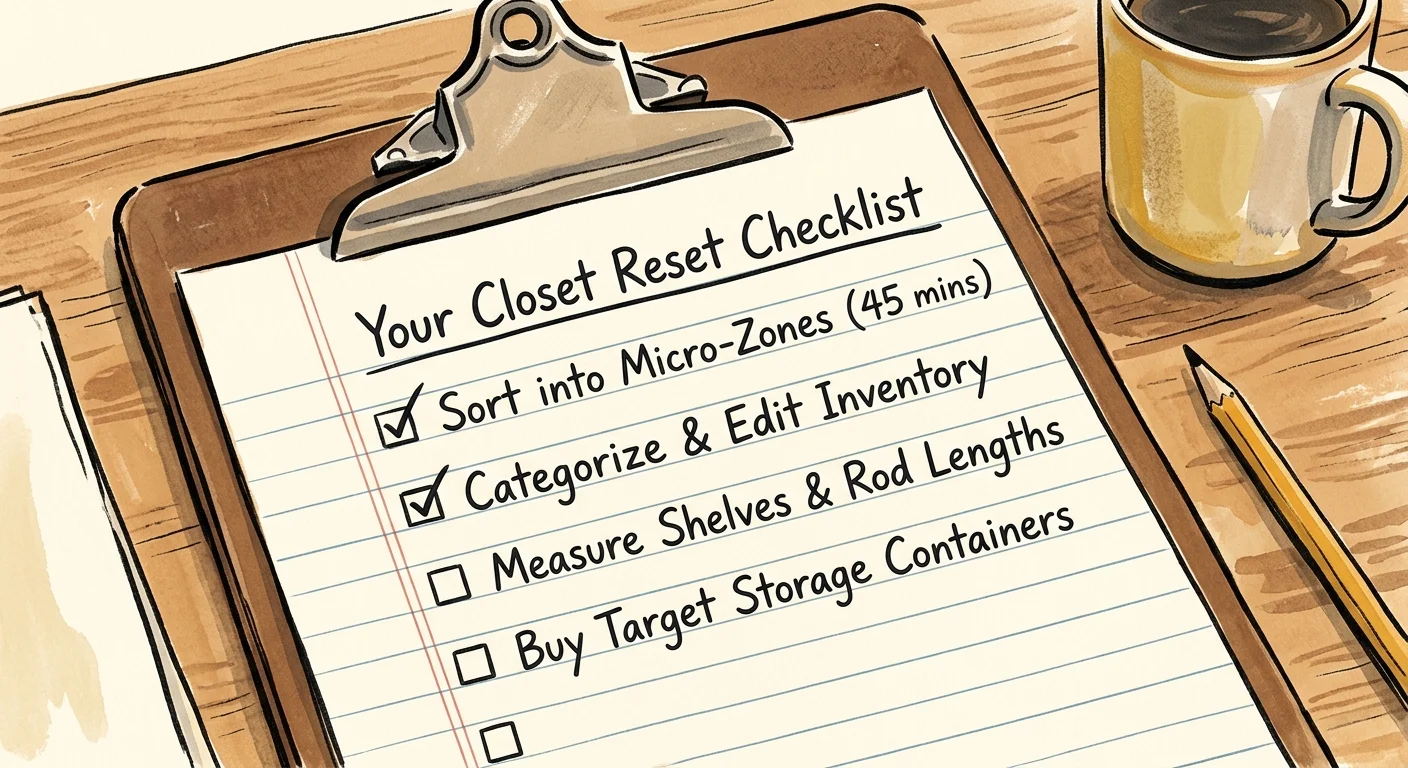
Your Step-by-Step Closet Reset Checklist
Follow this straightforward sequence to complete your closet reset cleanly without losing control of your weekend:
- Gather sorting supplies: Prepare three sturdy containers labeled “Donate,” “Recycle,” and “Quarantine.” Keep a trash bag handy for worn-out items.
- Clear and clean one zone: Start with hanging tops. Empty the rod, wipe down the surface, and vacuum the floor directly underneath.
- Execute the 5-second rule: Pick up each garment once. If you love it and wear it regularly, place it on a quality hanger. If you hesitate, review its fit and comfort immediately.
- Isolate the quarantine items: Place genuine “maybe” items into your quarantine box, write the date 90 days out on the top, and store it out of sight.
- Group by function and length: Return your curated clothes to the rod, grouped by category (jackets, long-sleeve shirts, short-sleeve shirts) so hem lengths align neatly.
- Load the car immediately: Place your filled donation bags directly into your car trunk as soon as the session ends.

Take Your First Small Step Today
You do not need an entire free weekend to create a functional, stress-free wardrobe. Set a timer for 20 minutes today, open your closet doors, and focus exclusively on one simple category—such as your shoe rack or top dresser drawer. Clear out the items that no longer serve you, wipe the shelf clean, and experience how quickly focused, deliberate action brings order to your daily routine.