Your dishwasher should deliver sparkling, sanitized dishes with minimal effort, yet grease, trapped food particles, and hard water minerals quietly accumulate in hidden components over time. When your machine struggles to clean or starts emitting foul odors, running another cycle with extra detergent will not solve the underlying issue. Recognizing the early signs your dishwasher needs deep cleaning protects your appliance investment, lowers utility bills, and ensures your kitchenware remains hygienic. A thorough, methodical cleaning restores water pressure and eliminates harmful fungal buildup, transforming a sluggish, frustrating appliance back into a high-performing workhorse that simplifies your daily kitchen routine.
1. Lingering Unpleasant Odors and Sour Smells
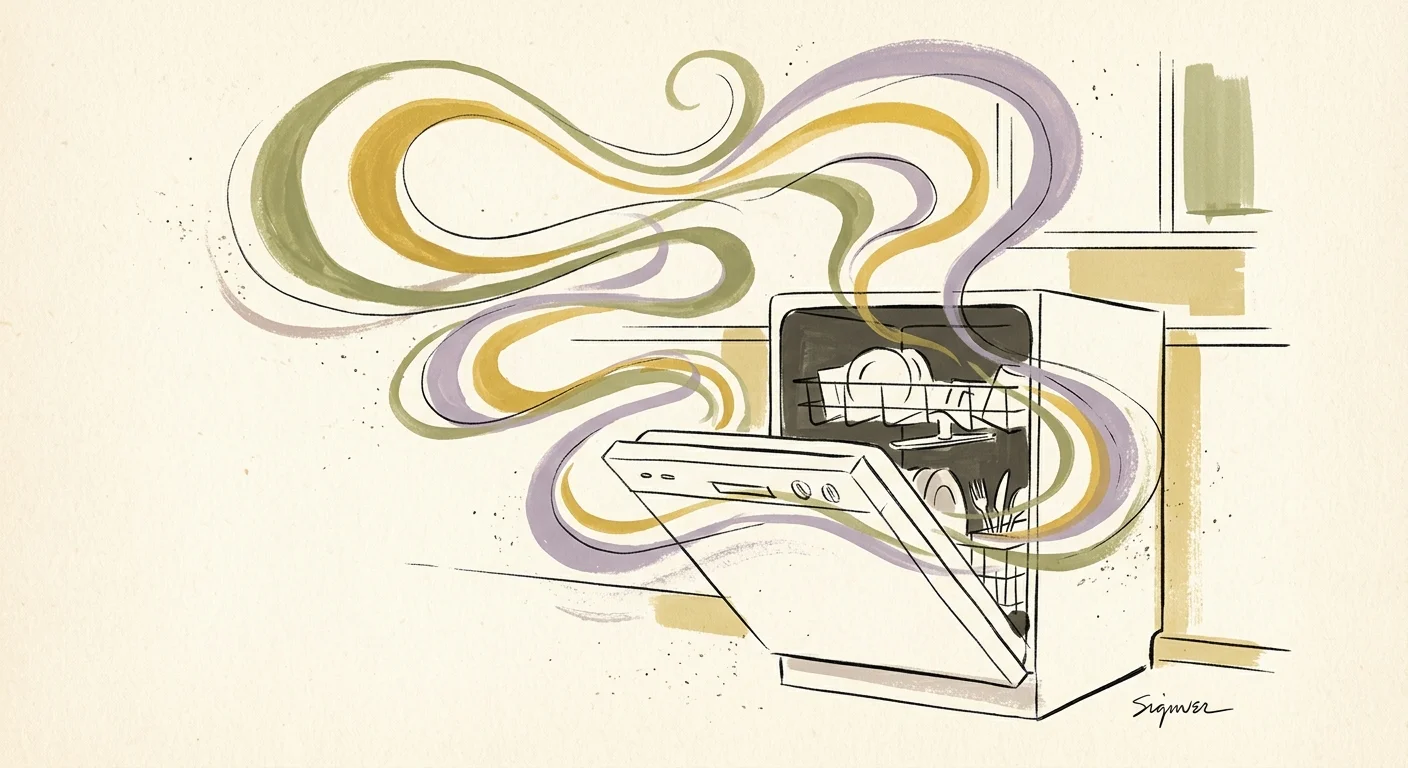
Opening your dishwasher door should release nothing more than clean steam; it should never hit you with a blast of sour, rancid, or fishy air. When foul odors persist after a full wash cycle, decaying organic matter is trapped somewhere in the internal mechanics. Food soils, animal fats, and dairy proteins slip past the racks during drainage and settle into the fine mesh of the filter, the drain sump, and the bottom lip of the door gasket.
Trapped inside a warm, humid environment, these food deposits rapidly decompose, creating ideal conditions for bacterial growth. If you notice a damp, sulfurous, or mildew-like smell, you are dealing with an established biofilm. Masking the scent with commercial rinse aids or scented detergents offers only a temporary cover-up; cleaning a smelly dishwasher requires removing the biological debris directly from the filter screen and internal drainage pathways.
2. Cloudy Glassware and Chalky Mineral Film
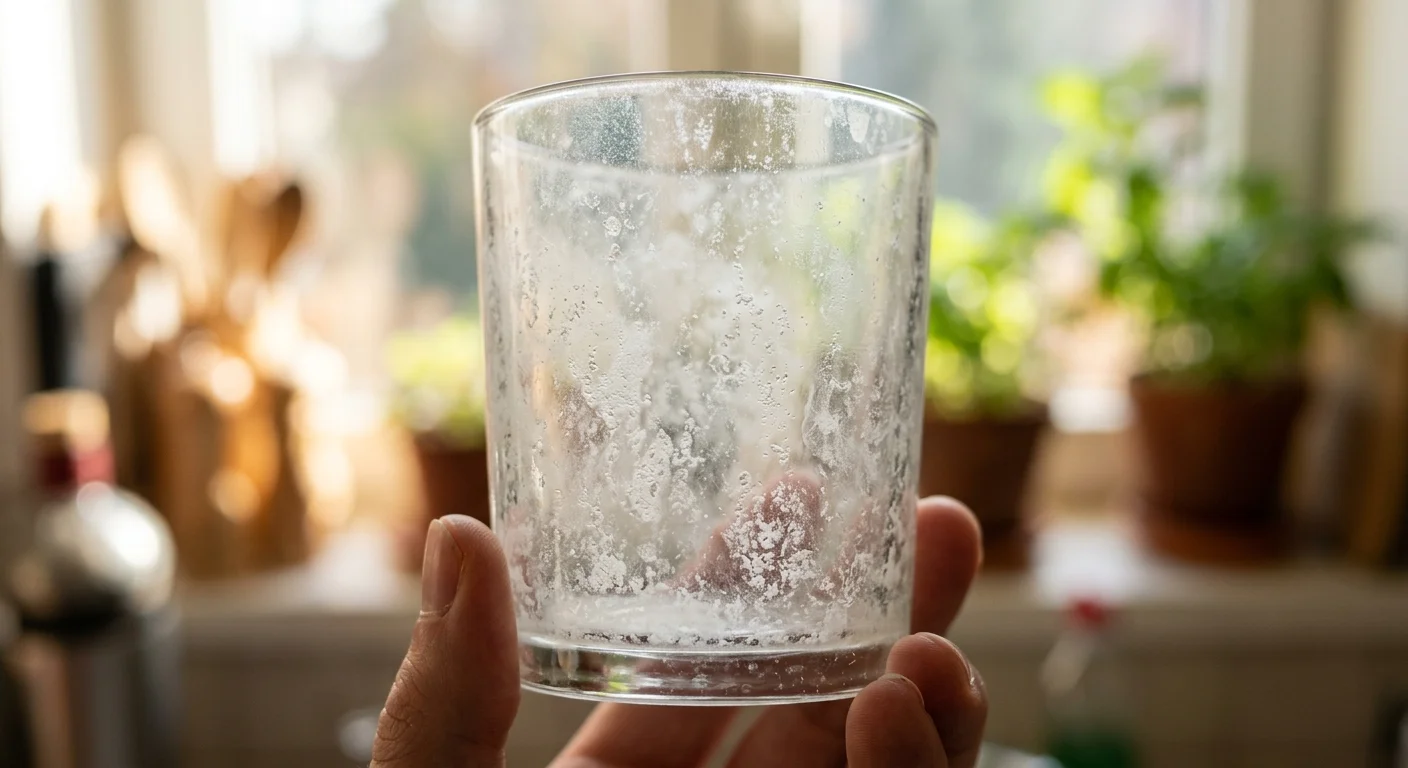
When clear tumblers and wine glasses emerge with a cloudy, white haze, most people assume they need more detergent or a different brand. In reality, that dull film is one of the classic signs of dishwasher buildup. Hard water contains elevated concentrations of dissolved calcium and magnesium ions. Over multiple wash cycles, high heating elements cause these minerals to precipitate out of the water, depositing a stubborn layer of limescale across your dishware and internal tub walls.
Mineral scale also accumulates inside internal plumbing lines, narrowing the water channels and reducing the mechanical force of spray jets. If a simple soak in warm white vinegar clears the cloudy residue from a glass, mineral buildup is the culprit rather than permanent glass etching. Deep descaling restores the interior surfaces and allows detergents to lather and rinse away efficiently.
3. Gritty Food Particles Redepositing on Clean Plates
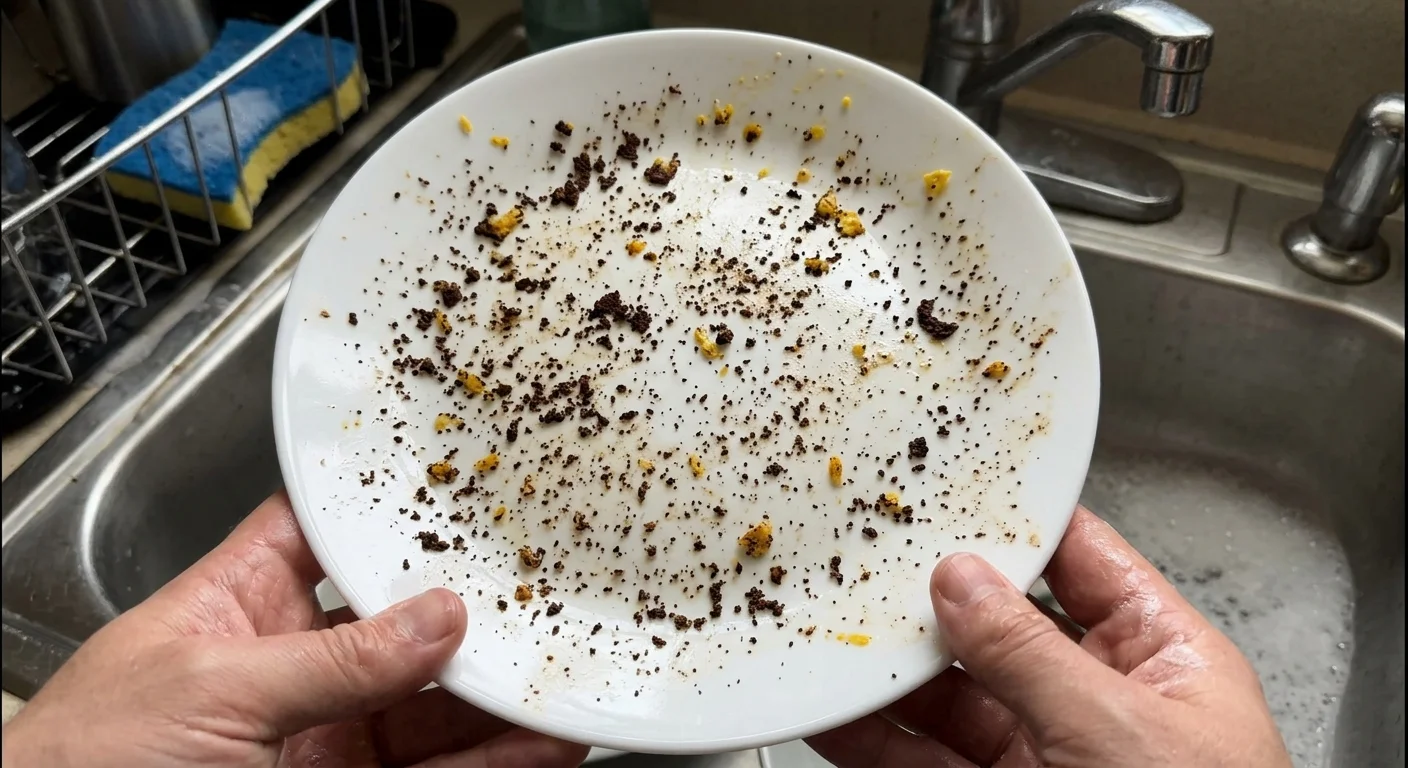
Few things are more frustrating than unloading a finished cycle only to find dried coffee grounds, grain specks, or cheese bits baked onto previously rinsed plates. This problem occurs when the appliance’s circulation system cannot flush away dislodged waste. Modern dishwashers pump wash water continuously through internal filtration screens and back through rotating spray arms.
When the filter mesh fills with debris, water pressure drops, and dirty wash water bypasses the filtration stage. Solid particles then circulate through the spray nozzles, spraying fine food grit directly onto your dishes during the final rinse. If you run your finger across a clean bowl and feel a sandpaper texture, your internal filter and spray nozzles require an immediate, thorough teardown and scrub.
4. Standing Water Pooling Above the Filter Housing
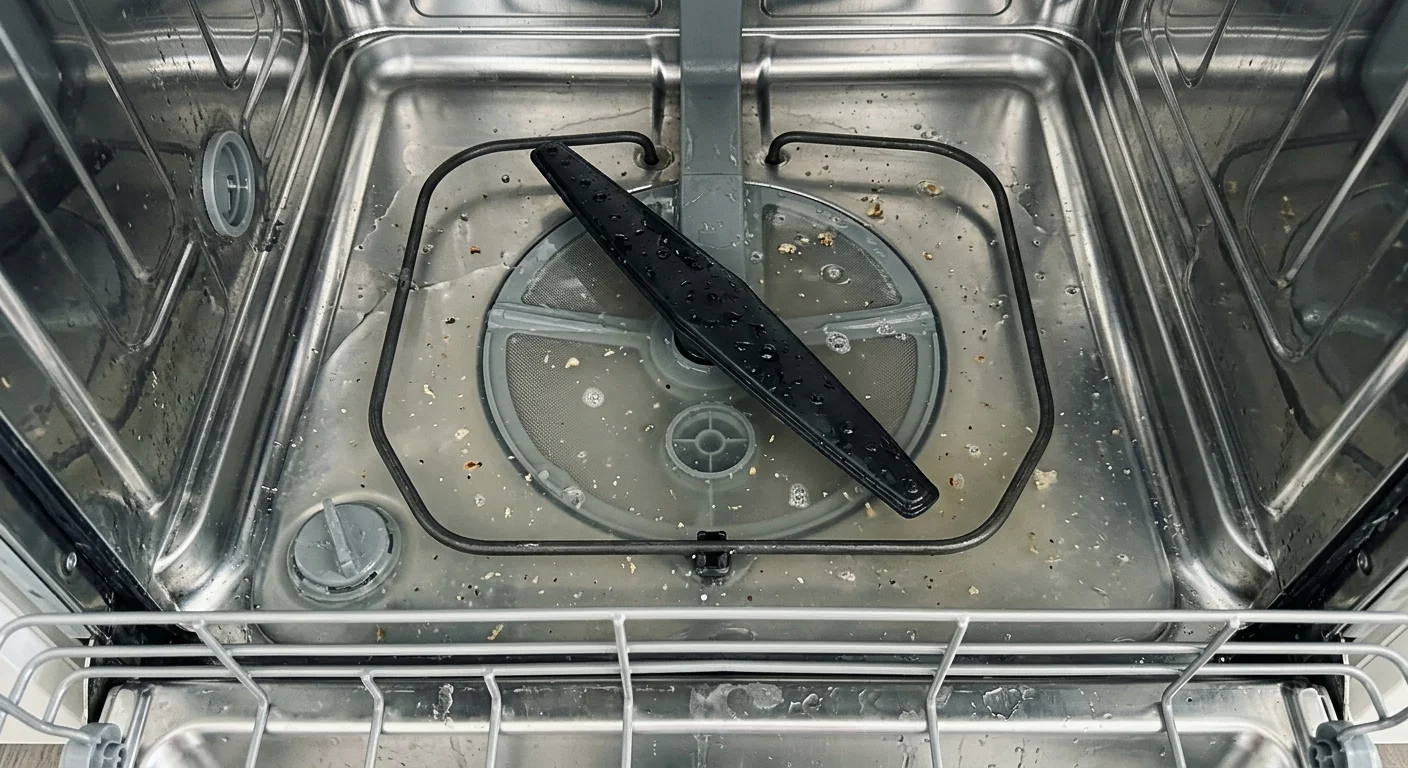
While a tiny reservoir of water underneath the removable filter is normal—it keeps the pump seals lubricated between cycles—water pooling over the tub floor indicates a drainage obstruction. Standing gray water produces foul odors, breeds pathogens, and prevents clean water from cycling through during subsequent washes.
Drainage blockages frequently develop when stray labels, plastic wrappers, toothpicks, or citrus seeds wedge themselves into the check valve or around the drain pump impeller. When debris impedes this pathway, the drain pump strains, leaving stagnant, contaminated water in the basin. Clearing the drain sump and checking the garbage disposal connection restores proper drainage velocity and protects the pump motor from burnout.
5. Black, Green, or Pink Slime on the Door Gasket
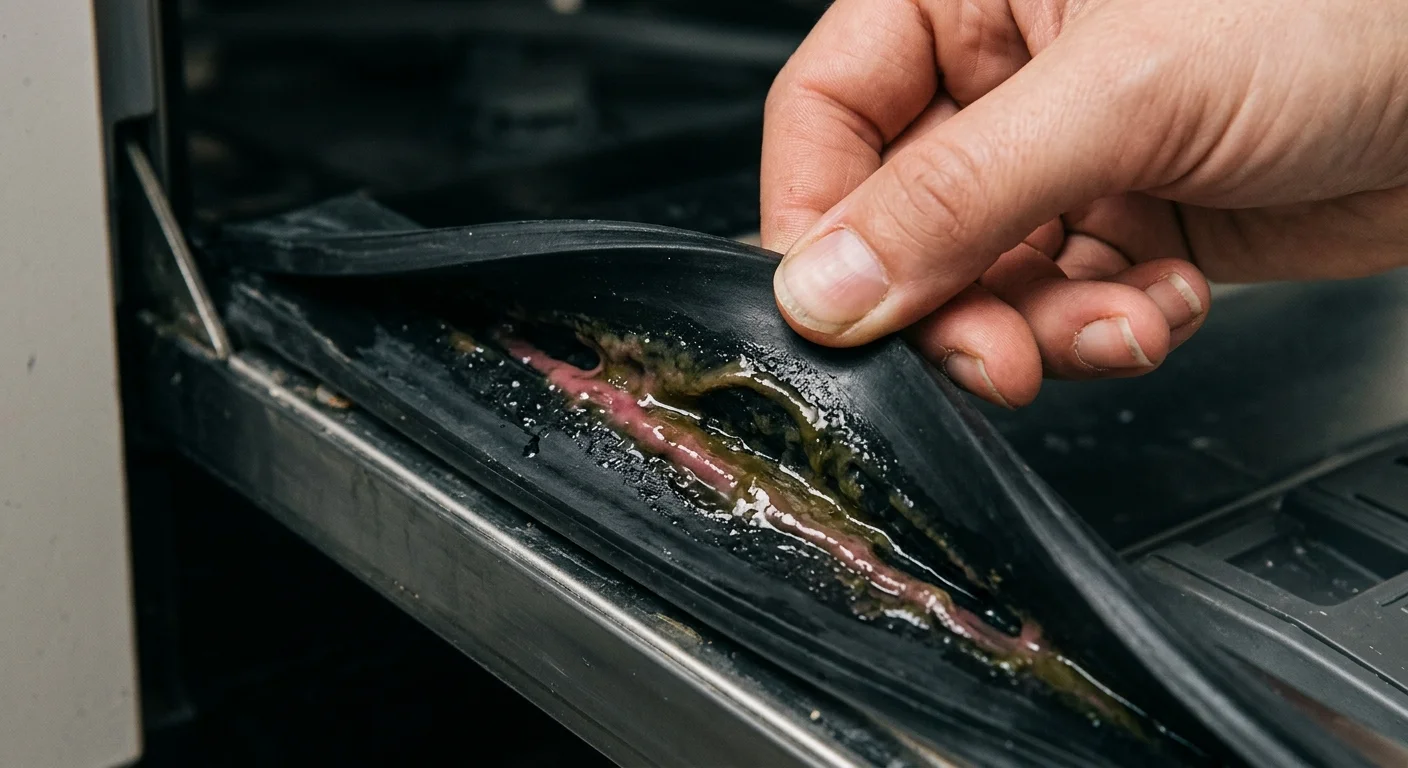
The flexible rubber gasket lining the perimeter of your dishwasher door creates a watertight seal, but its deep folds and hidden crevices collect stray food splatter, soap scum, and moisture. Because the outer edges of the gasket remain outside the direct spray path of high-temperature wash water, they become breeding grounds for mold and opportunistic yeast strains.
Research published by the National Center for Biotechnology Information demonstrates that household dishwashers frequently harbor resilient fungal colonies, including Exophiala and Candida species, primarily along rubber seals. Wiping these seals during a routine wipe-down is rarely enough; you must lift the flexible lip, clear out the slimy biofilm, and disinfect the entire rubber perimeter with an appropriate antimicrobial cleaner.
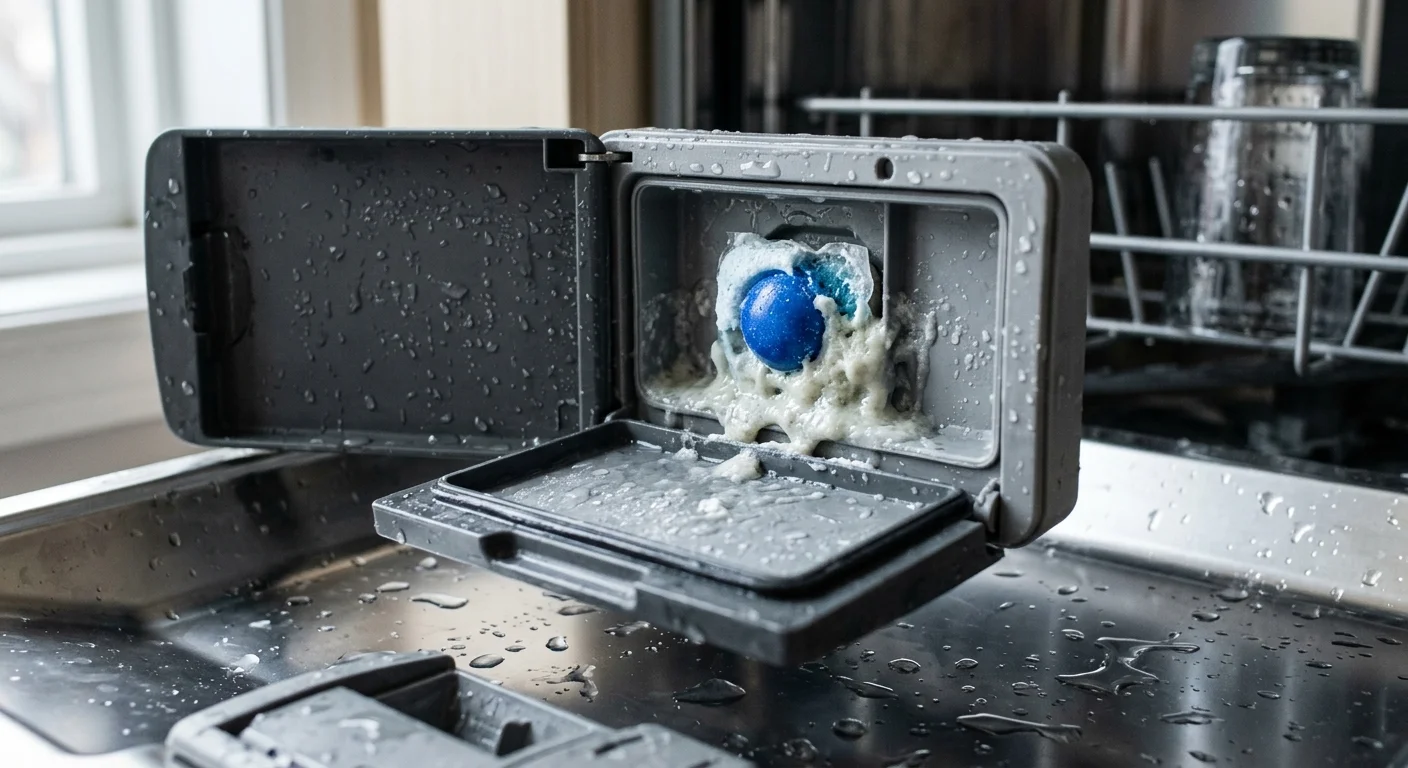
6. Detergent Tablets Remaining Partially Intact
If you open the door at the end of a cycle and find a half-dissolved detergent pod stuck inside the dispenser cup—or lying undissolved at the bottom of the tub—your machine is not distributing water effectively. Modern detergents require uninterrupted exposure to hot water streams to dissolve their outer polyvinyl casing and activate their cleaning enzymes.
Two common deep-cleaning issues cause this failure:
- Clogged spray arm jets: Limescale or food debris jams the small nozzles that specifically point toward the dispenser door, starving the pod of water flow.
- Crusted latch mechanisms: Old, dried detergent residue builds up around the spring-loaded dispenser door hinge, preventing it from snapping open at the correct stage of the cycle.

7. Rust Specks, Staining, and Greasy Tub Walls
Stainless steel and molded plastic tubs should maintain smooth, clean walls. If you run a clean cloth along the interior walls and it comes away with a greasy, yellowed film, animal fats and insoluble soap curds have coated the interior. Over time, this fatty layer traps odors and harbors bacteria.
Similarly, reddish-brown stains or orange discoloration indicate high iron levels in your municipal water supply or deteriorating internal components. Left unaddressed, mineral oxidation pits stainless steel surfaces and weakens heating element brackets. Deep descaling with food-grade citric acid dissolves these iron deposits without damaging the internal metal housing.
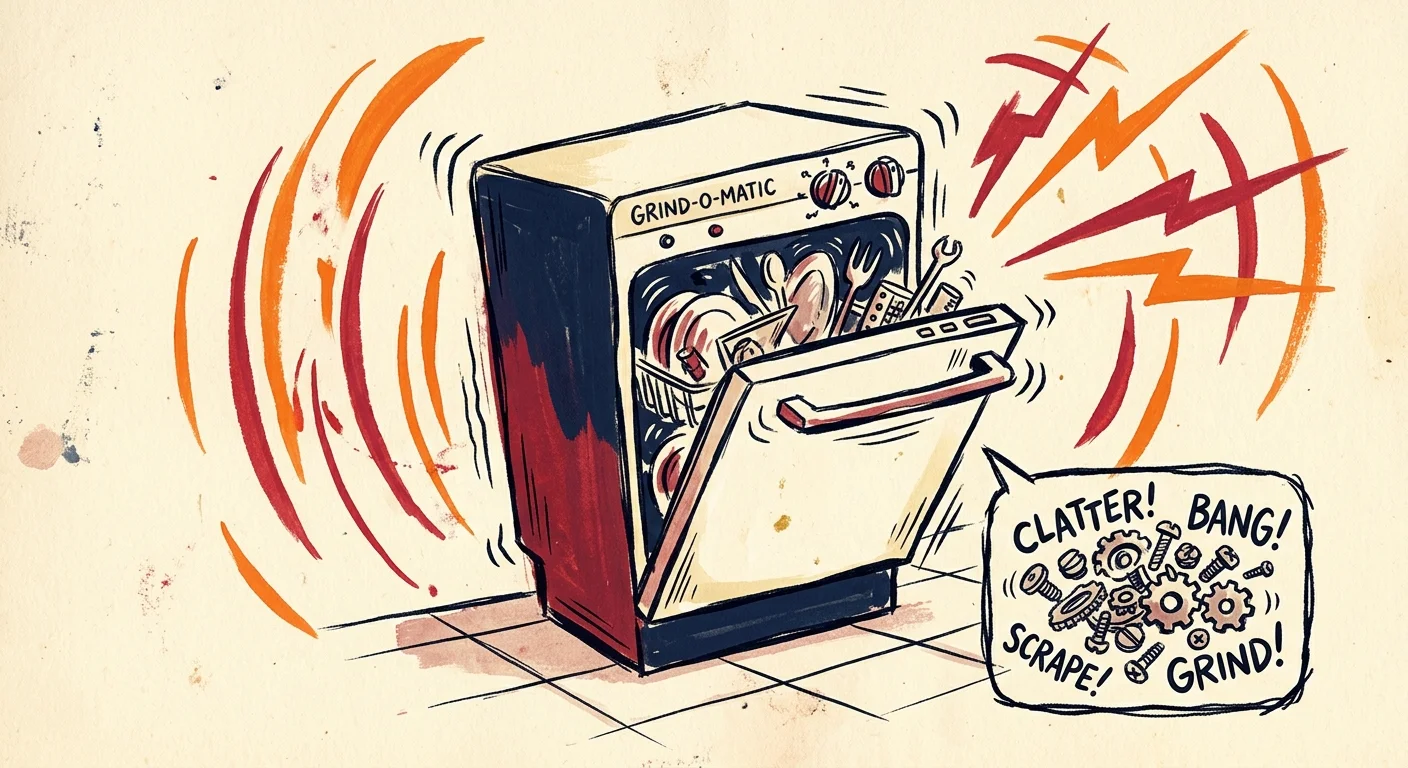
8. Unusual Humming, Grinding, or Rattling Noises
While dishwashers make predictable swooshing and humming sounds, sudden changes in operational noise indicate mechanical stress. A loud grinding sound during the drain phase often means a hard object—such as a small fruit pit, broken glass shard, or chicken bone—has bypassed the coarse filter and entered the chopper blade or impeller housing.
A low, strained buzzing sound suggests the circulation pump is struggling to pull water through a heavily obstructed filter screen. Ignoring these auditory clues causes premature motor failure; disassembling the lower filter assembly and clearing foreign objects prevents costly mechanical breakdowns and restores quiet operation.
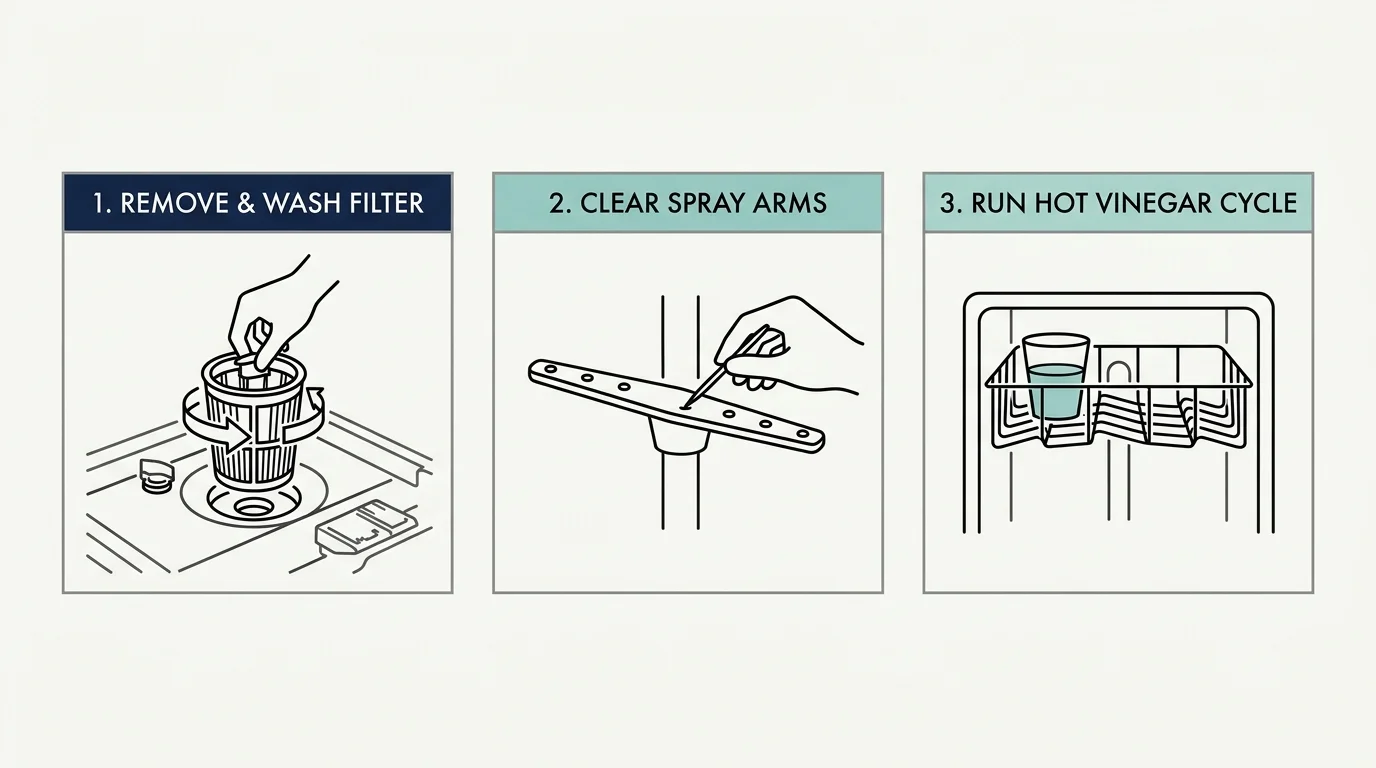
The Step-by-Step Dishwasher Deep Clean Guide
Restoring your appliance does not require harsh industrial chemicals or expensive service calls. Following this methodical dishwasher deep clean guide clears internal clogs, neutralizes odors, and optimizes wash performance in under an hour of active hands-on time.
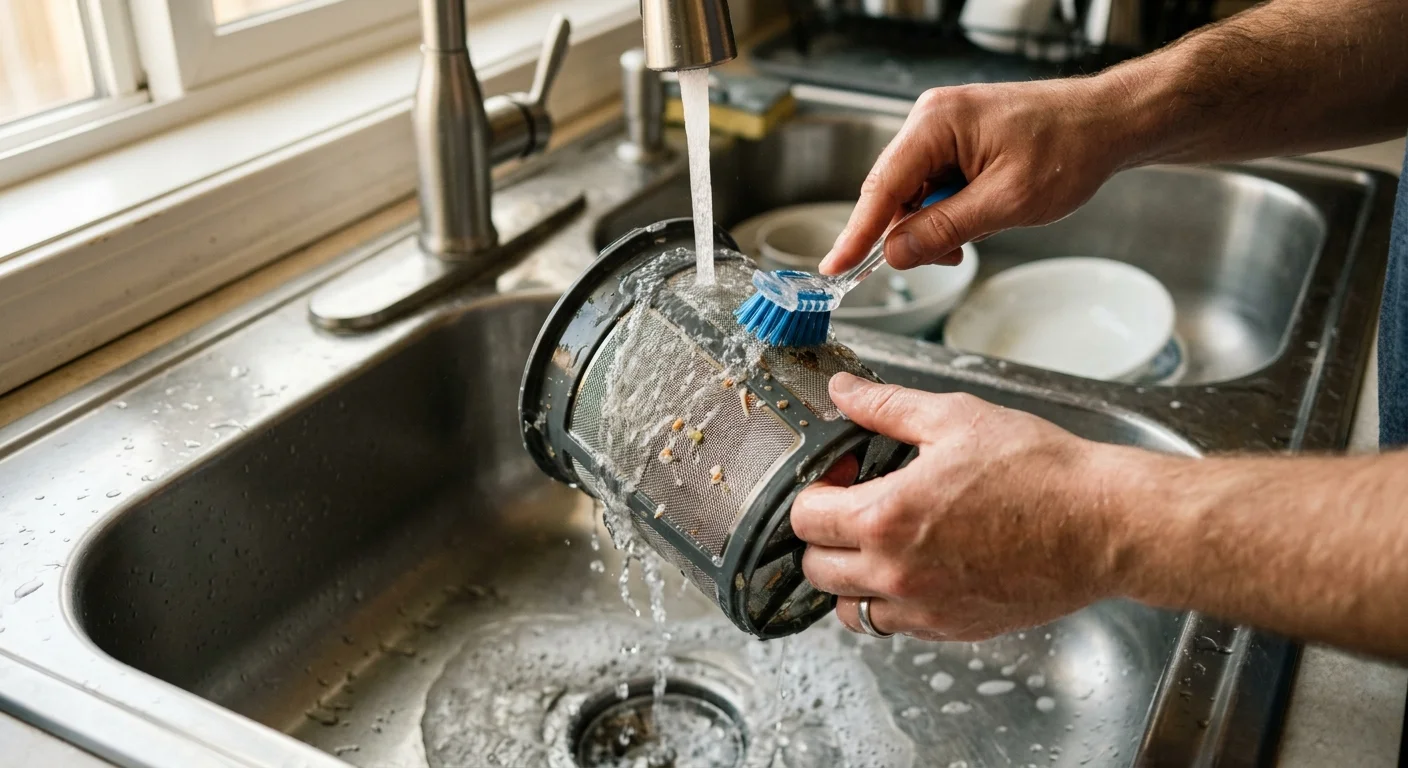
- Extract and clean the filter assembly: Rotate the cylindrical filter at the base of the tub counterclockwise and pull it straight up. Separate the fine mesh screen from the coarse plastic frame. Soak both pieces in warm, soapy water for 10 minutes; then gently scrub the mesh with a soft-bristle nylon brush to dislodge trapped grease and calcium. Rinse thoroughly under running water before reinstalling.
- Clear the spray arm nozzles: Unclip or unscrew the upper and lower spray arms. Inspect each tiny nozzle hole for calcified mineral deposits, seeds, or debris. Use a wooden toothpick or a straightened paperclip to push obstructions out of the jets, flush the arms under a strong stream of tap water, and verify that water flows freely through all outlets.
- Sanitize the door gasket and hinges: Mix two cups of warm water with a squirt of dish soap or mild oxygen bleach. Dip an old toothbrush into the solution and scrub beneath the rubber gasket folds, around the door edges, and across the bottom hinges where food splatters accumulate. Wipe dry with a clean microfiber cloth.
- Run an acidic hot-water descaling cycle: Place a dishwasher-safe bowl containing two cups of distilled white vinegar upright on the top rack of an empty machine. Run a complete cycle on the hottest wash setting available (such as “Pots & Pans” or “Sanitize”). The acid breaks down hard water limescale, cuts grease, and washes away loose mineral scale.
- Run an alkaline deodorizing cycle: Sprinkle one cup of pure baking soda evenly across the floor of the empty tub. Run a short, hot cycle to neutralize residual acidic odors, lift remaining surface stains, and leave the interior smelling fresh and clean.
For certified eco-friendly cleaning formulas that protect your appliance seals, consult products verified under the EPA Safer Choice standard, which confirms both human and material safety.
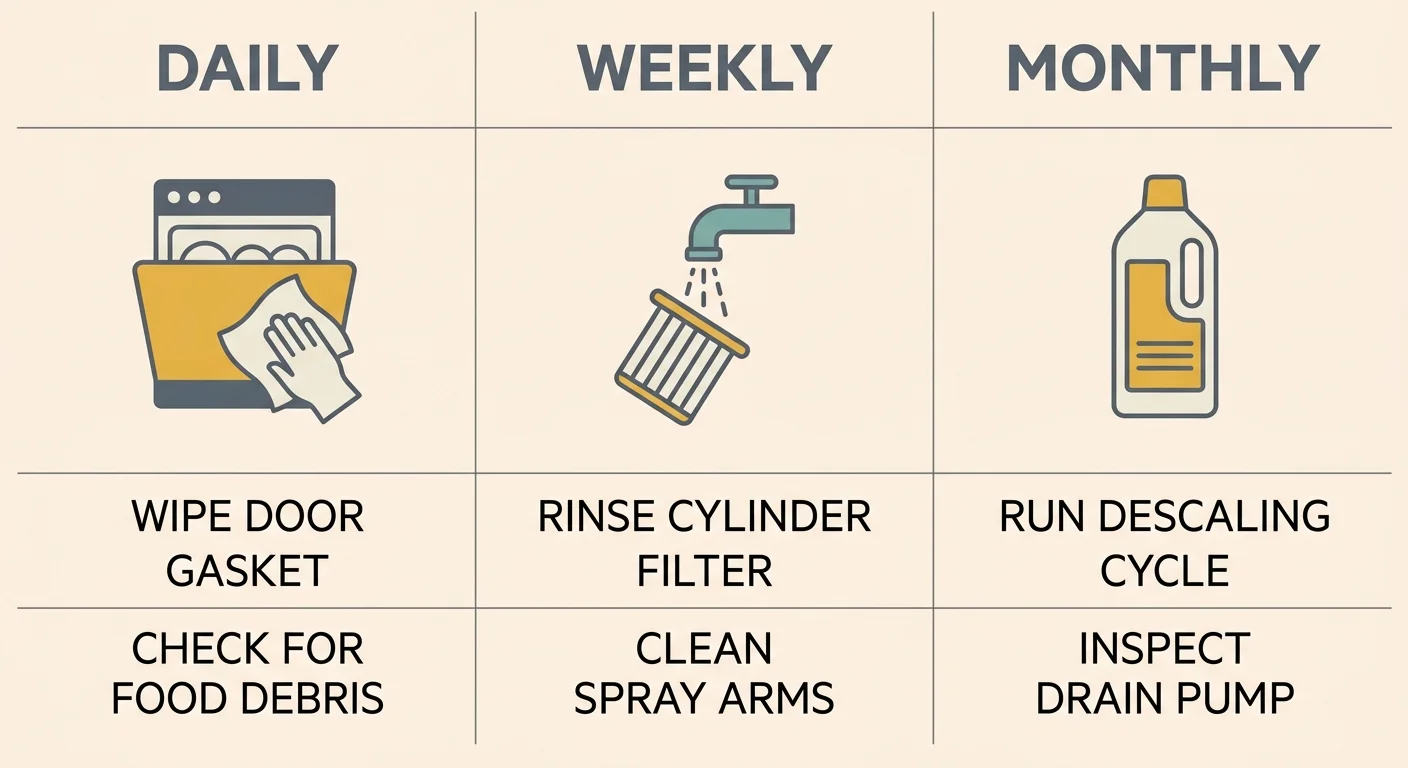
Dishwasher Maintenance Frequency Guide
Preventing buildup requires consistent, small actions rather than waiting for your machine to fail. Use this practical schedule to keep your dishwasher running at peak efficiency:
| Frequency | Maintenance Task | Primary Benefit |
|---|---|---|
| After Every Load | Scrape large food scraps off plates; avoid pre-rinsing unless required by older detergents. | Prevents large debris from overwhelming the filter assembly. |
| Weekly | Inspect and rinse the cylindrical filter under warm tap water; wipe the door perimeter. | Stops mold colonization and eliminates odor-causing bacteria early. |
| Monthly | Run a hot descaling cycle with white vinegar or an appliance-grade descaling tablet. | Dissolves limescale deposits and maintains high water pressure. |
| Quarterly | Remove spray arms to clear nozzle jets; deep clean the drain sump and rubber gaskets. | Ensures balanced water distribution and prevents motor strain. |
Preventive Dishwasher Maintenance Tips for Effortless Care
Maintaining an appliance requires less effort than repairing one. By adjusting a few daily kitchen habits, you can dramatically reduce the rate of internal grime accumulation and extend the service life of your machine.
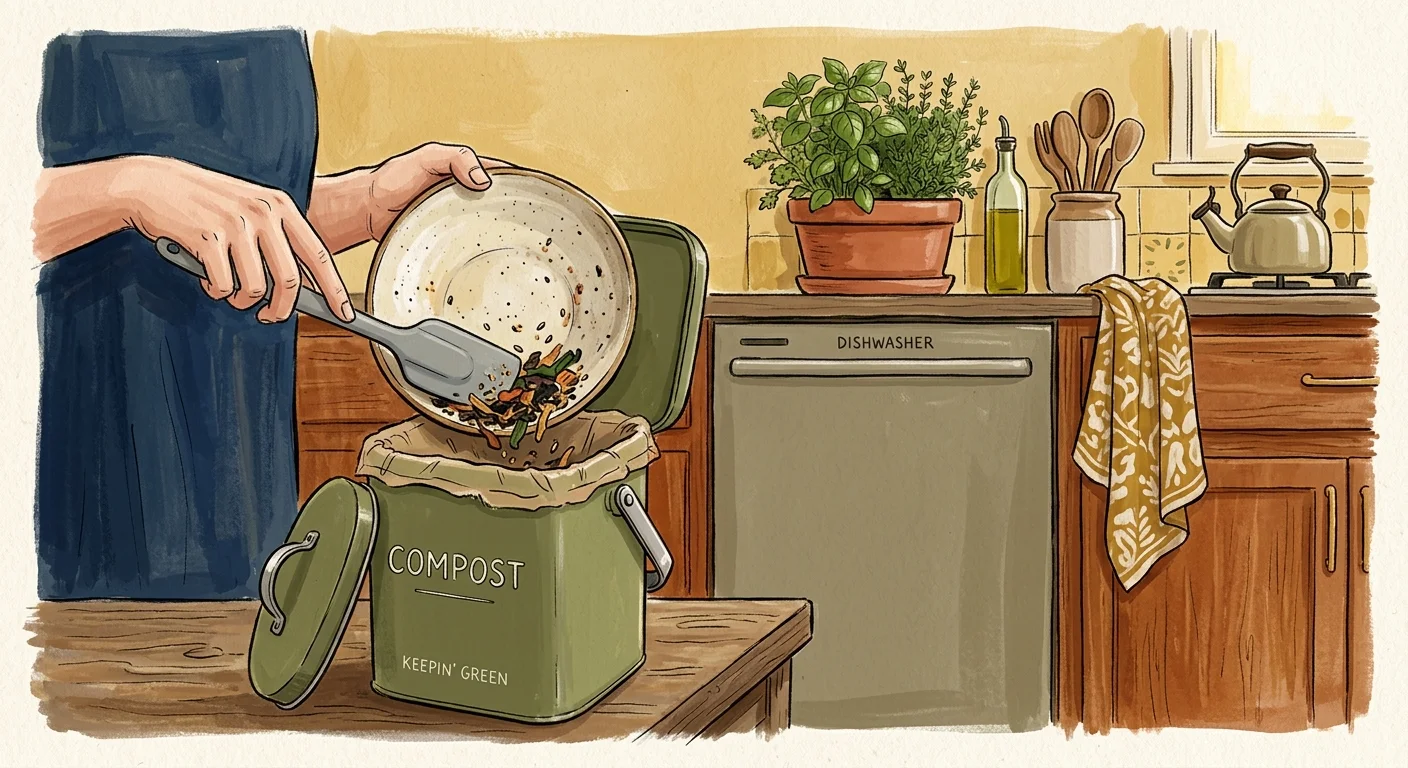
First, always scrape solid food into the trash or compost bin, but skip the thorough pre-rinsing step. Modern enzyme-based detergents actually require food soils to activate properly; without starches and proteins to break down, the harsh alkaline formulas foam excessively and contribute to cloudy glass corrosion. Authoritative testing from Consumer Reports confirms that scraping plates clean without pre-washing saves thousands of gallons of water annually while maintaining optimal cleaning results.
Second, prime your kitchen sink before starting your machine. Turn on the hot water faucet at your sink until the water runs steaming hot; then start your dishwasher cycle. Most residential units rely on internal heating elements that raise water temperature gradually; starting with hot water ensures the first wash phase immediately dissolves detergent and melts away animal fats.
Finally, optimize appliance efficiency by maintaining proper water heater settings and ensuring complete cycle ventilation. According to Energy Star appliance guidelines, setting your home water heater to 120°F (49°C) provides the ideal balance between energy efficiency, thermal cleaning performance, and sanitation. After each cycle completes, prop the dishwasher door open two to three inches for 30 minutes; this allows humid air to escape and prevents the stagnant conditions that cultivate mold along the gaskets.
Your Next Practical Step
Do not wait until dirty dishes force an emergency repair. Walk into your kitchen right now, pull out your dishwasher’s bottom rack, twist the cylindrical filter out of the tub floor, and rinse it under warm water. Taking this five-minute action immediately improves water circulation and sets your appliance up for flawless, hygienic performance on your very next load.