You do not need a cavernous linen closet to keep your bathroom organized, functional, and visually calm. Reclaiming wasted space around your toilet, sink, and shower walls allows you to store daily essentials exactly where you need them without creating countertop clutter. Homes with limited square footage simply require smarter vertical storage strategies instead of standard bulky cabinets. By utilizing over-the-toilet shelving, recessed wall cavities, and rust-proof tension poles, you can easily triple your available storage capacity. This guide delivers practical, tested methods for organizing small bathrooms, from maximizing cabinet depth to securing floating shelves properly. Implement these setups to turn your cramped bathroom into a highly efficient space, ensuring every towel, bottle, and tool has a dedicated home.
Maximize the Wall Space Above Your Toilet
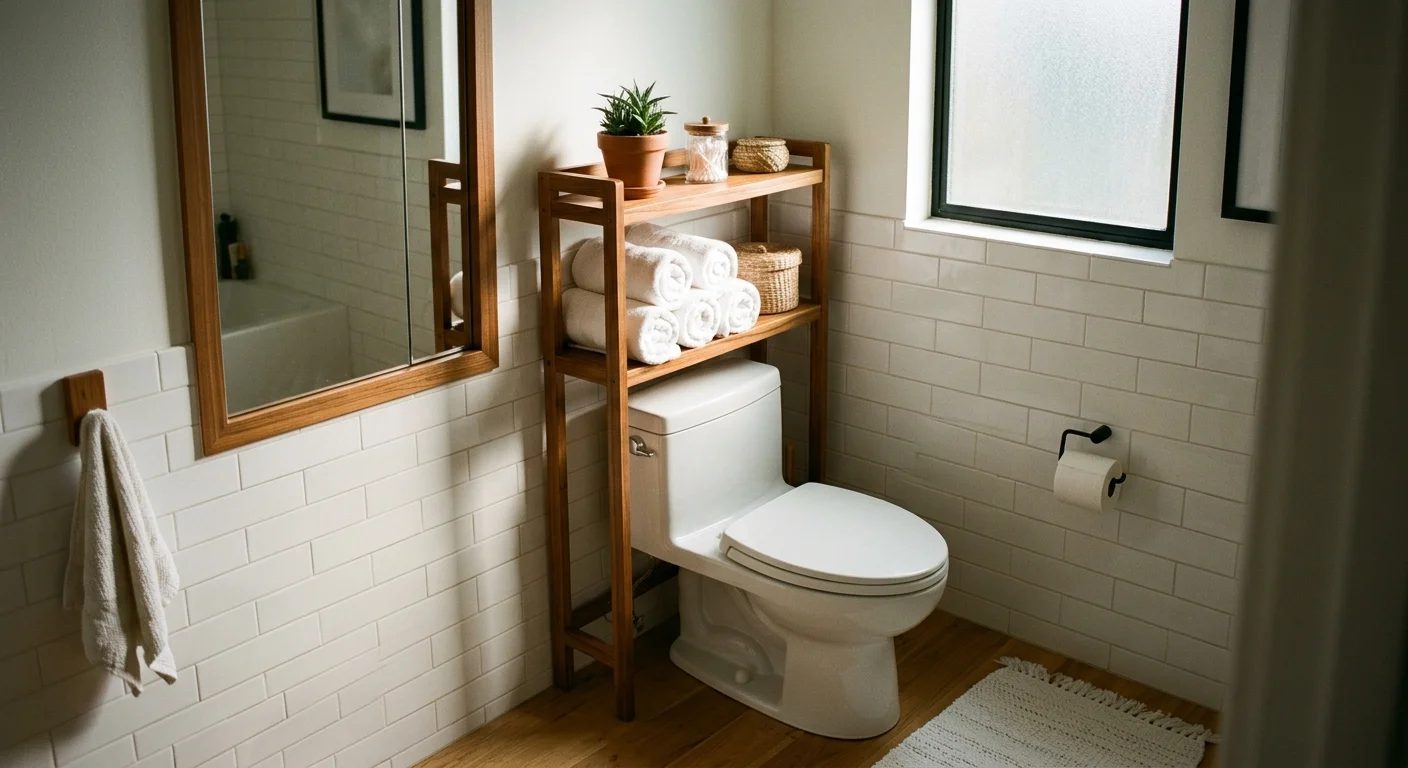
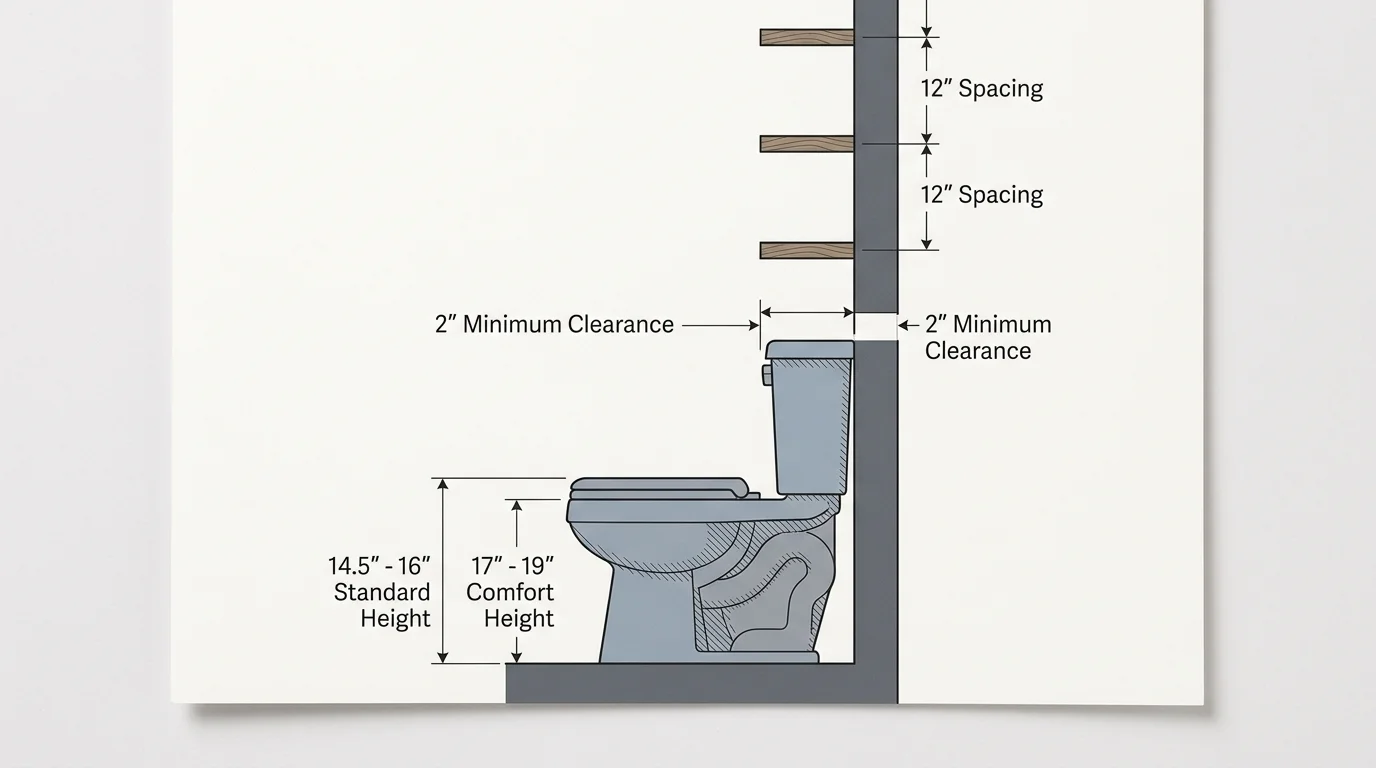
Often the largest blank canvas in a small bathroom remains completely untouched simply because it sits above the plumbing. Standard toilet bowl heights range from 14.5 to 16 inches from the floor, while comfort height models sit closer to 17 to 19 inches. Once you add the height of the water tank, you typically have a massive expanse of upper wall available for vertical storage. Over-the-toilet étagères or wall-mounted shelving units bridge this spatial gap perfectly, giving you a functional zone for items you need within arm’s reach.
When installing a unit, measure the total height from the floor to the top of your tank’s flush button to ensure adequate clearance. Leave at least a two-inch gap between the tank lid and the bottom shelf so you can easily access the plumbing if a repair is ever necessary. Use the lower shelves for extra toilet paper rolls stored in lidded woven baskets, which protects the paper from ambient moisture and dust. Reserve the upper shelves for neatly folded hand towels and small glass apothecary jars filled with cotton swabs. If you prefer a built-in look over a freestanding metal rack, install individual wooden shelves spaced twelve inches apart directly into the wall studs; this provides a custom, elevated appearance while delivering the exact same vertical storage benefits.
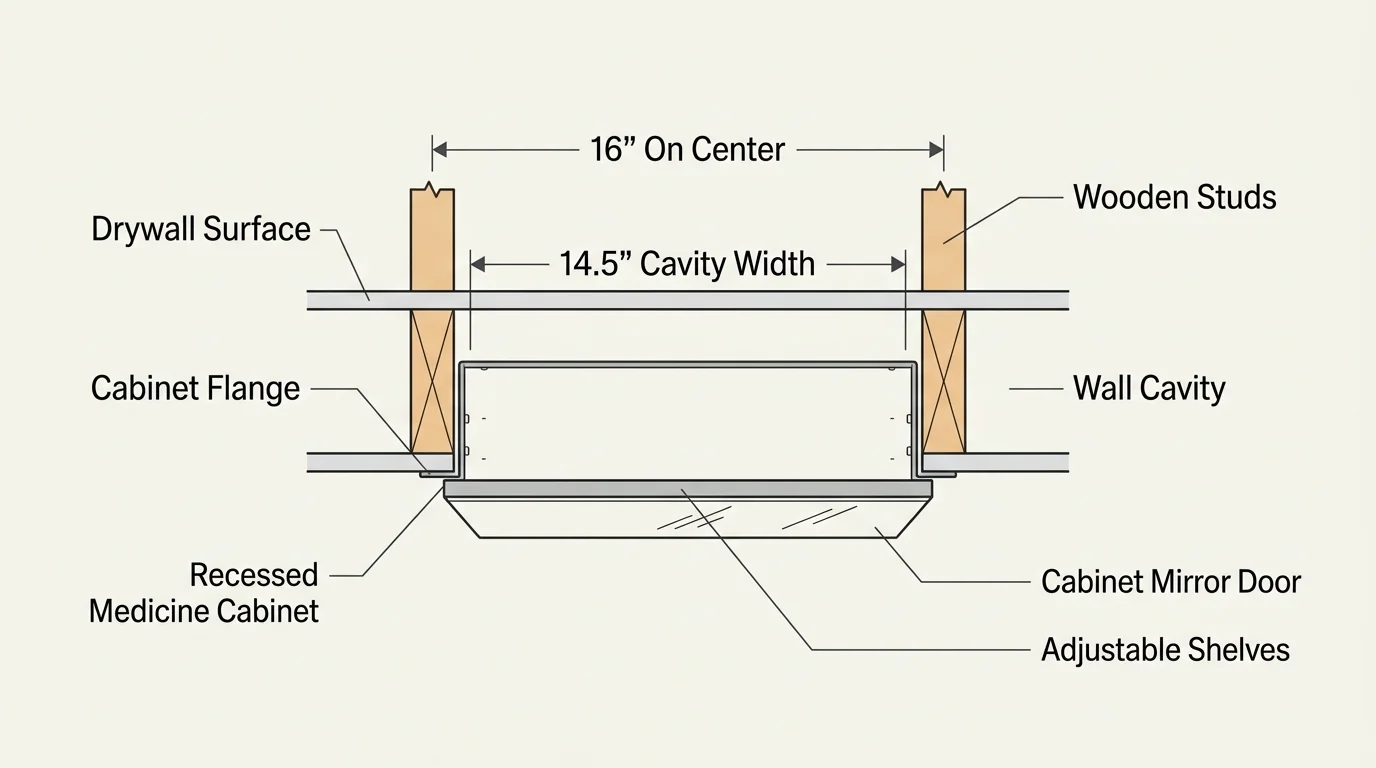
Install a Recessed Medicine Cabinet Between Wall Studs
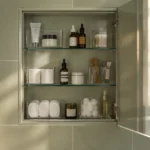
Standard surface-mounted medicine cabinets jut out over the sink and cast dark shadows, making a tight space feel even more cramped and claustrophobic. Recessed medicine cabinets, on the other hand, embed directly into the drywall to sit flush against the wall surface. Most residential wall studs are spaced 16 inches on center, leaving a hollow cavity roughly 14.5 inches wide. Many modern recessed medicine cabinets are specifically manufactured to slip perfectly into this standard gap, completely eliminating the need to cut into load-bearing wood.
Use a high-quality stud finder equipped with AC wire detection to locate the left and right beams above your sink and ensure no hidden electrical wires cross your path. Trace the cabinet’s rough opening template onto the wall, and carefully cut out the drywall with a manual keyhole saw. Once slotted in and screwed securely to the flanking studs, this fixture provides deep, hidden storage for medications, heavy skincare bottles, and daily dental gear, effectively clearing off the sink ledge entirely. Adjust the internal glass shelves to accommodate your tallest bottles, placing daily-use items at eye level and occasional products near the very top. By pushing your storage into the wall itself, you gain valuable inches of breathing room while drastically upgrading the room’s overall aesthetic.
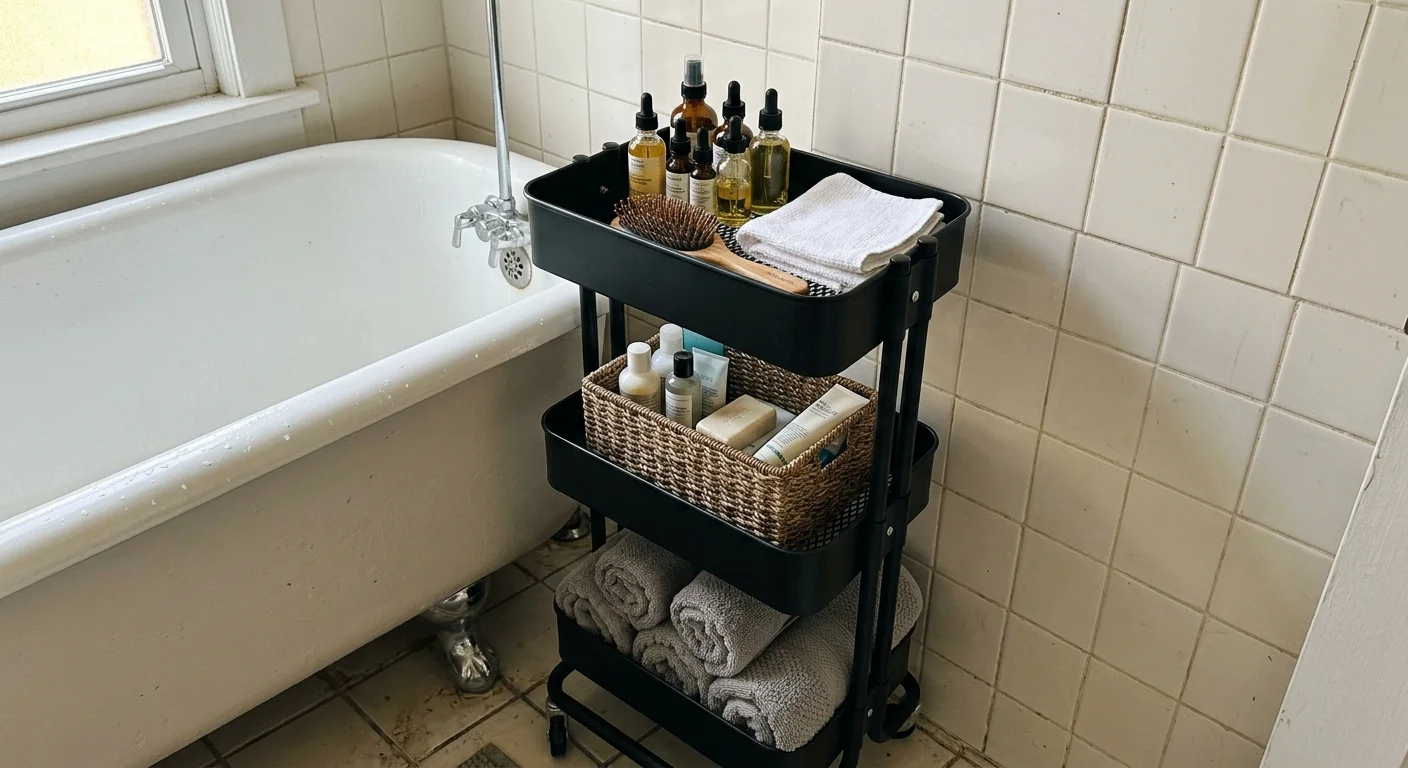
Utilize a Rolling Utility Cart for Flexible Storage
Metal tiered utility carts excel in bathrooms lacking built-in cabinetry because they slide effortlessly into narrow, awkward gaps between the vanity and the bathtub. A three-tier rolling cart acts as a highly mobile, miniature linen closet. Dedicate the top tier to your daily skincare routine and makeup, the middle tier to spare hand towels and rolled washcloths, and the bottom tier to bulkier items like backup shampoo bottles, heavy lotions, or a hairdryer.
Because bathrooms generate significant steam, the environment will quickly corrode cheap metals. Always select a cart made from rust-resistant materials like 304-grade stainless steel or solid brass, rather than standard painted iron. Alternatively, heavy-duty molded plastic carts offer complete immunity to water damage and are incredibly easy to clean. If you do utilize a coated metal cart, wipe it dry periodically and apply a moisture-displacing product like WD-40 to the hardware joints to create a protective barrier against rust. Roll the cart out when you need to access your morning supplies, and push it back into its designated corner when you finish to keep the floor plan completely open and easily navigable.
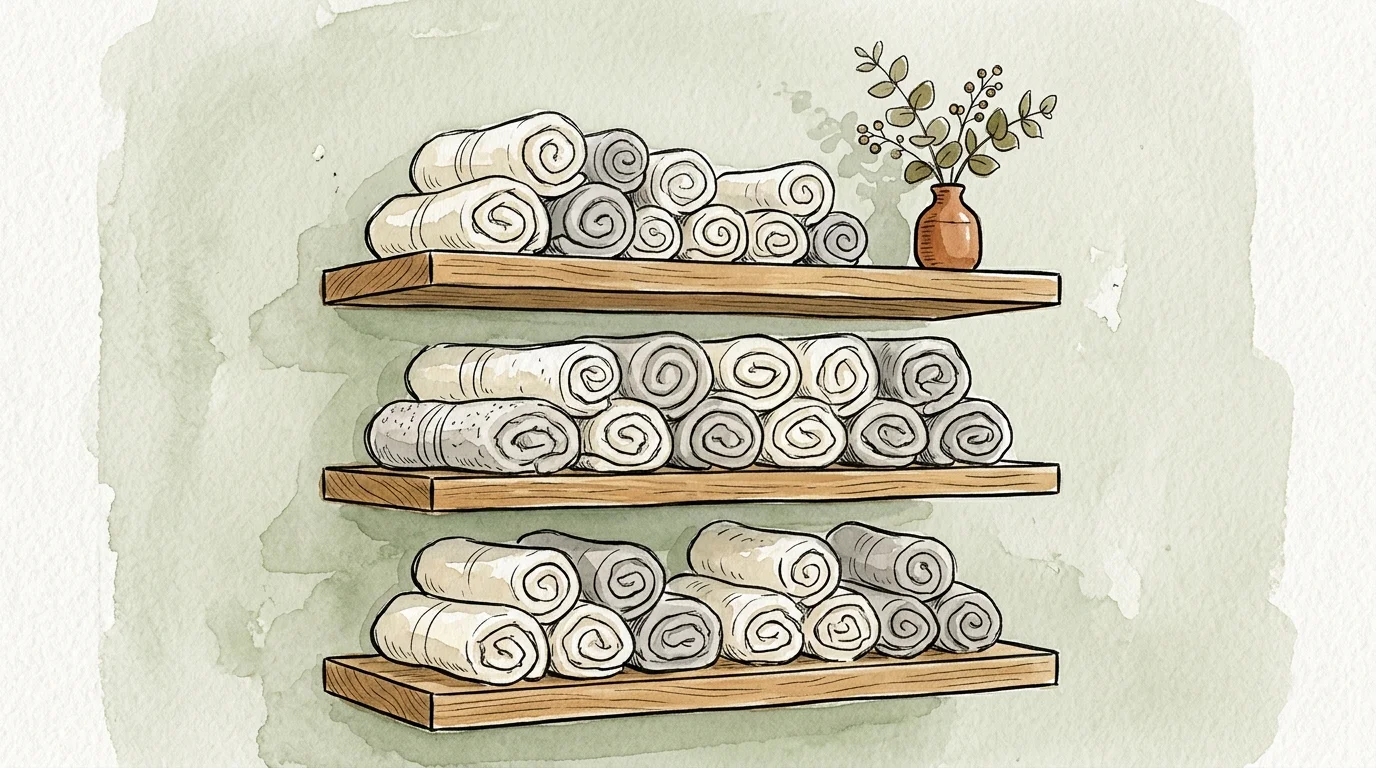
Mount Floating Wall Shelves for Rolled Towels
Floating shelves utilize empty corners and the often-ignored wall space directly above your bathroom door. To safely store heavy stacks of damp bath towels, you must secure these shelves correctly; never rely on the cheap plastic drywall anchors included in most shelf kits. Instead, anchor the mounting brackets directly into wood studs using two-inch screws. If stud placement does not align with your desired shelf location, you must upgrade to heavy-duty toggle bolts to prevent the shelf from ripping out of the drywall.
A single high-quality toggle bolt can hold upwards of 70 to 143 pounds in standard half-inch drywall. Toggle bolts feature metal wings that snap open completely behind the drywall, clamping the shelf securely to the wall surface and preventing the bracket from sagging over time under the weight of wet cotton. Once installed safely, roll your bulky bath towels tightly like a yoga mat. This military-style rolling technique condenses the fabric, allowing you to stack four or five large towels on a single compact shelf. It mimics a high-end spa aesthetic while completely eliminating the need for a traditional, space-hogging linen closet.
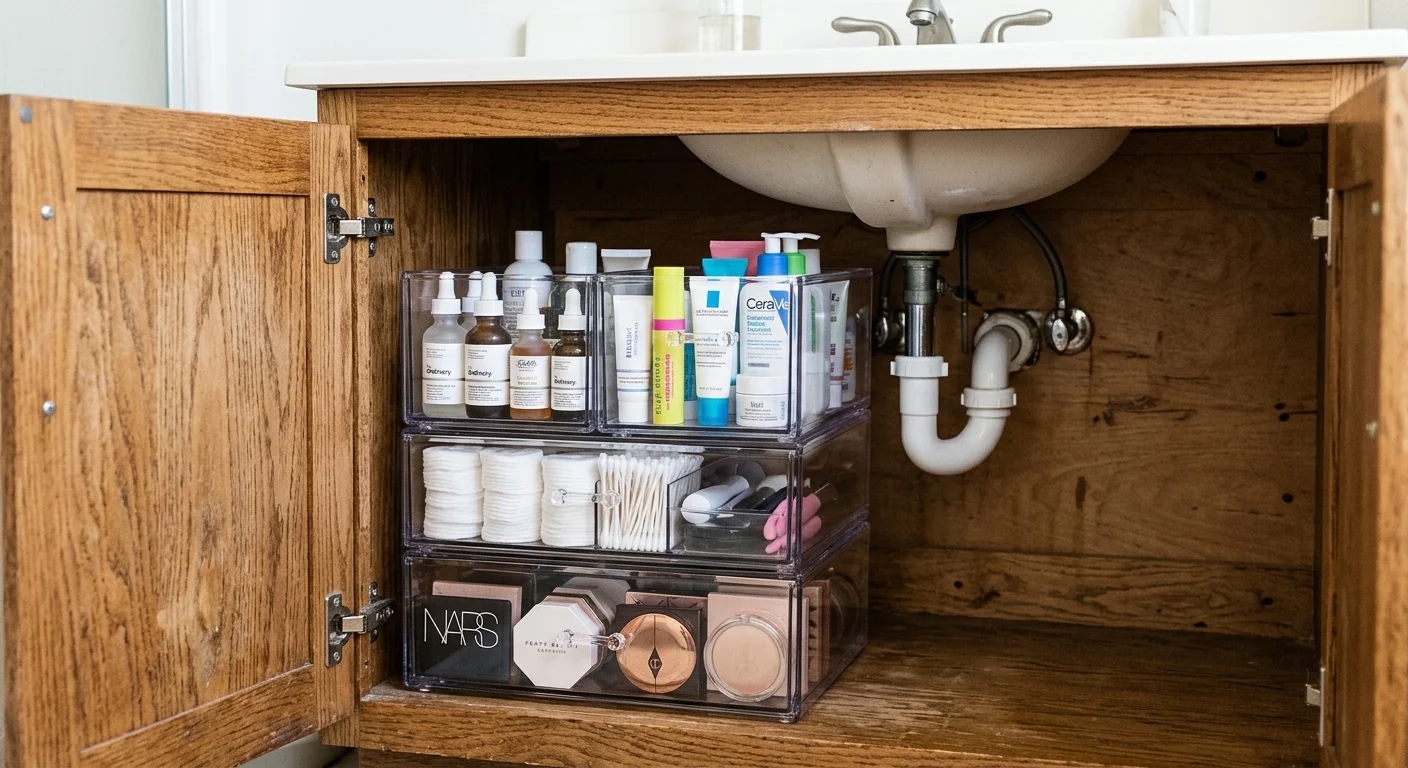
Stack Clear Acrylic Drawers Inside Your Bathroom Vanity
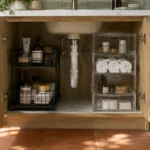
The cabinet underneath the bathroom sink is notoriously difficult to organize due to the awkward plumbing pipes running straight down the middle. This dark space often becomes a disorganized graveyard for loose sponges, half-empty lotion bottles, and tangled electrical cords. You can transform this dark cavern by measuring the exact clearance from the cabinet floor to the lowest hanging plumbing pipe, known as the P-trap.
Purchase clear acrylic, stackable pull-out drawers designed specifically to fit these tight dimensions. Clear drawers allow you to see exactly what you own without bending down and rummaging through opaque bins. Stack two drawers on the left side of the plumbing and two on the right. Dedicate one drawer strictly to first-aid supplies, another to dental care, and a third to travel-sized toiletries. Label the front of each drawer with a crisp white marker or a mechanical label maker to ensure everyone in the household knows where items belong. Because acrylic is entirely waterproof, it protects your supplies from minor plumbing leaks or condensation. For taller items like hairspray or cleaning sprays that cannot lay flat in a drawer, use a narrow lazy Susan placed in the very front of the cabinet to maximize quick accessibility.
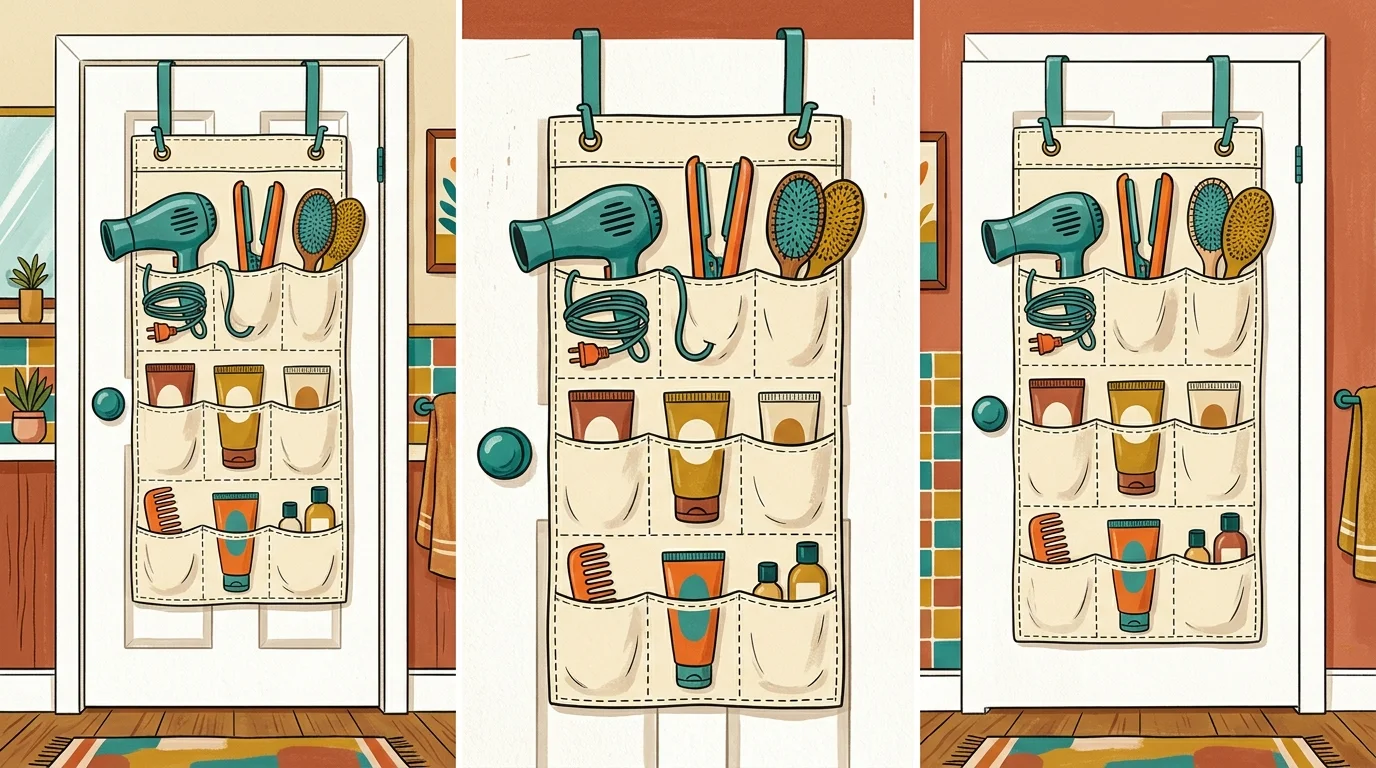
Repurpose an Over-the-Door Organizer for Grooming Tools
The back of your bathroom door offers nearly twenty square feet of unused vertical real estate. A hanging pocket organizer—typically marketed for closet shoe storage—serves as an exceptional storage system for awkward, bulky bathroom items. Select an organizer made of breathable mesh or heavy-duty canvas rather than solid plastic, which traps moisture and encourages mildew growth in humid environments.
Fill the top pockets with lightweight items like makeup brushes, combs, and hair ties. Use the middle pockets for styling products, deodorants, shaving cream, and moisturizers. The bottom pockets easily hold heavier heat styling tools like blow dryers, straighteners, and curling wands. Always allow your hot tools to cool completely on a heat-safe silicone mat before sliding them into the fabric pockets to prevent accidental fire hazards. Wrapping the electrical cords neatly in a figure-eight pattern and securing them with a reusable Velcro strap keeps the entire display looking tidy rather than chaotic. This simple, affordable addition removes dozens of small items from your limited drawer space and keeps your counters entirely bare.
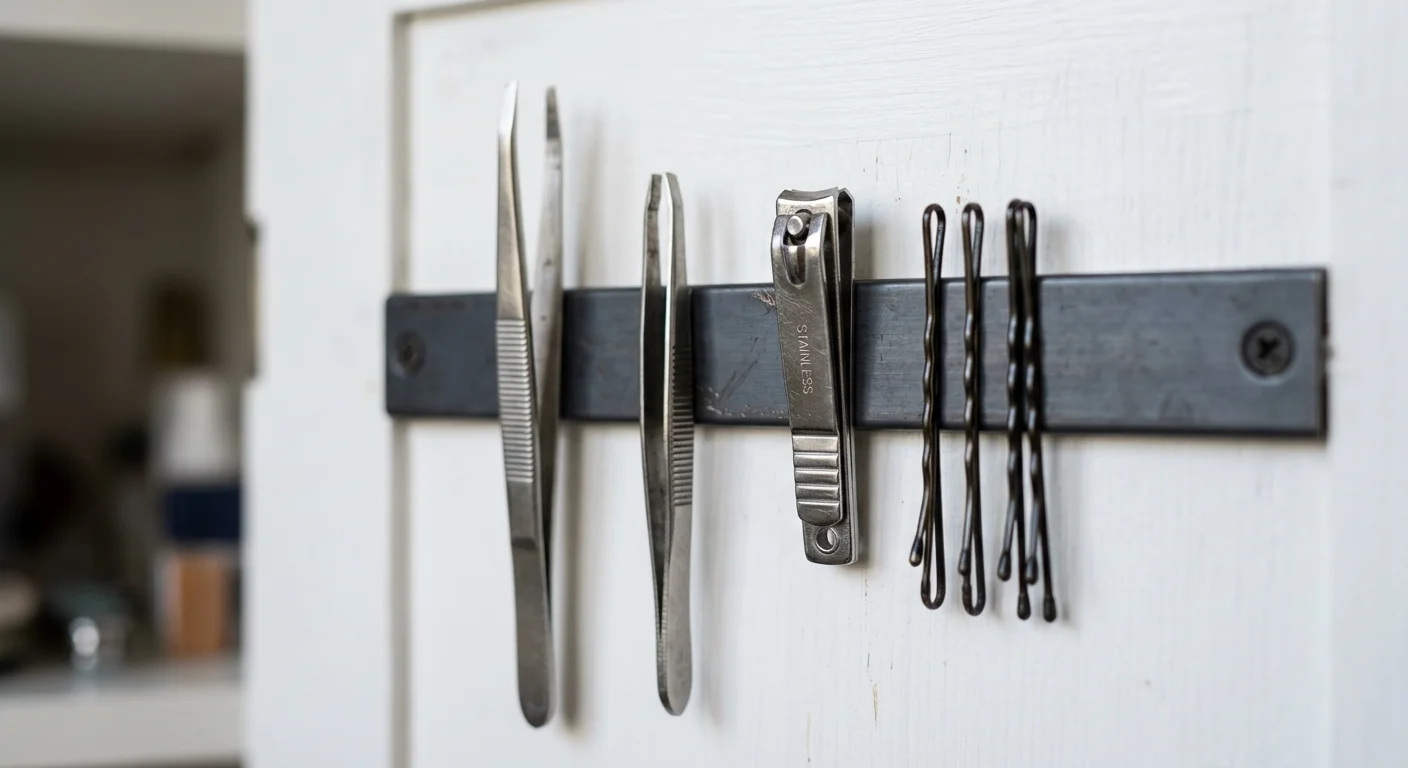
Apply Magnetic Strips for Tweezers and Bobby Pins
Small metal items account for a disproportionate amount of bathroom clutter. Bobby pins, nail clippers, safety pins, and tweezers easily scatter across countertops, fall down sink drains, or sink to the bottom of deep vanity drawers where they are impossible to find. Install a strong, adhesive-backed magnetic strip to the inside of your medicine cabinet door or along the inner side wall of a vanity drawer.
These are the exact same magnetic knife strips used in professional kitchens, scaled down for bathroom utility. Simply slap your metal grooming tools against the strip; they grab instantly and stay firmly in place despite the door swinging open and closed. You will never again dig through a cluttered drawer searching for a tiny pair of scissors while rushing to get ready for work. For an even more discreet option, mount a small magnetic bar underneath the bottom lip of a floating wooden shelf. This keeps your tools completely out of sight from guests but instantly accessible to you. Wipe the magnetic strip down with a damp microfiber cloth once a month to remove any accumulated metal dust or bathroom humidity residue.
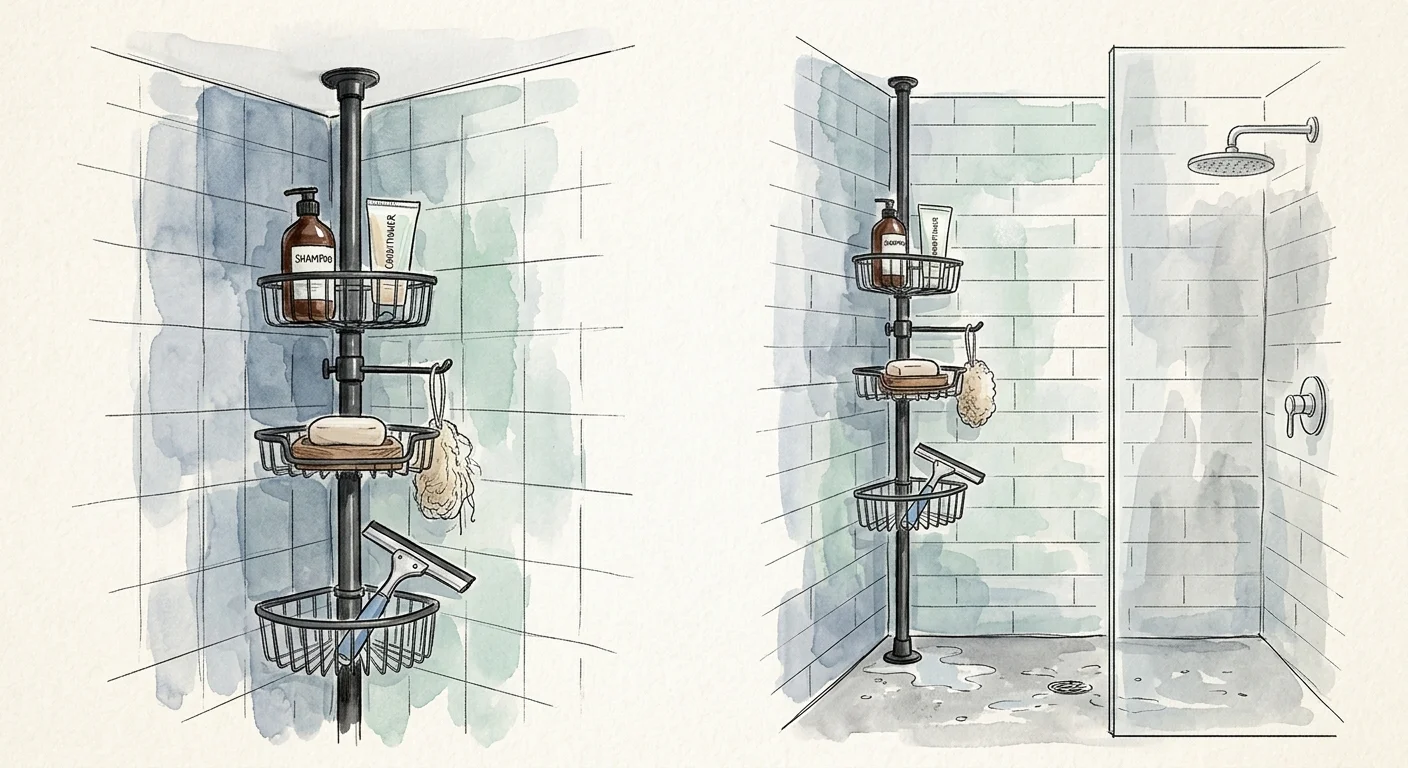
Invest in Rust-Proof Shower Caddies and Tension Poles
When cabinet space is virtually non-existent, your shower enclosure must carry its weight in the overall storage equation. Relying on a single built-in shower niche rarely provides enough room for multiple family members’ shampoo, conditioner, body wash, and loofahs. Install a floor-to-ceiling tension pole caddy in the back corner of your bathtub or shower stall. Tension poles require zero drilling and use a heavy-duty internal spring to wedge firmly between the ceiling and the tub ledge.
The main failure point for bathroom tension poles is fast-spreading rust. Always verify the product specifications before purchasing; seek out caddies constructed from solid 304-grade stainless steel or anodized aluminum. These specific metals resist oxidation even in highly humid, poorly ventilated bathrooms where water sits on the surface for hours. Position the adjustable baskets to fit your tallest pump bottles, placing the heaviest items at the bottom to maintain a low center of gravity. Attach small plastic hooks to the lowest basket to hang razors and exfoliating sponges so they drip dry completely between uses, preventing dangerous bacteria buildup.
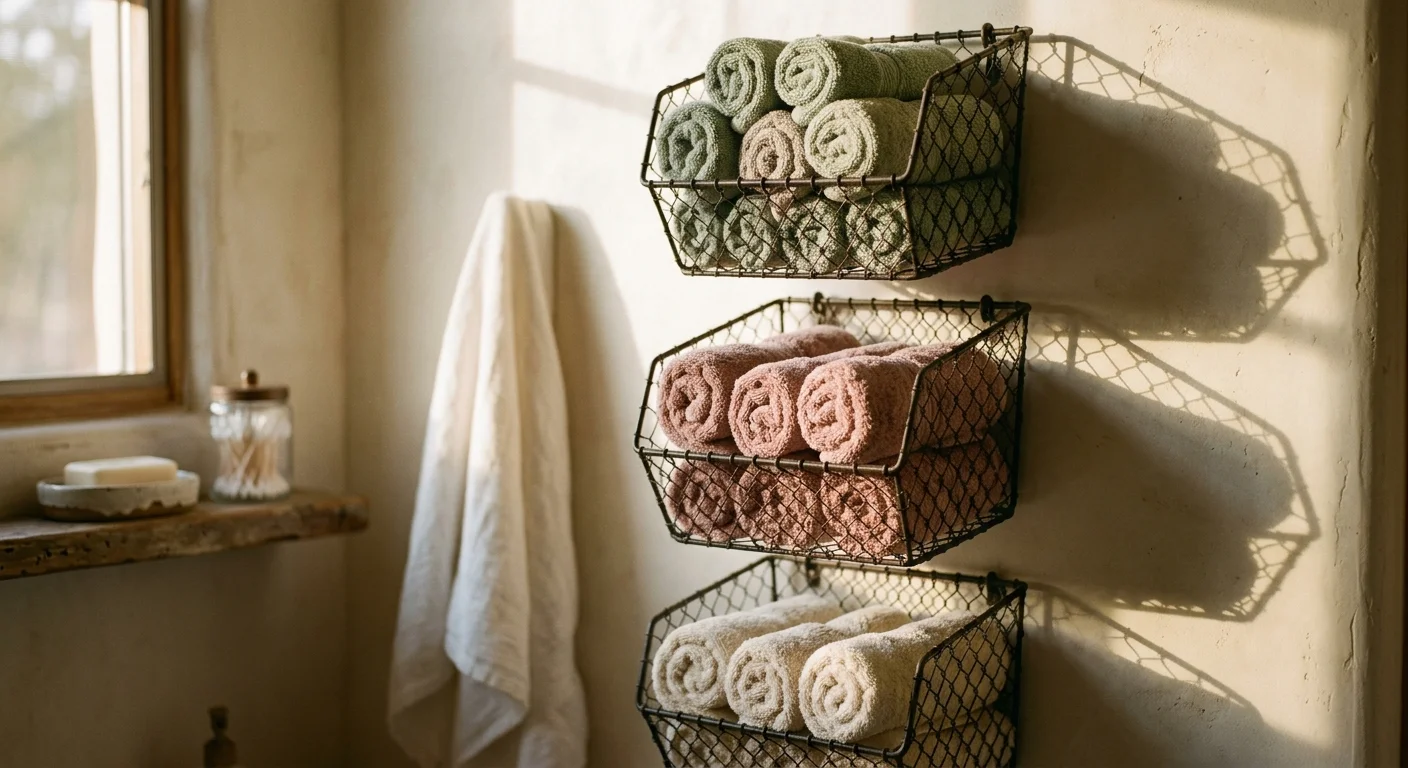
Mount Vertical Wire Baskets for Rolled Washcloths
When you cannot fit a traditional flat shelf on your walls due to tight clearances, look for slim vertical spaces. The narrow gap of wall between your mirror and the bathroom corner, or the tiny strip of drywall beside the bathroom window, is perfect for tiered wire baskets. Purchase a set of three small, rust-resistant wire baskets and mount them vertically, spacing them a few inches apart.
Wire baskets look visually light and do not shrink the room the way solid wood cabinets do. Roll your clean washcloths tightly and stack them upright inside the baskets. This simple presentation method turns a functional household item into a textured, high-end decor element. You can also use these baskets to hold extra bars of soap, bath bombs, or small indoor humidity-loving plants like a pothos to bring vibrant life into the room. Because the open wire grid allows for complete airflow, your linens will dry quickly and will not develop the musty smell that sometimes plagues closed-off linen closets in humid environments.
Maintain Your Compact Bathroom Organization
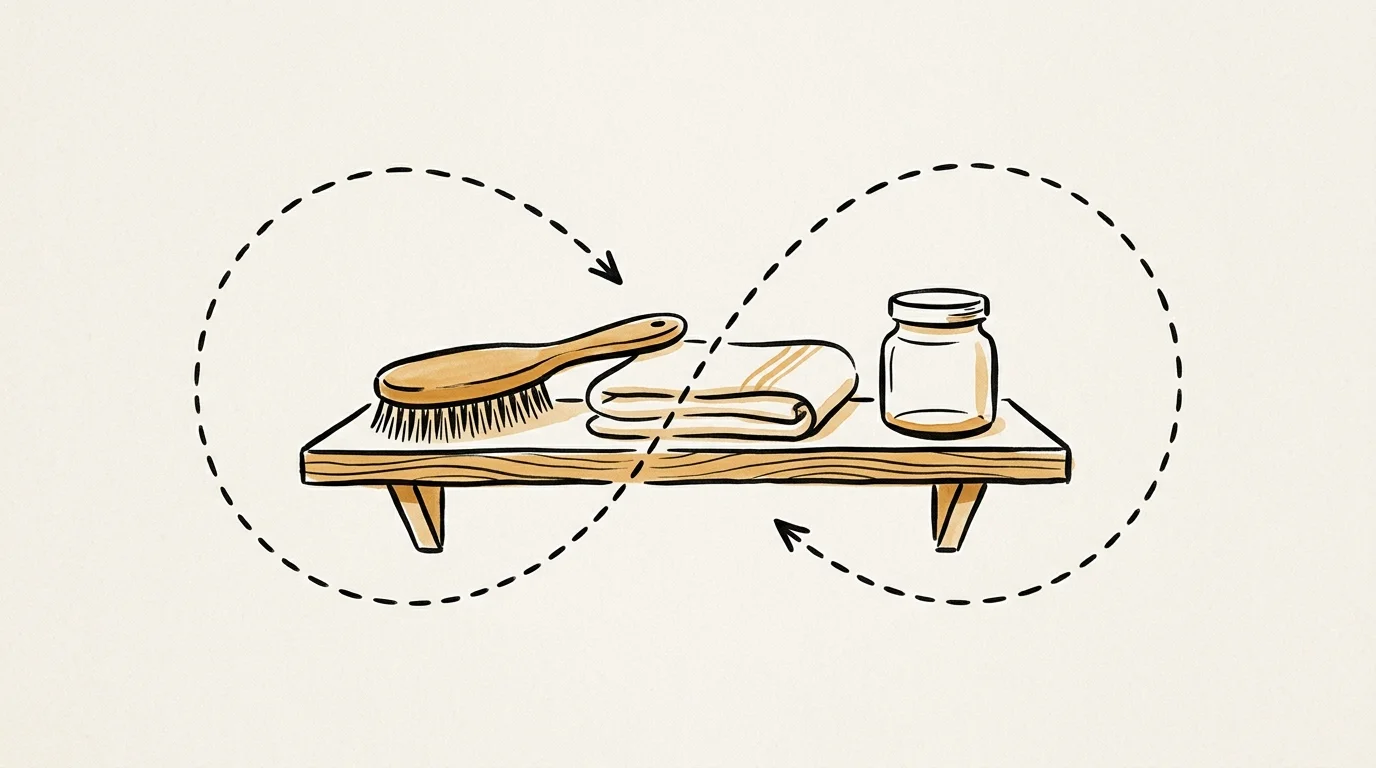
Instead of just setting up your new storage and forgetting it, you must actively maintain a small bathroom. Without a deep linen closet to hide your overflow, clutter builds rapidly and surfaces become chaotic. Use this straightforward maintenance checklist to keep your compact systems functioning perfectly month after month.
| Maintenance Task | Frequency | Action Steps |
|---|---|---|
| Wipe Down Metal Fixtures | Bi-Weekly | Inspect tension poles and rolling utility carts for early signs of rust. Wipe the metal with a dry microfiber cloth and apply a rust inhibitor to any vulnerable joints. |
| Check Drywall Anchors | Monthly | Press gently on your floating shelves. If they wiggle or dip forward, tighten the toggle bolts with a screwdriver or replace failing plastic anchors immediately to prevent wall damage. |
| Purge Expired Products | Quarterly | Go through your clear acrylic vanity drawers and toss separated lotions, expired medications, and empty travel bottles that waste prime real estate. |
| Wash Mesh Organizers | Quarterly | Remove the over-the-door organizer, empty the pockets, and run the canvas or mesh through a gentle cold-water laundry cycle to eliminate accumulated dust and mildew. |
| Assess Towel Inventory | Annually | A small bathroom cannot hold endless linens. Keep only three high-quality bath towels per person and donate the frayed, worn-out extras to an animal shelter. |
Take Your First Step Toward a Clutter-Free Bathroom
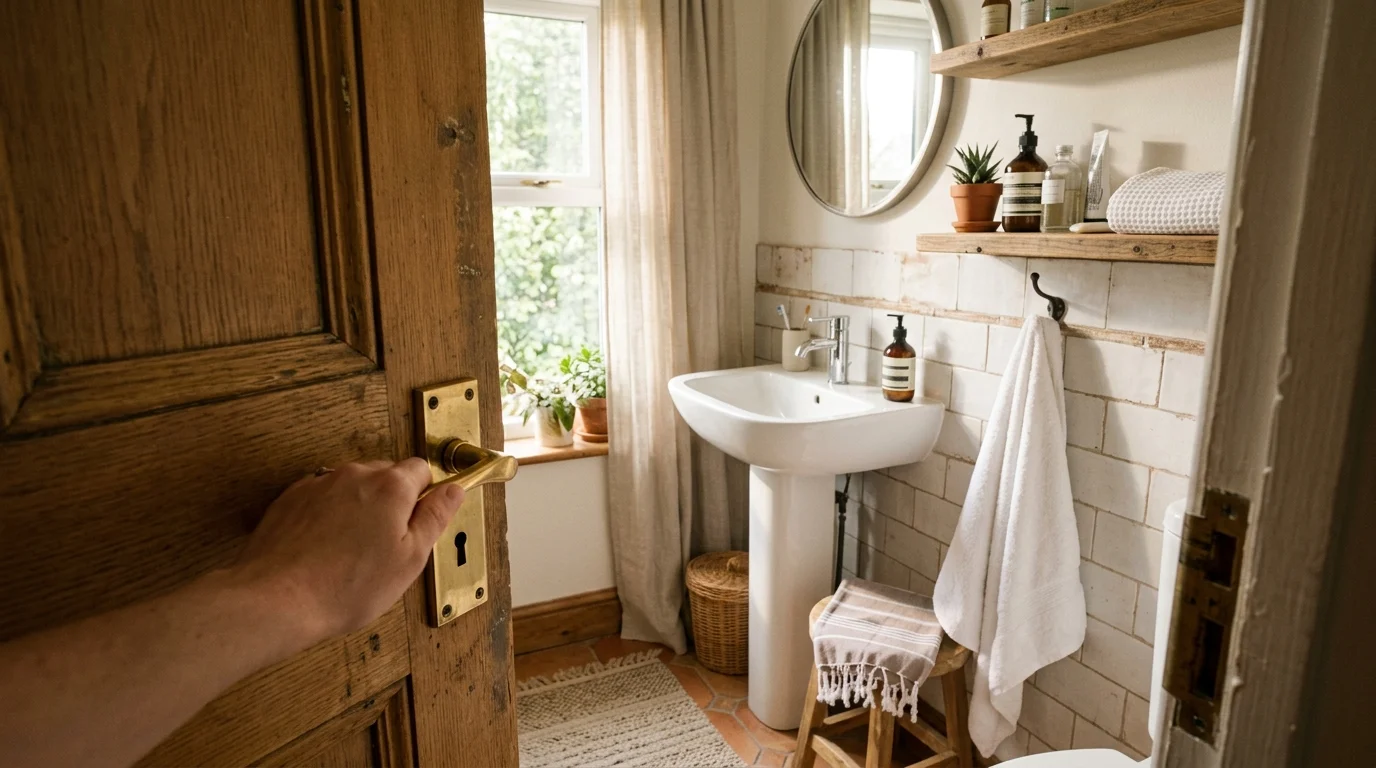
Grab a heavy-duty trash bag and immediately remove any empty bottles, expired cosmetic products, and frayed towels from your current bathroom setup. Eliminating what you no longer use instantly creates much-needed breathing room and clarifies exactly how much storage you actually need. Once the trash is gone, measure the width of the wall studs above your sink or the clearance height over your toilet tank. Choose just one of the storage upgrades from this guide, order the necessary hardware or acrylic bins, and dedicate thirty minutes this weekend to installing it. Tackling your bathroom organization one specific zone at a time prevents overwhelm and guarantees lasting, functional results.