Welcoming your grandchildren should bring joy, not a sea of plastic clutter across your clean living room floor. You can give them an exciting play space while preserving the calm, adult sanctuary you love.
Traditional nursery systems fail in a retiree’s home because grandchildren visit periodically rather than living there full-time. You need flexible solutions that appear instantly for visits and vanish when the kids go home.
These eight practical toy storage ideas will keep your home safe, organized, and ready for spontaneous fun at a moment’s notice.
Repurpose Multi-Functional Furniture for Hidden Toy Storage
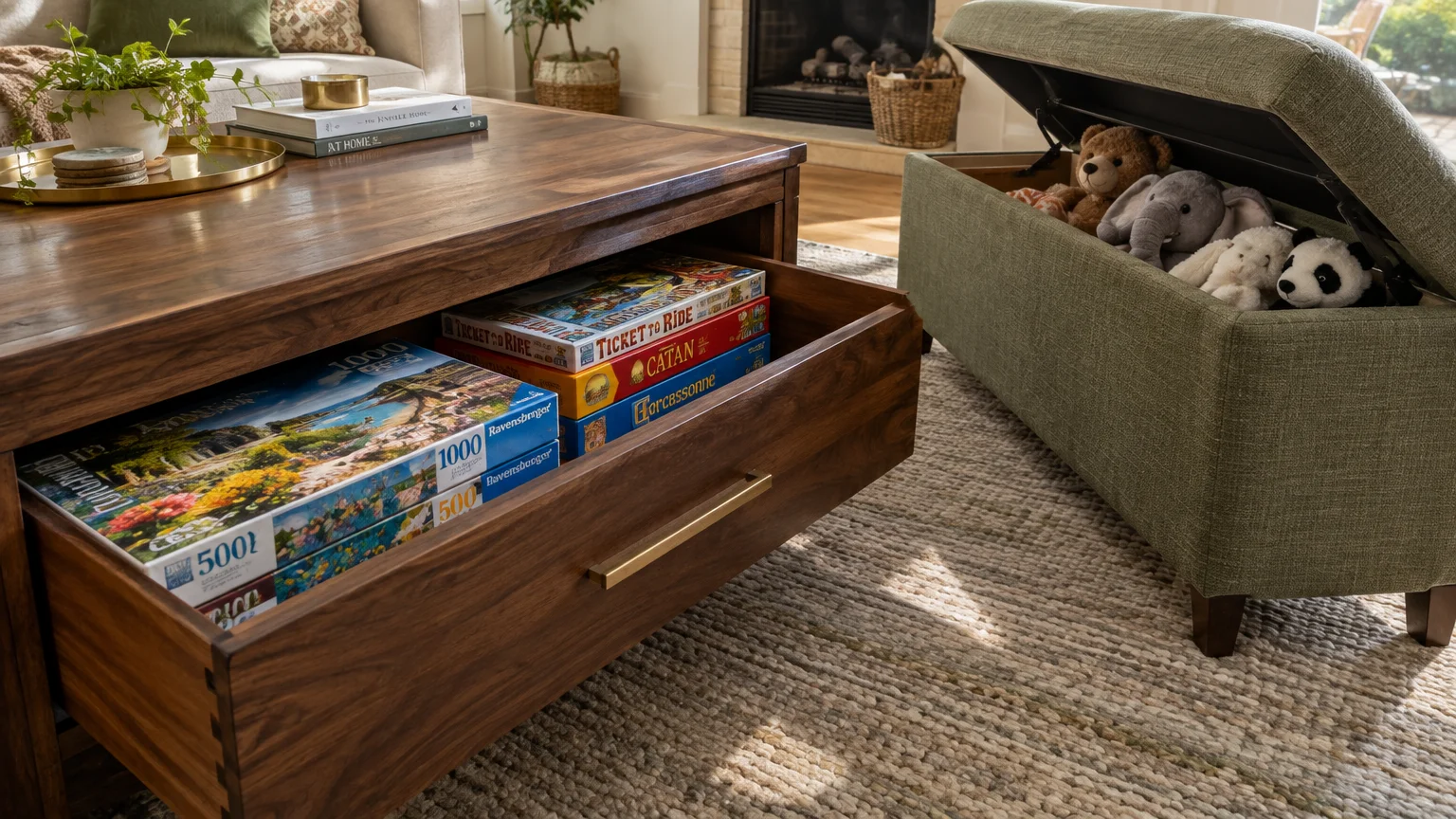
Dual-purpose furniture remains the gold standard when organizing grandkids’ toys in living rooms. Storage ottomans and upholstered benches conceal bright plastic toys beneath elegant, everyday decor.
Select an ottoman with a safety-hinged lid that stays open on its own. This feature prevents heavy lids from slamming down on tiny fingers during playtime.
Deep drawers inside a coffee table or media console provide another seamless option. You can slide wooden puzzles and board games out of sight within seconds.
This approach protects your decor while eliminating awkward bending to floor-level boxes. Your living area retains its refined atmosphere the moment your guests leave.
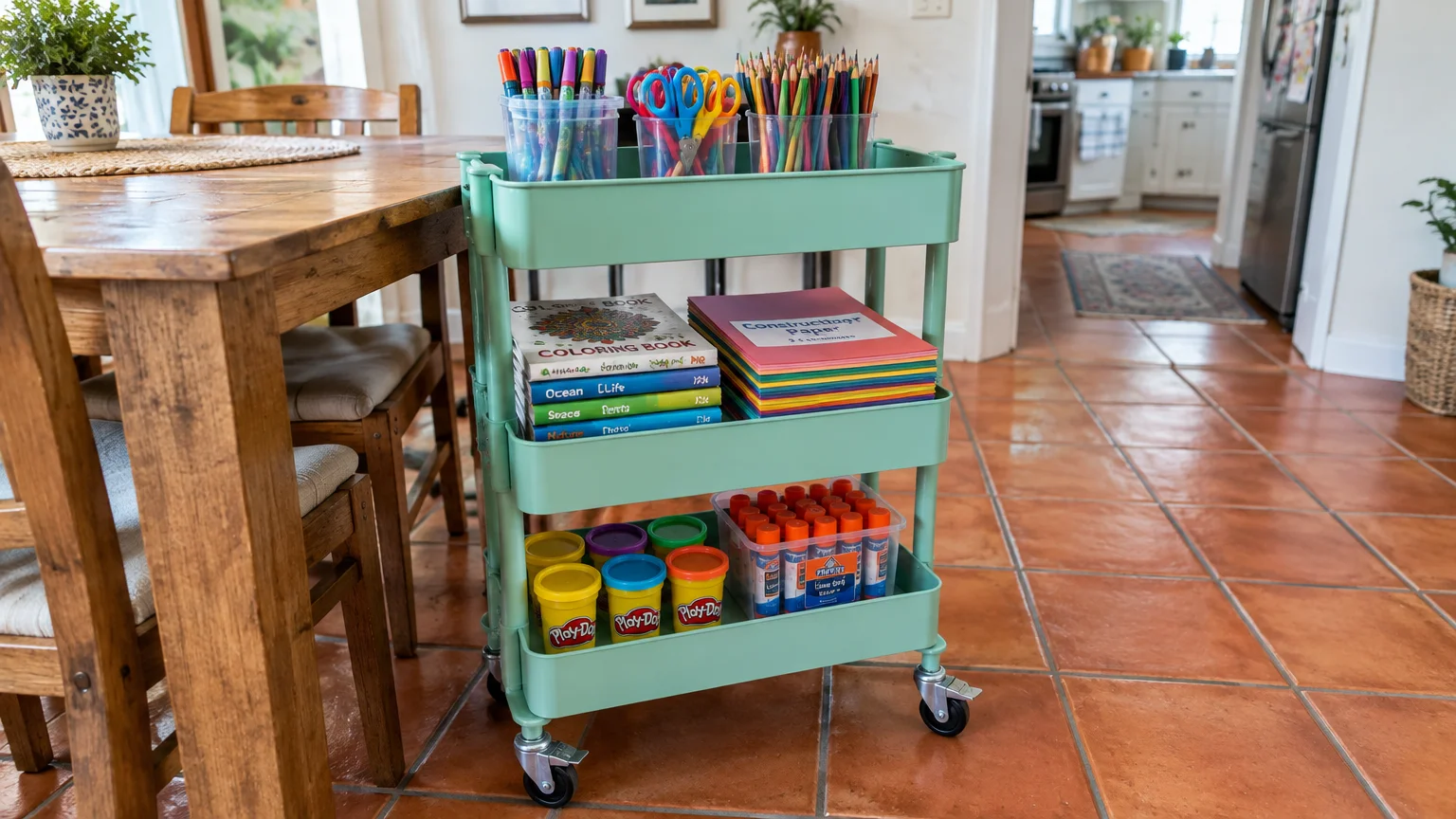
Set Up a Mobile Rolling Utility Cart for Craft Supplies
A three-tier metal utility cart delivers unmatched flexibility for art projects and tabletop activities. You can wheel coloring books, washable markers, and playdough straight to the kitchen table.
Sort loose supplies on each tier using small plastic cups or divided drawer trays. Assigning one tier per activity prevents messy supply spills before art projects even begin.
Locking caster wheels are essential for grandparent safety and stability. Always lock the wheels in place once you position the cart near your seating area.
When craft hour ends, roll the entire unit directly into a pantry, closet, or laundry room. The mess disappears without requiring you to carry heavy armfuls of paper and pens.
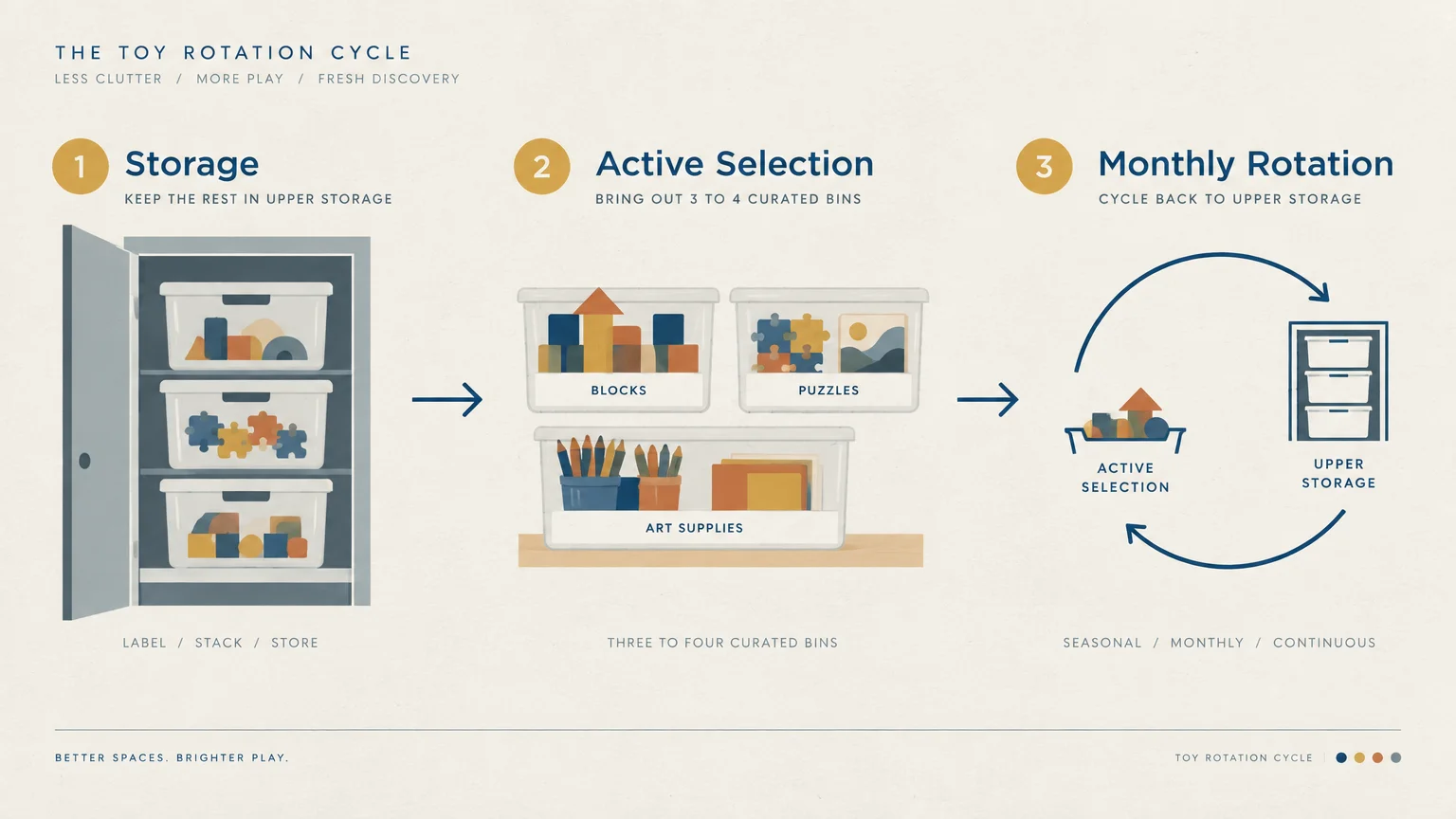
Implement a Toy Rotation System with Clear Storage Totes
Children easily become overwhelmed when faced with overflowing piles of playthings. A disciplined toy rotation system keeps visits novel while slashing day-to-day clutter in half.
Pack secondary toys into clear, stackable plastic totes with locking latch handles. Store these bins out of sight in your garage, attic, or upper closet shelves.
Keep only three or four curated activities accessible during any single visit. Rotating one or two bins every month rekindles your grandchildren’s curiosity without buying anything new.
Clear plastic allows you to identify contents instantly without opening lids. Label each tote with bold waterproof markers so you always find specific favorites quickly.
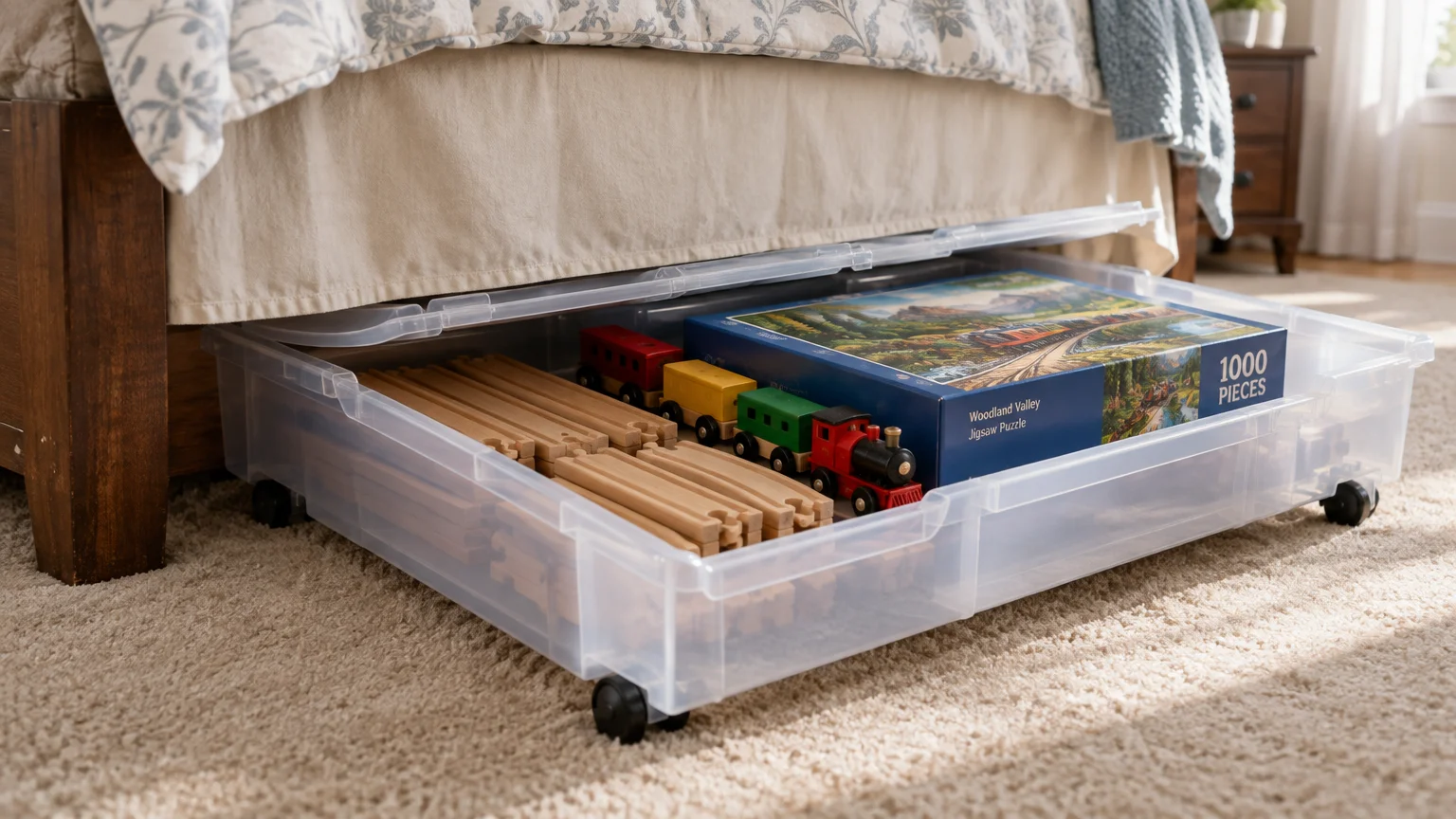
Use Under-Bed Rolling Drawers in the Guest Room
Guest bedrooms often contain vast expanses of unused real estate beneath the mattress frame. Low-profile wheeled containers transform this hidden void into accessible kid-friendly storage.
Under-bed drawers work best for oversized, flat items that resist standard shelving. Train track sets, large floor puzzles, and dress-up costumes fit neatly into these shallow compartments.
Stashing bulky items under beds also eliminates hazardous tripping obstacles from hallways. The CDC reports that falls are a leading cause of injury for older adults, making clear walkways vital.
Look for rolling boxes with split-hinged lids. A split lid lets you retrieve toys easily without pulling the entire container completely out from under the bed.
Hang Over-the-Door Organizers for Vertical Toy Storage
Back-of-door hanging organizers offer exceptional vertical storage without consuming valuable square footage. Clear vinyl shoe organizers allow grandchildren to view their options clearly without dumping out bins.
Organize pockets strategically according to accessibility and supervision needs. Place building blocks, small dolls, and toy vehicles in lower pockets where children can reach them safely.
Reserve the upper tiers for items that require adult guidance, such as safety scissors, stamps, and bubble solution. This visual barrier prevents unsupervised messes before they happen.
Hang these organizers inside a closet door or behind a guest room entrance. Simply swinging the door closed instantly hides twenty or more individual toys from view.
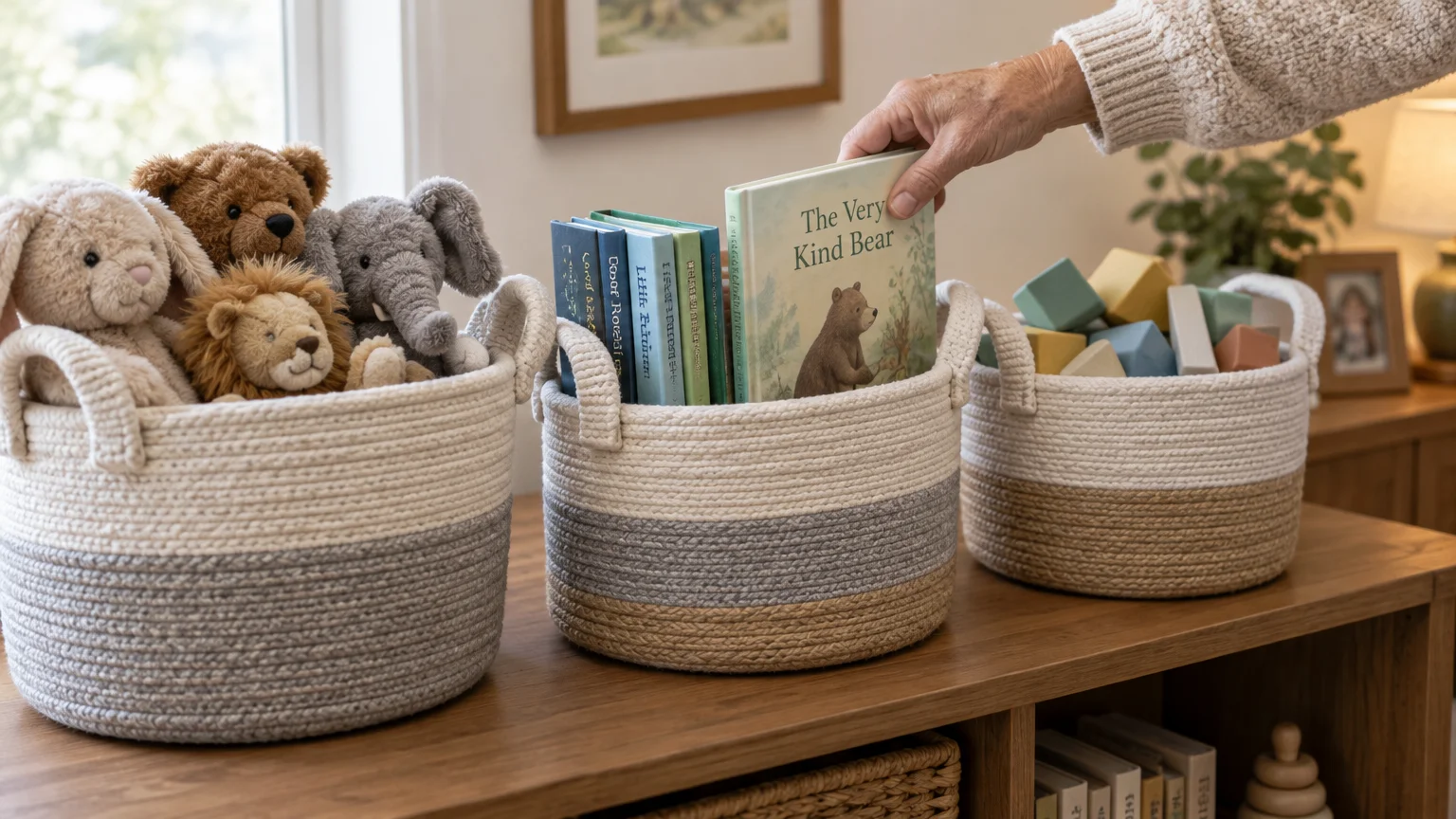
Create Grab-and-Go Activity Baskets with Fabric Toy Bins
Soft fabric toy bins blend warm textures into your existing living room decor while providing practical functionality. Neutral canvas, felt, or coiled-rope baskets look intentional rather than childish sitting beside your armchair.
Assign specific themes to each basket, such as musical instruments, picture books, or soft plush toys. Thematic sorting encourages focused play and makes returning items straightforward.
Fabric containers are remarkably lightweight, protecting fragile flooring and preventing bruised shins if bumped. Their flexible handles allow you to carry an entire play station room to room effortlessly.
When grandchildren finish playing, gather loose items into the basket and slide it under a console table. Your living space returns to pristine order in less than two minutes.
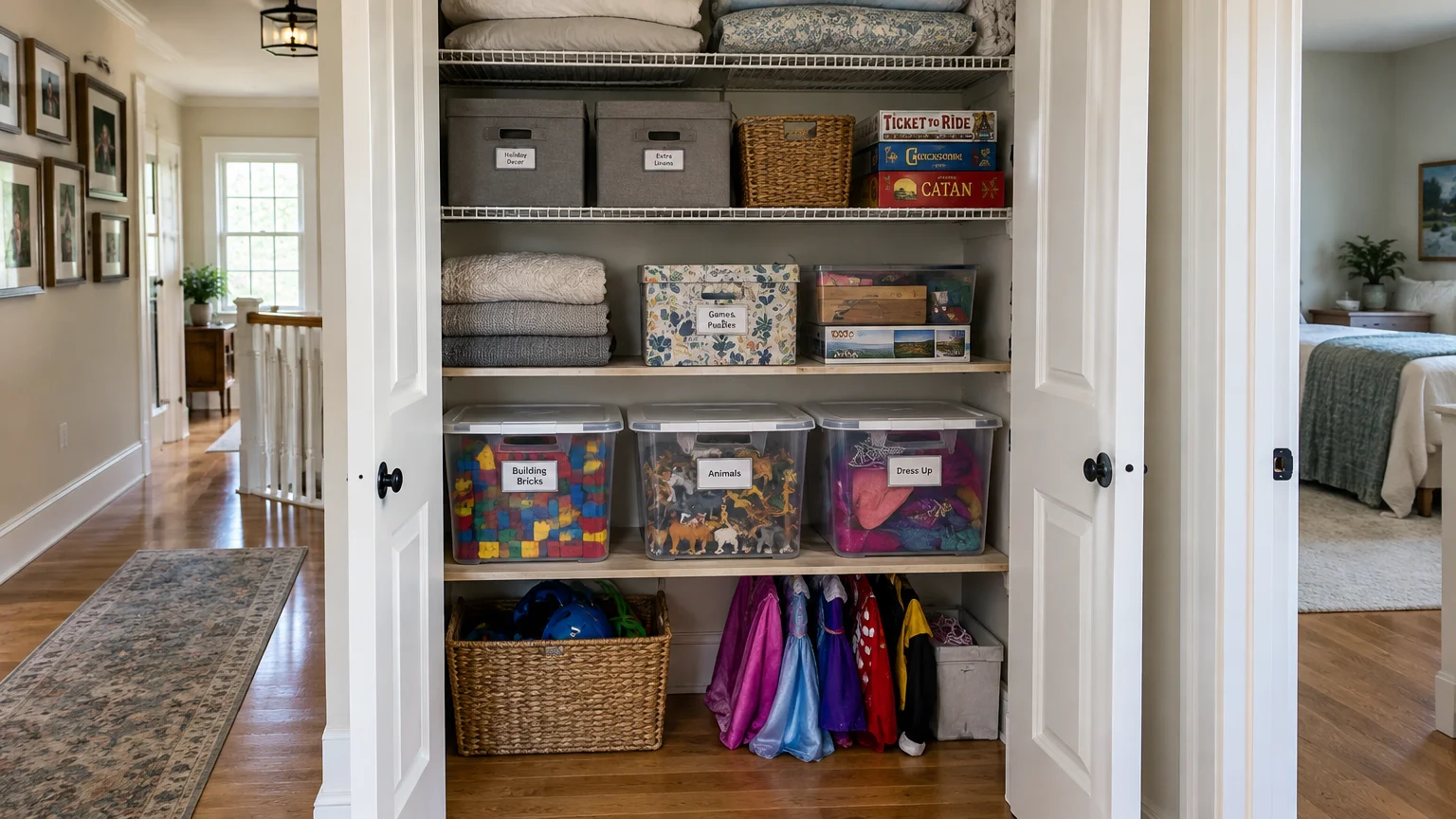
Designate a Dedicated Kid-Friendly Storage Closet
Transforming one hall closet or lower cabinet into a dedicated play station creates clear boundaries. Children learn immediately that their toys live in one designated spot rather than migrating everywhere.
Install adjustable wire or wood shelving positioned comfortably at waist height or below. Keeping weight low protects your shoulders and back whenever you lift bins for your grandkids.
Heavy shelving units must always be secured properly to the wall studs behind them. Review the federal safety guidelines on the Anchor It campaign website to prevent tip-over accidents.
Label shelf edges with photo tags for toddlers or printed words for school-age grandchildren. Visual markers foster independence by teaching kids exactly where each item belongs.
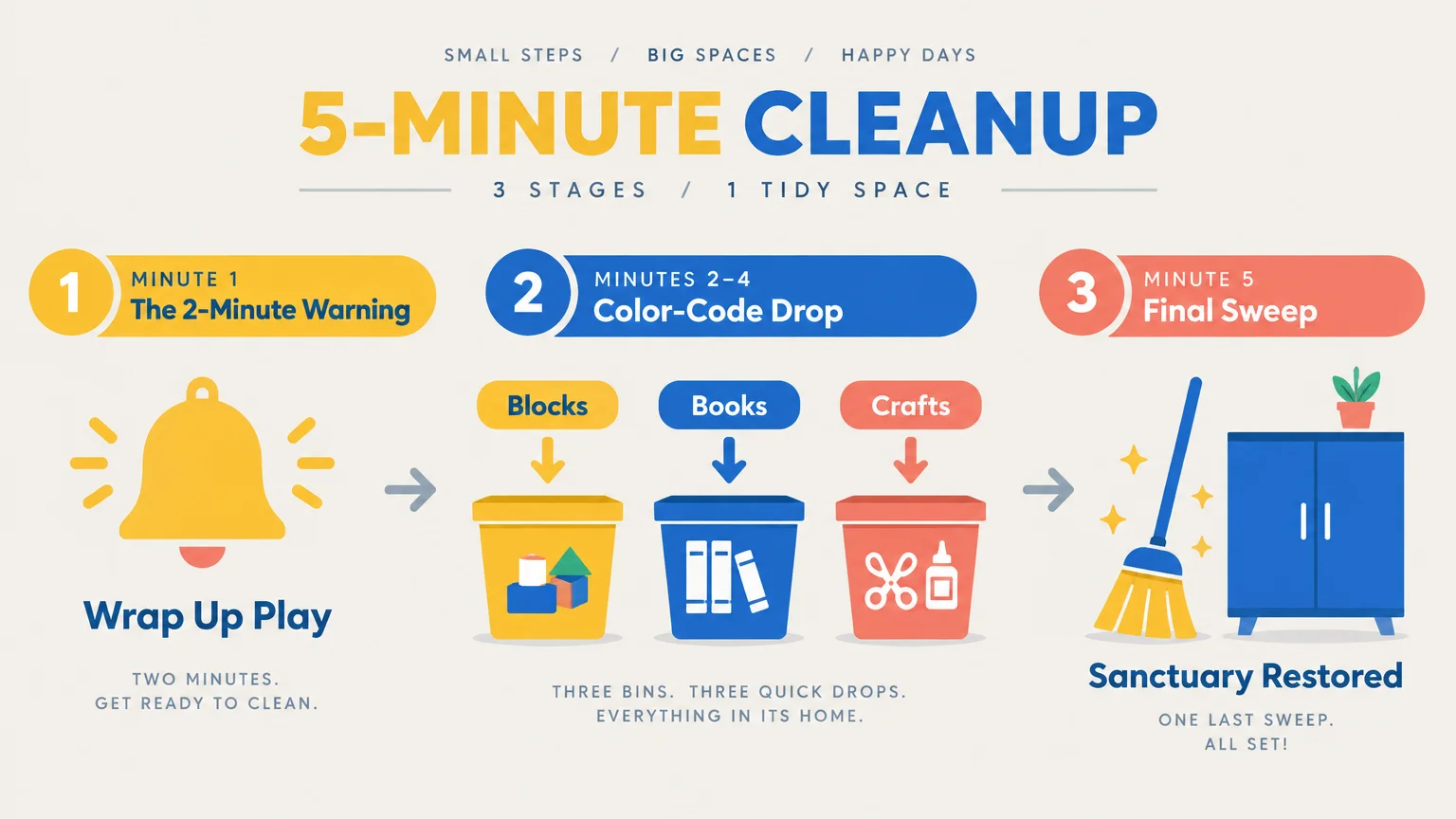
Establish a Low-Effort Five-Minute Cleanup Routine
Effective toy organization for grandparents relies as much on daily habits as it does on containers. Introducing a structured cleanup routine prevents you from doing all the physical labor alone.
Announce a five-minute warning before transition times like lunch, outdoor walks, or departures. Giving advance notice helps young children switch gears without sudden emotional meltdowns.
Turn cleanup into an engaging cooperative challenge rather than a chore. Play an upbeat song or set a visual kitchen timer to see if everyone can beat the clock.
Celebrate their cooperation with enthusiastic praise or a healthy snack. Grandchildren take immense pride in helping grandparents maintain a tidy, comfortable home.
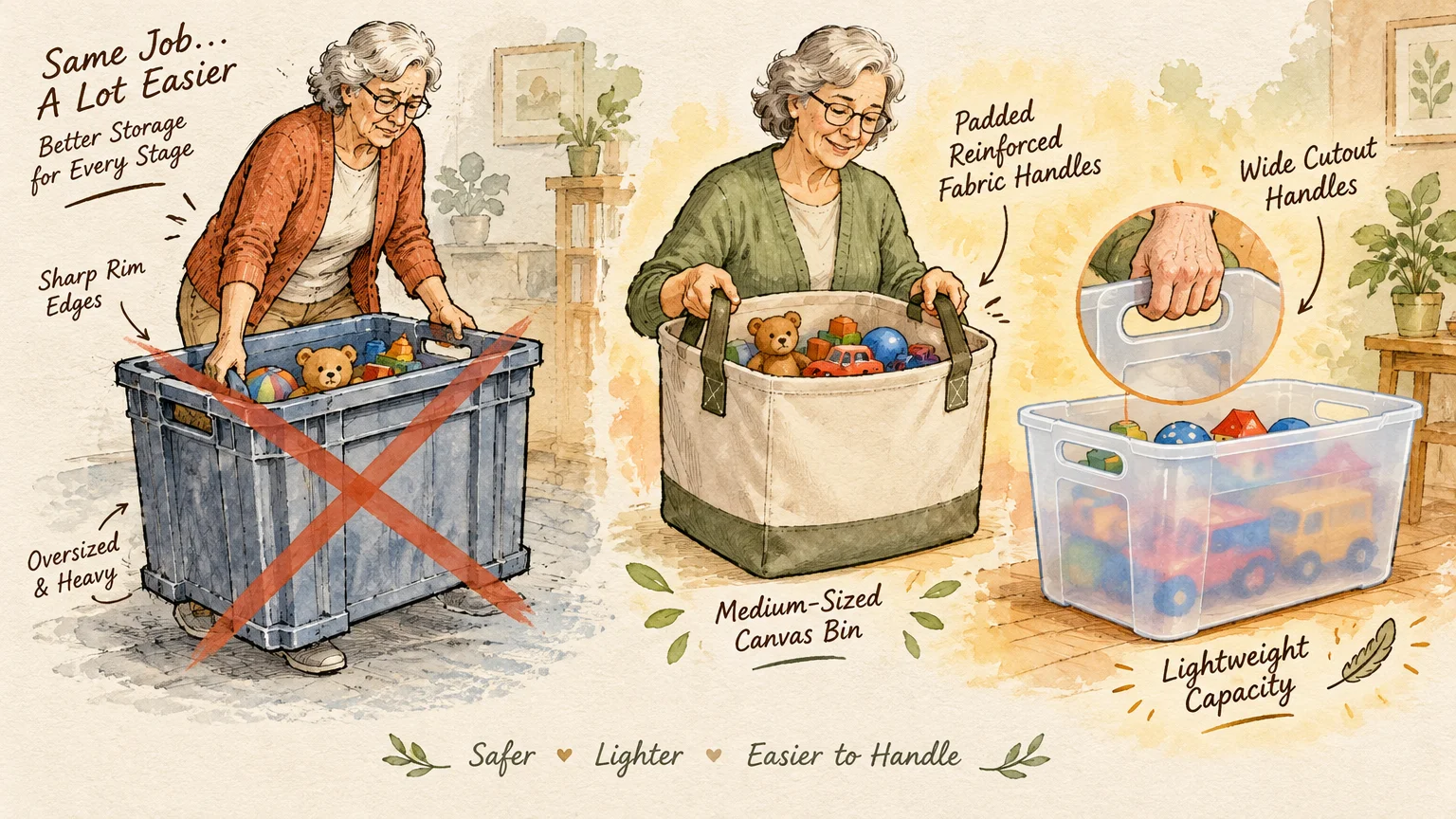
Choosing Ergonomic Toy Bins for Easy Lifting and Handling
As we mature, lifting heavy, awkward containers from floor level poses a genuine risk to backs and knees. Selecting the proper storage vessels ensures that cleanup never causes physical strain or joint discomfort.
Prioritize small or medium containers over massive plastic trunks. Large chests encourage children to dump everything at once and become dangerously heavy when fully loaded.
Seek out bins with reinforced, cutout handles that fit your grip comfortably. Smooth edges prevent painful hand fatigue when carrying supplies between different rooms.
Consider clear acrylic or mesh alternatives that provide instant visibility. Being able to see inside saves you from repetitive bending and digging through multiple containers.
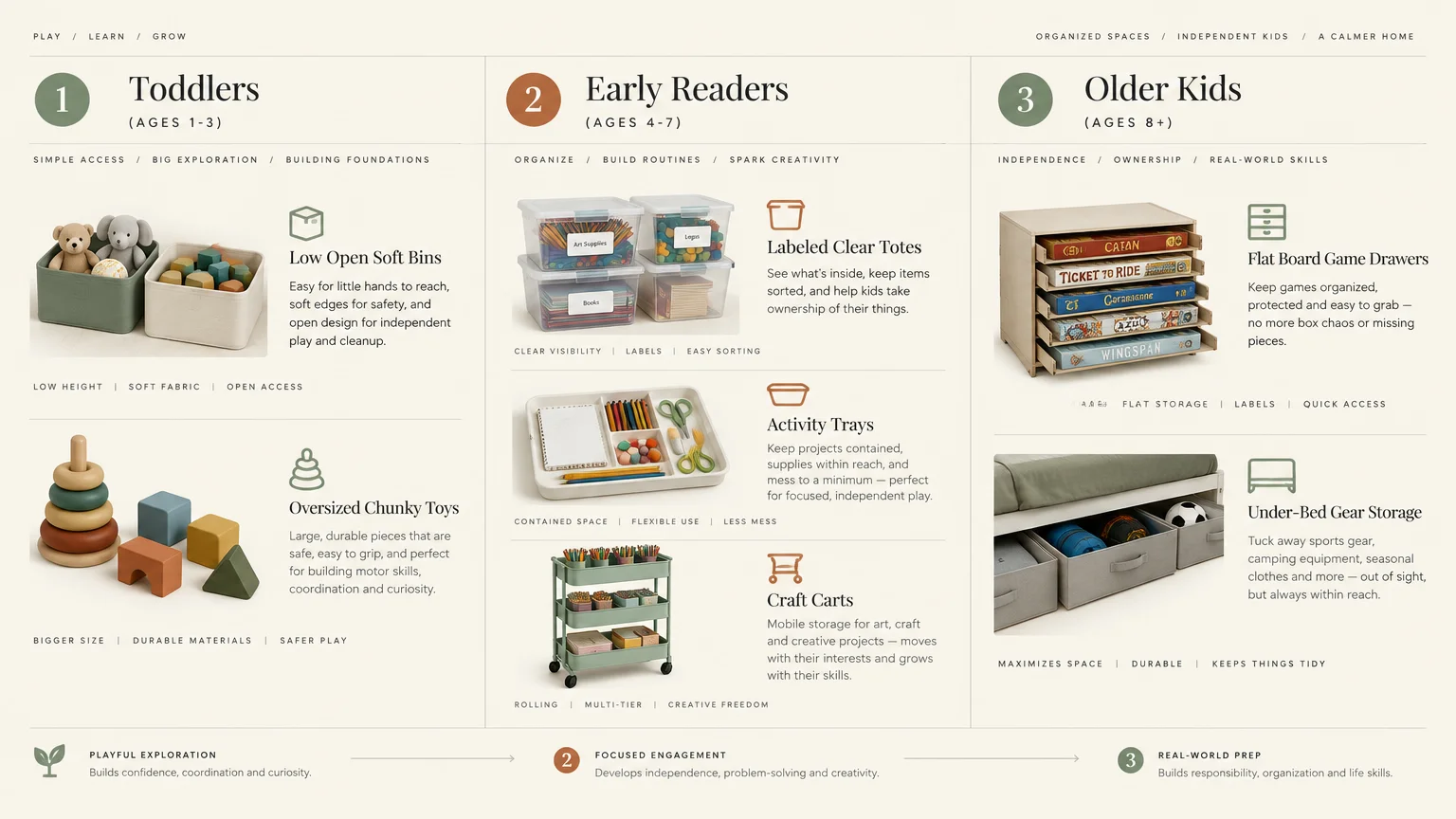
Matching Storage Solutions to Your Grandkids’ Ages
Children interact with storage differently depending on their physical coordination and developmental milestones. Choosing age-appropriate containers prevents frustration and keeps your home organized with minimal adult intervention.
| Age Group | Recommended Toy Storage | Best Toys for This Setup | Grandparent Safety Tip |
|---|---|---|---|
| Babies & Toddlers (0–2 years) | Soft open-top fabric bins placed directly on the rug | Plush animals, large stacking cups, sturdy board books | Avoid heavy hinged lids; ensure no detachable choking hazards exist. |
| Preschoolers (3–5 years) | Divided rolling utility carts and clear plastic shoeboxes | Chunky building bricks, washable coloring supplies, wooden trains | Always lock utility cart wheels and supervise messy liquid craft items. |
| Early Elementary (6–8 years) | Over-the-door hanging organizers and labeled closet bins | Action figures, card games, mini building sets, craft kits | Anchor tall shelving units to wall studs to prevent tip-over accidents. |
| Tweens & Older (9+ years) | Under-bed sliding drawers and multi-functional storage ottomans | Board games, video game controllers, science kits, chapter books | Keep bedroom pathways clear to eliminate tripping risks in low lighting. |
Reviewing your storage setup annually ensures your containers evolve alongside your growing grandchildren. Older kids can handle complex bins, while toddlers need open, low-effort access.
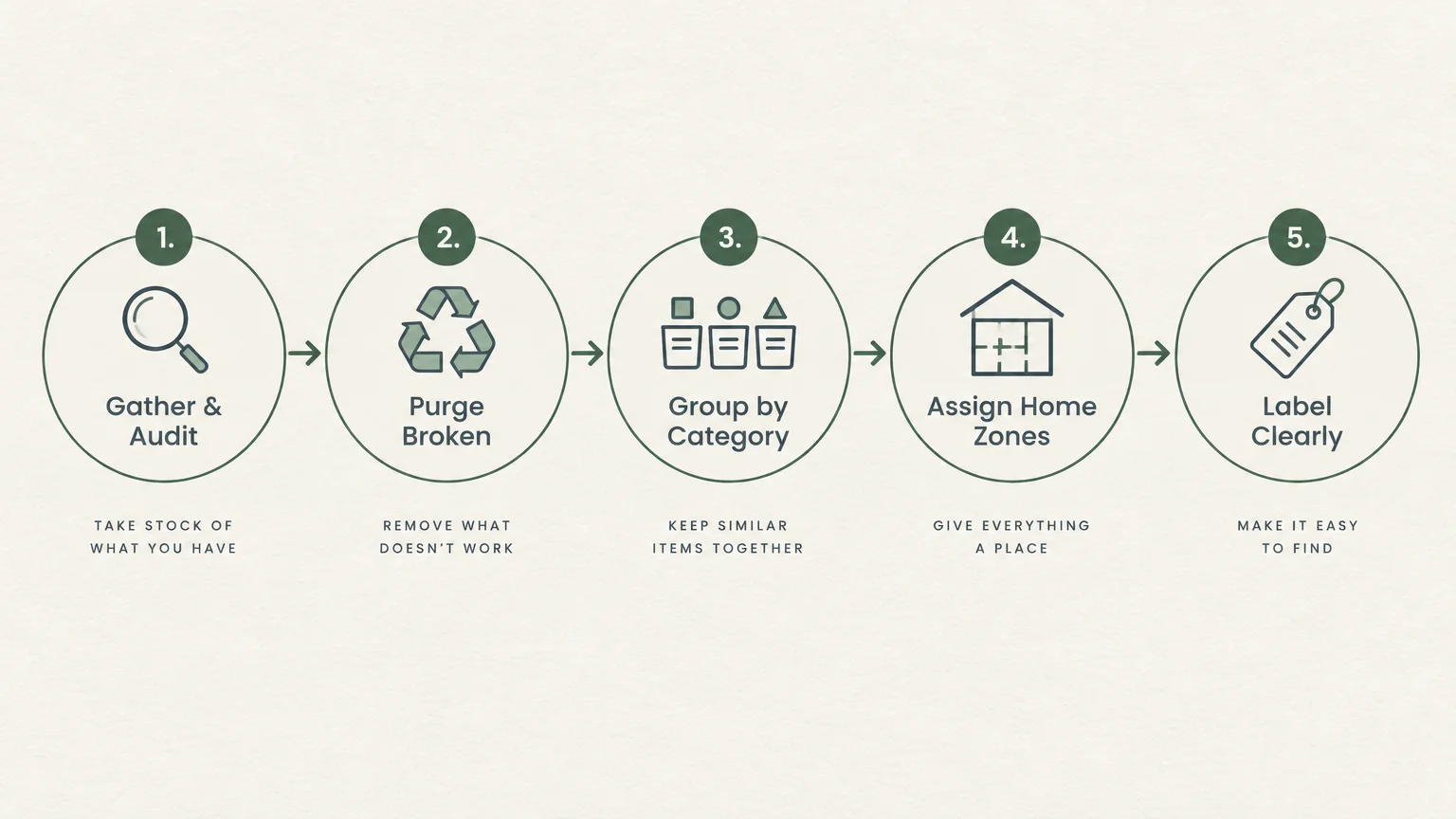
Five Steps to Organize Grandkids’ Toys in One Afternoon
Transforming your grandchild play area does not require days of exhausting labor. Follow this streamlined five-step sequence to establish complete order in just a couple of hours.
-
Gather everything into one central room.
Collect every toy scattered across your bedrooms, living areas, and car trunk. Seeing the total volume in one spot clarifies what you actually own.
-
Discard broken items and missing game sets.
Recycle cracked plastic items and toss puzzles with missing pieces. Incomplete toys cause frustration for children and create pointless clutter in your cabinets.
-
Sort playthings into functional activity categories.
Group similar items together, such as art supplies, building blocks, and imaginary play accessories. Sorting by category reveals accidental duplicates you can donate immediately.
-
Divide current toys from your rotation reserve.
Select three distinct activities for immediate display and pack remaining items into labeled reserve totes. Store your rotation bins in high or remote storage areas.
-
Place daily play stations at kid-friendly heights.
Arrange current toys on low shelves or in open floor baskets where grandkids can reach them without climbing. Unrestricted access encourages independent, imaginative play during visits.
Essential Toy Safety and Health Guidelines for Grandparents
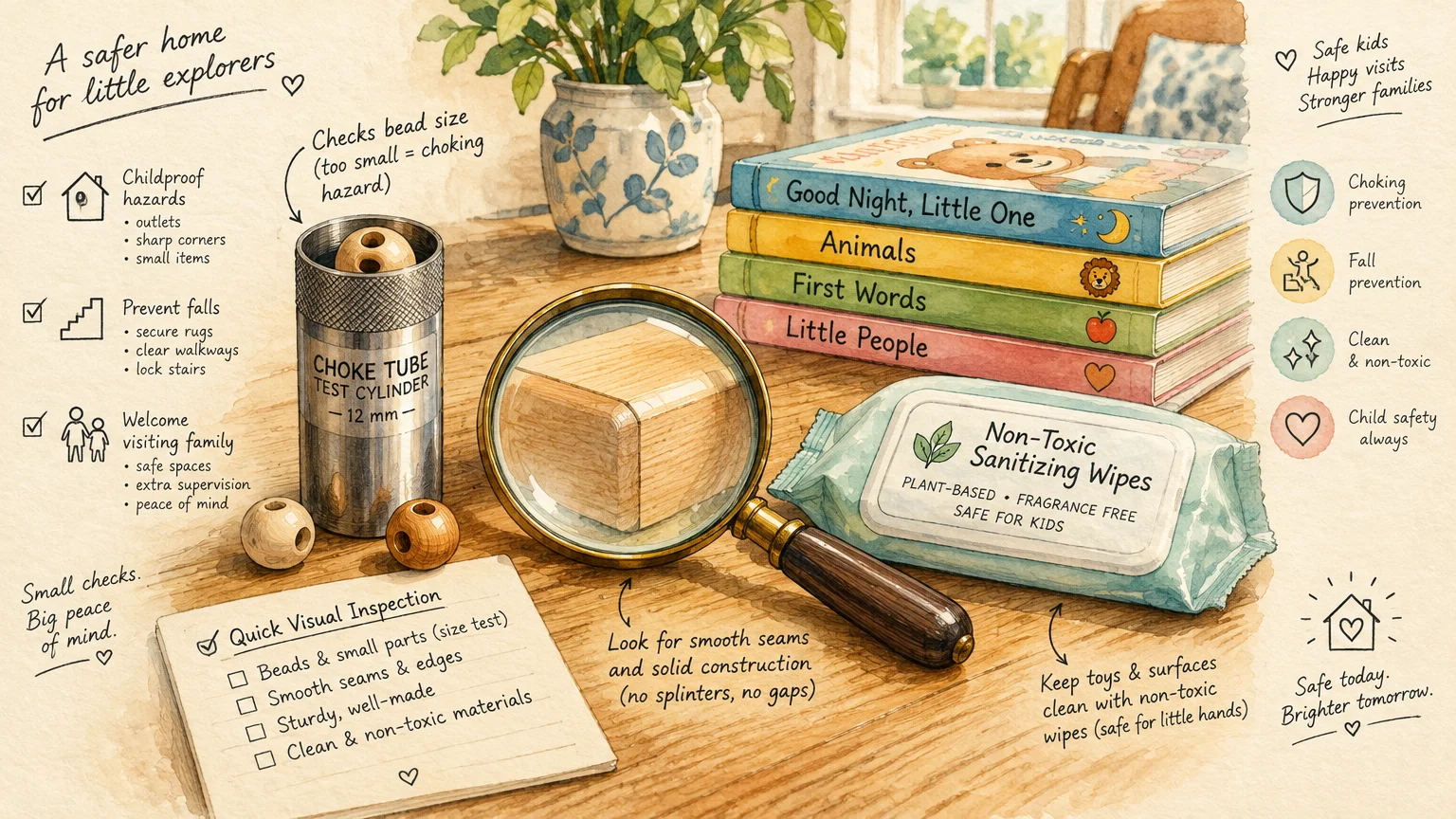
Retirees must balance convenience with stringent safety when organizing grandkids’ toys. Vintage toys from your own parenting years or garage-sale bargains may not meet modern juvenile safety standards.
Inspect every toy regularly for loose parts, sharp edges, and deteriorating battery compartments. The American Academy of Pediatrics safe toy guidelines highlight choking hazards in children under three.
Button batteries pose an extreme, life-threatening danger if ingested by curious toddlers. Store electronic books, musical gadgets, and remotes with button batteries in secure, high cabinets.
Check federal recalls periodically to verify that older toys remain safe for use. You can cross-reference hand-me-down games against the Consumer Product Safety Commission toy safety database.
Never place heavy storage containers on high shelves above eye level. Heavy boxes can slip during retrieval, causing severe head or shoulder injuries to adults and children alike.
Maintaining an Orderly Home Between Grandchild Visits
The true test of grandparent toy organization happens after the grandchildren wave goodbye. Your systems should allow you to reset your living space into an adult sanctuary within fifteen minutes.
Keep sanitizing wipes inside your main toy closet to wipe down hard surfaces before storage. Disinfecting high-touch items stops seasonal preschool germs from spreading through your retirement home.
Do a quick sweep across all living room floors to collect runaway puzzle pieces and crayons. Clearing floors immediately eliminates slip and trip risks in high-traffic corridors.
The CDC fall prevention guidance underscores that loose floor clutter significantly increases dangerous trip accidents for older adults. Keeping walking zones spotless protects your independence and safety.
Once toys are wiped and stowed in their bins, close closet doors and slide ottomans into place. You can sit down with a hot tea and enjoy your spotless, quiet home.
Your Next Practical Step
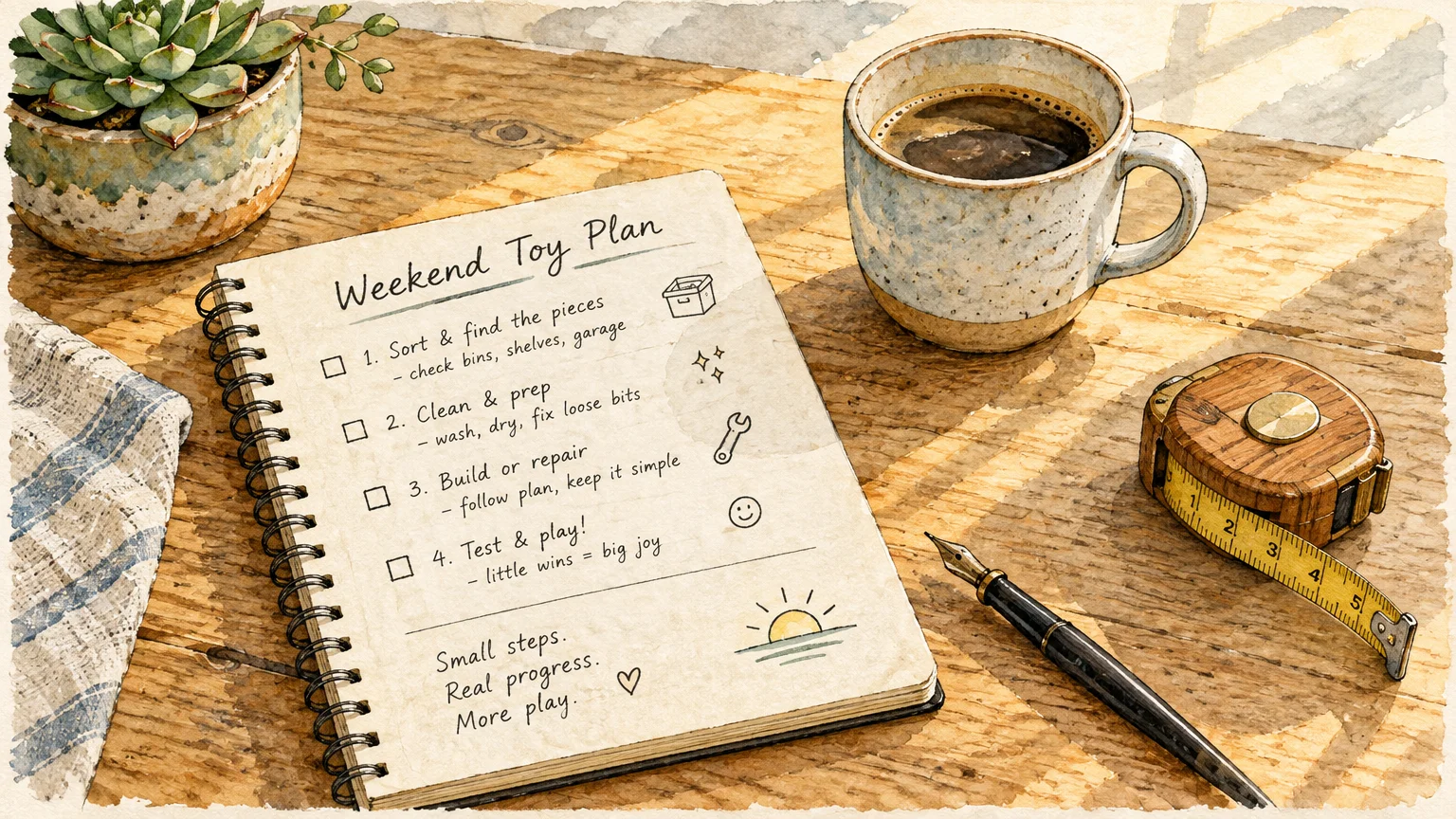
Start by walking through your home right now with a single laundry basket in hand. Collect every wayward grandchild toy currently resting in plain sight across your living areas.
Sort those collected items into three simple piles: keep out, store for rotation, or give away. Implementing just one storage idea this afternoon will instantly restore harmony and calm to your home.