A clean dishwasher filter ensures sparkling glassware, protects your wash pump from burnout, and cuts cycle times. Adopting simple daily loading habits stops greasy debris from hardening into stubborn, foul-smelling sludge.
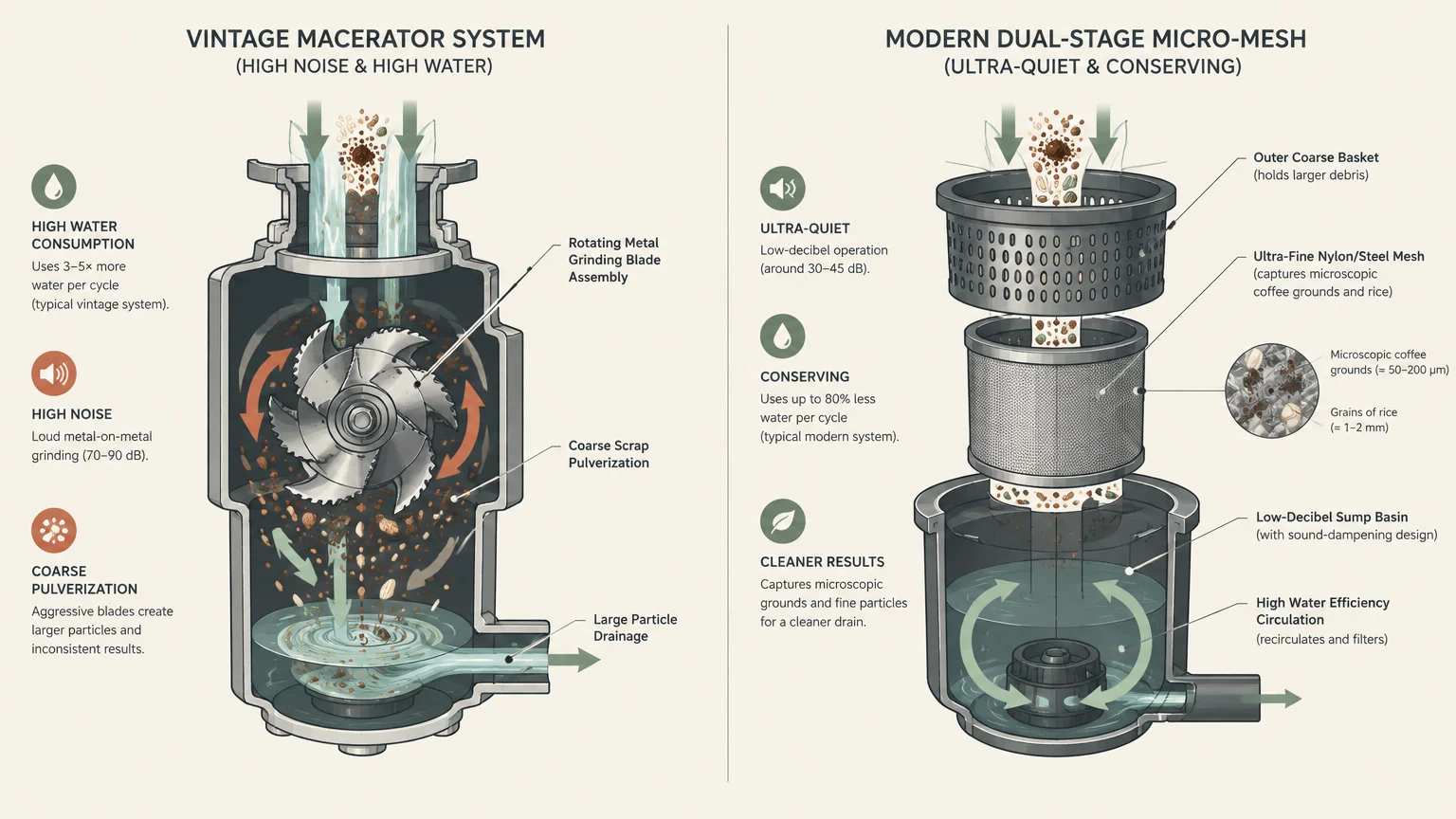
Modern quiet appliances use fine micro-mesh filters rather than loud internal food disposals to conserve water. Because these screens capture every loose grain of rice and rogue seed, small oversights quickly create standing dirty water.
These ten practical cleaning habits prevent a clogged dishwasher filter, ensure reliable dishwasher odor prevention, and make your kitchen routine easier.
Why Modern Dishwashers Rely on Fine Mesh Filters
Decades ago, dishwashers featured internal macerating blades that pulverized bones, seeds, and scraps before pumping waste into the sewer line. While effective, those grinding blades generated intense motor noise and consumed substantial electricity.
Today, manufacturers engineer ultra-quiet appliances that meet strict energy and water conservation benchmarks. Instead of mechanical grinders, these machines rely on dual-stage filtration systems featuring ultra-fine nylon or stainless steel mesh.
These micro-mesh filters catch particles as small as coffee grounds and sand grains. When debris covers the mesh surface, water cannot circulate freely, leaving plates coated in gritty film.
Protecting this filter requires consistent daily habits rather than occasional frantic repairs. Simple preventative steps keep your machine running efficiently while extending its operating lifespan.
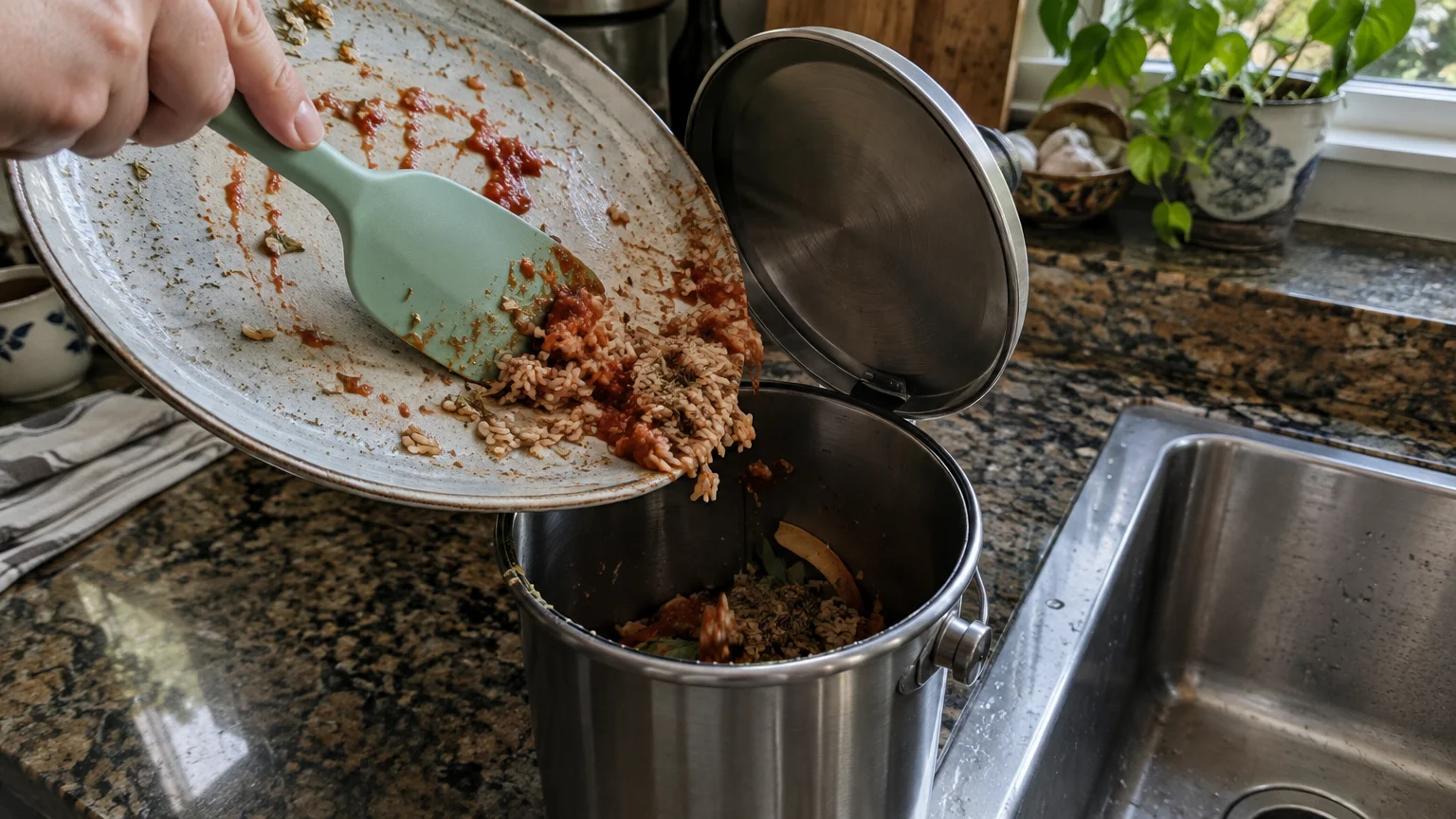
1. Scrape Plates with a Flexible Spatula Instead of Pre-Rinsing
Scraping food scraps into your compost bin or trash can replaces the outdated chore of pre-rinsing dishes under running water. Pre-rinsing wastes gallons of tap water and robs modern detergents of the grime they need to perform.
A flexible silicone squeegee or spatula removes rice, seeds, and sauces in seconds without scratching delicate plates. This simple physical scrape keeps bulky solids out of the fine filter screen.
According to the Energy Star dishwasher standards, skipping the pre-rinse saves up to 5,500 gallons of water per year per household. You save water while keeping the drain clear.
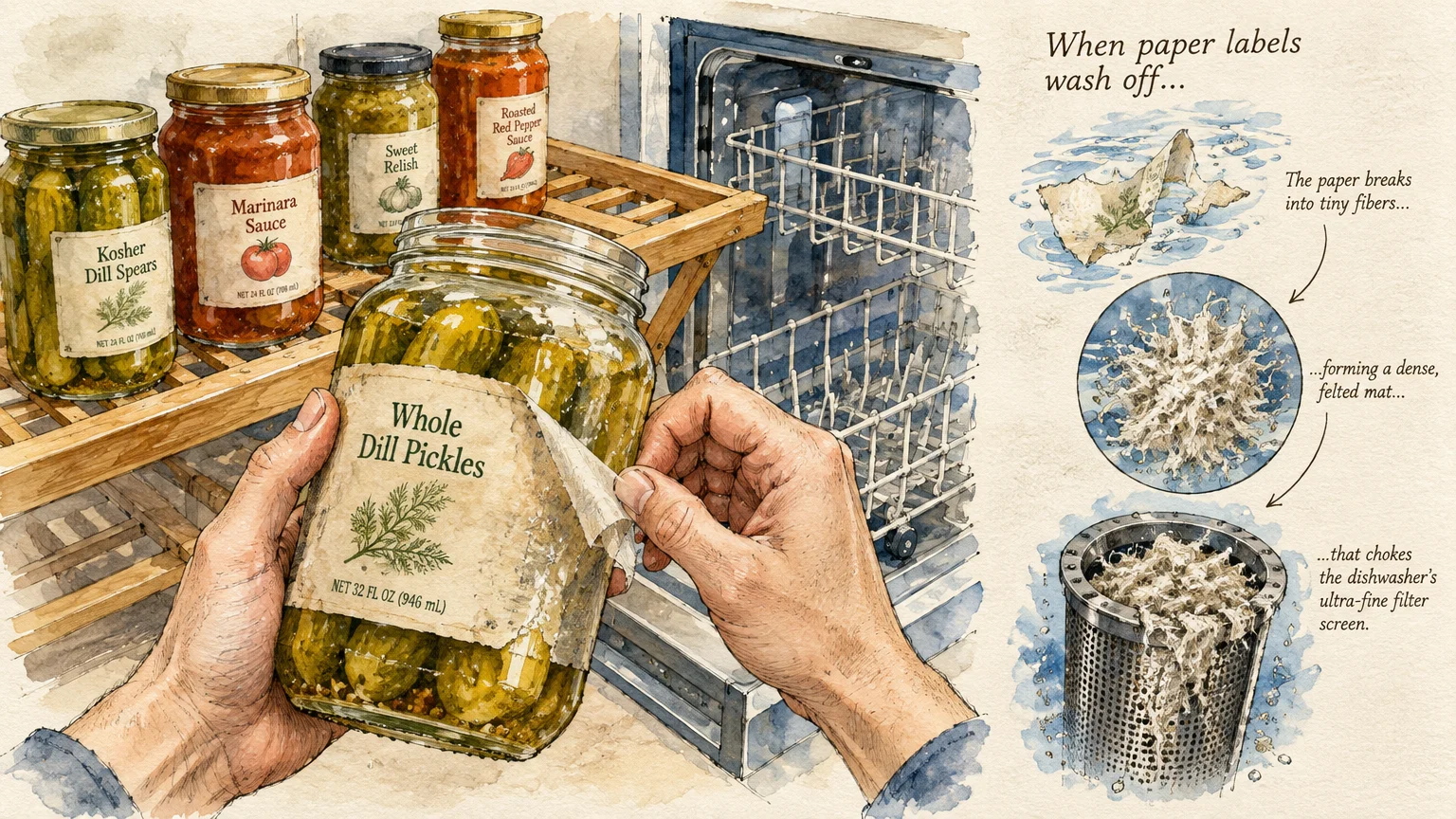
2. Strip Paper Labels and Tape Before Loading Jars
Paper labels on reused glass jars and salsa containers represent one of the fastest ways to choke your appliance. Water and heat dissolve the adhesive, releasing thick paper pulp into the wash water.
This pulp does not break down or wash out through the drain pump. Instead, the paper fibers weave into a dense felt mat across your filter mesh, halting drainage completely.
Always peel off jar labels, produce stickers, and masking tape before loading items onto your racks. Soak stubborn jars in warm water and baking soda on the counter first.
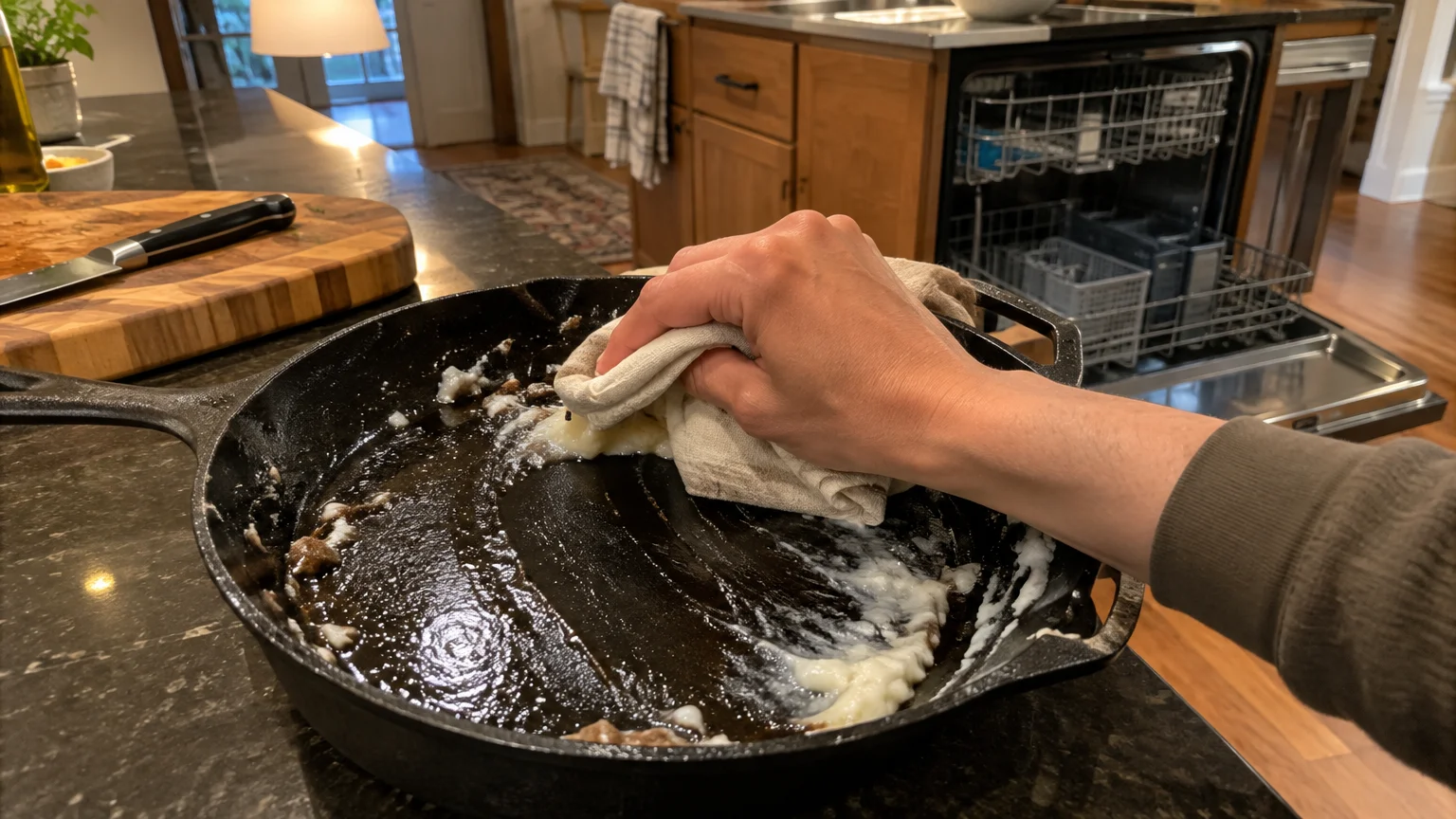
3. Wipe Away Heavy Fats and Dairy Residues
Animal fats and cooking oils liquefy during hot wash segments and flow toward the bottom sump basin. However, as the dirty wash water cools during draining, these lipids congeal into sticky white deposits.
Fats cling directly to the cool stainless steel or nylon mesh of your filter assembly. Over several cycles, this greasy coating traps microscopic grit and restricts drainage.
Use a used cloth napkin or scrap paper to wipe bacon grease, melted cheese, and heavy cream from pans before loading them. Preventing oil buildup drastically reduces the need for heavy manual scrubbing later.
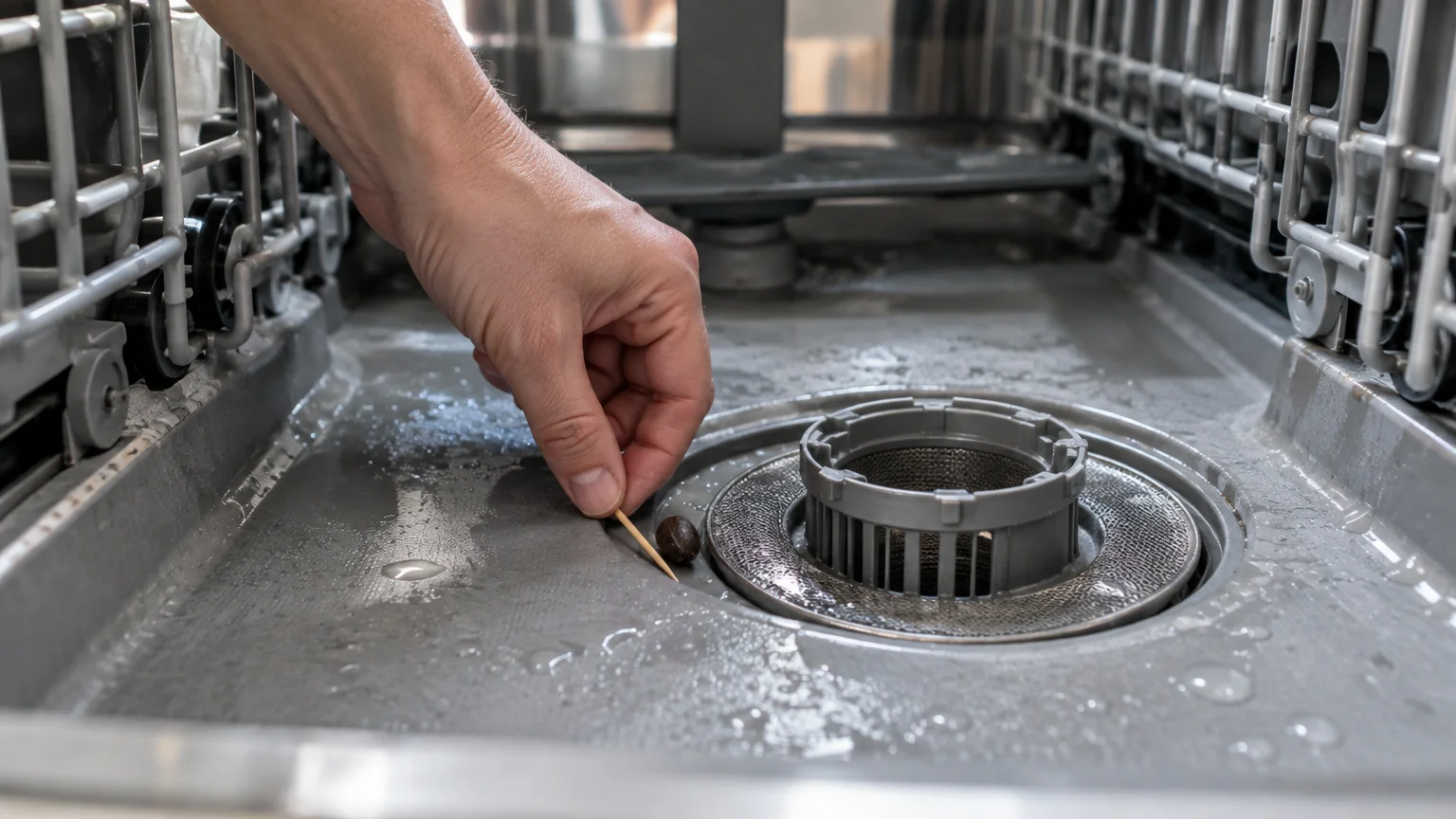
4. Clear the Tub Basin Floor Before Every Load
Small foreign objects frequently slip through the gaps in dishwasher racks and settle directly on the tub basin floor. Broken toothpick fragments, olive pits, twist ties, and small bones present a severe threat to your filtration system.
These hard items can lodge beneath the filter cap and puncture fragile nylon screens. They can also slip into the drain impeller, jamming the motor.
Make it a routine habit to sweep your eyes over the floor of the appliance before pushing the bottom rack in. Picking up stray debris takes only two seconds and saves hundreds of dollars in pump repairs.
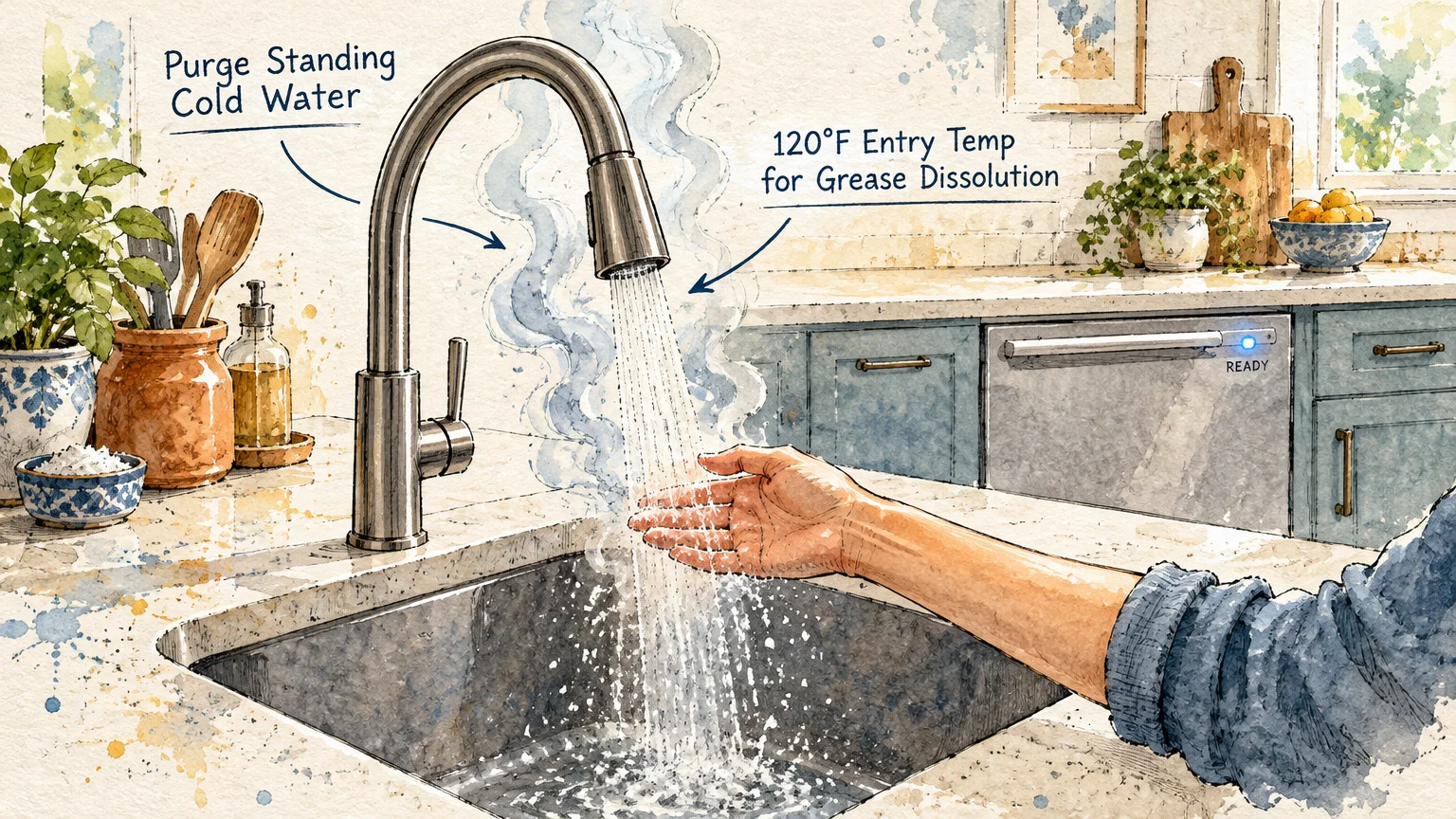
5. Purge the Kitchen Faucet to Guarantee Hot Water on Entry
Dishwashers draw water directly from your home hot water supply line rather than heating cold water from scratch. If your kitchen sink sits far from the water heater, the machine begins filling with room-temperature water.
Cool water fails to dissolve detergent tablets completely; it also allows animal fats to solidify on the filter basket. Undissolved detergent clumps turn into gummy residue that blocks drainage ports.
Turn on your kitchen sink tap until the water runs steaming hot before pressing start on your dishwasher. This guarantees that your appliance receives hot water immediately, melting grease instantly.
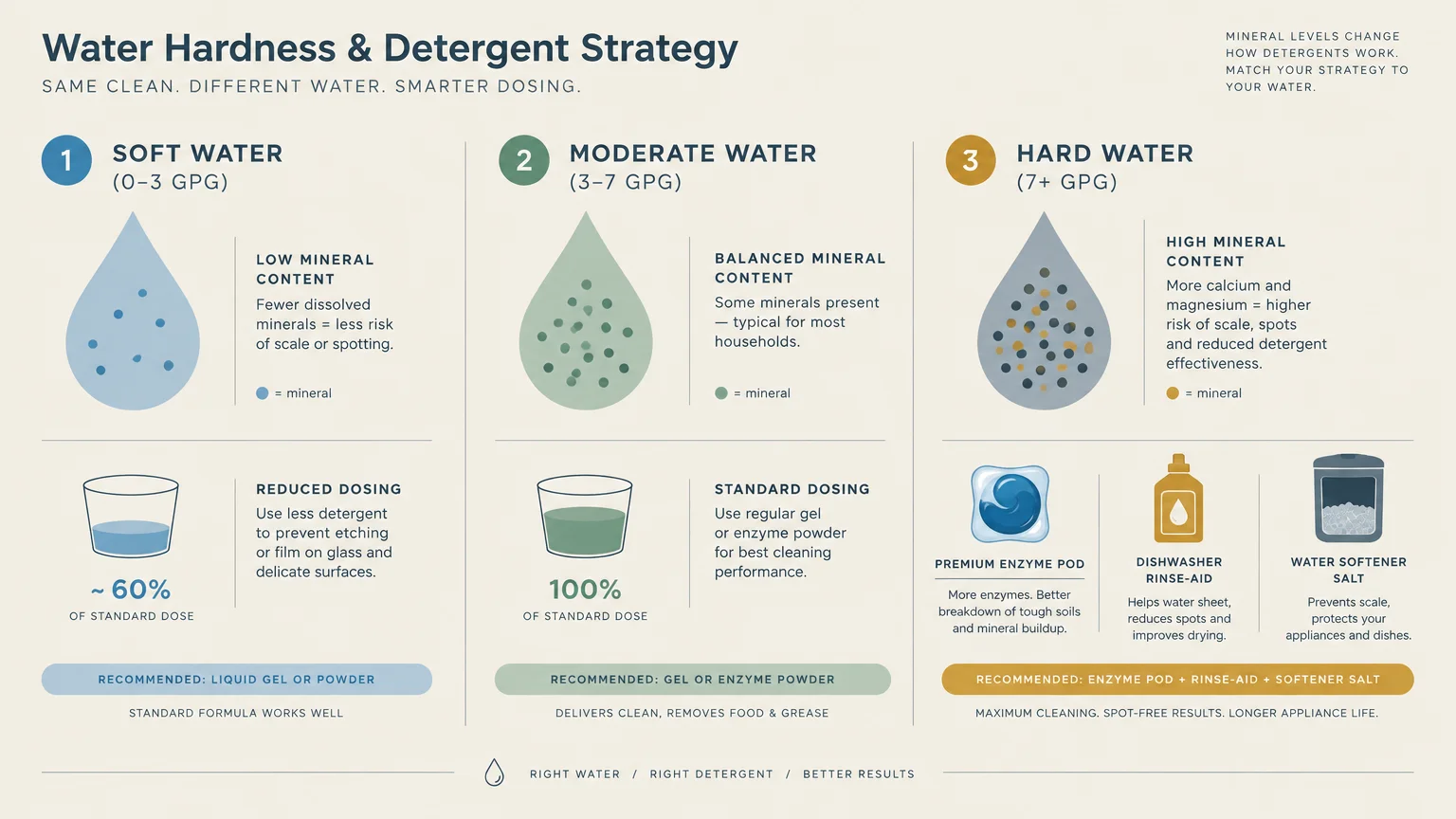
6. Match Detergent Type and Volume to Your Water Hardness
Water chemistry heavily influences how clean your dishes get and how clear your filter stays. Hard water contains elevated levels of dissolved calcium and magnesium minerals that bind tightly with soap residues.
This chemical reaction forms insoluble scum known as lime soap or calcium stearate. Over time, this chalky substance coats the microscopic pores of your filter mesh.
Review the American Cleaning Institute dishwashing guidelines to match your detergent dose to your local water hardness. Adding a rinse aid prevents minerals from clinging to both glassware and filter surfaces.
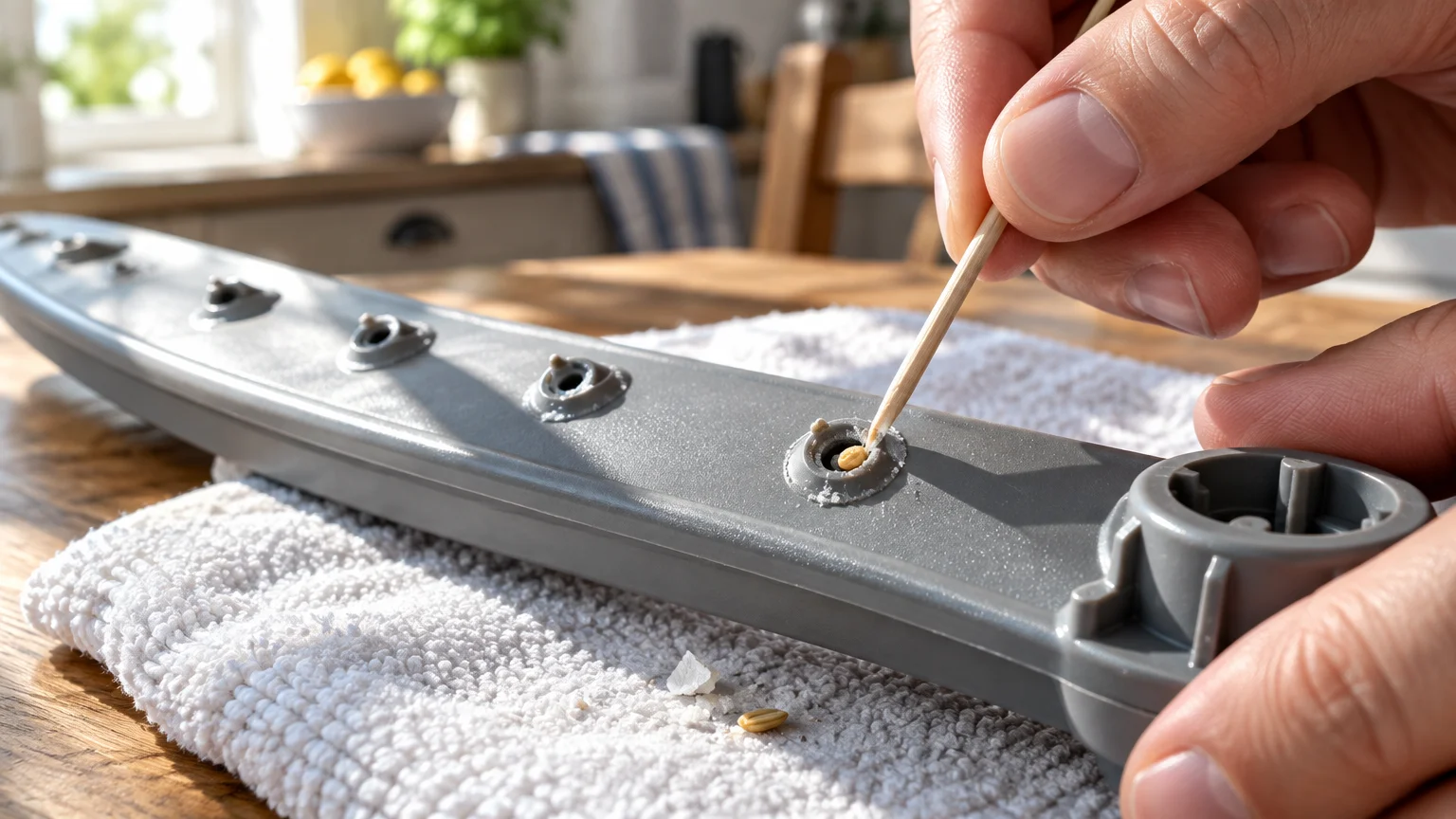
7. Inspect and Clean the Rotating Spray Arm Nozzles
The rotating wash arms blast pressurized water down onto your dishes, driving dislodged food particles down into the filter sump. If the tiny spray nozzles get clogged with mineral scale or seeds, water pressure drops significantly.
Weak spray pressure prevents the machine from flushing caught food particles down into the sump reservoir. As a result, food particles settle loosely over the filter screen and redeposit onto your clean glassware.
Inspect the spray arm nozzles once a month for trapped seeds or lime scale. Use a wooden toothpick to gently dislodge any trapped debris from the holes.
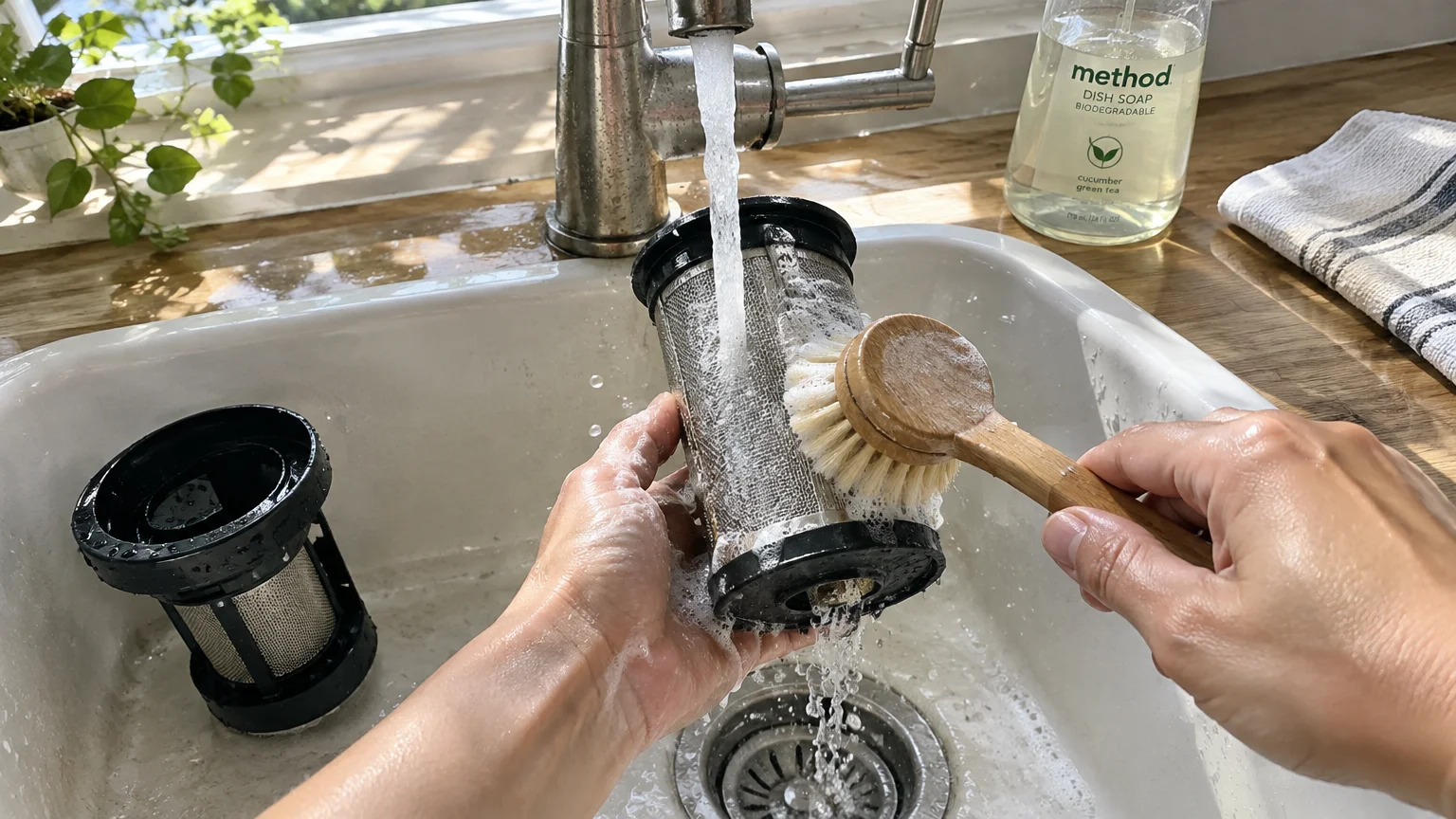
8. Establish a Monthly Manual Warm-Water Mesh Rinse
Even with careful scraping, a thin film of grease, fine silt, and coffee grounds inevitably collects on your filter screen. Routine dishwasher filter cleaning prevents this fine silt from baking into a permanent, hardened crust.
The Whirlpool dishwasher filter maintenance guide recommends checking your filter once a month for optimal cleaning performance. Rinsing the cylinder takes less than two minutes at your sink.
Unlock the cylindrical filter by turning it counterclockwise, lift it out, and hold it under hot running tap water. Use a soft nylon dish brush to gently sweep away stubborn surface films.
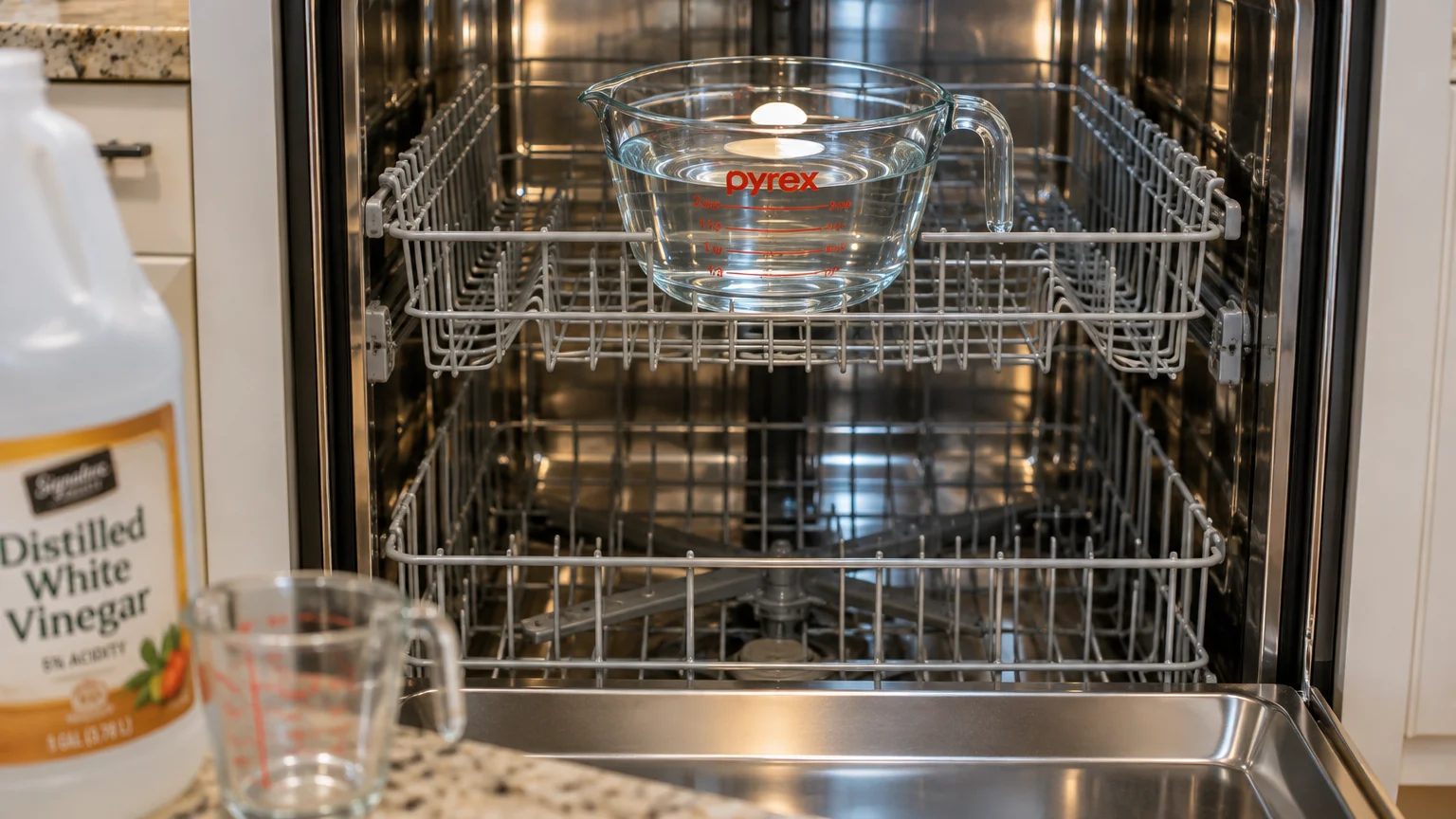
9. Run a Dedicated Descaling Cycle with Distilled White Vinegar
Limescale and unseen grease film can stubbornly resist manual rinsing with plain tap water. An empty monthly hot cycle infused with mild acid dissolves mineral scale and breaks down trapped organic residue.
Place a dishwasher-safe ceramic mug upright on the top rack and fill it with two cups of distilled white vinegar. Run your machine on its hottest normal wash cycle without any detergent or dishes.
The acidic wash water slowly disperses across the interior, cutting through soap scum on the mesh. For households with natural stone countertops or delicate gaskets, a citric acid appliance cleaner serves as an effective alternative.
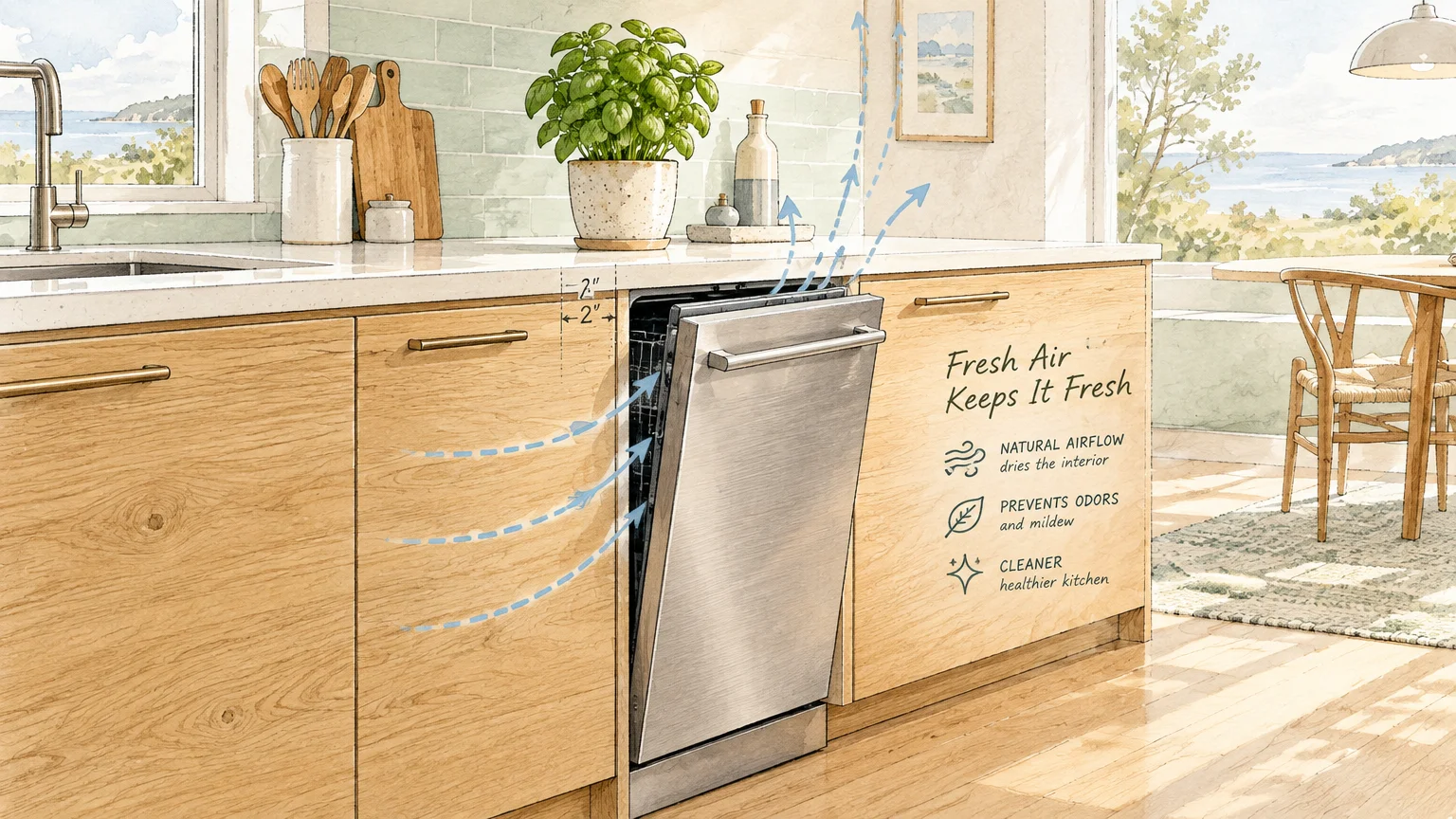
10. Prop the Appliance Door Ajar Between Wash Cycles
Closing the dishwasher door completely right after unloading seals high humidity inside the dark, warm chamber. This tropical environment allows mold, mildew, and slime-forming bacteria to multiply rapidly across the filter assembly.
Bacterial biofilm creates a slippery, pungent jelly that clogs mesh openings and causes stubborn smells. Consistent dishwasher odor prevention starts with proper interior airflow.
Leave the dishwasher door cracked open an inch or two between cycles to promote evaporation. Circulating dry air dries out the filter mesh, killing moisture-loving bacteria before they form slime.
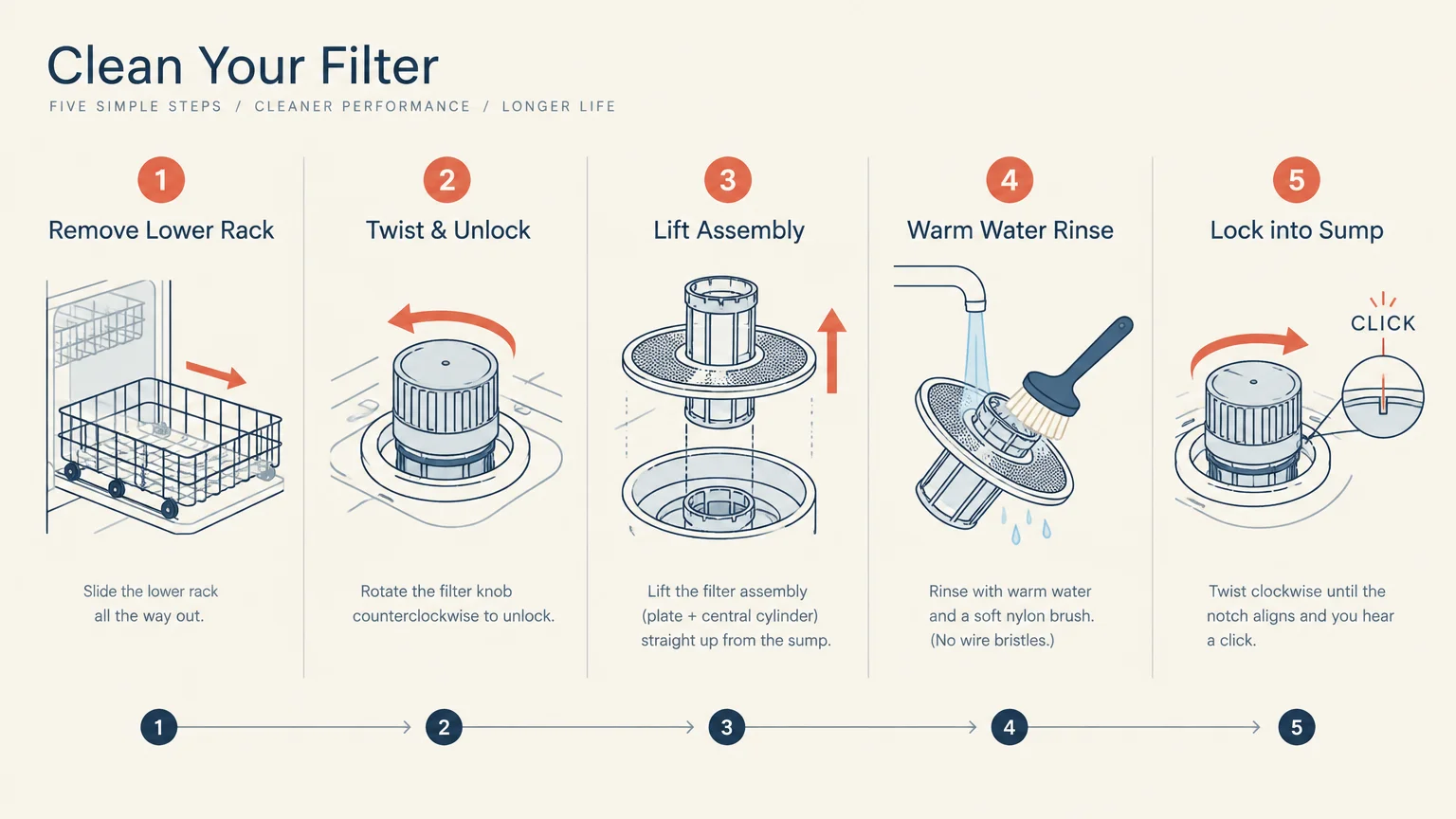
How to Clean a Dishwasher Filter in Five Easy Steps
Learning how to clean dishwasher filter assemblies properly prevents accidental tears in the delicate micro-mesh. Dishwasher maintenance tips often emphasize frequency, but correct technique is equally critical for preserving your machine.
Consult the GE Appliances manual filter cleaning instructions before removing parts, as models vary slightly by brand. Always handle plastic locking tabs with care to avoid snapping retaining clips.
-
Slide Out the Lower Rack:
Slide the lower dish rack completely out of the machine and set it aside to expose the tub floor.
-
Unlock the Cylindrical Filter:
Turn the cylindrical filter a quarter turn counterclockwise until it clicks out of its locked channel.
-
Lift Out the Dual Components:
Gently pull the central cylinder upward, bringing the flat stainless steel mesh plate along with it.
-
Wash Under Flowing Warm Water:
Hold both components under warm running tap water and apply a few drops of mild dish soap. Use a soft-bristled brush or cloth to sweep away trapped particles without puncturing the mesh.
-
Clean the Sump Basin:
Check the exposed sump basin in the bottom of the tub for loose glass, bones, or twist ties. Wipe out any trapped grit with a clean damp sponge.
-
Lock the Filter in Place:
Seat the flat mesh plate into its recess and insert the cylinder filter. Rotate clockwise until the alignment arrows click together securely.
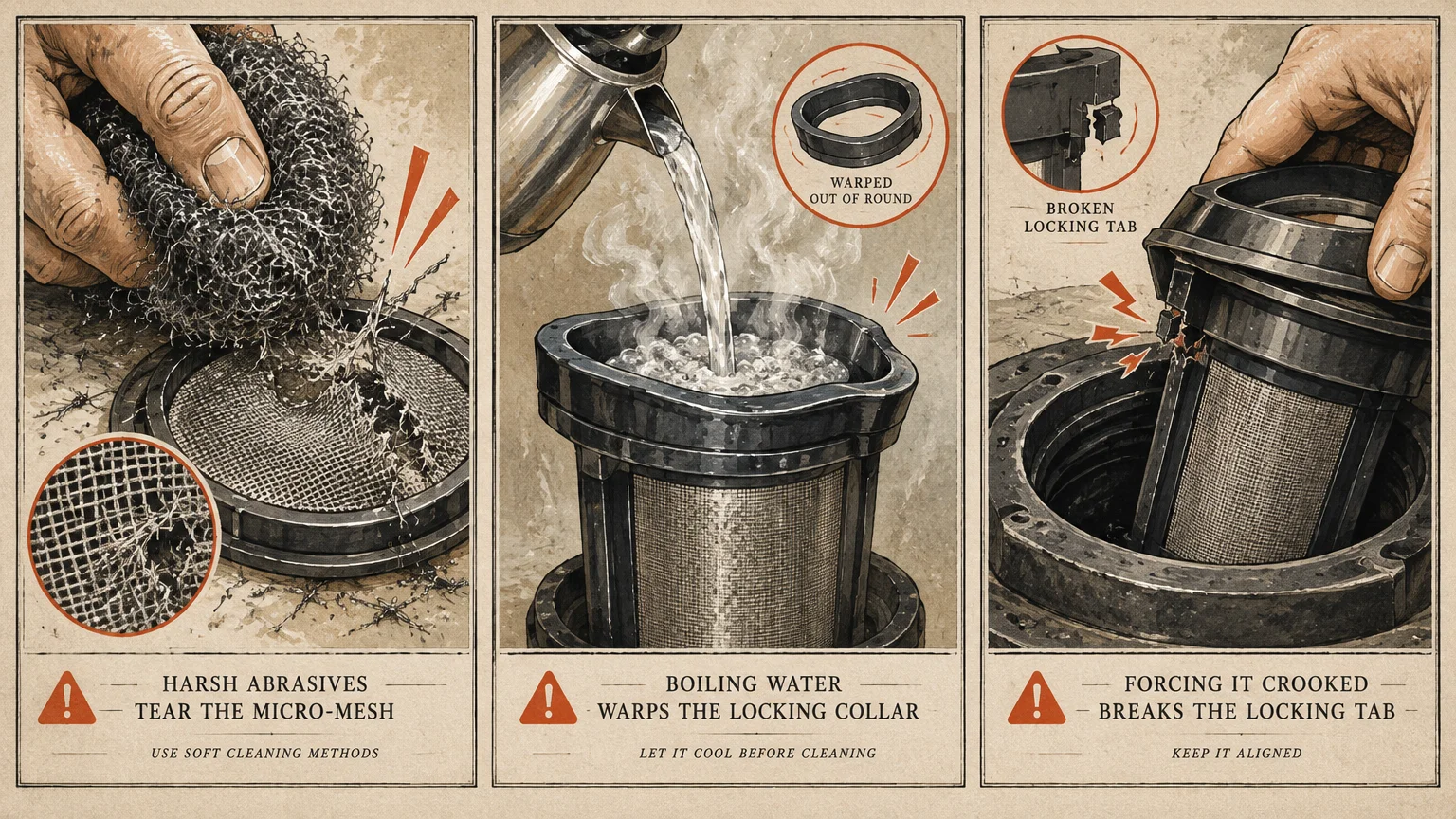
Mistakes That Ruin Dishwasher Filter Screens
Using wire brushes, scouring pads, or hard metal scrapers punctures the fragile mesh screen. Even tiny tears allow large debris into the recirculation pump, causing catastrophic motor failure.
Never wash your filter cylinder in an active dish load or inside a clothes washing machine. Intense water jets can deform the plastic frame and distort the precise locking mechanism.
Avoid harsh chemical solvents like bleach, caustic lye, or undiluted muriatic acid during cleaning. These harsh chemicals corrode stainless steel mesh and degrade the rubber seals that prevent leaks.
Never run a wash cycle with the filter removed from the sump basin. Unfiltered wash water will pull silverware, glass shards, and bones straight into the drain impeller.
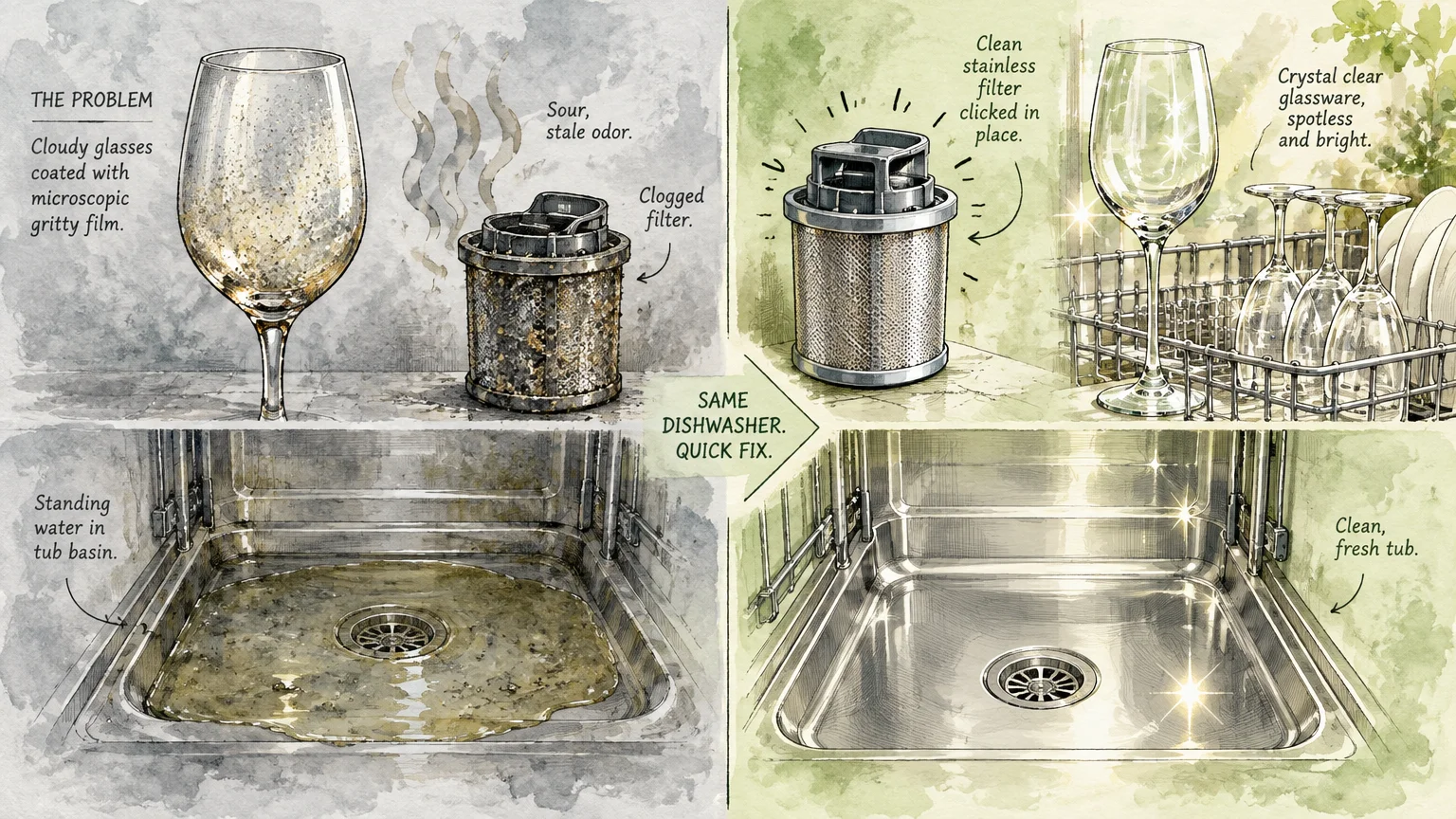
Symptoms of a Clogged Dishwasher Filter and Quick Fixes
When a filter begins to clog, your dishwasher provides visible clues before it fails completely. Use this diagnostic reference to connect warning signs with practical, immediate solutions.
| Observed Symptom | Primary Filter Issue | Actionable Solution |
|---|---|---|
| Gritty film on glasses | Fine silt or coffee grounds trapped on mesh | Rinse cylinder under warm water with a soft nylon brush. |
| Standing pool of dirty water | Heavy grease or paper pulp blocking drain intake | Remove filter, clear sump debris, and run an empty rinse cycle. |
| Musty, sour appliance odor | Bacterial biofilm and rotting food particles in sump | Perform vinegar rinse cycle and keep door ajar between washes. |
| Extended cycle duration | Clogged mesh slowing down water drainage sensors | Deep-clean mesh screen and check spray arm nozzles for blockages. |
| Chalky white scale on filter | Hard water minerals bonding with detergent scum | Soak filter assembly in warm distilled vinegar for 20 minutes. |
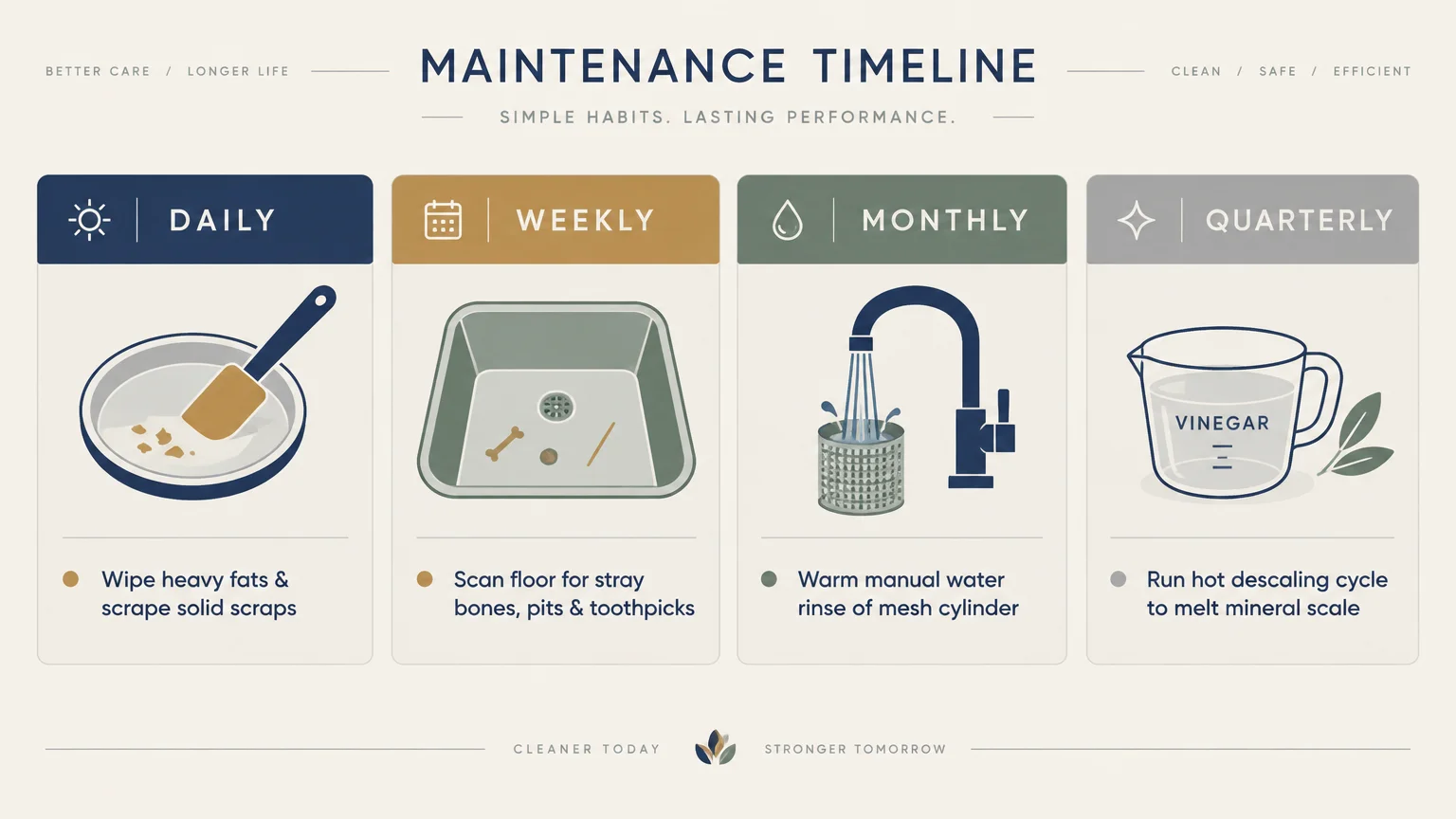
A Sensible Dishwasher Maintenance Schedule
Establishing a predictable rhythm keeps maintenance manageable, especially for busy households or seniors simplifying domestic chores. Dividing responsibilities across days and months prevents dirt from accumulating unnoticed.
Daily Habits
Scrape solid food remnants off plates into the garbage with a silicone spatula. Clear foreign items like toothpicks, stickers, and twist ties before closing the appliance door.
Weekly Checks
Glance at the bottom of the stainless steel tub for dropped cutlery or rogue plastic bottle caps. Keep the door cracked open whenever the machine is empty to allow full drying.
Monthly Deep Clean
Twist out the cylindrical filter and rinse away surface slime under hot running water. Run an empty sanitizing wash cycle with two cups of white vinegar placed on the upper rack.
Bi-Annual Inspection
Remove and inspect the upper and lower rotating spray arms to clear trapped seeds or limescale. Inspect the rubber door gasket and lower door sweep for mold or grease deposits.
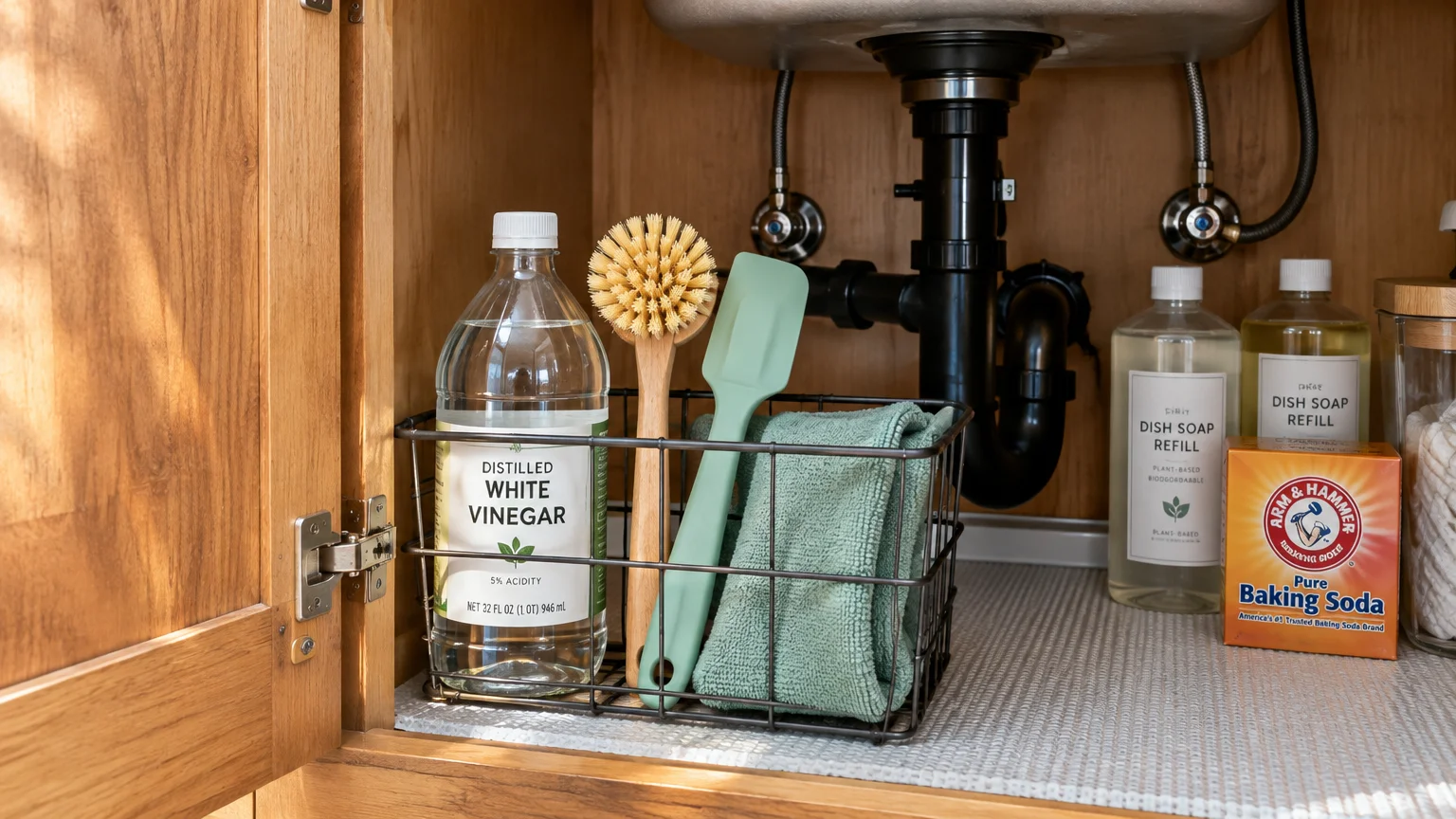
Practical Next Steps for Effortless Appliance Care
Preventing a clogged dishwasher filter does not demand hours of tedious labor or expensive service visits. Simple daily scraping habits and a quick monthly rinse protect your machine from expensive breakdowns.
Take two minutes today to roll out your lower dish rack and inspect your filter basket. If you see a cloudy film or trapped food, rinse it clean under your tap right now.