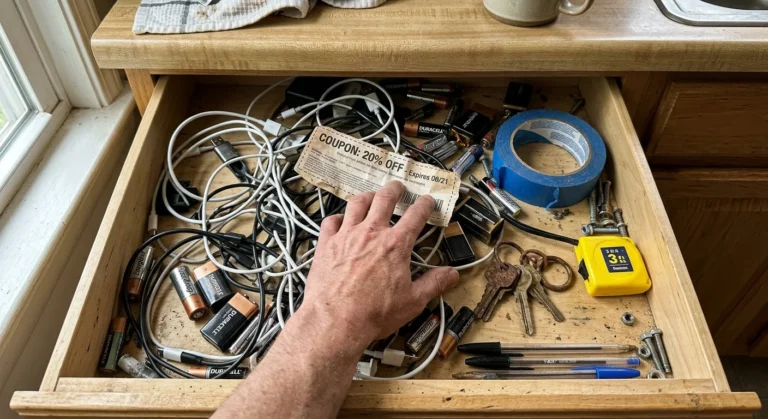
You can transform your most chaotic drawer into an organized storage space in less than fifteen minutes. Decluttering this catchall spot eliminates daily friction and removes genuine safety hazards lurking beneath the surface.
Most households treat the junk drawer as a harmless holding zone for miscellaneous objects. However, forgotten electronics, stray chemicals, and mixed metal goods create silent fire and poisoning hazards over time.
A fast junk drawer declutter restores order and ensures dangerous items leave your living space immediately. Here is how to identify the five most problematic items and dispose of them safely.
1. Loose Batteries and Button Cells
Loose batteries represent the single most hazardous category of items to get rid of at home.
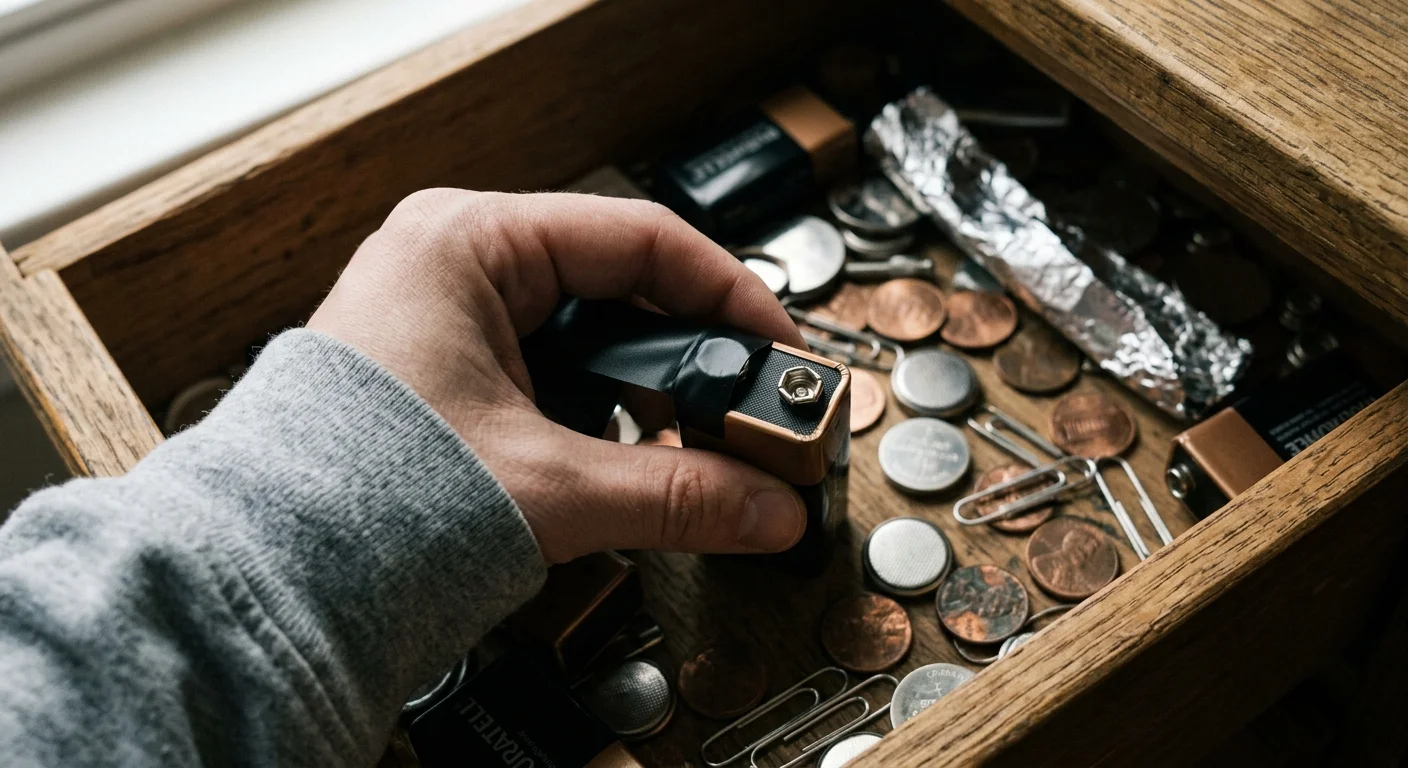
When 9-volt batteries roll freely in a drawer, their positive and negative terminals sit exposed right next to each other.
If a stray paperclip, coin, key, or scrap of aluminum foil bridges those terminals, it creates an instant short circuit.
According to the National Fire Protection Association, this electrical contact generates intense heat that easily sparks residential drawer fires.
Button cell batteries present an equally severe hazard because young children or curious pets can swallow them quickly.
Moisture from saliva reacts with lodged button cells to generate caustic soda; this reaction causes catastrophic internal chemical burns within two hours.
Inspect your drawer immediately and pull out every loose battery rolling along the bottom.
Cover the exposed terminals of all 9V and lithium batteries with electrical tape, duct tape, or masking tape.
Store active household batteries in their original plastic packaging or a dedicated battery storage caddy.
Drop depleted single-use and rechargeable cells off at a certified recycling drop-off point rather than tossing them into the trash.
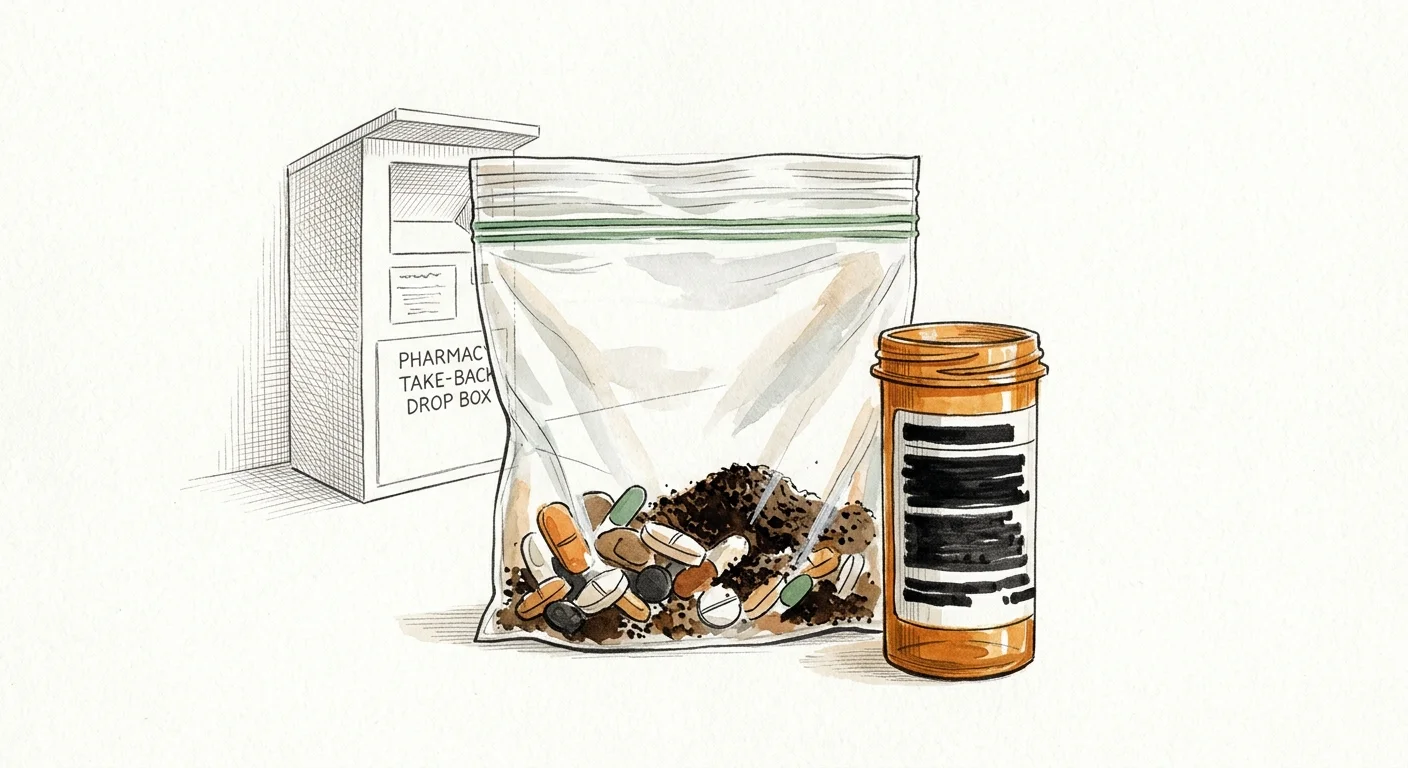
2. Expired Medications and Mystery Pills
Unlabeled prescription bottles, loose pain relievers, and ancient tubes of ointment frequently hide in kitchen and hallway drawers.
Drawers located near kitchens or exterior entryways experience frequent temperature fluctuations and humidity spikes.
These environmental shifts accelerate the chemical breakdown of active pharmaceutical ingredients, making the drugs unpredictable and ineffective.
Loose pills also create severe poisoning risks if family members or guests mistake them for breath mints or candy.
The U.S. Food and Drug Administration recommends utilizing DEA National Prescription Drug Take Back locations or pharmacy drop boxes as your primary disposal method.
These dedicated collection kiosks keep dangerous compounds out of municipal water supplies and prevent unauthorized access.
If a take-back program is unavailable in your area, follow standard FDA household disposal protocols for non-flushable medications.
Mix the whole, uncrushed pills with an unappealing substance such as used coffee grounds, dirt, or cat litter.
Place this mixture into a sealed plastic bag before discarding it in your regular household trash bin.
Always scratch out personal medical information and prescription numbers on plastic bottles before recycling the empty containers.
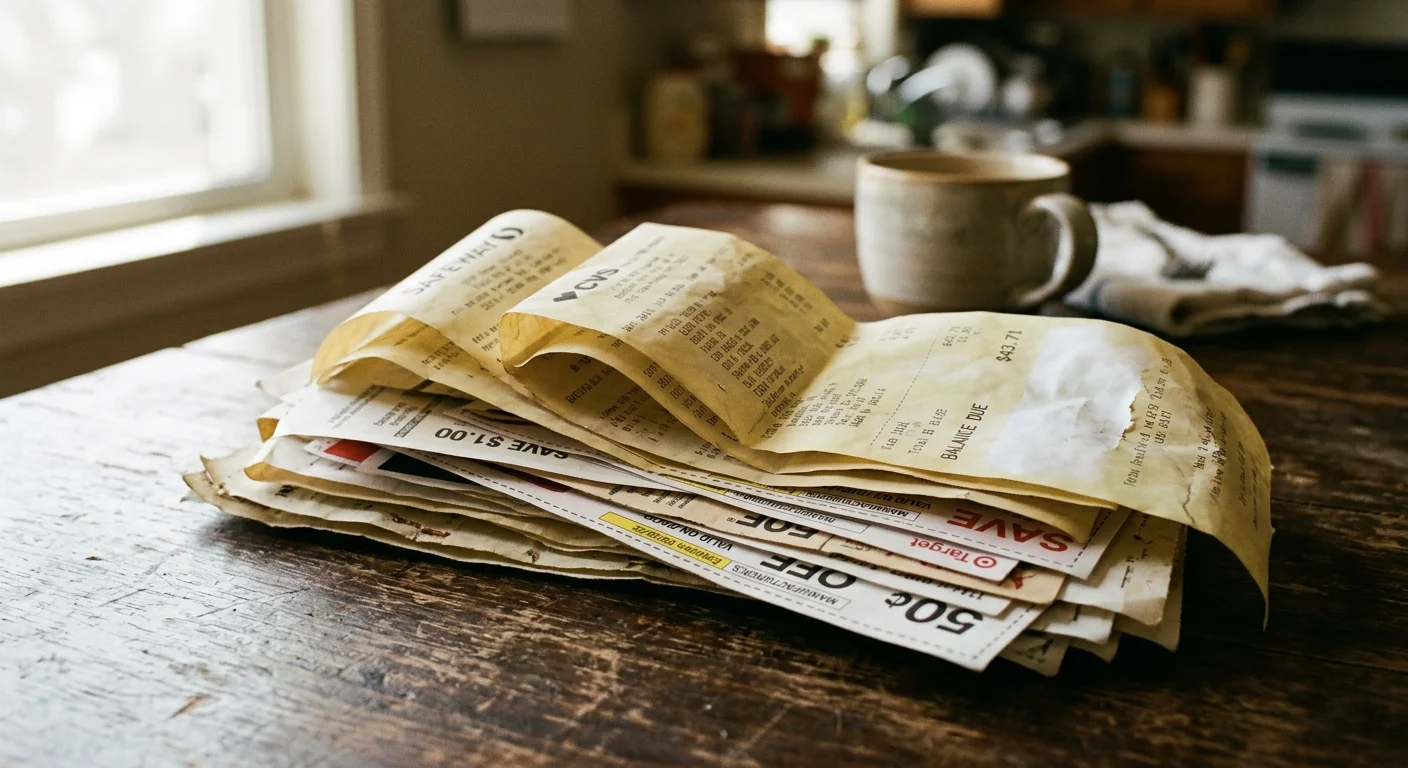
3. Faded Thermal Paper Receipts and Expired Coupons
Old grocery slips, expired store vouchers, and faded warranty receipts create deep layers of paper clutter in catchall drawers.
Most modern point-of-sale registers print receipts on thermal paper coated with chemical developers like bisphenol A (BPA) or bisphenol S (BPS).
These industrial chemicals rub off on your hands and absorb directly through the skin during routine handling.
Thermal paper also creates major processing problems when mixed with standard curbside recycling.
The Environmental Protection Agency notes that chemical coatings contaminate recycled paper pulp batches during municipal processing.
You must discard shiny thermal receipts directly into your regular household trash bin rather than your paper recycling bin.
Dig through your paper stash and throw away expired coupons, restaurant menus, and illegible slips immediately.
If you need to save a purchase receipt for tax records or warranty claims, photograph it with your smartphone.
Save the image to a labeled cloud storage folder, then discard the toxic paper original into the trash.
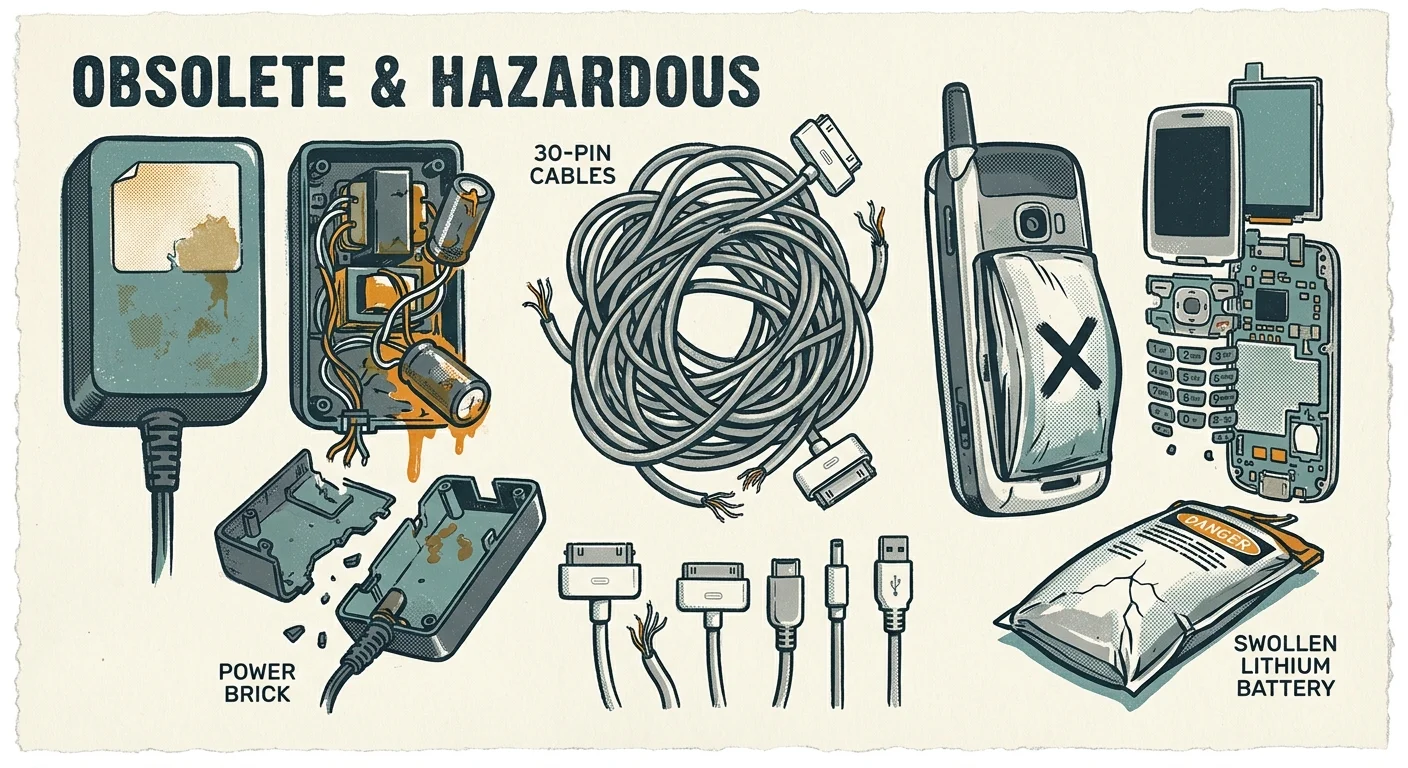
4. Mystery Cords, Outdated Adapters, and Swollen Electronics
Tangled nests of obsolete charging cables, mystery power bricks, and retired flip phones waste valuable storage space.
Frayed cables and cracked adapter blocks present severe shock and electrical fire hazards if plugged into active wall outlets.
Retired electronic gadgets containing rechargeable lithium-ion batteries create even greater safety concerns.
As rechargeable devices age inside dark, unventilated drawers, their internal battery packs can degrade, swell, and rupture.
Examine old power banks and retired phones carefully; discard any unit displaying a bulging case or cracked seam immediately.
Never toss rechargeable electronics, battery packs, or wireless gadgets into your standard household trash bin.
Municipal waste compactors easily crush swollen batteries, igniting aggressive chemical fires inside sanitation trucks and sorting facilities.
Take retired electronic gadgets and loose charging packs to a certified e-waste handler through the Call2Recycle drop-off locator.
Many hardware stores and electronics retailers host free collection bins right inside their front doors.
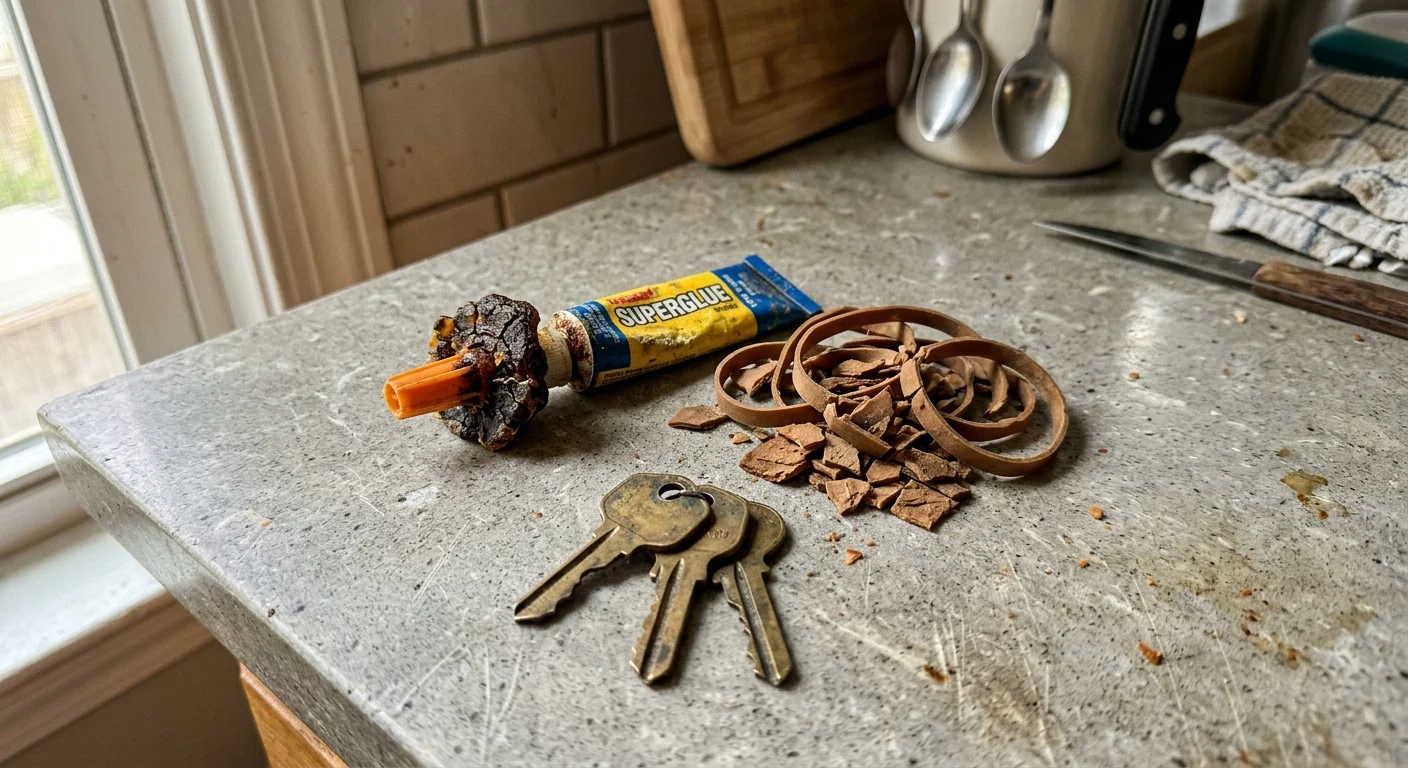
5. Dried Adhesives, Brittle Rubber Bands, and Orphaned Keys
Crusty bottles of super glue, half-used tubes of caulk, and dried correction fluids turn drawers into product graveyards.
Once you break the factory seal on cyanoacrylate super glue, ambient air hardens the formula inside the nozzle within months.
Old solvent-based glues and craft adhesives also release volatile organic compounds when their plastic caps crack or degrade.
Rubber bands experience chemical oxidation over time; they turn brittle, snap upon contact, and melt permanently onto drawer organizers.
Test your adhesive bottles by squeezing the sides gently; if the bottle feels rock hard, throw it into the trash.
Collect any yellowed, sticky, or brittle rubber bands and discard them before they ruin surrounding items.
Gather the mystery brass keys rolling around loose in the corners of your drawer.
Walk around your property and test each mystery key on exterior deadbolts, padlocks, sheds, and filing cabinets.
If a key fails to match any operational lock in your home, drop it into a metal scrap bin for recycling.
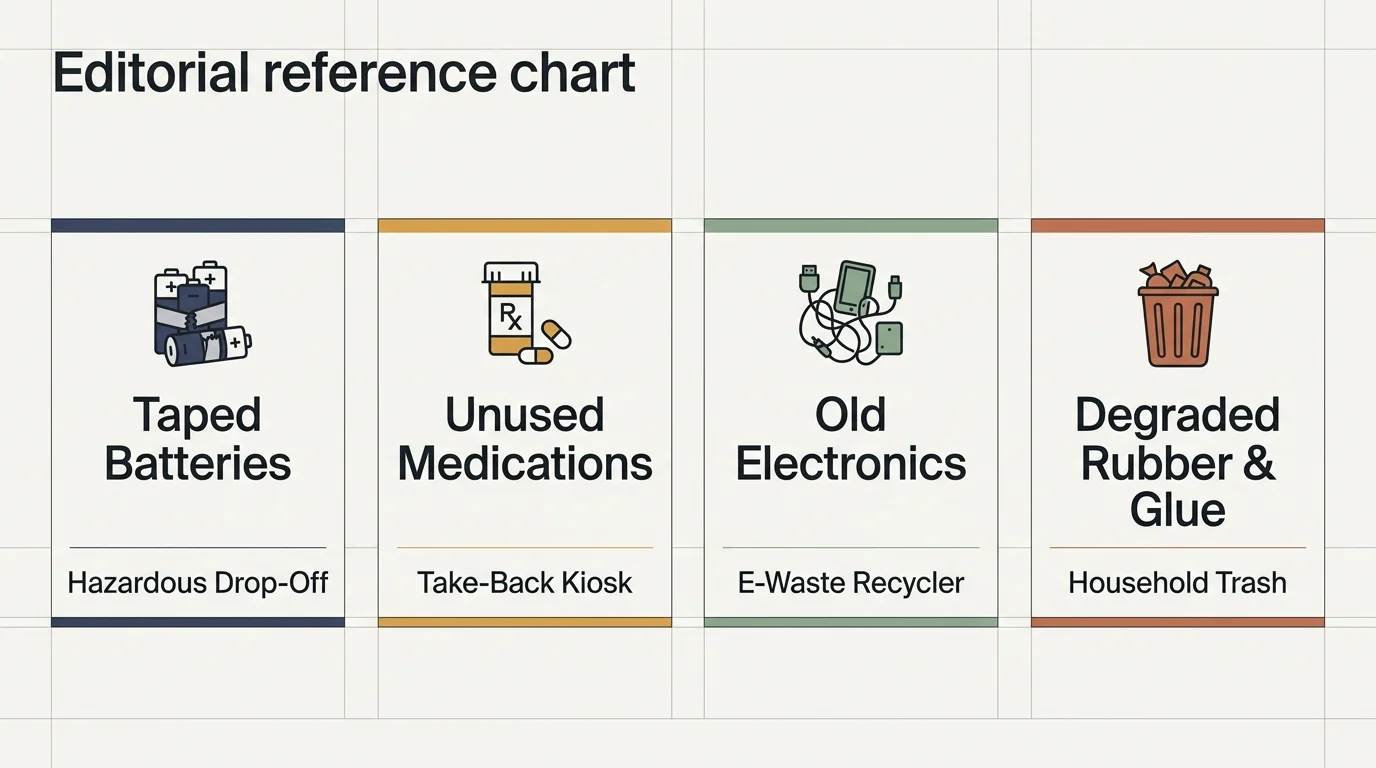
Quick-Reference Disposal Guide for Common Junk Drawer Items
Use this reference table to determine the safest disposal pathway for everyday items to throw away at home.
| Item Category | Hidden Hazard or Issue | Recommended Disposal Action |
|---|---|---|
| 9V & Lithium Batteries | Terminal contact creates short circuits and sparks fires. | Tape terminals with electrical tape; take to a battery recycling kiosk. |
| Expired Medications | Accidental poisoning and chemical degradation. | Use pharmacy drop boxes or mix with coffee grounds in sealed trash bags. |
| Thermal Paper Receipts | BPA/BPS coatings contaminate paper recycling streams. | Photograph for digital records; discard paper slips in household trash. |
| Old Cords & Gadgets | Swollen lithium batteries ignite under pressure. | Drop off at certified e-waste collection kiosks or retail take-back bins. |
| Dried Adhesives & Glues | Solidified chemical waste and off-gassing vapors. | Discard fully hardened tubes directly into household trash. |
| Brittle Rubber Bands | Oxidized rubber melts onto drawer liners and tools. | Sweep up degraded bands and toss into household trash. |
| Unmatched Keys | Unnecessary physical bulk and metal clutter. | Test on household locks; place unmatched keys into metal recycling. |
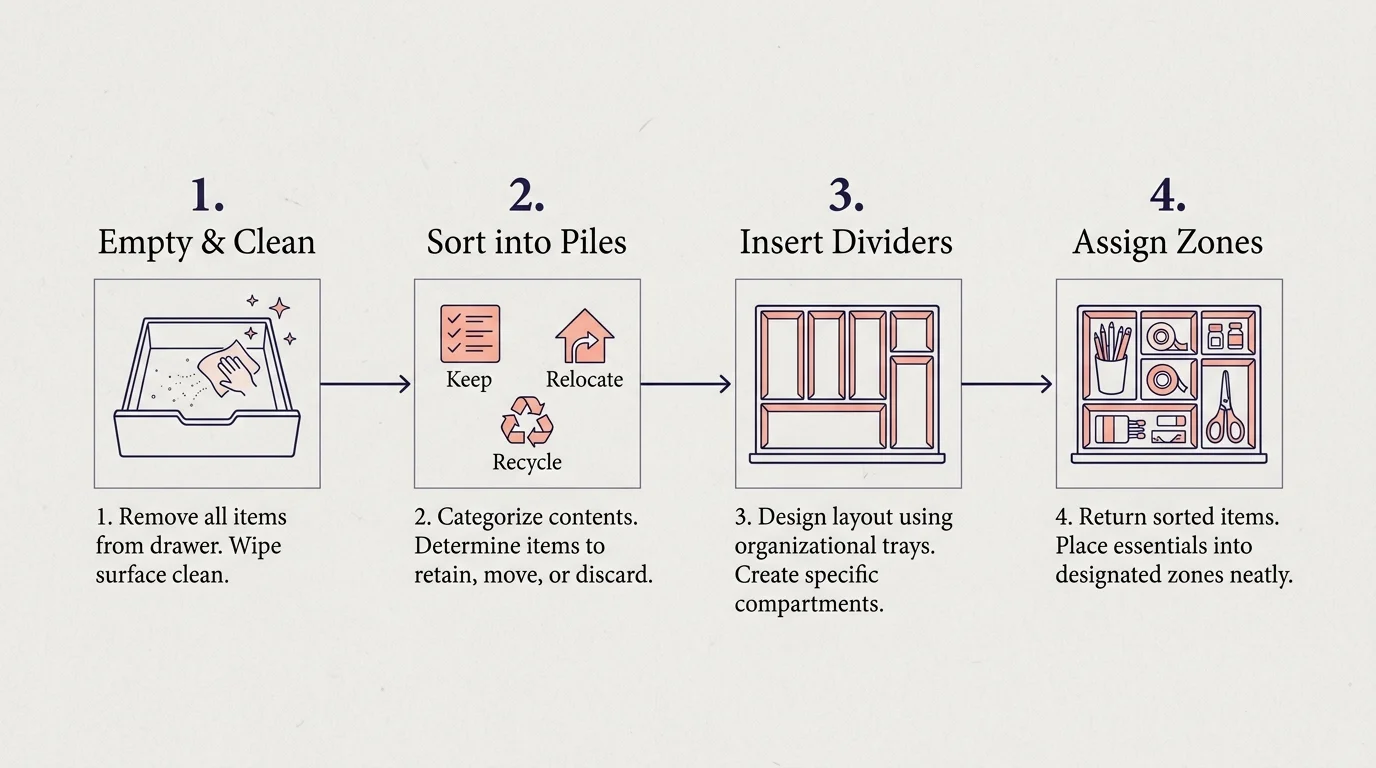
A Step-by-Step System for Organizing Your Junk Drawer
Executing an effective junk drawer declutter requires a structured, step-by-step workflow.
Follow these actionable decluttering tips to reset your drawer efficiently without creating household overwhelm.
- Empty the drawer completely: Remove every item and place it onto a flat countertop or folding table.
- Wipe down the interior: Vacuum dust and loose crumbs, then wipe the drawer interior with a damp microfiber cloth.
- Sort items into distinct piles: Group contents into safety hazards, active utilities, relocated items, and true trash.
- Purge the dangerous items first: Bag expired medications, tape loose batteries, and box up outdated electronics for drop-off.
- Assign dedicated organizer trays: Place shallow, non-slip organizer bins into the drawer to create defined boundaries.
- Return only daily essentials: Place verified, frequently used utility tools back into their assigned compartments.
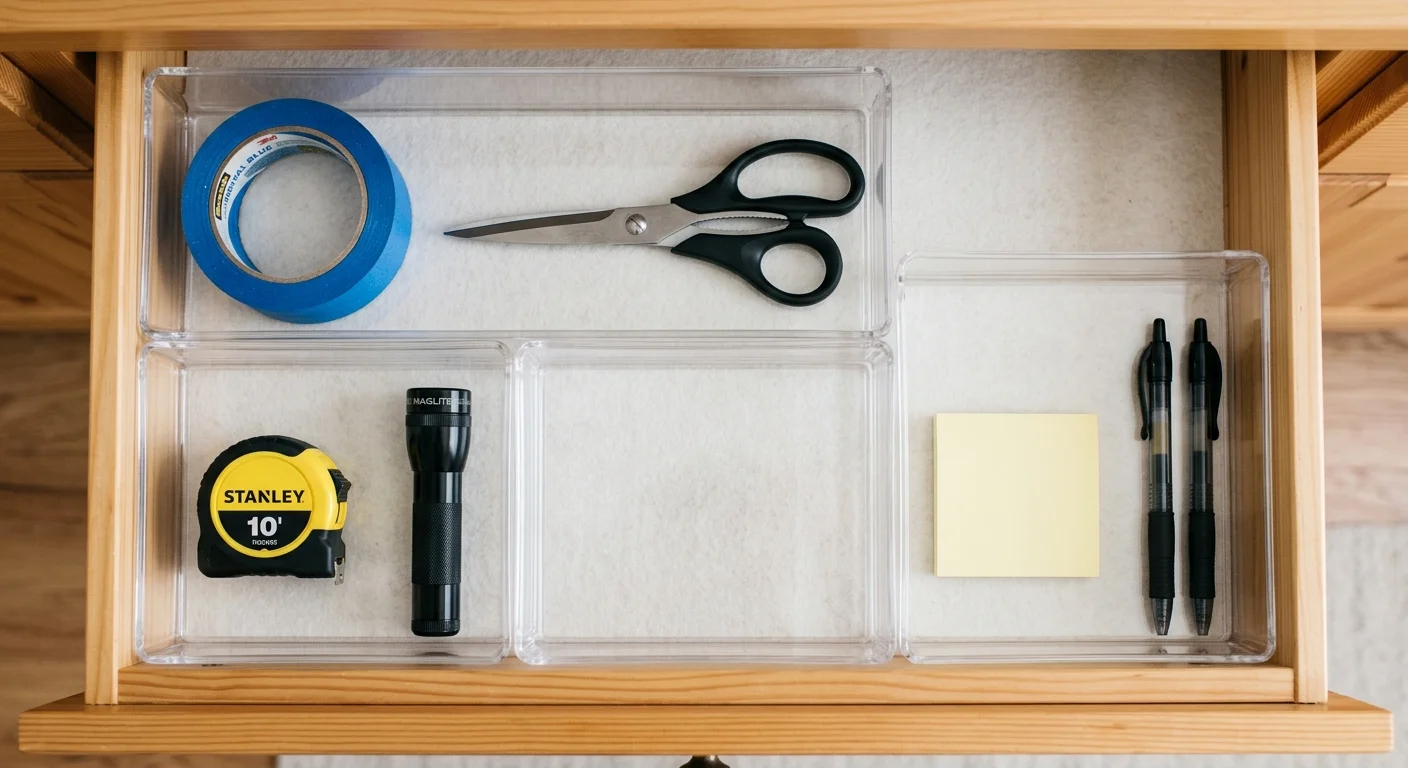
What Actually Belongs in an Organized Utility Drawer
Organizing a junk drawer becomes far simpler once you redefine the space as a functional utility station.
A high-functioning utility drawer holds only items that solve everyday household problems within sixty seconds.
- One pair of multi-purpose household scissors
- One roll of transparent tape and one roll of painter’s tape
- Two working pens, one permanent marker, and a small notepad
- One compact measuring tape (12 to 16 feet)
- One multi-bit screwdriver or basic utility multi-tool
- One small LED flashlight with fresh batteries installed
- A small pack of assorted adhesive bandages
- A single tray holding organized paper clips and safety pins
If an item does not support quick household repairs, labeling, or measurements, store it in its primary room instead.
Keep screwdrivers in your primary toolbox, store spare office supplies in your desk, and place extra medicines in your primary first aid kit.
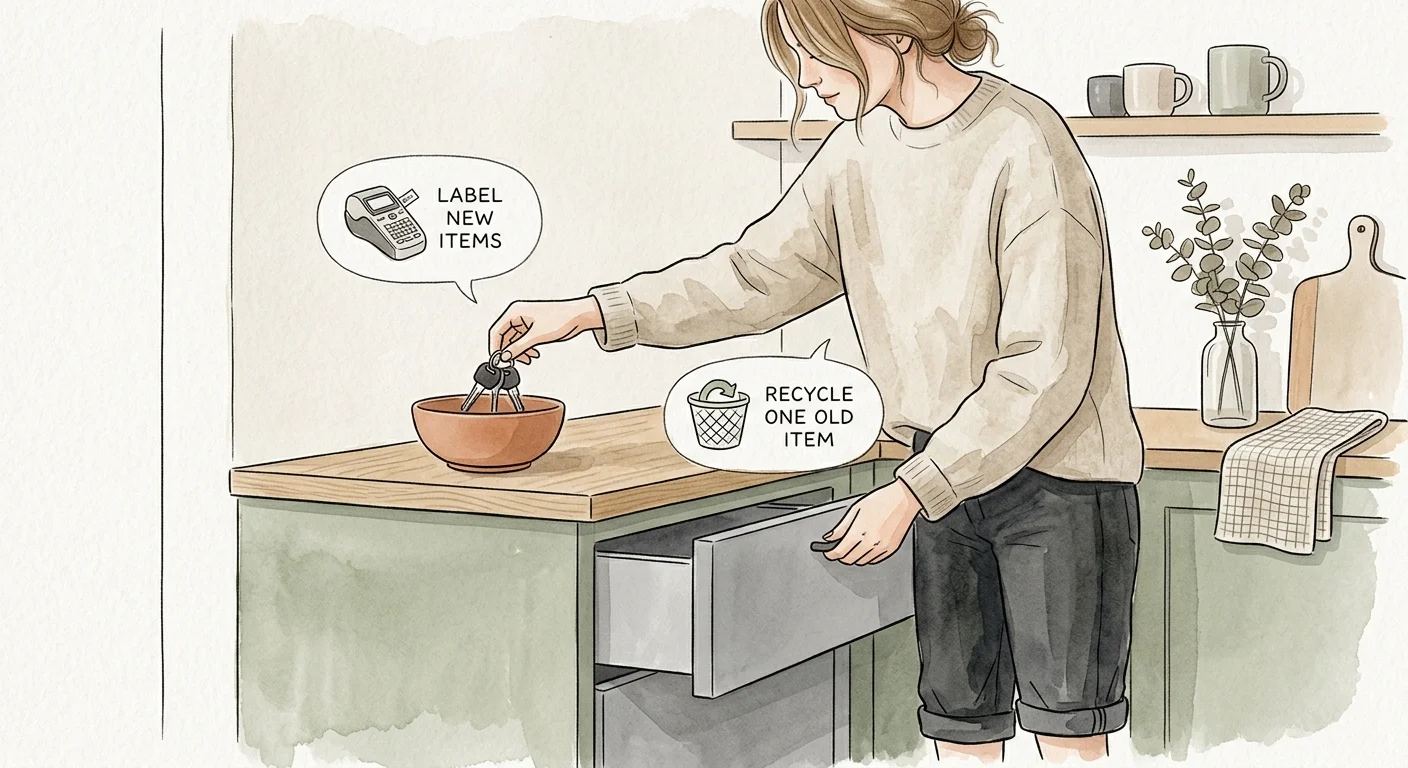
Smart Habits to Keep Drawer Clutter from Returning
Preventing clutter accumulation requires establishing strict physical boundaries and simple maintenance routines.
Set a strict rule against placing loose, uncategorized objects into the drawer without an assigned bin.
Whenever you bring a new small tool or office supply home, remove an outdated equivalent to preserve space.
Conduct a three-minute seasonal sweep every three months to pull out stray receipts, expired flyers, and dead pens.
Clear physical boundaries eliminate the temptation to treat this functional drawer as a household dumping ground.

Take Action on Your Drawer Today
Pull out your kitchen or hallway drawer right now and check for exposed 9V battery terminals and expired medications.
Taping battery terminals and bagging old prescriptions takes under five minutes and instantly makes your home safer.