Skimpy, tight drapery strips your room of warmth, privacy, and architectural elegance while letting unwanted light and drafts ruin your comfort. When your curtains lack sufficient width, they hang flat like bedsheets across the glass instead of creating deep, luxurious folds. Measuring window treatments correctly transforms a bare, functional frame into a polished focal point that controls room temperature and enhances light management. Recognizing subtle curtain sizing mistakes helps you instantly diagnose why your windows look unfinished. Below, you will uncover nine clear signs that your curtains are too narrow for your window, along with exact curtain measurement tips to restore proper proportion and style to your home.
1. Your Panels Pull Completely Flat When Drawn Closed
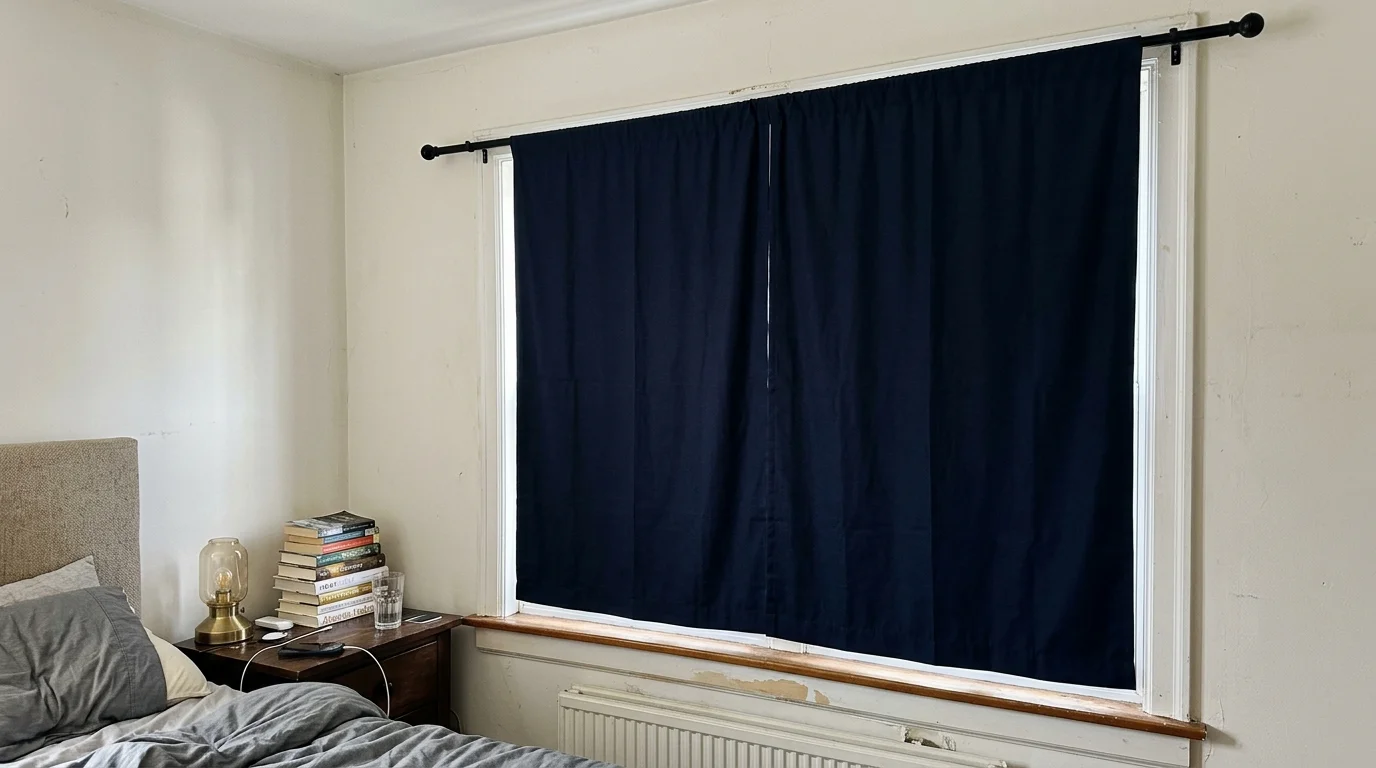
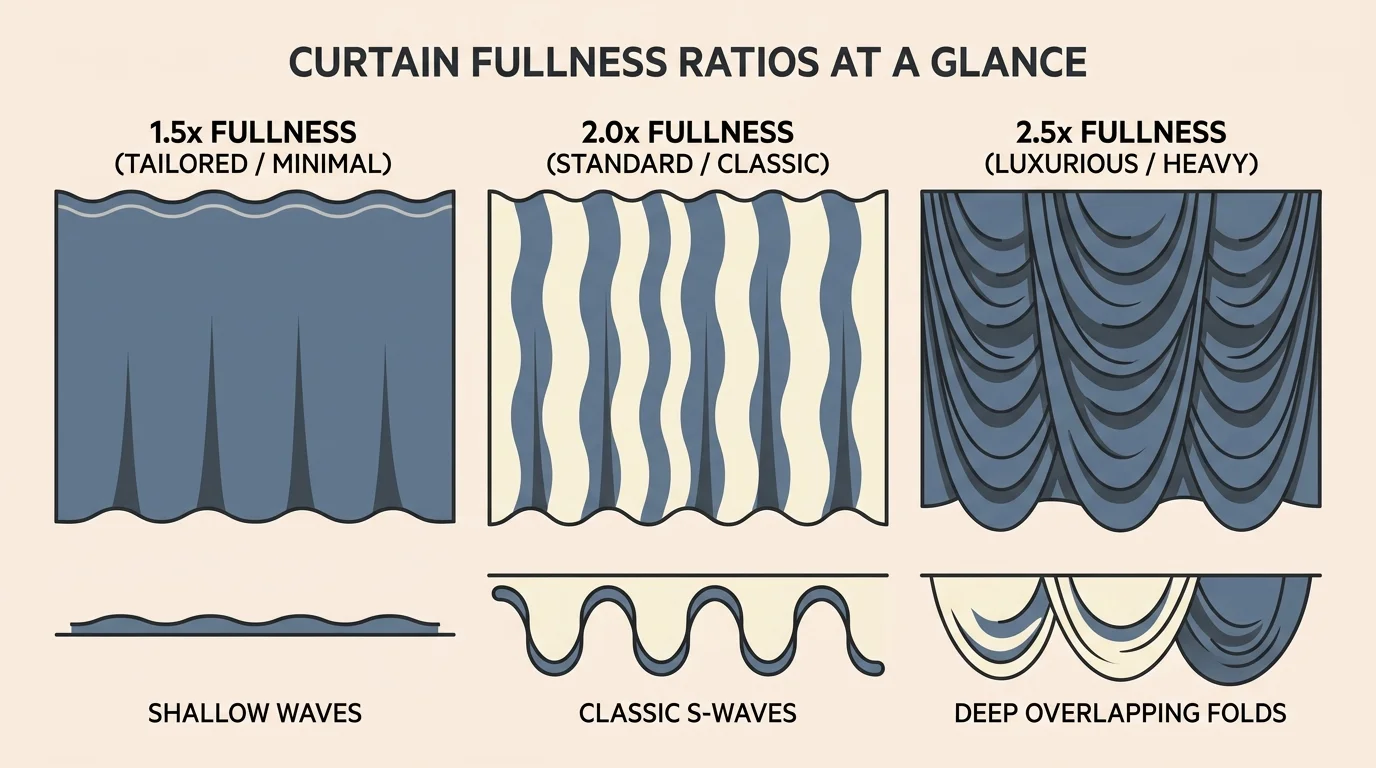
The most obvious indication that you have curtains too narrow for window frames appears the moment you close them at night. Beautiful window treatments rely on visual fullness—the gentle, S-shaped waves and pleats that ripple across the fabric even when drawn completely shut. Interior designers calculate drapery width using a fullness multiplier, typically recommending two to two-and-a-half times the actual width of the window frame.
When you purchase curtain panels with a combined width that merely matches the window glass width, the fabric stretches taut from edge to edge. Instead of displaying rich texture and depth, your curtains look like a bedsheet pinned across the glass. This lack of fabric gather makes high-end textiles look cheap and prevents the fabric from draping in soft, fluid lines; it turns what should be a cozy design element into a rigid, flat barrier.

2. Annoying Light Leaks Break Through the Outer Margins
If bright sunlight wakes you up at dawn or streetlights cast distracting glare across your bedroom ceiling, improper curtain width is usually the primary culprit. Narrow curtain panels force you to center the fabric precariously over the glass, leaving vulnerable gaps along the left and right outer borders. Even if you stretch the fabric until the inner edges touch, the outer edges pull inward, exposing the window frame.
These persistent light gaps diminish your home’s privacy and disrupt healthy circadian rhythms during sleep. According to sleep health research published by the Sleep Foundation, even low levels of ambient light exposure during rest can alter sleep cycles and reduce deep sleep quality. Adequate drapery width ensures your fabric wraps entirely around the sides of the curtain rod, sealing out intrusive external light sources entirely.

3. You Feel Drafts or Temperature Spikes Near the Glass
Curtains serve as a critical layer of insulation for your home, buffering indoor spaces against extreme outdoor temperatures. When drapery panels lack proper width, cold winter air slips easily around the skimpy borders, creating noticeable chilly drafts across your floors. During summer months, narrow panels fail to block radiant heat, forcing your air conditioning system to run longer to maintain a stable interior temperature.
Proper drapery fit creates a dead air space between the glass pane and the room, significantly improving energy conservation. Guidance from the U.S. Department of Energy notes that properly installed draperies can reduce heat loss from a cold room by up to 10% and decrease solar heat gain in summer by up to 33%. Skimpy curtains cannot form this essential thermal seal because the fabric cannot sit flush against the wall casing.
4. You Must Strain and Tug the Fabric to Close the Center Gap
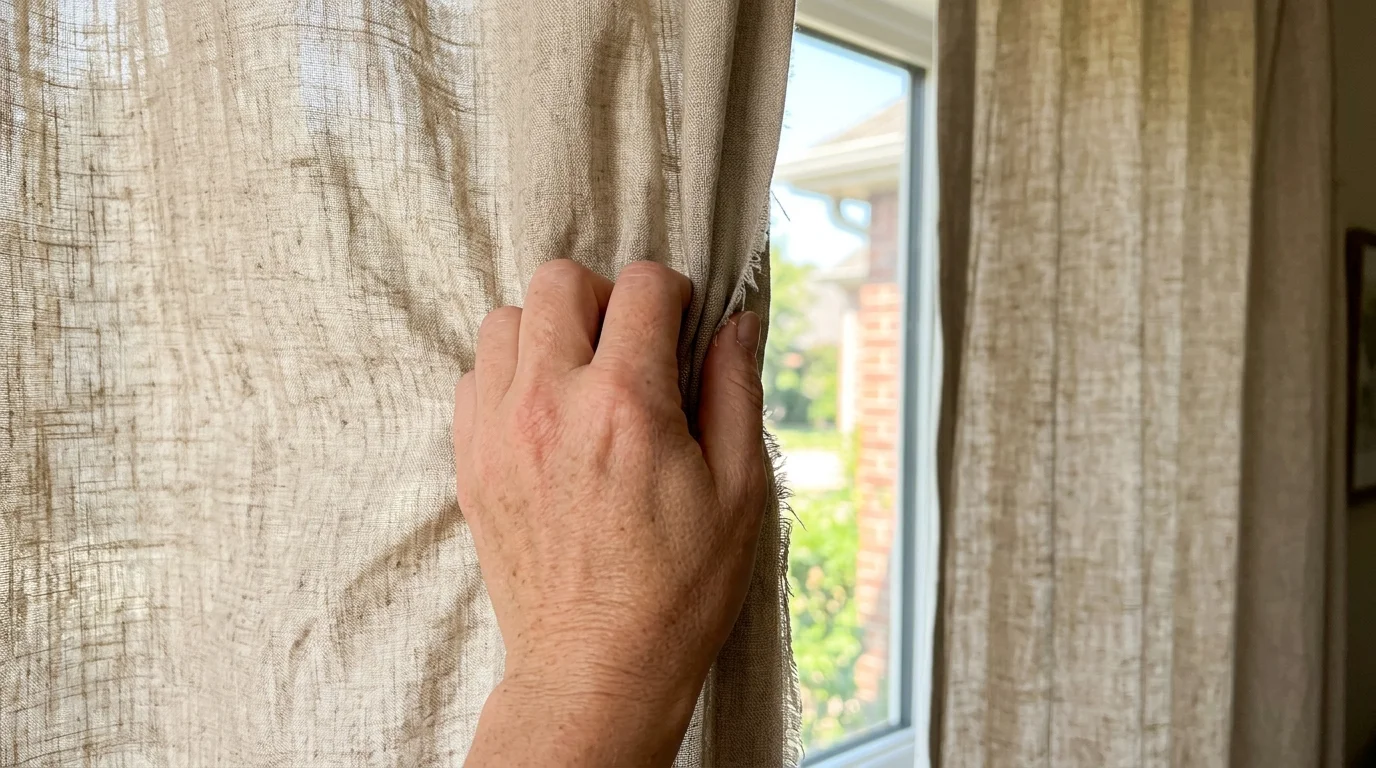
Closing your window treatments should feel like a smooth, effortless motion across the rod. If you find yourself constantly tugging, yanking, or pinning the inner edges of your curtain panels together to hide the center glass, your panels are severely undersized. This repeated mechanical strain places unnecessary stress on drapery rings, grommets, and wall mounts.
Over time, pulling tight curtains across a long rod can loosen drywall anchors, bend lightweight curtain rods, or tear header stitching. Furthermore, fabric under constant horizontal tension naturally wants to snap back toward the bracket, reopening a sliver of window within minutes of you walking away. Choosing proper curtain width eliminates this constant battle, allowing the panels to overlap naturally by two to three inches in the middle without any pulling.
5. The Bottom Hem Flares Outward in an Awkward A-Shape
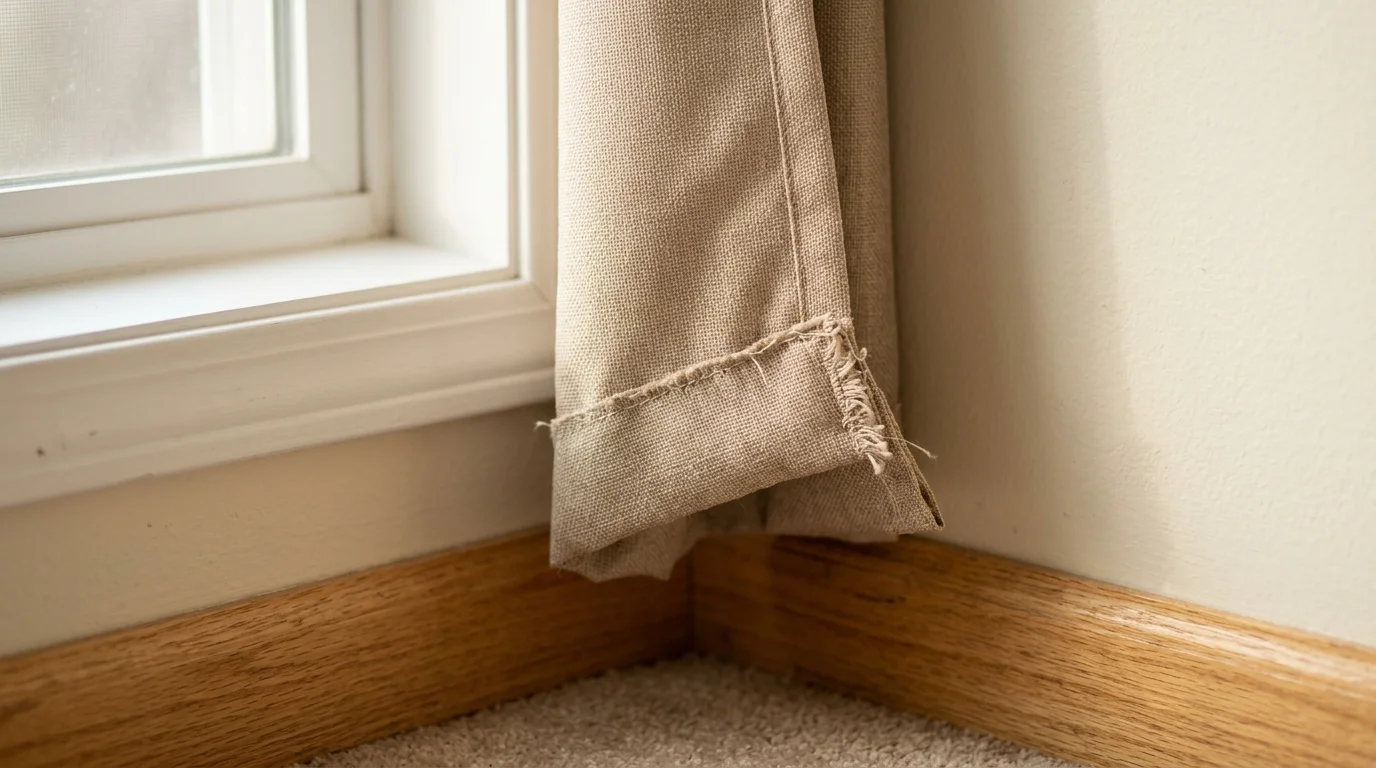
When drapery fabric lacks adequate width to form natural vertical folds, the physics of the weave force the fabric to distort. Tension along the upper header pulls the fabric tightly toward the brackets, which forces the bottom hem to flare outward toward the sides of the window casing. Designers refer to this unsightly distortion as an “A-line flare.”
High-quality curtains should hang straight down in clean, vertical columns from top header to bottom hem. When panels are stretched too wide, the bottom corners kick out awkwardly away from the wall, leaving large open gaps near the floor or sill. This outward flare ruins the tailored appearance of your window and permits dust and drafts to collect behind the fabric.
6. The Drapery Header and Grommets Flatten Out Completely
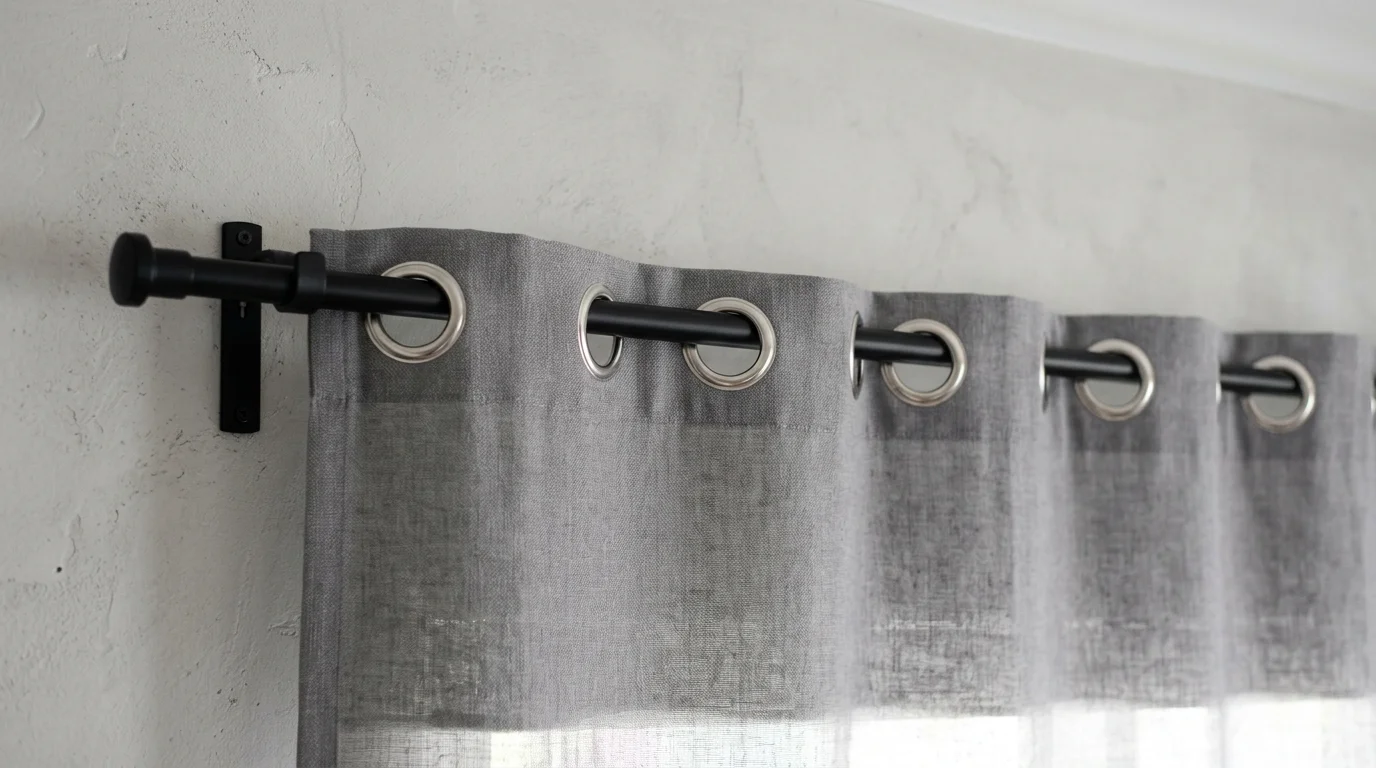
Whether you choose grommet-top, rod-pocket, or pinch-pleat styles, the top header of a curtain panel is engineered to maintain a structured shape. Grommets are designed to alternate forward and backward on the rod to form deep uniform pleats. Rod pockets rely on gathered fabric to create a soft, ruffled gathering along the top edge.
When you force a narrow curtain panel to span too wide a distance, the grommets are turned flat against the rod rather than angled gracefully. The gathers on a rod-pocket header disappear completely, exposing flat stitches and bunched fabric. This distorts the decorative header hardware, making even expensive custom rods and rings appear ill-fitted and unbalanced.

7. Side Angles Reveal Clear Sightlines into Your Living Space
A window treatment should provide absolute privacy from all angles, not just when someone stands directly in front of your home. Narrow curtain panels leave wide sightlines exposed from oblique side angles. Passersby walking down the sidewalk or neighbors viewing your home from a side driveway can easily peer through the vertical gap between the curtain outer edge and the window frame.
To eliminate these side sightlines, professional installers use drapery returns—extending the outer edge of the panel around the corner of the curtain rod bracket to touch the wall directly. Narrow curtains lack the extra four to six inches of fabric width necessary to make this turn, leaving your private living spaces visible to the outside world.
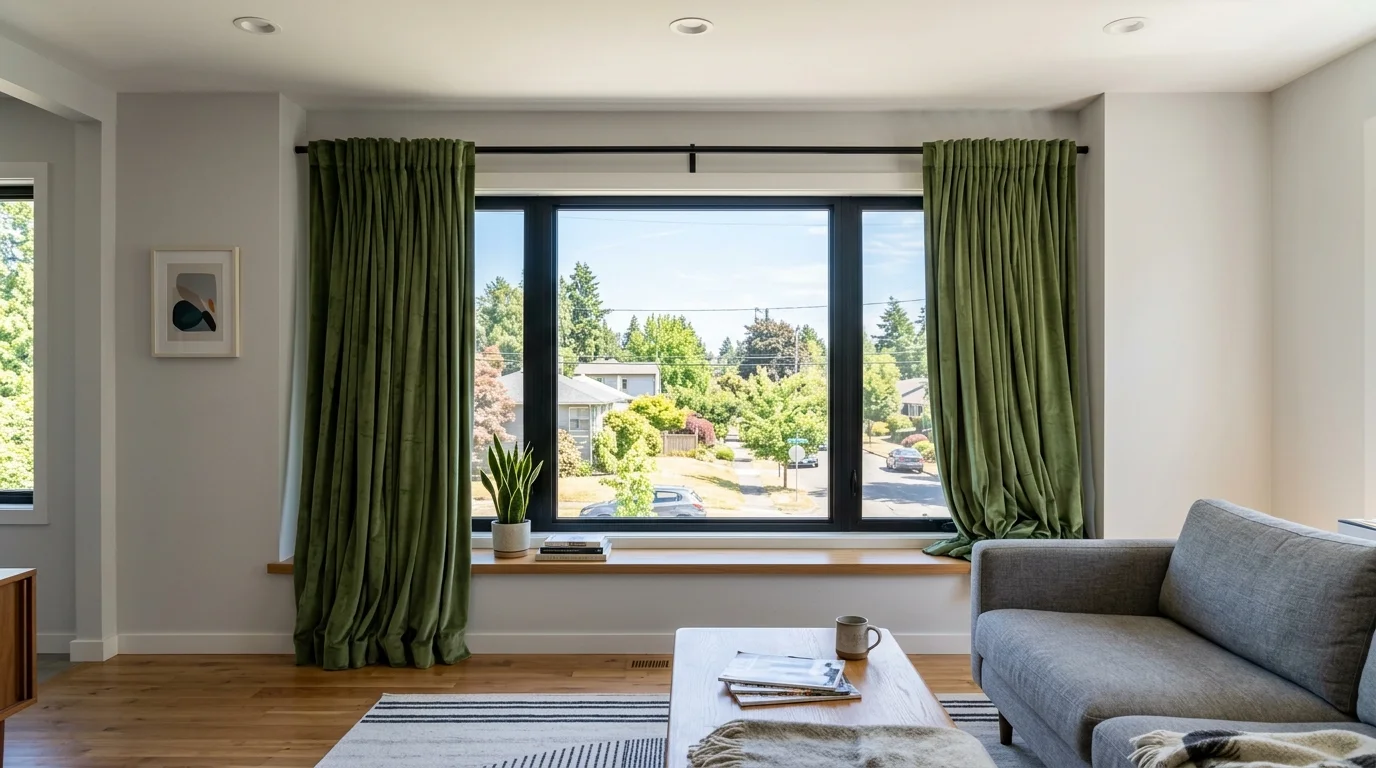
8. Open Panels Mask the Window Glass Instead of Framing It
It sounds counterintuitive, but curtains that are too narrow when closed often block too much light when open. This occurs because homeowners who buy narrow panels frequently install curtain rods that barely extend past the window frame trim. When you push undersized panels back toward the sides, the compressed fabric—known as the “stack-back”—sits directly over the window pane rather than resting on the surrounding wall.
Properly proportioned window treatments use wider rods and generous fabric width, allowing you to pull the open drapery panels entirely off the glass. This simple shift maximizes natural light intake and makes your window frame appear substantially larger. If your open curtains constantly block 20% to 30% of your window glass, your overall setup lacks both rod extension and correct fabric width.
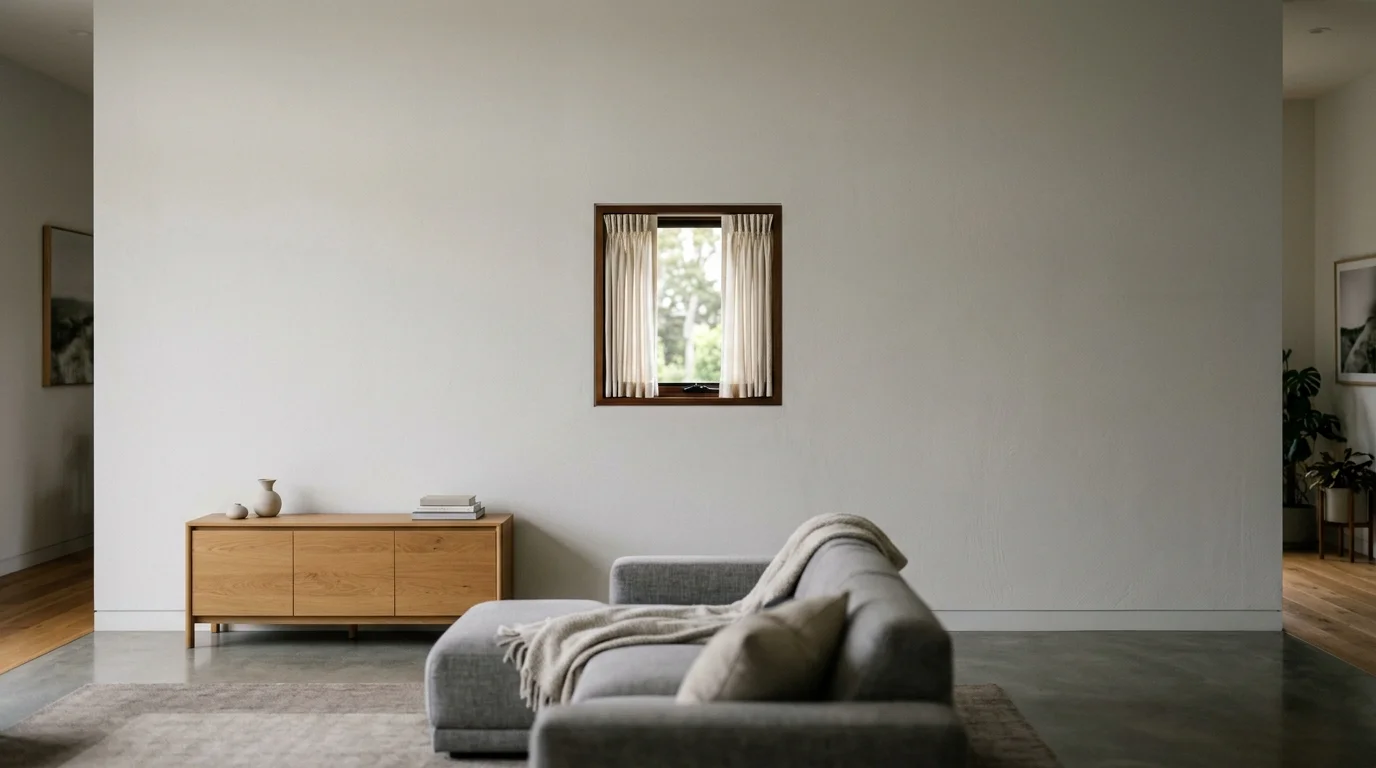
9. Your Windows Look Pinched and Visually Stunted
Interior design relies heavily on visual proportion to make rooms feel spacious, high, and balanced. Window treatments play a dominant role in establishing these vertical and horizontal lines. Skimpy, narrow curtains create an optical illusion that shrinks your space, making tall ceilings look lower and wide windows look narrow and pinched.
Generous drapery panels add substantial visual weight to the sides of a window frame, grounding the architectural features of the room. When your curtains lack fullness, the entire wall loses balance. The window appears disproportionately small compared to nearby furniture pieces like sofas, headboards, or dining tables, leaving the entire room feeling visually incomplete.
Curtain Measurement Tips: How to Calculate Your Proper Curtain Width
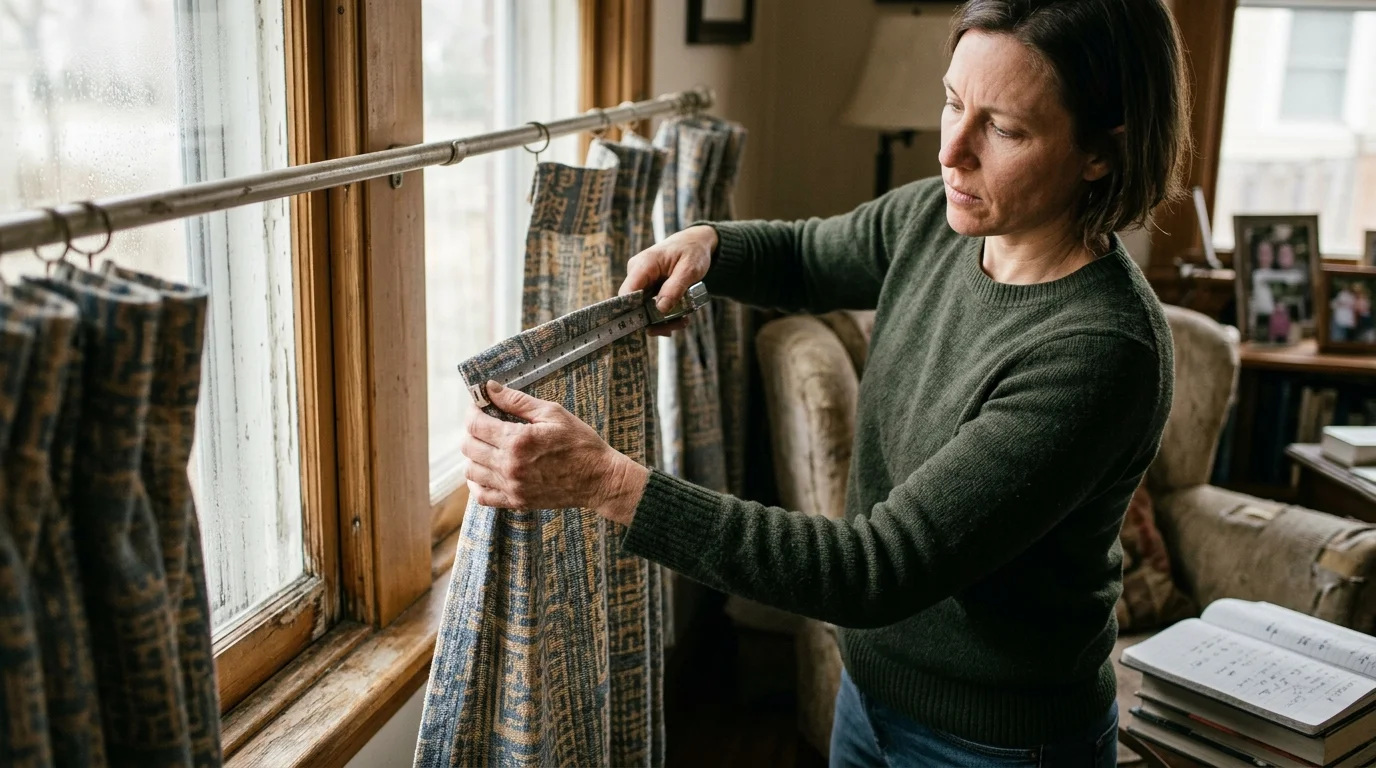
Avoiding common curtain sizing mistakes requires a quick calculation before you shop. Never base your curtain width on the size of the glass alone; instead, measure the width of your actual curtain rod between finials or brackets, excluding decorative end pieces.
- Measure the Rod Span: Use a steel measuring tape to measure the full horizontal width of your installed curtain rod from left bracket to right bracket.
- Select Your Desired Fullness Factor: Choose your fullness ratio based on the look and function you want to achieve. Standard fullness requires multiplying the rod width by 2.0; premium, luxurious fullness requires multiplying by 2.5 or 3.0.
- Calculate Total Fabric Width: Multiply your rod measurement by your chosen fullness factor to find the minimum combined panel width needed.
- Determine Individual Panel Size: Divide the total fabric width by two to find the required width for each individual panel in a standard pair.
- Account for Drapery Returns: Add an extra 4 to 6 inches per panel if you plan to wrap the outer edges back to the wall surface to block light entirely.
Window Treatment Sizing Guide: Fullness Ratios at a Glance
Refer to this practical window treatment sizing guide to match your room style and fabric choice with the correct fullness multiplier. Industry standards established by the Window Coverings Association of America emphasize that proper fullness determines both the acoustic dampening and aesthetic quality of installed drapery.
| Style or Fabric Type | Fullness Multiplier | Example Rod Width | Recommended Total Width | Individual Panel Width (Pair) |
|---|---|---|---|---|
| Tailored / Modern Flat Look | 1.5x Rod Width | 60 inches | 90 inches | 45 inches minimum |
| Standard Everyday Drapery | 2.0x Rod Width | 60 inches | 120 inches | 60 inches minimum |
| Luxurious / Sheer Fabrics | 2.5x to 3.0x Rod Width | 60 inches | 150 to 180 inches | 75 to 90 inches minimum |
| Heavy Velvet or Blackout Panels | 2.0x to 2.25x Rod Width | 72 inches | 144 to 162 inches | 72 to 81 inches minimum |
| Large Patio Sliding Doors | 2.0x Rod Width | 96 inches | 192 inches | 96 inches minimum |
How to Fix Curtains That Are Too Narrow Without Replacing Them
If you already purchased panels that are too narrow for your window, you do not necessarily need to throw them away. You can apply several practical interior design tricks to fix skimpy panels while preserving your budget.
- Double Up the Panels: Purchase an identical second set of curtain panels. Hang two panels on the left side and two panels on the right side of the rod, sewing their inner seams together or simply hanging them side-by-side to double your fullness instantly.
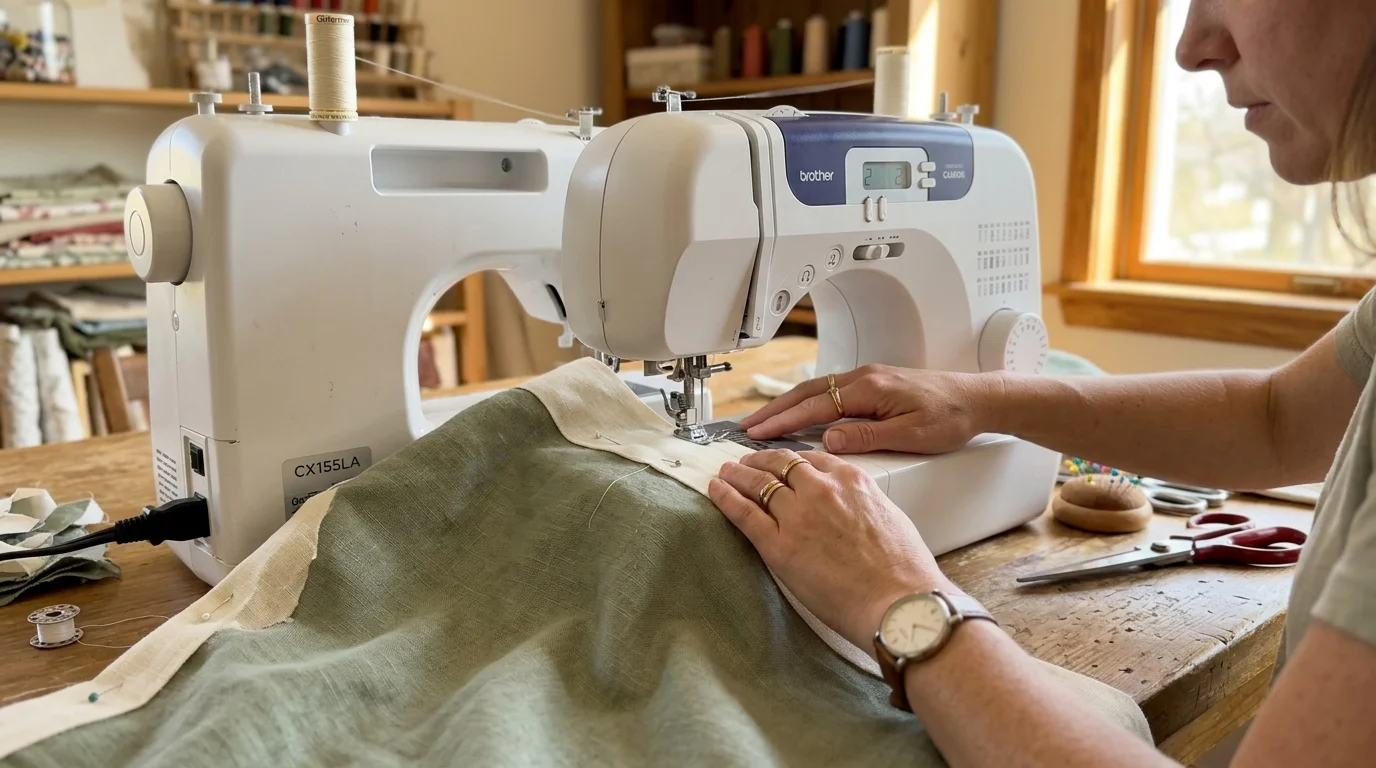
- Add Vertical Fabric Bands: Hire a local seamstress or use hem tape to attach a complementary 10-to-15-inch vertical band of contrasting fabric (a “leading edge”) along the inner borders of your existing panels.
- Combine Panels with Inside-Mount Blinds: Retain your narrow curtain panels as stationary decorative side drapes (which remain open) and install a clean wooden blind, cellular shade, or woven bamboo shade inside the window casing to handle daily light control and privacy.
- Install French Return Rods: Switch to a curved French return curtain rod that bends back toward the drywall. Wrapping the outer fabric edge tightly against the wall eliminates side light gaps even when using slimmer panels.

Your Next Step for Beautifully Proportioned Windows
Take a metal tape measure, step up to your primary living room or bedroom window today, and measure your current rod width against the combined width of your curtain panels. If your panel width fails to reach at least double your rod width, order an additional set of matching panels or extend your rod outward to transform your skimpy window treatments into lush, energy-efficient draperies.