Protecting your expensive natural stone countertops starts with knowing exactly which common household cleaners will permanently damage them. Natural stone brings incredible beauty to your kitchen, but reaching for the wrong spray bottle can strip the protective sealant and etch the surface underneath. Many people ruin their granite or marble by assuming everyday multi-purpose cleaners are safe to use everywhere. Instead of risking a costly repair or replacement, you need a targeted approach to home maintenance that respects the unique mineral composition of your stone. Understanding these seven restricted cleaning products will keep your surfaces looking pristine, preserve their integrity, and make your daily countertop care much easier.
Why Natural Stone Requires a Specialized Approach
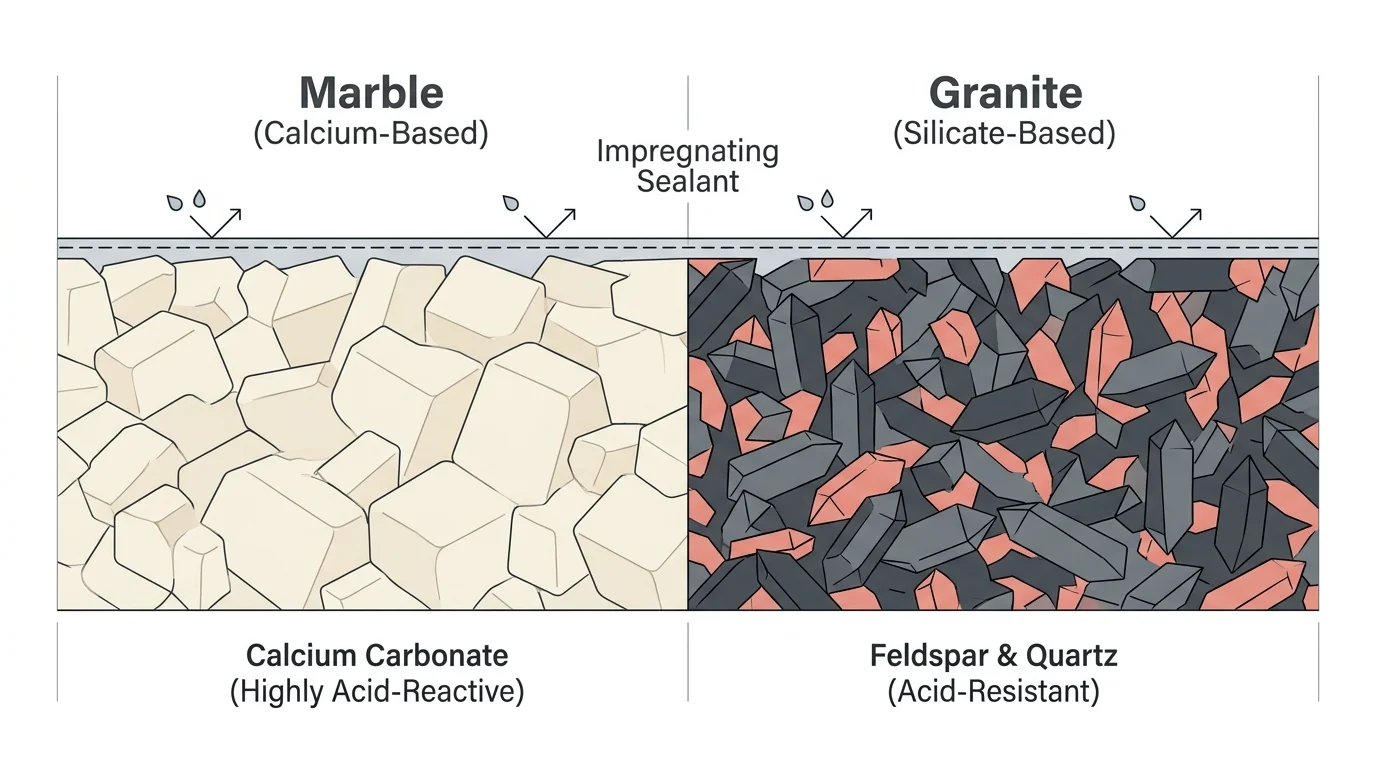
Unlike manufactured surfaces such as laminate or poured concrete, natural stone is a porous material pulled directly from the earth. The exact geological makeup of your countertop dictates how it reacts to everyday chemicals. Materials like marble, limestone, travertine, and onyx are rich in calcium carbonate. This mineral structure gives these stones their elegant veining and soft, luminous appearance, but it also makes them highly reactive to extreme pH levels.
Granite and quartzite, on the other hand, are formed under intense volcanic heat and pressure. They contain high levels of quartz and feldspar, making them significantly harder and less reactive than calcium-based stones. However, even the hardest granite remains naturally porous. Without a protective barrier, liquids will seep into the microscopic voids between the mineral crystals, causing deep, permanent stains.
To prevent this liquid absorption, fabricators apply an impregnating sealant before installing the stone in your home. This sealant does not sit on top of the counter like a layer of plastic; instead, it sinks into the pores and repels water and oils from within. When you use the wrong cleaning products, you either chemically dissolve the stone itself or strip away this invisible protective sealant, leaving the raw stone completely defenseless against your next cooking spill.
How to Tell if Your Countertop Sealant is Failing
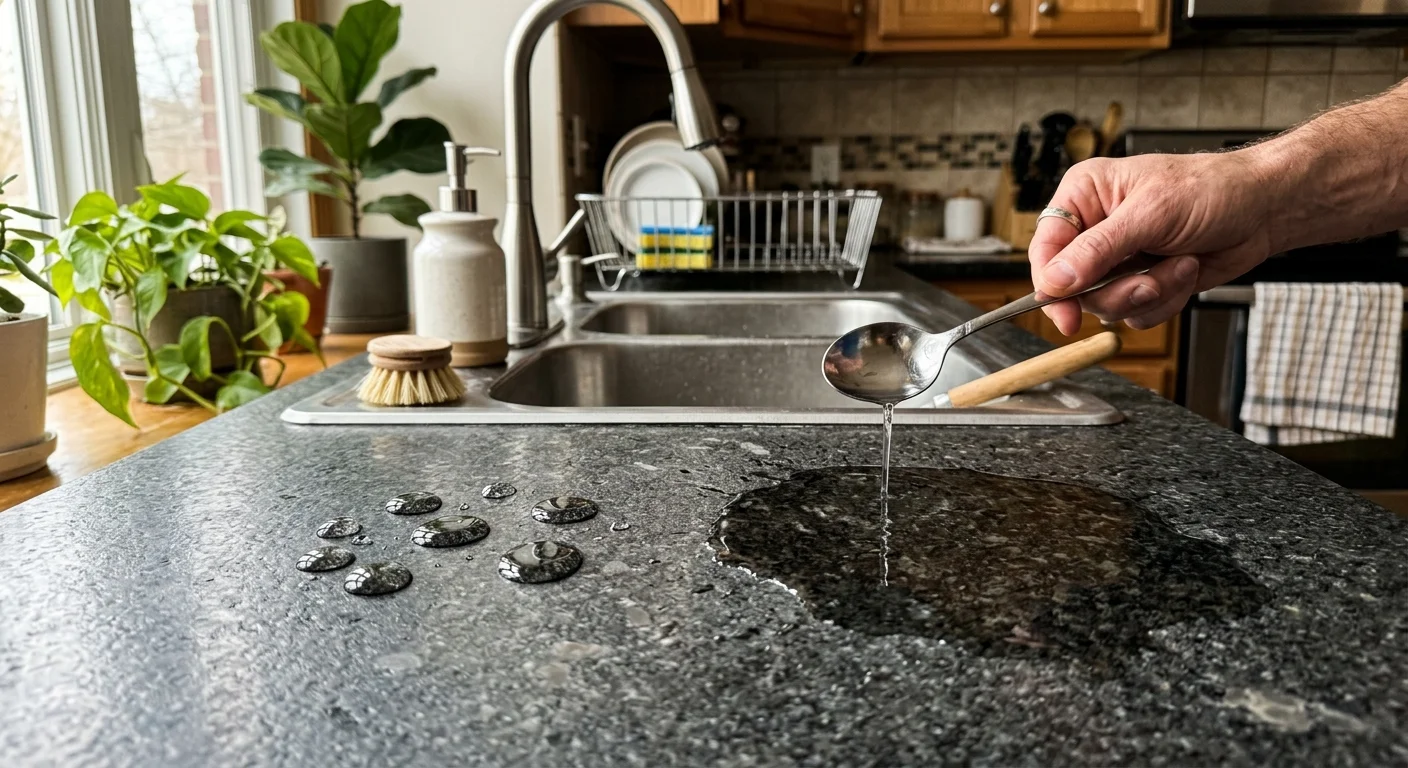
Before examining the specific cleaners to avoid, you should know the current condition of your countertop’s defense system. You can easily test your sealant at home using nothing but tap water. Pour a single tablespoon of water onto a high-traffic area of your counter, such as the space directly next to the kitchen sink or the stove. Let the water sit undisturbed for fifteen minutes.
If the water beads up into a tight dome and the stone beneath it retains its normal color, your sealant is intact and functioning perfectly. If the water spreads out, flattens, and turns the stone a darker shade, the moisture has penetrated the surface. A darkening stone indicates that your sealant has worn away. When your sealant fails this water test, even mild spills can become permanent stains, making it critical to avoid harsh chemicals and reseal the stone immediately.
01 White Vinegar and Citrus-Based Cleaners
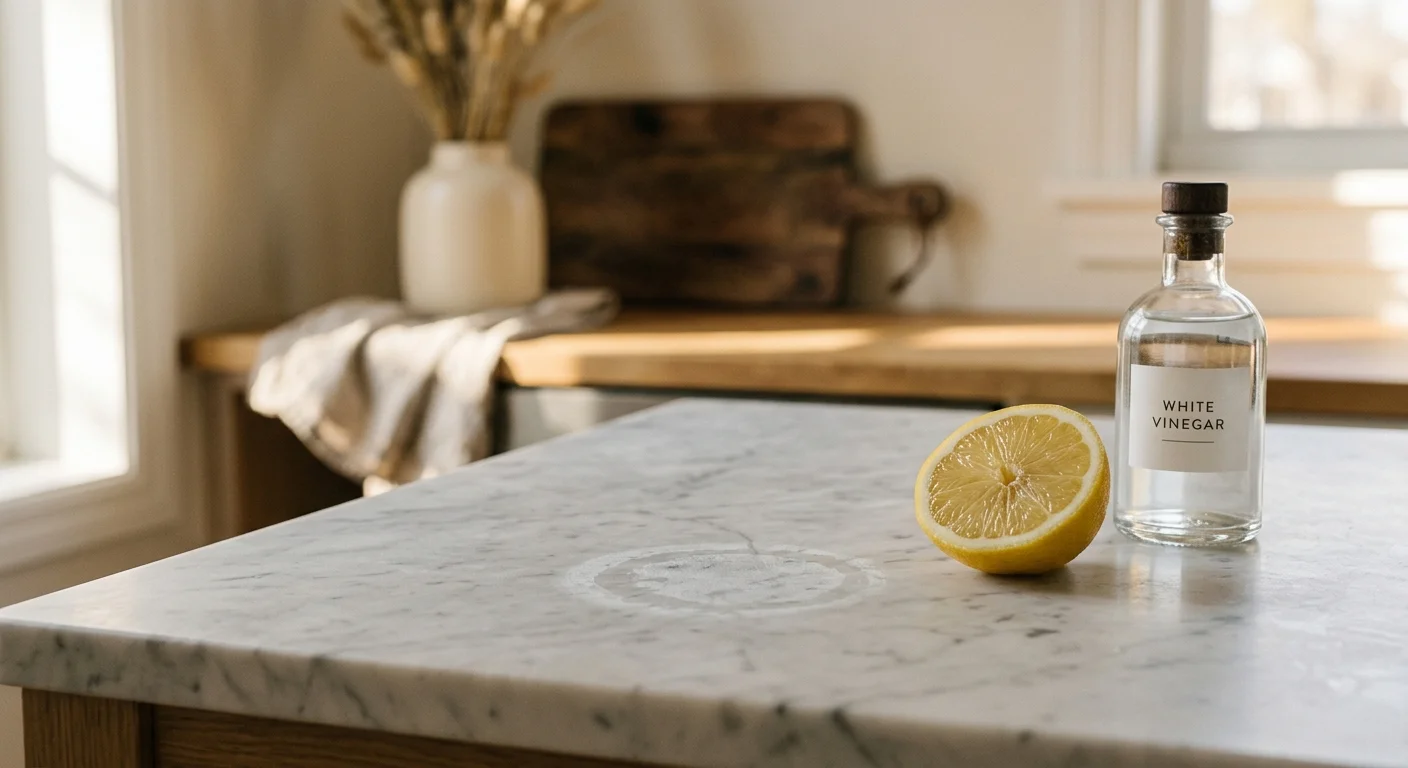
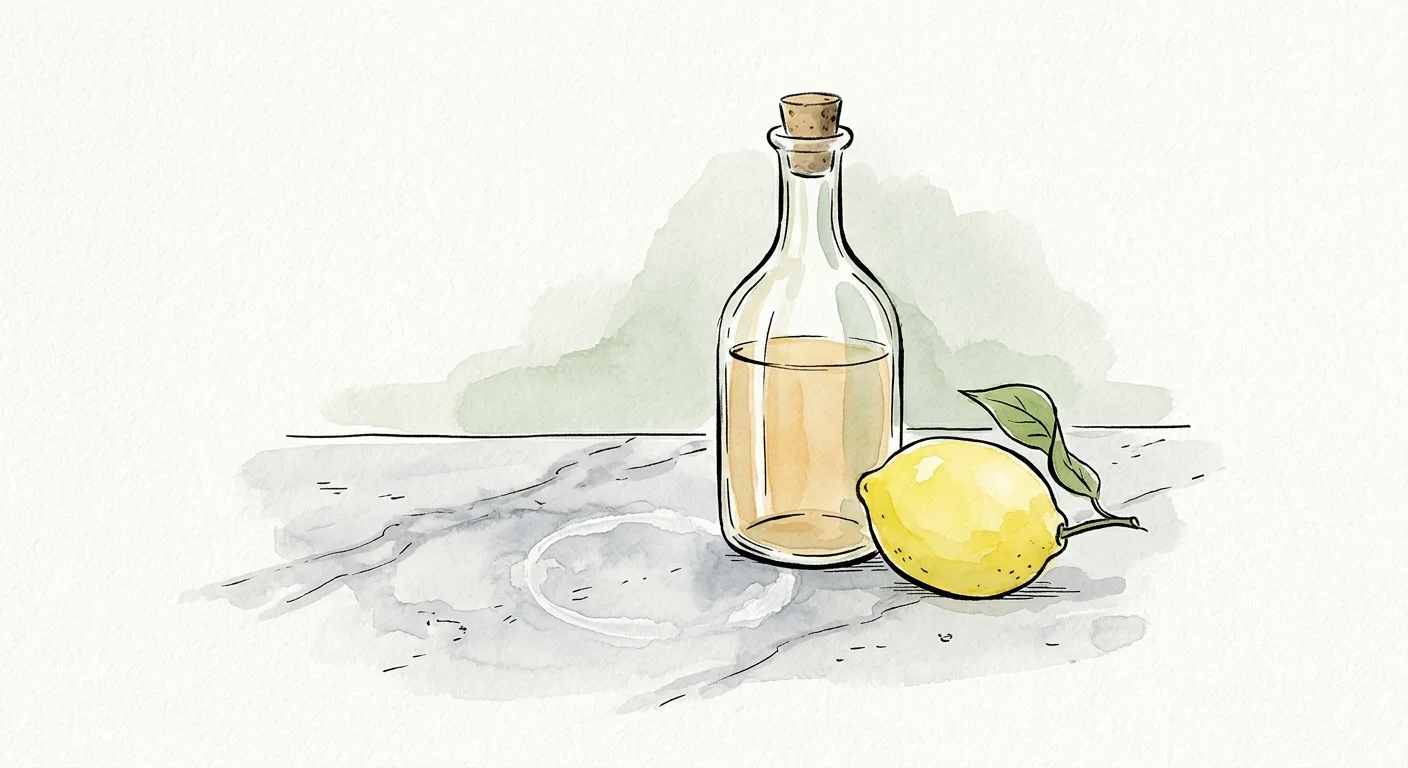
White vinegar holds a well-deserved reputation as the ultimate natural household cleaner, but it is the absolute worst liquid you can apply to a natural stone countertop. Distilled white vinegar is highly acidic; it typically sits at a pH level of around 2.4 to 2.5. When that concentrated acid touches a calcium-based stone like marble or travertine, a violent chemical reaction occurs on a microscopic level. The acid instantly dissolves the calcium carbonate.
This physical damage is known as etching. Etching looks like a dull, chalky watermark or a cloudy scuff that you cannot wipe away. Many homeowners mistake etch marks for hard water stains and attempt to scrub them off. You cannot scrub away an etch mark because the stone itself has been eaten away; the surface is literally missing. According to pricing data tracked by HomeAdvisor, hiring a professional restoration team to grind down and polish deeply etched marble can cost anywhere from $300 to over $1,500 depending on the size of your kitchen.
Citrus-based cleaners containing lemon, lime, or orange extracts carry the exact same risks. Even if a spray bottle boasts an all-natural or plant-based label, the high acidity of the citrus will chew through your countertop’s protective sealant and leave permanent dull spots. Reserve your vinegar and lemon sprays strictly for glass, stainless steel, and ceramic tile.
02 Bleach and Heavy-Duty Disinfectants
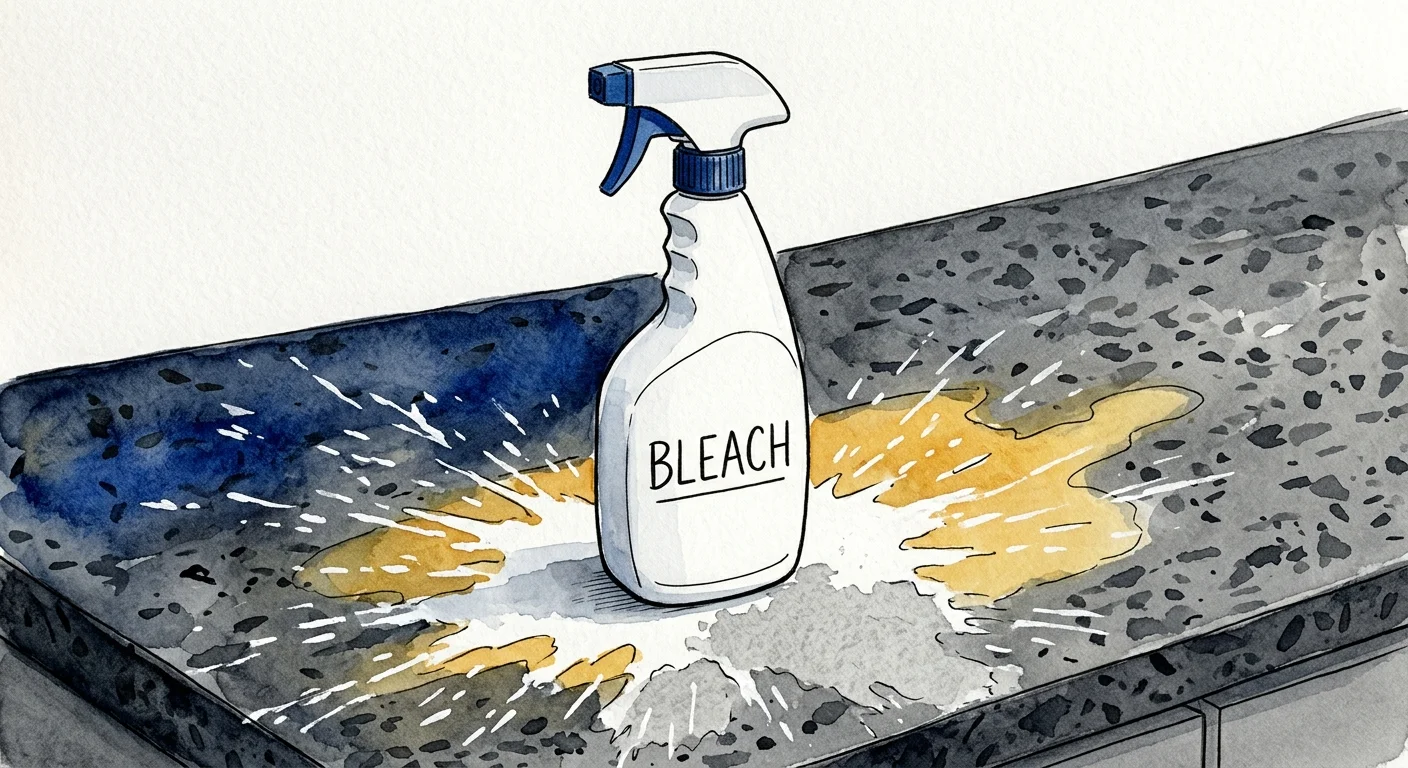
When raw poultry juice spills across the kitchen island, your first instinct might be to reach for a bottle of bleach to kill the bacteria. However, standard household bleach is highly alkaline, sitting at the opposite end of the pH spectrum from vinegar. While the Environmental Protection Agency (EPA) recognizes properly diluted bleach as an effective disinfectant for nonporous surfaces, routine use on natural stone will aggressively degrade your protective sealant.
Once the alkaline bleach strips the impregnating sealer, your countertop becomes a dry sponge waiting to absorb oils, wine, and grease. Over time, repeated bleach exposure can also cause lighter stones to oxidize, turning a beautiful crisp white marble into a dingy, yellowed surface. Granite may fare slightly better against immediate discoloration, but the compromised sealant will still leave the porous rock vulnerable.
If you need to sanitize your stone after preparing raw food, you do not need bleach. Instead, lightly spray the surface with a mixture of 70 percent isopropyl alcohol and water. The alcohol will effectively sanitize the surface, evaporate quickly, and leave your expensive sealant completely intact.
03 Abrasive Sponges and Steel Wool
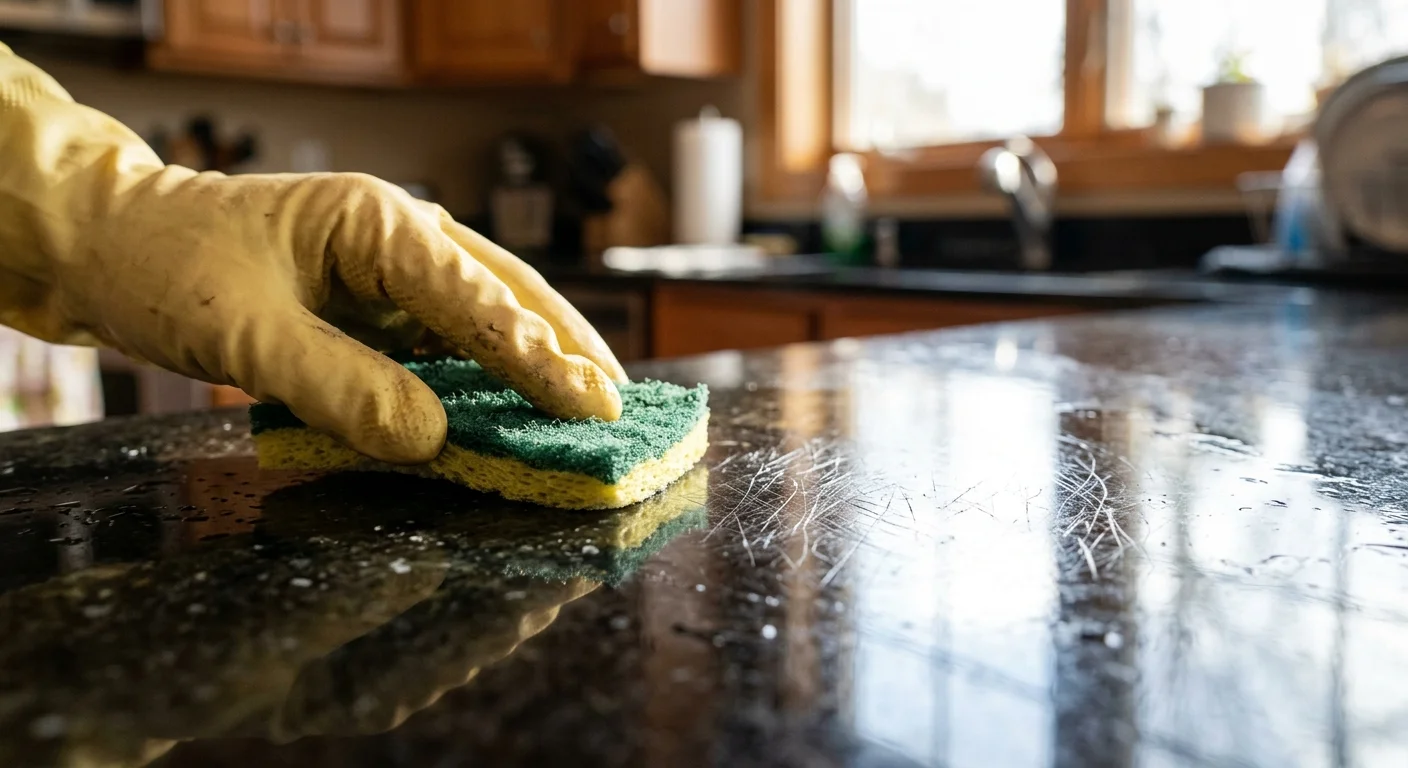
Physical damage destroys stone just as quickly as chemical damage. Melamine foam blocks—commonly sold as magic erasers—along with steel wool and heavy-duty scouring pads, work by physically scraping away dirt. On a highly polished granite or marble surface, these abrasive textures act exactly like ultrafine sandpaper.
The Mohs hardness scale measures a material’s resistance to scratching. While quartz and granite score high on the scale, marble and limestone are relatively soft. When you scrub a stubborn dried food spill with an abrasive sponge, you drag tough microscopic fibers across the stone. This friction scratches the glossy finish, leaving the area looking dull and cloudy.
Once the polished finish sustains hundreds of micro-scratches, the stone loses its ability to reflect light evenly. To protect the reflective sheen, always reach for a soft microfiber cloth or a non-abrasive cellulose sponge. Microfiber tackles dried spills by trapping dirt and grease within its synthetic fibers, safely lifting the mess away without relying on damaging friction.
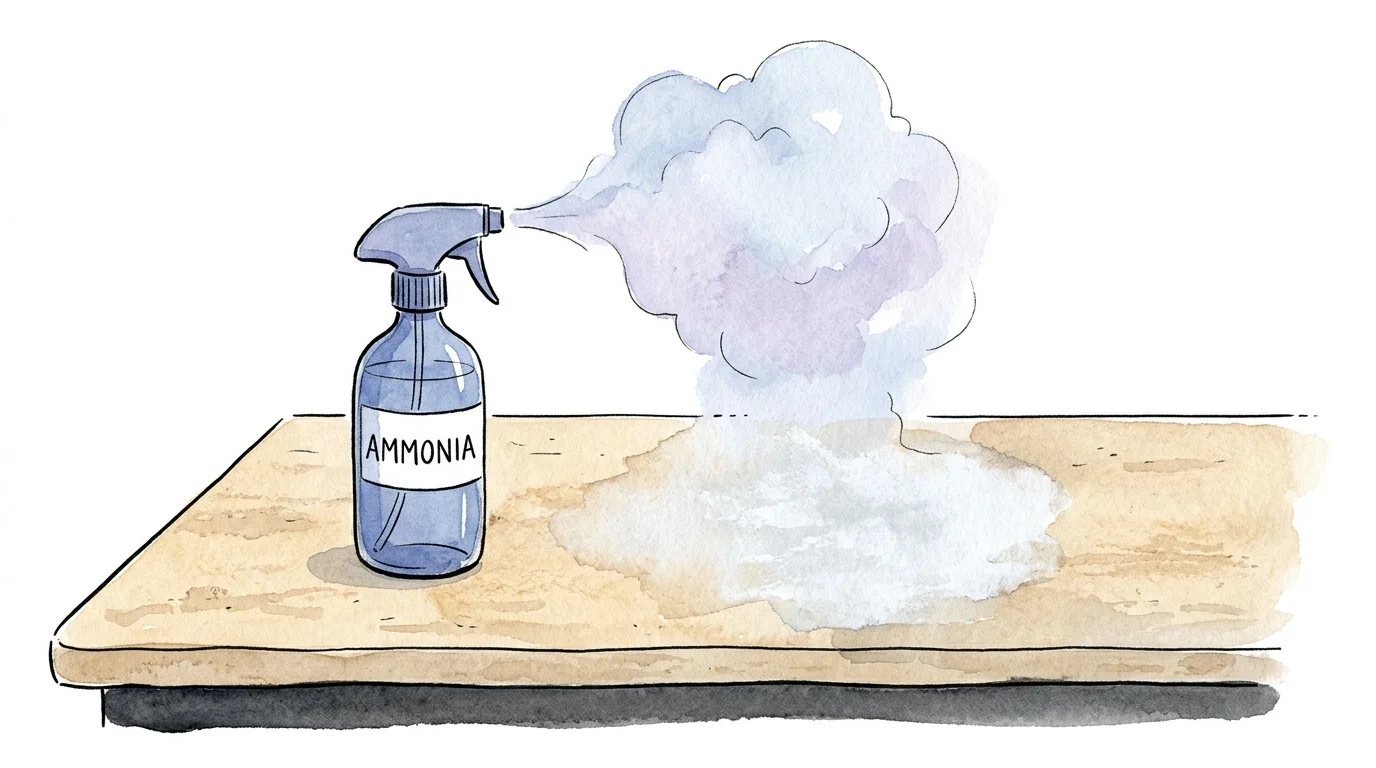
04 Ammonia and Glass Cleaners
Many homeowners love the streak-free shine that standard blue glass cleaners leave on mirrors and windows, prompting them to use the same spray on their glossy kitchen islands. The core problem is that most commercial window cleaners rely heavily on ammonia to achieve that rapid evaporation.
Ammonia is a harsh, caustic chemical that quickly breaks down the fluorochemicals used in most professional stone sealers. Using ammonia-based products creates a frustrating and expensive cycle; the cleaner strips the sealant, making the stone look dull and lifeless. In response to the dullness, you spray even more glass cleaner hoping to restore the shine. Eventually, the stone becomes completely exposed, unsealed, and highly susceptible to deep oil stains from everyday cooking.
If you want a flawless, streak-free finish on your countertops, you only need to change your drying technique. Wash the stone with a mild, stone-safe soap, and immediately buff the surface completely dry with a clean microfiber cloth. Removing the moisture before it air-dries prevents water spots without ever requiring ammonia.
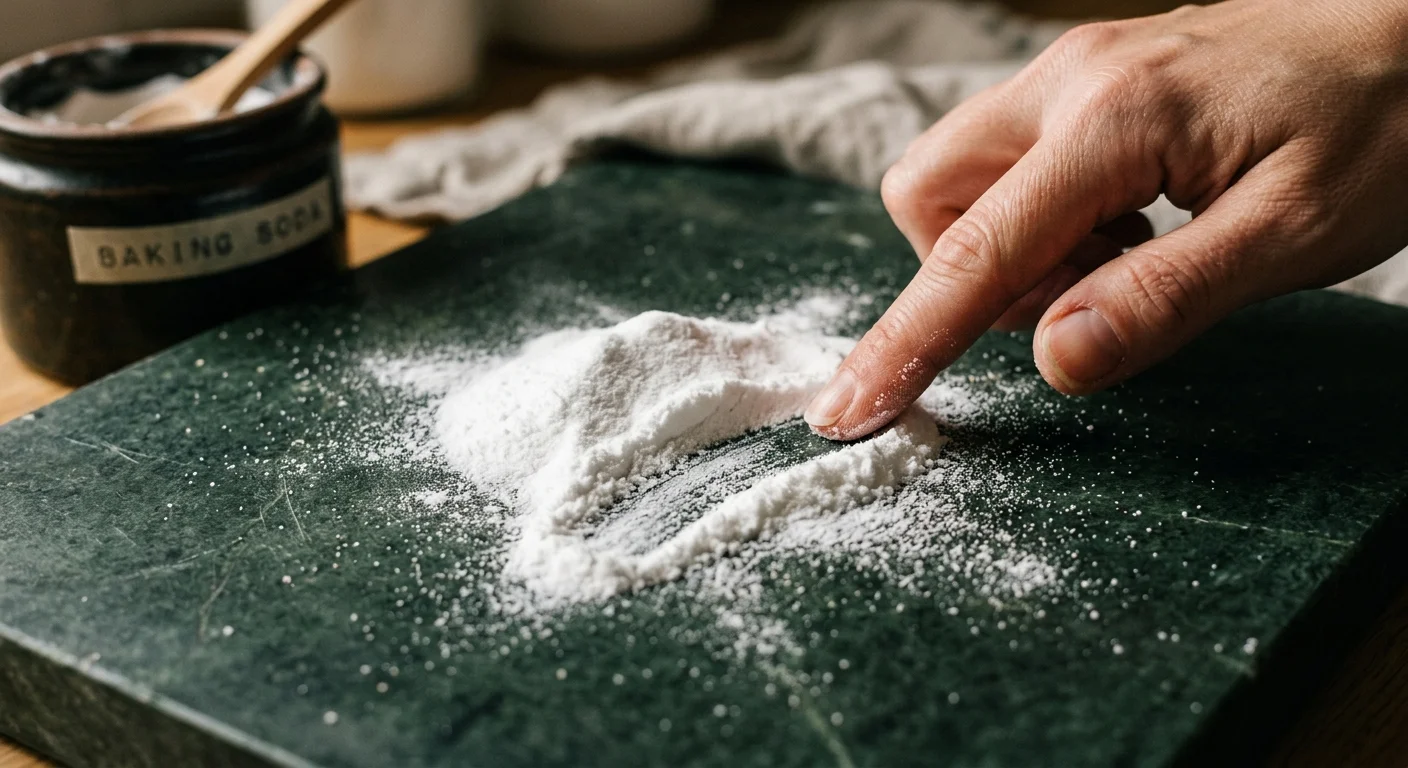
05 Dry Baking Soda (When Scrubbed)
Baking soda is a versatile deodorizer and a gentle abrasive perfect for scrubbing stainless steel sinks or enameled cast iron cookware. However, dumping dry baking soda directly onto a natural stone countertop and scrubbing it with a sponge will cause severe micro-scratching. While baking soda is mildly alkaline and generally will not cause chemical etching, its granular, crystalline texture is far too gritty for a polished stone finish.
There is one notable exception where baking soda proves highly useful for stone care: the poultice method for extracting deep oil stains. If cooking oil seeps past your sealant and darkens the granite, you can use baking soda safely—as long as you never scrub it.
To safely lift a stain, mix baking soda with a small amount of water to create a thick paste with the consistency of peanut butter. Spread the paste generously over the oil stain, cover the area with plastic wrap, and tape down the edges. Poke a few small holes in the plastic to allow airflow, and let the mixture sit undisturbed for 24 to 48 hours. As the water evaporates, the baking soda will actively draw the oil out of the stone’s pores. Once the paste dries completely, gently wipe it away with a damp cloth, being careful not to rub the gritty powder into the stone.
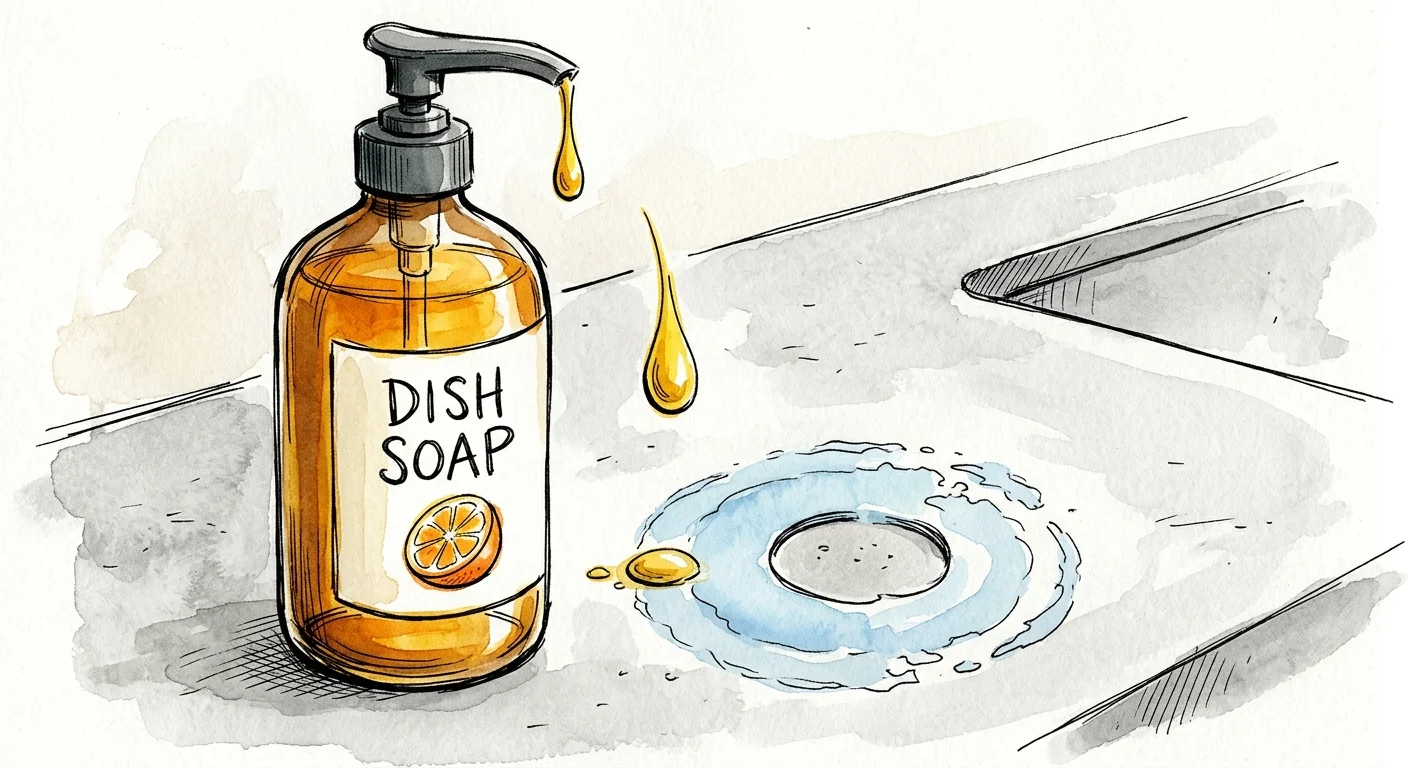
06 Dish Soap with Citrus or Heavy Degreasers
You will often see mild dish soap recommended as a safe daily cleaner for granite and marble. While a basic, gentle dish soap is safe, you must scrutinize the label before using it on your counters. Many modern dish formulas are ultra-concentrated and packed with aggressive degreasers, heavy surfactants, or synthetic citrus extracts designed to break down baked-on grease inside pots and pans.
These powerful degreasing agents cannot differentiate between bacon grease and the oils that make up your countertop sealant. Frequent use of heavy-duty dish soap will systematically degrade your sealant. Furthermore, using too much soap—even a mild one—leaves a cloudy, sticky film across the stone. Over time, this soap scum attracts dust, flour, and crumbs, making the counter feel perpetually grimy.
If you choose to use dish soap for daily cleaning, select a clear, pH-neutral formula free of citrus scents. Use only one or two small drops diluted in a large bowl of warm water. Less is always more when applying soap to natural stone.
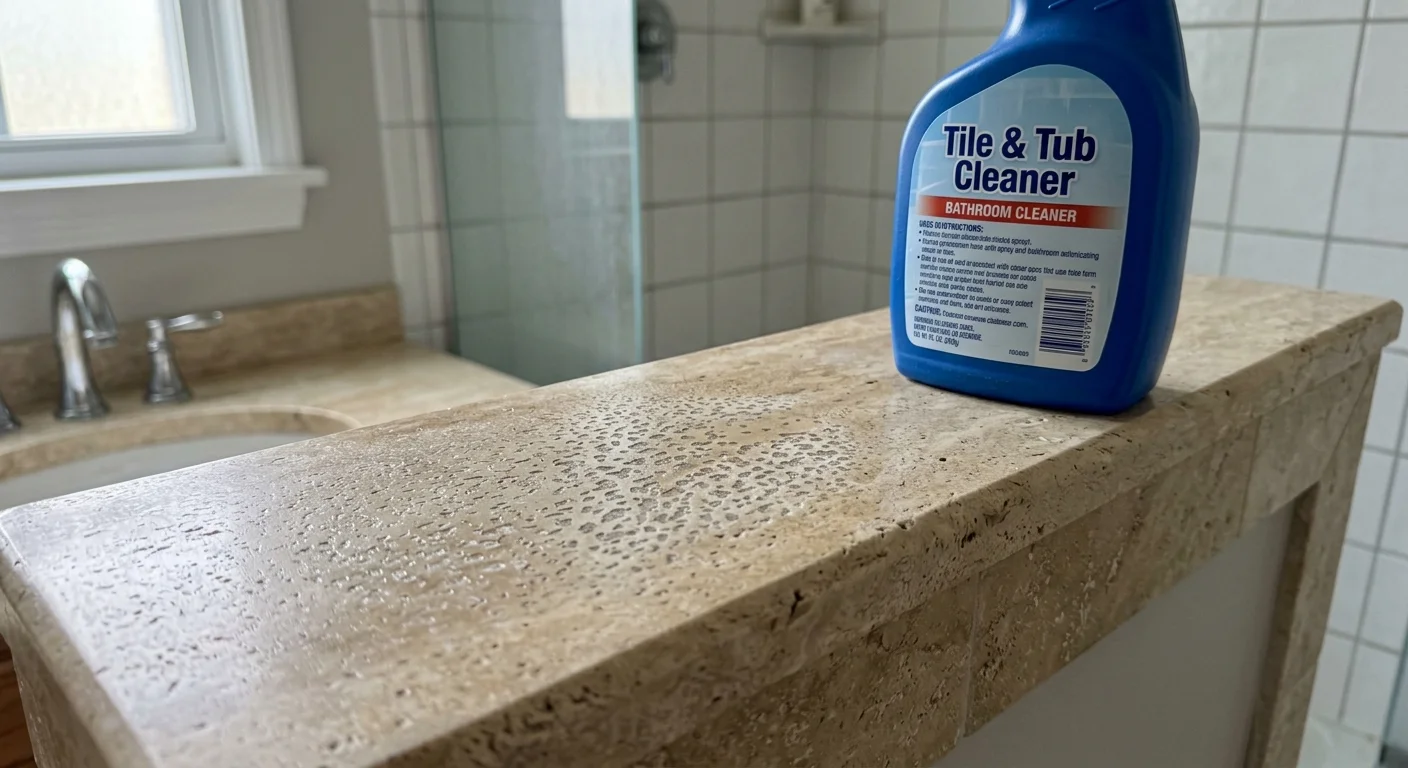
07 Commercial Bathroom, Tub, and Tile Cleaners
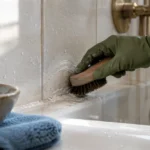
Never cross-contaminate your cleaning routines by carrying a bathroom tub and tile cleaner into the kitchen. Bathroom cleaners are aggressively formulated to dissolve hard water scale, rust, soap scum, and calcium deposits inside showers. Because luxury natural stones like marble, travertine, and limestone are literally composed of calcium, these foaming cleaners will actively attack and dissolve the countertop itself.
The Natural Stone Institute explicitly warns against using any bathroom, tub, or grout cleaners on natural stone surfaces. The heavy-duty acids and synthetic foaming agents in these bottles will cause immediate, severe chemical etching on contact. A single accidental spray from a powerful shower cleaner can leave a permanent, rough, white scar across your dark marble island, requiring expensive diamond-pad grinding to repair.
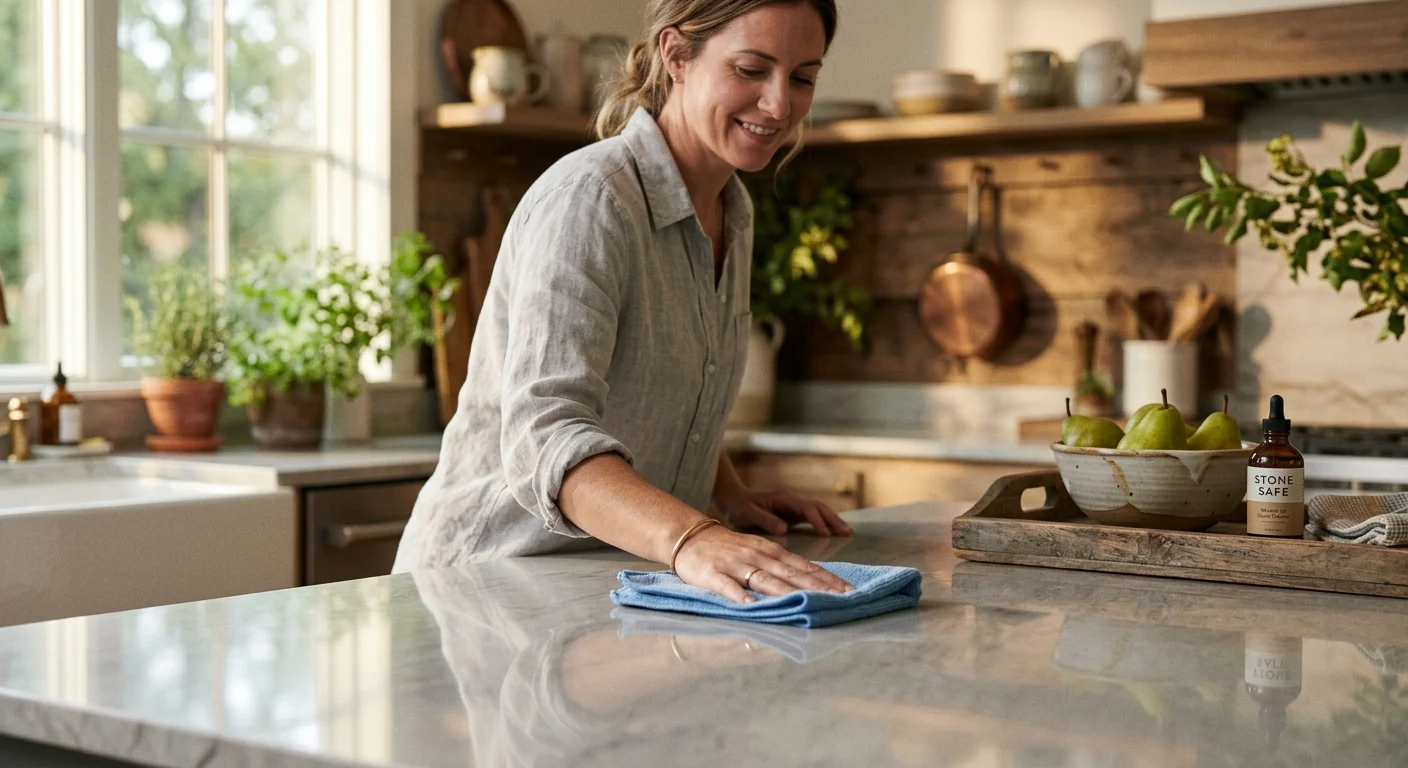
The Right Way to Clean Your Natural Stone Countertops
Maintaining the structural integrity and aesthetic beauty of your stone is surprisingly straightforward once you eliminate all the harmful household chemicals. A reliable daily routine focuses on gently lifting surface debris while protecting the invisible sealant barrier underneath.
Follow this step-by-step cleaning protocol to keep your granite, marble, and quartzite surfaces in perfect condition:
| Step | Action | Why It Matters |
|---|---|---|
| 1. Clear and Sweep | Move all small appliances, cutting boards, and mail off the counter. Sweep loose crumbs into your hand using a dry microfiber cloth. | Dragging heavy appliances or wiping wet crumbs across the counter can physically scratch the polished surface. |
| 2. Apply a Safe Cleaner | Spray a commercial pH-neutral daily stone cleaner directly onto the surface. Alternatively, use a spray bottle filled with warm water and a single drop of clear dish soap. | A pH-neutral formula lifts grease and food residue without interacting chemically with the stone or stripping the impregnating sealer. |
| 3. Wipe Smoothly | Use a damp, clean microfiber cloth to wipe the countertop in broad, sweeping S-motions, starting from the back edge and pulling forward. | The S-motion ensures you cover the entire surface seamlessly without pushing dirt back into areas you have already cleaned. |
| 4. Buff Completely Dry | Immediately switch to a fresh, dry microfiber cloth. Buff the surface using circular motions until the stone feels smooth and looks highly reflective. | Leaving standing water or wet cleaner on the counter allows trace minerals to settle as the liquid evaporates, causing dull water spots. |

Protect Your Investment Today
Take five minutes right now to check the ingredient labels on the cleaning sprays sitting under your kitchen sink. Remove any acidic, ammonia-based, or abrasive cleaners from the area, and place a dedicated, pH-neutral stone cleaner at the very front of the cabinet so it is always the first bottle you grab.