Stubborn stains do not have to ruin your favorite clothes or carpets. When you understand the correct chemistry, even the most intimidating marks lift away with surprisingly little effort. From spilled red wine on a white rug to baked-in grease on a cherished shirt, dealing with household messes requires the right approach rather than aggressive scrubbing. Whether you are simplifying your daily routine or trying to save an expensive upholstery piece, knowing how to treat different materials saves you significant time and money. By keeping a few essential household items on hand and acting quickly, you can tackle the worst spills safely and effectively without relying on harsh chemicals.
1. Red Wine: Stop the Spread Before It Sets
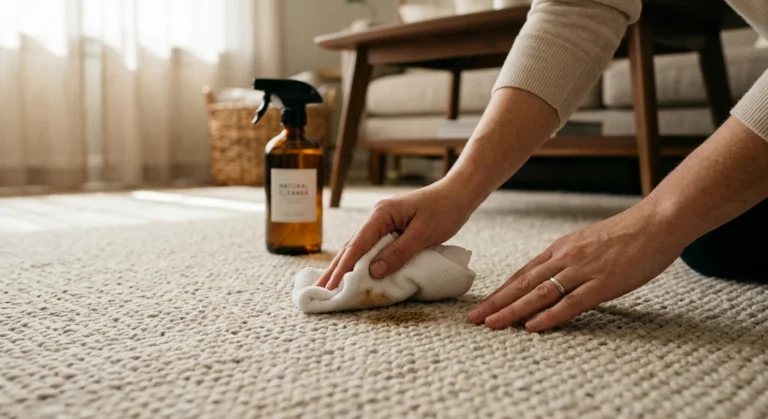
Dropping a glass of dark red wine onto a bright white carpet immediately triggers panic, but swift action prevents permanent damage. The dark color in wine comes from plant tannins, which act exactly like natural dyes when they soak into porous fabrics. The absolute worst thing you can do is aggressively rub the spill with a towel; this simply forces the liquid deeper into the carpet pad and spreads the dye across a wider surface area.
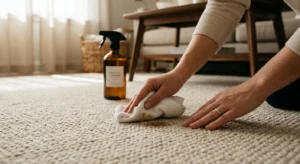
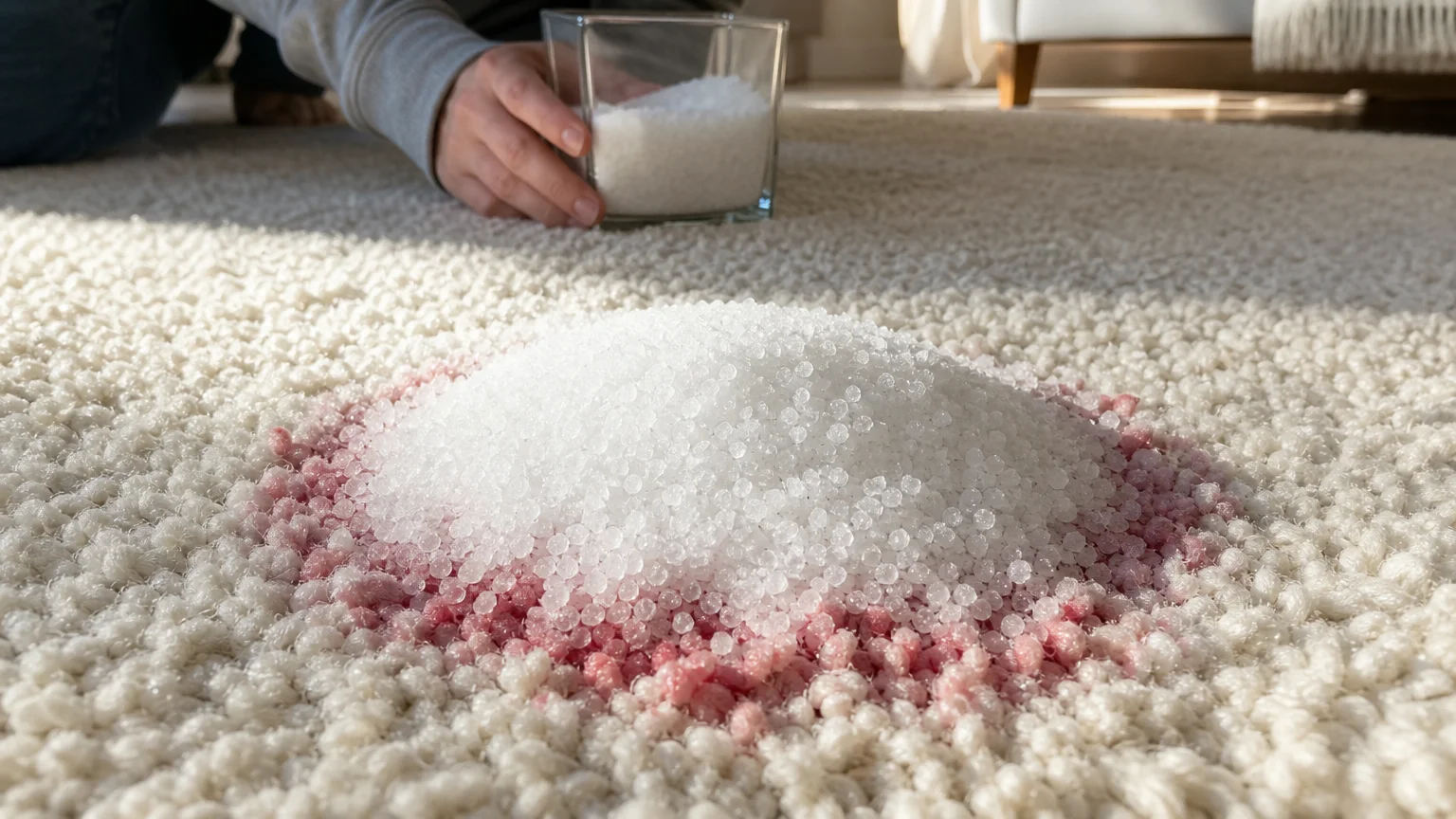
Instead, blot the area gently with a clean, dry cloth to soak up the surface moisture. Next, pour a thick mound of table salt or baking soda directly over the wet patch. The dry powder acts as a powerful desiccant, pulling the wine out of the fibers. You will actually see the white powder turn pink as it absorbs the liquid. After ten minutes, vacuum the powder away. Finally, mix one tablespoon of liquid dish soap with one cup of hydrogen peroxide. Sponge this solution onto the remaining shadow of the stain and let it sit for twenty minutes before rinsing with cold water.
2. Blood: Stick to Cold Water for Protein Marks
Dealing with blood requires a basic understanding of protein-based stains. The iron and proteins in blood coagulate and bind to fabrics rapidly. If you attempt to wash a bloodstain out with hot water, you will literally cook the proteins, fusing them permanently to the textile fibers.
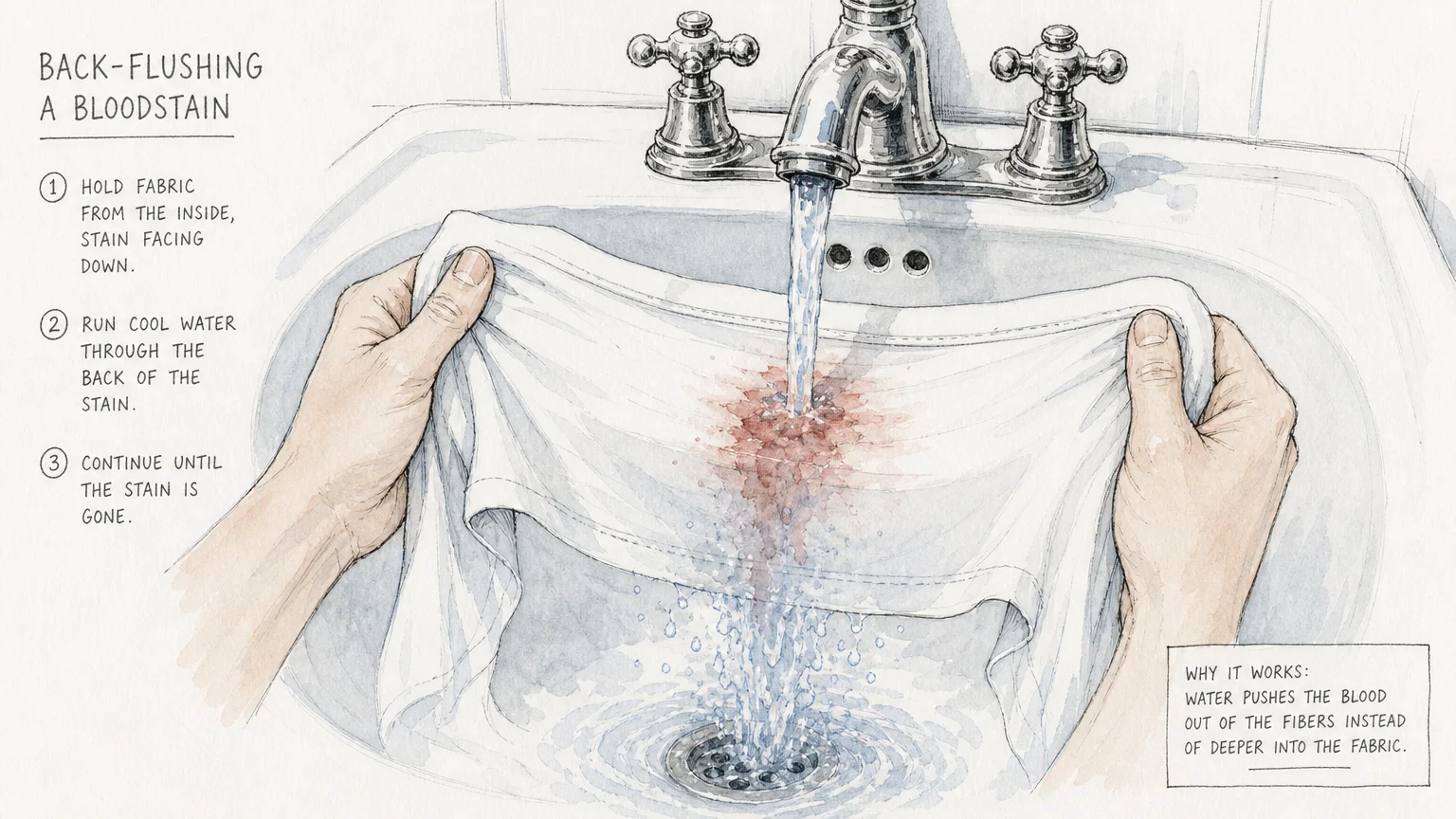
Always hold the garment inside out under a running faucet and flush the area with cold water. Pushing the water through the back of the fabric forces the stain out the same way it came in, rather than driving it deeper. For the most effective stain removal, the American Cleaning Institute recommends soaking the stained item in cold water for thirty minutes, then applying a high-quality, enzyme-based laundry stain remover. The enzymes in these targeted detergents are designed specifically to digest protein molecules, breaking them apart so they easily wash away in a standard cold-water cycle.
3. Pet Urine: Neutralize the Odors Safely
Pet accidents are frustrating to clean; they also demand specific chemistry to prevent lingering odors and dangerous chemical reactions. One of the most important household cleaning tips you can learn is to never use bleach on pet urine. Urine contains high levels of naturally occurring ammonia. When you mix ammonia with household bleach, the chemical reaction produces highly toxic chloramine gas—a severe respiratory hazard.
For safe product guidance and respiratory health, the Environmental Protection Agency (EPA) encourages using designated, safer-choice products rather than improvising with harsh corrosive chemicals. Similarly, the Centers for Disease Control and Prevention (CDC) emphasizes avoiding bleach when sanitizing areas heavily soiled by animals. Instead, rely on enzyme-based cleaners that safely digest the odor-causing uric acid.
Step-by-Step Pet Odor Removal
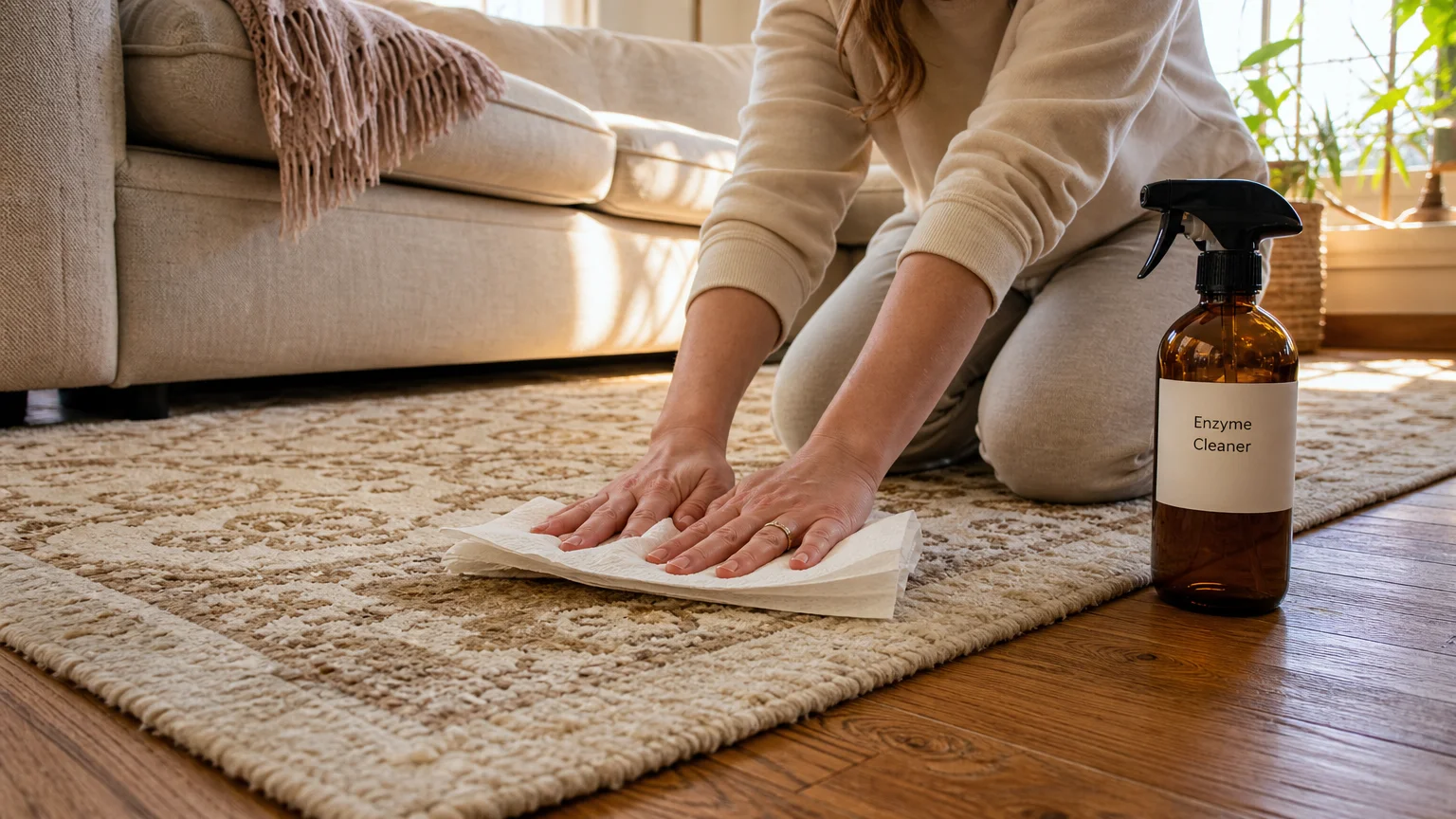
- Blot the wet area immediately using heavy paper towels; press firmly into the carpet to absorb as much liquid as possible without scrubbing the fibers.
- Spray a specialized enzyme-based pet odor eliminator directly onto the spot until the carpet and the underlying pad are thoroughly saturated.
- Allow the enzyme cleaner to sit undisturbed for at least fifteen minutes so the biological agents can properly digest the uric acid crystals.
- Blot the area completely dry with a fresh towel and allow the spot to air dry in a well-ventilated room.
4. Rust: Keep the Bleach Away from Iron
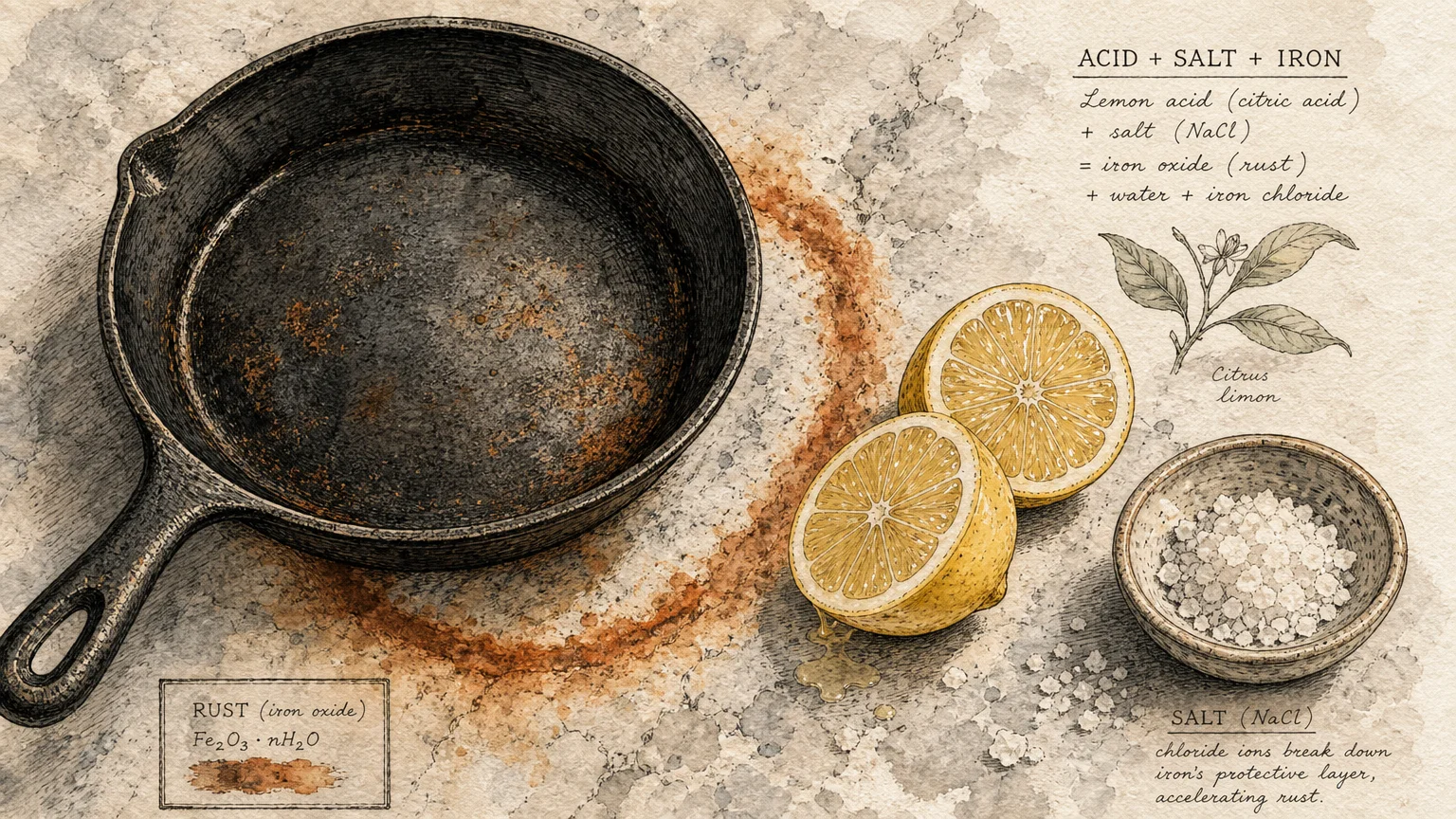
Rust marks on clothing, outdoor cushions, or porcelain bathroom fixtures often trick people into reaching for heavy-duty chlorine bleach. This strategy backfires immediately. Because bleach is an oxidizing agent, it reacts aggressively with iron and accelerates the rusting process—turning a faint orange spot into a permanent, dark brown disaster.
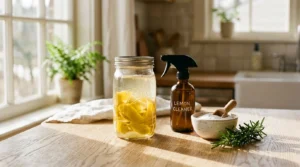
To safely handle cleaning chemicals and prevent accidental toxic exposures, the National Capital Poison Center advises storing all heavy-duty commercial rust removers in their original packaging and strictly adhering to the manufacturer’s ventilation warnings. If you prefer a natural approach, you must use a mild acid to dissolve the iron oxide. Create a thick paste using fresh lemon juice and table salt. Spread this paste over the rust spot and let the item sit in direct sunlight for an hour. The acid breaks the bond between the rust and the fabric, while the sunlight acts as a natural brightening agent.
5. Sweat and Yellow Pit Stains: Balance the pH
Those stiff, stubborn yellow stains on the underarms of your favorite white dress shirts are not just caused by sweat. They are the direct result of a chemical reaction between the proteins in your perspiration and the aluminum compounds found in most antiperspirants. Standard laundry detergent cannot dissolve this tough, waxy polymer.
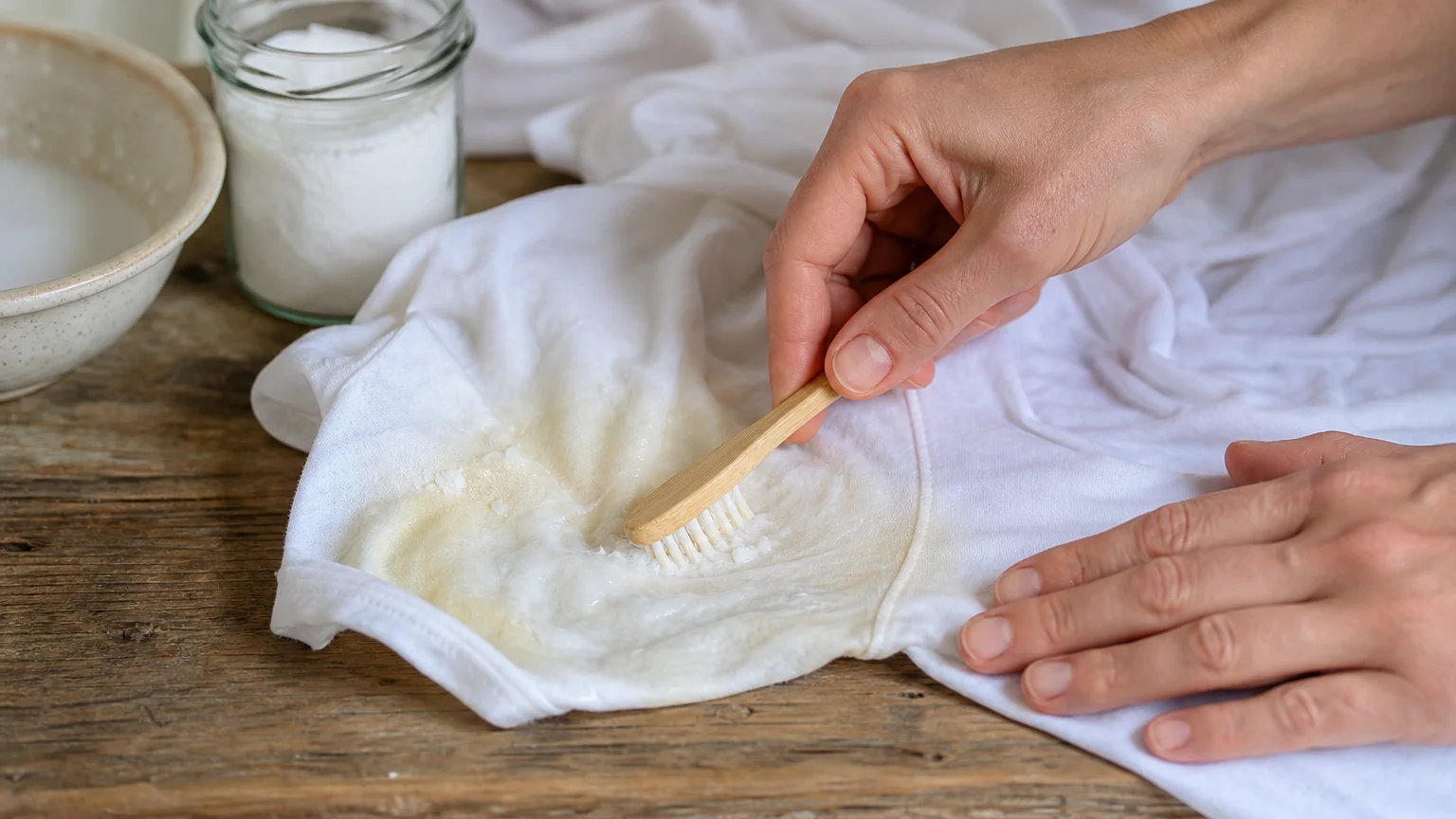
Do not bleach these yellow marks; chlorine bleach reacts with the protein and actually makes the yellow color darker. Instead, you need to break the chemical bond using a specialized paste. Mix equal parts baking soda, hydrogen peroxide, and water until you form a frosting-like consistency. Rub this mixture generously into the armpit areas of the shirt and let it rest for thirty minutes. The peroxide gently brightens the discolored fabric, while the baking soda acts as a mild abrasive to lift the greasy aluminum residue away from the threads.
6. Coffee and Tea: Flush Out the Plant Tannins
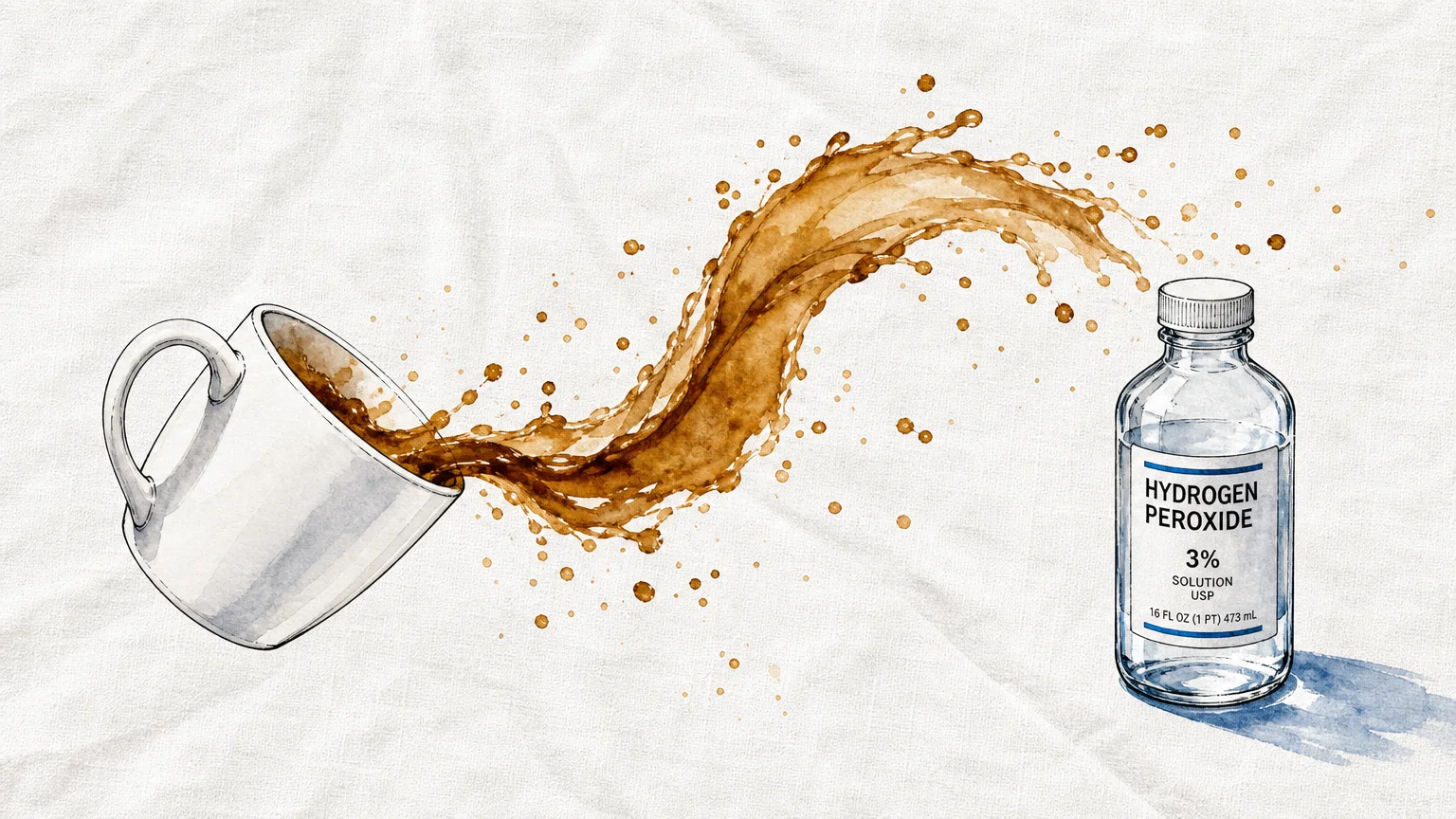
Both coffee and tea contain high concentrations of tannins, which are organic plant compounds that effectively dye fabrics upon contact. If you spill your morning brew on your trousers, flush the area immediately with cold water. If your coffee contained milk or cream, you are dealing with a combination stain: a protein from the dairy and a tannin from the coffee. You must rinse away the dairy protein with cold water first.
Once the dairy is flushed out, or if the coffee was black, you can address the dark tannin mark. Distilled white vinegar is highly effective at breaking down plant-based dyes. Mix one part white vinegar with two parts lukewarm water and sponge it heavily over the affected area. The mild acidity dissolves the tannin bonds. Afterward, wash the garment on the warmest water setting allowed by the manufacturer’s care label.
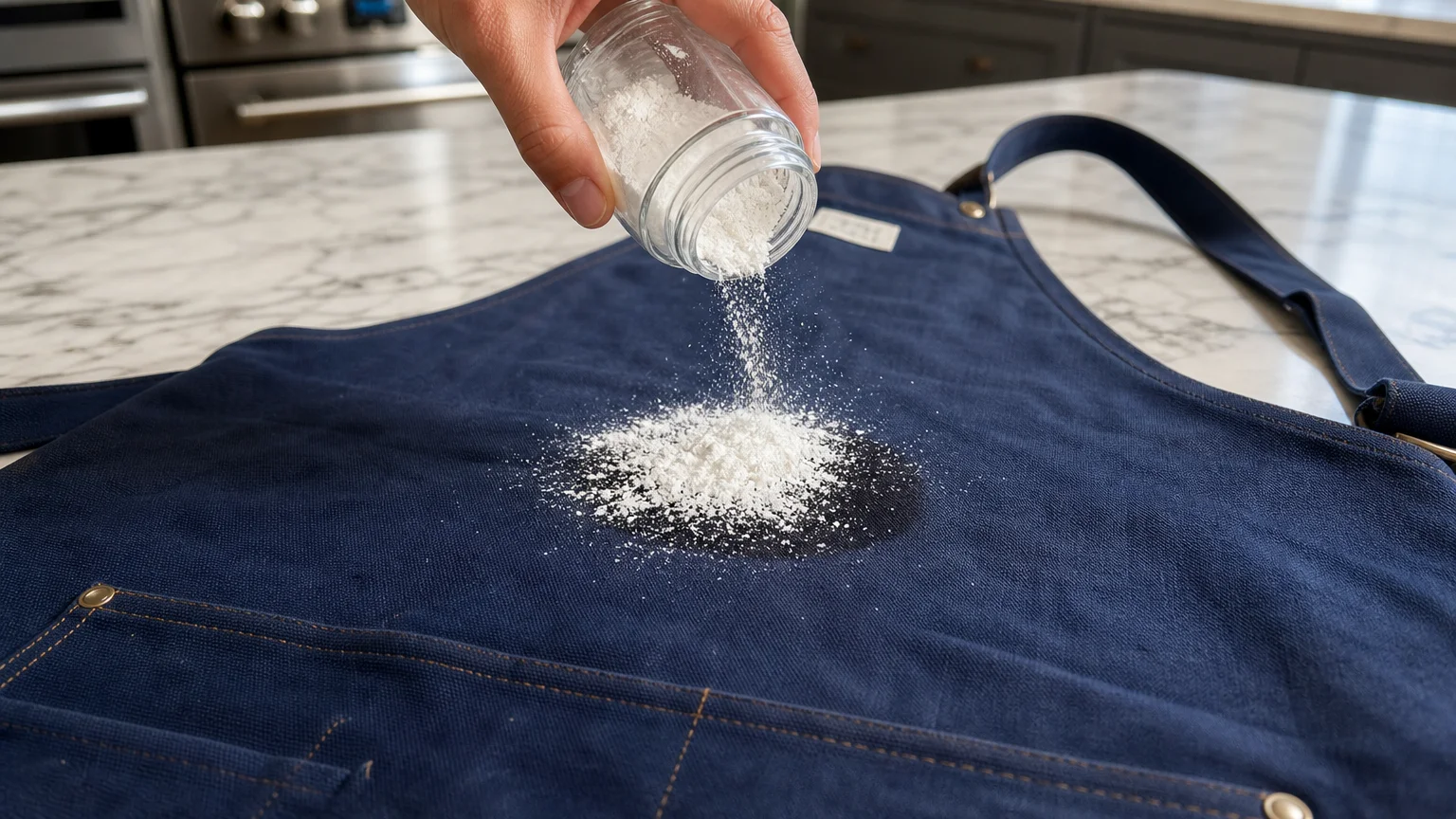
7. Grease and Oil: Absorb Before You Dissolve
Because oil repels water, tossing a grease-stained shirt directly into the washing machine rarely works; the water simply slides over the lipid layer. Whether you drop salad dressing on your lap or splatter bacon grease on your sleeve, your first step must be absorption.
Sprinkle a generous handful of cornstarch or baking soda directly over the fresh oil spot. Leave the powder completely undisturbed for fifteen minutes so it can pull the liquid fat out of the weave like a microscopic sponge. Brush the saturated powder off the fabric into the trash. Next, massage a few drops of heavy-duty liquid dish soap into the remaining shadow. Dish soap is explicitly formulated to cut through food grease. Let the soap sit for ten minutes, then rinse the garment with hot water to melt the remaining fats and wash them away.
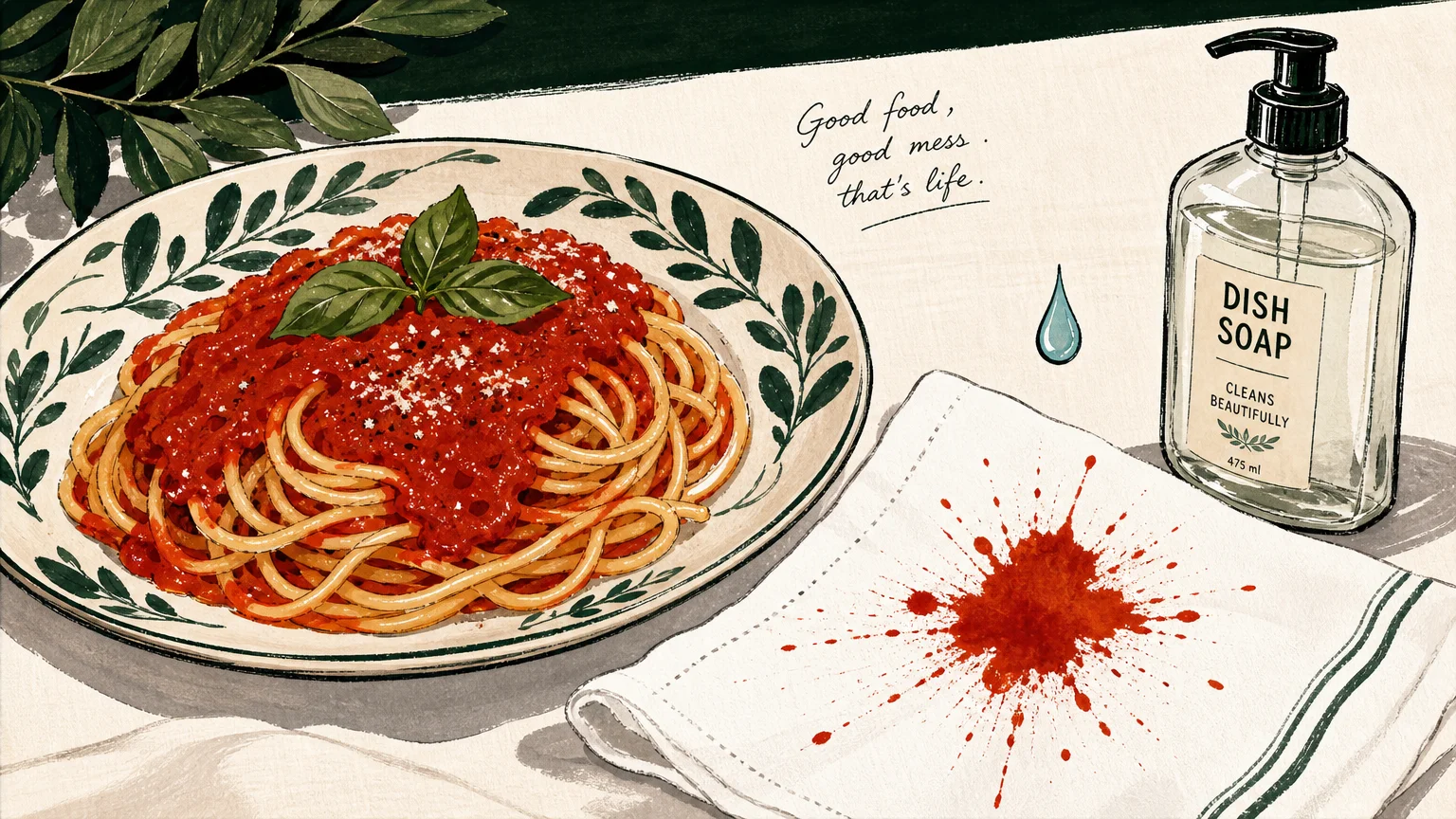
7. cloth
8. napkin
9. using
10. a
11. bottle
12. of
13. handy
14. dish
15. soap.
Total: 15 words.
But “A plate of spaghetti sits next to a stained napkin
8. Tomato Sauce: Cut Through the Natural Acidity
Tomato-based stains are notoriously persistent because they contain bright red plant pigments called lycopene, combined with natural acids and cooking oils. If you spill spaghetti sauce or ketchup, gently scrape the excess off the fabric with the dull edge of a spoon. Wiping it with a napkin only forces the red lycopene pigment deeper into the material.
Hold the fabric tightly under a running faucet and flush it from the back with cold water to push out the sauce. Next, work a premium liquid laundry detergent directly into the wet fibers using your thumbs. Let it sit for ten to fifteen minutes to break down the cooking oils. If a faint orange hue remains after running it through the wash, simply hang the wet item outside in direct sunlight. The ultraviolet rays will naturally bleach out the final traces of the tomato pigment.
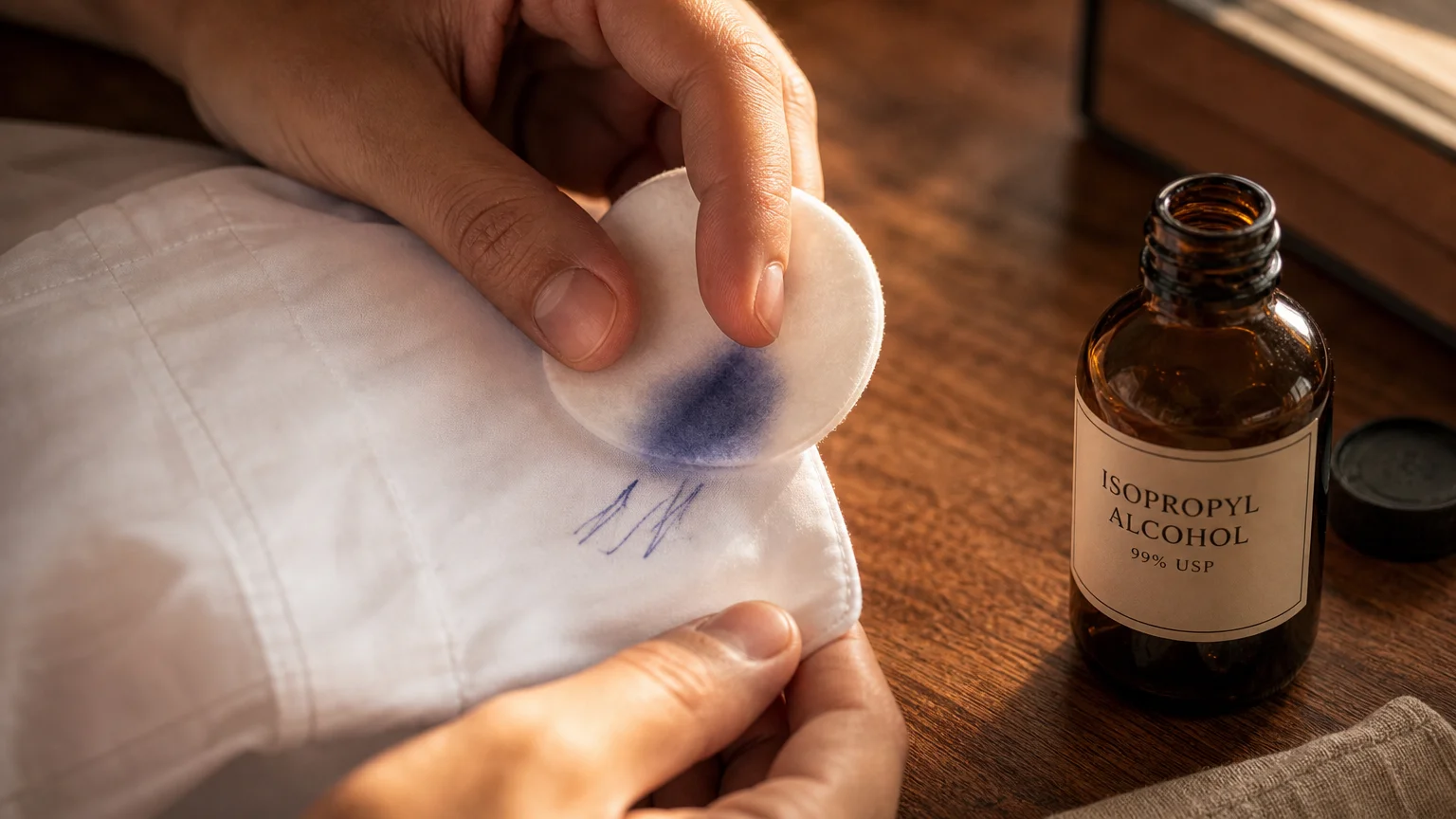
9. Ink and Permanent Marker: Break Down the Alcohol Solvents
Finding a leaky pen in your pocket feels like a guaranteed ruined garment. However, because most ballpoint inks and permanent markers are alcohol-based, they simply require a solvent to reactivate the dried liquid so it can be lifted away.
Place a thick stack of paper towels underneath the stained layer of fabric; this prevents the dissolving ink from bleeding through to the other side of the garment. Drip standard isopropyl rubbing alcohol directly onto the ink spot. As the alcohol saturates the fibers, the ink will rapidly begin to liquefy. Dab the area gently with a clean white rag or a cotton ball. You will see the ink transfer immediately from the clothing to your rag. Keep rotating your rag to a fresh, clean section until the stain entirely disappears, then launder the garment as usual.
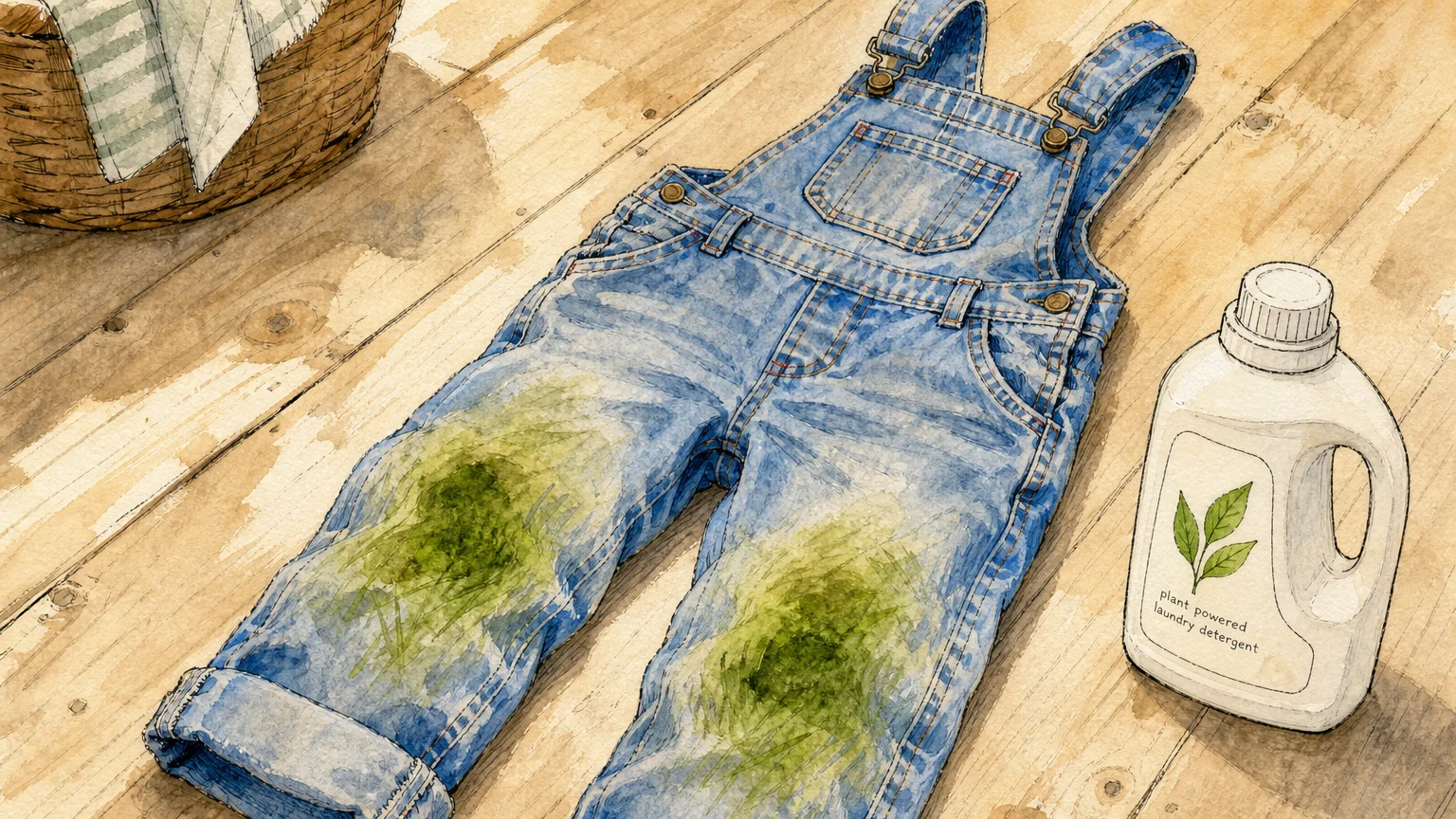
10. Grass: Use Enzymes to Digest the Chlorophyll
If you or your family members play outdoor sports, grass stains are a weekly battle. Grass acts like a complex natural dye because it binds bright green chlorophyll together with organic plant proteins. Standard detergents frequently fail to lift both of these components at the same time.
To remove tough stains caused by grass, you need to rely on biological chemistry. Apply an enzyme-based laundry stain remover directly to the knees of the jeans or sports uniform. Scrub the liquid in gently using a soft-bristled brush or an old toothbrush. Let the enzymes sit on the fabric for at least fifteen minutes to fully digest the proteins holding the green pigment in place. If the chlorophyll remains stubborn after washing, sponge a mixture of equal parts white vinegar and water onto the stain to dissolve the remaining plant matter.
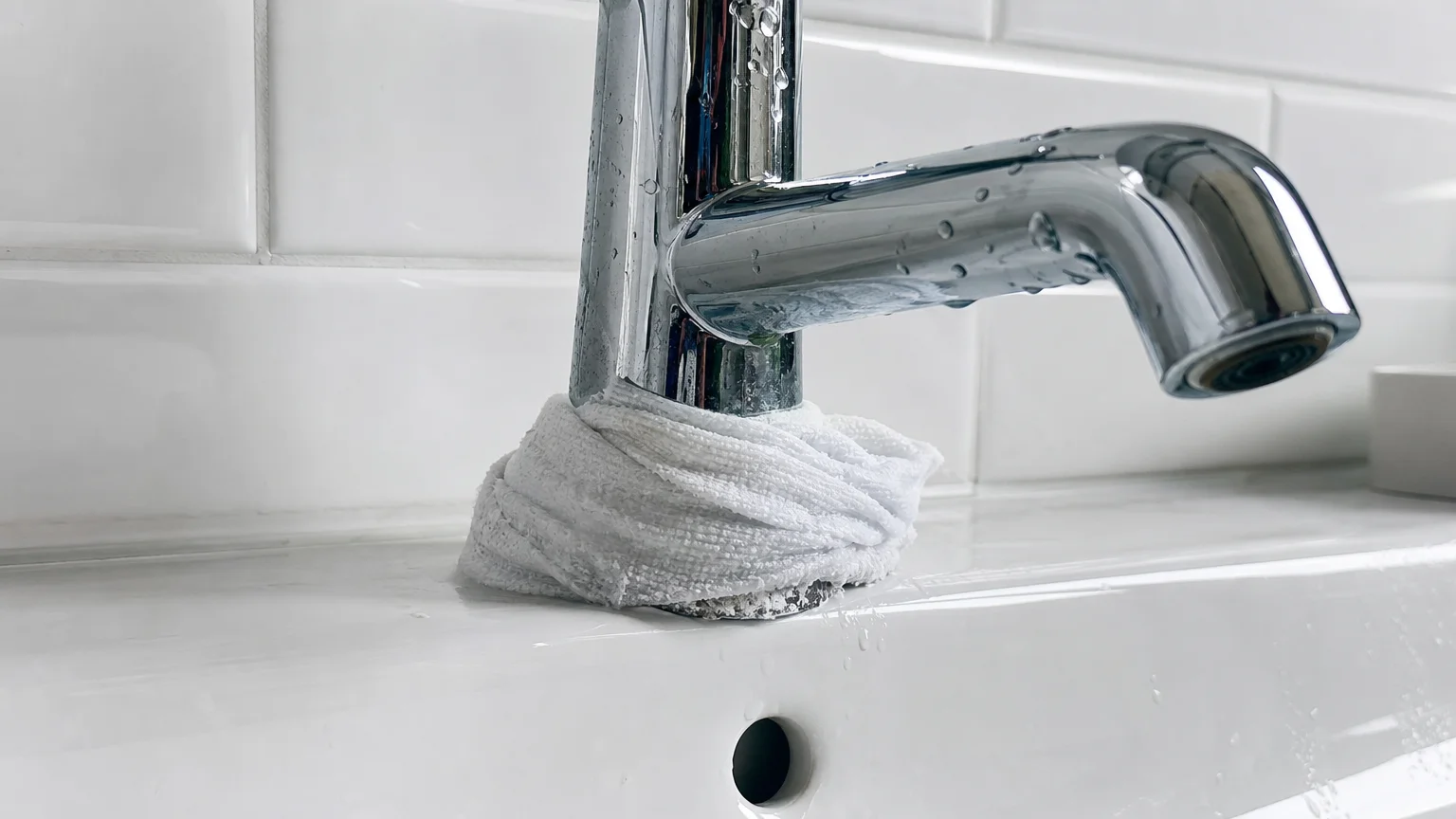
11. Hard Water Deposits: Melt Away the Chalky Minerals
If you live in an area with a hard municipal water supply, you likely notice a chalky, white buildup forming around your faucets, showerheads, and glass doors. These crusty spots are highly alkaline calcium and magnesium mineral deposits. Trying to remove them by scrubbing vigorously with a rough sponge will only scratch your expensive metal and glass fixtures.
To effectively remove hard water stains, you must dissolve the minerals chemically using an acidic cleaner. Soak a soft microfiber cloth or several paper towels in pure distilled white vinegar. Wrap the soaked towels tightly around the affected faucet or press them flat against the shower glass. Leave them in place for a full hour. The natural acid will completely break down the crystallized minerals, allowing you to wipe the fixtures sparkling clean with zero abrasive scrubbing.
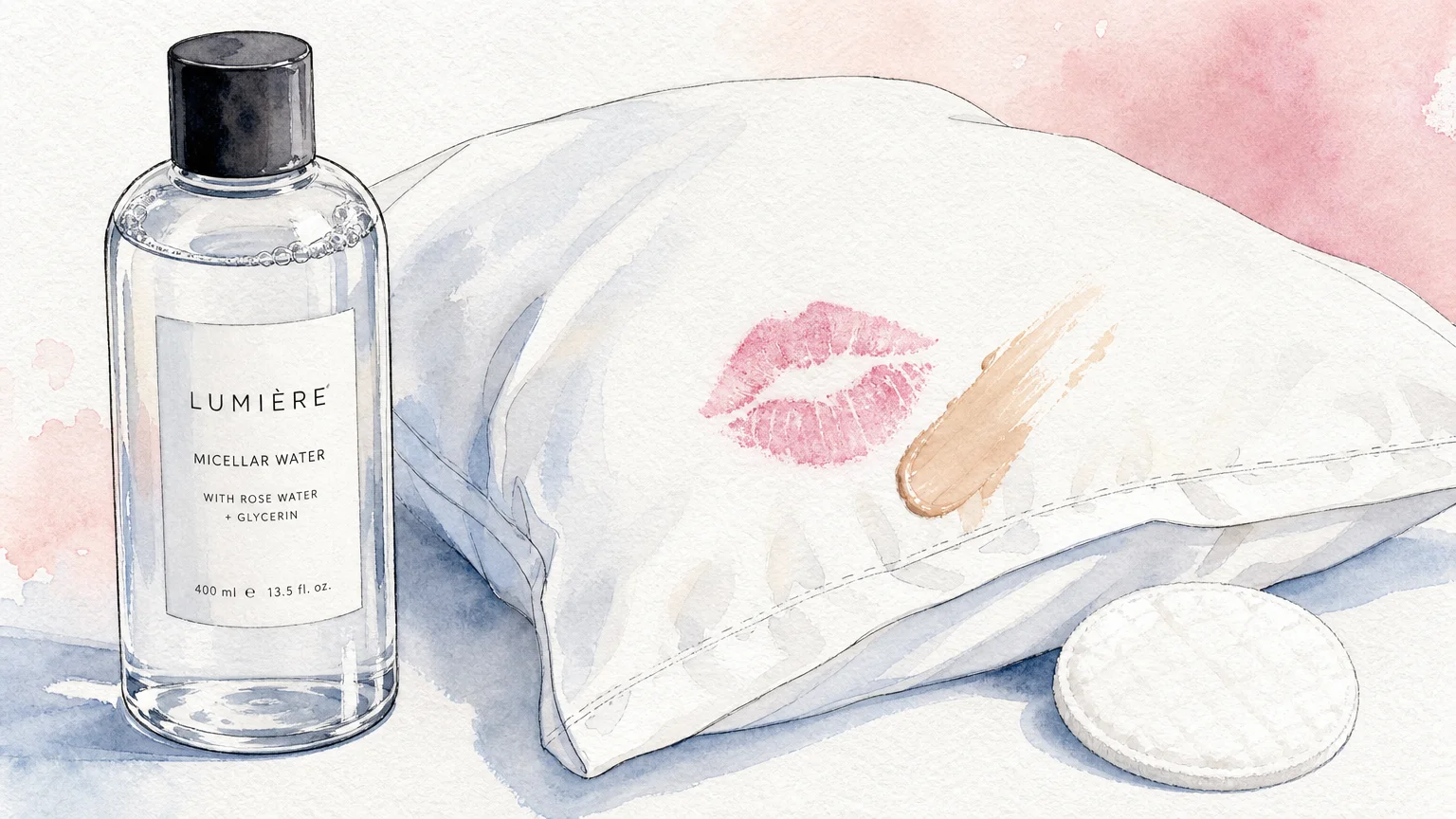
12. Makeup: Lift Oil and Pigment Without Smearing
Cosmetics like liquid foundation, concealer, and lipstick are chemically designed to be long-lasting, waterproof, and smudge-proof. This resilience makes them incredibly difficult to remove when they inevitably rub off onto shirt collars or bathroom towels. Because they are heavy in oils and waxes, water alone will bead up and roll right off them.
To break through the waterproof barrier, grab a can of plain, uncolored shaving cream. Spray a small dollop directly onto the makeup smudge and work the thick foam into the stain using your fingertips. The active emulsifiers and surfactants in the shaving cream will encapsulate the cosmetic oils and suspend the dense pigments without smearing them further into the surrounding fabric. Let the foam sit on the stain for ten minutes, rinse thoroughly with warm water, and toss the item into your regular wash load.
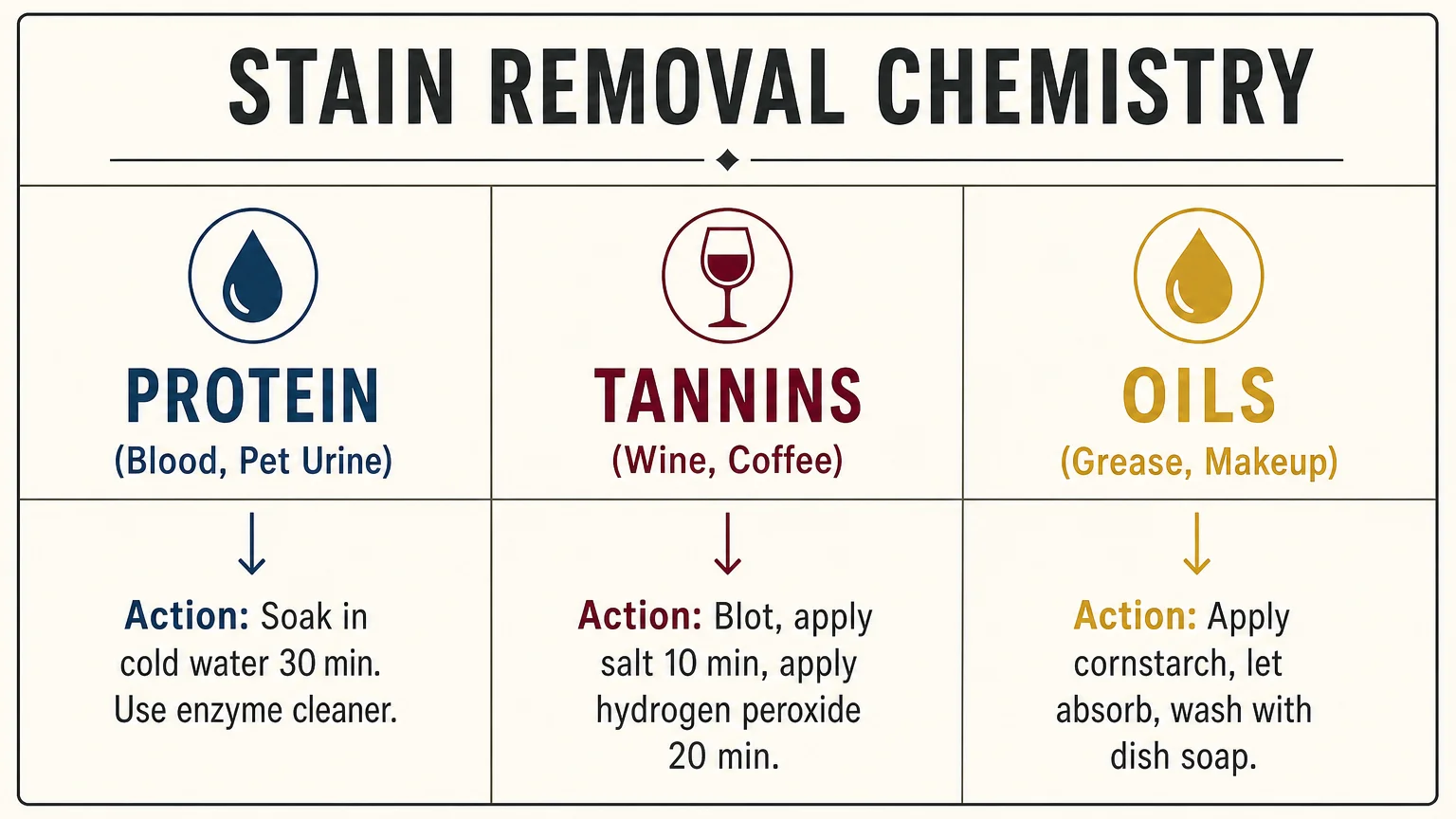
Your Quick-Reference Stain Removal Guide
Having a clear understanding of what chemical approach to use saves garments from the trash bin. Use this reference table to match the mess to the proper remedy.
| Stain Category | Common Culprits | Winning Strategy |
|---|---|---|
| Protein | Blood, Sweat, Grass, Dairy | Flush with cold water only; apply an enzyme-based detergent to digest the proteins. |
| Tannin | Coffee, Tea, Red Wine | Blot to absorb; apply mild acids like white vinegar or hydrogen peroxide. |
| Oil & Grease | Cooking Oil, Makeup, Butter | Soak up moisture with baking soda; break down remaining lipids with heavy dish soap. |
| Mineral | Hard Water, Rust | Dissolve with acidic cleaners (lemon juice or vinegar); never apply chlorine bleach. |
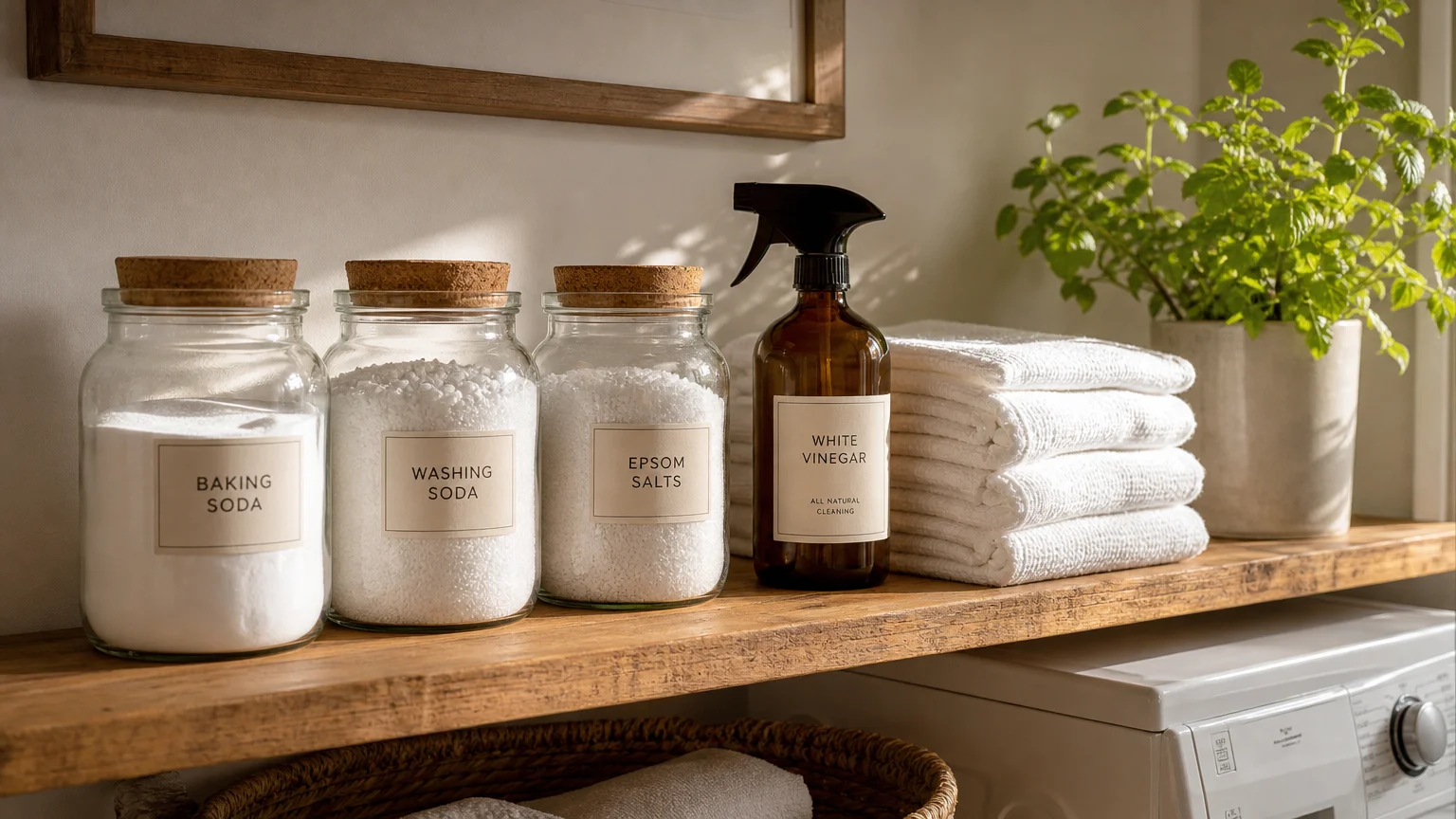
Master Your Cleaning Routine
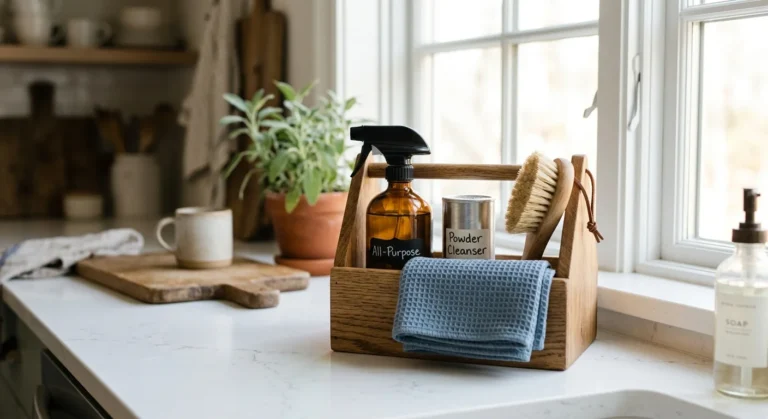
Cleaning stains from your home and wardrobe does not require panic, frantic scrubbing, or tossing out your favorite items. By organizing a simple cleaning kit under your sink—stocked with white vinegar, baking soda, rubbing alcohol, hydrogen peroxide, and a reliable enzyme detergent—you are fully prepared for almost any accident. Take a few minutes this week to check your laundry supplies, ensure you have these basic ingredients on hand, and print out the reference guide above so you can act confidently the next time a spill happens.