A streamlined closet transforms your morning routine from a frustrating scavenger hunt into a peaceful, five-minute task. By setting up a wardrobe system tailored to your current mobility and lifestyle, you eliminate physical strain and reclaim precious time every single day. As we get older, reaching for high shelves and digging through dim corners becomes more than just an annoyance; it becomes a safety risk. You deserve a space that works perfectly for your body right now. These nine straightforward adjustments will help you organize your clothing so your favorite outfits remain front and center. You can quickly implement these practical changes this weekend to build a safer, highly functional closet that supports your daily independence.
Shift Your Most-Worn Clothing Into the Ergonomic Green Zone
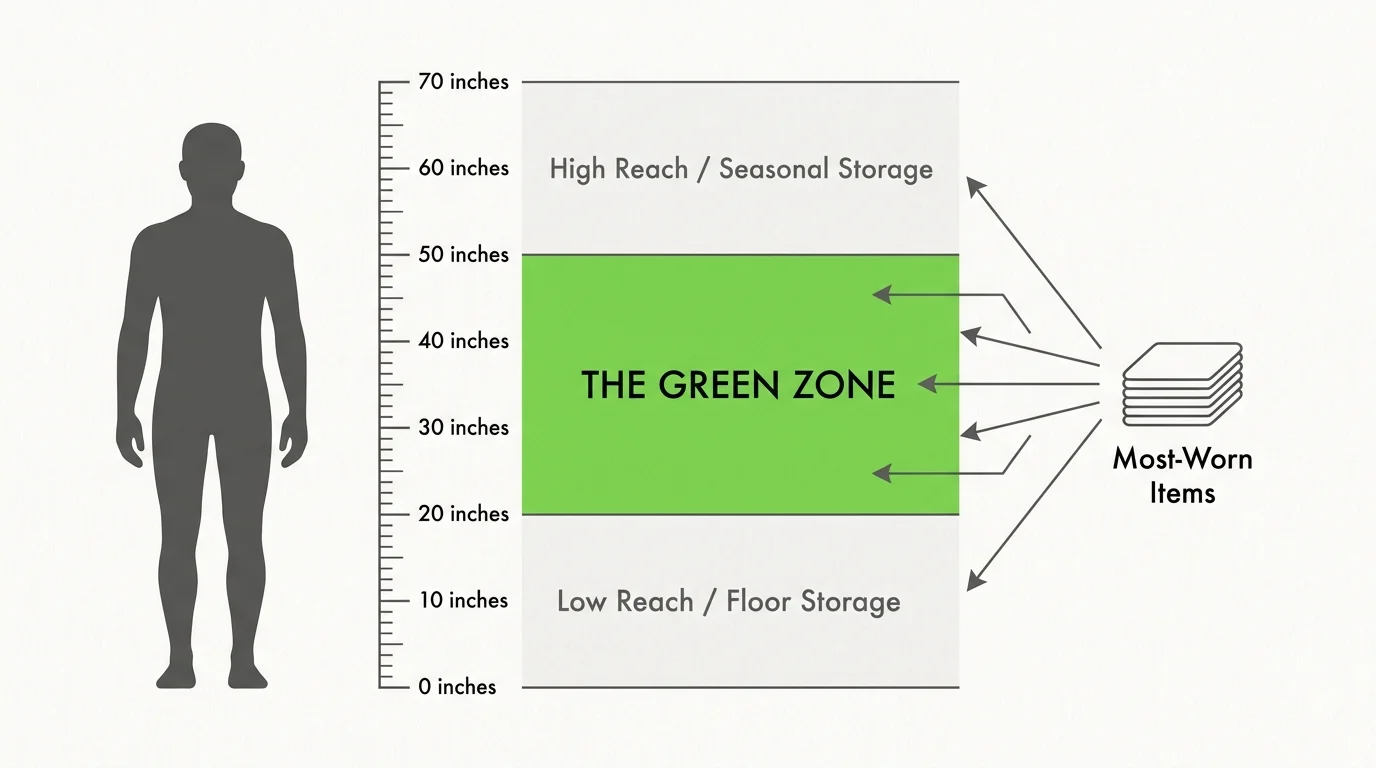
Occupational therapists use the term “green zone” to describe the ideal vertical reach envelope for your daily tasks. This optimal area spans roughly 20 to 50 inches from the floor. Movements kept within this specific vertical space place minimal stress on your joints and muscles, preserving your energy for the rest of the day. Start your closet transformation by evaluating your inventory and moving your most frequently worn items directly into this central plane.
When you place your everyday pants, shirts, and favorite shoes exactly at waist and chest level, you never have to bend over or stretch upward. Reserve the top shelves exclusively for off-season storage, such as heavy winter sweaters during the summer months. Shift your least-worn items or heavy boots to the floor. Keeping your active wardrobe inside the green zone entirely bypasses the need for dangerous step stools and awkward crouches. Furthermore, eliminating the need to repeatedly bend down prevents the sudden dizziness that often occurs when standing back up too quickly.
Lower the Closet Rod to an Accessible Height
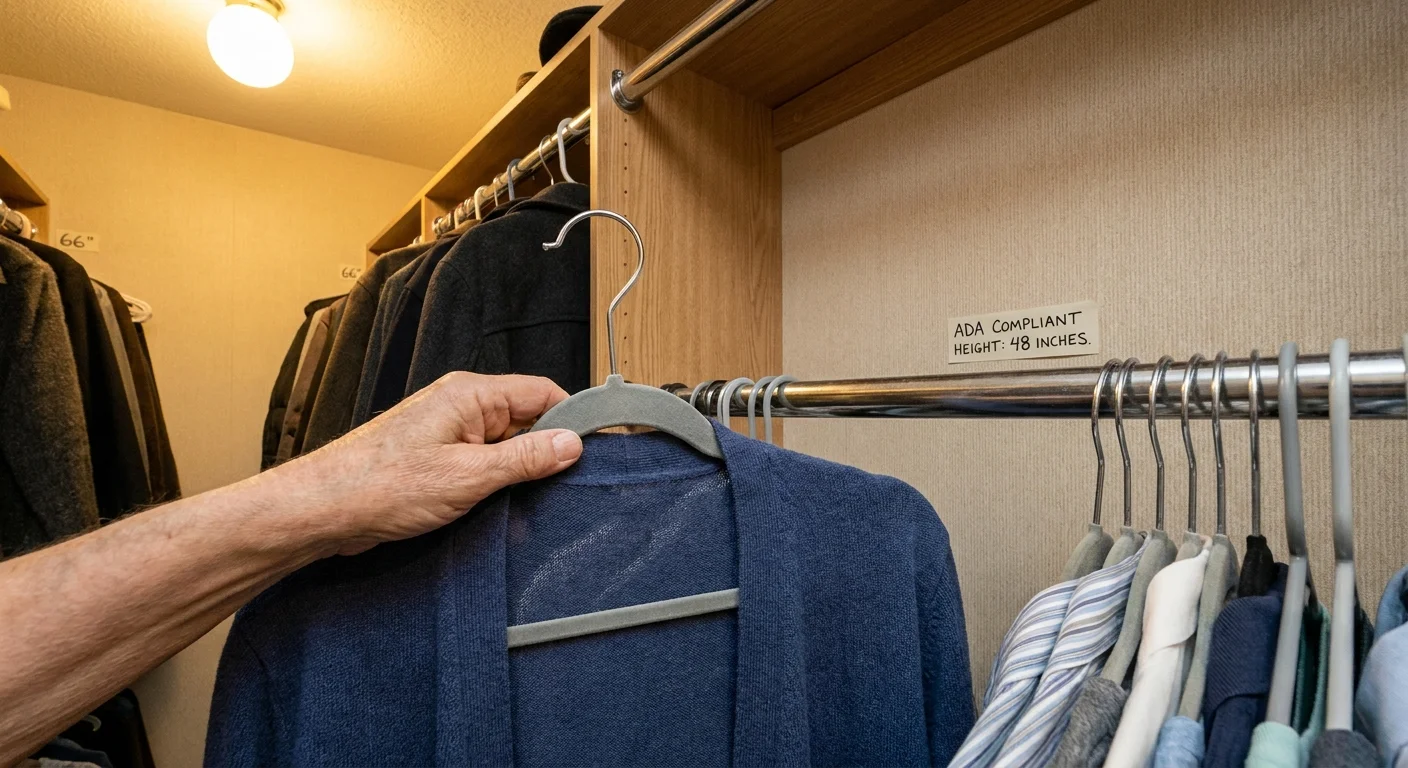
Standard residential construction typically installs single closet rods around 66 inches from the floor. This height forces a significant upward reach, which aggravates shoulder pain and throws off your balance over time. Lowering your main hanging rod immediately streamlines your dressing routine and drastically reduces fall risks.
The Americans with Disabilities Act (ADA) recommends positioning clothing rods between 48 and 52 inches from the floor. According to accessible home improvement standards highlighted by Angi, this specific height accommodates an unobstructed forward reach. This adjustment proves perfect for individuals who use a wheelchair, rely on a walker, or manage limited shoulder mobility. You do not need to tear out your walls or hire a contractor to achieve this. Install a simple drop-down closet rod extender; these handy devices hook directly onto your existing bar and utilize a pull-wand mechanism to drop your garments down to a comfortable level without any heavy lifting. Alternatively, set up a dual-rod system and dedicate the lower bar for your daily tops and bottoms.
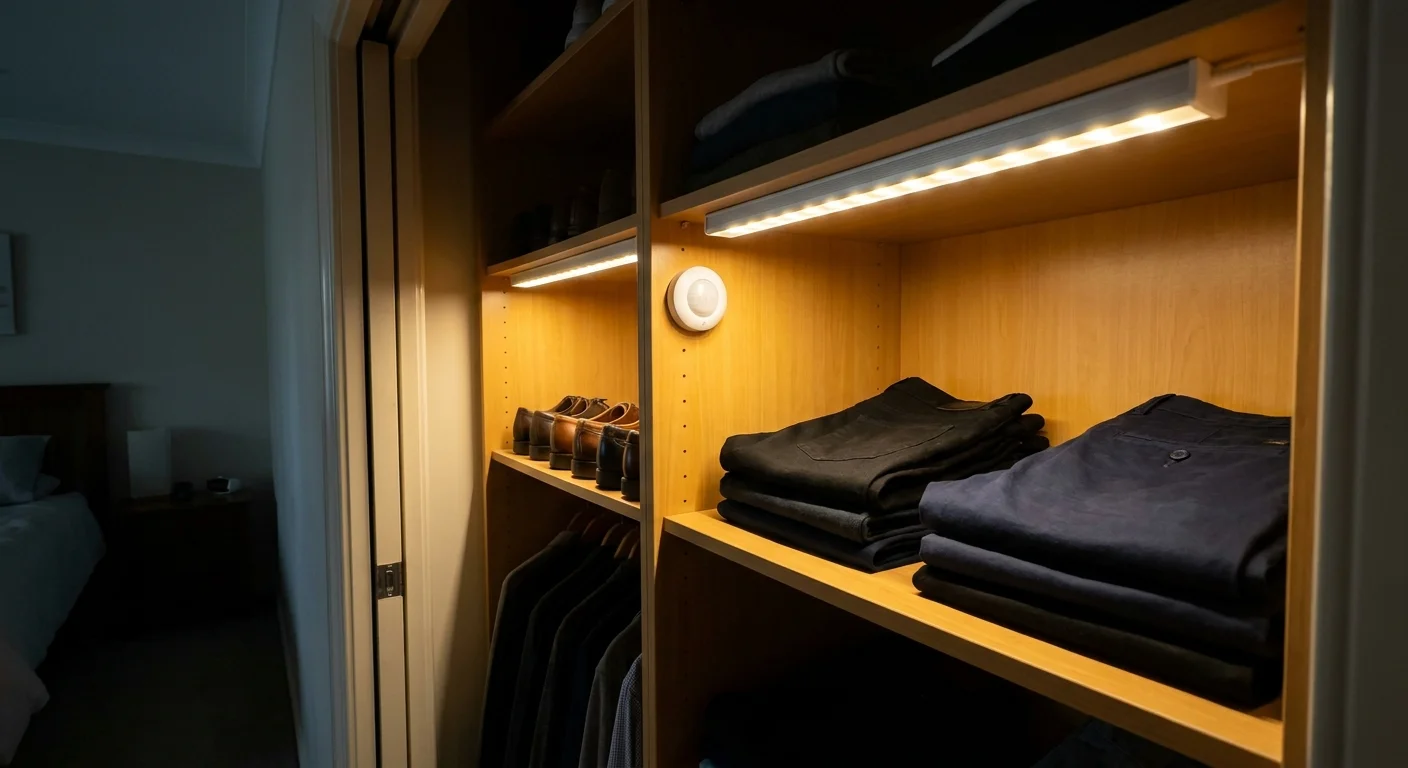
Upgrade to Motion-Activated, High-Lumen Lighting
Dim lighting slows down your cognitive processing and obscures hazardous obstacles left on the floor. Staring into a dark closet forces you to squint and guess whether a pair of slacks is navy blue or black. As the human eye ages, the lens thickens and lets in less light. To see with the exact same clarity as younger individuals, older adults often require two to three times more ambient illumination.
Replace your standard 800-lumen bulbs with fixtures outputting at least 1,600 lumens. Opt for a color temperature between 2700K and 3000K, which provides a warm, clear light without causing harsh glare that strains aging eyes. Furthermore, the Fall Prevention Foundation strongly advises upgrading to motion-activated lighting to mitigate fall risks. Groping for a light switch in the dark often causes disorientation and balance loss. By mounting battery-operated, motion-sensing LED panels directly above your closet rod or along the doorframe, the space illuminates the instant you open the door. You never have to fumble for a pull-string or flip a switch, stripping another layer of friction from your morning.
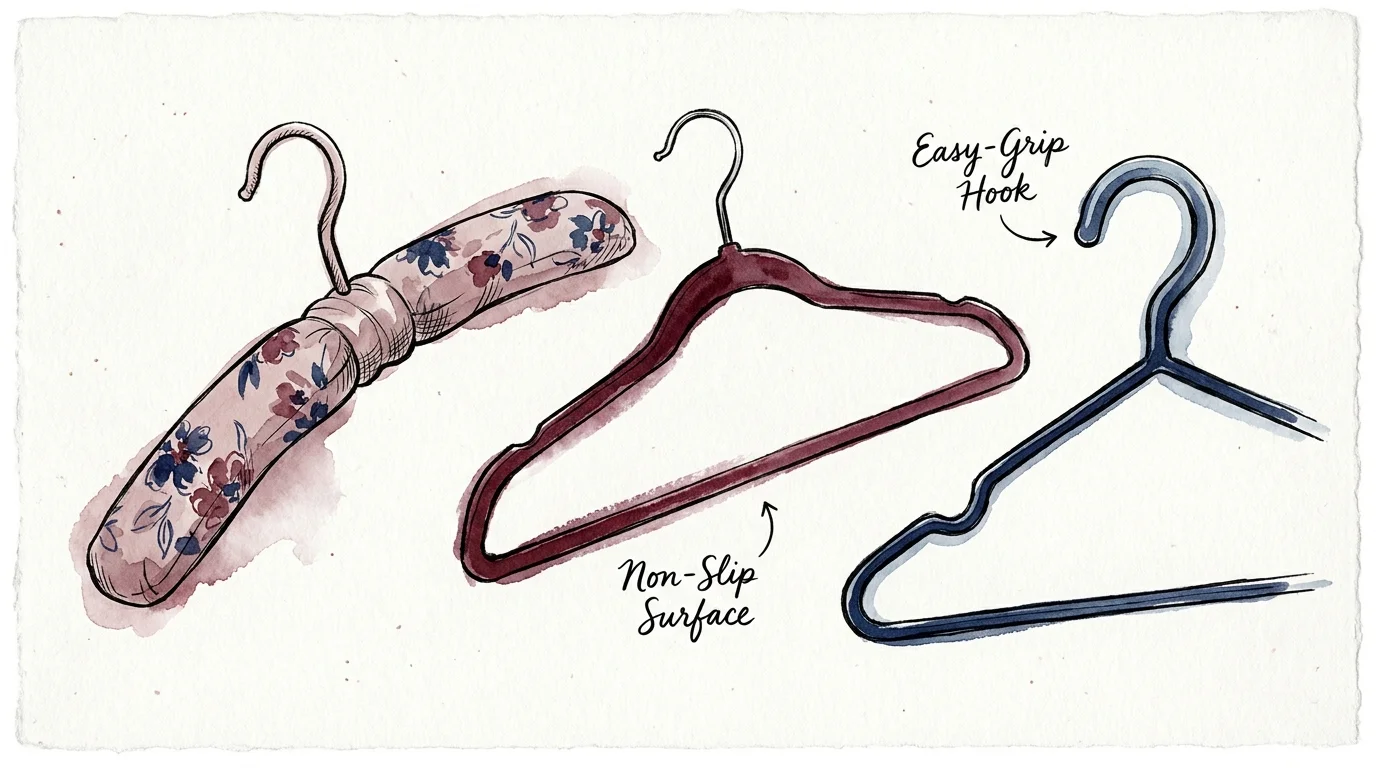
Swap Out Stubborn Hangers for Arthritis-Friendly Alternatives
Standard wire hangers tangle easily, and heavy wooden hangers feature stiff metal clips that demand robust hand strength. If you manage osteoarthritis, squeezing a tiny metal clasp to release a skirt triggers sharp, immediate pain in your fingers and wrists. Fighting with your hangers wastes time and drains your hand strength before your day even begins.
The Hospital for Special Surgery recommends seeking out assistive devices designed with lever mechanisms rather than tight pinch grips. Apply this ergonomic principle directly to your wardrobe by ditching traditional clip hangers. Purchase open-ended pant hangers; these allow you to slide trousers directly onto the bar without operating any clasps. For garments that must be secured, choose specialized ergonomic hangers equipped with wide, low-resistance clamps. You can press these large levers open using the heel of your hand rather than your fingertips. Additionally, swap out friction-heavy velvet hangers for smooth, thick tubular plastic hangers. The smooth plastic allows fabric to glide off easily, requiring zero forceful pulling.

Map Out Your Space: The Ergonomic Closet Zones Table
Understanding exactly where to store your items prevents daily frustration. Use this simple table as a visual guide to reorganize your closet space based on safety and accessibility.
| Closet Zone | Height Range | Recommended Storage Items | Safety Benefit |
|---|---|---|---|
| Overhead (Red Zone) | Above 50 inches | Off-season clothing, extra blankets, formal wear. | Keeps lightweight, rarely used items out of the way; minimizes overhead lifting. |
| Mid-Level (Green Zone) | 20 to 50 inches | Everyday shirts, slacks, current season shoes, daily medications. | Eliminates bending and reaching; protects shoulder joints and lower back. |
| Floor Level (Yellow Zone) | Below 20 inches | Heavy boots, rarely worn footwear, sturdy storage bins. | Prevents trip hazards by keeping the main walking path completely clear. |
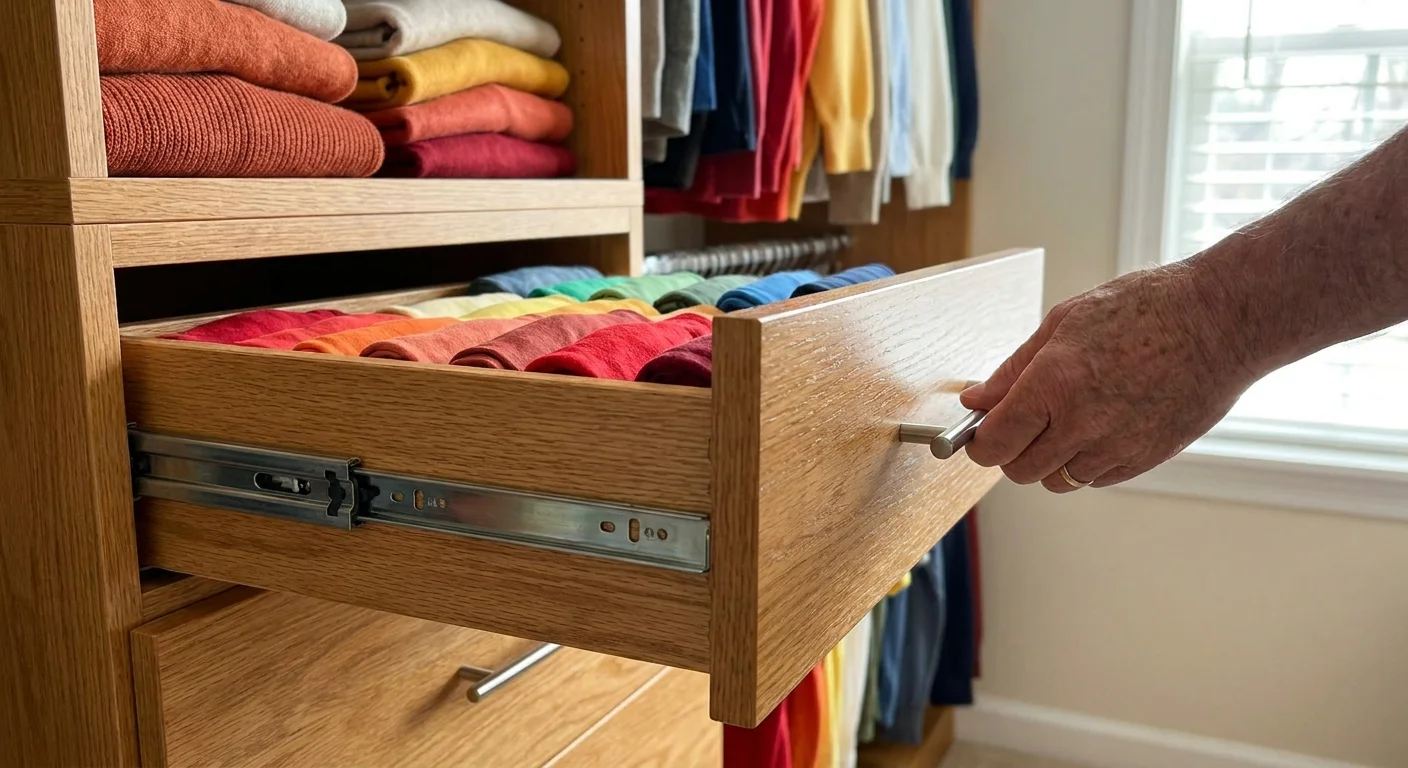
Replace Deep Shelves With Smooth Pull-Out Drawers
Fixed, deep shelves act like black holes for folded sweaters and accessories. When items get pushed to the back, you must lean awkwardly and rummage blindly through the dark. This disrupts your organization, wastes precious time, and places severe strain on your lower back. Converting fixed shelving into pull-out drawers brings your clothing out into the light and directly to your hands.
You can easily retrofit existing closet shelves with sliding wire baskets or wooden drawer tracks using basic hardware. Ensure you purchase drawer glides featuring a soft-close mechanism. Soft-close tracks gently pull the drawer shut, preventing jarring slams that can hurt sensitive hands. Because the drawer extends fully outward, you gain instant visibility of every item stored inside.
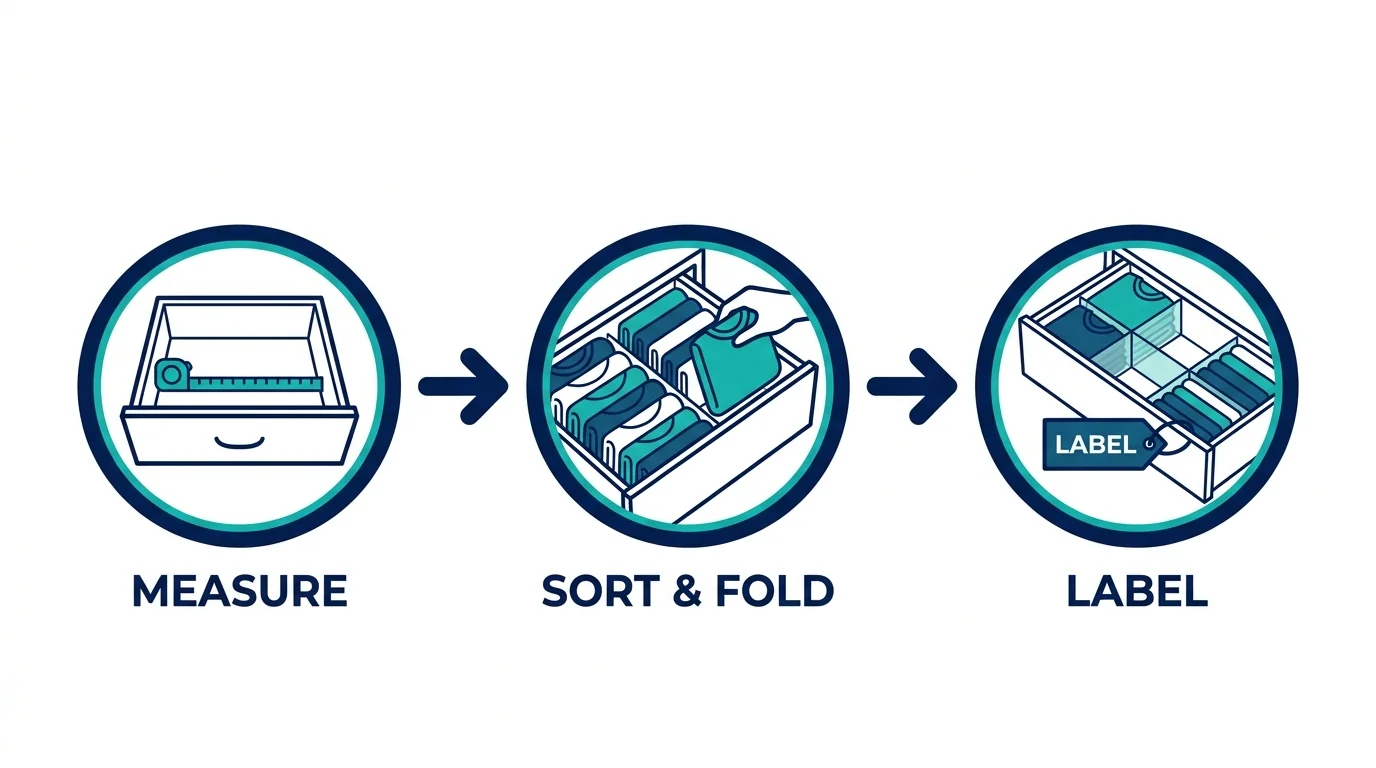
Step-by-Step Guide to Organizing Pull-Out Drawers
Follow these practical steps to maximize the efficiency of your newly installed drawers:
- Use the file-folding method: Fold your shirts and pants so they stand upright like files in a cabinet. This prevents you from having to dig under heavy stacks to find the exact shirt you want.
- Insert rigid drawer dividers: Place spring-loaded or plastic dividers between rows of clothing. Dividers keep your socks from mingling with your undergarments and hold the upright clothes firmly in place.
- Store heavier items lower: Keep bulky denim jeans and heavy knit sweaters in the lower pull-out drawers. Reserve the higher drawers for lightweight t-shirts and delicate undergarments to minimize lifting strain.
Implement a Color-Coded and Categorized Wardrobe System
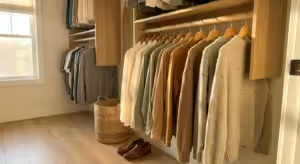
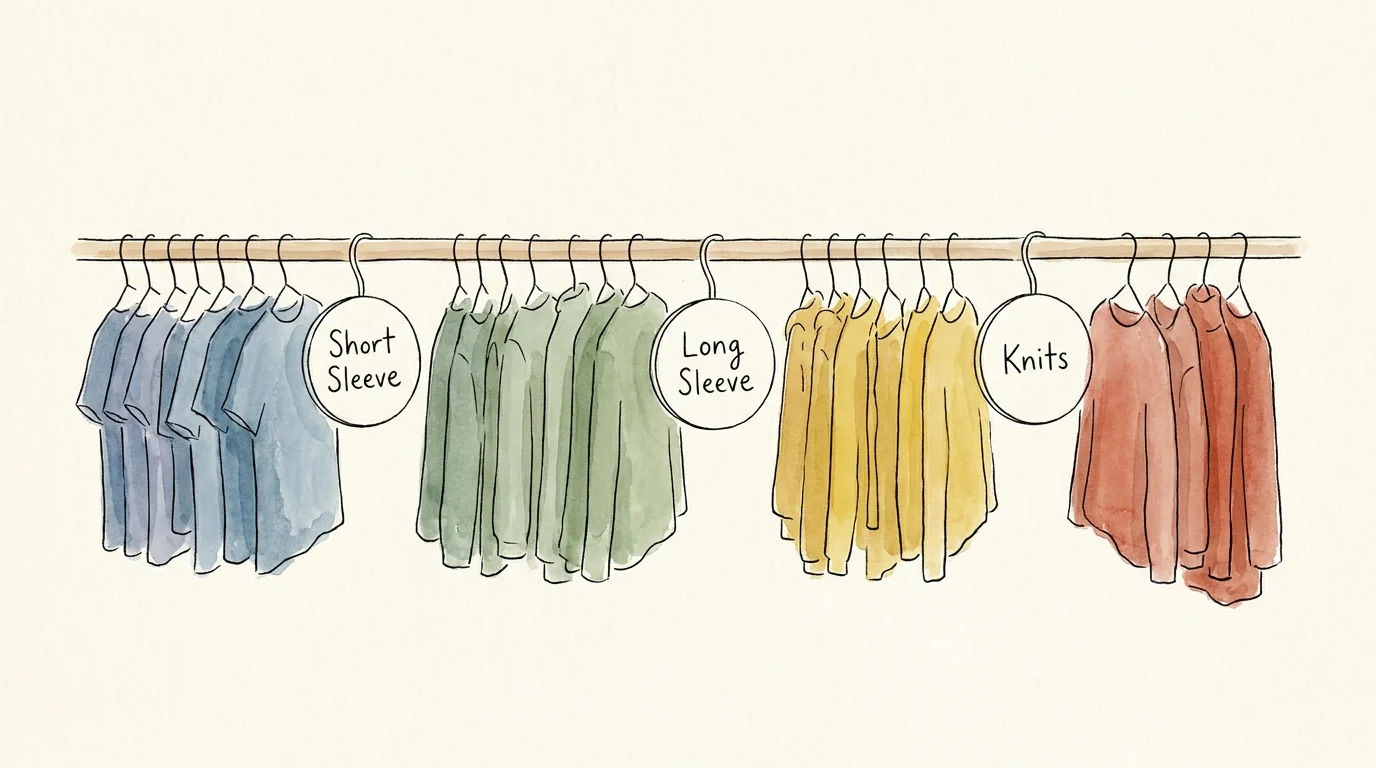
A chaotic, jumbled closet forces your brain to process an overwhelming amount of visual information. When you categorize your clothing logically, you drastically reduce the mental energy required to put an outfit together. Begin by emptying your closet and separating your wardrobe strictly by garment type. Group all your slacks together, followed by long-sleeve shirts, short-sleeve shirts, and finally light jackets.
Once categorized, arrange each section by color, moving progressively from light to dark. This highly visual system helps aging eyes locate exact items in seconds. If you know you want to wear a blue sweater, you look straight at the sweater section and zero in on the blue grouping. You eliminate the endless shuffling of hangers and the anxiety of losing track of your favorite pieces. Furthermore, a color-coded closet functions as an instant visual inventory. When you can see every pair of black slacks grouped together, you avoid mistakenly purchasing duplicates at the store.
Set Up a Designated “Next Day” Outfit Hook
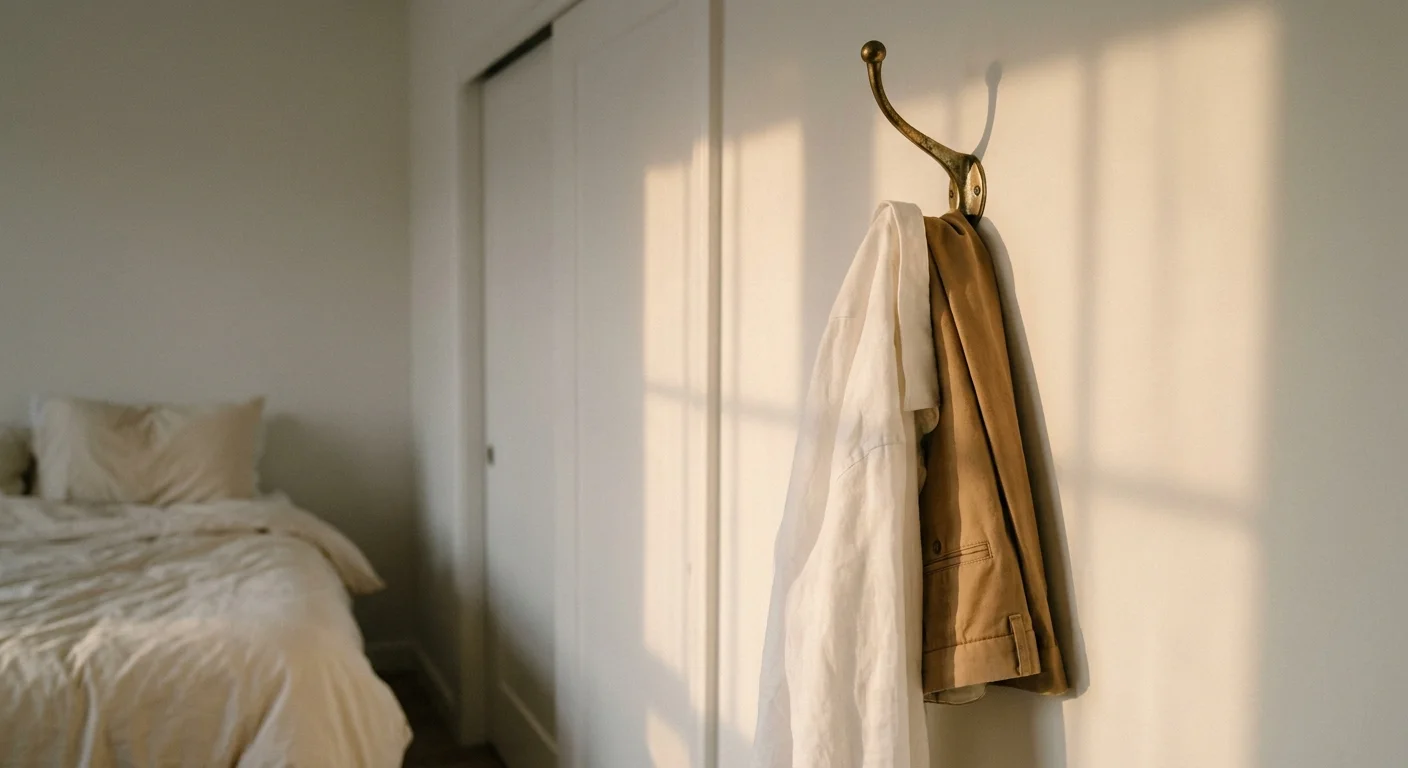
Making complex decisions the moment you wake up drains your energy and delays your morning. You can gift yourself back precious time each day by selecting your clothes the night before. Install a sturdy valet hook or an over-the-door hanger on the inside of your closet door, ensuring you mount it at a comfortable, chest-level reaching height.
Hang your complete outfit—including undergarments, socks, accessories, and a sweater—on this single hook. Consider mounting a small floating shelf directly next to the hook to hold your watch, glasses, or hearing aids. When you wake up, you completely bypass the closet browsing process. You simply grab the prepared hanger and get dressed in one spot. Establishing this nightly habit provides a reassuring sense of structure and predictability. It reduces morning anxiety and guarantees that your day begins with a smooth, effortless victory.
Use Clear, Lightweight Storage Bins for Off-Season Items
Rotating your wardrobe seasonally keeps your primary closet rod from becoming overcrowded and unmanageable. However, packing away clothes in massive, opaque plastic totes creates dangerous lifting situations. Wrestling a heavy, 40-gallon bin down from a top shelf or carrying it up from a basement poses a severe risk of dropping the container or tearing a muscle.
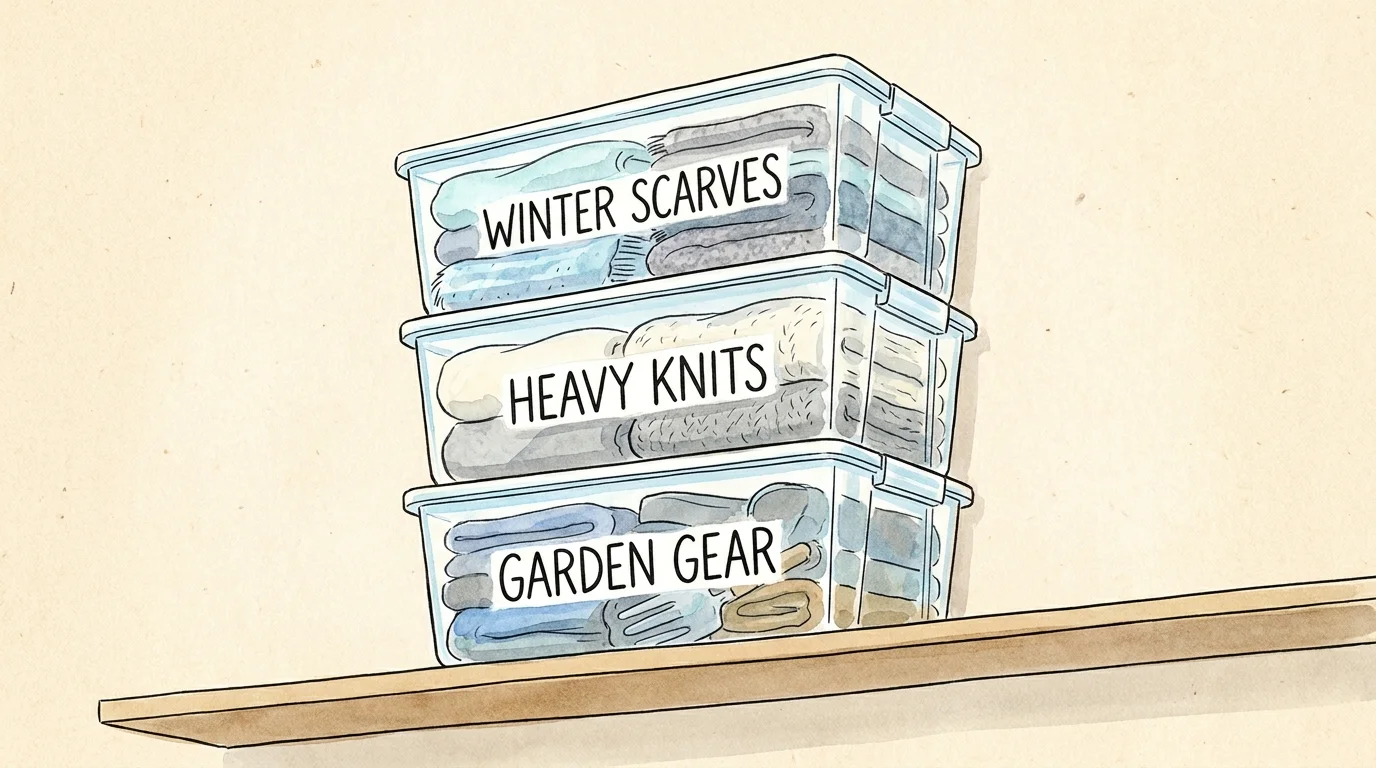
Downsize your storage containers immediately. Choose 10-quart or 15-quart clear plastic bins; these smaller sizes remain lightweight and easy to handle even when completely full. The transparent material allows you to identify the contents instantly without prying open the lid. Furthermore, use a label maker or a thick black marker to clearly print the contents on a label facing outward. Using high-contrast labels—such as thick black ink on stark white tape—ensures you can read the text from a distance without searching for your reading glasses. When the seasons change, you only have to lift manageable, featherweight containers, thereby protecting your joints and your balance.
Place a Sturdy Seating Option Nearby for Safe Dressing
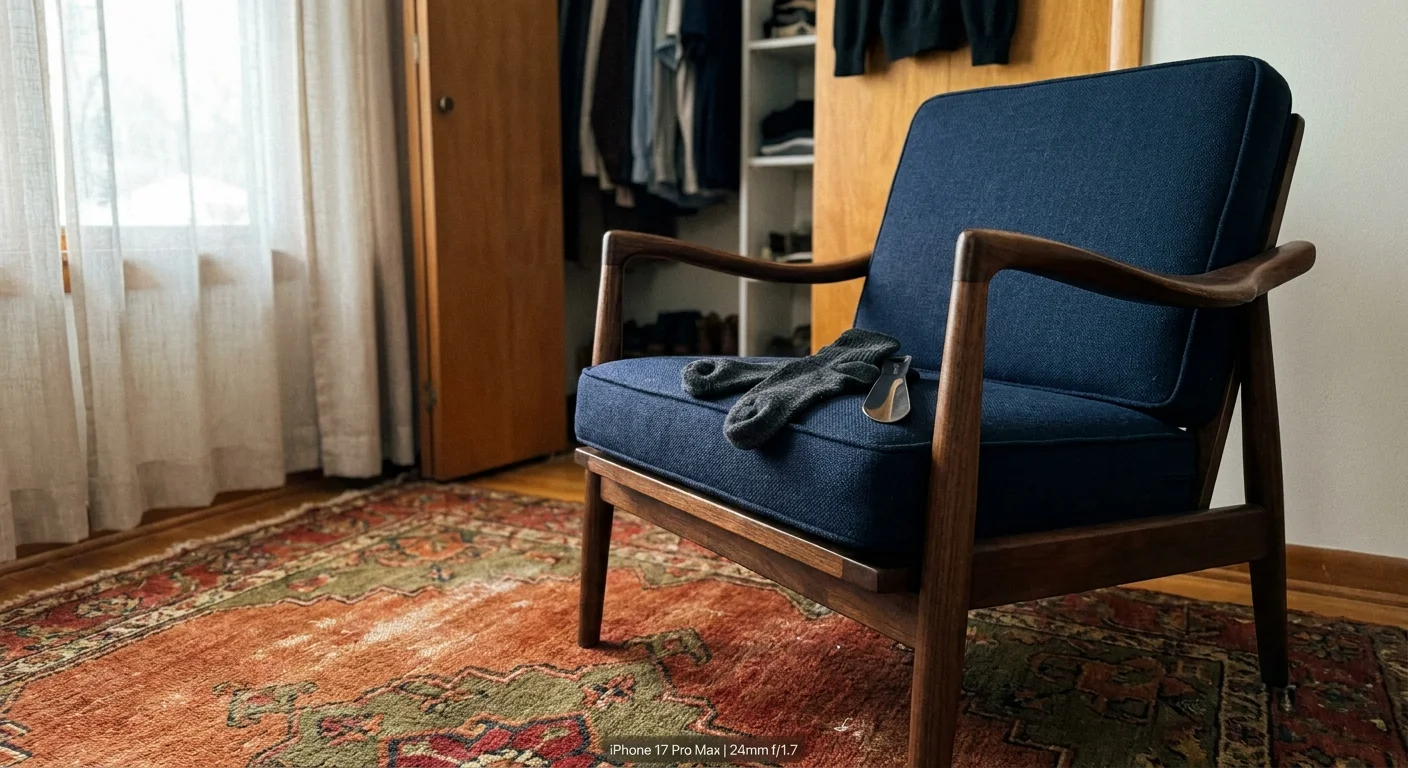
The physical act of getting dressed demands constant shifts in your center of gravity. Balancing on one leg while wrestling your foot into a pant leg or a stiff shoe is a completely avoidable fall hazard. If your walk-in closet or adjacent bedroom has the space, park a firm, sturdy chair right next to your wardrobe.
Avoid low, plush seating like bean bags, deep sofas, or soft ottomans, which trap you and require immense core strength to stand up from. Instead, look for a chair with a firm, flat seat cushion positioned about 18 to 20 inches from the floor. Crucially, the chair must have solid, grippable armrests. Armrests provide essential leverage, allowing you to lower yourself down slowly and push yourself back up using your upper body strength. Ensure the chair sits on a non-slip rug or features rubber leg grips so it never slides backward when you lean your weight against it. By sitting down while dressing the lower half of your body, you conserve your energy and practically eliminate the risk of a dressing-related fall.
Take the First Step Toward a Simpler Morning
Do not attempt to reorganize your entire closet in a single afternoon. Overexerting yourself defeats the purpose of creating a stress-free environment. Pick just one specific adjustment to tackle this week. Start by taking ten minutes tomorrow morning to move your five favorite shirts and three favorite pairs of pants into your ergonomic green zone. Once you experience how much easier it is to reach your clothes without bending or straining, you will feel motivated to continue refining your space.