A painted dresser or dining table brings warmth to a room, but the wrong wipe-down can ruin that smooth coat in seconds. Knowing how to clean painted furniture properly keeps the color vibrant and the surface free of peels, clouding, or scratches.
Many popular household routines cause accidental painted furniture cleaning mistakes that strip away clear coats and expose raw wood underneath. Everyday items like harsh degreasers, rough sponges, and soaking rags quietly cause permanent damage.
You can preserve your pieces effortlessly with gentle methods that protect painted finish layers. Here are the ten biggest blunders to avoid and the exact habits to adopt instead.
1. Soaking the Surface With Excess Water
Dousing a painted table with a dripping cloth invites moisture into microscopic cracks in the finish. Wood fibers beneath absorb that excess liquid and swell rapidly.
As the timber expands, it forces the paint film to stretch and lift from the base. This process creates unsightly blisters, peeling edges, and warped joints.
Research from the USDA Forest Products Laboratory demonstrates that fluctuating moisture content causes severe structural swelling in seasoned wood. Even sealed furniture remains vulnerable along joined corners and seams.
Always wring out your cleaning cloth until it feels merely damp to the touch. You should never see water beads or standing puddles trailing behind your hand.
2. Scrubbing With Abrasive Sponges and Melamine Foam
When faced with a stubborn smudge, reaching for a scouring pad or melamine foam eraser seems sensible. However, these tools act like ultrafine sandpaper against painted surfaces.
Melamine foam contains hard formaldehyde-melamine-sodium bisulfite copolymer resin. While it feels soft in your hand, it removes grime by mechanically abrading the finish.
Using these abrasive pads strips away satin and gloss sheens, leaving behind dull, chalky patches. On matte finishes, heavy pressure polishes the paint unevenly and causes unwanted shiny spots.
Stick to soft microfiber cloths or pure cotton rags instead. They trap grease and soil effectively without slicing into delicate clear coats.
3. Spraying Harsh Multipurpose Cleaners and Ammonia
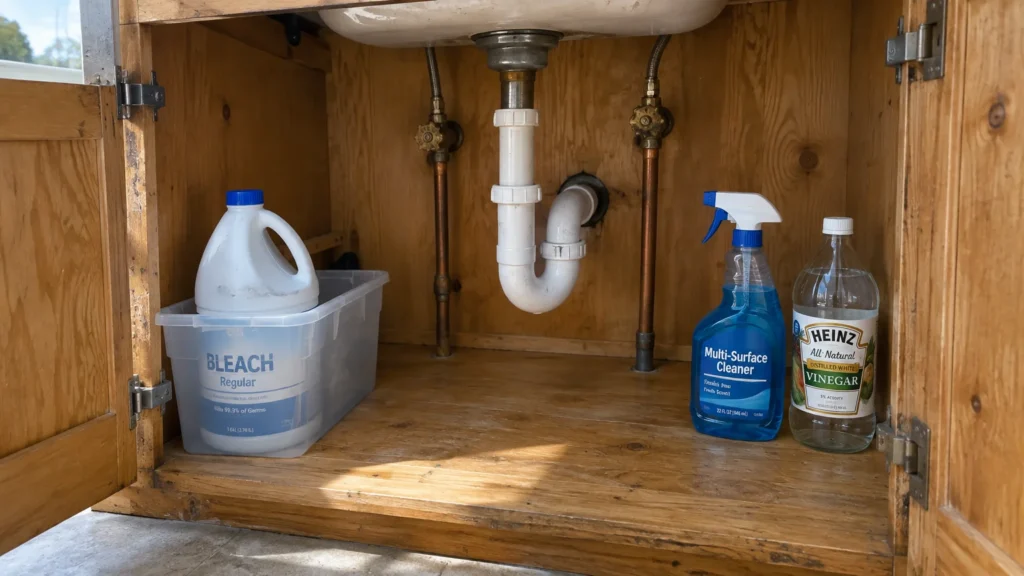
Commercial kitchen and bathroom degreasers often feature high pH levels, ammonia, or bleach. These aggressive chemicals break down organic compounds; unfortunately, paint binders are organic compounds too.
Ammonia softens acrylic, latex, and milk paint binders within minutes. The surface becomes tacky, attracts airborne dust, and eventually lifts completely off the primer.
Look for products vetted under the EPA Safer Choice standard to ensure neutral, non-corrosive surfactant blends. A single drop of mild dish soap in warm water provides safe cleaning power.
Never spray any liquid cleaner directly onto the furniture piece itself. Spray your cloth lightly instead to control fluid distribution and prevent liquid pooling inside delicate seams.
4. Relying on Vinegar and Acidic Homemade Solutions
Vinegar works wonders on glass and mineral scale, but acid destroys painted cabinetry and furniture. Acetic acid slowly dissolves protective polyurethane, enamel, and lacquer topcoats.
Repeated vinegar applications turn a smooth, durable finish into a cloudy, micro-pitted surface. Once that protective barrier weakens, everyday moisture and finger oils seep directly into the paint.
Citrus juice and lemon-based essential oil mixtures cause identical chemical degradation. They dissolve thin oil and latex films, eroding your piece with every wipe.
Keep your cleaning solutions pH-neutral by using plain distilled water or mild vegetable-based soaps. This preserves both the paint pigment and its clear protective coat.
5. Polishing With Aerosol Sprays Containing Silicone
Many popular furniture polishes promise instant shine from a convenient spray can. These aerosol products frequently contain silicone oils and petroleum distillates that create an artificial, slick barrier.
While the initial shine looks appealing, silicone creates a sticky film that traps ambient dust and fingerprint oils. The buildup darkens over time, creating a smeary haze that resists ordinary wiping.
More critically, silicone penetrates microscopic paint pores and bonds permanently with the wood substrate. If you ever need to touch up a chip or repaint, new paint will bubble and peel away.
Skip aerosol polishes entirely for painted surfaces. A clean, dry microfiber cloth produces a natural luster without leaving stubborn chemical residues behind.
6. Rubbing Chalk Paint Without Preserving the Wax
Chalk-style paints feature a porous, ultra-matte texture that requires sealing with clear wax or a polycrylic topcoat. Caring for these surfaces demands specialized chalk paint furniture care methods.
Using warm water, dish soap, or all-purpose sprays dissolves furniture wax quickly. Once you strip that wax, the unsealed chalk paint absorbs stains and liquid spills like a sponge.
The Smithsonian Museum Conservation Institute advises using gentle dry dusting and minimal solvent exposure to preserve delicate historic and waxed finishes. Vigorous friction alone can remove soft wax coatings.
Dust waxed chalk paint using a dry, lint-free cloth or an ostrich feather duster. When the finish loses its silky feel, buff on a fresh thin coat of paste wax to restore protection.
7. Wiping With Coarse or Dirty Rags
Old bath towels, worn denim, and paper towels might feel handy, but their fibers are surprisingly abrasive. Wood pulp fibers in paper towels create hairline scratches across satin and semi-gloss paint.
Similarly, looped terrycloth rags catch coarse debris and drag it across your furniture. These micro-scratches dull the paint finish and capture grime, turning bright white paint dingy over time.
Reusing dirty rags introduces an even greater hazard. Tiny grit particles trapped within the weave act like microscopic cutting stones against the finish.
Invest in dedicated, edgeless microfiber cloths washed without fabric softener. Fabric softener coats microfibers with hydrophobic oils that streak and smudge painted surfaces.
8. Wet Cleaning Before Removing Dry Dust
Spraying liquid onto a dusty painted console table seems like a smart shortcut. In reality, combining water with loose dust creates an abrasive mud slurry.
Wiping this wet slurry across the surface grinds airborne mineral dust directly into the topcoat. Furthermore, the sludge lodges inside crevices, ornate carvings, and bevels, hardening into unsightly grime.
Always remove loose dust completely before introducing any moisture. A static-charging microfiber duster or dry cloth lifts dust particles away cleanly without dragging them.
For detailed moldings or fluting, use a clean, dry natural-bristle paintbrush to flick out hidden dust. Once the surface is completely dry and clear, proceed with a damp wipe.
9. Allowing Standing Water and Spills to Air Dry
Leaving wet drink rings or condensation puddles to evaporate naturally invites permanent surface blemishes. Water slowly permeates microscopic fissures in the paint layer.
As liquid settles, it creates milky white rings in lacquer and water-based polyurethane coats. These white clouds represent trapped moisture suspended inside the protective film.
Acidic beverage spills like coffee, tea, and wine exacerbate this issue by chemically etching the pigment. Over several hours, tannins penetrate deep into the paint binder, causing permanent discoloration.
Keep absorbent coasters on all painted side tables and nightstands. Blot spills immediately using a gentle pressing motion rather than rubbing the liquid into the wood grain.
10. Washing Surfaces Before Paint Fully Cures
Paint feels dry to the touch within a couple of hours, but drying and curing are entirely different chemical processes. Curing requires the paint molecules to cross-link into a solid, durable barrier.
Technical specifications from architectural paint manufacturers like Benjamin Moore confirm that latex and acrylic coatings require up to 30 days to reach full hardness. During this initial month, the paint remains soft and chemically delicate.
Wiping fresh paint with water or cleaners disrupts this cross-linking process. You risk tearing the rubbery film, creating permanent fingerprints, or peeling the topcoat right off the wood.
Treat newly painted pieces with extreme gentleness for the first four weeks. Use only dry, feather-light dusting until the cure cycle finishes completely.
Safe Cleaners vs. Destructive Products for Painted Wood
Selecting the right product ensures you protect painted finish layers while keeping surfaces hygienic. Review this straightforward reference before gathering your supplies.
| Cleaning Need | Safe Option | Destructive Product | Why It Matters |
|---|---|---|---|
| Routine Dusting | Plush microfiber cloth | Paper towels or coarse shop rags | Microfiber captures grit without gouging fine clear coats. |
| Light Smudges | Warm distilled water | All-purpose disinfectant sprays | Water lifts water-soluble sugars without softening binders. |
| Greasy Fingerprints | Diluted mild liquid dish soap | Ammonia, bleach, or vinegar | Neutral surfactants dissolve oils without stripping enamel. |
| Waxed Chalk Finishes | Dry buffing cloth or paste wax | Liquid furniture polish | Paste wax nourishes the barrier; liquid oils break it down. |
| Adhesive Residue | Mineral spirits dabbed lightly | Melamine foam or metal scrapers | Solvents loosen adhesives safely without abrading the finish. |
Store your dedicated furniture microfiber cloths separately from your kitchen cleaning rags. This prevents lingering cooking grease or bleach residues from contaminating your painted furniture.
How to Clean Painted Furniture Correctly: A 4-Step Routine
Following a low-impact routine eliminates grease and grime without threatening your finish. Use these practical steps whenever your pieces need routine maintenance.
-
Step 1: Dry Dust the Entire Piece
Glide a dry, clean microfiber cloth across all horizontal surfaces and ledges. Work from the highest point down to the base to catch falling debris.
-
Step 2: Mix a Gentle Cleaning Solution
Fill a small bowl with two cups of warm water and add one drop of mild liquid dish soap. Swirl gently to combine without generating excessive foam.
-
Step 3: Wipe With a Barely Damp Cloth
Submerge a clean microfiber cloth into your soapy water, then wring it out until no water drips. Wipe surfaces using light pressure, following the direction of the wood grain.
-
Step 4: Dry the Surface Completely
Take a second dry microfiber cloth and wipe away any remaining dampness immediately. Check that corners, carvings, and drawer pulls are completely dry to prevent moisture swelling.
Essential Furniture Care Tips to Protect Painted Finish
Daily habits shield your painted furniture far more effectively than occasional deep cleaning. Incorporating these simple preventive habits preserves painted surfaces effortlessly.
-
Control Indoor Humidity:
Maintain indoor relative humidity between 35% and 55% throughout the year. Stable moisture levels prevent seasonal wood expansion that causes paint to crack along joinery.
-
Filter Harsh Direct Sunlight:
Position painted tables away from unshaded south-facing windows, or use sheer curtains during peak afternoon hours. Ultraviolet rays degrade paint resins and bleach vibrant pigments over time.
-
Apply Protective Felt Pads:
Affix self-adhesive felt dots beneath table lamps, decorative ceramics, and display trays. Felt creates a soft buffer that stops hard ceramics from gouging the paint.
-
Always Spot-Test Hidden Areas:
Before testing any new cleaner or wax, test it on the back edge of a table leg or inside a drawer face. Wait ten minutes to confirm the solution causes no softening or discoloration.
Simple Next Steps for Your Home
Inspect your painted dressers, desks, and nightstands today for sticky polish films or moisture spots. Identifying these issues early helps you halt ongoing surface deterioration.
Replace abrasive sponges and chemical sprays in your cleaning cabinet with dedicated microfiber cloths and gentle dish soap. This single, practical shift keeps your painted pieces looking pristine for years to come.