Limited wall space will not stop you from creating a clutter-free, functional laundry hub. You can reclaim neglected gaps, door backs, and appliance surfaces without driving a single screw into drywall.
When concrete, exposed utility pipes, or low windows eliminate traditional shelving, smart floor-based and magnetic systems step in. These heavy-duty tools keep heavy detergents, stain sprays, and hampers within effortless physical reach.
Explore these eight durable space-saving laundry solutions designed to protect your back, eliminate floor clutter, and simplify your weekly wash routine.
Why Limited Wall Space Demands Smarter Laundry Room Storage
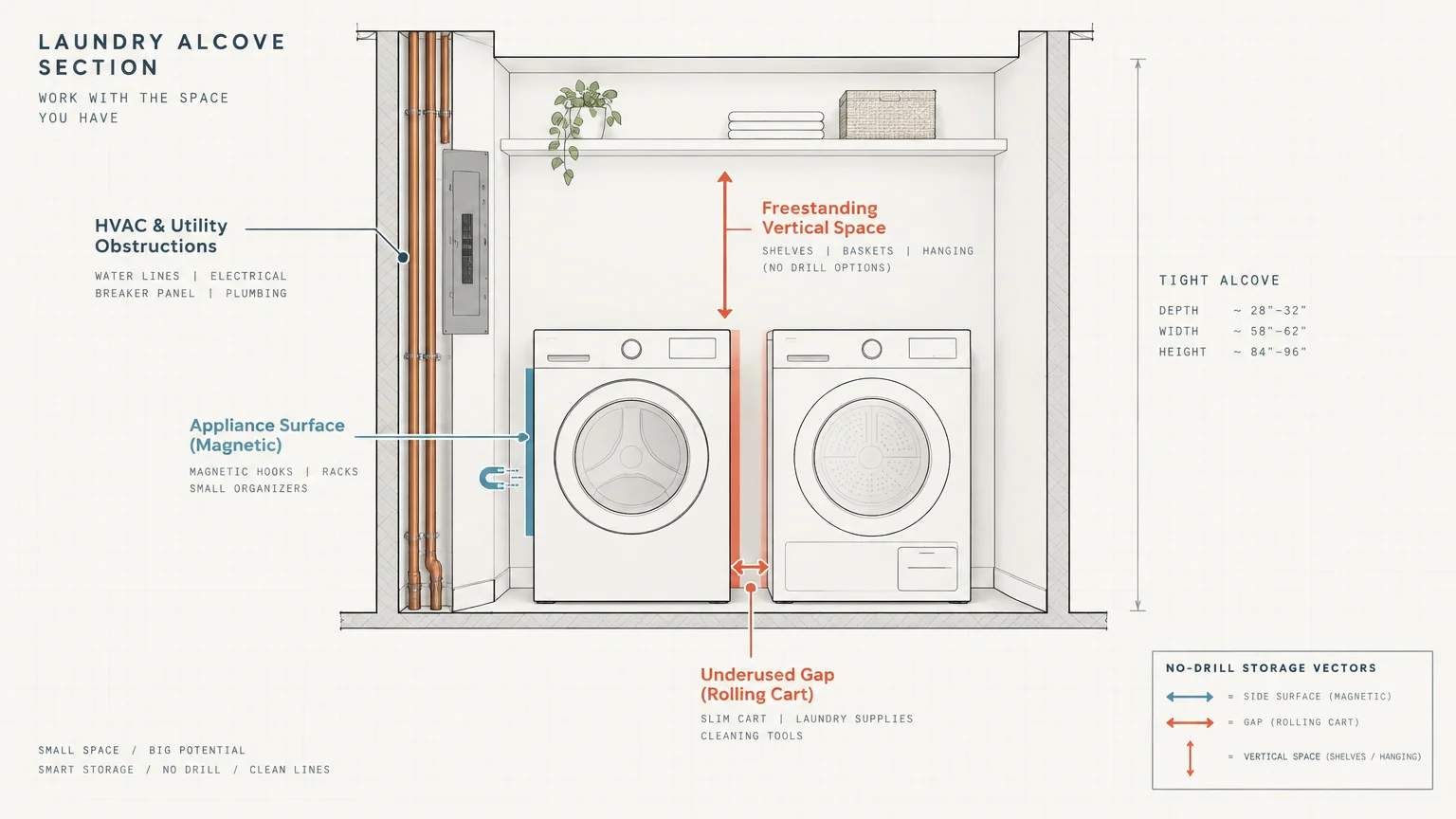
Many laundry rooms share space with water heaters, HVAC ducts, electrical panels, or concrete foundation walls. These architectural barriers prevent you from mounting standard floating shelves or cabinet systems.
Piling detergent jugs on top of vibrating appliances causes spills and damages machine surfaces over time. Unstable bottles can easily tumble into inaccessible crevices behind your units.
Effective small laundry room storage redirects your focus toward underused vertical real estate. You can anchor storage directly to appliances, doors, and tiny floor gaps instead.
This approach protects your walls while keeping laundry room organization completely adaptable. You can reconfigure or move your entire setup without repairing drywall damage later.
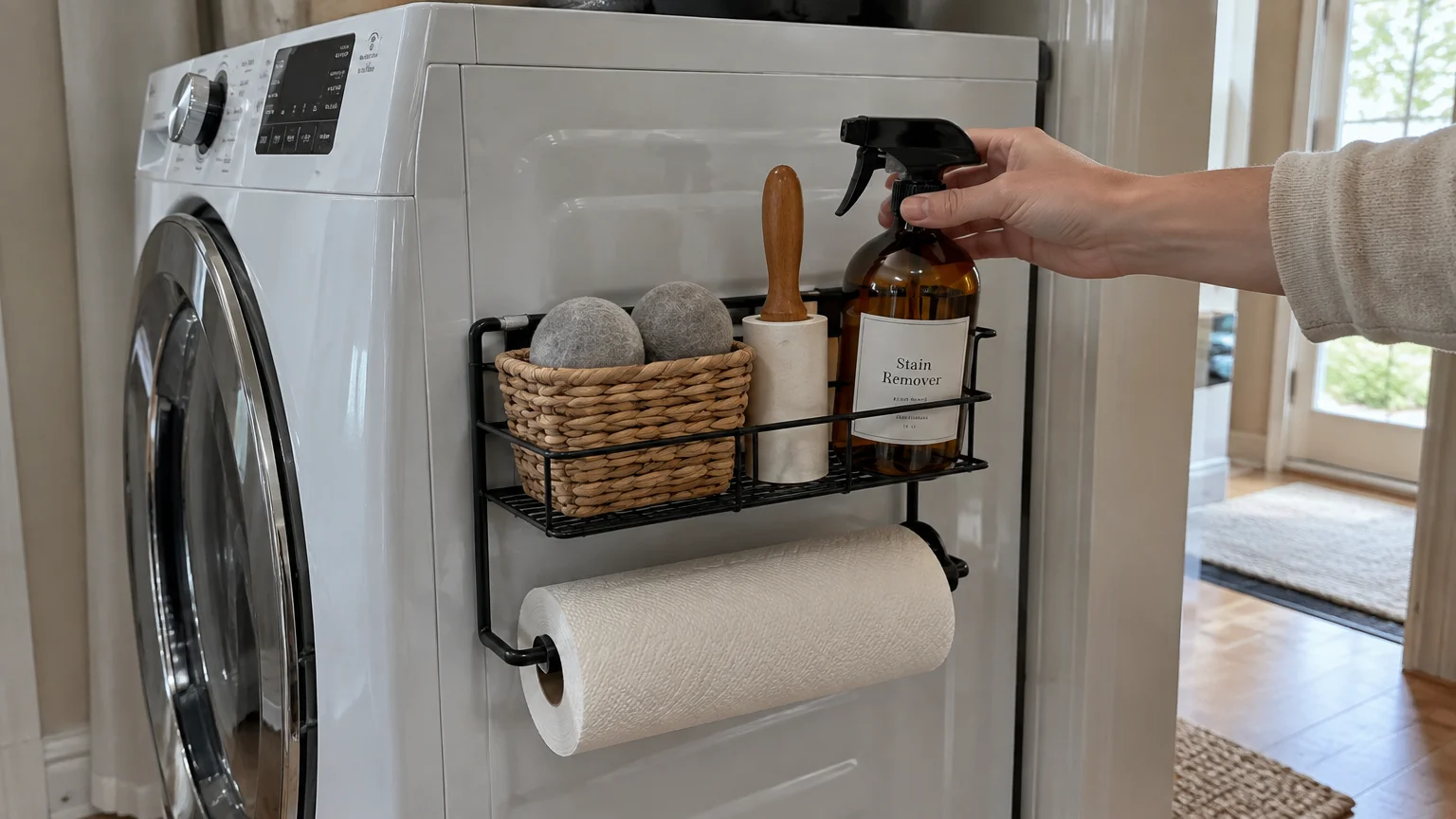
1. Magnetic Heavy-Duty Appliance Storage Racks
Magnetic side-mount racks turn the bare metal exterior of your washer or dryer into instant shelving. High-strength neodymium magnets cling securely to steel machine cabinets without slipping during vigorous spin cycles.
Look for racks that feature deep wire baskets, integrated paper towel bars, and bottom utility hooks. These multi-tiered units can hold up to 30 pounds of everyday laundry room organizing products.
Store your daily essentials here, such as stain-remover spray, lint rollers, and dryer sheet dispensers. The open-basket design lets you grab items quickly using one hand.
Keep liquid laundry packets and concentrated pods stored up high according to safety advice from the American Cleaning Institute. Use these side baskets strictly for non-hazardous daily accessories if young children visit your home.
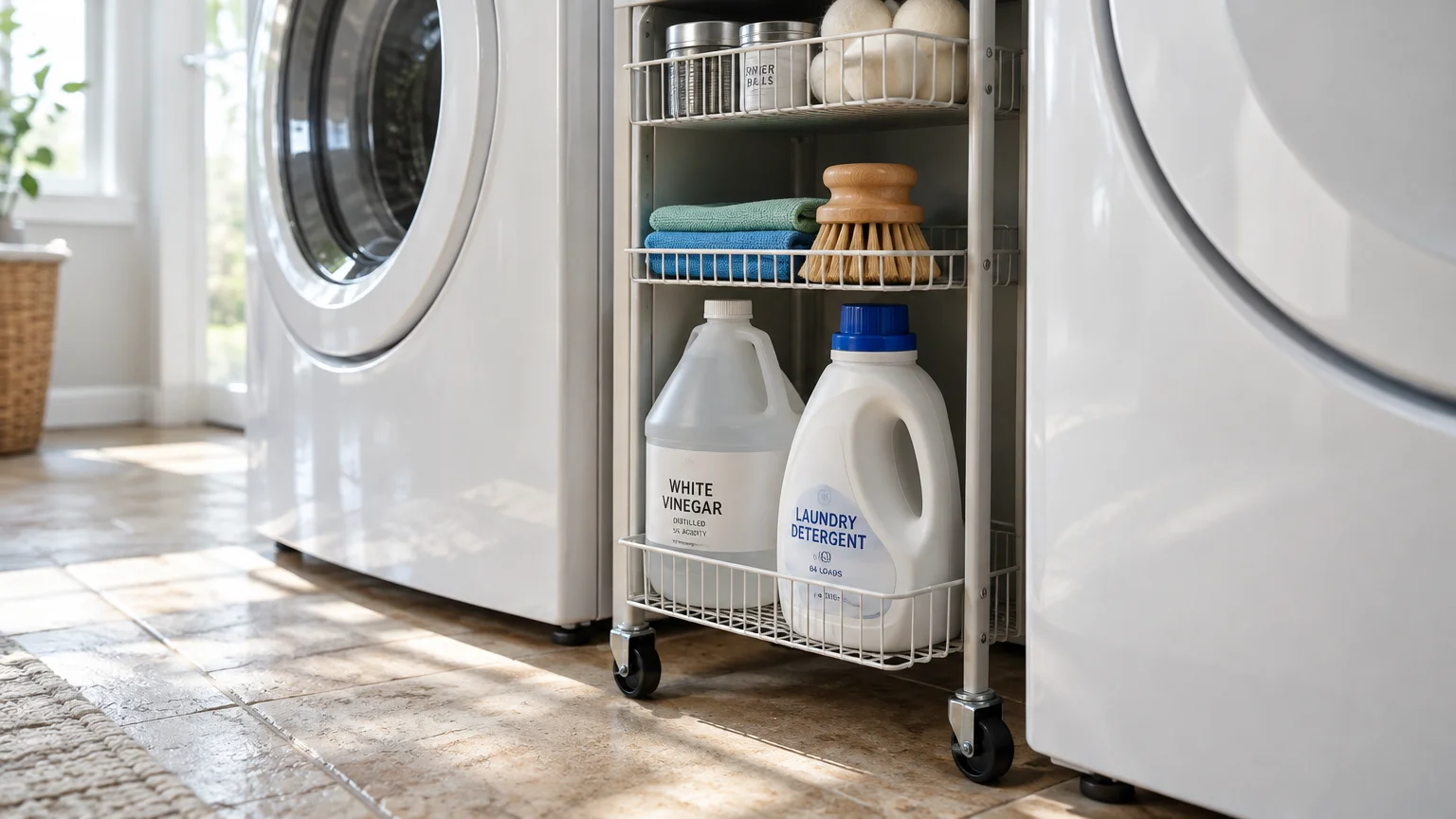
2. Slim Rolling Gap Utility Carts
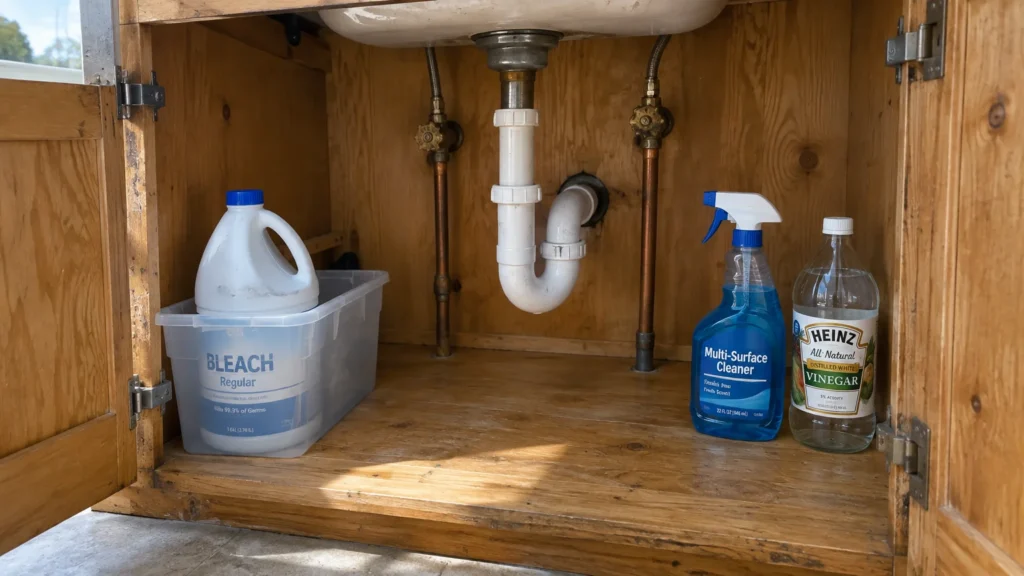
The empty four- to eight-inch crevice between your washer and dryer represents valuable real estate. A slim slide-out utility cart slides directly into this void to conceal your tall cleaning bottles.
Choose a multi-tier cart constructed from powder-coated steel rather than flimsy plastic. Metal frames resist warping when loaded with gallon-sized bleach jugs, vinegar bottles, and fabric softener.
Smooth-rolling caster wheels allow you to glide the entire unit out with minimal effort. This design eliminates repetitive bending and straining when you reach for heavy supplies.
Place your heaviest liquid containers on the bottom shelf to keep the cart balanced. Reserve the upper tiers for wool dryer balls, scrub brushes, and mesh wash bags.
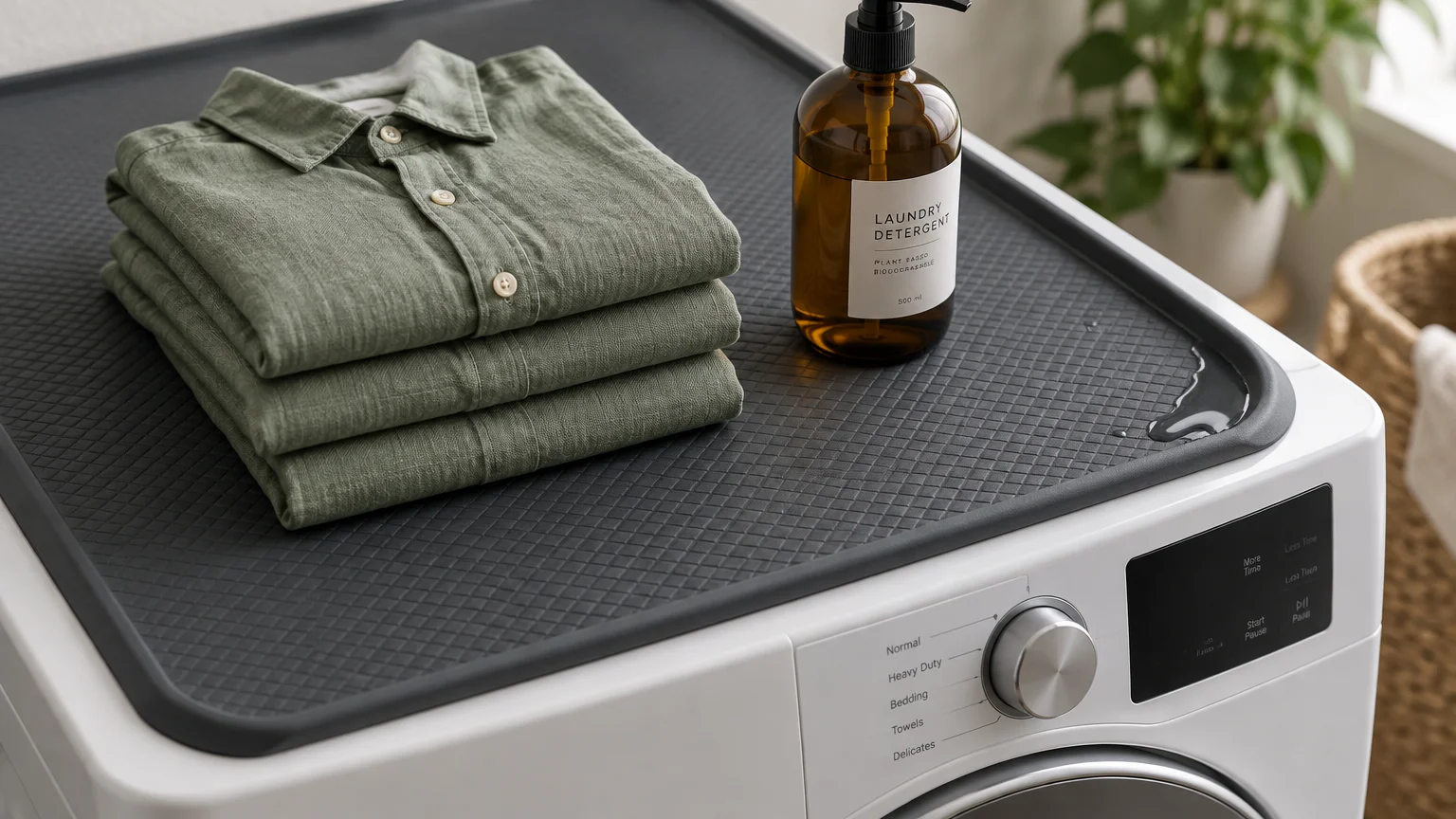
3. Non-Slip Silicone Washer and Dryer Protector Mats
Front-loading appliances provide wide horizontal surfaces, but smooth metal finishes cause sorting piles and laundry baskets to slide off. A heavy-gauge silicone topper mat solves this problem instantly.
These mats feature raised outer edges that capture accidental detergent leaks before liquid runs down the back of your machines. The heat-resistant silicone surface also shields appliance paint from scratches and dents.
A textured top surface creates a reliable folding and staging station in rooms lacking counter space. You can rest folded clothing stacks on top of running machines without anything vibrating onto the floor.
Silicone mats clean up quickly with a damp cloth or warm soapy water. They lift right off whenever you need to deep-clean appliance exteriors.
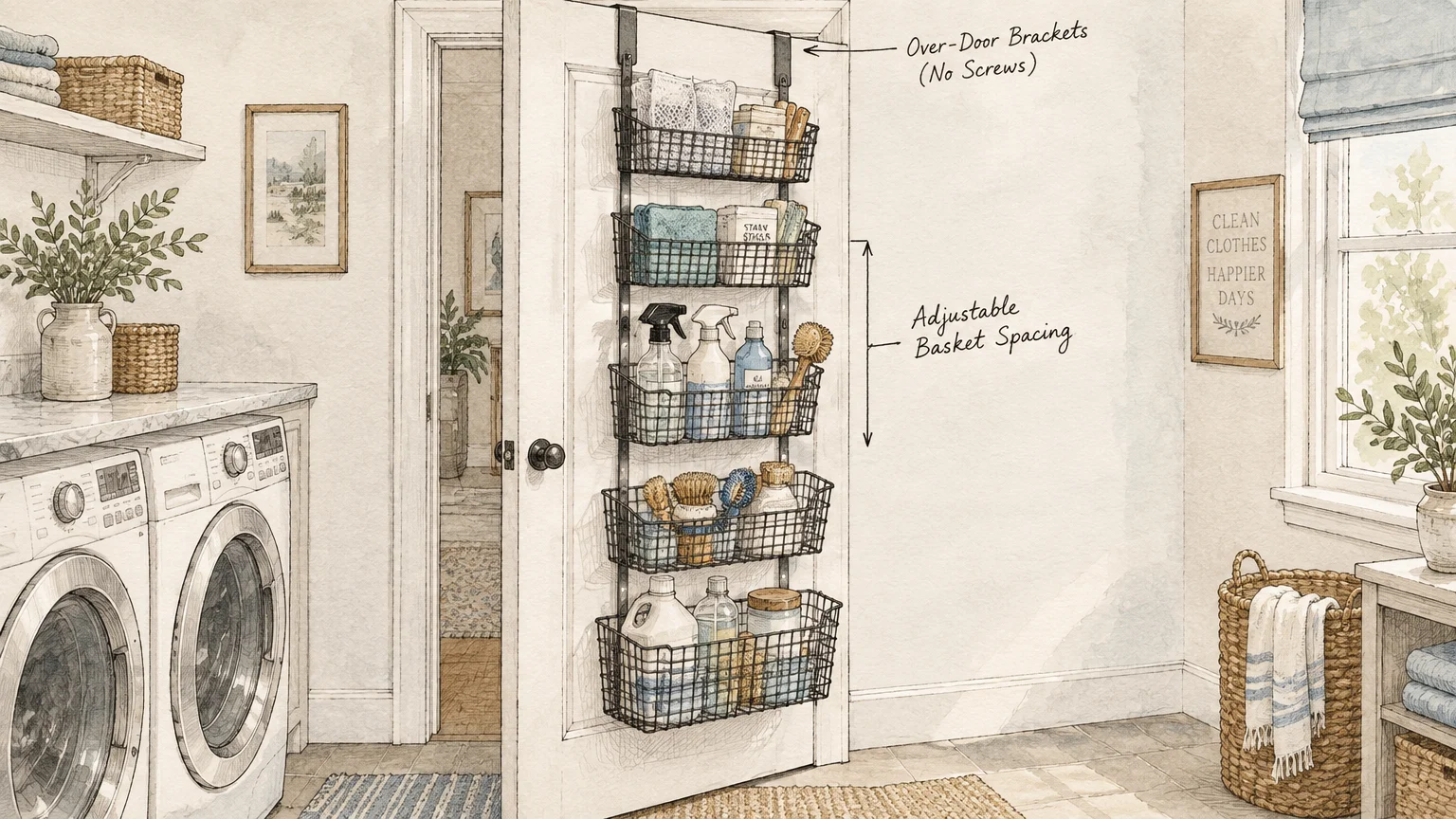
4. Heavy-Duty Over-the-Door Basket Organizers
Your laundry room entry door or utility closet door offers six feet of untapped vertical space. Hanging basket systems convert this flat panel into a fully organized pantry-style cleaning station.
Choose an organizer that bolts or clamps securely over standard residential door edges. Avoid flimsy single-hook hanging models that swing and rattle every time you open the door.
Deep wire baskets hold folded microfiber towels, specialized detergents, and lint brush refills securely. Integrated utility pegs beneath the baskets hold feather dusters and empty canvas laundry bags.
Measure your door clearance before purchasing to ensure the organizer clears the top doorframe cleanly. High-grade systems include adhesive foam pads that protect your door finish from scuff marks.
5. Freestanding Over-Washer Shelving Frames
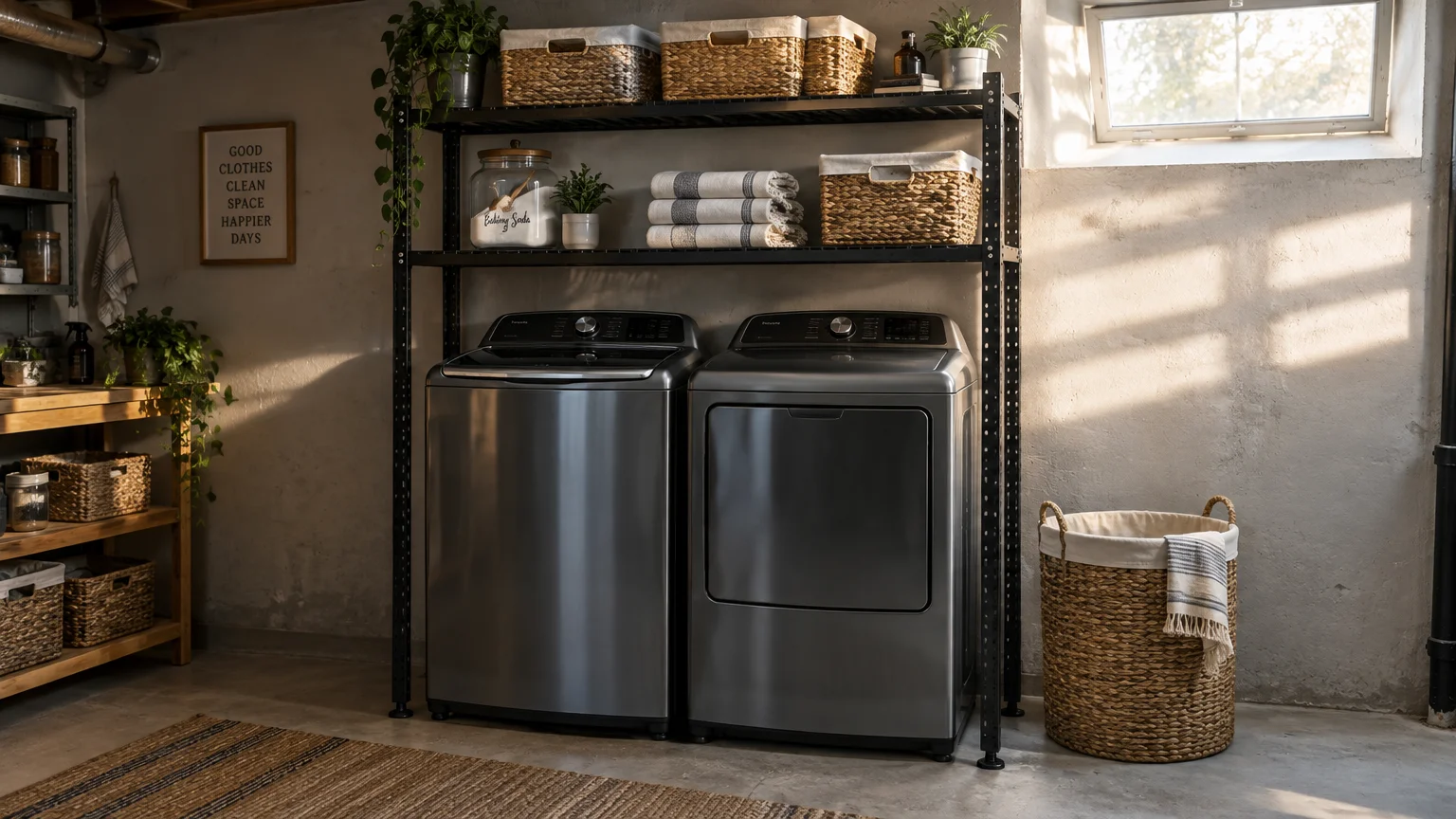
If you cannot mount shelves to studs, let the floor support your storage weight instead. Freestanding bridge shelving units straddle your appliances on sturdy steel legs.
These units extend up toward the ceiling, giving you two or three deep shelves directly above your machines. They fit top-loading and front-loading configurations without requiring a single drywall anchor.
Look for models with cross-bracing bars and adjustable leveling feet to ensure rock-solid stability on uneven basement floors. Many models also include a built-in top hanging bar for wet garments.
According to appliance clearance guidelines from ENERGY STAR, laundry appliances require proper air circulation around motors to run efficiently. Select an open-wire frame that maintains adequate rear ventilation around your dryer vent hose.
6. Heavy-Duty Expandable Tension Valet Rods
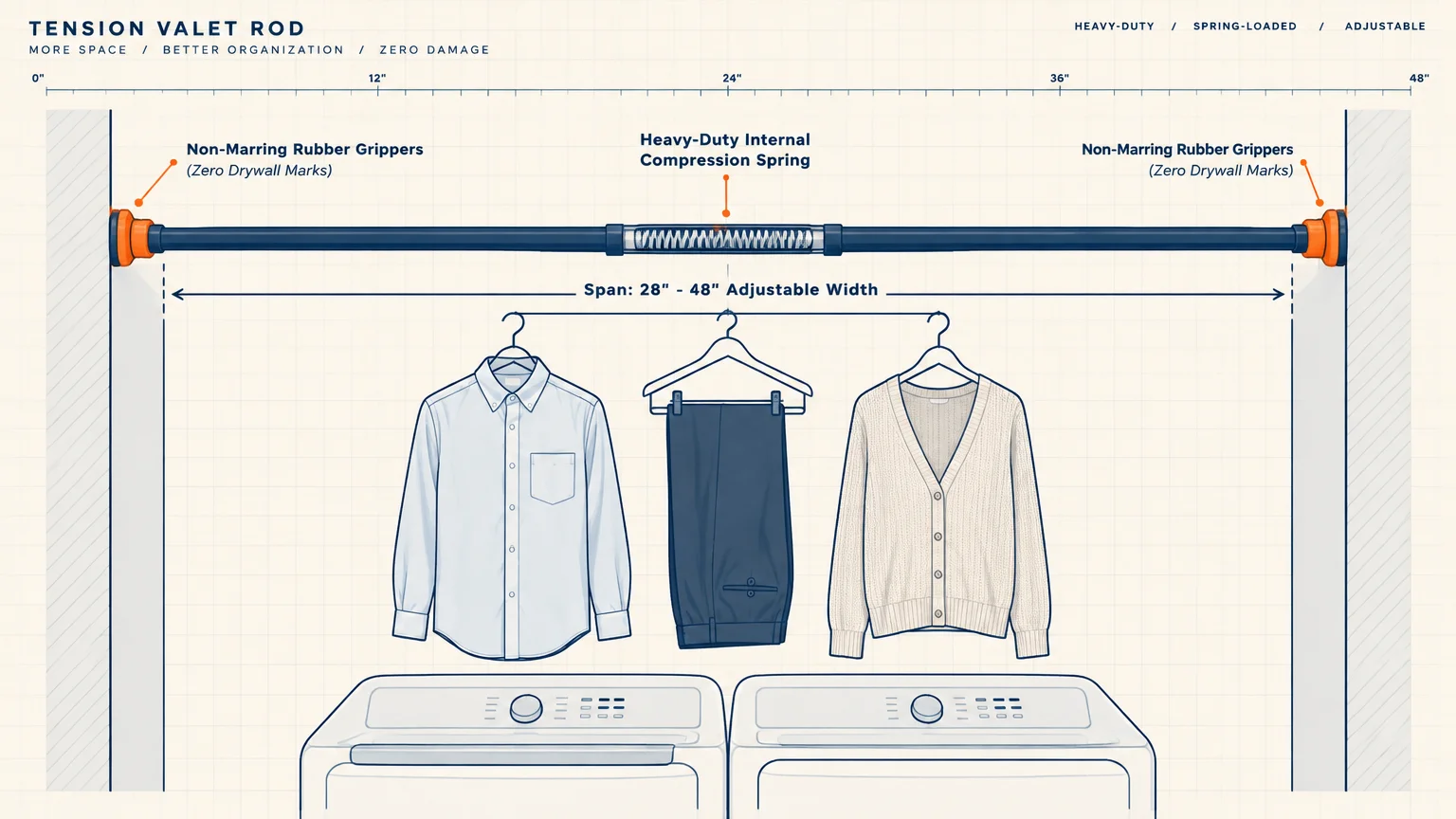
Small laundry rooms frequently lack space for permanent clothes racks. Heavy-duty tension rods install between two structural walls or inside a doorway alcove within seconds.
Unlike fragile shower rods, laundry-rated tension rods feature internal spring-lock mechanisms and thick steel tubing. They hold up to 40 pounds of damp clothing on hangers without sagging.
Textured silicone end caps prevent scuffs on opposing walls while generating maximum friction. You can hang wet collared shirts, delicate knits, or empty hangers right above your folding area.
When you finish your weekly laundry routine, you can loosen the rod and stow it away. This flexibility makes tension rods one of the most efficient space-saving laundry solutions available.
7. Tiered Vertical Laundry Sorter on Lockable Casters
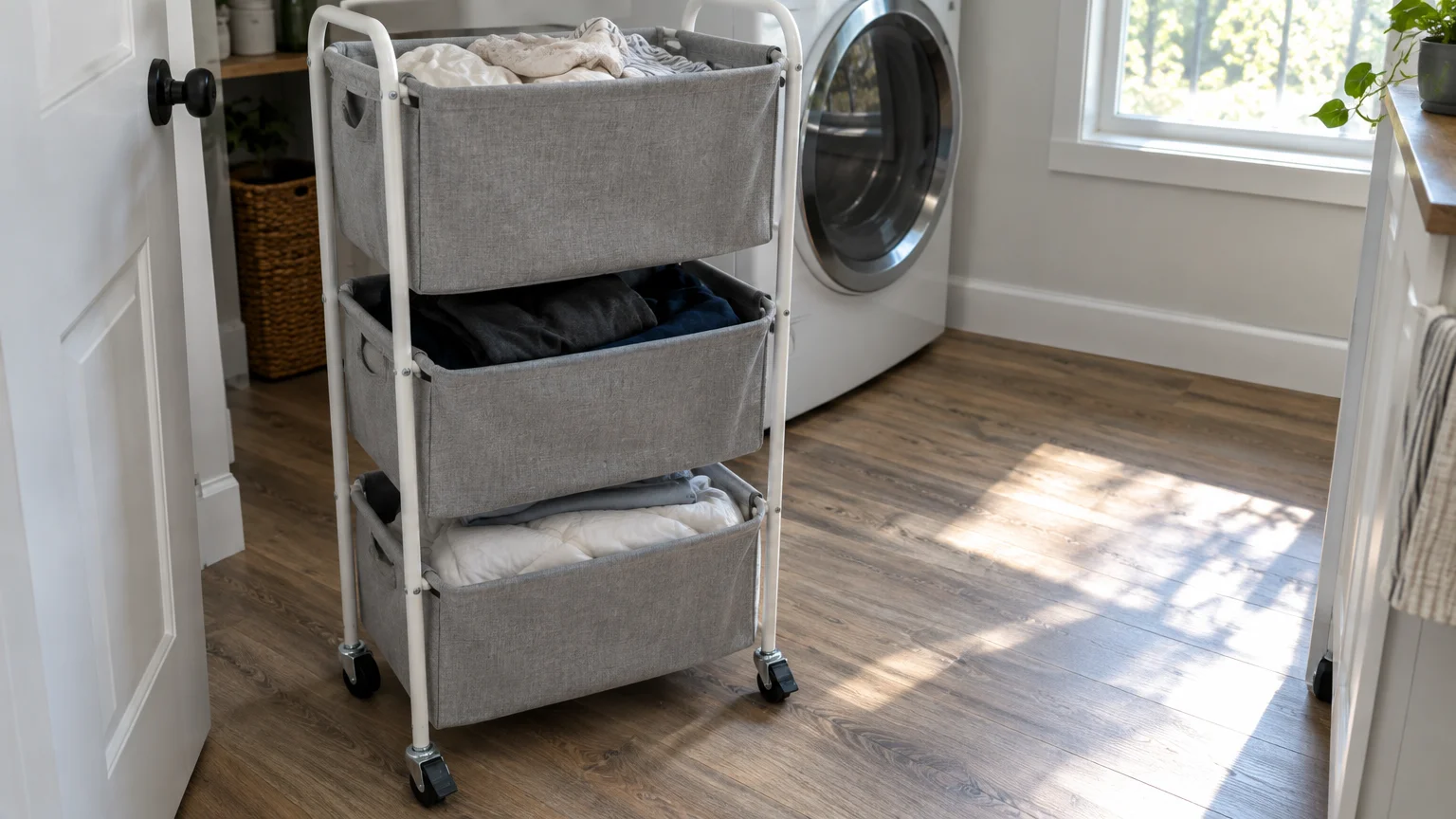
Traditional side-by-side sorting hampers consume several feet of precious floor space. A stacked vertical hamper tower organizes your lights, darks, and delicates within an eighteen-inch square footprint.
These systems feature three tilt-out or lift-off sorting bins arranged vertically on a steel frame. Removable handled totes make carrying divided loads into the wash cycle remarkably simple.
Lockable caster wheels keep the station immobile during sorting but allow easy movement when mopping floors. The elevated top basket spares older adults from painful, repetitive lower-back bending.
Durable poly-fabric or wipeable plastic bins prevent mildew odor buildup by encouraging steady airflow through damp athletic fabrics. Label each basket clearly so family members pre-sort their garments automatically.
8. Fold-Flat Accordion Floor Drying Racks
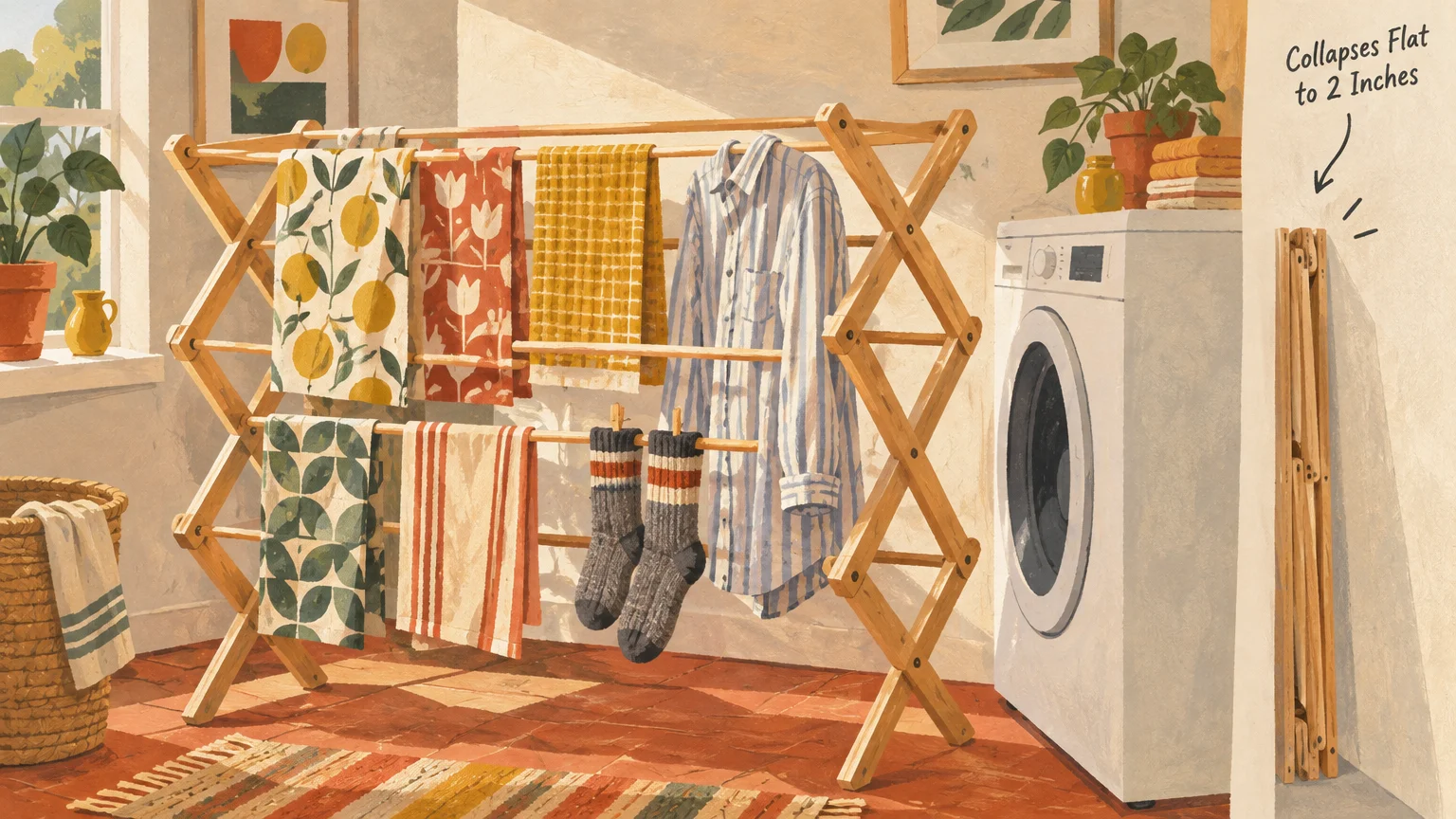
Wall-mounted drop-down drying racks demand sturdy wall anchors that rental properties or concrete walls cannot accommodate. A freestanding accordion drying rack delivers the same drying capacity without wall damage.
Quality bamboo or chrome-plated steel accordion racks provide over twenty feet of linear drying space. They easily support heavy wet denim, delicate sweaters, and swimsuits.
When damp clothes dry, the entire unit folds down into a compact two-inch-thick profile. You can slide the collapsed rack beside your machine or slip it under a nearby table.
Air-drying your delicates cuts household energy costs and prolongs the lifespan of synthetic fabrics. Foldable racks give you full drying versatility while keeping limited floor space open between wash days.
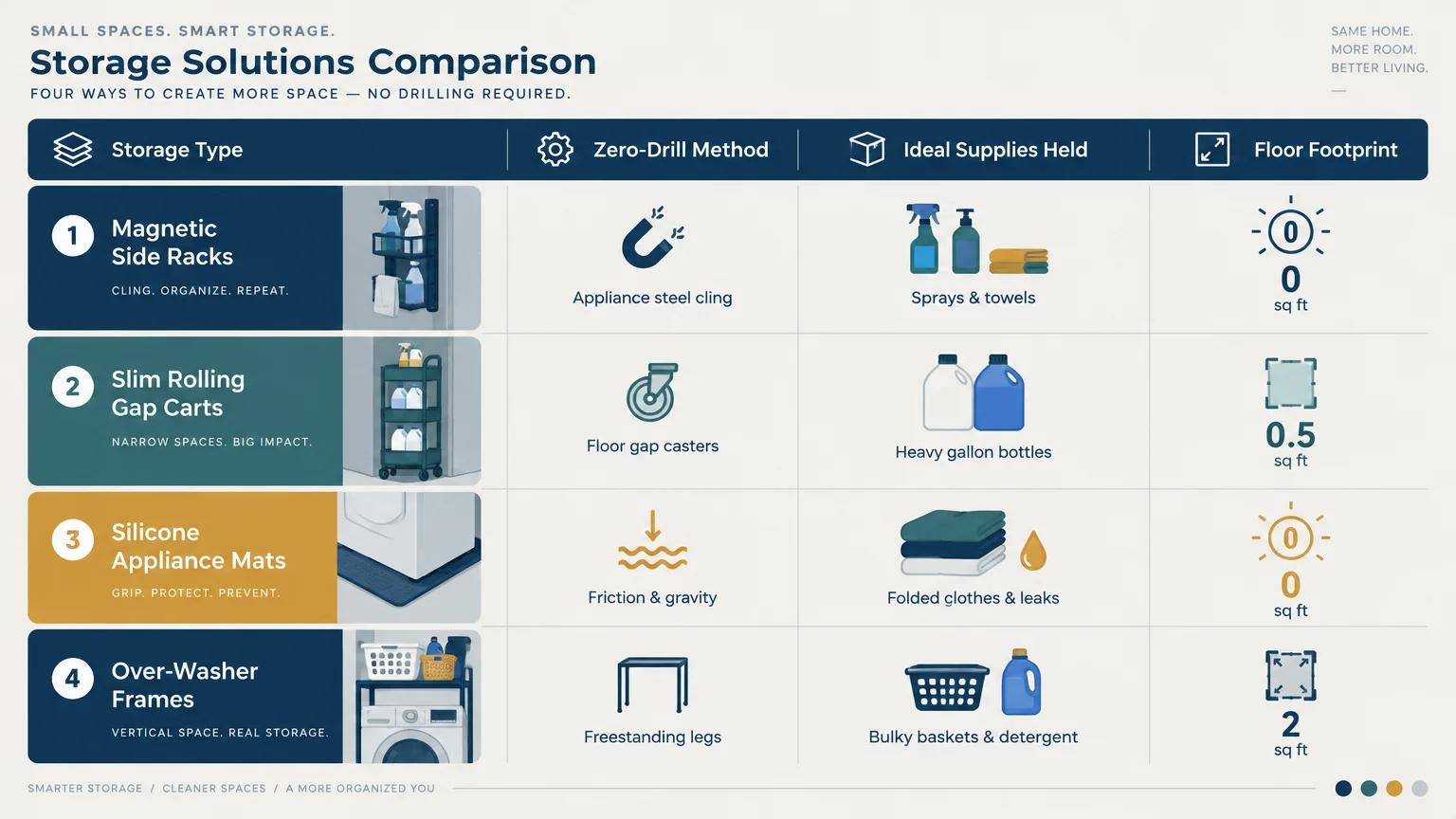
Comparing Space-Saving Laundry Solutions: At a Glance
Choosing the best product depends on your room layout, appliance orientation, and storage priorities. Use this comparison table to identify the right fit for your physical space.
| Organizing Product | Primary Placement Zone | Best Items to Store | Installation Effort |
|---|---|---|---|
| Magnetic Appliance Racks | Side of washer or dryer | Stain sprays, lint rollers, dryer sheets | Instant (magnetic) |
| Slim Rolling Gap Cart | Gap between appliances or wall | Bleach, vinegar, liquid detergent jugs | Simple tool assembly |
| Silicone Appliance Protector | Top surface of front-load units | Folded clothes, sorting baskets | Instant (lay flat) |
| Over-the-Door Organizer | Utility or closet interior door | Microfiber towels, backup supplies | Minimal (hangs over door) |
| Freestanding Bridge Shelving | Floor space straddling machines | Bulky baskets, towel stacks, large bottles | Moderate assembly required |
| Tension Valet Rod | Recessed alcove or doorway | Damp clothes on hangers, empty hangers | Instant (twist to tighten) |
| Tiered Vertical Hamper | Open floor corner | Sorted dirty clothing, linens | Simple assembly |
| Fold-Flat Accordion Rack | Floor area during drying | Delicates, woolens, athletic wear | Instant (unfolds manually) |
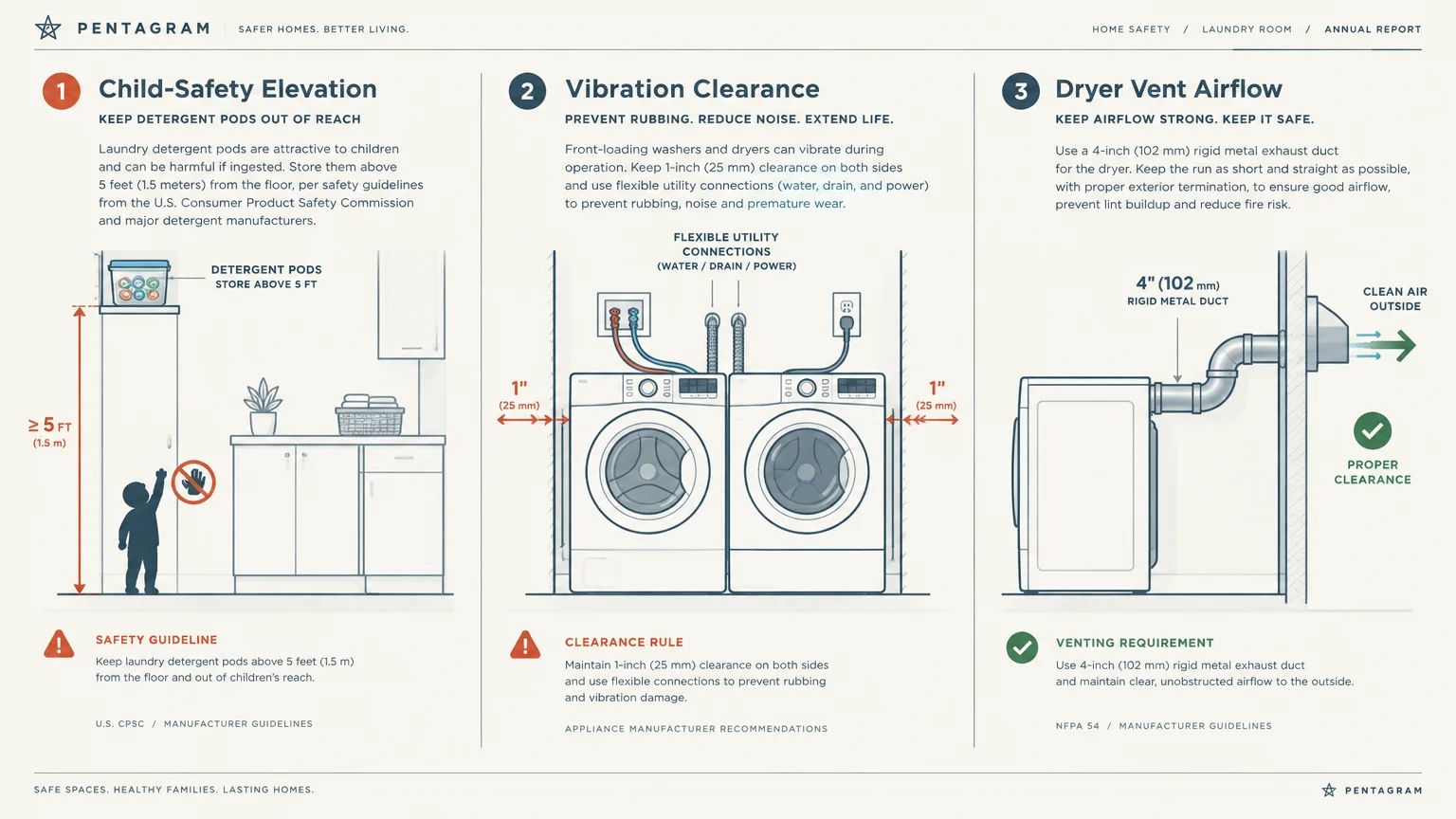
Essential Safety and Layout Considerations for Small Laundry Rooms
Optimizing tight spaces requires balancing storage efficiency with household fire and water safety. Avoid packing storage containers so tightly that they restrict maintenance access.
The National Fire Protection Association warns that lint accumulation and blocked exhaust airflow cause thousands of dryer fires annually. Never push gap carts or shelving tight against your dryer exhaust duct.
Keep your emergency water shut-off valves and washing machine drain hoses unobstructed at all times. In a plumbing failure, you must be able to turn off the water valves without moving heavy shelves.
Check the weight capacity ratings on all freestanding racks and over-the-door hooks before stocking them. Overloading vertical frames causes dangerous wobbling during machine spin cycles.
Distribute heavy liquid bottles evenly across lower shelves to preserve a low center of gravity. This arrangement protects your family from tipping hazards and makes heavy jugs much easier to lift.
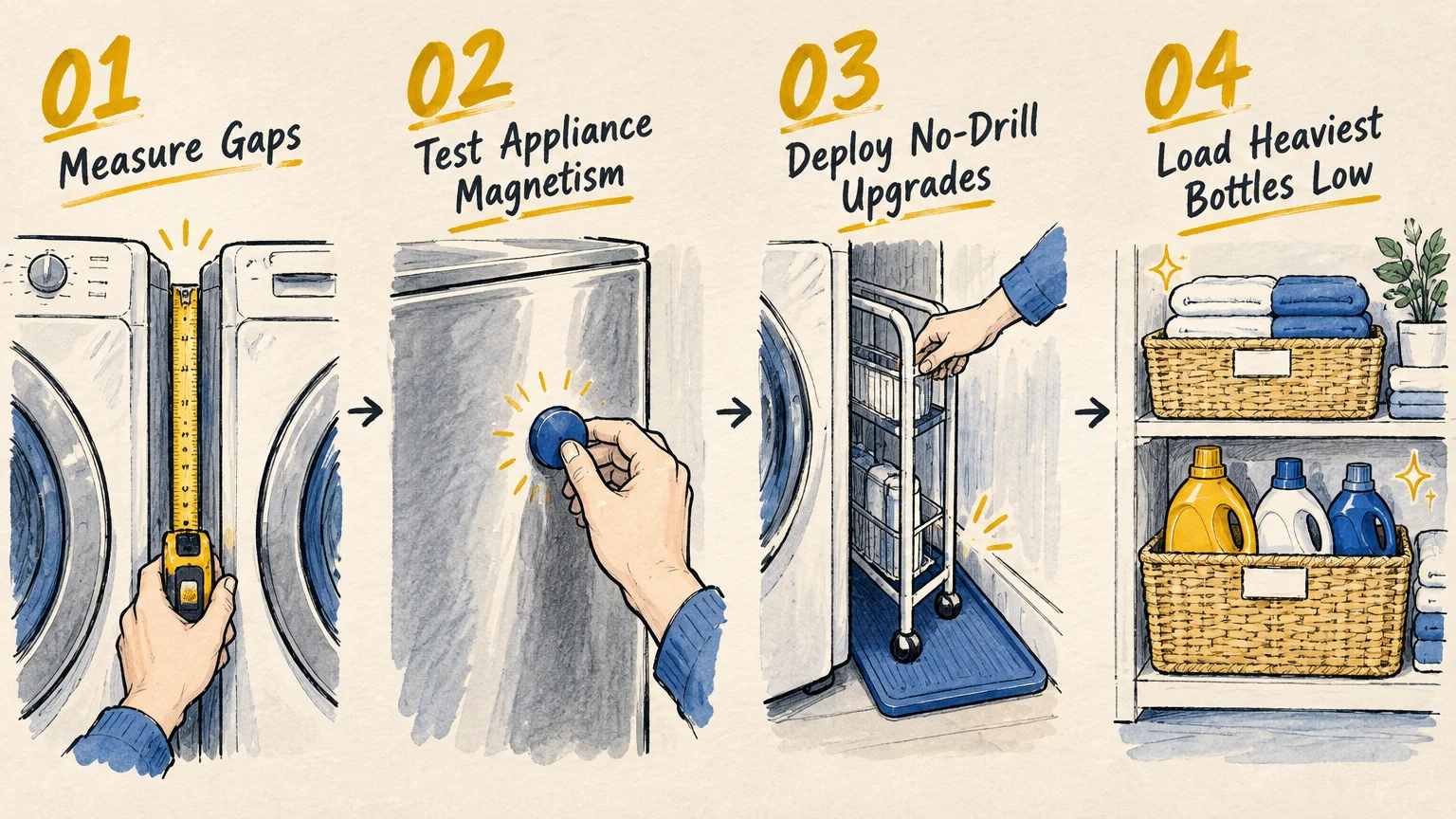
Step-by-Step Checklist to Upgrade Your Laundry Storage
Follow this actionable setup checklist to implement your new laundry room storage ideas without frustration or wasted purchases.
- Measure the gap width between your appliances and nearby walls with a steel tape measure.
- Confirm that your washer and dryer outer casings contain steel to ensure magnetic accessories will adhere.
- Inspect your door clearance along the top and side jambs before buying an over-the-door basket unit.
- Purge expired stain treatments, crusty detergent bottles, and mismatched socks to reduce overall inventory.
- Wipe down machine side panels with isopropyl alcohol to remove dust before attaching magnetic storage.
- Assemble your rolling cart and place heavy bulk liquids on the lowest shelf for safety.
- Lay your silicone protective mat across the washer and dryer tops to establish an instant folding area.

Your Next Practical Step
Grab a measuring tape right now and measure the empty gap between your washing machine and the adjacent wall. If you have at least five inches of clearance, order a slim rolling utility cart to clear your floor immediately.