You deserve a laundry routine that actually saves you time and protects your favorite clothes from premature wear. Rather than fighting stubborn stains and stiff fabrics with expensive, harsh chemicals, you can achieve better results using simple techniques and household staples you already own. From stripping built-up residue out of your bath towels to utilizing a dry towel to cut your machine’s drying time in half, a few strategic changes make washing clothes drastically easier. Whether you want to simplify a hectic family schedule or scale down your daily chores as an older adult, these straightforward methods will immediately streamline how you handle laundry day.
Hack 1: Strip Your Towels to Restore Absorbency
Have your bath towels lost their fluffiness and stopped absorbing water? Over time, body oils, hard water minerals, and excess laundry detergent accumulate inside the fibers of your linens. This buildup creates a stubborn, invisible barrier that a normal wash cycle simply cannot break through; your towels end up feeling like stiff cardboard. Laundry stripping forces these trapped residues out of the fabric, restoring your everyday items to their original condition.
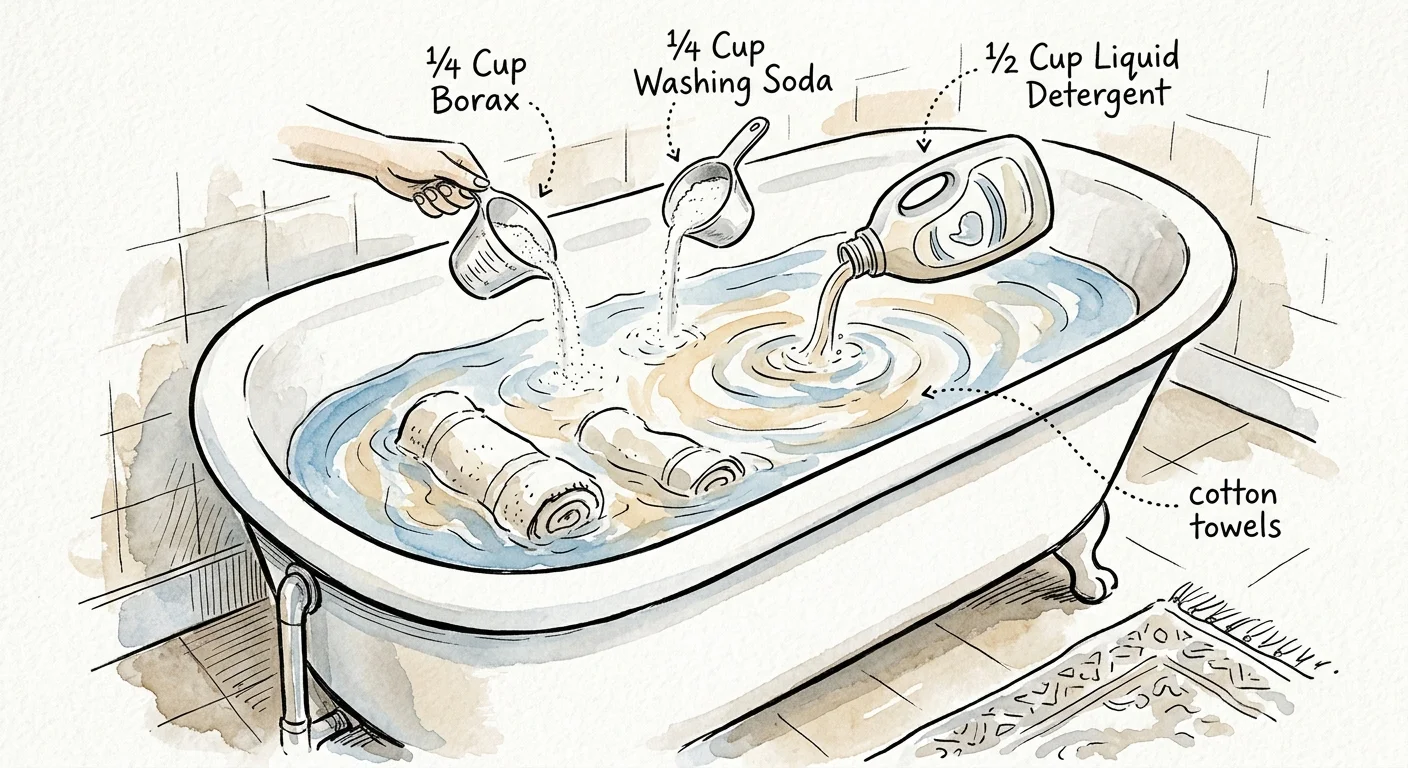
To execute this deep-cleaning method, fill your clean bathtub with hot water. Add one-quarter cup of borax, one-quarter cup of washing soda, and one-half cup of your standard liquid laundry detergent. Stir the water carefully until the heavy powders completely dissolve. Submerge your clean, dry towels in the mixture and let them soak undisturbed until the water cools completely—this process usually takes about four to six hours.
As the towels soak, you will likely witness the water turn a murky brown or dark gray color; this is the trapped mineral residue and soap scum finally leaving the fibers. Once the tub water cools, drain the basin and gently wring the excess moisture out of the heavy towels. Finally, run the stripped towels through a standard wash cycle in your machine without adding any new detergent. Because washing soda is highly alkaline, you must reserve this intensive deep-cleaning method strictly for sturdy cotton towels and durable bed sheets. Never strip delicate fabrics like silk or wool, as the high pH will permanently damage natural protein fibers and ruin the garment.
Hack 2: Use White Vinegar as a Fabric Softener Alternative
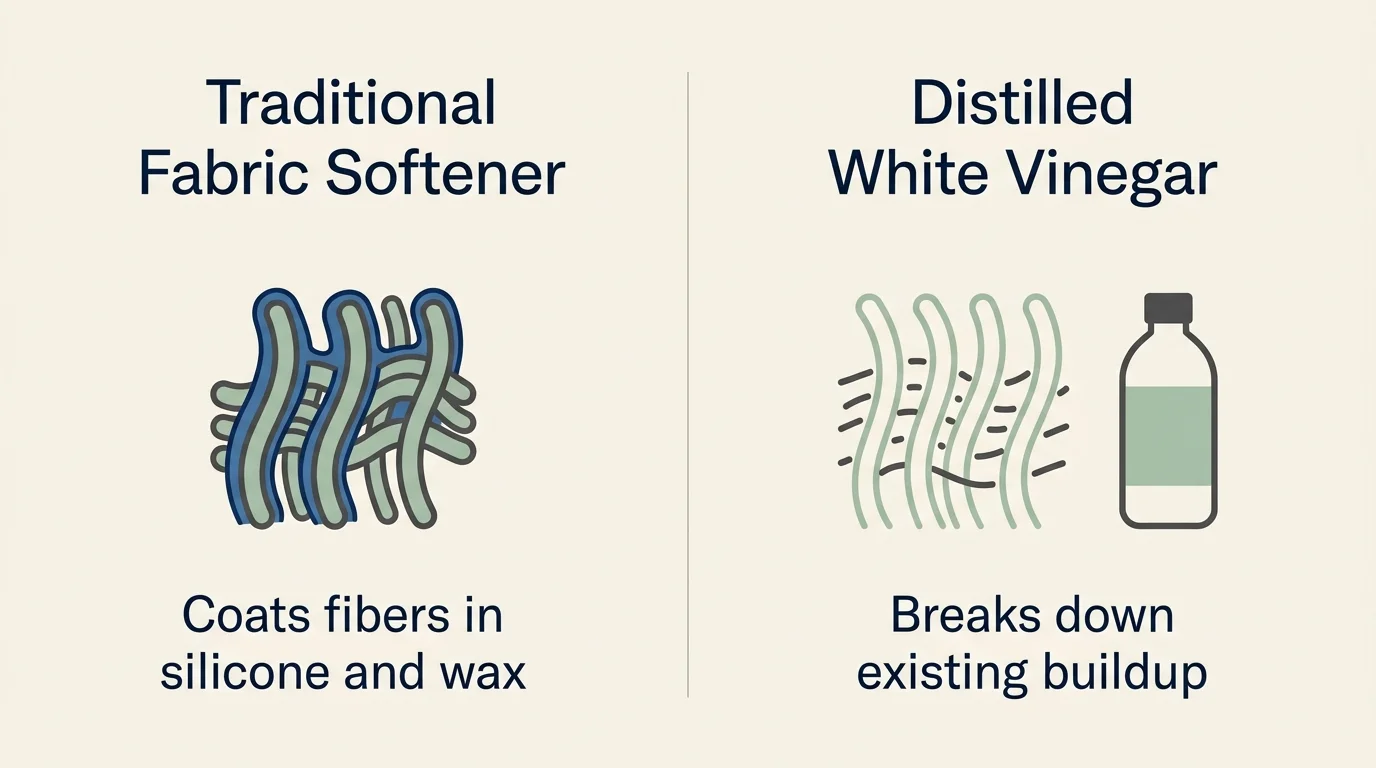
Commercial fabric softeners often do more harm than good for your wardrobe. These highly marketed products rely on silicone and wax-based compounds to coat your clothing. While this waxy coating makes fabrics feel artificially smooth to the touch, it also drastically reduces the absorbency of your bath towels and locks persistent sweat odors directly into your activewear. Furthermore, the strong synthetic fragrances found in these products frequently irritate sensitive skin and exacerbate household allergies.
Instead of buying expensive commercial softeners, utilize plain distilled white vinegar. The natural acidity of white vinegar easily breaks down leftover laundry detergent and neutralizes the uric acid found in human sweat. By removing the stiff detergent residue, vinegar leaves your clothes feeling naturally soft, breathable, and genuinely clean.
| Feature | Traditional Fabric Softener | Distilled White Vinegar |
|---|---|---|
| Residue Left Behind | Coats fibers in silicone and wax | None; breaks down existing buildup |
| Towel Absorbency | Decreases over time | Restores and maintains high absorbency |
| Odor Control | Masks odors with heavy synthetic fragrance | Neutralizes acidic odors at the source |
| Machine Maintenance | Can clog dispensers and promote mildew | Helps clean the internal washing machine hoses |
Simply pour one-quarter to one-half cup of distilled white vinegar directly into your washing machine’s fabric softener dispenser before starting the load. The machine will automatically release the vinegar during the final rinse cycle. Do not worry about your laundry smelling like a kitchen pantry; the mild vinegar scent dissipates entirely as the wet clothes dry.
Safety remains paramount when utilizing household chemicals. According to the Washington State Department of Health, you must never mix vinegar with chlorine bleach. The combination of an acid and bleach instantly produces highly toxic chlorine gas. If you plan to bleach a load of white linens, you must skip the vinegar entirely for that specific cycle.
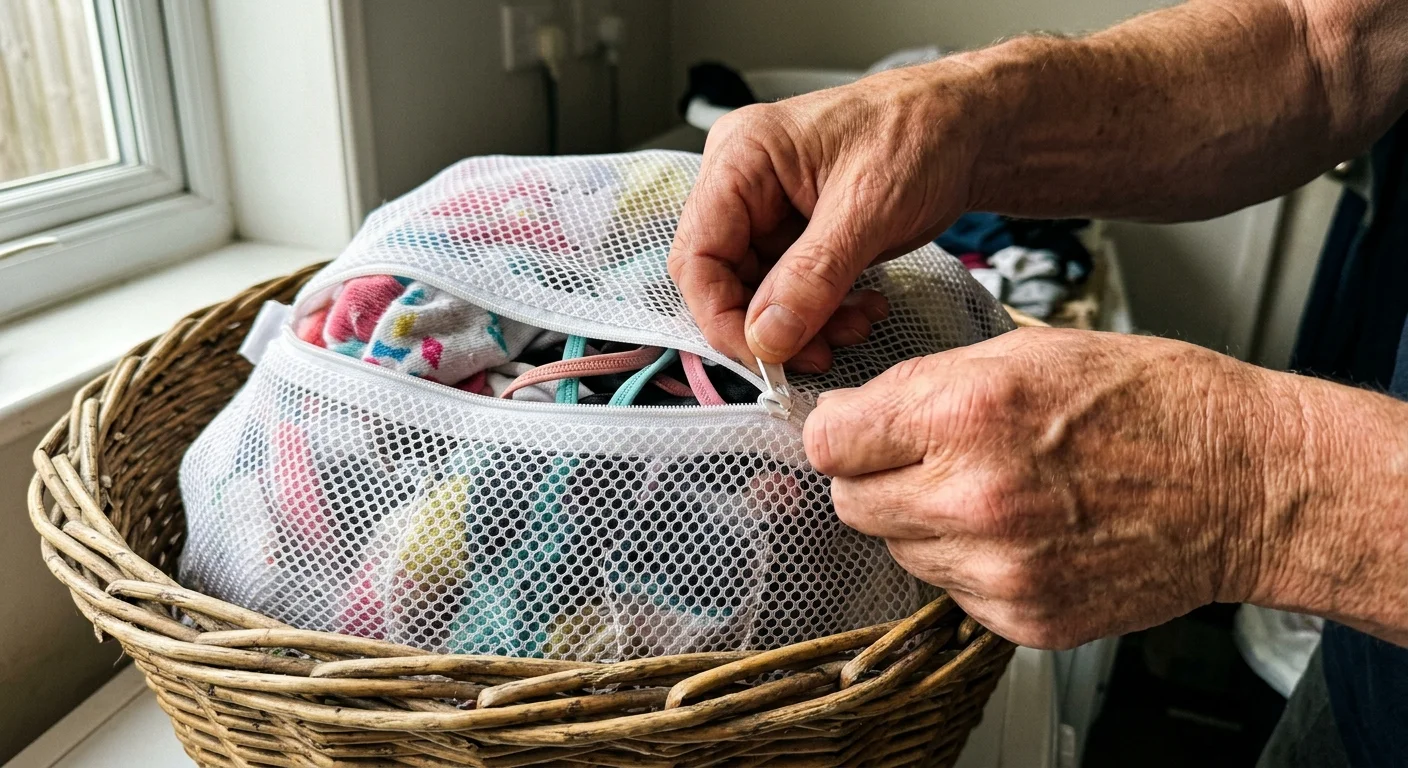
Hack 3: Master the Mesh Bag for More Than Just Delicates
Most people reserve mesh laundry bags strictly for lingerie and delicate undergarments. However, expanding your daily use of mesh bags will solve several common laundry frustrations and protect your expensive everyday clothing from unnecessary wear and tear. The physical mechanics of a washing machine rely on intense agitation; the agitator can easily twist thin camisole straps or wrap long sweater sleeves completely around other heavy items. Mesh bags act as a simple protective barrier against this aggressive mechanical stress.
The most practical application for mesh bags involves managing small items that frequently get lost or tangled in the drum. Give each family member their own dedicated mesh bag to keep directly inside their bedroom hamper. Instruct them to place their dirty socks straight into the mesh bag rather than tossing them loose into the pile. When laundry day finally arrives, you simply zip the bag shut and toss it into the wash. The socks remain perfectly grouped from start to finish, eliminating the dreaded missing sock mystery and saving you immense time during the folding process.
You should also utilize mesh bags to isolate garments containing abrasive hardware. Clothing items featuring exposed metal zippers, heavy brass buckles, or rigid Velcro strips act exactly like sandpaper against softer fabrics during a fast spin cycle. By placing these abrasive items inside a heavy-duty mesh bag, you create a physical barrier that prevents them from snagging your favorite t-shirts and soft sweaters. For the absolute best results, never overstuff the protective bag; always leave enough room for the water and detergent to circulate freely through the enclosed garments. Make sure to tuck the zipper pull under the protective elastic band on the bag so it does not scratch the metal drum.
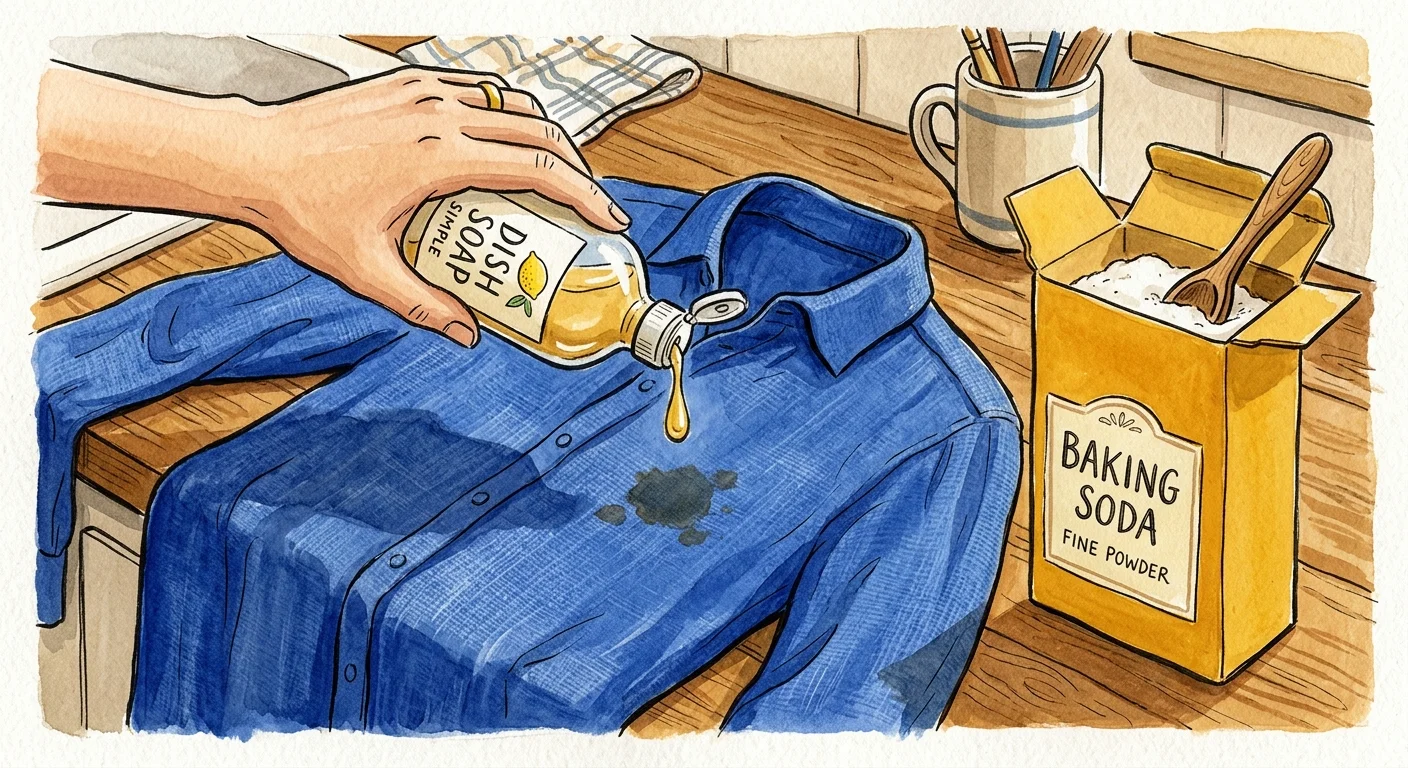
Hack 4: Remove Grease Stains with Dish Soap and Baking Soda
Grease stains are notoriously difficult to remove from clothing. Whether you drop oily salad dressing on your shirt or splatter hot bacon grease on your apron, normal laundry detergent often fails to eliminate the spot. Because cooking oils are hydrophobic, they actively repel the water in your washing machine and cling stubbornly to the fabric fibers.
To lift a heavy grease stain, turn to a product formulated to cut through heavy food lipids: liquid dish soap. Dish soap contains specialized surfactants with a hydrophobic tail that grabs the grease and a hydrophilic head that pulls it safely into the wash water. When paired with baking soda, dish soap easily breaks down the lipid structure of the grease, allowing water to wash it away completely.
Follow these specific steps to treat oil and grease stains effectively:
- Blot the excess moisture: As soon as the spill happens, use a clean cloth to blot the fresh stain. Never rub the fabric, as this pushes the oil deeper into the fibers.
- Apply dry baking soda: Lay the garment flat and sprinkle a generous layer of dry baking soda over the stain. Leave it undisturbed for fifteen minutes. The baking soda acts as a highly absorbent sponge, pulling loose oil out of the fabric.
- Add the dish soap: Brush away the excess baking soda into the trash. Apply two to three drops of heavy-duty liquid dish soap directly onto the remaining spot.
- Scrub the fibers gently: Use a clean, soft-bristled toothbrush to work the soap into the fibers using small, circular motions.
- Wash with warm water: Launder the garment immediately using the warmest water setting recommended on the clothing care label.
Always check the stain before placing the wet garment into the dryer. If the spot remains visible, repeat the process. Extreme heat from your dryer will permanently set any residual oil stains.
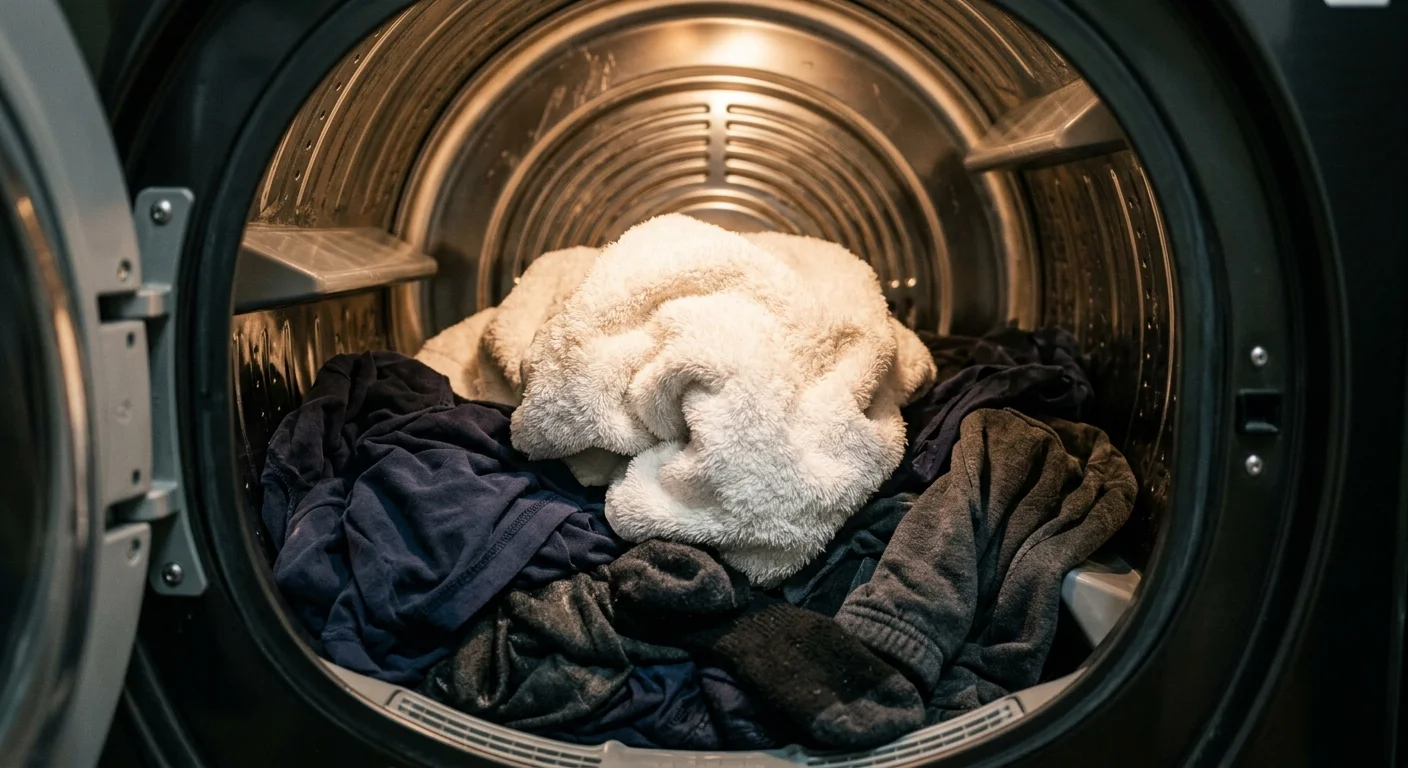
Hack 5: Speed Up Drying Time with a Dry Towel
Running your dryer for multiple long cycles to handle heavy loads wastes significant electricity and occupies valuable time in your busy day. When you transfer a massive load of wet jeans or saturated bath towels into the dryer, the ambient moisture levels inside the metal drum skyrocket immediately. The machine has to work incredibly hard to evaporate all that dense moisture before the clothes actually begin to dry. According to energy efficiency guidelines published by the U.S. Department of Energy, optimizing your drying time drastically reduces your overall household utility bills and lowers your carbon footprint.
You can dramatically accelerate this drying process by simply throwing one clean, dry bath towel into the dryer along with your soaking wet laundry. The dry towel acts as a moisture magnet; it immediately begins absorbing the excess ambient humidity from the wet garments as they tumble. This simple addition drops the overall humidity level inside the drum, allowing the hot air to circulate much more efficiently and drying your heavy clothes significantly faster.
To make this practical hack work properly, you must remember to remove the dry towel after fifteen to twenty minutes. If you leave it inside the drum for the entire cycle, the towel will eventually absorb too much water and become just as damp as the rest of the heavy load, completely defeating the purpose. This method proves especially useful for thick items like heavy denim, cotton hoodies, and dense winter bedding that typically require extended drying times.
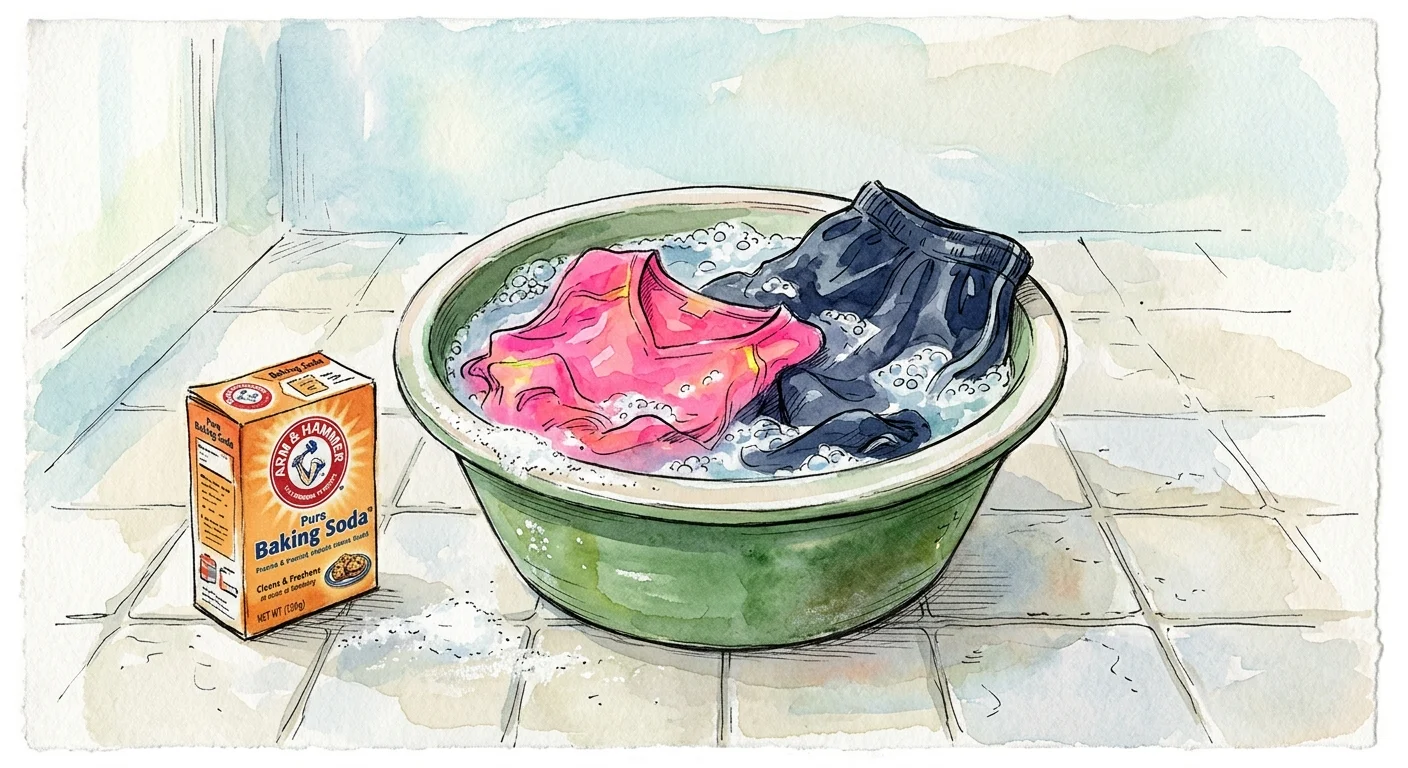
Hack 6: Deodorize Workout Clothes Using Baking Soda Pre-Soaks
Activewear requires a completely different cleaning approach than your everyday cotton garments. Most modern athletic clothing consists of synthetic fibers like polyester, spandex, and nylon. While these artificial materials excel at wicking sweat away from your skin during an intense workout, they inherently possess oleophilic properties—meaning they actively attract and hold onto body oils. Regular liquid detergent simply washes right over these trapped oils, leaving behind invisible bacteria that causes your expensive gym clothes to smell musty even after they come straight out of the wash.
To neutralize these deeply embedded odors, you need an alkaline pre-soak. Baking soda acts as a highly effective, mild base that safely breaks down the acidic compounds found in human sweat and stubborn body oils.
Fill a large plastic basin or your top-loading washing machine drum with warm water and dissolve one-half cup of baking soda into the bath. Submerge your smelly workout clothes and let them soak undisturbed for at least thirty minutes. For heavily soiled athletic gear, you can comfortably leave them soaking overnight without damaging the elastic. After the soak concludes, drain the murky water and wash the garments in your machine exactly as you normally would.
Always turn your athletic wear inside out before placing it into the wash. The vast majority of the odor-causing bacteria and body oils accumulate directly on the inside of the garment where the tight fabric touches your skin. Exposing the interior layers directly to the soapy water and mechanical agitation ensures a much deeper, more effective clean.
Hack 7: Sort by Fabric Weight, Not Just Color
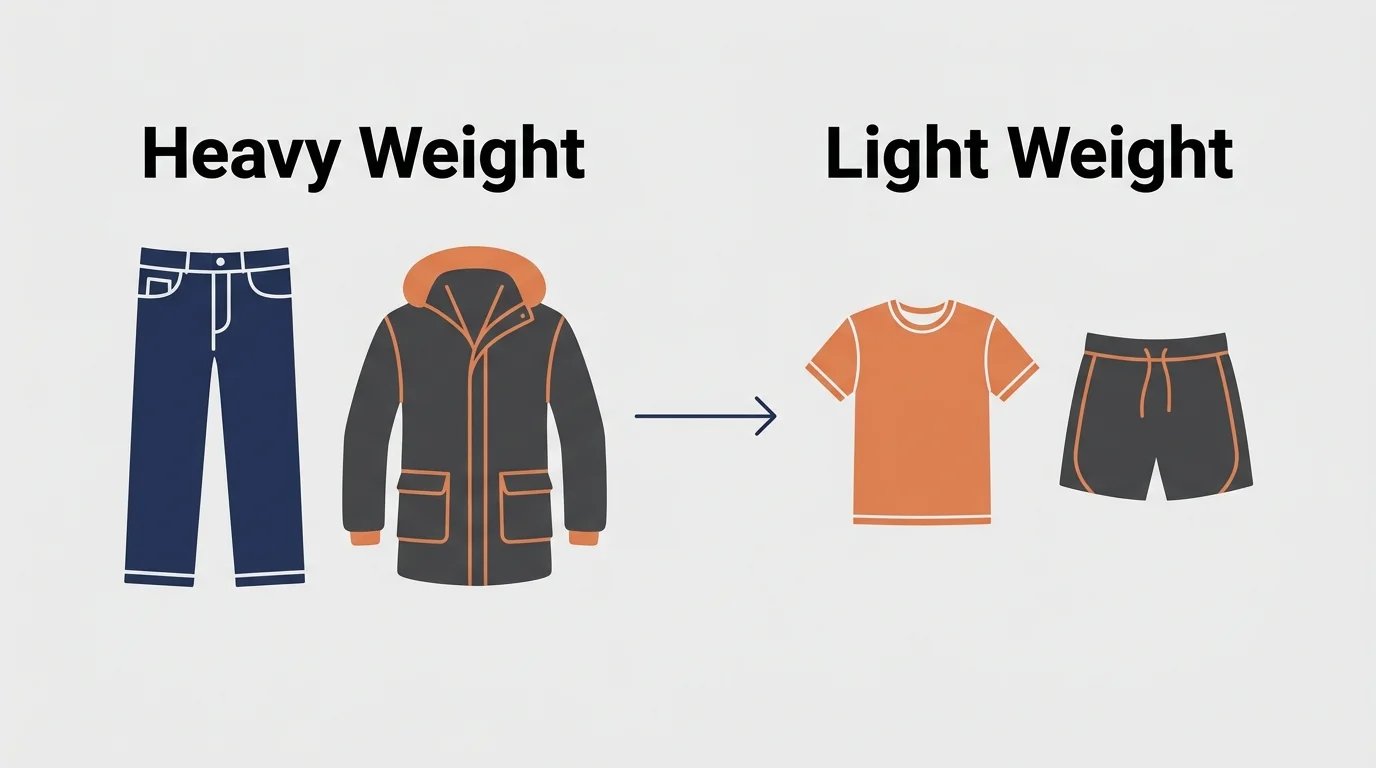
Sorting laundry exclusively by light and dark colors is an outdated practice that often leads to prematurely damaged clothing. While color sorting successfully prevents dye transfer, it completely ignores the harsh mechanical friction that occurs inside the washing machine drum. When you wash a heavy pair of denim jeans alongside a thin cotton t-shirt, the heavy, wet denim relentlessly beats against the delicate cotton during the high-speed spin cycle. The metal zippers and brass rivets on your pants act like a cheese grater against softer materials. Over time, this intense friction causes your thinner fabrics to pill, stretch out of shape, and develop frustrating tiny holes near the hemlines.
Instead of sorting solely by color, establish a new sorting routine based entirely on fabric weight. Group your heavy items—such as denim jeans, thick canvas jackets, bulky winter sweaters, and heavy bath towels—into one dedicated wash load. Place your midweight items, like standard cotton t-shirts and button-down dress shirts, into a completely separate second load. Finally, reserve a third gentle load strictly for lightweight items, including expensive activewear, delicate undergarments, and silk blouses.
Sorting by weight also drastically improves your machine’s drying efficiency. Heavy fabrics take significantly longer to dry than lightweight materials. If you mix them together in the tumble dryer, your lightweight items will bake in the intense heat for an extra thirty minutes while you wait for the thick jeans to finish drying. Chronic over-drying actively destroys the elastic fibers in your clothing, causing waistbands to warp and fitted fabrics to permanently lose their intended shape.
Hack 8: Clean Your Washing Machine Monthly to Prevent Mildew
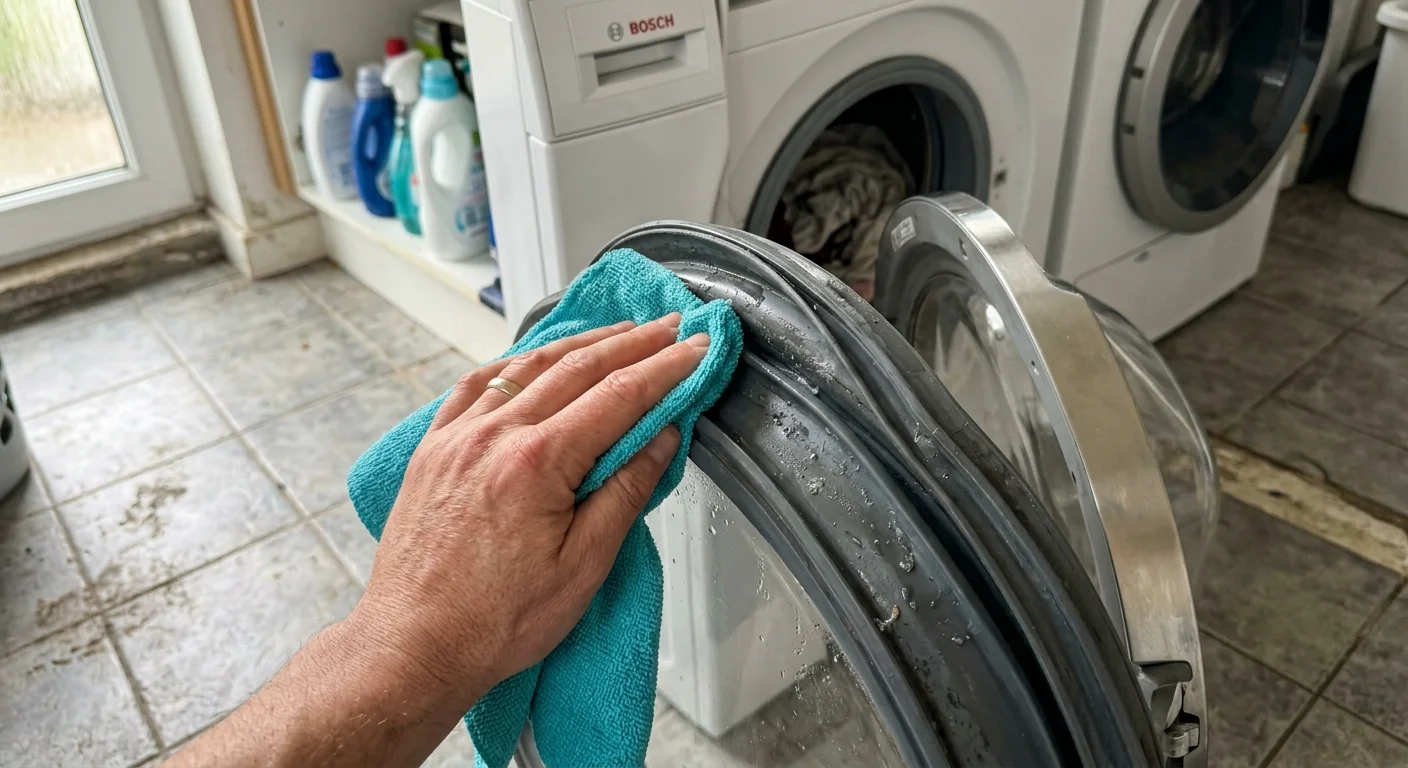
Your washing machine works hard to clean your clothes, but the machine itself requires regular maintenance to function properly. Detergent residue, mineral deposits, and stray lint build up inside the dark drum and internal plumbing over time. In front-loading machines, dirty water frequently pools inside the thick rubber door gasket. This damp environment serves as the perfect breeding ground for mold and mildew. If your freshly washed clothes smell like a damp basement, a dirty washing machine is undoubtedly the culprit.
Establish a routine to deep clean your washing machine once a month. Start by wiping down the inside folds of the rubber door gasket with a damp cloth to remove trapped hair and visible sludge. Next, remove the plastic detergent dispenser drawer and scrub it in your sink with an old toothbrush to clear away any gelatinous fabric softener residue.
Once the physical debris is gone, run the machine on its longest, hottest cycle while completely empty. Add either one cup of liquid chlorine bleach or two cups of white vinegar directly to the drum to kill bacteria and eliminate musty odors. As emphasized by the Centers for Disease Control and Prevention, you must choose only one of these chemical agents per cleaning session. Never mix bleach and vinegar together under any circumstances.
To keep the machine fresh between cleanings, always leave the door or lid wide open after finishing a load. This habit allows the interior to air dry completely, halting mildew growth before it starts.
Choose one load of laundry this week to test out the white vinegar fabric softener substitute, and notice the immediate difference in how your towels feel. Small, consistent changes to your routine will ultimately protect your wardrobe, reduce your reliance on harsh chemicals, and help you reclaim valuable time during your busy week.