Instead of throwing away your favorite worn-out denim, you can transform that durable fabric into practical, stylish items for your home and garden. Repurposing heavy-duty fabric saves you money on storage bins, cleaning supplies, and garden accessories while keeping textiles out of overflowing landfills. Denim is one of the most resilient materials in your closet, making it ideal for upcycling jeans into long-lasting household goods. Whether you need a sturdy workshop apron, draft dodgers for cold winter nights, or durable dog toys for heavy chewers, your old clothes offer endless possibilities. You can tackle these simple DIY projects with minimal sewing experience, turning textile waste into functional solutions that organize your space and simplify your daily routines.
Block Out Cold Air with Denim Draft Dodgers
Drafts push your heating and cooling systems to work harder, driving up your monthly utility bills. The U.S. Department of Energy points out that air leaks routinely account for a significant portion of home energy loss. You can easily stop these costly leaks by placing a heavy physical barrier at the base of your exterior doors and drafty window sills.
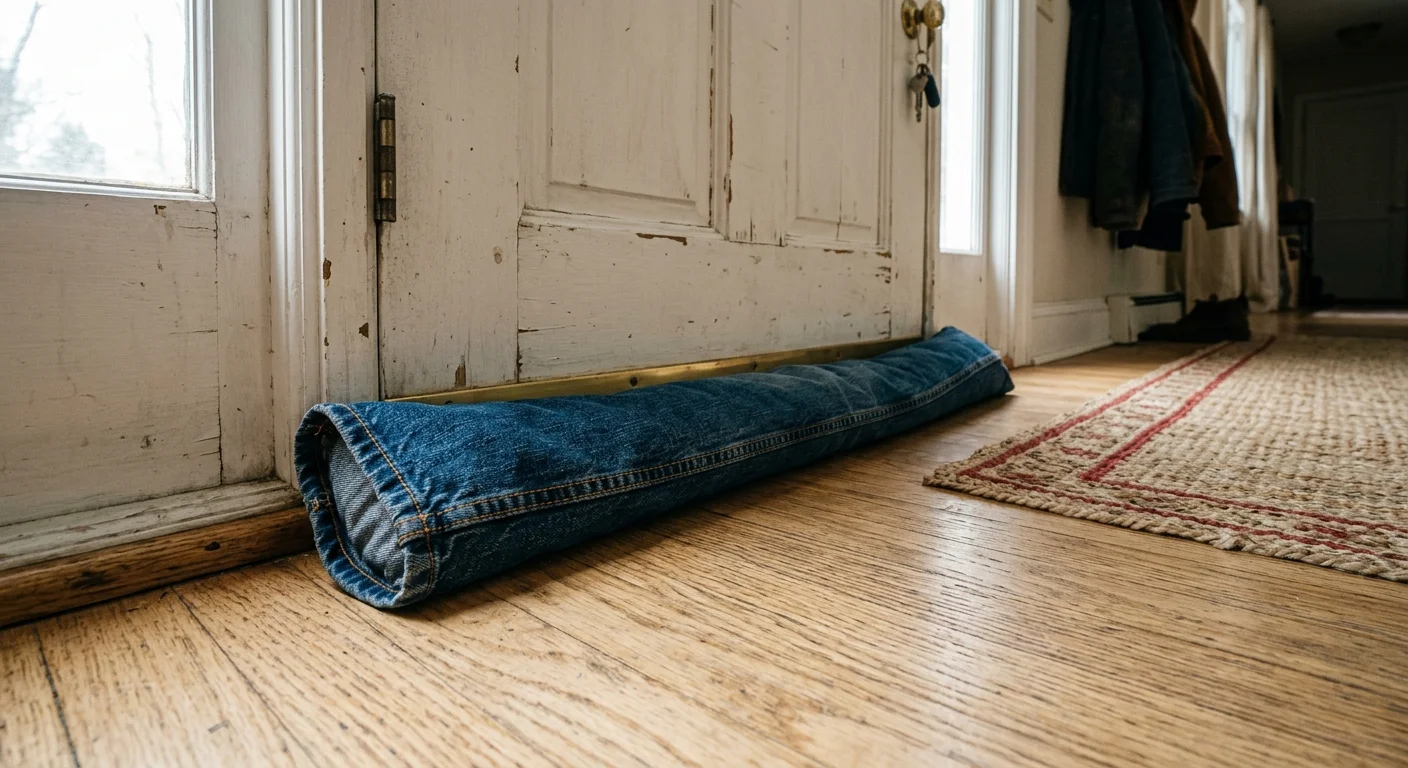
Denim provides the perfect robust exterior for a homemade draft dodger because it resists friction when dragged across hardwood or tile floors. To make your own, cut one entire leg off your old jeans, starting from the hem and slicing all the way up to the thigh. Turn the fabric inside out; run a straight stitch across the wider thigh end to seal it completely shut. Turn the denim right-side out again to hide your seam inside the tube.
Next, you need to add dense weight to the tube so it stays firmly pressed against the floorboards. Fill the denim leg with dried beans, uncooked rice, or inexpensive clay kitty litter. If you want the draft dodger to bend more easily around uneven door frames, mix your weighted material with a few handfuls of polyester fiberfill. Once the tube feels dense and heavy, fold the raw edges of the open end inward and stitch them tightly together. Slide the finished fabric tube against your front door to instantly block unwanted airflow and keep your home comfortable.
Protect Your Joints with Gardening Knee Pads
Working in your garden often requires extended periods of kneeling on hard soil, gravel, or concrete pathways. Over time, this repetitive pressure damages your joints and causes lasting discomfort. The Arthritis Foundation emphasizes the importance of using foam cushions or kneelers to reduce joint stress, making gardening an accessible, pain-free activity for older adults and anyone managing osteoarthritis.
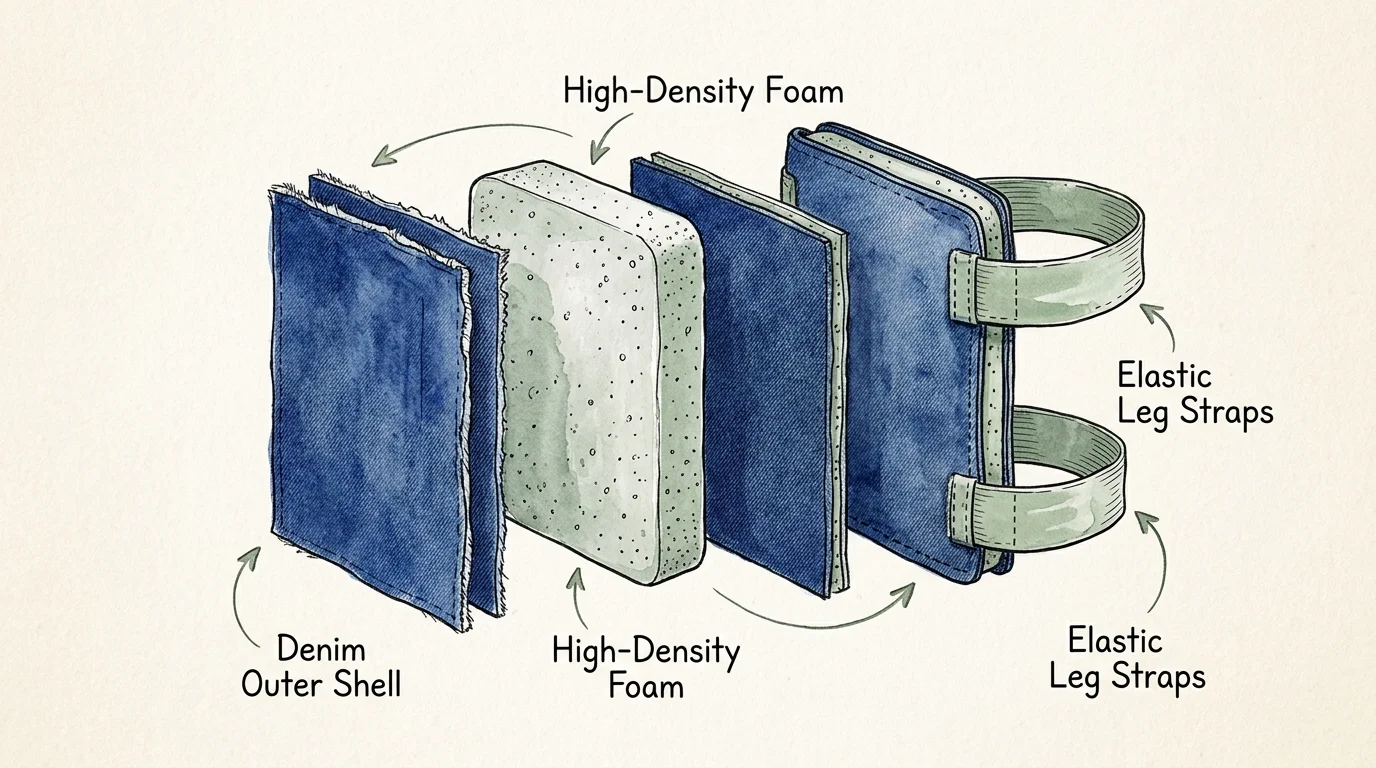
Instead of buying a bulky plastic garden kneeler that you have to drag around the yard, you can sew customized, wearable knee pads from your old jeans. Cut two large rectangles from the thickest part of the denim, usually the upper thigh area. Cut two identical rectangles from an old foam mattress pad, high-density sponge, or thick quilt batting.
Place the foam block between the two pieces of denim. Pin the edges together and sew around the perimeter, enclosing the foam completely. To make the pads wearable, measure the circumference of your leg just above and below your knee. Cut two strips of wide elastic band to match those measurements. Sew the elastic strips to the top and bottom corners of your denim pad. You now have a wearable, heavy-duty cushion that moves with you as you pull weeds, plant seeds, scrub baseboards, or wash your dog in the bathtub. The thick denim exterior protects the inner foam from sharp rocks and thorns, ensuring the pads last for multiple seasons.

Sew a Sturdy Workshop or Gardening Apron
Denim garments feature reinforced pockets and heavy-duty rivets designed to withstand tough working conditions. You can repurpose the top half of your jeans to create a highly functional half-apron for woodworking, grilling, or pruning shrubs. The back pockets provide the perfect built-in compartments for holding trowels, seed packets, tape measures, and screwdrivers.
Lay your jeans flat on your work surface. Grab a sharp pair of fabric scissors and cut off both legs just below the back pockets. Next, carefully cut away the entire front panel of the jeans, leaving the rear waistband and the back pockets completely intact. You should now have a rectangular piece of fabric featuring two sturdy pockets and a waistband with a button.
To create the apron ties, cut two long, narrow strips from the discarded jean legs. Fold the raw edges of these strips inward and stitch them flat so they do not fray in the washing machine. Attach one strip to each side of the apron’s waistband using a heavy zigzag stitch. If you need extra storage, you can cut the front pockets out of the discarded front panel and sew them directly onto the apron face. Tie the apron around your waist, adjust the strings for a comfortable fit, and immediately upgrade your tool-carrying capacity while protecting your clothes from sawdust and dirt.
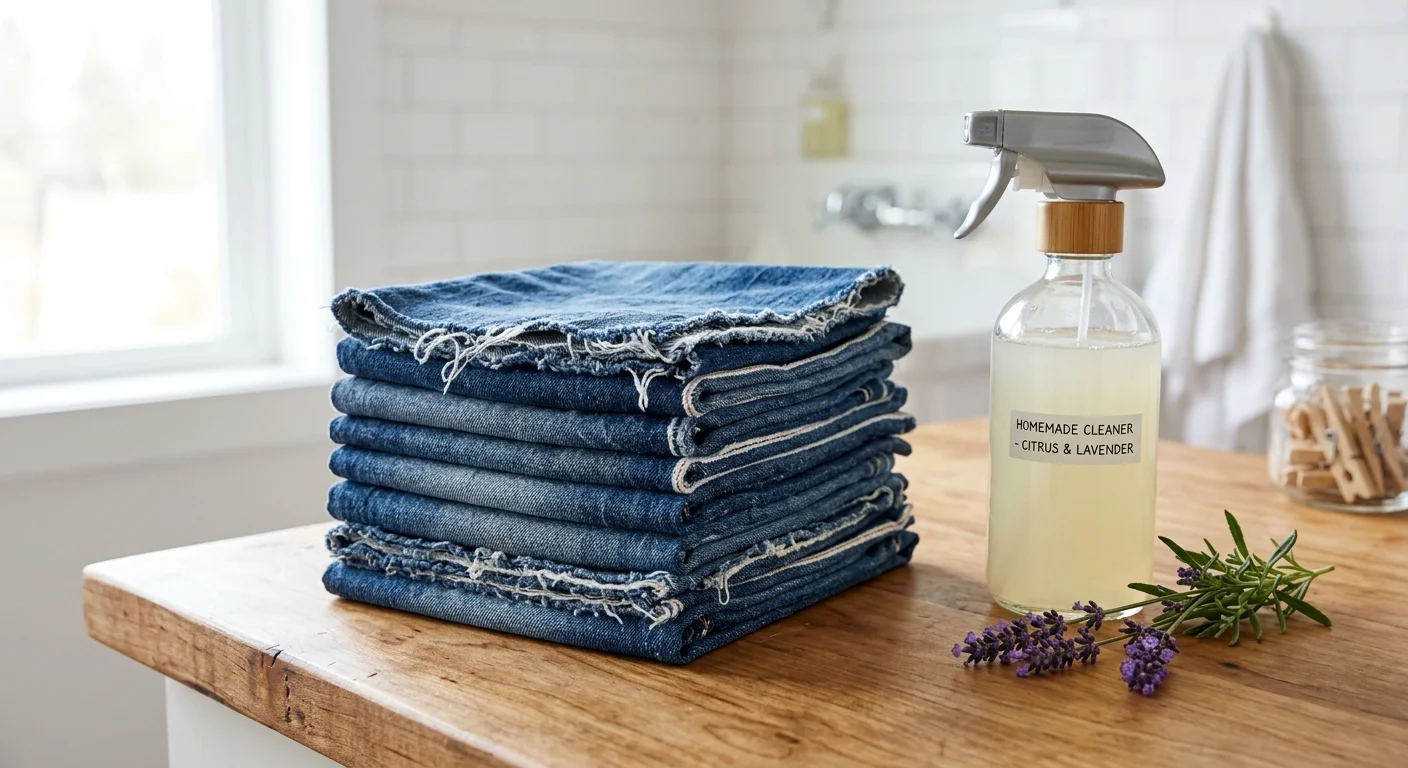
Create Heavy-Duty Reusable Cleaning Rags
If your jeans are too severely ripped or stained for complex sewing projects, you can still slice them into heavy-duty cleaning rags. Denim features a tight, diagonal twill weave that creates a highly textured surface. This natural abrasiveness makes denim ideal for scrubbing stubborn grime off tile grout, wiping down greasy garage workbenches, or removing dried mud from outdoor patio furniture without scratching the underlying surfaces.
Textile waste severely impacts the global environment. According to the Environmental Protection Agency (EPA), millions of tons of clothing and footwear end up in landfills or incinerators every year. Upcycling your unwearable jeans into cleaning supplies directly reduces your household waste and eliminates your need to constantly buy disposable paper towels or synthetic scrubbing sponges.
Cut your leftover denim scraps into uniform squares, aiming for eight-inch or ten-inch dimensions. Denim frays easily when washed; you must secure the edges if you want your rags to survive multiple laundry cycles. Run a quick zigzag stitch or a serger stitch around the perimeter of each square. Keep a stack of these tough rags under your kitchen sink. When they get dirty, simply toss them into the washing machine on a hot cycle. Avoid using fabric softener when washing your rags, as the chemicals coat the cotton fibers and drastically reduce the fabric’s absorbency.
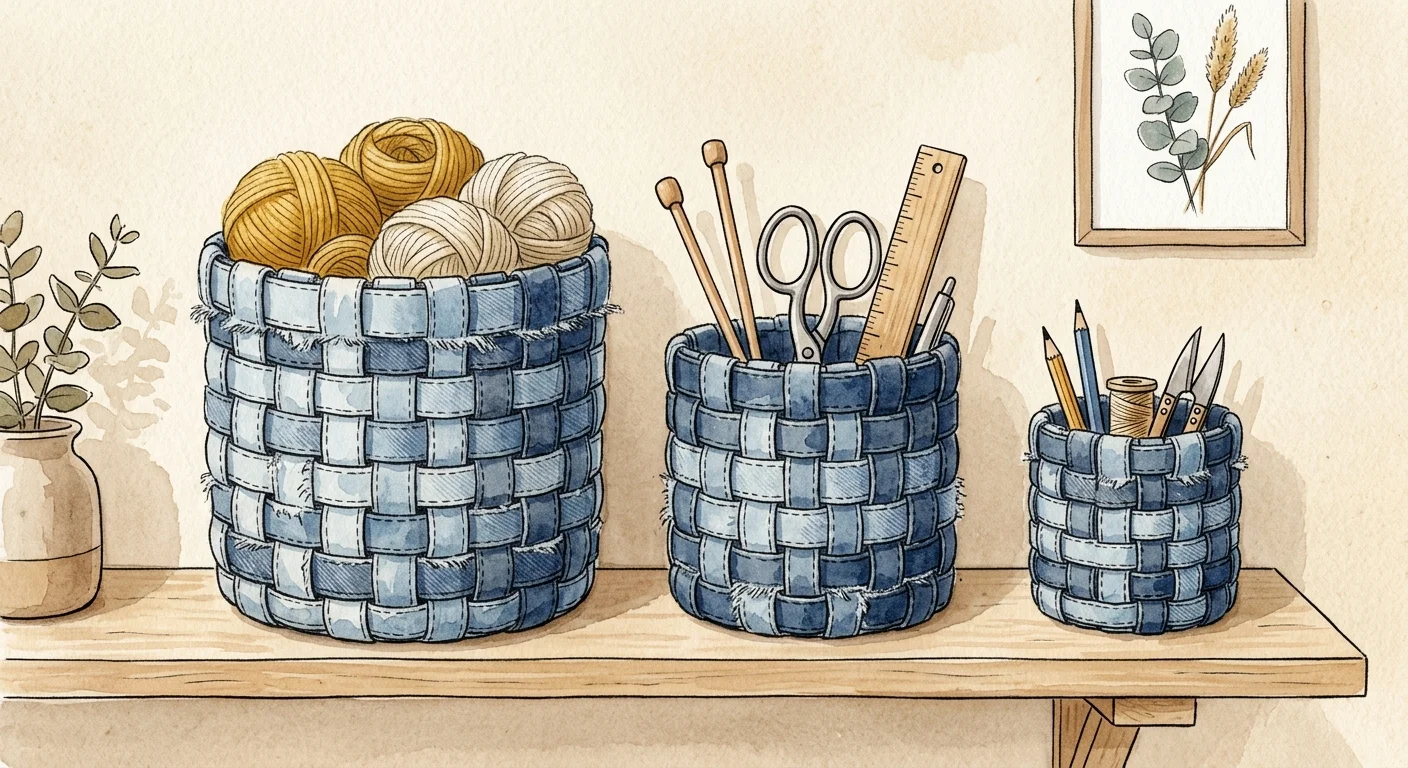
Organize Small Items in Woven Denim Storage Baskets
You can transform flat strips of denim into rigid, three-dimensional storage baskets for your home office, bathroom, or entryway. Woven denim baskets provide a stylish, rustic texture while organizing loose items like remote controls, rolled hand towels, and loose keys.
Weaving fabric requires patience, but the repetitive motion feels relaxing once you establish a rhythm. Use a heavy cardboard box as a temporary mold to help your basket hold its shape as you work.
Follow these specific steps to construct your woven storage container:
- Wash your jeans thoroughly and cut the leg fabric into long, uniform strips, each measuring about one inch wide.
- Lay five to ten strips vertically on a flat, hard work surface. Secure the top ends of these vertical strips to the table using heavy-duty painter’s tape.
- Take a new horizontal strip and weave it perpendicularly across the vertical strips, passing over the first strip, under the second, over the third, and so on.
- Push this first horizontal strip all the way to the top near the tape.
- Take another horizontal strip and weave it across, alternating the pattern. If you went “over” the first vertical strip previously, you must go “under” it this time.
- Continue weaving horizontal strips until you create a solid, tightly woven square base that matches the bottom dimensions of your cardboard box.
- Place your cardboard box directly on top of the woven base. Fold the remaining lengths of the vertical strips upward along the sides of the box.
- Weave new horizontal strips around the vertical sides of the box, building the walls of your basket from the bottom up.
- Once you reach your desired height, fold the raw ends of the strips over the top edge and secure them permanently using hot glue or heavy thread.
- Slide the cardboard box out of the center. Your woven denim basket will now stand on its own.
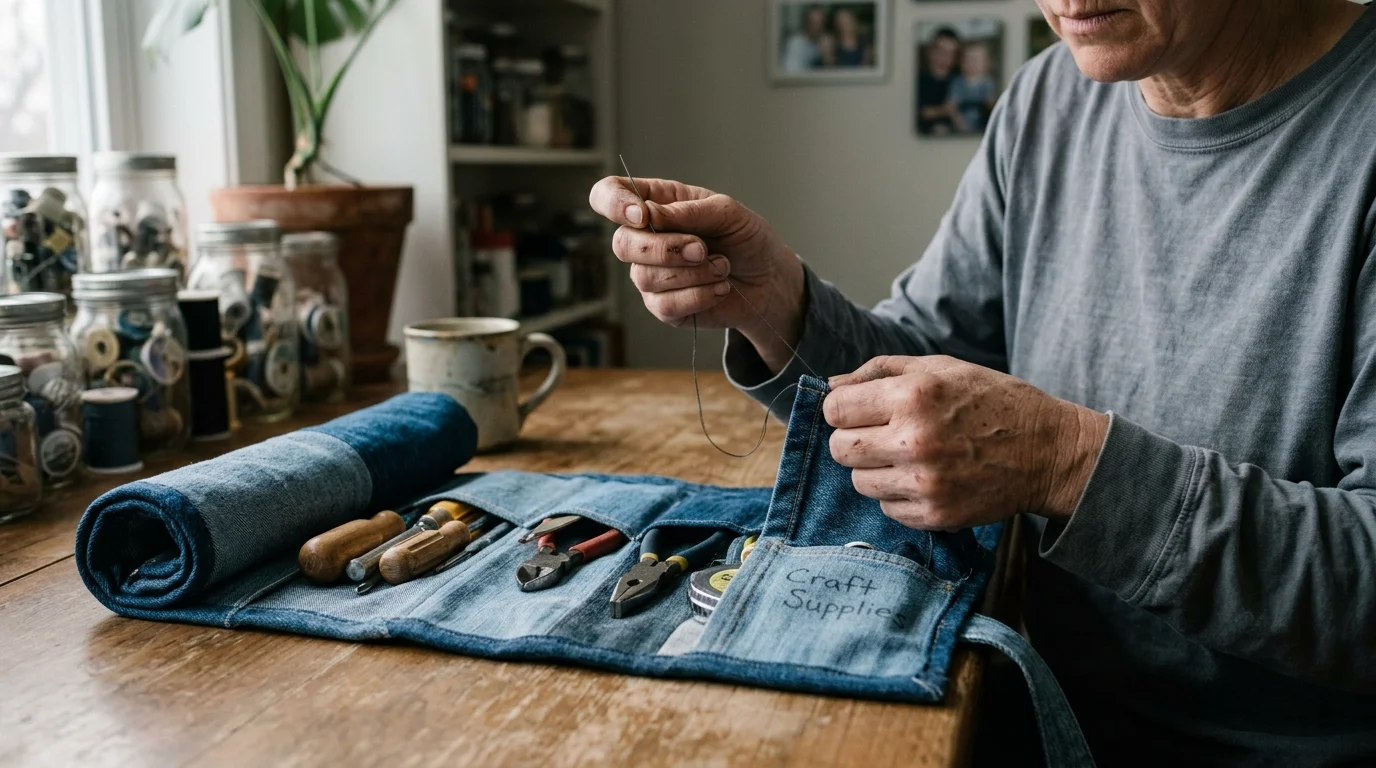
Roll Up Your Tools and Craft Supplies
Loose tools rattling around inside a drawer become damaged, dull, and incredibly difficult to find when you need them. A denim tool roll solves this organizational problem by providing individual, protective slots for your wrenches, carving knives, paintbrushes, and knitting needles. The thick cotton fabric prevents sharp tools from poking through, keeping your hands safe when you reach into your bag.
Cut a large, wide rectangle from the back of the jean leg. Lay the fabric flat, then fold the bottom third of the rectangle upward to create a wide pocket. Pin the sides of this folded section to keep it in place. Next, use a ruler and tailor’s chalk to draw vertical lines across the folded pocket, spacing them one or two inches apart depending on the size of the tools you plan to store.
Sew a straight stitch along each chalk line, backstitching at the top edge of the pocket to reinforce the seams against heavy use. Insert your tools into the newly created individual slots. To close the organizer, simply fold the top flap of the fabric down over the exposed tool handles, then roll the entire bundle tightly from left to right. Attach a heavy piece of ribbon or a leftover strip of denim to the outside edge, tying it around the bundle to keep everything secure. This organizer works exceptionally well for culinary tools, makeup brushes, and colored pencils, making it easy to grab your supplies and go.

Craft Braided Dog Chew Toys
Pet owners constantly spend money on expensive chew toys that heavy chewers destroy in a matter of minutes. Denim’s extremely tight twill weave makes it incredibly difficult for dogs to tear apart, making it the perfect material for homemade tug-of-war ropes and fetch toys.
Cut three long, wide strips of fabric from the leg of your jeans. Gather the strips together and tie a massive, tight knot at one end. Braid the three strips together as tightly as you physically can, ensuring there are no loose gaps in the fabric. Once you reach the end of the strips, tie another heavy knot to seal the braid. For extra durability and sensory engagement, you can soak the denim braid in beef broth and freeze it; the frozen fabric soothes the gums of teething puppies and extends the lifespan of the toy.
You must prioritize safety when giving your pet a handmade item. Always supervise your dog while they play with fabric toys. The American Kennel Club (AKC) warns that swallowing loose fabrics or threads can cause dangerous gastrointestinal obstructions that require emergency veterinary surgery. If you notice your dog has chewed through the knots or the denim rope begins to fray significantly, throw the toy away immediately and replace it with a newly braided one to protect their digestive tract.
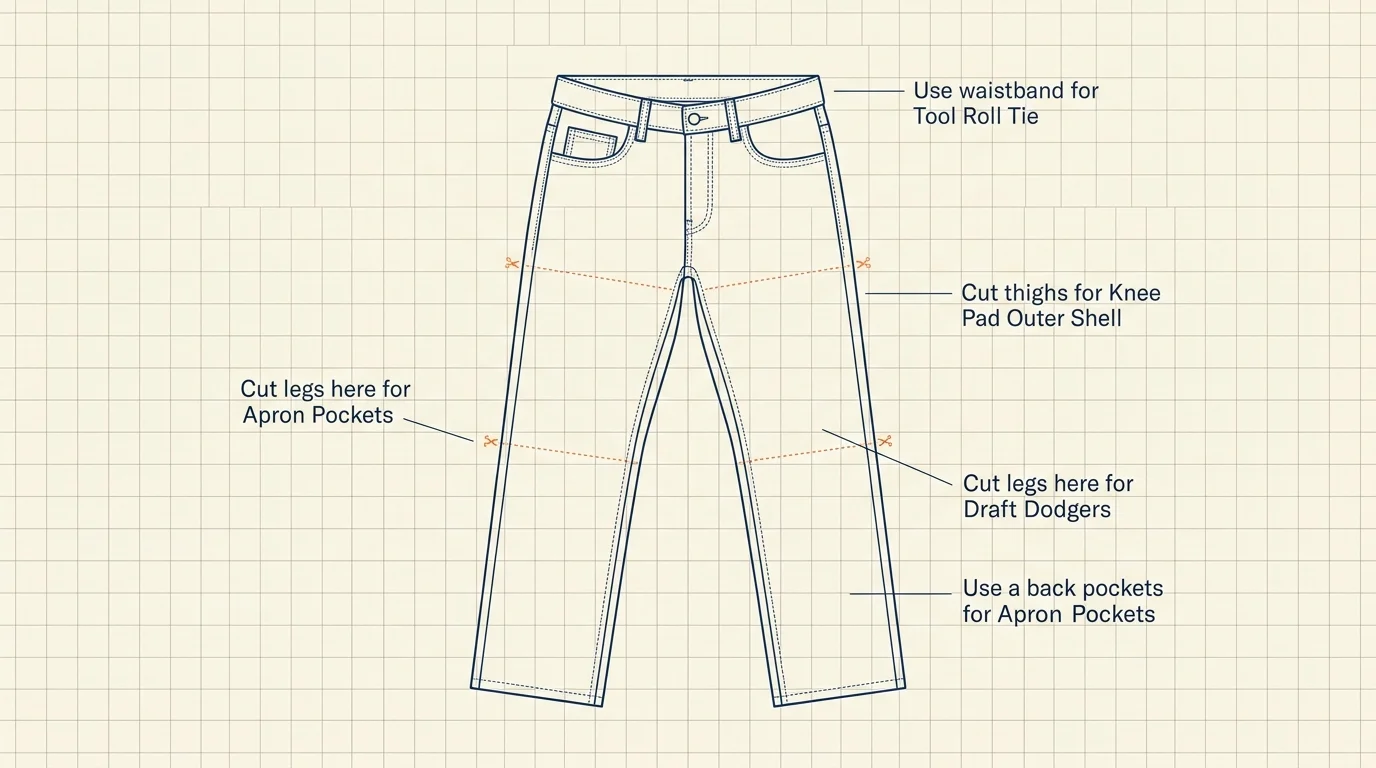
Prepare Your Jeans for Upcycling
Before you cut into your old clothing, you must prepare the fabric properly to ensure your projects succeed. Wash your jeans on a hot water cycle and dry them on high heat. This aggressive laundering shrinks the cotton fibers to their absolute limit, guaranteeing that your future draft dodgers, aprons, and storage baskets will not warp or change shape the first time you wash them.
Once dry, iron the denim flat to remove stubborn wrinkles that could distort your measurements. Gather a sharp pair of fabric shears, heavy-duty sewing needles, and strong polyester thread. Denim easily breaks standard cotton thread; you need heavy-duty materials to match the fabric’s resilience. Lay your jeans flat on your workstation, map out the cuts for your chosen project, and start transforming your unworn wardrobe into practical home solutions today.