Replacing bare mulch and sparse lawn patches with dense ground cover plants naturally stops weeds from stealing your weekend. When you establish a living carpet of low-maintenance foliage, you permanently block the sunlight that dormant weed seeds need to sprout, eliminating the physical strain of constant pulling and toxic chemical sprays. A thriving layer of ground cover locks moisture into the soil, controls erosion, and adds striking seasonal color to your landscape. Whether you need a drought-tolerant creeper for a sun-baked slope or a shade-loving perennial for under your trees, choosing the right weed-smothering plants transforms an exhausting yard chore into a self-sustaining, beautiful garden feature.
Understanding the Living Mulch Strategy
When you leave soil bare, nature immediately tries to cover it. Weed seeds constantly blow into your yard on the wind or drop from the paws and shoes of passing wildlife. If those seeds land on exposed dirt and receive sunlight, they germinate rapidly. Traditional wood mulch temporarily fixes this problem, but it breaks down every season, requiring you to haul heavy bags and spend hours spreading fresh chips just to maintain the barrier.
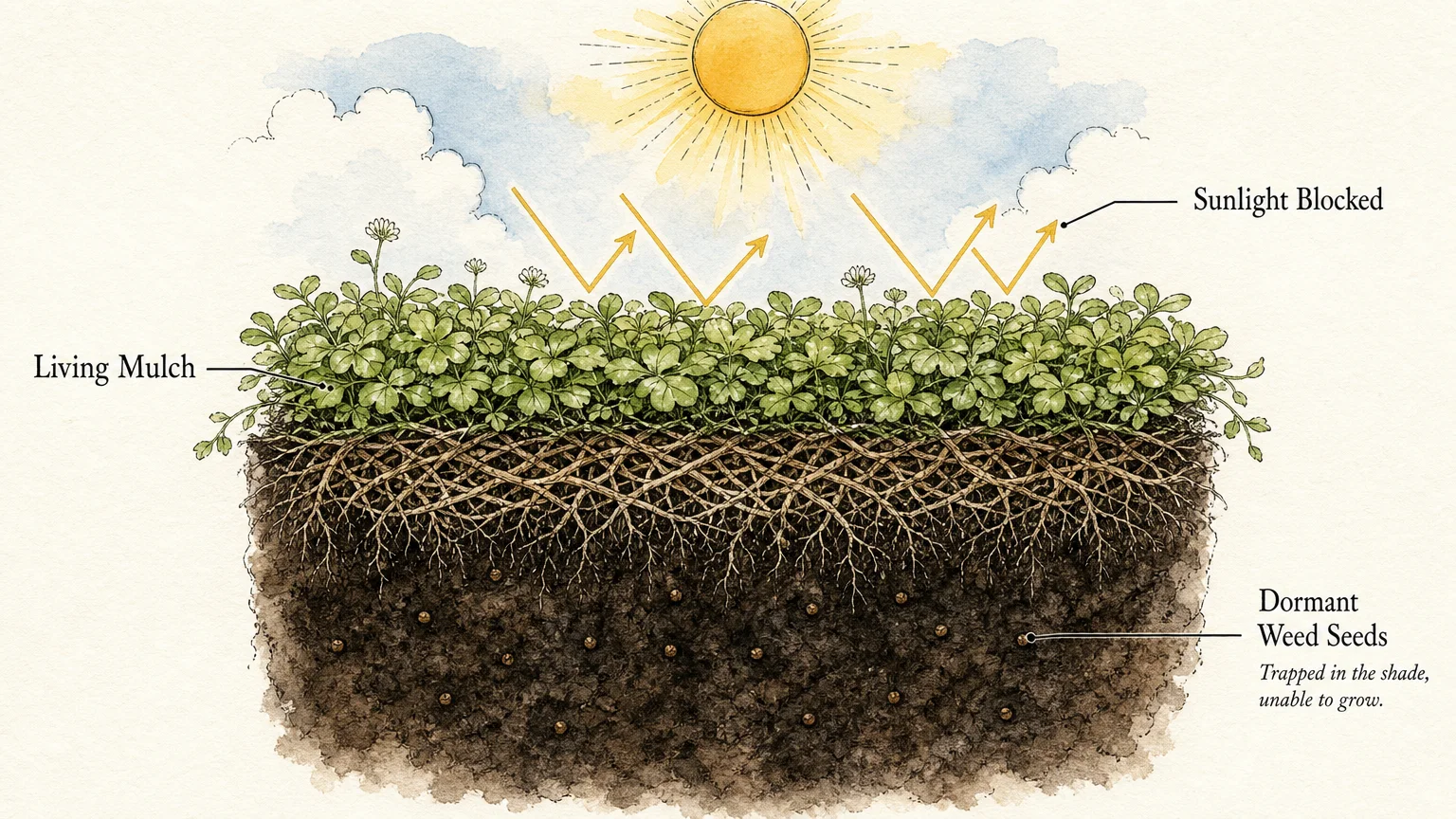
A ground cover plant acts as a permanent, living mulch. Once these creeping perennials and dense clumping plants weave their roots together, they form an impenetrable physical barrier across the soil surface. They consume the surface water and nutrients that weed seeds desperately need to survive. Above ground, their tightly knit leaves cast deep shade over the dirt. Since sunlight cannot penetrate the thick foliage canopy, dormant weed seeds remain trapped in the dark and never sprout. By choosing the right ground cover, you build a self-maintaining ecosystem that practically weeds itself, allowing you to spend your time enjoying your yard rather than maintaining it.
1. Creeping Thyme (Thymus serpyllum) for Sun-Baked Walkways
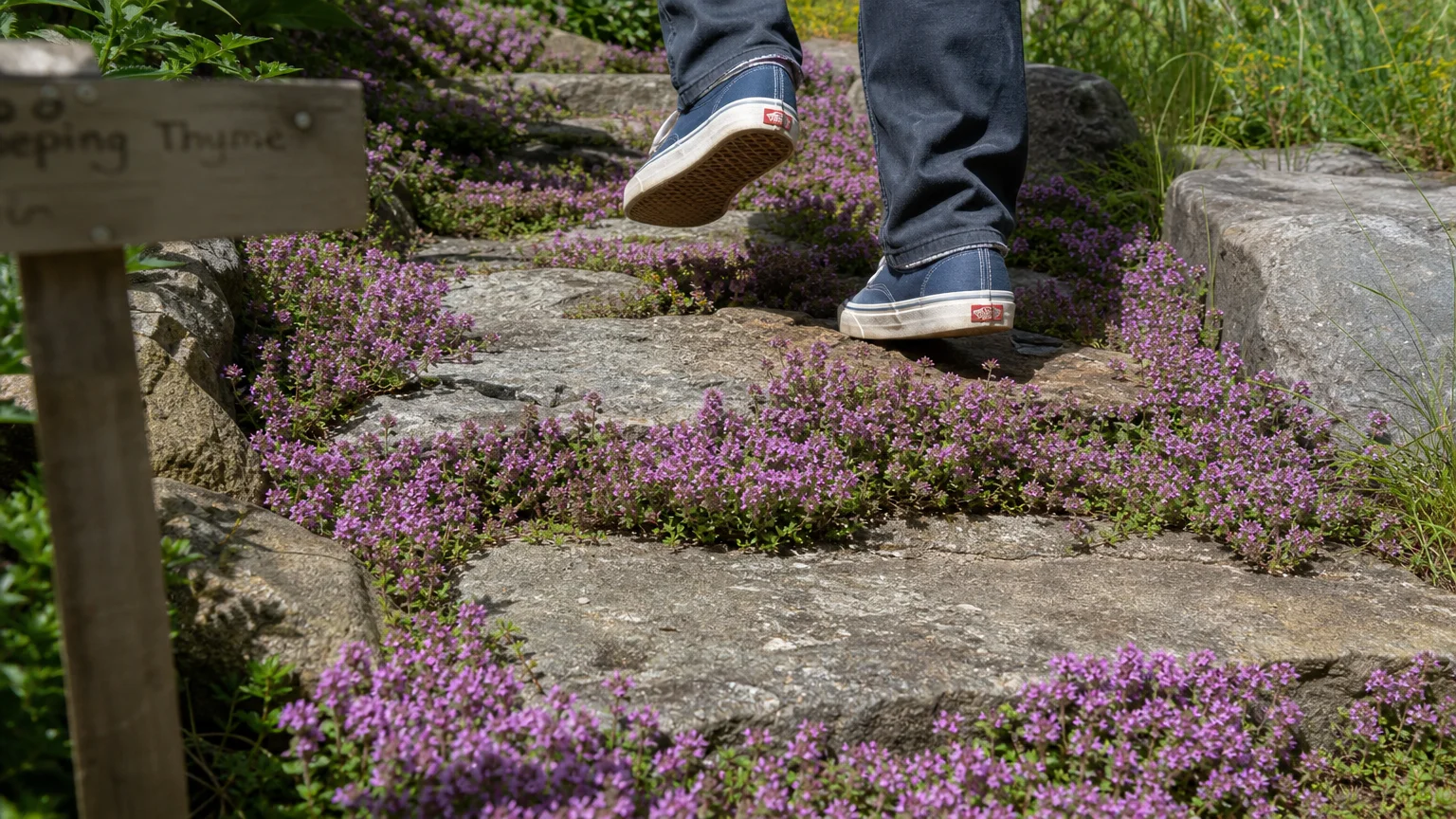
Creeping thyme provides an incredibly durable, low-profile carpet that easily withstands heavy foot traffic while choking out invasive weeds. Growing only two to three inches tall, this aromatic herb aggressively spreads its woody stems across the soil surface. In early summer, the green foliage completely disappears beneath a dense blanket of tiny pink, purple, or white flowers that draw essential pollinators to your garden.
Because it forms such a tight mat, creeping thyme excels at blocking light from reaching the soil. You can plant it between stepping stones, along the edges of a baking driveway, or across a difficult-to-mow slope. Whenever you step on the small leaves, they release a pleasant, savory fragrance into the air.
To establish a solid weed-blocking barrier, plant your thyme plugs about 12 inches apart in an area that receives full sun all day. The University of Minnesota Extension highlights creeping thyme as an excellent low-input plant that requires very little water and almost no fertilizer once established. In fact, rich soils and excessive moisture will cause the plant’s delicate roots to rot. Give it poor, well-draining soil, and it will reward you with a resilient, weed-free mat. If you share your yard with animals, you can rest easy; the ASPCA Animal Poison Control verifies that creeping thyme is entirely non-toxic to dogs and cats.
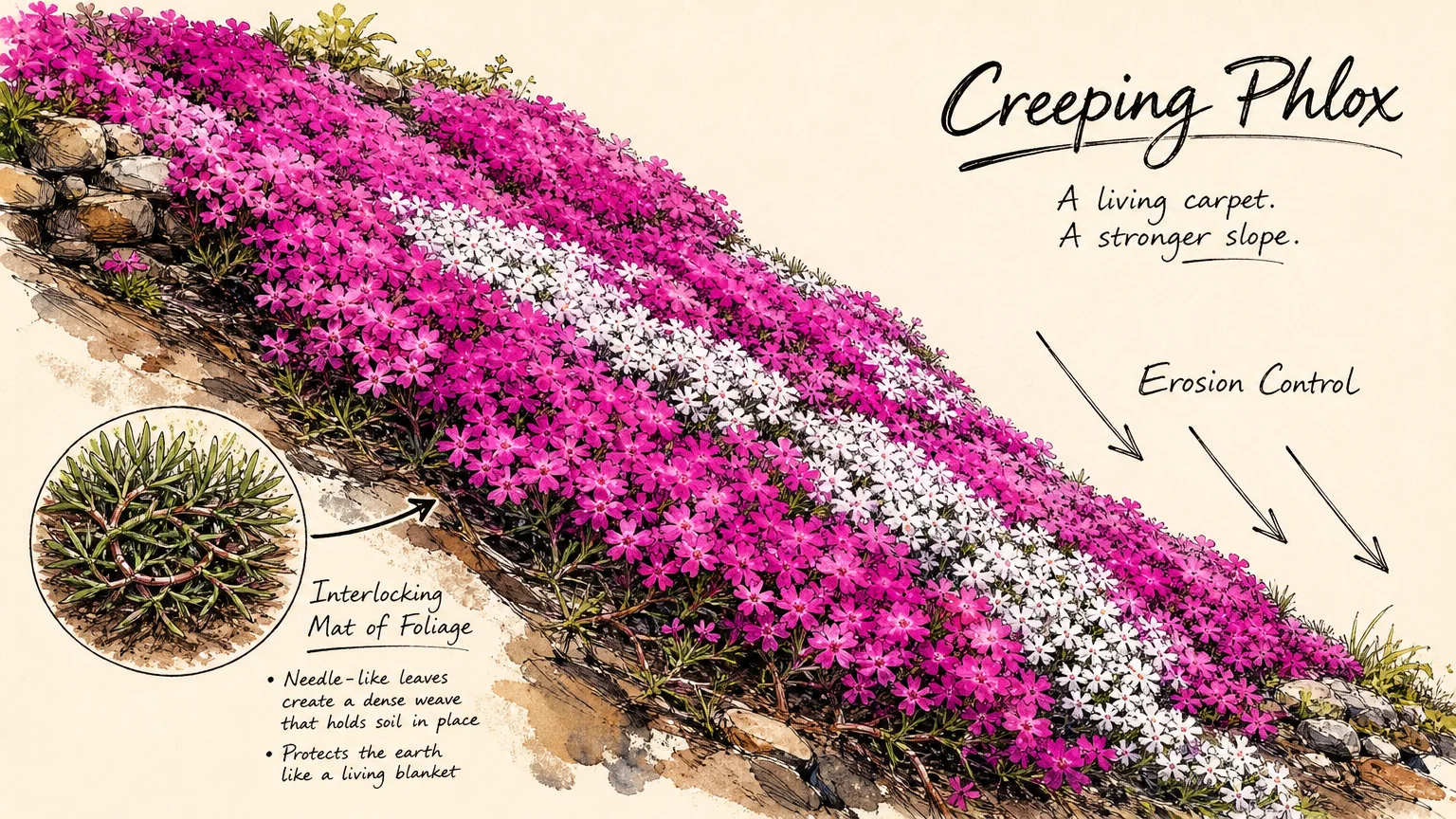
2. Creeping Phlox (Phlox subulata) for Slopes and Retaining Walls
If you struggle with weeds taking over a steep embankment where pushing a lawnmower feels dangerous or exhausting, creeping phlox offers the perfect permanent solution. This semi-evergreen perennial features stiff, needle-like foliage that weaves together into a dense, prickly mat. Broadleaf weeds simply cannot push their way through the heavy, interlocking stems.
In mid-spring, creeping phlox explodes into a vibrant display of pastel star-shaped blooms. The flowers grow so thickly that you often cannot see the green foliage underneath. Once the bloom cycle finishes, the deep green mat remains intact, serving as a handsome, textured ground cover for the rest of the year.
Plant phlox in full sun and well-drained soil, spacing the root balls roughly 15 to 18 inches apart. As the plants mature, their stems will root wherever they touch the dirt, rapidly accelerating their spread across bare zones. To keep the mat thick and vigorous—which maximizes its weed-suppressing power—shear the plants back by one-third immediately after they finish blooming. This light pruning encourages fresh, dense branching and prevents the center of the plant from dying out and leaving gaps for weeds. Like creeping thyme, creeping phlox is non-toxic and safe for households with curious pets.
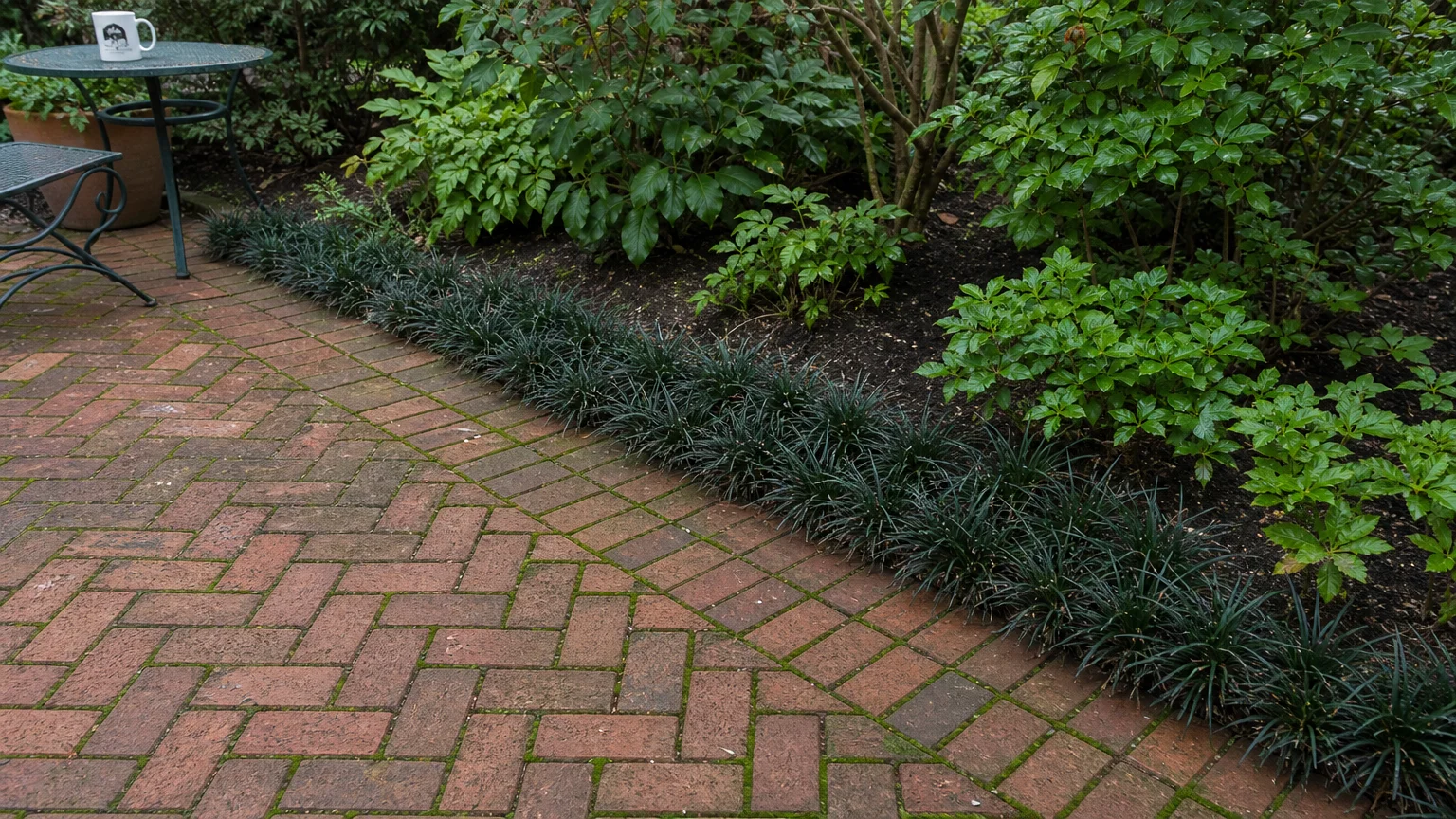
3. Dwarf Mondo Grass (Ophiopogon japonicus) for Evergreen Edging
Weeds love to infiltrate the shadowy borders under mature trees and along the north side of your house. Traditional turfgrass refuses to grow in these low-light areas, leaving the soil bare and highly vulnerable to shade-tolerant weeds. Dwarf mondo grass fills this exact void, providing a sleek, modern, and highly weed-resistant carpet for your shadiest spots.
Despite its name, dwarf mondo grass acts more like a member of the lily family than a true grass. It grows in dark green, arching tufts that reach just two to four inches in height. As it matures, it sends out robust underground stolons that spawn new tufts in the surrounding dirt. Over a few seasons, these individual tufts merge into a continuous, spongy turf that completely shades the soil and physically blocks weed germination.
Because it handles heavy shade and heavily resists drought, you can plant dwarf mondo grass directly over shallow tree roots where other plants struggle for moisture. Space the small clumps four to six inches apart for the fastest coverage. It requires virtually no physical maintenance—you never need to mow it, and it stays dark green year-round in most mild climates. The ASPCA confirms that dwarf mondo grass contains no toxic compounds, making it a perfectly safe choice for bordering shaded pet runs.
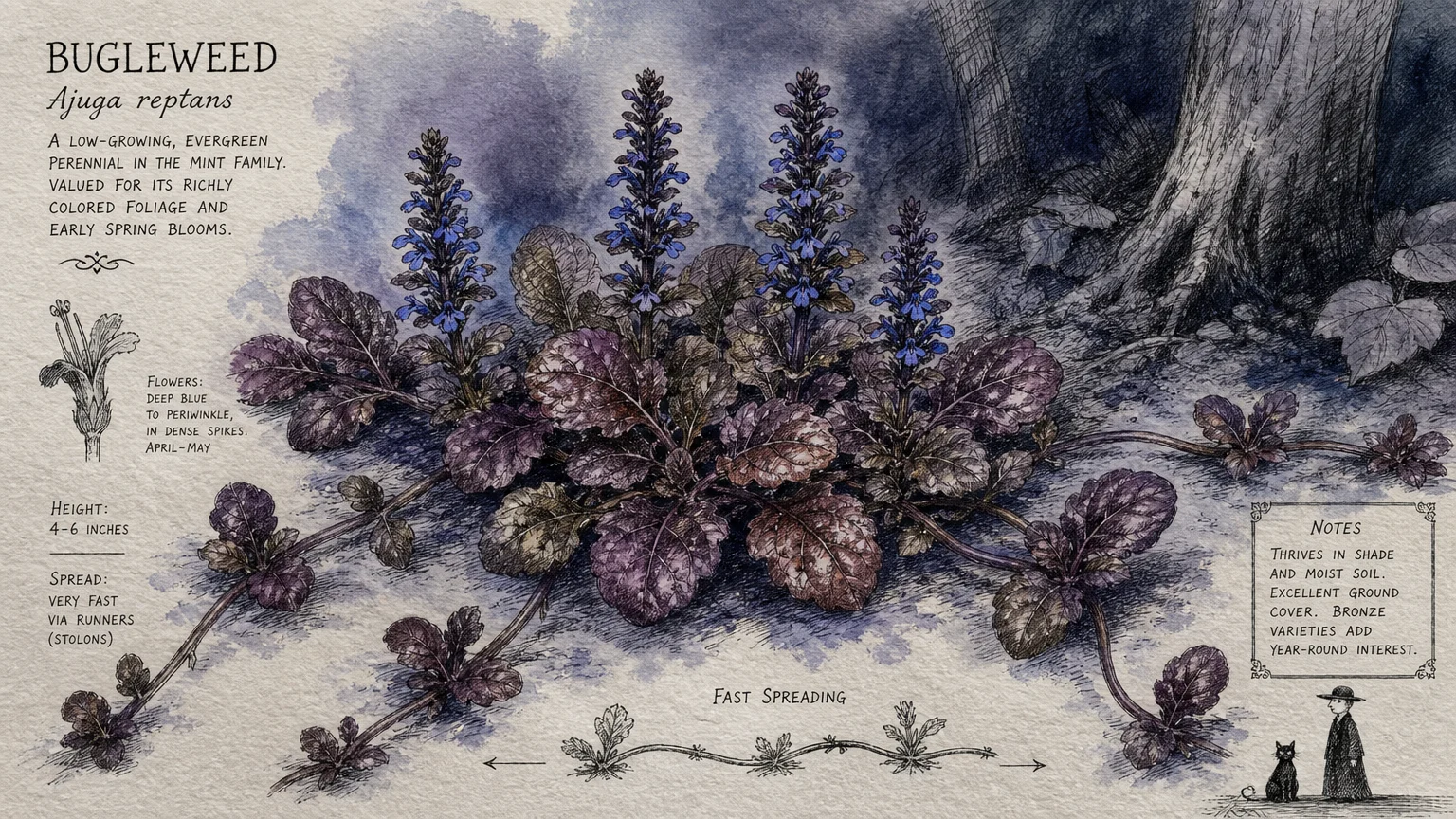
4. Bugleweed (Ajuga reptans) for Fast Coverage in the Shade
When you need to cover a massive expanse of bare ground quickly, bugleweed answers the call better than almost any other plant. This vigorous perennial spreads rapidly via above-ground runners, similar to how a wild strawberry plant grows. As it travels, it lays down a thick, heavy carpet of broad, glossy leaves that overlap tightly, instantly starving any emerging weeds of the sunlight they desperately need to survive.
Bugleweed offers exceptional visual interest beyond its weed-control capabilities. The foliage typically features striking, moody shades of bronze, deep purple, or burgundy. In mid-spring, the plant pushes up sturdy six-inch spikes densely packed with vibrant blue or violet flowers, drawing early-season bees and butterflies to your yard.
You must plant bugleweed with strategy and caution. Because it spreads so aggressively, it will easily jump from a garden bed directly into your lawn if you do not maintain a strict physical barrier. Use plastic, metal, or heavy stone edging dug several inches into the soil to keep the plant contained. According to the University of Wisconsin-Madison Division of Extension, aggressive ground covers like bugleweed require occasional boundary edging to control their spread, but they excel at stabilizing moist, shaded soils where weeds otherwise run rampant. It thrives in part shade and easily tolerates damp conditions where other ground covers might rot. The ASPCA lists bugleweed as completely non-toxic to dogs, cats, and horses.
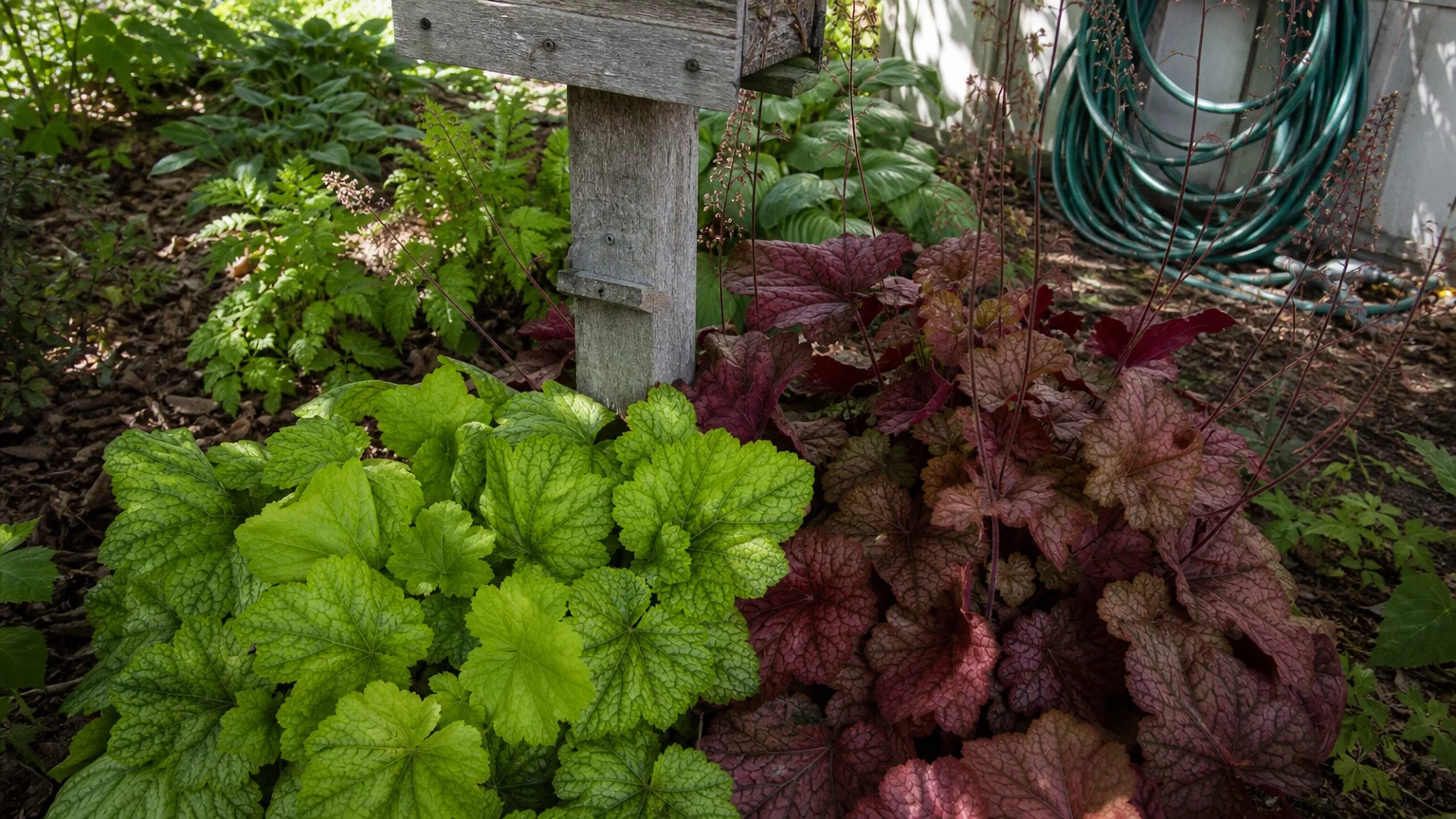
5. Coral Bells (Heuchera) for Dense Shade Mounding
While many ground covers rely on creeping, traveling vines to cover the earth, coral bells utilize a structural clumping strategy to achieve the exact same weed-stopping results. These stunning shade perennials form wide, mounding rosettes of large, scalloped leaves. When you plant several coral bells together in a grid, their wide canopies touch, casting total darkness over the soil below and effectively smothering any weed seeds attempting to sprout.
Older adults and anyone looking to permanently simplify their gardening chores will deeply appreciate the low-maintenance nature of coral bells. You do not need to wrestle with aggressive runners, bend over to trim unruly vines, or pull heavy weeds. You simply plant them 12 to 18 inches apart and let their massive, broad leaves do the heavy lifting for you.
Coral bells provide some of the most spectacular foliage in the entire gardening world, widely available in electrifying shades of lime green, deep plum, silver, and bright caramel. In early summer, they send up delicate, wiry stems topped with tiny, bell-shaped flowers that hummingbirds find irresistible. They prefer partial shade and rich, well-draining soil. To keep the plants healthy and robust, dig up and divide the clumps every three to four years when the centers begin to look woody. They remain entirely non-toxic to your household pets.
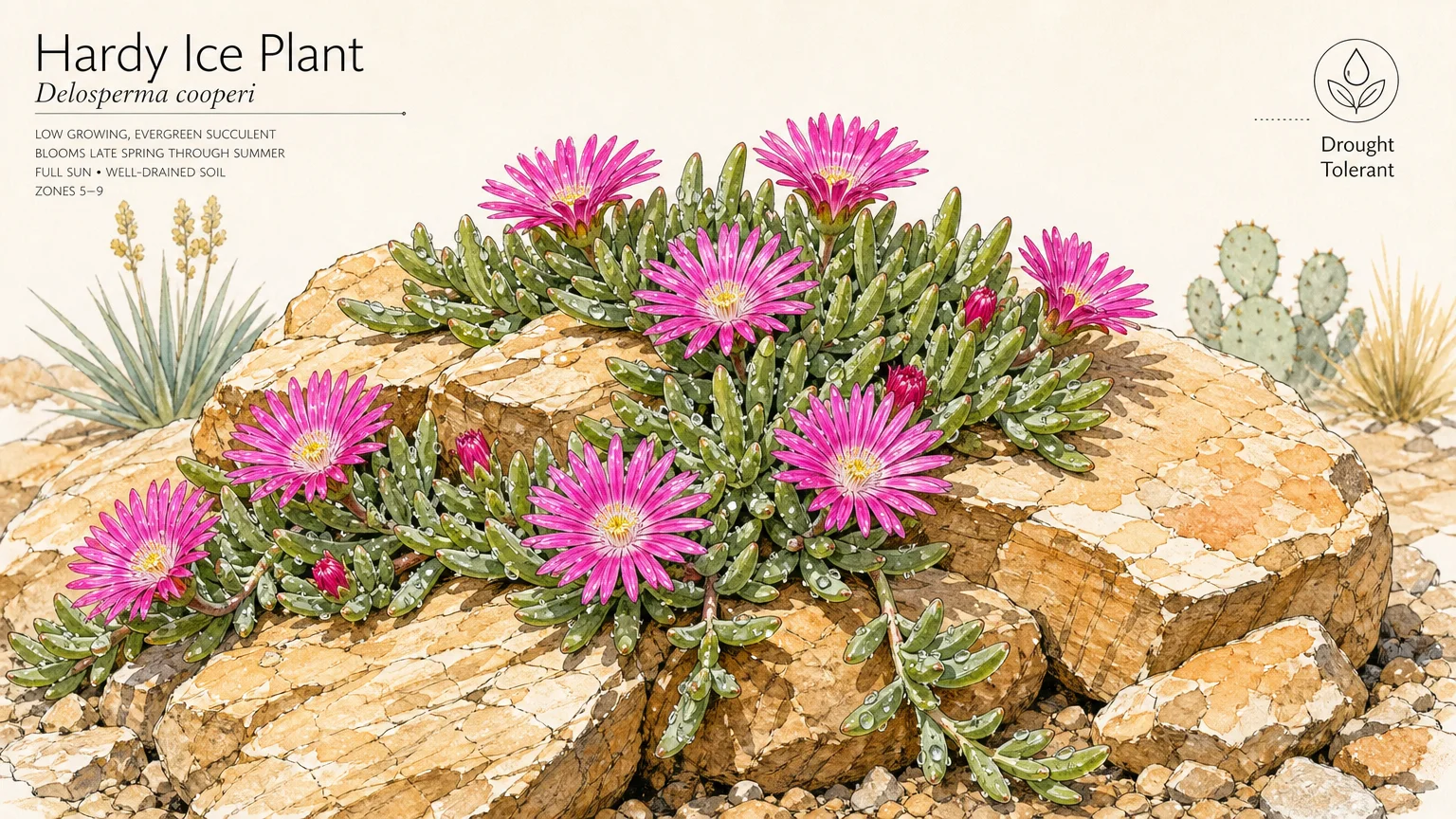
6. Hardy Ice Plant (Delosperma cooperi) for Extreme Heat and Drought
If you live in an area with blistering summer sun and dry, rocky soil, you likely battle deep-rooted, drought-loving weeds like dandelions and purslane. Hardy ice plant thrives in these exact harsh conditions, effortlessly outcompeting weeds while demanding almost nothing from you in return.
This incredibly tough perennial succulent features fleshy, cylindrical leaves that store water, allowing it to survive extended periods of severe drought without dropping a single leaf. It hugs the ground closely, rarely growing taller than three inches, but quickly spreads outward to form a thick, rubbery mat over the soil. From early summer straight through fall, the plant blankets itself in dazzling, neon-colored flowers that open wide in the bright sunlight and close during cloudy weather.
To successfully grow a hardy ice plant, you absolutely must provide exceptional drainage. It naturally grows in rocky, sandy environments and will quickly succumb to root rot if left standing in heavy, waterlogged clay. Plant it on a hot, sunny slope, in a rock garden, or along the baking edge of an asphalt driveway where other plants easily scorch. Once established, its dense, sprawling habit permanently prevents weed seeds from reaching the mineral-rich dirt below. The ASPCA verifies that hardy ice plant poses no toxicity risk to your animals.
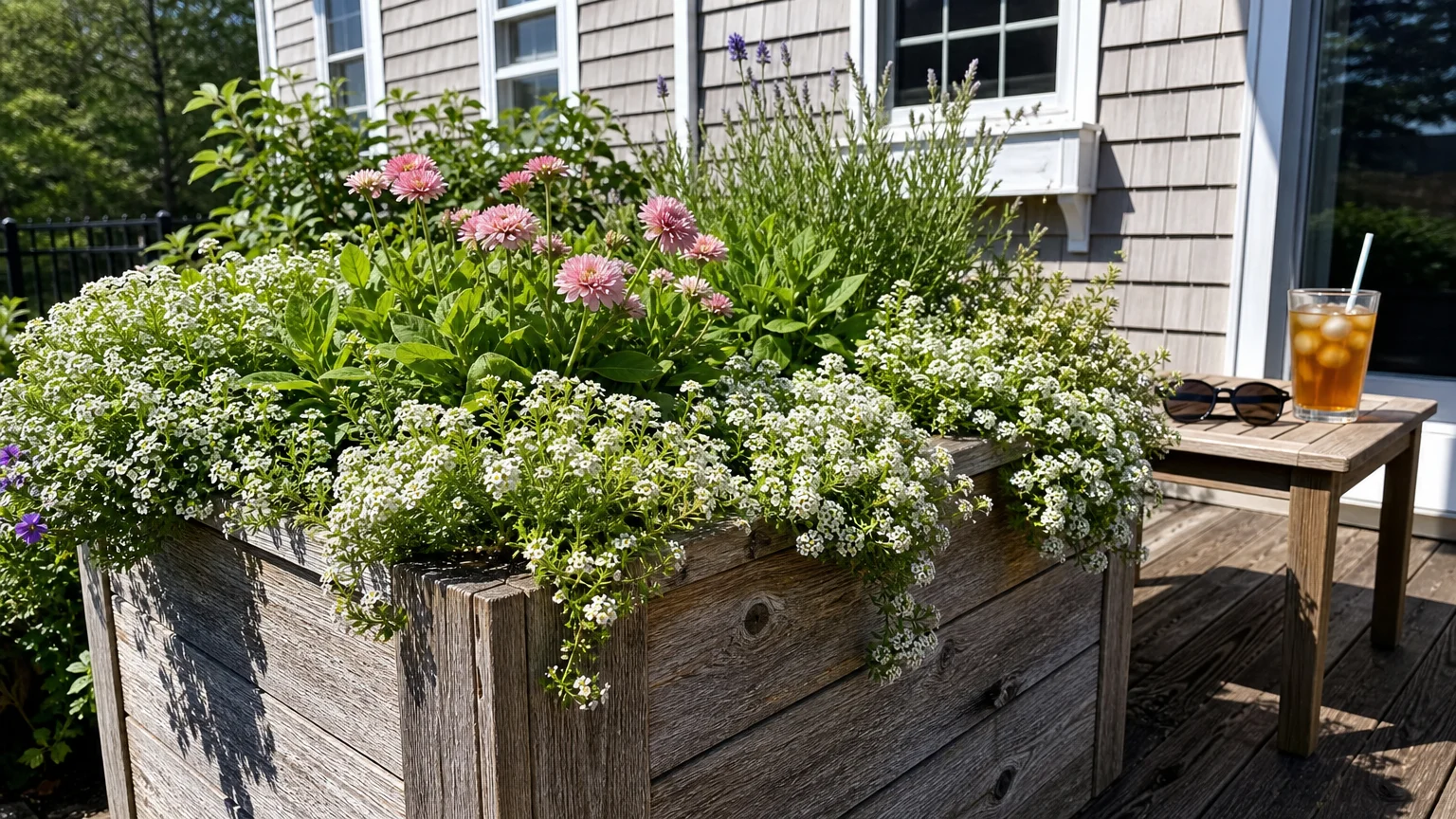
7. Sweet Alyssum (Lobularia maritima) for Fast-Growing Gap Filler
Sometimes you need an immediate, fast-acting solution to stop weeds while you wait for your permanent, slower-growing perennial ground covers to establish. Sweet alyssum serves as the perfect temporary ground cover. Though typically grown as an annual in most growing zones, it grows with astonishing speed, rapidly expanding from a tiny seed into a dense, pillowy mound of heavy foliage and thick flowers.
When you plant sweet alyssum in the bare patches of your flower beds or along the exposed edges of your vegetable garden, it quickly forms a living mulch that shades the soil and blocks all weed development. It blooms continuously from spring until the first hard frost, producing millions of tiny cross-shaped flowers that smell strongly of warm honey.
Sweet alyssum thrives in full sun to partial shade and tolerates a wide range of poor soil conditions. When the severe heat of mid-summer causes the plant to look leggy or tired, simply take a pair of shears and cut it back by half; it will quickly rebound with a fresh flush of thick, weed-smothering growth. While it dies back completely in the winter, it frequently drops hundreds of seeds that automatically sprout the following spring, providing you with ongoing weed control year after year. Like the other plants on this list, sweet alyssum is completely safe and non-toxic around your pets.
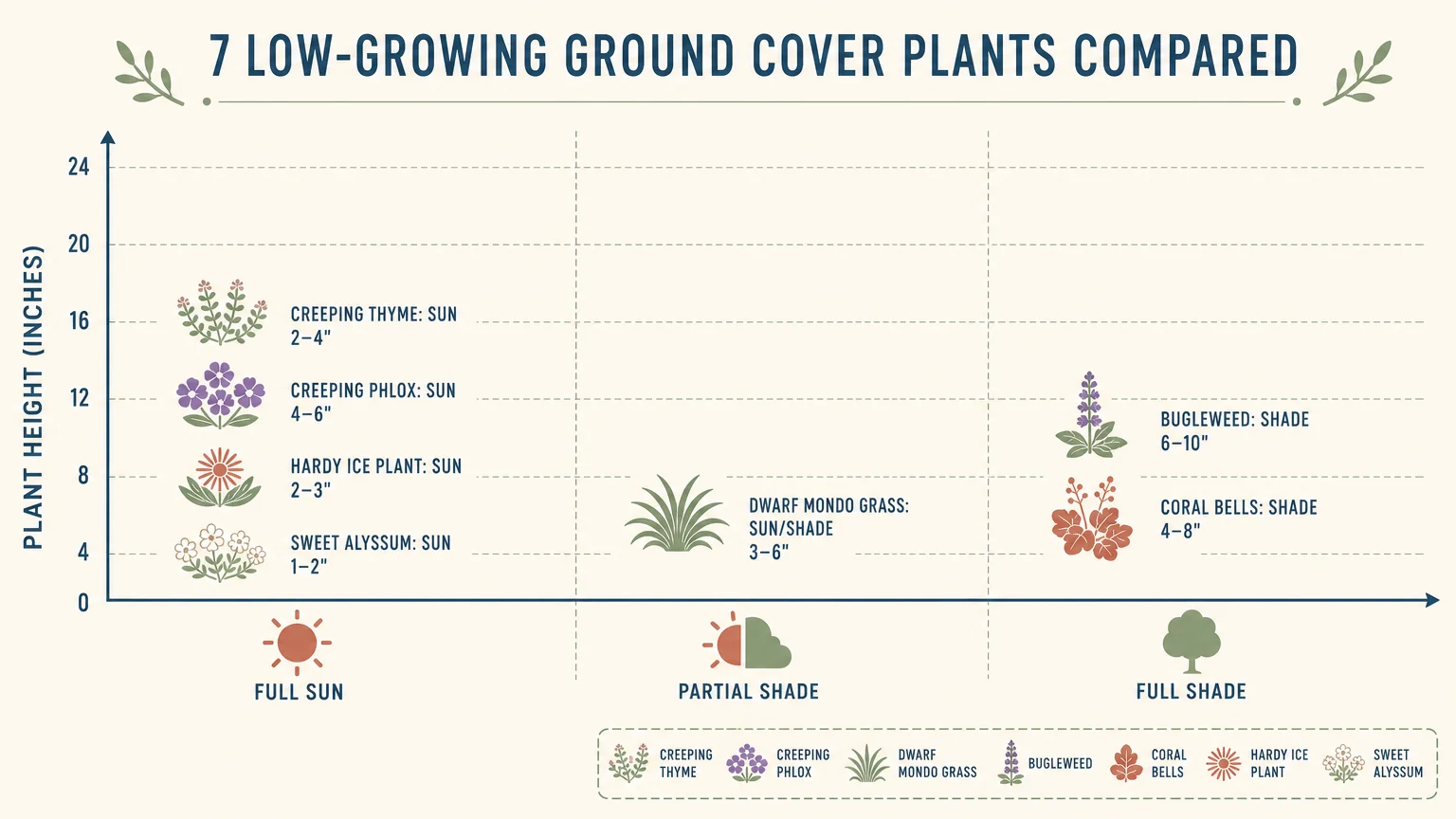
Weed-Suppressing Ground Cover Quick Reference
| Plant Name | Optimal Light | Soil Preference | Growth Habit |
|---|---|---|---|
| Creeping Thyme | Full Sun | Dry, Well-Draining | Creeping Woody Mat |
| Creeping Phlox | Full Sun | Medium, Well-Draining | Interlocking Needle Mat |
| Dwarf Mondo Grass | Part to Full Shade | Moist, Well-Draining | Spreading Grassy Tufts |
| Bugleweed (Ajuga) | Part Shade | Moist, Adaptable | Aggressive Broadleaf Runner |
| Coral Bells | Part Shade | Rich, Well-Draining | Dense Broadleaf Clumps |
| Hardy Ice Plant | Full Sun | Dry, Sandy/Rocky | Sprawling Succulent Mat |
| Sweet Alyssum | Full Sun to Part Shade | Adaptable | Fast-Growing Pillowy Mound |
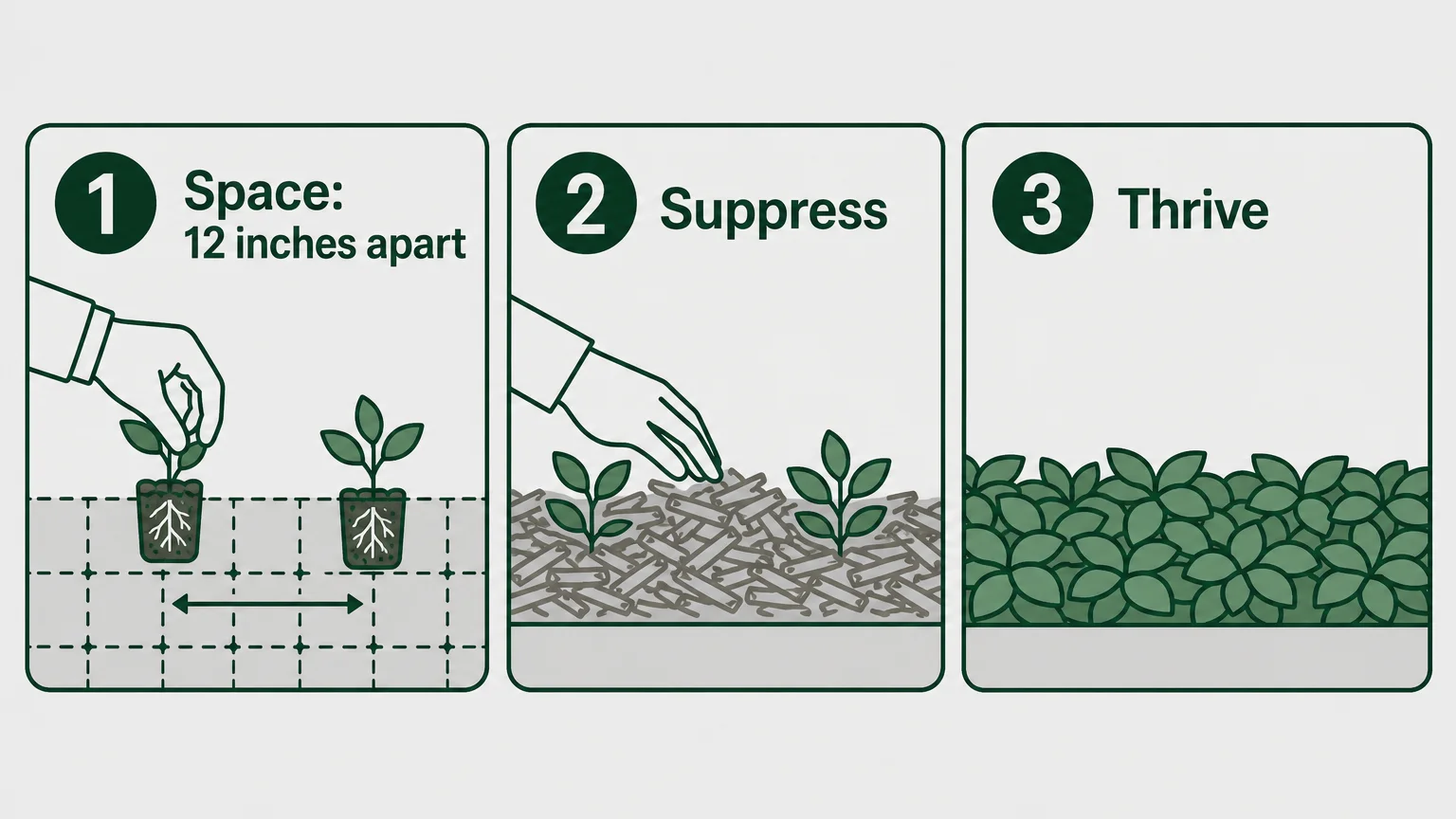
Step-by-Step Guide to Establishing Your Ground Cover
To guarantee your new plants form a seamless, weed-stopping mat, you must install them correctly from the start. Ground covers prevent new weeds from sprouting; they cannot kill mature, deep-rooted weeds that already dominate the space. Follow this specific checklist to set your living mulch up for long-term success:
- Eradicate Existing Weeds: Before you plant anything, completely remove all current weeds from the area. Dig them out by the roots with a trowel, or smother them completely with a thick layer of cardboard and heavy compost for several weeks prior to planting.
- Loosen and Amend the Soil: Break up the top four to six inches of compacted dirt to give the new roots an easy, oxygen-rich path to spread. If you are planting moisture-loving covers like bugleweed, mix in a few shovels of organic compost. If planting creeping thyme or ice plant, ensure the soil remains highly sandy and fast-draining.
- Follow Exact Spacing Guidelines: Resist the urge to plant your plugs too far apart just to save a few dollars. If you leave large gaps, weeds will infiltrate the space long before the ground cover can connect. Space most creeping plants exactly 12 to 18 inches apart, and smaller tufts like dwarf mondo grass four to six inches apart.
- Mulch the Temporary Gaps: Immediately after planting, carefully apply a one-inch layer of fine bark mulch or shredded leaves over the bare dirt between your new plants. This physically blocks sunlight from reaching dormant weed seeds while your ground cover slowly grows to fill the open voids.
- Water Deeply and Consistently: During their first active growing season, your new plants need consistent moisture to establish deep, highly resilient root systems. Water the area deeply once or twice a week rather than giving it a shallow, unhelpful daily sprinkle. Once the plants fully interlock into a solid mat, you can significantly reduce your watering schedule.
Walk through your yard this week and identify the single most frustrating, weed-prone patch of bare dirt you regularly battle. Measure the square footage of that specific area, evaluate its daily sunlight exposure, and pick just one ground cover from this list to test-plant this season.