A well-organized kitchen means the difference between cooking with confidence and avoiding the room entirely out of fear of falling. Reaching for high shelves or bending deeply to dig through bottom cabinets places unnecessary strain on your back, knees, and joints. By rethinking your storage strategy, you can create an accessible environment that works with your body—not against it. Strategic adjustments like installing pull-out shelves, upgrading hardware, and utilizing the waist-level zone immediately reduce physical fatigue. This guide breaks down specific, practical modifications you can make to your drawers and cabinets to ensure daily meal preparation remains safe, simple, and entirely independent.
01 Establish a Waist-Level Golden Zone for Daily Essentials
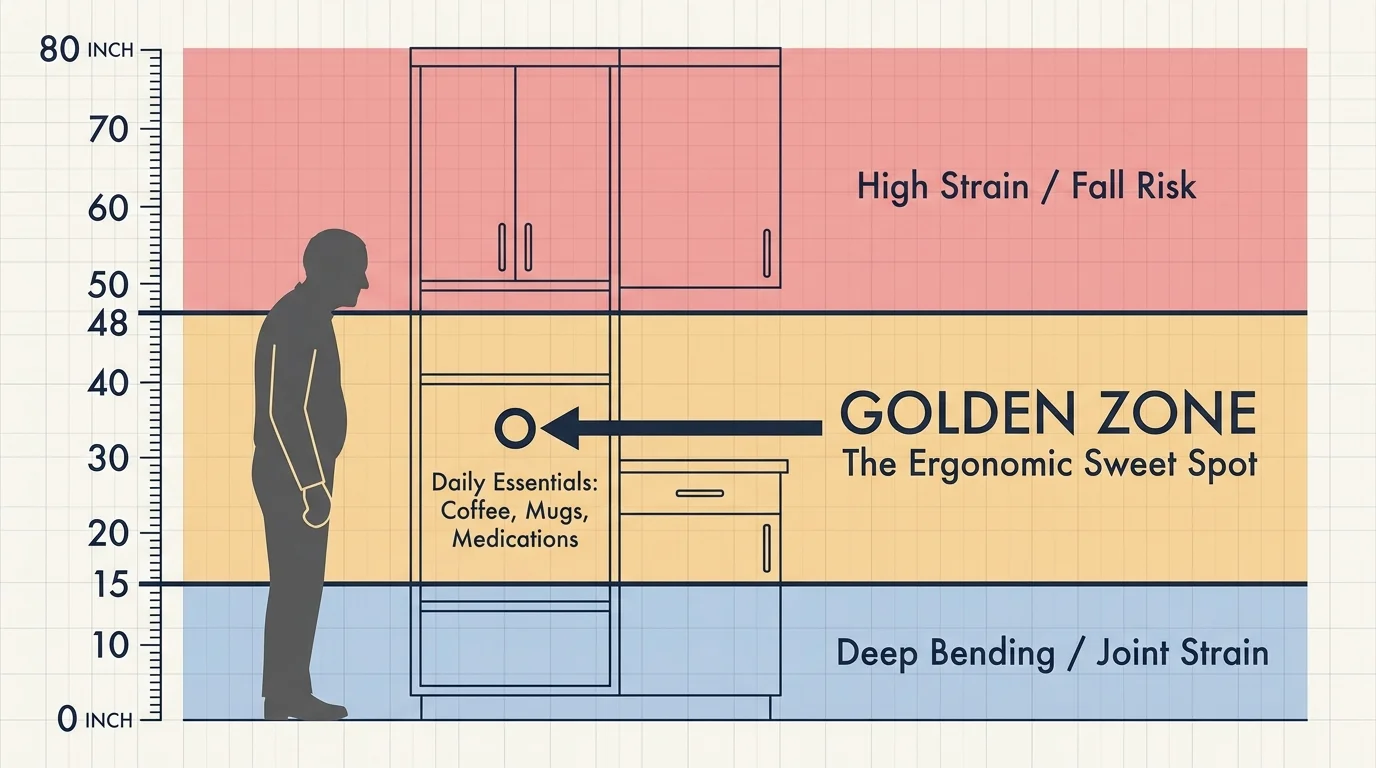
The most effective way to prevent falls and reduce joint strain in the kitchen is to honor the golden zone of storage. Home safety advocates define this ergonomic sweet spot as the area between your waist and your shoulders, typically located between 15 and 48 inches from the floor. Items stored within this vertical range require zero overhead reaching and zero deep bending, protecting your balance and your back.
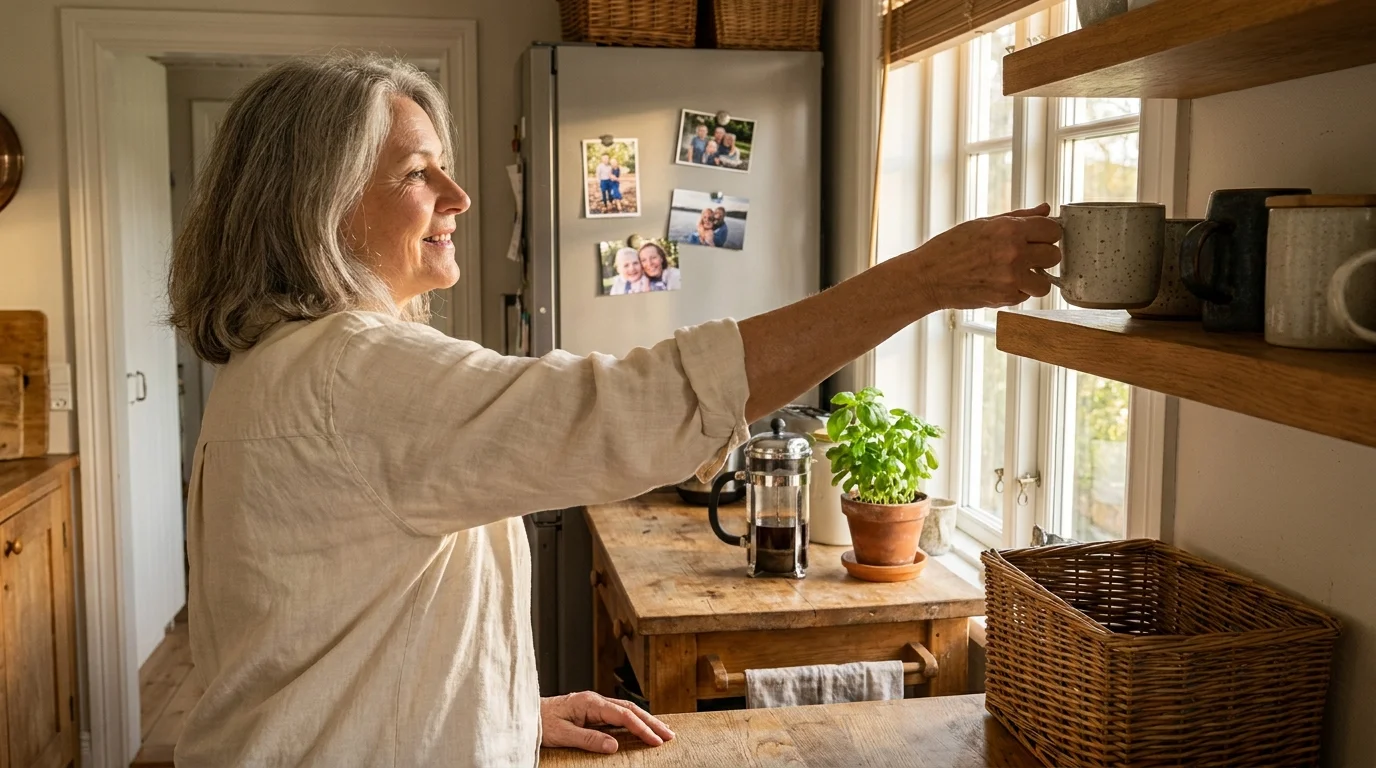
Take a few minutes to evaluate your daily routine. Which items do you reach for every single morning? Your coffee mug, a favorite cereal bowl, daily medications, and your go-to skillet belong firmly in this easily accessible area. When you stretch for a high shelf, your center of gravity shifts forward, instantly increasing the risk of losing your footing. By keeping your absolute necessities within arm’s reach, you eliminate the physical mechanics that lead to most kitchen accidents. According to the Centers for Disease Control and Prevention (CDC), modifying your home environment to minimize reaching and climbing is a critical step in preserving your long-term independence.
Map your kitchen into functional zones before you move a single item. Create a dedicated coffee and tea station right above the golden zone drawer that holds your mugs. Position your cutting boards and daily spices in the zone directly next to the stove. By storing items directly at their point of use, you eliminate unnecessary walking back and forth across slick kitchen floors with your hands full.
02 Retrofit Base Cabinets with Full-Extension Pull-Out Shelves
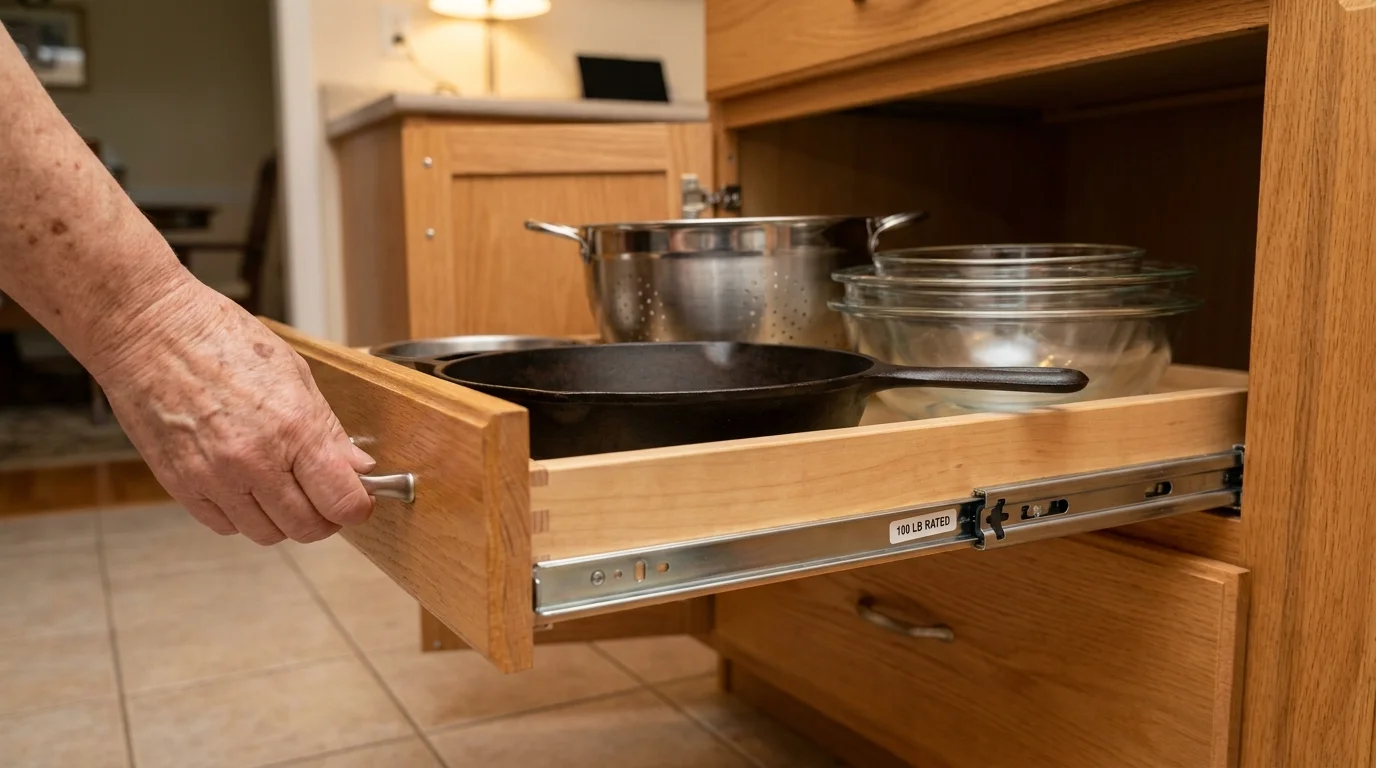
Standard lower cabinets are notorious for hiding items in their dark, unreachable back corners. Retrieving a stray mixing bowl from a 24-inch deep cabinet forces you to kneel on a hard floor, contort your spine, and dig blindly in the shadows. Instead of living with this frustrating setup, upgrade your lower storage with sliding pull-out trays.
Full-extension drawer slides allow the entire contents of a shelf to glide smoothly out into the open. You can view your heavy pots, colanders, and pantry staples from a comfortable standing position. Best of all, you do not need to tear out your existing cabinetry to enjoy this benefit. Hardware stores sell pre-assembled pull-out organizers that mount directly onto your current cabinet shelves with just a few screws. Look for units equipped with soft-close tracks; these mechanisms catch the drawer as it shuts and pull it closed gently, ensuring you never have to force or slam the hardware.
If you feel intimidated by DIY installation, hire a local handyperson to mount these tracks. The labor cost is remarkably low compared to a full cabinet renovation, and the daily physical relief pays for itself immediately. When shopping for hardware, always check the weight capacity of the slides. Heavy-duty slides rated for 100 pounds easily support a full collection of glass mixing bowls or a row of heavy canned goods without buckling.
| Storage Feature | Standard Setup (High Strain) | Accessible Alternative (Low Strain) |
|---|---|---|
| Hardware | Small round knobs requiring a tight pinch grip. | Wide D-shaped pulls operated with a closed fist. |
| Base Cabinets | Deep fixed shelves that demand kneeling and digging. | Full-extension pull-out trays that bring items to you. |
| Corner Spaces | Blind L-corners where items get pushed out of reach. | High-walled Lazy Susans that rotate items forward. |
| Lighting | Overhead ceiling lights that cast deep shadows. | Motion-sensor LED strips lighting dark interiors. |
03 Swap Tiny Knobs for D-Shaped Cabinet Pulls
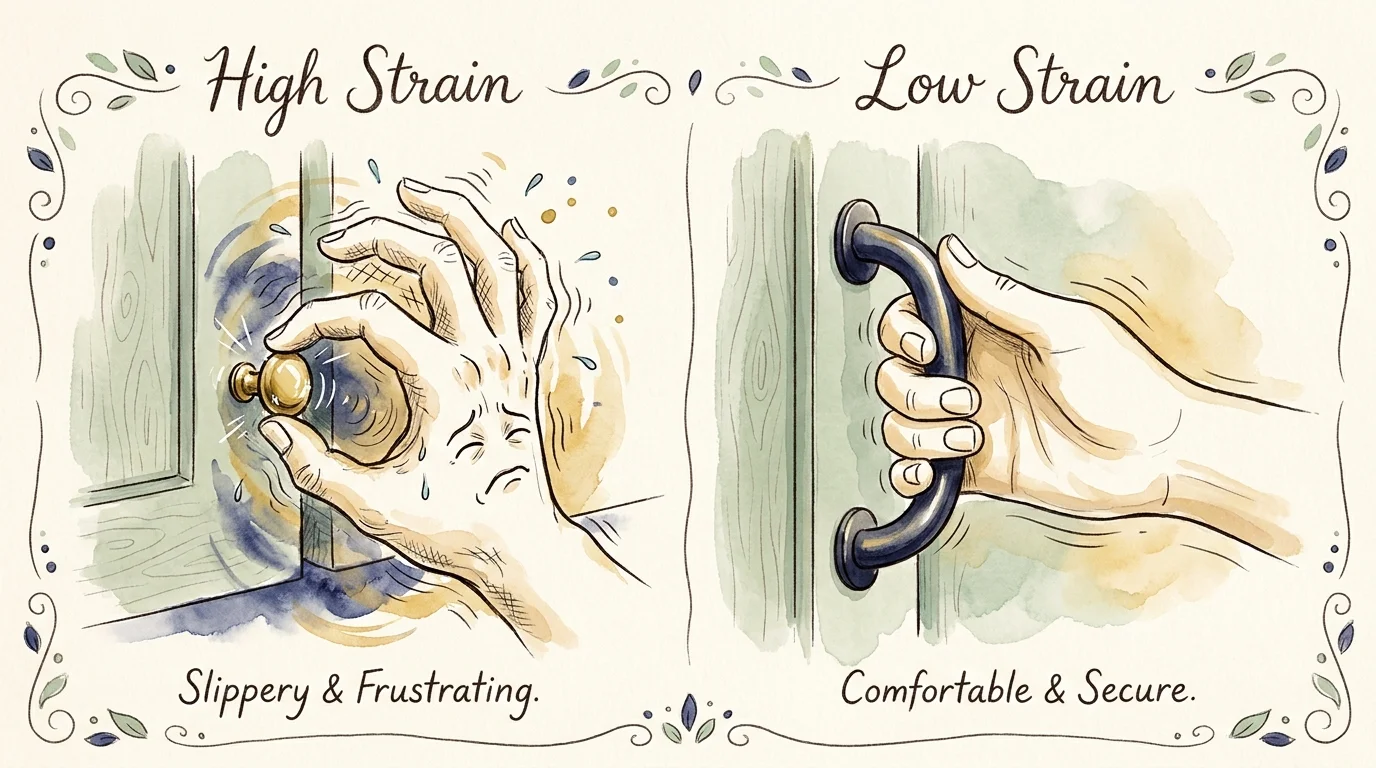
Hardware selection matters tremendously as you age. Traditional round cabinet knobs require a tight pinch grip to operate. This highly focused motion forces the small, delicate joints in your fingers to absorb all the pulling resistance, which can cause sharp pain if you deal with joint inflammation or reduced hand strength. The Arthritis Foundation strongly recommends bypassing pinch-grip hardware in favor of ergonomic designs that allow you to use larger, stronger muscle groups.
Replace small knobs with wide, D-shaped pulls that measure at least four inches across. A properly sized D-pull lets you slide your entire hand—or even just your forearm—behind the handle to open the drawer smoothly. Test your current hardware with the closed-fist rule: if you cannot open your cabinet door using a closed fist, the handle is not accessible enough. Swapping hardware is a low-cost, high-impact weekend project requiring only a screwdriver.
When you purchase new pulls, select a finish that sharply contrasts with your cabinet color. If you have white or light oak cabinets, install matte black or oil-rubbed bronze pulls. If your cabinets are dark espresso, opt for brushed nickel or satin brass. This strong visual contrast helps your eyes locate the handle instantly, reducing the mental fatigue of navigating a poorly defined workspace.
04 Relocate Heavy Cookware to Prevent Lifting Injuries
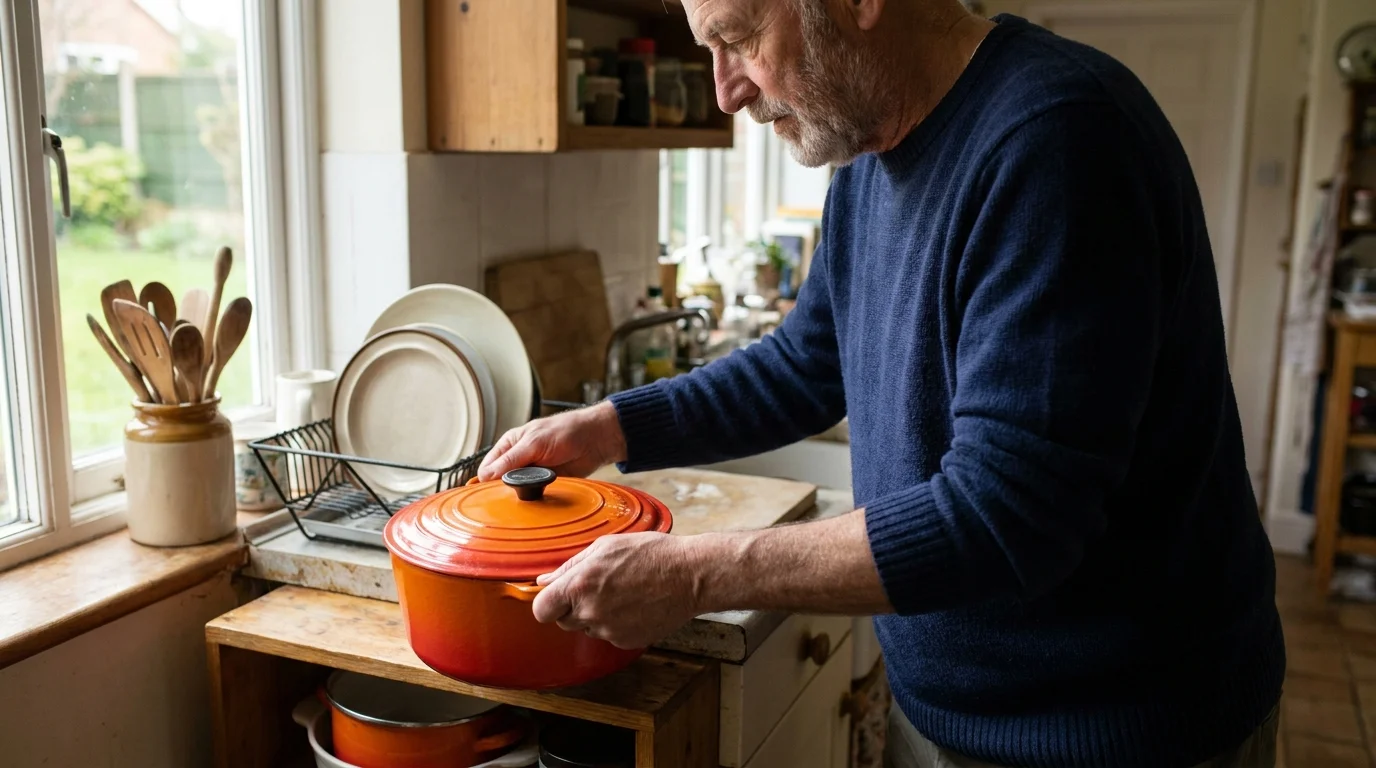
Lifting a heavy Dutch oven or a cast-iron skillet from a low shelf places immense torque on your lower lumbar spine. As a general rule, you should never store heavy cookware or bulky appliances near the floor or above your shoulders. When you lift a heavy object away from your body, the physical strain on your back multiplies exponentially.
Group your heaviest pots, pans, and countertop appliances on your sturdiest waist-level shelves. If you use a heavy stand mixer frequently, consider installing an appliance lift inside a base cabinet. These spring-loaded platforms bring heavy appliances smoothly up to counter height and lock them into place, completely eliminating the need for deadlifting. For heavy items you use daily, such as a coffee maker or a toaster, permanently clear a dedicated spot on your countertop. Leaving them out saves energy and protects your back from unnecessary strain.
For appliances that must stay on the counter, consider placing them on sliding appliance trays. These low-profile rolling mats sit underneath your heavy coffee maker or blender. When you need to use the machine, simply pull the tray forward with one finger; when you finish, push it back against the wall. You gain all the functional counter space without ever lifting the appliance off the granite.
05 Deploy Lazy Susans in Blind Corners and Deep Pantries
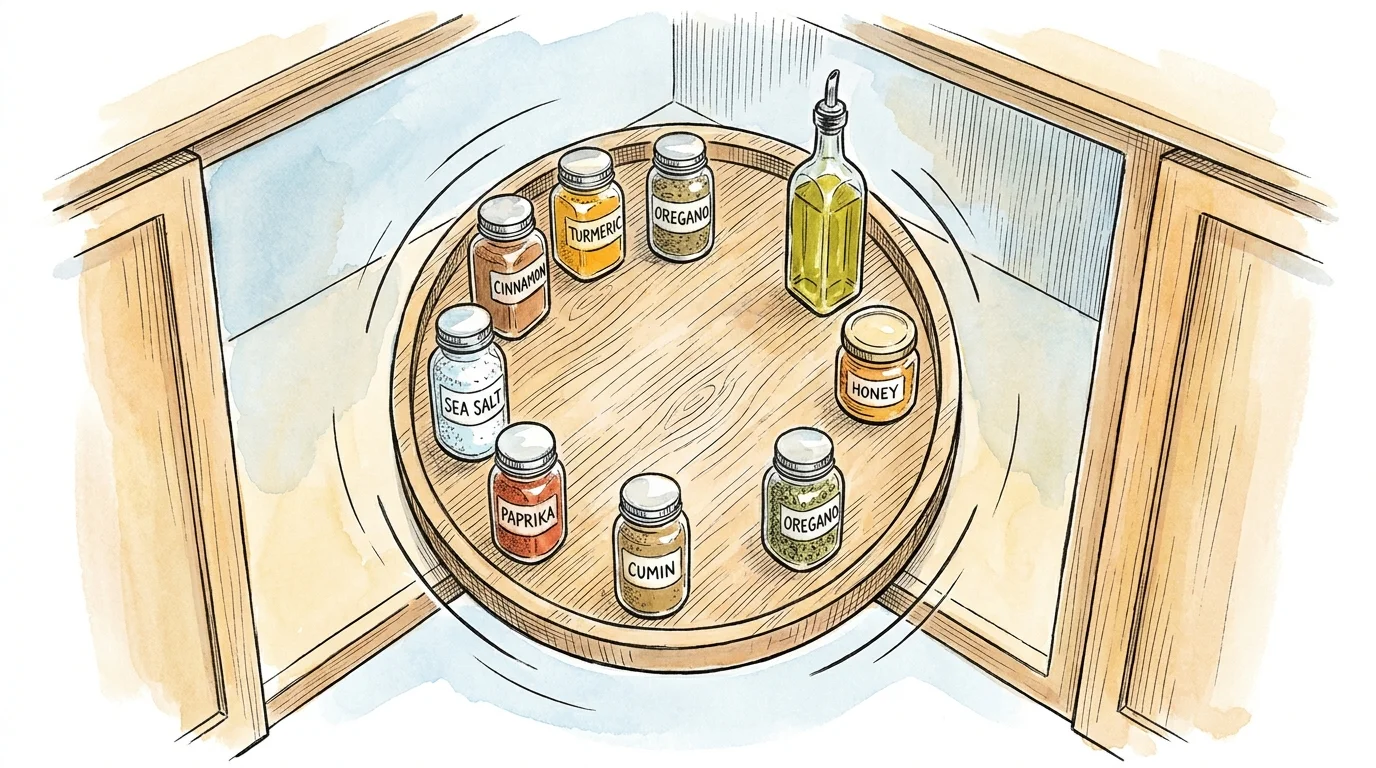
Blind corner cabinets—those awkward, cavernous spaces where two counters meet—are where plastic storage lids and expired spices go to disappear. Reaching into these dark spaces requires unnatural twisting and overextension. Turntables, commonly known as Lazy Susans, offer a simple mechanical solution by rotating the items directly out to you.
Place a high-walled acrylic turntable in your deepest cabinets or pantry shelves. You can use one dedicated turntable for cooking oils and vinegars, and another for daily vitamins and medications. A quick spin reveals exactly what you need without requiring you to blindly knock over bottles in the front row. The raised edges on quality turntables prevent glass jars from tipping over and spilling during rotation, keeping your shelves tidy and safe.
Lazy Susans also work wonders in deep pantry setups where cans and boxes inevitably pile up in the dark. Instead of buying duplicates of chicken broth because you cannot see the cartons hiding in the back, a quick spin of the turntable brings your entire inventory into the light. Opt for a tiered Lazy Susan if you have tall shelf clearances, which maximizes vertical space and keeps smaller spice jars visible above taller bottles.
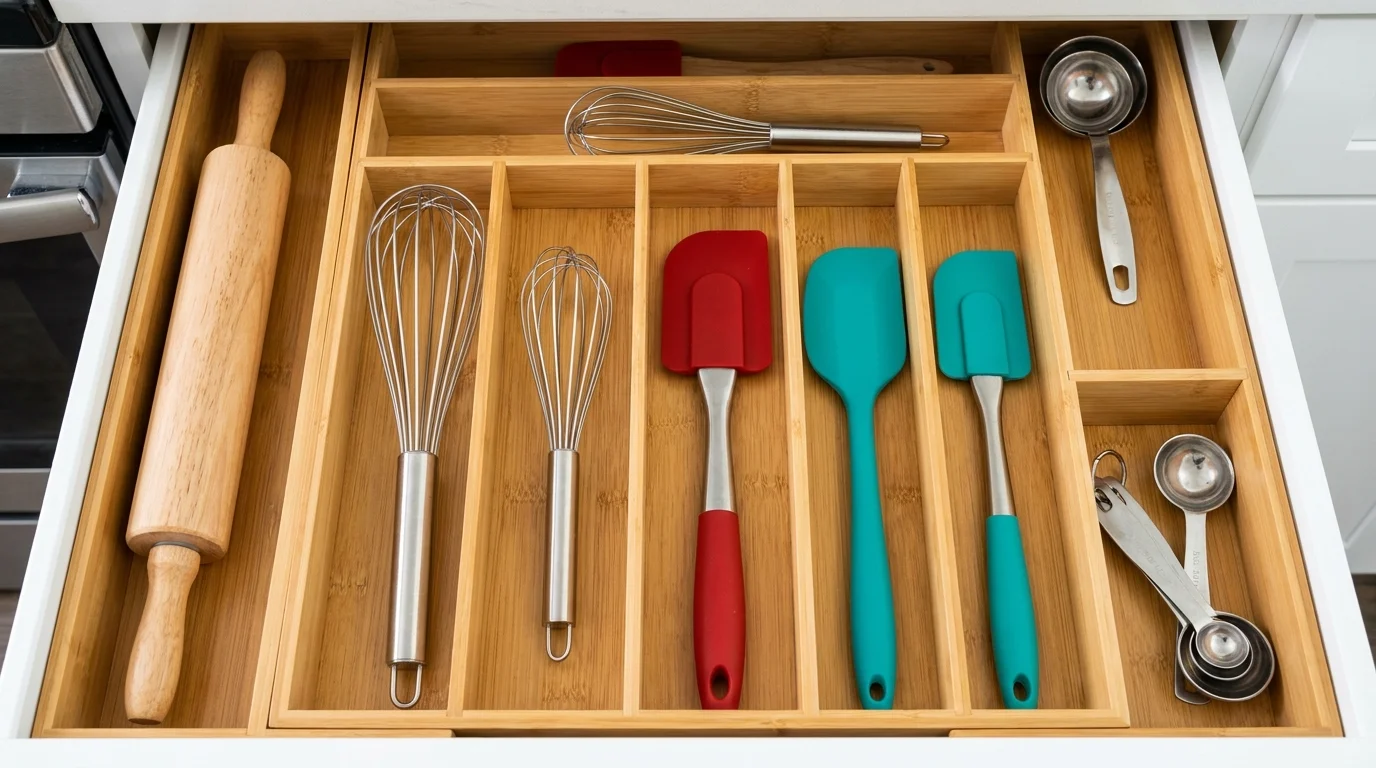
06 Compartmentalize with Custom Drawer Dividers
A cluttered junk drawer is more than just an eyesore; it is a safety hazard. Rummaging through a chaotic drawer to find a vegetable peeler exposes your hands to sharp edges and causes mental frustration. By creating a designated, locked-in spot for every tool, you turn meal prep into a seamless process and prevent unnecessary hand injuries.
Invest in adjustable bamboo dividers or clear acrylic inserts to section off your wide drawers. Keep sharp knives safely sheathed in an in-drawer slotted knife block rather than floating loose. Group your items by task: create one section for baking spatulas, one for eating utensils, and one for measuring cups. When every tool rests securely in its own compartment, you can reach into the drawer with confidence, knowing exactly what you will pull out.
To upgrade your drawers even further, line the bottoms with textured, non-slip shelf liner before adding your dividers. This gripping material prevents your heavy silverware trays and bamboo organizers from sliding backward when you shut the drawer quickly. A stable, compartmentalized drawer protects your delicate tools from chipping and keeps your kitchen workflow whisper-quiet and highly efficient.
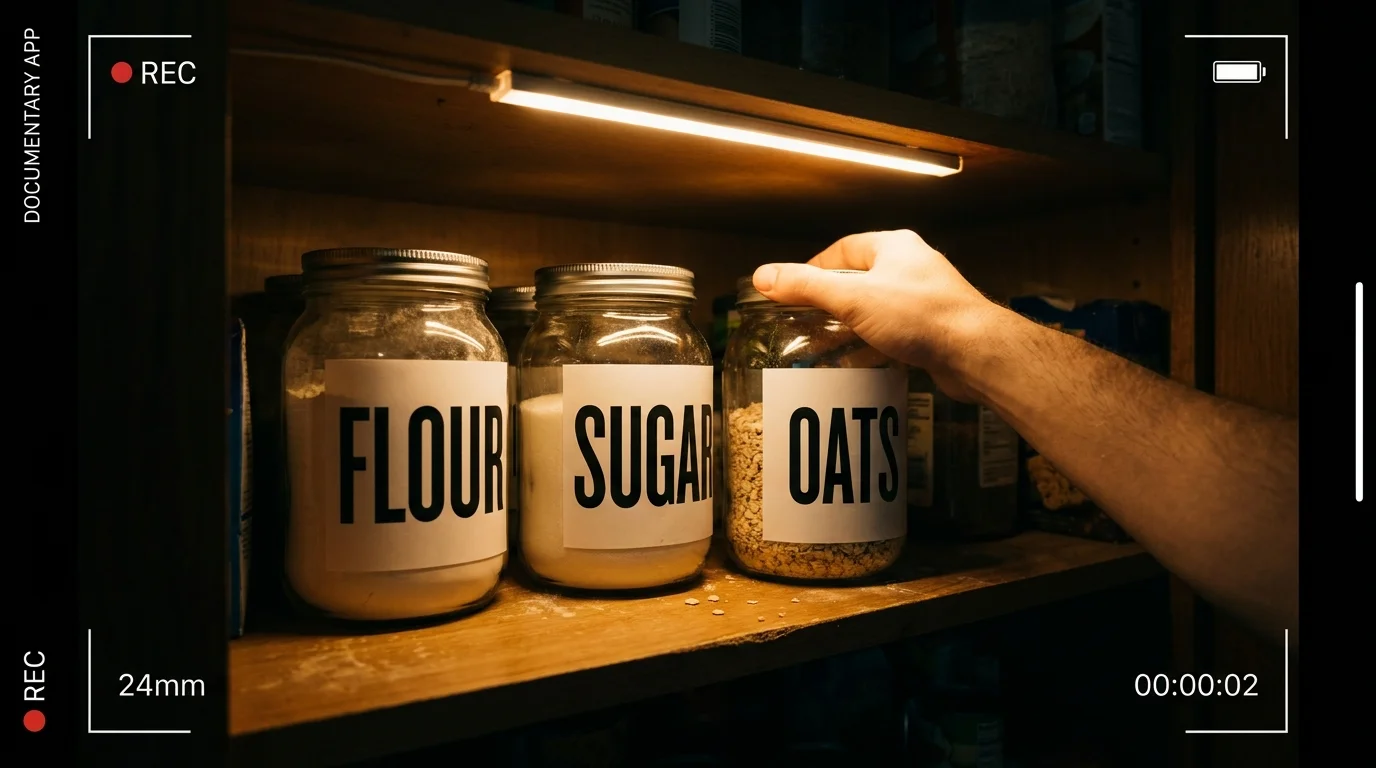
07 Add High-Visibility Labels and Motion-Sensor Lighting
As we age, our eyes naturally require more light to see clearly, and reading small print in shadowy corners becomes increasingly difficult. Poor lighting in the kitchen hides tripping hazards and makes it incredibly easy to grab the wrong ingredient or medication. AARP frequently emphasizes the importance of bright, glare-free lighting to maintain a safe, functional home environment and prevent avoidable accidents.
Install battery-operated or plug-in LED motion-sensor light strips underneath your upper cabinets and inside your deep pantry shelves. These bright lights automatically illuminate your workspace the moment you approach, eliminating the need to fumble for switches with wet hands. Pair this enhanced lighting with a bold labeling system. Use a thick black Sharpie marker and high-contrast white tape to write expiration dates on canned goods and leftovers. Large, clear labels stop you from straining your eyes and drastically reduce the risk of consuming spoiled food.
If installing light strips feels tedious, explore motion-sensing rechargeable puck lights. These small, powerful discs attach magnetically to your cabinets and pop off easily when they need a quick USB charge, entirely eliminating the need for complex wiring. Pair these visual aids with clear tactile boundaries. Place a small bump-dot sticker—the kind used for visually impaired accessibility—on your microwave’s start button or your most-used oven dial. These subtle tactile markers let you operate your kitchen appliances by feel, completely bypassing the struggle to read faded digital displays.
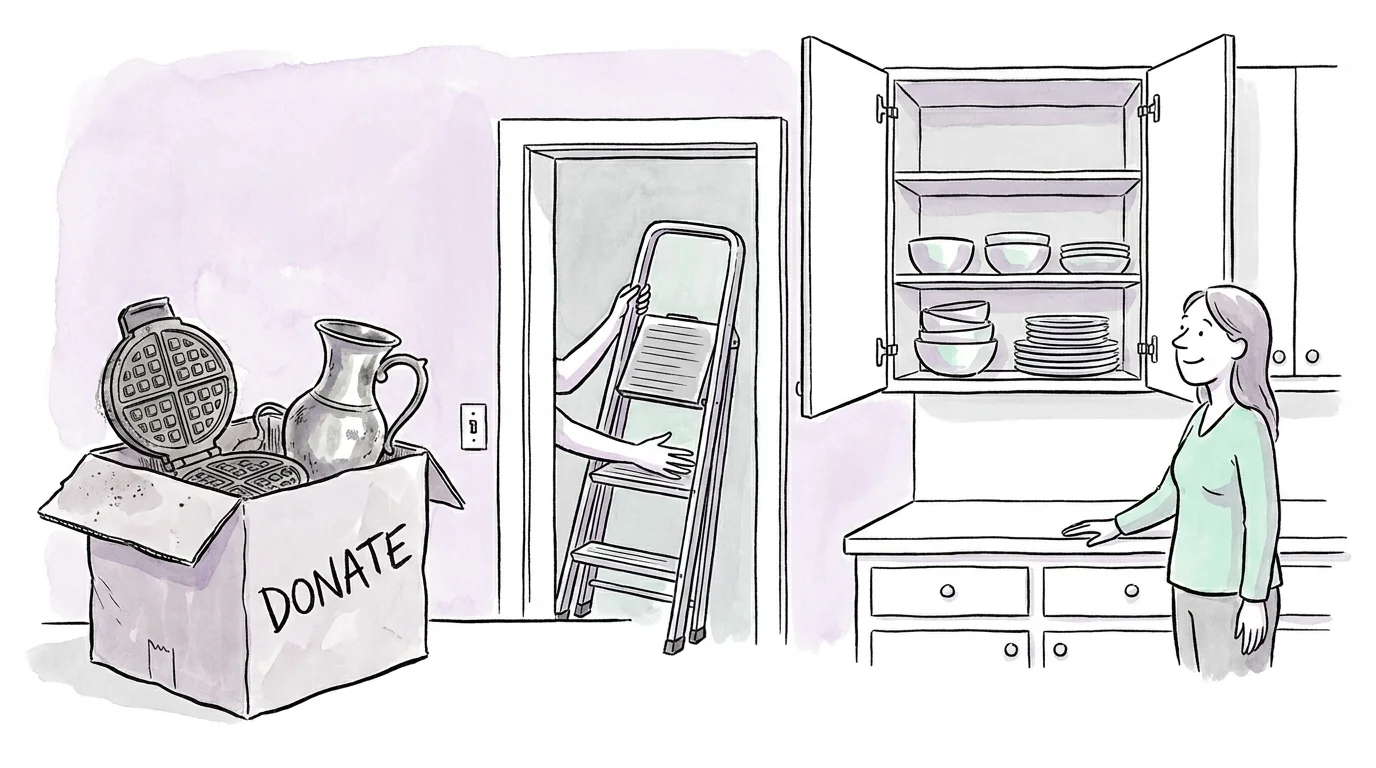
08 Evict Seldom-Used Items and Ditch the Step Stool
Climbing on step stools—or worse, unstable dining chairs—is a massive fall risk that you can easily avoid with a little strategic downsizing. The most effective way to handle a step stool is to eliminate your need for it completely. The National Institute on Aging (NIA) advises completely removing tripping hazards and minimizing the use of climbing aids to maintain long-term mobility. Take a hard look at the items currently sitting on the top shelves of your upper cabinets. If you only use that holiday roasting pan or crystal serving bowl once a year, ask a family member to relocate it to a lower, accessible storage closet or the bottom of a pantry.
Reserve your highest cabinets strictly for lightweight, non-breakable items like paper towels, sponges, and plastic storage bins. Better yet, grant yourself the permission to leave those top shelves completely empty. An empty high shelf is not wasted space; it is a permanent victory over the temptation to climb and overreach.
Communicate this new storage philosophy clearly to your family and caregivers. When children or grandchildren visit and help put away dishes, they often default to shoving items into the highest, out-of-the-way spaces. Place a polite but firm rule that all daily items must return to the waist-level golden zone. Maintaining an organized, senior-friendly kitchen requires consistency, and ensuring everyone respects the new layout prevents your accessible system from slowly reverting back to a hazardous mess.
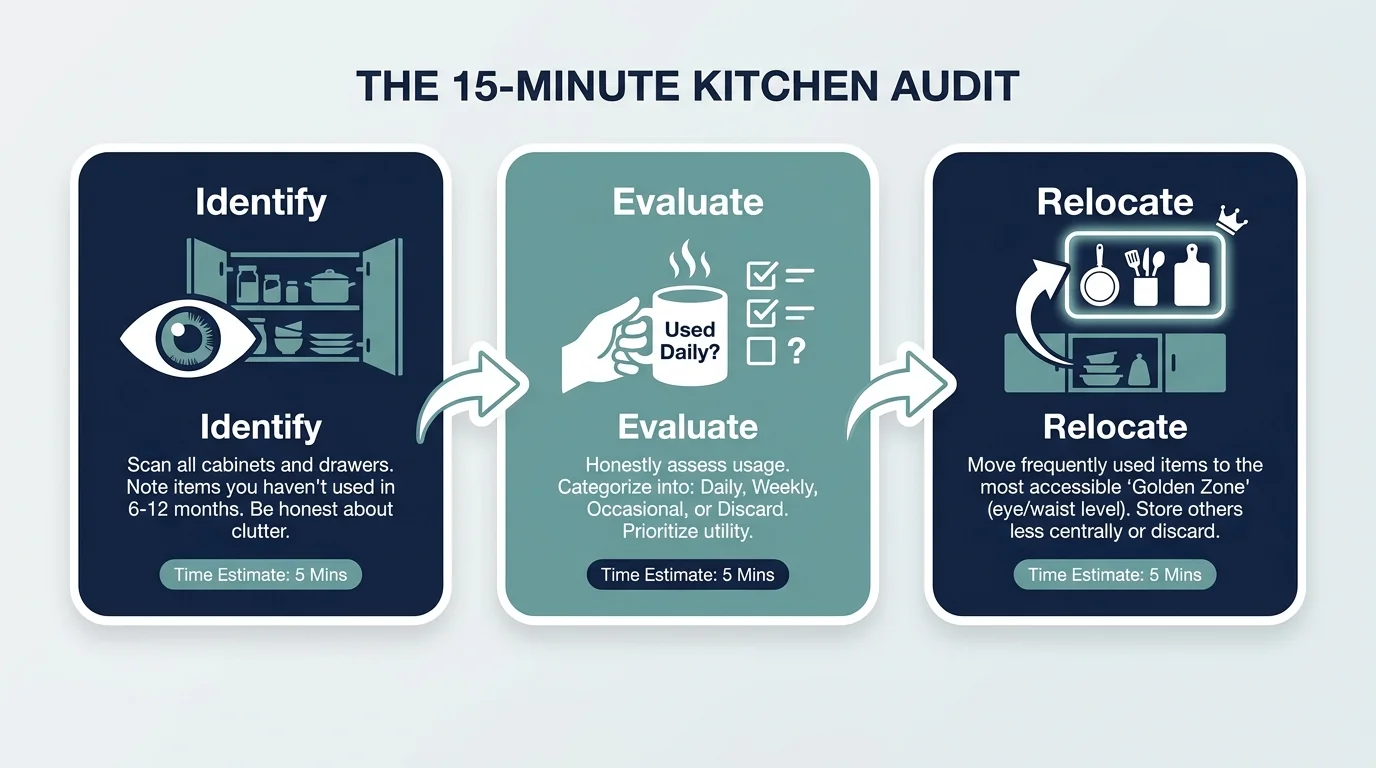
Start With a 15-Minute Kitchen Audit
You do not need to overhaul your entire kitchen in a single weekend. The best way to build momentum is to tackle one highly trafficked area today. Follow these quick steps to immediately improve your space:
- Grab a comfortable, sturdy chair and sit in front of your most cluttered base cabinet or drawer.
- Pull out every single item and separate your daily essentials from the items you rarely touch.
- Place the daily essentials securely inside your waist-level golden zone, prioritizing the space closest to your stove or sink.
- Box up any duplicates, broken gadgets, or heavy specialty pans, and ask a friend or family member to relocate them outside your active cooking area.
Take charge of your environment by ordering a set of D-shaped cabinet pulls online or picking up a simple Lazy Susan at your local home goods store this afternoon. Every small, intentional change you make builds a safer, easier, and more enjoyable space for you to cook and live.