Physical clutter fills your living spaces and overwhelms your mind. When you look at a pile of unsorted mail on the dining table or a cramped kitchen counter, your brain processes those piles as unfinished tasks. This visual chaos leads directly to mental fatigue, irritability, and heightened anxiety. In fact, medical research shows that individuals who perceive their homes as cluttered maintain higher levels of cortisol—the hormone directly associated with chronic stress. You cannot truly relax in an environment that constantly demands your attention and energy.
Furthermore, an unorganized space presents a severe physical hazard, particularly as you simplify your daily routines later in life. The Centers for Disease Control and Prevention (CDC) warns that falls are a leading cause of injury for older adults; household hazards like scattered papers, loose rugs, and tangled extension cords remain prime culprits. A home packed with excess belongings forces you to navigate tight walkways and reach for heavy objects in precarious positions. It turns your sanctuary into an obstacle course.
Transforming your house into a calm, highly functional space requires strategy rather than sheer willpower. You do not need to throw away everything you own or live in a sterile environment. You simply need smart storage solutions that work with your natural daily movements. By implementing accessible, logical organization methods, you eliminate daily friction. Your home becomes easier to clean, safer to navigate, and significantly more peaceful to inhabit.
01 Install Slide-Out Cabinet Shelves for Effortless Access
Kitchen and bathroom base cabinets often turn into dark caverns where pots, pans, and heavy cleaning supplies disappear. When you need a specific item, you find yourself kneeling on the hard floor, blindly reaching past stacks of heavy cookware. This repetitive bending, twisting, and straining puts unnecessary wear on your back and knees, increasing your risk of pulling a muscle or losing your balance.
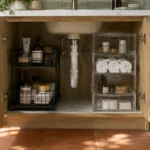
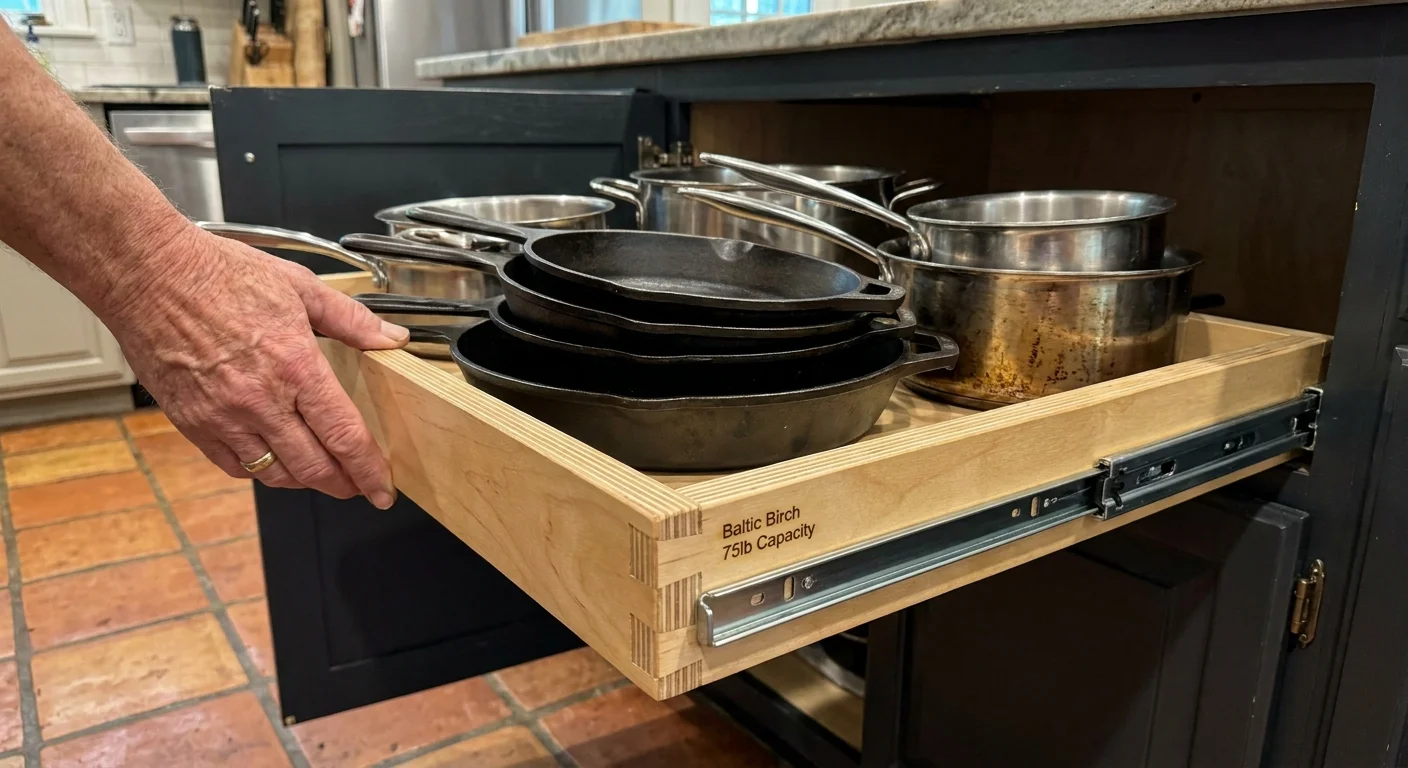
Slide-out shelves—also known as pull-out cabinet organizers—eliminate this physical strain entirely. These custom-fitted drawers mount directly into your existing cabinetry and glide forward smoothly on metal tracks. When you open the cabinet door and pull the shelf, the entire contents of the cabinet come out into the light. You can immediately see and grasp the exact baking dish or detergent bottle you need from a comfortable, upright position.
Investing in these organizers dramatically improves daily function. According to installation cost data from Bob Vila, the average price to install pull-out shelves ranges from $140 to $350 per cabinet, depending on the materials and labor involved. While you can find inexpensive wire racks, you secure the best longevity by choosing shelves made from Baltic birch plywood with sturdy dovetail joints. Look for hardware featuring full-extension steel ball-bearing glides rated for at least 75 to 100 pounds of dynamic weight. This high weight rating ensures the shelf remains rigid and stable even when you load it with heavy cast-iron skillets or bulk glass jars.
02 Store Daily Essentials Within the Safe Reach Zone
How you arrange your belongings matters just as much as the storage containers you buy. Storing heavy items on high shelves forces you to use step stools, which introduces a significant and unnecessary fall risk into your daily routine. Conversely, keeping everyday items near the floor requires uncomfortable bending and lifting.
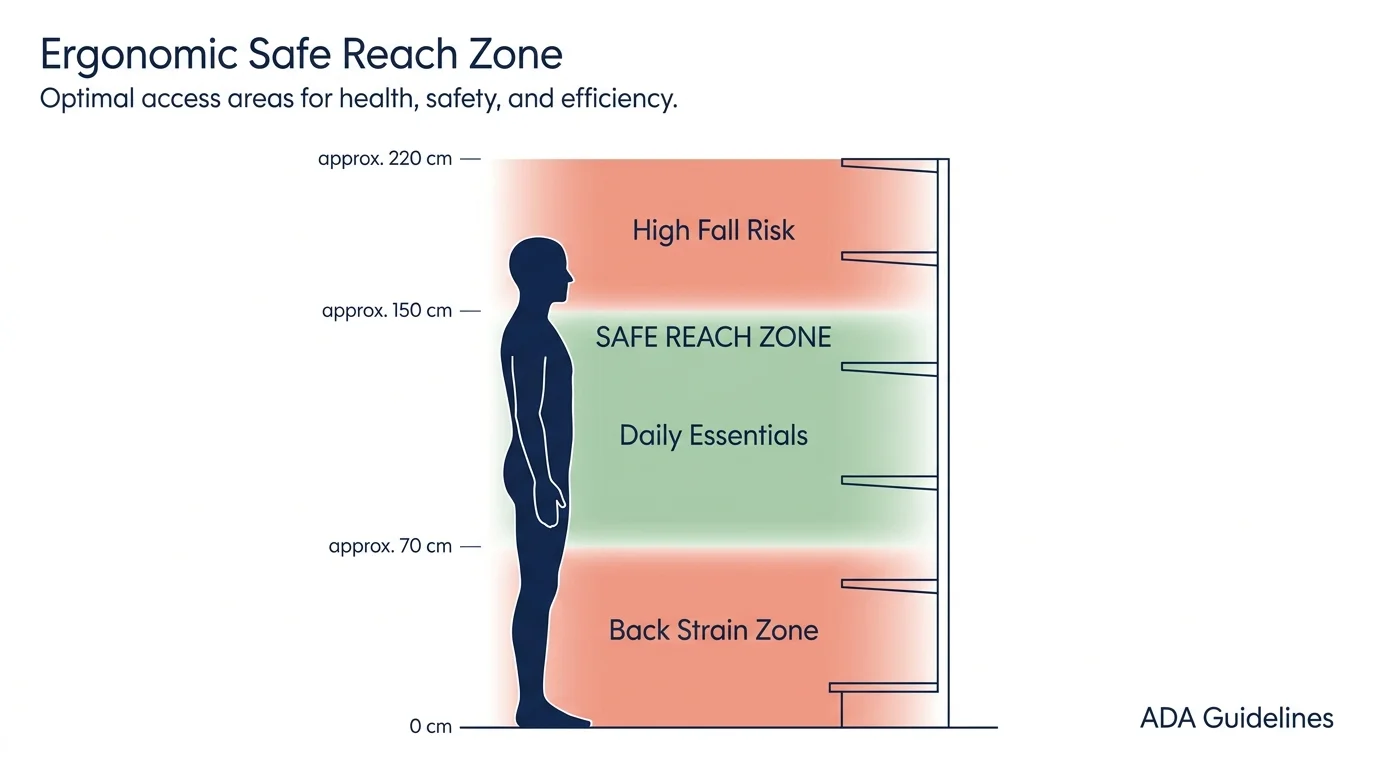
To optimize your home for both comfort and safety, adopt the concept of the safe reach zone. The Americans with Disabilities Act (ADA) accessibility guidelines recommend keeping functional storage positioned between 15 and 48 inches from the floor. This specific vertical range allows you to retrieve items without overextending your arms, crouching low, or risking a sudden loss of balance.
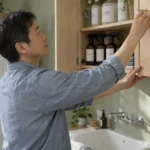
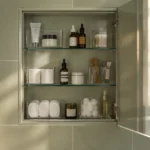
Apply this ergonomic principle to every single room in your house. In the kitchen, move your heavy stand mixer, your frequently used dinner plates, and your favorite coffee mugs squarely into this prime territory. Reserve the highest cabinets solely for lightweight, rarely used items like holiday platters or extra paper towels. In the bathroom, keep your daily medications, toothpaste, and face wash on a counter or in a medicine cabinet that falls within this easy-to-reach zone. By reorganizing your belongings based on your physical comfort, you create smart storage that naturally prevents accidents and reduces physical fatigue.
Use the table below to assign your household items to the correct vertical zones for maximum safety:
| Storage Zone | Height from Floor | Ideal Items to Store Here | Items to Avoid Storing Here |
|---|---|---|---|
| Low Zone | Below 15 inches | Infrequently used heavy pots, bulk paper goods, seasonal items, extra linens. | Daily cookware, heavy appliances you use often, emergency medical supplies. |
| Safe Reach Zone | 15 to 48 inches | Daily plates, glasses, stand mixers, medications, coffee supplies, daily mail. | Items you only use once a year, lightweight bulky items. |
| High Zone | Above 48 inches | Lightweight serving platters, extra paper towels, holiday decor, spare pillows. | Heavy glass bowls, cast iron pans, stepping stools required for daily access. |
03 Establish a Dedicated Entryway Drop Zone
Clutter rarely starts as a massive, overwhelming pile; it usually begins as a single piece of mail dropped on the dining table. Over the course of a week, that single envelope attracts catalogs, car keys, loose change, and store receipts until you face a mountain of visual stress. The most effective way to organize a cluttered home is to stop the spread of daily items the exact moment you walk through the front door.
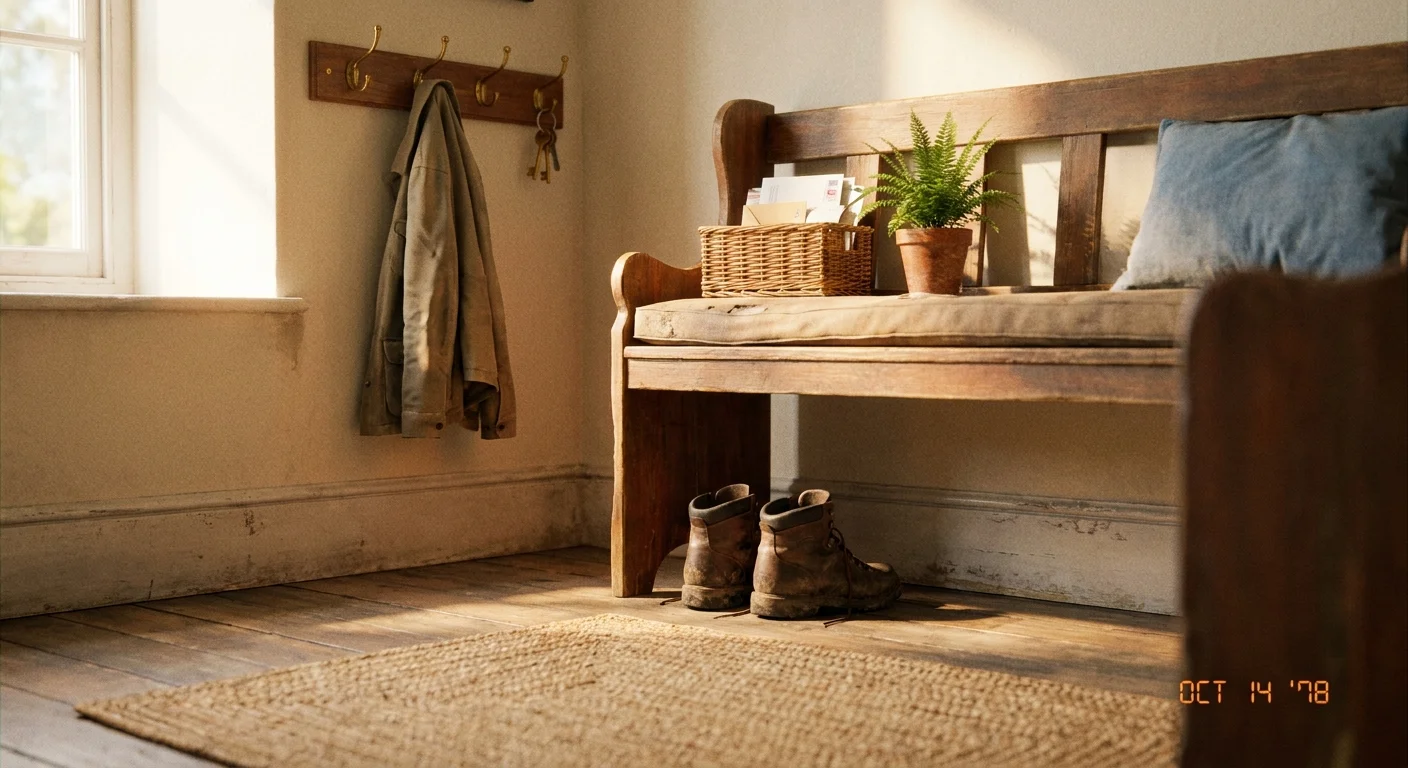
Create a dedicated drop zone in your entryway. You do not need a large, custom-built mudroom to make this work; a simple narrow console table, a small floating shelf, or even a deep windowsill will suffice. The goal is to establish strict physical boundaries for incoming items.
Equip this station with a few highly specific components. Place a decorative bowl or a small tray on the table exclusively for keys and wallets. Add a divided vertical sorter for mail, allowing you to immediately separate important bills from reading material. Finally, place a small, attractive wastebasket directly underneath the table. When you bring the mail inside, sort it immediately while standing at the drop zone. Throw the junk mail directly into the wastebasket before it ever touches your kitchen counter. If your front door opens directly into your living room, add a small bench with cubbies underneath to corral wandering shoes. This eliminates another common tripping hazard from your walking paths and stops paper clutter from invading your living spaces.

04 Use Turntables in Deep Spaces to Prevent Hidden Clutter
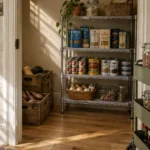
Deep shelves in pantries, refrigerators, and bathroom closets create a deeply frustrating problem. Items pushed to the back quickly become forgotten, leading to expired food, duplicate purchases, and wasted money. Furthermore, reaching for a jar of spices at the back of a deep shelf often means knocking over three other bottles in the process, creating unnecessary messes.
Turntables—frequently called Lazy Susans—offer an incredibly simple and highly effective remedy. By placing a turntable on a deep shelf, you instantly eliminate the “back row.” A quick spin brings the exact item you need directly to the front. You no longer have to shuffle items around or stretch awkwardly to find your favorite condiment.
Use a large, clear acrylic turntable in the refrigerator to hold hot sauces, salad dressings, and small condiment jars. Place a multi-tiered turntable in the pantry to organize small spice bottles, baking extracts, and canned goods. In the bathroom, use a small turntable under the sink to corral bottles of lotion, hair products, and rubbing alcohol. When shopping for these organizers, look for turntables that feature a non-slip silicone base and a raised outer lip. These specific design features ensure the tray stays firmly in place and prevent items from flying off the edge when you spin it.
05 Secure Cords and Cables Along the Perimeter
A calm home must first be a safe home. Extension cords, phone chargers, and lamp wires draped across walkways or pooling under living room chairs represent a severe safety hazard. The CDC explicitly lists walking over or around loose wires and cords as a primary risk factor for preventable household falls.
Cable management serves as an often-overlooked storage solution that immediately sharpens the visual appeal of a room while drastically improving your physical safety. Begin by surveying your living room, bedroom, and home office for loose, trailing cords. Unplug any electronic devices you rarely use and store those cables away in a labeled bin.
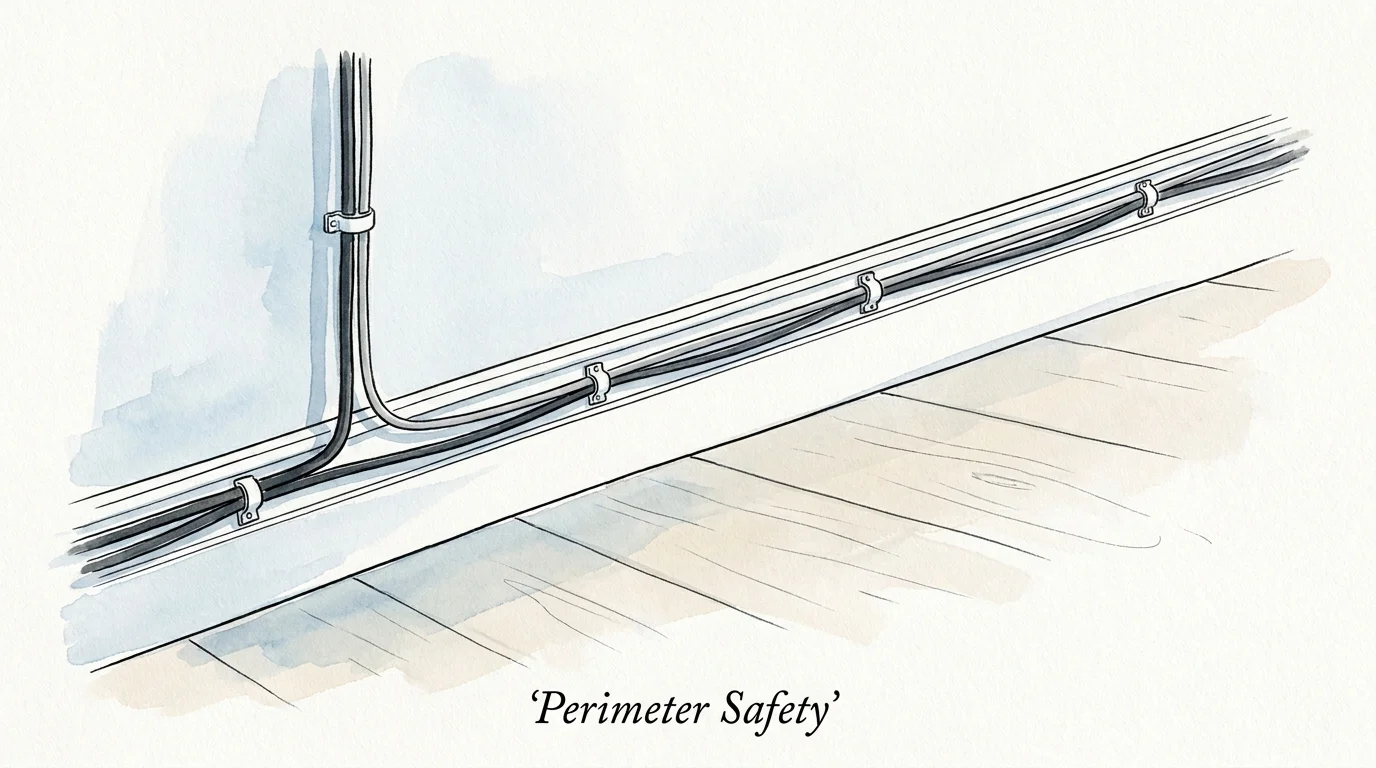
For the essential cords that must remain plugged in, route them securely along the baseboards. You can use inexpensive, clear adhesive cord clips to pin wires tightly against the wall, keeping them completely off the floor and out of your walking path. Alternatively, invest in paintable plastic cord covers that hide the wires entirely, blending seamlessly with your baseboard trim. If you need to charge multiple devices daily, set up a centralized charging station on a desk or counter. Keep the charging cables bound together with reusable velcro ties so they do not dangle onto the floor. Securing your cords protects you from tripping and eliminates the chaotic, messy look of tangled wires.
06 Maximize Clear Floor Space with Dual-Purpose Furniture
Large, bulky storage cabinets and oversized bookshelves easily make a room feel cramped, dark, and claustrophobic. When oversized furniture encroaches on your natural walking paths, you dramatically increase the likelihood of bumping into sharp corners or tripping over uneven rug edges. A calm home tips the scales back toward open, breathable space.
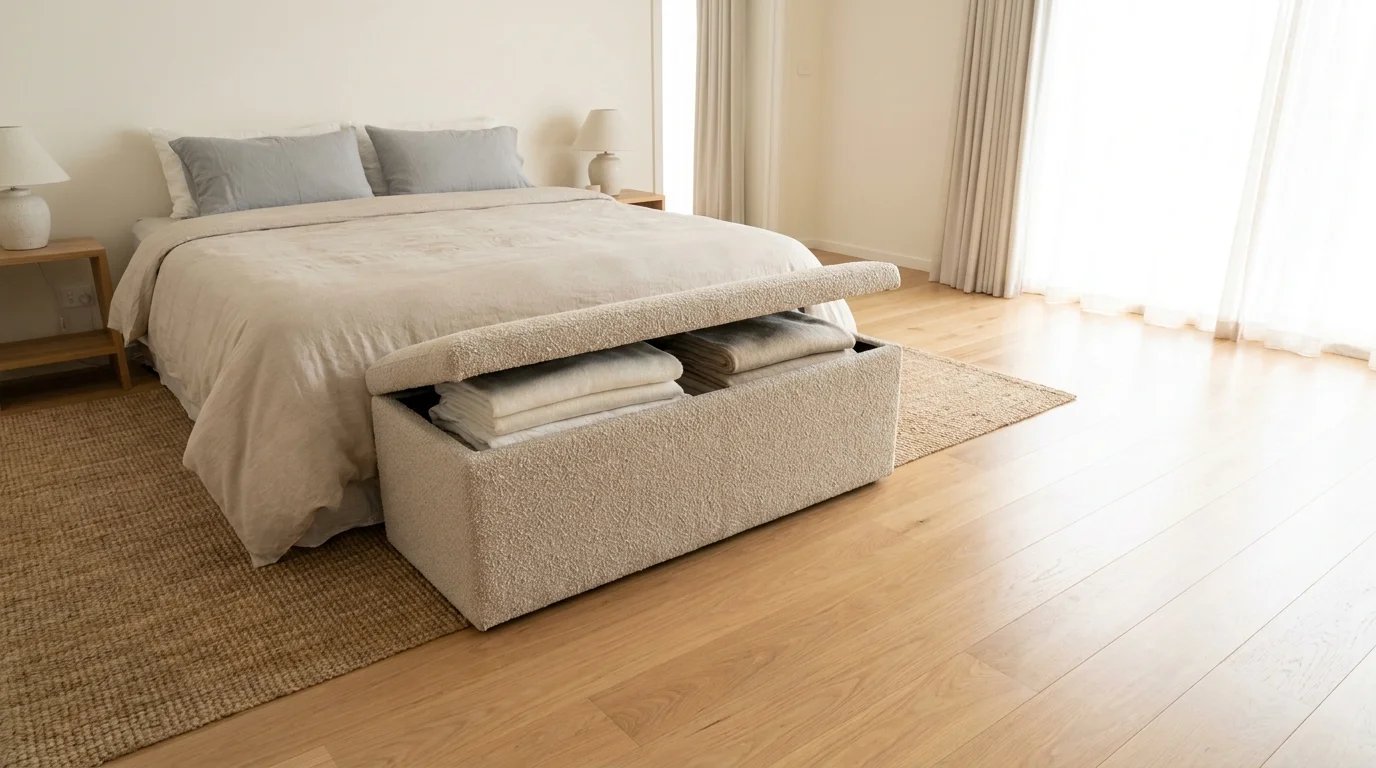
To maintain wide, clear walkways, replace single-use furniture with dual-purpose pieces that feature hidden storage compartments. In the living room, swap out a standard, open-legged coffee table for a lift-top version or a sturdy storage ottoman. An ottoman provides a comfortable place to rest your feet while concealing extra throw blankets, magazines, or board games inside its hollow center.
In the bedroom, reclaim the empty space under your bed by utilizing low-profile, rolling storage bins designed specifically for seasonal clothing or extra bed linens. If you plan to purchase a new bed frame, look for platform beds that feature built-in, smooth-gliding storage drawers. By hiding your belongings inside the furniture you already use for sitting or sleeping, you reduce visual noise and keep the floor plan completely open. This strategy proves especially beneficial if you use a cane or a walker, as it helps you maintain the ADA-recommended 36-inch minimum continuous aisle width for safe, easy navigation through your home.
07 Utilize Over-the-Door Racks to Free Up Floor Space
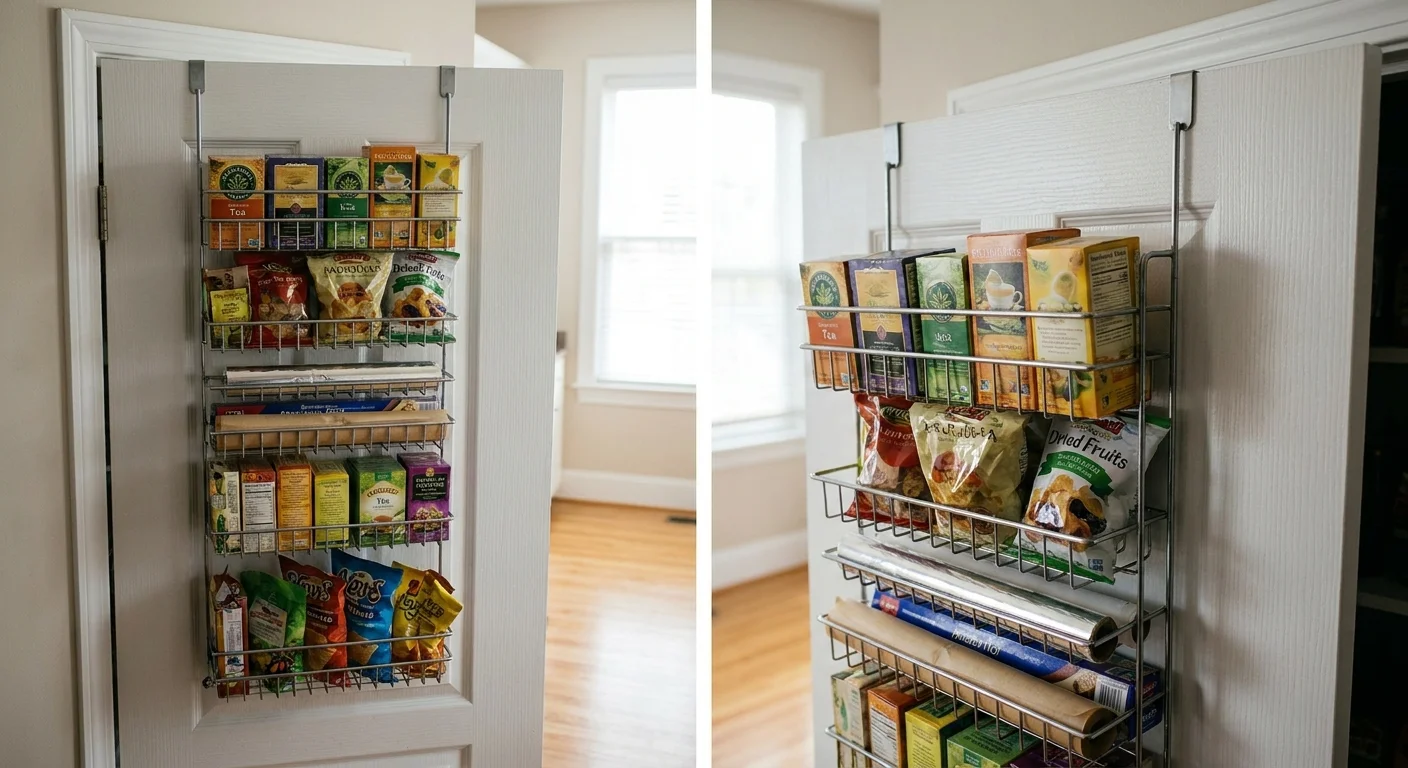
When cabinets overflow and floor space feels severely limited, the back of your interior doors offers a massive wealth of untapped storage potential. Hanging an over-the-door rack provides immediate, accessible storage without requiring power tools, permanent wall modifications, or heavy lifting.
This vertical storage strategy works brilliantly in almost every room of the house. In the kitchen pantry, a heavy-duty pocket organizer easily holds snacks, seasoning packets, and small jars, freeing up your valuable shelf space for heavier cans and countertop appliances. In the bathroom, a metal over-the-door rack keeps fresh towels, hair dryers, and extra toilet paper within arm’s reach but safely off the damp floor.
For a front hall closet, use this method to store winter gloves, scarves, and folding umbrellas right where you need them before heading outside. Opt for heavy-duty metal racks over flimsy plastic versions, as cheap plastic tends to warp and crack under the weight of household items. Ensure the rack bracket sits flush against the top of the door frame so the door can close completely without scraping the paint. This solution keeps small, easily lost items perfectly categorized and visible, preventing you from ever digging through a cluttered junk drawer again.
The 4-Step Process to Implement Safe Reach Zones
Reading about smart storage solutions represents only the first step; taking physical action actually transforms your environment. Use this step-by-step process to systematically reorganize your spaces for maximum safety and minimal daily stress. Focus on the concept of progress, not perfection.
- Identify Your High-Traffic Areas: Start with the exact spaces you use the most—typically the kitchen counters, the bathroom vanity, and the entryway. Choose just one specific area to begin your work to avoid feeling overwhelmed.
- Empty and Evaluate: Remove absolutely everything from the cabinets or shelves in that specific area. Group similar items together on a clear table. If you find expired food products, broken kitchen tools, or items you have not used in over a year, immediately discard or donate them.
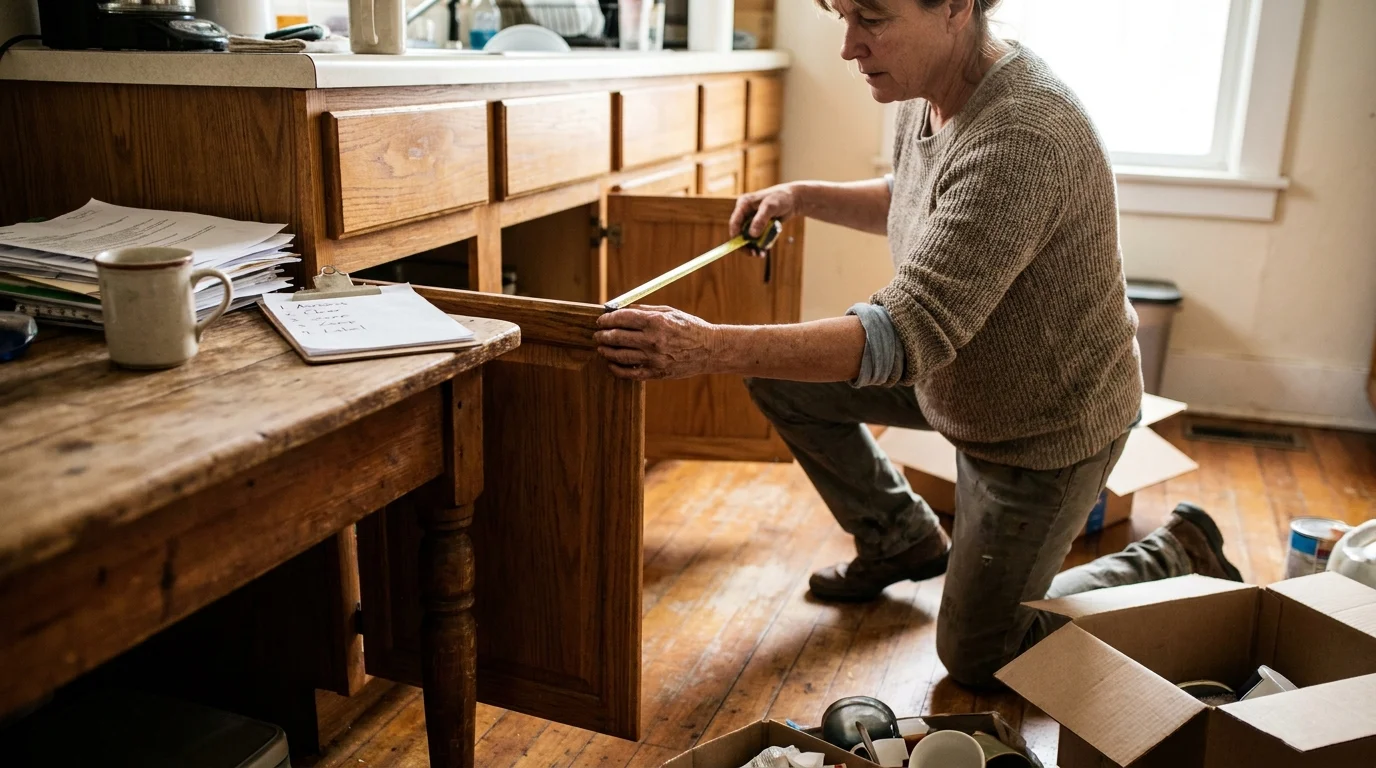
- Measure the Safe Reach Zone: Use a standard tape measure to find the space between 15 and 48 inches from the floor. Mentally mark this specific vertical area as your prime real estate.
- Assign Homes Based on Weight and Frequency: Place your heaviest and most frequently used items squarely in the center of the safe reach zone. Put lightweight, rarely used items on the higher shelves, and relegate bulky, infrequent items to the very bottom shelves.
To maintain your newly organized space, adopt the “One In, One Out” rule. For every new item you bring into the house—whether it is a new coffee mug, a book, or a piece of clothing—ensure an older item leaves the house. This prevents the slow, creeping accumulation of clutter that ruins your safe reach zones over time.
Take Control of Your Space Today
You do not have to tackle your entire house in a single, exhausting weekend. Living in a cluttered home drains your daily energy, but taking small, deliberate actions will steadily restore your peace of mind. Your physical health and your mental well-being depend on an environment that supports your movements rather than hinders them.
Pick just one specific cabinet, one tangled cord, or one crowded corner today. Spend exactly fifteen minutes evaluating what you actually use and remove the rest. By making one small change right now—such as ordering a clear turntable for your fridge or taping down a loose extension cord—you take a powerful, immediate step toward a cleaner, calmer, and much safer home.