Your living space reflects your current stage in life. Decades of working, raising families, and pursuing hobbies naturally lead to a home filled with accumulated possessions. However, as you enter your sixties and beyond, your home should serve as a comfortable sanctuary rather than a demanding storage unit. Maintaining a heavily cluttered house drains your energy, demands constant cleaning, and can even create hidden safety hazards.
As priorities shift away from acquiring objects and toward enjoying experiences, you have a perfect opportunity to simplify life. The movement toward minimal living seniors are embracing today focuses entirely on freedom—the freedom to move safely, find things quickly, and spend less time managing stuff. When you systematically organize house and home, you actively reduce daily friction. If you want to declutter home, seniors frequently discover that a paced, practical approach yields the best results. Below are ten highly actionable strategies to clear the excess and reclaim your space.
1. Clear the Pathways to Prevent Falls
Physical safety takes absolute precedence over aesthetics when you evaluate your living space. According to the Centers for Disease Control and Prevention (CDC), falls represent a leading cause of injury for older adults; fortunately, most of these accidents are entirely preventable with a few basic environmental adjustments. An overcrowded room forces you to navigate obstacle courses just to reach the kitchen or the bathroom, which significantly increases your risk of tripping.
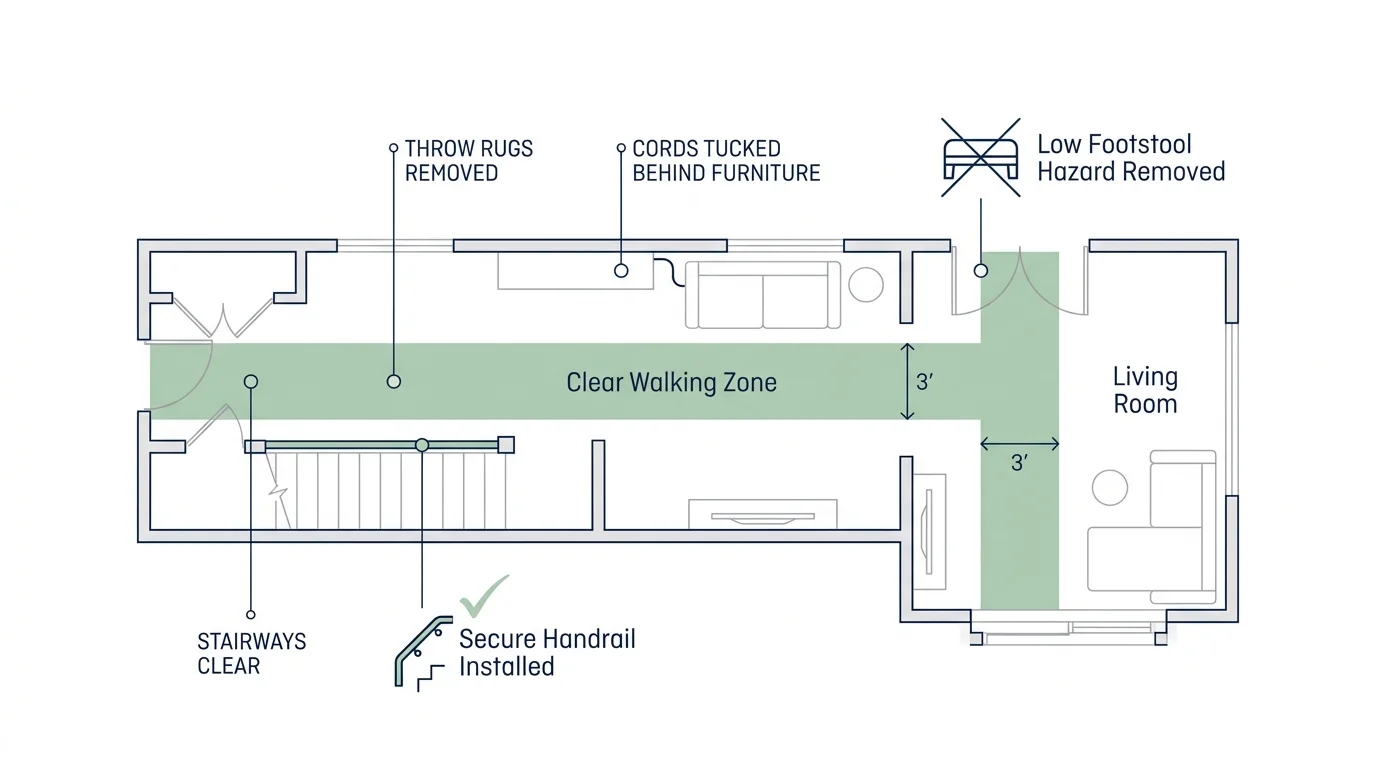
Start your decluttering journey by looking down. The floor must remain completely clear of temporary storage, decorative items, and loose hazards. Review the CDC’s home fall prevention guidelines and conduct a sweep of your daily walking paths. Focus on removing anything that requires you to step over it or alter your natural stride.
Your Pathway Safety Checklist:
- Throw rugs: Remove small decorative rugs entirely, or secure them firmly to the floor using heavy-duty, double-sided carpet tape.
- Electrical cords: Run all lamp, telephone, and extension cords behind heavy furniture—never across walkways.
- Stairways: Clear all books, shoes, packages, and decorative items from steps immediately; ensure handrails are completely secure on both sides.
- Low furniture: Relocate low footstools, magazine racks, or glass coffee tables that blend into the floor and create unexpected tripping risks.
- Floor storage: Move stacks of newspapers, mail, or storage boxes off the floor and onto dedicated shelves.
2. Relocate Heavy and Frequent Items to Waist Height
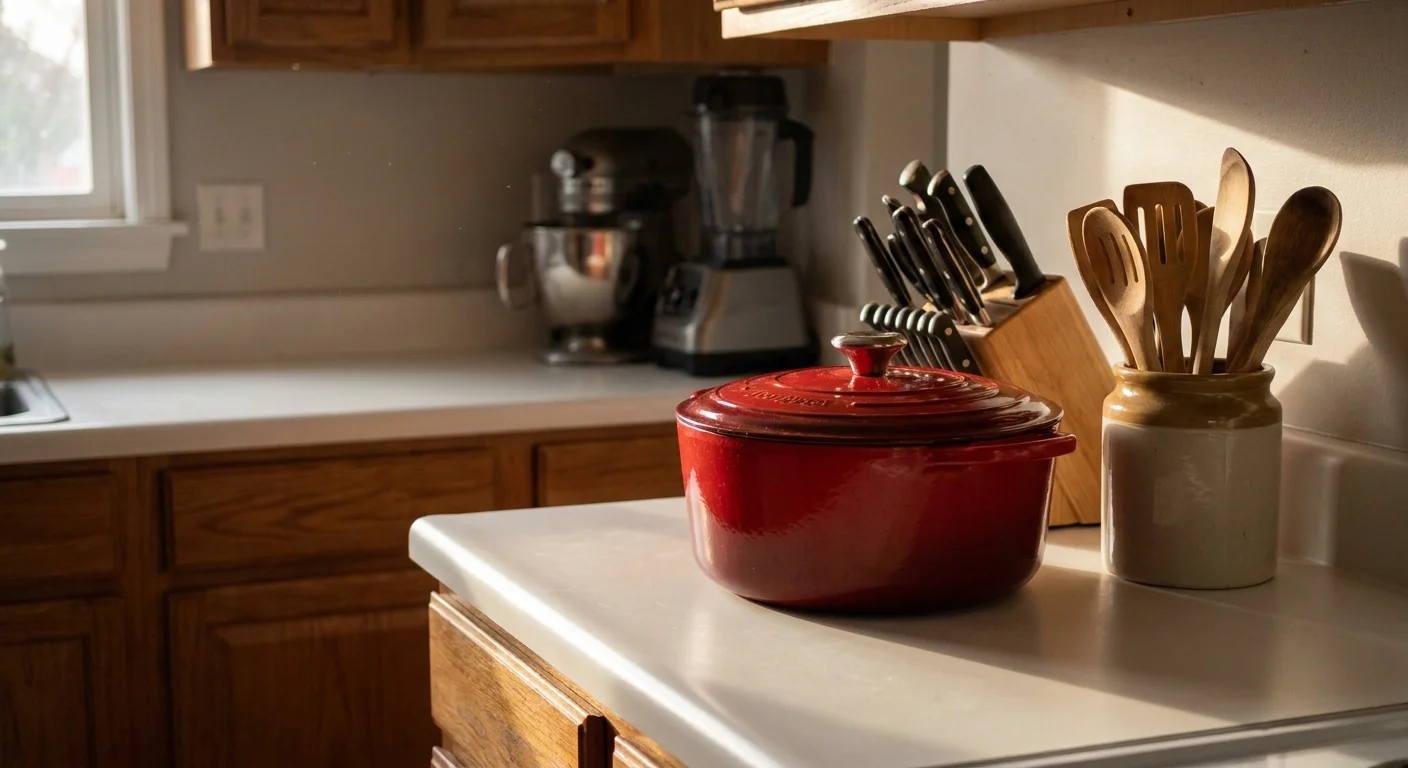
Kitchens and utility rooms harbor some of the most frustrating clutter because these spaces demand constant daily use. Think about the heavy cast-iron skillet resting on the bottom shelf of your pantry, or the holiday serving platter shoved into the cabinet directly above the refrigerator. Reaching high compromises your balance, while bending low puts unnecessary and sudden strain on your lower back and knees.
Adopt the “waist-to-shoulder” storage rule. Reserve this easily accessible vertical zone for the items you use every single day. Your favorite coffee mug, your primary frying pan, your daily medications, and your go-to mixing bowls belong in this sweet spot. Move the heavy stand mixer up from the bottom cabinet onto the counter if you use it frequently; if you rarely bake, pack it away or donate it. Reserve the highest shelves for lightweight items like paper towels, and use the lowest shelves exclusively for sturdy items you access perhaps once a month.
3. Rely on a 15-Minute Daily Routine to Avoid Overwhelm
Decluttering an entire house feels like an impossible mountain to climb. Staring at a basement full of boxes causes immediate decision fatigue, which prompts many people to delay the process entirely. Instead of dedicating an exhausting, emotional weekend to sorting a lifetime of belongings, adopt a brief and highly structured daily habit.
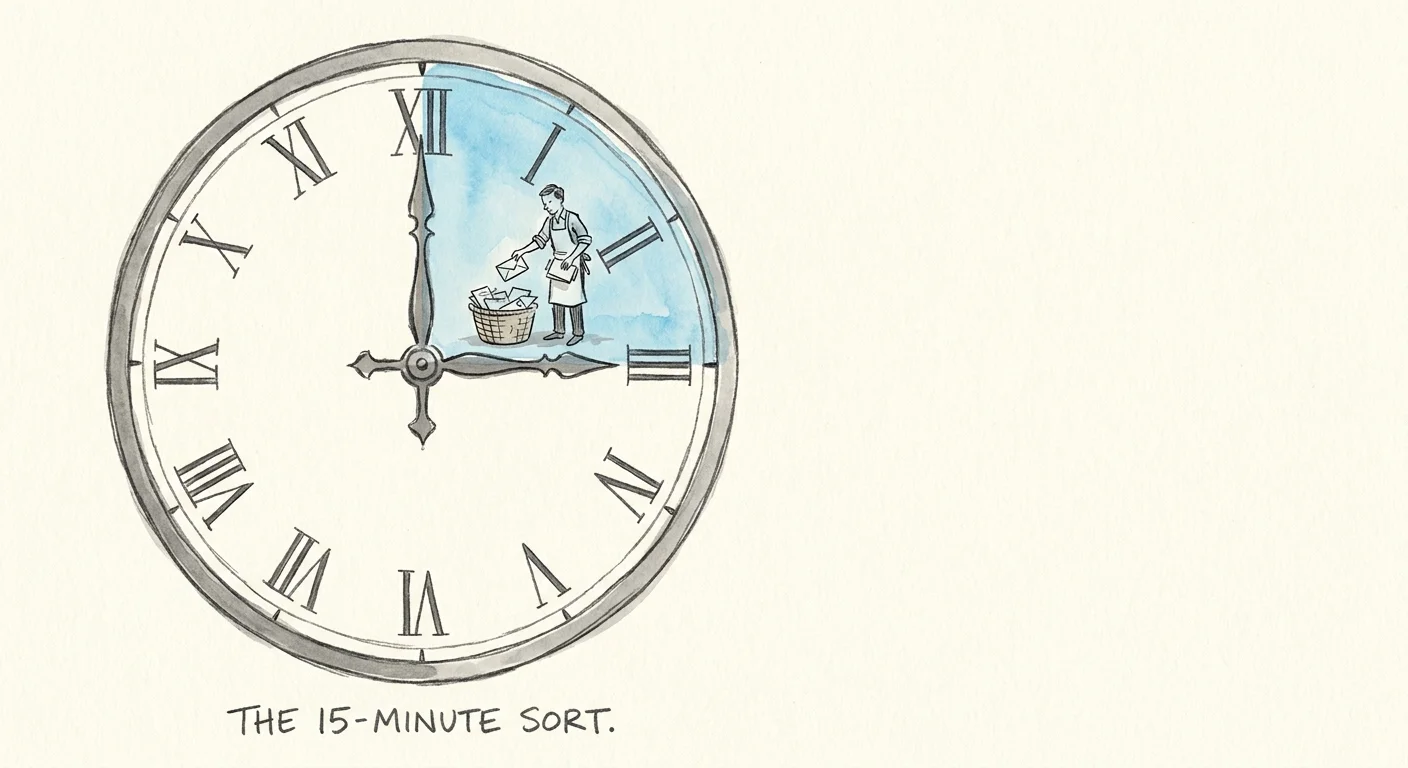
A short, focused sweep provides a highly effective strategy to regain control without physical exhaustion. Making these cleaning tips easy to implement ensures you will actually stick with the routine. You do not need to tear apart an entire room; you only need a quarter of an hour.
- Pick a micro-target: Choose one single drawer, one specific shelf, or one corner of a table. Do not attempt to tackle a whole closet.
- Set a timer: Use your phone or a mechanical kitchen timer and set it for exactly 15 minutes.
- Sort decisively: Make immediate, gut-reaction decisions. Sort items into a trash bag, a donation box, or a pile to keep and organize.
- Stop immediately: When the alarm rings, stop working—even if you feel energized. This boundary prevents physical burnout and keeps the habit sustainable for the next day.
- Process the outgoing items: Tie up the trash bag and put the donation box straight into the trunk of your car so the clutter actually leaves your property.
4. Shred Old Paperwork and Consolidate Files
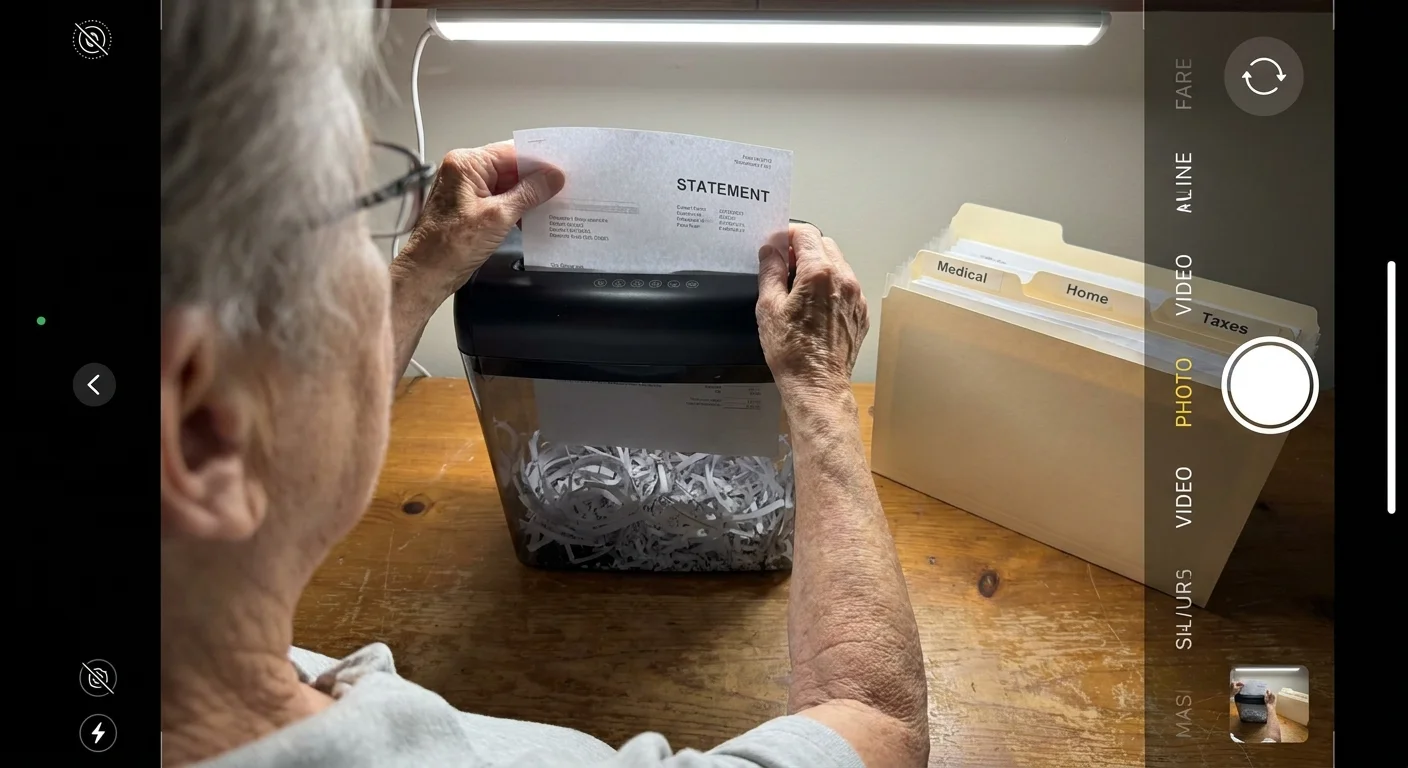
Over the decades, paper multiplies quietly in filing cabinets, desk drawers, and old shoeboxes. You likely have manuals for appliances you discarded years ago, expired warranties, and tax returns dating back to the late 1990s. Letting go of financial documents feels risky, but holding onto mountains of paper creates severe mental weight and makes finding important documents nearly impossible in an emergency.
You do not need to keep every piece of paper. The American Association of Retired Persons (AARP) provides specific record-keeping guidelines to protect yourself without hoarding files. Buy a reliable cross-cut shredder and aggressively pare down your filing cabinet based on these professional timelines.
| Document Type | How Long to Keep It | Action Required |
|---|---|---|
| Standard Tax Returns & Supporting W-2s | 3 Years | Keep the last three years in a secure, fireproof safe. Shred anything older. |
| Property Records & Real Estate Transactions | 7 Years (after selling) | Retain these to prove capital gains or home improvement reductions. Shred after seven years. |
| Bank Statements & Pay Stubs | 1 Year | Keep physical copies for one year, then shred. Rely on your bank’s digital archives for older statements. |
| Utility Bills & Daily Receipts | 1 Month | Shred immediately once the payment clears your bank account. |
5. Safely Dispose of Expired Medications
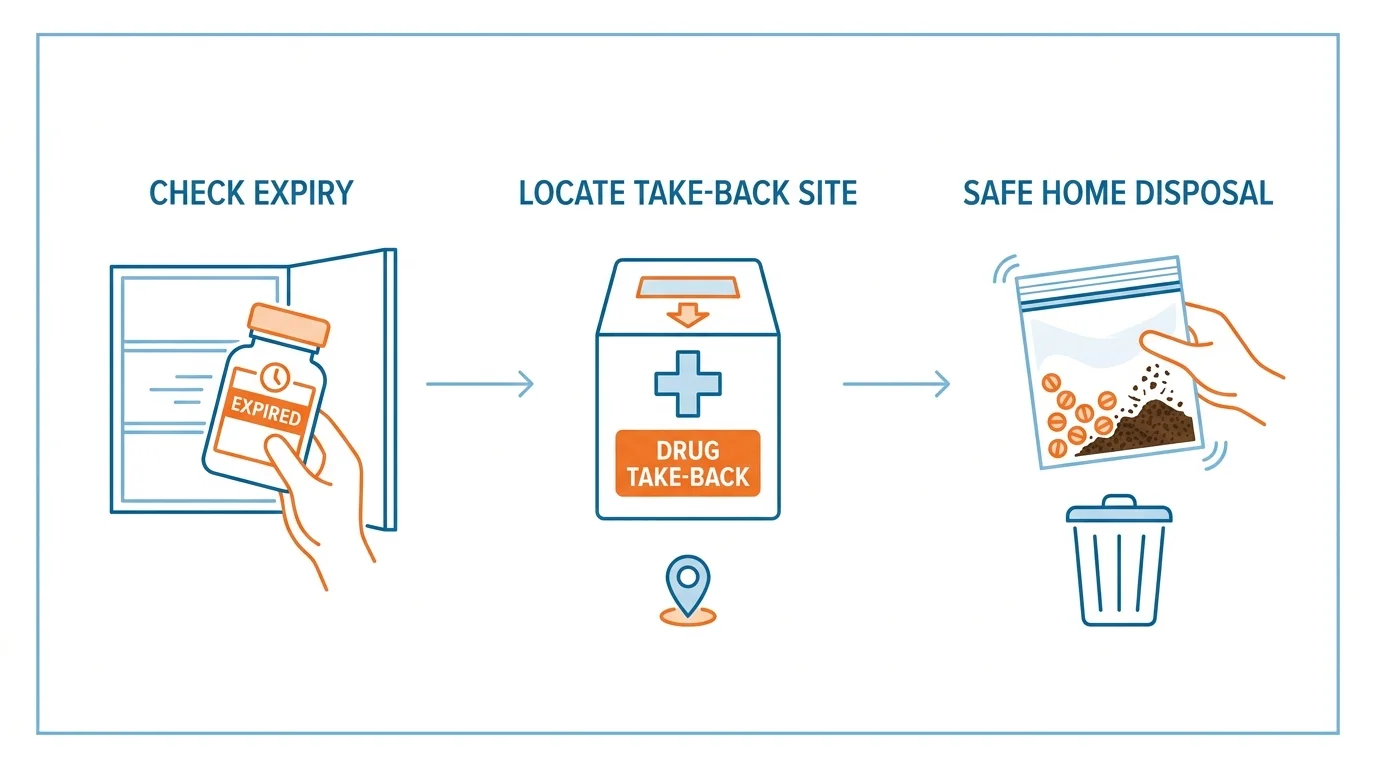
A cluttered medicine cabinet is more than just an annoyance; it presents a genuine health hazard. Expired prescriptions lose their chemical effectiveness, and keeping old bottles mixed with your current daily regimen easily leads to dangerous dosing errors. However, you cannot simply toss prescription pills into the trash or flush them down the sink, as this contaminates local water supplies and poses risks to pets and children.
The Food and Drug Administration (FDA) outlines a safe, practical method for disposing of unwanted drugs. While a few highly dangerous medications belong on the FDA’s specific “flush list,” the vast majority of your expired pills should be thrown in the household trash using a specific security method.
- Remove the expired pills from their original prescription bottles. Do not crush the tablets or open the capsules.
- Mix the intact pills with an unappealing substance—used damp coffee grounds, dirt, or cat litter work perfectly.
- Place this unpleasant mixture into a sealable plastic bag or an empty can to prevent the medication from leaking out of the garbage bag.
- Throw the sealed container directly into your regular household trash.
- Use a thick black permanent marker to heavily cross out your name, address, and prescription number on the empty plastic bottles before tossing them in the recycling bin to protect your medical privacy.

6. Shrink Your Wardrobe to Fit Your Current Lifestyle
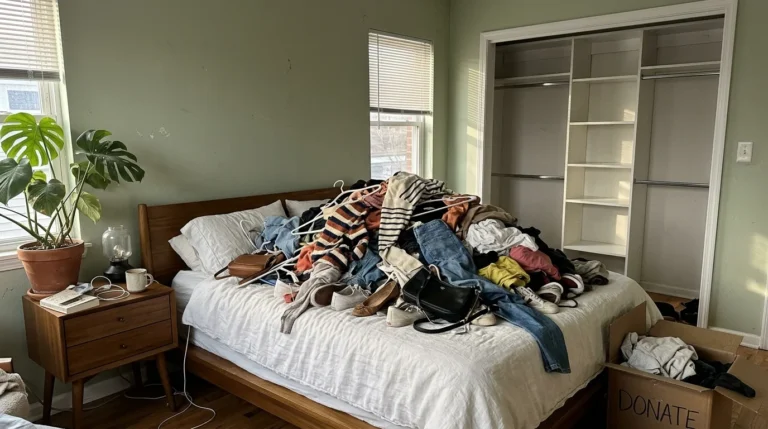
Your closet should reflect the life you live today, not the corporate career you retired from a decade ago. If your closet remains packed with stiff business suits, uncomfortable high heels, or clothes that no longer fit your body comfortably, finding something pleasant to wear becomes a daily chore. An overstuffed closet hides the clothes you actually love behind rows of garments tied to a past identity.
To easily identify what you truly wear, use the backward hanger trick. Turn every hanger in your closet so the hook faces outward. Whenever you wear an item and wash it, hang it back up with the hanger facing the normal direction. After six months, look at the hangers that are still facing backward. Those clothes are taking up valuable real estate without providing any value. Donate the professional wear to charities that help individuals entering the workforce, and keep the soft, comfortable, well-fitting fabrics that support your active daily routines.
7. Create a Defined Memory Box for Sentimental Keepsakes
Photographs, children’s old elementary school art projects, and inherited antique dishes carry heavy emotional weight. You might feel obligated to keep your grandmother’s massive china set, even if it sits gathering dust in a dining room hutch you never open. However, holding onto absolutely everything paradoxically diminishes the value of the truly special items. When every item is treated as a treasure, nothing stands out.
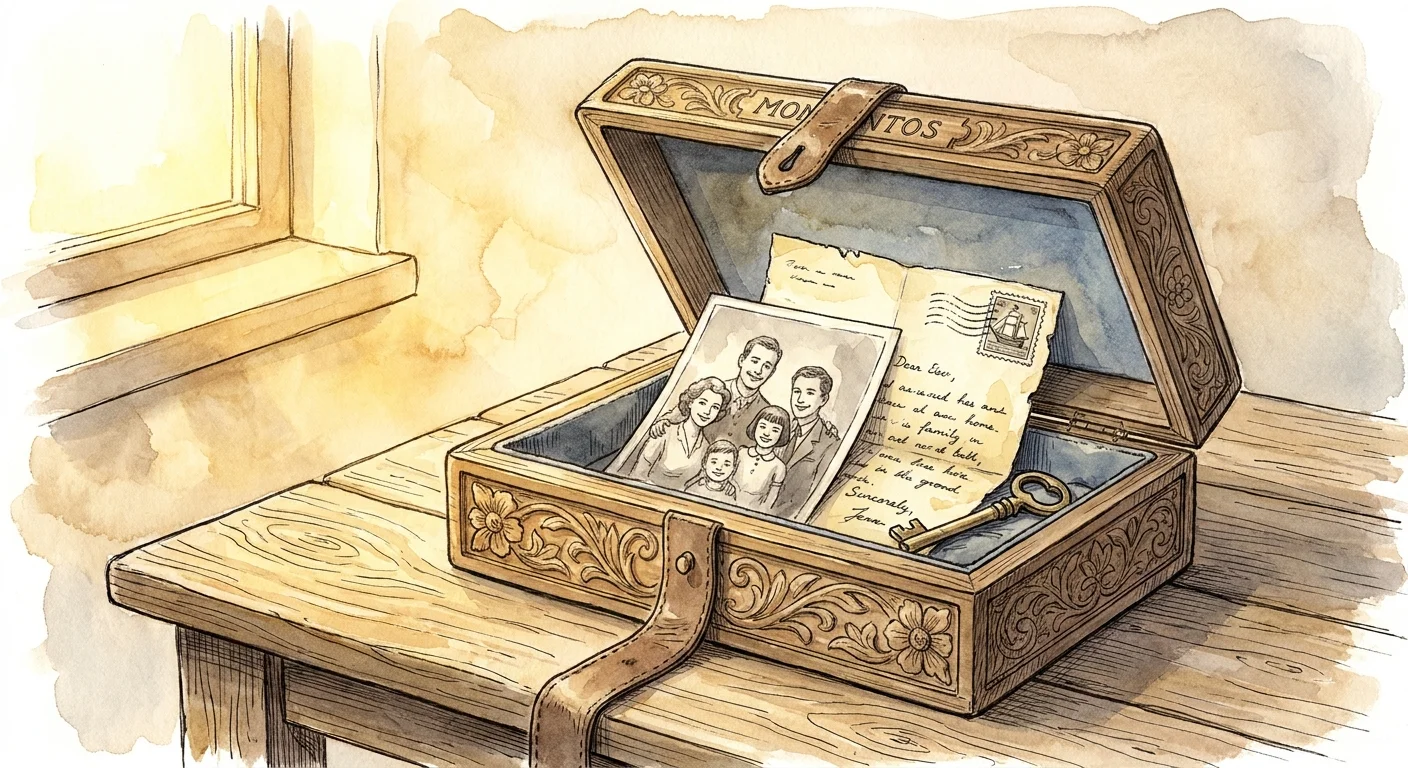
Instead of keeping a spare bedroom full of mystery boxes, curate a defined memory container. Choose one beautiful, sturdy chest or decorative box for your sentimental items. You are allowed to keep whatever fits inside this physical boundary. Keep the absolute best pieces—the one perfect handwritten letter, the favorite teacup, the most flattering photographs—and give yourself profound permission to let the rest go. For large, bulky items you feel guilty parting with, take a clear digital photograph to preserve the memory before donating the physical object.
8. Evict the “Just in Case” Multiples
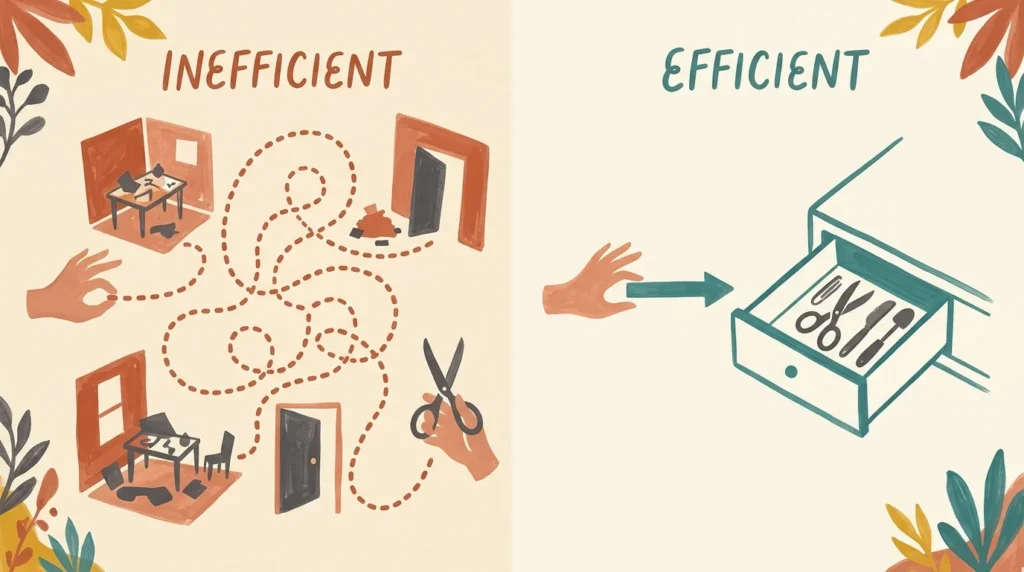
Throughout a lifetime of maintaining a home, households naturally accumulate duplicates. You buy a new pair of scissors because you cannot find the old ones in a cluttered drawer, and suddenly you own six pairs. You hold onto empty glass jars, extra sets of measuring spoons, and towering stacks of slightly frayed towels “just in case” you might need them for a project down the road.
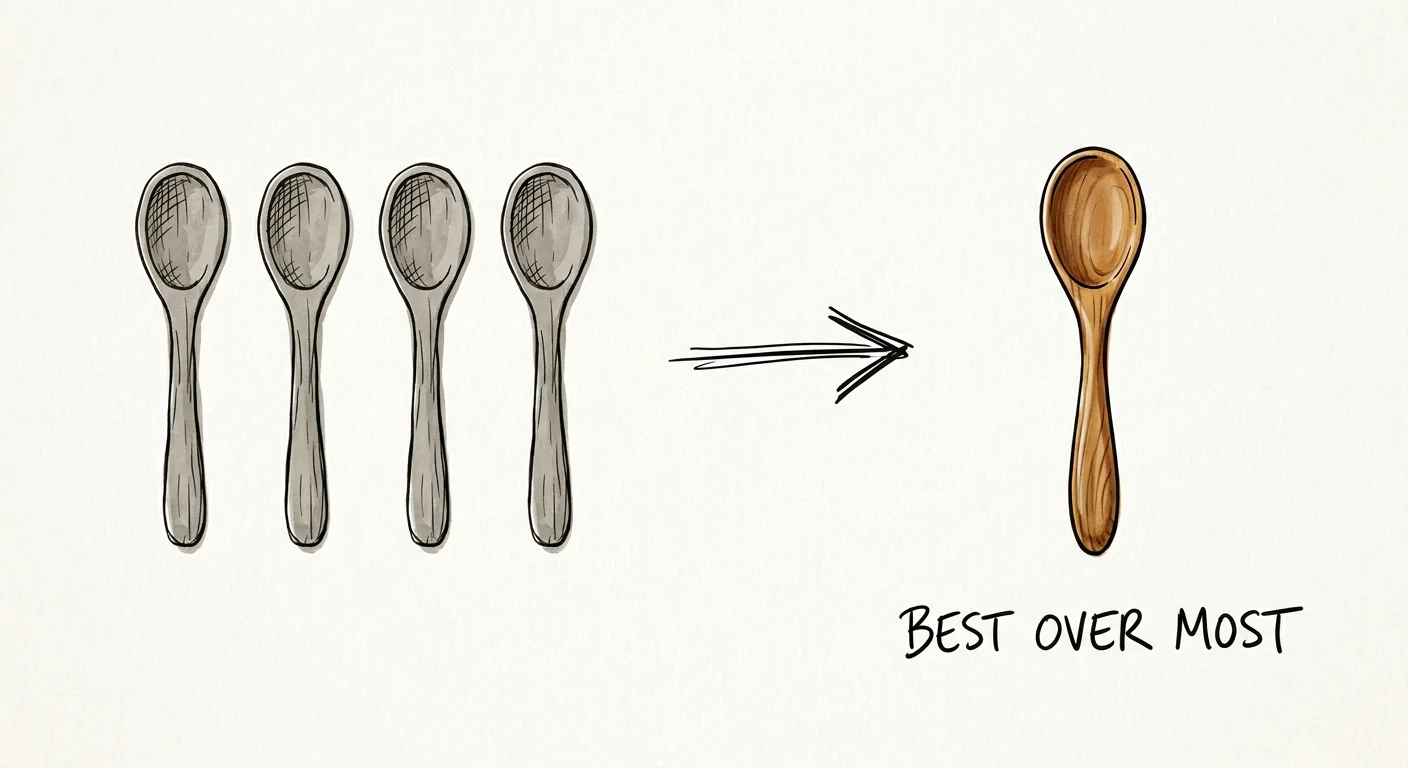
This mindset stems from a commendable sense of resourcefulness, but it ultimately traps you in a cluttered, unmanageable environment. Gather all your similar items together on the dining room table. When you see with your own eyes that you own four spatulas, fourteen mismatched coffee mugs, and ten pairs of gardening gloves, it becomes remarkably easy to donate the excess. Keep the two best items in each category and aggressively purge the backups. You will never need 15 coffee mugs on a Tuesday morning.
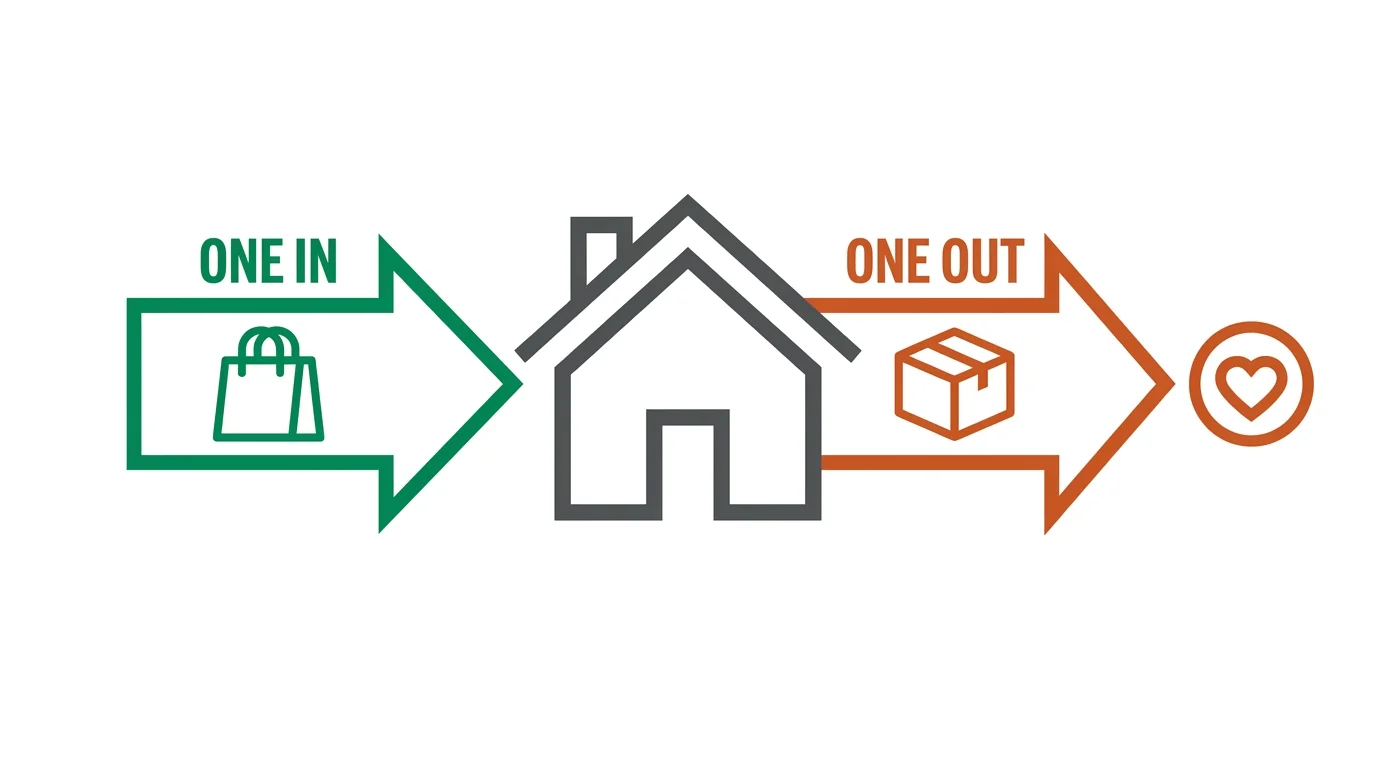
9. Implement the “One In, One Out” Rule to Halt Clutter Creep
Decluttering is not a one-time, final event; it requires gentle, ongoing maintenance. Once you manage to clear a bookshelf or wipe down a bare countertop, nature seems to abhor the vacuum. Catalogs arrive, gifts are given, and new purchases drift into the house to quickly fill the empty space you worked so hard to create.
To permanently halt this clutter creep, implement a strict “one in, one out” policy for your household. This rule requires you to make a conscious trade every time an object crosses your threshold. If you purchase a plush new winter coat, you must select an older jacket to donate. If you buy a new hardcover novel, pass a finished book along to a neighbor or the local library. This practice shifts your mindset from mindless accumulation to intentional curation, ensuring your home never regresses into its previously cluttered state.

10. Ask for Help with Heavy Lifting and Emotional Decisions
You do not have to tackle a lifetime of accumulated possessions completely alone. Sorting through decades of memories requires immense emotional endurance, and dragging heavy boxes up from a basement demands physical strength that you should not unnecessarily expend. Trying to do it all yourself often leads to injury or abandoned projects.
Reach out to adult children, trusted neighbors, or professional organizers who specialize in senior downsizing and aging-in-place transitions. Delegating the physical heavy lifting protects your joints and back. Furthermore, having a neutral third party present provides a highly supportive sounding board when you struggle to make decisions about sentimental items. An objective friend can gently ask, “When was the last time you actually used this?” and help you break through emotional roadblocks that keep you holding onto unnecessary clutter.
Your Immediate Next Step
Do not let the scope of your entire house paralyze you. Right now, walk into your kitchen or bathroom and pick one small, contained space—a single silverware drawer, the medicine cabinet, or the glove compartment in your car. Spend just ten minutes pulling out the obvious trash, the expired items, and the broken duplicates. Enjoy the immediate, physical sense of relief that comes from opening a clean, functional space. Let that small victory fuel your momentum for tomorrow.